A PILOT STUDY TO DEVELOP ATTENTION DEFICIT HYPERACTIVITY DISORDER (ADHD)
DIAGNOSTIC SCALE FOR CHILDREN IN NEPAL
1
Narmada Devkota,
1Shishir Subba,
1
Central Department of Psychology, Tribhuwan University,
2
Department of Psychiatry, Patan Academy of Health Sciences, Lalitpur, Nepal
ARTICLE INFO ABSTRACT
Background:
symptoms; inattention, hyperactivity and impulsivity 1. ADHD has been diagnosing and treating in Nepal, but we have no valid ADHD diagnostic tool to fit Nepalese culture
Current study is intended to develop and validate the ADHD scale for children in Nepal. So, initially pilot study was done as a part of tool development and validation.
development and scale evaluati
the scale. Pilot study was done for items clarity, assessing content validity and sampling adequacy. The total pilot study sample included 202 participants i.e.60 parents of ADHD children
health professionals and 102 parents of school aged children from general population (GP). The investigators developed an ADHD diagnostic scale with 21 items to diagnose ADHD for Nepalese children. It has been developed in Nepalese cul
strong content validity. Three sub
by using Principal Axis Factor Analysis. Sampling adequacy for factor analysis was
Kaiser-this study.
Attention Deficit Hyperactivity Disorder diagnostic scale to fit in Nepalese language.
Copyright © 2019, Narmada Devkota et al. This is an open use, distribution, and reproduction in any medium, provided
INTRODUCTION
Attention Deficit Hyperactivity Disorder (ADHD) is one of the most common presentations in child guidance clinic which needs prolonged treatment and management to improve quality of life and may be very costly. It is a neuro
disorder, which has significant problems in executive functions (American Psychiatric Association, 2013; Barkley
2013; Frances, 1994 and Vaidya, 1998).
population-based study, 15.5% of school children enrolled in Grades 1 to 5 have ADHD (Rowland, 2015).
of 175 research studies worldwide on ADHD prevalence in children aged 18 and under found an overall pooled estimate of 7.2% (Vos, 2015). A hospital-based study found 10% prevalence rate of ADHD in Nepal among all cases presented in Child Guidance Clinic (Tulachan, 2011).
Epidemiological study is not done till date in Nepal but a hospital-based study found 7.8% prevalence rate of ADHD among child psychiatry population in Nepal (
*Corresponding author: Narmada Devkota
Central Department of Psychology, Tribhuwan University, Kathmandu, Nepal
ISSN: 0975-833X
Article History:
Received 19th October, 2018 Received in revised form 08th November, 2018
Accepted 21st December, 2018
Published online 30th January, 2019
Citation:Narmada Devkota, Shishir Subba, Nandita Sharma and
disorder (adhd) diagnostic scale for children in Nepal
Key Words:
ADHD, Content Validity, Nepal, Sampling Adequacy.
RESEARCH ARTICLE
A PILOT STUDY TO DEVELOP ATTENTION DEFICIT HYPERACTIVITY DISORDER (ADHD)
DIAGNOSTIC SCALE FOR CHILDREN IN NEPAL
Shishir Subba,
1Nandita Sharma and
2Anup Raj Bhandari
Central Department of Psychology, Tribhuwan University, Kathmandu, Nepal,
Department of Psychiatry, Patan Academy of Health Sciences, Lalitpur, Nepal
ABSTRACT
Background: ADHD is a neuro-developmental childhood disorder that is characterized by three core symptoms; inattention, hyperactivity and impulsivity 1. ADHD has been diagnosing and treating in Nepal, but we have no valid ADHD diagnostic tool to fit Nepalese culture
Current study is intended to develop and validate the ADHD scale for children in Nepal. So, initially pilot study was done as a part of tool development and validation.
development and scale evaluation were the three consecutive steps followed to develop and validate the scale. Pilot study was done for items clarity, assessing content validity and sampling adequacy. The total pilot study sample included 202 participants i.e.60 parents of ADHD children
health professionals and 102 parents of school aged children from general population (GP). The investigators developed an ADHD diagnostic scale with 21 items to diagnose ADHD for Nepalese children. It has been developed in Nepalese culture and Language. Pilot testing revealed strong content validity. Three sub-scales (Inattention, Impulsivity and Hyperactivity) were identified by using Principal Axis Factor Analysis. Sampling adequacy for factor analysis was
-Meyer-Olkin (KMO) analysis which indicated that minimum of 100 sample was adequate for this study. Conclusions: The pilot study explored the feasibility of the development of proposed Attention Deficit Hyperactivity Disorder diagnostic scale to fit in Nepalese
language.
open access article distributed under the Creative Commons Attribution provided the original work is properly cited.
Attention Deficit Hyperactivity Disorder (ADHD) is one of the most common presentations in child guidance clinic which needs prolonged treatment and management to improve quality neuro-developmental executive functions Barkley, 1997; Dias, , 1998). According to a based study, 15.5% of school children enrolled in ). A meta-analysis of 175 research studies worldwide on ADHD prevalence in children aged 18 and under found an overall pooled estimate of based study found 10% prevalence rate of ADHD in Nepal among all cases presented , 2011). Though, Epidemiological study is not done till date in Nepal but a based study found 7.8% prevalence rate of ADHD (Kunwar, 2018).
Central Department of Psychology, Tribhuwan University,
The variability in the prevalence of ADHD worldwide and within the US may be due to the wide range of factors that affect accurate assessment. Because of the obstacles to assessment, ADHD is
under-undertreated (Hamed, 2015). Rating scales are valuable tool in the assessment of ADHD. Symptoms and functional impairment must be recorded using valid, reliable and sensitive rating scales to evaluate symptom frequency, severity, and outcome. Rating scales are good for outlining symptoms and their perceived severity. However, there is no any valid scale to assess ADHD developed in Nepalese context till the date. In an attempt to fill up this critical n
aimed to develop a new tool, “ADHD diagnostic scale for Nepalese children”.
MATERIALS AND METHODS
This pilot study is a part of large cross sectional, mixed methods study. The total participants
202. Therefore, the target group
presented at OPD as well as from the community and the International Journal of Current Research
Vol. 11, Issue, 01, pp. 278-282, January, 2019
DOI: https://doi.org/10.24941/ijcr.33962.01.2019
rmada Devkota, Shishir Subba, Nandita Sharma and Anup Raj Bhandari. 2019. “A pilot study to develop attention deficit hyperactivity disorder (adhd) diagnostic scale for children in Nepal”,International Journal of Current Research, 11, (01), 278-282.
A PILOT STUDY TO DEVELOP ATTENTION DEFICIT HYPERACTIVITY DISORDER (ADHD)
Anup Raj Bhandari
Kathmandu, Nepal,
Department of Psychiatry, Patan Academy of Health Sciences, Lalitpur, Nepal
developmental childhood disorder that is characterized by three core symptoms; inattention, hyperactivity and impulsivity 1. ADHD has been diagnosing and treating in Nepal, but we have no valid ADHD diagnostic tool to fit Nepalese culture and language till date. Current study is intended to develop and validate the ADHD scale for children in Nepal. So, initially pilot study was done as a part of tool development and validation. Methods: Items generation, scale on were the three consecutive steps followed to develop and validate the scale. Pilot study was done for items clarity, assessing content validity and sampling adequacy. The total pilot study sample included 202 participants i.e.60 parents of ADHD children, 40 mental health professionals and 102 parents of school aged children from general population (GP). Results: The investigators developed an ADHD diagnostic scale with 21 items to diagnose ADHD for ture and Language. Pilot testing revealed scales (Inattention, Impulsivity and Hyperactivity) were identified by using Principal Axis Factor Analysis. Sampling adequacy for factor analysis was tested by using Olkin (KMO) analysis which indicated that minimum of 100 sample was adequate for The pilot study explored the feasibility of the development of proposed Attention Deficit Hyperactivity Disorder diagnostic scale to fit in Nepalese cultural context and
ribution License, which permits unrestricted
The variability in the prevalence of ADHD worldwide and within the US may be due to the wide range of factors that affect accurate assessment. Because of the obstacles to -diagnosed, misdiagnosed, and Rating scales are valuable tool in the assessment of ADHD. Symptoms and functional impairment must be recorded using valid, reliable and sensitive symptom frequency, severity, and Rating scales are good for outlining symptoms and their perceived severity. However, there is no any valid scale to assess ADHD developed in Nepalese context till the date. In an attempt to fill up this critical need, the current study aimed to develop a new tool, “ADHD diagnostic scale for
MATERIALS AND METHODS
This pilot study is a part of large cross sectional, mixed participants for the pilot study were Therefore, the target groups were both the parents presented at OPD as well as from the community and the
INTERNATIONAL JOURNAL OF CURRENT RESEARCH
professionals. Initially, ethical approval was taken from Nepal Health Research Council (NHRC). Chief Complaints (Verbatim) Collection Form was prepared. The form was designed to be filled by clinicians during the intake interview in which verbatim reported by parents of children having diagnosis of ADHD on their own words were written by clinician in the given blank space in Nepalese language. Those verbatim were collected from 200 parents of children having diagnosis of ADHD in this study. Those verbatim were used to develop proposed ADHD diagnostic scale for children in Nepal. The socio-demographic proforma was prepared to obtain socio-demographic characteristics of the participants relevant to his /her illness and relevant for this study. It contained the age, sex, parental education, performance of child, parental occupation, socio-economic status, place of residence, age at onset, family history, birth and developmental characteristics, etc. Then an expert team of five clinicians (3 psychiatrist and 2 clinical psychologist) was made. The list of initial problem behaviors (Verbatim) was provided to the expert team individually and was requested to give constructive feedback and arranged a discussion session.
Grouping of problem items generated from verbatim reported by 200 parents of ADHD children was done by experts which were utilized to form an initial draft of the ADHD Diagnostic Scale. There were total 160 problem behaviors collected from the parents. With the findings of expert panel discussion, the scale was made, where the problem behaviors with similar meaning were grouped and problem definition (main problem items) for each group was made. Initially, 29 items were identified and those items were used to develop the first draft of ADHD scale. This scale was given to the parents of children having diagnosis of ADHD where they had to report as “doesn’t apply”, “may apply”, “apply” and “definitely apply” to their children. This first pilot study was targeted to test with 10% sample (N=20) of the total sample included for verbatim collection. The four parents dropped out and the study was conducted with sixteen parents from GP. Interview questionnaires were prepared (Table 3) regarding item clarity for every participants in pilot study. Thus obtained data were analyzed where almost all parents reported “definitely apply” to their children but they found that few items had the same meaning and were repeated in the scale. They perceived that the statements were slightly lengthy. After obtaining the data of initial draft from the parents of ADHD children, findings were discussed among experts for necessary change and content validation. Where “doesn’t apply” items were omitted or discarded and “may apply” types of items were reanalyzed and replaced by the expert team. The responses as “apply” and “definitely apply” on items were kept on scale without any change. Then these all items proposed by expert team were listed sequentially. The items with similar meanings were merged and reduced to item 20 and an impact assessment item added in the scale. Then next target of the pilot study was professionals (N=20) but 5 of them dropped out. The data from remaining 15 professionals (5 consultant Psychiatrists, 2 Psychiatry residents and 5 clinical psychologists and 3 clinical psychology residents) were included for analysis. Most of the both types of participants found that statements were lengthy and difficult to comprehend by the parents who have less academic performance; whereby they suggested to collect relevant examples for every statement so that it would be easier to understand. So, the discussion based on these findings was held with experts. Previously collected verbatim from parent with ADHD children were again analyzed by the same
team of experts and examples were collected for each item. Those examples were put under each relevant items and rating scale was constructed. The content validation Checklist was prepared. Then, second pilot study was planned. Second pilot study was also conducted with the similar type of respondents involved on first pilot study (i.e. N=40, 20 parents of ADHD children and 20 professionals) where they had to evaluate each item in terms of usefulness or relevancy and comprehensibility or clarity. Most of them found that the rating scale was very useful and comprehensive. Here, same interview questionnaires given in Table 3 were used as qualitative content validity method where content experts and target group’s recommendations were agreed on observing grammar, using appropriate or correct words, applying proper order of words in each item. As a part of content adequacy check, the professionals in the field of Psychiatry and Psychology were provided a checklist of 4-point Likert scale where they were requested to rate each items of the scale on the basis of usefulness and comprehensibility in terms of assessing ADHD problems. Then construct validity ratio (CVR) was calculated from this sample where minimum CVR was 0.80 (table 1). This CVR is greater than the critical value of CVR (i.e. 0.42). This indicates that all the items are useful and comprehensive. These all items were included and Final Draft of Proposed ADHD Diagnostic Scale (Questions 1-21) was prepared. The pre-testing of the proposed scale was done with 10% of each type of GP sample (N=100).
Here, the total sample selected were 102 but two samples were found invalid and excluded as most of data were left uncompleted. To minimize urban / rural cultural differences in the test, half of them were selected from Kathmandu district and another half from Gorkha district and who were asked for permission to join such a pilot study. (i.e.10% participants from Governmental schools of rural area and another 10% participants from Governmental schools of urban area were included from Kathmandu district as well as 10% participants from Private schools of rural area and another 10% from Private schools of urban area of Gorkha district). Thereafter, parent of students from each age were selected randomly after explaining purpose of the study and the importance of their information. Semi-structured Proforma along with proposed ADHD diagnosis scale were given to each Parents who met the inclusion criteria. Then, each parent were asked to read through all of the items in the scale thoroughly and they were asked to identify items that were confusing. These pretesting data from the community (GP) was analyzed. Based on these reviews, some of them only found few grammatical errors which were again corrected by the experts and corrected on the Final version of Proposed ADHD Diagnostic Scale which is being used in the current study for its further psychometric evaluation. Daily editing was done after collecting the data to maintain accuracy and completeness. Then, collected data has been coded and analysis has been done in Statistical Package for the Social Sciences (SPSS). Interpretations of the findings are being made on graphical or tabulated form. Sampling adequacy was analyzed by using these 100 data from the general population to perform the Factor Analysis. For that, KMO analysis was done (Table 2).
RESULTS
were presented or referred for consultation in OPD were written in Nepali language on their own words. Total 160 problem behaviors were collected from the parents. The wordings were matched as much as possible to the verbatim of the parents in Nepal. The initial revision of the scale was made after discussion with expert team where the problem behaviors with similar meaning were grouped and definition for each group were identified. Initially defined 29 items including an impact question were used to develop first draft of the scale. This scale was given to few parents of ADHD children (N=20) where they had to report as “doesn’t apply”, “may apply”, “apply” and “definitely apply” to their children having diagnosis of ADHD.
Those data were analyzed and almost all parents reported “definitely apply” to their children but they found that few items had the same meaning and were repeated in the scale. This was again discussed with expert’s team and items were revised. The items with similar meanings were merged and reduced to item 20 and an impact question in the scale. They had found that all items were “definitely apply” to assess ADHD related behavior of their children. So, expert team decided to generate 21 items scale (20 problem items with an impact assessment items). Final version of proposed ADHD Diagnostic Scale containing 21 items were finalized after pilot study. This scale was developed after item generation and content identification steps of tool development and used on data collection for its psychometric evaluation.
There were 116 participants for psychometric evaluation. The pilot study findings suggested that these samples are adequate for the factor analysis. The minimum CVR is 0.80 which is greater than the critical value of CVR (i.e.0.42). This indicates that all the items are useful and comprehensive or content validity is strong. Those all items should be included to construct a scale. KMO measure of sampling adequacy was calculated. According to this test findings (i.e.0.958), the sample size was adequate to perform Factor Analysis. Bartlett's test of sphericity findings (i.e. level of significance=0.000 which was less than 0.05) allowed that a factor analysis with the current data (N=100, Table 2). It has found that the average time to complete this test is 10-14 minutes. It depends on parental level of education. It was noticed that some level of help was required in reading for parents who had less academic degree such as parents who were literate and completed up to primary level of education.
DISCUSSION
[image:3.595.50.545.75.202.2]Diagnostic and Statistical Manual of Mental Disorder1 suggests that cultural attitudes towards the interpretation of behavior may contribute to differences in prevalence estimates across studies. Assessment of ADHD typically involves the comprehensive evaluation of information gathered from a number of sources, including parents/care givers, family members, teachers, etc (Danielson, 2018). The purpose of this pilot study was to identify adequate and appropriate contents as a new scale development process.
Table 1. Content Adequacy (Content Validity)
Item No. CVR for Usefulness CVR for Comprehensibility Items No. CVR for Usefulness CVR for Comprehensibility
Q1 1.00 1.00 Q2 1.00 1.00
Q10 1.00 1.00 Q20 1.00 1.00
Q11 1.00 1.00 Q21 1.00 1.00
Q12 1.00 1.00 Q3 1.00 1.00
Q13 1.00 1.00 Q4 1.00 1.00
Q14 1.00 1.00 Q5 1.00 1.00
Q15 1.00 .80 Q6 1.00 1.00
Q16 1.00 .80 Q7 1.00 1.00
Q17 1.00 .80 Q8 1.00 1.00
Q18 1.00 1.00 Q9 1.00 1.00
Q19 1.00 1.00 Mean 1.00 0.97
SD 0.00 0.071714
Calculation: Content Validity Ratio (CVR) = (Ne – N/2)/ (N/2), Critical Value: Number of Panelists (N) = 20, Minimum CVR = 0.42 for one tailed Test, p=0.05)
Table 2. KMO and Bartlett's Test of Pilot Study Sample from the Community (N=100)
Kaiser-Meyer-Olkin Measure of Sampling Adequacy. .958 Bartlett's Test of
Sphericity
Approx. Chi-Square 5360.228
Df 210
Sig. .000
Df=Degree of Freedom Sig.=Level of Significance
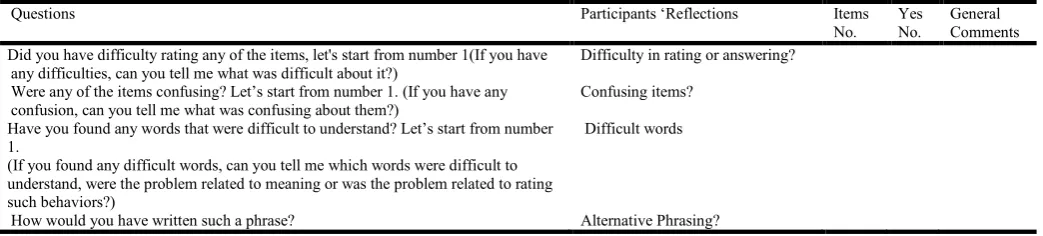
Table 3. The Interview Questions used during Pilot Study
Questions Participants ‘Reflections Items
No. Yes No.
General Comments Did you have difficulty rating any of the items, let's start from number 1(If you have
any difficulties, can you tell me what was difficult about it?)
Difficulty in rating or answering?
Were any of the items confusing? Let’s start from number 1. (If you have any confusion, can you tell me what was confusing about them?)
Confusing items?
Have you found any words that were difficult to understand? Let’s start from number 1.
(If you found any difficult words, can you tell me which words were difficult to understand, were the problem related to meaning or was the problem related to rating such behaviors?)
Difficult words
[image:3.595.38.560.346.464.2]This scale can be used to diagnose ‘ADHD’ in Nepalese children. It is a parent version scale which is being developed in Nepalese context and language. Pilot studies play an important role in health research (Lancaster, 2004). A pilot study is necessary and useful in providing the groundwork in a research project. According to these researcher, the pilot study is done to assess whether the questionnaire are comprehensible, appropriate, well defined, clearly understandable, presented in a consistent manner or not where we should also observe the ability to comprehend the instructions in the covering letter, understanding of questionnaire items, the terms used, the sequence of questions and the flow of statements, format, including the font and lay out, length of the questionnaire ,time taken to complete the questionnaire, comments placed by the participant. Current study followed the same principles for developing ADHD Diagnostic scale for Nepalese children. After two consecutive pilot studies the proposed scale was constructed where all comments were taken into consideration and re-piloted until no further changes were considered necessary. It has noticed that some help was required in reading for parents who have less academic degree such as parents who are literate and completed up to primary level of education. Lots of examples were placed to make them clearer according to their suggestions to make them clear. Pilot study gave us an idea about final requirement of the sample size and it has demonstrated that the study protocol was feasible. This scale was constructed with good content validity. According to the conclusion drawn by (Zamanzadeh, 2015), regarding Content validity study that it is a systematic, subjective and two-stage process. In the first stage, instrument design is carried out and in the second stage, judgment, quantification on instrument items is performed and content experts study the accordance between theoretical and operational definitions. Such process should be the leading study in the process of making instrument to assure instrument reliability and prepare a valid instrument in terms of content for preliminary test phase. Their study also highlighted that “although content validity is a subjective process, it is possible to objectify it. So, after obtaining the data of initial draft from the parents of ADHD children, findings were discussed among experts for necessary change and content validation. Where “doesn’t apply” items were omitted or discarded and “may apply” types of items were reanalyzed and replaced by the expert team. The responses as “apply” and “definitely apply” on items were kept on scale without any change. Then these all items proposed by expert team were listed sequentially and second pilot study was done with parents of children having ADHD and professionals working with ADHD children where they had to evaluate each item in terms of usefulness or relevancy and comprehensibility or clarity. Then data obtained from professionals were included to assess content validity. Content validity ratio (CVR) was calculated for relevancy and clarity or comprehensibility using the formula suggested by. 17 (Table 1).
Acknowledgement
This Pilot study is the part of PhD Fellowship and the research has been supported by PhD Fellowship grant (No. PhD/73-74/H & S09) of University Grants Commission of Nepal.
Limitations
The researcher was unable to collect data from school teacher of every child like their parent.
The medical and psychiatry history of children from community participants were solely depended on parental information. We were unable to screen in detailed medical condition, emotional and behavioral problems of all children
REFERENCES
American Psychiatric Association. 2013. Diagnostic and
Statistical Manual of Mental Disorders. American
Psychiatric Association. https://doi.org/10.1176/ appi.books.9780890425596
Barkley, R. A. 1997. Behavioral inhibition, sustained attention, and executive functions: constructing a unifying theory of ADHD. Psychological Bulletin, 121(1), 65.
Canadian, A. 2011. Resource Alliance (CADDRA). Canadian
ADHD Practice Guidelines.
Danielson, M. L., Bitsko, R. H., Ghandour, R. M., Holbrook, J. R., Kogan, M. D., & Blumberg, S. J. 2018. Prevalence of Parent-Reported ADHD Diagnosis and Associated Treatment Among U.S. Children and Adolescents, 2016.
Journal of Clinical Child & Adolescent Psychology, 47(2), 199–212. https://doi.org/10.1080/15374416.2017.1417860 Dias, T. G. C., Kieling, C., Graeff-Martins, A. S., Moriyama,
T. S., Rohde, L. A., & Polanczyk, G. V. 2013. Developments and challenges in the diagnosis and treatment of ADHD. Revista Brasileira de Psiquiatria, 35, S40–S50.
Frances, A., Pincus, H. A., & First, M. B. 1994. Diagnostic and statistical manual of mental disorders: DSM-IV. American Psychiatric Association Washington DC.
Gualtieri, C. T., & Johnson, L. G. 2005. ADHD: Is Objective Diagnosis Possible? Psychiatry (Edgmont (Pa. :
Township)), 2(11), 44–53. Retrieved from
https://www.ncbi.nlm.nih.gov/pubmed/21120096
Hamed, A. M., Kauer, A. J., & Stevens, H. E. 2015. Why the diagnosis of attention deficit hyperactivity disorder matters.
Frontiers in Psychiatry, 6, 168.
Hassan, Z. A., Schattner, P., & Mazza, D. 2006. Doing a pilot study: why is it essential? Malaysian Family Physician: The Official Journal of the Academy of Family Physicians of Malaysia, 1(2–3), 70.
Kunwar, A. R. 2018. PSYCHIATRIC MORBIDITY AND SERVICE PATTERN IN CHILD AND ADOLESCENT
PSYCHIATRY CLINIC IN NEPAL. The Nepal NCDI
Poverty Commission. Kathmandu.
Lancaster, G. A., Dodd, S., & Williamson, P. R. 2004. Design and analysis of pilot studies: recommendations for good practice. Journal of Evaluation in Clinical Practice, 10(2), 307–312. https://doi.org/10.1111/j.2002.384.doc.x
Lawshe, C. 1975. A Quantitative Approach To Content Validity. Personnel Psychology, (1), 563–575. https://doi.org/10.1111/j.1744-6570.1975.tb01393.x Rowland, A. S., Skipper, B. J., Umbach, D. M., Rabiner, D. L.,
Campbell, R. A., Naftel, A. J., & Sandler, D. P. 2015. The prevalence of ADHD in a population-based sample.
Journal of Attention Disorders, 19(9), 741–754.
Tulachan, P., Chapagain, M., Kunwar, A. R., & Sharma, V. D. 2011. Psychiatric morbidity pattern in a child and adolescent guidance clinic. Journal of Psychiatrists’ Association of Nepal, 1(1), 20–23.
study. Proceedings of the National Academy of Sciences,
95(24), 14494–14499.
Vos, T., Barber, R. M., Bell, B., Bertozzi-Villa, A., Biryukov, S., Bolliger, I., … Dicker, D. 2015. Global, regional, and national incidence, prevalence, and years lived with disability for 301 acute and chronic diseases and injuries in 188 countries, 1990–2013: a systematic analysis for the Global Burden of Disease Study 2013. The Lancet,
386(9995), 743–800.
Zamanzadeh, V., Ghahramanian, A., Rassouli, M., Abbaszadeh, A., Alavi-Majd, H., & Nikanfar, A.-R. 2015. Design and implementation content validity study: development of an instrument for measuring patient-centered communication. Journal of Caring Sciences, 4(2), 165.