PATAT 2010
Towards an Integrated Workforce Management System
Dario Landa-Silva · Arturo Castillo · Leslie Bowie · Hazel Johnston
Received: 30 May 2010
Abstract We describe progress towards a workforce management system in which person-nel scheduling is integrated with other important processes such as payroll processing, atten-dance and absence recording, staffing forecast and planning, etc. Our focus is on customer-oriented sectors in which a considerable proportion of the available workforce is part-time. First, we discuss the importance of having an integrated workforce management strategy and then, we address the particular aspects of shift pattern design and staff allocation using a fast-food restaurant and a leisure centre as examples.
Keywords workforce management·personnel scheduling·shift design·task allocation
1 Introduction
In addition to making an efficient use of the available personnel, a workforce management strategy should align personnel skills to customer needs in order to help improving the over-all customer satisfaction. Moreover, adequate integration of the scheduling process helps businesses to quickly respond to customer needs that could affect the overall staffing egy. The integration of workforce scheduling within an overall workforce management strat-egy is crucial to achieve high level workforce utilisation. According to (Belkin 2009), many retailers do not have a workforce scheduling process in place and many do not integrate scheduling within the overall workforce management strategy.
Many businesses with wide working hours and varying requirements use a form of man-ual shift schedules to identify which staff will be working at any period. Simple rotation procedures are used to ensure fairness. But in many scenarios, it is difficult to make an ac-curate estimation of workforce demand and the shifts lead to over or under manning and a high reliance on temporary staffing from agencies. Our research has shown that unless
D. Landa-Silva ASAP Research Group
School of Computer Science, University of Nottingham E-mail: [email protected]
A. Castillo, L. Bowie, H. Johnston Midland HR
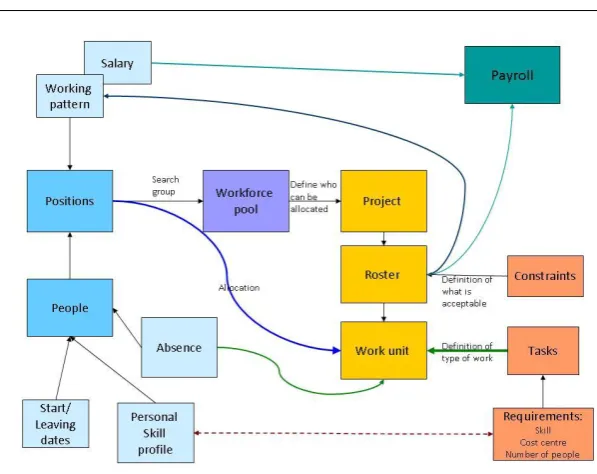
Fig. 1 Holistic approach to workforce management by Midland HR.
the workload pattern is highly regulated, non-standard shift patterns are required. But truly variable shift patterns can be unpopular with staff and a compromise is required between the staff’s need for some sort of pattern and the business requirement to ensure minimum costs. Midland HR is a UK company specialised in providing software solutions for HR man-agement including payroll processing, attendance/absence manman-agement, staffing forecast and planning, HR administration, workforce analytics, etc. The company aims to offer a workforce management integral solution that focuses on putting the right employee in the right place at the right time. Fig. 1 depicts the main components used by our system,iTrent, when tackling rostering problems. Data is entered as part of concurrent non-rostering pro-cesses and by different parts of the business. In our approach every allocation is made to a position instead of to a person. This brings flexibility when replacing staff and allows future, already planned rosters, to remain the same.
[image:2.595.93.392.75.312.2]3
2 Workforce Scheduling Approach
The process of workforce scheduling usually involves several stages such as: 1) demand modelling, 2) shift pattern design, 3) duty assignment and 4) staff assignment (Ernst et al 2004; Tien and Kamiyama 1982). Using a fast-food restaurant and a leisure centre as exam-ple scenarios, we give an insight into our work towards developing an integrated solution.
2.1 Fast-Food Restaurant Scenario
The rostering period is 1 week. The manager receives from the head office the estimated work demand in the form of a forecast with the number of employees needed in each times-lot of the week to ensure that the restaurant runs efficiently. Following this forecast the man-ager should assign shifts and duties to employees in order to construct the roster. The aim is to follow the head office forecast as closely as possible while constructing a practical roster that satisfies staff preferences and payroll budget. The forecast gives the estimated number of employees needed for each of the duty types such as: ‘back-of-house’ (BoH) staff (work-ing in the kitchen), ‘front-of-house’ (FoH) staff (interact(work-ing with customers), ‘management’ (MG) staff, etc. Most employees are part-time working a number of hours per week ac-cording to their particular availability. A number of constraints exist in this scenario, but the ones that relate directly to the design of shift patterns are: (a) an employee works a maximum number of hours per week; (b) an employee works a maximum number of hours per day; (c) the maximum length of a shift is 8 hours; (d) the minimum length of a shift is 3 hours; (e) full-time employees must have 1 day-off per week; (f) shift splits are permitted with a 1 hour break minimum; (g) a ‘closing’ shift must not be followed by an ‘opening’ shift (nights not considered a break). The design of shift patterns (Musliu et al 2004; Di Gaspero et al 2007) is very important in this scenario given the variability in workforce demand and availability.
2.2 Leisure Centre Scenario
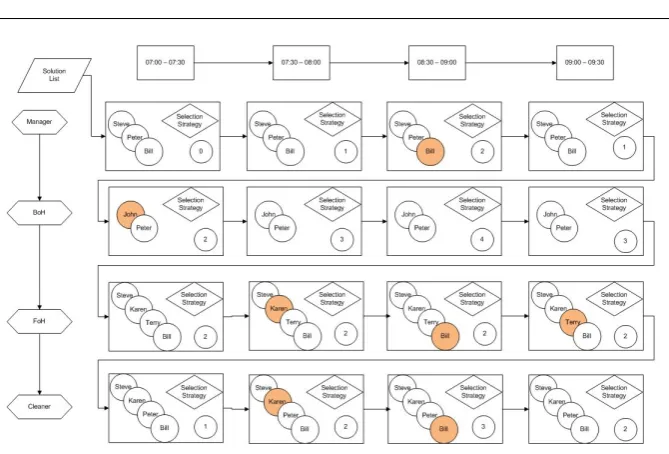
Fig. 2 Structure to facilitate integration between scheduling and other processes such as demand modelling and attendance/absence management.
2.3 Shift Pattern Design and Work Unit Allocation
To facilitate the integration of the scheduling process within the workforce management strategy, we employ the structure shown in Figure 2. For each pair duty-timeslot, the cor-responding node contains: the number of personnel required, a list of personnel that can be selected (with the required ability and availability) and a heuristic selection strategy that is used to make the assignment of staff to that duty-timeslot. This arrangement allows flexi-bility to sort the list of personnel within each node according to different criteria to suit the particular assignment heuristic strategy.
Shift Pattern Design and Work Unit Allocation Procedure. Steps to design shift patterns that aim to satisfy work demand while also assigning staff to work units (i.e. pairs duty-timeslot). Some variables are defined first:
Rdt: minimum number of employees required to work dutydon timeslott.
Xdt : number of employees assigned to work dutydon timeslott. It is assumed that only employees with the required ability and availability are assigned.
Rcdt : number of employees currently required to work dutyd on timeslott. This value is given byRdt−Xdt and it changes during the procedure.
Edt: initial number of employees with ability and availability to work dutydon timeslott,
this value is fixed.
Edtc : current number of employees with ability and availability to work dutydon timeslott. This value is given byEdt−Xdtand changes during the procedure.
Adt : number of employees with the ability and availability to work dutydon timeslottin
excess of the number currently availableEc
dt. This value indicates the current upper limit in
[image:4.595.77.412.71.298.2]5
Step 1.From those duty-timeslot(d,t)pairs withRcdt >0, select the critical one based on some criterion, e.g.Adt where the smaller the value the more critical the pair(d,t). Break
ties based on greaterRcdt, duty priority or timeslot priority. Continue processing(d,t)pairs with the target ofRc
dt=0 for all but avoidingAdtto become zero or less.
Step 2.Select employees for assignment to the(d,t)critical pair. Assign consecutive(d,t)
pairs in line with existing constraints. The criteria used to select an employee for(d,t)can be: least filled-in timeslot (those in the gap between two critical ones), least overstaffing, priority of the employee, hours needed to meet employee request, etc. Continue until allRcdt
is zero or below.
Steps 1-2 are iterated to perform shift pattern design and work unit allocation simultane-ously.
Step 3.Improvement phase to repair constraints and improve objective values. 3.1 Tackle constraint violations using specific moves and rules taking intra-employee or inter-employee schedules into account. 3.2 Improve on objective values using specific moves and rules.
Step 4.Perform swaps between assignments employee-duty-timeslot(e,d,t)to improve the schedule, for example to reduce the changes of duties (restaurant scenario) or to reduce the payroll cost (leisure centre scenario).
Step 5.Given a change in an assignment employee-duty-timeslot(e,d,t), repair the roster using ejection chain moves while satisfying relevant constraints.
The above procedure helps us to design a roster for purpose by generating tailored shift patterns when required (fast-food restaurant scenario), assigning staff to work units (pairs duty-timeslot) and repairing the roster when necessary (leisure centre scenario). The effort that a human planner normally puts in producing a roster, is reduced considerably by this automated procedure which takes into account the changing work demand fore-cast and variable workforce availability. Equally important is the integration of the above workforce scheduling procedure with other processes such as payroll, attendance/absence management, staffing forecast and planning, etc. In this short communication we discussed the importance of integrating workforce scheduling with other HR&Payroll processes and provided an insight into our progress towards developing Midland HR’s workforce manage-ment integral solution.
Acknowledgements We thank the financial support from the Technology Strategy Board (TSB) in the UK through the Knowledge Transfer Partnership scheme (project KTP 07074).
References
Belkin G (2009) Effective workforce scheduling helps retailers establish in-store service differentiation. URL http://www.aberdeen.com/launch/report/sector insights/6457-SI-workforce-scheduling-retail.asp Di Gaspero L, G¨artner J, Kortsarz G, Musliu N, Schaerf A, Slany W (2007) The minimum shift design
problem. Annals of operations research 155:79–105
Ernst A, Jiang H, Krishnamoorthy M, Sier D (2004) Staff scheduling and rostering: a review of applications, methods and models. European journal of operational research 153:3–27
Musliu N, Schaerf A, Slany W (2004) Local search for shift design. European journal of operational research 153(1):51–64