System dynamics modelling for human resource planning.
ABURAWI, Izidean Musbah.
Available from Sheffield Hallam University Research Archive (SHURA) at:
http://shura.shu.ac.uk/19196/
This document is the author deposited version. You are advised to consult the publisher's version if you wish to cite from it.
Published version
ABURAWI, Izidean Musbah. (2005). System dynamics modelling for human resource planning. Doctoral, Sheffield Hallam University (United Kingdom)..
Copyright and re-use policy
Adsetts uemre ony ^ampuo Sheffield S1 1WB 1 0 1 8 1 0 7 1 4 2
Return to Learning Centre of issue
Fines are charged at 50p per hour
1 8 AUG 2006
C S - L ' --- >
J^O e
(~yT
reK
J1 7 ^
1 2 NOV 2007
ProQuest Number: 10694076
All rights reserved
INFORMATION TO ALL USERS
The quality of this reproduction is dependent upon the quality of the copy submitted.
In the unlikely event that the author did not send a com plete manuscript and there are missing pages, these will be noted. Also, if material had to be removed,
a note will indicate the deletion.
uest
ProQuest 10694076
Published by ProQuest LLC(2017). Copyright of the Dissertation is held by the Author.
All rights reserved.
This work is protected against unauthorized copying under Title 17, United States C ode Microform Edition © ProQuest LLC.
ProQuest LLC.
789 East Eisenhower Parkway P.O. Box 1346
SYSTEM DYNAMICS MODELLING FOR HUMAN
RESOURCE PLANNING
By
Izidean Musbah Aburawi
A thesis submitted in partial fulfilment of the requirements of
Sheffield Hallam University
For the degree of Doctor of Philosophy
STATEMEMENT OF AUTHENTICATION
The work presented in this thesis is, to the best of my knowledge and belief, original
except as acknowledged in the text. I hereby declare that I have not presented this
ABSTRACT
The research undertaken in this thesis concerns the application of system dynamics to the field of Human Resource Planning (HRP). Human resource planning has been defined as the process whereby a company develops and deploys the right staff at the right places, at the right times to fulfil both organization and individual objectives. In this process staff are recruited and trained before they can contribute to an organisation's goals. Recruitment and training of new staff needs to be carefully planned to prevent staff shortages or staff surpluses.
Such planning, in turn, very often makes use of models, and the aim of this research is to show that the application of system dynamics can be used to produce effective models for use in human resource planning. The models developed build on the Inventory and Order Based Production Control Systems (IOBPCS) work of Towill (1982) and extend the work of Hafeez (2000), who applied these IOBPCS ideas to skill pool modelling in human resource management. The models developed in this thesis provide companies with the means of producing optimum HRP strategies. In total four new models are developed: SKPM (basic Skill Pool Model), APSKPM (Automated Pipeline Skill Pool Model), APSKPM+(P+I), (Automated Pipeline Skill Pool Model plus Proportional and Integral controller), and a PPSKPM (Progression and Promotion Skill Pool Model).
ACKNOWLEDGMENTS
I am indebted to my supervisory team, Dr Khalid Hafeez and Professor Allan Norcliffe, for their enduring support, careful supervision and guidance throughout my candidature. Thank you for sharing your knowledge and skills without reservation. You have been the best teachers and role models I ever had.
I am particularly grateful to all staff members at Sheffield Hallam University for their valuable feedback, advice and editorial review of the thesis. Many thanks, also, to my father, my mother, and for all the people who have given me encouragement and support whilst conducting my research and writing up this thesis.
TABLE OF CONTENTS
Statement of authentication... i
Abstract...ii
Acknowledgments... iv
Table of contents... v
List of figures... xi
List of tables...xiv
Nomenclature... xvi
CHAPTER 1 ... 1
Introduction... 1
1.1 Chapter overview...1
1.2 Background to the research...1
1.3 Statement of the research problem...4
1.4 Research Objectives... 5
1.5 Literature review... 5
1.6 Research methodology...6
1.7 Structure of the thesis... 8
1.8 References... 11
CHAPTER 2 ... 13
Review of Literature (Part 1)...13
2.1 Chapter overview...13
2.2 Introduction...13
2.3 Some definitions of Human Resource Planning.:...14
2.3.1 The environment within which HRP takes place...15
2.4 Human Resource Development...16
2.5 The Contemporary purpose of HRP... 17
2.6 The importance of Human resource planning... 19
2.7 Promotion and Progression in Human Resource Planning...20
2.10 Essential human resource planning duties...23
2.10.1 Job Analysis...24
2.10.2 Orienting, Training and Development...25
2.10.3 Recruitment, Selecting, and Hiring...26
2.10.4 Demand for manpower...26
2.11 Summary...27
2.12 References... 28
CHAPTER 3 ... 32
Review of Literature (Part 2 )... 32
3.1 Chapter overview... 32
3.2 Approaches to human resource planning... 32
3.2.1 Forecasts of the future human resource demand...33
3.2.2 Forecasts of internal human resource supply... 33
3.2.3 Forecasts of external human resource supply... 34
2.3 Modelling complexity...:...35
3.4 Review of models in human resource planning...36
3.4.1 Policy Models...36
3.4.1.1 Tichy and Devanna model...37
3.4.1.2 Harvard model... 38
3.4.1.3 Walker Model...39
3.4.2 Mathematical and Statistical models... 42
3.4.2.1 Markov Model... 43
3.4.2.2 Holonic models (Spreadsheet Models)... 44
3.5 The effects of linkage between business and HRP strategies...51
3.6 Summary... 52
3.7 References...53
CHAPTER 4 ...57
Research Methodology... 57
4.1 Chapter overview... 57
4.2 System Thinking and system dynamics...57
4.3 System Dynamics Methodology...62
4.3.1 An Integrated System Dynamics Framework... 66
4.3.2 The process of system dynamics... 70
4.3.3 System Classification...^...71
4.3.4 System dynamics performance measures...73
4.4 Oil Discovery and Production in Libya ...74
4.5 The Growth of HRP in Libya... 80
4.6 Target Case Companies...82
4.6.1 The Field Study and Data Access... 83
4.6.2 Data collection process ...84
4.6.2.1 Interviews ... 84
4.6.2.2 Document analysis... 86
4.6.2.3 Observation of management meetings...87
4.6.2.4 Participant observation...87
4.7 Summary...88
4.8 References...89
CHAPTER 5 ...93
An Elementary Analysis of the “SKPM” M odel...93
5.1 Chapter overview... 93
5.2 Introduction ... 93
5.3 System input-output analysis... 94
5.4 Influence diagram representation of SKPM ...95
5.5 Skill Pool Model Block Diagram (SKPM)... 98
5.6 A note on Transfer functions...101
5.7 System Performance Indices... 103
5.7.1 Staff Level Criteria...103
5.7.1.1 Initial drop of staff level (Y l)...104
5.7.1.2 Duration of the staff level deficit (X I)... 105
5.7.1.3 Peak staff level overshoot (Y2)... :.... 105
5.7.1.4 Integral Time Absolute Error...105
5.7.2 Recruitment Completion Rate Criteria...106
5.7.2.3 Duration of overshoot X3... 107
5.7.2.4 Integral Time Absolute Error... 107
5.7.3 Statistical Measures...108
5.8 Case Studies...109
5.8.1 Dynamic Behaviour Analysis for case study A ... I l l 5.8.2 Dynamic Behaviour Analysis for case study B... 120
5.9 Staff Gap Analysis... 128
5.10 SKPM Connectance Diagram... 132
5.11 Summary...133
5.12 References... 134
CHAPTER 6 ... 136
Optimising Dynamic Behaviour of (APSKPM)... 136
6.1 Chapter overview... 136
6.2 Introduction...136
6.3 Influence diagram representation of APSKPM...137
6.4 APSKPM block diagram... 140
6.5 Transfer functions required for APSKPM... 143
6.6 APSKPM Performance indices... 144
6.6.1 Rise time X4... 145
6.6.2 Peak overshoot Y 4 ...146
6.6.3 Duration of overshoot X5... 146
6.7 Dynamic Analysis of the APSKPM model for case study A ...146
6.7 Dynamic Analysis of the APSKPM model for case study B ...163
6.9 Summary... 178
6.10 References...179
CHAPTER 7 ... 180
Optimising Dynamic Behaviour of [APSKPM+ (P+I)]...180
7.1 Chapter overview...180
7.2 Introduction... 180
7.3 Influence diagram representation of APSKPM + (P+I)...181
7.6 Dynamic Analysis of the [APSKPM+ (P+I)] model for case study A ...185
7.7 Dynamic Analysis of the [APSKPM+ (P+I)] model for case study B... 202
7.8 Summary... 220
7.9 References... 221
CHAPTER 8 ... 222
Analysing Grading and Promotion using System Dynamics Modelling... 222
8.1 Chapter overview...222
8.2 Introduction... 223
8.3 Basic analysis of Promotion and Progression Skill Pool Model (PPSKPM)...225
8.3.1 Influence diagram representing three grade PPSKPM... 225
8.3.2 Three grade PPSKPM block diagram...228
8.3.3 Analysis of Results for PPSKPM... 230
8.4 Basic analysis of Promotion and Progression Automated Pipeline Skill Pool Model (PP APSKPM)... 238
8.4.1 Influence diagram representation of three grades PP APSKPM model...238
8.4.2Three grade PP APSKPM block diagram...240
8.4.3 Analysis of Results for PP APSKPM...243
8.5 Discussion... 249
8.6 Summary...253
8.7 References... 253
CHAPTER 9 ...256
Discussion and Conclusion... 256
9.1 Introduction... 256
9.2 Conclusions for each Chapter... 257
9.2.1 Review of Literature... 257
9.2.2 Research Methodology... 260
9.2.3 The Skill Pool (SKPM) model...261
9.2.4 The Automated Pipeline Skill Pool (APSKPM) model... 262
9.2.5 Automated Pipeline Policy using Integral controller [APSKPM+ (P+I)]...263
9.2.6 Comparison of SKPM, APSKPM and APSKPM+ (P+I)... 264
9.3.1 Contribution in H R P...273
9.3.2 Contribution of system dynamics and system thinking fields...274
9.4 Research Limitations and Further work... 276
9.5 References... 278
APPENDIX 1: Origins and fundamental notions of system dynamics... 1
APPENDIX 2: Simulation based on the exponential smoothing function... 8
APPENDIX 3: Calculation of damping ratio... 11
APPENDIX 4: Transfer function derivation... 14
APPENDIX 5: System dynamics models in Ithink software...22
APPENDIX 6: Simulation results in PPSKPM model... 36
LIST OF FIGURES
Figure 1.1: Research Framework... 7
Figure 1.2: Research Structure...10
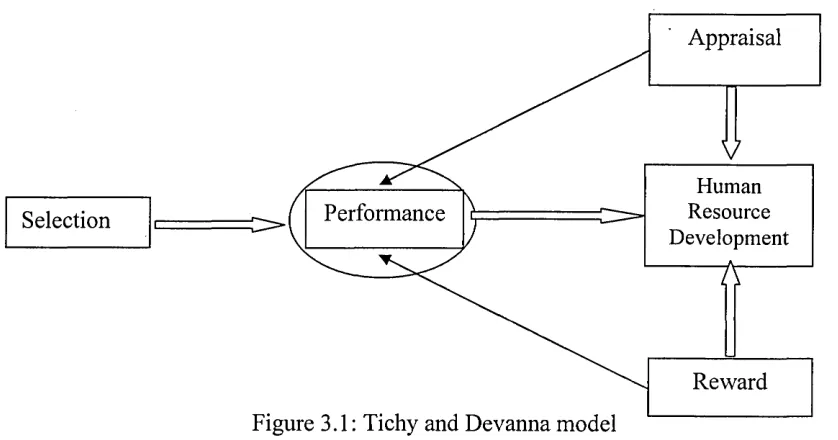
Figure 3.1: Tichy and Devanna model...37
Figure 3.2: The Harvard model of HRM ...39
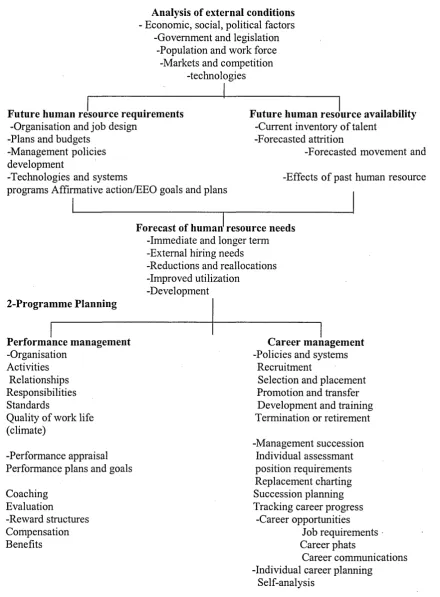
Figure 3.3 Human Resource Planning Process ...41
Figure 4.1: Model development process...61
Figure 4.2: System dynamics methodology... 64
Figure 4.3: Integrated system dynamics framework...67
Figure 4.4: Process of System Dynamics... 71
Figure 4.5: Open loop and closed loop systems... 72
Figure 5.1: Input-output analyses...95
Figure 5.2: Influence diagram of the SKPM... 97
Figure 5.3: A block diagram representation of the SKPM...99
Figure 5.4: Staff Level Criteria... 104
Figure 5.5: Recruitment Completion Rate Criteria...106
Figure 5.7: Plot of the data collected on Staff leaving rate... I l l Figure 5.8: Response of SKPM for varying values of T r... 115
Figure 5.9: Response of SKPM for varying values of Ti... 116
Figure 5.10: Response of SKPM for varying values of T a...117
Figure 5.11: Plot of the data collected on Staff leaving rate...121
Figure 5.12: Response of SKPM for varying values of T r...124
Figure 5.13: Response of SKPM for varying values of T a...125
Figure 5.14: Response of SKPM for varying values of T r...126
Figure 6.1: Influence diagram of the APSKPM...139
Figure 6.2: A block diagram representation of APSKPM...141
Figure 6.3: APSKPM Performance indices... 145
Figure 6.4: Response of APSKPM for varying values of Ti...152
Figure 6.5: Response of APSKPM for varying values of Ta... 154
Figure 6.6: Response of APSKPM for varying values of T r...156
Figure 6.7: Response of APSKPM for varying values of Tw... 158
Figure 6.8: Response of APSKPM for varying values of Tc... 160
Figure 6.9: Response of APSKPM for varying values of Ti... 168
Figure 6.10: Response of APSKPM for varying values of Ta...170
Figure 6.11: Response of APSKPM for varying values of T r...172
Figure 6.12: Response of APSKPM for varying values of Tw...174
Figure 6.13: Response of APSKPM for varying values of Tc...176
Figure 7.1: Influence diagram of APSKPM + (P + 1)...181
Figure 7.2: A block diagram representation of APSKPM + ( P + 1)... 183
Figure 7.3: Response of APSKPM+(P+I) for varying values of Ti... 190
Figure 7.4: Response of SKPM+(P+I) for varying values of T a ... 192
Figure 7.5: Response of APSKPM +(P+I) for varying values of Tr...194
Figure 7.6: Response of APSKPM+(P+I) for varying values of Tw ...196
Figure 7.7: Response of APSKPM +(P+I) for varying values of T c...198
Figure 7.8: Response of APSKPM + (P+I) for and varying values of Ki ...200
Figure 7.10: Response of APSKPM+(P+I) for varying values of Ti...208
Figure 7.11: Response of APSKPM+(P+I) for varying values o fT a ...210
Figure 7.12: Response of APSKPM+(P+I) for varying values of Tr...212
Figure 7.13: Response of APSKPM+(P+I) for varying values of Tw ...214
Figure 7.14: Response of APSKPM+(P+I) for varying values of T c...216
Figure 7.15: Response of APSKPM+(P+I) for varying values of K i...218
Figure 8.1: Influence diagram for three grades PPSKPM model... 227
Figure 8.2: Block diagram representation of three staff grades PPSKPM... 229
Figure 8.5: Actual staff level behaviour for PPSKPM model for...233
Figure 8.6: Staff gap behaviour for PPSKPM model... 234
Figure 8.7: Influence diagram for three grades PP APSKPM m odel...239
Figure 8.8: Block diagram representation of three staff grades PP APSKPM...241
Figure 8.9: Promotion completion rate behaviour for PP APSKPM model ...244
Figure 8.10: actual staff level behaviour for PP APSKPM m odel...244
Figure 8.11: Staff gap behaviour for PP APSKPM model...245
Figure 9.1: Response of SKPM, APSKPM and APSKPM+(P+I) ...265
LIST OF TABLES
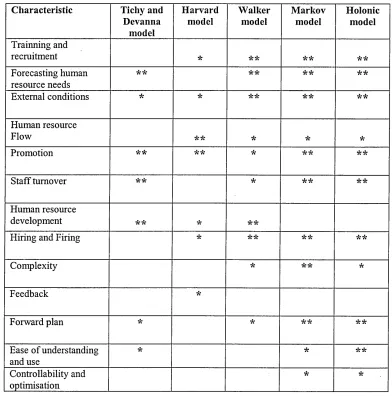
Table 3.1: Assessment of the HRP models...48
Table 3.2: Assessment of the HRP models including system dynamics models...50
Table 4.1: typical approach used for data collection and information processing...68
Table 4.2: GDP and Per Capita income in Libya in the period 1967-1997... 77
Table 5.1: Glossary of terms used in the SKPM block diagram...100
Table 5.2: Performance index for the Skill Pool Model (SKPM)...118
Table 5.3: Performance index for the Skill Pool Model (SKPM) for case study A 119 Table 5.4: Descriptive statistical characteristics for SKPM for case study A ...120
Table 5.5: Performance index for the Skill Pool Model (SKPM) for case study B 127 Table 5.6: Descriptive statistical characteristics for SKPM in case study B ...128
Table 6.1: Glossary of terms used in APSKPM block diagram...143
Table 6.2: Performance index for the Skill Pool Model (APSKPM)... 161
Table 6.3: Performance index for APSKPM Model in case study A... 162
Table 6.4: Descriptive statistical characteristics for APSKPM for case study A ... 163
Table 6.5: Performance index for APSKPM Model, in case study B ... 177
Table 6.6: Descriptive statistical characteristics for APSKPM for case study B ... 178
Table 7.1: Performance index for APSKPM + (P+I) Model in case study A ... 201
Table 7.2: Descriptive statistical characteristics for APSKPM + (P+I) for case study A . 202 Table 7.3: Performance index for APSKPM +(P+I) Model in case study B ... 219
Table 7.4: Descriptive statistical characteristics for APSKPM +(P+I) for case study B... 220
Table 8.1: Performance index for the three grades (PPSKPM)...235
Table 8.2: Performance index for (PPSKPM) Model ...236
Table 8.3: Performance index for (PPSKPM) Model ...237
Table 8.4: Performance index for (PPAPSKPM) M odel... 246
Table 8.5: Performance index for (PPAPSKPM) M odel... 247
Table 8.6: Performance index for (PPAPSKPM) M odel... 248
Table 8.9: Summary the descriptive statistical characteristics for actual inventory level and promotion completion rate effect of the optimum design parameters... 252
Table 9.1: Assessment of the HRP models against the characteristics listed...260 Table 9.2: Summary the effect of the optimum design parameters and corresponding
performance indices for case study A ...267 Table 9.3: Summary the effect of the optimum design parameters and corresponding
NOMENCLATURE
1/ Ti It is the proportional constant to deal with the discrepancy between target staff and actual staff level. The units are per month.
1/S This represent the integration process whereby the actual staff level is accumulated over time through the recruitment and training development.
IOBPCS Inventory and Order Based Production Control System
APIOBPCS Automated Pipeline Inventory and Order Based Production Control System
APSKPM Automated Pipeline Skill Pool Model
APSKPM+ (P+I) Automated Pipeline Policy using Integral controller
ASL Actual staff level
DRSIP Target recruit staff in process
DSL Desired staff level
FSLR Forecast staff leaving rate
ITAE Integral Time Absolute Error
MSE Mean square error
PPAPSKPM Progression and Promotion Automated Pipeline Skill Pool Model
PPSKPM Progression and Promotion Skill Pool Model
PSLR Present staff leaving rate
RSIP recruit staff in process
RSIPA recruit staff in process adjustment
SG Staff gap
SKPM Skill Pool Model SKPM.
Ta Time over which staff leaving rate is averaged in months. Tc Estimated recruitment lead time
Ti Time to reduce the staff gap to zero measured in months. Tp Promotion process delay measured in months
Tr Recruitment process delay measured in months. Tw time to reduce recruit staff gap deficit to zero
X mean value
XI Duration of the staff level deficit
X2 Rise time
X3 Duration of overshoot
Y1 Initial drop of staff level
Y2 Peak staff level overshoot
Y3 Peak overshoot
-Ota This is the multiplier used in simulation to take account of the
time to average the staff leaving rate.
Or This is the multiplier used in simulation to take account of
CHAPTER 1 INTRODUCTION
1.1 Chapter overview
This chapter is devoted to describing the research problem addressed in this thesis
together with the research aims and objectives. A simple diagram of the structure of
the thesis and research framework is included.
1.2 Background to the research
More than ever before, human resource planning (HRP) needs to be responsive to the
needs of organizations and the staff they employ. Walker (1974) has suggested that,
through HRP, management should be able to develop and deploy the right people at
the right places at the right times to fulfill both organizational and individual
objectives. Firms, therefore, should be linking their human resource planning to the
organization's long-term business objectives and should be constantly looking for
strategies that will help them to cope with competition and diversification.
Organizations should also be predicting future human resource levels in order to
forecast recruitment and training needs to ensure that sufficient experienced people
are rising through the rank to fill vacancies at higher levels (Brian and Cain, 1996).
Interest in human resource planning has grown dramatically over the past few years.
HRP is beginning to respond to a greater demand for new talent due to increased
competition in the world market. This fact was pointed out by Walker (1980) some
while back, but is still valid today. Executives are being forced to rethink the way in
staff. Firms are constantly looking out for strategies that will help them cope with
complexity and competition, and the previous lack of linkage between human
resource planning and long term objectives. Firms are now realizing that skilled
people are needed to coordinate the human capital and material resources required to
accomplish objectives.
The dynamics of market forces and job opportunities are also becoming a challenge
for many organizations as they seek to retain their core staff. Companies are losing
critical business knowledge as employees walk out from their doors. Also, the recent
transition from the industrial market to the knowledge economy dictates an
immediate and wholesale retraining scenario for many organizations to remain at the
cutting edge of technology. An efficient human resource or intellectual capital
investment strategy demands a good understanding of the dynamics of recruitment
and training issues (Hafeez, 2003).
Skill, knowledge and competence cannot be bought and delivered instantly. It takes
a considerable amount of time to do this. Human resource planning therefore must
also be concerned with improving staff morale and productivity and must seek to
minimize staff turnover. HRP should help to facilitate companies make effective use
of employee skills, provide training opportunities to enhance those skills, and boost
employee satisfaction with their job and working conditions. Training should
include employer-sponsored efforts to improve the skill and competences of
employees through education, work-shadowing, and apprenticeship programmes for
personal development. Additionally, human resource planning should involve
analysis of the issues and challenges facing a particular occupation such as the supply
and demand of skilled people, the impact of changing technology, the need for skills
upgrading and the effectiveness of existing training.
The research undertaken in this thesis is concerned with human resource planning.
Specifically it concerns how an organization can ensure in a timely way that it has
the requisite people with the right skills needed to achieve its corporate objectives.
The research uses system dynamics (Forrester 1961) and draws on ideas used in
Inventory and Order Based Production Control Systems (IOBPCS) as developed by
Coyle (1977) and Towill (1982). In this context system dynamics is used to ensure
that the level of production required (order rate) matches the production completion
rate, where the order rate is based upon the level of goods demanded, and to ensure
that the level of sales equals the production rate. In the research described in this
thesis the skill levels of staff in human resource planning are the analogue of
inventory levels in production planning. The resulting system dynamics models are
called Skill Pool Models (SKPM) for obvious reasons and were first derived by
Hafeez (2000). The work in this thesis builds strongly on the work of Hafeez and
Abdelmeguid (2003).
During this thesis we are going to extend Hafeez’s work by validating SKPM models
for various situations in industry. The models will be developed to provide
companies with the means of producing optimum HRP strategies. They will enable
the companies to best manage the actual level of the skill pool, through recruitment
and training, to reach the desired levels needed to achieve organizational goals.
major influences and feedback loops that exit between the variables in the models.
Dynamic simulation will then be used to analyse the system behaviour and enable the
decision maker to gain insight into the organization's HRP function.
System dynamics is typically defined as that part of management science that deals
with the controllability of managed systems over time, usually in the face of external
shocks (Sterman, 2001). In the HRP context a shock may well correspond to a
change in the normal staff leaving rate, or in the level of production - thus
necessitating the need for a change in the staff resources that may be needed - or a
change in the environment in which the organization resides. System dynamics
allows us to study and manage complex feedback systems by creating models
representing real world systems, (Coyle 1977). In this thesis, computer simulation
will be used to analyze the behaviour of complex dynamic HRP systems and will
make use of the proprietary software package known as ithink.
1.3 Statement of the research problem
The aim of this research is to demonstrate that system dynamics can be used as a tool
in human resource planning as an aid to decision making. Specifically this study is
concerned with extending the Skill Pool Model of Hafeez (2003), and demonstrating
its usefulness in devising optimum human resource strategies for real companies.
The research work will be concerned with creating system dynamics models and
studying their behaviour. This will facilitate an understanding of the relationship
decision rules, thus enabling the company to optimise its recruitment and training
strategy to suit organizational needs.
1.4 Research Objectives
The specific objectives for this research work are the following:
-1. To establish the cause and effect relationships between changes in
recruitment, training and actual staff level by using causal loop diagrams
2. To extend the Skill Pool Model and validate it for various cases where it is
important to be able to optimise human resource planning strategies as
identified by Hafeez and Abdelmeguid (2003)
3. To develop and validate system dynamic models to address progression and
regarding issues in human resource planning and
4. To demonstrate that system dynamics can be used as an aid to decision
making in Human Resource Planning.
1.5 Literature review
Human resource planning and modelling are the main topics of the literature review.
The literature review has been carried out to enable the researcher to understand the
concepts of using system dynamics in human resource planning. The literature
review has also been useful in determining a suitable methodology for the research.
Amaratunga and Baldry, (2001), state that:
"A literature review is useful in revealing the established and generally
accepted facts regarding the situation being studied, and usually enables one to
by previous researchers in the field. A literature review may also assist a
researcher in identifying an unsolved problem in the field being studied and this
may then itself become the main focus o f the research study".
A literature review was undertaken so that as much relevant information could be
obtained and evaluated in respect of the given topic. The literature review enabled the
researcher to understand the current status of the topic and subsequently consolidate
thinking about the topic, thus identifying the best way forward.
Carrying out a literature review, as stated by Holt (1997), will also help to:
■ Understand the peripheral issues
■ Reveal the extent to which research and current understanding has reached
■ Identify the key variables impacting upon the topic
■ Suggests routes to take with regard to advancing knowledge or understanding of
the topic
■ Suggests routes with regard to solving issues surrounding the topic
■ Yield source data
■ Help generate other ideas
■ Compare ideas and thinking with respect to existing knowledge.
Carrying out the literature review, with these aspects in mind, has also enabled the
researcher to understand the current status of the topic.
1.6 Research methodology
The methodology used for this research is an integrated system dynamics
models for human resource planning, and studying their behaviour over time. The
methodology will adopt four main features as shown in Figure 1.1:
1. Literature review, along the lines as described earlier.
2. Development and validation of conceptual (system dynamics) models.
3. Testing these models in the Libyan petrochemical sector by using real data
4. Using the models to determining optimum HRP policy parameters.
In addition to the above four stages, there will be a fifth stage, namely that necessary
to validate the achievement of the overall research objective:
5. Developing key success factors in order to assess achievement of the main
research objective.
This approach to the research will therefore test the applicability of the models in the
petrochemical industrial sector. By showing later in Chapter 4 that this sector is
typical of many where HRP is important, and therefore also test the suitability of
using system dynamics in human resource planning more generally.
Concept Analysis Design Implementation
►
Literature Review
Guidelines for human resource policy Application o f the
simulation model Development and
Validation o f conceptual model
1.7 Structure of the thesis
This thesis is presented in nine chapters. Chapter 1 includes review, general
background, the need for research, the research outline and research methodology.
The research outline is divided into the research aim, objectives, hypothesis and the
research questions. Also introduced is the literature review and its importance as part
of the research methodology.
Chapters 2 and 3 give a comprehensive review of the literature on human resource
planning, and review the models used in human resource planning.
Chapter 4 covers the research methodology. It discusses the issues related to research
philosophies, research approach, research design, research techniques, and research
methods (data collection and sources of data). This chapter also provides historical
background about the Libyan petrochemical industry
Chapters 5, 6 and 7 concentrate on creating system dynamics models for human
resource planning and testing these with data relating to the Libyan petrochemical
sector.
In Chapter 8 the skill pool models are enhanced to include three grades of staff. By
including grades the models can now be used to determine optimum promotion and
progression, as well as recruitment polices. In each of Chapters 5, 6, 7 and 8, system
dynamics and system thinking is used to develop causal loop diagrams to display all
An evaluation of the research carried out against the aims and objectives set for the
research is carried out in Chapter 9, where recommendations for future work are also
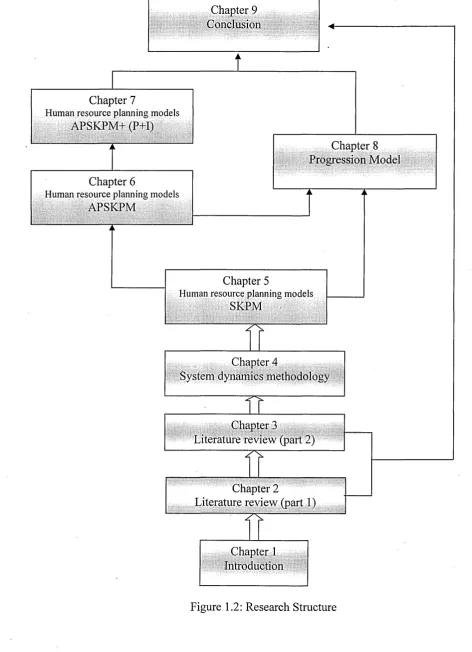
summarised. Figure 1.2 below shows the structure of the thesis in diagrammatic
Chapter 6
Human resource planning models
APSKPM Chapter 7
Human resource planning models
APSKPM+ (P+I)
Chapter 8 Progression Model Chapter 9
Conclusion
Chapter 5
Human resource planning models
SKPM
Chapter 4
System dynamics methodology
Chapter 3
Literature review (pan 2)
---Chapter 2
Literature review (part 1)
Chapter 1 Introduction
[image:31.613.55.528.34.686.2]1.8 References
• Amaratunga, D., and Baldry, D., (2001), “case study methodology as a means of Theory building: performance measurement in facilities management organisations”, MCB University Press, Vol. 50, No. 3, pp. 95-
104.
• Brian, B. and Cain, D., (1996), "Holonic modelling: human resource planning", International Journal of Manpower. Vol. 17, pp. 30-45.
• Coyle, R.G, 1977), “Management System Dynamics”, Chichester, John Wiley &Sons.
• Forrester, J. W (1961), “Industrial Dynamics”, The MIT Press: Cambridge, MA.
• Hafeez, K., Griffiths, M., and Naim, M.M. (1996), "System Design of a Two-echelon Steel Industry Supply Chain", International Journal of Production Economics. Vol. 45, pp. 121-130.
• Hafeez, K. (2000), “Knowledge management in supply chain” Conference paper, July 2000, Florida USA.
• Hafeez, K. and Abdelmeguid, H. (2003), "Dynamics of human resource and knowledge management", Journal of Operation Research Society.Vol. 15, pp. 153-164.
• Holt, G. (1997), "A Guide to Successful Dissertation Study for Students of the Built Environment”, 2nd Edition. The Built Environment Research Unit. University of Wolverhampton.
• Sterman. J. D. (2001), “Systems Dynamics Modelling: Tools for learning in a complex world”, California Management Review. Vol. 43, Issue 2004. • Towill, D. R, (1982), “Dynamic analysis of an inventory and order based
production control system”, International Journal of Production Research, Vol 20. pp 671-687.
• Walker, J. W. (1974), Evaluating the practical effectiveness of human resource applications.
CHAPTER 2
REVIEW OF LITERATURE (Part 1)
2.1 Chapter overview
This chapter presents a review of the literature related to the role of human resource
planning and the approaches involved. It looks specifically at the essential duties
performed in carrying out the human resource planning function.
2.2 Introduction
A review of human resource planning literature, dated between 1967 and 2002,
indicates that there is increasing interest in this field. Most organizations have been
encouraged by the significant role HRP can play within their companies, especially
with the turmoil that seems ever present in the business environment. It allows them
to plan ahead (Meshoulam & Baird 1987). Technological, economic and social
changes are causing organizations to focus their attention on HRP to achieve their
objectives, (Tichy, Fombrun & Deranna, 1982).
Furthermore, it was found that definitions relating to HRP, to be used in this study,
were sufficiently appropriate since they correlated with effective planning and with
Walker’s (1980) definition of HRP, as well as with other definitions of planning used
by human resource researchers. In Walker’s redefined delineation of what steps are
necessary for the HR manager to strategically follow HRP activities in an
organisation, he also stated that, "Human resource planning is the systematic analysis
of current and future HR requirements and the formulation of strategies, plans and
process that endeavours to monitor and manage the flow of people into, through, and
out of the organization in order to achieve corporative goals; this process has to take
into consideration the total corporate plan and many environmental issues that effect
the employment of people.
2.3 Some definitions of Human Resource Planning
Numerous definitions, as stated by Porter (1980), have been given on the subject.
Also, different terms have been used to identify it, such as: work force planning,
human resource planning, manpower planning, personnel planning, and employee
planning. One definition of HRP given by Peter Reilly (1996) is the following:
“Human Resource Planning is a process in which an organisation attempts to estimate
the demand for labour and evaluate the size, nature and sources of the supply which
will be required to meet that demand".
Walker (1974 and 1980) and Tracy (1985) are two influential writers who have
proposed good definitions for human resource planning. As indicated earlier, Walker
defines HRP as the systematic analysis of current and future human resource
requirements and the formulation of strategic plans and programmes for the
acquisition, utilisation, development and retention of employees that are needed to
achieve the goals of the organisation.
Walker also defines strategic planning as the process of setting organisational
objectives. He has emphasised that HRP is the process of analysing an organisation’s
the human resources needed, performance management, and career management.
Walker (1989) argues that forecasting human resources can be accomplished only if
human resource planning is, indeed, in the business plan schedule. Programme
evaluation is very important in that an analysis of needs leads to the planning of the
programmes to be conducted.
Tracy (1985) also gives a definition of what HRP consists of, that is suitable for
inclusion in this research, as follows: “Current human resource planning practices
include strategic human resource planning and selection, as well as employee
development, career planning, information systems, forecasting, and evaluation of
employee performance”.
2.3.1 The environment within which HRP takes place
Companies carry out human resource planning in an environment which is always
changing. Changes may be of a political nature, an economic nature, a technical
nature and so on. The political environment includes executive orders (e.g.
government instructions regarding production), legislation, and regulations that could
have a major impact on corporate HRP activities. The economic environment
concerns include major changes in economic factors, such as the unemployment rate
and inflation rate that can have a potential impact on the HRP process. The technical
environment may include the impact of using advanced technology on production,
communications, computers and energy use. The use of materials and natural
2.4 Human Resource Development
Human resource planning concerns forward looking analysis of current and future
human resource development needs, issues and challenges facing the particular
occupation concerned such as the supply and demand of skilled people, the impact of
changing technology, the need for skill upgrading and the efficiency of the existing
training. Walker (1980) indicated that HRP can be defined as the process of
analysing an organization's human resource needs under changing conditions and by
developing activities necessary to satisfy these needs.
Furthermore, human resource planning, as defined by Kastens (1979), is the organised
learning experiences in a specific period of time to increase the possibility of
improving job performance or growth. And the development of human resource is
based on the level of staff skill; it is conducted in an organisational setting, and should
aim to change the behaviour of individuals so as to improve their performance.
Gordon McBeath (1992), however, defined HRP as the individual development of
knowledge and skills, as opposed to organisational development, which focuses on
improving structures and processes that characterised working relationships..
Human resource development is commonly referred to as training and includes
employer sponsored efforts to improve the skill and competences of employees
through education, training and development. Human resource development is
therefore equivalent to employee development or staff development, and the training
is focused on learning about the present job. In this connection, Kao & Lee (1998)
found that maximised utilisation of the human resource depends on effective flexible
resource development is the strategic management of training and development of
professional education to achieve the objectives of the organisation, while at the same
time ensuring the full utilisation of the knowledge and skills of individual employees.
2.5 The Contemporary purpose of HRP
As researchers have reported, there are many definitions and terms used to describe
the human resource planning function. Here, as elsewhere, development of
terminology has moved on at different speeds and in different directions, leading to
something of a mismatch between the concepts and the labels used to describe them.
In this section we want to clarify what we mean by the concept of HRP.
"Manpower planning is an essentially quantitative technique concerned with
forecasting the demand and supply of workforce"- Bramham (1994). Arguably, it
now has a wider meaning, including plans made across the whole range of personnel
and development activity. HRP is concerned with looking ahead and using systematic
techniques to assess the extent to which an organisation will be able to meet its
requirements for workforce in the future (Taylor, 1998) in order to have the right
people at the right places at the right time. According to Taylor (1998), the main
distinction is between those who see the term 'human resource planning' as having
broadly the same meaning as the longer established terms ‘workforce planning’ and
‘manpower planning’, and those who believe human resource planning to represent
something rather different.
Mullins (1996) has argued that effective human resource planning can help anticipate
potential future difficulties while there is still a choice of action. Forward planning
development and staff progression, early retirements, salary levels and
accommodation requirements.
Bramham (1987) presents a more detailed view of six basic objectives which are
similar to those mentioned by Mullins (1996) that are thought to constitute the
purpose of human resource planning.
The first objective, and the main purpose behind the use of human resource planning,
is to give a forward looking insight into, not just the number of staff, but also the type
of skills, and attributes of the people that will be needed in the future. HRP provides
the information on which recruits base their activities and it reveals what gaps there
are between the demand and supply of people with particular skills (Storey, 1995).
The second objective aims to look at what training and development activities need to
be undertaken to ensure that existing employees and new recruits posses the required
skills at the right time ( see also Bramham 1988).
The third objective is looking for work force costing and to explain how HRP assists
in cost reduction by aiming to work out in advance how organizational operations can
be staffed most efficiently.
The fourth objective is redundancy. HRP is an effective tool in the anticipation of
future redundancies and therefore allows remedial action to be taken, such as
recruitment freezing, retraining, and early recruitments so as to reduce staff numbers
The fifth objective is, HRP provides important information for use in the bargaining
process. It is particularly significant when long term deals are being negotiated to
improve productivity and efficiency. In such situation, the information provided by
human resource forecasts enables calculations to be made concerning how great an
increase in pay, or how great a reduction in hours, might be conceded in exchange for
more productive working methods and processes (Bramham, 1988).
The sixth objective deals with planning of accommodation, such as future need for
office space, car parking and other workplace facilities.
2.6 The importance of Human resource planning
Skilled staffs are needed to coordinate the human, capital, and material resources
required to achieve the organisation's goals. Companies give more than lip service to
the importance of human resource planning in achievement of business objectives and
necessary staff are recruited in the market place to meet future needs. Business
planners tend to focus on financial and marketing aspects of planning, in parallel with
linkages between human resource planning and strategic business planning. Kastens
(1979) has said, “Planning is a technique to establish and maintain a sense of
direction. Planning would ensure that activities were oriented toward a chosen goal
and, therefore, would create progress toward that goal". It would allow people to
question current planning methods and would evoke new ways of thinking and acting
strategically.
opportunities to enhance those skills, and boost employee satisfaction with their job
and working conditions. On the other hand, Human resource planning is concerned
with forward looking analysis of current and future human resource development
needs, issues and challenges facing a particular occupation such as the supply and
demand of skilled people, the impact of changing technology, the need of skills
upgrading and the efficiency of the existing training.
2.7 Promotion and Progression in Human Resource Planning
One of the main aims of HRP is to create a situation in which staff know what is
going on in the organization and understand what their contribution is. Most
organization tend to be hierarchical with a finite number of job grades where
individuals can stay in their existing grade, leave or be transferred to another grade
(normally a higher grade). The number of staff in any grade is known from personnel
records and the probabilities of leaving or transferring to another grade can be
estimated reasonably accurately from past data. However, most organizations feel the
need to predict future human resource levels in order to forecast recruitment and
training needs and to ensure that sufficient experienced people are rising through the
ranks to fill vacancies at higher levels. The nature of the problem seems ideally suited
to the use of statistical analysis as it clearly involves probabilistic transitions from a
set of known initial states. So, it is hardly surprising that HRP is the subject of many
academic publications on statistical processes. Of course, these approaches can be
easily solved using a variety of application software, and evidence suggests that the
use of such software is increasing in popularity, especially since the later part of the
Promotion and progression has always been an important part of human resource
planning. The research undertaken in this thesis will look specifically this aspect of
HRP and models will be developed to describe and understand the impact of
promotiona and progression within a hierarchical company.
2.8 Effective Human Resource Planning
Effective human resource planning is the process of analysing an organisation's
human resource needs under changing conditions and developing the activities
necessary to satisfy these needs in a timely, accurate and professional fashion.
Beardwell and Holden (2001) summarise the need for HRP as one that involves a
quantifiable and quantitative dimension leading to:
• recruitment plans', to avoid unexpected shortages.
• the identification o f training needs’, to avoid skill shortages.
• management development: in order to avoid bottlenecks of trained staff and to
avoid managerial shortages.
• industrial relations plan: to avoid industrial unrest by seeking to change the
quantity and quality of employees.
On the other hand, effectiveness of human resource planning largely depends on how
relevant it is to practical managerial concerns and practices, and in turn to the
demands prevailing upon an organisation. Benefits associated with effective HRP and
management include for example, the identification of sources of manpower which
are likely to provide sufficient numbers of employees having the appropriate levels of
providing a suitable worker job "fit" and the capability of integrating important
elements of manpower planning into the overall corporate planning system in the
organisation (Moore 1977).
2.9 The Role of HRP
Many authors report on the importance of the roles of HRP. They contend that there
has been mounting enthusiasm for awarding human resource management a more
strategic role in organizations. The researchers have noted that HRP is being
encouraged to link specific HRP programmes to strategic outcomes (Martell, Carrol &
Gupta, 1992). Studies also indicate that by matching HRM with strategy, critical HR
skills, attitudes, behaviours and performances, that are needed to successfully
implement planning strategies, can be achieved and maintained (Brockbank 1999).
HRP can provide organizations with the tools it needs to address the human capital
management challenges. Effective workforce planning requires a strong manager,
clearly articulated vision, mission, and strategic objectives, and cooperative,
supportive efforts by staff in a variety of functional areas. When done properly,
workforce planning can be a powerful tool to help public sector organizations meet
their human capital needs and achieve their objectives (Reichenberg 2002).
Human resource planning is the strategic alignment of an organizations human capital
with its business direction. It is a methodical process of analysing the current
workforce, identifying future workforce needs, establishing the gap between the
present and the future, and implementing solutions which help organization to
redeployment, attrition, and employee training and development. There are several
steps that must be included in any comprehensive workforce planning effort:
• Analyzing present workload, workforce, and competencies.
. • Identifying workload, workforce, and competencies needed for the future.
• Comparing the present workload, workforce, and competencies to future needs
to identify gaps and surpluses.
• Preparing and implementing plans to build the workforce needed for the
future.
• Evaluating the success of the workforce planning model to ensure it remains
valid and objective.
2.10 Essential human resource planning duties
As the field of planning has emerged, the human resource aspects of management
have grown in importance. Human resource planning is the responsibility that all
managers have in performing human resource duties (Mathis & Jackson 2000).
A centralized human resource management function results in decisions being made
by top managers and human resource planning professionals; a decentralized human
resource planning function results in decisions being made by all managers and
human resource professionals throughout the organization. The contrasting views of
how the human resource management function is carried out represent extremes, not
choices, along a continuum. How an organization organizes its human resources
function is related to its culture, leadership, geographical dispersion of employees,
organizes its human resource management function, line managers have an explicit
role in managing human resource (Jackson & Schuler, 2000).
Vijayaragvan and Singh (1997) state that human resource planning is the key to
increased employee productivity. These authors regard human resource planning as
comprising the following activities: job analysis, recruiting, selecting, training,
appraising, leading, compensating, and organization development.
2.10.1 Job Analysis
Job analysis is the most basic activity in human resource management. It is the
process by which information about a job is collected and ordered. The most visible
output from job analysis is written job descriptions. Information from job analysis is
used in selection, training, performance appraisal, and compensation (Buford, 1991).
Competition for employees and equal employment opportunity legislation make job
analysis an essential organisational function (Ford, 1979).
Job analysis informs the human resource practitioner about the nature of a specific job
- in particular the major tasks undertaken by the staff position, the outcomes that are
expected, the job relationships with other jobs in the organisational hierarchy, and job
holder characteristics, (Heneman, & Judge 1997). Where a practice must be defended
on the basis of content validity, job analysis must establish the rational link between
the content of a practice and the content of job.
carry out a range of similar jobs. Once recruited staff will require to be trained for
these jobs, and the assumption will be that training requires the same amount of time
(determined by the company).
2.10.2 Orienting, Training and Development
Employee orientation, training and development programmes help organisations
retain competent employees. Training and development is a human resource planning
concern for several reasons (Bedeain, 1993).
It is a central element for human resource management and the principal vehicle for
developing skills and abilities of employees other than through job assignments. It is a
major area of expenditure, in out-of-pocket costs and in the time devoted by staff and
participants. It is an important means of influencing management values, attitudes,
and practice in human resource management, it is a communications medium
controlled by a company, and it is becoming a subject of concern with regard to legal
responsibility.
Orienting, training, and development programmes help employees learn about the
organization and their jobs, help employees improve job performance, and help
employees contend with new responsibilities (Nadler, 1980).
Orientation introduces newly hired individuals to their job and supervisors.
Effectively performed, it serves live main purposes (Bedeian, 1993). Orientation
supervisors. Training and development helps improve employee performance by
developing and enhancing worker competencies.
2.10.3 Recruitment, Selecting, and Hiring
Recruitment, Selecting, and Hiring are closely related parts of human resource
planning (Buford & Bedeian 1988). Recruiting is the process of generating a
sufficiently large group of applicants from which to select qualified individuals for
available jobs. Selection is the process of determining which applicants meet the
requirements of the job. Hiring is the process of employing an applicant identified
during the selection process. Recruitment practices are subject to numerous legal
issues (Heneman, and Judge, 1997). Equal employment opportunities and affirmative
action requirements affect the staffing process (Panaro. 1990). Conformity to legal
requirements regarding the staffing process requires that all procedures and tests be
reliable and valid (Dessler, 1997).
2.10.4 Demand for manpower
People are the greatest assets in any organization, and the inventory of skills is the key
to any management strategy. Analysis of manpower demand is an important area of
human resource planning which has made significant contributions to human resource
management. Meeting future needs for skills is the most frequently cited reason given
by employers for engaging in human resource planning (Greer and Armstrong, 1980).
Among the objective methods, regression analysis is probably the most widely
A similar technique is time series analysis (Bartholomew et a/., 1991), which
forecasts future demands by projecting from past demands. There are also other
objective methods like stochastic modelling and ratio analysis (Dyer, 1982). One
trend in the industrialized societies of the world is the continuous increase of labour
costs. Another trend is the shifting of the work force by manufacturing industries
toward the service sector. To compensate the increase in salaries and shortage in
workforce in organizations, the productivity must be improved. Many studies
(Burnham, 1982; Chirillo, 1989; El Mhamedi and Binder, 1992) indicate that
technology and management are the two broad categories of factors which have major
influence on productivity.
2.11 Summary
The objective of this chapter was to highlight the main studies relating to the research
problem of this thesis. Reviewing the literature helps in forming a structure for the
research and identifying the general conclusions drawn from the previous studies that
could be related to the problem of this study.
This chapter focused on definitions used in human resource planning and looked at the
theoretical background of the human resource planning process. The literature review
of human resource planning shows that HRP is the systematic analysis of current and
future human resource requirements and the formulation of strategies, plans and
programmes for the acquisition, utilization, development, and retention of the
employees needed to achieve the goal of organization. Three important conclusions
> Human resource planning is about ensuring that the correct number and mix of
skills is available at the right place at the right time doing things which result
in both the organization and individual receiving maximum long term benefits.
> The success of human resource planning is paramount to the survival of the
organization. There must be effective recruitment, initial training, and
continued development of the workforce.
> For effective human resource planning, an organization must learn to forecast
human resource needs more effectively. There is no doubt that quantitative
techniques can enhance problem solving abilities and hence improve decision
making effectiveness in this context.
2.12 References
• Bartholomew, D.J., Forbes, A.F. and McClean, S.I. (1991), Statistical Techniques for Manpower Planning, 2nd ed., Wiley, Chichester.
• Beardwell, I. and Holden, L. (2001), Human resource management: a contemporary approach. 3rd edition. Pearson education.
• Bedeian, A. G. (1993), ’’Human Resource Management” (3rd ed.). New York: Dryden Press.
• Bramham, J. (1987), "Manpower planning," In S harper, S (ed.): Personnel Management Handbook. London Gower.
• Bramham, J. (1988), “Practical Manpower planning," In S harper, S (ed.): Personnel Management Handbook. London Gower.
• Bramham, J. (1994), "Human resource planning,". (2nd Eds). London IPD. • Brockbank, W. 1999. If HR were really strategically proactive: present and
future directions in HR’s contribution to competitive advantage. Human
Resource Management, 38 (4): 337-352.
• Buford, J. A., (1991), “Personnel management and human resources: Concepts and applications for students and practitioners. Auburn University. • Burnham, D.C. (1982). “Productivity: an overview”, Handbook of Industrial
Engineering, John-Wiley, New York.
• Chirillo, L.D. (1989). “Statement by Louis D. Chirillo to the Commission on Marchant Marine and Defense”, Journal of Ship Production, Vol. 5 No. 1, pp. 61-65.
tki
• Dessler, G. (1997), “Human Resource Management 7 ed”. New Jersey: Prentice-Hall.
• Dyer, L. (1982), “Human resource planning: A field study”, Journal of Human Resource Planning. Vol 23. pp 156-169.
• El Mhamedi, A. and Binder, Z. (1992), “Socio technical design and evaluation of production systems”, International journal of Systems Science, Vol. 23, pp. 1141-1154.
• Ford, R. N. (1997), “Why jobs die and what to do about it”. New York: American Management Association.
• Garavan, T., Morley, M., Heraty, N., Lucewicz, J. and Suchodolski, A. (1998), "Managing human resources in a post-command economy: personnel administration or strategic HRM?", Personnel Review, Vol. 27 No. 3, pp. 200-212.
• Greer, C.R. and Armstrong, D. (1980), “Human resource forecasting and planning: A state of the art investigation”, Human Resource Planning, Vol. 3 No. 2, pp. 67-78.
• Heneman, H. G. and Judge, T. A. (1997), Staffing organization (2nd ed). Middleton, Wisconsin: Mendota House.
• Jackson, S. E., and Schuler, R. S. (1990). "Human Resource Planning Challenges for Individual/ Organisational psychologists"
• Jackson, S. E., and Schuler, R. S. (2000). "Managing Human Resources" A
th
partnership perspective (7 ed).
• Kao, C. and Lee, H.T. (1998). “Demand for industrial management manpower in Taiwan”, International journal of Manpower, Vol. 19 No. 8, pp 592-602.
• Kastens, M. L. (1979), “The why and how of planning”, Management planning (July-August), 33-35.
• Martell, K., Carroll, S. J., and Gupta, A. K. (1992), “What executive human resource management practices are most effective when innovativeness requirements are high?”.
tVi
• Mathis, R. L. and Jackson, J. H. (2000). Human resource management (9 ed). Cincinnati: South-Western.
• McBeath, Gordon (1992), The Handbook of human resource planning - Oxford: Blackwell,
• Meshoulam, I. Baird, L. (1987), “Proactive human resource management, human resource management”, Vol 26. pp 483-502.
• Moore, L.F. (1977). Manpower planning for Canadians. University of British Columbia. Institute of Industrial Relation. Vancouver.
• t h
• Mullins. L. J. (1996), Management and Organizational Behaviour. (4 ed). Pitman Publishing UK.
• Nadler, L. (1980), Corporate human resource development: A management tool. New York: Van Nostrand Reinhold.
• Panaro, G. p. (1990), Employment law manual. Boston: Warren Gorham Lamont.
• Porter, M. (1980), “Competitive advantage: Creating and substaining superior performance”. New York, Free Press.
• Raghavendra, B.C. (1991), “A Bivariate model for Markov manpower planning systems”, Journal of the Operational Research Society, Vol. 42 No.7, pp. 565-570.
• Reichenberg, N E, (2002), Planning For Future Human Resource Needs CAP AM Biennial Conference Glasgow, Scotland
• Storey, J. (1995), Human Resource Management: Still marching on, or marching out? In J Storey (Ed): Human Resource Management: A critical text, London, pp. 3-32.
• Taylor, S. (1998), People and Organizations, Employee Resourcing. The Cronwell Press Ltd, UK
• Tichy, N. Fombrun, C. J., and Devanna, M. A. (1982), “Strategic human resource management”, Sloan Management Review. Vol 23(2). pp 47-61. • Tracey, W. R. (1985), Human Resources Planning manager. Human
Resources Planning and Development Handbook, New York: Amacon. • Vijayaragvan, K. and Singh, Y. P. (1997). Managing human resources in
extention. B. E. Swanson, R. P. Bentz, and Sofanko (Eds). Improving Agricultural Extension (127-142).
• Walker, J. W. (1974), “Evaluating the practical effectiveness of human resource applications”. Journal of Human Resource Management, Vol 13. pp 19-27.
• Walker, J. W. (1980). Human resource strategy. New York: McGraw-Hill. • Walker, J. W. (1989). “Human resource roles for the 90's”, Human
resource planning, Vol 12. pp. 55-61.
• Walker, J. W. (1990), “ Human resource planning 1990s style” . Human Resource Planning, Vol 13. pp 229-240.
• Walker, J. W. (1992), Human resource strategy. New York. Me Graw-Hill, Book Company.
CHAPTER 3
Review of Literature (Part 2)
3.1 Chapter overview
This chapter presents a review of the literature related to approaches to human
resource planning and reviews models that are used in human resource planning. The
chapter addresses the issues of modelling complexity, and the need to link business
and HRP strategies. The main contribution of this chapter is to review and compare
human resource planning models.
3.2 Approaches to human resource planning
HRP is the process for identifying an organization's current and future human
resource requirements, developing and implementing plans to meet these
requirements, and monitoring their overall effectiveness. (Beardwell, 2004).
In Practice, HRP is concerned with the demand and supply of labour and problems
arising from the process of reconciling these factors (Tyson and York, 1989). Many
different approaches have been developed to accommodate different types of
constraints and the kind of policies under which the planning system might operate
(see, for example, Uwakweh and Maloney, 1991; Purkiss, 1981; Edwards, 1995;
Gaimon et al., 1987; Zeffane and Mayo, 1994b; Parker and Caine, 1996; Khoong,
1996; Dawson et ah, 1990; Castley, 1996). Broadly these approaches have been
3.2.1 Forecasts of the future human resource demand
The purpose of human resource forecasting is to estimate the human resource
requirements at some future time period. Demand forecasting is concerned with
estimating the numbers of people and types of skills the organization will need in the
future, Beardwell et al 2004. Basically there are two types of approach to assessing
future demands for manpower needed: the objective and the subjective approach.
The objective approach relies upon the projection of past trends and needs to take into
account shifts brought about by changes in technology and organisational goals.
Simple projections from the past to indicate the amount or type of staff required in the
future can be related to results from work study exercises or ratios of customers to
staff. These approaches often use techniques such as extrapolation/regression,
work/productivity measurement, or econometrics (see, for example, Bartholomew and
Forbes, 1991).
The subjective approach, in its most basic form, takes the form of managerial
judgement about future needs and, as MarchingtOn and Wilkinson (1996) emphasize,
in some cases it can be an excuse for speculation and even guesses based on limited
amounts of data. For example, Brian and Caine (1996) refer to the spreadsheet
tech