www.wjpr.net Vol 3, Issue 10, 2014. 1676
DNA DAMAGE IN SPERM DUE TO CRYOPRESERVATION – A
STUDY IN RATS
K. Thyaga Raju*, K. Kamala and K. Divya
Department of Biochemistry, Sri Venkateswara University, Tirupati, A.P. 517 502.
ABSTRACT
Background: Evaluating cryoinjury of rat spermatozoa is crucial to improving the probability of fertilization. Methodology: The epididymal rat spermatozoa were subjected to 15, 30, 45 and 60 days freezing separately, and then determined the motility, count, viability, morphological changes and DNA intactness after thawing each sample.
Results: The results of thawed samples showed that the
cryopreservation has significant effect on decrease in sperm motility (P < 0.01) to more than 50% and increase in percentage of dead or membrane damaged sperm formation. Therefore the frozen and thawed samples had decreased count and viability of spermatozoa (P < 0.01). Genetic damage was determined by comet assay and was compared in fresh and frozen-thawed samples, there were significantly More DNA strand breaks after cryopreservation. Conclusion: Our research findings have suggest that cryopreservation makes rat spermatozoa susceptible to external and internal damage, in particular during cooling process.
KEYWORDS: Comet assay, Count, Epididymis, Motility.
LIST OF ABBREVIATIONS: DNA: Deoxy ribonucleic acid, μl- Microlitre.
INTRODUCTION
The reduction of fertilizing ability of semen after freezing and thawing has been associated with a reduced rate of sperm motility, normal sperm morphology and damage of the sperm membranes. [1] In this sense, Zilli et al. [2] showed that sperm cryopreservation promotes DNA fragmentation, it has been reported that fertilization with DNA damaged sperm could
Volume 3, Issue 10, 1676-1683. Research Article ISSN 2277– 7105
Article Received on 14 October 2014,
Revised on 08 Nov 2014, Accepted on 01 Dec 2014
*Correspondence for
Author
Prof. K. Thyaga Raju
Department of Biochemistry, Sri Venkateswara University, Tirupati, A.P. 517 502.
www.wjpr.net Vol 3, Issue 10, 2014. 1677 increase the rate of abnormal karyotype in the offspring and increase the percentage of abortions, as well as the risk of cancer and abnormal weight in newborn mice. [3] Rats are commonly used laboratory animals for biomedical and genomic research4. Molecular and cellular biology techniques have allowed production of thousands of new strains of laboratory animals and this process is expected to accelerate in the future. Hence, the evaluation of this parameter and reduction of DNA injury shall be a priority in the design of new freezing thawing procedures and extenders, in order to increase fertilization rates, and also to ensure good embryo development, the health of the offspring, and the maintenance of the genotypes to be preserved. [5]
The mechanisms by which DNA damage is produced are not completely understood but several studies point out the possibility that oxidative and mechanical events could be responsible for DNA fragmentation and base modification. [6, 7] Recent works developed on sperm revealed that DNA fragmentation significantly increases after cryopreservation, and suggested that oxidation of specific bases could occur during freezing-thawing. [8] reported that the effects of cooling rates and role of freezing extenders on cryosurvival of rat sperm. In our study epididymal rat spermatozoa were subjected to freezing thawing processes and then determination of morphological changes and DNA damage were compared fresh with 15, 30, 45 and 60 days after preservation.
MATERIAL AND METHODS
Cryopreservation of sperm
www.wjpr.net Vol 3, Issue 10, 2014. 1678 Staining of semen samples
Samples of all dilutions of semen were analyzed by using Trypan blue/Giemsa staining at collection and after frozen as reported by Kovacs et al. [9] with minor modifications. The stained slides were observed using microscope for morphology of sperm.
Epididymal spermatozoa motility, viability and count
The fresh spermatozoa immediately after collection from cauda epididymis were used as control. A sperm viability test was done by the method described by World Health Organization. [10] Assessment of sperm count and motility were performed according to the method of Freund and Carol. [11]
Comet assay
The Sperm DNA intactness was investigated using the single cell gel electrophoresis (COMET) assay12 at alkaline conditions. Each precleaned slide was pre-coated with a layer of 1% normal melting point agarose in PBS (Ca2+ and Mg2+ free) and then dried at room temperature. Approximately, 100,000 sperm cells (10μl) were mixed with 0.75% low melting point agarose (80μl) at 370
C, and this suspension was dropped onto the first agarose layer. Slides were allowed to solidify for 20min at 40C and the slides were immersed in freshly prepared cold lysis buffer. The slides were then incubated at 370C in lysis buffer for 2h. The slides were removed from the lysis buffer, drained and placed in a horizontal electrophoresis unit filled with fresh alkaline electrophoresis buffer at 40C for 20min incubation to allow the DNA to unwind. Electrophoresis was performed at room temperature, at 25V for 30min. Following electrophoresis, slides were stained with 80μl 1x Ethidium Bromide, for 5min and then dipped in chilled distilled water to remove excess stain and later kept them for 20min in cold absolute 100% ethanol for dehydration. The slides were stored in a dry area and images were observed on a Fluorescent microscope (BX53) at 400x magnification.
Statistical Analysis
www.wjpr.net Vol 3, Issue 10, 2014. 1679 RESULTS
Table1. Effect of cryopreservation on rat sperm motility, count and viability.
Parameters Motility (%) Count (No. of
sperm/rat×106) Viability (%)
Fresh sperm (control) 67.66±0.51 54.05±0.35 68.0±0.63
15 days frozen 31.03±0.75 28.35±0.79 34.83±0.75
30 days frozen 29.50±1.04 27.75±0.41 32.33±0.51
45 days frozen 28.16±0.75 25.10±0.36 30.83±0.75
60 days frozen 26.16±0.75 24.15±0.56 29.0±0.89
The effect of freezing-thawing processes on motility, count and viability characteristics of epididymal rat spermatozoa before and after cryopreservation is shown in Table 1. Fresh sperm was analyzed for morphology, motility, viability and count. A significant difference in semen qualities was found in frozen thawed samples when compared to control (Table 1). In fresh semen 54 million sperms per mm, with 68% motility and viability were observed. After being stored for 15, 30, 45 and 60 days, the samples were thawed following the specified procedures. Significant differences among fresh and frozen- thawed semen motility, count and viability were found (Table 1). The viability of cells after storage and cooling was found to be 50% less compared to fresh samples.
Figure 1: Different categories of sperm stained with Trypan blue/ Giemsa: A. Sperm
with Bent tail, B. Sperm with Intact acrosome damage, C. Sperm without head.
www.wjpr.net Vol 3, Issue 10, 2014. 1680 Effect of cryopreservation on DNA damage
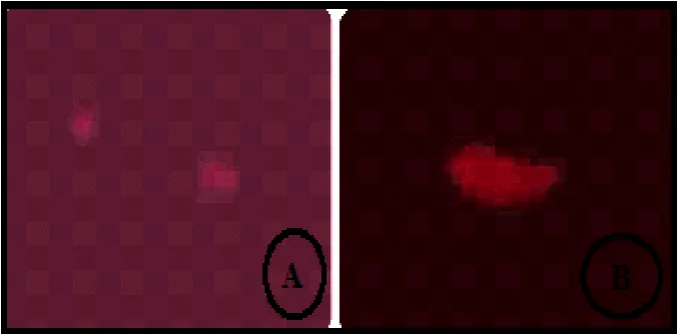
Figure 2: Comets observed under Fluorescent Microscope A) Bright feild, (B)
Flourescent.
Figure 3: Comets observed under Fluorescent Microscope A) Normal and Comet, (B)
Damaged DNA with comet.
Figure 4: Scanning Electron Micrograph (SEM) of cryopreserved rat sperm with
[image:5.595.128.468.312.479.2] [image:5.595.128.469.541.706.2]www.wjpr.net Vol 3, Issue 10, 2014. 1681 Sperm DNA fragmentation could be a consequence of the freeze-thaw process. [13] The sperm DNA fragmentation was detected by Comet assay which unfurls the damaged DNA like the tail of a comet (Figure 2&3) in acrosome of sperm head. The analysis of scanning electron microscope further showed that the acrosome damage due to cryopreservation (Figure 4). Compared with the fresh, cryopreservation induced DNA damage as indicated by the presence of the DNA tail (Fig. 3 B). A greater DNA tail area and longer DNA tail length (distance from DNA head to the end of DNA tail) reflect more extensive DNA damage.
DISCUSSION
Motility is a strong predictor of the ability of given semen to achieve fertilization in vivo or in vitro. The reduction in the motility is an irreversible looping of the flagellum normally occurs
in rat sperm tail. [14] Cryopreserved spermatozoa could be motile but incapable of fertilization due to acrosomal damage. [15] In our study, the increase in the tail abnormalities in rat epididymal sperm due to freezing and thawing was observed. The fact is that mass motility is more affected by freezing process than individual sperm motility. Because a rapid cooling of semen between room temperature to sub-zero temperatures is known to induce cold shock injury in rat spermatozoa hence this step of the cryopreservation in protocol may require skill and care.
www.wjpr.net Vol 3, Issue 10, 2014. 1682 offer useful information to effectively preserve and distribute valuable rat models and to reduce viable sperm loss after thawing of spermatozoa.
CONCLUSIONS
In conclusion, we have shown that sperm DNA fragmentation is associated with cryopreservation. There is a need for long-term studies to determine the possible impact of subtle genomic changes resulting from cryopreservation. Therefore the susceptibility of morphologically abnormal sperm to DNA damage and chromatin modification during the freeze-thaw process is significantly higher than that of sperm with normal morphology.
ACKNOWLEDGMENTS
The authors would like to thank DST PURSE centre, SV University, Tirupati for providing Fluorescent Microscope to the work.
FUNDING: UGC RGNF and UGC BSR OTG, New Delhi.
REFERENCES
1. Cortes-Gutierrez EI, Crespo F, Gosalvez A, Davila-Rodriguez MI,Lopez-Fernandez C, Gosalvez J. DNA fragmentation in frozensperm of Equus asinus: Zamorano-Leones, a breed at risk of extinction.Theriogenology, 2008; 69: 1022–1032.
2. Zilli L, Schiavone R, Zonno V, Storelli C, Vilella S. Evaluation of DNA damage in Dicentrarchus labrax sperm following cryopreservation. Cryobiology, 2003; 47: 227–35.
3. Fernandez-Gonzalez R, Moreira PN, Perez-Crespo M, Sanchez- Martin M, Ramirez MA, Pericuesta E, Bilbao A, Bermejo- Alvarez P, de Dios Hourcade J, de Fonseca FR, Gutierrez-Adan A. Long-term effects of mouse intracytoplasmic sperm injection with DNA-fragmented sperm on health and behavior of adult offspring. Biol Reprod, 2008; 78:761–72.
4. Lazar J, Moreno C, Jacob HJ, Kwitek AE. Impact of genomics on research in the rat. Genome Res. 2005; 15: 1717–1728.
5. Li ZL, Lin QL, Liu RJ, Xie WY, Xiao WF. Reducing oxidative DNA damage by adding antioxidants in human semen samples undergoing cryopreservation procedure. Zhonghua Yi Xue Za Zhi, 2007; 87: 3174 –77.
www.wjpr.net Vol 3, Issue 10, 2014. 1683 7. Perez-Cerezales S, Martinez-Paramo S, J. Beiraoa, M.P. Herraeza. Evaluation of DNA damage as a quality marker for rainbow trout sperm cryopreservation and use of LDL as cryoprotectant. Theriogenol, 2010; 74: 282–289.
8. Varisli O, Scott H, Agca C, Agca Y. The effects of cooling rates and type of freezing extenders on cryosurvival of rat sperm. Cryobiology, 2013; 67(2): 109–116.
9. Kovacs A and Foote RH. Viability and acrosome staining of bull, boar and rabbit spermatozo. Biotech Histochem, 1992; 67: 119-124.
10.WHO. Laboratory manual for the examination of the human semen and sperm-cervical mucus interaction. New York: Cambridge University Press, 1999.
11.Freund M, Carol B. Factors affecting haemocytometer counts of sperm concentration in human semem. J Repord Fertil, 1965; 8: 149-155.
12.Dhawan A, Bajpayee MM, Pandey AK, Parmar D. Protocol for the single cell gel electrophoresis/comet assay for rapid genotoxicity assessment. Sigma, 2003; 1077. 13.Steele EK, McClure N, Lewis SEM. Comparison of the effects of two methods of
cryopreservation on testicular sperm DNA. Fertil. Steril, 2000; 74(3): 450–453.
14.Holt VW, Morris GJ, Coulson G, North RD, “Direct observation of cold-shock effect in rat spermatozoa with the use of a programmable cryomicroscope”, Journal of Experimental Zoology, 1988; 246: 305-314.
15.Pursel VG, Johnson L, Rampacek G, “Acrosome morphology of boar spermatozoa incubated before cold shock”, Journal of Animal Science, 1972; 34: 278–283.
16.Azqueta, A, Lorenzo Y, Collins AR. In vitro comet assay for DNA repair: a warning concerning application to cultured cells. Mutagenesis. published online on April 2, 2009. 17.Sun JG, Jurisicova A, Casper RF. Detection of deoxyribonucleic acid fragmentation in