FORMULATION AND OPTIMIZATION OF FAST DISSOLVING
TABLETS OF OLMESARTAN
*Jainabi S. K., Urmila R., Asha S., Bhavani Prasad V. and Rammurthi M.
Au College of Pharmaceutial Sciences, Visakhapatnam, India.
ABSTRACT
The objective of the present study was to prepare fast disintegrating
tablets of olmesartan with sufficient mechanical integrity to achieve
faster disintegration for patient convenience. The tablets were prepared
by direct compression method using superdisintegrants using sodium
starch glycolate, cross carmellose sodium and cross povidone at 1,
1.2% level for F1 to F6 formulations and sodium bicarbonate at 1.8, 2,
2.2% levels, and citric acid at 0.2, 0.3%, 0.5% level. The tablets were
evaluated for hardness, friability, disintegration, uniformity of drug
content and dispersible time. They were found to be within I.P. limits.
The drug content of all tablets were found to be 98.3 – 100.2%. FT-IR shows no interaction
between drug and polymer. It was concluded that, the formulation F6 was found to be
optimizing formulation having disintegration time 29 seconds and % of drug release 98.58%
at the end of 10 min.
KEYWORDS: Olmesartan, Super disintegrate, Fast Dissolving, Cross Carmellose.
INTRODUCTION
Fast dissolving drug delivery is rapidly gaining acceptance as an important new drug delivery
technology. These dosage form dissolve or disintegrate in oral cavity within a minute even
without need of water or chewing, usually super disintegrants are added in formulation to
facilitate break-up and disintegrate rapidly in to smaller particles. The oral route of drug
administration is the most common and preferred method of delivery due to convenience and
ease of Administration. From a patient’s perspective, swallowing a dosage form is a
comfortable and a familiar means of taking medication. Although the oral route of
administration is preferred, for many drugs it can be a problematic and in efficient mode of
delivery for a number of reasons. Limited drug absorption resulting in poor bioavailability is
Volume 8, Issue 1, 295-304. Research Article ISSN 2277– 7105
Article Received on 14 Nov. 2018,
Revised on 04 Dec. 2018, Accepted on 24 Dec. 2018
DOI: 10.20959/wjpr20191-13930
*Corresponding Author
Jainabi S. K.
Au College of Pharmaceutial
Sciences, Visakhapatnam,
paramount amongst the potential problems that can be encountered when delivering an active
agent via the oral route. The need for non‐ invasive drug delivery systems continues due to
patient’s poor acceptance and compliance with existing delivery regimes, limited market size
for drug companies and drug uses coupled with high cost of disease management. ODT is one
such dosage form which is useful for, geriatric patients mainly suffering from conditions like
hand tremors and dysphasia. Pediatric patients who are unable to swallow easily because their
central nervous system and internal muscles are not developed completely. Traveling patients
suffering from motion sickness and diarrhoea that do not have easy access to water. Patients
with persistent nausea for a long period of time are unable to swallow. The enhancement of
solubility and dissolution rate of poorly water soluble drugs remains one of the most
challenging aspects of drug development. Several approaches have been followed in
improving solubility of such drugs. In the present investigation, olmesartan was selected as a
drug candidate for developing Fast dissolving drug delivery system. Olmesartan is the
angiotensin II receptor blocker used for the treatment of hypertension. It is white to light
yellowish-white powder or crystalline powder. It is practically insoluble in water and
sparingly soluble in methanol It is well absorbed by oral route and used in hypertension. Its
oral bioavailabiity is 26% and having 99% plasma proteins binding. It is metabolized in liver.
Elimination half -life of olmesartan is 13 hrs.
[image:2.595.26.574.498.657.2]Formulation of Dispersible Tablets of Olmesartan
Table No. 1: Formulation of dispersible tablets of olmesartan.
S.No Ingredients (mg) F1 F2 F3 F4 F5 F6 F7 F8 F9
1 Olmesartan 20 20 20 20 20 20 20 20 20
2 Sodium starch glycolate 10 10 - - - -
3 Croscarmellose sodium - - 10 12 - - - - -
4 Crospovidone - - - - 10 12 - - -
4 Sodium bi carbonate - - - 18 20 22
5 Citric Acid - - - 2 3 5
06 Mannitol 67 65 67 65 67 65 57 54 50
7 Aspartame 1.5 1.5 1.5 1.5 1.5 1.5 1.5 1.5 1.5
8 Magnesium stearate 1.5 1.5 1.5 1.5 1.5 1.5 1.5 1.5 1.5
TOTAL (mg) 100 100 100 100 100 100 100 100 100
RESULTS AND DISCUSSION
Olmesartan standard calibration curve
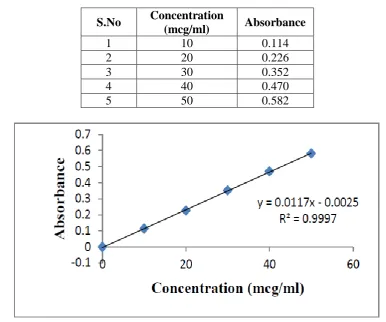
Serial of dilutions are made from standard working solution with distilled water to get
Table No. 2: Olmesartan standard calibration curve.
S.No Concentration
(mcg/ml) Absorbance
1 10 0.114
2 20 0.226
3 30 0.352
4 40 0.470
5 50 0.582
Figure 1: Standard graph of Olmesartan.
[image:3.595.73.523.485.661.2]Micromeritic Properties to the Olmesartan
Table No. 3: Micromeritic properties to the olmesartan.
Form. No
Bulk density (gm/cm3)*
Tapped density (gm/cm3)*
Compressib ility Index
(%)*
Hausner Ratio*
Angle of repose (θ°)* F1 0.425±0.002 0.464±0.001 8.60±0.002 1.094±0.002 23.21±0.035 F2 0.416±0.001 0.459±0.004 9.36±0.002 1.103±0.001 24.29±1.28 F3 0.425±0.001 0.465±0.001 8.60±0.004 1.094±0.003 30.31±0.350 F4 0.421±0.002 0.459±0.002 8.27±0.006 1.090±0.005 27.21±0.330 F5 0.431±0.003 0.470±0.007 9.57±0.002 1.105±0.002 26.26±0.426 F6 0.425±0.001 0.481±0.003 10.60±0.004 1.118±0.005 31.78±0.203 F7 0.401±0.004 0.462±0.002 9.5±0.002 1.201±0.007 24.48±0.801 F8 0.412±0.003 0.458±0.004 9.06±0.002 1.082±0.002 35.72±0.720 F9 0.419±0.007 0.424±0.001 8.07±0.007 1.063±0.004 23.78±0.210
The Bulk density of various powder mixed blends prepared with different super disintegrants,
was measured by graduated cylinder. The bulk density was found in the range 0.401– 0.431
The Tapped density of various powder mixed blends prepared with different super
disintegrants, was measured by graduated cylinder. The Tapped density was found in the
range 0.424 – 0.481 gm/cm3.
The Compressibility index of various powder mixed blends, prepared with different super
disintegrants, using bulk density and tapped density data, compressibility index was
calculated. It was found in the range 8.07 – 10.60%.
The Hausner’s ratio of various powder mixed blends, prepared with different super disintegrants, using bulk density and tapped density data, Hausner’s ratio was calculated. It
was found in the range 1.082 – 1.201.
Angle of repose ranged from 23.21to 35.72. The flow properties of powder blend in all
formulations exhibit good flow characteristics.
[image:4.595.221.375.392.555.2]Assay of Prepared Olmesartan Tablets
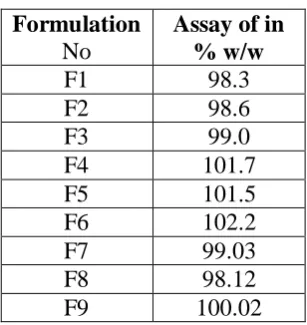
Table No. 4: Assay of prepared Olmesartan tablets. Formulation
No
Assay of in % w/w
F1 98.3
F2 98.6
F3 99.0
F4 101.7
F5 101.5
F6 102.2
F7 99.03
F8 98.12
F9 100.02
Tablets were evaluated by using assay method. The drug was obtained in the acceptable limit.
The drug content was found in the range 98.3 – 102.2%.
In–vitro drug release studies
Comparative Dissolution Profile of Olmesartan dispersible tablets in 0.1 HCL Buffer
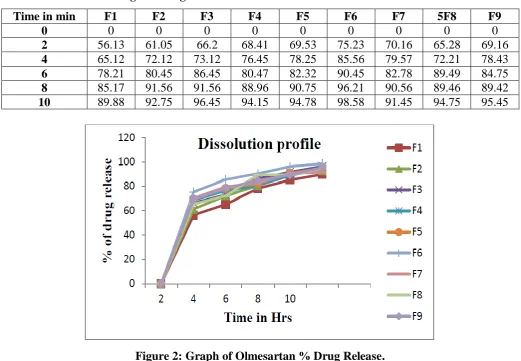
Table no. 5: Average % Drug Release at 10 Minutes.
Time in min F1 F2 F3 F4 F5 F6 F7 5F8 F9
0 0 0 0 0 0 0 0 0 0
2 56.13 61.05 66.2 68.41 69.53 75.23 70.16 65.28 69.16 4 65.12 72.12 73.12 76.45 78.25 85.56 79.57 72.21 78.43 6 78.21 80.45 86.45 80.47 82.32 90.45 82.78 89.49 84.75 8 85.17 91.56 91.56 88.96 90.75 96.21 90.56 89.46 89.42 10 89.88 92.75 96.45 94.15 94.78 98.58 91.45 94.75 95.45
Figure 2: Graph of Olmesartan % Drug Release.
In-vitro drug release studies were conducted for the formulation using USP dissolution
apparatus type-II (paddle), at 25 rpm. The percentage drug release at the end of 10 min was
found in the range 89 – 98%.
[image:5.595.38.562.584.702.2]Kinetics study
Table 6: Dissolution Kinetics of optimized batch F6.
Time Square root of
time Log time
% drug released
Log % drug released
% drug remaining
Log % drug remaining
0 0 - 0 - 100 2
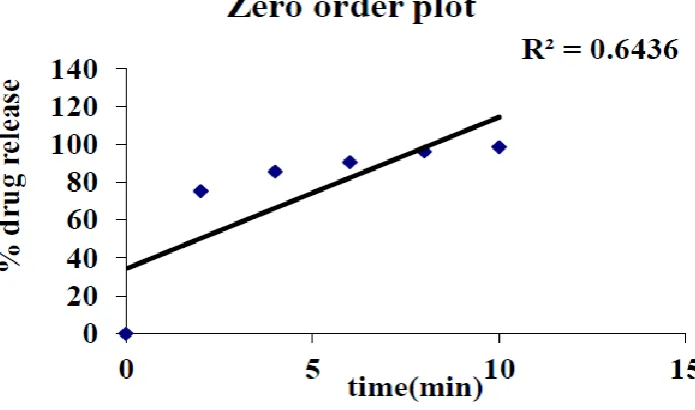
Figure No. 3: Zero order Kinetics of optimized batch F6.
[image:6.595.119.468.344.514.2]Figure No. 6: Korsemeyer Kinetics of optimized batch F6.
DISCUSSION
The release profile of the optimized formula F6 fitted best to Korsmeyer-Peppa’s model with
R2 value of 0.995. As the n value for the Korsmeyer-Peppas model was found to be greater
than 1, it follows case-2 transport.
FTIR studies
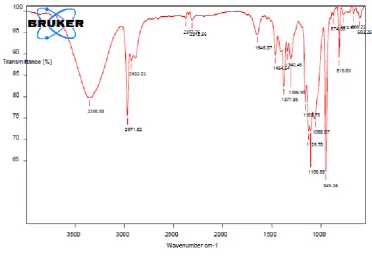
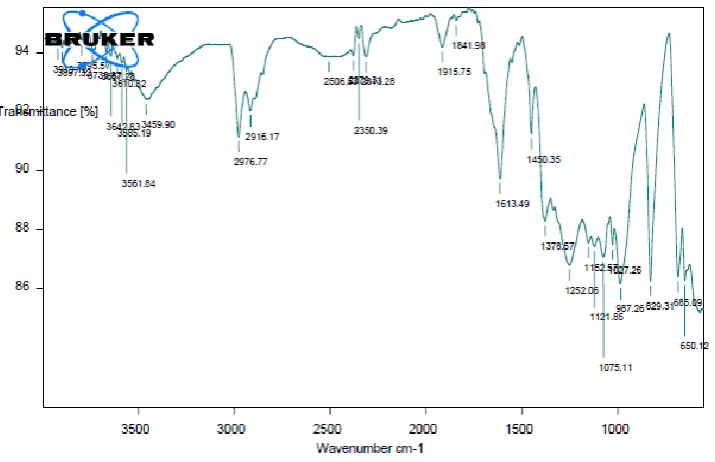
[image:7.595.106.479.452.709.2]Figure No 7: Infra-red spectrum of pure drug with optimized formulation F6.
From the above figures, it can be seen that, the major functional group peaks observed in
spectra of Drug with all the polymers remains unchanged as compared with spectra of
Olmesartan. So from the above IR spectra it can be observed that there is no interaction between Olmesartan and Polymers used in the formulations.
SUMMARY AND CONCLUSION
The study was carried to formulate and evaluate dispersible tablet dosage form containing
Olmesartan a Anti-hypertensive drug.
The present study is an attempt to select best possible combination of diluents and
disintegrants to formulate dispersible tablet of Olmesartan which disintegrates within few
minutes thereby reducing the time of onset of action.
Mannitol is selected as diluents, Sodium starch glycolate, Crosspovidone, croscarmellose
sodium were selected as super disintegrants. Microcrystalline cellulose was used in all
formulations in different concentrations. Aspartame as a sweetening agent, Magnesium
stearate as Lubricant and Talc as glidant.
Cross carmellose sodium is used as the super disintegrant in the formulation F3 – F4 at the
concentrations of 0.5, 0.6% respectively.
Crosspovidone is used as the super disintegrant in the formulation F5 – F6 at the
concentrations of 0.5, 0.6% respectively.
Sodium bicarbonate and Citric Acid is used as the super disintegrant in the formulation F7 –
F9 at the concentrations of 0.9, 1, 1.2% and 0.1, 0.15, 0.25 respectively.
Direct Compression method was used to formulate the tablets.
All the formulations were showed the acceptable flow properties and the precompression
parameters like Bulk density, Tapped density and Hausner ratio.
The post compression parameters like Hardness, Friability, Disintegration time, Weight
variation, wetting time, Dispersion time values were found to be within the IP limits. The percentage Drug content of all tablets was found to be between 98.3% - 100.2% of
Olmesartan, which is within the limit.
As the concentrations of the Crosspovidone increases in the formulations F5 – F6 the
disintegration time found to be decreased and the disintegration time for these formulations
were 34.85, 29.25 seconds respectively and the percentage drug release was also found to be
increased for these formulations as 94.78, 98.58% respectively. From the above results it was
found that as the concentration of Crosspovidone increased and mannitol decreases the
disintegration and dissolution time was found to be improved, so considering the above
results it was found that the F6 batch was found to be optimized batch and it pass all the
preformulation parameters and evaluation results as per the IP limits
From the data obtained, it is observed from the formulation containing Crosspovidone -
12mg, mannitol - 65mg in Formulation F6, shows Disintegration time in 29 seconds and the
Percentage drug release is of 98.58% at the end of 10 min which satisfied all the tablet
evaluation parameters for dispersible tablet. Hence looking at all the satisfactory parameters
F6 batch is selected as the optimized batch.
CONCLUSION
From the data obtained, it is observed from the formulation containing Crosspovidone -
Percentage drug release is of 98.58% at the end of 10 min which satisfied all the tablet
evaluation parameters for dispersible tablet.
REFERENCES
1. Leon Lachman, Herbert A. Lieberman, Joseph L. Kaing, “The theory and practice of industrial pharmacy”, third edition. (Page No.293, 294, 296, 311- 319).
2. Howard C. Ansell’s, Loyd V. Allen, jr. and Nicholas G. Poporich, in; “Pharmaceutical Dosage forms and Drug Delivery System”, seventh edition, Lippincott Williams and
Wilikins, Philadelphia, 1999 (Page No. 203-209).
3. Michele Danish and Mary Kathryn Kottke., In; Gilbert S Banker and Christopher T.
Rhodes., Eds., “Modern pharmaceutics”, third edition, Marcel Dekker, Inc, New-York,
1996 (Page No.830).
4. V L Allen, G N Popavich, C H Ansel, In; Ansel’s pharmaceutical Dosage Forms and
Drug Delivery systems, 8th edition, BI publications, 2006.
5. YW Chien. Novel drug delivery systems. In: Novel drug delivery systems. Edn 2, Marcel
Dekker, New York, 1992; 193-196.
6. S Rawat, SK Jain, Eur. J. Pharm. Biopharm., 2004; 57: 263-267.
7. H Sohi, Y Sutana Y, R Khar, Drug Dev Ind Pharm., 2004; 30: 429-448.
8. Bhatt, Priyal, R Patel, Int J Pharm Pharm Sci, 2011; 3(5): 1-6.
9. SB Bhanja, P Ellaiah, BS Nayak, DK Mahapatra, BB Panigrahi. Inter J Pharml Tech.,
2011; 3(3): 2961 - 2991.
10. V Bhardwaj, M Bansal, PK Sharma. Am Eurasian J Agric Environ Sci, 2010; 5(4):