Munich Personal RePEc Archive
Does Daylight Saving Save Energy? A
Meta-Analysis
Havranek, Tomas and Herman, Dominik and Irsova, Zuzana
Charles University, Prague, Czech National Bank
12 October 2016
Online at
https://mpra.ub.uni-muenchen.de/74518/
Does Daylight Saving Save Energy? A Meta-Analysis
∗Tomas Havraneka,b, Dominik Hermanb, and Zuzana Irsovab
aCzech National Bank
bCharles University, Prague
October 12, 2016
Abstract
The original rationale for adopting daylight saving time (DST) was energy savings.
Mod-ern research studies, however, question the magnitude and even direction of the effect of DST
on energy consumption. Representing the first meta-analysis in this literature, we collect
162 estimates from 44 studies and find that the mean reported estimate indicates modest
energy savings: 0.34% during the days when DST applies. The literature is not affected
by publication bias, but the results vary systematically depending on the exact data and
methodology applied. Using Bayesian model averaging we identify the most important
fac-tors driving the heterogeneity of the reported effects: data frequency, estimation technique
(simulation vs. regression), and, importantly, the latitude of the country considered.
En-ergy savings are larger for countries farther away from the equator, while subtropical regions
consume more energy because of DST.
Keywords: Daylight saving time, energy savings, Bayesian model averaging,
meta-analysis, publication bias
JEL Codes: C42, Q48
∗Corresponding author: Zuzana Irsova,[email protected]. Data and code are available in an
1
Introduction
As of the year 2016, daylight saving time is used by 77 countries and regions with a combined
population in excess of 1.5 billion, making DST one of the most widespread policies in the
world. It is also one of the most controversial policies, with dozens of countries and regions
having abandoned it in recent decades. While DST has many other effects, in this paper we
focus on its impact on energy consumption, which was originally the primary argument advanced
in favor of the policy and for which abundant empirical evidence exists. Since the pioneering
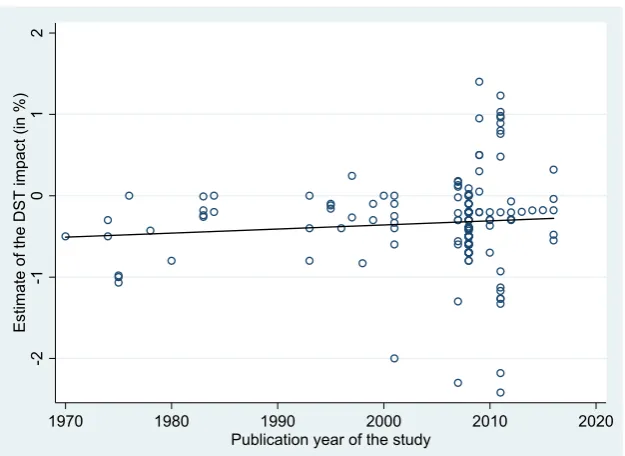
[image:3.595.143.456.288.516.2]Ebersole (1974) report, many studies have estimated the effect of DST on energy savings.
Figure 1: Estimates of the DST impact diverge over time
-2
-1
0
1
2
Es
timate of the DST impac
t (in %
)
1970 1980 1990 2000 2010 2020
Publication year of the study
Notes: The figure depicts estimates of the effect of DST on energy consumption reported in individual studies (negative estimates translate to energy savings). The horizontal axis represents the year in which each study was published.
The two major surveys of the literature, Reincke & van den Broek (1999) and Aries &
Newsham (2008), show that different researchers obtain substantially different results. One
can find empirical evidence in support of energy savings resulting from DST, just as one can
find evidence of increased energy demand associated with DST. For example, the most-cited
empirical study, Kotchen & Grant (2011), concludes that, contrary to the policy’s objective,
DST increases energy demand. (The result might be the reason that the study receives so many
citations, although it was also published in a prestigious journal, The Review of Economics
knowledge about how DST affects energy use is limited, incomplete, or contradictory.” As
documented by Figure 1, the estimates diverge over time instead of converging to a consensus
number. In this paper we propose a systematic and quantitative synthesis of the literature that
would allow researchers and the public to take stock of the work on this topic produced over
the last four decades.
This study represents, to the best of our knowledge, the first meta-analysis that focuses on
the impact of DST on energy consumption. We collect 162 estimates from 44 studies, including
research articles, government papers, and energy company reports. The literature implies that,
on average, the savings from DST amount to 0.34% of total energy consumption during the
days when DST is applied. This mean estimate is consistent with the conclusions of previous
(narrative) surveys: Reincke & van den Broek (1999) and Aries & Newsham (2008) place their
best estimate of the effect at between 0% and 0.5%. The simple average reported effect is,
however, usually a biased estimate of the true effect in economics (Doucouliagos & Stanley,
2013): the distribution of the estimates is often truncated due to publication bias, and the size
of the effect is typically driven by study design.
When researchers or journal editors treat statistically significant estimates or estimates
con-sistent with the conventional view more favorably, the distribution of estimates in the literature
becomes biased. Random sampling errors occasionally cause estimates to have the “wrong”
sign, but suppressing these estimates on a global scale may seriously distort the mean reported
effect. For example, Stanley (2005) shows that the price elasticity of water demand is
exagger-ated fourfold due to publication selection. Nevertheless, unlike most other fields of empirical
economics, the DST literature does not exhibit this bias, as we show in the paper. Negative,
insignificant, and positive results are treated in a similar way by researchers, editors, and
ref-erees. We find, however, that the design of the study has important and systematic effects on
the results.
Belzer et al. (2008) illustrate how researchers can use different data sets and methods to
estimate the DST effect. We explore this influence of data, method, and even publication
characteristics on the estimated coefficients. Using Bayesian model averaging we address model
uncertainty and find that, among the 14 explanatory variables we codify, several are particularly
regression, simulation, or extrapolation), the choice of data frequency, and the impact factor
of the journal in which the study was published, which we employ as a proxy for unobserved
quality aspects. Importantly, we also find that the estimated energy savings increase with higher
latitudes (which translates to more savings for countries farther away from the equator).
Our results suggest that the effect of latitude can not only offset the effect of various
esti-mation methods but can also easily outweigh the mean estimated savings and imply increased
energy consumption due to DST for countries closer to the equator. The DST policy makes
little sense when the amount of daylight does not vary substantially during the year, and in this
case the policy constitutes a shock that may well have unintended consequences for energy
con-sumption. In theory, the relationship between latitude and energy savings from DST should be
concave because DST also makes little sense near the poles where the difference between winter
and summer daylight hours is too large. The human population, however, is concentrated in the
subtropical and temperate climate zones, and the estimates in our sample reflect countries and
regions of the corresponding latitudes. The positive relationship between latitude and energy
savings can thus be regarded as a linear approximation of the underlying relationship.1
The remainder of the paper is organized as follows. Section 2 describes the data collection
process and the basic properties of the data set. Section 3 tests for publication selection bias
in the literature. Section 4 explores country and method heterogeneity in the estimated DST
effects and constructs best practice estimates for different countries. Section 5 concludes the
paper. An online appendix at meta-analysis.cz/dst provides the data and code that will
allow other researchers to replicate our analysis.
2
Data
Studies estimating the energy consumption effect of a change from standard time to daylight
saving time typically employ econometric analysis. In general, the authors estimate the following
model:
lnConsumptiont=α+DST ·Treatment effectt+ Controlst+ǫ, (1)
1
where Consumption is the average energy consumption during time t for a given hour, day,
and year. The variable Treatment effect is a dummy variable for a selected treatment group
and usually equals 1 for all hours when daylight saving time applies. Controls are explanatory
variables that reflect seasonality and holidays, weather (precipitation, humidity, temperature,
wind, and pressure), the intensity of sunlight, heterogeneity among consumption units, and
other specific effects such as economic activity or oil prices, possibly including interaction terms
and lags. The error term is denoted by ǫ.
From the studies reporting the DST effect we collect the treatment coefficient DST from
(1). This coefficient represents the effect of daylight saving time on energy consumption, or the
difference in electricity consumption for a particular time period between the treatment group
and the control group. These groups might be defined differently, for example as the period
before the start and end of DST versus the period after the start and end of DST, the period
when DST is not observed versus the period when DST is in place, the period when DST is
observed versus the period to which DST is extended, or the period of midday and midnight
hours versus the period of morning and evening hours. Multiple studies examine the pattern in
energy use before and after the spring and fall time change (for example Kandel & Metz, 2001).
Other studies, such as Mirza & Bergland (2011) and Kotchen & Grant (2011), examine the
differences in consumption for hours unaffected and affected by the DST policy. Belzer et al.
(2008) examines the impact of an extended DST policy.
Apart from econometric analysis, researchers can use simulation techniques to estimate the
effect of DST on energy consumption. Here the authors usually construct a model of energy
flows within different representative buildings and attempt to extrapolate this model to the
country level. Such an approach entails multiple assumptions and simplifications, and it is thus
more challenging to incorporate it into the meta-analysis framework. Despite the difficulty,
we include these estimates in our analysis following the approach of Havranek et al. (2015b),
who apply meta-analysis to simulation-based estimates of the social cost of carbon and show
substantial publication bias in the literature.
Some studies report estimates incomparable with the rest of the literature. Our criteria
for including studies in the meta-analysis are that 1) the study reports the effect of a change
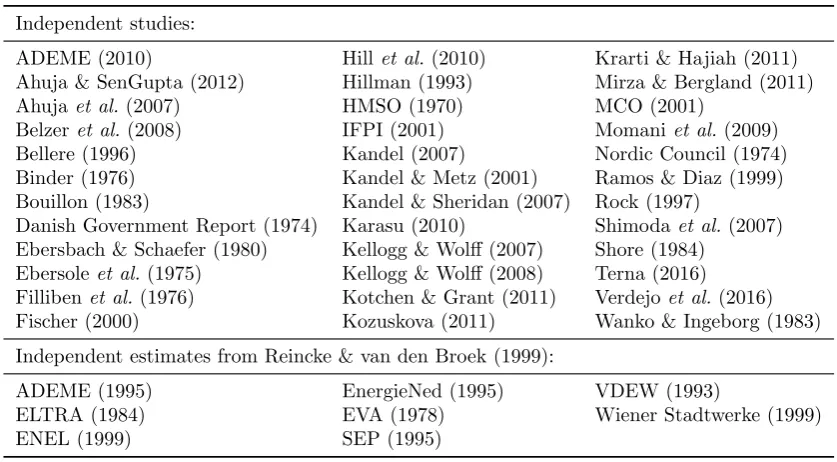
Table 1: Studies used in the meta-analysis
Independent studies:
ADEME (2010) Hillet al. (2010) Krarti & Hajiah (2011) Ahuja & SenGupta (2012) Hillman (1993) Mirza & Bergland (2011)
Ahujaet al.(2007) HMSO (1970) MCO (2001)
Belzeret al.(2008) IFPI (2001) Momaniet al.(2009)
Bellere (1996) Kandel (2007) Nordic Council (1974)
Binder (1976) Kandel & Metz (2001) Ramos & Diaz (1999) Bouillon (1983) Kandel & Sheridan (2007) Rock (1997)
Danish Government Report (1974) Karasu (2010) Shimodaet al.(2007) Ebersbach & Schaefer (1980) Kellogg & Wolff (2007) Shore (1984)
Ebersoleet al.(1975) Kellogg & Wolff (2008) Terna (2016) Fillibenet al.(1976) Kotchen & Grant (2011) Verdejoet al.(2016) Fischer (2000) Kozuskova (2011) Wanko & Ingeborg (1983)
Independent estimates from Reincke & van den Broek (1999):
ADEME (1995) EnergieNed (1995) VDEW (1993)
ELTRA (1984) EVA (1978) Wiener Stadtwerke (1999)
ENEL (1999) SEP (1995)
months), 2) the study reports the estimate in a way that enables us to extract an estimate
in percent per day for each day the DST policy is implemented, and 3) the study focuses on
electricity consumption (there are few estimates for other energy sources). To avoid comparing
apples to oranges, we have to exclude several studies or individual estimates within studies. For
example, Littlefair (1990), Crowley et al. (2014), Fong et al. (2007), and Rock (1997) report
the effect of double DST; Kotchen & Grant (2011) report several estimates of the effect of a
change from DST to standard time. Some studies only report lighting energy savings, such as
Fonget al.(2007) or Rajaram & Rawal (2011); Pout (2006) does not include electricity use for
lighting in her analysis. Other studies (for example Innanen & Innanen, 1978; Basconi, 2007;
Sarwar et al., 2010; Pellen, 2014) report DST savings in such detail or manner that we were
unable to recalculate them to be comparable with the rest of the sample.
Our final data set comprises 162 estimates taken from 44 independent studies reported in
Table 1. We take advantage of the previous literature surveys on the energy savings from
DST by Reincke & van den Broek (1999) and Aries & Newsham (2008), which identify the
major studies on the DST effect published prior to 2008. Additionally, we search Google
Scholar for studies published thereafter; the search query is available in the online appendix at
meta-analysis.cz/dst. We identify 34 primary sources, i.e., studies directly estimating the
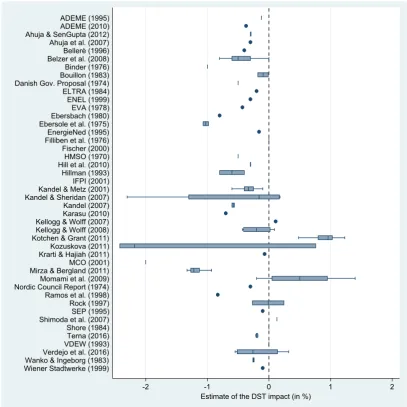
Figure 2: Estimates of the DST savings effect vary across and within studies
-2 -1 0 1 2
Estimate of the DST impact (in %) Wiener Stadtwerke (1999)Wanko & Ingeborg (1983)
Verdejo et al. (2016)VDEW (1993) Terna (2016) Shore (1984) Shimoda et al. (2007)SEP (1995) Rock (1997) Ramos et al. (1998) Nordic Council Report (1974)Momami et al. (2009) Mirza & Bergland (2011)MCO (2001) Krarti & Hajiah (2011)Kozuskova (2011) Kotchen & Grant (2011)Kellogg & Wolff (2008) Kellogg & Wolff (2007)Karasu (2010) Kandel (2007) Kandel & Sheridan (2007)Kandel & Metz (2001) IFPI (2001) Hillman (1993) Hill et al. (2010)HMSO (1970) Fischer (2000) Filliben et al. (1976)EnergieNed (1995) Ebersole et al. (1975)Ebersbach (1980) EVA (1978) ENEL (1999) ELTRA (1984) Danish Gov. Proposal (1974)Bouillon (1983) Binder (1976) Belzer et al. (2008)Bellerè (1996) Ahuja et al. (2007) Ahuja & SenGupta (2012)ADEME (2010) ADEME (1995)
Notes: The figure shows a box plot of the estimates of the DST effect on energy savings reported in individual studies. Negative estimates denote energy savings. Outliers are excluded from the figure but included in all statistical tests.
a result of simulation or extrapolation) and one secondary source, Reincke & van den Broek
(1999), who report the results of 8 independent unpublished studies with DST estimates
col-lected from interviews with public or private energy companies. We also inspect the references
of all the studies in our sample published after 2008 to determine whether we missed papers.
We add the last study on April 30, 2016.
We collect all the estimates reported in the studies. Therefore, we have an unbalanced
panel data set, since different studies provide a different number of estimates. Some researchers
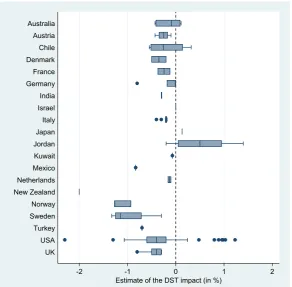
Figure 3: Some countries may consume more energy because of DST
-2 -1 0 1 2
Estimate of the DST impact (in %) UK
USA Turkey Sweden Norway New Zealand Netherlands Mexico Kuwait Jordan Japan Italy Israel India Germany France Denmark Chile Austria Australia
Notes: The figure shows a box plot of the estimates of the DST effect on energy savings reported for different countries. Negative estimates denote energy savings. Outliers are excluded from the figure but included in all statistical tests.
we follow Stanley (2001, p. 135), who suggests that it is “better err on the side of inclusion.”
Figure 2 shows that there is substantial heterogeneity in the estimates between and within
studies, which might stem especially from the differences in methods and data. Moreover,
Figure 3 shows the heterogeneity of estimates between different countries. It follows that it is
important to control for the variations in the design of the study. Thus, we collect 16 aspects
of study design for all estimates (details can be found in Table 4 of Section 4). The final data
set is available online atmeta-analysis.cz/dst.
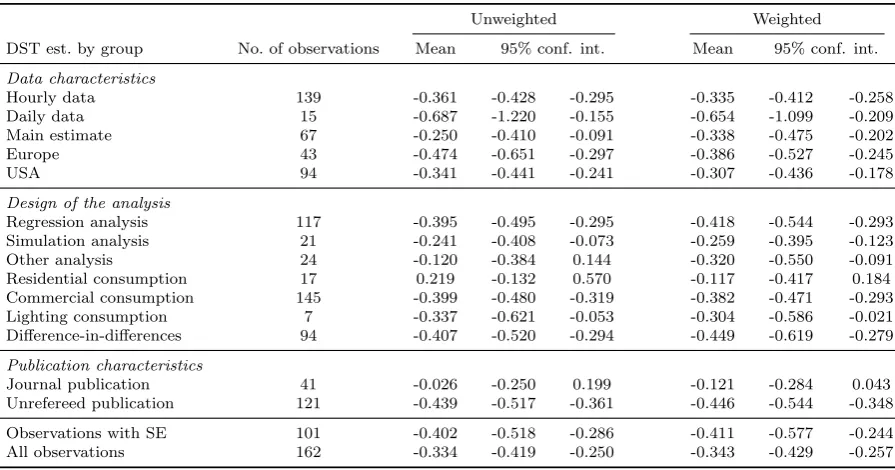
Table 2 reports the mean of the DST savings’ estimates for different groups of study design
characteristics. On the left-hand side we report simple averages; on the right-hand side the
averages are weighted by the inverse of the number of observations reported per study. This
type of weighting does not allow large studies to dominate the mean. Assigning each study
the same weight yields an overall mean estimate of -0.34, which suggests energy savings of
0.34 percent of total electricity consumption during the days when the daylight saving policy
Table 2: DST effects vary across subsets of data, method, and publication characteristics
Unweighted Weighted
DST est. by group No. of observations Mean 95% conf. int. Mean 95% conf. int. Data characteristics
Hourly data 139 -0.361 -0.428 -0.295 -0.335 -0.412 -0.258
Daily data 15 -0.687 -1.220 -0.155 -0.654 -1.099 -0.209
Main estimate 67 -0.250 -0.410 -0.091 -0.338 -0.475 -0.202
Europe 43 -0.474 -0.651 -0.297 -0.386 -0.527 -0.245
USA 94 -0.341 -0.441 -0.241 -0.307 -0.436 -0.178
Design of the analysis
Regression analysis 117 -0.395 -0.495 -0.295 -0.418 -0.544 -0.293
Simulation analysis 21 -0.241 -0.408 -0.073 -0.259 -0.395 -0.123
Other analysis 24 -0.120 -0.384 0.144 -0.320 -0.550 -0.091
Residential consumption 17 0.219 -0.132 0.570 -0.117 -0.417 0.184
Commercial consumption 145 -0.399 -0.480 -0.319 -0.382 -0.471 -0.293
Lighting consumption 7 -0.337 -0.621 -0.053 -0.304 -0.586 -0.021
Difference-in-differences 94 -0.407 -0.520 -0.294 -0.449 -0.619 -0.279
Publication characteristics
Journal publication 41 -0.026 -0.250 0.199 -0.121 -0.284 0.043
Unrefereed publication 121 -0.439 -0.517 -0.361 -0.446 -0.544 -0.348
Observations with SE 101 -0.402 -0.518 -0.286 -0.411 -0.577 -0.244
All observations 162 -0.334 -0.419 -0.250 -0.343 -0.429 -0.257
Notes: The table presents mean estimates of the DST effect on energy consumption (in %) for selected groups of data, method, and publication characteristics (see details in Table 4). On the right-hand side of the table the DST estimates are weighted by the inverse of the number of estimates reported per study. SE = standard error.
around the mean. This finding is consistent with existing surveys: Reincke & van den Broek
(1999) and Aries & Newsham (2008) place the mean estimate between 0% and 0.5%.
Table 2 documents that the means of DST energy savings effects vary substantially across
data and method choices. We observe that using hourly data instead of daily data in the analysis
tends to reduce the estimate of savings. We also observe that the simulated results tend to be
smaller than those obtained by regression or other means of analysis. When a study estimates
the savings effect in the residential sector alone, we observe that the upper confidence interval of
our estimate suggests energy penalties instead of energy savings. The difference-in-differences
approach seems to be associated with higher estimated savings.
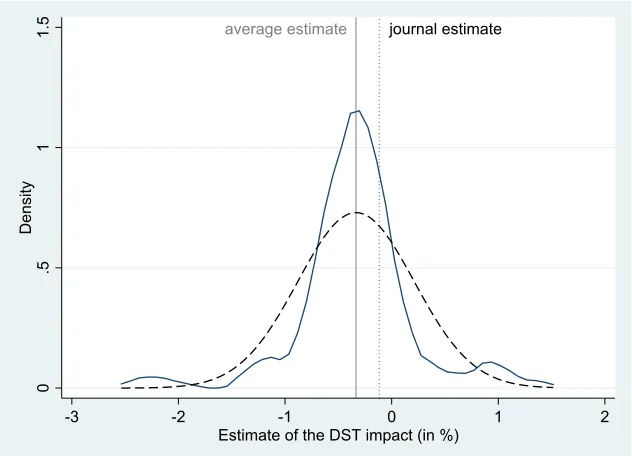
Figure 4 depicts the distribution of the estimates of DST savings. The distribution is
ap-proximately symmetrical, and the mean estimate of−0.33 is very close to the median estimate
of −0.3, suggesting that there are not many outlying observations; thus, we do not need to
ex-clude any estimates from our analysis. From Table 2 we see that the estimates that the authors
prefer tend to be close to the average (when we assign each study the same weight).
Neverthe-less, studies in peer-reviewed journals appear to publish smaller estimates (see Table 2), which
might indicate that factors other than the methodological reasons we can directly observe are
Figure 4: Journal publications report smaller savings from DST
0
.5
1
1.5
Density
-3 -2 -1 0 1 2
Estimate of the DST impact (in %)
journal estimate average estimate
Notes: The figure depicts the Epanechnikov kernel density of the DST effect esti-mates. The dashed curve denotes the normal distribution density, the solid vertical line denotes sample mean of the DST estimate, and the dotted vertical line denotes the mean of the DST estimates coming from journal publications.
3
Publication Bias
The preference of authors and editors for a certain magnitude or statistical significance of
an estimate is a common phenomenon in the economics literature (Doucouliagos & Stanley,
2013). The literature on the effects of DST on energy consumption is unique in the character
of publication outlets: many of the estimates come from the reports of government or energy
companies. These institutions may have different reasons to prefer higher or lower estimates;
there is, however, little reason for the authors from research institutes to succumb to such bias.
Statistically insignificant estimates, however, might be more easily overlooked, leading to the the
so called file-drawer problem. Some cases of publication bias have been previously documented
even in the field of energy economics (for example, Havranek et al., 2012; Reckova & Irsova,
2015; Havranek & Kokes, 2015; Havranek et al., 2015b).
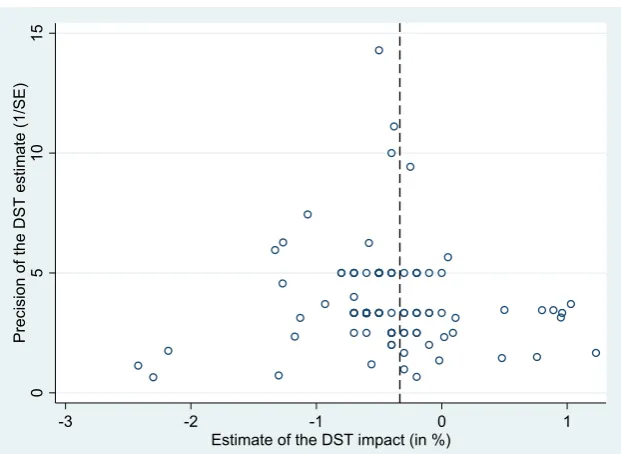
The so-called funnel plot is one of the most common tools used to detect publication bias.
It is a scatter diagram with the estimate of the effect on the horizontal axis and the precision of
the estimate (the inverse of the standard error) on the vertical axis (see Stanley, 2005). For the
Figure 5: Funnel plot suggests little publication bias
0
5
10
15
Precision of the DST estimate (1/SE)
-3 -2 -1 0 1
Estimate of the DST impact (in %)
Notes: The figure depicts a funnel plot of the estimates of the DST effect. In the absence of publication bias, the funnel should be symmetrical around the most precise estimates of the DST effect on energy savings. The dashed vertical line denotes the mean of the estimates. Outliers are excluded from the figure but included in all statistical tests.
estimated coefficient and its standard error to be independent of one another.2 This property
implies there should be no relationship between an estimate and its standard error. Thus,
regardless of the magnitude of the true effect, the estimates in the plot should vary randomly
and symmetrically around the true effect. With decreasing precision, the estimates become
more dispersed, thus creating an inverted funnel.
From Figure 5 we conclude that there is little evidence of publication bias in the literature
on DST energy savings: when selection process is related to the magnitude of the effect, the
funnel plot becomes asymmetrical; when the selection process favors statistical significance, the
funnel becomes hollow and wide. We observe that Figure 5 does not exhibit either of these
properties: the funnel is not hollow and is relatively symmetrical. Nevertheless, the funnel plot
is only a simple visual test, and the dispersion of the estimates might suggest the presence of
heterogeneity; therefore, we still need more rigorous tests to support our claim that there is no
bias present in the literature.
2
As we have noted, in the absence of publication bias the estimates of DST savings and their
standard errors should be uncorrelated (Stanley, 2005):
DSTij =DST0+β·SE(DSTij) +uij, (2)
whereDSTij andSE(DSTij) are thei-th estimates of the effect of DST on energy savings and
its standard error reported in the j-th study and uij is the error term. DST0 represents the
true effect beyond potential publication bias captured by β. If there were no publication bias
present in our sample,β would equal zero. In Table 3 we show that various versions of this test
[image:13.595.71.525.300.389.2]corroborate our conclusion of insignificant publication bias in the DST literature.
Table 3: Funnel asymmetry tests show no publication bias
OLS FE BE Country ME IV
SE (publication bias) -0.410 -1.217 -0.410 -0.496 -0.449 0.226 (0.265) (0.790) (0.757) (0.805) (0.688) (1.088) Constant (true effect) -0.293∗∗∗
-0.222∗∗∗
-0.294∗∗∗
-0.278∗∗∗
-0.291∗∗∗
-0.445∗ (0.000778) (0.0700) (0.00812) (0.0459) (0.00731) (0.243)
Observations 101 101 101 101 101 90
The table presents the results of a regression DSTij = DST0+β·SE(DSTij) +uij, where DSTij and
SE(DSTij) are i-th estimate of the effect of DST on energy savings and its standard error reported in the
j-th study. The model is estimated by weighted least squares with the inverse of the reported estimate’s standard error taken as the weight. OLS = ordinary least squares, FE = study-level fixed effects, BE = study-level between effects, Country = country-level fixed effects, ME = study-level mixed effects, and IV = instrumental variable estimation, where the instrument for the standard error is the number of observations (if the study is based on regression analysis). Standard errors in parentheses are clustered at the study and country level (two-way clustering follows Cameronet al., 2011).
∗
p <0.10,∗∗ p <0.05,∗∗∗ p <0.01.
The first column of Table 3 presents the baseline model of the funnel asymmetry test from
(2). The coefficient β, estimated by OLS, is not statistically significant (p-value = 0.12), and
the constant DST0 places the true effect of daylight savings at approximately −0.29%. In
the second column we add study-level fixed effects to the baseline specification. Using
study variation for identification only marginally decreases the true effect, as does using
within-country variation in the fourth column. The estimated bias becomes even less significant in
other specifications: the model in the third column uses between-study variation and provides
nearly the same mean effect as our baseline model. The mixed effects model in the fifth column
is convenient for our unbalanced panel, since it employs restricted maximum likelihood and thus
essentially assigns each study the same weight; the results are again similar to the baseline case.
The instrumental variable estimation is naturally less precise, but the result complies with the
rest of the analysis: there is no publication bias present in the literature on energy savings from
[image:14.595.141.457.176.401.2]daylight saving time.
Figure 6: Galbraith plot suggests some publication selection or heterogeneity
-5
0
5
10
t-statistic
(if the DST true effect is
-0.
29%)
0 10 20 30 40 50
Precision of the DST estimate (1/SE)
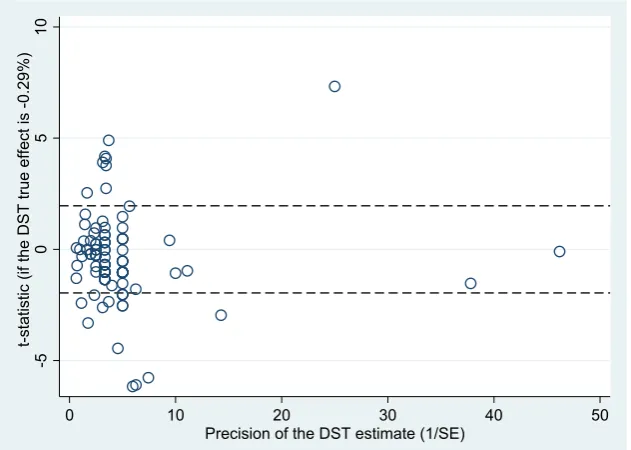
Notes: The horizontal black lines form the boundary of the (−1,96; 1,96) interval, which should not be surpassed in more that 95% of cases if there is no publication bias related to statistical significance and no heterogeneity. Outliers are excluded from the figure but included in all statistical tests.
As a complementary robustness check we depict the Galbraith plot (Galbraith, 1988), which
specifically concentrates on the likelihood of reporting significant results. It is a funnel plot
ro-tated 90 degrees and adjusted to remove heteroskedasticity (Stanley, 2005). We follow Havranek
(2010) to define the adjusted t-statistics T(DSTij):
T(DSTij) = DSTij −DST0
SE(DSTij)
, (3)
whereDST0 represents the true effect estimated by the funnel asymmetry test andDSTij
rep-resents the i-th estimate of the daylight saving effect with SE(DSTij) as the corresponding
standard error reported in the j-th study. For DST0, we employ the baseline true effect from
the first column of Table 3, −0.293, and plot the final statistics in Figure 6. If there is no
sys-tematic relationship between the effect and the precision, the observations should be randomly
1.96) in more than 5% of cases. Our results indicate that nearly 24% of the estimates would be
significant if the true effect were 0.293%. Such a result could create some formal grounds for
the presence of publication bias related to the significance of estimates. Nevertheless, Figure 6
merely shows the presence of excess variation since the extreme values of t-statistics, on
aver-age, offset one another (Stanley, 2005), and therefore the mean effect is not biased. Moreover,
the value of the true effect in Table 3 also needs to be challenged. There could be possible
dependencies in study design and country heterogeneity that affect our previous estimates, and
we will address these issues in the next section.
4
Heterogeneity
4.1 Variables and Estimation
We have seen from Figure 2 and Figure 3 that the estimates of the DST effect vary considerably,
but we have not been able to explain the variance by sampling error and selective reporting.
There is, however, another type of variation that might have a systematic influence on the
estimated effects of DST. Aries & Newsham (2008) note that different studies estimate the DST
effect using different data sets and methods. We will attempt to explain these variations using
meta-regression analysis (as in Havranek & Irsova, 2011, who show how broadly estimates of an
economic effect can vary across methods and countries). Since we do not observe publication bias
in our sample, we remove the standard error from (2) and replace it with explanatory variables
related to data and methodology. In so doing, we eliminate the apparent heteroskedasticity
[image:15.595.76.525.590.730.2]affecting the equation and control for heterogeneity among the estimates.
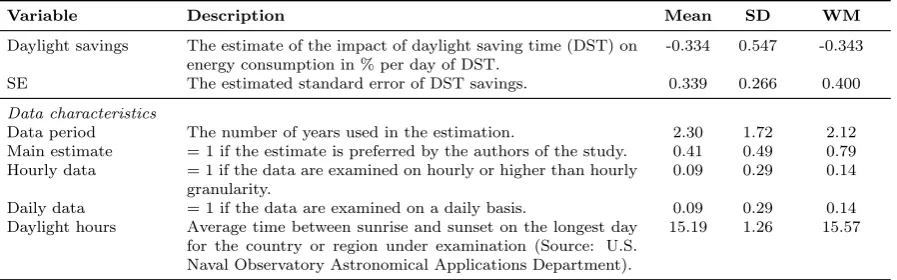
Table 4: Description and summary statistics of regression variables
Variable Description Mean SD WM
Daylight savings The estimate of the impact of daylight saving time (DST) on energy consumption in % per day of DST.
-0.334 0.547 -0.343
SE The estimated standard error of DST savings. 0.339 0.266 0.400
Data characteristics
Data period The number of years used in the estimation. 2.30 1.72 2.12
Main estimate = 1 if the estimate is preferred by the authors of the study. 0.41 0.49 0.79 Hourly data = 1 if the data are examined on hourly or higher than hourly
granularity.
0.09 0.29 0.14
Daily data = 1 if the data are examined on a daily basis. 0.09 0.29 0.14
Daylight hours Average time between sunrise and sunset on the longest day for the country or region under examination (Source: U.S. Naval Observatory Astronomical Applications Department).
15.19 1.26 15.57
Table 4: Description and summary statistics of regression variables (continued)
Variable Description Mean SD WM
Europe = 1 if European countries are examined. 0.27 0.44 0.52
USA = 1 if US data are examined. 0.58 0.50 0.23
Design of the analysis
Regression analysis = 1 if the primary study is based on regression analysis. 0.72 0.45 0.39 Simulation analysis = 1 if the study is based on simulation. 0.13 0.34 0.26 Difference-in-diff. = 1 if the difference-in-differences approach is employed. 0.58 0.50 0.21 Residential cons. = 1 if only residential consumption is examined. 0.10 0.31 0.15 Lighting cons. = 1 if total energy savings are reported as a result of lighting
reduction.
0.04 0.20 0.13
Publication characteristics
Publication year The publication year of the study (base = 1970). 34.8 9.5 27.1 Journal article = 1 if the study was published in a peer-reviewed journal. 0.25 0.44 0.32 Impact factor The recursive RePEc impact factor of the outlet. 0.07 0.26 0.05 Citations The logarithm of the total number of citations of the study
in Google Scholar.
1.91 0.94 1.60
Notes: SD = standard deviation. WM = mean weighted by the inverse of the number of observations reported per study. All variables except for citations and the impact factor are collected from studies estimating the DST effect (the search for studies was terminated on April 30, 2016). Citations are collected from Google Scholar and the impact factor from RePEc. The data set is available atmeta-analysis.cz/dst.
The explanatory variables capturing the variation in data and methodology are listed in
Table 4; the table provides the definition of these variables and their summary statistics. The
last column of the table presents the mean of the variables weighted by the inverse of the
number of observations extracted from a study. We divide the variables into three groups.
First, we collect information on data characteristics capturing the data set and geographical
specifics. Second, we collect information on the design of the analysis to capture methodological
differences. Third, we collect information on publication characteristics, such as the journal
impact factor. Our intention here is not to provide an exhaustive survey of the methods used in
the DST literature but to identify the main reasons for the heterogeneity affecting the estimates.
Data characteristics We consider the number of years examined in a study as a potentially
useful explanatory variable: it might show that savings become more apparent in the long run
when firms and households become better adapted to the policy. We also control for what
the authors find to be their own preferred estimate in a particular study, which might indicate
whether their own best-practice estimate is systematically different from the rest of the reported
results. Another source of heterogeneity could be the granularity of the data: the information
in daily data is less detailed than the information in hourly data, for which researchers directly
observe changes in consumption during the morning and evening hours. We capture the
the average coordinates of the place, which relates either to the country or the city for which the
daylight savings effects were estimated. For this geographical centroid, we identify the longest
day of 2016 and its respective number of sunlight hours. We also include dummy variables for
the United States and European countries.
Design of the analysis DST estimates come either as a result of econometric analysis,
simulation, or another type of analysis such as extrapolation or comparison. Among the
econo-metric analyses, which generate more than 70% of our estimates, we observe frequent use of
the difference-in-differences technique. The difference-in-differences approach accounts for
dif-ferences between a control group (a time period that should not be affected by DST) and a
treatment group (a time period that should be affected by DST). The set of other moderator
variables included in the regression analysis also differs, as does the functional form. In most
cases, a log-level model is employed obtain the difference-in-differences estimate; nevertheless,
for example, Shore (1984), Basconi (2007), and Kandel & Sheridan (2007) employ a level-level
model directly examining the magnitudes of energy consumption only (the elasticity is then
computed using sample means). The level-level model is, however, scarce in our data set, and
therefore, we do not add a corresponding dummy since it would display very little variation.
Nearly 30% of our estimates come from a type of analysis other than regression. Typically,
these estimates are produced by simulation or by more or less sophisticated extrapolation.
The simulations vary in their specification; moreover, the specification is not always reported
in detail. Assumptions of the simulations are derived either from regression analysis, simple
historical data analysis, or survey findings. The control variables are then similar to those
specified in regression analysis with the exception that buildings and households are modeled in
much greater detail. Therefore, the obvious benefit of simulation is that it is able to investigate
the energy consumption patterns in greater depth; however, researchers must be more confident
in the correctness of the model specification. Extrapolation is usually based on shifts in the
daily load curves. In comparison with the previous approaches, extrapolation is somewhat less
sophisticated because this type of analysis makes it more difficult to control for other relevant
influencing factors.
We also control for the type of end-use and the type of end-user of the electricity considered
and appliances. Our original intention was to collect the estimates on overall consumption
subsuming all these energy uses. Due to the small sample size for the individual categories,
however, we decided to only retain in our data set those observations for which the DST estimate
is defined as the effect of lighting electricity on overall electricity consumption, but we control
for this aspect of methodology to determine whether these estimates differ from more general
estimates of DST energy savings. Moreover, some researchers only estimate the DST effect
for residential areas, while the rest of the literature does not differentiate between residential
and business consumption. As the daily consumption cycle for households differs from that for
commercial or industrial buildings, we also control for the type of end-customer assumed in an
analysis.
Publication characteristics There might be methodological advances in the literature that
we are not able to capture directly by method variables (the number of studies and the number
of estimates is not large). We employ several publication characteristics as proxies for such
aspects. For example, advances in methodology should be captured by publication year. We
also use several variables that control for publication quality, which may also reflect unobserved
aspects of data and methods. We examine whether studies yield consistently different results
when they are published in a peer-reviewed journal and in a journal with a higher or lower
impact factor and whether the number of citations is correlated with the result.
In the end we have 14 aspects of study design. Ideally, we would like to regress all these
explanatory variables on the estimates of the DST effect we collected. Having a relatively large
number of variables, however, we face the problem that some of them might prove redundant—
in other words, there is substantial model uncertainty. Redundant variables inflate the variance
of all other parameters, and researchers usually attempt to eliminate the insignificant variables
one by one. Such a general-to-specific method is not statistically valid because t-tests are not
designed to be run conditionally on one another. Following Havranek et al. (2015a) and a
plethora of studies that address model uncertainty in economics, we employ Bayesian model
averaging instead.
Bayesian model averaging (BMA) estimates a number of models that use subsets of the
in R (Feldkircher & Zeugner, 2009) and a Markov Chain Monte-Carlo sampler that only goes
through the most important part of the model mass (there are 214 possible models in total).
Each estimated coefficient (posterior mean) is the average coefficient of all the models weighted
by the posterior model probability, which is akin to adjusted R2 in frequentist econometrics.
Another important concept, posterior inclusion probability, is the sum of all posterior model
probabilities of the model in which a particular variable is included and reports how likely the
variable is to be included in the true model. The posterior standard deviation is analogous
to the standard error and follows the distribution of a coefficient from all estimated models.
Further details on BMA can be found, for example, in Eicher et al.(2011).
4.2 Results
The BMA results are depicted in Figure 7. Each row in the figure identifies a variable, and rows
are sorted in descending order according to the posterior inclusion probability. Each column
in the figure identifies a model, and columns are sorted from left to right in descending order
according to the posterior model probability. Each cell in the figure identifies a variable included
in a model: if the cell is red (lighter in grayscale), the sign of the variable is negative; if the cell
is blue (darker in grayscale), the sign of the variable is positive. A cell with no color identifies
variables excluded from the model. Five out of the 14 variables are included in the best model,
and their estimated signs are robust to the inclusion of the other variables in the model.
We report the numerical results of BMA in Table 5. The posterior inclusion probability is
at least substantial (which is, according to Kass & Raftery, 1995, above 0.9) for five variables:
Impact factor, Daylight hours, Difference-in-differences, Daily data, and Simulation analysis.
For the rest of the variables, the posterior inclusion probability is very weak (below 0.23),
which suggests that they are not particularly important in determining the magnitude of the
estimate of the DST effect. In addition, we run a frequentist check, reported on the
right-hand side of the table, as a simple OLS with standard errors clustered at both the study and
country level. The OLS results are consistent with our results from BMA: the highly significant
variables correspond to those with high posterior inclusion probability, and the coefficients in
both models are fairly similar in value and display the same signs. Additional diagnostics of
Figure 7: Model inclusion in Bayesian model averaging
0 0.23 0.32 0.4 0.48 0.55 0.63 0.69 0.76 0.82 0.89 0.95 1
Impact factor Daylight hours Difference-in-differences
Daily data Simulation analysis Journal publication Residential consumption Regression analysis Citations Data period
USA
Lighting consumption Main estimate Publication year
Notes: Response variable: the estimate of the DST effect on energy savings. The columns denote individual models; the variables are sorted by posterior inclusion probability in descending order. Blue color (darker in grayscale) = the variable is included and the estimated sign is positive. Red color (lighter in grayscale) = the variable is included and the estimated sign is negative. No color = the variable is not included in the model. The horizontal axis measures cumulative posterior model probabilities. A detailed description of all variables is available in Table 4; numerical results of the BMA estimation are reported in Table 5.
checks employing different variants of the BMA specification can be found in Appendix B, and
they corroborate our baseline results.
Data characteristics According to our findings, the more daylight hours there are on the
longest day in a year at a specific location, the higher are the energy savings from DST. The
variableDaylight hours is a proxy for the location’s latitude, which corresponds to the countries
and regions in our sample (when analyzing DST, it makes more sense to directly consider the
length of the day rather than latitude). The implementation of DST has little effect at very
high or very low latitudes: at higher latitudes (close to the poles), the length of the day and
night change significantly throughout the seasons, meaning that the standard working hours
are far from the sunrise and sunset in summer and winter; while at lower latitudes (close to
the equator), the daylight hours are nearly constant throughout the year. The time change
Table 5: Explaining the differences in the estimates of the DST energy savings
Response variable: Bayesian model averaging Frequentist check (OLS) Estimate of DST savings Post. mean Post. SD PIP Coef. Std. er. p-value Data characteristics
Data period -0.003 0.013 0.111 -0.020 0.037 0.591
Main estimate 0.004 0.030 0.086 0.064 0.082 0.434
Daily data -0.444 0.152 0.964 -0.413 0.166 0.013
Daylight hours -0.118 0.031 0.990 -0.101 0.032 0.002
USA 0.008 0.049 0.102 0.185 0.117 0.113
Design of the analysis
Regression analysis -0.021 0.071 0.143 -0.116 0.190 0.541
Simulation -0.361 0.165 0.912 -0.530 0.150 0.000
Difference-in-differences -0.412 0.110 0.989 -0.438 0.066 0.000
Residential consumption 0.050 0.114 0.228 0.106 0.170 0.532
Lighting consumption 0.010 0.061 0.089 0.058 0.137 0.674
Publication characteristics
Publication year 0.000 0.001 0.082 0.002 0.007 0.738
Journal publication 0.040 0.092 0.229 0.219 0.239 0.359
Impact factor 0.958 0.167 1.000 0.746 0.165 0.000
Citations 0.007 0.025 0.133 0.021 0.044 0.641
Constant 1.698 NA 1.000 1.316 0.637 0.039
Studies 44 44
Countries 21 21
Observations 162 162
Notes: The response variable is the estimate of the DST effect on electricity consumption (in %). PIP = posterior inclusion probability. SD = standard deviation. The standard errors in the frequentist check are clustered at both the study and country level (two-way clustering follows Cameron et al., 2011). In this specification, we employ a uniform model prior and use the unit information prior on Zellner’s g (Eicheret al., 2011). Further details on the BMA estimation are available in Figure 7. A detailed description of all variables is available in Table 4.
sufficiently during summer months to be relevant to working hours and leisure time in the
evenings.
One might suspect that the relationship between Daylight hours and DST savings is not
linear. We tested for the nonlinearity but found the quadratic term, Daylight hours squared, to
be insignificant. Therefore, we argue that the proportionality ofDaylight hoursand DST savings
is a linear approximation of their underlying relationship. Since few people live close to the
poles, our sample comprises regions in the subtropical and temperate zones. The results from
Table 5 suggest that the further we go from the equator, the higher the energy savings we observe
from DST, which is in line with intuition. Numerically, the −0.12 coefficient from the BMA
suggests that for each additional hour of sunlight on the longest day in an affected region, the
DST policy yields 0.12% more in energy savings (other things being equal). Weinhardt (2013)
examines the heterogeneity in the response of residential energy consumption across different
latitudes for the USA. Contrary to our findings, he observes lower savings in the norther part
Sampling frequency represents another source of heterogeneity in the estimated coefficients
of DST savings. The usage of Daily data drives the saving estimates upwards; estimates with
higher frequency, mostly hourly data, are associated with smaller savings. The effect of daily
data is also economically significant, and the estimated coefficient amounts to −0.44. Time
aggregation thus introduces a substantial upward bias into the estimated DST savings. The
length of the sample period used in an analysis does not appear to be particularly important,
and it does not seem to be relevant whether the data come from the US. The estimates that
the authors of studies themselves prefer are close to the overall mean.
Design of the analysis Most estimates of DST savings represent the output of either
sim-ulation or regression analysis. Our results imply that the choice of methodology entails, on
average, systematically different estimates of DST savings. First, the coefficient estimated for
Simulation analysis indicates that the simulated estimates of DST savings are larger on average
by 0.36 than the rest of the data set, which is significant because the mean estimate of DST
is only 0.34. This result supports the previous literature: Kellogg & Wolff (2008), for
exam-ple, also report that their simulation failed to predict the morning increase in consumption
related to DST and overestimated the evening decrease. The use of regression analysis does not
seem to deliver results different from the baseline case (extrapolation) unless the
Difference-in-differencesapproach is used. We observe an even larger impact on DST savings than in the case
of simulations: other things being equal, the difference-in-differences specification is associated
with savings that are 0.41 greater than the baseline case.
Finally, Kotchen & Grant (2011) argue that residential consumers adjust their behavioral
patterns when the time change occurs and that the commercial and industrial electricity
adjust-ment in demand is not particularly important. Nevertheless, the insignificance of the residential
consumption variable instead suggests that the savings estimated for overall consumption do not
differ substantially from the savings estimated for residential consumption alone. We observe a
similar outcome for lighting consumption: the differences between end-customers and end-uses
of electricity are not a source of systematic differences among the estimates in our sample.
Publication characteristics While controlling for specific data and method choices, we
citations and journal publication are found to be less important than the Impact factor of a
journal. The difference in implied DST savings between a study from a journal with a zero
impact factor and an impact factor of one is 0.96; better journals publish more pessimistic
estimates of DST savings. This suggests the presence of additional heterogeneity in methods
that we could not capture using the methodological variables codified for this study. The
coefficient for the year of publication has a low posterior inclusion probability, which suggests
that newer publications do not yield substantially different estimates.
The mean reported estimate of −0.34% does not fit all countries, as we observed above. To
provide the reader with an example of how the estimates of DST savings for individual countries
would be affected if we used the meta-regression results and filtered out the potential biases
stemming from small data sets and improper methodology, we estimate the “best practice”
DST savings for each country in our sample using the outcome of the BMA exercise. This
aspect of our analysis is the most subjective since it involves defining the preferred value for all
explanatory variables (except for the number of daylight hours, where the values are given by
the country’s location and are the most important factor in explaining the heterogeneity among
the estimates), and other researchers might have different opinions on what constitutes best
practice. We attempt to construct a synthetic study that assigns greater weight to estimates
based on broad data sets and reliable methodology and reported in highly cited studies and
prestigious journals.
We prefer the maximum number of years available for estimation in the primary study
and higher than daily data granularity since we wish to emphasize studies using the most
detailed information available (we plug in “9” for the Data period and “0” for Daily data).
We assign greater weight to the authors’ most preferred estimates. In terms of methods, we
prefer a study to use the difference-in-differences approach, the most commonly employed tool
that allows for better identification than simple regression (and we also find it cleaner than
simulation and extrapolation). We prefer general estimates of energy savings to partial estimates
based on residential consumption and avoid derivations from estimates based solely on lighting
consumption.
Next, we plug in the maximum value of publication year from our sample since we prefer
published in refereed journals and those with the maximum number of citations. We prefer
journals with a high impact factor but also need to control for one outlier, (Kotchen & Grant,
2011); therefore, we choose the 95th percentile for the Impact factor variable (if we use the
sample maximum, we obtain negative energy savings). Finally, we set the dummy variableUSA
to zero for other countries than the United States and control for country heterogeneity using
[image:24.595.162.434.241.482.2]the variableDaylight hours, which varies from 13.2 (northern Chile) to 19.8 (southern Norway).
Table 6: DST effects on energy savings differ across countries
Mean 95% conf. int.
Australia 0.189 -0.600 0.978
Austria -0.059 -0.822 0.704
Chile 0.074 -0.701 0.848
Czech Republic -0.104 -0.865 0.656
Denmark -0.258 -1.016 0.501
France -0.037 -0.802 0.727
Germany -0.130 -0.889 0.630
India 0.248 -0.550 1.047
Israel 0.146 -0.637 0.929
Italy 0.012 -0.756 0.780
Japan 0.112 -0.666 0.891
Jordan 0.150 -0.634 0.933
Kuwait 0.168 -0.618 0.954
Mexico 0.223 -0.572 1.017
Netherlands -0.165 -0.924 0.593
New Zealand 0.038 -0.733 0.808
Norway -0.512 -1.286 0.262
Sweden -0.510 -1.283 0.264
Turkey 0.063 -0.710 0.836
United Kingdom -0.201 -0.959 0.557
USA 0.087 -0.543 0.716
Europe -0.083 -0.845 0.679
All countries -0.014 -0.760 0.732
Notes: The table presents mean estimates of the DST coefficient in % implied by the Bayesian model averaging and our definition of best practice. The confidence intervals are approximate and constructed using the standard errors estimated by OLS.
Table 6 provides the best-practice DST estimates for all 21 countries examined by the studies
in our data set. These estimates are calculated as a linear combination using the coefficients
from the BMA meta-regression in Table 5 and values of the variables corresponding to our
definition of best practice. The resulting global estimate is−0.01%, quite distant from−0.34%,
the simple average effect reported in the literature. The 95% confidence interval of our
best-practice estimate is wide, (−0.76,0.73). Nevertheless, plausible changes in the definition of
best practice would not typically lead to substantial changes in the result. For example, if we
were to prefer simulation analysis instead of the difference-in-differences approach, the change
negligible and unlikely to exceed 0.76% of total electricity consumption during the days when
the daylight saving policy is in place.
5
Conclusion
The main reason for implementing the daylight saving time scheme was to reduce energy
con-sumption. Some students of DST, however, question the real effect and find the present evidence
on this topic limited and often contradictory (Aries & Newsham, 2008). To shed greater light
on this issue, we conduct a meta-analysis of energy savings from DST; using 162 estimates
taken from 44 studies, we estimate the underlying effect. We find that the mean estimate,
0.34% savings, is exaggerated if we take into account the impact of data, method, and
publi-cation characteristics. When we place greater weight on the estimates that we consider more
reliable (that is, studies published in prestigious journals using high data frequencies and the
difference-in-differences method), we obtain a mean effect close to zero. In contrast, we find no
exaggeration attributable to publication selection, the usual culprit of bias in applied economics
(Doucouliagos & Stanley, 2013).
Our meta-analysis suggests that the cross-country heterogeneity in DST savings can be
explained by a country’s location. To the best of our knowledge, this is the first empirical
analysis of the relationship between the effects of DST and cross-country geography, and the
analysis is enabled by our rich meta-data set based on the works of previous researchers. The
largest energy savings from DST are enjoyed by countries with the longest daylight summer
hours; the closer to the equator we go, the smaller the savings we observe. Our results also
indicate that the method choices systematically influence the estimated savings: the use of
simulation analysis or the difference-in-differences approach both result in larger estimated
savings compared with simple regression or extrapolation. Moreover, higher data frequencies
tend to be associated with smaller estimated savings, and studies published in journals with
high impact factors also tend to be more pessimistic about the effects of DST.
In any case, the effects of daylight saving time on energy consumption are too small to justify
the biannual time-shifting. Other aspects of DST will probably prove more important, but they
are often difficult to estimate. The DST policy may affect traffic safety (Fergusonet al., 1995),
Muller et al., 2009), and usable leisure time and can even induce physiological (Lahti et al.,
2010; Toroet al., 2015) and psychological effects (Shapiro et al., 1990; Olders, 2003; Kuehnle &
Wunder, 2014). The topic calls for a cost-benefit analysis, but to conduct such analysis we would
need estimates of the aforementioned effects. On the cost side, one could use the estimates of
the number of traffic casualties attributable to DST, which in the US amounts to 366 per year
according to Coate & Markowitz (2004). Multiplying this by the mean value of a statistical
life, $2.74 million, reported by Doucouliagos et al. (2012) and corrected for publication bias,
we obtain $1 billion in yearly losses for the US alone (in 2000 dollars). An implication of our
study is that it is time for the research literature to reorient itself to examine the more subtle
and covert effects of DST.
References
ADEME (1995): “Internal ADEME (French
Environ-ment and Energy ManageEnviron-ment Agency - Agence de l’environnement et de la maitrise de l’energie) estimate on energy savings from DST.” In K.-J.
Reincke& F.van den Broek(editors), “Summer
Time: Thorough examination of the implications of summer-time arrangements in the Member States of the European Union,” Executive summary. Commis-sion Europeenne 1999: Leiden.
ADEME (2010): “Impact of the clock change (in
French: Impact du changement d’heure).” Impact study prepared by energies demain for ademe, Agence de l’environnement et de la maitrise de l’energie.
Ahuja, D. R. & D. P.SenGupta(2012): “Year-round
daylight saving time will save more energy in India than corresponding DST or time zones.”Energy Pol-icy 42: pp. 657–669.
Ahuja, D. R., D. P. SenGupta, & V. K.Agrawal
(2007): “Energy savings from advancing the Indian Standard Time by half an hour.” Current Science
93(3): pp. 298–302.
Aries, M. B. C. & G. R.Newsham(2008): “Effect of daylight saving time on lighting energy use: A liter-ature review.” Energy Policy 36(6): pp. 1858–1866.
Basconi, J. (2007): “The Impact of Daylight Savings Time on Electricity Consumption in Indiana.” Work-ing paper, University of Notre Dame, Department of Chemical and Biomolecular Engineering.
Bellere, S. (1996): “Report on the proposal for an eighth European Parliament and Council Directive on summer-time arrangements (COM(96)0106 - C4-0252/96 - 96/0082(COD)).” Opinion (to the letter of 26 april 1996 the commission submitted to
parlia-ment), Committee on Transport and Tourism of the European Parliament, PE 218.712/fin.
Belzer, D. B., S. W.Hadley, & S.-M.Chin (2008): “Impact of Extended Daylight Saving Time on Na-tional Energy Consumption: Technical Documenta-tion for Report to Congress.” Energy policy act of 2005, section 110, U. S. Department of Energy.
Binder, R. H. (1976): “Testimony of Robert H. Binder,
assistant secretary for policy, plans and international affairs, U. S. Department of Transportation, be-fore the House Subcommittee on transportation and commerce, on legislation concerning daylight saving time, June 8, 1976.” Technical report, U. S. Depart-ment of Transportation.
Bouillon, H. (1983): “Mikro- und Makroanalyse der
Auswirkungen der Sommerzeit auf den Energie- und Leistungsbedarf in den verschiedenen Energiever-brauchssektoren der Bundesrepublik Deutschland.”
Unpublished dissertation, Technischen Universit¨at M¨unchen.
Cameron, A. C., J. B. Gelbach, & D. L. Miller
(2011): “Robust Inference With Multiway Cluster-ing.” Journal of Business & Economic Statistics
29(2): pp. 238–249.
Coate, D. & S.Markowitz (2004): “The effects of
daylight and daylight saving time on US pedestrian fatalities and motor vehicle occupant fatalities.” Ac-cident Analysis & Prevention 36(3): pp. 351–357.
Danish Government Report(1974): “Betaenkning over forslag til lov om anvendelse af sommertid.”
Government report (betaenkning afgivet af erhverv-sudvalget d. 27.3.1974), Danmarks regeringer (med dansk statsminister Poul Hartling).
Doleac, J. L. & N. J. Sanders(2015): “Under the
Cover of Darkness: How Ambient Light Influences Criminal Activity.”Review of Economics and Statis-tics 97(5): pp. 1093–1103.
Doucouliagos, C. & T. Stanley (2013): “Are All Economic Facts Greatly Exaggerated? Theory of Competition and Selectivity.” Journal of Economic Surveys 27(2): pp. 316 – 339.
Doucouliagos, C., T.Stanley, & M.Giles (2012):
“Are estimates of the value of a statistical life exag-gerated?” Journal of Health Economics 31(1): pp. 197–206.
Ebersbach, K. & H. Schaefer(1980): “Sommerzeit
und Energieeinsparung. ¨Uberraschendes Ergebnis einer detaillierteren Untersuchung: Es wird mehr
¨
Ol verbraucht.” Energiewirschaftliche Tasesfragen
30(7): pp. 496–498.
Ebersole, N., D.Rubin, E.Darling, I.Englander,
L.Frenkel, N.Meyerhoff, D.Prerau, K. Scha-effer, & J.Morrison(1975): “The Daylight
Sav-ing Time Study: Volume I - Final Report on the Operation and Effects of Daylight Saving Time.” A report to Congress from the Secretary of Transporta-tion, Washington: US Department of Transporta-tion.
Ebersole, N. U. (1974): “The Year-Round Daylight Saving Time Study.” National government publi-cation, Final report to Congress from the Secretary of Transportation, Washington: US Department of Transportation.
Eicher, T. S., C. Papageorgiou, & A. E. Raftery
(2011): “Default priors and predictive performance in Bayesian model averaging, with application to growth determinants.” Journal of Applied Econo-metrics 26(1): pp. 30–55.
ELTRA (1984): “Internal ELTRA (Denmark Power
Grid Operator) estimate on energy savings from DST via Mr. Henning Parbo.” In K.-J.Reincke&
F.van den Broek(editors), “Summer Time:
Thor-ough examination of the implications of summer-time arrangements in the Member States of the Euro-pean Union,” Executive summary. Commission Eu-ropeenne 1999: Leiden.
ENEL(1999): “Internal ENEL (Italian national energy company - Ente nazionale per l’energia elettrica) es-timate on energy savings from DST via ing. Mario Moro.” In K.-J. Reincke & F. van den Broek
(editors), “Summer Time: Thorough examination of the implications of summer-time arrangements in the Member States of the European Union,” Executive summary. Commission Europeenne 1999: Leiden.
EnergieNed (1995): “Internal estimate of the
Fed-eration of Energy Companies in the Netherlands (Energie-Nederland) on energy savings from DST.” In K.-J. Reincke& F. van den Broek (editors), “Summer Time: Thorough examination of the impli-cations of summer-time arrangements in the Member States of the European Union,” Executive summary. Commission Europeenne 1999: Leiden.
EVA(1978): “Internal EVA (Austrian Energy Agency -Energieverwertungsagentur) forecast on energy sav-ings from DST via Mag. Fickel.” In K.-J.Reincke& F.van den Broek(editors), “Summer Time:
Thor-ough examination of the implications of summer-time arrangements in the Member States of the Euro-pean Union,” Executive summary. Commission Eu-ropeenne 1999: Leiden.
Feldkircher, M. & S.Zeugner(2009): “Benchmark
Priors Revisited: On Adaptive Shrinkage and the Supermodel Effect in Bayesian Model Averaging.”
IMF Working Papers 09/202, International Mone-tary Fund.
Feldkircher, M. & S. Zeugner (2012): “The im-pact of data revisions on the robustness of growth determinants—a note on ‘determinants of economic growth: Will data tell?” Journal of Applied Econo-metrics 27(4): pp. 686–694.
Ferguson, S. A., D. F.Preusser, A. K. Lund, P. L.
Zador, & R. G. Ulmer (1995): “Daylight saving
time and motor vehicle crashes: the reduction in pedestrian and vehicle occupant fatalities.” Amer-ican Journal of Public Health 85(1): pp. 92–96.
Fernandez, C., E.Ley, & M.Steel(2001): “Bench-mark priors for Bayesian model averaging.” Journal of Econometrics 100(2): pp. 381–427.
Filliben, J. J., I. R. Bartky, H. Ku, & H. Oser
(1976): “Review and technical evaluation of the DOT daylight saving time study.” Technical ap-pendix to NBS Internal Report (Hearing to Daylight Savings Act of 1976), pp. 125-351 KF27.I5589, US National Bureau of Standards, Washington.
Fischer, U. (2000): “Does the summer time help to save energy? (in German: Hilft die Sommerzeit beim Sparen von Energie?” Licht 52(5): pp. 574–577.
Fong, W. K., H. Matsumoto, Y. F. Lun, &
R.Kimura(2007): “Energy Savings Potential of the
Summer Time Concept in Different Regions of Japan From the Perspective of Household Lighting.” Jour-nal of Asian Architecture and Building Engineering
6(2): pp. 371–378.
Galbraith, R. F. (1988): “A note on graphical presen-tation of estimated odds ratios from several clinical trials.” Statistics in Medicine7(8): pp. 889–894.
Havranek, T. (2010): “Rose effect and the euro: is the magic gone?” Review of World Economics 146(2): pp. 241–261.
Havranek, T. (2015): “Measuring Intertemporal