Analysis of 3D Random Al
18B
4O
33Whisker Reinforced Mg Composite
Using FEM and Random Sequential Adsorption
Wook Jin Lee
1, Jae Hyoung Son
1, Ik Min Park
1, Jeong-Jung Oak
2,
Hisamichi Kimura
2and Yong Ho Park
11School of Materials Science and Engineering, Pusan National University,
San 30 Jangjeon-dong, Geumjeong-gu, Busan 609-735, Korea
2Institute for Materials Research, Tohoku University, Sendai 980-8577, Japan
In order to understand the deformation behavior of randomly orientated ceramic whisker reinforced composite materials, three dimensional (3D) finite element models were developed. The actual distributions of the whiskers in the composite materials were reconstructed for the representative volume element of the composite, using a random sequential adsorption algorithm. The samples were random Al18B4O33
whisker reinforced magnesium matrix composites with a volume fraction of 15%. After modeling, the role of the random ceramic whisker in the deformation behavior of the magnesium matrix composite was investigated by the finite element method (FEM). The elastic modulus and stress-strain behaviors of the composite predicted by the microstructure-based model correlated well with the experimental results.
[doi:10.2320/matertrans.M2009208]
(Received June 18, 2009; Accepted March 26, 2010; Published May 19, 2010)
Keywords: finite element method, composite, whisker, metal matrix composite (MMC), deformation behavior
1. Introduction
Randomly orientated ceramic whisker reinforced compo-sites have evolved into appealing alternatives to the materials used traditionally for structural applications in a wide range of engineering fields, due to their high thermal stiffness, strength and isotropic mechanical properties.1–3)In order to facilitate the development and design of whisker reinforced composites, constitutive relationships must be developed that predict their effective elastic modulus and overall stress-strain response. Although some analytical and semi analyt-ical models have been developed to evaluate the effective material properties of fiber and particle reinforced compo-sites based on homogenization techniques,4–6)they have not been able to be extended to composites with irregular reinforcement geometries and complex microstructures.
On the other hand, numerical models seem to be well suited to describe the behaviors of these composites, because there are no restrictions on the geometry, material properties or number of phases in these models. Therefore, the finite element method (FEM) has been extensively employed to determine the effective material properties of short fiber and particle reinforced composites.7–12) Numerous studies have been reported on the effective modulus and overall stress-strain responses of these composites using representative unit cell7,8)and 2D/3D microstructure9–12)models. Most of these models were constructed using representative volume ele-ments (RVEs), which were selected to reflect the actual microstructures of the composite. Recently, Gusev et al.9) developed a Monte Carlo13)based simulation for an aligned fiber reinforced composite, in which the actual distributions of the fiber aspect ratio were fully represented by 100 non-overlapping fibers. Kari et al.10) employed FE analysis to investigate the effect of the volume fraction and fiber aspect ratio on a random short SiC fiber reinforced metal matrix composite (MMC). Boehmet al.11)and Duschbaueret al.12)
studied an MMC reinforced by random short fibers using a
periodic unit cell model, which was developed by the random sequential adsorption (RSA)14)scheme. The results of these studies showed the capability and advantage of FE analysis in the simulation of composite materials, not only for predicting the effective modulus, but also for the local field character-ization and overall stress-strain response analysis. However, in spite of the vast number of studies that have been conducted on the FE modeling of short fiber and particle reinforced composites, these approaches cannot be directly applied to random whisker reinforced composites. Because of their periodic boundary conditions, these models suffer from a geometric restriction and have been restricted to dilute fiber/whisker composites or to fibers with low aspect ratios. The objective of this paper was to develop a numerical model for the evaluation of the effective material properties and micromechanics of random whisker reinforced compo-sites. To overcome the limitations of the conventional modeling techniques, non-periodic RVE models were devel-oped for a composite containing 15 vol% of random whiskers. In order to determine the influence of the size of the RVE on the model conformability, 4 different volumes of RVE were modeled and simulated by the RSA algorithm and 3D FEM. The numerical predictions were compared with the experimental results obtained for a squeeze infiltrated Al18B4O33/Mg random whisker composite.
2. Modeling Strategy and Viewpoint
The mechanical and physical properties of the composite materials are always regarded as a small-scale microstructure in nature. The main idea of the method for modeling RVE to represent a real composite behavior is to find a globally homogeneous medium equivalent to the original composite, where the strain energy stored in both systems is approx-imately the same.10) As pointed out by several research-ers,9–12) a RVE should be typical of the whole composite microstructure and contains a sufficient number of inclusions
for the apparent overall properties to be effectively inde-pendent of the boundary condition. In this point of view, this study focused on the statistical homogeneity of the effective elastic modulus (Young’s modulus) of the model to be statistically representative of the composite. The size of RVE, which should be sufficiently large to represent a real composite, was carefully selected by checking the model to satisfy above condition.
3. Experimental Procedure
The elastic behavior and overall stress-strain response of the random whisker reinforced composite were obtained by the FE analysis of a cubic RVE with a volume of L3
consisting of non-overlapping whiskers. The RVE was generated using the RSA algorithm, which was modified to provide for a user specified minimum distance between the whiskers. The analyzed material was a squeeze infiltrated Al18B4O33/Mg random whisker composite with 15 vol%.15)
The matrix alloy was AS52 magnesium alloy (4.1–5.3%Al, 2.37%Si, 0.2%Sb and balance Mg) and the reinforcement was Al18B4O33 whiskers with a diameter of 0.5–1.0mmand
length of 10–30mm (Grade M12, Shikoku Chemicals Co., Japan). The optical micrograph of the composite is shown in Fig. 1. In the microstructure, the Al18B4O33 whisker appears
dark and matrix appears light. In the matrix, polygonal shape Mg2Si secondary phases were also observed. Because this
study mainly focused on the micromechanical effects of the whisker, the effect of Mg2Si phases was considered within
the properties of the matrix material in the finite element analysis, by using the experimental tensile test data of the AS52 alloy which prepared by the same process of the composite.
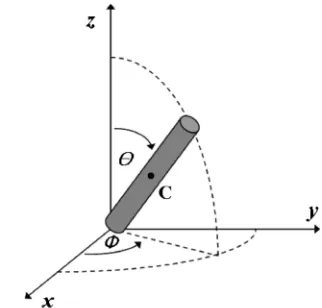
The RSA algorithm used for the generation of the RVEs of the composite consisted of adding whiskers sequentially to a cubic space by randomly generating the center point (Cðx;y;zÞ), radius (r) and length (l) of each whisker, within the range of values of the actual Al18B4O33whiskers (Fig. 2).
To designate the direction of each whisker in 3D space, two Euler angles (’; ) were determined randomly by a quaternion method16)to afford a uniform distribution of the
orientation of all of the whiskers. During the RSA procedure, newly generated candidate whiskers were deleted if they overlaid any whiskers that had been generated previously. The minimum distance between the whiskers was set to 0.3mm, which was imposed by the practical limitations of creating an adequate finite element mesh in the matrix between the whiskers. The flowchart of the RSA procedure is shown in Fig. 3. The RSA algorithm with the combination of the above conditions was used to generate the RVE models of the composites up to the desired volume fraction of 15%. All of the finite element calculations were performed with commercial ANSYS software.17) The matrix and whiskers were meshed with ten-noded quadratic tetrahedral elements (SOLID 187, structural solid element, ANSYS), which were generated by sweeping the corresponding 2D meshes on the top surface of each whisker. In order to evaluate the influence of the RVE volume on the model conformability, four different cubic RVE lengths (L¼5, 10, 15 and 20mm) were considered.
Three different models were generated and analyzed for each volume of RVE. The typical model geometries and meshes of the RVE models of the Al18B4O33/Mg composite
are shown in Fig. 4. The typical number of elements and node points were about 23,500 and 9,000 forL¼5, 77,400 and 30,700 for L¼10, 219,200 and 93,300 for L¼15, and 424,300 and 189,300 for L¼20, respectively. The
Fig. 1 An optical micrograph of squeeze infiltrated Al18B4O33/Mg
random whisker composite. (1000)
Fig. 2 Modeling a whisker as a cylinder in 3D space.
[image:2.595.340.501.72.226.2] [image:2.595.311.542.268.443.2] [image:2.595.48.289.584.757.2]Al18B4O33 whiskers were modeled as linear elastic, with a
Young’s modulus of 392 GPa and a Poisson’s ratio of 0.24. The experimental stress-strain curve of the squeeze cast monolithic AS52 alloy15) with the Multilinear Kinematic Hardening (MKIN) option of ANSYS was used in describing the plasticity of the matrix. The Von-mises yield criterion was used to determine the start point of the plastic strain.18) The Young’s modulus and Poisson’s ratio of the AS52 alloy were 44.7 GPa and 0.35, respectively. The effect of the thermal residual stress, which was induced by the cooling process after casting, was also modeled usingT ¼625C (65025C).
To predict the x-axis elastic modulus (E11) and overall
elastic-plastic response, a 4% uniaxial tensile strain (the experimentally measured fracture strain of the composite15)) was applied to each model by fixing the displacement of the
y-z plane in the x-direction, and applying an x-direction displacement on the opposite side of the model. With the same procedures, theE22 andE33values of the models were
calculated from the FE analysis results. In the same manner, the shear modulus,G, was evaluated by applying a uniaxial shear strain to the models along all three directions.
4. Results and Discussion
4.1 Generation of random whiskers in 3D space
Compared with the non-periodic models, the periodic unit cell and RVE models exhibited good isotropic properties and proper accuracy with relatively small volumes. For these reasons, the modeling of composites with a periodic bounda-ry condition has been intensively studied in the case of particle and short fiber reinforced composites.10–12)However, using periodic conditions and the RSA algorithm, it was confirmed that the volume fraction of random whiskers in the RVE could not exceed about 9%, because of the geometrical
jamming limit. Therefore, the present study adopted non-periodic boundary conditions to describe the complex micro-structures of the high aspect ratio random whiskers. To minimize the inherent heterogeneity of the non-periodic RVE, a sufficiently large volume of the RVE was considered in the present models. With the present non-periodic boundary conditions and modified RSA algorithm, the RVEs of the random whisker composite were successfully repro-duced up to a volume fraction of 15%. The number of whiskers which was generated in each RVE model is shown in Table 1. The average number of whiskers increased exponentially with increasingLand, for L¼20, about 320 individual whiskers were fully or partially generated in a 202020mm3cubic space of the RVE. In this model, the
3D orientation, aspect ratio and distribution of the random whiskers were fully represented.
4.2 Influence of the size of the RVE on the effective material properties
One of the important parts of the modeling RVE approach is defining a proper representative volume to be modeled, which is required to give appropriate properties of a macroscopic composite structure. If the volume of the RVE considered is less than the minimum volume required, it may lead to a wrong prediction of the material properties. However, limited computational resources restrict the RVE volume, because as the RVE volume becomes larger, the more computational resources are required. To the authors’ best of knowledge, the question of the proper RVE size is still open to discuss and the answer can depend on the overall property of interest and on the type of considered micro-structure.10,19,20) Therefore, a reasonable compromise be-tween the accuracy and required CPU time is necessary.
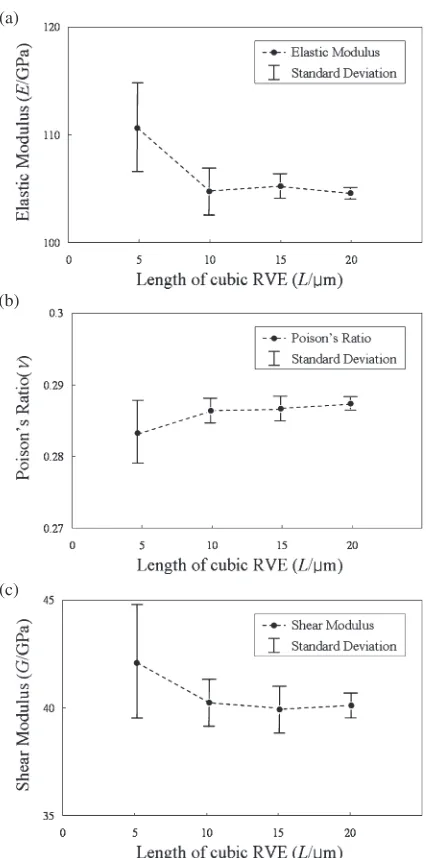
Figure 5(a) shows the evolution of the ensemble averages,
E11,E22 andE33, of the RVE models, which were predicted
by the FEM. In order to determine the effect of RVE volume on model conformability, the standard deviations of the elastic modulus around the mean value were calculated using the results of the three different RVE models. In the case of small RVE volume, the calculated elastic modulus exhibited high deviation values. With increasing RVE volume, the deviations were decreased and the calculated results con-verged and stabilized. The standard deviation was less than 2% whenL¼20. The evolution of the Poisson’s ratio () and shear modulus (G) of the models is shown in Figs. 5(b) and (c), respectively. Similarly to the results in Fig. 5(a), the variations of the values ofandGwere very small and the standard deviations were less than 2%. Although the largest cubic RVE length (20mm) in this study was shorter than the range of the length of whiskers (10–30mm), a reasonable
(a) (b)
(c) (d)
[image:3.595.47.290.72.309.2]Fig. 4 Typical model geometry and meshes of 3D random whisker reinforced composite with various cubic RVE length ofL. (a)L¼5mm, (b)L¼10mm, (c)L¼15mmand (d)L¼20mm.
Table 1 The number of whiskers in RVEs.
RVE length Number of whiskers (N)
(L/mm) Model #1 Model #2 Model #3 Average
5 15 22 21 19
10 71 73 71 72
15 180 175 178 178
[image:3.595.301.550.85.169.2]accuracy and isotropy (error was less than 2%) was observed. From these results, it was expected that the model with a cubic RVE length of 20mm corresponded to reasonable bounds for representing the microstructure of the random whisker composite. Moreover, the material properties which were obtained using the three coordinate directions were about same and the standard deviations were less than 2% for L¼20. These results indicated that proper isotropy and statistical homogeneity of the non-periodic RVE models was achieved forL¼20.
4.3 The elastic and overall elastic-plastic response of the model
Table 2 shows the Young’s modulus of the Al18B4O33/Mg
composite, which predicted by the RVE models withL¼20 and experimentally. For comparison, the Young’s modulus of the composite was calculated theoretically based on empiri-cal predictions made by the H-T model.6)The present models reproduced fairly well the experiment findings, while the empirical model underestimated the measured Young’s
modulus of the composite. Since the actual stress field during deformation of the composite is highly heterogeneous in nature and closely related to the geometric parameters between the matrix and reinforcement, the theoretical models do not provide good agreement with experimental obser-vation. Unlike in the case of theoretical model, a good agreement was found between experiment and the result predicted by RVE model, in which the geometric parameters of Al18B4O33 whiskers in the composite microstructure were
taken into account. Another advantage of using RVE models with computer-aided simulation was that the non-linear response of composites, such as stress-strain behavior can be described by modeling the matrix as an elastic-plastic material. Figure 6 shows the overall stress-strain responses of the Al18B4O33/Mg composite, predicted by the models
with L¼20. The three different RVE models showed approximately identical deformation behavior. Therefore, it can be concluded that the volume of the models was representative of the composite microstructure and that the number of whiskers was sufficient to represent the deforma-tion behaviors of the random whisker composites. Further-more, the experimental tensile behavior corresponded well to the FEM results. The results in Fig. 6 and Table 2 indicated that a sound description of the microstructure of the random whisker composite was obtained with the current modeling procedure. The difference in the Young’s modulus between the present model and experimental results was less than 2%. Moreover, the effect of micromechanical factors, such as whisker-whisker interactions, plastic flow of the matrix and internal thermal residual stress, proved to influence signifi-cantly the deformation behavior of the Al18B4O33/Mg
composite, while the theoretical models could not directly account for these factors. The good agreement between the present models and the experimental results reflected that the non-periodic RVE model, introduced by modified RSA algorithm, was very effective at predicting the behaviors of the random whisker reinforced composite.
(a)
(b)
(c)
[image:4.595.63.276.70.499.2]Fig. 5 Variation of the mechanical properties with change in RVE size. (a) elastic modulus, (b) Poisson’s ratio and (c) shear modulus.
Table 2 Elastic modulus predicted by a FE-models and analytical model.
Models Elastic Modulus (E/GPa) Experiment15Þ 103
FE-analysis 104:91:4
H-T model6Þ 96.2
[image:4.595.306.546.82.302.2]5. Conclusions
The elastic properties and overall stress-strain response of the random Al18B4O33/Mg composite was investigated using
FEM and a RVE model implemented by the RSA algorithm. Using the modified RSA algorithm and non-periodic bound-ary condition, a RVE model of random whisker reinforced composite with 15 vol% was successfully developed. The 3D orientation, aspect ratio and distribution of the whiskers were accurately represented by the present models. Moreover, large representative 3D volumes of the random whisker composite were fully reconstructed in the models. From the FEM results, it was shown that the non-periodic RVE models achieved reasonable isotropic mechanical properties with about 320 whiskers, where the standard deviations of the properties in the three coordinate directions were less than 2%. The Young’s modulus and overall elastic-plastic response of the Al18B4O33/Mg composite corresponded
well to the FEM results. The non-periodic RVE modeling technique, using the modified RSA algorithm, was very effective in determining the material properties of the whisker reinforced composite and, therefore, should provide a means of developing new composites.
Acknowledgement
This work was supported by the National Core Research Center program (No. R15-2006-022-02001-0) from the Korea Science & Engineering Foundation and a grant-in-aid for the Tohoku University Global COE program.
REFERENCES
1) S. Q. Wu, Z. S. Wei and S. C. Tjong: Comp. Sci. Tech.60(2000) 2873– 2880.
2) M. Y. Zheng and Y. Kojima: Mater. Sci. Eng. A348(2003) 67. 3) K. S. Sohn, K. J. Euh, S. H. Lee and I. M. Park: Metall. Mater. Trans.29
(1998) 2543.
4) Z. Hashin and S. Shrtikman: J. Mech. Phys. Solids11(1963) 127–140. 5) T. Mori and K. Tanaka: Acta Metall.21(1973) 571.
6) B. D. Agarwal and J. J. Broutman:Analysis and Performance of Fiber Composites, (John Wiley, New York, 1990).
7) J. Liorca, A. Needleman and S. Suresh: Acta Metall. Mater.39(1991) 2315.
8) Y. L. Shen, M. Finot, A. Needleman and S. Suresh: Acta Metall. Mater.
42(1994) 77.
9) P. J. Hine, H. R. Lusti and A. A. Gusev: Compos. Sci. Tech.62(2002) 1445–1453.
10) S. Kari, H. Berger and U. Gabbert: Comput. Mater. Sci.39(2007) 198– 204.
11) H. J. Boehm, A. Eckschlager and W. Han: Comput. Mater. Sci.25
(2002) 42–53.
12) D. Duschlbauer, H. J. Boehm and H. E. Pettermann: J. Compos. Mater.
40(2006) 2217.
13) A. A. Gusev, P. J. Hine and I. M. Ward: Compos. Sci. Tech.60(2000) 535.
14) B. Widom: J. Chem. Phys.44(1966) 3888.
15) W. J. Lee, I. M. Park and Y. H. Park: J. Mater. Sci. Tech.24(2008) 99. 16) N. Lassen, D. Jensen and K. Conradsen: Acta Cryst. A50(1994) 741–
748.
17) Y. Nakasone, S. Yoshimoto and T. A. Stolarski:Engineering Analysis with ANSYS software, (Butterworth-Heinemann, Oxford, 2007). 18) W. L. Hu and Z. R. Wang: Comput. Mater. Sci.32(2005) 31. 19) N. Chawla, R. S. Sidhu and V. V. Ganesh: Acta Mater.54(2006) 1541. 20) C. Pelissou, J. Baccou, Y. Monerie and F. Perales: Int. J. Solids Struct.