Mathematics & Computer Science
OSSUM - A Framework for
Determining the Quality of
Information Security
Assessment Methodologies
Alexander Bakker M.Sc. Thesis
July 2018
Supervisors: prof. dr. M. E. Iacob prof. dr. ir. M. J. van Sinderen
Telecommunication Engineering Group Faculty of Electrical Engineering, Mathematics and Computer Science University of Twente P.O. Box 217 7500 AE Enschede
This is the preface of my master’s thesis. As I’m writing it, I’m thinking of all of the things that I could have done better, at every stage, and whether all of the choices that I’ve made are the right ones. I am far from satisfied with it as it is, as I probably see the flaws that are in it better than most, since I’m the one that caused them.
Writing this master’s thesis is without question the hardest thing I’ve ever done. I’ve dealt with uncertainty, stress and burnout symptoms, all the while feeling like what I’m doing is simply inadequate. The best way to describe what it felt like is trying to break down a brick wall by repeatedly bashing my head into it. And now, I’ve finally almost broken down the wall, and I’m going to give my head some well needed rest.
I am very grateful to my supervisors for guiding me along the way, and to North-wave, for the time and effort that they were always willing to invest in me. Finally, I am eternally grateful to my friends, my family, and my girlfriend Inge for supporting me while I was working on my thesis. Dear friends, thank you, as I could not have done this without the support that you have given me.
This thesis follows a literature study that was aimed at uncovering methods of mea-suring the level of Information Security within organizations, described in this thesis as Information Security Assessment Methodologies, or ISAMs for short. One of the main conclusions of the literature study was that only two of the 10 ISAMs identi-fied were validated in practice. The literature concluded that there was to date no framework for validating ISAMs. This thesis aims to fill that gap.
In this thesis, a framework is presented that can be used to measure the degree to which an ISAM adheres to current standards. The framework generates a sta-tistical overview of the ISAM, and can serve as a basis for improving the quality of ISAMs. The use of the framework is demonstrated by analyzing an ISAM called the State of Security assessment.
The framework developed in this thesis is called OSSUM, the Overarching Se-curity Standard Unification Methodology.
Preface ii
Summary iii
List of acronyms vi
List of Figures viii
List of Tables viii
1 Introduction 1
1.1 Motivation . . . 1
1.2 Research questions . . . 2
1.3 Thesis structure . . . 2
2 Background 3 2.1 Introduction to Information Security . . . 3
2.2 Information security standards . . . 5
2.2.1 ISO 27k series . . . 6
2.2.2 NIST Special Publication (SP) 800-53 revision 4 . . . 7
2.2.3 CIS Critical Security Controls for Effective Cyber Defense (SANS CSC) . . . 8
2.2.4 NIST Cybersecurity Framework . . . 9
2.2.5 Other noteworthy materials . . . 9
2.2.6 IS Laws and Regulations AKA legal compliance . . . 14
2.3 ISAMs . . . 15
2.3.1 What is an Information Security Assessment Methodology? . . 16
2.3.2 Overview of ISAMs . . . 16
3 Methodology 24 3.1 Literature search . . . 24
3.2 DSRM approach . . . 26
3.2.1 Introducing Peffers’ DSRM . . . 26
3.2.2 Mapping Peffers to this thesis . . . 28
4 Creating a framework for validating ISAMs 29 4.1 Designing the OSSUM framework . . . 29
4.2 Requirements for the framework . . . 30
4.3 Selecting standards . . . 31
4.4 Filling the database . . . 32
4.4.1 Structure of controls . . . 32
4.4.2 Combining the standards into one . . . 35
4.4.3 Categorization of controls . . . 37
4.5 Applying the framework . . . 38
4.5.1 Input requirements . . . 38
4.5.2 Process steps . . . 38
4.6 Conclusion . . . 41
5 Case Study 42 5.1 The State of Security assessment . . . 42
5.1.1 Overview of the process . . . 42
5.2 Goal of the case study . . . 45
5.3 Results of the case study . . . 45
5.3.1 Performing the case study . . . 45
5.3.2 Overview of adherence to standards . . . 47
5.3.3 Improvement recommendations . . . 53
5.4 Conclusion . . . 57
6 Conclusions and future work 60 6.1 Conclusions . . . 60
6.2 Discussion and Limitations . . . 61
6.3 Future work . . . 62
References 63
This chapter will contain all of the acronyms defined throughout the document, and will be filled while writing.
CMDB Configuration Management Database
CMM Capability Maturity Model
CSF Cybersecurity Framework
DSRM Design Science Research Methodology
FISMA Federal Information Security Management Act
GDPR General Data Protection Regulation
GLBA Gramm-Leach-Bliley Act
HIPAA Health Insurance Portability and Accountability Act
ICS Industrial Control System
ISAM Information Security Assessment Methodology
ISF Information Security Forum
ISMS Information Security Management System
ITIL Information Technology Infrastructure Library
NBS Northwave Business Security
NCS Northwave Cyber Security
NIST National Institute of Standards and Technologies
OCR Optical Character Recognition
OSSUM Overarching Security Standard Unification Methodology
OECD Organisation for Economic Co-operation and Development
OSCP Offensive Security Certified Hacker
PII Personally Identifiable Information
SOS State of Security assessment
2.1 The CIA triad [74] . . . 4
2.2 The COBIT 5 family of products [29] . . . 10
2.3 The SSE-CMM basic model [32] . . . 12
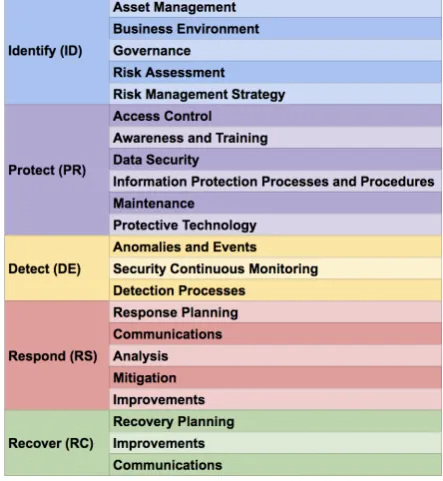
4.1 The functions and activities of the NIST CSF . . . 37
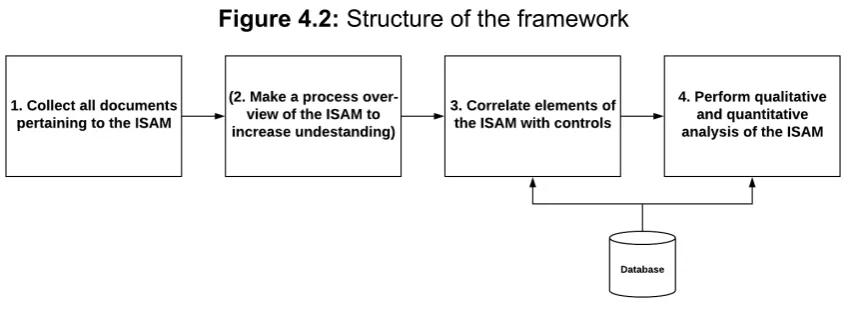
4.2 Structure of the framework . . . 38
5.1 Flowchart of the SOS Process . . . 43
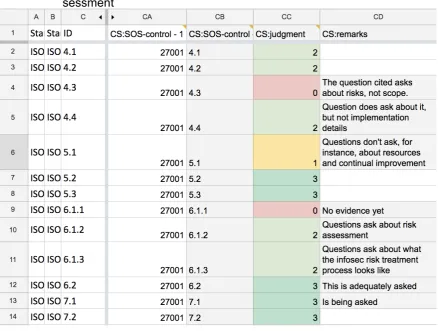
5.2 Small selection of controls as measured by the State of Security as-sessment . . . 46
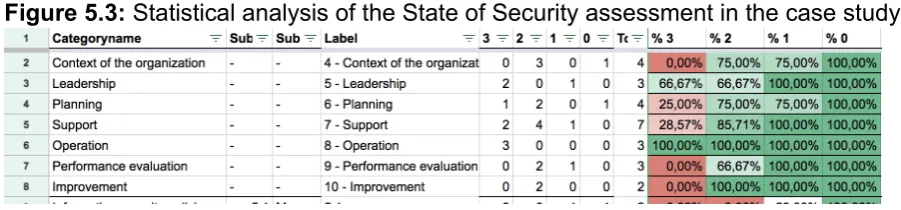
5.3 Statistical analysis of the State of Security assessment in the case study . . . 47
5.4 Highlevel overview of coverage of ISO 27001:2013 by State of Secu-rity assessment . . . 48
5.5 Highlevel overview of coverage of ISO 27002:2013 by State of Secu-rity assessment . . . 49
5.6 Detailed overview of coverage of ISO 27002:2013 per control category 50 5.7 Highlevel overview of coverage of NIST SP 800-53r4 by State of Se-curity assessment . . . 51
5.8 Overview of coverage of CIS Controls by State of Security assessment 52 5.9 Detailed overview of coverage of the Activities in the NIST CSF by State of Security assessment . . . 58
5.10 High-level overview of coverage of the Functions in the NIST CSF by State of Security assessment . . . 59
2.1 Traceability Matrix - Frameworks per paper . . . 22
3.1 Mapping this thesis to Peffers’ DSRM . . . 28
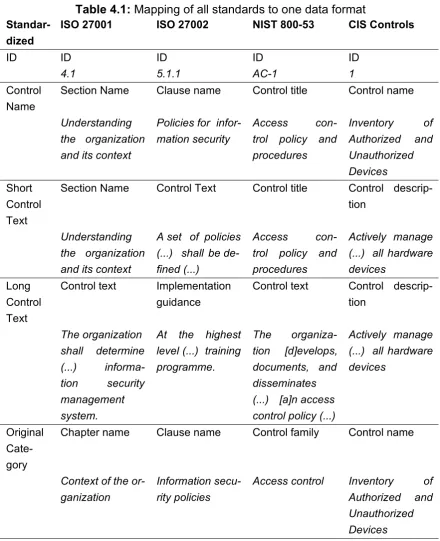
4.1 Mapping of all standards to one data format . . . 36
5.1 Legend - degree to which a control is measured by an ISAM . . . 47
Introduction
1.1 Motivation
Information Security is rapidly becoming more important for organizations, pushed by forces like the increasingly complex IT landscape, a maturing cybercrime industry, an increasing focus on the importance of privacy by the public, regulatory pressure from governments, and an increased reliance of organizations on IT in their primary process. For this reason, being able to measure the level of Information Security within organizations is also becoming increasingly relevant.
While there are several industry standards that organizations can use in order to increase their level of Information Security, and get certified, fully implementing these Information Security standards may not be feasible for many organizations, for reasons like a shortage of budget. Yet other organizations do not feel the need to invest heavily in Information Security, because they feel that it is hard to justify such investments without a demonstrable return on investment.
For organizations that do not want to have a full auditing and accreditation pro-cess, and do not need to become accredited, it may be more beneficial to perform a measurement of the level of Information Security, or have this measurement per-formed by an expert organization. Such audits are usually less invasive and costly than a full implementation, and the insights of such a measurement can lead to tangible benefits at a reduced cost.
In an earlier literature study, several methodologies have been identified that can be used in order to determine the level of Information Security within an organiza-tion, which are collectively called Information Security Assessment Methodologys (ISAMs) in this thesis. One of the conclusions of the literature study, however, was that there was a clear need for a method of validating such methodologies, because most of the ISAMs discovered in literature were not validated in practice.
This thesis aims to fill this gap in literature by producing two results. First, a database is created containing all of the controls from a set of Information Security
standards, selected based on an earlier literature study. These controls are also categorized, which facilitates analysis of Information Security Assessment Method-ologies. Second, a framework is created to apply the database in order to validate Information Security Assessment Methodologies.
By using this framework, the Overarching Security Standard Unification Methodology (OSSUM) framework, researchers will be able to demonstrate with a higher degree of confidence that the ISAMs they developed measures relevant Information Secu-rity standards. The suitability of the OSSUM framework is demonstrated by applying it to an ISAM used by the organization at which the author is performing his gradua-tion.
1.2 Research questions
This section introduces the research questions of this thesis. The main research question is as follows:
What constitutes a framework for validating methodologies designed to assess the level of (aspects of) information security within organizations?
This is supported by the following subquestions:
1. Which standards, guidelines and other relevant materials should be covered by an Information Security Assessment Methodology?
1.1. In which ways can the controls found in these standards be categorized?
2. How can Information Security Assessment Methodologies be validated accord-ing to relevant Information Security standards?
1.3 Thesis structure
Background
This chapter will provide background information on information security, as wellas leading Information Security standards.
2.1 Introduction to Information Security
Here, a definition will be given of Information Security. An overview of relevant Infor-mation Security standards will be given in 2.2, and a small introduction into relevant laws and regulations is given in subsection 2.2.6. Additionally, the area of Informa-tion Security is compared and contrasted with several similar but different areas.
Definition of Information Security
Information Security is a broad area that encompasses everything that has to do with protecting information within an organization. It is defined by the International Organization for Standardization (ISO) as:
Preservation of confidentiality, integrity and availability of information. Note: In addition, other properties, such as authenticity, accountability, non-repudiation and reliability can also be involved [35].
The generally accepted main components of Information Security are confiden-tiality, integrity and availability (sometimes also called the CIA Triad [60]), shown in 2.1. The interrelation between these terms is best described by the definition of Information Security by ISACA (previously known as the Information Systems Audit and Control Association) [27]:
[Information Security] ensures that within the enterprise, information is protected against disclosure to unauthorized users (confidentiality ), im-proper modification (integrity ), and nonaccess when required ( availabil-ity )
Figure 2.1: The CIA triad [74]
These elements are widely accepted throughout literature as core elements of information security, and virtually every definition of information security mentions at least these elements. Some extensions to this triad exist, such as the Parkerian Hexad [58], which extends the CIA triad with possession/control (of information),
authenticity (which refers to the veracity of the claim of authorship), and utility (which refers to the usefulness of data in its current form).
The Organisation for Economic Co-operation and Development (OECD) instead developed nine generally accepted principles for the security of information systems and networks, which they recommend to any entity involved with an information system or network. These are awareness, responsibility, response (timely and co-operative response to threats and vulnerabilities), ethics (respect for legitimate inter-ests), democracy (respect for democratic values), risk assessment, security design and implementation, security management, and reassessment [57].
Ironically, as defenders we have access to an extraordinary array of secu-rity tools and technology, secusecu-rity standards, training and classes, certifi-cations, vulnerability databases, guidance, best practices, catalogs of se-curity controls, and countless sese-curity checklists, benchmarks, and rec-ommendations. (...) But all of this technology, information, and oversight has become a veritable ”Fog of More.”
Information Security is a fast-changing field, because of the rapidly changing nature of information technology, the new threats that arise as a result of those changes, and the organizational implications that some changes have. Some exam-ples of new threats as a result of technological innovation are cloud malware as the result of cloud computing [37], information loss due to company laptops being taken off-premises [44], hackers gaining relatively easy access to devices used for Inter-net of Things applications [75], and adversaries having relatively easy anonymous access to cybercriminals through cryptocurrencies like Bitcoin [47].
2.2 Information security standards
Arguably the most well-established sources for Information Security are national and international standards on the topic [39]. As such, in this section, an short overview will be given of the relevant standards on the topic, their scope, and their history.
The definition of standard used in this section is [S]omething established by au-thority, custom, or general consent as a model or example [49]. Alongside self-described norms and standards, this also includes generally accepted best prac-tices, checklists and other materials. The standards differ from each other in, among others, the scope of what they address (some address Information Security over the entire spectrum, whereas others specifically focus on cybersecurity), the method by which these standards aim to affect organizations (e.g. my means of a list of requirements, checklists, a maturity model, or a prescriptive method), their general acceptance (how widespread their use is), and their availability (free of charge, avail-able for a fee, availavail-able with a membership subscription, or something else).
A thorough understanding of the relevant frameworks, standards, guidelines, checklists and other materials, as well as some assurance that all relevant mate-rials are included, is important in order to ensure that all relevant areas are covered. However, many of the materials that are widely used in practice are not published in scientific journals, and therefore might not show up in a conventional literature search.
following frameworks being cited most often [17]:
• PCI (47%)
• ISO 27001/27002 (35%)
• CIS Critical Security Controls (32%)
• NIST Framework for Improving Critical Infrastructure Cybersecurity (29%)
• Other (3%)
According to the survey, the materials that were mentioned when participants filled out Other were the following:
• HIPAA (The Health Insurance Portability and Accountability Act)
• FFIEC (The Federal Financial Institutions Examination Council)
• HITECH (The Health Information Technology for Economic and Clinical Health) • CIP (Not further specified, but the U.S. Critical Infrastructure Protection is
as-sumed - this is also covered by NIST)
• Internally developed guidelines
For clarity and brevity, the format by which we will refer to standards from here on out is [Name of publisher or body] [identifier of the specific publication of standard if applicable]:[year of publication, if relevant - otherwise, the latest version is implied], for instance ISO 27001:2013.
2.2.1 ISO 27k series
The ISO/IEC 27000 family of standards, also colloquially known as ISO27k, are a large and growing series of standards developed, published and maintained by a joint effort of the International Organization of Standardization (ISO) and Interna-tional Electrotechnical Commission (IEC). ISO 27000:2016 is the standard’s leading document, and describes of the other standards in the family [35].
Except for the sector-specific ISO 27k standards, all ISO standards are univer-sally applicable [65], but an operationalization step may need to be made before applying them, partly due to their one-size-fits-all nature. For instance, when ap-plying the 114 controls in ISO 27002:2013, the organization needs to select which controls are applicable to the organization [34], and needs to identify whether any controls are missing.
ISO 27001:2013 also contains an Annex A, which sets out controls and control objectives for increasing Information Security on a more operational level. These are derived from and directly aligned with the controls set out in ISO 27002:2013 [34], which provides implementation guidance for these controls.
Worldwide, there are over 1.6 million organizations that have an ISO 27001 cer-tification [36].
2.2.2 NIST Special Publication (SP) 800-53 revision 4
The National Institute of Standards and Technologies (NIST) is a non-regulatory agency within the U.S. department of Commerce [53]. One of its series of publica-tions is the NIST SP 800 series, which is a series of over 179 publicapublica-tions (of which 20 are labeled as a draft at the moment of writing) [54]. The NIST SP 800 series is mostly oriented towards technical issues [61], and is very useful when it comes to the implementation of single controls [42].
Arguably the most important document in the NIST SP 800 series is NIST SP 800-53 (version at time of writing is revision 4 or r4), which provides a catalog of security and privacy controls, and a process for selecting controls to protect organi-zations against information security threats [51]. Although the publication is primarily intended to provide controls for federal information systems and organizations, it is also suited for use by non-federal organizations.
NIST SP 800-53r4 also briefly touches on the Risk Management Framework, which is further outlined in NIST SP 800-37 [55]. The core of this Risk Management Framework consists of a 6-step iterative approach to improving the Information Se-curity of an information system [51]:
1. Categorize the information system based on a FIPS Publication 199 impact assessment. This entails categorizing the potential impact of a compromise in confidentiality, integrity and availability of data, on a scale of low medium -high;
2. Select the applicable security control baseline based on the results of the se-curity categorization and apply tailoring guidance;
3. Implement the security controls and document the design, development, and implementation details for the controls;
4. Assess the security controls to determine the extent to which the controls are implemented correctly, operating as intended, and producing the desired out-come;
The controls in the NIST SP 800-53r4 catalog have an indication of a baseline, which serves as an indicator for which controls to implement. Based on the Cate-gorize step of the Risk Management Framework, more or less controls should be considered for implementation.
Finally, while it is possible for US federal organizations to become certified and accredited based on NIST SP 800-53r4, the NIST SP 800-53r4 does not provide a mechanism for organizations outside the US Federal government to get certified. That is, use of the NIST SP 800-53r4 is entirely voluntary for non-governmental organizations.
2.2.3 CIS Critical Security Controls for Effective Cyber Defense
(SANS CSC)
The Critical Security Controls for Effective Cyber Defense are a publication of the SANS Institute, a research and education organization focused on information secu-rity and computer secusecu-rity operating worldwide. It consists of a set of cybersecusecu-rity controls that, when implemented, should reduce an organization’s susceptibility to most pervasive attacks [63].
The SANS CSC mentions five critical tenets of any effective cyber defense sys-tem (paraphrased):
1. Offense informs defense: only use controls that stop real-world attacks 2. Prioritization: prioritize controls that provide the greatest risk reduction
3. Metrics: use metrics as a shared language to communicate the effectiveness of security measures between multiple parties within an organization
4. Continuous diagnostics and mitigation: to measure the effectiveness of current security measures
5. Automation: automate defenses for reliability and scalability
The controls are based on input and feedback from a large number of informa-tion security practiinforma-tioners, and are based on real-world data. Their scope is limited to system and computer security, and for a large part the controls do not address hu-man or organizational aspects. Where they do, the focus is also usually on technical skills.
2.2.4 NIST Cybersecurity Framework
The US National Institute of Standards and Technology (NIST) is a non-regulatory agency of the US Department of Commerce [53]. Among their publications is the NIST Cybersecurity Framework (CSF), a voluntary framework that was developed through collaboration between the US Government and the private sector, based on industry standards and best practices, and aimed at protecting the United States’s critical infrastructure [52].
The CSF is described as a set of industry standards and best practices to help organizations manage cybersecurity risks, and consists of three parts: the Frame-work Core, the FrameFrame-work Profile, and the FrameFrame-work Implementation Tiers. The Core contains a set of activities, and references other national and international In-formation Security standards where applicable. The Core consists of five functions (Identify, Protect, Detect, Respond and Recover), divided into 22 functions, which in turn are divided into 98 subcategories, each of which mentions a set of informative references. The subcategories provide clearly actionable goals that can be verified, comparable to the controls in ISO 27001:2013 Annex A [43]. The informative refer-ences also point to controls mentioned in the SANS CSC, COBIT 5, NIST SP 800-53 revision 4, and ISA 62443-2-1:2009 and ISA 62443-3-3:2013, and can be used to map these controls to eachother through the high-level categories in the NIST CSF.
It should be noted that, while ISO 27001:2013 contains the explicit requirement that a management system is in place to safeguard Information Security, no such mechamism is required in implementing the CSF. It is also not possible to be certi-fied against the CSF, and it is therefore harder to demonstrate compliance to third parties, which is one of the strong points of ISO 27001:2013.
2.2.5 Other noteworthy materials
In this section, some other noteworthy materials are mentioned, that may or may not be useful. These materials are either tangentially related to information security, cover a subsection of information security, or don’t meet the author’s subjective, arbitrary notability requirements.
2.2.5.1 Control OBjectives for Information and related Technology (COBIT)
COBIT is a business framework for the governance and management of Enterprise IT. The most recent version of COBIT, COBIT version 5, was published in 2012, and is part of the COBIT 5 Product Family, which is shown in figure 2.2.
Figure 2.2: The COBIT 5 family of products [29]
of Professional guides, along with a collaborative online environment. One of these Professional guides is COBIT 5 for Information Security, which builds on the COBIT 5 framework in order to assist enterprises in achieving Information Security [30].
Although on the surface COBIT 5 for Information Security looks like a very in-teresting source, the full document was unfortunately not available for review to the researcher. Additionally, the process by which it was developed and the interrela-tionships between COBIT 5 for Information Security and other standards are not publicly disclosed, and no sources could be found to this effect.
2.2.5.2 ITIL
ITIL, formerly the Information Technology Infrastructure Library, is a best practices IT service management approach. It supports organizations in aligning IT services with business needs [3]. The best practices are detailed in five publications, each of which corresponds to one stage of the ITIL Service Lifecycle. The publications are:
1. ITIL Service Strategy [7] 2. ITIL Service Design [5] 3. ITIL Service Transition [8] 4. ITIL Service Operation [6]
5. ITIL Continual Service Improvement [4]
it does not offer the same level of assurance. It should also be noted that the ISO standards that ITIL is based on have since been superseded.
2.2.5.3 (SSE)-CMM
Although focused on software engineering, not on Information Security, the Systems Engineering Capability Maturity Model (SECMM) is a process-maturity framework originally developed for software engineering, and is a tool by which organizations can measure and improve the level of maturity of specific areas within an orga-nization [67]. The central concept of any maturity model is the idea of maturity, usually represented on a scale from less to more mature. The SECMM ascribes the following attributes to immaturity (slightly rewritten to pull away from the software development language used): reactionary, focused on solving immediate crises, regularly exceeding budgets because budgets are not based on realistic estimates, having no objective way to judge product quality or solve product or process prob-lems. Conversely, it ascribes the following characteristics to maturity: possessing an organization-wide ability to manage [the process], employing managers that can ac-curately communicate [the process] to staff and new employees, and work activities are carried out according to the planned process. Mandated processes are usable and consistent with how work actually gets done, and get updated when necessary, supported by pilot tests and cost-benefit analyses. Roles and responsibilities are clear within a project and across the organization. There is an objective, quantita-tive basis for judging product quality and analyzing problems with the product and process.
In short, therefore, maturity contrasts with immaturity in a more formal, struc-tured, consistent way of achieving more predictable results more efficiently, with an increased focus on continuous improvement.
The SECMM identifies five maturity levels (six, including level 0), ranging from least to most mature, defined as such:
0. Not performed
1. Performed Informally 2. Planned and Tracked 3. Well-defined
4. Quantitatively Controlled 5. Continuously Improving
Many other maturity models include maturity levels that are named similarly, and some omit the level ”0 - Not performed”, in essence merging it with level 1.
when performed collectively, can achieve a defined purpose. They consist of base practices, which are characteristics that must exist within the organization’s process for the organization to claim satisfaction of that PA [67]. The SECMM defines 18 such PAs, which together encompass the base practices that are considered essen-tial to the conduct of basic systems engineering.
The Systems Security Engineering Capability Maturity Model (SSE-CMM), origi-nally developed by the International Systems Security Engineering Association (IS-SEA), then published by ISO as ISO 21827:2002 and updated to ISO 21827:2008 [32], is a capability maturity model that is based on the SECMM. The SSE-CMM focuses on systems security engineering, which aims to ensure security through-out the systems engineering lifecycle. It has 129 base practices organized into 22 PAs, 11 of which are in the section ”Security Base Practices”, and 11 of which are in Annex B, ”Project and Organizational Base Practices”, which are adapted from the SECMM (SECMM PA 8 through 18). Some of the PAs are interrelated - for in-stance, PA03: Assess Security Risks relies on PA04: Assess Threat, PA05: Assess Vulnerability, and PA02: Assess Impact.
[image:21.595.199.428.502.701.2]The basic model consists of a grid, with the Domain Dimensions (Base Prac-tices) on one dimension, and the Capability Dimensions (Generic PracPrac-tices) on the other. Answering all the questions raised by combining the Base Practices with the Generic Practices (such as Generic Practice 2.1.1 Allocate Resources with Base Practice 05.02 Identify System Security Vulnerabilities) will provide a good picture of the security engineering capability of an organization (”Does the organization al-locate resources towards identifying system security vulnerabilities?”).
Figure 2.3: The SSE-CMM basic model [32]
certain maturity level if all of the PAs have achieved that level. The reason for this is that all of the PAs have to have achieved a certain level in order for the organization to reap the full benefits associated with that maturity level.
While these models are aimed at (security) systems engineering, rather than Information Security, they have been used in several approaches that aim to im-prove Information Security. Tse [70], for instance, integrate ISO 9000 and BS 7799 onto the SECMM in order to create a Security Assessment Model for Information Security Practices. Goldman and Christie [22], meanwhile, combine ISO 17799 and the SSE-CMM in order to created a Metrics Based Security Assessment, a self-assessment tool for management to determine the level of maturity within an organization. Goldman and Ahuja [21], finally, integrate COBIT, the Balanced Score Card and SSE-CMM into an Information Security Management framework focusing on aligning business, IT and information security.
2.2.5.4 IASME
While 99.8% of all businesses in Europe are Small and Medium-sized Enterprises (having 249 or less employees [16]), there are very few frameworks, guidelines and standards that are specifically aimed at SMEs. Most standards are universal or generic in nature (like the ISO 27001:2013 standard, which can be applied to any organization), but for resource-constrained SMEs these standards may be too com-plex to apply effectively [24]. The IASME (Information Assurance for SMEs) stan-dard [18] was developed in collaboration with the UK Government as a result of these findings, and is specifically aimed at organizations ”where spare cash is in short supply” [25]. It is based on ISO 27001, and is supplemented with ”ENISA, SANS [likely SANS Cyber Security Controls] and COBIT.” The UK Cyber Essentials information security good practices project is contained within the IASME standard.
Organizations can apply IASME using a self-assessment, which is verified by a certification body, after which they receive a certificate. Alternatively, organiza-tions can apply for a certificate which includes a technical audit of their network and computers.
In applying IASME, the organization first has to establish its risk profile, classi-fying the organization’s risk profile as ”Low, Intermediate or Complex” based on the information technology footprint, value of information assets, and perceived motiva-tion and technological capability of threat agents.
2.2.5.5 ISA 62443 (formerly ISA99)
as ISA 62443 for brevity) is a series of standards designed with the goal of improving cybersecurity robustness and resilience into Industrial Control System (ICS) [26]. It builds on the ISO 27000 series of standards, which is focused on information security in organizations.
2.2.6 IS Laws and Regulations AKA legal compliance
In this section, a bird’s eye view of laws and regulations pertaining to information security will be given. It is necessarily short and incomplete, partially due to time and resource constraints, the fact that the main author is not a lawyer,and the fact that an analysis of all laws and regulations falls outside of the scope of this literature study. Due to the geographic location of the author, this section focuses on European laws and Dutch laws, but because of the leading role that the U.S. plays in the field of Information Security, several relevant U.S. laws are mentioned as well.
There are not many laws that are related to information security. In general, the goal of information security is to protect the confidentiality, integrity and availability of data to organizations, and a compromise in this area essentially only hurts the organization itself. The laws that do pertain to information security aim to protect entities outside of the organization itself, who would be negatively impacted by a compromise of the CIA of certain data. Specifically, information security laws and regulations exist for the following areas:
• Protection of the privacy of individuals, specifically when pertaining to sensitive
information
• Protection of classified information
For the Dutch government (both on a national level and a municipality level), the Voorschrift Informatiebeveiliging Rijksoverheid 2007 (VIR; English: Regulation [on] Information Security [regarding] Civil Service) prescribes how the Dutch Civil Ser-vice is to secure information. Rather than a long list of checks and controls, the VIR simply states that management is to create a set of security requirements based on a risk assessment, to implement controls based on these security requirements, and to determine that the set of implemented controls adequately cover the established security requirements. A complementary set of measures is established to deal with sensitive information, called the VIRBI 2013 (BI stands for Bijzondere Informatie, or Special Information in English), which deals with data classification, among other things. Implementation of actual controls is done in accordance to the Baseline Informatiebeveiliging Rijksdienst 2012 (English: Baseline [for] Information Security [regarding] Civil Service), which is based on ISO 27001:2005 and ISO 27002:2005, and is based on the ”comply or explain” principle, which means that a control needs to be implemented, or an explanation needs to be given why the control is not im-plemented.
The U.S. plays a large role in the area of Information Security. Some of the leading materials on Information Security are created by departments of the U.S. government. The U.S. National Institute of Standards and Technology (NIST), for in-stance, publishes the NIST CyberSecurity Framework (CSF) and the NIST Special Publications 800-series on Computer Security. Three of the main federal cybersecu-rity regulations are the Health Insurance Portability and Accountability Act (HIPAA) of 1996, the Gramm-Leach-Bliley Act (GLBA) of 1999, and the Federal Information Security Management Act (FISMA) of 2002. Among other things, HIPAA aims to protect the privacy and security of Personally Identifiable Information (PII) related to health, by forcing organizations to put safeguards in place to protect the confiden-tiality and integrity of health information.
Another relevant piece of U.S. legislation in the area of Information Security is the USA PATRIOT Act. This law was passed following the 11 September 2001 terrorist attacks, in an effort to detect and prosecute terrorism. In combination with other laws, it gives U.S. law enforcement broad access to documents stored either in the U.S., or by U.S. organizations [46]. This is a factor that organizations should take into account when considering the confidentiality of their data.
2.3 ISAMs
foun-dation, and argue the need for the framework that is developed in this thesis, as a way to established a more formalized way of validating ISAMs according to relevant Information Security standards.
2.3.1 What is an Information Security Assessment
Methodol-ogy?
Information Security is not a new idea, and the concept of measuring Information Security is therefore also not new. This section introduces the term Information Se-curity Assessment Methodology (ISAM), defined as any framework or methodology that measures the level of Information Security within an organization, in whole or in part.
The area of Information Security is an area in which things are sometimes re-ferred to under different names. Information Security is sometimes rere-ferred to as Cybersecurity or Information Assurance, for instance.
The definition of an ISAM does not apply to tools or methodologies that aim to just measure the technical side of Information Security (a.k.a. Cybersecurity). An automated vulnerability scan, for instance, is not an ISAM by itself, although it can of course be part of an ISAM.
Finally, the word organization in the definition of ISAM is taken can be taken to mean one business, but it can also be taken to mean for instance a business unit, an entire supply chain or a government.
2.3.2 Overview of ISAMs
This section gives an overview of ISAMs found in literature, and is taken from the literature study.
2.3.2.1 History
into subcategories. The model that they use is very simplistic, and shows that the IT landscape has become much more complex since. This paper offers some historical insights, as it says that there are no clear international standards for Information Security yet. The need for such standards is evident from the lack of depth in the paper when compared to more modern papers.
Tse [70] give some insight in the state of information security in the year 2004. They give an overview of the leading information security frameworks of that time. Contrasted with von Solms et al. [71], there are already some information security models and frameworks. They also mention BS7799, the precursor to ISO 17799, which is an international standard. Also in contrast to von Solms et al. [71], the authors make a mention of the classical confidentiality, integrity and availability (CIA) triad, though interestingly the authors categorize all models and frameworks using the CIA triad in one group, which strongly implies that the authors did not yet see the CIA triad as the core of information security, as it is seen today. They also mention the Control OBjectives for Information and related Technology (COBIT) framework version 3 [28], even though it did not yet include a separate extension for Information Security (which came along in COBIT 5 [29]).
In addition, Tse [70] mention the Capability Maturity Model (CMM) as a frame-work for creating maturity models, and an extension of the CMM for systems security engineering, called the SSE-CMM. Tse [70] mention that this is only a consultative tool that is not clear enough to lead practitioners, and lacks an assessment mech-anism. In order to remedy this, the authors create a new model by mapping the 10 sections in BS7799 onto the five levels of the Capability Maturity Model, although they have not validated the model in practice.
One example of a paper that focuses just on the security of IT, rather than In-formation Security as a whole, is Hallberg et al. [23], who created a framework to assess system security. Using their approach, first a model of the system is cre-ated, after which the elements of the system that generate traffic are used to calcu-late what the authors call the system-dependent security level. An Overall Security Level (OSL) is calculated. Their definition of IT security is upholding the CIA of information and services as provided by IT-based information systems with which the authors clearly indicate their belief that it is the responsibility of IT to uphold information security.
Chen et al. [14] advocate the use of workflow (”describing how a system performs its intended functionality”) as a basis for performing cybersecurity analysis. The method works by incrementally generating more specific flow graphs from higher level flow graphs by adding information about systems and attackers, and would lend itself to automating.
much an IT-centric focus. Even today, organizations often look towards easy tech-nological solutions to improve their information security, whereas in reality a magic silver bullet for Information Security is unlikely to exist. Although the security of infor-mation systems is obviously very important, because of the central role that informa-tion systems play in how organizainforma-tions do business, focusing solely on IT overlooks the role that human and organizational factors play in Information Security.
One of the earliest methods to assess the level of Information Security organization-wide is found in a series of papers from Johansson and Johnson. Their approach is unique in that they explicitly recognize that an Information Security assessment cannot be performed with unlimited resources. They take the most representative standards in the area of Information Security at that time (ISO/IEC 17799, NIST 800-26, input from both the authors of the Information Security Forum (ISF) Standard of Good Practice and the OCTAVE framework, and a panel of experts at the Swedish Information Processing Society), and standardize the best practices found in those sources into a database of questions, categorized along the dimensions of time (planning, operating or controlling), purpose (responsive, detective or preventative) and scope (technical, organizational or environmental) [40]. These questions are then scored by a panel of experts on their relative importance in deciding the level of Information Security in an organization, and the relative amount of effort it takes to answer these questions [40]. They use this information, along with the principles to ask important and cheap questions above unimportant and costly questions, to se-lect a set of questions to elicit the answers from, and calculate a single percentage score in a bottom-up manner. In this calculation, they also use heuristics to score the individual credibility of the answers of participants [39].
2.3.2.2 Metrics
The need for a more formalized method of calculating the level of information secu-rity is also identified by Wang [73], who note that secusecu-rity assessments are usually experimental and heavily based on the assessors experience, and that where met-rics exist, they are usually qualitative and subjective.
Unfortunately, even though they mention that they use ISO 17799 and the SSE-CMM to cover each others weaknesses, they fail to mention any weaknesses in the SSE-CMM. Additionally, they do not publish the model that they created, nor the method by which they created it, in much detail, and they do not validate their model. The idea of mapping a well-known standard onto a maturity model to develop a new maturity model is sound, and their results would have been very interesting.
Breier and Hudec [10] also call for the use of more metrics in information security, specifically in the area of risk analysis, because of the subjectivity introduced into information security assessments by risk analysis who are influenced by their own knowledge and experience. In order to remedy this, they propose a risk analysis model based on the ISO27002:2005 control objectives.
While the application of metrics may be hard when it comes to enterprise infor-mation security, using metrics to improve IT security is very much feasible. Rudolph and Schwarz [62] observe that various IT security indicators have been proposed in literature, while few IT security metrics on their own have gained general accep-tance. They gather and classify published IT security indicators, and organize them in a classification tree with as its top-level categories Cost (among which, for in-stance, the cost of a countermeasure), Probability (of an attack), Compliance (of a system or process, with relevant standards and guidelines), Target Coverage (frac-tion of security targets that satisfy a given security criterion), and Effectiveness/Rigor (for indicators that measure the effectiveness of countermeasures against attacks).
2.3.2.3 Maturity
While there was certainly considerable research being done into Information Se-curity around 2008, Mazhelis and Isom ¨aki [48] point to the fact that this research was primarily focused on larger enterprises, and there were no adequate frame-works that were aimed specifically at small and medium enterprises. They make the observation that the set of frameworks that is in existence can be roughly split up into two groups: checklists and tailored methods. Checklists assume that organiza-tions are similar enough that roughly the same set of acorganiza-tions is adequate for most of them, whereas tailored methods treat each organization as unique. Some frame-works strive to combine both approaches. Furthermore, they make the observation that even the smaller frameworks are not usable in small enterprises due to their wide scope and complexity. In order to remedy this, they adapt the OCTAVE-S ap-proach, which is aimed at organizations of roughly 100 employees, to organizations of roughly 50 employees. The method that they used consists of three phases:
1. Asset-based threat analysis.
2. Assessing current situation and complementing existing mitigation activities. 3. Specify concrete to-do items.
They applied this method in an organization of roughly 50 employees and found that it performed well.
In comparing the most widely used frameworks at the time, Siponen and Willi-son [65] categorize existing frameworks in three categories: universal (applicable to every organization), generic (applicable through all organizations, with rare ex-ceptions where it is not), or company-specific (recognizing that every organization may have unique requirements). In comparing BS7799 and its derivative ISO/IEC 17799:2000, GASSP/GAISP, and the SSE-CMM, Siponen and Willison [65] observe that these methods are all either generic or universal. In addition, Siponen and Willison mention that these frameworks are all validated by authority and practice, claiming that this is not a sound basis for a standard (although they fail to mention what a sound basis for validation would look like). They mention that every guideline should be specific, to a degree, because otherwise important company-specific requirements could fall by the wayside. In addition, they call for the creation of a library of information security guidelines (comparable in concept to the database of information security questions as used by Johansson et al. [41]), which outlines for each area the objectives, principles, cautions, key references and the type of evidence supporting each, for the use of information security practitioners.
appropriately addressed by security standards. Ristov et al. [61] argue that ISO 27001:2005 (which has since been superseded with ISO 27001:2013) certification might not be enough for cloud service providers and cloud customers due to risks like multi-tenancy virtualization and data outsourcing, and propose an extension to ISO 27001:2005 for virtualization management.
Taylor [69] argues that current methods of information security assessment are flawed, because management decisions are often based on heuristics and opti-mistic perceptions. While not proposing a solution of its own, it does argue that there are problems with both quantitative methods (which may not include all neces-sary variables) and qualitative methods (which tend to yield inconsistent results). In addition, it argues against using metrics like the Annualized Loss Expectancy (ALE), Expected Loss (EL) and the Security Breach Probability Function (S), because these metrics all assume that decision makers can calculate the risk of a security incident, the damage should an incident occur, the countermeasures required to mitigate the risk, their cost and effectiveness, and/or the level of vulnerability in an organization. Additionally, it is hard to quantify intangible damage like loss of reputation.
2.3.2.4 Traceability matrix
In this section, a traceability matrix is given that shows which frameworks and stan-dards are used in which papers, shown in table 2.1. This table shows the papers under consideration for this literature review, what the paper aims to produce, and whether they validated their results, as well as which standards and frameworks the end product is based on. The acronyms used are: Framework (FW), Management (MGMT), Information Security (InfoSec), Enterprise Information Security (EIS), Se-curity (Sec), and Small and Medium Organization (SMO).
It should be noted that BS 7799 and ISO 17799 are both predecessors of the ISO 27000 series of standards. This explains, in part, why the ISO 27000 standards are used so little in the papers that were found.
Another striking insight is that only two of the methods found were validated in practice: Johansson and Johnson [40], who applied the framework by using it at a large electric utility company to assess the level of Enterprise Information Security, and Mazhelis and Isom¨aki [48], who applied their method in a SME research organi-zation to help plan and assess information security. The OCTAVE method by Alberts and Dorofee [1] is an exception, in that this method is literally the OCTAVE standard - this standard has been used in practice extensively, but practical validation is not part of this paper per se.
Table 2.1: Traceability Matrix - Frameworks per paper
Paper von
S o lm s e t a l. [7 1 ] A lb e rt s a n d D o ro fe e [ 1 ] T se [ 7 0 ] H a llb e rg e t a l. [2 3 ] Jo h a n ss o n a n d J o h n so n [ 4 0 ] W a n g [ 7 3 ] G o ld m a n a n d C h ris tie [ 2 2 ] M a zh e lis a n d I so m ¨ak i [ 4 8 ] G o ld m a n a n d A h u ja [ 2 1 ] B re ie r a n d H u d e c [1 0 ] R is to v e t a l. [6 1 ]
Goal of paper Info
S e c M G M T F W O C T A V E In fo S e c m a tu rit y m o d e l S ys te m S e c F W E IS a ss e ss m e n t m e th o d S ys te m S e c F W In fo S e c M a tu rit y F W S M O S e c p la n n in g ; a ss e ss m e n t In fo S e c M G M T F W S e c E va lu a tio n M e th o d IS O 2 7 0 0 1 f o r C lo u d e xt e n si o n
Validated? No - No No Yes No No Yes No No No
COBIT X
BSC X
CMM X
SSE-CMM X X
CRAMM X
ISO 9000 X
BS 7799 X
ISO 17799 X X X
ISO 27001 X
ISO 27002 X
NIST SP 800-26 X
OCTAVE X
OCTAVE-S X
Methodology
This section outlines the methodology of the literature search, as well as the method-ology used during this study. It also gives a brief introduction of the Design Science Research Methodology (DSRM) [59], and explains how this paper maps to the dif-ferent activities identified in the DSRM.
3.1 Literature search
Prior to starting the main phase of the graduation project, a systematic literature study was conducted. The results of this systematic literature study were used as inputs to this master thesis.
The main research question of the literature study was:
Research Question 1: What measurement instruments are found in lit-erature to measure the level of Information Security within organizations, and which standards are they based on?
Supporting this research question was the following question:
Research Question 2: Which Information Security standards, frameworks and guidelines are widely used in practice?
In order to answer the first research question, a literature review was conducted according to the Systematic Literature Review methodology of Okoli and Schabram [56]. This methodology follows these steps:
1. Purpose of the literature review: Be clear and explicit about the purpose and intended goals of the literature review.
2. Protocol and training: For collaborative reviews, the reviewers need to agree on a protocol, and all reviewers need to be trained in this protocol in order to ensure a consistent process. This step is skipped, because it mostly applies to collaborative reviews.
3. Searching for the literature: Be explicit, explain and justify how comprehen-siveness is ensured.
4. Practical screen (a.k.a. screening for inclusion): Be explicit about which stud-ies are considered further, and which are eliminated without further examina-tion, as well as the practical reasons for eliminating them.
5. Quality appraisal (a.k.a. screening for exclusion): Be explicit about what the criteria are for judging which articles are of insufficient quality to be included in the review synthesis. All articles need to be scored on their quality.
6. Data extraction: Systematically extract the applicable information from each study.
7. Synthesis of studies (a.k.a. analysis): Combine the facts from the studies using appropriate techniques (whether qualitative, quantitative, or both). 8. Writing the review: Adhere to standard principles of scientific writing, and
ensure that the results of the review can be independently reproduced.
The purpose of the literature review step was concluded with the drafting of the research questions. Step 2, protocol and training, was skipped because this mostly applies to collaborative reviews. Searching for the literature (step 3) was done by developing and testing a set of keywords, using them to search for literature on sci-entific literature database Scopus [19], and exporting the results to a spreadsheet for further processing, yielding 418 results after refining the search terms. Further-more, a Google Scholar search was conducted in order to ensure that all relevant literature has been found. After enriching the dataset with the data found in Google Scholar an initial set of 473 papers was found.
In the Practical screen step (step 4), papers were screened for inclusion. The inclusion criteria were:
1. The paper is likely to contribute to answering the literature review research question.
2. The paper deals with Information Security in organizations or relates to it.
Papers were filtered by first judging the titles based on these criteria (filtering out 352 as ”Not interesting” ), with 80 more papers being filtered out as ”Not interesting”
based on a review of the abstract. This left a set of 53 papers that were subjected to quality appraisal and a full-text review.
In the Data extraction step (step 6), relevant information was extracted from the papers. A matrix was made of all papers, their stated contribution, whether this con-tribution was validated in practice, and which frameworks they based their research on. The set of frameworks that was extracted from these papers also served as the basis of the answer to Research Question 2.
During the Synthesis of studies step (step 7, a.k.a. analysis), the papers were first individually summarized, and an overall analysis was written in order to outline the similarities, differences and dependencies. This, along with the matrix that was developed during the Data extraction step, answered Research Question 1.
Finally, the literature review was finalized and turned into a coherent whole during the Writing step (step 8).
3.2 DSRM approach
Since the aim of this research project is to design a framework, it is appropriate to adopt a methodology that guides the process of creating artifacts. In this section, the DSRM by Peffers et al. [59] will be explained, and a justification will be given for selecting this methodology. Furthermore, a mapping will be given between Peffers’ DSRM and this thesis.
3.2.1 Introducing Peffers’ DSRM
Information Systems research is a relatively young area of research, which has de-veloped rapidly over the last 30 years [2], and there is still ongoing debate about what exactly are the core theories of Information Systems research [50]. Addition-ally, while Information Systems is a very applied field, the scientific methods used to produce and publish Information Science papers have long been the same as those used in more descriptive areas of research, like physics (which attempts to describe natural phenomena) and psychology (which attempts to analyze human nature). Additionally, as [59] mentions:
In many areas of science (for instance, in physics or social science), the focus is often on describing the real world around us. In contrast, the field of Information Systems is an applied field of science, which means the focus is not on describing objective truth, but rather applying sound principles in order to solve problems.
Peffers et al. argue that the research paradigms used in more descriptive fields of study are inadequate for design problems, which comprise a large part of the Information Study field. This leads to problems in the production of papers, as re-searchers lack a clear framework to structure their work, and in the interpretation of papers, since Information Systems researchers lack a mental model of a design science research approach.
Peffers’ approach consists of a process model consisting of six activities. These activities are:
1. Problem identification and motivation. Define the specific research problem and justify the value of a solution.
2. Define the objectives for a solution. Infer the objectives of a solution from the problem definition and knowledge of what is possible and feasible.
3. Design and development. Create the artifact.
4. Demonstration. Demonstrate the use of the artifact to solve one or more instances of the problem.
5. Evaluation. Observe and measure how well the artifact supports a solution to the problem.
6. Communication. Communicate the problem and its importance, the artifact, its utility and novelty, the rigor of its design, and its effectiveness to researchers and other relevant audiences, such as practicing professionals, when appro-priate.
The authors demonstrate the use of the DSRM by retroactively applying it to four already published Information Systems research projects, and how the projects are consistent with the activities prescribed in the DSRM [59].
Another method for conducting research in which an artifact is created for use in an organization is Action Research, which is a systematic approach to investi-gation that uses continuing cycles of investiinvesti-gation to generate effective solutions to real-world problems experienced in specific situations, often within the context of organizations [68]. However, the focus of Action Research is usually to develop an artifact to be used by the organization itself, in a collaborative manner with the participating group [66]. While most Action Research seems to consist of multiple iterations, this is not necessary - for instance, an approach with only one iteration is called linear AR by Baskerville and Wood-Harper [9].
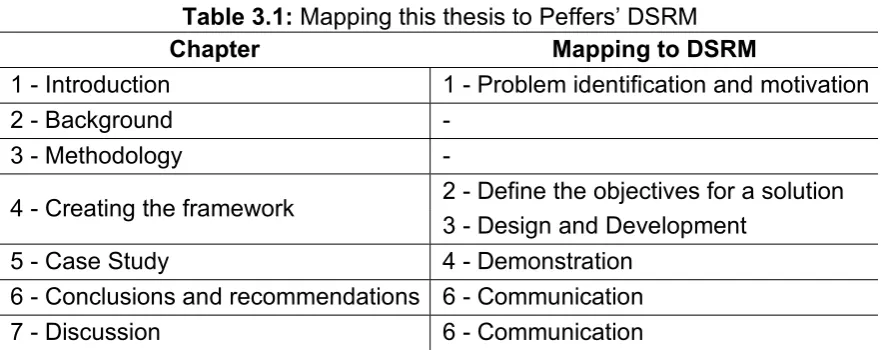
Table 3.1: Mapping this thesis to Peffers’ DSRM
Chapter Mapping to DSRM
1 - Introduction 1 - Problem identification and motivation
2 - Background
-3 - Methodology
-4 - Creating the framework 2 - Define the objectives for a solution 3 - Design and Development
5 - Case Study 4 - Demonstration 6 - Conclusions and recommendations 6 - Communication 7 - Discussion 6 - Communication
focus on the organizational context in which an artifact is to be used, and advocates an iterative process in which the artifact is released in incremental versions to the organization, after which the organization can use the artifact for their benefit and give feedback to improve the artifact.
Peffers’ DSRM was chosen over other approaches because, while the artifact is to be used by organizations, it is not used in the primary process. Additionally, iterative development is unfeasible for time and resource constraints. The Evaluation step (5), which involves comparing the objectives of [the] solution to actual observed results from use of the artifact in the demonstration [59], is not made explicit in one specific chapter, but chapter 6 revisits the research questions and comments on how they are answered. Finally, among other things the Communication step (6) requires communicating everything that is appropriate to relevant audiences. While it is necessary to have access to the Database of Controls for application of the methodology, some of the sources (most notably the ISO 27001:2013 and ISO 27002:2013 standards) cannot be made public for copyright reasons. For this reason, a version of the Database of Controls will be made public which contains just the structure, which will require the researcher to add the content of the ISO 27001:2013 and ISO 27002:2013 standards for themselves.
3.2.2 Mapping Peffers to this thesis
Creating a framework for validating
ISAMs
This chapter outlines the process that was followed and the considerations that were made while designing the OSSUM framework. It starts with what the requirements are for the OSSUM framework. It gives a top-down view of how the OSSUM frame-work is supposed to frame-work.
Then, the selection of standards is discussed, looking back at the background (section on Information Security standards).The process of filling the database is explained. The structure of the database is outlined. Finally, the method of applying the framework using the database is outlined.
4.1 Designing the OSSUM framework
This section outlines the steps taken in developing the OSSUM framework, and where applicable, points to the parts in this thesis where those steps are explained in more detail. These steps aim to fulfill activity 3 of the DSRM, Design and Devel-opment.
The steps taken in designing the database are as follows:
1. Develop requirements for framework. See 4.2
2. Select standards. See 4.3
3. Encode standards into database. See 4.4 4. Select categorizations. See 4.4.3
5. Trace controls to categories. 4.4.3
6. Develop method of tracing an ISAM to these controls. See 4.5 7. Develop method of analyzing and reporting the results
8. Report the results
4.2 Requirements for the framework
Before actually developing the OSSUM framework, first a set of informal require-ments was drawn up. These requirerequire-ments were decided upon jointly by the author and the product owner of the State of Security assessment (SOS). The Research Questions (see 1.2) can be considered very high-level requirements, and the re-quirements in this section were intended to provide a bit more guidance in develop-ing the OSSUM framework.
The framework:
1. Should contain all relevant standards. Note: a further analysis of relevant standards is provided in 2.3, and the selection of standards is discussed in 4.3
2. Should encode controls correctly. All controls of the selected standards should be in the database, in a single uniform format.
3. Should categorize all controls adequately.
4. Should help in analyzing an ISAM for completeness, by allowing the researcher to trace between the ISAM and various controls.
With regards to the categorization of controls, some inspiration was drawn from Johansson and Johnson [38]. During the process of designing a database of ques-tions regarding Information Security, in which the quesques-tions were derived from au-thoritative Information Security standards, they have developed a method of catego-rizing the controls according to three different dimensions, with three categories for each:
1. Scope (i.e. answer how the protection is implemented). Choice between tech-nical, organizational and environmental.
2. Purpose (i.e. answer why the protection is carried out). Choice between
preventive, detective and responsive.
3. Time (i.e. answer when the protective actions is carried out). Choice between
planning (before), operational(during) and controlling (after).
A point of criticism on Johansson and Johnson [38] is that, even though the rest of their work relies heavily on this categorization, no explanation is given about how the dimensions came about. Nevertheless, their idea of categorizing the controls may provide greater insights into the standards themselves, as well as any ISAM implementing them.
4.3 Selecting standards
International and national standards are, arguably, the most well-established sources with regards to Information Security [41]. Nevertheless, there is no one-stop all-purpose Information Security standard that serves all all-purposes. In the past, the precursor to ISO 27001:2005 (ISO 17799), has been criticized for being ”a mile wide and an inch deep” (Goldman and Christie [22] citing Walsh [72]; Cartwright [11]). Criticisms of the Cybersecurity Framework (CSF) include the fact that it is vol-untary [45], and that it is not possible to certify against it. Furthermore, it does not go into great detail and leans heavily on other standards such as ISO 27001 and NIST SP 800-53. The latter is a very heavy-handed catalog of security controls that is primarily intended for use by the government of the U.S.
An approach used often by researchers and practitioners is to combine multiple sources of standards into one approach, for instance to alleviate perceived weak-nesses of the individual standards. Tse [70], for instance, combined ISO 17799, BS 7799, ISO 9000 and the Capability Maturity Model (CMM) to create an In-formation Security maturity model, while Johansson and Johnson [39] combined ISO 17799, NIST SP 800-26, OCTAVE and the Information Security Forum (ISF) Standard of Good Practice (SoGP) to form an Enterprise Information Security as-sessment methodology.
In order to create a framework leveraging the state of the art of Information Se-curity, the selection of standards is an important part. This step is complicated by the fact that there is little research comparing and contrasting Information Security standards, which makes comparing standards harder. From the 4 papers in the liter-ature study that were published after 2005 (the first version of ISO 27001), only two referenced either ISO 27001:2005 or ISO 27002:2005: Breier and Hudec [10] while developing a Security Evaluation Model, and Ristov et al. [61] while developing an extension of ISO 27001 for the Cloud. Goldman and Ahuja [21] mention the impor-tance of ISO 27001 but do not explain why they left it out, and Mazhelis and Isom¨aki [48] mention a large list of Information Security standards while omitting the 27000 series altogether. There does not appear to be one go-to standard in literature.
First, a list of potential Information Security standards was compiled, based on literature and other available sources. This list was prioritized based on what was found in literature, accompanied with experience from several experts in the area of Information Security.
Section 2.2 gives a more in-depth analysis of each individual standard.
Several standards and frameworks were classified as essential, with some more being classified as nice-to-haves.
following:
1. The standard can be considered an industry default based on literature. 2. The standard ”adds to the mix,” for instance by having a different scope. 3. The standard adds something to the organization that the author is performing
his research at.
The following standards were selected:
• ISO 27001:2013 and ISO 27002:2013, as they are the de facto standards and
are universal in scope, meaning they apply to all organizations.
• NIST SP 800-53 rev 4 is the most extensive catalog of Information Security
controls that could be found.
• The CIS Controls were initially a nice-to-have. The decision to include them
was taken primarily because it is comparatively actionable.
Other standards were not included for various reasons. Other nice-to-have stan-dards included PCI-DSS, SoGP, ISA 62443, Information Technology Infrastructure Library (ITIL), IASME and COBIT (see 2.2 for a summary of each, and more ex-tensive reasons for excluding). Reasons for excluding them were lack of notability (SOGP, IASME), lack of focus on security (ITIL, COBIT), a specific focus on a limited subset of information security rather than an organization-wide scope (IAS 62443, which focuses primarily on IACS), and lack of time and resources (applicable to all).
4.4 Filling the database
In order to validate ISAMs using a multi-standard approach, it is important to have a single database of controls to use as the basis for validation. This section explains the process by which the standards were combined into one such database, and the choices that were made while combining them. First, this section outlines the structure of controls in the individual standards. Then, the section explains how the standards were encoded into one database, and how they were combined into one set. Finally, the section finishes with an explanation of why and how the controls were categorized, in order to facilitate analysis of ISAMs.
![Figure 2.1: The CIA triad [74]](https://thumb-us.123doks.com/thumbv2/123dok_us/9662931.468264/13.595.171.440.152.400/figure-the-cia-triad.webp)
![Figure 2.2: The COBIT 5 family of products [29]](https://thumb-us.123doks.com/thumbv2/123dok_us/9662931.468264/19.595.96.534.103.312/figure-cobit-family-products.webp)
![Figure 2.3: The SSE-CMM basic model [32]](https://thumb-us.123doks.com/thumbv2/123dok_us/9662931.468264/21.595.199.428.502.701/figure-the-sse-cmm-basic-model.webp)
![Table 2.1: Traceability Matrix - Frameworks per paperJohansson and Johnson [40]](https://thumb-us.123doks.com/thumbv2/123dok_us/9662931.468264/31.595.93.533.116.733/table-traceability-matrix-frameworks-paperjohansson-johnson.webp)