1
Master Thesis
Value creation in activity tracker platform-ecosystems:
an analysis of Fitbit and Apple Watch
Author: Chelsea Veenstra - s1621890
1
stSupervisor: Dr. M. L. Ehrenhard
2
ndSupervisor: Ir. B. Kijl
3
rdsupervisor: L. Middermann
2
Executive summary
Activity trackers are rapidly gaining popularity and offer the potential for generating valuable health data and to enable citizens to participate in their own care. However, users are reportedly losing interest in the devices after a few months. These high abandonment rates indicate that users do not perceive the value that is created by the activity tracker as sufficient. This study aimed to find out how platform leaders’ strategy on openness impacts the creation of network effects and therefore value creation in the activity tracker ecosystem. To do so, case studies on the Apple Watch and Fitbit ecosystems were executed. Value in ecosystem is created by the complementors that surround and create additional products and services to the platform product. It was found that although the value networks of the two platform leader companies look largely the same, there are differences in strategy that impact the various network effects. Strategy on openness was analysed toward four distinct ecosystem roles; demand-side users, supply-side users, platform provider and platform sponsor. Where the differences in strategy were on the demand-side user and hardware supply-side user. It was found that the closedness of Fitbit towards hardware suppliers had negative impact on network effect. The second finding is that despite the closedness toward demand-side users of Apple, they still manage to create network effects to create value in their ecosystem.
In order to create a theoretical base for the thesis the literature of value creation in ecosystems, platform-ecosystems, platform network effects, platform openness, ecosystem roles, and value networks were explored. For the case studies data was gathered through secondary sources like magazines and news articles. To enrich the data found through this desk research, 9 interviews were held with industry experts. After the data gathering, the first step in this research was to write down the cases in narratives and map the value network to understand which actors are present and the activities they perform. From this process became clear on which complementary roles were taken in-house, how network effects manifest in the ecosystems and to which roles the platform was opened or closed.
3
Table of contents
1. Introduction ... 5
2. Theoretical framework ... 7
2.1 Value creation ... 7
2.1.1 Platform network effects ... 9
2.1.2 Platform openness ... 10
2.2 Ecosystem roles ... 11
2.2.1 Value networks ... 12
3. Methodology ... 13
3.1 Research design ... 13
3.2 Research method and data collection ... 13
3.3 Data analysis ... 15
4. Findings... 16
4.1 Case studies ... 16
4.1.1 Case 1: Apple Watch ... 16
4.1.1.1 Value network analysis of Apple Watch ... 20
4.1.2 Case 2: Fitbit ... 22
4.1.2.1 Value network analysis of Fitbit ... 25
4.2. Cross case analysis... 29
4.2.1 Differences and similarities in roles ... 29
4.2.2 Indirect and direct network effect ... 30
4.3.2 Openness and closedness ... 31
5. Discussion ... 32
6. Implications, limitations and further research ... 34
6.1 Theoretical and practical implications ... 34
6.2 Limitations ... 35
6.3 Further research ... 35
Appendix A Case study search terms ... 42
4 Core definitions
Smart Wearable A device containing advanced circuitry, wireless connectivity and at least a minimal level of independent processing capability (Smart) that must be worn on the user’s body for period of time, enhancing the user’s experience
(Wearable) (Chen & Shih, 2014).
Activity tracker Devices within the smart wearable definition that allow the user to track activity, exercise, sleep and more in real-time and which are worn around the wrist.
Ecosystem An economic community supported by a foundation of interacting organizations and individuals (Moore, 1993).
Platform-ecosystem
Products, services or technologies developed by one or more firms, and which serve as foundations upon which a larger number of firms can build further complementary innovations in the forms of specific products, related services or component technologies (Gawer & Cusumano, 2014).
Platform leader Drives industry wide innovation for an evolving system of separately developed pieces of technology (Cusumano & Gawer, 2002).
Openness The extent that there are fewer restriction on participation, development or use across the distinct roles within the ecosystem (Eisenmann et al., 2009). Network effects Positive feedback loops that grow exponentially as the adoption of a platform
grows and more external adopters in the ecosystem that create or use the complementary innovations making the platform more valuable (Cusumano, 2010).
Index of figures
Index of tables
# Page
Table 1 Interviewee information 15
Table 2 Apple Watch value network roles, actors and activities 21 Table 3 Fitbit wristband roles, actors and activities 26 Table 4 Fitbit value network roles, actors, activities 28
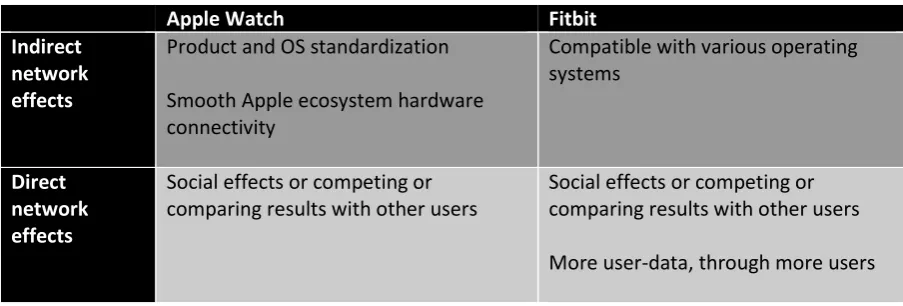
Table 5 Direct and indirect network effects 30
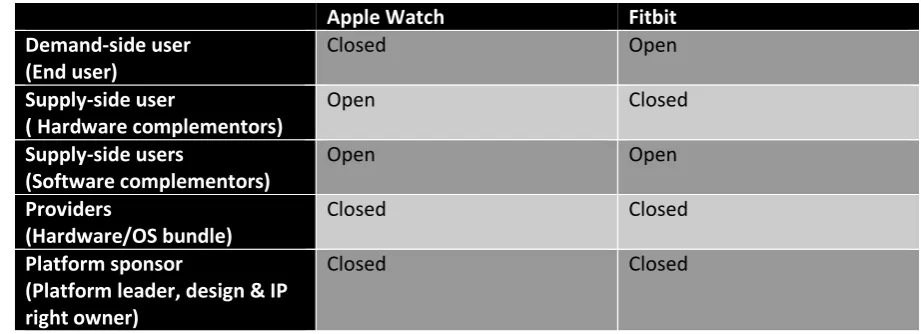
Table 6 Openness and closedness 31
# Page
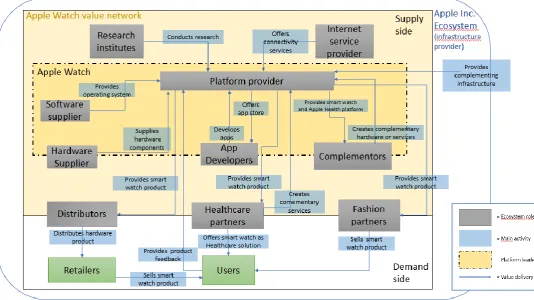
Figure 1 Apple Watch value network 22
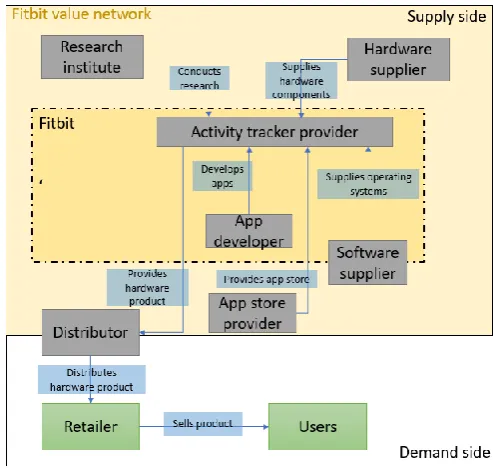
Figure 2 Fitbit wristband value network 26
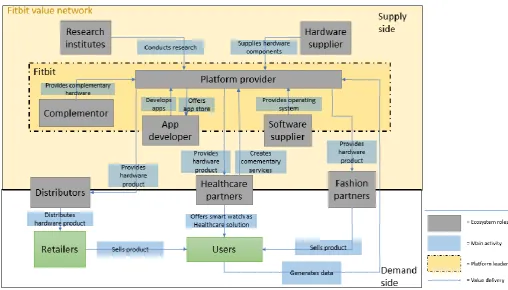
Figure 3 Fitbit platform value network 28
5 1. Introduction
Smart wearable devices have enabled their users to adopt a quantifiable lifestyle, by allowing them to track information about food consumption, sleep patterns, heart rate and stress levels, blood chemistry, moods and menstrual cycles amongst other things. Smart Wearables (from this point onwards: wearables) are defined as a device containing advanced circuitry, wireless connectivity and at least a minimal level of independent processing capability (Smart) that must be worn on the user’s body for period of time, enhancing the user’s experience (Wearable) (Chen & Shih, 2014). Activity trackers are in this research defined as the devices within the smart wearable definition that allow the user to track activity, exercise, sleep and more in real-time and which are worn around the wrist. Within this definition both wristbands and smart watches are included. These devices allow the user to synchronize their tracked information to their phones or tablets via mobile applications, which makes it possible to track their progress. The data that is synchronized to the complementary phone or tablet devices are stored and visualized so that users can receive incremental feedback. The data can also be shared with other users on a social platform (Shih et al., 2015). Users can download various different apps that are offered by the activity tracker provider or by third parties that facilitate the possibility for visualization or sharing.
Activity trackers have the potential surpass smart phones and laptop computers in performance and hence can replace these technologies in the future (Mahdokt, 2017). Industry experts believe that the number of activity trackers shipped yearly will be almost doubled from 119 million in 2017 to 213 million in 2021, which concerns 80% of the total smart wearable market (IDC, 2017). Furthermore, activity tracker devices offer the potential for generating valuable health data and to enable citizens to participate in their own care. These aspects make it an interesting phenomenon to study because of the commercial potential.
Existing literature on activity trackers focuses mostly on the use and adoption challenges associated with technical- or device- related issues and respective work around strategies (Shih et al., 2015). This can be divided into two main subjects, the technical features of the product and research on high abandonment rates. The technical features of the product that are researched are for example like validity and reliability (e.g. Kooijman et al., 2015; Evenson et al., 2015). This stream of research is focussed on opportunities in the medical applicability of the devices in for example healthcare institutes. The other stream is on the commercialization of the product. Nowadays there is low consumer adoption and high abandon rates. While the popularity of activity trackers is growing, the ownership of such devices is very low (Patel et al., 2015). Multiple authors (e.g. Gilmore, 2016; Finkelstein et al., 2016) report that as much as half of the users who own an activity tracker reportedly lose interest after a few months. For the producers of the activity trackers, the initial value lies in the sale of the product. However, to create long-term value, the device must continue to be used on the long-term and drive health behavioural changes in the user. High abandonment rates indicate that users do not perceive the value that is created as sufficient and literature does not cover this issue. While existing literature on activity trackers does not cover the topic of value creation, other comparable technologies where value is created by collaboration with other players, like the smart phone, are often studied in an ecosystem context (Kenney & Pon, 2011; Koch & Kersenbaum, 2014). The ecosystem literature covers the value creation logic where the integration and use of outside parties play an important role. Because little is known about the value creation in an activity tacker context, there is a need to deepen the understanding of the ecosystem for value creation by activity tracker platform leaders.
6 been noticed over the past two decades and is leading to companies becoming actors within a broader ecosystem (Adner, 2012). This means that value of activity tracker devices is determined by the network of organizations that exists around it (Gawer & Cusumano, 2002). Moore (1993) defines the business ecosystem as “an economic community supported by a foundation of interacting organizations and individuals”. After the work of Moore (1993) the ecosystem concept gained traction, leading to the inception of various types of different ecosystems (Aarikka-Sternroos & Ritala, 2017). The type of ecosystem that is applicable in the activity tracker concept is that of platform ecosystems. This ecosystem is called platform ecosystem because of the network of interrelated and interdependent firms that form themselves around the platforms resulting in third-party platform extensions (Thomas et al., 2014). Platform-ecosystems are defined by Gawer & Cusumano (2002) as: “A foundation technology or set of components used beyond a single firm that brings together multiple parties for a common purpose or recurring problem”. From this can be understood that In the platform ecosystem the emphasis lies on the multi-sidedness of the market and the impact the platform leader can have on the ecosystem (Aarikka-Sternroos & Ritala, 2017). Apple with its Apple Watch and Fitbit are the subjects of the study and are two platform leaders in the activity tracker wearable market. As platform leader their process of strategy has impact on value creation within platform-ecosystems, from which this research focuses on strategy on openness for the stimulation of network effects.
Little is known about the impact of strategy of platform leaders on value creation in the platform ecosystem in a activity tracker context. Therefore this work aims to analyse the ecosystem of two platform leaders in the activity tracker ecosystem; Apple and Fitbit. This will be done based on the value network theory. The analysis of the activity tracker ecosystems allows a view on the different strategies on openness of the platform leaders. From the value network can be determined how open the platform is as certain roles and activities were kept in-house and how this impacts how network effects are stimulated through the attracting of users and complementors. Two case studies were conducted based on secondary data from news articles, websites and magazines, combined with additional information extracted from expert interviews. The results present insights on the roles in the value network, and different strategic actions in terms of openness.
This is leading to the central research question of this thesis:
“How does the platform leaders’ strategy on openness stimulate network effects to impact value creation in their activity tracker platform-ecosystem?”
This research contributes theoretically by creating a greater understanding of value creation in activity tracker platform ecosystems, by creating an activity tracker value network map, and identifying strategies regarding openness. This research gives a focused insights on the specific roles within the activity tracker wearable platform-ecosystem and differences openness strategy to create value, therefore contributing to literature on activity trackers as a platform ecosystem. As both activity trackers and platform ecosystems are gaining increasing interests in literature, this research could function as the basis of further research on these topics.
7 enhanced knowledge of value creation in the ecosystem. As far as the author knows, no research on the ecosystem op activity tracker wearables is conducted before.
This master thesis proceeds as follows: in the theoretical framework in chapter 2 will be elaborated on value creation in platform-ecosystems, platform network effects and openness as value creating tool for platform leaders and the value network for analysing the various ecosystem roles. The third chapter contains the research methodology used in this research. The findings will be discussed in chapter four and chapter five the result will be discussed. The last chapter gives the theoretical and practical contributions, limitations and further research.
2. Theoretical framework
This section introduces how value is created in platform-ecosystems and how this relates to the empirical situation of activity trackers. To gain a more in-depth and detailed understanding of platform ecosystems, network effects and openness are discussed. These two dimensions are used for the analysis of value creations in platform ecosystems in case of activity trackers. In the second paragraph the theory about roles and value networks for analysing the business ecosystem will be introduced. 2.1 Value creation
8 Ecosystems
The concept of ecosystems has originally been borrowed from natural systems. Moore (1993) stated that natural ecosystems were self-reinforcing systems that consist of different interdependent species and translated it to the traditional business domain. Moore (1993) stated that firms cannot innovate in a vacuum, rather they depend on other parties to collaborate with them. This collaboration goes beyond industries or traditional supply chains. Moore (1996) defined a business ecosystem as “an economic community supported by a foundation of interacting organizations and individuals” (p. 26). After the concept gained substantial traction, Moore (2013) summarized the development of the approach. He suggested that an ecosystem approach allows the investigation of “a new form of organization that shows promise in achieving shared purposes, sharing value among many contributors and in bringing the benefits of technology to a range of people, cultures and problems far beyond what earlier systems have achieved” (p.3). In an ecosystem, members deliver value to end customers as an interrelated system of interdependent companies rather than individual companies and is deviated from the traditional value chain model where firms follow a linear value creation process (Iansiti & Levien, 2004). Adner (2006) indicates that business ecosystems allow firms to create value that no single firm could create alone. In these ecosystems the cooperation value of the industry ecosystem is greater than the sum of the individual parts.
In literature various types of ecosystems are identified (Aarikka-Sternroos & Ritala, 2017), from which this research focuses om platform-ecosystems. Thomas et al. (2014) find in their literature review that platforms have been given a range of different meanings and within this literature stream they identify four main platform typologies; organizational, product family, market intermediary and platform ecosystems. The platform ecosystem typology is defined as a combination of two typologies, the product family and the market intermediary. To create a deeper understanding of the platform ecosystem, the two underlying concepts (i.e. product family and market intermediary) will be discussed before discussing the platform-ecosystem concept itself.
Platform-ecosystems
The product family stream typology refers to the platform as a stable common asset at the centre of a product family. The product family is a concept where products are focussed on a niche group of customers and designed for easy modifications into derivatives for market niches through the addition, substitution and removal of features (Thomas et al. 2014). Research of Gawer and Cusumano (2014) makes a distinction between internal and external platforms, where internal platforms are similar to the product family typology of Thomas et al. (2014). Internal platforms are mainly used in the context of new product development and are defined as incremental innovation around reusable components or technologies. There are also other works that define similar understandings of internal platforms to that of Gawer and Cusumano (2014) and Thomas et al. (2014). Other works often use the classification of product platforms. The work of Wheelwright and Clark (1992) describes the product platform as entailing more product and process changes rather than introducing untried new technologies or materials that lead to breakthroughs. These types of platforms offer improvements in for example cost, quality and performance over proceeding versions of the initial product (Wheelwright & Clark, 1992). These definition lead to the conclusion that the focus of internal platforms or product platforms often lies within single firms and encompass a set of functionalities or components that can be used across different versions of the product. An example of the product family stream are the Nespresso coffee machines. Nespresso has a lot of different sorts of coffee machines, which all include a water compartment and are able to make a cup of coffee. However, the coffee machines have various different designs and prices ranges to be able to serve various market segments.
9 (2003). He describes multi-sided platform markets as markets that have two or more interdependent customer groups and need both these groups on board of their platform for their business to succeed. An example of this platform type is the company Airbnb, which connects home owners to tourists or travellers, letting the home owners rent out (a part of) their homes to tourists or travellers. Another commonly used example in literature is that of videogame consoles who connect video game developers to video game players (Evans, 2003). He states that multi-sided platforms can exist when three conditions are met; 1) there are distinct group of customers, 2) a member of one group benefits from having his demand coordinated with one or more members of another group and 3) an intermediary can facilitate that coordination efficiently. From these insights can be concluded that in the market intermediary steam the focus lies on the mediation between various players in the ecosystem.
Thomas et al. (2014) explain the platform ecosystem as a set of shared core technologies and technology standards underlying an organizational field. These support value co-creation through specialization and complementary offerings and incorporates both product family and market intermediary influences. On the one hand the platform is a system of separately developed pieces of technology, on the other hand it facilitates the coordination of the efforts of buyers and sellers and acts as a hub of value exchange. The ecosystem participants leverage complementary assets accessible through the platform ecosystem to enhance their own performance (Iansiti & Levien, 2004). Other similar work regarding platform-ecosystems is that of external platforms, or industry platforms by for example Gawer & Cusumano (2014). These external platforms are defined by Gawer & Cusumano (2014) as “products, services or technologies developed by one or more firms, and which serve as foundations upon which a larger number of firms can build further complementary innovations in the forms of specific products, related services or component technologies”(p.4). together, these parties are referred to as the industry (Gawer & Cusumano, 2002) or the ecosystem (Gawer 2009b). Aarikka-Sternroos and Ritala (2017) found in their literature review that platform-ecosystems are characterized by the central platform leader who owns the ecosystem and connects various sides od the market to facilitate exchange and value creation. From these different works on platform-ecosystems can be noticed that there are three recurring distinctive characteristic. First of all, the platform itself provides a basis upon which complements can be developed. Secondly, the platform-ecosystem multi-sidedness. Lastly, the role of the platform-leader is central to value creation.
Platform leadership enables companies to exert influence over the direction of innovation that is taking place within their industry. In a platform-ecosystems various design choices are impacting the ability of the platform leader to create value (Tura et al., 2018). Despite these various aspects that impact value creation in platforms multiple authors regard network effects as a fundamental mechanism of how platform value is created (Tura et al., 2018; Thomas et al. 2014). Therefore network effects are use in the research as it is an important determinant for value created in the platform-ecosystem. One of the design choices that platform leaders can influence, that has an impact on network effects is that of openness (Ondrus et al., 2015). The following paragraphs will delve into network effects and how they are impacted by strategy on openness.
2.1.1 Platform network effects
10 Direct network effect or same-side network effects is a phenomenon that occurs between the platform and the user of the complementary innovation. An early work that lies at the basis of this concept was that of Metcalfe (1980). He stated that the value of a network product is proportional to the square of the number of users (Odlyzko & Tilly, 2005). An example of a direct network effect is Facebook, which needs many users that also use Facebook to be of value to other users. These network effects are reinforced by technical compatibility or interface standards (Gawer & Cusumano, 2014) or high switching costs that makes switching from one to another platform costly (Gawer & Cusumano, 2014). Direct network effect are observed in the growing number of complementary services or product that are made available from platforms (Cusumano, 2010).
Indirect network effects are consumption externalities, or also called cross-side externalities (Hagiu, 2014). This entails that the value to customers on one side of a platform typically increases with the number of participating customers on the other side (Hagiu, 2014). An example of this network effect is advertisers that become attracted to the Facebook platform because a lot of potential buyers are active on this platform (Gawer & Cusumano, 2014). For example, indirect network effects for Facebook can be observed by the overwhelming number of application developers, advertisers, content creators adopting the platform. This form of externalities can be stimulated by complementors as new functionalities can be appealing to an entire new group of customers (Cusumano, 2010). Many if not most markets with network externalities are characterized by the presence of two distinct sides whose ultimate benefit stems from interacting through a common platform (Rochet & Tirole, 2003). Van Alstyne et al. (2016) state that the larger the network, the better the matches between supply and demand and the richer the data that can be used to find matches. Greater scale generates more value, which attracts more participants, which creates more value (Van Alstyne et al., 2016). This often leads to the commonly called “chicken and egg” problem. In order to attract users on one side, the other side has to have a significant number of users, but those users would only be interested in joining if there were enough users on the first side (Caillaud and Jullien, 2003).
2.1.2 Platform openness
Platform leaders provide an integrated architecture of hardware and software standards as a basis on which third-parties can build complementary offerings. The most successful platforms were owned by proprietary sponsors that controlled platform evolutions and appropriated associated rewards (West, 2003). Openness and closedness is therefore important for the value a platform can deliver to its end-users as it allows a firm to harness external innovation as complement to internal innovation (Parker & Van Alstyne, 2017). In this thesis the description of openness of Eisenmann et al. (2009) is followed. He describes openness as the extent that there are fewer restriction on participation, development or use across the distinct roles within the ecosystem. Therefore, closedness is understood as the restrictions a platform leader puts on participation and development.
11 switching costs and increases competition among platform providers, making it more difficult for them to make profits from the platform. Strategy on openness can create economic incentives like free or low licencing fees or financial subsidies (Cusumano, 2010). These incentives are necessary for other firms to join the same “ecosystem” and adopt the platform technology as their own (Cusumano, 2010). In the work of Eisenmann et al. (2009) it is found that strategy regarding openness can be open or closed in respect to several distinct roles in the platform ecosystem. These roles include the 1) demand-side platform users which are the end-users, 2) supply-side platform users which are the parties who offer complementary products or services on the platform, 3) Providers which provides for example the operating systems for the platform but can also be the party that provides the platform to the end user and 4) platform sponsor who exercise property rights and are responsible for determining who may participate in the platform. (Eisenmann et al., 2009).
Ondrus et al. (2015) conducted a research where they aim to find out how opened or closed strategies in a platform-ecosystem determine the potential to reach a critical mass and ignite network effects. In their work this effect is called market potential. Building on the work of Eisenmann et al. (2009) they propose four levels of a platform; sponsor, provider, technology and users, from which they focus on the latter 3. Openness on the provider level concerns whether additional providers are allowed to the platform. Technology openness concerns whether the platform is interoperable of incompatible with other platforms and related technologies. The user level concerns in the platform is open in in-discriminant ways to new users. They find that for opening the platform at the provider level for both additional firms from the same and different industries has a positive effect on market potential. Furthermore they find that opening at the technology level and user level also leads to greater (or at least equal) market potential. This would mean that for this research that the activity tracker platform leader who applies a closed strategy, would limit the potential for the platform to harness network effects.
2.2 Ecosystem roles
Literature on roles is analysed to create a deeper understanding of roles that might be found in the activity ecosystem. By understanding which roles are present in the ecosystem will help determine how and toward which roles the platform leaders applies an open or closed strategy. Dedehayir et al. (2016) define roles as “a characteristic set of behaviours or activities undertaken by ecosystem actors” (p. 1). Dedehayir et al. (2016) conducted a literature review on ecosystems and identified several key roles, which they divided into four groups; leadership roles, direct value creation roles, value creation support roles and entrepreneurial ecosystem roles.
12 Value creation support roles provide indirect value by delivering support elements (Dedehayir et al., 2016). In this group, two types of roles are defined; expert and champion. The expert role is in the literature often associated with actors such as universities and research institutes who generate knowledge, inventions and discoveries. These roles deliver for example consultation activities or expertise that can be used by actors that adopt a direct value creation role during the development of products and services (Dedehayir et al., 2016). The champion role builds connections and interacts with carious partners in the ecosystem. This role is often embodied by individuals tasked with the process of the inception of a new product idea to the commercialization.
The last group of roles is called the entrepreneurial ecosystem roles group, this group exists of three roles; the entrepreneur, the sponsor and the regulator. The entrepreneur role is usually adopted by an individual or a start-up firm. These actors seize unnoticed business opportunities that contribute to the value creation of the whole ecosystem. The sponsor role in this group ensures financial support and provides help in the form of co-development of products or purchasing them in new ventures like that of the entrepreneur. The last role mentioned by Dedehayir et al. (2016) is that of the regulator. The regulator is to create favourable economic political and regulatory environments for the start-ups. 2.2.1 Value networks
13 3. Methodology
In this chapter the methodology that is used to answer the research question is described. First the research design will be introduced, after which the two research methods of the multiple-case study and interviews and associated data collection processes are discussed. Lastly this chapter closes with the description of the data analysis method.
3.1 Research design
The research subject is to investigate how platform leaders in the activity tracker platform ecosystem use strategy on openness to create network effects and influence value creation in their ecosystems. Two different research approaches are identified by Saunders, Lewis and Thornhill (2009), the deductive and inductive research approach. The deductive approach takes existing literature as a starting point to subsequently start data collection based on that theory. The inductive research approach starts with data collection and subsequently continues into formulating theory based on the data collected. This work follows a inductive research approach. The activity tracker as a commercial product is fairly new, and the theory available on ecosystems, platforms, roles, value networks, network effects and openness has not been applied to it yet. Using a inductive approach created a knowledge base that helped to identify the actors and their activities in the value network and network effects and openness features from the case studies and interviews.
As there is relative little work on the activity tracker ecosystem in a business setting, this research has an exploratory approach and no propositions were drawn up (Yin, 2013). An exploratory approach entails that is aiming to find out new insights, ask questions and to assess phenomena in a new light. This is a useful approach for this research as it aims to find out how strategy in terms and openness have an impact network effect for creating value in the platform-ecosystem. The research contains a descriptive part as well. In descriptive research a situation is describe in its current state. This is applicable to this research because of the visualization of the value network of both companies, which describes what the ecosystems looks like during the time the research is conducted.
As value from platform products is dependent on the variety of complementors and users around it (Gawer, 2009), the unit of analysis for this study is the ecosystem of activity tracker wearables platform leaders. The activity tracker product is seen as an ecosystem because it offers a technology platform, from which many stakeholders can benefit. The analysis of the ecosystem will show the which roles are present and which roles the platform providers have taken on themselves showing the firm boundaries. Furthermore, from studying and visualizing the ecosystem it can be derived how open or closed the platform is toward certain roles (Eisenmann, 2009; West, 2003)) and how network effects manifest (Gawer, 2009).
3.2 Research method and data collection
14 Case studies
Cases were chosen with purposeful sampling of the largest players in the industry. It is observed that in the fourth quarter of the year 2017 there are three players that together own almost 50% of the market share in the wearables market. The largest one is Apple who owns a market share of 21%, second largest is Fitbit with 14% (Statista, 2018). This research will two largest companies in the industry. The use of only two cases will allow to clearly see the similarities and dissimilarities and allowed for a more thorough investigation to be completed in the limited time frame of this research. These company’s main products are wearables worn around the wrist, all with functionalities that can be classified as activity trackers. By using companies that sell a similar product, the cases were expected to have literal replication. The use of multiple case studies also increases external validity of the research (Saunders et al. 2009). Data about the companies was gathered through desk research of documentation data sources like magazines, websites, product information and other available materials, which enabled the author to gather context around the cases. Databases and websites that were used for gathering this data sources were LexisNexis News and LexisNexis Web News. Google Scholar, Above Avalon Podcast and Google were used to find other news articles that could not be found using LexisNexis. In the process of gathering the data, the method of Hartley (2004) was used. He points out steps that could be followed for systematically collecting data in case study research. The first step in data collection was to create a general understanding on the (internal) structure of the company by searching for historical information. Second part of the data collection was to map the external partnership and other stakeholders in the ecosystem. In gathering this data, a structural approach was used by using a predetermined set of search terms, and consistently using these search terms in all used data bases. Search terms that were used are: “Activity tracker”, “Apple Watch”, “Fitbit”, “Apple Watch AND Partners”. “Apple Watch AND Ecosystem”, “Fitbit AND Partners”, “Fitbit AND Ecosystem”. This led to the collection of a total of 29 news articles published between November 2017 and May 2018, and 1 older article published in 2015 and 1 research paper published in 2015. The articles and the corresponding search terms can be found in Appendix A. After data analysis, some additional sources needed to be found. Search terms for the missing information were more specifically focused on the type of missing information. Search terms used here were “Fitbit Partners”, “Fitbit Operation System”, “Fitbit AND Hardware”, “Fitbit strategic focus” and “Activity tracker timeline”. With these search terms an additional 5 new articles were found.
Interviews
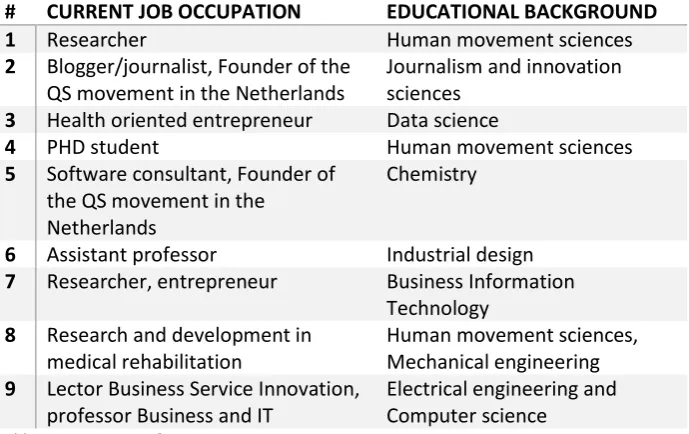
Additional data was gathered to enrich the information found in the case studies through 9 interviews with industry experts, like researchers, app developers and founders of the Quantified Self movement in the Netherlands (See table 1). Using interviews for enhancing the data found in the case studies leads to data triangulation which helped strengthen the construct validity of the case research (Yin, 2013). Interviews were either held face-to-face, phone calls or through video call services over the internet. To prevent participation bias, a maximum amount of time for the interviews was set to 45 minutes. The interviews were held in a semi-structured setting. Interviewees were asked question regarding 4 subjects, roles in the ecosystem, changes in the ecosystem, network effects and platform openness. The outline of interview questions can be found in Appendix B. Examples or question that were asked are
- Could you give a description of the partners in the activity tracker network (of Fitbit or Apple Watch)?
- Are the indirect partners who are important for value creation?
15 - Which functionalities make that more users buy an activity tracker product?
- To what extent are the activity tracker platforms open or closed?
Participants were picked by a maximum variation sampling to ensure that a wide range of data could be gathered. Sample selection criteria for the maximum variation sampling were on basis of job descriptions and functional and educational backgrounds of the interviewees. Because of the high level of specialism required from interviewees in addition to the maximum variation sampling, a snowball method was used to find more respondents. To ensure the respondents privacy the results are anonymized.
# CURRENT JOB OCCUPATION EDUCATIONAL BACKGROUND
1 Researcher Human movement sciences
2 Blogger/journalist, Founder of the QS movement in the Netherlands
Journalism and innovation sciences
3 Health oriented entrepreneur Data science
4 PHD student Human movement sciences
5 Software consultant, Founder of the QS movement in the
Netherlands
Chemistry
6 Assistant professor Industrial design 7 Researcher, entrepreneur Business Information
Technology 8 Research and development in
medical rehabilitation
Human movement sciences, Mechanical engineering 9 Lector Business Service Innovation,
professor Business and IT
[image:15.595.74.419.232.449.2]Electrical engineering and Computer science
Table 1 Interviewee information
3.3 Data analysis
Data analysis of the case studies was done with the help of the Software program Atlas.ti. which is a tool for qualitative research analysis. In this program the information that was collected is tagged and linked. This analysis in Atlas.ti helped structuring the information so it could be written down as narratives. (Hartley, 2004). As the subjects of this study were the two market leaders in the industry, multiple-case synthesis can help discover similarities or dissimilarities in ecosystem actors and their strategy on openness towards them. The tagging was done one the basis of returning subjects in the interviews and on subjects identified in the theoretical framework. After all the documents were tagged, the taggs were compared to see if one case had information, which the other case lacked. For the missing information new data was gathered by going over the already gather documents and interviews, and by finding new articles online. This was done to ensure that both cases had the same amount of information. These extra articles were also documented in the systematic literature review in appendix A.
The first step in the analysis of the interviews was to transcribe them. After the transcription the interview were categorized on the basis of the subject that were discussed and secondly on the basis of returning subjects in the interview. In the third step the data was tagged after the interviews were uploaded into the Atlas.ti software program.
16 have devoted attention to the process of creating and analysing the value networks. Peppard and Rylander (2006) created the network value analysis where they aim to generate a comprehensive description of where value lies in a network, focussing on the focal actor in that network. For identifying all the actors in the network their method takes the standpoint of the network focal and identifies all the actors that influence the value the network focal delivers to the end-consumer. In the platform ecosystem the platform leader can shape the ecosystem with their strategic actions, making it an important actor in the ecosystem. After the identification of actors in the value network the work of Peppard and Rylander (2006) aims to define the activities between actors to define the value each entity perceives from being a network member. They created a five-step plan for creating a value network analyses which will be followed in creating a value network for the activity tracker ecosystems of the Apple Watch and Fitbit. The first step was to create boundaries for the analysis. The boundaries were to include all the roles found in the work of Dedehayir et al. (2010). Secondly. from the case various roles are identified (step 2) and specified into actors and activities (step 3). Subsequently in step 4 value linkages were created to show the value creating relations between the actors. Step 5 concerns the creating the complete value network visualization and drawing conclusions (Peppard & Rylander, 2006). Network effects are analysed by judging the available information in the cases in combination with the identified features of direct and indirect network effect from the theoretical framework. For each of the roles identified in the work of Eisenmann et al. (2009) is determined to what extend Apple and Fitbit implement strategy in regard to openness or closedness.
4. Findings
This chapter presents the results of the Apple Watch and Fitbit cases that are a combination of desk research and expert interviews. In the first paragraph the two cases will be set out as narratives, where the focus lies on identifying the ecosystem roles, network externalities and openness features. After the narratives, the roles and activities are specified and presented in a table. Subsequently visualizations of the value networks were created. After doing this for the individual cases, in paragraph 4.2 a cross case analysis was executed, where the findings are compared.
4.1 Case studies
4.1.1 Case 1: Apple Watch
Apple was founded on April 1st, 1976. In the first 30 years Apple focused on personal computers and has known ups and downs. Apple’s biggest victory was the introduction of the iPhone in 2007. Nowadays Apple has a wide range of products like their iMacs (PCs), iPhones (Smartphones), and iPads (tablets). One of Apples recent addition to their product family is the Apple Watch. This Apple Watch was introduced for the first time in 2014, and is a smart wearable worn around the wrist. The Apple watch allows its user to track heartrate, steps, calories burned and sleep amongst other things. Furthermore, the Apple Watch is lets users listen to music and shows notifications. The newer versions are also waterproof and have their own connection to the internet (Apple, 27-07-2018a). Currently Apple is selling five versions of their product; Apple Watch series 1, Apple Watch series 3, Apple Watch Edition, Apple Watch Nike+ and Apple Watch Hermès (Apple, 27-07-2018b).
17 Apple is designing its own key hardware, like processors and screens but outsources the manufacturing, mainly to companies in China. They do this to minimise the risk hurting it’s bottom line with manufacturing slipups. (Agency Staff, 19-03-2018). This hardware includes the S Series processor which can be found in their Apple Watches (Cybart, 20-12-2017).
The software used on the Apple Watch is Apple’s own built WatchOS, making it compatible only with Apple’s iPhone smart phones. The WatchOS is similar to the iOS operating system, which is used on other Apple devices. Apps that are on an user’s iPhone are automatically transferred to the Watch, if a compatible version is available. Apple Watch users can download the Apple Watch app from the general Apple store located on their iPhone. Additional Apple Watch apps and watch faces can be downloaded via a separate Apple Watch app store located in the Apple Watch app. Around 10.000 apps and watch faces were already available in September 2015 (Costello, 07-04-2018). Multiple interviewees talked about how the Apple Watch only being compatible with other Apple devices, leads to the Apple Watch platform-ecosystem being part of a larger Apple Ecosystem. One of the interviewees stated it like:
“The Apple Watch only being compatible with the iPhone is a smart strategic decision of Apple. This makes the iPhone market more attractive because the Apple Watch can be offered as a complementing technology. This is smart capitalization of their already existing ecosystem”
Apple gives third party developers the opportunity to create apps and watch faces for their Apple Watch product. However, regarding watch faces, developers are limited to tiny complications if they want to extend functionality beyond their app (Simons, 07-02-2018). Apps for the Smart Watch also have to go through a strict quality control.
in 2015 Apple began partnering with designers like Hermès to allow them to capture a broader market of luxury consumers interested in the appeal of heritage fashion brands. Since then, designers including Coach, Kate Spade, and Nike have also partnered up with Apple to create trendy bands at high price points. Prices of Apple Watch Hermès range between $1999 and $1399 while an Apple Watch series 3 costs between $329 and $399 (Apple, 08-08-2019).The partnerships have allowed Apple not just to claim more physical retail space but expand to a new market of consumers who might not buy into Apple as a luxury fashion product on its own (Riley, 04-04-2018).
Apple's strategy with the Apple Watch has seen significant changes since its inception on the market. The company's initial goal for Apple Watch was to redefine a smartwatch as a fashionable piece of luxury. However, with the release of newer models, Apple has taken a decidedly different route with Apple Watch. In this new route fitness and health were given a much greater focus (Cybart, 06-10-2016). One of the interviewees confirmed this by stating:
“At the introduction Apple’s strategy was focussed on luxury brands, a single watch could cost up to $8000. Nowadays they changed to a strategy that is more focused on daily use, and sports and health. Making the watches a lot cheaper as well.”
18 monetary compensation (Al-Heaty, 07-03-2018; Comstock, 06-03-2018).
Furthermore, Apple created their own healthcare app called Apple Health. The Apple Health app that is available on the iPhone is connected to the user’s Apple Watch, visualizing its health data. Apple Health also gives users the option to combine health records from multiple care providers (For example MyFitnessPall, or data from other sensors) in one place. The Apple Health app is described by one of the interviewees as:
“Apple Health is the healthcare app of Apple that shows all the data that is gathered from the activity tracker sensors of the Apple Watch. It also allows users to upload data from other data sources like for example from a smart scale. In the Apple Health app, everything comes together”
Research institutes have also been showing interest in conducting research concerning the Apple Watch. Subjects of research are for example accuracy of the smart watch device tracking sensors and applicability of the device in medical settings. Apple also created a research kit which is a tool that supports researchers by making it easier for participants to enrol and conduct studies (Apple, 20-07-2018a). This led to for example researchers developing a tool for the Apple Watch that lets users sensing an impending seizure launch the app by tapping a custom complication on the Apple Watch, after which the accelerometer and heart rate sensors are triggered, and an alert is automatically sent to a designated family member of caregiver. By analysing this data researchers hope to eventually be able to help predict seizures before they happen through the smart watch (Apple, 30-07-2018b). Summarizing this case, it becomes clear that the Apple Watch ecosystem is part of a greater Apple ecosystem. the decision of Apple to make their Watch compatible only with iPhone devices, creates a connection to their already existing infrastructure. This created certain platform standards, which resulted in app developers being already familiar with the development tool that Apple offered and also allowed smooth transferability of iPhone or iPad apps to the Apple Watch. Furthermore, with the Apple Health app, Apple created a platform where the health data generated on the Apple Watch can be combined with various other data sources.
Direct and indirect network effects
The characteristic of direct network effects in the Apple Watch ecosystem in the social aspect that is made possible for Apple Watch users. Users of this Watch are given the possibility to share and compare their activity results with friends and other people in the community. Apple makes use of gamification by introducing the Apple Circles, which are daily activity goals you can compete on with friends.
The first indirect network effect shows through Apple’s market leader position in the smart wearable Industry. Because of the increasing number of consumers purchasing an Apple Watch device, it became more interesting for app developers to create apps for this platform. The other way around, there being more apps made it more attractive for users to buy an Apple Watch device, as this led to more functionalities. One of the interviewees explained it as follows:
“This effect works like Metcalfe’s Law, the value increases when there are more app developers. This makes the product more interesting for user because of the increased opportunities the consumer can be served better. Which again makes it interesting for app developers if there are many people using Apple Watches, they will have a large market for their app. Hardware and apps have reinforcing effect on each other, making it very difficult for competitors to interfere. “
19 ecosystem with other Apple hardware device, app developers that already created apps for other Apple hardware, can easily transfer their apps to a smart watch version of the app. This was stated by one of the interviewees who said:
“There are a lot less app developers for Fitbit applications than there are for the Apple Watch. The Apple Watch is an easy platform for developers because you can take a lot of skills with you from the iPhone applications you already made.”
Also indirect network effects are stimulated through the smooth connectivity between the various Apple products. When a user is already in the Apple ecosystem, by using other Apple hardware devices, it is attractive to start using an Apple smart watch as well. Multiple interviewees mentioned this type of indirect network externalities. One of them explained this effect by stating:
“The established Apple infrastructure allows the user to download apps for an iPhone or Apple Watch from for example their Mac Book. The App store that was created for the iPhone is now available on all Apple’s products. Because this infrastructure has been proven to be of good quality in the past, has gained the trust of users.”
Although this smooth connectivity is no self-contained indirect network effect, they are policies created by Apple to stimulate network effects and are therefore important to be included into this case. The results of these strategic decision might lead to increased users and/or developers. This again leads the “chicken and egg” situation, more users make it attractive for app developers, more app make it attractive for users to buy to product due to more functionalities.
Openness and closedness
The first characteristic of openness of the Apple ecosystem was mentioned as the option to combine various types of health data gathered with non-Apple hardware in the Apple Health app. One of the interviewees argued for openness of the Apple Watch ecosystem by saying that Apple allows users to combine different data sources;
“It doesn’t matter which step counter you have, it will probably be compatible with the Apple Health app. Apple at least gives its users the possibility to use hardware of different producers. These days it is possible to switch from Fitbit to Apple and take your data with you, but that’s not the case the other way around”
Furthermore, one of the interviewees explained Apple Watch openness as being able to get all the high-resolution data out of the device. With high resolution data was meant all the data that you put in the device, for example your heart rate per minute, instead of average heart rate for each day. “From a developer perspective Apple Watch gives you the opportunity to get all the information you put into the device, out of it. For this you need another app, for example the app called HIP Bone, allows you to stream all your health data to Dropbox. This streamed data can subsequently be used to run analyses on, which in my opinion is more user-friendly than the Fitbit API.”
One of the interviewees talked about the balance between openness and closeness in the App Store for Apple Watch Apps. This industry expert explained that with openness on the one side of this balance is meant the opportunities third party app developers are given to create app on the Apple Watch platform. On the other hand, the closeness entails the quality control but also the proprietary protocols Apple handles for their security of for example the communication between the iPhone and Apple Watch.
20 not easily get accepted into these stores, first they have to pass the Apple “police” which takes care of the quality control. They created an optimal balance between openness and closeness of the platform”
As closedness of the Apple Watch ecosystem was mentioned relatively often was that the Apple Watch is only compatible with other Apple products.
4.1.1.1 Value network analysis of Apple Watch
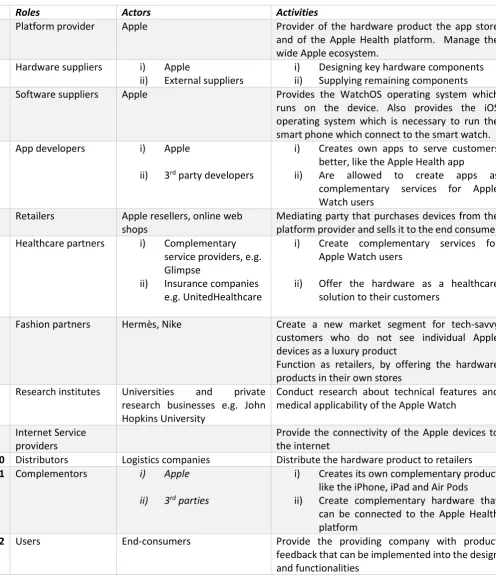
The value network of the Apple Watch consists out of 13 roles. 1) Platform provider, 2) Hardware suppliers, 3) Software suppliers, 4) App developers, 5) Retailers, 6) Healthcare partners, 7) Fashion partners, 8) Research institutes, 9) Internet service providers, 10) Distributors, 11) Complementors, 12) Users 13) Infrastructure provider.
1) The platform provider in this case is Apple. They are the provider as the Apple Watch as a physical product and created the Apple Health platform. Also, they provide the existing broader Apple ecosystem consisting out of all their other product offerings like the iMac and iPad. 2) The role hardware suppliers exist out of two types of actors. The first type of hardware supplier is Apple self, with them designing key hardware components like processors and screens. The second type is the external supplier who supplies other non-key components. 3) Software supplied for the Apple Watch is all provided by Apple. The operating system for both the Apple Watch and the needed smart phones are created by Apple. 4) The app developer’s role also exists out of two types of actors. On the one hand Apple creates their own apps as a service for their customers like the Apple Health and Apple activities app that are connected to the Apple Watch. On the other hand, Apple also allows third party developers to create apps for the Apple Watch. 5) Retailers are the intermediary between the platform provider as the provider of the hardware product and the customers. Retailers can be either online or offline retail stores and can be Apple stores1 or other consumer electronics retailers like MediaMarkt
or Amazon. 6) Healthcare partners are partners that are either partners that act as complementors to the Apple Watch platform by offering complementing/additional functionalities or parties that are offering their own customers healthcare solutions via the Apple Watch hardware as a product. Additional functionalities are provided by partners like Glimpse who create the connection between Apple watch users in their role as patients to doctors. Partners who offer the Apple Watch hardware as a healthcare solution to their customers are insurance companies like UnitedHealthcare, whose customers are encouraged to reach certain activities goals each day in exchange for monetary compensations. 7) Fashion partners provide the Apple Watch with a new market segment for tech-savvy customers that do not see Apple as a self-contained luxury product. They can function as a retailer by selling the product in their own stores, being the supplier of the Apple Watch product to the end consumers. On the other hand, they are also on the supply side by integrating the Apple Watch into their own collections. 8) Research institutes conduct research about for validity and accuracy, behavioural changes and reason for abandoning activity tracker and smart watch devices. This research is the implemented by Apple into the design or software of their products. 9) Internet service providers enable the smart watch devices to have a connection to the internet without the use of a smart phone. 10) Distributors distribute the hardware device to the retail stores. 11) Complementors, are providers of hardware devices that are compatible with the Apple watch device. Apple allows data gathered by the Apple Watch device being combined with other data sources through the Apple Health app. Examples of complementary devices are pedometers, other heartrate sensors, sleep sensors and smart scales. 12) Users provide Apple with product feedback in for example the form of reviews. 13) The
1 Apple owning their own retail stores is not displayed in the firm boundaries in the visualization of the value
21 infrastructure provider is identified as a role in the Apple Watch ecosystem because of the tight integration of the Apple Watch with the iPhone and other Apple hardware. The infrastructure that is leveraged in that of for example the app store, which provides easy transferring existing iPhone apps to the Apple Watch App Store.
All roles and their corresponding actors and activities are summarized in table 2 and are visualized in figure 1.
Roles Actors Activities
1 Platform provider Apple Provider of the hardware product the app store and of the Apple Health platform. Manage the wide Apple ecosystem.
2 Hardware suppliers i) Apple
ii) External suppliers
i) Designing key hardware components ii) Supplying remaining components 3 Software suppliers Apple Provides the WatchOS operating system which
runs on the device. Also provides the iOS operating system which is necessary to run the smart phone which connect to the smart watch.
4 App developers i) Apple
ii) 3rd party developers
i) Creates own apps to serve customers better, like the Apple Health app
ii) Are allowed to create apps as complementary services for Apple Watch users
5 Retailers Apple resellers, online web shops
Mediating party that purchases devices from the platform provider and sells it to the end consumer 6 Healthcare partners i) Complementary
service providers, e.g. Glimpse
ii) Insurance companies e.g. UnitedHealthcare
i) Create complementary services for Apple Watch users
ii) Offer the hardware as a healthcare solution to their customers
7 Fashion partners Hermès, Nike Create a new market segment for tech-savvy customers who do not see individual Apple devices as a luxury product
Function as retailers, by offering the hardware products in their own stores
8 Research institutes Universities and private research businesses e.g. John Hopkins University
Conduct research about technical features and medical applicability of the Apple Watch
9 Internet Service providers
Provide the connectivity of the Apple devices to the internet
10 Distributors Logistics companies Distribute the hardware product to retailers
11 Complementors i) Apple
ii) 3rd parties
i) Creates its own complementary product like the iPhone, iPad and Air Pods ii) Create complementary hardware that
can be connected to the Apple Health platform
12 Users End-consumers Provide the providing company with product
[image:21.595.83.580.169.747.2]22 13 Infrastructure
provider
Apple Provides complementing infrastructure
Table 2 Apple Watch value network roles, actors and activities
4.1.2 Case 2: Fitbit
Fitbit was founded in 2007 when the two founders saw an opportunity in the recent advancements in sensors and wireless technology. In 2008 they launched their first product, a clip-on deivce able to measure and record the data of steps taken by the wearer. After the collection of the data, the user could then share the information. Fitbit continued to bring various clip-on activity trackers to the market, until 2013, when they introduced the Fitbit Flex. This was their first activity tracker worn around the wrist. The Flex model had 5 led lights to indicate the progress the user made towards the goal number of steps walked and could also measure sleep patterns. In 2014 the Fitbit Surge was released as the first activity tracker that also was a smart watch (Comstock, 11-05-2015). Over the years Fitbit continued to bring different variations of their products on the market. The most recent additions to their product range were the Versa smartwatch and Ace wristband for children in 2018. Currently Fitbit is selling two types of smart watches; Versa and Ionic, and five types of activity tracker wrist bands; Charge 2, Alta HR, Alta, Flex 2, and the Ace (Fitbit, 23-07-2018).
With a strong presence in the health and fitness wearable market, Fitbit was a leader in the wearable industry since early 2014, when the company held about 45 percent of the market share. Fitbit sold over 10 million wearable devices in 2014 alone and shipped about 22 million units worldwide in 2015. Fitbit's market share of wearable device unit shipments was 34.2 percent in the first quarter of 2015, yet that share has shrunk to 14.2 percent in the latest quarter of 2017. Currently, Fitbit is the 2nd
[image:22.595.29.564.144.444.2]largest provider of smart-wearables (IDC, 01-03-2018).
23 Fitbit uses a strategy where they create their own hardware design but outsource the production to manufacturers in China. Components like chips and screens and sensors are purchased from external manufacturers. Fitbit used to create a bespoke OS for every device they release. Since the introduction of the Ionic smart watch the software used by Fitbit is its own FitbitOS operating system (Cipirani, 16-04-2018). Fitbit made the decision of creating their own operating system because the already existing Android Wear limited their freedom in terms of hardware and design (McGarry, 21-08-2017). The Fitbit devices are compatible with Android, Windows phone and Apple devices. Users download the Fitbit app from the app store on their mobile phone app store platform. In the Fitbit app the user can enter the Fitbit App Gallery, from which they have a choice from around one thousand apps or watch faces (Gallery, 02-08-2018). Fitbit has no quality controls on the apps that are uploaded onto their app store platform.
Fitbit’s focus has from its inception been providing customers with fitness-oriented devices (Cooper, 07-05-2018). However, Fitbit has also followed Apple in partnering with designers like Vera Wang and Tory Burch to make their watches more appealing (Riley, 04-04-2018).
Since the introduction of the Iconic and Versa smart watches Fitbit is trying to push more into the healthcare world, turning their devices into monitoring devices rather than simply fitness trackers (Cooper, 07-05-2018). Fitbit’s CEO James Park announced in an earning call in February 2017 that:
“Our 2015 growth in the U.S. and in 62 other countries around the world, demonstrated that people desire for data, inspiration, and guidance in pursuing their fitness journeys is a worldwide movement. While Fitbit is known as a consumer brand, the real potential of our brand and technology is to become a digital health platform that improves people’s health and integrates into the healthcare ecosystem. (LiDe, (26-02-2017)”
This marked the moment where Fitbit changed from not only being a hardware supplier but also to wanting to be able to integrate with healthcare providers, provide personalized coaching and improving their users’ health through preventive care. As the company transitions into a platform business, it expands the value creation to provide that data to healthcare providers and third parties such as insurance companies. As a repository of health data, Fitbit will be able to not only sell more devices but also charge subscription fees to health providers and employers (LiDe, 26-02-2017).
With this new vision in mind Fitbit engaged in several new partnerships. The first is with Google’s Cloud for Healthcare, allowing users to send health data to doctors, who then will be able to monitor both electronic and real-time health data (Business wire, 04-30-2018; Zieger, 07-05-2018). Another partnership is with the insurance company UnitedHealthcare. UnitedHealthcare offers it’s customers monetary compensation when they reach various goals each day using a Fitbit device (Fitbit Press Release, 01-03-2017). The acquisition of the company Twine Health is another step towards the healthcare world. Twine Health centrepiece is a health coaching platform that helps users manage chronic conditions such as diabetes (Lovett, 07-05-2018; TAStaff, 01-05-2018). Furthermore, Fitbit rolled out of a diverse set of apps and clock faces to help people to better manage their health. Fitbit was the first connected health and fitness company that offered a completely open API, providing its community with the opportunity to create apps, products and services that integrate with the Fitbit platform (Business Wire, 21-10-2015).
24 Research institutes took interest in the activity tracker from an early stage since its introduction. Work on activity trackers in early stages focused for example on the reliability and validity of these early devices (e.g. Noah et al. 2013 who research reliability and validity of the Fitbit and Fitbit ultra). Work on Fitbit activity trackers can be found dating back to as early as 2009.
Users play an important role for Fitbit. The users of Fitbit devices generate a lot of health data, like number of steps taken, distance travelled and heart rate but also location data and usage information. Fitbit stores this data and uses it to improve their product. They use the data to provide and maintain their services and to improve personalize the services, perform data analysis and testing, conduct research and surveys and develop new features services (Fitbit, 24-05-2018). One interviewee explained that:
“The moment you start using a Fitbit device you will give them the rights to use the data for their own purposes. They are allowed to do research with your data, as long as it is anonymized.”
Summarizing the case it can be noticed that the Fitbit case is characterized by that from Fitbit’s inception their hardware design went through a lot of changes. Their transition of selling simple activity tracker wristbands to selling smart watches went hand in hand with them transforming from a value chain to a platform business. Their compatibility with both Android, Windows Phone and Apple smart phones makes it possible to reach a wide range of consumers and app developers. The reverse of this wide compatibility is that Fitbit cannot guarantee their third developers with technical standards. Fitibit’s open API and there being no quality control on the app store makes it easy for third party developers to create new products and services based on Fitbit data, and get it up and running on the platform. Fitbit however does not give their users the possibility to combine their data gathered with non-Fitbit devices.
Direct and indirect network effects
One direct network effect is identified in the Fitbit ecosystem because of the social aspect in the accompanied Fitbit app. Fitbit users are able to share and compare their activities with other users, and engage in competitions of who is most active.
Direct network effects play an important role in Fitbit’s transition to a health-oriented platform. As mentioned in the case description, Fitbit collects the data generated by their users, to create or improve their services. More Fitbit users leads to the collection more user health-data, which leads to company improving its understanding of behaviour patterns. Furthermore, this will allow healthcare providers to benchmark physical activity across different populations and analyse how people respond to different incentives (LiDe, 20-02-2017).
Fitbit stimulates indirect network effects through the compatibility with diverse operating systems. Fitbit activity trackers hardware can be connected to smart phone that run on Android, Apple or Windows phones, which makes Fitbit a possible option for all smart phone users.
Openness and closedness