Original Article
Does prostatitis increase the
risk of prostate cancer? A meta-analysis
Huayang Ding*, Song Fan*, Li Zhang, Zongyao Hao, Chaozhao Liang
Department of Urology, The First Affiliated Hospital of Anhui Medical University; Institute of Urology, Anhui Medical University, Hefei, People’s Republic of China. *Equal contributors.
Received November 19, 2016; Accepted January 6, 2017; Epub March 15, 2017; Published March 30, 2017
Abstract: Inflammation might play an important role in the pathogenesis of cancers such as those of the stomach, liver and bladder. Therefore, in order to clarify whether prostatitis can increase the risk of prostate cancer (PCa), we performed this meta-analysis to determine the possible correlation between prostatitis and the risk of PCa. A systematic search was performed using the PubMed, Embase, Medline, and Web of Science databases and the China National Knowledge Infrastructure (CNKI) through September 3, 2016. This meta-analysis was conducted with STATA version 12.0 statistical software. The strength of the association expressed as odds ratio (OR) and 95% confidence interval (CI). A total of 27 previous publications consisting of 15,762 cases and 92,547 controls were involved in this meta-analysis. Prostatitis was significantly associated with an increased risk of PCa in the overall population (OR=1.74, 95% CI=1.46-2.07, P=0.000). In the stratified analysis by geographical region, significant association were found among Asian population (OR=3.54, 95% CI=2.60-4.82, P=0.000). Notably, associations were also uncovered in almost all other subgroup analyses, such as decade of publication, type of controls, etc. No significant publication bias was found in this meta-analysis (P=0.823 for Egger’s test and P=0.559 for Begg’s test). It appears to be an association between prostatitis and PCa risk, especially in Asian population. Given that the decreasing incidence of prostatitis has a number of other health benefits, patients should be encouraged to seek treatment for prostatitis to enhance their overall health and decrease their risk of PCa.
Keywords: Prostate cancer, prostatitis, inflammation, meta-analysis
Introduction
Prostate cancer (PCa) is the most common ma- lignant neoplasm in men in developed
coun-tries and responsible for 180,890 new cases
and 26,120 deaths in the United States in
2016 [1]. Approximately 20% of all human can
-cers in adults are attributable to chronic inflam
-mation and/or chronic inflammatory conditions
[2] caused by infectious agents or other envi
-ronmental factors. Persistent inflammation has been hypothesized to contribute to the dedif
-ferentiation of the prostatic epithelium and pro
-gression from prostatic intraepithelial neopla -sia (PIN) to invasive cancer. A similar mecha-nism is implicated in other cancers, including gastric carcinoma, hepatic carcinoma, and co- lorectal cancer [2-6]. Emerging evidence sug-gests a potential correlation between prostati-tis and PCa and prostatiprostati-tis is increasingly
rec-ognized as a risk factor for the development of
PCa [7-9]. However, several studies have
indi-cated that histological inflammation may
de-crease the ability to detect PCa in subsequent biopsy specimens [10-12]. Moreira et al [13]
suggested that the rates of PCa detection on
repeat biopsies in men with acute and/or ch-
ronic baseline inflammation were decreased by nearly 30%.
The diagnostic criteria for prostatitis were de-fined according to the Irani grading system.
Irani et al [14] proposed that the inflamma-tory cells generated from prostatic tissue can be classified by the histological grading and aggressiveness of prostatic inflammation and
based on the extension and effect of inflamma
-tory cells (Table 1). In order to standardize the
diagnostic criteria for prostatitis, the National
Institutes of Health (NIH) published a consen
-sus statement on the classification of prostati
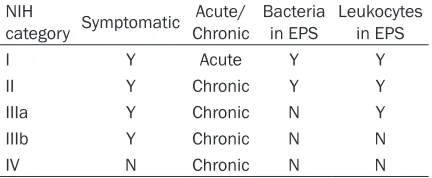
-egories: acute bacterial prostatitis (category I), chronic bacterial prostatitis (category II), CP/
CPPS (category III), and asymptomatic inflam
-matory prostatitis (category IV) (Table 2). Meta-analysis can explore the authentic and
comprehensive effects via statistical analyses,
which provide a relatively accurate estimation. A previous meta-analysis[16] involving 20 stud-ies has been conducted, which demonstrates
that there is a significant positive relationship
between prostatitis and prostate cancer. The
aim of this study was to conduct an updated
systematic review and meta-analysis to
accu-rately evaluate the magnitude of the associa
-tion between prostatitis and PCa. If this study
indicates that prostatitis is associated with a
significant increase in the risk of PCa, we can
encourage patients to seek treatment for pros
-tatitis to decrease their risk of PCa.
Materials and methods
Inclusion criteria and exclusion criteria
We included studies that met the following cri
-teria: 1) case-control or cohort studies address-ing the association between prostatitis and
PCa; 2) reporting the relative risk (RR), odds ratio (OR), and 95% confidence interval (CI) or that acquired sufficient information to calculate
these values; and 3) utilizing histological
diag-nosis/evaluation of PCa. Studies that met the following criteria were considered unqualified:
1) articles not reporting association between
prostatitis and PCa; 2) duplicating previous publications (when multiple reports were
pub-lished from the same population, only the most
recent or complete publications were included); 3) review or meta-analysis articles; or 4) com-ments, letters, case reports, and meeting. Search strategy
We identified studies by a computerized search of the PubMed, Embase, Medline, and Web of
Science databases and the CNKI using the fol
-lowing terms: “prostatitis or prostate inflamma
-tion or CP” and “prostate cancer or prostate carcinoma or prostatic neoplasms or PCa”. The
last search was performed in September 3,
2016. No language restrictions were used in this meta-analysis. All reviews and cross-re-
ferenced studies from retrieved articles were screened for inclusion.
Data extraction and quality assessment
The data was independently extracted from
each article meeting the inclusion and exclu-sion criteria by three authors (HY Ding, S Fan and L Zhang). Any disagreement between the other 2 authors was resolved by consensus
among all authors. As required, some informa
-tion not found in the articles was obtained by
questioning the principal researchers by e-mail.
The following information was extracted from each study: first author, year of publication, study country, type of controls, source of data, data collection period, the number of cases
and controls, age, OR and 95% CI. Type of con
-trols was defined as hospital-based and popu
-lation-based studies.
The Cochrane Collaboration Reviewer’s
Hand-book 5.3 was applied to assess the method
-ological quality of these studies. The quality as-sessment for each article was conducted
in-dependently by two authors (L Zhang and ZY Hao). Any disagreement was settled by
consen-sus among all authors. Overall, the quality of these studies’ methodology was high. The pool-ed risk of bias assessment for the 27 studies
[image:2.612.91.518.84.145.2]is shown in Figure 1.
Table 1. Histological grading and aggressiveness of prostatic inflammation
Grade Histological grading Grade Histological aggressiveness
0 No inflammatory cells 0 No contact between inflammatory cells and glandular epithelium
1 Scattered inflammatory cell infiltrate without nodules 1 Contact between inflammation and epithelium
2 Non-confluent lymphoid nodules 2 Interstitial infiltrate with glandular disruption
3 Large inflammatory areas with confluence 3 Glandular disruption on >25%
Table 2. Classification of prostatitis according to
the NIH criteria
NIH
category Symptomatic ChronicAcute/ Bacteria in EPS Leukocytes in EPS
I Y Acute Y Y
II Y Chronic Y Y
IIIa Y Chronic N Y
IIIb Y Chronic N N
IV N Chronic N N
[image:2.612.90.306.192.281.2]Statistical analysis
We explored the relationship of prostatitis and
PCa using STATA version 12.0 (StataCorp LP,
College Station, USA). OR and 95% CI were per
-formed to determine the strength of the evi
-dence for the association between prostatitis and PCa. We calculated the pooled OR in each article using a fixed-effects model of the
Man-tel-Haenszel method [17] and using
random-effects models of the DerSimonian and Laird
Literature search
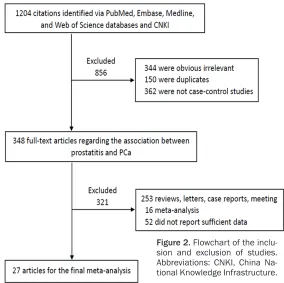
The search strategy retrieved 1,204 citations
identified through PubMed, CBM, Embase, and the CNKI, of which 856 were excluded from analysis after the first screening according to
the correlation, case-control studies and
dupli-cate reportage. There are 348 available
full-text articles regarding the association between
[image:3.612.88.520.77.245.2]prostatitis and PCa. 321 were excluded from analysis after a second screening based on
Figure 1. Risk of bias graph: over quality assessment for the selected studies.
Figure 2. Flowchart of the inclu -sion and exclu-sion of studies. Abbreviations: CNKI, China Na-tional Knowledge Infrastructure.
method [18]. In light of the
article heterogeneity, we
cal-culated the OR estimates using random-effects
mo-dels. Meanwhile, article het-erogeneity was measured by the Q test and the I2 statistic
(I2<25%, no heterogeneity; I2
25%-50%, moderate hetero
-geneity; I2>50%, extreme het
-erogeneity) [19]. The
hetero-geneity of studies was consid
-ered statistically significant
when I2>50% or P<0.1 for the Q test. We utilized
one-way sensitivity analyses that
served as a stratification fac
-tor for the stability of the
results. Potential publication bias was assessed by the
Begg’s funnel plot and Egger’s
publication bias plot, P value <0.05 was considered
statis-tically significant bias [20].
[image:3.612.89.373.288.571.2]Table 3. Studies analyzing the association between prostatitis and PCa
First author Year Country controlsType of Source of data collection periodData ControlsCases/ Age (95% CI)OR
Boehm K et al [21] 2016 Germany PB Interview 2005-2012 1,884/1,965 <76 1.81 (1.44-2.27)
Rybicki BA et al [22] 2015 USA HB Medical record 1/1990-12/2002 574/574 All 0.96 (0.71-1.31)
Spence AR et al [23] 2014 Canada PB Interview 2005-2009 1,555/1,586 40-79 1.83 (1.44-2.34)
Wright JL et al [24] 2012 USA PB Interview 1/1993-12/1996 1/2002-12/2005 1,754/1,645 35-74 1.62 (1.29-2.03)
Chao C et al [25] 2010 USA PB Questionnaire 2002-2007 1,559/75,384 45-69 1.33 (1.12-1.59)
Weinmann S et al [26] 2010 USA PB Medical record 1974-2000 768/929 45-84 1.0 (0.79-1.4)
Daniels NA et al [27] 2009 USA HB Medical record 1996-2006 65/195 51-99 0.36 (0.04-2.97)
Huang WY et al [28] 2008 USA PB Interview 9/1993-7/2001 868/1,283 60-69 1.32 (0.96-1.82)
Delongchamps NB et al [29] 2008 USA HB Medical record Unknown 22/145 31-92 0.42 (0.17-1.04)
Liu CK et al [30] 2007 People’s Republic of China HB Questionnaire 1/2000-6/2006 40/168 40-86 4.76 (1.85-12.19)
Stucliffe S et al [31] 2007 USA PB Interview 1986-1995 691/691 40-75 1.29 (1.0-1.7)
Sarma AV et al [8] 2006 USA PB Interview 1996-2001 129/703 40-79 4.93 (2.79-8.74) Pelucchi C et al [32] 2006 Italy HB Interview 1985-1992 280/689 <80 0.53 (0.10-2.68) Petel DA et al [33] 2005 USA PB Interview 1996-1998 700/604 50-74 1.8 (1.1-2.9) Fernandez L et al [34] 2005 Cuba HB Interview 1998-2000 271/253 <84 1.4 (0.9-2.1) Rothman I et al [35] 2004 USA PB Interview 1/1993-12/1996 750/702 40-64 1.56 (1.10-2.22)
Roberts RO et al [36] 2004 USA PB Medical record 1/1980-12/1996 409/803 70 (median age) 1.7 (1.10-2.6)
Ritchie JM et al [37] 2003 USA HB Interview 5/2000-5/2001 58/99 44-85 3.44 (1.30-9.13) Rosenblatt KA et al [7] 2001 USA PB Interview 1993-1996 753/703 40-64 1.48 (1.04-2.10) An N et al [38] 2000 People’s Republic of China HB Interview 8/1997-11/1999 96/288 50-80 3.41 (2.07-5.63) Zhu K et al [39] 1996 USA PB Medical record 1/1989-12/1991 175/258 40-69 1.1 (0.6-2.2)
Wang RT et al [40] 1996 People’s Republic of China HB Questionnaire 1989-1991 138/636 40-80 4.94 (2.87-8.49)
John EM et al [41] 1995 USA PB Interview 1/1987-12/1991 1,642/1,636 65-84 2.81 (2.32-3.41) Hiatt RA et al [42] 1994 USA PB Medical record 1978-1985 238/238 >30 1.1 (0.5-2.3)
Wei Q et al [43] 1994 People’s Republic of China HB Interview Unknown 27/54 All 4.12 (1.2-14.2)
Honda GD et al [44] 1988 USA PB Interview 1/1979-2/1985 216/216 ≤60 2.2 (1.2-4.3)
Mishina T et al [45] 1985 Japan PB Questionnaire 1976 100/100 45-89 1.64 (0.69-3.92)
article types and data. Finally, A total of 27
articles met the inclusion criteria (Figure 2) [7, 8, 21-45].
Study characteristics
We found 27 articles that assessed the asso
-ciation between prostatitis and PCa. Of the 27 studies, 23 were written in English and four
were published in Chinese. The sample sizes
ranged from 22 to 75,384 patients. The 17
population-based case-control studies
includ-ed 14,191 cases and 89,446 controls. Mean- while, the 10 hospital-based case-control stud-ies contained 1,571 cases and 3,101 controls. All cancerous specimens were histologically
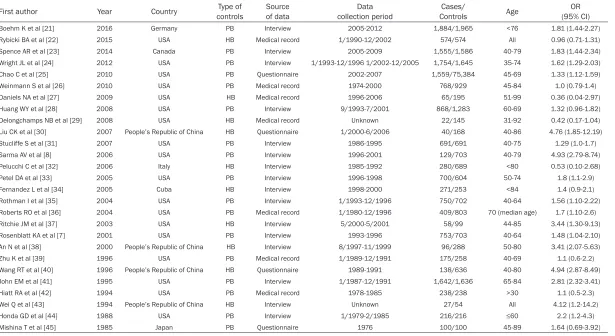
confirmed. Table 3 displays the main charac-
teristics of the 17 population-based case-con
-trol studies and the 10 hospital-based
case-control studies, documenting first authors, pub
-lication year, country, type of controls, source of data, data collection period, number of
ca-ses/controls, age of patients, and the estimat
[image:5.612.94.519.83.533.2]-ed OR and 95% CI for each individual study.
Table 4. Stratified analyses of the pooled association between prostatitis and PCa
Variables Group (n) Cases/Controls OR (95% CI) P Heterogeneity
I2 (%) Ph Overall (27) 15,762/92,547 1.74 (1.46, 2.07)a 0.000a 81.0% 0.000
1.68 (1.57, 1.79)b 0.000b
Publication year 2010’s (6) 8,094/82,083 1.42 (1.15, 1.74) 0.001 78.9% 0.000
1.46 (1.33, 1.61) 0.000
2000’s (14) 5,132/7,326 1.76 (1.34, 2.30) 0.000 76.2% 0.000 1.62 (1.44, 1.82) 0.000
1990’s (5) 2,220/2,822 2.29 (1.31, 4.00) 0.004 78.5% 0.001 2.65 (2.24, 3.14) 0.000
1980’s (2) 316/316 2.17 (1.35, 3.51) 0.001 0.00% 0.543
2.18 (1.35, 3.51) 0.001
Geographical region European (2) 2164/2654 1.40 (0.56, 3.54) 0.472 46.6% 0.171 1.79 (1.43, 2.23) 0.000
North America (19) 12926/88394 1.56 (1.29, 1.90) 0.000 82.5% 0.000 1.62 (1.50, 1.74) 0.000
South America (1) 271/253 1.43 (1.00, 2.04) 0.051 -
-1.43 (1.00, 2.04) 0.051
Asian (5) 401/1246 3.64 (2.58, 5.12) 0.000 15.0% 0.319
3.54 (2.60, 4.82) 0.000
Type of controls HB (10) 1571/3101 1.82 (1.07, 3.10) 0.027 84.4% 0.000
1.55 (1.30, 1.86) 0.000
PB (17) 14191/89446 1.69 (1.42, 2.01) 0.000 79.9% 0000 1.70 (1.58, 1.83) 0.000
Source of data Interview (16) 11674/13117 1.95 (1.62, 2.34) 0.000 76.3% 0.000 1.89 (1.74, 2.05) 0.000
Medical record (7) 2251/3142 1.02 (0.80, 1.31) 0.858 39.1% 0.131 1.03 (0.87, 1.21) 0.752
Questionnaire (4) 1837/76288 2.68 (1.27, 5.68) 0.010 86.8% 0.000 1.67 (1.43, 1.96) 0.000
Simple size ≥500 (12) 13498/87702 1.54 (1.28, 1.86) 0.000 83.7% 0.000
1.62 (1.51, 1.74) 0.000
<500 (15) 2264/4845 1.99 (1.38, 2.87) 0.000 76.8% 0.000
2.01 (1.71, 2.37) 0.000
HB, hospital-based; PB, population-based; OR, odds ratio; CI, confidence interval; Ph = P value of heterogeneity test; a,
Overall analysis of these studies
The association between prostatitis and the
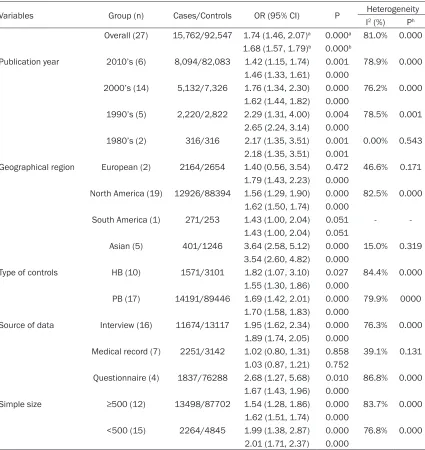
risk of PCa was analyzed in 27 studies with a total of 15,762 cases and 92,547 controls. The pooled OR=1.68 and the 95% CI=1.57-1.79 with the fixed-effects model, while the OR=1.74 and 95% CI=1.46-2.07 with the random-effects model. However, there was significant
hete-rogeneity among these studies (I2=81%, P= 0.000). When significant heterogeneity was
present (I2>50%, P<0.1), we used a
random-neity in North American population (I2=82.5%,
P=0.000). Only one study [34] evaluated the
association between prostatitis and the risk of
PCa in South America, and there was no signifi
-cant association (OR=1.43, 95% CI=1.00-2.04,
P=0.051).
Subgroup analyses were stratified by type of
controls. Prostatitis was significantly associat
-ed with an increas-ed risk of PCa according to type of controls (OR=1.82, 95% CI=1.07-3.10,
P=0.027 for HB and OR=1.69, 95%
[image:6.612.94.370.74.273.2]CI=1.42-Figure 3. Sensitivity analysis of the pooled association between prostatitis and PCa. Abbreviations: CI, confidence interval.
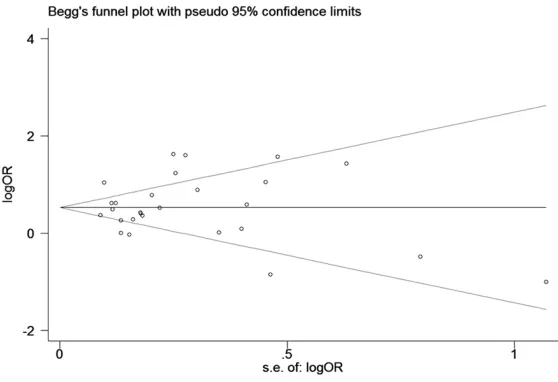
Figure 4. Begg’s funnel plots to examine publication bias in the association between prostatitis and PCa. Abbreviations: Log OR, natural logarithm of OR; s.e. of: log OR, standard error of the log OR.
effects model. Prostatitis was significantly associated with an increased risk of PCa (OR=1.74, 95% CI=1.46-2.07,
P=0.000) (Table 4). Subgroup analysis
The subgroup analyses were based on 27 studies
accord-ing to decade of publication, geographical region, type of controls, source of data, and
sample size (Table 4). Based on the decade of publica-tion (2010’s, 2000’s, 1990’s, 1980’s), the pooled OR were all significant in both the fixed-effects and random-fixed-effects models. Except for studies
from the 1980’s (I2=0.00%,
P=0.543), there was signifi -cant heterogeneity among these studies. However,
sta-tistically significant associa -tion between prostatitis and
PCa were found in each of the four decades (OR=
1.42, 95% CI=1.15-1.74, P=
0.001 for 2010’s; OR=1.76,
95% CI=1.34-2.30 P=0.000
for 2000’s; OR=2.29, 95%
CI=1.31-4.00 P=0.004 for
1990’s).
Subgroup analyses were also
performed based on geo
-graphical region. A signifi-cant association was found in Asian population (OR=
3.54, 95% CI=2.60-4.82, P=
0.000). Nevertheless, there
[image:6.612.93.372.325.516.2]-2.01, P=0.000 for PB). There were statistically significant association for prostatitis and the risk of PCa in both HB and PB studies, alth-ough significant heterogeneity was present
(I2=84.4%, P=0.000 and I2=79.9%, P=0.000,
respectively).
The subgroup analyses were performed on 27 studies based on the source of data. In
medical records, prostatitis was associated
with an increased risk of PCa of borderline sig
-nificance, and there was no significant hetero
-geneity (I2=39.1%, P=0.131). However, no sig -nificant difference was found for prostatitis in medical records (OR=1.03, 95% CI=0.87-1.21,
P=0.752).
Subgroup analysis was also performed based on the sample size. There was high degree of
heterogeneity (I2=83.7%, P=0.000 for ≥500
cases and I2=76.8%, P=0.000 for <500). Pro-statitis was significantly linked with an enhan-ced risk of PCa and produenhan-ced a statistically significant difference in both groups (OR=
1.54, 95% CI=1.28-1.86, P=0.000 for ≥500
and OR=1.99, 95% CI=1.38-2.87, P=0.000 for
<500).
Sensitivity analyses
Sensitivity analyses were done to evaluate
whether the meta-analysis pooled results of
included studies were stable by removing
stud-ies. The overall pooled OR was found to be
fair-ly stable by deleting one study at a time and
observing the influence on the individual data,
suggesting that the results of this meta-analy
-sis were steady (Figure 3). Publication bias
We evaluated publication bias with a Begg’s funnel plot and Egger’s test, which suggested no obvious evidence of publication bias (Begg’s
test z=0.58, P=0.559; Egger’s test t=0.23,
P=0.823). Meanwhile, visual inspection of the
meta-analysis Begg’s funnel plots revealed no
significant funnel asymmetry (Figure 4).
Discussion
Until now, many experts started to explore
pros-tatitis which is a risk factor for PCa, and is rela -tively inconclusive by many scholars [7-13]. To
the best of knowledge, this meta-analysis aim-ed to clarify whether prostatitis can increase
the risk of PCa. Meanwhile, we carried out sub
-group analyses to explore the potential
associ-ation between prostatitis and the risk of PCa.
As a result, based on the quantitative synthe-sis, this meta-analysis showed the idea that
prostatitis is associated with an increased risk
of PCa in overall group and almost of the sub
-group. Evidence has reported that compared to European American men, there is an increased
incidence of inflammation in biopsy specimens
from African American men [46], which sug
-gests there is a racial and geographical differ
-ence in the preval-ence of prostatitis and PCa
in adult men. In the subgroup analysis of geo
-graphical region, we found a significantly incre-ased risk of PCa in the Asian population and a slightly significant increase of risk in Europeans. Similar associations were observed for North
Americans and South Americans. However,
studies from South America (P=0.051) did not
have significant results. One study representing
South American patients showed increased random variations between the case and
con-trol groups, making it impossible to generate remarkable conclusions. There were seven studies in which information on prostatitis was
obtained from the medical records. These stud
-ies found an insignificant association between
prostatitis and PCa risk. One possible explana
-tion for this insignificant result is the small size of the control group in the medical record
studies. Alternatively, recall bias may be pres-ent in the medical studies between cases and controls. However, these studies may have not
detected or under-reported cases of prostati
-tis, due to the asymptomatic nature of prostati
-tis. Meanwhile, detection bias is another
poten-tial bias, which would artificially increase the association between prostatitis and PCa risk. Studies that referred to a history of prostatitis generally did not further specify the sub-type of
prostatitis, such as chronic bacterial or nonbac-terial prostatitis. Thus, we did not try to
distin-guish between the categories of prostatitis.
It is well known that chronic inflammation may be closely associated with the development of
cancer. There is evidence which can be best
exemplified by the association between chronic
gastritis, gastric atrophy and the subsequent
development of gastric cancer. Thus, we also
assume that there are closely association be- tween prostatitis and PCa. Recently, several epidemiological and histopathological studies
to carcinogenesis of PCa. The prevalence of prostate inflammation and PCa is at nearly
epidemic levels in the United States and in
“Westernized” countries [47]. De Marzo et al
[48] demonstrated that compared with nor- mal epithelium, the epithelial cells that pro-
liferate in focal atrophy lesions should be de-fined as PIA. In morphological studies, some scholars have observed frequent transitions between PIA and proliferative atrophy with
high grade prostatic intraepithelial neoplasia
(PIN) lesions, which might manifest that PIA is
a lesion linking inflammation and the develop
-ment of PCa. Meanwhile, there are some exper
-imental and clinical evidences that testify the hypothesis which inflammation may be one of
the causes of PCa. Elkahwaji et al [49]
investi-gated that there were atypical hyperplasia,
dys-plasia and abundant prostatic epithelial prolif
-eration in the prostate of mice. Based on the
meta-analysis by Dennis et al [50] there is a
significant OR for PCa of 1.6 for ever having a history of prostatitis, which suggest a high association of prostatitis with PCa. Also, there
are many molecular mechanisms which are
responsible for the carcinogenesis process of
PCa. RNA-SEL encodes an enzyme that has an important role in degrading viral RNA on viral
infection. MSR1 encodes the subunits of mac
-rophage-scavenger receptor, which can bind
bacterial lipopolysaccharides. RNA-SEL (linked to HPC1 gene) and MSR1, two familial PCa genes, have linked with the possibility that in-fection or inflammation may lead to PCa [51, 52]. The frequent mutation of TP53 gene, a
common genetic pathway, is an important find
-ing in the transformation between PIA, high
grade PIN and PCa [53]. Moreover, NKX3.1,
CDKN1B and PTEN, prostate tumour-suppres
-sor gene, are highly expressed in normal pros-tate epithelium and downregulated in PIA and decreased or absent in PIN and PCa [6]. Inter-
estingly, the expression of GSTP1, which is a main defense mechanism against the
oxida-tive genome damage, is downregulated in PCa.
The change which is regulated by GSTP1 pro
-moter CqG island hypermethylation would be
vulnerable to oxidants and accumulate geno- me damage and then lead to PIN and PCa [54]. Tumor-associated macrophages (TAMs)
are a heterogeneous group of cells, which can
be generally classified into “M1” or “M2” mac
-rophage subsets according to phenotypic and
functional characteristics. Additionally, TAMs
that infiltrate the tumor microenvironment play
an important role in dampening anticancer im-
mune responses, which favor tumor invasion [55]. In view of these molecular mechanisms,
more precise pathogenesis was required to
validate an important role of prostatitis in iden
-tifying the risk of PCa.
The limitations of this meta-analysis should be
considered. First, it is hard to draw the conclu-sion that there is a causal relationship between
prostatitis and PCa due to the lack of cohort
studies. Secondly, there are additional unpub-lished studies that were limited by the selected electronic databases, causing inevitable publi-cation bias. Third, although no language re- strictions were used in this meta-analysis, we were unable to detect eligible studies in all other languages, which may produce language
bias. Fourth, the vast majority of studies con
-tained in this meta-analysis did not distinguish
the categories of prostatitis; thus, not all types of prostatitis may be associated with prostate cancer. Moreover, other factors such as age,
family history, and PSA level that are associat
-ed with the incidence of PCa should be
con-sidered. The above limitations should be ad-
dressed in future studies. Regardless of the
abovementioned limitations, this meta-analy-sis has articulated an association between
prostatitis and PCa risk.
Conclusion
This meta-analysis is a comprehensive study exploring the relationship between prostatitis
and PCa. Our findings indicate that prostatitis is associated with a significant increase in the risk of PCa in overall group and almost of the subgroups. In the whole subgroup analysis of
Asian population, there was a significant asso
-ciation between prostatitis and risk of PCa.
Taking into account the result of this meta-anal
-ysis, patients should be encouraged to seek treatment for prostatitis to decrease their risk of PCa. Considering that the pooled results
are based on case-control study, large, well-designed cohort studies should be used in the
future to further confirm the current findings.
Acknowledgements
This meta-analysis was supported by grants
National Natural Science Foundation of China
(81370856, 81400757) and Anhui Provincial Natural Science Foundation (1508085QH171, 1408085QH180).
Disclosure of conflict of interest
None.
Authors’ contribution
HYD, SF, and CZL conceived and designed the study. LZ and ZYH researched and assessed
the literature. HYD, SF and LZ performed the statistical analyses. HYD drafted and revised
the manuscript. All authors read and approved
the final manuscript.
Address correspondence to: Dr. Chaozhao Liang, Department of Urology, The First Affiliated Hospital of Anhui Medical University; Institute of Urology, Anhui Medical University, Hefei 230022, People’s Republic of China. Tel: 0086-551-6292-3440; Fax: 0086-551-63633742; E-mail: ding_huayang@163. com
References
[1] Siegel RL, Miller KD, Jemal A. Cancer statistics, 2016. CA Cancer J Clin 2016; 66: 7-30. [2] Coussens LM, Werb Z. Inflammation and can
-cer. Nature 2002; 420: 860-867.
[3] Sciarra A, Di Silverio F, Salciccia S, Autran Gomez AM, Gentilucci A, Gentile V. Inflam-mation and chronic prostatic diseases: evi-dence for a link? Eur Urol 2007; 52: 964-972. [4] De Nunzio C, Kramer G, Marberger M, Montironi R, Nelson W, Schröder F, Sciarra A, Tubaro A. The controversial relationship be-tween benign prostatic hyperplasia and pros-tate cancer: the role of inflammation. Eur Urol 2011; 60: 106-117.
[5] Hussain SP, Hofseth LJ, Harris CC. Radical causes of cancer. Nat Rev Cancer 2003; 3: 276-285.
[6] De Marzo AM, Platz EA, Sutcliffe S, Xu J, Grönberg H, Drake CG, Nakai Y, Isaacs WB, Nelson WG. Inflammation in prostate carcino -genesis. Nat Rev Cancer 2007; 7: 256-269. [7] Rosenblatt KA, Wicklund KG, Stanford JL.
Sexual factors and the risk of prostate cancer. Am J Epidemiol 2001; 153: 1152-1158. [8] Sarma AV, McLaughlin JC, Wallner LP, Dunn
RL, Cooney KA, Schottenfeld D, Montie JE, Wei JT. Sexual behavior, sexually transmitted dis-eases and prostatitis: the risk of prostate can -cer in black men. J Urol 2006; 176: 1108-1113.
[9] Cheng I, Witte JS, Jacobsen SJ, Haque R, Quinn VP, Quesenberry CP, Caan BJ, Van Den Eeden SK. Prostatitis, sexually transmitted diseases, and prostate cancer: the California Men’s Health Study. PLoS One 2010; 5: e8736. [10] Gann PH, Fought A, Deaton R, Catalona WJ,
Vonesh E. Risk factors for prostate cancer de -tection after a negative biopsy: a novel multi -variable longitudinal approach. J Clin Oncol 2010; 28: 1714-1720.
[11] Fujita K, Hosomi M, Tanigawa G, Okumi M, Fushimi H, Yamaguchi S. Prostatic inflamma -tion detected in initial biopsy specimens and urinary pyuria are predictors of negative re -peat prostate biopsy. J Urol 2011; 185: 1722-1727.
[12] Kryvenko ON, Jankowski M, Chitale DA, Tang D, Rundle A, Trudeau S, Rybicki BA. Inflammation and preneoplastic lesions in benign prostate as risk factors for prostate cancer. Mod Pathol 2012; 25: 1023-1032.
[13] Moreira DM, Aronson WJ, Terris MK, Kane CJ, Amling CL, Cooperberg MR, Boffetta P, Freedland SJ. Cigarette smoking is associated with an increased risk of biochemical disease recurrence, metastasis, castration-resistant prostate cancer, and mortality after radical prostatectomy: results from the SEARCH data -base. Cancer 2014; 120: 197-204.
[14] Irani J, Levillain P, Goujon JM, Bon D, Doré B, Aubert J. Inflammation in benign prostatic hy -perplasia: correlation with prostate specific antigen value. J Urol 1997; 157: 1301-1303. [15] Krieger JN, Nyberg L Jr, Nickel JC. NIH consen
-sus definition and classification of prostatitis. JAMA 1999; 282: 236-237.
[16] Jiang J, Li J, Yunxia Z, Zhu H, Liu J, Pumill C. The role of prostatitis in prostate cancer: meta-analysis. PLoS One 2013; 8: e85179.
[17] Mantel N, Haenszel W. Statistical aspects of the analysis of data from retrospective studies of disease. J Natl Cancer Inst 1959; 22: 719-748.
[18] DerSimonian R, Laird N. Meta-analysis in clini-cal trials. Control Clin Trials 1986; 7: 117-188. [19] Higgins JP, Thompson SG. Quantifying hetero -geneity in a meta-analysis. Stat Med 2002; 21: 1539-1558.
[20] Begg CB, Berlin JA. Publication bias and dis -semination of clinical research. J Natl Cancer Inst 1989; 81: 107-115.
[21] Boehm K, Valdivieso R, Meskawi M, Larcher A, Schiffmann J, Sun M, Graefen M, Saad F, Parent MÉ, Karakiewicz PI. Prostatitis, other genitourinary infections and prostate cancer: results from a population-based case-control study. World J Urol 2016; 34: 425-430. [22] Rybicki BA, Kryvenko ON, Wang Y, Jankowski
Tang D. Racial differences in the relationship between clinical prostatitis, presence of in -flammation in benign prostate and subsequent risk of prostate cancer. Prostate Cancer Pro-static Dis 2016; 19: 145-150.
[23] Spence AR, Rousseau MC, Karakiewicz PI, Parent MÉ. Circumcision and prostate cancer: a population-based case-control study in Montreal, Canada. BJU Int 2014; 114: E90-98. [24] Wright JL, Lin DW, Stanford JL. Circumcision
and the risk of prostate cancer. Cancer 2012; 118: 4437-4443.
[25] Chao C, Haque R, Van Den Eeden SK, Caan BJ, Poon KY, Quinn VP. Red wine consumption and risk of prostate cancer: the California men’s health study. Int J Cancer 2010; 126: 171-179. [26] Weinmann S, Shapiro JA, Rybicki BA, Enger
SM, Van Den Eeden SK, Richert-Boe KE, Weiss NS. Medical history, body size, and cigarette smoking in relation to fatal prostate cancer. Cancer Causes Control 2010; 21: 117-125. [27] Daniels NA, Chen YH, Bent S. Antibiotic and
anti-inflammatory use and the risk of prostate cancer. BMC Res Notes 2009; 2: 57.
[28] Huang WY, Hayes R, Pfeiffer R, Viscidi RP, Lee FK, Wang YF, Reding D, Whitby D, Papp JR, Rabkin CS. Sexually transmissible infections and prostate cancer risk. Cancer Epidemiol Biomarkers Prev 2008; 17: 2374-2381. [29] Delongchamps NB, de la Roza G, Chandan V,
Jones R, Sunheimer R, Threatte G, Jumbelic M, Haas GP. Evaluation of prostatitis in autopsied prostates--is chronic inflammation more asso -ciated with benign prostatic hyperplasia or cancer? J Urol 2008; 179: 1736-1740.
[30] Liu CK, Yang ZW, Li SY. Prostate diseases, sex -uality and prostate cancer: a case-control study. Medical Journal of Wuhan University 2007; 28: 219-222.
[31] Sutcliffe S, Giovannucci E, Gaydos CA, Viscidi RP, Jenkins FJ, Zenilman JM, Jacobson LP, De Marzo AM, Willett WC, Platz EA. Plasma anti -bodies against chlamydia trachomatis, human papillomavirus, and human herpesvirus type 8 in relation to prostate cancer: a prospec- tive study. Cancer Epidemiol Biomarkers Prev 2007; 16: 1573-1580.
[32] Pelucchi C, Talamini R, Negri E, Franceschi S, La Vecchia C. Genital and urinary tract diseas -es and prostate cancer risk. Eur J Cancer Prev 2006; 15: 254-257.
[33] Patel DA, Bock CH, Schwartz K, Wenzlaff AS, Demers RY, Severson RK. Sexually transmitted diseases and other urogenital conditions as risk factors for prostate cancer: a case--con-trol study in Wayne County, Michigan. Cancer Causes Control 2005; 16: 263-273.
[34] Fernandez L, Galan Y, Jimenez R, Gutiérrez A, Guerra M, Pereda C, Alonso C, Riboli E, Agudo
A, González C. Sexual behaviour, history of sexually transmitted diseases, and the risk of prostate cancer: a case-control study in Cuba. Int J Epidemiol 2005; 34: 193-197.
[35] Rothman I, Stanford JL, Kuniyuki A, Berger RE. Self-report of prostatitis and its risk factors in a random sample of middle-aged men. Urology 2004; 64: 876-879.
[36] Roberts RO, Bergstralh EJ, Bass SE, Lieber MM, Jacobsen SJ. Prostatitis as a risk factor for prostate cancer. Epidemiology 2004; 15: 93-99.
[37] Ritchie JM, Vial SL, Fuortes LJ, Guo H, Reedy VE, Smith EM. Organochlorines and risk of prostate cancer. J Occup Environ Med 2003; 45: 692-702.
[38] An N, Pang WQ, Liu YX. Case-control study on the relationship between prostate cancer and history of prostatic diseases. Chin J Pre Contr Chron Non-Commum Dis 2000; 8: 214-215. [39] Zhu K, Stanford JL, Daling JR, McKnight B,
Stergachis A, Brawer MK, Weiss NS. Vasectomy and prostate cancer: a case-control study in a health maintenance organization. Am J Epidemiol 1996; 144: 717-722.
[40] Wang RT, Gu FL, Ann H, et al. Sexual behavior, non-cancerous diseases and prostatic cancer: a case-control study. Chin J Urol 1996; 17: 481-487.
[41] John EM, Whittemore AS, Wu AH, Kolonel LN, Hislop TG, Howe GR, West DW, Hankin J, Dreon DM, Teh CZ, et al. Vasectomy and prostate can-cer: results from a multiethnic case-control study. J Natl Cancer Inst 1995; 87: 662-669. [42] Hiatt RA, Armstrong MA, Klatsky AL, Sidney S.
Alcohol consumption, smoking, and other risk factors and prostate cancer in a large health plan cohort in California (United States). Can-cer Causes Control 1994; 5: 66-72.
[43] Wei Q, Tang XD, Yang YR, Zhan Y, Yin H. Risk factors of prostate cancer: a matched case-control study. Hua Xi Yi Ke Da Xue Xue Bao 1994; 25: 87-90.
[44] Honda GD, Bernstein L, Ross RK, Greenland S, Gerkins V, Henderson BE. Vasectomy, cigarette smoking, and age at first sexual intercourse as risk factors for prostate cancer in middle-aged men. Br J Cancer 1988; 57: 326-331.
[45] Mishina T, Watanabe H, Araki H, Nakao M. Epidemiological study of prostatic cancer by matched-pair analysis. Prostate 1985; 6: 423-436.
[46] Eastham JA, May RA, Whatley T, Crow A, Venable DD, Sartor O. Clinical characteris-tics and biopsy specimen features in African-American and white men without prostate cancer. J Natl Cancer Inst 1998; 90: 756-760. [47] Nelson W, Sfanos K, DeMarzo A, et al. Prostate
Jones JS, editors. Management of prostate cancer. Humana Press; 2013. pp. 103-115. [48] De Marzo AM, Marchi VL, Epstein JI, Nelson
WG. Proliferative inflammatory atrophy of the prostate: implications for prostatic carcinogen -esis. Am J Pathol 1999; 155: 1985-1992. [49] Elkahwaji JE, Zhong W, Hopkins WJ, Bushman
W. Chronic bacterial infection and inflamma -tion incite reactive hyperplasia in a mouse model of chronic prostatitis. Prostate 2007; 67: 14-21.
[50] Dennis LK, Lynch CF, Torner JC. Epidemiologic association between prostatitis and prostate cancer. Urology 2002; 60: 78-83.
[51] De Nunzio C, Kramer G, Marberger M, Montironi R, Nelson W, Schröder F, Sciarra A, Tubaro A. The controversial relationship be-tween benign prostatic hyperplasia and pros-tate cancer: the role of inflammation. Eur Urol 2011; 60: 106-117.
[52] Nelson WG, De Marzo AM, Isaacs WB. Prostate cancer. N Engl J Med 2003; 349: 366-381. [53] Klein EA, Silverman R. Inflammation, infection,
and prostate cancer. Curr Opin Urol 2008; 18: 315-319.
[54] Lee WH, Morton RA, Epstein JI, Brooks JD, Campbell PA, Bova GS, Hsieh WS, Isaacs WB, Nelson WG. Cytidine methylation of regula-tory sequences near the pi-class glutathione S-transferase gene accompanies human pros -tatic carcinogenesis. Proc Natl Acad Sci U S A 1994; 91: 11733-11737.