Manuscript version: Author’s Accepted Manuscript
The version presented in WRAP is the author’s accepted manuscript and may differ from the published version or Version of Record.
Persistent WRAP URL:
http://wrap.warwick.ac.uk/109995
How to cite:
Please refer to published version for the most recent bibliographic citation information. If a published version is known of, the repository item page linked to above, will contain details on accessing it.
Copyright and reuse:
The Warwick Research Archive Portal (WRAP) makes this work by researchers of the University of Warwick available open access under the following conditions.
Copyright © and all moral rights to the version of the paper presented here belong to the individual author(s) and/or other copyright owners. To the extent reasonable and
practicable the material made available in WRAP has been checked for eligibility before being made available.
Copies of full items can be used for personal research or study, educational, or not-for-profit purposes without prior permission or charge. Provided that the authors, title and full
bibliographic details are credited, a hyperlink and/or URL is given for the original metadata page and the content is not changed in any way.
Publisher’s statement:
Please refer to the repository item page, publisher’s statement section, for further information.
Dr Cath Lambert, Department of Sociology, University of Warwick, [email protected].
Queering Identity: being and becoming queer in the art work of Cassils
Introduction
This chapter puts queer theory and practice to work in troubling the concept of identity. It seeks to do so in ways that do not dismantle identity or reduce its affective and political traction. Queer approaches to gender and sexual identity have provided a generative, provocative set of theoretical tools for both thinking about and doing identity work in the 21st century. The usefulness of queer hinges on its ability to keep challenging and disturbing fixed categorisations and subject positions. However, it is neither possible nor desirable to simply do away with or move beyond identity: it remains an important mode of organisation, recognition and mobilisation. There are political and subjective motivations, and indeed social and material rewards, for holding onto notions of identity that might be fluid but are (at least temporarily) liveable. As Heather Love (2007:44) notes:
Queer critics have generally understood the concept of identity to be both politically and philosophically bankrupt ... Identity is … a deeply problematic
The discussion here explores what such an account might look and feel like. In seeking to find a way of utilising queer that enables disruption and alliance,
movement and stability, I present and analyse some of the work of genderqueer artist, Cassils. Art, particularly live and performance art, has the potential to disrupt
accepted ways of being and knowing, and create opportunities for the production of new knowledges and subjectivities (see O’Sullivan 2006; Lambert 2013). There is a
rich tradition of queer performance art that takes the body as a site for the exploration, production and deconstruction of identity as well as a locus of resistance to processes of normalisation (Heathfield 2004; Johnson 2013). Cassils’ work can be located
within this oeuvre. It also fits into a tradition of feminist art seeking to disrupt and challenge norms, representations and injustices relating to gender and sexuality (Isaak 1996; Jones 2003). Cassils is a Canadian performance artist and personal trainer, based in Los Angeles. I first experienced theiri work at Fierce Festivalii in
Birmingham in 2013, where they performed Becoming An Image (about which more later). Their art practice, and indeed Cassils’ own expressions of their identity, offer a
generative example of queer becoming that resists fixity in terms of gender but at the same time demonstrates a commitment to the politics of identification. This tension, between gender/sex fluidity, and stable categories from which we can articulate a political stance, is at the heart of queer thinking about, and troubling of, identity. In keeping with arguments central to feminist and queer critical literature, Cassils’ work
also foregrounds the body and, I suggest, pushes the argument that bodies are sites of radical identity de/ and re/construction to its limits.
relationship between identity and queer theory and practice has been, and continues to be, played out. The discussion attends to bodies and embodied performance as being central to both producing and contesting identities. A distinction is drawn between ‘being’ and ‘becoming’, drawing attention to the temporalities of queer identities. In
the second half I turn to consider the work of Cassils, examining two of their projects in the light of the concerns and ambitions outlined above. The analysis demonstrates some of the ways in which such art practices can provide a generative set of
possibilities for thinking anew about identity through a queer lens. To begin, what is queer, or more usefully, what work does it do?
Disrupting the ‘normal’: a queer project
Queer theory is inherently trans- and interdisciplinary, bringing a critical, disruptive perspective to debates around identity, and in the process unsettling knowledges that may be seen, from certain disciplinary stances, as certainties. The term ‘queer’ itself is contentious: it is used as an identity category in its own right, an activist politics, a methodology, and a theoretical stance (see Giffney 2009). Queer emerged into public consciousness ‘around 1990’, as David L. Eng et al. (2005:1) explain:
multiple social antagonisms, including race, gender, class, nationality, and religion, in addition to sexuality.
This highlights the role of queer as a fundamentally critical and disruptive term: queer
challenges, interrogates, and critiques the ‘normal’ naming and organising of subjects and the normalising processes which both create and sustain the idea that they are ‘normal’. Queer theory began with a critical concern to understand and transform
sexual identifications and the discursive and material consequences of being labelled according to non-heterosexual identity categories. However, as the description above suggests, queer as a political force has much wider application. David Halperin (1997:62) asserts that, ‘Queer is by definition whatever is at odds with the normal, the
legitimate, the dominant. There is nothing in particular to which it necessarily refers’
(original emphasis). This gives queer enormous potential as a conceptual resource, enabling more complex analyses not only of gender/sex identifications, but also of the ways in which multiple forms of social difference intersect or assemble in the
production of contemporary social subjects.
From identity politics to a politics of identity
Instead of secure identity categories, queer can be used to denote the fluidity and messiness of people’s desires, feelings, memories and actions, opening up political
generate new hegemonies that in turn erase difference and sustain unequal binaries. These identity categories have served as a necessary means by which to mobilise groups of people so that their rights can be defended. For example the women’s liberation movement in the 1960s and 1970s sought to secure political, social and economic rights for women, in particular for marginalised group such as working class, black and minority ethnicity and lesbian women. Queer and postmodern challenges to the sectional and rigid form of these identities, ‘quick on the anti-essentialism trigger’, as James Clifford (2000:94) puts it, were issued just as some of
these groups were beginning to feel the benefits of claiming a unified subjectivity (Alcoff 1995). Recognising this, and indeed acknowledging the necessity of having (at least contingently) unified identity categories around which to mobilise, some feminists have called for a ‘strategic’ recognition of identities (see Spivak 1998).
A further critical imperative for contemporary queer theorists is to negotiate queer’s potential complicities with the ‘progressive’ sexual and gendered politics of
neoliberalism, in its many localised guises. As Clifford (2000:100) suggests, rather than simply presenting a radical or counter-hegemonic impulse, a propagation and reinvention of identities can be seen as being in keeping with the interests of dominant political and economic regimes:
As the twenty-first century begins, we confront a spectacular … proliferation of claims to culture and identity. Can these be accounted for in a systematic way? … the prolific invention and reinvention of identities is integral to a late-capitalist, or ‘postmodern’ world system of cultures. In this view,
globalisation, at a cultural level at least, permits and even encourages ethnic, racial, gender and sexual differences – so long as they do not fundamentally threaten the dominant political-economic order. Traditions are thus constantly salvaged, created, and marketed in a productive game of identities.
Transgenderism, with its promise of gender liberation and its patina of transgression, its promise of flexibility and its reality of a committed rigidity, could be the successful outcome of years of gender activism; or, just as easily, it could be the sign of the reincorporation of a radical subculture back into the flexible economy of postmodern culture (Halberstam 2005: 21).
This recuperation is perhaps most clearly felt and articulated in the notion of ‘queer liberalism’ (see Eng 2010), which attempts to reconcile queer theory’s radical
political aspirations with the emergence of liberal demands for legal and domestic rights and privileges from the state. For example, political and legal gains in relation to gay and lesbian marriage and parental rights, which have been celebrated in a number of national contexts, simultaneously signal a queer compliance with ‘normal’
regulatory frameworks and thereby could be considered to contribute to the re/production rather than the disruption of state power (Duggan 2012). I return to consider this later in the chapter in relation to Cassils’ queer artistic interventions. In
the following section, I consider what the apparent intransience of the gendered body brings to the project of queering identity.
The gendered/sexed body: new ways for bodies to matter?
though a consideration of the effects of disciplinary regimes on sexed and gendered bodies (Bordo 1993; Davies 1997). That power produces ‘docile bodies’iii has been
well documented, but so has a growing theorisation of the body as a site of agency and resistance. A tension between the apparent fixity of bodily ‘matter’ and the
embodied performance of sexed and gendered identity is an important one. It represents a site of conflict for feminist theorists who wish to emphasise the materiality and specificity of women’s experiences, as well as to retain the identity
category of woman as a rallying point for collective political action, without retreating into essentialised notions of sexual differentiation. Judith Butler’s (1990, 1993) work
on gender performativity has been key to these debates and a touchstone for feminist and queer theorising about (embodied) identity. Butler’s (1993) book Bodies that
Matter was written in part, as she explains in its preface, to address accusations following the publication of Gender Trouble (1990) that her account of gender performativity did away with the materiality of bodies. She argues not only that bodies do matter but that the ‘epistemological uncertainty’ of her account of the
materiality of the body indicates,
a significant and promising shift in political thinking. This unsettling of “matter” can be understood as initiating new possibilities, new ways for
bodies to matter (Butler 1993:30).
Butler’s work builds on Michel Foucault’s (1976) analysis of discourse in the
constructs and regulates embodied sexuality and gender. All language is performative, that is, discourse has the power to enact what it names and as such there is no
‘subject’ prior to language who actively ‘takes up’ the identity but rather the subject is
instituted through specific scenes of linguistic subjectification. Butler’s (1993:7-8) powerful example is the moment of birth (or increasingly in some contexts, the
moment of the ultrasound scan), when an infant is interpellated: ‘It’s a boy!’ or ‘She’s a girl!’ This interpellation will be reiterated throughout their lives in order to maintain the effect that it is natural, and the ‘girl’ or ‘boy’ has no choice but to respond to the
interpellation, as her/his existence as a subject with cultural intelligibility is dependent on the position s/he is able to take up and perform within the gender binary. This binary is assigned and maintained through what Butler (1993) calls the heterosexual matrix of desire, an organising framework of compulsory heterosexuality that seeks to maintain the gender order by assigning and limiting gender possibilities and relations (put simply, that men are men, and women are women, they are different from each other and this is because they need to fall in love and reproduce). Gender therefore is not a one off assignation but rather a durational performance:
Gender is the repeated stylization of the body, a set of repeated acts within a highly rigid regulatory frame that congeal over time to produce the appearance of substance, of a natural sort of being (Butler 1990:33).
Normative heterosexuality thus, ‘contours the materiality of bodies’ (Butler 1993:17) setting limits on the body’s intelligibility, so that the un-gendered body, or
However, whilst gender is produced through these acts of re/iteration, it can also be challenged and destabilised, and the fact that such a subject is never fully constituted but must be constantly re-signified offers up scope for agency and a reworking of relations of power. Butler (1991) considers the same problematic through the case of performing a ‘lesbian identity’ where ‘coming out’, spoken of as single identity
affirming event, in fact entails a never-ending process whereby to be ‘out’ produces new closets, constantly deferring the ‘being’ of ‘gayness’. In this deferral she sees a potential ‘rallying point’ (1991:16) for resistance to identity categories as regulatory
imperatives and norms. In this way, Butler argues that subjects, though produced by discourses, are not determined by them. Identity interpellations are not always successful and the subject’s resistance to categorisation is located in the failure of
discourse to entirely control that which it names. Instead, there is scope for subversion and play in the performing of gender identities (such as through ‘drag’) and the re-signification of discourses and names of oppression (such as ‘queer’).
The work of artist Cassils provides an example of resistance, subversion and
re/signification of gender identity through embodied performance. It also, I suggest, demonstrates the possibilities of gender as a becoming, and it is in this movement and orientation that possibilities for queer theory and practice become manifest.
‘Becoming’ draws attention to the temporality of identity. As many queer theorists
have asserted, becoming queer/ queer becoming operates in ‘queer time and space’. Halberstam (2005:2) suggests that,
Queer subcultures produce alternative temporalities by allowing their participants to believe that their futures can be imagined according to logics that lie outside of those paradigmatic markers of life experience – namely, birth, marriage, reproduction and death.
Whilst the ‘wounds’ of the past ‘haunt’ queer accounts - whether we remember, or
attempt to forget, histories of homophobic violence (Freeman 2010; Love 2007) - the queer project is very much about the future, and such a projection has important implications for our understanding of identity as processualiv. The most beautiful and hopeful account of queer futurity comes from José Esteban Muñoz’ (2009:1) who
argues that,
The future is queerness’ domain. Queerness is a structuring and educated
mode of desiring that allows us to see and feel beyond the quagmire of the present.
But how do we ‘see and feel’ into the future whilst also ‘feeling backwards’ (Love
2007). As Love (2007:45) notes,
Clifford (2000:97) also attends to the discomfort of managing ‘identity’ in such a way
that we hold onto, indeed may be ‘constrained’ by, the stories and material affects of our (individual and collective) pasts as well as being able and willing to create anew:
This hooking-up and unhooking, remembering and forgetting, gathering and excluding of cultural elements – processes crucial to the maintenance of an ‘identity’ – must be seen as both materially constrained and inventive. Of
course it is difficult, analytically and politically, to sustain this double vision, just as it is hard to work with the ambivalence inherent in processes of identification … yet it is precisely in this uncomfortable site of cultural
processes and politics that we begin, and begin again.
‘Beginning again’ indicates a hopeful, generative trajectory. It emphasises becoming
over being, and as such, our identities, ‘lie ahead of us’ (Hall 2005: 556). Recent work on ‘becoming’ has been animated by insights from Giles Deleuze and Felix Guatarri
whose individual and collaborative writing is seen as an experiment in thinking,
… “beyond” representation … [their work] offer[s] us a “new image of thought”, one in which process and becoming, invention and creativity, are privileged over stasis, identity and recognition (O’Sullivan 2006:2).
The Deleuzian concept of ‘the figural’ (see Deleuze 2003), developed through his
rather than allowing a fluid becoming. While figurative images (in art, or the media) provide us with reassuring representations, the figural disrupts these and moves us into a less secure but more hopeful zone of indiscernibility (Deleuze 2003:21). I return to consider the figural at work in relation to the art practice of Cassils. Cassils’ work, and their reflexive commentary on the ‘body work’ (see Wolkowitz 2006) of becoming queer, provides us with empirical insight into identity as a processual act of becoming. The second half of this chapter now attends to Cassils’ work and embodied identity in more detail.
Cassils and the (queer) body: representation and becoming
I use my physical body as sculptural mass to rupture societal norms … It is
with sweat, blood and sinew that I construct a visual critique and discourse around physical and gender ideologies and histories (Cassils in Frank 2014).
For Cassils, it is not only their visceral performances that enact an embodied form of resistance, but they regard, and work on, their own body as a project of (ongoing) gender transformation. In Cuts: A Traditional Sculpture (2011-2013), Cassils laboured intensively on their body for three months, working to a strict regime of bodybuilding, diet and the use of mild steroids, in order to build their body to
‘maximum capacity’v. This piece references Eleanor Antin’s feminist art intervention
Carving: A Traditional Sculpture (1972) in which she was photographed daily over a month of crash dieting to produce a series of 148 still black and white images
These were time-lapsed into a two channel video entitled Fast Twitch Slow Twitch
showing their changing physique and slow motion scenes of Cassils’ body defying gender expectations through fetishized performances of dressing and posingvi.
[image:15.595.95.498.158.304.2]
Figure 1: Heather Cassils Time Lapse, 2011 Archival pigment print 60 x 40 inches
Courtesy of Ronald Feldman Fine Arts, New York
At the peak of their transformation, they created a pin-up photo homage to the feminist artist Lynda Benglis: in 1974, Benglis produced a nude self-portrait posing with a huge dildo called Advertisement, and paid for advertising space in Artforum magazine to exhibit it. Cassils’ photograph, Advertisement: Homage to Benglis was distributed for free in gay fashion and art publications. The image appears to provide a rather classic example of positive queer representation, offering the viewer an arguably fixed depiction of a queer subject. On one reading, this image could be located in the genre of representational queer art that aims to provide positive
it into the realm of ‘becoming’. Deleuze’s (2003) concept of the figural can help us tease this distinction out.
The photograph of Cassils’ body, unlike Benglis’ original Advertisement and the work
of the artists noted above, is not located spatially or textually in such a way that the context helps to explain its meaning. Other than a link to the blog detailing the project, the image of Cassils’ body was reproduced without narration, and as ‘isolated’ from both the subject it is supposed to represent and other images that
might contextualise it (see Deleuze 2003:3). This ‘isolation’ enables viewers to experience multiple possibilities of signification and mis/recognition in their response to the image. Following the publication of the photograph in the Gay Voices section of the Huffington Post, there was some transphobic commentary. Cassils’ response to
this was to create a number of defaced images entitled Disfigured Pin Ups, declaring:
The defaced pin-up reflects the artist’s desire to push representation forward, as well as the hostility with which such acts are metvii.
The hostility attempted to fix the image as abject in the context of the heterosexual order. However Cassils harnessed the hostility and thwarted the attack by using it as an opportunity to keep the signification of the image in flux, in a state of becoming.
that bodies can be sites for a radical de/ and re/construction of gender to the limits. Whilst Butler’s (1990) ideas of gender performativity include the everyday ‘stylised repetition of acts’ necessary to enact gender successfully, Cassils takes the argument
that such body work is the source of gender identity and illustrates it with queer excess:
I aim to make images that bash through binaries and the notion that in order to be officially transgender, you have to have surgery or take hormones. I
perform trans not as something about a crossing from one sex to another but as a continual becoming, a process-oriented way of being that works in a space of indeterminacy, spasm and slipperiness.
(Cassils 2013)
This idea of the body, and by extension identity, as indeterminate, is what prevents the image becoming a knowable, fixed commodity (although arguably any image has already become a commodity in some sense), so that whilst the work clearly presents positive and affirming representations of queer and trans identity, it does what Cassils refers to as ‘anti-representational’ work in the process:
I have become interested in anti-representational tactics. As trans politics become more mainstream we run the risk of becoming a target market subject to the same slotting and governing as the dominant culture. I’m invested in
unrecognizable. I am curious as to what ideas and questions can come from continual transformation (Cassils in Grey 2015).
Here Cassils addresses the concern, raised earlier, about queer complicity with neoliberal politics. Acknowledging the dangers of their own body becoming a commodity, a fetishized market product, it is necessary to keep moving, to stay in a state of ‘continual transformation’. Cassils’ aspiration is ‘confusion’, to be in some
sense beyond recognition as a gendered body, in order to draw attention to the specific injustices that occur to other bodies, other identities, which do not fit in the dualistic gender order. Reflecting on the success of Cuts: A Traditional Sculpture, Cassils notes that, ‘I had achieved a confusing body that ruptured expectation’ (Artsy
2013). However such an achievement can never be final or sustained. Confusion is a transitory, itinerant state, often adhering to a time and place that will pass. It is a state of becoming.
The Cuts project illustrates a useful shift in both gender politics and the role of art in re/presenting gender and sexuality. It is notable that Cassils’ takes inspiration from
the classic feminist works of Antin and Benglis. Cassils’ homages and departures from their work helps illustrate queer developments in identity politics. As Amelia Jones (2015:91) says:
In the Cuts project Cassils … produces a performative body that never fully congeals into a singular artwork … Antin and Benglis laid the groundwork, as
There is also a politics, I would suggest, to Cassils’ ‘acknowledgement’ of the earlier feminist work. While queer theory can be subjected to critique for its endless focus on reinvention and the new, Cassils’ work both honours the vital work of second-wave feminism in imbuing (women’s) bodies with agency and using art to disrupt gendered
re/presentations, whilst queering the projects in ways possible and congruent with the political, media and cultural contexts in which we find ourselves. This double gesture of acknowledging the past, whilst generating and re/newing queer subjective and somatic possibilities, provides the necessarily ambivalent or contradictory account of identity that I outlined at the beginning of the chapter.
Cassils’ Advertisement: Homage to Benglis was first created in 2011. It found new
modes of currency and circulation in 2015 when it was used as the poster advertising the Homosexuality_ies exhibition at the Shwules Gallery in Berlinviii, in which some of Cassils’ work was being shown. The questions of representation and of co-option by regimes of marketisation are tantalisingly raised again as Cassils’ ‘confusing body’, was posted prominently on advertising billboards as publicity for the
Figure 2: Advertisement: Homage to Benglis on poster advertising for the
Homosexuality_ies exhibition, Shwules Gallery, Berlin (permission pending from
Shwules Gallery).
Once again, we see that the image itself offers a representation of ‘homosexuality/ies’ provided by Cassils’ buff body, and risks being thereby subsumed into the desiring
gaze of commodity fetishism. However the location on mainstream billboards provides a disjuncture, a shock: on initial glance the image can be normalised, aping as it does a familiar pose and aura of glamour associated with fashion advertising. Any initial reading cannot be sustained for long, though. Incongruities quickly emerge - the androgynous hair-cut and shock of red lipstick, the bulging pants, the hard muscles and soft pecs/breasts, the ‘ho/mo’ of the word ‘homosexuality_ies’ gripping Cassil’s shoulders. Even after a good look, the image defies a clear reading. Its
it is doubtless perfectly intelligible to many individuals who experience a momentary frisson of recognition: in this way the image enacts what Jacques Rancière (2004) refers to as a ‘redistribution of the sensory’, shifting aesthetic norms in such a way
that alternative knowledge, and possible new subjectivities, have been made thinkable. This is the political work of queer in action.
Like the antagonisms directed at the original image of Advertisement: Homage to Benglis, the poster attracted hostility and was initially banned from German train stations by the railway company Deutsche Bahn AG (they later reversed their decision following criticism). Cassils (2016) declared in response:
The phobic response to Cassils’s image here calls to mind broader instances of
transphobia which seek to prohibit the presence of trans and gender-nonconforming bodies from public spaces.
What interests me here is the tension that Cassils maintains between work that is ‘anti-representational’, in its defiant queer confusion, yet simultaneously doing the
crucial political work of representing trans and queer bodies in the face of transphobia:
Rather than suggesting that this representational identity work weakens the disruptive queer potential of the piece, I suggest that Cassils enacts the kinds of critical
paradoxes raised at the beginning of this chapter and captured in Love’s (2007:44) declaration that, ‘we need an account of identity that allows us to think through its contradictions and to trace its effects’
I now turn to examine two of Cassils’ interconnected works that deploy much clearer ‘anti-representational tactics’ in order to critique stable identifications whilst also
enabling an explicitly political intervention. The works are Becoming an Image and
The Resilience of the 20%: The Monument Project.
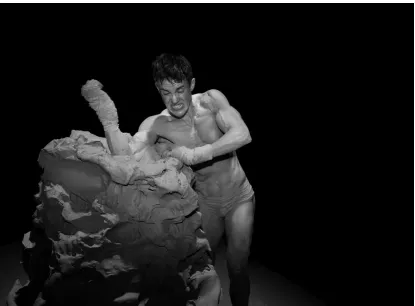
[image:22.595.91.506.428.734.2]Heather Cassils
Becoming An Image Performance Still No. 3 (National Theater Studio, SPILL Festival, London), 2013
C-print
22 x 30 inches
Photo: Heather Cassils with Manuel Vason Courtesy of Ronald Feldman Fine Arts, New York
In this durational live performance, Cassils seeks to move beyond their specific body as the focus of attention and instead offers their body and abstracts from it, using the media of still photography, to create a queer and unsettling experience for the
audience. Becoming an Image takes place in the room in which there is a huge block of modelling clay, 2000lb in weight, human in height. A spotlight lights the clay. There is Cassils, and there is a photographer, though neither can be clearly seen. There is an audience. The spotlight goes off, plunging the room into total darkness, and blindly, violently, Cassils leaps onto and attacks the lump of clay. The
photographer shoots into the darkness, his intermittent flash providing the audience with the only light with which to see what is happening. The flash burns the images of Cassils assaulting the clay, often leaping above it, onto the viewers’ retinas: images that fade slowly leaving ‘ghost’ mirages that overlay the live image at the next flash.
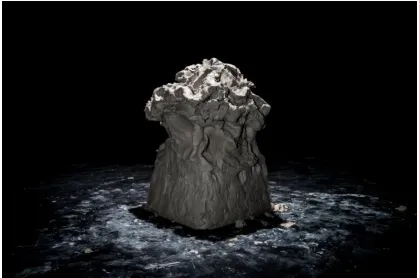
Between the flashes of visibility, the audience can hear the laboured breathing and grunts of the artist and the sounds of the clay being pummelled. The performance lasts as long as Cassils can go on. By the end, when the spotlight returns to the clay, it is transformed by its beating. It bears the marks of the violence. At the end of the
Figure 4: Heather Cassils After, 2013 Modeling clay
Courtesy of Ronald Feldman Fine Arts, New York
Cassils suggests that the bashed up body of clay,
… speaks to the unrepresentability of trauma and asks what that means for not
just my body but many bodies. In this way I aim to make a humanist work that does not only exist within the confines of the identity politics specific to my own subjectivity (Cassils in Grey 2015).
We are reminded of Halperin’s (1997:62) assertion that, ‘There is nothing in
particular to which [queer] necessarily refers’. Such expansive definitions of queer,
here – whether re/presented in Cassils’ body during the live performance or the resulting damaged clay - is not the conforming, ‘good gay’ (Casey 2007) of queer liberalism but the abject, marginalised, unintelligible body, in a state of confusion and becoming.
Live performance as an art form offers rich material for thinking though the possibilities for bodies and identities to become rather than be. The temporality of performance is the present moment and it is ‘nonreproductive’ (Phelan 1993):
Performance uses the performer’s body to pose a question about the inability to secure the relation between subjectivity and the body per se; performance uses the body to frame the lack of Being promised by and through the body (Phelan 1993:150-151).
In a follow-on piece of work, The Resilience of the 20%: The Monument Project, the beaten up clay sculptures produced during Becoming an Image are cast in bronze and concrete to create permanent sculptures. These sculptures are then located as
monuments on public sites where violent crimes against trans- or genderqueer people have occurred, bearing witness to the acts of violence; in Cassils’ words:
I wanted to draw attention to the fact that our genderqueer and trans brothers
and sisters are so much more likely to experience physical violence:
worldwide, transgender murders increased by 20% in 2012 (Cassils in Frizzell
These enduring monuments provide a memorialisation to victims of violence but also
frame the gender non-conforming body as resilient and something that ‘matters’, to
echo Butler’s (1993) refrain.
In Becoming an Image and The Resilience of the 20% we have the performing, mutable body as well as the monument it has become: fixed in immutable material and located in a specific time and place. We are presented with the fluidity and construction of the trans body, as well as the symbolic testament to the harsh realities of genderqueer violence. Taken together, these pieces demonstrate a radical resistance to gender certainty in the act of queer becoming, whilst remaining committed to the politics of recognition. They also address the temporal questions that haunt queer theorising, about the role of memory and witness in narrating queer histories and futures (Love 2007). In Becoming an Image, the audience is witness to the violence but in such partial, glimpsing ways, overlaid by the confusion of ghostly images from the flash, that they can barely trust what they have or have not seen and heard and sensed. The viewers are dependent on the camera for any vision at all. It is the lump of beaten clay that is spot-lit as the focus of attention, rather than the artist’s body, of which we have only been allowed fleeting glimpses. The monuments, however, mark a permanent witness for the future of past events. They do not allow atrocities against queer bodies to be forgotten or overlaid with liberal arguments (we have legal rights: we are tolerated: we have equality). The body of clay (becoming bronze, concrete or resin) stands in for genderqueer bodies to make a political intervention.
Queering specific normalised categories is not for the easy frisson of transgression, but for the hope of liveable worlds(Haraway 1994:60)
In this chapter I have outlined a queer approach to conceptualising and performing identity. Queer remains contested. Numerous conferences, debates, books and papers have been produced addressing its contradictions; what it is should be, whether the fact that it has become an object of study in its own right renders its political utility redundant, and so on. Michael O’Rourke (2011:104) notes sardonically that, ‘With
each new book, conference, seminar series, each new masters program, we hear (yet again) that Queer Theory is over’ (for a taste of these debates, see Butler 1993; Jagose 1997). However, if we take the view (as I do) that theory is a tool for a job, a
‘necessary … detour on the way to something more important’ (Hall 1991: 42), and is
valuable in as much as it contributes to the task of challenging social and political injustices, then queer theory remains a vital part of the kit. Queer theory’s
commitment to troubling and disrupting identity has, without doubt, provided a provocative and generative theoretical framework, shifting the terms of debates across disciplinary fields, not least within feminist and gender studies.
One of the criticisms targeted at queer theory is that it can be abstract and removed from the material realities of people’s lived experiences. Whilst it can be pleasurable
enabling and celebrating flux and confusion across text and embodiments. In particular, it has illustrated the important political work that can be done by
understanding identity not as a state of being but as a state of becoming. In a recent interview, Judith Butler poses the question, ‘How do we still value becoming without losing track of what grounds and defines us?’ (in Ahmed 2016:10). In this chapter, I
suggest that this question is animated - and the struggle to address it exemplified - by the work of genderqueer artist Cassils.
Cassils’ work, together with their critical reflections on their practice, contributes to,
and helps us think through, the potential of queer as a concept, specifically relating to identity. Such queer performance art provides a way of keeping queer vital and future-oriented whilst re/cognising the gendered struggles and wounds sustained in other times and places. The performative nature of Cassils’ work provides a rich and provocative resource for a critical interrogation of queer theory in action. Most notably, the artist’s body becomes a locus for resistance, non-conformism and
gendered re/articulations. Exploiting the constant need for (gender) re-signification as highlighted in Butler’s (1990, 1993) account, Cassils’ work demonstrates, in different
ways, the opportunities for interrupting normative processes of signification. Whilst the complex task of assessing the impact of such re/signification on audiences is beyond the scope of this chapter (see Lambert, forthcoming), we can nonetheless assert that the performances themselves enact a queer politics of hope, making new and alternative subjectivities possible.
groups of people, specifically genderqueer victims of intolerance and persecution. Cassils’ commitment to challenging material and structural inequalities, injustices and
oppressions addresses the critique that queer becomes a privileged site of conceptual luxury. At the same time, their work enacts an enduring refusal of stable identity categories and the lived embodiments of these. The identity work of these artistic practices illustrates the potential of queer to move beyond fixed (embodied)
identifications. This serves as a critical reminder that queer critiques of identity are not just destructive but necessary if we are to find ways of articulating both the
slippery, multiple and fluid ways in which people experience their identities as well as the in/visibility and marginalisation of some people’s bodies and lives. This
contradictory undertaking is not an intellectual indulgence but an urgent political project.
Acknowledgements
Thanks to Cassils for their generous and helpful correspondence and to Lisa Metherell for feedback on drafts of the chapter.
Bibliography
Ahmed, S. (2016) Interview with Judith Butler, Sexualities, 0(0): 1-11.
Artsy (2013) Body Builder Artist Heather Cassils Channels Lynda Benglis and Eleanor Antin, Artsy, October 14, 2013, available at
https://www.artsy.net/article/editorial-bodybuilder-artist-heather-cassils-channels-lynda-benglis (accessed June 2016).
Bordo, S. (1993) Feminism, Foucault and the politics of the body, in C. Ramazanoglu (ed.) Up Against Foucault, London: Routledge, pp. 181-199.
Butler, J. (1990) Gender Trouble: Feminism and the Subversion of Identity, London: Routledge.
Butler, J. (1991) Imitation and Gender Insubordination, in D. Fuss (ed.) Inside/Out: Lesbian Theories, Gay Theories, London: Routledge, pp. 13-31.
Butler, J. (1993) Bodies That Matter: On the Discursive Limits of Sex, London: Routledge.
Casey, M. (2007) Spatial (in)visibilities and the Good Gay/ Bad Gay Binary, in K. Brown, J. Kim and G. Brown (eds.) Geographies of Sexualities: Theory, Practice and Politics, London: Ashgate, pp. 125-126.
Cassils, H. (2013) Bashing Binaries – along with 2000 pounds of clay, Huffington Post, 9 September 2013, available at
Cassils (2016) The Real Issue, Press Release, May 12 2016, available at http://heathercassils.com/news/press-release/ (accessed June 2016)
Clifford, J. (2000) Taking Identity Politics Seriously: “The contradictory, Stony Ground’, in S. Hall, P. Gillroy, L. Grossberg & A. McRobbie (eds.) Without
Guarantees: In Honour of Stuart Hall, New York: Verso.
Davies, K. (1997) Embody-ing Theory: Beyond Modernist and Postmodernist reading of the Body, in K. Davies (ed.) Embodied Practices: Feminist Perspectives on the Body, London: Sage, pp. 1-27.
Deleuze, G. (2003) Francis Bacon: The Logic of Sensation, London: Continuum.
Duggan, L. (2012) The Twilight Equality? Neoliberalism, Cultural Politics and the Attack on Democracy, Boston: Beacon Press.
Edelman, L. (2004) No Future: Queer Theory and the Death Drive, London: Duke University Press.
Eng, D. L with Halberstam, J and Muñoz, J. E. (2005) What’s Queer about Queer Studies now? Social Text 84-85, 23(3-4):1-17.
Foucault, M. (1976) The History of Sexuality, Volume 1: The Will to Knowledge, London: Penguin.
Foucault, M. (1977) Discipline and Punish, the Birth of the Prison, London: Penguin.
Frank, P. (2014) 10 Transgender Artists Who Are Changing The Landscape Of Contemporary Art, Huffington Post, 26 September 2014, available at
http://www.huffingtonpost.com/2014/03/26/trans-artists_n_5023294.html (accessed June 2016)
Freeman, E. (2010) Time Binds: Queer Temporalities, Queer Histories, London: Duke University Press.
Frizzell, N. (2013) Heather Cassils: the transgender bodybuilder who attacks heaps of clay, The Guardian, Thursday 3 October 2015, available at
http://www.theguardian.com/artanddesign/2013/oct/03/heather-cassils-transgender-bodybuilder-artist (accessed June 2016).
Giffney, N. (2009) Introduction: the ‘q’ word, in N. Giffney and M. O’Rourke (eds),
TheAshgate Research Companion to Queer Theory, Farnham: Ashgate, pp.1-13.
http://www.huffingtonpost.com/2015/06/04/cassils-inextinguishable-fire_n_7505500.html (accessed June 2016).
Halberstam, J. (1998) Female Masculinity, London: Duke University Press.
Halberstam, J. (2005) In a Queer Time and Place: Transgender Bodies, Subcultural Lives, London: New York University Press.
Hall, S. (1991) Old and new identities, old and new ethnicities, in A. D. King (ed.)
Culture, Globalization and the World System, London: Macmillan, pp. 41–68.
Hall, S. (2005) Thinking diaspora: home thoughts from abroad, in G. Desai & S. Nair (eds.) Postcolonialisms: An Anthology of Cultural Theory and Criticism, New
Brunswick: Rutgers University Press, pp. 543-560.
Halperin, D. (1997) Saint Foucault: Towards a Gay Hagiography, Oxford: Oxford University Press.
Haraway, D. (1994) A Game of Cat's Cradle: Science Studies, Feminist Theory, Cultural Studies, Configurations 2(1): 59-71.
Isaak, J. A. (1996) Feminism and Contemporary Art: The Revolutionary Power of Women’s Laughter, London: Routledge.
Jagose, A-M. (1997) Queer Theory: An Introduction, New York: New York University Press.
Johnson, D. (2013) (ed.) Pleading in the Blood: The Art and Performances of Ron Athey, London: LADA/Intellect.
Jones, A. (2003) (ed.) The Feminism and Visual Culture Reader, London: Routledge.
Jones, A. (2015) Heather Cassils’ Indeterminate Body, in M. Cheng and G. Cody, (eds.) Reading Contemporary Performance: Theatricality Across Genres, London: Routledge, pp. 90-92.
Lambert, C. (2013) Live Art as Urban Praxis: the Political Aesthetic of the City,
Sociological Research Online 18 (3) 12 http://www.socresonline.org.uk/18/3/12.html (accessed June 2016).
Lambert, C. (forthcoming) The affective work of art: an ethnographic study of Brian Lobel's ‘Fun with Cancer Patients’, The Sociological Review.
Muñoz, J. E. (2009) Cruising Utopia: The Then and There of Queer Futurity, London: New York University Press.
O’Rourke, M. (2011) The Afterlives of Queer Theory, continent. 1.2: 102-116,
available at http://continentcontinent.cc/index.php/continent/article/view/32 (accessed June 2016).
O’Sullivan, S. (2006) Art Encounters Deleuze and Guattari, Basingstoke: Palgrave.
Phelan, P. (1993) Unmarked: the politics of performance, London: Routledge.
Rancière, J. (2004). The Politics of Aesthetics. London: Continuum
Spivak, G. (1998) Subaltern Studies: Deconstructing Historiography, in G. Spivak In Other Worlds: Essays in Cultural Politics, London: Routledge.
Volcano, D. and Halberstam, J. (1999) The Drag King Book, London: Serpent’s Tale.
Wolkowitz, C. (2006) Bodies at Work, London: Sage.
i
ii See www.wearefierce.org.
iii Mary Wollstonecraft first coined the term ‘docile bodies’ in 1792 (see Bordo 1993) although it is
more well-known as utilised by Foucault (1977) in his account of disciplinary power.
iv Even Lee Edelman’s (2004) provocative account of queer’s embrace of the death drive in ‘No
Future’ betrays queer’s obsession with temporality and led to a series of critically hopeful accounts of queer futurity.
v See http://heathercassils.com/portfolio/cuts-a-traditional-sculpture/
vi see http://heathercassils.com/portfolio/cuts-a-traditional-sculpture/ to view stills from the film
vii See http://heathercassils.com/portfolio/cuts-a-traditional-sculpture/ for these words and to view the
Disfigured Pin Ups.
viii See http://www.schwulesmuseum.de/en/exhibitions/view/homosexuality-ies/
ix This exhibition has also been subject to critique for addressing trans representation inadequately,
posing further complex questions around the use of Cassils as the publicity image.
x See a short film of Becoming an Image here