warwick.ac.uk/lib-publications
Original citation:Bernhardt, Dan and Graham, Brett. (2015) Flexibility vs. protection from an unrepresentative legislative majority. Games and Economic Behavior, 93 . pp. 59-88.
Permanent WRAP URL:
http://wrap.warwick.ac.uk/70518
Copyright and reuse:
The Warwick Research Archive Portal (WRAP) makes this work by researchers of the University of Warwick available open access under the following conditions. Copyright © and all moral rights to the version of the paper presented here belong to the individual author(s) and/or other copyright owners. To the extent reasonable and practicable the material made available in WRAP has been checked for eligibility before being made available.
Copies of full items can be used for personal research or study, educational, or not-for-profit purposes without prior permission or charge. Provided that the authors, title and full bibliographic details are credited, a hyperlink and/or URL is given for the original metadata page and the content is not changed in any way.
Publisher’s statement:
© 2015, Elsevier. Licensed under the Creative Commons Attribution-NonCommercial-NoDerivatives 4.0 International http://creativecommons.org/licenses/by-nc-nd/4.0/
A note on versions:
The version presented here may differ from the published version or, version of record, if you wish to cite this item you are advised to consult the publisher’s version. Please see the ‘permanent WRAP URL’ above for details on accessing the published version and note that access may require a subscription.
Flexibility vs. Protection from an Unrepresentative
Legislative Majority
∗
Brett Graham and Dan Bernhardt
May 4, 2015
Abstract
We derive the equilibrium institutional design of representative democracy by citizens who first vote on the supermajority required for a new policy to be adopted, and then delegate decision making to a legislature that selects policy given that institutional constraint. A leg-islature that can freely tailor policy to reflect society’s current preferences is good. However, the views of the median legislator or agenda setter may differ from the median citizen’s, and an unchecked legislature can implement bad policy. We characterize how the primitives de-scribing the preferences of actors and the status quo policy affect the equilibrium degree of legislative flexibility.
∗We gratefully acknowledge the helpful suggestions of Odilon Camara and participants of the 2011 Xiamen
1
Introduction
The effect of [representative democracy is] to refine and enlarge the public views, by passing them through the medium of a chosen body of citizens, whose wisdom may best discern the true interest of the nation.
James Madison
Citizens’ tastes for government policy vary as circumstances change. For example, a finan-cial crisis may sharply alter societal preferences for government spending. In a direct democracy, in which citizens vote directly on policy, the median citizen’s preferences would likely prevail. However, more typically, representative democracy reigns: citizens delegate policy choices to a legislature comprised of elected representatives. How easily this legislature can modify existing policy depends on the rules that govern the legislative process.
An unencumbered legislative process will ensure that policy closely reflects the preferences of thelegislativebody. This benefits citizens when legislative preferences mirror society’s. However, for reasons such as party affiliation, incumbency advantage, gerrymandered districts, imperfect voter information, time between elections, asynchronous (e.g., Senate) elections, etc., an elected legislature may ill-represent society. To protect society from a radical legislature’s desire to imple-ment ‘bad’ policy, it may be optimal to introduce a degree of inertia or legislative rigidity to the leg-islative process, as encapsulated in the proportion of legleg-islative votes required to pass a proposal.
Examples of supermajority rules are commonplace: the United States Constitution establishes supermajority rules for a range of decisions such as overriding vetoes, the U.S. Senate requires a three-fifths majority to end a filibuster, and many states require supermajorities to raise taxes, pass spending bills, restrict local communities’ regulatory powers, etc. Requiring approval from mul-tiple groups—the House, Senate and President—similarly introduces inertia to the legislative pro-cess. Thus, if the House rejects immigration reform passed by the Senate, the status quo prevails.
We then characterize the optimal extent of legislative inertia, as captured by the share of votes required for a proposal to defeat the status quo. Posed differently, we derive the equilibrium institu-tional design of representative democracy by citizens who first vote on the supermajority required for a new policy to be adopted, and then delegate decision making to a legislature that selects policy given that institutional constraint.
We address fundamental questions: When is it optimal to have legislative outcomes determined by simple majority? How does increasing the likelihood of ‘extreme’ legislatures—legislatures with a median politician whose preferred policy is far from the median citizen’s—affect the equi-librium supermajority? How will selecting a proposer whose interests are further from the median legislator’s, and hence isex anteless representative of society, affect the equilibrium supermajor-ity? What is the impact of bias in the initial status quo policy?
The equilibrium voting rule trades off the benefit of reduced policy variance with the cost of policy that is more biased toward the status quo. The equilibrium voting rule does not weigh pro-posers who are free from legislative constraint, able to propose their preferred policies and defeat the status quo. So, too, the voting rule does not weigh proposers who are completely blocked, un-able to find a winning policy that they prefer to the status quo. Marginal changes in the voting rule havenoeffect on policy outcomes when a proposer is free or blocked. The equilibrium voting rule only weighs proposers who are constrained by the voting rule, able only to move policy partway toward their bliss points. The equilibrium voting rule has a simple characterization: whenever a supermajority is optimal, the equilibrium voting rule is such that conditional on a proposer being constrained, the expected policy outcome equals the expected bliss point of the median citizen. Neither submajority nor unanimity voting rules are ever optimal: submajorities facilitate unrep-resentative shifts in policy from the status quo; while large, but not unanimous, supermajorities would approve only policy changes that the median citizen strictly prefers.
If the median legislator lies close to the status quo, so do most legislators, making it difficult for a proposer to identify a policy that enough legislators prefer to the status quo. Conditional on drawing such a “conservative” legislature, the voting rule typically restrains policy movement by too much, i.e., from the median citizen’s perspective, new policy is typically biased too close to the status quo. If, instead, the median legislator lies far from the status quo, so do most legislators, thus enlarging the set of policies that enough legislators prefer to the status quo. Conditional on drawing such a “radical” legislature, the voting rule typically restrains policy movement by too little. The equilibrium supermajority rule optimally trades off between these two possibilities.
in legislative settings with no political parties. This base case scenario lets us identify when super-majorities are optimal even though, ex ante, the proposer’s preferences do not deviate in expecta-tion from the median citizen’s. A median proposer is never constrained by a simple majority voting rule. Hence, simple majorities raise the median citizen’s utility if the distance between his bliss pointe and the median legislator’s is less than that between e and the status quo. It follows that
ifthe legislature is sufficiently moderateandthe median legislator proposes policy, then a simple majority voting rule is optimal. Posed differently, fixing the representativeness of a legislature, if the median citizen’s preferences are sufficiently volatile, so that large policy shifts from the status quo are likely to be desired, then simple majority is optimal.
We then address how unrepresentative a legislature must be before it is optimal to constrain a median proposer via supermajority. We consider three classes of distributions over median citizen and median legislator bliss points: two-point, uniform and normal. In each class, a supermajority becomes optimal even when the volatility in the median citizen’s preferences exceeds that in the median legislator’s preferences around the median citizen’s bliss point. Moreover, as long as super-majorities are optimal, less representative legislatures raise the optimal supermajority. This result reflects the first-order intuition that a more extreme median legislator is more likely both to want to implement a “worse” policy, and to be able to do so, making it optimal to constrain him further.
These results might lead one to conjecture that less representative legislatures should always increase the optimal supermajority. This conjecture is false—this first-order intuition misleads: given any single-peaked, symmetric, strictly quasi-concave, absolutely continuous density over the median legislator’s bliss point, one canalwaysfind a symmetric, mean-preserving spread such that the optimal voting rule isreduced. For example, one can shift probability mass from moderate median proposers quite close to the median citizen’s bliss point and place it on those who are a little further away, leaving unaltered the probability mass on extreme proposers, whom the median citizen would most like to constrain. Moderate proposers are also more likely to be conservative, and hence to be blocked by a supermajority. In contrast, those who are a little less representative are more likely to be heavily-constrained by the supermajority, on average, generating insufficient policy movement. Blocked proposers do not directly affect the optimal voting rule, but increas-ing the likelihood of heavily-constrained proposers who typically do not move policy far enough means that the optimal voting rule falls. Alternatively, one can replace median proposers who are likely to be constrained, but by too little, by those who are quite extreme, and hence are likely to be far from the status quo: such radical median proposers are free to propose their preferred policy.
equilib-rium supermajority is false. Shifting the median citizen’s bliss point away from the status quo by one unit also shifts the distribution of the median legislator’s bliss point away by one unit; and a proposer can exploit the increased distance from the status quo to shift policy by up totwo
more units. This increases the ratio of (a) constrained proposers who move policy too far to (b) constrained proposers who move policy too little. Hence, even when the status quo becomes less representative of society,greatersupermajorities can become optimal.
A key contribution of our paper is to provide an explanation for why slight supermajorities are not observed in practice—they maynever be optimal. The optimal voting rule can be a dis-continuous function of the underlying parameters when moving from majority to supermajority. Supermajority voting rules are blunt instruments, restricting radical proposers insufficiently, but excessively restricting conservative proposers. Slight supermajorities incur the costs of dispro-portionately restricting conservative proposers sharply, but provide limited beneficial restraint on radical proposers. Thus, the issue for the designer of the voting rule becomes (a) should the median legislator be left unchecked via a simple majority voting rule; or (b) is the median legislator more likely to be so unrepresentative that a large supermajority should be required, forsaking gains that a conservative proposer can achieve in order to restrain radical proposers?
We then consider non-median proposers. Non-median proposers arise in multi-party settings when a proposer is from a majority party that is on one ideological side of a legislature; or when the proposer is a president or prime minister, whose preferences do not perfectly mirror the median legislator’s. We characterize the impact of proposers who are equally likely to lieup to the left or
right of the median legislator. An increase in this ‘polarity’ distanceup implies, on average, more radical proposers. A setting in which the identity of a proposer is divorced from the median legisla-tor’s may reflect a political design with checks and balances. In particular, increased polarity raises the separation between the proposer and the pivotal voter on policy in the legislature, providing an additional measure of control. We address: when does increasing the separation of powers in this way complement control via size of the supermajority, and when does it substitute?
One’s intuition might be that more extreme proposers should make greater supermajorities op-timal because proposers who are more extreme within a legislature also tend to be further from the median citizen. With highly polarized proposers, this intuition is correct: further increases in polarity always lead to complementary increases in the optimal supermajority, in order to protect citizens from very bad, albeit rare, policy proposals from extreme proposers.
for this to occur. We prove that if the legislature is sufficiently unrepresentative of citizens that su-permajorities are optimal, thenslightpolarityreducesthe optimal supermajority—slight separation of powers substitutes for control via the size of the supermajority. The intuition is thatmore extreme proposers are more constrained than the median legislator by the necessity of winning approval
from moderate legislators.Conditional on being able to move policy, more polarized proposers are more likely to only be able to move policy in the direction preferred by the median citizen. Thus, the relationship between a proposer’s polarity and the optimal supermajority is U-shaped. The optimal supermajority is high when polarity is low, in order to protect against a proposer who finds it easy to move policy in the direction he prefers; and when polarity is high, in order to protect against a rogue legislature that would let highly-polarized proposers implement extreme policies.
Finally, we determine how initial policy bias affects the optimal voting rule, providing insights into how the optimal design changes when past policy is slow to adjust to changes in society’s preferences. For example, the status quo on immigration reform may be too far to the right. A conservative right-wing proposer is unlikely to move policy; but a radical left-wing proposer can convert the threat of a moderately bad status quo into an equally bad (or worse) extreme left-wing policy. Reducing the voting rule reduces the costs of inertia associated with the first legislature, but raises the costs of flexibility associated with the second. Intuition might suggest that with a status quo that is less representative of societal preferences, citizens would prefer a reduced superma-jority that gives the legislature more flexibility to determine policy. When uncertainty is normally distributed, this is indeed true if the median legislator is the proposer. However, when the legisla-ture tends to be representative of citizens but proposers are sufficiently polarized, this intuition is misplaced: introducing slight initial policy biasraisesthe optimal voting rule. The correct intuition is that with a slight status quo policy bias, the proposers who are more likely to be constrained by a given supermajority are those who would move policyawayfrom what the median citizen prefers.
Related Literature.The benefits and costs of delegating authority have been well studied. Papers with results related to ours include Klumpp [2010], Aghion et al. [2004] and Compte and Jehiel [2010b]. Klumpp [2010] shows that in a model of indirect democracy, constituents may select a representative with preferences closer to the status quo. In his model of the legislative process a proposer is randomly selected. Electing a more conservative representative can moderate legisla-tive outcomes, raising voter welfare. As in our model, the equilibrium voting rule generates policy that is, on average, closer to the status quo than a median citizen prefers.
that a welfare enhancing reform passes, but individuals are also more likely to suffer losses from ex-propriation. They show that the optimal amount of insulation depends on the size of the aggregate improvement from reform, the aggregate and idiosyncratic uncertainties over reform outcomes, the degree of polarization of society, the availability and efficiency of fiscal transfers, and the degree of protection of property rights against expropriation. In contrast, in our model, the motivation of elected politicians is pure. Uncertainty concerns politicians’ preferred policies, not their integrity.
Compte and Jehiel [2010b] show that in a model of collective search, unanimity is undesirable in large committees with sufficiently patient members. Generally speaking, unanimity makes it difficult to find a proposal that is acceptable to all, thereby inducing costly delay. The optimal ma-jority rule solves best the trade-off between speeding up the decision-making process and avoiding the risk of adopting relatively inefficient proposals. In contrast, in our model the optimal voting rule solves best the trade-off between a flexible legislative process that can respond to changes in society’s tastes and a rigid legislative process that can guard against radical legislators.
Another strand of research examines optimal voting rules as a way to aggregate information when information is dispersed throughout the electorate. Young [1995] provides a good review. This role for voting is absent in our model since all agents have the same information.
Several papers derive optimal supermajority voting rules in settings where issues of dynamic consistency can arise, and supermajorities commit future governments to behave appropriately (Gradstein [1999], Messner and Polborn [2004], Dal Bo [2006]). Our model has no dynamic con-sistency problems. Supermajorities arise, not from concern about the damage a future government might do, but rather from uncertainty about what the current government might do. Closely related are papers that view supermajorities as necessary to ensure stability of institutional rules (Barber`a and Jackson [2004], Acemoglu et al. [2008]). The equilibrium voting rules we derive are inherently stable since all citizens share the same preferences over voting rules.
Duggan and Kalandrakis [2011] and Duggan and Kalandrakis [forthcoming] develop a very general, infinite horizon legislative bargaining model with an endogenous status quo determined by the previous period’s outcome, establish equilibrium existence, and develop numerical methods that could be used to analyze outcomes. However, they do not further characterize such outcomes.
2
The Model
In our model of representative democracy, government policy, S, is defined over the real line. There is an initial government policy, S0, that we refer to as the status quo. A legislative process
that we describe shortly, generates a new policy S1. A citizen with policy bliss point ω derives
utility Uω = −(S1 −ω)2 from the implemented policy. The initial distribution of citizen bliss
points is symmetrically distributed around a median that we normalize to zero. Citizens first vote on the institutional design of the legislature. Next, shocks to the environment shift the preferred policies of citizens and legislators. Finally, the legislature determines policy.
After citizens determine the legislative design, they are subject to a common shock that af-fect their tastes for government policy. For example, a financial crisis may cause society to prefer increased government spending, or a terrorist attack may lead society to prefer reduced personal freedoms. The shock shifts the preferred policy of each citizen by e away from his initial bliss point. Thus, the median citizen’s preferred policy shifts from 0 toe. The distribution over these shocks,Fe, is symmetric about zero,Fe(−e) = 1−Fe(e),∀e >0, and the associated density isfe.
In a representative democracy, citizens delegate policy choice to a legislature whose prefer-ences may not perfectly mirror theirs. To capture this, we assume that the policy bliss point of the median legislator ism=e+µm, whereµmis distributed according toFmwith an associated
den-sity fm that is symmetric around zero. Thus, in expectation, the median legislator’s preferences
correspond to the median citizen’s, but their realizations may differ. A mean-preserving spread in the distribution of µm corresponds to a less-representative legislature. This non-alignment of
interests may reflect gerrymandering of heterogeneous districts, party affiliation, incumbency ad-vantage, etc. In many political settings, most districts are “safe seats” held by representatives whose preferences are often far from the median citizen’s, so that a few swing districts determine the ideology of the median legislator. As a result, the median legislator’s preferences can deviate sharply from the median citizen’s. The distribution of bliss points in the legislature is described by
Fl with an associated densityfl that is symmetric around the median legislator,m.
Next, a legislator is selected to propose a new policyk on which the legislature will vote. The proposer’s policy bliss point is given by p = m +µp, where µp ∼ Fp. We assume symmetry, Fp(−µp) = 1−Fp(µp), forµp >0. Much of our analysis focuses on two particular distributions. We first focus on the case where the median legislator is always the proposer, in which case µp
non-median proposer can emerge when the proposer is the non-median from a majority party that tends to be ideologically on one side of the legislature, or when a president or prime minister sets the agenda for the legislature. The polarity parameter up—the proposer’s distance from the median
legislator—captures the effects of less representative proposers in a tractable way.
Finally, legislators simultaneously vote on whether to replace current government policy (the status quo) with the proposed policyk. A legislator is fully characterized by his policy bliss point, and so we refer to a legislator with bliss pointbas legislatorb. Each legislator, including the pro-poser, seeks to minimize the distance between his bliss point and the policy the legislature adopts. To defeat the status quo and be adopted, a proposal must garner the required proportion,α, of votes from the legislature. This proportionαis determined by the choice of institutional design initially selected by the citizens. After the vote is taken, policy is implemented and payoffs are realized.
When there is symmetric uncertainty over policy outcomes,1 the quadratic preferences imply
that the ex-ante utility of a citizen whose bliss point is always δ from the median equals that of the median minus the constantδ2 (see Bernhardt et al. [2009] or Bernhardt et al. [2011]). Hence, maximizing the median citizen’s welfare also maximizes the welfare of all citizens. The equi-librium voting rule α (the proportion of votes required to change policy) maximizes the median citizen’s ex-ante welfare. When deciding on the voting rule, citizens account for the incentives of the legislative proposers, who, in turn, consider the incentives of fellow legislators.
In summary, the median citizen’s policy bliss pointeis symmetrically distributed around zero, the median legislator’s bliss point m is symmetrically distributed arounde, and each legislator’s bliss point including the proposer’spis symmetrically distributed around m. Institutional design is chosen by citizens ex ante, while proposals and legislator votes are made ex post.
Equilibrium. An equilibrium is a voting ruleα∈[0,1], policy proposal choicesk(p, m, S0, α)→ R, and legislator voting rulesv(l, k, S0, α)→ {0,1}such that:
• the voting ruleαmaximizes the median citizen’s ex-ante expected utility given the optimal policy choicek(p, m, S0, α)by each proposerp, and legislator voting rules,v(l, k, S0, α);
• each proposerp’s policy proposal,k(p, m, S0, α)minimizes|S1−p|given median legislator
locationm, status quoS0, voting ruleα, and legislator voting rulesv(l, k, S0, α);
• each legislatorlvotes for proposalkif|k−l| ≤ |l−S0|, i.e., settingv(l, k, S0, α) = 1, and
votes for the status quo alternative, settingv(l, k, S0, α) = 0, otherwise;
1One can preserve symmetry with a status quo that differs from the median citizen’s initial bliss point by
and the law of motion for new policy,S1, evolves according to
S1 = (
k(p, m, S0, α) if R∞
−∞v(l, k, S0, α)dFl(l;m)≥α
S0 otherwise.
Implicit in the equilibrium definition is the assumption that legislators adopt the weakly dominant strategy of voting for a policykif and only if they weakly prefer it to the status quo. This assump-tion rules out uninteresting equilibria, e.g., where a policykwins because a proposer believes that everyone will vote against any other policy (even though a proportionα0 > αof legislators prefer a policyk0 that the proposer also prefers tok).
Feasible Policy Set. Legislatorl weakly prefers policyk to the status quo ofS0 if and only iflis
at least as close tokas he is to the status quo. Thus, legislatorl > S0 supports policykif and only
ifk ∈[S0,2l−S0]. It follows that (a) if legislatorslandl0support a policyk 6=S0, then so do the
legislators located between them (the set of legislators supporting policyk is connected); and (b) legislators on opposite sides of the status quo never both support the same change in policy.
We useR(m, S0, α)to denote thefeasible policy set—the set of policies preferred to the status
quo by the required proportionαof legislators when the median legislator is located atmand the status quo isS0. We focus onα ≥ 1/2, so that at least a simple majority is required to shift
leg-islation. Graham [2011] proves thatα <1/2is never optimal. The intuition for this result is that increasing a minority voting rule reduces the set of possibly successful legislative changesaround
the median legislator. On average, the median legislator is more representative of the populace than a non-median proposer, so increasing a minority voting rule always raises citizen welfare.
We define the voting rule distance xα ≡ Fl−1(α;m)− m: xα ≥ 0 is the distance from the
median legislator that identifies the key legislators who determineR(m, S0, α). This distance
de-pends only on the voting ruleαand the dispersion of legislators around the median, and not on the position of the median legislator. Following Compte and Jehiel [2010a], we refer to the legislators located at m−xα and m+xα askey legislators. Legislators to the left of both key legislators
comprise the “far left”, legislators to the right of both key legislators comprise the “far right”. The remaining legislators are “centrists”.
With a simple majority voting rule (xα = 0), a proposal succeeds if and only if the median
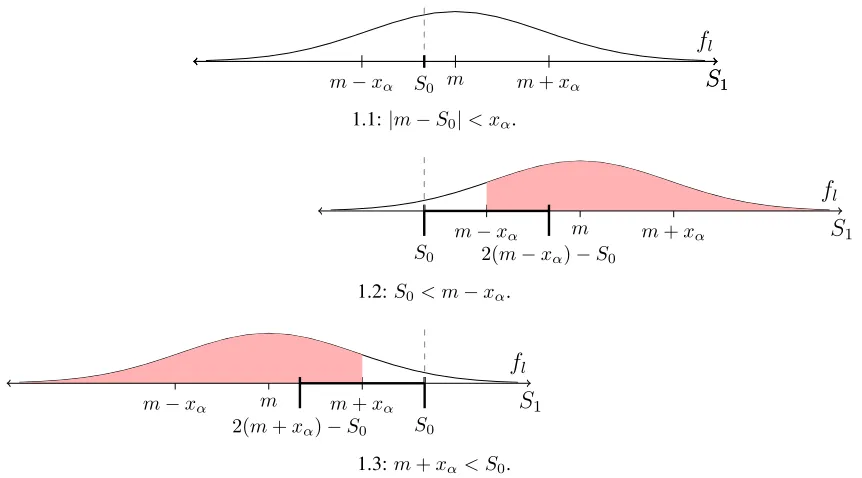
legislator supports it—simple majority never constrains a median proposer. With a supermajority voting rule (xα >0), a proposal succeeds if and only if both key legislators,m−xα andm+xα, support it. For example, suppose|m−S0| < xα (Figure 1.1). The key legislator atm−xα < S0
supports the status quo against policiesk > S0, as does the far left, together forming the required
fl
S1
S0 m m+xα
m−xα S1
1.1:|m−S0|< xα.
fl
S0
m m+xα m−xα
2(m−xα)−S0
S1
1.2:S0< m−xα.
fl
S0
m m+xα m−xα
2(m+xα)−S0
S1
[image:12.612.89.520.74.313.2]1.3:m+xα< S0.
Figure 1: In each sub-figure, the thick black line denotes the feasible policy set,R(m, S0, α). The
shaded area represent the required proportionα of legislators who support a movement in policy from the status quo to any point in the feasible policy set.
quo against policies k < S0, as does the far right, forming the required minority to block policy
shifts to the left. Thus, when|m−S0|< xα, the only feasible policy is the status quo.
More generally, if both key legislators support a proposal, so too do both centrists and one of the extreme groups. Together these two groups form the required majority αto pass a proposal. If a key legislator does not support a proposal, then neither does one of the periphal groups. This group forms the required minority to block a proposal. In Figure 1.2 whereS0 < m−xα, proposals
to the right of2(m−xα)−S0 are blocked by the far left; and in Figure 1.3 wherem+xα < S0,
proposals to the left of2(m+xα)−S0are blocked by the far right.
Summarizing, the feasible policy set from which a proposer selects is
R(m, S0, α) =
[S0,2(m−xα)−S0] ifS0 < m−xα
S0 if|m−S0|< xα
[2(m+xα)−S0, S0] ifm+xα < S0.
Policy Outcomes. Given a voting ruleα, pproposes his most preferred feasible policy. Thus, the implemented policy solves
S1 = min
k∈R(m,S0,α)
This policy k is unique since R(m, S0, α) is closed and the objective function is strictly
quasi-concave. If plies inside the feasible policy set, the proposer can move policy to his bliss point so the new policy isp. Such a proposer isfree. When a proposer lies on the opposite side of the status quo to the feasible policy set or the feasible policy set only consists of the status quo, then he cannot change policy to raise his utility. Such a proposer isblocked.
In all other cases, the proposer isconstrained: the proposer lies further from the status quo than the boundary of the feasible policy set and can move policy toward his preferred policy, but only to the boundary ofR(m, S0, α). This boundary is defined by the preferences of the key legislator
clos-est to the status quo. For example, whenm−xα > S0the feasible policy set is[S0,2(m−xα)−S0].
Therefore, a proposerp >2(m−xα)−S0 selectsk= 2(m−xα)−S0, the policy that makes the
key legislator closest to the status quo,m−xα, indifferent between the proposal and the status quo.
Thus, as an explicit function ofm,p,S0andxα, the policy outcomeS1is given by
S1 =
S0 if|m−S0|< xαorm+xα< S0 < porm−xα> S0 > p
p if(m+xα < S0 and2(m+xα)−S0 < p < S0)
or(m−xα > S0 andS0 < p <2(m−xα)−S0)
2(m+xα)−S0 ifm+xα < S0 andp < 2(m+xα)−S0
2(m−xα)−S0 ifS0 < m−xαand2(m−xα)−S0 < p.
As the required vote shareαrises, a proposer is more likely to have to adjust his proposal to win enough legislative support. Further, the status quo prevails for large voting rules that place a key legislator on the opposite side of the status quo from either the other key legislator or the proposer.
When the median legislator proposes policy, he is never constrained by simple majority. For slight supermajorities, only a conservative median proposer, i.e., one close to the status quo is ever constrained. This is because when a median proposer is far from the status quo, then with a slight supermajority, so are the key legislators, who hence prefer the median proposer’s bliss point to the status quo. Thus, slight supermajorities only constrain conservative median proposers.
In contrast, simple majority may constrain or block polarized proposers as they must win ap-proval from moderate legislators whose bliss points are far away. One can view an institutional design where the proposer is not the median legislator, as one with checks and balances, since a pro-poser is less likely to get his way. We will derive how this design affects the optimal supermajority.
i.e., S0 6= 0. Throughout, we assume there is enough dispersion in the bliss points of legislators
that first-order conditions characterize the optimal majority, i.e., the support offl is large enough that the optimalxαis interior.
When there is no ex-ante bias in the status quo, we can write the median citizen’s ex-ante expected utility as
U =−2
Z ∞
e=−∞ Z xα
m=0
e2dFm(m−e)
+
Z ∞
m=xα
" Z 0
p=−∞
e2dFp(p−m) +
Z 2(m−xα)
p=0
(e−p)2dFp(p−m)
+
Z ∞
p=2(m−xα)
(e−2(m−xα))2dFp(p−m)
dFm(m−e)
dFe(e), (1)
With an unbiased status quo, one can focus on the case where the median is to the right of the status quo, i.e.,m≥0, and multiply by two. The double integral is associated with key legislators who lie on opposite sides of the status quo so that proposers are blocked—the left key legislator votes against policy shifts to the right, and the right key legislator votes against shifts to the left. The first triple integral is associated with proposers who lie to the left of the status quo and thus, cannot change policy. The second triple integral is associated with proposers who lie to the right of the status quo and are close enough to it that they are free. The last triple integral is associated with proposers who are far enough to the right of the status quo that their policy choices are constrained by the necessity of winning the support of the key legislator closest to the status quo.
The relevant primitive is thevoting rule distancexα. The distribution of legislative preferences
around the median legislator,Fl, only enters citizen payoffs indirectly via this distance. The
opti-mal voting distance is unaffected by changes in the distribution of preferences within the legisla-ture. The optimal voting rule,α∗ simply delivers the optimal voting distance. As a result, we have:
Proposition 1. Consider two legislatures, one with more dispersed legislator ideologies than the other, i.e.,Fl2(l;m) > Fl1(l;m)forl > mandFl1(l;m) < 1. Thenα
∗
l2 ≥ α ∗
l1. The inequality is
strict if and only if a strict supermajority is optimal, i.e.,α∗l
2 >1/2.
Unanimity Is Never Optimal. We next establish that citizens always prefer a voting rule that allows slight movement in policy to one that blocks all proposers:
As the voting rule is reduced from unanimity, the first proposers to be ‘unblocked’ are on the same side of the status quo as the median citizen, albeit further away. Unblocking these first proposers always moves policy slightly toward the median citizen’s bliss point, raising welfare.
Optimal Voting Rule. The first-order condition that characterizes the equilibrium voting rule distance,x∗α, (i.e., that maximizes expected citizen payoffs in equation (1)) can be written as:
∂U ∂xα
x∗ α
=−8
Z ∞
e=−∞ Z ∞
m=x∗ α
(e−2(m−x∗α))(1−Fp(m−2x∗α))dFm(m−e)dFe(e)≤0, (2)
with strict equality ifx∗α > 1/2(recall that equation (1) exploits symmetry of distributions to re-strict attention to m > 0 and note that the continuity of the policy function with respect to the random variables is continuous so that the differentiation of the Leibnitz terms cancel—the com-plete derivation can be found in the Appendix). Only constrained proposers enter this first-order condition: the median citizen only cares about realizations ofmthat are far enough to the right of the status quo,m > xα, that the feasible policy set is non-singleton. Moreover, the median citizen
only cares about themeasureof proposers1−Fp(m−2xα)who lie further to the right of the status
quo than the feasible policy set: they all have the same most preferredfeasiblepolicy,2(m−xα).2
The optimal voting rule does not weigh proposers who are so close to the status quo that they lie in the feasible policy set, and hence can freely propose their bliss points—marginal voting rule changes do not affect them. It also does not weigh proposers who are on the opposite side of the status quo from the feasible policy set—these proposers are blocked from implementing policies that they prefer to the status quo, and the size of the voting rule that blocks them is irrelevant.When x∗α > 1/2, a simple maxim describes the median citizen’s optimal voting rule: choose the voting rule so that the expected new policy equals his expected bliss point, where both expectations are
conditioned on the proposer being constrained.
To understand the tradeoffs, recognize that marginally increasing the voting rule affects welfare in two ways. First, raisingxα affects the probability that a proposer is constrained: (a) there are more realizations of the legislature for which the feasible policy set is just the status quo, i.e., the limit of integration overm shrinks; and (b) for those realizations of the legislature for which the feasible set is non-trivial, a larger voting rule reduces the feasible policy set, raising the probability
1−Fp(m−2xα)that a proposer is constrained to propose his most preferred feasible policy.
Second, raisingxαaffects the realized policywhena proposer is constrained. Such a proposer
must win approval from the key legislator atm−xα, resulting in a new policy of2(m−xα). Thus, 2P r(m+µ
a marginal increase inxαmoves policy toward the status quo bytwicethe increase inxα. If the
me-dian citizen’s bliss point is to the left of the new policy (e <2(m−xα)), then a marginal increase inxα raises utility; but if it is to the right (e >2(m−xα)), then increasingxαreduces utility.
For any median citizen e, increasing the voting rule trades off the benefit of reduced policy variance with the cost of increased policy bias toward the status quo.
3
Median legislator proposes policy
If the median legislator always proposes policy, then1−Fp(m−2xα)is zero ifm > 2xα, and it
is one ifm <2xα. The first-order condition that describes the optimal voting rule simplifies to ∂U
∂xα
x∗ α
=−8
Z ∞
e=−∞ Z 2x∗α
m=x∗ α
(e−2(m−x∗α))dFm(m−e)dFe(e)≤0, (3)
where ∂x∂U
α|x ∗
α = 0 if the optimal voting rule exceeds simple majority. Onlyintermediate median
proposersm ∈[xα,2xα]are constrained: a conservative median proposerm < xαis blocked, and a radical median proposerm >2xαis free. On average, proposers close tox∗αare too constrained—
they do not move policy as far as the median citizen usually wants—but proposers closer to2x∗α
tend to move policy excessively—they are less constrained than the median citizen usually prefers.
We next characterize how the optimal voting rule varies with primitives for three classes of dis-tributions. For each class, we find that an increase in the dispersion of the median legislator around the median citizen’s bliss point increases the optimal voting rule. We then show how the simple conjecture that a less representative legislature—one with greater dispersion infm(i.e., a first-order
stochastic shift infm(·|m ≥0))—necessarilyleads to a weakly larger optimal voting rule isfalse.
Two-point uncertainty. Suppose that the bliss points of the median citizen and median legisla-tor are drawn from symmetric distributions with two-point supports. Thus, e ∈ {−ue, ue}, and
m ∈ {e−um, e+um}: ue measures the movement in the median citizen’s bliss point from the
status quo, andummeasures the median legislator’s (un)representativeness of society.
Proposition 3 shows that the optimal voting rule is either: (1) simple majority, or (2) the much larger voting rule that blocks the median proposer closest to the status quo and exactly constrains the proposer furthest from the status quo so that the new policy adopted is e. The optimal xα
depends on the extent to which the legislature is representative of citizen preferences:
Proposition 3. Let e ∈ {−ue, ue} and let m ∈ {e−um, e+um}, each with probability 1/2. If um < ue/
√
me-dian citizen’s, then simple majority is optimal. If, instead, um > ue/ √
2, then the optimal voting rule ofx∗α =um+ue/2blocks the median legislator closest to the status quo from changing policy and constrains the median legislator furthest from the status quo to enact new policy exactly equal
to the median citizen’s bliss pointe. Whenum =ue/ √
2, either policy is optimal.
0
x∗α
um (√1
2+
1 2)ue
ue
√ 2 2.1:x∗
αas a function ofumgivenue.
0
x∗α
ue
um
√ 2um
2.2:x∗
[image:17.612.114.500.180.327.2]αas a function ofuegivenum.
Figure 2: Equilibrium voting rule distance wheneandmare drawn from symmetric distributions with two-point supports, characterized byueandum respectively.
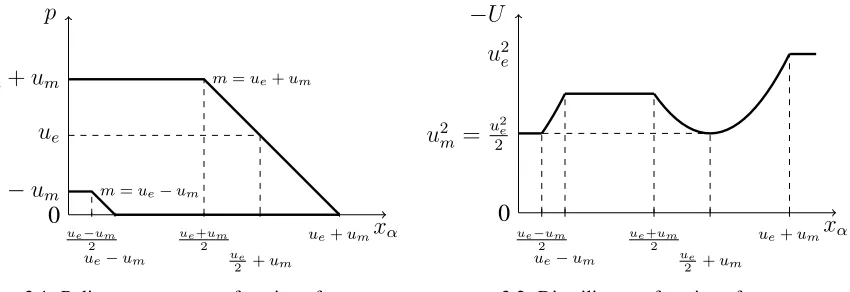
Figure 2 shows how the optimal voting rule varies withue andum. The shaded “blocks”
re-flect that not only is simple majority optimal for those parametizations, but so is any voting rule
x∗α ∈ [0,ue−um
2 ] that leaves the median legislator unconstrained. Asum rises, the optimal voting
rule (weakly) increases. This result reflects the first-order intuition that increases inum make the
median legislator less representative of the median citizen. This leads citizens to rely more on the status quo to determine policy.
The median voter’s problem boils down to: is it better to have a simple majority voting rule, which leaves both median legislative proposers free to implement their preferred policies; or is it better to focus on a radical proposer, constraining him with a large supermajority to implemente, at the cost of fully blocking a conservative median legislator from shifting policy? As a result,the op-timal voting rule is discontinuous inueandumgoing from simple majority to a large supermajority.
To understand why, consider Figure 3 which shows how changes in the voting rule affect pol-icy and utility when um = ue/
√
2 so that the shift ue in citizen preferences is high relative to
the median legislator’s unrepresentativenessum. Suppose, as is shown in the figure, that the
me-dian citizen’s preferred policy shifts to the right, i.e., +ue is drawn. For small supermajorities
(xα < ue−2um), no proposers are constrained, so increasingxα has no welfare effects. However,
quo and the median citizen is constrained to implement a policy that is evencloser to the status quo, hurting the median citizen; but the radical median legislator further from the status quo (at
ue +um) remains unconstrained (as the key legislators remain closer to his bliss point than the
status quo). Hence, asxα is raised further, citizen disutility increases, reaching a local maximum
when the conservative legislator becomes blocked. Only when increases inxα start to constrain
the radical median legislator, does citizen welfare start to rise, reaching a local maximum when this median legislator is constrained to move policy only toe.
0
p
xα ue−um
2
ue−um
ue+um 2
ue 2 +um
ue+um ue
ue−um
ue+um m=ue+um
m=ue−um
3.1: Policy outcomes as a function ofxα.
0
−U
xα ue−um
2
ue−um
ue+um 2
ue 2 +um
ue+um u2m = u2e
2
u2
e
[image:18.612.99.524.226.372.2]3.2: Disutility as a function ofxα.
Figure 3: Policy outcomes and disutility as a function ofxα whene=ue>0andum =ue/ √
2. The comparative statics are straightforward. Increasing the shiftum in the median legislator’s
bliss point byalso shifts the key legislators by, ceteris paribus allowing the median proposer to shift policy2further from the status quo. To offset this, the optimalxα increasesbyso that he
again enactse. Alternatively, increasing the shiftue in the median citizen’s bliss point byshifts
the radical median legislator by and hence policy by2 from the status quo. To offset this, the optimalxα increasesby/2so that he shifts policy byto enacte+.
In the online appendix, we solve for the optimal voting rule wheneandmare both uniformly distributed. The qualitative properties of the optimal voting rule are very similar. In particular, a small supermajority is never optimal: Fixing the distribution of e, as the distribution ofm grows more dispersed, the optimal voting rule jumps from simple majority to a non-trivial supermajority.
Normal uncertainty. We now characterize optimal voting rules when the median citizen’s bliss point and that of the median legislator are normally distributed.
Proposition 4. Lete ∼N(0, σ2
the representativeness of the legislature,σ2
m, and falls with the volatility of citizen preferences,σ2e. Further,x∗α(γσe, γσm) = γx∗α(σe, σm)wherex∗α(σe, σm)is the optimal voting rule distance given σeandσm. If, instead,σm2 ≤σe2/2, then simple majority is optimal.
To prove this result, we first show that the optimal voting rule distance, if positive, solves
∆(σe2, σ2m)≡ 2σ
2
m+σe2
2δ2 =γ
[Φ (2γ)−Φ (γ)]
[φ(γ)−φ(2γ)], (4)
whereδ ≡p
σ2
e +σ2mandγ ≡xα/δ. Uniqueness of the optimal voting rule is proven by showing
that the right-hand side of equation (4) strictly increases inγ.
The comparative statics follow directly. As with two-point or uniform distributions, x∗α in-creases as the median legislator becomes less representative of society, in order to constrain the median proposer, who is more likely to be radical, from enacting extreme policies. However, in contrast to the two-point uncertainty settings, the optimal voting rule rises continuously from sim-ple majority. Rather, the analogue of the discontinuity in that setting is that the slope of the optimal voting rule is infinite at the point where it increases from simple majority. Thus, once again, slight supermajorities are (almost) never optimal.
Increased dispersion inFm. One might conjecture, based on consideration of Propositions 3–5,
that when legislative preferences grow less representative of their citizens’ then the optimal su-permajority should alwaysrise to provide citizens increased protection from a rogue legislature. Proposition 5 shows that this conjecture is false. Provided that the legislature is sufficiently unrep-resentative that a supermajority is optimal, one canalwaysfind a less representative distribution of median legislator’s preferences such that the optimal voting rule is reduced.
Proposition 5. Suppose given distributions Fe(·), Fm(·) ∈ Ω over median citizen and median legislator bliss points thatx∗αF >0. Then there exists a more dispersed distributionGm(·)∈Ωof median legislator bliss points, i.e.,Fm(µm)≥Gm(µm)for allµm ≥0, yetx∗αG < x
∗
αF.
The constructive proof reflects that citizens would like to constrain moderately conservative median proposers by less on average, and constrain more radical proposers by more. However, raisingxα has no effect on the margin on proposersmwho are so far from the status quo that they
are free from legislative constraint—outcomes associated with the most radical proposers do not influence the optimal voting rule. Some spreads of the distribution of proposersraisethe fraction ofconstrainedproposers whom citizens want to constrain by less. The more dispersed distribution
those who are far away. That is,Gmreplaces proposers who are very likely to be constrained, but
by too little, with proposers whom citizens want to constrain, but cannot as they are very likely to be free. As a result, conditional on a shift in policy, the expected new policy is too close to the status quo givenx∗αF, and welfare is raised by relaxing the voting rule tox∗αG.
One can analogously find spreads of the distribution of the median citizen’s bliss point—so that citizens want greater changes in policy—such that larger supermajorities are optimal, i.e., citizens want to further restrain the legislature from changing policy by as much. The intuition and qualitative construction of the proof is identical.
4
More Extreme Legislative Proposers
We now consider proposers other than the median legislator. Such extreme proposers arise in multi-party settings, where a proposer is from the majority party, which is to one ideological side of the legislature; or when the proposer is the president or prime minister, whose preferences do not perfectly coincide with the median legislator’s. One is especially interested in how the extent of a proposer’s extremism affects the optimal voting rule. In particular, when does increasing the separation of powers by divorcing the identity of a proposer from that of the median legislator complement control via the size of a supermajority, and when does it substitute?
To focus on the “representativeness” of a proposer, we consider randomly-chosen proposers who are equally likely to lie up to the left or right of the median legislator, i.e., Fp(z) = 0 if z <−up,Fp(z) = 1/2if−up ≤z < up, andFp(z) = 1ifup ≤z. We refer toupas the proposer’s polarity, since a higher up represents a more polarized proposer within the legislature. Graham
[2011] shows that the qualitative impact of a more polarizedup extends directly (via integration)
to settings whereup has a continuous support and there is a shift in probability mass away from
the median legislator.
We first show that if the proposer is so unrepresentative of the legislature thatup > x∗α, i.e., if
the proposer is further from the median legislator than the key legislators, then, as simple intuition might suggest, further increases in a proposer’s polarity raise the optimal voting rule, due to the importance of further restraining the proposer. Indexing the optimal voting rule byup, we have
Proposition 6. Ifup > x∗α(up)>0, then an increase inupraises the optimal supermajority.
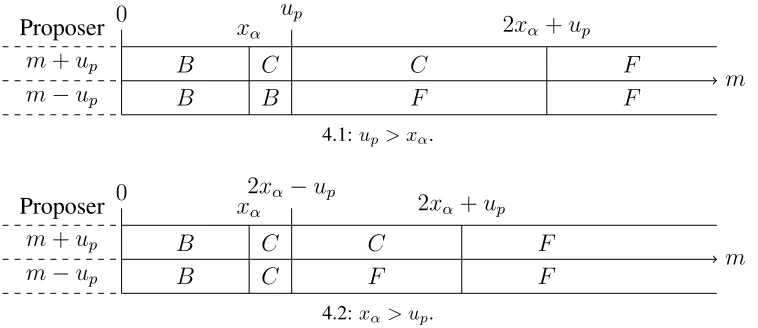
Figure 4 divides realizations of median legislators into three states for a given polarity levelup
(B), for realizations far from the status quo, the radical proposer is free (F) and for intermediate realizations, the radical proposer is constrained (C). A marginal change in the voting rule affects utility only via its effect on constrained proposers. As Figure 4 sows, for a proposer to be con-strained, the median legislator must be at least xα from the status quo. Furthermore, as Figure
4.1 shows, when µp exceeds xα, the bliss point of the proposer closest to the status quo is either
within the feasible policy set (m > up)3or it is on the opposite side of the status quo to the median
legislator (m < up), i.e., this proposer is either free or blocked, but never constrained. The optimal
voting rule ensures that, conditional on the proposer furthest from the status quo being constrained, his expected proposed policy equals the median citizen’s expected bliss point.
m
Proposer
m+up m−up
0
xα up
2xα+up B
B
C B
C F
F F
4.1:up> xα.
m
Proposer
m+up m−up
0
xα
2xα−up
2xα+up B
B
C C
C F
F F
[image:21.612.117.496.253.417.2]4.2:xα> up.
Figure 4: Realizations ofmclassified by proposer state: free (F), blocked (B), or constrained (C) for a given voting rule and polarity.
We define the radical proposer associated with median legislator at the point2(xα+up)as the
marginally-free radical proposer; a further shift of this proposer away from the status quo makes the proposer constrained. The only affect of a marginal increase in polarity is to constrain this marginally-free proposer. This additional constrained policy movement is always further from the status quo thanm ; with the quasi-concavity offe(e), the expected location of the median citizen
is also closer to the status quo. Hence, a further increase in the already substantial polarityup of
proposers makes a larger supermajority optimal.
The logic behind Proposition 6 extends more generally to distributions that place more weight on such polarized proposers: Graham [2011] shows that if distributionsFp1(z)andFp2(z)agree on
−x∗
α
1 ≤z ≤x∗
α
1, butF2
p has more dispersed tails so thatFp2(z) ≤Fp1(z)for allz > x
∗
α
1, strictly
for somez and x∗α1 > 0, then the optimal supermajority is larger for the distribution with more 30< m−u
polarized proposers,x∗α2 > x∗α1.
However, this logic does notextend whenx∗α > up, so that both radicaland conservative
pro-posers can be constrained. Figure 4.2 illustrates this case: conservative and radical marginally-free proposers both lie to the right of the status quo—the conservative proposer lies at2(xα−up)>0,
while the radical proposer lies further away at 2(xα +up). When up is small, both proposers
move policy too far on average relative to the median citizen’s bliss point. However, the radical marginally-free proposer moves policy further away, since he is further from the status quo.
Raising polarity (a) increases the measure of constrained radical proposers, and itreducesthe measure of constrained conservativeproposers. The net effect is too much movement in policy. However, (b) the median legislator associated with the conservative marginally-free proposer is closer to the status quo at2xα−upthan the median legislator associated with the radical
marginally-free proposer at2xα+up. This means that conservative marginally-free proposers are more likely
to be realized—conservative marginally-free proposers have higher probability weights than radi-cal ones. The question for the design of the voting rule becomes whether and when this likelihood of selection effect dominates the relatively higher measure of radical proposers.
We next characterize conditions for the optimal voting rule tofallas the polarity of proposers rises. For an increase inup to reduce the optimal voting rule, the dispersion of the median
legis-lator arounde must be large relative to the variation ine, i.e., the legislature must be sufficiently unrepresentative. When this dispersion rises, so too does x∗α, and the greater probability weight placed on a conservative marginally-free proposer who lies closer to the status quo dominates.
Proposition 7. (Normal Uncertainty). Lete ∼N(0, σ2
e)andµm ∼ N(0, σm2). Then introducing slight polarization reduces the optimal voting rule if and only if the legislator is sufficiently
unrep-resentative relative to the variation in citizen preferences: ∂xα ∂up
up=0<0if and only ifσ
2
e/σm2 < β, whereβ = 4η2−2andηsolves
4η2
8η2−2 =η
[Φ (2η)−Φ (η)]
[φ(η)−φ(2η)] ⇒ β ≈1.339.
When up is zero, i.e., when the median legislator is the proposer, the first-order effect of an increase in up on the optimal voting rule is zero (equation (17) in the Appendix). In the limit,
The second-order effect is
∂3U ∂xα∂u2p
up=0
= 8
Z ∞
−∞
fm(2xα−e) + (2xα−e)fm0 (2xα−e)dFe(e). (5) The first term in the integrand of equation (5) represents the net movement in policy away from the status quo conditional on the proposer being constrained due to the increase in radical constrained proposers and reduction in conservative constrained proposers. This effect on the optimal voting rule is always positive. The second term represents the difference in probability weight placed on the conservative marginally-free proposer relative to the radical marginally-free proposer. This term is symmetric around2xα as a function of eand is negative for all values ofe. For the large
voting rules implied in this context by the extent of volatility in legislature preferences relative to society, i.e., forσ2
e/σm2 < β ≈1.339, this negative second effect outweighs the positive first effect.
Graham [2011] proves an analogous result with uniform uncertainty: when e ∼ U[−a, a],
µm ∼ U[−b, b]andb > a, the optimal supermajority is higherwhen the proposer is the median
than when the proposer has a moderate polarity,up ∈(b−a, b−a2).
5
Status Quo Policy Bias
We conclude by studying how bias in the status quo policy affects the optimal voting rule. With bias, the status quo no longer equals the median citizen’s expected bliss point. Our analysis pro-vides insights into how the optimal voting rule is affected when past policy choices by a legislature are slow to catch up with shifts in citizen preferences. With greater bias, the status quo is less rep-resentative of the median citizen’s preferences. Intuition might then suggest that this should cause citizens to rely more on the legislature to determine policy by reducing xα. However, we prove
that this conjecture is false whenever legislative preferences tend to be representative of society’s, but legislative proposers are sufficiently polarized: whenever this is so, slight policy bias causes citizens to raise the voting rule and relylesson the legislature.
To facilitate analysis, we suppose that Fe andFm are normally distributed. Proposition 8
establishes that if the median is the proposer and a positive supermajority is optimal, then introduc-ing slight policy biasreducesthe optimal voting rule. It then establishes that if, instead, the median legislator is sufficiently representativeandthe proposer’s polarity is high enough, then slight bias
raisesthe optimal voting rule.
Proposition 8. Lete∼N(0, σ2e)andm∼N(e, σm2).
1. Suppose that the legislature is unrepresentative of citizens, so thatσe2 < 2σm2, and the me-dian legislator is the proposer. Then introducing slight bias in the initial policy away from
the median citizen’s expected bliss pointreducesthe optimal voting rule.
2. Suppose, instead, that the legislature is more representative of citizen preferences, so that
σm2 < χσe2whereχ= 2(2(1φ−(1)+Φ(1)Φ(1))−φ−(1)1) ≈0.452, and the legislative proposer is not the median legislator. There exists au¯p such that when the proposer’s polarity exceedsu¯p, introducing slight bias in the initial policyraisesthe optimal voting rule.
The first-order effect of slight positive policy bias on the optimal policy rule is zero. Proposers to the left of the median citizen’s expected bliss point are less constrained and generate greater shifts in policy away from the status quo, but this is exactly offset by the reduced shifts away from the status quo by proposers to the right who are more constrained.
Hence, we need to understand the second-order effects. These are similar in nature to those for the impact of a marginal increase in the proposer’s polarity from zero:
∂3U(x
α, S0)
∂xα∂S2 0
S0=0
= 8
Z ∞
−∞
[(2(xα+up)−e)fm0 (2xα+up−e) +efm0 (xα−e)] dFe(e).(6)
Slightly increasing policy bias from zero has two second-order effects: those associated with changes in the probabilities that a proposer is (a) marginallyfreevs. (b) marginallyblocked, where a proposer is marginally blocked when he is exactlyxα from the status quo.
Equation (6) uses symmetry to focus on changes in policy when m andup are positive. The
first term in (6) is associated with the change in the probability that the proposer is marginally free, weighted by the difference between the policy outcome associated with this proposer and the median citizen’s bliss point. The median legislator associated with a marginally-free proposer is located at 2xα +up +S0, and, hence, is shifted to the right by a slight positive status quo bias.
Sincefm0 (.|µm >0)<0, this rightward shift reduces the probability the marginally-free legislator
is chosen if and only ife < 2xα+up. Hence, ife < 2xα+up ore > 2(xα +up), this first term
too little, suggesting a smaller voting rule is optimal. If, instead,2xα+up < e < 2(xα+up)then
this first term is positive, i.e., conditionally-constrained new policy shifts to the right, implying that policy moves too much, suggesting a larger voting rule. The net effect of these two forces is always negative. However, as the polarityup increases, this net effect goes to zero: the probabilities
asso-ciated with marginally-free proposers who are located in the extreme tail offm are approximately
constant as we introduce slight policy bias.
The second term in (6) is associated with changes in the likelihood of the marginally-blocked proposer, weighted by the difference between the policy outcome associated with this proposer and the median citizen’s bliss point. The median legislator associated with the marginally-blocked pro-poser is located atxα+S0, and is also shifted to the right by slight positive status quo bias. This shift
reduces the probability this legislator is chosen if and only ife < xα. Hence, whene <0ore > xα
conditionally-constrained new policy moves to the right, implying excessive movement in policy and a larger optimal voting rule. When 0 < e < xα conditionally-constrained new policy moves
to the left, implying too little policy movement, suggesting a smaller voting rule is optimal. When the voting rule is small enough, so thatxαis small, the net effect is excessive movement in policy.
Which effect dominates depends on the proposer’s polarity and the optimal voting rule distance
xα. Whenup is high, the marginally-blocked proposer effect dominates since the marginally-free
proposer effect is approximately zero. The marginally-blocked proposer effect is strictly positive when the optimal voting rule is simple majority. Thus, whenup is high, andσm2 is small (so that xαis small), introducing slight initial policy bias causesx∗α to rise.
6
Conclusion
Ceteris paribus, a legislature that can freely tailor policy to reflect societal preferences is good. However, a legislature’s composition will not always reflect society’s, so that an unchecked legis-lature sometimes implements bad policy. This paper characterizes how the primitives describing the preferences of society, the median legislator, and the agenda setter affect the optimal degree of inertia—the required vote share to implement a proposed policy rather than the status quo.
proposers, overly constrains or completely blocks more conservative proposers from implementing socially beneficial policy changes. We show that as a result, as the legislature grows stochastically less representative of society, the optimal voting rule can jump from simple majority to a large su-permajority: mirroring real world practice, slight supermajorities, which tend to restrict moderate proposers disproportionately, may never be chosen.
When the median legislator is the proposer, we identify families of distributions of preferences for which less-representative legislatures make larger supermajorities optimal, reflecting the first-order intuition that less-representative proposers are more likely towantto implement policies that harm society. However, this intuition is incomplete—the optimal voting rule only reflects proposers whose policy choices are constrained by the voting rule, weighing neither those who are completely free to implement preferred policies nor those who are completely blocked from implementing any change that they prefer. As a result, the optimal supermajority is smaller for less-representative leg-islatures that feature reduced likelihoods of drawing proposers who are close to the status quo, and hence are blocked from changing policy, and higher likelihoods of proposers who are moderately further away and tend to be overly-constrained (leaving likelihoods of other proposers unchanged).
We also derive the consequences of having polarized proposers set policy agendas. Proposers who are more extreme within a legislature also tend to be further from the median citizen, making it important to restrain them. However, the intuition that more polarized agenda setters should always make greater supermajorities optimal is misplaced—more extreme proposers, although tending to desire more extreme policies, are also more constrained by the necessity of winning approval from moderate representatives—it iseasierto restrain extremists from moving policy in a direction that they prefer, away from what society prefers, with the result that extremists often end up doing nothing. In contrast, an unrepresentative median proposer finds it easier to move policy away from what society prefers. As the dispersion of the median legislator around the median citizen’s bliss point rises, conditional on legislative success, a more polarized proposer is more likely to move policy in the direction society prefers. We characterize conditions under which the relationship between polarity and the optimal supermajority is U-shaped.
An interesting direction to take our analysis would be to model formally the bicameral system of a House and Senate, where there are two draws of ideologies, one for each branch and the req-uisite vote shares required to shift policy from the status quo are possibly not equal. Now the cor-relation structure between the median citizen’s preferences and those of the House and Senate are vital for determining the optimal voting rule. This correlation structure may reflect that at each two year cycle, every House seat is up for re-election, but only one third of the Senate; or that the dis-tribution of ideologies in the House may have fatter tails or tend to be more conservative than that for the Senate. It may also be that the degree of accord between the House and Senate tends to be high when they accord with preferences of the median citizen, making a simple majority optimal; but times of disagreement tend to be associated with substantial differences in them’s of the two branches relative toe, making substantial inertia optimal, i.e., the optimal effective supermajority should be large. Thus, the bicameral system may implement an endogenous supermajority depend-ing on the correlation of interests between the two chambers, which, in turn, is correlated with the variation ofm relative toe. Interestingly, even with an i.i.d. structure in the House and Senate, it may well be that a supermajority might be optimal in, for example, the Senate, but a simple major-ity in the House—to achieve the “right” amount of flexibilmajor-ity. This is quite speculative, however.
7
Appendix
Derivation of the Optimal Voting Rule first-order condition (2). To see the derivation most clearly, first suppose that the median legislator is the proposer. Then the median voter’s utility is:
−2
Z ∞
e=−∞ "
Z −2xα−e
µm=−∞
µ2mdFm(µm) +
Z −xα−e
µm=−2xα−e
(e−2(m+xα))2dFm(µm)
+
Z −e
µm=−xα−e
e2dFm(µm)
#
dFe(e).
To express everything in terms of the same random variables, we change the variable of inte-gration of the inner integral fromµm tom =e+µmto obtain
−2
Z ∞
e=−∞ "
Z −2xα
m=−∞
(m−e)2dFm(m−e) +
Z −xα
m=−2xα
(e−2(m+xα))2dFm(m−e)
+
Z 0
m=−xα
e2dFm(m−e)
#
dFe(e).
Differentiating only the Leibnitz terms with respect toxαgives
−2
Z ∞
e=−∞ "
(−2xα−e)2fm(−2xα−e)(−2) +e2fm(−xα−e)(−1)
−(e+ 2xα)2fm(−2xα−e)(−2)−e2fm((−xα−e)(−1)
#
dFe(e),
which equals zero: the derivatives of the Leibnitz terms cancel. Thus,
∂U ∂xα
x∗ α
= 8
Z ∞
e=−∞ "
Z −xα
m=−2xα
(e−2(m+xα)dFm(m−e)
#
dFe(e).
Converting this into an expression analogous to the one in the text usingeandµmgives
∂U ∂xα
x∗ α
= 8
Z ∞
e=−∞ "
Z −xα−e
µm=−2xα−e
(−e−2(µm+xα))dFm(µm)
#
dFe(e). (7)
with respect toxαgives
∂U
∂xα =−2
Z ∞
e=−∞ "
e2fm(xα−e)
−
Z 0
p=−∞
e2dFp(p−xα) +
Z 0
p=0
(e−p)2dFp(p−xα) +
Z ∞
p=0
e2dFp(p−xα)
fm(xα−e) −
Z ∞
m=xα
2(e−2(m−xα))2fp(m−2xα)−2(e−2(m−xα))2fp(m−2xα)dFm(m−e)
+
Z ∞
m=xα
Z ∞
p=2(m−xα)
2(e−2(m+xα))(−2)(−1)dFp(p−m)dFm(m−e)
#
dFe(e)
Once again the derivatives of the Liebnitz terms cancel (the first line cancels with its expansion on the second line, and the third line clearly cancels) leaving only
−2
Z ∞
e=−∞ "
Z ∞
m=xα
Z ∞
p=2(m−xα)
2(e−2(m+xα))(−2)(−1)dFp(p−m)dFm(m−e)
#
dFe(e),
which can be rewritten as (2).
Proof of Proposition 1: Let x∗α maximize equation (1). By the definition of x∗α, Fl−1
1 (α ∗
l1;m) =
Fl−1
2 (α ∗
l2;m). SinceF −1
l1 (α ∗
l2;m)≥ F −1
l2 (α ∗
l2;m)for a givenm, this impliesα ∗
l2 ≥ α ∗
l1. Ifα ∗
l2 >0
thenFl−1
1 (α ∗
l2;m)> F −1
l2 (α ∗
l2;m)andα ∗
l2 > α ∗
l1.
Proof of Proposition 2: Let x0α = ¯m+, where < e¯, the support of e (which could be infi-nite). Ex ante, the probability of a policy change is strictly positive since e+ ¯m > m,¯ ∀e >
and e − m <¯ m,¯ ∀e < −. For any value of µm, policy is either unchanged or the policy
change moves policy closer to e. To see this let e ≥ 0 (the analysis for e < 0 is similar). For any m = e +µm < 0, S1 = 0 since |m| < m¯. Movement in policy is only possible if
m=e+µm >m¯ +. Fix such anm. The feasible policy set,R(m, α) = [0,2(m−m¯ −)]. For allm,2(m−m¯ −)−e =e−2( ¯m+−µm)< esinceµm <m¯. Hence, any movement in policy
is towardeand utility underx0αis greater than under a voting rule where policy never changes.
Proof of Proposition 3: Ifue > um, then
U = −u2
m if0< xα < ue
−um
2
−(ue−2(um+xα))2+u2m
2 if
ue−um
2 < xα <min{ue−um,
ue+um
2 }
−(ue−2(um+xα))2+(ue+2(um−xα))2
2 if
ue+um
2 < xα < ue−um
−u2e+u2m
2 ifue−um < xα <
ue+um
2
−u2e+(ue+2(um−xα))2
2 if max{ue−um,
ue+um
2 }< xα < ue+um
−u2