TIMOR-LESTE
I
EUROPEAN COMMUNITY
COUNTRY STRATEGY PAPER
and
NATIONAL
INDICAT~VE
PROGRAMME
for the period 2006-2007
GENERAL PROVISIONS
The Government ofTimor-Leste and the Europ..:an Commission hereby agree as follows:
(I) The Government of Timor-Leste, represented by its Prime Minister, H. E. Dr. Mari Bin Amude Alkatiri, and the European Commission, represented by the European Commissioner for Development and Humanitarian Aid, Mr. Louis Michel, hereinafter referred to as the Parties, held discussions in Brussels on 30 May 2005, with a view to determining the general orientations for co-operation for the period 2006-2007.
(2) The Country Strategy Paper and an Indicative Programme of Community Aid in favour of Timor-Leste were drawn up in accordance with the provisions of Articles 2 and 4 of Annex IV to the ACP-EC Partnership Agreement, signed in Cotonou on 23 June 2000. Discussions held in Dili completed the programming process in Timor-Leste.
The Country Strategy Paper and the Indicative Programme are annexed to the present document.
(3) As regards the indicative programmable financial resources which the Community envisages to make available to Timor-Lest~ for the period 2006-2007 an amount of € 18 million is foreseen for the allocation referred to in Article 3.2 (a) of Annex IV of the ACP-EC Partnership Agreement. This allocation is not an entitlement and may be revised by the Community in accordance with Article 5.2 of Annex IV of the ACP-EC Partnership Agreement.
(4) The allocation is destined to cover macroeconomic support, sectoral policies, programmes and projects in support of the focal or non-focal areas of Community Assistance. The Indicative Programme under Chapter 6 concerns these resources. It also takes into consideration financing from which Timor-Leste benefits or could benefit under other Community resources. It does not pre-empt financing decisions by the Commission.
(5) The European Investment Bank may contribute to the implementation of the present Country Strategy Paper by operations financed from the Investment Facility and/or from its own resources, in accordance with Articles 3 (a) and 4 of the Financial Protocol of the ACP-EC Partnership Agreement (see Chap.er 6 for further details).
(6) In accordance with Article 5 of Annex IV to the ACP-EC Partnership Agreement, the National Authorising Officer and the Head of Delegation shall annually undertake an operational review of the Country Support Strategy and the Indicative Programme.
The agreement of the two parties on this Country Strategy Paper and the National Indicative Programme will be regarded as definitive within eight weeks of the date of its signature, unless either party communicate the contrary in writing before the end of this period.
Signatures
For the Government ofTimor-Leste
/\M
n
(
..
~~;~····
Dr. Maria Magdalena Boavida
National Authorizing Officer Minister of Planning and Finance Democratic Republic of Timor Leste
For the Commission
Mr. Vale iano Diaz
Head of Unit for the Pacific Region, Directorate General for Development.
European Commission
TABLE OF CONTENTS
I
Part A:COUNTRY STRATEGY PAPER
EXECUTIVE SUMMARY
l. EC CO-OPERATION OBJECTIVES (CFRANNEX I)
2. AN OUTLINE OF THE POLICY AGENDA OF TIMOR-LESTE AND PERSPECTIVES FOR EC
CO-OPERATION
3. AN ANALYSIS OF THE POLITICAL, ECD:'WMIC, SOCIAL AND ENVIRONMENTAL SITlJA TIO:'i
3.I ANALYSIS OF THE POLITICAL SITUATION
3.2 ANALYSIS OF THE ECONOMIC SITUATION AND TRADE STRUCTURE
3.3 ANALYSIS OF SOCIAL SITLA TION
3.4 ANALYSIS OF THE ENVIRONMENTAL SITUATION
3.5 REGIONAL APPROACH
3.6 CROSS-CUTTING ISSUES
4. AN OVERVIEW OF PAST AND ONGOING EC CO-OPERATION, COORDINATION AND
COHERENCE
4.1 OVERVIEW AND LESSONS LEARNED
4.2 PROGRAMMES OF OTHER DONORS (COORDINATION AND COMPLEMENTARITY}
4.3 THE POLICY MIX ANALYSIS (COHERiNCE}
5. THE EC RESPONSE STRATEGY (INTERVENTION SECTORS)
5.1 JUSTIFICATION OF FOCAL SECTORS
5.2 FOCAL SECTORS
I
Part B: National Indicative Programme6. INDICATIVE PROGRAMME
6.I INTRODUCTION
6.2 FINANCING INSTRUMENTS
6.3 THE FOCAL SECTORS
6.4 MACRO-ECONOMIC SUPPORT
6.5 OTHER PROGRAMMES
6.6 INTERVENTION FRAMEWORK
6.7 INDICATIVE TIMETABLE OF CO:viMl· MENTS AND DISBURSEMENTS
6.8 CHRO:-IOGRAMME
ANNEXES
ANNEX I: THE EC CO-OPERA TI0:-1 OBJECTIVES ANNEX 2: ENVIRONMENT PROFILE
ANNEX 3: DONOR MATRIX
ANNEX 4: TIMOR-LESTE AT A GLANCE
ANNEX 5: MAP m' TIMOR-LESTE
ANNEX 6: GLOSSARY OF ACRONYMS
AN:-IEX 7: CONSULTATION OF NSAS
ANNEX 8: DEVELOP~IENT OF TRADE IN T-L
ANNEX 9: SELECTION SOCIAL INDICATORS ANNEX IO: HUMANITARIAN PROFILE ANNEX II: SUMMARY EC CO-OPERATION ANNEX I2: SECTOR INVESTMENT PROGRAM
PART A
COUNTRY STRATEGY PAPER
EXECUTIVE SUMMARY
On 16 May 2003, the EU Council of Ministers approved the accession ofTimor-Leste to the ACP-EC Partnership Agreement, the Cotonou Agreement. Timor-Leste duly ratified that Agreement on 19 December 2005. An amount of€18 million has been allocated to Timor-Leste for the two years remaining under the 91h European Development Fund (EDF).
Leste will also be included in the programming previsions for the I O'h EDF. Hitherto, Timor-Leste has been receiving development assistance provided under the Council Regulation 443/92 (Asia-Latin America Regulation) This present strategy paper has been designed to provide a framework for a two-year bridge (2006-2007) out of the 9'h EDF to cover Timor-Leste's transition from Asia-Latin An:· rica bndget line to cooperation assistance nnder the 101h EDF. As such, there is a good deal of continuity in the approach of this
strategy and the previous strategy under the Asia-Latin America budget line. The framework is based on EU/ACP co-operation objectives (notably the reduction of poverty and integration of developing countries into the world economy), the Government of Timor-Leste's (GoTL) own development policies, an analysis of the political, social and economic situation in the country, and an assessment of past co-operation programmes with the EC and other donors. Timor-Leste's National development strategy
The National Development Plan 2003-2007 (NDP), the Stability Program and the Sector Investment Programs establish the Government's vision for national development. The N_DP has two strategic pillars of i) poverty reduction and ii) equitable and sustainable economic growth. The Stability Program targets activities under the objectives of job creation, good governance and poverty reduction (the latter through education and health). The Sector Investment Programs link the budget progress directly to the NDP, providing transparent planning for all ministries, for a 5-year expenditure cycle.
Challenges
Timor-Leste is a young, fragile nation which has emerged sovereign after a colonial period of underdevelopment and a struggle to gain independence from Indonesia. The new country needs to address a number of challenges, i.e. to alleviate widespread and structural poverty, particularly in rural areas, to create sustainable livelihoods for its population and to build human and institutional capacities. Timor-Leste is just beginning to benefit from substantial off-shore oil and gas reserves, a situation which offers both great economic potential but also the danger of mismanagement and corruption. In terms of identity and nation-building, Timor-Leste will need to address its turbulent past, human rights' violations of past administrations and to work for constructive relations with its neighbours.
Main objectives and implementation sectors (Indicative programme: € 18 million) 1) Sustainable rural development: socio-economic development of the poorer rural areas, in order to achieve sustained poverty reduction and food security and improved service delivery. This supports the GoTL's own sector invest!T'ent plan for agriculture, forestry and fisheries. Indicative allocation: € 12 million.
2) Institutional capacity building, which is in line with the GoTL's goal of achieving sustainable national capacity for effective planning and financial management and improved service delivery. Indicative allocation €6 million.
CHAPTER!. EC CO-OPERATION OBJECTIVES (CFRANNEX 1)
CHAPTER2.
POLICY AGENDA
THE POLICY AGENDA OF TIMOR-LESTE AND PERSPECTIVES FOR EC CO-OPERATION
In 2002, building on extensive consultation throughout the country, Timor-Leste published its first five-year National Development Plan 2003-2007 (NDP) which expresses the country's strategies for sustainable growth and poverty reduction. The NDP has two strategic pillars of i) poverty reduction and ii) equitable and sustainable economic growth. The Stability Program targets activities under the objectives of job creation, good governance and poverty reduction (the latter through education and health). The Sector Investment Programs (SIPs) link the budget progress directly to the NDP, providing transparent planning for all ministries, for a 5-year expenditure cycle. Recently, the NDP, Stability Program, and SIPs were presented to the Boards of the World Bank and International Monetary Fund (IMF) and endorsed as the country's Poverty Reduction Strategy Paper (PR..:P).
The Government has since then focused on implementing the NDP in the face of some difficulties: the lack of a credible cost-recovery system in the power sector; severe subsisting weaknesses in the judiciary; a lack of support systems for day-to-day personnel management; and general weaknesses in financial management in line agencies.
Some important achievements have been made since the adoption of the NDP. These include the preparation and promulgation of key legislation for improved governance; steps to enhance service delivery in the health and education sectors; the maintenance of a relatively sound core financial management system; legal criteria for titles to immovable property, the law on citizenship and the immigration laws and progress towards a medium-term solution for the management and cost recovery problems in the power sector. The GoTL has also developed a positive action programme for women. Some efforts have been made on environmental protection, but a good deal remains to be done on that front.
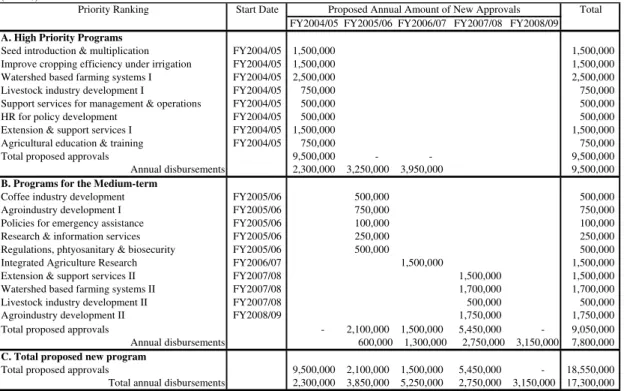
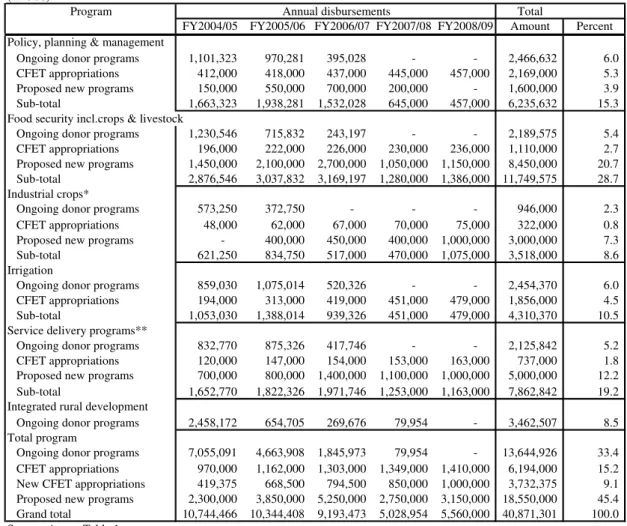
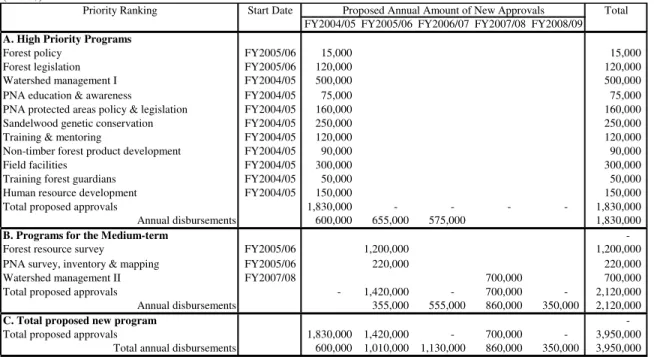
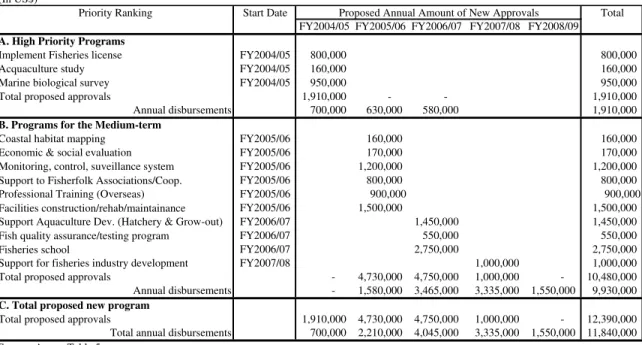
Within the overall goals of the NDP, improving ~1-te productivity of the Agriculture, Fisheries and Forestry sectors is given high priority, as well as improving the capacity to deliver services of the Ministry of Transport, Telecommunications and Public Works (MTCPW). In the Sector Investment Program (SIP) for the Agriculture, Forestry and Fisheries sectors, the GoTL emphasises improving the livelihood of rural communities, the integration of land and forest management in a watershed management approach, and improved service delivery. This includes rehabilitation of irrigation systems, improved seeds distribution, improved livestock health, management of fisheries and forestry, and improvement in marketing and infrastructure facilities.
(cfr Annex 12 for more details of the Sector Investment Program for these sectors).
Many challenges remain for the execution of this National Development Plan and the budget. Consequently continued assistance from the donor community will be important to strengthen the Government's capacity with a view to promoting growth and employment and delivering services, particularly in rural areas.
PERSPECTIVES FOR CO-OPERATION
Timor-Leste is a new ACP country, and as st.".h, will need a good deal of guidance and follow-up in this transitional stage. The present Country Strategy is a bridging strategy, to cover this two-year transitional period under the 91h
EDF, before the l O'h EDF takes over in 2008. It is important that the present strategy factors in the weak institutional capacity of Timor-Leste, which will be exacerbated by the fact that the country has no previous knowledge of the EDF and its procedures. lt will also be important to focus and concentrate EC co-operation, in order to avoid difficulties in implementation in the short time remaining for the 91h EDF.
Sound preparation for the IO'h EDF, programming and implementation, will be crucial with a particular emphasis on sound Public Finance Management, human rights and good governance. It will be important to facilitate the full participation not only of government institutions but also Non-State Actors and local community. The l01h EDF will also need to
include a migration profile for Timor-Leste.
CHAPTER3. ANALYSIS OF POLITICAL, ECONOMIC AND SOCIAL SITUATION
3.1 Political Situation
The country is situated on the eastern half of Timor Island, with a single land border to Indonesia (West Timor). The current political situation is the result of a long colonial past, and the ensuing period of occupation and military presence. Timor Leste had and still has to overcome a difficult legacy.
The Portuguese occupied the country in the 161h century. A border between Dutch West
Timor and Portuguese East Timor was defined in 1859. Japan occupied East Timor from 1941 to 1945. After the Carnation Revolution in Lisbon, ending the Salazar regime (1926-1974), Portugal considered formal de-colonisation. No national liberation movement existed, but three main political associations formed, mostly among the urban elite and middle-class families. The parties (Fretilin, Apodeti, UDT) refused to participate in a consultative council, created by the governor. Formally, Portuguese sovereignty was to end in October 1978. After Fretilin won local elections, UDT attempted to take over power and requested immediate independence. With Fretilin's counter-attac::s, the violence intensified. The Portuguese authorities fled from Dili, and Fretilin unilatera!l:• declared independence in November 1975. Two days later, Apodeti, in tum declared independence and integration into Indonesia. On 7 December, Indonesian troops penetrated East Timor. This invasion, clearly against international law was tolerated- or even encouraged- by the West, particularly by Australia and the USA, who feared regional repercussions from the Vietnam War. In the absence of precise figures, some observers estimate the number of deaths, caused directly or indirectly by the Indonesian invasion, at 60.000 in the first three months. The Indonesian Government expanded efforts and money to improve the then basic economic (subsistence farming) and social infrastructure of the new province, especially in schools, roads and medical services. The economic upturn benefited the immigrants from other Indonesian provinces. However, attacks from armed guerrillas countered the continued armed forces' policy of repression. Lost lives among the locals are estimated at 200.000 for the period up to 1999. 5.000 Indonesian soldiers lost their lives; thousands were maimed and injured. The acts of brutality and corruption had antagonised even those Timorese who were initially favourably disposed. The Asian financial crisis led to the downfall of the Soeharto administration in Jakarta. In January 1999, President Habibie, having agr~ed in principle to a I 0-year autonomy period, followed by a UN-led popular consultation ·1 autonomy or independence, wanted to
accelerate this process. A "popular consultation" was held in 1999, under UN auspices (UNAMET). It resulted in a clear vote of 78,5% in favour of independence. Following the referendum, integrationists and militia (armed by parts of the Indonesian military) rampaged through the territory. This scorched earth campaign left an estimated 1.000 dead, 250.000 people displaced, and destroyed large parts of the infrastructure. This wave of violence prompted the international community to dispatch an international peace force to restore order. On 12 September, President Habibie admitted the Australia-led INTERFET peacekeepers to East Timor. A month later, he nullified the decree on the integration of East Timor into Indonesia. Most Indonesian citizens departed, resulting in a severe shortage of qualified professionals, weak institutions and limited institutional capacity. The return of exiled intelligentsia partly compensated these problems.
10
'"
-"'-"
-\
The UN transitional administration for the territory (UNTAET) established an administration and exercised legislative and executive authority. The Democratic Republic of Timor-Leste gained its independence on May 20, 2002, after electing a Constituent Assembly, adopting a Constitution and holding presidential elections under UN supervision. The Constituent Assembly became the National Parliament. President Jose Alexandre Kay RaJa "Xanana" Gusmao was elected President by over 80%, and Mari bim Amude Alkatiri was appointed Prime Minister. The cabinet is dominated by the FRETILIN party. From 2002, a 900-person UN Mission of Support in East Timor (UNMISET) focused on peace-keeping, training and support to the police force. In 2005, UNMISET was succeeded by a smaller UN Office in Timor-Leste (UNOTIL).
At the time of gaining independence, the country had practically no institutions and system of governance on its own and no comprehen~ive legal framework. With the help of the international community Timor-Leste has made remarkable progress. The Constitution provides for human rights and fundamental free~oms in a democratic and pluralistic society. In particular, it ensures the right to elect and to be elected, the freedom of political participation as well as the freedom of the media. Regarding State institutions, the Constitution foresees the President; the Parliament; the Government; the courts and the judiciary; the Prosecutor General and the office of the Proved or (ombudsman). Progress has indisputably been made, but institutions responsible for the rule of law, in particular the judiciary and police, show some weaknesses, leading to unlawful arrests and detentions, excessive use of force, procedural delays, institutional inertia and inconsistent rulings. Local government still needs improvement.
In order to help improve the situation, cooperation should mainstream human rights and good governance, and sound public financial management - all needed to help bolster the stability of the government.
Shortcomings in public administration and governance are acknowledged in the analysis of the Transparency and Accountability Initiative launched by the Prime Minister. This initiative was supported by Transparency International, the UN the World Bank and others.
Parliament needs to strengthen its legislative and oversight functions, including with regard to the Petroleum Fund. The next Parliamentary and Presidential elections in 2007 will be the first elections at this level to be managed by the independent Timor-Leste. Their solid preparation is important for the medium and long term stability of the country. In particular, education of voters, media and political parties, voter registration, and national and international observers are components for which the Government seeks to mobilise resources from the international community. A positive example was a series of village elections held from January to September 2005. These elections, financially supported by the EC, were the first ones managed by the government. They generated a good turnout, and were held in a fair and peaceful way and with acceptable standards of organisation.
The office of the President requires more capacity, mainly to better address the promotion of reconciliation and veterans' recognition and to improve relations with the armed forces, the army and the Police. Overall, government is fully aware of the needs.
Today, the country has an independent judiciary and a transparent legal framework. Fundamental freedoms are respected. Portugue: c and Tetum have been chosen as official languages. Bahasa Malay and English are working languages.
I~
An effective way to support good governance in Timor-Leste is by strengthening Public Finance Management and by creating independent and accountable electoral management bodies. The country's experience in successfully carrying out local elections is a positive asset. However challenges still remain in updating voter registration, the preparation of the electoral law, ensuring the independence of the National Election Commission and the preparation of voters through NGOs and the media, all of which might be considered for funding by the Commission.
Geo-politically, Timor-Leste is situated between two large and powerful neighbours, Australia and Indonesia, and hence needs to actively develop links with them. Relations with Australia are improving, following an agreement on the sharing of oil and gas resources in the Timor Sea and the maritime boundary. With regard to Indonesia, mostly questions about past human rights' violations- in a joint Truth and Friendship Commission- and the remaining border demarcation need to be addressed in a realistic manner.
Timor-Leste was accepted into the ACP grot.p of countries in 2003. Parliament ratified the Cotonou Agreement in November 2005. The co·••try has observer status in the Pacific Island Forum, but wants also to develop relations with ASEAN. In 2005, Timor-Leste became a member of the ASEAN Regional Forum (ARF).
The colonial period and following occupation result in huge political challenges today. Most important are the long-term development, mainly dealing with poverty, and capacity building; and creating a sustainable livelihoods for the population. Given its tempestuous history, Timor-Leste has made remarkable progress in nation-building and political stability. Local government is still weak and in its infancy, but the administration managed to organise in 2005 a series of fair and peacefully held village elections. The Presidential and Parliamentary elections in 2007 will be Timor-Leste's first major elections in the absence of UN support, and will constitute a test of the country's ability to manage political transition. Timor-Leste's nation-building and the creation of its own identity will also depend on the development of solid relationships with the country's two big neighbours.
Structure and participation of Non State Actors and local decentralised authorities
Timor Leste' non-State actors encompass religio•!s organisations, mass organisations, cultural and traditional associations, community and sports organisations as well as developmental organisations and self-help groups, more commonly referred to as NGOs.
During the Indonesian period, indigenous political associations, while formally proscribed, survived underground or were incorporated into Indonesian organisations. Most of the clandestine organisations operated under the supervision of the CNRT (National Council of the Timorese Resistance). In the new, independent environment much of the raison d' etre for these groups has disappeared, but has left a political legacy.
The Catholic Church is influential, as 98% of Timor-Leste's population is catholic. The Constitution praises the historic merits of the Church in its preamble but does not privilege any religion. Throughout the country, the Church has a communication and social service network.
Civil society organisations and media have grown autonomously since 1999, and play a constructive and increasingly important role. Most of them are Dili-based. A number of non-governmental organisations (NGOs) undertake monitoring, advocacy, education and advisory services regarding human rights, justice, gender ~wareness, the environment and international
12
~\-' '
assistance. The print media has grown to several dailies and weeklies, but only a small part of the population accesses them. National and community radio reaches a wide audience and provides a popular forum for interactive debate. ·,~SAs are growing in numbers and strength, but still need support.
A mapping study of NSAs is essential in order to assess their characteristics, needs, level of participation to political dialogue, support from other donors. This is relevant for all EC focal areas. It is understood that this study will be financed from the TCF.
Local authorities are not sufficiently described in the text. A description of them should be included in the mapping study.
3.2 Analysis of the Economic Situation, including Trade
(Cfr Annex 4: Timor Leste at a glance, for more economic indicators)
Timor-Leste is one of the least developed economies in the region and is essentially agriculture-based, with over two-thirds of the population living in rural areas, and at least one-third engaged in subsistence agriculture. Agricultural productivity is very low and suffers from insufficient diversification. Figures for 2l J4 (source: Asian Development Bank) give GOP per capita at around USD 366, but it is probably much lower in the more isolated rural areas. Unemployment is estimated to be 5% nation wide, and 20% in the capital, Dili. About 10,000 young people join the labour market every year. Inflation fell to 1.8% in 2004, and is expected to remain at around 2.4% on the basis of low international inflation and limited pressure on domestic demand. Growth in GOP is low at 1.8%. GoTL pursues an active policy of avoiding national debt.
The major change in Timor-Leste's macroeconomic situation and possible destabilising
factor are the huge revenues it can expect from the petroleum and gas reserves in the Timor Sea. At independence, Timor-Leste signed the Timor Sea Treaty with Australia securing 90% of revenues from the "Joint Petroleum Development Area", an arrangement which however excluded most of "Greater Sunrise", a larger and more lucrative gas field, due to a difference of interpretation of respective maritime boundaries. After a series of sometimes bitter talks, Australia and Timor-Leste finally signed an agreement on 12 January 2006 on the sharing of natural resources from the Timor Sea, allocating 50% of the revenues to Timor-Leste. The revenues to be obtained under the agreement of the Bayu Undan field alone could deliver USD II billion in the next 20 years at current oilprices, with an expected USD I 0 billion for the Sunrise field. Parliament has adopted a strong legal framework for on- and off-shore petroleum production. The Petroleum Law, passed unanimously by Parliament, commits the Government to saving most of its petroleum revenues in a state-of-the-art petroleum fund designed to yield a sustainable income in perpetuity. This legal framework makes Timor-Leste a leading model in the Extractive Industries Transparency Initiative.
Oil and gas revenues could dramatically change the economic perspectives for Timor-Leste. The established Petroleum fund can provide revenues to support part of the necessary investment by GoTL. .However one of the challenges for Timor-Leste country will be the capacity to invest the revenue from its non-renewable resources in order to develop more sustainable resources. It will also have to guard against the risk of corruption and mismanagement of the fund, and deliver on the population's expectations of growing wealth. Over the next three years, Timor-Leste faces a rapid expansion in petroleum sector revenues, which risks putting tremendous pressure on its public financial management system. A
rapidly growing budget could boost the delivery of public services and promote growth, and construction activities under the capital development budget could contribute significantly to employment creation. Nevertheless, this new wealth will require careful management. Sound PFM will become even more important, and this issue should be addressed under the l O'h EDF as an effective way to support good gov~mance in Timor-Leste. One of the crucial future challenges for the Government is to be able to justify to the population the choices it makes in the use of the growing petroleum revenues, to avoid conflict over use of resources. lt is essential that the Government programme continues to be pro-poor, aimed at eradicating malnutrition and hunger, and at creating employment and an environment that is free from corruption.
Against this buoyant outlook for the public fiscal position, the prospects for private sector are discouraging. Non-oil GOP growth was only marginally positive in 2004, but growth will be difficult to stimulate, given unpredictable weather conditions for rural production and lack of local micro-credit. Timor-Leste's economy is uncompetitive due to i) small, isolated markets, ii) high costs of transportation, iii) low skills base and iv) poor physical infrastructure and weak or incomplete government institutions and financial and banking sector.
The agriculture sector, which could potentially transform non renewable resources into a sustainable economy, has suffered for lack of resource allocation. Until 2004 agriculture received 2.1% of the total budget. During the period 1999-2004 a total of $72.5 Million was spent by donors and Government on programs -<ithin the sector. Agriculture and livestock accounted for US $ 66 million. Donors contributed 92% of the total program. It was only from 2005-06 that the sector was allocated 4. 7% of the total budget. The current SIP envisages total expenditure of US 67 Million.
Structure of public sector finance and main sectoral policies
The public financial management system in Timor-Leste has made steady progress since the restoration of independence, but remains fragile, and funds flows to the districts are especially weak, seriously undermining service delivery. In addition to a general shortage of technical skills at all levels, the GoTL also lacks seasoned managers. The GoTL therefore wants to move beyond the transitional substitution of international for local expertise and focus on an integrated approach to government-wide institution building that relies on three pillars: skills and knowledge, systems and processes and attitudes and behaviour.
In the Fiscal year 2005-06, the financing of the public sector has continued to privilege the social sectors with education and health bein5 allocated 32.5%. Of these primary education receives 45.9% and Hospitals Expenditures
a.,
limited to 38.2%. Agriculture has been increased to 4. 7% while security has been kept at 20.1 %.Trade structure
Timor-Leste is at present not a member of the WTO. However, it is a member of the World Customs Organisation (WCO) and has asked for observer status with ASEAN and its free trade agreement called AFT A.
As regards the Pacific region, Timor-Leste is not party to any agreement with the rest of the Pacific A CPs at this point in time. It has observer status at the Forum, but is not a member of the Forum Secretariat or any of the other regional co-operation/integration organisations.
The main factor endowments of Timor-Leste are marine and fish resources, untouched environment (eco-tourism) and agriculture. However, the general economic environment places huge constraints on optimal trade conditions.
Timor-Leste has a narrow export base, and what little trade there is exists mostly in agricultural produce, e.g. green coffee beans. There is a huge trade deficit (mostly with Indonesia) which expanded to USD 187 mill'on in 2004, amounting to about 56% of GDP. Non-oil exports rose to USD 8 million, of whic:n USD 7 million was coffee. Coffee export revenues are however expected to rise over the medium term in response to higher international prices and improved marketing.
High local price levels make labour costs in Timor-Leste lose the normal competitive advantage of an LDC and reduce the country's attractiveness to foreign investors. Hence Foreign Direct Investment (FDI) in the productive sector is limited - FDI received until now is USD 1.7 billion, and 94% of that destined is for the oil and gas sector.
To encourage inward investment and FDI there is a need to improve the enabling environment. The GoTL has developed a Private Sector policy with a legal framework and a Sector Investment Program (SIP). It is the intention to increase further commercialization of agriculture and the production of marketable surpluses for domestic and export markets. Increased agricultural productivity and improved rural livelihoods translate into increased demand for off-farm goods and services. This requires increased private investment that leads to diversification of the economic base.
The benefits to Timor-Leste of membersh:p of the Cotonou agreement are potentially significant but likely to appear only in the lor::-er-term. However, to realize them, Timor-Leste will have to start to prepare itself now, studying the issues at stake and beginning to develop its capacity in trade. The Ministry for Development in Timor-Leste, responsible for trade, is conscious of its need for institutional capacity-building, both in terms of personnel, skills, and systems and also the preparation of a Trade Policy coordinated at inter-ministerial level.
(cfr Annex 8 for more details on trade development in Timor-Leste).
Private Sector Development
The country's economy is dominated by the private sector which accounts for two thirds of GDP. Excluding oil and gas, the private sector already accounts for 60% of the GDP. However the agriculture sector provides employment for three quarters of the country's labour force with very low productivity and represents only 27% ofGDP. Generation of non-farm employment, which at present absorbs only a total of about 60,000 people, needs to be accelerated in order to absorb the I 0,000 new entrants into the labour market every year. 3.3 Analysis of social situation
(Cfr Annex 9: Timor-Leste: Selected Social Indicators', 1990-2004, for more details)
The most recent comprehensive poverty data available still remains the national household and village survey conducted in 2001. Timor-Leste's Human Development Index has been put at around 0.4, placing it between Rwanda and Benin. As outlined above, its economy is
1
One of the most difficult problems for strategic analysis ofTimor-Leste is that the destruction of previous archives and of most administrative systems and structures has meant that economic and social statistical data are incomplete, or totally lacking- see main text and Annex I for further commentary.
dominated by agriculture. Its GOP per capita is low (366 USD), and poverty is more widespread in rural (40%) than in urban areas (14%), and may have increased in recent years since the crisis in 1999. Wealth distribution is unequal (Gini coefficient 0.37). Lack of non-farm income increases the vulnerability of households, and malnutrition is a key issue. Women are important producers in the farms, but their access to land rights is very much limited by tradition. In general land tenure is uncertain, given that out of 200,000 land parcels, only about 25% have undergone some form of registration.
About 70% of the urban population has access to relatively safe drinking water and electricity, while in rural areas only 43% of the populatiun has access to safe drinking water. Electricity in rural area is provided for a limited time at nig:•. and only to about II% of the population. The total fertility rate increased from 7.8 in 2001-2003 to 8.3 in 2003, possibly the highest in the world. Social services delivery is improving only gradually, and social indicators remain among the lowest in the region, including gender-related indicators.
The Office for the Promotion of Equality has been established under the Prime Minister's Office. Some of the ministers occupying prominent positions in the Government are women (e.g. Minister and Vice-Minister of Planning and Finance; Minister of State Administration) and 26% of the Members of Parliament are women. With the support the EC provided through UNIFEM, women candidates participated in local elections and some of them were elected.
In general Timor-Leste has succeeded in increasing primary school attendance (75%), but the level of education is low by regional and international standards, and the quality of teaching is poor. At present, only 58% of the population has had some education, and the percentage of students attending secondary school is only 21)%. A proliferation of private Universities (17) which sprang up from private initiative at indeoendence are not contributing very much to making adequate use of teachers and facilities· for a tertiary student population of about
10,000.
Health indicators are still among the lowest for Asia. Under-five child mortality caused by infections, premature births and low utilization of skilled assistance is still 124 per I ,000 live births (although it has been halved since 89-93). It is estimated that 12% of children are wasted, and that 45% of the under five children are underweight. Malaria and Tuberculosis are widespread while there are recurrent dengue epidemics. There is a very low prevalence of
HIV I AIDS is low, but increasing. Decrease/increase in HIV I AIDS could be one of the
indicators in the rural development programme.
The population of the capital, Dili is considered to have increased 39% since 2001 to about 160,000 people (census 2004) and more than 50% of the population is under the age of 18. Youth employment in urban areas is very low, due to a large part to a lack of skills and vocational training.
3.4 Analysis of the environmental situation
Timor-Leste's economy is heavily dependent on its natural resources. Land, water, forests and coastal zones provide a livelihood, or are the major source of income, for at least three-quarters of the population. They are the basis for social and economic security and growth. Mineral and petroleum deposits are expected to provide a significant source of income and foreign revenue for many years to come. Finally, many of Timor-Leste's resources - for example, its pristine coastal ecosystems, its stands of sandalwood and its remaining primary forests - are a world heritage in need of protection. Besides the stocks of oil and gas in the
16 \ ,
Timor Sea and onshore gas, Timor-Leste is endowed with modest fishery stocks, and forestry resources. The rainfall pattern -particularly in the north with long dry periods followed by intensive, short rainfalls- is conducive to erosion, which has been further increased in many areas by deforestation and over-grazing. The Government is aware of the need to develop its resources in a sustainable way, avoiding short to medium term benefits that could jeopardize the longer term future. GoTL is also aware that the development of these resources will depend for the time being mainly on private sector initiatives and investments. The main efforts in environmental conservation so far have been concentrated on building a strong information data base on the resources, on preparing legislation and on preparing community management mechanisms. Despite some efforts, there are still problems of deforestation, land degradation, loss of biodiversity, urban pollution and waste management, and there is a need for reinforced regulatory framework and mvnitoring if this trend is to be reversed. The Commission's rural development programme ··.'ill address a number of these issues, in particular the sustainable development of natural resources.
It will also address the country's vulnerability to natural disasters. Timor Leste, like most of the Pacific Island countries, is exposed to natural disasters, which together with heavy reliance on a limited range of economic sectors, worsen the country's vulnerability to external circumstances.
Timor-Leste is prone to the vagaries of weather (extensive periods of drought and short and intensive rainy seasons), floods, land-slides, etc. These are exacerbated by climate change. An upturn in economic activity and increase in private investment has the potential to lead further to environmental degradation which will weaken the very foundation ofTimor-Leste's sustainable development, impacting negatively on agriculture, tourism, and food security, thereby increasing poverty.
At present, Timor-Leste is almost totally dependent on imported petroleum products and domestically produced firewood to meet its energy requirements and there is no National Energy Policy. It is essential for the country to r:·ave an energy policy that provides the basic Road Map for movement towards the objective of stable, secure and sustainable sources of energy.
It is essential that GoTL and donors take into consideration measures to mitigate and adapt to climate change effects. To date, the main focus of the Ministry of Natural and Mineral Resources and the Secretary of State for Environment has been on establishing the framework for effective environmental governance, on developing capacity at the national level, and on pollution. For the next four years, the Government is proposing a significant increase in spending on natural resources and the environment. The Sector Investment Program for the Natural Resources and Environment will facilitate and promote private sector and community development, whilst at the same time assuring the long-term protection of Timor-Leste's land, forests, waters, air, urban areas and biodiversity.
3.5 Regional approach
The present 'Pacific ACP' under the tjh EDF Rtlt:ional Indicative Programme (RIP) are the 14 archipelago states (only Nauru and Niue are single islands) scattered across the southern and central Pacific with their millions of km' of Exclusive Economic Zones. All are small island developing states (SJDS) which gained independence between 1962 and 1994 and which gather once a year with Australia and New Zealand as the PACIFIC ISLANDS
players, including the EU. The Forum's permanent secretariat (PIFS) is entrusted with policy advice, coordination of regional cooperation and executive tasks in the areas of security, governance and trade and economic integration. It has observer status at the UN. The PIFS is RAO for the European Commission's RIP on behalf of the Pacific ACP and provides technical support to the Pacific ACP's participation in EPA negotiations.
These countries face the increasingly urgent problem of how to cater for the needs of a rapidly growing population in the face of sluggish economic growth/stagnation due in part to the inherent problems of smallness, distance, isolation, ecological fragility, vulnerability to catastrophes, pollution, climate change, lack of natural/human resources, AIDS/malaria and in part to the exogenous problems of policy and governance.
Confronted with these challenges, the EU's current overall strategy for the Pacific is above all
regional i) € 12 million to support islands' efforts to create scale economies between them and thereafter to open-up to the outside war!(; ii) € 27 million for sustainable development of shared natural resources such as fish and t-:•1rism and iii) € 20 million to support the development of the necessary human capital through education. The strategy for Timor-Leste for the next two years is fully compatible with this approach: it will also be addressing trade capacitation, institutional and human capacity building and the sustainable use of natural resources.
3.6 Cross-cutting issues
Gender: Socio-cultural factors contribute to high female adult illiteracy, with low enrolment and high dropout rates of female secondary education. There is gender segregation in the paid labour force, an emerging gender gap in wages, one of the highest maternal mortality rates in the world and domestic violence against women is common. Around one third of females are malnourished. Nevertheless, the Go TL' s affirmative action strategy has contributed to the empowerment of women: women constitute 25% of parliamentarians and civil servants, and for the first time women were elected during the local elections, the latter's participation supported by the European Commission. The proposed rural development programme should contribute to raising rural income and health indicators, with particular attention to mother and child welfare. There are still many barr :~rs to local rural women participating in secondary and informal education, and in benefiting from rural development programme activities. These barriers include social taboos, the low status of rural women and their domestic and reproductive work loads. Agricultural extension workers must include women who speak the local dialects.
Involvement of Non-State Actors (NSAs) and civil society: Involvement of NSAs is important to reinforce democracy and establish local ownership, to ensure that service delivery meets the expectations of the final beneficiaries and to build a good basis for sustainability. Preparation of voters through NGOs and the media could therefore be considered. Given the weakness ofNSAs in Timor-Leste at the present time, and scarcity of information on those operating at district, sub-district and community level, it is suggested that part of the NIP be allocated to carrying out a mapping study ofNSAs at those levels in Timor-Leste. This study could then form the basis for assessing future more concrete interventions involving NSAs under future NIPs.
Environment: The proposed sustainable rural development programme will address a number of critical issues for the environment, :·, particular the sustainable development of natural resources. The environmental dimension should also be mainstreamed in the capacity-building programme.
18
Education/culture: Timor-Leste is a newly formed and fragile state, and issues such as education and dominant culture of the populatiL'a will be crucial to its sustainability. Issues such as training in the local language and protection of the Timor-Leste culture and mores should be mainstreamed in the EC' s programme.
19
CHAPTER4. AN OVERVIEW OF PAST AND ONGOING EC CO-OPERATION, COORDINATION AND COHERENCE
4.1 Overview and lessons learned
Overview
After the emergency phase between 1999 and 2002, EC support has focussed on health and rural development, with capacity building, democracy and good governance as the main cross-cutting issues.
The EC approved contributions to Timor-Leste, since September 1999, amount to €203.50 million which can be summarised as follows:
• Humanitarian assistance, emergency, relief and rehabilitation, food security (including contributions to multi-donor Trust Funds and UN agencies)
(€142 million)
• Rural development including support for rural infrastructure, private sector employment generation (€34.5 millio,)
• Support for the health sector (€24.5 m:llion)
• Capacity building to the line Ministries as well as for education, the judiciary and tourism sectors, and women's leadership, support to elections (€2.5 million)
This has been provided through the ALA Budget line, ECHO, food security and health budget lines.
(Cfr Annex 11 for a more detailed breakdown of the above).
The Commission's approach to now has been a good example of linking relief, rehabilitation and development. After the initial emergency phase (1999-2002) and with the definition of the CSP in 2002, food security, rural development and health have been the backbone of the EC support while capacity building, gender and good governance have been the main crosscutting issues. Currently ECHO is addressing malnutrition and its underlying causes. The ongoing short-term impact projects include therapeutic feeding, supplementary feeding, nutrition and hygiene education, small-scale food security projects, as well as water and sanitation infrastructure. In terms of linking reli~f, rehabilitation and development, ECHO is closely coordinating its interventions with other financing instruments of the Commission and will re-assess the need for short-term humanitarian projects when longer-term development projects are launched.
(Cfr Annex 10 for more detailed information on ECHO's current programme).
Lessons learned
These have been sourced mainly from implementation reports and EAMR and JARs. As yet there has been no evaluation of EC co-operation, and it is recommended that this be addressed by a future evaluation to prepare the I Oth EDF. After the establishment of emergency services in the initial relief phase, the main areas of cooperation of the
Commission in the 2002-2005 Country Strategy Paper have been threefold: rural development, health and capacity building.
The Commission has followed a clear-cut strategy of financing the Trust Funds established to assist the UN missions and the multi-donor Trust Fund managed by the World Bank (TFET). This has facilitated implementation and coordmation, and avoided fragmentation of aid whilst providing support for a new and weak administr;:,ion. Programming jointly with other donors also ensures complementarity of aid (a total of 5 Member States and 5 international donors co-financed the TFET). The main reasons for the EC's participation in TFET were (i) better donor coordination; (ii) higher efficiency resulting from the use of uniform procedures (particularly in financial matters such as procurement and disbursement) and the elimination of the administrative burden to have a large ground capacity in Timor-Leste; and (iii) to have a voice in the mechanism in which most donors participate. The Commission continues to believe that our assistance is best provided in coordination with other donors and if possible through pooling mechanisms such as the TFET.
In the future, direct budget support might be envisaged, if conditions are in fulfilled. It will be particularly important to monitor sound Public Finance Management (PFM), given the future rise in oil/gas resources. Budget Support is an excellent method of evaluating PFM and getting the GoTL to commit to conditionalities. At present however, the country's low administrative and management capacity excludes this option. The CSP under the I 01h EDF
should address the ever more important i>sue of sound PFM, transparency and good governance.
The following are common lessons learned from previous EC supported programmes in the rural development and other sectors in Timor-Leste:
I) The continuing necessity to support rural development. Agriculture and livestock production accounts for one quarter of non-oil GDP. Farming is the sole source of income for about 80% of rural households, and will remain the main source of employment and income for the majority of the population for the foreseeable future. Any significant improvements in food security will only come from increased efforts in upland and dryland areas, which produce the bulk of food supplies, but remain the poorest in the country. Past programmes demonstrate that these areas have responded well to investments aimed at improving food security and increasing productivity in the Eastern rural part of the country, provided that the necessary plans and resources are deployed. The previously-supported pilot project could now be extended to the Western part ofTimor-Leste and other poor upland and dry land areas.
It is also noted that coordination between the two main ministries (MAFF and MFPW) is excellent, and assists in sustainability of operations.
2) The need for continued institutional capacity building to the Ministry of Agriculture, Forestry and Fisheries {MAFF) and other key line ministries. Despite the economic importance of agriculture in the overall economy, MAFF currently only receives 2.1% of total government appropriations. Moreover, its weak institutional capacity would render it difficult for it to absorb more funds. To combat this weakness, MAFF requires assistance in budget programming, planning and execution, and coordination with other ministries, including technical assistance until appropriately trained local staff is in place. One of the main challenges remaining lies in the decentralization of responsibility to the regions, in particular service provision.
21
Most ministries in the GoTL are weak in all aspects of budget management and delivery, and that includes the Ministry of Planning and Finance (MPF) and the Ministry of Development, which is responsible for trade (the latter being exceptionally weak, due to a lack of specifically qualified personnel).
Since institutional capacity building requires a good deal of coordination and long-term planning, it is best provided in close coordination with other donors. This programme may therefore consider contributing to a Trust Fund for a multi-donor capacity building programme.
3) Governance, Democracy/conflict prevention. Civic education and voter information remain the most neglected areas of electoral support, whilst being the most visible. Equal opportunities to voting access and the general concepts of the importance of participation and representation are key areas to achieve empowerment of minority groups, women and the disadvantaged. Support to electoral complaint institutions is another key area for the establishment of accountable elected institutions, and very much linked to the promotion of the rule of law, and long term stability. The country's ability to manage public finance efficiently, transparently and to deliver basic services to the poorer areas will be crucial to long term stability.
4) Gender. There are still many barriers to local rural women participating in secondary and informal education, and in benefiting from rural development programme activities. These barriers include social taboos, the low status of rural women and their domestic and reproductive work loads. Agricultural extensir>n workers must include women who speak the local dialects.
5) Education and Culture. Timor-Leste is a newly formed and fragile state. and issues such as education and dominant culture of the population will be crucial to its sustainability. Issues such as training in the local language and protection of the Timor-Leste culture and mores should be main streamed in the EC' s programme.
Given the present efforts of the government and the various donors, the Commission's added
value for the purposes of this programme is:
• its strong coordination with the World Bank and other donors, good dialogue with the government and with NSAs;
• its wide experience in rural development and trade assistance.
4.2 Programmes of other donors (coordination and complementarity) ( cfr Annex 3, Donor Matrix).
In addition to the multilateral agencies, there are 19 main bilateral donors to Timor-Leste, though not all are physically present. The EC is the fourth largest donor after Portugal, Australia and Japan, while the EC and the Member States combined represent about half of the overall contributions made so far to Timor-Leste. Since December 1999, there have been six-monthly and, since 2004, yearly donor coordination meetings, during which bi- and multilateral donors and NGO's meet and discuss in order to enhance coordination according to GoTL priorities and avoid overlapping or conflicting activities in the sectors or regions.
22
In order to ensure the effectiveness and the impact of EC development assistance, it will be necessary to continue the already close co-ordination with other donors, in particular with EU Member States, with other major donors such as Australia, USA, Japan, UN agencies, WB and IMF. Coordination has been increased among the EU Member States present in Timor-Leste (Portugal, UK, Ireland, France) through the sharing and discussion of cooperation priorities, the sharing of cooperation data, the presentation of identified priorities during EC financed missions and workshops, the joint preparation of the common statement during the annual Development partners meeting and a series of other consultations jointly with other donors and agencies (Consolidated Support Programme; TFET; Sector meetings and working groups etc). This close coordination among dcnors has greatly assisted the GoTL in preparing its Sector Investment Programs. As already notc.i, coordination between the main ministries working in rural development has been good so far.
Complementarity among Member States and the EC has been achieved mainly in the common participation and financing of TFET, managed overall by the World Bank. Coordination has been particularly active in the preparation of the Stability Programme and the Sector Investment Programs and Sector Working Groups including donors, which were recently established by GoTL.
4.3 The policy mix analysis (coherence)
This CSP is fully compatible with other EC policies. As far as trade policies are concerned this relates to the effective participation of Timor-Leste in international trade fora and agreements, in particular WTO, the promotion of the trade dimension in the national development plan and capacity-building for the line ministry responsible for trade. As far as agricultural and fisheries is concerned, the rural development programme should ensure that activities are fully compatible with EC polky , and attention will also be paid to current guidelines on transport and energy, which wi:' also be addressed in the context of rural development.
Wherever relevant EC policies/guidelines concerning cross-cutting issues such as human rights and democratisation, gender, conflict prevention/security and the environment have been taken into consideration, and efforts have been made to create synergies between the national development plan, the proposed strategy, and the programmes of other donors.
23
•
CHAPTERS. THE EC RESPONSE STRATEGY (INTERVENTION SECTORS)
5.1 Justification of the choice offocal sectors
The EC response strategy is derived from the economic and social analysis of the local context, the government strategy and activities of other development co-operation partners, taking into account the views expressed by civil society groups. In November 2005, a meeting was held with a wide range ofNSAs active in Timor-Leste in order to explain to them the role of NSAs under the Cotonou Agreement and to share with them the results of the discussions with the GoTL.
The response strategy supports the GoTL's National Development Plan and Sector Investment Program in agriculture. The stratcy has also been designed to improve the GoTL's own capacity to manage its country in the future, and particularly its capacity to manage its growing oil and gas resources, which has been identified by the major donors as one of the biggest challenges. A total of€18 million are available for the strategy, over 2006 and 2007.
The components of the strategy are therefore strongly interlinked and mutually reinforcing, and are the following:
5.1.1. Sustainable Rural Development
The National Development Plan (2003-2007) of GoTL has two overall goals:
IJ To reduce poverty in all sectors and regions of the nation; and
IJ To promote economic growth that is equitable and sustainable, improving the
health, education and well being of everyone in Timor-Leste
Within these overall goals, improving the ;>roductivity of the Agriculture, Fisheries and Forestry sectors is given high priority, as well as,improving capacity to deliver of the Ministry of Transport, Telecommunications and Public Works (MTCPW).
Agriculture is the primary economic activity in Timor-Leste, accounting for around 26% of Gross Domestic Product, and employing about 80% of the population. Notwithstanding this high priority, the Ministry of Agriculture, Forestry and Fisheries currently receives only a small percentage of total government appropriations. Much of the future growth in the agriculture sector is likely to come from small and medium enterprises focusing on niche markets, processing and value added. Moreover, poverty alleviation will require a diversification of household income outside primary agriculture. The achievement of increased economic growth and a significant reduction in rural poverty will depend fundamentally on improvements in the agricultural sectors, including infrastructure. The proposed sustainable rural development programme to provide support to agricultural communities will concentrate on increasing food security through improved agriculture quality, quantity and diversification, improving rural infrastructure, increasing farmer's income and improving access to markets and credit, as well as improving delivery of local services. The programme will build on the experience of previously financed programmes, and will complement the Commission's ongoing Rural Development Programmes (2003 and 2005) under the Asia-Latin America budget lin~ as well as the nutrition and food security programmes. Its sustainability should be assisted by the second component of the CSP, capacity building to GoTL.
24
Risks (volitical. economic. social, external)
Ownership of the programme by the GoTL and the farmers, sufficient budgetary resources to ensure maintenance of infrastructure, Public Finance Management remains corruption free, stable political situation and favourable climatic conditions.
5.1.2 Institutional capacity-building
This choice of sector is in line with the Government ofTimor-Leste's expressed goals i) in the National Development Plan, to achieve sustainable national capacity for effective planning and financial management and improved service delivery and ii) the needs acknowledged in the analysis of the Transparency and Accountability Initiative launched by the Prime Minister. This could also include creation of and/or support to independent electoral management bodies, in order to foster stability. The Programme could also consider technical assistance to assist domestic observers' organisations to improve their ability to monitor the entire range of election-related activities support to local med:a and electoral dispute mechanisms.
Risks (volitical. economic. social. external)
The most important risk factors are maintaining political stability in country, continuing non-confrontational relations with Indonesia, and the possibility of growing corruption at all levels due to the oil factor, lack of qualified staff and absorption difficulties.
Comparative advantage
The EC' s comparative advantage in these sectors is its previous experience in the rural development field, its coordination with other donors, and excellent dialogue with both GoTL and NSAs.
Cross-cutting issues (Or these sectors:
Ensure that
i) agricultural extension and service delivery is gender sensitive, eg regarding land tenure and providing gender-disaggregated data, and addressing the needs of the most vulnerable sections of the population. Government should also be facilitated in providing more stringent legal framework to protect the m0st vulnerable, such as women, children and the disabled;
ii) Sustainable rural development programme promotes environmentally sound techniques (and through environmental impact assessments if necessary), and that GoTL 's capacity to protect and monitor the environment is promoted;
iii) Democracy and stability are fostered by providing support for the electoral process. Specific attention should be given to ensure the involvement of those traditionally excluded, for eg people who for reasons of mono-lingual ism lack the literacy to fully participate in national elections, and to remove obstacles to the inclusion of people who are handicapped or geographically isolated and might become further marginalised in the development process. iv) Involvement of NSAs, to ensure local ownership, and build in sustainability (including, if appropriate, strengthening their capacity to carry out civic/voter information and education. The Programme could also consider Technical Assistance to assist domestic observers' organisations to improve their ability to monitor the entire range of election-related activities, support to the local media, ami support to NGOs involved in civic/voter information and education.
v) Timor-Leste is a newly formed and 1ragile state, and issues such as education and dominant culture of the population will be cruci.·; to its sustainability. Issues such as training in the local language and protection of the Timor-Leste culture and mores should be mainstreamed in the EC's programme.
A total of €18 million has been earmarked for the programme, indicatively allocated as follows:
€12 million for rural development
€6 million for capacity building (including a Technical Co-operation Facility).
5.2 Focal sectors
The components of the strategy are the following:
5.2.1: Sustainable Rural Development
Objective
To expand and consolidate the current Rural Development Programmes financed by the Commission to other priority geographic and/or thematic areas emphasizing food security, agriculture extension and diversification (agri-business) and rehabilitation and improvement of rural infrastructure to improve access to market and health indicators, and strengthening local service delivery.
Expected results
Improved agricultural techniques and diversification;
Increased agricultural output and consumption in rural areas, in particular for women farmers and those with special needs, to improve their living conditions and status; Increased earnings in rural areas (improved access to markets and credit, especially for those traditionally excluded from credit);
Improved access to clean water and sanitatio~1;
Strengthen ability of Ministry of Agriculture, Forestry and Fisheries to deliver services to the remoter areas.
Assumptions
The GoTL remains committed to rural development as a priority, and allocates sufficient resources, in particular for maintenance of infrastructure. Farmers take ownership of the programme.
Activities
•
•
Agricultural production and extension activities , including training and sensitization in sustainable techniques for conserving natural resources, diversification, and possibly deforestation and integrated water resources management
Development of agri-business via links between producers and traders and appropriate financial institutions
26