Review Article
Efficacy of high-frequency ventilation in adult patients
with acute respiratory distress syndrome: a
meta-analysis with trial sequential analysis
of randomized clinical trials
Huo-Jun Jiang, Biao Zhang, Jin Zhao, Ai-Hao Hu, Yi-Zhen Qiu, A-Liang Ding, Rong-Ming Yu, Yi Song
Department of Critical Care Medicine, Suzhou Integrated Chinese and Western Medicine Hospital, Suzhou, Jiangsu, People’s Republic of China
Received December 13, 2017; Accepted September 5, 2018; Epub December 15, 2018; Published December 30, 2018
Abstract: High frequency oscillation ventilation (HFOV), which is sometimes used to treat patients with acute respira-tory distress syndrome (ARDS), is an alternative to conventional mechanical ventilation (CMV) with uncertain effects
on mortality and adverse clinical outcomes. The aim of this meta-analysis was to evaluate the efficacy of HFOV in
patients with acute lung injury (ALI) and acute respiratory distress syndrome (ARDS). Trial sequential analyses (TSA) was applied to estimate whether the current result was enough to draw the conclusion. We searched the online databases of MEDLINE, Embase, Cochrane and other several databases for eligible randomized controlled trials (RCTs) of HFOV in adult patients with ALI and ARDS. Relative risk (RR) and standardized mean difference (SMD)
with 95% confidence intervals (CIs) were pooled with fix-effects model. TSA was employed to indicate the credibility
of pooled estimate. Seven trials met the inclusion criteria. Pooled analyses showed that there was no difference of in-hospital/28-day/30-day mortality between the HFOV and CMV group (RR 1.04; 95% CI 0.93, 1.16; P > 0.05). Du-ration of intensive care unit (ICU) stay (SMD 0.097; 95% CI -0.005, 0.200; P = 0.062) and incidence of barotraumas (RR 1.129; 95% CI 0.808, 1.577; P = 0.476) was similar between two groups. HFOV was associated with increased incidence of hypotension (RR 0.585; 95% CI 0.366, 0.934; P = 0.025) and prolonged the duration of mechanical ventilation (SMD 0.095; 95% CI 0.001, 0.189; P <0.05). However, TSA did not provide conclusive evidence. This systematic reviewindicated that improved therapeutic effect of ARDS in patients treated with HFOV compared with CMV. Consequently, large randomized clinical trials are warranted.
Keywords: High-frequency oscillation ventilation, conventional mechanical ventilation, acute respiratory distress syndrome, acute lung injury, meta-analysis, trial sequential analysis
Introduction
The acute respiratory distress syndrome (ARDS) is characterized by life-threatening impairment of pulmonary gas exchange, resulting in hypox-emia, hypercapnia, and respiratory acidosis and requiring acute rescue measures. Oxygen delivery to the tissues is necessary for all aero-bic life, and tissue hypoxia will result in various deleterious effects including altered vascular reactivity, inflammation, cell apoptosis, and organ dysfunction or failure [1]. CMV is still con-sidered the cornerstone of treatment for these patients. However, although CMV can initially sustain life, it may cause further lung injury [2,
suggested that HFOV improved both oxygen-ation and survival in adults with ARDS [11, 13, 14]. However, two well-designed large RCTs indicated no benefit of HFOV in reducing in-hos -pital mortality in patients with ARDS [15, 16]. Therefore, its beneficial effects remain contro -versial and some authors suggested HFOV could only be treated as a rescue therapy [10]. When dealing with negative results, it is impor-tant to evaluate the statistical reliability of the finding, i.e., the power of the analysis. TSA is a tool which has been increasingly used [17] to assess whether optimal sample sizes-and ben-efit or harm boundaries-have been reached by an available sample of patients assuming a minimal clinically significant difference [18]. Therefore, the aim of this study was to deter-mine whether HFOV is equal to or more benefi -cial than CMV in patients with ALI and ARDS. TSA was applied to estimate whether the current available evidence was enough con- clusive.
Materials and methods
We reported this systematic review and meta-analysis based on the methodology recom-mended by the Cochrane Collaboration and
not restrict our search to studies published in any particular language. The reference lists of the identified primary studies and relevant meta-analyses were also searched for addition-al studies.
[image:2.612.90.373.73.353.2]To be included in the present meta-analysis, tri-als had to be RCTs that compared HFOV with CMV, enrolled ALI/ARDS patients, and reported at least one of the following outcomes of inter-est: in-hospital mortality/28-day/30-day mor-tality; duration of ICU stay; duration of mechani-cal ventilation; and the incidence of baro- traumas or hypotension. We did not consider studies on children, in contrast to the previous meta-analysis and Cochrane review. Studies involving a secondary respiratory adjunct thera-py along with high-frequency oscillation, such as tracheal gas insufflation or recruitment maneuvers, were also included in this meta-analysis. Two investigators (HJ Jiang and Y Song) independently performed the study se- lection. Disagreements between the two inves-tigators were resolved through discussion. We neither sought for unpublished studies nor con-tacted the authors for unpublished data. Data from previous meta-analyses and reviews was included.
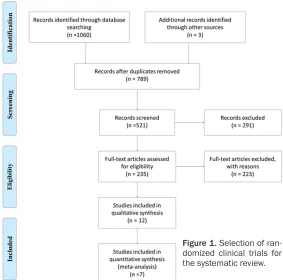
Figure 1. Selection of ran-domized clinical trials for the systematic review.
according to the Preferred Re- porting items for Systematic Review and Meta-analysis (PR- ISMA) statement [19] .There was no formal protocol for this meta-analysis.
Search strategy and selection criteria
Data collection and extraction
Two authors (HJ Jiang and Y Song) indepen-dently read the abstract of the potentially eligi-ble studies. Both of them selected eligieligi-ble stud-ies by inclusion criteria. HJ Jiang and AH Hu initially extracted data from the eligible studies and the extracted data were cross-checked independently by YZ Qiu and AL Ding. Statistical analyses were performed by HJ Jiang. When encountering differences in opinions, the third author’s opinion (AH Hu) was considered to be final. The data included first author, year of pub -lication, study design, number of patients, pa- tient characteristics, definition of ALI or ARDS used and overall risk of bias. The primary out-comes were ICU mortality/28-day/30-day mor-tality, duration of ICU stay and duration of mechanical ventilation. Secondary outcomes included hypotension and barotraumas.
Quality assessment
We assessed the studies in six domains accord-ing to the Cochrane Collaboration’s tool for assessing risk of bias [20]: (I) random sequence generation, (II) allocation concealment, (III) blinding of participants and personnel, blinding of outcome assessment, (IV) incomplete out-come data, (V) selective reporting, and (VI) other bias; for other bias. Each item was answered by “Low” (low risk of bias), “Unclear” (either lack of information or uncertainty over the potential for bias), and “High” (high risk of bias). Two reviewers independently assessed the quality of the evidence for each meta-anal-ysis according to the Grading of Recommen- dations Assessment, Development and Eva- luation (GRADE) approach, with inconsistency
resolved through discussion and consensus [21].
Statistical analyses
We calculated relative risks (RRs) with 95% confidence intervals (CIs) for dichotomous out -comes and mean differences (MDs) with 95% CIs for continuous outcomes. The Z-test and chi-square test were used to generate the
p-value for the continuous outcomes and for the binary outcomes, respectively. P < 0.05 was considered statistically significant. We evaluated the heterogeneity using a Cochran Q test, with a threshold p-value of 0.1, and an I2
test, with a value > 50% indicating high hetero-geneity; 95% confidence intervals for I2 values
were calculated [22]. We also quantified the effects of heterogeneity by using the I2 test
(ranges from 0% to 100%), which represents the proportion of inter-study variability that can be contributed to heterogeneity rather than to chance [23]. The fixed-effects model (Mantel-Haenszel method) was used except when a sig-nificant Q-test (P < 0.05) or I2 > 50% indicated
[image:3.612.88.533.86.214.2]the existence of heterogeneity among studies; in that case, the random effects model (Der- Simonian-Laird method) was applied for the meta-analysis. Subgroup analysis was conduct-ed to investigate potential source of between-study heterogeneity. Sensitivity analysis was performed through omitting each study in turn to assess the quality and consistency of the results. Begg’s funnel plots were used to detect publication biases. Egger’s linear regression test was also used to evaluate the publication biases [23]. All statistical analyses were per-formed with Stata software (version 12.0; StataCorp, College Station, TX) using two-sided
Table 1. Essential characteristics of the included trials
Source Mean Age (years) (Intervention/Control) Details of lung injuryNo. of patients Overall risk of bias Derdak et al, 2002 49 148 (75/73) ARDS; PEEP > 10 cm H2O Low
Bollen et al, 2005 53 61 (37/24) ARDS Unclear
Demory et al, 2007 49 28 (13/15) ARDS; PaO2/FiO2 ≤ 150, PEEP ≥ 5 cm H2O Low Mentzelopoulos et al, 2007 57 54 (27/27) ARDS; PaO2/FiO2 < 150, PEEP 8 cm H2O Low
Mentzelopoulos et al, 2012 54 125 (61/64) ARDS; PaO2/FiO2 < 150, PEEP ≥ 8 cm H2O Low Ferguson et al, 2013 54 548 (275/273) ARDS; PaO2/FiO2 ≤ 200, FiO2 ≥ 0.5 Low Lall et al, 2015 55 795 (398/397) ARDS; PaO2/FiO2 ≤ 200, PEEP ≥ 5 cm H2O Low
ARDS, acute respiratory distress syndrome; FiO2, fraction of inspired oxygen; PaO2, arteral oxygen tension; PEEP, positive end
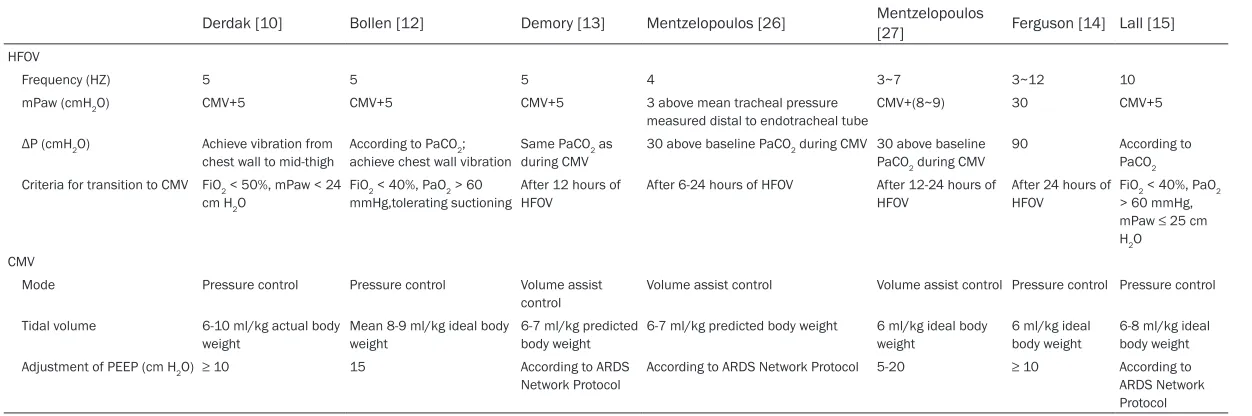
Table 2. Details of HFOV and CMV in trials included in systematic review
Derdak [10] Bollen [12] Demory [13] Mentzelopoulos [26] Mentzelopoulos [27] Ferguson [14] Lall [15]
HFOV
Frequency (HZ) 5 5 5 4 3~7 3~12 10
mPaw (cmH2O) CMV+5 CMV+5 CMV+5 3 above mean tracheal pressure
measured distal to endotracheal tube CMV+(8~9) 30 CMV+5
ΔP (cmH2O) Achieve vibration from
chest wall to mid-thigh According to PaCOachieve chest wall vibration2; Same PaCOduring CMV2 as 30 above baseline PaCO2 during CMV 30 above baseline PaCO2 during CMV 90 According to PaCO2 Criteria for transition to CMV FiO2 < 50%, mPaw < 24
cm H2O
FiO2 < 40%, PaO2 > 60 mmHg,tolerating suctioning
After 12 hours of HFOV
After 6-24 hours of HFOV After 12-24 hours of HFOV
After 24 hours of HFOV
FiO2 < 40%, PaO2 > 60 mmHg, mPaw ≤ 25 cm H2O
CMV
Mode Pressure control Pressure control Volume assist
control
Volume assist control Volume assist control Pressure control Pressure control
Tidal volume 6-10 ml/kg actual body weight
Mean 8-9 ml/kg ideal body weight
6-7 ml/kg predicted body weight
6-7 ml/kg predicted body weight 6 ml/kg ideal body weight
6 ml/kg ideal body weight
6-8 ml/kg ideal body weight
Adjustment of PEEP (cm H2O) ≥ 10 15 According to ARDS
Figure 2. Forest plot of HFOV versus CMV on mortality.
[image:5.612.90.521.350.657.2]p values. P < 0.05 was considered statistically significant.
Trial sequential analysis
Conventional meta-analyses may result in type I errors due to an increased risk of random error when sparse data are collected and due to repeated significance testing when a cumu -lative meta-analysis is updated with new trials [18, 23-25]. To avoid an increase of overall type I error, monitoring boundaries can be applied to decide whether a single randomized trial could be ended early if a P value is sufficiently small to show the anticipated effect [18, 24]. Th- erefore, we conducted TSA to reduce the risk of random error. TSA combines information-size estimation for a meta-analysis with the adapta-tion of monitoring boundaries to evaluate the accumulated evidence [18]. When the cumula-tive Z-curve crosses the trial sequential moni-toring boundary, a sufficient level of evidence for an intervention is deemed achieved and no further trials are needed. If the trial sequential monitoring boundary is not crossed, then there is insufficient evidence to support a conclusion,
and more trials are needed to confirm the results. TSA depends on the quantification of the required information size. A diversity adjust-ed requiradjust-ed information size (RIS) is calculatadjust-ed through estimating the effect of type I error, type II error, the control event proportion, and the effect size in TSA. For our TSA, we estimat-ed RIS using α = 0.05 (two sided), β = 0.20 (power 80%) for all the variables of interest, the control event proportions calculated from the CMV group, an anticipated intervention effect of 20% RR reduction for dichotomous out-comes, and empirical estimation from TSA soft-ware for continuous outcomes. TSA version 0.9 beta (http://www.ctu.dk/tsa) was used for all these analyses.
Results
Search results and risk of bias
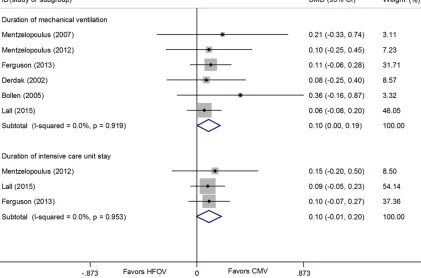
[image:6.612.96.517.81.359.2]We identified 1063 documents through data -base searching and other sources (Figure 1). After excluding duplicate reports, we screened the titles and abstracts of 521 documents and rejected 291 as irrelevant. After full-text review, Figure 4. Forest plot of duration of mechanical ventilation and duration of ICU stay in patients with ALI/ARDS. Size
a further 223 reports were excluded because they did not meet our criteria. Finally, a total of 1759 adult patients were included in this meta-analysis, which compared in-hospital mor- tality/28-day/30-day mortality between HFOV and CMV in adult patients with ALI and ARDS. The publication years of the involved studies ranged from 2002 to 2015. All trials studied HFOV as an initial ventilation strategy for ALI or ARDS, but not a rescue treatment for refractory hypoxemia. All studies used a lung-protective ventilation strategy by targeting a tidal volume of 6 ml/kg or a plateau pressure of 30 to 35 cm H2O or both. Among all trials, six had high meth-odological quality and a low risk of bias [11, 14-17, 26, 27] one had unclear risk of bias [13]. Patient characteristics in the individual studies and details of ventilation strategy of the includ-ed studies have been providinclud-ed in Tables 1, 2.
The methodological qualities of all included studies are presented in Figure 1.
Clinical outcomes
Mortality
The mortality of patients in the standard HFOV and CMV group was 43.7% (387/886) and 42.2% (368/873), respectively [11, 12, 26, 27] The pooled results indicated that there was no significant difference in hospital/28-day/30-day mortality rate between study group and control group, and the pooled risk ratio was 1.038 (95% CI; 0.932, 1.157; P = 0.496) in the fixed effect model. However, there was signifi -cant heterogeneity between studies (P = 0.014, I2 = 62.4%), so the random effects model was
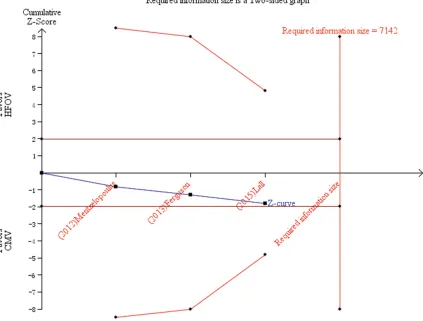
[image:7.612.92.524.85.399.2]Figure 6. TSA of three randomized trials reporting duration of ICU stay. The a priori heterogeneity adjusted infor-mation size (7142 patients) is estimated by assuming a 20% relative risk reduction (RRR). The cumulative z curve (blue line with solid circularity) does not cross both the conventional boundary and the trial sequential monitoring boundary. A diversity adjusted required information size of 7142 patients(indicated by the right vertical red line) was calculated using α = 0.05 (two sided), β = 0.20 (power 80%), and empirical estimation from TSA software.
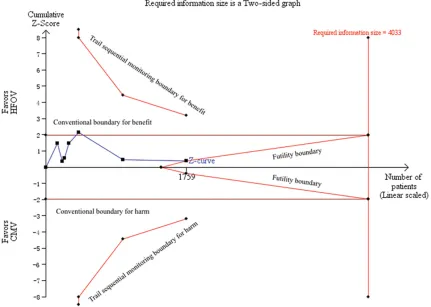
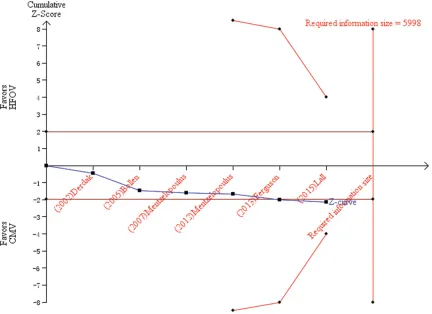
HFOV did not significantly reduce mortality at 28 or 30 days in adult ARDS patients (risk ratio 0.960; 95% CI 0.776 , 1.187; P = 0.705; Figure 2). In searching for potentially active factors, we performed subgroup analyses by the tidal vol-ume (≤ 8 ml/kg predicted body weight) as well as the plateau airway pressure (≤ 35 cm H2O). Subgroup analyses with two addtional factors indicated that HFOV failed to reduce mortality at 28 or 30 days in adult ARDS patients. TSA was performed for all 7 studies. The TSA adjust-ed 95% CI was 0.78-1.19 (diversity D2 = 74%). The diversity adjusted information size was 4033. The cumulative Z-curve did not sur-passed the conventional boundary and trial sequential monitoring boundary for benefit or harm and also did not achieve the optimal infor-mation size which indicated the current results were not robust, and further clinical trials were required (Figure 3).
Duration of mechanical ventilation and ICU stay
Six trials (1731 patients) evaluated duration of mechanical ventilation. Compared with HFOV, CMV was associated with a shorter duration of mechanical ventilation (SMD, 0.095; 95% CI 0.001, 0.189; P = 0.048; Figure 4) in the fixed effect model, and no significant heterogeneity was found (Chi2 = 1.44, degrees of freedom (df) = 5, P = 0.919; I2 = 0.0 %). The TSA
1467 patients) evaluated duration of ICU stay. The pooled results showed that the HFOV did not significantly reduce the duration of ICU stay (SMD 0.097, 95% CI -0.005, 0.200; P = 0.062) in the fixed effect model, and no significant het -erogeneity was found (Chi2 = 0.10, degrees of freedom (df) = 2, P = 0.953; I2 = 0.0 %) (Figure
4). The TSA adjusted 95% CI was -0.11-2.53 (diversity D2 = 0%). The diversity adjusted infor-mation size was 7142. The cumulative Z-curve did not surpassed the conventional boundary and trial sequential monitoring boundary for benefit or harm and also did not achieve the optimal information size which indicated the current results were not robust, and further clinical trials were required (Figure 6).
Adverse events
Barotraumas
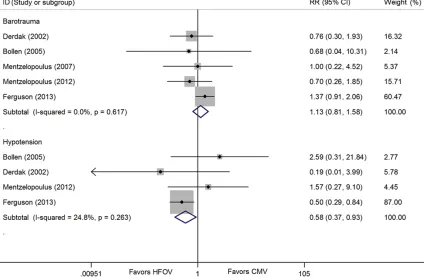
The incidences of barotraumas were reported in 5 studies [13-15, 26, 27].The pooled results showed that the HFOV would not significantly increase the risk of barotraumas compared with CMV (RR 1.129; 95% CI 0.808, 1.577; P = 0.476; Figure 7) in the fixed effect model, and
no significant heterogeneity was found (Chi2 = 2.65, degrees of freedom (df) = 4, P = 0.617; I2
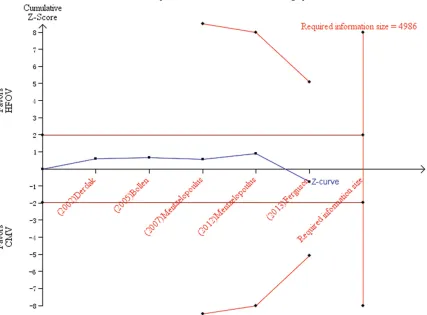
= 0.0%). The TSA adjusted 95% CI was 0.81-1.58 (diversity D2 = 0%). The diversity adjusted information size was 4986. The cumulative Z-curve did not surpassed the conventional boundary and trial sequential monitoring bo- undary for benefit or harm and also did not achieve the optimal information size which indi-cated the current results were not robust, and further clinical trials were required (Figure 8).
Hypotension
The incidences of hypotension were reported in 4 studies [13, 15, 27]. The pooled results showed that the HFOV significantly reduced the risk of hypotension compared with CMV (RR 0.585; 95% CI 0.366, 0.934; P = 0.025; Figure 7). For acceptable heterogeneity (Chi2 = 3.99, degrees of freedom (df) = 3, P = 0.263; I2 =
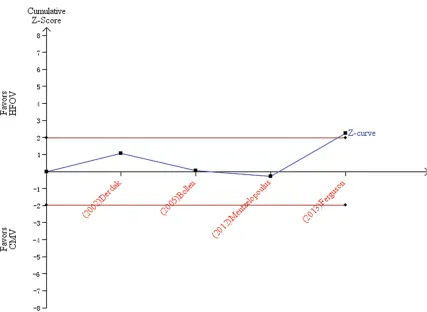
[image:9.612.95.519.75.353.2]24.8%), the fixed-effect analytical model was used to pool the results. The TSA adjusted 95% CI was 0.31-1.63 (diversity D2 = 66%). The diversity adjusted information size was 19159. The cumulative Z-curve crossed the conven-tional boundary for benefit (P < 0.05), but not Figure 7. Forest plot of adverse events in patients with ALI/ARDS. Size of squares for relative risk reflects weight of
the trial sequential monitoring boundary for benefit and also did not achieve the optimal information size which indicated the current results were not robust, and further clinical tri-als were required (Figure 9).
Sensitivity analysis and publication bias
Sensitivity analysis was performed to assess the influence of each individual study on the pooled RRs by omission of individual studies. The analysis results suggested that no individu-al studies significantly affected the pooled RR (Figure 10), indicating a statistically robust result. We assessed the potential publication bias for the primary outcomes of mortality (P = 1.000 for the Begg test, P = 0.467 for the Egger test). No potential publication bias was ob- served among the included trials (Figure 11). Tests were not available for all subgroup datas-ets with small sample sizes.
Discussion
This systematic review with meta-analysis and TSA included 7 randomized trials with 1759 patients. The present meta-analysis showed that there was no difference in hospital/28-day/30-day mortality rate of patients between the HFOV group and CMV group, which was con-firmed by TSA [9]. As moderate degree of between-study heterogeneity revealed in the overall meta-analysis of mortality as well as the fact that the tidal volume and plateau airway pressure might be the sources of heterogene-ity, we performed subgroup analysis according to the tidal volume and the plateau airway pres-sure in the control group. The results from these subgroup analyses all suggest that HFOV did not significantly reduce mortality at 30 or 28 days in adult ARDS patients. This indicates that the results of this meta-analysis are sta-Figure 8. TSA of five randomized trials reporting the incidence of barotraumas. The priori heterogeneity adjusted
information size (4986 patients) is estimated by assuming a 20% relative risk reduction (RRR). The cumulative z
[image:10.612.95.522.82.397.2]ble. Moreover, in spite of inadequate informa-tion size (1,759 out of 4,033 patients), TSA showed a evidence for this association. At this regard, a possible advantage of this method-ological tool is that it may prevent the initiation of unnecessary trials when firm evidence has been gained. Several previous meta-analyses evaluating this topic have been published. Some of the major outcomes were reported by Sud et al [28]and Huang et al [29] in their rele-vant meta-analysis. However, the optimal venti-lator setting for HFOV in adults remains unclear. Sud et al reported that in patients with ALI or ARDS, HFOV reduced hospital and 30-day mor-tality and decreased the risk of treatment fail-ure compared with CMV [28]. Huang et al reported that HFOV does not confer any in-hos-pital mortality benefit over conventional lung-protective ventilation strategy in ARDS, and suggested that HFOV should not be a routine practice in ARDS [29]. Ferguson et al [3].
Reported a higher in-hospital mortality and Lall et al [16] reported equal mortality with the use of HFOV in patients with ARDS. There are sub-stantial differences between our study and pre-vious meta-analyses. First, this meta-analysis in- cluded two additional large scale studies and recruited more than three times the number of patients recruited in the previous meta-analy-ses. Second, TSA could provide more conserva-tive estimates and establish more sufficient and conclusive evidence. Third, we evaluated the quality of evidence for outcomes based on GRADE Working Group criteria. Physicians could make clinical decisions with the aid of these evidence.
[image:11.612.92.519.68.380.2]Although we did not find any increase in the mortality with the use of HFOV, subsequent tri-als may tri-also change our findings because a large well-designed RCT [3, 15] has already found more harm with the use of HFOV. Despite Figure 9. TSA of four randomized trials reporting the incidence of hypotension. The priori heterogeneity adjusted information size (19159 patients) is estimated by assuming a 20% relative risk reduction (RRR). The cumulative z
curve (blue line with solid circularity) crossed the conventional boundary for benefit (P < 0.05), but not the trial
a less incidence of hypotension, duration of mechanical ventilation is prolonged with the use of HFOV, and the result was confirmed by TSA. Another important finding of our study is that HFOV does not reduce the duration of ICU stay, which is consistent with the findings of the previous meta-analysis [29]. In addition, there was no significant difference in the incidence of barotrauma between HFOV group and CMV group. Current evidence did not support the
[image:12.612.91.377.73.275.2]result may change with publications of further large RCTs. The inclusion criteria and patient population are variable in different studies. The primary causes of ARDS may influence ultimate outcomes. Timing of initiation of HFOV and duration of treatment may also influence mor -tality. In spite of these limitations, however, to our best knowledge, the present meta-analysis was the first to systematically evaluating the standard HFOV versus CMV in patients with ALI Figure 10. Sensitivity analysis of the summary relative risk (RR) for the
pri-mary outcomes of mortality. Results were computed by omitting each study in turn. Meta-analysis random-effects estimates (exponential form) were used.
The two ends of the dotted lines represent the 95% confidence interval.
Figure 11. Begg’s funnel plot for the primary outcomes of mortality. Each point represents a separate study for the indicated association. LogRR, natu-ral logarithm of RR; SE, standard error. Horizontal line, mean magnitude of the effect.
routine use of HFOV for ARDS patients because of its poten-tial harm.
[image:12.612.93.378.348.547.2]or ARDS with TSA. Two multicenter RCTs were included [3, 15, 16]. This analysis explores the possibility of a false negative result and evalu-ates the statistical reliability of the present data. Another strength was that we conducted this systematic review with methodology follow-ing the recommendations of the Cochrane Collaboration. Finally, the sensitivity analysis indicated that the results are statistically robust.
Conclusions
In conclusion, in this systematic review with meta-analyses and TSA, we did not find any sta-tistically significant beneficial effect that could support routine use of HFOV in place of CMV in adult patients with ARDS. On the contrary, the duration of mechanical ventilation may even be increased. In TSA, we did not find any statisti -cally significant beneficial effect that could sup -port the use of HFOV for ARDS. Further, our TSA suggests that many thousands of randomized patients are needed in order to change this per-spective. As well as focusing on hard outcomes, future trials should assess both quality of life for survivors and cost-effectiveness.
Disclosure of conflict of interest
None.
Address correspondence to: Yi Song, Department of Critical Care Medicine, Suzhou Integrated Chinese and Western Medicine Hospital, NO 39 Xia Sha Tang, Wuzhong District, Suzhou 215101, Jiangsu, People’s Republic of China. Tel: +8618862175816; E-mail: [email protected]
References
[1] Richard C. Tissue hypoxia. How to detect, how to correct, how to prevent? Intensive Care Med 1996; 22: 1250-1257.
[2] Ware LB and Matthay MA. The acute respira-tory distress syndrome. N Engl J Med 2000; 342: 1334-1349.
[3] Frank JA and Matthay MA. Science review: mechanisms of ventilator-induced injury. Crit Care 2003; 7: 233-241.
[4] Gerstmann DR, Minton SD, Stoddard RA, Mer-edith KS, Monaco F, Bertrand JM, Battisti O, Langhendries JP, Francois A and Clark RH. The provo multicenter early high-frequency oscilla-tory ventilation trial: improved pulmonary and clinical outcome in respiratory distress syn-drome. Pediatrics 1996; 98: 1044-1057.
[5] Plavka R, Kopecky P, Sebron V, Svihovec P, Zla-tohlavkova B and Janus V. A prospective ran-domized comparison of conventional mechani-cal ventilation and very early high frequency oscillatory ventilation in extremely premature newborns with respiratory distress syndrome. Intensive Care Med 1999; 25: 68-75.
[6] Dreyfuss D and Saumon G. Ventilator-induced lung injury: lessons from experimental studies. Am J Respir Crit Care Med 1998; 157: 294-323.
[7] Imai Y, Nakagawa S, Ito Y, Kawano T, Slutsky AS and Miyasaka K. Comparison of lung pro-tection strategies using conventional and high-frequency oscillatory ventilation. J Appl Physiol (1985) 2001; 91: 1836-1844.
[8] Johnson AH, Peacock JL, Greenough A, Marlow N, Limb ES, Marston L, Calvert SA; United King-dom Oscillation Study Group. High-frequency oscillatory ventilation for the prevention of chronic lung disease of prematurity. N Engl J Med 2002; 347: 633-642.
[9] Goligher EC, Munshi L, Adhikari NKJ, Meade MO, Hodgson CL, Wunsch H, Uleryk E, Gajic O, Amato MPB, Ferguson ND, Rubenfeld GD and Fan E. High-frequency oscillation for adult pa-tients with acute respiratory distress syn-drome. A systematic review and meta-analysis. Ann Am Thorac Soc 2017; 14: S289-S296. [10] Mehta S, Granton J, MacDonald RJ, Bowman
D, Matte-Martyn A, Bachman T, Smith T and Stewart TE. High-frequency oscillatory ventila-tion in adults: the Toronto experience. Chest 2004; 126: 518-527.
[11] Derdak S, Mehta S, Stewart TE, Smith T, Rog-ers M, Buchman TG, Carlin B, Lowson S, Grant-on J; Multicenter Oscillatory VentilatiGrant-on For Acute Respiratory Distress Syndrome Trial (MOAT) Study Investigators. High-frequency os-cillatory ventilation for acute respiratory dis-tress syndrome in adults: a randomized, con-trolled trial. Am J Respir Crit Care Med 2002; 166: 801-808.
[12] Imai Y and Slutsky AS. High-frequency oscilla-tory ventilation and ventilator-induced lung in-jury. Crit Care Med 2005; 33: S129-134. [13] Bollen CW, van Well GT, Sherry T, Beale RJ,
Shah S, Findlay G, Monchi M, Chiche JD, Weiler N, Uiterwaal CS and van Vught AJ. High fre-quency oscillatory ventilation compared with conventional mechanical ventilation in adult respiratory distress syndrome: a randomized controlled trial [ISRCTN24242669]. Crit Care 2005; 9: R430-439.
impair-ment in oxygenation. Crit Care Med 2007; 35: 106-111.
[15] Ferguson ND, Cook DJ, Guyatt GH, Mehta S, Hand L, Austin P, Zhou Q, Matte A, Walter SD, Lamontagne F, Granton JT, Arabi YM, Arroliga AC, Stewart TE, Slutsky AS, Meade MO; OSCIL-LATE Trial Investigators; Canadian Critical Care Trials Group. High-frequency oscillation in early acute respiratory distress syndrome. N Engl J Med 2013; 368: 795-805.
[16] Lall R, Hamilton P, Young D, Hulme C, Hall P, Shah S, MacKenzie I, Tunnicliffe W, Rowan K, Cuthbertson B, McCabe C, Lamb S; OSCAR col-laborators. A randomised controlled trial and cost-effectiveness analysis of high-frequency oscillatory ventilation against conventional
ar-tificial ventilation for adults with acute respira -tory distress syndrome. The OSCAR (OSCilla-tion in ARDS) study. Health Technol Assess 2015; 19: 1-177.
[17] Miladinovic B, Kumar A, Hozo I, Mahony H and Djulbegovic B. Trial sequential analysis may be
insufficient to draw firm conclusions regarding statistically significant treatment differences
using observed intervention effects: a case study of meta-analyses of multiple myeloma trials. Contemp Clin Trials 2013; 34: 257-261. [18] Wetterslev J, Thorlund K, Brok J and Gluud C.
Trial sequential analysis may establish when
firm evidence is reached in cumulative
meta-analysis. J Clin Epidemiol 2008; 61: 64-75. [19] Moher D, Liberati A, Tetzlaff J, Altman DG and
Group P. Preferred reporting items for system-atic reviews and meta-analyses: the PRISMA statement. PLoS Med 2009; 6: e1000097. [20] Higgins JP, Altman DG, Gotzsche PC, Juni P,
Moher D, Oxman AD, Savovic J, Schulz KF, Weeks L, Sterne JA; Cochrane Bias Methods Group; Cochrane Statistical Methods Group. The Cochrane Collaboration’s tool for assess-ing risk of bias in randomised trials. BMJ 2011; 343: d5928.
[21] Guyatt GH, Oxman AD, Schunemann HJ, Tug-well P and Knottnerus A. GRADE guidelines: a new series of articles in the journal of clinical epidemiology. J Clin Epidemiol 2011; 64: 380-382.
[22] Jackson D, White IR and Riley RD. Quantifying the impact of between-study heterogeneity in multivariate meta-analyses. Stat Med 2012; 31: 3805-3820.
[23] Peters JL, Sutton AJ, Jones DR, Abrams KR and Rushton L. Comparison of two methods to de-tect publication bias in meta-analysis. JAMA 2006; 295: 676-680.
[24] Ge L, Tian JH, Li L, Wang Q and Yang KH. Mesh
fixation methods in open inguinal hernia re -pair: a protocol for network meta-analysis and trial sequential analysis of randomised con-trolled trials. BMJ Open 2015; 5: e009369. [25] Thorlund K, Imberger G, Walsh M, Chu R,
Gluud C, Wetterslev J, Guyatt G, Devereaux PJ and Thabane L. The number of patients and events required to limit the risk of overestima-tion of intervenoverestima-tion effects in meta-analysis--a simulation study. PLoS One 2011; 6: e25491. [26] Mentzelopoulos SD, Roussos C, Koutsoukou A,
Sourlas S, Malachias S, Lachana A and Zakyn-thinos SG. Acute effects of combined
high-fre-quency oscillation and tracheal gas insuffla -tion in severe acute respiratory distress syndrome. Crit Care Med 2007; 35: 1500-1508.
[27] Mentzelopoulos SD, Malachias S, Zintzaras E, Kokkoris S, Zakynthinos E, Makris D, Magira E, Markaki V, Roussos C and Zakynthinos SG. In-termittent recruitment with high-frequency
os-cillation/tracheal gas insufflation in acute re -spiratory distress syndrome. Eur Respir J 2012; 39: 635-647.
[28] Sud S, Sud M, Friedrich JO, Wunsch H, Meade MO, Ferguson ND and Adhikari NK. High-fre-quency ventilation versus conventional ventila-tion for treatment of acute lung injury and acute respiratory distress syndrome. Cochrane Database Syst Rev 2013; CD004085.
[29] Huang CT, Lin HH, Ruan SY, Lee MS, Tsai YJ
and Yu CJ. Efficacy and adverse events of