38
Answer-Supervised Question Reformulation for Enhancing
Conversational Machine Comprehension
Qian Li♦∗, Hui Su‡, Cheng Niu‡, Daling Wang♦, Zekang Li♠, Shi Feng♦, Yifei Zhang♦ ♦School of Computer Science and Engineering, Northeastern University, Shenyang, China
‡Pattern Recognition Center, WeChat AI, Tencent Inc, China
♠Key Laboratory of Intelligent Information Processing
Institute of Computing Technology, Chinese Academy of Sciences [email protected],{wangdaling,fengshi,zhangyifei}@cse.neu.edu.cn,
{aaronsu,chengniu}@tencent.com, [email protected]
Abstract
In conversational machine comprehension, it has become one of the research hotspots in-tegrating conversational history information through question reformulation for obtaining better answers. However, the existing ques-tion reformulaques-tion models are trained only us-ing supervised question labels annotated by annotators without considering any feedback information from answers. In this paper, we propose a novelAnswer-SupervisedQuestion Reformulation (ASQR) model for enhancing conversational machine comprehension with reinforcement learning technology. ASQR uti-lizes a pointer-copy-based question reformula-tion model as anagent, takes anactionto pre-dict the next word, and observes arewardfor the whole sentencestateafter generating the end-of-sequence token. The experimental re-sults on QuAC dataset prove that our ASQR model is more effective in conversational ma-chine comprehension. Moreover, pretraining is essential in reinforcement learning models, so we provide a high-quality annotated dataset for question reformulation by sampling a part of QuAC dataset.
1 Introduction
The performance of the single-turn machine com-prehension models has been greatly improved, even close to human-level recently (Wang et al., 2018; Devlin et al., 2018; Sun et al., 2018; Hu et al., 2018; Liu et al., 2017), while the con-versational machine comprehension models are far from satisfactory (Choi et al., 2018; Huang et al.,2018;Zhu et al.,2018). In single-turn ma-chine comprehension, different questions for the same paragraph have no connection. However, the questions omitting a great of key information in conversational machine comprehension are only
∗ ∗
This work was done when Qian Li was interning at Pat-tern Recognition Center, WeChat AI, Tencent.
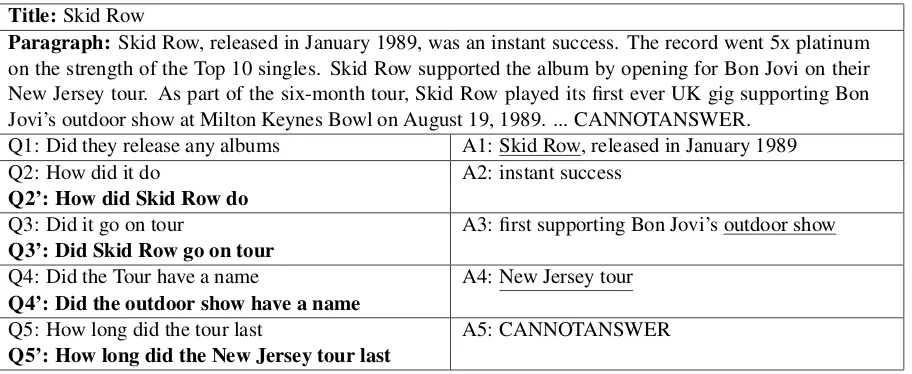
meaningful by considering the previous questions and answers history (Table 1). Therefore, the ma-jor difficulty of solving conversational machine comprehension lies in how to integrate the conver-sational history when answering the questions.
Sentence reformulation aims to get more fluent and meaningful sentences based on supplementary information (Liu et al.,2018;Rastogi et al.,2019), and has been adopted in abstract extraction (Nal-lapati et al., 2016;See et al.,2017), query refor-mulation (Riezler and Liu, 2010; Rastogi et al., 2019), and translation reformulation (Niehues et al.,2016;Junczys-Dowmunt and Grundkiewicz, 2017). Question reformulation (Buck et al.,2017; Nogueira and Cho, 2017; Rastogi et al., 2019), as an important branch of sentence reformulation, aims to reformulate question according to conver-sational history.
Title:Skid Row
Paragraph: Skid Row, released in January 1989, was an instant success. The record went 5x platinum on the strength of the Top 10 singles. Skid Row supported the album by opening for Bon Jovi on their New Jersey tour. As part of the six-month tour, Skid Row played its first ever UK gig supporting Bon Jovi’s outdoor show at Milton Keynes Bowl on August 19, 1989. ... CANNOTANSWER.
Q1: Did they release any albums A1: Skid Row, released in January 1989
Q2: How did it do A2: instant success
Q2’: How did Skid Row do
Q3: Did it go on tour A3: first supporting Bon Jovi’s outdoor show
Q3’: Did Skid Row go on tour
Q4: Did the Tour have a name A4: New Jersey tour
Q4’: Did the outdoor show have a name
Q5: How long did the tour last A5: CANNOTANSWER
[image:2.595.76.532.61.248.2]Q5’: How long did the New Jersey tour last
Table 1: An example of conversational machine comprehension from QuAC dataset (Choi et al.,2018). Giving a paragraph title, the student asks teacher questions according to the conversational history. The teacher answers the question by choosing a text span from the paragraph context or CANNOTANSWER.Qi’is the reformulated question for Qi by annotators.
tasks (Buck et al.,2017;Nogueira and Cho,2017), while no work in conversational machine com-prehension tasks. How to train the question re-formulation models with supervised information from answers in conversational machine compre-hension is still a major challenge.
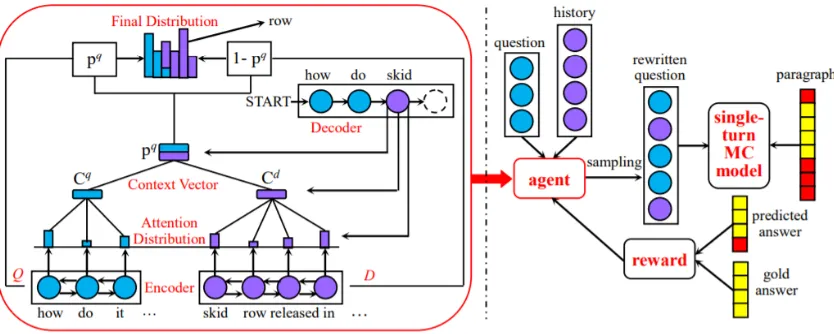
In this paper, we present ASQR, an Answer-Supervised Question Reformulation model for conversational machine comprehension with re-inforcement learning technology (Figure 1). At our ASQR model, the agent, a novel pointer-copy-based question reformulation model proposed in Section 2, takes an action to predict the next word. The state for the whole sentence is composed of continuous actions and end with the end-of-sequence (EOS) signal. The agent only observes a reward for the whole sentence state after gener-ating the EOS token, which is quite different from the teacher forcing models. The reward is the sim-ilarity score between the gold answer and the pre-dicted answer obtained by feeding the whole sen-tence state to a single-turn machine comprehen-sion model.
We validate the effectiveness of our ASQR model on QuAC dataset (Choi et al., 2018). Pre-training is essential in deep reinforcement learning models (Yin et al.,2018;Xiong et al.,2018), so we sample a part of QuAC dataset, and reformulate the questions according to the conversational his-tory by several professional annotators. The major contributions of this paper are as follows:
• We present a novel answer-supervised
ques-tion reformulaques-tion model for conversaques-tional machine comprehension with reinforcement learning technology, which could be a new study direction for conversational problems.
• We provide a high-quality annotated dataset for question reformulation in conversational comprehension, which could be of great help to future related research.
• The experimental results outperforming the baseline models on the benchmark dataset prove that our model is more effective in con-versational machine comprehension.
In Section 2, we will present a new pointer-copy-based question reformulation model which is as an agent in the ASQR model. The overall ASQR model with reinforcement learning tech-nology is presented in Section 3. Then in Sec-tion 4, we introduce our annotated dataset and the experiments. The related work and some conclu-sions are drawn in Section 5 and 6.
2 Question Reformulation Model
Figure 1: Our proposed ASQR Model. The left is our pointer-copy-based question reformulation model. The right is the overall perspective of the ASQR model with the left model as an agent.
a copy mechanism, copies a word from questions or conversational history according to a gate net-work at each time step. For simplicity, we denote each training sample as (D, Q, R), therein D = {Q1, A1, ..., Qn−1, An−1} represents the conver-sational history, (Qi, Ai) represents the question
and answer in the ith turn of the conversation,
Q = Qn is the question in nth turn of the
con-versation.Ris the reformulated question carrying important conversational information for the ques-tionQ.
2.1 Encoder
The role of the Encoder is to get the representa-tion for the input sentence. There are two types of the input sentence: questionQ={xq1, ..., xq
mq}
and its conversational historyD={xd
1, ..., xdmd}, mq, mdare the number of words in question and
conversational history. Here we employ bidirec-tional LSTM (BiLSTM) to encode each word in the sentence(Lee et al.,2017), where the BiLSTM is defined as:
hqt =BiLST M(xqt) (1)
hdt =BiLST M(xdt) (2)
wherehqt is the representation for the wordxqt in the question sentence,hdt is the representation for the wordxdtin the conversational history sentence.
2.2 Decoder
The Decoder is to generate the reformulated ques-tions based on the representation of quesques-tions and conversational history sentence in the Encoder. The essence of the Decoder is a copy mechanism.
Decoder copies words from the input questionQ
or the input conversational history D. For each training sample, we should retain the original key information from the input question, and replace pronouns with entities in the conversational his-tory, and get complete information from the con-versational history if the question is incomplete.
At each time stept, let st be the decoder
hid-den state, the context vector of question becqt, the context vector of conversational history becdt, and the output word beyt. The hidden statestcan be
constructed by the LSTM function as follows:
st=LST M(st−1, cqt−1, cdt−1, yt−1) (3)
s0=tanh(W0qh
q
1+W0dhd1+b) (4)
where the initial states0 is obtained by an activa-tion funcactiva-tion,W0q, W0d, bare learnable parameters. The context vectorcqt, cdt for the time steptcan be computed by the attention mechanism(Luong et al.,2015;Zhou et al.,2018). We use the decoder hidden statestand the representation of input
sen-tence from the encoder to get an importance score. Especially, the context vectorcqt of question is:
et,i =vTtanh(W st+U hqi) (5)
at,i =
exp(et,i)
Pmq
i=1exp(et,i)
(6)
cqt =
mq
X
i=1
at,ihqi (7)
where v, W, U are all learnable parameters. For simplicity, we define the above attention ascqt =
Atten(st, hqi). When computing the context
consider the context vector of question. Therefore, the context vectorcdt of conversational history is:
cdt =Atten((st, cqt), hdi) (8)
Next, we present a switch gate network to de-cide to copy words from questions or conversa-tional history. The switch gate network can be ob-tained based on the embedding of the previous out-put wordyt−1, the current hidden statestand the
current context vectorcqt, cdt (Zhou et al.,2018).
pqt =σ(wtyyt−1+wstst+wqtc q
t+wtdcdt +b) (9)
pdt = 1−pqt (10)
whereσis a sigmoid activation function,pqt is the probability of copying a word from the questions, andpdt is the probability of copying a word from the conversational history at the time stept.
After determining the source (input question or conversational history) of the copying words, we need to design the location of each copying word. Here, we use the pointer network (PtrN) (Vinyals et al.,2015;Zhou et al.,2018) to get the attention distribution of the words in the input questions and conversation history separately.
ki,tq =P trN(st, hqi) (11)
kdi,t =P trN(st, hdi) (12)
Therefore, we can get the probability of a word
νcopying from the input questionPqand from the
conversational historyPd:
Pq(yt=ν) =pqt∗k q
ν,t (13)
Pd(yt=ν) =pdt ∗kν,td = (1−p q
t)∗kν,td (14)
P(yt=ν) =Pq(yt=ν) +Pd(yt=ν)
=pqt ∗kν,tq + (1−pqt)∗kd ν,t
(15)
2.3 Pretrained Question Reformulation
Pretraining is essential in deep reinforcement learning(Yin et al., 2018; Xiong et al.,2018), so we pretrain the question reformulation model with the annotated data. The objective of the question reformulation model is to minimize the negative log-likelihood lossL(θ):
L(θ) =−1
N
N
X
i=1
T
X
t=1
logP(yt) (16)
whereN is the number of the training dataset, y
be the annotated question for the input question
Q, andT is the number of the words iny.
3 Overall ASQR Model
In this section, we introduce our proposed answer-supervised question reformulation model ASQR for conversational machine comprehension as shown in Figure 1. The architecture of our ASQR model is a reinforcement learning framework with the question reformulation model in Section 2 as an agent. In a conversational machine comprehen-sion example, ASQR first reformulates the input questions by question reformulation model, then feeds the reformulated questions to a single-turn machine comprehension model and gets the dicted answers. The similarity scores between pre-dicted answers and gold answers are as the reward to optimize the question reformulation model. The details are as follows:
Agent: The question reformulation model in Section 2 is defined as the agent. The re-inforcement learning agent is a policy network
πθ(state, action) = pθ(action|state), where θ
represents the model’s parameters.
Action:The action is to predict the next word
ytby the agent. The wordytis sampled from the
input question, or from the input conversational history according to the probability distribution of vocabulary.
State:After each action, the state is updated by the agent. The state of the whole sentence is de-fined asST = (y1, ..., yT), whereytis the action
in the time step t, T is the number of words in the sentence, and the last actionyT is an
end-of-sequence token.
Reward: For each state ST, the agent
ob-serves a reward. At this, we feed the stateST to
a pretrained single-turn machine comprehension model. The pretrained single-turn machine com-prehension model predicts the answer for the state
ST, and computes the similarity score between the
predicted answer and the gold answer. The simi-larity score is as the rewardR(ST).
The goal of our reinforcement learning is to train the parameters of the agent. At this, we use the REINFORCE policy gradient algorithm (Williams,1992;Keneshloo et al., 2018) to min-imize the negative expected reward.
J(θ) =−EST∼pθR(ST) (17)
with a single sampleST ∼ pθ. So the expected
gradient of a non-differentiable reward function is as follows:
∇θJ(θ) =−∇θEST∼pθR(ST)
=−EST∼pθ∇θlogpθ(ST)R(ST)
≈ −∇θlogpθ(ST)R(ST)
(18)
But the variance for estimation of the gradient may be very high, which makes the results diffi-cult to observe. Steven et al. (Rennie et al.,2016) prove that subtracting a baseline value from the re-wardR(ST) does not change the expected
gradi-ent if the baseline value does not depend on the ac-tion. Therefore, we can subtract a baseline value to reduce the variance, and the baseline can be an ar-bitrary action-independent function. If the reward for an action is greater than baseline, the action will be encouraged, otherwise discouraged. Here, the baselineR(STg)we used is the output sentence of our question reformulation model by a greedy search(Rennie et al., 2016). The expected gradi-ent of the reward function is:
∇θJ(θ)≈ −∇θlogpθ(ST)(R(ST)−R(STg))
(19) Using the chain rule, the above equation can be reformulated as:
∇θJ(θ) = T
X
t=1
∂J(θ)
∂ot
∂ot
θ (20)
whereotis the input to the softmax function. The
gradient of ∂J∂o(θ)
t is given by (Rennie et al.,2016;
Keneshloo et al.,2018):
∂J(θ)
∂ot
≈(pθ(yt|ht)−1(yt))(R(ST)−R(STg))
(21)
Pretrained Single-turn MC Model In our model, the agent observes a reward for each sen-tence stateST, so we need a pretrained single-turn
machine comprehension model to return a reward. The single turn machine comprehension model we used is the Bert model with one additional output layer(Devlin et al.,2018), which has been proved to do well on the single-turn SQuAD dataset (Ra-jpurkar et al.,2018).
Type dataPretrain QuAC
train val test train val test
questions 20k 5k 3k 81k 7k 7k
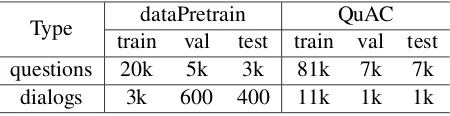
[image:5.595.308.533.63.121.2]dialogs 3k 600 400 11k 1k 1k
Table 2: data statistics.
4 Experiments
In the following work, we evaluate our model on QuAC dataset(Choi et al., 2018). To prove the performance of the model, we will conduct ex-periments from two perspectives: (1) Quality of the question reformulation model: How our ques-tion reformulaques-tion model in Secques-tion 2 can refor-mulate question accurately. (2) Effectiveness of the ASQR model: whether the reformulated ques-tions by our ASQR model are more effective in conversational machine comprehension.
4.1 Dataset
We use the QuAC dataset (Choi et al., 2018) to evaluate our model. Table 1 gives an exam-ple of conversational machine comprehension in QuAC dataset. In this conversational machine comprehension data, students ask teachers ques-tions based on the conversational history, teach-ers answer the questions by intercepting fragments from the context or cannot answer. For experi-ments, there are two types of dataset: (1) dataPre-train: Our annotated dataset to pretrain the ques-tion reformulaques-tion model in secques-tion 2. (2)QuAC: The all official QuAC dataset to train our ASQR model.
Our annotated data dataPretrain with 28k questions and 4k dialogs have been sampled from QuAC dataset randomly and annotated through a formal annotation platform. Annotators reformu-late question earnestly according to the conversa-tional history if at least one of coreference and omission occurs in current question. In the case of sentence fluency, annotators only copy words, but can not introduce extra words. To ensure the annotation quality, 15% of annotated questions are daily examined by a manager, and considered ac-ceptable when the accuracy surpasses 90%. Some annotated questions can be seen in Table 1.
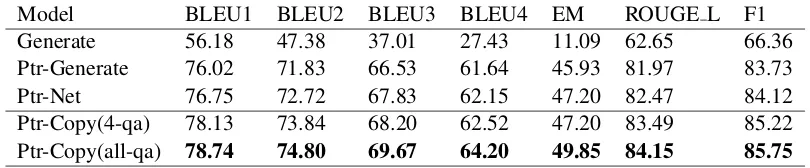
Model BLEU1 BLEU2 BLEU3 BLEU4 EM ROUGE L F1
Generate 56.18 47.38 37.01 27.43 11.09 62.65 66.36
Ptr-Generate 76.02 71.83 66.53 61.64 45.93 81.97 83.73
Ptr-Net 76.75 72.72 67.83 62.15 47.20 82.47 84.12
Ptr-Copy(4-qa) 78.13 73.84 68.20 62.52 47.20 83.49 85.22
[image:6.595.96.501.62.146.2]Ptr-Copy(all-qa) 78.74 74.80 69.67 64.20 49.85 84.15 85.75
Table 3: BLEU-1,2,3,4, EM, ROUGE L and F1 scores on the test dataset in the dataPretrain.
question reformulation is necessary and important for downstream tasks. We divide the dataPretrain dataset into a training dataset (7/10), a validation dataset (2/10), a test dataset (1/10). Table 2 de-scribes the data statistics.
4.2 Settings
Question Reformulation Model We train the question reformulation model with the loss in Sec-tion 2.3 and the annotateddataPretrain. We built our vocabulary based on the nltk word tokenizer for all QuAC dataset. The vocabulary size we used is 10697. We set the word embedding as 128. The dimension of hidden states for both encoder and decoder is 256. The batch size is 64. The max encoder step is 400, the max decoder step is 30, and the minimum decoder steps is 5. We use Ada-grad to train our model, wherein the learning rate is 0.1 and the initial accumulator value is 0.1. In the test stage, we generate reformulated question by the beam search strategy, the beam size is 4.
Pretrained Single turn MC Model We use the Bert model with one additional output layer (De-vlin et al.,2018) as our single-turn machine com-prehension model, which has a good performance on SQuAD2.0 dataset. The pretrained model of Bert we used isBERT-Base, Uncasedwith 12 lay-ers, 768 hidden states, 12 heads and 110M param-eters. The batch size is 24. The maximum length of an answer that can be generated is 30. The initial single-turn machine comprehension model is fine-tuned with all official QuAC data. If the reformulated questions are more meaningful than official questions, we will fine-tune the single-turn machine comprehension model with the reformu-lated data. The parameters of the single-turn ma-chine comprehension model are fixed when train-ing our ASQR model.
ASQR Model Our ASQR model can be trained based on above pretrained question reformula-tion model and single-turn machine comprehen-sion model. We use the Adam optimizer with 1e-5
learning rate to update the trainable parameters in our ASQR model. The F1 score is used to eval-uate the similarity between the predicted answer and the golden answer.
4.3 Quality of Question Reformulation
We first evaluate the accuracy of our question re-formulation model in Section 2 leveraging the an-notation datasetdataPretrain.
Compared ModelsThe compared models of our question reformulation model are as follows:
(1) Generate: Attention generator model in (Nallapati et al.,2016). In this model, the words are only generated from a fixed vocabulary.
(2) Ptr-Generate: Pointer Generator model in (See et al.,2017). In this model, the word can be copied from the input sentence or generated from the vocabulary. Here, we concatenate the conver-sational history information and the current ques-tion as the input sentence.
(3) Ptr-Net: Pure pointer-based copy model with an encoder and a decoder, the input of encoder can be the concatenation of question and conversation history, the decoder only copies words from the input sentences.
(4)Ptr-Copy: Pointer copy model is our ques-tion reformulaques-tion model in Secques-tion 2. The word can be either copied from the input questions or copied from the input conversational history.
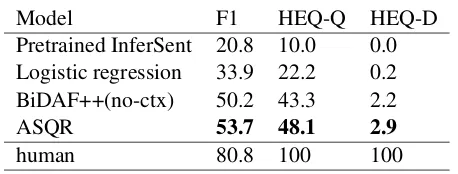
Model F1 HEQ-Q HEQ-D Pretrained InferSent 20.8 10.0 0.0 Logistic regression 33.9 22.2 0.2
BiDAF++(no-ctx) 50.2 43.3 2.2
ASQR 53.7 48.1 2.9
[image:7.595.70.299.60.147.2]human 80.8 100 100
Table 4: F1, HEQ-Q and HEQ-D scores on the test dataset of QuAC dataset.
key information. To verify the above conjecture, we encode previousN questions/answers as con-versational history, N = {4, all}. The results are listed in Table 3. Several conclusions can be drawn from the results:
(1) The Generate model performs poorly since all words in the annotated questions are from the questionQor the conversational historyD.
(2) The inferior effect of the Ptr-Generate and Ptr-Net models over our Ptr-Copy model shows that separately encoding the question Q and the conversational history Dare better than concate-nating them. Because most words in reformulated questions are copied fromQ, only referential and missing information needs to be copied fromD.
(3) Our Ptr-Copy model with previous all ques-tion/answers history performing well proves that our question reformulation model can identify key information accurately in the case of topic switch-ing and longer sentences.
4.4 Effectiveness of ASQR Model
We validate the reformulated data by our ASQR model are more effective for conversational ma-chine comprehension in allQuACdataset.
Compared ModelsThe compared models of our ASQR model are as follows:
(1) Pretrained InferSent: Lexical matching baseline model outputting the sentence in para-graph whose pretrained InferSent representation has the highest cosine for the question.
(2) Logistic regression: Logistic regression model trained by Vowpal Wabbit dataset (Lang-ford et al.,2007) with simple matching features, bias features and contextual features.
(3) BiDAF++(no-ctx): Single-turn machine comprehension model based on BiDAF (Seo et al., 2016) with self-attention and contextualized em-beddings (Peters et al.,2018).
The above three models are baseline models proposed in (Choi et al., 2018). The following
Model F1 HEQ-Q HEQ-D
Bert 51.6 46.6 2.9
Ptr-Copy-Bert(4-qa) 52.5 46.9 2.7
Ptr-Copy-Bert(all-qa) 53.1 47.8 2.9
ASQR 54.2 48.5 2.9
Table 5: Model performance on the validation dataset of QuAC dataset.
models are used in our model.
(4) Bert: The pretrained single-turn machine comprehension model with Bert model and one additional output layer trained by official QuAC data.
(5) Ptr-Copy-Bert: Get reformulated QuAC data by Ptr-Copy model in Section 2, and train Bert model with the reformulated QuAC data.
(6) ASQR: Our ASQR model, an answer-supervised question reformulation model for con-versational machine comprehension with rein-forcement learning technology. We use the re-formulated data by ASQR model to train the Bert model.
ResultsIt is worth noting that the questions in of-ficial QuAC dataset do not have labels. The qual-ity of reformulated questions only can be evalu-ated by their answers. A model is better if the re-formulated questions by this model are more ben-eficial to get better answers. Therefore, we use the similarity scores between predicted answers from single-turn machine comprehension model and the gold answers as the evaluation parameters. The metrics of similarity scores are F1 and HEQ (Human Equivalence score, HEQ-Q for question, HEQ-D for dialog), wherein HEQ-Q is true when the F1 score of the question is higher than the av-erage human F1 score, and HEQ-D is true when the HEQ-Q score of all the questions in the dialog are true.
Table 4 shows the scores on the test dataset of QuAC dataset compared with some baseline mod-els. Our ASQR model has the best F1 (53.7), HEQ-Q (48.1) and HEQ-D (2.9) scores over the baseline models, indicating that the question refor-mulation model can be beneficial to conversational machine comprehension.
[image:7.595.306.536.61.131.2]with the all question/answers history over the model Ptr-Copy-Bert(4-qa) with the part of con-versational history has good performance, which is consistent with the result in Section 4.3. The best performance on F1 and HEQ-Q score of our ASQR model compared with the Ptr-Copy-Bert models prove that our answer-supervised training method is more effective than traditional question label-supervised method. Some examples of re-formulation data by ASQR over Ptr-Copy model are mentioned in the supplementary section.
Analysis We should point out that the aim of our paper is to prove the effectiveness of answer-supervised question reformulation model. But only question reformulation cannot reach the best performance for conversational machine compre-hension problems, because question turns, sce-nario transformation, answer lapse, et al. are all important factors. The models in Leaderboard such as FlowQA, BiDAF++ w/2 have considered the above import factors, other models such as TransBERT, BertMT use a large amount of data for other tasks. Therefore, it is unfair to compare our model with those models.
Besides, the feedback mechanism of the ASQR model is not good enough because single-turn ma-chine comprehension model does not give appro-priate answers occasionally trained by the original QuAC dataset, which severely limits the perfor-mance improvement of ASQR model. Some simi-lar question answering models (Buck et al.,2017; Nogueira and Cho,2017) get feedback by utilizing sophisticated QA system or Search Engine which do not depend on the distribution of input data, while the existing machine comprehension mod-els are strongly dependent on data’s distribution. In the future, we will study how to get correct and appropriate feedback, and combine question reformulation with implicit conversational models to better integrate conversational information.
5 Related Work
Recently, several approaches have been pro-posed for conversational machine comprehension. BiDAF++ w/ k-ctx (Choi et al., 2018) integrates the conversation history by encoding turn num-ber to the question embedding and previous N an-swer locations to the context embedding. FlowQA (Huang et al.,2018) provides a FLOW mechanism that encodes the intermediate representation of the previous questions to the context embedding when
processing the current question. SDnet (Zhu et al., 2018) prepends previous questions and answers to the current question and leverages the contextual embedding of BERT to obtain an understanding of conversation history. The existing models always integrate the conversational history implicitly and can not understand the history effectively.
It is worth noting that much work has intro-duced question reformulation models into ma-chine comprehension tasks (Feldman and El-Yaniv, 2019; Das et al., 2019). Many question reformulation models can integrate the conversa-tional history explicitly by making coreference resolution and completion for the current ques-tion. Rastogi et al. (Rastogi et al., 2019) prove that can get a better answer when inputting a re-formulated question to the single-turn question an-swering models. Nogueira et al. (Nogueira and Cho, 2017) introduce a query reformulation re-inforcement learning system with relevant docu-ments recall as a reward. Buck et al. (Buck et al., 2017) propose an active question answering model with reinforcement learning, and learn to reformu-late questions to elicit the best possible answers with an agent that sits between the user and a QA system. However, the above work is still in the preliminary exploratory stage, and there is no work to reformulate questions with feedback from downstream tasks in conversational machine com-prehension tasks. How to train the reformulation models with feedback from subsequent functions is still a major challenge.
6 Conclusion
In this paper, we present an answer-supervised question reformulation model for conversational machine comprehension with reinforcement learn-ing technology. We provide a high-quality dataset for question reformulation in conversational ma-chine comprehension. The experimental results on a benchmark dataset prove that our model can be more beneficial to improve the performance of conversational machine comprehension.
Acknowledgements
References
Samy Bengio, Oriol Vinyals, Navdeep Jaitly, and Noam Shazeer. 2015. Scheduled sampling for se-quence prediction with recurrent neural networks. In International Conference on Neural Information Processing Systems.
Christian Buck, Jannis Bulian, Massimiliano Cia-ramita, Wojciech Gajewski, Andrea Gesmundo, Neil Houlsby, and Wei Wang. 2017. Ask the right ques-tions: Active question reformulation with reinforce-ment learning. arXiv preprint arXiv:1705.07830. Eunsol Choi, He He, Mohit Iyyer, Mark Yatskar,
Wen-tau Yih, Yejin Choi, Percy Liang, and Luke Zettle-moyer. 2018. Quac: Question answering in context.
arXiv preprint arXiv:1808.07036.
Rajarshi Das, Shehzaad Dhuliawala, Manzil Zaheer, and Andrew McCallum. 2019. Multi-step retriever-reader interaction for scalable open-domain question answering. arXiv preprint arXiv:1905.05733. Jacob Devlin, Ming Wei Chang, Kenton Lee, and
Kristina Toutanova. 2018. Bert: Pre-training of deep bidirectional transformers for language understand-ing.
Yair Feldman and Ran El-Yaniv. 2019. Multi-hop para-graph retrieval for open-domain question answering.
arXiv preprint arXiv:1906.06606.
Minghao Hu, Yuxing Peng, Zhen Huang, Nan Yang, Ming Zhou, et al. 2018. Read+ verify: Machine reading comprehension with unanswerable ques-tions. arXiv preprint arXiv:1808.05759.
Hsin-Yuan Huang, Eunsol Choi, and Wen-tau Yih. 2018. Flowqa: Grasping flow in history for con-versational machine comprehension. arXiv preprint arXiv:1810.06683.
Marcin Junczys-Dowmunt and Roman Grundkiewicz. 2017. An exploration of neural sequence-to-sequence architectures for automatic post-editing.
arXiv preprint arXiv:1706.04138.
Yaser Keneshloo, Tian Shi, Chandan K Reddy, and Naren Ramakrishnan. 2018. Deep reinforcement learning for sequence to sequence models. arXiv preprint arXiv:1805.09461.
John Langford, Lihong Li, and Alex Strehl. 2007. Vowpal wabbit online learning project.
Kenton Lee, Luheng He, Mike Lewis, and Luke Zettle-moyer. 2017. End-to-end neural coreference resolu-tion.
Hengrui Liu, Wenge Rong, Libin Shi, Yuanxin Ouyang, and Zhang Xiong. 2018. Question rewrite based dialogue response generation. In Interna-tional Conference on Neural Information Process-ing, pages 169–180. Springer.
Xiaodong Liu, Yelong Shen, Kevin Duh, and Jian-feng Gao. 2017. Stochastic answer networks for machine reading comprehension. arXiv preprint arXiv:1712.03556.
Minh Thang Luong, Hieu Pham, and Christopher D. Manning. 2015. Effective approaches to attention-based neural machine translation. Computer Sci-ence.
Ramesh Nallapati, Bowen Zhou, Caglar Gulcehre, Bing Xiang, et al. 2016. Abstractive text summa-rization using sequence-to-sequence rnns and be-yond.arXiv preprint arXiv:1602.06023.
Jan Niehues, Eunah Cho, Thanh-Le Ha, and Alex Waibel. 2016. Pre-translation for neural machine translation.arXiv preprint arXiv:1610.05243. Rodrigo Nogueira and Kyunghyun Cho. 2017.
Task-oriented query reformulation with reinforcement learning.arXiv preprint arXiv:1704.04572. Matthew E Peters, Mark Neumann, Mohit Iyyer, Matt
Gardner, Christopher Clark, Kenton Lee, and Luke Zettlemoyer. 2018. Deep contextualized word rep-resentations. arXiv preprint arXiv:1802.05365. Pranav Rajpurkar, Robin Jia, and Percy Liang. 2018.
Know what you don’t know: Unanswerable ques-tions for squad.
Pushpendre Rastogi, Arpit Gupta, Tongfei Chen, and Lambert Mathias. 2019. Scaling multi-domain dia-logue state tracking via query reformulation. arXiv preprint arXiv:1903.05164.
Steven J. Rennie, Etienne Marcheret, Youssef Mroueh, Jarret Ross, and Vaibhava Goel. 2016. Self-critical sequence training for image captioning.
Stefan Riezler and Yi Liu. 2010. Query rewriting using monolingual statistical machine translation. Com-putational Linguistics, 36(3):569–582.
Abigail See, Peter J. Liu, and Christopher D. Manning. 2017. Get to the point: Summarization with pointer-generator networks.
Minjoon Seo, Aniruddha Kembhavi, Ali Farhadi, and Hannaneh Hajishirzi. 2016. Bidirectional attention flow for machine comprehension. arXiv preprint arXiv:1611.01603.
Fu Sun, Linyang Li, Xipeng Qiu, and Yang Liu. 2018. U-net: Machine reading comprehension with unanswerable questions. arXiv preprint arXiv:1810.06638.
Oriol Vinyals, Meire Fortunato, and Navdeep Jaitly. 2015. Pointer networks. InAdvances in Neural In-formation Processing Systems, pages 2692–2700. Wei Wang, Ming Yan, and Chen Wu. 2018.
Multi-granularity hierarchical attention fusion networks for reading comprehension and question answering.
Ronald J. Williams. 1992. Simple statistical gradient-following algorithms for connectionist reinforce-ment learning. Machine Learning, 8(3-4):229–256. Wenhan Xiong, Thien Hoang, and William Yang
Wang. 2018. Deeppath: A reinforcement learning method for knowledge graph reasoning.
Qingyu Yin, Zhang Yu, Weinan Zhang, Ting Liu, and William Yang Wang. 2018. Deep reinforcement learning for chinese zero pronoun resolution. Qingyu Zhou, Yang Nan, Furu Wei, and Zhou Ming.
2018. Sequential copying networks.
Chenguang Zhu, Michael Zeng, and Xuedong Huang. 2018. Sdnet: Contextualized attention-based deep network for conversational question answering.