Impact of a structured, group-based
running programme on clinical,
cognitive and social function in youth
and adults with complex mood
disorders: a 12-week pilot study
Laura E Keating, 1 Suzanna Becker,2 Katie McCabe,3,4 Jeff Whattam,3
Laura Garrick,5 Benicio N Frey,3,4 Roberto B Sassi,4,6 Margaret C McKinnon3,4
To cite: Keating LE, Becker S, McCabe K, et al. Impact of a structured, group-based running programme on clinical, cognitive and social function in youth and adults with complex mood disorders: a 12-week pilot study. BMJ Open Sport & Exercise Medicine
2019;5:e000521. doi:10.1136/ bmjsem-2019-000521
Accepted 23 April 2019
1Neuroscience Graduate Program, McMaster University, Burlington, Ontario, Canada 2Psychology, Neuroscience and Behaviour, McMaster University, Hamilton, Ontario, Canada 3Mood Disorders Program, St Joseph's Healthcare Hamilton, Hamilton, Ontario, Canada 4Psychiatry and Behavioural Neurosciences, McMaster University, Hamilton, Ontario, Canada
5Research Administration, St Joseph's Healthcare Hamilton, Hamilton, Ontario, Canada 6Child and Adolescent Psychiatry, St Joseph's Healthcare Hamilton, Hamilton, Ontario, Canada
Correspondence to
Dr Margaret C McKinnon; mmckinno@ stjosham. on. ca © Author(s) (or their employer(s)) 2019. Re-use permitted under CC BY-NC. No commercial re-use. See rights and permissions. Published by BMJ.
AbsTrACT
background Individuals with mood disorders often report lingering health-related quality of life (HRQOL) and social and cognitive impairments even after mood symptoms have improved. Exercise programmes improve mood symptoms in patients, but whether exercise improves functional outcomes in patients with difficult-to-treat mood disorders remains unknown.
Design We evaluated the impact of a 12-week structured running programme on cognitive, social and quality-of-life outcomes in participants with difficult-to-treat mood disorders.
Methods In a prospective, open-label study, patients referred to the St Joseph’s Healthcare Hamilton Team Unbreakable running programme for youth and adults with mood disorders completed a comprehensive assessment battery before and after the 12-week exercise intervention. results We collected preintervention and
postintervention data from 18 participants who improved on the general health, vitality, role of emotions, social functioning and mental health (all p≤0.01) HRQOL subscales. Performance improved on cognitive tests that assessed working memory and processing speed (p≤0.04); there were no improvements in complex executive functioning tasks. Regression analyses indicated that younger age, shorter illness duration and reduced bodily pain predicted social and cognitive outcomes.
Conclusion Participation in a group-based, structured running programme was associated with improved HRQOL and social and cognitive function.
bACkgrounD
Mood disorders, including major depressive disorder (MDD) and bipolar disorder (BD), are a prevalent and costly social and health issue, affecting more than 300 million people
worldwide.1 Twelve-month prevalence rates
in Canada have been reported at 4.7% for
MDD2 and up to 1.5% for BD.2 3 Indeed,
the social, health and economic burdens of mood disorders have prompted the WHO to identify depression as the leading cause of ill
health and disability worldwide, calling for
new management strategies.4
The social, health and economic burdens of mood disorders are in keeping with poor responses to treatment and high relapse rates
observed over several decades.5–7 Whereas
typical first-line treatments for mood symptoms
include antidepressants and psychotherapy,8
mood stabilisers are the gold standard for
managing symptoms of BD.6 9 Even patients
who meet the criteria for remission following first-line treatment, however, frequently expe-rience persistent mood, cognitive and social symptoms that impair functioning and quality
of life in MDD10–12 and BD.13 Thus, there is an
urgent need to identify treatment strategies that improve short-term and long-term prog-noses for patients with mood disorders across
mood and functional outcomes.12 14
Several lines of evidence suggest that voluntary exercise may improve symptoms of mood disorders. In animals, voluntary exer-cise has been associated with improvements
in anhedonia,15 anxiolytic behaviours16 and
neurocognitive function.17 18 In humans,
results have been less consistent, although
key messages
► We observed improved social and cognitive func-tioning in youth and adults with complex mood disorders characterised by high rates of comorbid diagnoses, ongoing functional impairments and high relapse rates who participated in a group-based, structured running programme.
► Participants reported improved health-related quali-ty of life on subscales assessing physical and mental health.
► Younger age, shorter illness duration and reduced bodily pain predicted improved social and cognitive outcomes.
copyright.
on May 7, 2020 by guest. Protected by
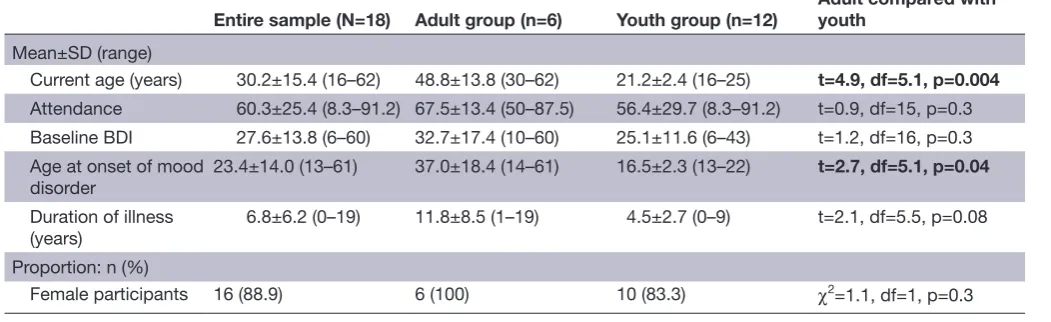
Table 1 Sample demographics
Entire sample (N=18) Adult group (n=6) Youth group (n=12) Adult compared with youth Mean±SD (range)
Current age (years) 30.2±15.4 (16–62) 48.8±13.8 (30–62) 21.2±2.4 (16–25) t=4.9, df=5.1, p=0.004 Attendance 60.3±25.4 (8.3–91.2) 67.5±13.4 (50–87.5) 56.4±29.7 (8.3–91.2) t=0.9, df=15, p=0.3 Baseline BDI 27.6±13.8 (6–60) 32.7±17.4 (10–60) 25.1±11.6 (6–43) t=1.2, df=16, p=0.3 Age at onset of mood
disorder 23.4±14.0 (13–61) 37.0±18.4 (14–61) 16.5±2.3 (13–22) t=2.7, df=5.1, p=0.04 Duration of illness
(years) 6.8±6.2 (0–19) 11.8±8.5 (1–19) 4.5±2.7 (0–9) t=2.1, df=5.5, p=0.08
Proportion: n (%)
Female participants 16 (88.9) 6 (100) 10 (83.3) χ2=1.1, df=1, p=0.3
Significant results are shown in bold text. BDI, Beck Depression Inventory.
a recent meta-analysis evaluating the effects of exercise on MDD symptoms found a significant effect of exercise
across a variety of measures of depression.19 Critically,
however, there is scant information concerning the effects of exercise on non-mood outcomes, including social and cognitive functioning and quality of life, in
patients who do not respond to first-line therapies,20 or
who experience recurrent episodes and ongoing
func-tional impairment,12 14 21 even after mood symptoms have
improved.22 23 Here, only a handful of studies reported
improvements in depressive symptoms24–26 and
psychoso-cial functioning and quality of life27 in treatment-resistant
clinical populations. Finally, there is a paucity of research examining the impact of exercise on outcomes in patients
with BD.28 On balance, there is an urgent need for data
concerning the relation between exercise and mood disorders: (1) across the spectrum of symptoms that include quality of life, cognitive functioning and social functioning; and (2) in difficult-to-treat forms of mood
disorders with high burdens of illness.12
Since April 2012, a multidisciplinary clinical team in the Mood Disorders Program at St Joseph’s Healthcare
Hamilton (Hamilton, Ontario) has offered Team
Unbreak-able, a 12-week recreational running programme. This
group-based programme aims to provide therapeutic benefit to youth and adults with mood disorders, typi-cally recruiting patients with complex clinical histories that have responded poorly to traditional treatments. A chart-based review of this sample previously confirmed a positive effect of running on symptoms of stress,
anxiety and depression.29 Here, we report on a subset
of these individuals who participated in a prospec-tive study that evaluated the impact of this structured running programme on (1) health-related quality of life (HRQOL), (2) neurocognitive function and (3) social functioning outcomes.
MeThoDs
Data were collected from youth and adults who partici-pated in the programme from August 2012 to December 2016.
Participants
Study participants were recruited from the Team
Unbreak-able group, who were recruited by posting flyers and
sending information about the programme to clinics in and around St Joseph’s Healthcare Hamilton sites. Depending on their age, participants joined either the youth (16–25 years) or adult (>25 years) running group
(see table 1). Inclusion criteria included history of mood
disorder and ability to meet the physical demands of
participating in the running programme.30 All eligible
patients were invited to participate in the study. Those who agreed were required to sign informed consent forms prior to data collection. Clinical diagnoses were confirmed by reviewing formal assessments made by a psychiatrist or psychologist and documented on partici-pants’ medical records.
neurocognitive functioning assessments
Neurocognitive functioning was assessed using a battery of tasks, including the following:
► California Verbal Learning Task-II (CVLT-II)31: The CVLT-II assesses immediate and delayed memory performance, interference and recognition; an alter-nate version with different words was used for the end-of-study assessment.
► Wechsler Adult Intelligence Scale-Fourth Edition (WAIS-IV) Digit Span32: The Digit Span task assesses working memory and attention, with increasing difficulty of the tests (forward, backward, sequencing) reflecting
more complex levels of executive functioning.33
► Stroop Color-Word Task34: The Stroop task measures different types of executive function, including cogni-tive flexibility and inhibition (colour-word task), as well as simple attention and processing speed (word and colour tasks).
copyright.
on May 7, 2020 by guest. Protected by
► Mnemonic Similarity Task (MST): This high interfer-ence memory task is a computer-based variant of the
MST developed by Kirwan and Stark.35 During the
study phase, a set of images are presented sequen-tially in randomised order to the participant. In the recognition phase, participants are shown a sequence of images and must decide whether each image is novel (not seen before), old (identical to the ones in the presentation stage) or similar (highly similar to a previously studied image).
Correct identification of similar images is a chal-lenging memory test linked to hippocampal
func-tioning.35 Specifically, performance on this type
of high interference memory test is hypothesised
to depend on hippocampal neurogenesis.36 MST
performance is predicted by established modulators of neurogenesis in rodents, including binge drinking,
stress and depression scores, ageing, and exercise.37–42
Importantly, evidence from rodent models links
hippocampal neurogenesis directly to depression.43–46
Thus, the neurogenic theory of depression postulates that low neurogenesis levels increase vulnerability to depression, while restoration of neurogenesis levels is required to overcome depression. We therefore predicted that exercise would lead to improved MST performance in association with improved depres-sion scores.
The following computer-based assessments were based on the Cambridge Neuropsychological Test Automated Battery ( cambridgecognition. com/ cantab) and coded in e-prime:
► Delayed match to sample: In each trial, the participant is shown a complex visual pattern (the sample) and, after a brief delay, four similar images with patterns. The participant must identify which image is identical to the sample image.
► Spatial recognition memory (SRM): The SRM tests visual spatial recognition memory involving a two-choice forced discrimination paradigm. During presenta-tion trials, a white square appears sequentially at five different locations on the screen. During the recog-nition phase, five pairs of squares are presented; for each pair, the participant must correctly identify this square.
► Paired associate learning: This test assesses visuospa-tial associative memory and new learning. During the study phase, boxes are displayed on the screen and opened in a randomised order. One or more of them will contain a pattern. During the test phase, the patterns are displayed in the middle of the screen, and the participant must select the box where each pattern was originally located. If the participant makes an error, the trial is restarted.
► Rapid visual processing: In this test of sustained atten-tion and working memory, a white box appears at the centre of the computer screen, inside which digits from 1 to 9 appear in a pseudorandom order at a rate of 100 digits per minute. Participants must detect
target sequences of three successive digits (eg, 1-2-3) and register their response on the keyboard.
Clinical assessments
Clinical assessments included the following:
► Beck Depression Inventory-Second Edition (BDI-II;
Psych-Corp)47: a 21-item self-report questionnaire used to
assess depressive symptoms.
► Beck Anxiety Inventory (PsychCorp)48: a 21-item self-re-port questionnaire used to assess the severity of an individual’s symptoms of anxiety.
► Cohen’s Perceived Stress Scale49: a 10-item self-report questionnaire used to measure the perception of stressful events during the past month.
► 36-Item Short Form Survey (SF-36)50 51: a 36-item self-report assessment which measures HRQOL to generate eight scores in two domains. The physical domain includes physical functioning, limitations due to physical health, bodily pain and general health perceptions; the mental health domain assesses social functioning, mental health, limitations in physical activities due to emotions and vitality.
running protocol
The running programme for this study has been described
in detail previously.29 Briefly, the group met twice per
week, alternating between walking and running. They increased total distance by about 0.5 km per run, and increased running intervals by 30–60 s per week. The goal was to be mostly running 5 km by week 12, and then complete a local 5 km run as a group. The sessions were facilitated by running coaches (JW, KM), included weekly motivational talks across a range of topics, and engaged hospital staff and graduate students as running volun-teers.
statistical analyses
Preintervention and postintervention differences in continuous variables were analysed using paired t-tests; change scores were calculated as postintervention minus preintervention scores. Relations among variables of interest were evaluated using the Pearson correlation coefficient and multiple linear regression analyses. All analyses were performed using SAS V.9.4 for Windows.
resulTs
Data were collected from 18 participants from August
2012 to December 2016 across 10 cohorts (see table 1).
Although the youth group had an earlier age of onset and higher dropout rate than the adult group, previous analyses using a larger data set indicated no difference in youth compared with adult runners in terms of mood
outcomes.29 Further, the rates of MDD and BD were
similar in both groups (71.4% and 14.2% compared with 81.8% and 9.1% for adult and youth groups, respectively); therefore, the groups were analysed together. There
were fewer male than female participants (χ2=11.8, df=1,
p=0.0006), and eight participants completed baseline
copyright.
on May 7, 2020 by guest. Protected by
Table 2 Characteristics of study completers compared with dropouts Completed preassessment and postassessment (n=18)
Completed baseline only*
(n=8) Comparison
Mean±SD (range)
Current age (years) 30.2±15.6 (16–62) 23.6±4.0 (18–31) t=−1.7, df=21.3, p=0.11 Attendance (% sessions
attended)
60.3±25.3 (8.3–91.2) 30.9±25.8 (8.3–83.3) t=−2.5, df=22, p=0.02*
Baseline BDI 27.6 (±13.8; 6–60) 22.1 (±12.3; 0–49) t=−1.0, df=24, p=0.3 Age at onset of mood disorder
(years) 23.4±14.2 (13–61) 15.5±2.5 (12–18) t=−2.5, df=19.8, p=0.02*
Duration of illness (years) 6.8±6.3 (0–19) 9.8±4.8 (4–15) t=1.1, df=22, p=0.3 Proportion, n (%)
Female participants 16 (89) 6 (75.0) χ2=0.8, df=1, p=0.4
Baseline diagnosis of MDD 14 (77.8) 3 (37.5) χ2=4.0, df=1, p=0.05
Baseline diagnosis of BD 3 (16.7) 5 (62.5) χ2=5.5, df=1, p=0.01
[image:4.595.40.555.586.732.2]*Participants did not necessarily drop out of the running group, but did not complete the end-of-study assessments. BD, bipolar disorder; BDI, Beck Depression Inventory; MDD, major depressive disorder.
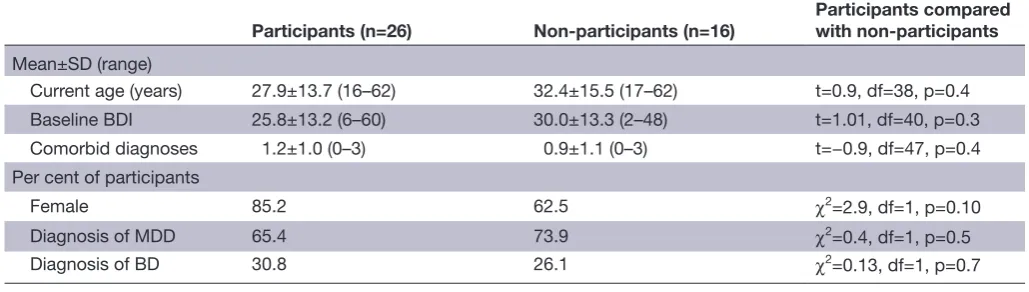
Table 3 Running group participants who consented to be in the study compared to those who declined
Participants (n=26) Non-participants (n=16)
Participants compared with non-participants Mean±SD (range)
Current age (years) 27.9±13.7 (16–62) 32.4±15.5 (17–62) t=0.9, df=38, p=0.4
Baseline BDI 25.8±13.2 (6–60) 30.0±13.3 (2–48) t=1.01, df=40, p=0.3
Comorbid diagnoses 1.2±1.0 (0–3) 0.9±1.1 (0–3) t=−0.9, df=47, p=0.4
Per cent of participants
Female 85.2 62.5 χ2=2.9, df=1, p=0.10
Diagnosis of MDD 65.4 73.9 χ2=0.4, df=1, p=0.5
Diagnosis of BD 30.8 26.1 χ2=0.13, df=1, p=0.7
BD, bipolar disorder; BDI, Beck Depression Inventory; MDD, major depressive disorder.
but not end-of-study assessments (table 2). Those who
dropped out of the study were more likely to be male, have a primary diagnosis of BD and illness diagnosis in their teens compared with those who completed the end-of-study assessments. Baseline comorbid diagnoses included social anxiety disorder (n=11), generalised anxiety disorder (n=9), substance use/abuse (n=5), agoraphobia (n=2), panic disorder (n=1), post-traumatic stress disorder (n=1), dysthymia (n=1) and psychotic
symptoms (n=3). Data presented in table 2 further
illus-trate the complex clinical histories of the participants. Comparison of those who participated in the prospective study compared with those who did not is presented in
table 3; no significant differences were observed in age,
baseline BDI, primary clinical diagnosis or number of comorbid diagnoses.
Preintervention and postintervention assessments
HRQOL results are summarised in table 4. Whereas all of
the mental health subscale scores (mental health, vitality, social functioning, role of emotions in functioning)
improved significantly from baseline to end of study, of the physical health subscales only the general health subscale improved significantly from baseline.
Neurocognitive function
The results of the neuropsychological analyses are
summarised in table 5. Only the WAIS Digit Span
Forward (DSF) and the Stroop Color tests improved significantly from baseline compared with end of study, reflecting improved working memory and processing speed, respectively.
Multiple linear regression analyses
We predicted a priori that participation in a running group would be associated with improvements in
cogni-tive52 and social27 function. Therefore, we performed
multiple regression analyses with the DSF and Stroop Color change scores as dependent variables for cogni-tive function and the SF-36 social function change score for social function. Predictor variables entered into the model were age, attendance, age at illness diagnosis,
copyright.
on May 7, 2020 by guest. Protected by
Table 4 Health-related quality of life
SF-36 subscale Preintervention, mean (±SD) Postintervention, mean (±SD) Paired t-test
Physical fitness 78.0 (±20.4) 84.3 (±16.7) t=−1.3, df=17, p=0.2
Role of physical 51.3 (±34.0) 62.5 (±38.5) t=−1.2, df=17, p=0.2
Bodily pain 69.6 (±25.8) 70.5 (±22.2) t=−0.2, df=17, p=0.9
General health 52.5 (±17.5) 61.3 (±13.5) t=-3,0, df=17, p=0.007
Vitality 26.8 (±14.6) 41.5 (±20.0) t=−2.9, df=17, p=0.01
Social functioning 46.3 (±25.4) 64.4 (±27.3) t=−3.1, df=17, p=0.007
Role of emotions 11.7 (±19.6) 41.7 (±41.7) t=−2.9, df=17, p=0.009
Mental health 44.0 (±17.7) 55.4 (±19.1) t=−3.0, df=17, p=0.007
Significant results are shown in bold text. SF-36, 36-Item Short Form Survey.
Table 5 Neurocognitive assessments
Test Preintervention (mean±SD) Postintervention (mean±SD) Paired t-test CVLT
Recall trials 1–5* 53.2±7.6 50.3±9.4 t=−1.4, df=16, p=0.2
Short delay free recall* 11.6±3.2 12.1±2.8 t=0.9, df=16, p=0.4
Short delay cued recall* 12.2±2.2 12.6±2.5 t=1.1, df=16, p=0.3
Long delay free recall* 12.2±3.4 11.6±4.0 t=0.6, df=16, p=0.6
Long delay cued recall* 12.5±2.8 12.6±2.5 t=−0.3, df=16, p=0.8
Total repetitions† 3.0±3.5 1.4±1.6 t=−1.8, df=16, p=0.10
Total intrusions† 1.0±1.9 0.7±1.7 t=0.5, df=15, p=0.6
WAIS Digit Span
Total score* 28.6±5.2 29.8±6.0 t=−1.6, df=17, p=0.13
Forward* 10.7±2.6 11.8±2.7 t=−2.8, df=17, p=0.01
Backward* 8.7±2.4 8.6±2.3 t=−0.3, df=17, p=0.8
Sequential* 8.4±2.0 8.6±2.5 t=0.4, df=17, p=0.8
Stroop
Word* 90.2±10.3 90.5±12.2 t=−0.2, df=14, p=0.9
Color* 67.2±10.7 71.9±10.8 t=−2.4, df=14, p=0.04
Color–Word interference* 44.9±8.2 46.3±10.4 t=−1.0, df=14, p=0.3
Delayed match to sample
(% matches correct)* 86.0±5.4 85.4±11.7 t=−0.2, df=10, p=0.8
Mnemonic similarity task (% similar correct)*
40.5±20.5 44.9±20.1 t=−1.1, df=10, p=0.3
Spatial recognition memory
(% matches correct)* 66.4±17.8 68.2±14.7 t=−0.5, df=10, p=0.7
Paired associate learning
(number of trials)† 10.6±2.8 10.3±2.7 t=0.3, df=9, p=0.8
[image:5.595.43.549.320.713.2]Rapid visual processing (% correct)*
88.4±13.2 89.3±8.6 t=0.2, df=6, p=0.8
Significant results are shown in bold text. *Higher scores indicate improvement.
CVLT, California Verbal Learning Task; WAIS, Wechsler Adult Intelligence Scale. illness duration and SF-36 subscales (except for social
functioning in the analysis for social function). The DSF change score was predicted by age of participant, where younger participants showed greater improvement from baseline to end of study (parameter estimate −0.06),
explaining 34% of the variance (F(1, 17)=8.8, p=0.009).
The Stroop Color-only change score was predicted by shorter duration of illness (parameter estimate −0.6) and improved bodily pain scores (parameter estimate 0.2),
explaining 41% of the variance (F=4.8, df=2, 14, p=0.03).
copyright.
on May 7, 2020 by guest. Protected by
Correlations with the Stroop Color-only change scores were r=−0.5 (p=0.04) and r=0.4 (p=0.1) for duration of illness and bodily pain change score, respectively.
Social functioning
Improved social functioning was predicted by improved physical functioning (parameter estimate=0.4) and higher attendance (parameter estimate=0.33), explaining
26% of the variance (F(2, 17)=2.9, p=0.08). Correlations
with social functioning were r=0.3 (p=0.2) for role of physical symptoms in functioning and r=0.4 (p=0.1) for attendance.
Depression
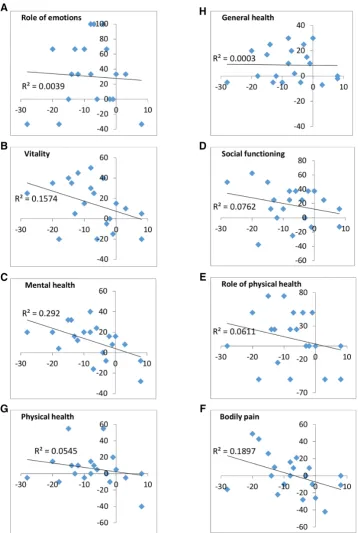
A stepwise multiple regression analysis was performed with BDI change score as the outcome variable, and age, attendance, age at illness diagnosis, duration of illness and SF-36 subscales as predictor variables (except mental health as this was highly correlated with BDI). Improved (negative) BDI scores were predicted by higher atten-dance (parameter estimate −0.13), improved bodily pain (parameter estimate −0.25), improved vitality (parameter estimate −0.26) and improved general health (parameter estimate 0.25), accounting for 43% of the variance in
BDI change scores (F(3, 15)=3.7, p=0.04) (see figure 1).
Correlations with BDI change scores were attendance (r=−0.34, p=0.15), bodily pain (r=−0.43, p=0.05), vitality (r=−0.4, p=0.06) and general health (r=−0.1, p=0.8).
DisCussion
In a sample of youth and adults with mood disorders char-acterised by long duration of illness, recurrent episodes and/or multiple comorbidities, we observed pre–post improvement across multiple functional outcomes of mood disorders following participation in a 12-week running programme. Improvements were observed in the general physical health and all mental health subscales of the SF-36, including vitality, role of emotions in func-tioning, mental health and social functioning. Improved neurocognitive functioning was detected on measures of working memory and simple attention. Higher atten-dance was associated with improved social functioning and decreased depression scores, while a shorter duration of illness and improved bodily pain predicted improved processing speed in the Stroop Color test. Finally, partic-ipants with a primary diagnosis of BD and an earlier age of illness diagnosis were less likely to complete the study.
The neurocognitive improvements observed here are consistent with two recently published meta-analyses in healthy humans reporting small but significant effects of
chronic exercise on working memory53 and attention and
processing speed.52 Notably, both meta-analyses reported
that older adults were more likely to show improve-ment, consistent with normal age-related decline. In the current study, improved scores on the DSF were predicted by younger age, suggesting room for improve-ment in younger participants with mood disorders, which may not be typical of a healthy, non-depressed
sample. Further, contrary to findings in healthy young
adults,38 40 54 and to predictions made by the neurogenic
theory of depression,43–46 we did not find an
improve-ment on the MST task, believed to reflect hippocampal function and neurogenesis levels. This finding is consis-tent with meta-analyses reporting that duration of illness
in depression predicts hippocampal volume loss,55–58
which may explain the lack of broader memory improve-ments in our participants, many of whom had been ill for many years. Further, a recent meta-analysis exam-ining exercise and cognitive function in adults with depression reported no cognitive improvements across aerobic, anaerobic and mind–body interventions (eg,
yoga).59 Indeed, literature reviews reveal considerable
variability across studies investigating the impact of exer-cise on cognitive function outcomes (see Guiney and
Machado,60 and Diamond61), possibly related to
method-ological differences across exercise programmes, clinical and demographic factors of participants, and
neurocog-nitive assessment measures.52 53 59 It is also noteworthy
that the vast majority of research on exercise and cogni-tive functioning has been done in ageing samples, usually
to investigate the effects of cognitive decline62; there is
little information on the impact of exercise on memory in healthy young and middle-aged adults for comparison purposes. These inconsistencies underscore the need for further research into how clinical and demographic factors influence the neurocognitive benefits of exercise in participants with mood disorders.
In the current study, we observed improvements in general health and all mental health HRQOL subscales,
which is consistent with the literature.63–65 Further, the
observed social functioning improvements build on our previously published finding of improved perceived
friendship in an overlapping sample.29 To the best of our
knowledge, this is the first study to report positive changes across multiple functional outcomes in a complex psychi-atric sample of patients with mood disorders who, at baseline testing, were unemployed and/or struggling with school, had experienced multiple past episodes of depression, and were not being managed effectively by medications. Taken together, these findings support that participation in a group-based running programme posi-tively impacts social functioning in youth and adults with
mood disorders,19 66 and may provide therapeutic benefit
to patients with mood disorders who do not fully respond to first-line treatments.
limitations
Although the results from the current study are encouraging, there are several limitations. First, in a large battery of cognitive tests, we observed significant improvements on two tasks (Stroop Color-only and DSF), and in both cases the changes were found on a less cognitively demanding subtest. Given the large number of tests administered, there is an elevated risk of a type I error rate; using a more conservative p value
of ≤0.01, only the DSF subtask improved significantly.
copyright.
on May 7, 2020 by guest. Protected by
Figure 1 Change in BDI scores plotted against change in health-related quality of life subscale scores from preassessment to postassessment. BDI change score is plotted on the horizontal axis, and the SF-36 change score is plotted on the vertical axis; the upper left quadrant of each graph represents improvement in both outcomes. Change scores for the following subscales are pictured below: (A) role of emotions in functioning, (B) vitality, (C) mental health, (D) social functioning, (E) role of physical health in functioning, (F) bodily pain, (G) physical health and (H) general health. BDI, Beck Depression Inventory; SF-36, 36-Item Short Form Survey.
Many participants in the running group chose not to participate in the study. Low recruitment of patients with mental illness as well as high dropout rates are well-documented limitations in these clinical
popula-tions.67 Further, we did not have someone available at
all times to meet potential participants, which impacted
our ability to take advantage of clinic visits. Therefore, the length of time to recruit this sample is consistent with the literature. However, considering we do report some differences in the dropouts compared with those who completed the study (although not for patients who chose not to participate), we should be cautious about
copyright.
on May 7, 2020 by guest. Protected by
generalising these findings to all patients with difficult-to-treat mood disorders.
Second, this study sample includes a heterogeneous group of participants with current and past diagnoses of MDD and BD, and total numbers within each group are too small to investigate the impact of specific clinical diag-nosis on outcomes. A third limitation of the current study is the duration of the running intervention. Although the antistress and antidepressant effects of exercise can
be detected after as little as one session,68 the impact on
functional outcomes in mood disorders may lag behind
improvements in mood symptoms.14 For example, visual
and verbal memory improvements have been reported as
detectable between 14 and 28 weeks,69 which was beyond
the observation period in this study.
Future research
Social isolation is well known to contribute to cogni-tive dysfunction, in particular on measures of execucogni-tive
functioning,70 suggesting a large, randomised controlled
trial with several comparison groups (eg, high-intensity exercise, low-intensity exercise, exercise alone, no exer-cise comparisons) could help to tease out the effects of perceived social support and different exercise inten-sities. Given the limited cognitive benefits observed, intervention and assessments should be structured over
a longer period of time, at least 6 months,14 with interim
assessments. Future research should also seek to under-stand how age and clinical features (eg, illness chronicity, comorbid diagnoses) interact with the effects of group-based exercise programmes. In particular, the impact of exercise in patients with BD represents a large knowledge gap in the literature.
ConClusions
The results reported here suggest that a structured, group-based exercise programme is associated with bene-fits in social functioning and HRQOL in youth and adults with complex and/or difficult-to-treat mood disorders. Future investigation regarding the role of clinical history and social functioning on exercise programmes in youth and adults with mood disorders is required urgently.
Acknowledgements We would like to thank the running coach volunteers Jenna Boyd, Lauren Cudney, Beth Kennedy, Kathryn Litke, Anthony Nazarov, Melissa Parlar and Ryan Pyrke. Esther Pauls from the Running Den is also thanked for her assistance with group leadership.
Contributors LK was the primary author and performed the majority of the assessments and all of the data analyses. SB was involved in the design of the study, in particular surrounding cognitive assessments, and provided direction to the analyses, interpretation of findings and writing of the paper. KM, JW and LG assisted with the design of the running programme, recruitment of participants and weekly data collection. BNF was involved with the design of the study, providing advice for data analyses and interpretation and for writing of the manuscript. RS was a co-principal investigator of this study. He was involved in the design of the study and provided guidance surrounding data analyses and interpretation and writing of the manuscript. MM was a co-principal investigator of this study. She was involved in the design of the study, provided directions surrounding clinical assessments, interpretation of the findings and writing of the manuscript. All authors read and approved the final manuscript.
Funding St Joseph’s Healthcare Hamilton Foundation provided funding to support this study; specifically, we wish to acknowledge the following donors: Ontario Endowment for Children & Youth in Recreation Fund at the Hamilton Community Foundation, Canadian Tire Financial Services, FGL Sports, Telus, and Jackman Foundation.
Competing interests None declared.
Patient consent for publication Not required.
ethics approval This study was reviewed and approved by the Hamilton Integrated Research Ethics Board (HIREB) (reference number 12-3660). Informed consent was obtained from all participants included in this study.
Provenance and peer review Not commissioned; externally peer reviewed.
Data availability statement No data are available.
open access This is an open access article distributed in accordance with the Creative Commons Attribution Non Commercial (CC BY-NC 4.0) license, which permits others to distribute, remix, adapt, build upon this work non-commercially, and license their derivative works on different terms, provided the original work is properly cited, appropriate credit is given, any changes made indicated, and the use is non-commercial. See: http:// creativecommons. org/ licenses/ by- nc/ 4. 0/.
reFerenCes
1. World Health Organization. The Global Burden of Disease: 2004
Update. Geneva, Switzerland: World Health Organization, 2008. 2. Pearson C, Janz T, Ali J. Mental and substance use disorders in
Canada. statistics Canada, 2013. Available: https:// www150. statcan. gc. ca/ n1/ en/ pub/ 82- 624- x/ 2013001/ article/ 11855- eng. pdf? st= 8Mq0pyEK [Accessed 6 Jun 2018].
3. Mcdonald KC, Bulloch AGM, Duffy A, et al. Prevalence of bipolar I
and II disorder in Canada. Can J Psychiatry 2015;60:151–6.
4. World Health Organization. Depression and other common mental
disorders: global health estimates. Geneva, Switzerland, 2017. 5. Keller MB, Lavori PW, Mueller TI, et al. Time to recovery, chronicity,
and levels of psychopathology in major depression. A 5-year
prospective follow-up of 431 subjects. Arch Gen Psychiatry
1992;49:809–16.
6. National Collaborating Centre for Mental Health. Bipolar disorder:
The management of bipolar disorder in adults, children and adolescents, in primary and secondary care. London, UK: The British Psychological Society and the Royal College of Psychiatrists, 2006.
7. Kolovos S, van Tulder MW, Cuijpers P, et al. The effect of treatment
as usual on major depressive disorder: a meta-analysis. J Affect
Disord 2017;210:72–81.
8. Kennedy SH, Lam RW, McIntyre RS, et al. Canadian network for
mood and anxiety treatments (CANMAT) 2016 clinical guidelines for
the management of adults with major depressive disorder. Can J
Psychiatry 2016;61:540–60.
9. Yatham LN, Kennedy SH, Parikh SV, et al. Canadian network for
mood and anxiety treatments (CANMAT) and International Society for bipolar disorders (ISBD) collaborative update of CANMAT guidelines for the management of patients with bipolar disorder:
update 2013. Bipolar Disord 2013;15:1–44.
10. Trivedi MH, Rush AJ, Wisniewski SR, et al. Evaluation of outcomes
with citalopram for depression using measurement-based care
in STAR*D: implications for clinical practice. Am J Psychiatry
2006;163:28–40.
11. Kaya E, Aydemir O, Selcuki D. Residual symptoms in bipolar
disorder: the effect of the last episode after remission. Prog
Neuropsychopharmacol Biol Psychiatry 2007;31:1387–92. 12. MacQueen GM, Memedovich KA. Cognitive dysfunction in major
depression and bipolar disorder: assessment and treatment options.
Psychiatry Clin Neurosci 2017;71:18–27.
13. Martínez-Arán A, Vieta E, Torrent C, et al. Functional outcome in
bipolar disorder: the role of clinical and cognitive factors. Bipolar Disord 2007;9:103–13.
14. Lam RW, Parikh SV, Michalak EE, et al. Canadian network for mood
and anxiety treatments (CANMAT) consensus recommendations
for functional outcomes in major depressive disorder. Ann Clin
Psychiatry 2016;27:142–9.
15. Sigwalt AR, Budde H, Helmich I, et al. Molecular aspects involved
in swimming exercise training reducing anhedonia in a rat model of
depression. Neuroscience 2011;192:661–74.
16. Duman CH, Schlesinger L, Russell DS, et al. Voluntary exercise
produces antidepressant and anxiolytic behavioral effects in mice.
Brain Res 2008;1199:148–58.
17. Van der Borght K, Havekes R, Bos T, et al. Exercise improves
memory acquisition and retrieval in the Y-maze task: relationship
with hippocampal neurogenesis. Behav Neurosci 2007;121:324–34.
copyright.
on May 7, 2020 by guest. Protected by
18. van Praag H, Shubert T, Zhao C, et al. Exercise enhances
learning and hippocampal neurogenesis in aged mice. J Neurosci
2005;25:8680–5.
19. Josefsson T, Lindwall M, Archer T. Physical exercise intervention in
depressive disorders: meta-analysis and systematic review. Scand J
Med Sci Sports 2014;24:259–72.
20. Salagre E, Solé B, Tomioka Y, et al. Treatment of neurocognitive
symptoms in unipolar depression: a systematic review and future
perspectives. J Affect Disord 2017;221:205–21.
21. Asher GN, Gartlehner G, Gaynes BN, et al. Comparative benefits
and harms of complementary and alternative medicine therapies for initial treatment of major depressive disorder: systematic review and
meta-analysis. J Altern Complement Med 2017;23:907–19.
22. Möller H-J. Outcomes in major depressive disorder: the evolving
concept of remission and its implications for treatment. World J Biol
Psychiatry 2008;9:102–14.
23. IsHak WW, Greenberg JM, Balayan K, et al. Quality of life: the
ultimate outcome measure of interventions in major depressive
disorder. Harv Rev Psychiatry 2011;19:229–39.
24. Mather AS, Rodriguez C, Guthrie MF, et al. Effects of exercise
on depressive symptoms in older adults with poorly responsive
depressive disorder: randomised controlled trial. Br J Psychiatry
2002;180:411–5.
25. Doyne EJ, Ossip-Klein DJ, Bowman ED, et al. Running versus
weight lifting in the treatment of depression. J Consult Clin Psychol
1987;55:748–54.
26. Veale D, Le Fevre K, Pantelis C, et al. Aerobic exercise in the
adjunctive treatment of depression: a randomized controlled trial. J
R Soc Med 1992;85:541–4.
27. Greer TL, Trombello JM, Rethorst CD, et al. Improvements in
psychosocial functioning and health-related quality of life following exercise augmentation in patients with treatment response but nonremitted major depressive disorder: results from the TREAD
study. Depress Anxiety 2016;33:870–81.
28. Malhi GS, Byrow Y. Exercising control over bipolar disorder. Evid
Based Mental Health 2016;19:103–5.
29. Keating LE, Becker S, McCabe K, et al. Effects of a 12-week running
programme in youth and adults with complex mood disorders. BMJ
Open Sport Exerc Med 2018;4.
30. Canadian Society for Exercise Physiology. PAR-Q & You: A
Questionnaire for People Aged 15 to 69 2002.
31. Delis DC, Kramer JH, Kaplan E, et al. California verbal learning Test®
–. Second Edition (CVLT® -II). San Antonio, TX: The Psychological
Corporation, 2000.
32. Wechsler D. Wechsler adult intelligence scale -. Fourth Edition (WAIS-IV). San Antonio, TX: Pearson, 2008.
33. Reynolds CR. Forward and backward memory span should
not be combined for clinical analysis. Arch Clin Neuropsychol
1997;12:29–40.
34. Stroop JR. Studies of interference in serial verbal reactions. J Exp
Psychol 1935;18:643–62.
35. Kirwan CB, Stark CEL. Overcoming interference: an fMRI
investigation of pattern separation in the medial temporal lobe. Learn
Mem 2007;14:625–33.
36. Becker S. Neurogenesis and pattern separation: time for a divorce.
WIREs Cogn Sci 2017;8:e1427 file:///C:/Users/keatingl/Downloads/ Beck erWI RESC ogSc i2016. pdf
37. Déry N, Goldstein A, Becker S. A role for adult hippocampal neurogenesis at multiple time scales: a study of recent and remote
memory in humans. Behav Neurosci 2015;129:435–49.
38. Déry N, Pilgrim M, Gibala M, et al. Adult hippocampal neurogenesis
reduces memory interference in humans: opposing effects of aerobic
exercise and depression. Front Neurosci 2013;7.
39. Goldstein A, Déry N, Pilgrim M, et al. Stress and binge drinking:
a toxic combination for the teenage brain. Neuropsychologia
2016;90:251–60.
40. Heisz JJ, Clark IB, Bonin K, et al. The effects of physical exercise
and cognitive training on memory and neurotrophic factors. J Cogn
Neurosci 2017;29:1895–907.
41. Shelton DJ, Kirwan CB. A possible negative influence of depression
on the ability to overcome memory interference. Behav Brain Res
2013;256:20–6.
42. Yassa MA, Mattfeld AT, Stark SM, et al. Age-related memory deficits
linked to circuit-specific disruptions in the hippocampus. Proc Natl
Acad Sci U S A 2011;108:8873–8.
43. Becker S, Wojtowicz JM. A model of hippocampal neurogenesis in
memory and mood disorders. Trends Cogn Sci 2007;11:70–6.
44. Jacobs BL, van Praag H, Gage FH. Adult brain neurogenesis
and psychiatry: a novel theory of depression. Mol Psychiatry
2000;5:262–9.
45. Kempermann G. Regulation of adult hippocampal neurogenesis -
implications for novel theories of major depression. Bipolar Disord
2002;4:17–33.
46. Sahay A, Hen R. Adult hippocampal neurogenesis in depression. Nat
Neurosci 2007;10:1110–5.
47. Beck AT, Steer RA, Brown GK. Manual for the Beck depression
inventory. Second Edition (BDI-II). edn. San Antonio, TX: Psychological Corporation, 1996.
48. Beck AT, Epstein N, Brown G, et al. An inventory for measuring
clinical anxiety: psychometric properties. J Consult Clin Psychol
1988;56:893–7.
49. Cohen S, Kamarck T, Mermelstein R. A global measure of perceived
stress. J Health Soc Behav 1983;24:385–96.
50. Ware JE, Kosinski M, Keller SD. SF-36 physical and mental health
summary scales: a users' manual. Boston, MA: Health Assessment Lab, 1994.
51. Ware JE, Sherbourne CD. The mos 36-item short-form health Survey
(SF-36). I. conceptual framework and item selection. Med Care
1992;30:473–83.
52. Smith PJ, Blumenthal JA, Hoffman BM, et al. Aerobic exercise and
neurocognitive performance: a meta-analytic review of randomized
controlled trials. Psychosom Med 2010;72:239–52.
53. Rathore A, Lom B. The effects of chronic and acute physical activity on working memory performance in healthy participants: a systematic review with meta-analysis of randomized controlled trials.
Syst Rev 2017;6.
54. Stroth S, Hille K, Spitzer M, et al. Aerobic endurance exercise
benefits memory and affect in young adults. Neuropsychol Rehabil
2009;19:223–43.
55. MacQueen GM, Campbell S, McEwen BS, et al. Course of
illness, hippocampal function, and hippocampal volume in major
depression. Proceedings of the National Academy of Sciences
2003;100:1387–92.
56. McKinnon MC, Yucel K, Nazarov A, et al. A meta-analysis examining
clinical predictors of hippocampal volume in patients with major
depressive disorder. Psychiatry Neurosci 2009;34:41–54.
57. Campbell S, Marriott M, Nahmias C, et al. Lower hippocampal
volume in patients suffering from depression: a meta-analysis. AJP
2004;161:598–607.
58. Videbech P, Ravnkilde B. Hippocampal volume and depression: a
meta-analysis of MRI studies. Am J Psychiatry 2004;161:1957–66.
59. Brondino N, Rocchetti M, Fusar-Poli L, et al. A systematic review
of cognitive effects of exercise in depression. Acta Psychiatr Scand
2017;135:285–95.
60. Guiney H, Machado L. Benefits of regular aerobic exercise for
executive functioning in healthy populations. Psychon Bull Rev
2013;20:73–86.
61. Diamond A. Effects of physical exercise on executive functions:
going beyond simply moving to moving with thought. Ann Sports
Med Res 2015;2.
62. Gómez-Pinilla F, Hillman C. The influence of exercise on cognitive
abilities. Compr Physiol 2013;3:403–28.
63. Mota-Pereira J, Carvalho S, Silverio J, et al. Moderate physical
exercise and quality of life in patients with treatment-resistant major
depressive disorder. J Psychiatr Res 2011;45:1657–9.
64. Carta M, Hardoy M, Pilu A, et al. Improving physical quality of life with group physical activity in the adjunctive treatment of major
depressive disorder. Clin Pract Epidemiol Ment Health 2008;4.
65. Schuch FB, Vancampfort D, Rosenbaum S, et al. Exercise improves
physical and psychological quality of life in people with depression: a meta-analysis including the evaluation of control group response.
Psychiatry Res 2016;241:47–54.
66. Hearing CM, Chang WC, Szuhany KL, et al. Physical exercise for
treatment of mood disorders: a critical review. Curr Behav Neurosci
Rep 2016;3:350–9.
67. Brown JSL, Murphy C, Kelly J, et al. How can we successfully
recruit depressed people? Lessons learned in recruiting depressed participants to a multi-site trial of a brief depression intervention (the ‘CLASSIC’ trial). Trials 2019;20.
68. Pretty J, Peacock J, Sellens M, et al. The mental and physical
health outcomes of green exercise. Int J Environ Health Res
2005;15:319–37.
69. Herrera-Guzmán I, Gudayol-Ferré E, Herrera-Abarca JE, et al.
Major depressive disorder in recovery and neuropsychological functioning: effects of selective serotonin reuptake inhibitor and dual inhibitor depression treatments on residual cognitive deficits in
patients with major depressive disorder in recovery. J Affect Disord
2010;123:341–50.
70. Cacioppo JT, Hawkley LC. Perceived social isolation and cognition.
Trends Cogn Sci 2009;13:447–54.
copyright.
on May 7, 2020 by guest. Protected by