2076
Detecting Derogatory Compounds – An Unsupervised Approach
Michael Wiegand∗0, Maximilian Wolf∗, Josef Ruppenhofer†‡ ∗Spoken Language Systems, Saarland University, Saarbr¨ucken, Germany
†Leibniz ScienceCampus, Heidelberg/Mannheim, Germany ‡Institute for German Language, Mannheim, Germany
[email protected] [email protected]
Abstract
We examine the new task of detecting derogatory compounds (e.g.curry muncher). Derogatory compounds are much more diffi-cult to detect than derogatory unigrams (e.g.
idiot) since they are more sparsely represented in lexical resources previously found effec-tive for this task (e.g. Wiktionary). We pro-pose an unsupervised classification approach that incorporates linguistic properties of com-pounds. It mostly depends on a simple distri-butional representation. We compare our ap-proach against previously established methods proposed for extracting derogatory unigrams.
1 Introduction
Abusive or offensive language is commonly de-fined as hurtful, derogatory or obscene utterances made by one person to another person.1 Examples are(1)-(3). In the literature, closely related terms includehate speech(Waseem and Hovy,2016) or
cyber bullying (Zhong et al.,2016). While there may be nuanced differences in meaning, they are all compatible with the general definition above.
(1) stop editing this, youdumbass.
(2) Just want to slap thestupidout of thesebimbos!!! (3) Go lick a pig you arab muslim piece ofscum.
Due to the rise of user-generated web content, in particular on social media networks, the amount of abusive language is also steadily growing. NLP methods are required to focus human review ef-forts towards the most relevant microposts.
A substantial amount of abusive utterances comprises derogatory words (e.g.bimboorscum). Automatic extraction methods of such words are required since new derogatory words constantly enter language.Wiegand et al.(2018a) extracted a
0
Present affiliation: Leibniz ScienceCampus, Heidel-berg/Mannheim, Germany
1http://thelawdictionary.org/
large list of such expressions and demonstrated its importance for text classification.
In this work, we focus on a subtype of deroga-tory terms, namely derogaderoga-tory compounds (e.g.
booze hound,curry muncher,fault finder). Distin-guishing such multi-word expressions from non-derogatory ones (e.g. fox hound, mile muncher,
branch finder) is more difficult than classifying unigrams since they are only sparsely represented in general-purpose lexical resources which have previously been found an effective source from which to learn abusive language, such as Wik-tionary.2 For example, while 97% of the deroga-tory unigrams of the gold standard lexicon in Wie-gand et al. (2018a) are contained in Wiktionary, less than 17% of the derogatory compounds used as our gold standard in this work can be found.
Despite their sparsity in lexical resources derogatory compounds are a frequent phe-nomenon, particularly in German data, which is why we study this task on that language. On the German benchmark corpus for abusive language detection, the GermEval corpus (Wiegand et al.,
2018b), we found that of the abusive microposts in the test set that include at least one derogatory expression, 39% contain a derogatory compound.
In our work, we focus on noun-noun com-pounds. Each compound (e.g. curry muncher) comprises two constituents, a modifier (i.e.curry) and a head (i.e.muncher). On the GermEval cor-pus, 77% of the derogatory compounds are noun-noun compounds. We only consider compounds whose constituents are not derogatory. 58% of the derogatory compounds on the GermEval cor-pus fall under this category. Given publicly avail-able lists of derogatory unigrams, the detection of derogatory compounds containing derogatory constituents (e.g. motherfucker) is rather trivial.
There even exist abusive word generators employ-ing such compounds.3
We present the first study to detect derogatory noun-noun compounds and propose an unsuper-vised classification approach based on distribu-tional information that does not require any prop-erly labeled training data. We demonstrate that lin-guistic features that have previously been found effective for the classification of derogatory un-igrams are notably less effective for the detec-tion of derogatory compounds. We created a new dataset of derogatory compounds which will be madepublicly available.4
Our task is framed as a binary classification problem. Each given compound is to be classified out of context as either derogatory or not. For the sake of accessibility, we use English translations of our German compounds in this paper.
2 Related Work
Lexical knowledge for the detection of abusive language has only received little attention in pre-vious work (Schmidt and Wiegand, 2017), the notable exceptions are Razavi et al. (2010) who present a manually-compiled lexicon,Gitari et al.
(2015) who bootstrap hate verbs and Wiegand et al.(2018a) who induce a lexicon of derogatory words. In all these researches, however, deroga-tory compounds are not explicitly addressed.
3 Data
We built a gold standard of derogatory com-pounds to train and test classifiers. We in-spected a range of websites containing deroga-tory word lists.5 Since ambiguity is a mas-sive problem in these lists6 which makes them hardly usable for abusive language detection ( Wie-gand et al.,2018a), we manually extracted noun-noun compounds which we considered unam-biguously derogatory. In order to produce non-derogatory compounds, we randomly sampled from the COW16 corpus (Sch¨afer,2015) for each derogatory compound (e.g. booze hound) other compounds sharing the same head (e.g.fox hound,
3http://sweary.com
4
https://github.com/uds-lsv/ offensive-compounds
5www.hyperhero.com/de/insults.htm
www.schimpfwoerter.de
www.seechat.de/warmduscher.htm
6These lists contain many compounds commonly used in
a non-offensive manner, e.g.Colatrinker (coke drinker).
0 0.005 0.01 0.015 0.02 0.025 0.03
0 200 400 600 800 1000
Relative Frequency
Rank
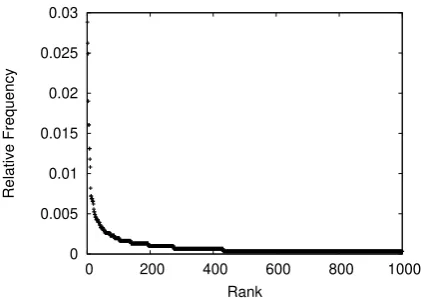
Figure 1: Head distribution of derogatory compounds.
Property Freq
total compounds 3500
derogatory compounds 382
[image:2.595.310.521.64.213.2]head groups (each group contains 20 compounds) 175 average no. of derogatory compounds in head group 2.2
Table 1: Some statistics of the gold standard.
stag hound). Since among those putative non-derogatory instances, there could well be further derogatory compounds, we manually annotated them as well. We limited the set of compounds sharing the same head, which we henceforth call
head group, to 20 compounds. Thus, we hope to avoid any biases towards particular heads.
We also looked at the natural distribution of heads on derogatory compounds. As a proxy we considered the union of all derogatory compounds found on the above websites.5 Figure1 plots the frequency rank of the heads against the relative frequency of a particular head. The plot sug-gests that the heads follow a power-law distribu-tion (Zipf, 1965). As a consequence, one cannot assume that this task could be solved by looking up heads in a finite lexicon with words that often form derogatory compounds in combination with different modifiers.
On a sample of 600 compounds, we measured a substantial agreement of Cohen’sκ= 0.61(Landis and Koch,1977) between 2 annotators. Our final dataset (Table1) comprises 3,500 compounds with only 11% being derogatory.
We also created agold standard of derogatory unigram words in order to examine in how far derogatory compounds can be detected by a clas-sifier trained on derogatory unigrams. For this lex-icon, we manually translated thebase lexiconfrom
4 Method
Our method does not require any labeled train-ing data. In the first step (§4.1), we apply high-precision diagnostics for the detection of deroga-tory compounds. The output are rankings in which derogatory compounds should be ranked highest. In the second step (§4.2), we combine and re-rank the output of those diagnostics. Our method largely relies on a distributional representation of our compounds. We induced embeddings of our compounds using Word2Vec (Mikolov et al.,
2013) on the COW16 corpus, which with its 30B tokens is one of the largest German corpora. Since we exclusively work on German data and Ger-man compounds occur as closed compounds, e.g.
Milchbube (milk sop) or Schnapsdrossel (booze hound), we can employ standard tokenization7for inducing embeddings for our compounds.
4.1 Individual High-Precision Diagnostics
Negative Polarity (NEG). Derogatory words form a subset of negative polar expressions. Due to their sparsity, however, derogatory compounds are rarely part of any sentiment lexicon (contain-ing polar expressions). We, therefore, rank all our compounds according to their cosine similar-ity to a centroid embedding-vector computed from all negative polar expressions from the German PolArt sentiment lexicon (Klenner et al.,2009).
Compound Occurrence vs. Constituent Oc-currence (COMCON). Derogatory compounds can be creative word constructions (e.g. booze hound, oxygen thief, keyboard warrior). Conse-quently, their constituents are often not semanti-cally related. For instance, inbooze hound,booze
bears no common semantic relation to hound. Therefore, the corpus frequency of a deroga-tory compound should be much higher than its constituents co-occurring in a sentence (i.e. with other words occurring in between). Such co-occurrences should be coincidental.
We capture this by the following formula (fre-quencies are computed on the COW16 corpus):
COM CON = # compound mentions in corpus
# constituents co-occurring in sentence (1)
In prose, COMCON ranks all compounds by the ratio of observed compound mentions and con-stituent co-occurrences in a sentence. For
deroga-7Any alphanumeric string separated by spaces is
consid-ered a token.
tory compounds, there should be a high frequency of compound mentions but only a low frequency of the constituents co-occurring in a sentence. Therefore, COMCON will have a high score. While there is a similarly high frequency of com-pound mentions for non-derogatory comcom-pounds, there is also a high frequency of the constituents co-occurring in a sentence since these constituents are usually semantically related (e.g.landowneror
circus clown). This should result in COMCON producing comparably lower scores.
Derogatory Compound Must Be Person (PERSON).We rank our compounds with regard to how likely they represent a person since many non-derogatory compounds represent either ob-jects or animals (e.g.booze houndvs.sight hound,
fox hound, stag hound). We first compute a cen-troid vector representing persons. Then, we rank compounds by their similarity to that vector.
As a proxy for persons, we took embeddings of words representing professions, e.g. banker,
lawyer,salesman. We also experimented with per-sonal pronouns as a proxy for persons. However, we found them unsuitable since they are also of-ten used as referring expressions to other entities, such as animals. Professions, on the other hand, can only refer to humans. The list of professions we used was created ad-hoc. It should be repro-ducible in any arbitrary language. The full list is included in the supplementary notes.4
Outlier Compound(s) in Head Group (OUT).
In most head groups, derogatory compounds represent a clear minority with only 1 or 2 com-pounds. The derogatory compounds are also of-ten semantically different from the non-derogatory compounds (keyboard warriorvs.rajput warrior,
ninja warrior, samurai warrior). This is partic-ularly true if the non-derogatory compounds are very homogeneous. From that observation we de-rive a diagnostic in which we determine the se-mantic outlier(s) for each head group. First, we compute for each compound the average pairwise similarity to all other compounds within its head group. The resulting score of a compound (con-verted to a dissimilarity score by taking its in-verse) is then multiplied by a weight represent-ing the homogeneity of all compounds within that head group.8 (Pseudocode is provided in the sup-plementary notes.4) This is done since for head
8The homogeneity weight is the average pairwise
groups that are heterogeneous (e.g.legacy hunter,
job hunter,autograph hunter), there are less obvi-ous outliers.
4.2 Combination and Reranking
Combination (COMB). Negative polarity is a pre-requisite for being derogatory (Sood et al.,
2012; Dinakar et al., 2012; Gitari et al., 2015). Therefore, we base our combination on the rank-ing of NEG. From that rankrank-ing we remove all those compounds which have not co-occurred at the high ranks of at least one of the other di-agnostics (COMCON, OUT, PERSON).9 Com-pounds that are highly ranked by several diagnos-tics should more likely represent derogatory com-pounds.
Re-Ranking by PageRank (PRANK).We ob-served that among the top ranks of COMB, the derogatory compounds are semantically similar (e.g. dwarf tosser, mischief maker, slimeball) while the non-derogatory compounds are seman-tically different from each other (e.g. biker club,
spirit bear). Therefore, we run personalized Page-Rank (Agirre and Soroa,2009) to further improve the ranking by enforcing the compounds on the high ranks to be distributionally similar. We build a word-similarity graph where our compounds are nodes and edges encode cosine-similarities of their embeddings. PageRank then produces a ranking of nodes where the highest ranked nodes are the ones most highly connected. In person-alized PageRank prior information is added. A biased graph is constructed in which attention is drawn towards particular regions of interest. This is achieved by assigning re-entrance weights to the individual nodes. As prior information, we set the nodes representing the compounds returned by COMB with a uniform re-entrance weight (α)10 while all other nodes receive a weight of 0.
Label Propagation (LP).While previous diag-nostics were designed to isolate a few derogatory compounds with a high precision, LP aims for in-creasing recall. We define some high-precision seeds for the two categories of our task and then propagate the labels to the unlabeled com-pounds by using label propagation (Talukdar et al.,
2008). The algorithm operates on the same word-similarity graph that we used for PRANK. We de-fine highly ranked compounds from PRANK as
9
We took top 350 from all these rankings which resembles the number of derogatory compounds on our dataset.
10FollowingManning et al.(2008), we setα= 0.1.
derogatory seeds and lowly ranked compounds as non-derogatory seeds. Unlike the previous diag-nostics, the output of LP is a binary categorization rather than a ranking. In order to make this output comparable to the other diagnostics, we converted the output of LP to a ranking. This is achieved by ranking the compounds predicted as derogatory according to the confidence score provided by the classifier.
5 Experiments
Table 2 shows the precision at rank n (P@n) of different rankings as measured on our compound gold standard. For LP, we consider the top 50 compounds from PRANK as derogatory seeds and the bottom 500 as non-derogatory seeds.11 As a baseline we add a randomized ranking (RAND).
PRANK produces a very high precision on the high ranks, outperforming the individual rank-ings and COMB. We also tested a modifica-tion, PRANKN EG, which applies personalized
PageRank on the output of NEG, which is the strongest individual ranking. Since PRANK out-performs PRANKN EG, we conclude that the high
precision of PRANK also depends on the com-bination of the individual rankings. LP manages to notably raise scores on the lower ranks (e.g. P@300) which proves the advantage of LP over PRANK.
Table 3 compares our proposed method (LP) against supervised classifiers. We evaluate the en-tire classification output (with F1-measure) rather than a ranking. The classifiers are trained on our unigram or compound gold standard (§3). For the latter case, we conducted 10-fold crossvalidation. 500 of the 3500 compounds were reserved as a de-velopment set on which we tuned hyperparame-ters of the supervised classifiers. (The supplemen-tary notes4contain more details.) As features we consider word embeddings and the linguistic fea-tures fromWiegand et al.(2018a). They are based on knowledge that is expensive to produce, such as sentiment views, polar intensity, or information from Wiktionary.12
Table3shows that learning from the compound gold standard is more effective than learning from the existing unigram gold standard. Given the
11
The ratio of derogatory and non-derogatory compounds should vaguely reflect the class distribution.
12The method WSUP fromWiegand et al.(2018a) was not
P@n RAND COMCON PERSON OUT NEG COMB PRANKN EG PRANK LP
P@25 12.0 19.2 50.0 60.0 72.0 80.0 96.0 100.0 100.0
P@50 14.0 20.0 46.0 44.0 62.0 74.0 88.0 94.0 94.0
P@100 10.0 26.0 40.0 38.0 58.0 68.0 68.0 82.0 77.0
P@200 10.0 30.5 31.5 26.5 48.5 54.5 42.0 59.0 68.5
[image:5.595.81.522.62.116.2]P@300 12.3 27.3 27.7 21.7 39.3 44.0 29.3 44.3 60.3
Table 2: Comparison of different rankings, evaluated by precision at rankn(P@n). (PRANKN EGis the ranking applied solely on the output of NEG; PRANK is the ranking applied on the output of COMB.)
Training Classifier Features F1 unigram SVM embeddings+linguistic 63.3
compound SVM linguistic 66.1
SVM embeddings (off-the-shelf) 68.5
SVM embeddings 72.4
SVM embeddings+linguistic 74.7
[image:5.595.79.285.173.236.2]none LP (embeddings) 73.5
Table 3: Comparison of different classifiers.
Classifier SVM (embeddings+linguistic) LSTM Unit head modifier compound combined characters
F1 57.0 60.2 74.7 69.0 54.5
Table 4: Comparison of compositional approaches.
strong performance of embeddings, we also exam-ined the performance of (publicly available) off-the-shelf embeddings13 and found that the high classification scores can be mainly ascribed to the large corpus on which we induced our embeddings (i.e. COW16).
Our unsupervised approach (LP) is almost on a par with the most complex SVM. This is par-ticularly appealing since we produced that clas-sifier without manually labeled training data and those manually-created resources required for the linguistic features.
Compound embeddings are the most predictive information for our task, but even from the large COW16 corpus, we only obtained embeddings for 60% of our compounds.14 In Table 4, we evalu-ate compositional information, which can also be used for compounds that lack an embedding. We apply an SVM with the best previous feature set
13We took the publicly available embeddings induced
on Twitter-data from: www.spinningbytes.com/ resources/wordembeddings/
14For the remaining compounds, we used dummy vectors.
Classifier SVM (embed.+ling.) LP Embeddings plain +approx. plain +approx.
F1 74.7 75.7 73.5 74.9∗
Table 5: Compound embedding augmentation (∗: sta-tistically better than the plain classifier using a paired t-test atp <0.05).
(of which embeddings are the main contributor) on the constituents of the compounds. Moreover, we train an LSTM on the sequence of characters of the compound. Table4shows that information drawn from units other than the compound itself is less effective. The feature combination of head, modifier and compound is not effective either.
Instead of applying embeddings on constituents and concatenating them, we also examine a so-phisticated compositional model (Wmask) based on a masking process that takes into account the variation of a constituent depending on whether it is a head or a modifier (Dima, 2015). Table
5 shows the performance of the two best previ-ous classifiers where compounds lacking an em-bedding are represented by an emem-bedding approx-imated by Wmask (rather than a dummy vector). The table shows that the two classifiers can be im-proved by adding the approximated embeddings.
6 Conclusion
We examined the new task of detecting deroga-tory compounds and proposed an unsupervised ap-proach incorporating linguistic properties of com-pounds that mostly depend on a distributional rep-resentation. Our method outperforms linguistic features previously shown to be effective for the detection of derogatory unigrams and it is on a par with a far more expensive state-of-the-art su-pervised approach. Features defined on the con-stituents of a compound and training a classifier on derogatory unigrams are far less effective.
Acknowledgements
The authors would like to thank Ines Rehbein for feedback on earlier drafts of this paper. We are also grateful to Corina Dima for helping us to run her semantic composition toolkit wordcomp
References
Eneko Agirre and Aitor Soroa. 2009. Personaliz-ing PageRank for Word Sense Disambiguation. In
Proceedings of the Conference on European Chap-ter of the Association for Computational Linguistics (EACL), pages 33–41, Athens, Greece.
Corina Dima. 2015. Reverse-engineering Language: A Study on the Semantic Compositionality of German Compounds. In Proceedings of the Conference on Empirical Methods in Natural Language Processing (EMNLP), pages 1637–1642, Lisbon, Portugal.
Karthik Dinakar, Birago Jones, Catherine Havasi, Henry Lieberman, and Rosalind Picard. 2012. Com-mon sense reasoning for detection, prevention, and mitigation of cyberbullying. ACM Transactions on Interactive Intelligent Systems, 2(3):18:1–18:30.
Njagi Dennis Gitari, Zhang Zuping, Hanyurwimfura Damien, and Jun Long. 2015. A Lexicon-based Ap-proach for Hate Speech Detection. International Journal of Multimedia and Ubiquitous Engineering, 10(4):2015–230.
Manfred Klenner, Angela Fahrni, and Stefanos Pe-trakis. 2009. PolArt: A Robust Tool for Sentiment Analysis. InProceedings of the Nordic Conference on Computational Linguistics (NoDaLiDa), pages 235–238, Odense, Denmark.
J. Richard Landis and Gary G. Koch. 1977. The Mea-surement of Observer Agreement for Categorical Data. Biometrics, 33(1):159–174.
Christopher D. Manning, Hinrich Sch¨utze, and Prab-hakar Raghavan. 2008. Introduction to Information Retrieval. Cambridge University Press.
Tomas Mikolov, Kai Chen, Greg Corrado, and Jeffrey Dean. 2013. Efficient Estimation of Word Repre-sentations in Vector Space. InProceedings of Work-shop at the International Conference on Learning Representations (ICLR), Scottsdale, AZ, USA.
Amir Hossein Razavi, Diana Inkpen, Sasha Uritsky, and Stan Matwin. 2010. Offensive Language Detec-tion Using Multi-level ClassificaDetec-tion. In Proceed-ings of the Canadian Conference on Artificial Intel-ligence, pages 16–27, Ottawa, Canada.
Roland Sch¨afer. 2015. Processing and querying large web corpora with the COW14 architecture. In Pro-ceedings of the Workshop on Challenges in the Man-agement of Large Corpora (CMLC), pages 28–34, Lancaster, United Kingdom.
Anna Schmidt and Michael Wiegand. 2017. A Survey on Hate Speech Detection using Natural Language Processing. InProceedings of the EACL-Workshop on Natural Language Processing for Social Media (SocialNLP), pages 1–10, Valencia, Spain.
Sara Owsley Sood, Elizabeth F. Churchill, and Judd Antin. 2012. Automatic identification of personal
insults on social news sites. Journal of the As-sociation for Information Science and Technology, 63(2):270–285.
Partha Pratim Talukdar, Joseph Reisinger, Marius Pasca, Deepak Ravichandran, Rahul Bhagat, and Fernando Pereira. 2008. Weakly-Supervised Acqui-sition of Labeled Class Instances using Graph Ran-dom Walks. In Proceedings of the Conference on Empirical Methods in Natural Language Processing (EMNLP), pages 582–590, Honolulu, HI, USA.
Zeerak Waseem and Dirk Hovy. 2016. Hateful Sym-bols or Hateful People? Predictive Features for Hate Speech Detection on Twitter. In Proceedings of the Human Language Technology Conference of the North American Chapter of the ACL – Student Re-search Workshop), pages 88–93, San Diego, CA, USA.
Michael Wiegand, Josef Ruppenhofer, Anna Schmidt, and Clayton Greenberg. 2018a. Inducing a Lexi-con of Abusive Words – A Feature-Based Approach. In Proceedings of the Human Language Technol-ogy Conference of the North American Chapter of the ACL (HLT/NAACL), pages 1046–1056, New Or-leans, LA, USA.
Michael Wiegand, Melanie Siegel, and Josef Ruppen-hofer. 2018b. Overview of the GermEval 2018 Shared Task on the Identification of Offensive Lan-guage. InProceedings of the GermEval Workshop, pages 1–10, Vienna, Austria.
Haoti Zhong, Hao Li, Anna Cinzia Squicciarini, Sarah Michele Rajtmajer, Christopher Griffin, David J. Miller, and Cornelia Caragea. 2016. Content-Driven Detection of Cyberbullying on the Instagram Social Network. In Proceedings of the International Joint Conference on Artificial Intelli-gence (IJCAI), pages 3952–3958, New York City, NY, USA.