The Extent of Software Process Improvement Models
in Malaysia: A Focus on CMMI Models
1
Shukor Sanim M.Fauzi, 2Nuraminah R. and 3M. Hairul Nizam M. Nasir
Abstract— Software Process Improvement (SPI) is important in the sense that it can help the Malaysian software organizations to enhance their capabilities in software engineering in order to compete with other organizations around the world. SPI is also important in the sense that it can help to achieve the vision of MSC Malaysia which is “to realize Malaysia as a global hub and preferred location for ICT and multimedia innovations, services and operations”. This has motivated us to perform a simple data observation on SPI initiative. This paper will discuss about the various of SPI models, the importance of SPI to Malaysian companies and the current state of one of the SPI models; Capability Maturity Model Integration (CMMI) implementation in Malaysia. Other than that, we also will explore about the reason for CMMI implementation, roles in CMMI implementation and the budget spend for that.
Index Terms—Capability Maturity Model Integration, CMMI,
Software Process Improvement, SPI
INTRODUCTION
The processes for large-scale software development can themselves be quite large and complex which may involve many software engineers, programmers and designers. As a result, they are often hard to define, difficult to understand, and sometimes even harder to establish or standardize. Software process improvement (SPI) emerges to tackle these process-related difficulties. The underlying assumption behind SPI and the many SPI frameworks is that quality process will influence the quality of product. We should therefore focus our improvement efforts on the software process in order to improve software quality. The following definitions are given to describe quality and software process.
1 Shukor Sanim M.Fauzi is with the Faculty of Computer Science and Mathematic, Universiti Teknologi Mara, Perlis Campus, 02600, Arau, Perlis, Malaysia. Member of IAENG
Tel: +60-04-987 4319 Fax: +60-04-987 4225 E-mail: [email protected]
2 Nuraminah R. is with the Faculty of Information and Communication Technology, Universiti Pendidikan Sultan Idris, 35900 Tg Malim, Perak, Malaysia
Tel: +60-05-450 5076,
E-mail: [email protected]
3 M. Hairul Nizam M. Nasir is with the Department of Software Engineering, Faculty of Computer Science and Information Technology University of Malaya 50603 Kuala Lumpur, Malaysia
Tel: +60-03-7967 6435 Fax: +60-03-2178 4965 E-mail: [email protected]
Quality – Kitchenham mentions that quality “is hard to define, impossible to measure, easy to recognize” [1]. Most SPI frameworks specify a measurable quality indicator for the process.
Software process – “...a set of partially ordered process steps, with sets of related products, human and computerized resources, organizational structures and constraints, intended to produce and maintain the requested software products” [2].
There is a number of studies have been conducted on software process improvement by using above models and methodologies in other continents such as Europe [3], Australia, New Zealand [4] and North America [5]. However, there is still lack of published studies on software process improvement or software best practices in Southeast Asia, especially Malaysia itself.
The purpose of this paper is to discuss about the extent of CMMI in Malaysia. Next section, we also will discuss the importance of SPI to Malaysian companies. Fifth section is a presentation of the statistics of Malaysian companies with CMMI. The short survey on the reason, roles and the budget spend for CMMI implementation will be discussed in the sixth section. Finally, we will conclude our paper.
CMM AND CMMI MODELS IN PLACE
There are various software process improvement standards in place. There are:
CMM - According to Paulk et al. in [6] reported that CMM guides software groups on how to gain control of their processes for developing and maintaining software and how to evolve toward a culture of software engineering and excellence of management. It provides a framework for organizing these evolutionary steps into five maturity levels to act as a successive foundation for continuous process improvement. The five levels as defined by are initial, repeatable, defined, managed and optimized as mention by Herbsleb et. al in [7]
CMMI - Software Engineering Institute (SEI) describes that the Capability Maturity Model Integration (CMM-I) as an SPI process which provide a guidance for improving on each organization’s processes and the capability to control and manage the development, achievement and maintenance of products or services during software process [8] It is a staged representation, organizes process areas in five maturity levels which is same as CMM. The different is that, CMM-I is an integrated approach which establish a framework to integrate current and future models or build an initial set of integrated models.
In order to achieve the CMMI, the organization must select the models by choosing either continuous or staged representation [8]. Continuous refers to an organization to select the order of improvement that best meets the organization’s business objectives and mitigates the organization’s areas of risk. Meanwhile representation staged helps by providing a proven sequence of improvements, starting with basic management practices and progressing through a predefined and proven path of successive levels, each serving as a foundation for the next.
THE IMPORTANCE OF SOFTWARE PROCESS IMPROVEMENTS TO INDUSTRY IN MALAYSIA
The Software process improvement is very important to industry and company in Malaysia because this will enable them to compete successfully in the international market. Besides, software process improvement helps to improve both the quality and software product as well as the capability of one company or industry to work within time and budget constraints which very much depends on the software process and the technology involves.
Furthermore, software process improvement is very important to industry or company because it supports all the critical software development projects such as ensuring high quality, reliable, cost effective software in critical system functionality and robustness. Besides software improvement process is able to assist industry or company with their software measurement program and software process assessment.
Software process improvement also helps company or industry to develop, manage the development of software. Industry or company also can get assistance in the engineering of the software; manage risk, the management and assessment of the whole project of developing the software. Nevertheless, software process improvement in industry and company also meant to provide the formula of success in this era of rapid technologies innovations where continual improvement of software processes and leveraging its effectiveness for business excellence.
METHODOLOGY
The focus of this research will be on identifying the degree of Malaysian organizations in implementing SPI initiatives which is CMMI. In order to acquire the overall picture of CMMI models, some subjects related to the model are reviewed. All the information above is collected using on-line search via the internet specifically on the online databases.
Secondly, we construct the questionnaires to acquire the data of the research. The questionnaire for this short research consists of two parts. The first part investigates the level of the organization involved. Second part investigates
about the reason for CMMI implementation; roles in CMMI implementation and the budget spend for that. Most of the respondents were professionals who are directly involved in SPI initiative in their organization. The surveys were conducted using paper survey and also online survey due to the different risk or constraint of cost, time, and distance can be overcome.
STATISTICS OF MALAYSIAN COMPANIES WITH CMMI
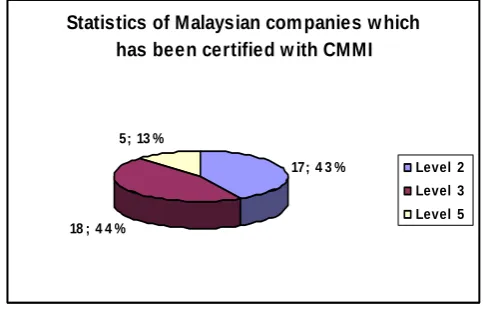
Figure 1 shows the statistics of Malaysian companies which has been certified with CMMI. Based on that figure, there are 40 Malaysian companies which have been certified with CMMI.
Statistics of Malaysian com panies w hich has been certified w ith CMMI
17; 4 3 %
18 ; 4 4 % 5; 13 %
[image:2.595.313.556.211.366.2]Level 2 Level 3 Level 5
Fig 1. Statistics of Malaysian Companies with CMMI Certification
From 40 companies, 17 or 43% of Malaysian companies have been certified with CMMI Level 2.
According to SEI, the second level is managed and it consist a few of process area which is Requirements Management, Project Planning, Project Monitoring and Control, Supplier Agreement Management, Measurement and Analysis, Process and Product Quality Assurance, Configuration Management.
The purpose of Requirement Management is to handle the requirements of the project and identify whether there are inconsistencies exist between project and the requirements provided. Project Planning is to establish the project planning which later on use to define project activities. Project Monitoring and Control is to let the developer have better understanding of project progress so that later on if consist of any deviate from what is plan, appropriate correction method can be taken. Supplier Agreement Management is to handle the supplement from supplier to developer which there was a formal agreement has to be made. Measurement and Analysis is to establish a measurement and analysis information which is later required by the management information needs. Process and Product Quality Assurance is to provide staff and management with the objective to let them have better understanding of processes and the work product. Configuration Management is to establish and make sure the integrity of work product by using the following method which is configuration identification, configuration status accounting, configuration audit and configuration control.
implementation and institutionalization. Implementation means that just performing a task within process area which is defined earlier. Institutionalization means that the process is follow as a routine in the way the work is performed. [9]
Table 1 shows a list of Malaysian companies with CMMI Level 2. The companies with CMMI Level 2 certification comprises the company with a domain of expertise such as computer software solution, computer software development and package, online reservation, providing software testing facility and infrastructure, learning solution, computer integration and operating support systems, mobile technologies, solution provider in corporate management system, e-business service provider, map content and consultation and also expertise in software development for managing enterprise asset and enterprise resources.
TABLE I
MALAYSIAN COMPANIES WITH CMMI LEVEL 2
Company Name Domain of Expertise
Argisoft (M) Sdn Bhd Computer software development & Package
Byte Craft Sdn Bhd Focus on open source technology, custom web and multimedia development
E-gienting Online reservation
GPRO Technologies Bhd Computer software solution
Paradigm Systems Bhd Computer software solution
Solution Assessment and Development Centre
Provide software testing facility and infrastructure
Smart-Ed Dot Com Asia
Sdn Bhd Learning solution
Telekom Applied Business Sdn Bhd
Computer telephony integration and operating support systems
RV Digital Technologies Mobile technologies
Accelteam Sdn Bhd Solution provider in corporate performance management
Healthlogic Sdn Bhd Computer software solution
Oneline One Software
(MSC) Sdn Bhd Computer software solution Tradenex.com Sdn Bhd E-business service provider
Mapit MSC Sdn Bhd Map content, software solution, consultation
Biztrak MSC Sdn Bhd Computer software solution
InterTAC (M) Sdn Bhd Computer software solution
Authentic Venture Sdn Bhd
Software development for managing enterprise asset and enterprise resources
Next, there are about 18 Malaysian companies have been certified with CMMI Level 3. Based on Table 2, the Malaysian companies with CMMI Level 3 certification comprises of company with a domain of expertise in general areas such as enterprise-level insurance software applications developer, Islamic banking, outsourcing services, change management and business process re-engineering, supply chain solution, e-business software solution, smart school integrated solution, airport
management system, e-government solutions, enterprise knowledge management portal implementation, enterprise-wide integration business solutions and also computer software solution as well. Besides, other Malaysian company with general domain of expertise such as oil and gas, secured communications, industrial and automotive, knowledge and education and premium automotive retail also has been certified with CMMI Level 3. Next, one of Malaysia’s premier private institutions of higher learning for Information Technology also has been certified with CMMI Level 3.
TABLE II
MALAYSIAN COMPANIES WITH CMMI LEVEL 3
Company Name Domain of Expertise
Asia Pacific Institute of Information Technology (APIIT)
Malaysia's premier private institutions of higher learning for IT
Custommedia Sdn Bhd Computer software solution
CMS I-Systems Berhad Enterprise-level insurance software applications developer
Microlink Solutions Bhd
Focused on the development and promotion of core banking and Islamic banking globally
MSC Management Services Sdn Bhd
Provider of consultation, technology and outsourcing services,
MSC Technology Centre Sdn Bhd
Consulting firm specialising in IT, change management and business process re-engineering.
NDT Software
Consulting Sdn Bhd Supply chain solution
I Power Bhd
E-business software application development, software integration and related services
Telekom Smart School
Sdn Bhd Smart school integrated solution
XYBASE Sdn Bhd
Key provider of total airport management system and e-government solutions
YGL Multimedia Resources Sdn Bhd
Consuting (business and management)
The Media Shoppe Bhd Enterprise knowledge portal implementation
PaduSoft (M) Sdn Bhd Computer software solution
Sapura Technology Bhd
General domain (oil & gas, secured communications, industrial and automotive, knowledge and education, premium automotive retail
Mexter MSC Sdn Bhd Compute sofware development and package
Cuscapi Innovation Lab
Sdn Bhd Computer software solution
IFCA MSC Sdn Bhd Enterprise-wide integrated business solutions
Telekom Applied Business Sdn Bhd
[image:3.595.54.304.273.668.2]At maturity level 3 which is defined, an organization has achieved all of the specific goals of the process areas which are assigned to maturity levels 2 and 3. In level 3, the processes need to be well characterized and understood fully by the staff and will be describes in standards, procedures, tools and method. [9]
There are fourteen process areas which are Requirements Development, Technical Solution, Product Integration, Verification, Validation, Organizational Process Focus, Organizational Process Definition, Organizational Training, Integrated Project Management, Risk Management, Integrated Teaming, Integrated Supplier Management, Decision Analysis and Resolution, Organizational Environment for Integration. The process management is highly emphasis in level 3 which contain the cross-project activities related to defining, planning, resourcing, deploying, implementing, monitoring, controlling, appraising, measuring, and improving processes. This basic project management has provide the company to learn and capable to document and share best practices, organization process asset and learning across the organization which share and learn with other company.
The organizational process focus at process area which is capable to help the organization plan and implement organizational process improvement by deeply understanding of the current strength and weakness of organization process. This is done because having understanding of strength and weakness of organization process does helping in decision making in the aspect of organizational process improvement. [10]
At maturity level 5, which is optimizing, the organization will focused on continuous process and technology improvement. Process and technology improvements will be treated as ordinary business activities which the final objective is to continuous improvement. One of the process areas is organizational innovation and deployment which the purpose is to choose and deploy incremental and innovative improvements that measurably improve the organization’s processes and technologies. [10]
Only 5 Malaysian companies have been certified with the highest level in CMMI certification. All of the companies involves in offshore service provider, providing IT business, technical consulting services and integrated solution, consulting (IT, science, engineering and technical), healthcare IT and also insurance software services domain of expertise. Table 3 shows the list of Malaysian companies with CMMI Level 5.
TABLE III
MALAYSIAN COMPANIES WITH CMMI LEVEL 5
Company Name Domain of Expertise
EA Consulting Asia Pacific
Sdn Bhd Offshore service provider
Knowledge Base Sdn Bhd
Providing IT Business, Technical Consulting Services and integrated application
Kompakar E-Biz Sdn Bhd Consulting (IT, Science, Engineering & Technical)
Kompakar E-Health Sdn Bhd Healthcare IT
Pentasoft Malaysia Sdn Bhd Insurance software and services
[image:4.595.309.557.49.188.2]A SHORT SURVEY ON CMMI IMPLEMENTATION
Fig. 2. Reason for CMMI Implementation
[image:4.595.308.557.307.452.2]Figure 2 shows the reason for CMMI implementation. From the Figure 2, the main reasons of the CMMI implementation in the organization are internal compliance (management or business) and to improve the quality of service which is 43% equally and respectively according to the respondents. To reduce cost is also one of the reasons why the organization implemented the CMMI framework, according to the 14% of the respondents.
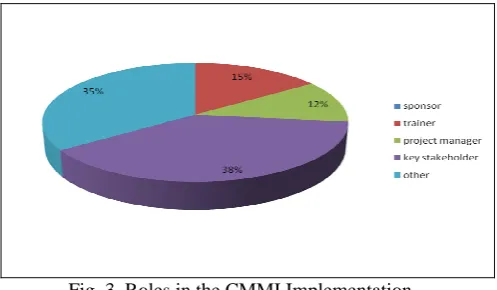
Fig. 3. Roles in the CMMI Implementation
[image:4.595.307.556.561.705.2]From Figure 3, it shows that the role of respondents in the CMMI implementation mainly is the key stakeholder which contributes to 38% of the respondents. There are 15% of the respondents whose are playing the trainer role, where as 12% of the respondents are project manager. There are a big number of respondents that contribute to other roles especially user which is about 35% of the respondents.
Fig. 4. Total CMMI Implementation Budget
there are 20% of the respondents who does not know their organization’s CMMI implementation budget and another 20% of the respondents unable to state the organization’s budget for the CMMI implementation due to confidentiality reason.
Figure 5 shows that there are 3 variety of CMMI budget is spent based on the respondents’ organization.
Fig. 5. Percentage of the CMMI Budget Spent On
60% of the CMMI budget spent for the external consultants and another 30% are allocated for the Training IT staff and another 10% are allocated for the CMMI software and tools.
CONCLUSION AND FUTURE WORKS
In software development process, it is believed that a high quality software development process is a key success to develop a high quality product. Therefore, in order to improve the software process we need to undergo software process improvement which is guided by some standard frameworks such as Capability Maturity Model® Integration (CMMI).
This research shows that only five companies which involved in this research have been certified with CMMI Level 5, while the rest are going to achieve the highest level in CMMI in short coming years. This shows that, most of the IT companies in Malaysia have recognized the urgency of adapting SPI models especially CMMI model in their organization.
Two main reasons why most of the organizations implement CMMI are 1) because of internal compliance and 2) to improve the quality of services. These two factors generally will increase the customer’s trust toward their services.
Based on these findings, we hope to facilitate other software companies to take part in software process improvement initiative.
Our next action for SPI initiative research in Malaysia will be 1) to define the critical success factors in implementing SPI in Malaysian organizations. This study will help other Malaysian companies to learn the necessary actions before implementing SPI initiatives.
Next, we also intent to conduct the same research in other countries such Indonesia, Singapore, China, Philippine, Thailand and others. This will help to build up the SPI research collaboration among the SPI researchers in respective country. Next, it also can help to flourish the SPI initiative studies.
ACKNOWLEDGEMENT
This research was funded by Universiti Teknologi Mara, through ‘Dana Kecemerlangan’ research grant.
REFERENCES
[1] Beecham, S., Tracy H. and Austen R.,Software Process Improvement Problems in Twelve Software Companies: An Empirical Analysis, Empirical Software Engineering, Vol.8, No.1, 2003, pp. 7-42.
[2] ISO/SPICE, 2008. Availabe at
http://www.isospice.com/categories/SPICE-Project/
(15/03/2008)
[3] Dutta,S., Lec, M. & Van Wassenhove, L. Software Engineering in Europe: A study of best practices. IEEE Software, vol 16, no 3, May 1999, pp.82-90.
[4] Groves, L., Nickson, R., Reeve, G., Reeves, S., & Utting, M., A survey of software requirements specification practices in the New Zealand software industry. Proc Australian Software Engineering Conference 2000. pp. 189-201.
[5] McConnell, S. Professional Software Development, 2nd Ed Boston, Mass,: Addison-Wesley, 2004.
[6] Paulk, M. C. , A Comparison of ISO 9001 and the Capability Maturity Model for Software, Software Capability Maturity Model Project, 1994, pp. 1-71.
[7] Herbsleb, J., Carleton, A., Rozum, J., Siegel, J. and Zubrow‚ D. CMM, Benefits of CMM-Based Software Process Improvement: Initial Result, 1994.
[8] Clarke, L A. and Osterweil, L. J.,Continuous Self-Evaluation for the Self-Improvement of Software, International workshop on Self-adaptive software, 2000, pp. 27- 39.
[9] Norman, William Grant (2003) Implementing CMMISM version 1.1 in a previously unstructured environment. M.S.S.E. dissertation, West Virginia University, United States -- West Virginia. Retrieved March 26, 2008, from ProQuest Digital Dissertations database.