Warm safe and well: the evaluation of the Warm at Home
Programme
BENNETT, Ellen <http://orcid.org/0000-0003-3271-8757>, DAYSON,
Christopher <http://orcid.org/0000-0003-2402-1183>, EADSON, William
<http://orcid.org/0000-0002-2158-7205>, GILBERTSON, Janet
<http://orcid.org/0000-0003-3338-7590> and TOD, Angela
Available from Sheffield Hallam University Research Archive (SHURA) at:
http://shura.shu.ac.uk/14937/
This document is the author deposited version. You are advised to consult the
publisher's version if you wish to cite from it.
Published version
BENNETT, Ellen, DAYSON, Christopher, EADSON, William, GILBERTSON, Janet
and TOD, Angela (2016). Warm safe and well: the evaluation of the Warm at Home
Programme. Project Report. Sheffield, Centre for Regional Economic and Social
Research, Sheffield Hallam University.
Copyright and re-use policy
See
http://shura.shu.ac.uk/information.html
Sheffield Hallam University Research Archive
Warm, safe and well: The Evaluation
of the Warm at Home Programme
Author(s):
Ellen Bennett
Chris Dayson
Will Eadson
Jan Gilbertson
Angela Tod
November 2016
Acknowledgements
This evaluation was commissioned and funded by Foundations Independent Living Trust Ltd (FILT).
The authors are grateful for the contribution of former FILT employees Andrea Swindell, Paul Woolley, Andy Chaplin for their help in steering and supporting the study and also to Faith-Joanne Thorpe. Special thanks go to the Home Improvement Agencies who supported the evaluation and to all the caseworkers and managers who took part in the training workshops and were responsible for administering the quantitative QOL survey. Their continued effort and perseverance in collecting survey data contributed to the successful completion of the evaluation.
Thanks also go to HIA staff who took part in the telephone interviews and who supported the study by helping to find clients willing to take part in the research.
The authors would also like to take this opportunity to warmly thank those Warm at Home clients interviewed and/or who completed the survey, who gave freely of their time, for their invaluable contribution to the study.
Foundations Independent Living Trust
FILT's Vision
Our vision is a Britain where every vulnerable person can live happily and independently in their own home - warm, safe and secure
FILT's Mission Statement
Our mission is to connect funding partners with local organisations that help vulnerable and disadvantaged households remain in their own homes warm, safe and secure.
FILT's Activities
FILT supports vulnerable householders to help keep their homes warm, safe and suitably adapted. We do this by joining up national and regional funders who want to support our work with local, accredited home improvement agencies and other local partners who see to it that work is completed quickly and to the right standard. We know this can also translate quickly into benefits for health and wellbeing as well as meeting more immediate practical needs.
FILT's Unique Selling Proposition
We help older and vulnerable people live with dignity in their own homes. We do this by distributing Corporate Social Responsibility and charity funds through our network of local home improvement agencies (HIAs) to provide a range of support including repairs and improvements to people’s homes.
Telephone Contact: 0300124 0316
Contents
Report Headlines ... i
Executive Summary ... iii
1. Introduction and Context ... 1
1.1. Introduction... 1
1.2. Context ... 2
2. The FILT SSE Warm at Home Programme ... 8
2.1. Introduction... 8
2.2. Background to Foundations, FILT and the HIA Sector ... 8
2.3. Overview of the Warm at Home Programme ... 9
2.4. Warm at Home Programme Management ... 9
2.5. Warm at Home Beneficiary Eligibility ... 10
2.6. Types of measures ... 10
2.7. Headline Figures ... 10
3. Approach and Methods ... 11
3.1. Introduction and aims of the study ... 11
3.2. Methods ... 12
3.3. Core Outcome Measures ... 12
3.4. Involvement of Home Improvement Agencies in the Evaluation... 12
3.5. Data Collection ... 13
3.6. Qualitative Interviewing Phase... 14
3.7. Challenges and limitations ... 15
4. The Delivery of the FILT SSE Warm at Home Programme ... 18
4.1. Introduction... 19
4.3. Onward referrals ... 21
4.4. Type of measures undertaken ... 22
4.5. Funding Levels and Other Sources of Funding ... 24
4.6. Benefits of the WAH Programme for HIAs ... 25
4.7. HIA Experience of the WAH Programme ... 27
4.8. Benefits of the WAH Programme for HIA clients ... 28
5. Client Perceptions of the FILT SSE Warm at Home Programme ... 30
5.1. Introduction... 31
5.2. Key Characteristics of WAH Clients in the Evaluation ... 31
5.3. Satisfaction with the Warm at Home programme ... 31
5.4. The condition of people's homes ... 35
5.5. Energy related finances ... 39
6. The Impact of the FILT SSE Warm at Home Programme on Health and Wellbeing ... 42
6.1. Introduction... 43
6.2. Overall changes in health and wellbeing ... 43
6.3. Understanding changes in health and wellbeing ... 44
6.4. Understanding the cost-effectiveness of the Warm at Home programme ... 53
7. Key Messages and Conclusions ... 58
7.1. Key Findings and Messages ... 58
7.2. Conclusions ... 63
Report Headlines
Organisation
FILT effectively managed the WAH Programme. The structural relationship between Foundations, FILT and HIAs aids delivery of such Programmes.
The flexible and light touch nature of the funding and administration enabled HIAs to work quickly with vulnerable clients.
The broad eligibility criteria of the funding meant HIAs could help more people to keep warm, some of whom would not have qualified for other funding schemes.
Delivery
HIAs were well placed to reach vulnerable householders whose health was at risk from cold conditions and who would benefit from the WAH Programme.
The reach of the WAH Programme in terms of number of contacts and the range of work undertaken was impressive.
WAH funding helped fill a gap in service provision helping people who were suffering from ill health and enduring cold or unsafe conditions in their homes, but who were just above the income eligibility criteria for other energy efficiency schemes.
Client Experience
There were high levels of satisfaction with the WAH Programme. Clients were impressed with the quality of the work undertaken and the manner and professional attitude of the HIA assessors, officers and contractors.
HIAs and handyperson services emerge as accessible and acceptable organisations. Our findings reiterate the importance of having a vouch safe referral scheme for vetted contractors and handyperson services.
Benefits
The timeliness of the WAH intervention and being able to provide immediate relief to vulnerable clients was seen as a major advantage of the Programme. It provided social contact, emotional security, and wellbeing to vulnerable clients who were in poor health and often socially isolated.
WAH clients reported considerable improvements in the conditions of their homes, their satisfaction with their homes and warmer temperatures which enhanced comfort considerably.
Clients also reported being better able to manage energy related finances.
Health Impact
The WAH intervention alleviated stress and had a positive impact on people’s quality of life and wellbeing, their feelings of safety and security and their control of the home environment.
Improvements in health and wellbeing were reported once work had been completed. The greatest health and wellbeing improvements were experienced by those who received heating installation or replacement, and for those whom the highest cost work (£1,000 or more) was undertaken.
Those who reported the worst health related quality of life received higher cost heating measures under the WAH Programme and benefited most from the improvement.
Cost Effectiveness
Overall the WAH Programme appears to be a cost-effective intervention from a health perspective but there are variations in relation to the type and cost of intervention.
The cost effectiveness of the intervention needs to be weighed against the fact that health and wellbeing benefits of higher cost interventions are greater than those with a lower cost.
Although smaller cheaper measures have a negligible effect on health outcome they do result in sizeable improvements in wellbeing.
Value of Benefits
The WAH Programme is estimated to have led to an additional 121.8 QALYs. If the assumed total QALY gained across the whole Programme is converted into a monetary value using the NHS threshold of £20,000, then the value of the benefits gained amounts to £2,436,000. For every £1 of the £637,000 funding distributed to vulnerable households, the WAH Programme produced almost £4 of benefits in terms of better health.
Key messages for Policy and Practice
HIAs have an important role in the delivery of policy interventions relating to fuel poverty and health.
As key players in local partnership arrangements HIAs are essential organisations in making policy happen in practice as per the Cold Weather Plan and NICE Guidelines on EWDs.
Executive Summary
Introduction
This report presents the findings from an evaluation of the Foundations Independent Living Trust Ltd (FILT) SSE Warm at Home (WAH) Programme. Funding for the WAH Programme came via a financial penalty (or redress payment) imposed by the energy regulator Ofgem on the energy company SSE. With the funding FILT managed the WAH grants programme, which provided funds to enable the homes of vulnerable householders to become more energy efficient and/or easier to keep warm.
The evaluation was commissioned by FILT and its main aim was to assess WAH in terms of the impacts on health and wellbeing of householders in receipt of the Programme.
The evaluation team is from the Centre for Regional, Economic and Social Research (CRESR) at Sheffield Hallam University in collaboration with FILT and a number of HIAs. The research was conducted between April 2015 and June 2016 and adopted a mixed methods approach to measure the impact of the FILT SSE WAH Programme.
Context
There is increasing evidence and greater awareness of the negative impact that fuel poverty and cold homes have on the physical and mental health of both adults and children. The costs of cold homes go beyond those incurred by the NHS and are largely made up by losses in the quality of life and wellbeing of those affected. Recent developments in health policy indicate an increased emphasis on preventative measures to tackle cold related ill health. HIAs are well placed to respond to these developments. However, evidence on the effectiveness of interventions is lacking and there are obvious challenges for local organisations such as HIAs that are trying to demonstrate the impact and value of the interventions they are delivering to build a case for continued investment of such schemes.
About the FILT SSE WAH Programme
In March 2015, Ofgem imposed a financial penalty on the SSE energy company following failure to meet its obligations under a previous energy efficiency scheme. FILT managed the WAH grants programme, which provided funds to enable the homes of vulnerable householders to become more energy efficient and/or easier to keep warm. Funds were channelled through HIAs operating across England.
The FILT SSE WAH Programme was targeted at homeowners who fulfilled one or more of the following criteria:
age 60+ low income
disability or long-term illness.
A wide range of measures were eligible for funding - from simple measures such as draught proofing and fitting reflector radiator panels through to replacement of boilers and central heating systems. According to FILT during the WAH Programme:
3,678 home energy assessments took place
£637,000 funding was distributed to vulnerable households 71 HIAs acted as local delivery partners
183 district councils in England were covered 2,647 warm homes measures took place average grant £241 per beneficiary
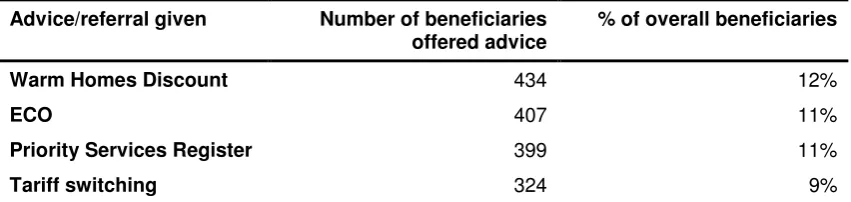
434 households were referred to their energy supplier for Warm Homes Discount
399 households were found to be eligible to be included on the Priority Service Register of their energy supplier.
Key Messages
Organisation of FILT SSE WAH Programme
Through the FILT SSE WAH Programme organisations were able to provide a unique service that combined a timely response with organisational structure and clear processes.
The flexibility and "light touch" approach to the funding and administration allowed HIAs to work quickly with vulnerable households.
The funding’sbroad eligibility criteria meant that HIAs could help more people to keep warm, some of whom would not have qualified for other funding schemes.
Fewer restrictions on what could and could not be funded enabled HIAs to use their judgement in order to better meet clients’ needs.
Volume of work
The reach of the scheme was impressive in terms of numbers of contacts and interventions particularly within the project timeframe.
A large number of low cost, high impact measures (for example draught-proofing) were implemented during the Programme. The volume of work was impressive in terms of the range of interventions.
Delivery of the FILT SSE WAH Programme
HIAs were well placed to reach vulnerable households whose health was at risk from cold conditions and who would benefit from the WAH Programme.
WAH funding enabled HIAs to access other sources of funding helping with match funding and as a top up to other grants. HIAs were exceptionally knowledgeable of other possible sources of funding for their clients.
The WAH Programme appeared to be filling a gap in service provision helping people who were suffering from ill health and enduring cold or unsafe conditions in their homes but who were just above the income eligibility criteria for other energy efficiency schemes.
Clients’ experience of the FILT SSE WAH Programme
There were high levels of satisfaction with the WAH Programme and more than 9 in 10 QOL survey respondents were satisfied with the advice, help and support received and the work undertaken. There were a mix of new and existing HIA clients whose source of knowledge about the HIA was often community based. This highlights the importance of HIAs being local, community based organisations in terms of accessibility. Clients were impressed with the quality of the work undertaken and the manner and professional attitude of the HIA assessors and officers and contractors. HIAs and handyperson services were regarded as safe, trusted organisations.
Having a trusted organisation provided vulnerable often older clients with reassurance. Evidence from the evaluation reaffirms the importance of having a vouch safe referral scheme for vetted contractors and handyperson services. Contact with HIAs resulted in some clients being given additional information, advice and
support and benefiting from follow up services provided by either the HIA themselves or by other local agencies.
Benefits of the FILT SSE WAH Programme
Benefits experienced by WAH clients were sizeable when compared to the average cost of the intervention (£241).
WAH clients reported considerable improvements in the conditions of their homes, their satisfaction with their homes and warmer temperatures which enhanced comfort considerably. Seven out of 10 respondents reported that it was easier to heat their home to a comfortable temperature once the work had been completed. Such improvements were particularly appreciated by people with health conditions made worse by the cold.
Clients also reported being better able to manage energy related finances. There were reductions in the proportion of households reporting that they: find it difficult to manage fuel bills; worry about not having enough money to pay energy bills; and heat the home less than needed because of the cost of heating.
CRESR’s analysis of works completed across the Programme indicate an impressive cost leverage, for every £1 of WAH funding provided by FILT an additional minimum £2.42was levered in from other sources.
An important benefit of the intervention was that it provided social contact, emotional security, and wellbeing to vulnerable clients who were in poor health and often socially isolated.
Health Impact of the SSE WAH Programme
Improvements in health and wellbeing were reported once work had been completed. The greatest health and wellbeing improvements were experienced by those who received a replacement or installation associated with their heating system, and for those whom the highest cost work (£1,000 or more) was undertaken.
WAH interventions alleviated stress and had a positive impact on people’s quality of life and wellbeing, their feelings of safety and security and their control of the home environment. Clients were appreciative of the benefits of smaller measures installed in their homes efficiently. Smaller practical improvements often made a big difference to daily lives which enhanced wellbeing and independence.
Clients often had complex multiple health problems and didn’t always link the WAH intervention with physical benefits, but felt that the intervention ‘relieved’ symptoms. A warmer environment helped people to feel healthier and better able to self-manage long term conditions.
The data from the QOL survey indicates that those respondents who reported the worst Health Related Quality of Life scores, as measured by EQ5D, received higher cost heating measures under the WAH Programme and benefited most from the improvement in their scores.
Cost Effectiveness of the SSE WAH Programme
Overall the WAH Programme appears to be a cost-effective intervention from a health perspective. The apparent cost effectiveness of the WAH Programme is probably enhanced by the preponderance of small measures and the overall figure masks some substantial variations by intervention type and cost. Interventions for the fabric of the property (£8,142 per QALY) and efficiency of heating (£8,402) were more than twice as cost-effective as replacements and/or installations associated with the heating system (£17,889).
Cost effectiveness reduced as the cost of the intervention increased. Interventions that cost less than £250 (£8,674 per QALY) were more than four times more cost-effective than interventions that cost more than £1000 (£36,429) and more than one and half times more cost-effective than interventions that cost more than £250 (£13,810).
However, this finding needs to be weighed against the fact that health and wellbeing benefits of higher cost interventions are greater than those with a lower cost.
Value of benefits
The WAH Programme is estimated to have led to an additional 121.8 QALYs. If the assumed total QALY gained across the whole Programme is converted into a monetary value using the NHS threshold of £20,000, then the value of the benefits gained amounts to £2,436,000. For every £1 of the £637,000 funding distributed to vulnerable households, the WAH Programme produced almost £4 of benefits in terms of better health.
Implications
As key players in local partnership arrangements HIAs are essential organisations in making policy happen in practice as per the Cold Weather Plan and NICE Guidelines for example. At a time when HIAs are losing services funding like that of WAH play an important role in making HIAs visible again.
1
1.
Introduction and Context
1.1.
Introduction
This report presents the findings from an evaluation of the Foundations Independent Living Trust Ltd (FILT) SSE Warm at Home (WAH) Programme. FILT is a charity set up to help the clients of home improvement agencies (HIAs). FILT distributes charity funds through its network of local HIAs to provide a range of support including repairs and improvements to people’s homes. FILT's vision is a Britain where every vulnerable person can live happily and independently in their own home - warm, safe and secure. FILT connects funding partners with local organisations that help vulnerable and disadvantaged households remain in their own homes. It does this by joining up national and regional funders who want to support FILT's work with local, accredited HIAs and other local partners who see to it that work is completed quickly and to the right standard.
Funding for the WAH Programme came via a financial penalty (or redress payment) imposed by the energy regulator Ofgem on the energy company SSE. With the funding FILT managed the WAH grants programme, which provided funds to enable the homes of vulnerable householders to become more energy efficient and/or easier to keep warm.
The evaluation was commissioned by FILT and aimed to assess WAH in terms of the impacts on health and wellbeing of households in receipt of the Programme. The evaluation also considers the FILT, HIA and Foundations (the national body for HIAs) model for delivery of home-based interventions, to assess whether it is an effective vehicle to combat the impact on health of poorly heated homes occupied by vulnerable householders.
The evaluation team is from the Centre for Regional, Economic and Social Research (CRESR) at Sheffield Hallam University in collaboration with FILT and a number of HIAs.
The research was conducted between April 2015 and June 2016 and adopts a mixed methods approach to measure the impact of the FILT SSE WAH Programme using:
a before and after Quality of Life (QOL) survey of beneficiaries undertaken by a number of HIAs
relevant monitoring data and linking it to the QOL survey data as appropriate qualitative interviews (telephone and face to face) with HIAs and WAH
The report is structured as follows:
This section, Chapter 1 Introduction and Context briefly outlines the study and discusses the cold homes, health and fuel poverty evidence and policy context.
Chapter 2 The FILT SSE WAH Programme gives background information on Foundations, FILT and the HIA sector and an overview of the WAH Programme. Chapter 3 Approach and Methods details the purpose of the study, its aims
and methods.
Chapter 4 The Delivery of the FILT SSE WAH Programme provides
information on the implementation of the FILT WAH Programme, its benefits and challenges, and the impacts on health and wellbeing of households in receipt of WAH as seen from the perspective of HIAs delivering the Programme.
Chapter 5 Clients’ Perceptions of the FILT SSE WAH Programme details results from the QOL survey and qualitative interviews on satisfaction with the WAH Programme and its impact on housing conditions and energy related finances.
Chapter 6 The Impact of the FILT SSE WAH Programme on Health and Wellbeing presents findings from the QOL survey and qualitative interviews on the health and wellbeing impact and cost effectiveness of the WAH Programme.
Chapter 7 Key Messages and Conclusions concludes the report, highlighting key messages and reflecting on the implications of the study findings.
1.2.
Context
Fuel Poverty, Cold Homes and Health Impacts
There is increasing evidence and greater awareness of the negative impact that fuel poverty and cold homes have on the physical and mental health of both adults and children. For example, the Marmot Review (2011)1 acknowledged the link between cold temperatures and respiratory illness and cardiovascular/circulatory diseases and mental health and highlighted the direct effect that energy inefficient homes have on Excess Winter Deaths (EWDs).
It is estimated that between 10 and 25 per cent (Marmot Review 2011) of the 43,900 EWDs which occurred in England and Wales in 2014/15 were attributable to fuel poverty and cold homes. People living in the coldest quarter of homes have a 20 per cent greater risk of dying than those in warm homes (Marmot Review 2011). Older people living on their own with existing illnesses and chronic conditions, poor mobility and in poor quality, harder to heat housing are most vulnerable to dying in winter (Roche 2010).2 The majority of EWDs occur amongst people aged 75 and over and there were an estimated 36,300 excess winter deaths in this age group in 2014/15 (ONS, 2016).3
1
Marmot Review Team (2011) The Health Impacts of Cold Homes and Fuel Poverty. London: Friends of the Earth and Marmot Review Team.
2
Roche, T. (2010) How to Reduce the Risk of Seasonal Excess Deaths Systematically in Vulnerable Older People to Impact at Population Level. London: National Inequalities National Support Team, Department of Health.
3
Office for National Statistics (2016) Excess winter mortality in England and Wales 2014/15. Available at:
EWDs are only part of the picture. Cold fuel poor homes have a significant effect on the mental health of adults (Green and Gilbertson, 20084; Gilbertson et al, 20125) and of young people, on children's respiratory health, infant weight gain and susceptibility to illness (Liddell and Morris, 2010).6 Liddell and Guiney (2015)7 identify severe effects on mental wellbeing of living in fuel poverty due to a package of stressors. The effects of cold and thermal discomfort, low income and high energy costs, worry about debt and the associated stress, anxiety and stigma, sets up a cumulative negative cycle which impacts on mental wellbeing and in turn leads to further deterioration of physical health and exacerbation of mental health.
For people with long term conditions and older people cold homes exacerbate existing medical conditions, increase hospital admissions and may slow down recovery following discharge from hospital. Roche (2010) estimates for every EWD there are eight hospital admissions and 100 GP consultations.
A study in Newham ranked hospital admissions for respiratory diagnosis for residents aged 65 and over against the Fuel Poverty Index (FPI) and found it to be a predictor of admissions to hospital. The FPI includes factors like home energy efficiency, low income, householder age and under occupation and the results from this study indicate that a relationship exists between home energy efficiency and winter respiratory symptoms among older people (Rudge and Gilchrist, 2005).8 For infants, living in a fuel poor home is associated with a 30 per cent greater risk of admission to hospital or primary care facilities (Liddell, 2008).9
The poor health outcomes associated with cold conditions and fuel poverty also impact on longer term health outcomes and contribute to wider social and health inequalities. A wide range of people are documented10 as being particularly vulnerable to the adverse effects of cold and damp conditions in the home and include:
people with cardiovascular conditions
people with respiratory conditions (in particular, chronic obstructive pulmonary disease and childhood asthma)
people with mental health conditions people with disabilities
older people (65 and older) young children (under 5s) pregnant women
people on a low income
people who move in and out of homelessness
4 Green, G. and Gilbertson, J. (2008) Warm Front: Better Health. The Health Impact Evaluation of the Warm
Front Scheme. Sheffield: CRESR, Sheffield Hallam University.
5 Gilbertson, J. et al(2012) Psychosocial Routes from Housing Investment to Health: Evidence from England’s
Home Energy Efficiency Scheme. Energy Policy, 49, pp. 122-133.
6 Liddell, C. and Morris, C. (2010) Fuel Poverty and Human Health: A Review of Recent Evidence. Energy Policy,
38, pp. 2987-2997.
7
Liddell C and Guiney C (2015) Living in a Cold and Damp Home: Frameworks for Understanding Impacts on Mental Wellbeing, Public Health, 129, 191-199.
8
Rudge, J. and Gilchrist, R. (2005) Excess Winter Morbidity Among Older People at Risk of Cold Homes: A Population Based Study in a London Borough. Journal of Public Health, 27, pp. 353-358.
9
Liddell, C. (2008) The Impact of Fuel Poverty on Children, Policy Briefing. Belfast: Save the Children.
people with addictions
people who have attended hospital due to a fall recent immigrants and asylum seekers.
The Cost of Cold Homes
There are estimates of the costs to the NHS of treating illness which are either caused or exacerbated by cold homes. For instance Age UK11 estimated that costs were around £1.36 billion per year. The Building Research Establishment (BRE)12 has calculated that reducing hazards in housing including cold could deliver £600 million of savings per annum for the NHS. It has also been estimated that for every £1 spent on fuel poverty prevention there is a 42 pence saving in NHS health costs (Liddell, 2008).
Moreover, the costs of cold homes go beyond those incurred by the NHS and are largely made up by losses in the quality of life and wellbeing of those affected. Recent work undertaken by Stafford (2014)13 estimates the social costs of cold housing in the English city of Sheffield by calculating the loss of wellbeing as measured by the loss of Quality Adjusted Life Years (QALYs) and the costs falling on others, as measured by NHS and Social Care costs and also loss of economic output (GDP). This analysis calculates the cost of the following conditions linked to cold homes: EWDs, cardio-vascular disease; respiratory illness; falls in the home and mental illness and concludes that:
the social cost of mental illness linked to cold homes dominates social cost of all other harms to health arising from cold homes, including premature death
this dominance reflects the relatively large number of estimated cases rather than a relatively high social cost per case
for all harms to health including mental illness social costs are dominated by losses in the quality of life of those afflicted.
According to Stafford (2014) given the significant effect of cold conditions on mental health and wellbeing it is perhaps not so surprising that the greatest social cost of cold homes is associated with mental illness. It is also worth remembering that whilst NHS and Social Care costs are important they do not represent the majority of the costs to society.
Greater Emphasis on Health and Prevention
Given the evidence of the negative health impacts of fuel poverty and cold homes and the associated costs of treating cold related ill health it is hardly surprising that the latest Government Fuel Poverty Strategy14 places greater emphasis on health as a priority. Focussing support on people with a health condition which is linked to living in a cold home is consistent with the Strategy's main aim of taking account of the needs of the most vulnerable fuel poor households. Because fuel poverty contributes to wider social and health inequalities joining up health and fuel poverty
11
Age UK (2012) The Cost of Cold: Why We Need to Protect the Health of Older People in Winter, Age UK: London
12 Nicol, S. et al (2010) Quantifying the Cost of Poor Housing Information Paper. IP 16/10. Bracknell: BRE
Publications.
13
Stafford, B. (2014) The Social cost of Cold Homes in an English City: Developing a Transferable Policy Tool.
Journal of Public Health doi: 10.1093/pubmed/fdu053
14
policy makes absolute sense. The Strategy points out that the health sector has a key role to play in addressing the issue of cold homes and health.
As a way of improving action on health and fuel poverty the current Strategy advocates innovation and working with partners which include the NHS, local authorities, industry, local community energy groups and the third sector. To this end the Government allocated £3 million for new fuel poverty pilot projects including releasing up to £1 million of funding to scale up local ‘warmth-on-prescription’ projects to help people who face health risks because of the cold and £2 million to support local fuel poverty innovation.
As a result the last few years have seen increasing numbers of such innovative local projects. Recently National Energy Action (NEA) compiled a catalogue of health-related fuel poverty schemes for the former Department of Energy and Climate Change (DECC, 2015)15 and some 75 unique projects were included. This catalogue collates information on health-related fuel poverty schemes to better understand levels of activity in this area and highlights challenges to implementation as well as successful approaches.
Recent developments in health policy also indicate an increased emphasis on preventative measures to tackle cold related ill health. Under the Health and Social Care Act (2012)16 a revised structure for the NHS was introduced. Public Health departments were relocated from the NHS to Local Authorities and a number of new local agencies were created including Health and Wellbeing Boards (HWBs). HWBs are committees of representatives from local health, housing, environment and social care services tasked with tackling health inequalities in the local population. HWBs must produce Joint Strategic Needs Assessments which set out local health needs, and health and well-being strategies, which outline the plans for tackling these needs, including progress on a series of public health indicators.
Of key importance is the Public Health Outcomes Framework (PHOF)17 which influences the selection of HWBs' local priorities. A number of the outcomes within the PHOF link clearly to the intended impacts of HIAs and the FILT SSE WAH Programme including the following:
1.17 Fuel poverty 1.18 Social isolation
2.23 Self-reported wellbeing
2.24 Injuries due to falls in people aged 65 and over
4.11 Emergency readmissions within 30 days of discharge from hospital 4.13 Health-related quality of life for older people
4.15 Excess winter deaths.
Preventative action on fuel poverty and initiatives like the SSE WAH Programme can also support Adult Social Care Outcomes Framework (ASCOF)18 priorities. Keeping those people with care and support needs warm, safe and well in their homes decreases (or delays) hospital admissions and the need for more intensive support, thereby reducing the burden on local authorities by reducing social care costs.
15
DECC (2015) Catalogue of Health Related Fuel Poverty Schemes. London: Crown Copyright.
16
http://www.legislation.gov.uk/ukpga/2012/7/contents/enacted
17https://www.gov.uk/government/collections/public-health-outcomes-framework 18
HIAs are also well placed to respond to the recent NICE guideline on EWDs19 which recognises the importance of discharging older people from hospital to a warm home in one of its recommendations.20 Delay in the discharge of older people is a growing problem. Longer unnecessary stays in hospital have a negative impact on older patients’ health and are an avoidable pressure on the financial sustainability of the NHS and local government. According to the National Audit Office the gross annual cost to the NHS of treating older patients in hospital who no longer need to receive acute clinical care is in the region of £820 million.21
Under other recommendations in the NICE Guideline, HWBs should ensure a local single-point-of-contact health and housing referral service is commissioned to help vulnerable people who live in cold homes. The local single-point-of-contact health and housing referral service should provide access to tailored solutions to address identified needs, rather than an off the shelf approach. Given that a number of HIAs across the country already operate as a single point of contact (Bashir et al, 2014),22 provide a range of services and holistic support to their clients, it seems that HIAs could effectively deliver such a commissioned service.
The Cold Weather Plan23 stresses the importance of tackling fuel poverty to reduce excess winter illnesses and deaths and is one the main ways the Nice Guideline recommendations can be implemented. The plan details a series of clear actions for the NHS, local authorities, social care and other public agencies, professionals working with those at risk, local communities and voluntary groups to help minimise the health impact of cold winter weather, which includes action to improve the energy efficiency of homes. Initiatives such as the FILT SSE WAH Programme could provide a key component of the delivery mechanism for the Cold Weather Plan nationally and locally.
Evidence on the effectiveness of interventions to alleviate cold related ill health
There is a growing evidence base linking warmth interventions and energy efficiency improvements to health (Thomson et al, 201324; Maidment et al, 201425). It is widely acknowledged that energy efficiency improvements can reduce cold related illness and associated stress by making it easier for residents to heat their homes. Although a diverse range of positive health impacts resulting from household energy efficiency interventions have been identified, the mechanisms via which health improvements can occur are complex and often poorly understood. The beneficial health impacts of energy efficiency schemes may not always be assumed and there are many factors which influence the likely impact of energy efficiency interventions on health outcomes. These include: the scale of the intervention; the type of study participants and setting; where, when and how studies are conducted, including what
19 NICE, (2015) Excess winter deaths and illness and the health risks associated with cold homes https://www.nice.org.uk/guidance/ng
20 The NICE guideline makes 12 recommendations for either preventing ill health arising, or improving the health
circumstances for those already suffering ill health, among those groups who are vulnerable to cold conditions.
21 National Audit Office (2016) Discharging Older Patients from Hospital. https://www.nao.org.uk/report/discharging-older-patients-from-hospital/)
22 Bashir N et al (2014) An Evaluation of the FILT Warm Homes Service. Glossop: Foundations Independent
Living Trust. http://www4.shu.ac.uk/research/cresr/sites/shu.ac.uk/files/eval-filt-warm-homes.pdf 23
Department of Health (2011) Cold Weather Plan for England: protecting health and reducing harm from severe cold. London: Department of Health.
24 Thomson H et al (2013) Housing improvements for Health and Associated Socio-Economic Outcomes,
Cochrane Database of Systematic Reviews, Issue 2. Art. No.: CD008657. DOI: 10.1002/14651858.CD008657.pub2
25 Maidment C et al (2014) The Impact of Household Energy Efficiency Measures on Health: A Meta-Analysis.
features of health are assessed and by what health outcome measure (Maidment et al, 2014).
In addition concerns have been raised that affordable warmth interventions are poorly targeted (Liddell and Morris, 2010) and those at most risk and most vulnerable to the adverse effects of the cold struggle to access such interventions (Stockton and Campbell, 2011).26
Overall evidence on the effectiveness of different interventions for reducing cold home related ill health is seen to be lacking. One reason for this is that undertaking evaluations of such interventions is often complex and numerous variables exist which effect intervention outcomes.27 Some evidence on the impact of schemes designed to improve the energy efficiency and warmth of homes is ignored because it is not deemed to be robust enough as it is small scale and does not employ a Randomised Control Trial (RCT) design.
There is also a dearth of evidence to demonstrate the cost effectiveness of interventions that address the adverse health outcomes of fuel poverty and cold homes. Although there are estimates of the costs linked to cold homes (see above), the economic analysis of the cost savings to the NHS and beyond from alleviating fuel poverty and cold homes through measures such as energy efficiency improvements is much more difficult to calculate. Much of this difficulty comes down to the complexities of economic modelling and the difficulties associated with data collection. 28 Whilst the evidence suggests that interventions such as energy efficiency measures ought to significantly reduce health costs for those in fuel poverty, the NHS and for society as a whole, it is difficult to fully account for these health benefits and measure these health outcomes, not least because the relationship between energy efficiency improvements and health is complicated. In addition, cost benefits may be offset and not captured till some point in the future, but many evaluations do not have long term follow up so don’t capture these benefits or cost savings.
Such a situation presents obvious challenges for many local organisations such as HIAs that are trying to demonstrate the impact and value of the interventions they are delivering to build a case for continued investment of such schemes. The former DECC developed a toolkit29 for evaluation of health and fuel poverty schemes. The toolkit was designed to build on guidance already available and to make it easier for local delivery bodies to design and implement effective evaluations that build the case for continued investment.
However, given the paucity of the evidence base on cost effectiveness of interventions and the proliferation of local fuel poverty and health projects, the effective evaluation of such local schemes is likely to play a key role in building the evidence base. The weight of this collective evidence combined with more realist approaches to evaluation and evidence generation, should be recognised by those involved in policy as well as commissioning and provider activity.
26 Stockton, H. and Campbell, R. (2011) Time to Reconsider UK Energy and Fuel Poverty Policies. York: Joseph
Rowntree Foundation. https://www.jrf.org.uk/report/time-reconsider-uk-energy-and-fuel-poverty-policies
27 Public Health England (2014) Local Action on Health Inequalities: Fuel poverty and cold home related problems.
28 Fenwick, E. Macdonald, C. and Thomson, H. (2013) Economic analysis of the health impacts of housing improvement studies: a systematic review. Journal of Epidemiology and Community Health, 67, pp. 835–845. 29 DECC (2016) Affordable Warmth and Health Impact Evaluation Toolkit
2
2.
The FILT SSE Warm at Home
Programme
2.1.
Introduction
This chapter of the report provides some brief background information on Foundations, FILT and the HIA sector and an overview of the FILT SSE WAH Programme. It draws directly on information contained in the FILT WAH Programme Final Report for Ofgem, April 2016.
2.2.
Background to Foundations, FILT and the HIA Sector
Foundations is appointed by the Department of Communities and Local Government as the national body for Home Improvement Agencies (HIAs) and handy person services. HIAs and handy person services are local organisations dedicated to helping older people, people with disabilities and vulnerable people to live safely in their own homes. They do this by ensuring existing housing is fit for purpose and offering a range of preventative services that enable older and vulnerable people to live independently in their homes for as long as possible. There are nearly 200 HIAs and handyperson services in England providing services for local authorities across the country. Locally these organisations are sometimes known as ‘Stay Put’ or ‘Care and Repair’ agencies. Most agencies are operated by housing associations, some are provided by local authorities and some are small independent organisations with charitable status.
HIAs are locally commissioned, trusted providers that offer a range of services to enable people to stay safe, secure and warm, and retain independence in their own home. They offer holistic services to their clients, helping to improve a person’s wellbeing as well as offering practical solutions around the home.
The range of services provided by HIAs includes:
advice and information housing options
disabled adaptations (including Disabled Facilities Grants) home repairs
Foundations Independent Living Trust (FILT) is the charitable arm of Foundations -the national body for home improvement agencies (HIAs) in England. FILT helps older and vulnerable people live with dignity in their own homes by operating and distributing funds through its network of HIAs which enable local HIAs to provide a range of support including repairs, improvements, advice and information to people’s homes. Typical works funded vary from a simple repair to a radiator costing a few pounds, to a full replacement of a boiler, and much more in between.
2.3.
Overview of the Warm at Home Programme
In March 2015, Ofgem imposed a financial penalty on the SSE energy company following failure to meet its obligations under CESP and, as a result, funding was provided to FILT “to be used to pursue the following objectives for vulnerable consumers: promotion of carbon emissions reduction in domestic homes; promotion
of energy efficiency in domestic homes; and fuel poverty” (Ofgem Penalty Notice, March 2015).
To comply with the penalty notice, all funding had to be spent by the 5th March 2016.
With the funding FILT managed the WAH grants programme, which provided funds to enable the homes of vulnerable householders to become more energy efficient and/or easier to keep warm.
Funds were channelled through HIAs operating across England.
The funding enabled HIAs to provide energy efficiency advice and warm homes-related practical interventions to their clients (new and existing) typically older homeowners with a long-term illness or disability or on a low income.
2.4.
Warm at Home Programme Management
During March 2015 FILT invited HIAs to apply for an allocation of WAH funding. HIAs were encouraged to adopt an innovative approach to how the funding would be spent and were asked to demonstrate how they would target help to those with greatest need and achieve value for money.
Applications were assessed and funding was initially allocated to 33 HIAs throughout England. A central pot was held by FILT so that HIAs that didn’t receive an allocation of funding could apply for funding on behalf of their clients on a case by case basis.
In April 2015, HIAs received half of their allocated funding with the remainder set to follow mid-way through the Programme providing satisfactory progress had been made at that point in spending funds.
Funded HIAs were set guidelines in terms of number of home energy assessments and warm homes measures FILT expected them to undertake.
During April and May 2015 FILT worked closely with HIAs, providing funding guidelines and a variety of materials to enable them to promote the Programme amongst their colleagues, clients and stakeholders.
Mid-way through the Programme, FILT conducted a review to ensure that HIAs were on track to spend their allocated funding. The majority of HIAs were on track at this point and so the second tranche of funding was issued.
The level of allocated funding was adjusted for some HIAs who were unable to spend all of their initial allocation. This allowed funds to be diverted to an additional seven HIAs who had been making good use of the central pot of funding held by FILT. The allocation into the central pot of funding was also increased at the same time as applications continued to flow in. Some HIAs, where demand had been high and spending rapid, were also able to have their overall allocation increased.
2.5.
Warm at Home Beneficiary Eligibility
The FILT SSE WAH Programme was targeted at homeowners who fulfilled one or more of the following criteria:
age 60+ low income
disability or long-term illness.
Although 60 was set as the age limit for eligibility under the ‘Older’ category, many beneficiaries were much older than this and a large number of beneficiaries fell into more than one of the eligibility groups.
2.6.
Types of measures
A wide range of measures were eligible for funding - from simple measures such as draught proofing and fitting reflector radiator panels through to replacement of boilers and central heating systems.
2.7.
Headline Figures
According to FILT during the WAH Programme:
3,678 home energy assessments took place
the total cost of the programme was £849,000: £637,000 funding was distributed to vulnerable households via HIAs
71 HIAs acted as local delivery partners 183 district councils in England were covered 2,647 warm homes measures took place average grant £241 per beneficiary
434 households were referred to their energy supplier for Warm Homes Discount
3
3.
Approach and Methods
3.1.
Introduction and aims of the study
The primary purpose of this study is to evaluate the FILT SSE WAH Programme in terms of the impacts on health and wellbeing of households in receipt of the Programme as seen from both the perspective of the HIAs and beneficiaries. The evaluation considers the FILT, HIA and Foundations national body of HIAs model for delivery of home-based interventions, to assess whether it is an effective vehicle to combat the impact on health of poorly heated homes occupied by vulnerable householders. To do this it is important to understand which interventions (systems, processes and interventions) have worked well for whom and why.
The evaluation has a number of broad aims/objectives to:
demonstrate that the donation from SSE has been put to good use, delivering improvements in health and wellbeing using accepted methodologies for measuring such
provide credible analysis of the impact of the interventions delivered on the demand for Health and Care services and which might reasonably be attributed to the interventions
deliver analysis which is to the Standards recognised by NICE and similar professional bodies
provide credible evidence on the effectiveness of the FILT model which will to be useful for potential funders.
And addresses a number of key research questions:
What are the impacts on housing conditions and the health and wellbeing of householders in terms of physical health, comfort and mental health and wellbeing?
What is HIAs’ ability to identify and intervene with vulnerable households?
What is the clients’ experience of the WAH Programme they received from their local HIA?
What are the indications of impacts on health and wellbeing – both for individual beneficiaries of the scheme and wider indicators of reduced use of health services/cost savings to the NHS?
What are the wider impacts of the WAH Programme in relation to additional advice and information and signposting to partner organisations?
3.2.
Methods
Our approach to evaluating the FILT WAH Programme is based on our experience of undertaking similar evaluations. The study adopts a mixed methods approach to measure the impact of the Programme using:
a QOL survey of WAH beneficiaries - administered by HIAs and including questions on housing conditions and satisfaction, thermal comfort, household finances and fuel bill affordability, health and wellbeing
management Information data - linking relevant monitoring data to the QOL survey data as appropriate
qualitative interviews (telephone and face to face) undertaken by the CRESR research team with HIAs and WAH beneficiaries.
3.3.
Core Outcome Measures
The study incorporates a number of standardised measures for general health and subjective wellbeing. Health related quality of life is measured using the standardised tool EuroQuol five dimensions (EQ5D) questionnaire. This measure is an NHS/NICE recommended tool which enables economic evaluation and the calculation of a Quality Adjusted Life Year (QALY). A QALY is a summary measure of the value of a health outcome, which incorporates the impact on both the quantity and quality of life. Essentially QALYs can be used to compare the benefit and cost of health care programs or interventions like WAH. Other measures such as general wellbeing (life satisfaction) link to the Office for National Statistics (ONS) measuring wellbeing programme.
3.4.
Involvement of Home Improvement Agencies in the Evaluation
HIAs were asked whether they would be willing to assist with the FILT WAH evaluation when they applied for Programme funding. FILT then selected a small number of HIAs geographically spread across the country to collect the survey data. FILT’s selection was based on their knowledge and experience of the HIAs and performance of delivering other similar schemes. HIAs that had met assessment, intervention and spending targets previously were seen as more likely of completing sufficient numbers of surveys as per the research team requirements. A target for completed surveys was discussed and agreed with each HIA. At the outset of the project it was hoped that around 400 baseline surveys would be collected in total.
The decision to engage HIAs in the data collection was taken for a number of reasons:
minimising burden and disruption. HIA clients are vulnerable in terms of their age, health, disability and situation and there was concern that having an additional outside and unknown organisation undertake the surveys would feel like an intrusion
utilising the HIAs enabled the baseline survey to be completed at the same time as the client and/or home assessment and minimised the number of visits that clients would need
HIA caseworkers are experienced at asking questions and administering assessments
HIAs are locally commissioned trusted organisations familiar to some clients and sensitive to their needs
engaging HIAs in the evaluation and working in partnership with them helped encourage people to take part in the survey and made it easier to keep track of clients for the follow-up
HIAs were keen to take part in the evaluation. The QOL survey provided them with a tool to collect data which they could utilise in the future to demonstrate the value of the work they are doing.
The research team liaised regularly with FILT throughout the evaluation, provided ongoing support to HIAs collecting data for the evaluation and worked in partnership with these organisations to achieve a robust evaluation.
3.5.
Data Collection
Data collection for the evaluation was carried out in three main phases:
baseline survey data collection follow-up survey data collection qualitative data collection.
Baseline Data Collection Phase
Seven HIAs across the country were involved in the evaluation and were tasked with undertaking the baseline and follow-up surveys of WAH beneficiaries in their area.
The following HIAs conducted the surveys:
Aster Living Care and Repair Homelife Carlisle
Mears Metropolitan
Vivark Care and Repair
West of England care and Repair Yorkshire Housing (North and South).
The first stage of the study involved a number of workshops to train the HIAs to collect the survey data. These workshops were designed to provide the HIAs with information about the evaluation and the necessary research training and guidance to undertake the surveys in as rigorous a manner as possible. The training covered the following issues:
evaluation aims and objectives
measuring outcomes and Quality of Life (QOL) data collection and process
data confidentiality and anonymity data quality
ongoing support for HIAs during the evaluation
instructions for uploading the questionnaire and consent forms questions and discussion and running through the questionnaire.
Workshops were held with three HIAs during April 2015 before collection of baseline data commenced. Additional workshops ran in autumn 2015 as it was necessary to bring in other HIAs to boost baseline survey collection.
Baseline data was collected between May 2015 and February 2016 and a total of 316 baseline surveys were collected across the HIAs.
Follow up Data Collection Phase
Before HIAs embarked on the data collection for the follow-up survey training workshops were held again. These workshops focussed on the importance of follow-up for measuring the 'distance travelled' by clients post-intervention and for assessing the impact of the WAH Programme. The workshops revisited the aims and objectives of the study, reiterated research training and guidance and addressed any issues or questions the HIAs had.
Follow-up data was collected between March 2016 and end of May/early June 2016. Follow ups were conducted with the same person who had completed the baseline survey and usually took place a minimum of three months post intervention. In the end around two thirds of cases were followed up after a longer period and a small number after a slightly shorter period. Table 3.1 below, details the length of time of the follow-up period.
Table 3.1: Length of up Period between WAH Intervention and Follow-up Survey
In all, 156 follow up surveys were collected meaning that almost half (49%) of the baseline sample had a follow-up survey.
3.6.
Qualitative Interviewing Phase
HIA telephone interviews
Eight telephone interviews were conducted with HIA managers and caseworkers. Interviews were undertaken with two HIAs helping with the evaluation data collection and six other HIAs recruited at random. The evaluation HIAs were asked if they would be willing to take part in the qualitative interviews at the workshops and those willing to participate sent their details directly to researchers. The other HIAs were
Length of Follow-up Number of surveys Percent
3 months or less 21 13.5
4-5 months 27 17.3
6-8 months 57 36.5
9-12 months 46 29.5
Missing cases 5 3.2
[image:28.595.109.378.481.606.2]contacted by FILT and if they were happy to participate, their contact details passed on to the evaluation team. A member of the team contacted the participant by phone, conducted the interview and audio recorded it. The recordings were selectively transcribed and field notes taken. Notes and selected quotes from the interviews were analysed and key themes identified.
Client interviews
Twenty interviews were conducted with clients of eight HIAs. Clients were interviewed from HIAs involved in the evaluation as well as from other HIAs recruited at random. HIAs contacted clients to ask if they were happy to participate in the research. If they were, their contact details were passed on to the evaluation team. A member of the team contacted the participant to arrange the interview, conducted the interview, either over the phone or face to face, as per the participant’s preference, and audio recorded it. The recordings were selectively transcribed and field notes taken. Notes and selected quotes from the interviews were analysed and key themes identified.
3.7.
Challenges and limitations
The evaluation encountered a number of challenges and there are some limitations to its approach.
Providing training and ongoing support for local HIAs to collect survey data for the evaluation proved to be more intensive of time and resources than was originally anticipated. The evaluation team planned for workshops and ongoing regular support for a small number of HIAs. However, initial data collection was slow, partly because it coincided with the summer period and HIAs were doing fewer assessments than in the wintertime, but also because referrals to the Programme did not pick up till much later in the year. As a result it was necessary to bring additional HIAs into the evaluation and extend the baseline data collection period in order to ensure a sufficient number of baseline surveys were collected. Such action increased training and support requirements and the demands on the evaluation team.
Collecting the data took longer or was more problematic than expected. Some evaluation HIAs experienced concerns such as internal and financial changes, changes and reductions in staffing, and staff illness, which reduced their capacity to undertake surveys. Homelife Carlisle was hit by floods and unfortunately Mears was closed down (Mears follow-up surveys were undertaken by a member of the evaluation team).
Undertaking the follow up surveys was more challenging for the HIAs as it demanded they schedule an additional client visit. The follow-up phase of the evaluation also extended beyond the WAH Programme funding period which caused some logistical issues for HIAs.
There are some limitations to the evaluation design and approach. To an extent the approach taken was influenced by having to balance the practicalities of the WAH Programme funding period, with the requirements of FILT to report the results within a timely period and within the evaluation budget.
for example. We ensured there was at least three months between the intervention taking place and the follow-up survey and in over 60 per cent of cases the follow up survey was six months or longer after the intervention (see Table 3.1 above).
Our analysis has considered the effect of the seasonal timing of the baseline questionnaire on respondents' perceptions of their energy related finances and health and wellbeing outcomes to identify potential sources of bias in the data. Overall, although there were some variations (across all measures people whose baseline was undertaken in the winter were generally worse off at baseline and slightly more likely to have improved at follow-up) these had no effect on the overall trend.
The study also lacks a control group. In such small scale evaluations it is extremely difficult to configure a truly comparable group of participants to act as a control, and unethical to delay the intervention for such a vulnerable population. The lack of a control means it is not possible to directly attribute changes identified to the WAH intervention. However, the evaluation has compared outcomes for beneficiaries of different types of intervention and interventions with different levels of cost, and undertaken qualitative research, to explore WAH client perceptions of how the interventions have impacted on their health and wellbeing.
It is possible that HIA clients' QOL survey responses could have been influenced by HIAs carrying out the questionnaires. There were good reasons for utilising HIAs in the evaluation (outlined above) and considerable efforts were taken to train the caseworkers who were undertaking the survey. HIAs were aware of the importance of taking a rigorous approach when undertaking the surveys and the use of mixed methods in the study helped to provide validation of the survey results.
Some of the HIAs that collected data for the evaluation were asked about their involvement in the evaluation. Whilst HIAs were happy to help out and recognised the importance of an independent evaluation for collecting evidence of the benefits and value of the SSE WAH Programme, undertaking the QOL survey was an extra challenge. At the training workshops and meetings HIAs appreciated having some input into the survey questionnaire and briefing on administering the survey, but getting to grips with the demands of the evaluation and uploading the evaluation data onto the online system did require additional commitment.
The QOL survey took caseworkers extra time and the personal nature of some of the health questions in the survey was sometimes regarded as intrusive for clients who were already in poor health and difficult circumstances.
People don’t always like doing the questionnaires because they’re quite
personal questions and it takes a bit of cajoling and it’s taken up quite a lot of case workers time. (HIA manager, HIA 1).
However, there was some evidence that the QOL survey was identifying issues that might not routinely be picked up by HIA initial assessments.
...identifying when people are depressed and talking to people about depression
is possibly one thing that has come out of it as it’s not something we’d often ask upfront, we’d usually wait for it to come out. So that and being able to think
about referring on for that. (HIA casework, HIA 7).
We know that they make a huge difference to people’s lives and save the NHS
tonnes of money, but proving that is really difficult. The main benefit will be getting the report and being able to use that. (HIA manager, HIA 1).
In future, to have some evidence that if you put some small amounts of money that we can control and access quickly, that will help. It’s very difficult to prove
4
4.
The Delivery of the FILT SSE
Warm at Home Programme
Key Findings
HIAs were well placed to identify and reach vulnerable clients to deliver the WAH Programme to.
The reach of the scheme was impressive in terms of numbers of contacts and interventions particularly within the project timeframe.
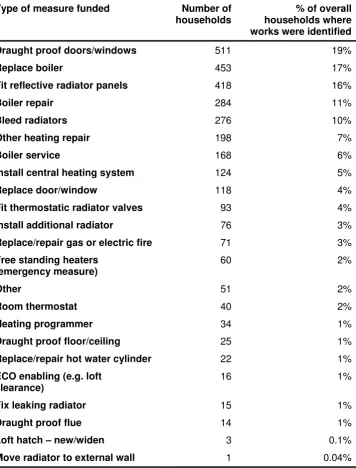
A large number of low cost, high impact measures (for example draught-proofing) were implemented during the Programme. The volume of work was impressive in terms of the range of interventions.
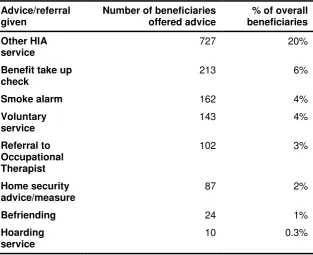
Across the whole WAH Programme HIAs offered a range of additional advice and referral to clients.
HIAs were exceptionally knowledgeable of possible sources of funding for their clients and were proficient at putting together a package of funding. The SSE WAH money was useful to top up loans from other sources or as match funding, and was an effective way of raising other funds.
For every £1 of SSE WAH funding provided by FILT an additional minimum £2.42 was levered in from other sources.
Few restrictions on the funding criteria and the flexibility of the funding were major benefits, which facilitated HIAs ability to work with more people and respond more speedily and creatively to meet clients’ needs.
The broad eligibility criteria for funding meant HIAs could help more people to keep warm, some of whom would not have qualified for other funding schemes.
HIAs felt that the SSE WAH Programme worked well, was well set up and easy to use, enabling HIAs to take the initiative and work effectively.
The timeliness of the intervention and being able to provide immediate relief to clients was a major advantage of the Programme.