• No results found

Constructions of 'gendered agency' : Perspectives from a multi ethnic Sure Start programme

N/A
N/A
Protected

Academic year: 2020

Share "Constructions of 'gendered agency' : Perspectives from a multi ethnic Sure Start programme"

Copied!
259
0
0

Loading.... (view fulltext now)

Full text

(1)

Constructions of 'gendered agency' : Perspectives from a

multi-ethnic Sure Start programme.

HAMM, Patricia.

Available from Sheffield Hallam University Research Archive (SHURA) at:

http://shura.shu.ac.uk/19749/

This document is the author deposited version. You are advised to consult the publisher's version if you wish to cite from it.

Published version

HAMM, Patricia. (2009). Constructions of 'gendered agency' : Perspectives from a multi-ethnic Sure Start programme. Doctoral, Sheffield Hallam University (United Kingdom)..

Copyright and re-use policy

See http://shura.shu.ac.uk/information.html

(2)

Constructions of ‘Gendered Agency’:

Perspectives from a Multi-ethnic

Sure Start Programme

Patricia Hamm

A thesis’ submitted in partial fulfilment of the requirements of

Sheffield Hallam University for the degree of Doctor of Philosophy.

(3)

ProQuest Number: 10697051

All rights reserved INFORMATION TO ALL USERS

The quality of this reproduction is dependent upon the quality of the copy submitted. In the unlikely event that the author did not send a com plete manuscript and there are missing pages, these will be noted. Also, if material had to be removed,

a note will indicate the deletion.

uest

ProQuest 10697051

Published by ProQuest LLC(2017). Copyright of the Dissertation is held by the Author.

All rights reserved.

This work is protected against unauthorized copying under Title 17, United States C ode Microform Edition © ProQuest LLC.

ProQuest LLC.

789 East Eisenhower Parkway P.O. Box 1346

(4)

Abstract

Theorists such as Anthony Giddens, Ulrich Beck and Elisabeth Beck-Gernsheim have presented an ‘individualisation thesis’ which states that in our ‘de-traditionalised’, globalised world of late modernity, identities are now fluid and individual trajectories no longer fixed; as ‘reflexive agents’, we must choose from an array of lifestyles and assemble our own ‘life projects’. This emphasis on active agency is reflected in constructions of welfare users in ‘Third Way’ and New Labour policy in the UK. Policy discourses depict welfare agents as aspirational and responsible decision-makers, simultaneously downplaying structural differences and presenting ‘families’ and ‘communities’ as consensual and motivated by shared interests. Sure Start, an area- based New Labour programme for families with young children can be seen as exemplifying many of these characteristics, and can be viewed also as a ‘Third Way’ initiative, reflecting in particular, a focus on a ‘social investment’ perspective.

This thesis, based on a study of a Sure Start programme in the multi-ethnic area of Brambleton, considers the extent to which policy and theoretical assumptions about parental agency are reflected in constructions of mothers and professionals. The qualitative case study approach emphasises the contextualisation of findings in ‘time’ and ‘place’, in particular depicting Brambleton as a ‘racialised space’ through which understandings of ‘need’ and agency are constructed. It explores the social processes through which mothers are able to act in the family, the community and within the Sure Start programme. This is done using an epistemology which combines both constructivism and phenomenology and a theoretical framework that incorporates aspects of Bourdieu’s ‘theory of practice’. The methodology used includes a focus on the life stories of white and Pakistani mothers, interviews with professionals and a narrative approach to analysis.

(5)

CONTENTS

A bstract...ii

Acknowledgements...vii

1. INTRODUCTION... 1

1.1 Identifying the research problem...1

1.2 Outline of the th esis...2

2. LOCATING THE SURE START PROGRAMME IN THE DISCOURSES OF NEW LABOUR...7

2.1 Introduction...7

2.1.1 The origins of Sure Start...8

2.2 The agendas of Sure Start... 9

2.2.1 Poverty, social exclusion and New Labour...9

2.2.2 The Third W ay'... 11

2.2.3 Sure Start and the 'social investment' perspective... 12

2.2.4 Sure Start, families and communities... 18

2.3 Sure Start, 'difference' and discourses of welfare...27

2.3.1 'Race', 'ethnicity' and 'culture'...27

2.3.2 G ender...31

2.3.3 The Third Way, diversity and difference...32

2.4 Chapter conclusions...34

3. TOWARDS A CONCEPTUAL FRAMEWORK...36

3.1. Introduction... 36

3.2 'Individualisation' and 'agency': key features... 38

3.3 Conceptions of agency in policy discourses... 42

(6)

3.4 Developing a conceptual framework...48

3.4.1 Focusing on agency in context... 48

3.4.2 'Drivers' of agency: explorations of 'rationality'... 61

3.5 Chapter conclusions...68

4. METHODOLOGY...69

4.1 Introduction... 69

4.2 Setting up the study: key dimensions... 70

4.2.1 A qualitative, inductive case stu d y ...70

4.2.2 Brambleton and its Sure Start programme...71

4.2.3 A collaborative research venture?...73

4.3 Conduct in the field: methods and ethics...78

4.3.1 Observation and participation: aspects of early 'immersion' in the field... 78

4.3.2 Developing the 'central study': interviews with professionals and m others...80

4.4 Analysis: from grounded theory to narratives...98

4.4.1 Tools of analysis...98

4.4.2 A narrative analysis approach...101

4.5 Chapter conclusions... 103

5. NEGOTIATING IDENTITY WITHIN THE FAMILY: EXPLORING WOMEN'S AGENCY THROUGH STORIES OF ADOLESCENCE AND FAMILY LIFE...1 0 5 5.1 Introduction...105

5.2 Playing the 'daughter role'; narratives of possession... 107

5.3 Post-school trajectories for Asian and other w om en... I l l 5.4 Then and now: understanding change through intersections of agency and structure...120

5.4.1 Safeguarding tradition; understandings of 'culture' and the connections to Pakistan 121 5.4.2 'It's how I learnt to live': accepting and resisting traditional norms in a time of transition. 125 5.4.3 Agency as future intention... 135

(7)

6. CONCEPTUALISING SURE START AND THE ‘POLICY STORY': PROFESSIONAL AND WORKER PERSPECTIVES ON BRAMBLETON'S ‘SOCIAL INVESTMENT' NEEDS...13 9

6.1 Introduction...139

6.2 Conceptualising Brambleton...141

6.2.1 The 'particularity' of Brambleton...141

6.2.2 Brambleton as a racialised space: narratives of 'exclusion'...143

6.3 Understanding the need for a Sure Start programme in Brambleton...149

6.3.1 Need as 'racialised'...149

6.3.2 Brambleton Sure Start and white m others...155

6.4 Reflections on policy change... 158

6.4.1 The value of 'early Sure S tart'...159

6.4.2 Anticipating Children's Centres...162

6.4.3 A 'disputed' narrative: the uses of childcare... 163

6.5 Chapter conclusions... 170

7. MOTHERS’ EXPERIENCE OF BRAMBLETON SURE START: HOW THE ‘INVESTMENT' IS TAKEN UP AND USED... 172

7.1 Introduction...172

7.2 Narratives of 'additional provision': mothers' perceptions and uses of Sure Start services...174

7.2.1 Mothers as receiversof services... 174

7.2.2 Services as 'meeting need'...176

7.2.3 'Places to g o '... 180

7.2.4 Support with parenting...183

7.2.5 Uses of Sure Start: the focus on 'well-being'... 185

7.3 Agency and parental involvement... 186

7.3.1 Perspectives on the motivation of 'activists' and 'non-activists'...187

7.3.2 Outcomes of parental involvement...193

(8)

8. CONCLUSIONS...20 0

8.1 Introduction... 200

8.2 Agency as 'differentiated': the context of the family...200

8.2.1 Dimensions and properties of agency...201

8.2.2 'Traditional practices' in 'late modern' societies... 208

8.3 Understandings of Sure Start agency and the implications for policy... 209

8.3.1 Uses of Brambleton Sure Start: levels of participation... 210

8.3.2 Agency as a continuum and Sure Start mothers as 'active subjects'...213

8.3.3 Interpretations of the 'investment' needs in Brambleton... 214

8.4 Reflections on the research process: theoretical, epistemological and methodological implications...216

8.4.1 Agency, social policy and context: conceptual developm ent...216

8.4.2 Further epistemological and methodological issues...220

REFERENCES... 2 2 4 Appendix 1 - Parent Interview Schedule...246

Appendix 2 - Staff Topic Guide... 248

Appendix 3 - Topic Guide for Local Agencies...249

(9)

Acknowledgements

With many thanks to John Flint at CRESR for providing the generous support and critical eye that I needed to complete this thesis and to Paul Hickman also, for agreeing to help out at the final stage. Thanks particularly to Rachel and Sonia for their empathy and willingness to listen and think about the many issues that arose throughout this process. Thanks also to Joe, Phil, Pen, Jeremy, Joan, Sue, my parents, Celeste and Wolf, and to other good friends for their patience, care and support during this time.

(10)

1. Introduction

1.1 Identifying the research problem

The Sure Start programme was announced as part of Labour’s Comprehensive Spending Review in 1998 and the programme implemented from 1999. Brambleton Sure Start was a ‘fourth wave’ programme established in Autumn 2001.

A year later, in October 2002, I accepted a studentship at Brambleton Sure Start that was partly funded by the programme in conjunction with Sheffield Hallam University. It was agreed by both parties that the research that I was to conduct would examine an aspect of parental engagement. I began to familiarise myself with the workings of the programme, to observe some group activities and meetings and to conduct initial interviews with a small number of staff, and in parallel, to get to grips with the policy programme itself through its ‘discourses’, evident in objectives, targets and guidelines.

During this process, I very quickly became aware of the highly ‘racialised’ and gendered character of the multi-ethnic area of Brambleton. I also became increasingly curious about a gap between ‘Third Way’ and New Labour rhetoric and programme discourses of parents as active, purposeful and aspirational - particularly given developments in the Sure Start policy area in this period - and the way that the capacity of local parents, primarily but not entirely mothers of Pakistani-origin, was described. While a level of diversity within this group of mothers was generally acknowledged, a significant number within their midst, including many who had come to the UK to marry British-born Pakistani men, were seen to be restricted in their choices by their families and sometimes to be actively prevented from using services, including those delivered by Sure Start.

(11)

of local professionals and parents. I would contextualise empirical findings using Third Way and New Labour policy discourses as well as perspectives from individualisation theorists - such as Anthony Giddens and Ulrich Beck - about ‘reflexive agency’. I decided that the study would address two central research questions. The first concerned how agency was constructed in theory, discourses and ‘on the ground’ and asked ‘to what extent do policy and theoretical assumptions about the agency of parents reflect constructions of parents and professionals ?’ With this focus, I would explore understandings about agency drawing on the life stories of a sample of white and Asian mothers, as well as their perceptions and uses of the Sure Start programme. In addition, in order to provide a further dimension to the case study, I would also examine aspects of the implementation of the programme from the perspectives of professionals. Using this approach, I aimed to answer the second main research question which was to identify ‘what the findings added to understandings about Third Way and social investment policy and to theoretical understandings of agency'.

1.2 Outline of the thesis

The empirical research is contextualised within Chapters 2 and 3. Chapter 2 locates Sure Start in its policy settings while Chapter 3 constructs a conceptual framework for the research. There was little existing research evidence from other studies at this point about Sure Start implementation, its impacts or the ways that parents were engaging with the programme (although some early local findings had begun to appear in health journals and were emerging from the National Evaluation of Sure Start, NESS1). Relevant literature relating to early evidence from the relatively new Sure Start programme and to other key elements of the study is incorporated into both of these two chapters.

Chapter 2 locates the key policy areas and discourses of Sure Start. Of primary importance for the thesis is the identification of Sure Start as part of a Third Way framework which includes a ‘social investment’ dimension. This notion of social investment is characterised by the linking of social and economic goals, the

1 Based at the Institute for the Study of Children, Family and Social Issues, Birkbeck, University of London, and led by Professor Edward Melhuish.

(12)

development of human capital, and by a focus on children as ‘emblems of the future’. In this chapter I also explore other important, related policy areas, the moral agency given to ‘family’ and ‘community’ and the translation of this into new policy and legislation. Given the multi-ethnic characteristics of the population of my case study area, in this chapter, I also examine New Labour’s approach to ‘gender’, ‘ethnicity’ and to ‘difference’, identifying tensions between a greater recognition of ‘diversity’ which runs alongside the attempts to develop shared, national values and new citizenship identities based on ‘family’ and community’.

Conceptions of agency within policy discourses and those advocated by individualisation theorists form the basis of Chapter 3, which provides a conceptual framework for the thesis. The chapter begins by considering theoretical perspectives on increasing individualisation, including those of Giddens and Beck, evident in greater mobility and autonomy, and the decline of gendered and other power relationships which have been premised on the notion of ‘post-traditionalism’. The chapter then examines how the policy area of parenting is conceptualised within New Labour discourses, including in the objectives, targets and guidelines of Sure Start itself. In the second section of the chapter, key, overlapping themes stemming from these theoretical and policy assumptions suggest important conceptual questions for the study. In the first of these, contesting the premise of ‘post-traditionalism’, an important objective of the study is identified as the exploration of the agency of parents as shaped by their family lives and histories, using concepts of ‘autonomy’, and of ‘relational’ and ‘collective’ agency’. In addition, as part of this of an exploration of agency, important conceptual insights from recent study of ‘culture’, ‘identity’ and ‘gender’ are highlighted. In a second key area, assumptions about narrowly-defined ‘rationalities’ as the drivers of action in policies and theory are problematised as a basis for analysis in the context of this research. Within this theme also, a short summary is provided of Bourdieu’s ‘logic of practice’ which I came to see as contributing a useful perspective to my evolving analytical framework.

(13)

story approach which enables an understanding of the connections between the biographical and social history of individuals is described as part of the focus on agency, reflected too in a narrative method of analysis which was adopted as the study progressed. The basis of the study was an epistemology which incorporated social constructionist and phenomenological perspectives, enabling the understanding of how identities are discursively formed and simultaneously accepting a ‘reality’ of ‘lived experience’. The reflexive character of the study is embodied, in various ways, for example, by a discussion of the impact of my relationship with Brambleton Sure Start staff on the shaping of the research, and by a detailed consideration of interactions with participants, including issues arising from my role as a white researcher working with Asian parents.

Chapter 5 explores the construction of identity and agency within the family and represents the first empirical chapter within the thesis. The chapter directly addresses the ontological basis of the study which is that agency is integrally shaped by the contexts within which we live and the norms learned in childhood and families. The focus of the chapter is largely on the life stories of a sub-set of Asian mothers in the wider sample of parents and explores the following conceptual questions: What is the impact of ‘tradition’ (‘religious’ and ‘cultural practices’) on life stories? How have individual and collective goals been reconciled? How can ‘autonomy’ be understood in this context? What is the relevance of concepts of ‘relational’ and ‘collective’ agency? What do life stories tell us about ‘identity’? What do life stories tell us about how change occurs for individuals? These questions are addressed in sections which explore the role of the daughter in traditional family life, post-school trajectories for Asian and other women in the sample and an analysis of the ‘stirrings of change’ in this community. Key findings from the chapter concern the level of continued family imposition on daughters, leading to the use of the concept of ‘constrained agency’, and evidence of gradual change revealed through an analysis of the nuanced interplays of agency and structure.

(14)

during the period of the fieldwork is told. Emphasising a premise of the case study approach which is the need to recognise the research findings as connected integrally with contexts of ‘time’ and ‘place’, the following questions are explored: How did professionals construct the area, its residents and the needs of parents? What was the relationship between conceptualisations of the area and its parent groups and the Sure Start programme? How did staff see the relevance of the (developing) policy agenda in terms of local parents? The sections through which these questions are addressed include conceptualising Brambleton, understanding the needs for a Sure Start programme and reflections on policy change. Key findings addressed the evidence of a narrow association of ‘need’ for services with those of Pakistani-origin, and the concerns about the perceived direction of Sure Start policy which arose from a view of the constrained agency of this parent group.

Chapter 7 which explores the experiences of Brambleton Sure Start users again returns to the theme of social investment, but from the perspective largely of parents. Here, in sections that examine conceptualisations of core Sure Start services and parental involvement forums, the following conceptual questions are addressed: What were mothers' understandings of the purposes of Sure Start? In what ways did they use services? How could their motivations and decision-making about services be understood? What were the meanings given by ‘activists’ (those involved in parental involvement forums) and ‘non-activists’ to ‘parental involvement’ or non-involvement? How were the processes and outcomes of parental involvement understood by staff and parents? Among the key findings reported in this chapter were that most parents did

not construct themselves as the active and aspirational agents of policy discourses. Another important finding from this chapter was the evidence of significant differences in the experiences and outcomes for ‘activist’ (almost all white) and ‘non-activist’ (Pakistani-origin) Brambleton mothers.

(15)
(16)

2. Locating the Sure Start programme in the

discourses of New Labour

2.1 Introduction

This chapter has two objectives, to identify key Sure Start policy agendas and discourses and to examine the treatment in policy of ‘ethnicity’ and ‘gender’. The understanding, treatment and therefore the epistemological implications of ‘discourse’ for this study is addressed again in Chapter 4. Following Foucault (in Mills, 2003, p. 54) discourse is seen here both broadly, as a ‘regulated set of statements which combine with others in predictable ways’ and as structuring the way that we perceive reality (ibid, p. 55).

After a brief description of the origins of Sure Start, the main agendas in which the programme can be located are examined. These promote particular understandings of parental agency that inform the conceptual framework (developed in Chapter 3) and that are explored through the empirical research. New Labour’s social policy is characterised by tensions and contradictions, but also by certain consistent themes. It is argued that Sure Start can be located within three broad, interconnected agendas: firstly, a focus on the child and on human capital as part of a Third Way Social Investment perspective, secondly, a preoccupation with ‘family’, and thirdly, with ‘community’. These are recurrent themes across policy areas, also deriving from Third Way approaches and from new Communitarian ideas.

(17)

2.1.1 The origins of Sure Start

The Sure Start programme was announced in July 1998 as part of the Comprehensive Spending Review. One of the six cross-cutting reviews included in this addressed services for young children and incorporated evidence from research, an innovation for social policy at this time (Melhuish, 2007). This was research primarily from the United States of America (USA) which included evidence from randomised control trials (e.g. in Ramey & Campbell, 1991; Schweinhart et al, 1993) and quasi- experimental studies of early intervention. The review also highlighted evidence that the earlier interventions took place, the greater the likelihood that future problems could be averted. It suggested too that the unevenness and lack of co-ordination of current services, a focus on older rather than younger children and the variability in quality reinforced the need for joint planning by relevant agencies (HM Treasury, 1998).

After the Sure Start programme had been announced, £542 million became available over a three-year period, with most of the funding to be used in England. The programmes were to be targeted at the 20% most deprived areas; two hundred and fifty programmes were planned for 2001-2, with each intended to support about 400-800 under four year olds. Brambleton Sure Start was part of the fourth wave of programmes.

(18)

SSLPs were to deliver a number of core services - outreach and home visiting; support for families and parents; support for good quality play; learning and childcare experiences for children; primary and community health care and advice about child health and development and family health; and support for children with special needs. Within this context however, guided by partnerships of local stakeholders which included parents, programmes would have autonomy in terms of the model within which services would be delivered. Sure Start was also envisaged as having a strong community development dimension.

2.2 The agendas of Sure Start

2.2.1 Poverty, social exclusion and New Labour

Tony Blair’s (1999) pledge to abolish child poverty marked a departure for New Labour, which until that point had talked almost entirely about social exclusion (Deacon, 2000). Although the Third Way emphasis within New Labour politics has overall given greater weight to providing opportunities than material resources or benefits, tapping into a discourse of social exclusion rather than poverty, re-distribution has played an important role in policy. Writing in 2002, Goldson pointed out that there were thought to be at least 50 different funding streams associated with anti-poverty schemes. Sure Start fitted clearly into this agenda, speaking, as Moss (2000, p. 75) has said, 'of an administration prepared to recognise poverty as a legitimate and major issue for social policy'. This was particularly evident in the dynamic role of the Treasury (and the personal commitment of then Chancellor, Gordon Brown) in relation to Sure Start and other anti-poverty initiatives.

(19)

contrast with the individualist Children Act (1989) which emphasised instead, the 'child in need'.

However, despite the level of investment and the multitude of new initiatives, many difficulties were also described. Coverage of poorer children was limited and it was also felt to be problematic that fixed-term funding formulae applied to most of these projects, with clear restrictions on the ability to plan much-needed longer-term support (Goldson, 2002). Sure Start, planned as a ten-year programme, in fact represented an exception to this. In addition, many practitioners delivering the government's social justice agenda for children were overwhelmed by the number of new initiatives emerging and by the difficulties in co-ordinating them, particularly in the context of a swiftly changing policy agenda (Community Care, 2003).

(20)

2.2.2 The ‘Third Way’

In 1997, Tony Blair described the aim of the Third Way as to marry 'an open, competitive and successful economy with a just, decent and humane society' (Blair

1997, cited in Driver & Martell 2000, p. 148). For Driver and Martell:

Third way thinking supports the view that globalisation brings with it greater risk and insecurity and that the role of policy makers is not to shield individuals from them but to provide the 'social capital' and 'proactive welfare states' which enable them to respond to them and prosper in the global age .... Government promotes economic growth by creating stable macro-economic conditions; and its supply-side social interventions enhance individual opportunity (social justice) and increase non-inflationary growth, which together bring greater

social cohesion by reducing social exclusion (Driver & Martell, 2000, p. 150).

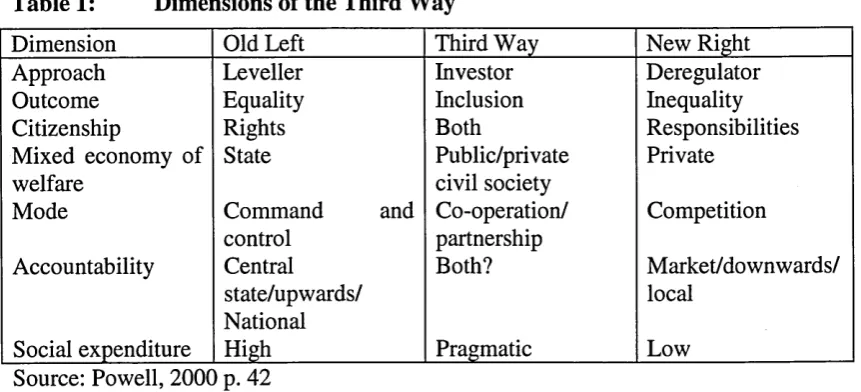
Many writers have attempted to define the Third Way (see Deacon, 2000; Powell, 2000), with Driver and Martell (2002) identifying the term as 'one of a number of attempts by modernizers to find a label to capture New Labour politics and New Labour itself (p. 78). Driver and Martell (2000) also point to the four Third Way values identified by Blair himself in a pamphlet for the Fabian Society (1998) - 'equal worth', 'opportunity for all', 'responsibility' and 'community'. These describe the role of the state to provide equality of opportunities rather than outcomes, an interest in how opportunities are offered and taken up, and the mechanisms through which this occurs. These features - the redistribution of opportunities, an emphasis on responsibilities alongside rights, and the moral role of families and communities in society (and see below p. 17) - encapsulate key elements of the Sure Start programme. They also shape how notions of human agency have been constructed within government welfare discourses, forming part of the basis of the conceptual framework for this study which is further examined in Chapter 3.

(21)
[image:21.563.84.515.56.252.2]

Table Is Dimensions of the Third Way

Dimension Old Left Third Way New Right Approach

Outcome Citizenship

Mixed economy of welfare Mode Accountability Social expenditure Leveller Equality Rights State

Command and control Central state/upwards/ National High Investor Inclusion Both Public/private civil society Co-operation/ partnership Both? Pragmatic Deregulator Inequality Responsibilities Private Competition Market/downwards/ local Low Source: Powell, 200C)p. 42

2.2.3 Sure Start and the ‘social investment’ perspective

The guideline is investment in human capital wherever possible, rather than the direct provision of economic maintenance. In place of the welfare state we should put the social investment state, operating in the context of a positive welfare society (Giddens, 1998, p. 117, emphasis in original).

[The social investment perspective] frames social policy expenditures as investments rather than expenditures, forecasting future dividends from spending now, and describes social policy as supporting larger objectives - namely, propelling economies into the 21st century, and positioning states as innovative and competitive players in the global marketplace. The claim is that good economic outcomes depend on good social policy. The core concern is creating incentives for most adults to enter the labour market. Income supplements, particularly those that make work pay - popular and described as ‘investments’ [and] less costly than social assistance payments, also foster a culture of inclusion and break the cycle of poverty. At the same time, however, the social investment perspective makes individuals responsible for ‘investing in themselves’ and their children (Dobrowolsky and Jenson, 2005, p. 203).

(22)

‘The guideline is investment in human capital wherever possible, rather than the direct provision of economic maintenance. In place of the welfare state we should put the social investment state, operating in the context of a postive welfare society’ (1998, p. 117).

Giddens’ notion of the replacement of the welfare state by the social investment state above, suggests a transformation in understandings of social citizenship, and reflects the shift from a ‘passive’ to an ‘active’ welfare society described by Walters (1997) (and see Chapter 3 for more about ‘positive welfare’). This social investment perspective has been identified by Giddens as integral to Third Way politics and its origins traced (for example, by Dobrowolsky and Jenson, 2005) to the mid-1990s, particularly to the work of The Commission for Social Justice in the UK which reported in 1994 and to an OECD (1996) conference ‘Beyond 2000: The new social policy agenda’.

New Labour’s emphasis on social investment is often attributed to the work of the Commission on Social Justice. The remit of the Commission that was set up by then Labour Leader of the Opposition, John Smith, in 1992, which included input from academic institutions and from religious and campaigning organisations was to undertake an independent review into social and economic policy. Although Tony Blair (then an MP) is cited on the cover of the report as describing the work of the Commission as ‘essential reading for everyone who wants a new way forward for our country’, as Prime Minister, he rarely acknowledged any particular debt to it (Dobrowolsky and Jenson, 2005).

(23)

will ensure social justice as well as economic prosperity, as ‘security’ is deemed to be the ‘foundation of change’ (p. 95). While Levellers are also interested in ‘security but seek to achieve it primarily through the redistribution of income, both positions diverge from that of the Deregulators who regard insecurity as the ‘spur to change’ (ibid, p. 95, emphasis in original).

The focus of the investment proposed by the Commission is upon the provision of individual opportunities for children and adults. The report of findings highlights policy strategies in the areas of skills development through lifelong learning, the importance of paid work, the building of an ‘intelligent’ welfare state, the development of ‘responsibility’ including through community regeneration and principles for improved taxation.

Examination of the development of the social investment perspective in the last decade has been carried out by a number of analysts with interest in children and early years policy. Dobrowolsky and Jenson have remarked that ‘... after more than eight years of Labour government, much of the social investment perspective has been institutionalised’ (2005, p. 223), although in an apparent qualification of the ‘certainty’ of such claims, Lister has warned of the dangers of interpreting ‘all policy developments in terms of the social investment template’ (2003, p. 438). The state is not monolithic, and New Labour policy is contradictory, reflecting different traditions and influences. Not all policy shifts are reducible to this template, she notes, even if they are consistent with it. Given these qualifications, however, Lister has summarised the key features of the social investment state.

• Investment in human and social capital: children and community as emblems. • Children prioritized as citizen-workers of the future.

• Future-focused.

• Redistribution of opportunity to promote social inclusion rather than of income to promote equality.

• Adaptation of individuals and society to enhance global competitiveness.

(24)

In a social investment state, spending is selectively targeted towards health, education and children (Dobrowolsky and St-Martin, 2005). While not ignoring those deemed to be (‘genuinely’) in need, the imperative is to prevent exclusion, through promoting educability and employability. Alongside the promotion of a learning and skills agenda, there has been a major focus on paid work as the key route to inclusion; in the UK this has been evident in many initiatives such as the New Deals, designed to assist particular groups such as lone parents into employment, but also in a reframing of social policy on various levels towards employment - for example, tax credits providing incentives to low-earning families, and the shift of the Department of Social Security (DSS) to the Department of Work and Pensions (DWP) in 2001. These developments - and others in other policy areas - incorporate Third Way assumptions about welfare users as ‘responsibilised’ agents (Rose, 2001) who are willing or if unwilling, can be persuaded or coerced, into using welfare interventions to improve their circumstances.

The unprecedented investment in children and young people from 1997 seems to represent a major underscoring of the commitment to a social investment perspective. Specific economic initiatives in this area for example, are in part re-distributive, in part Third Way ‘incentivising’ - the increase in child benefit an example of the former, tax credits and the Education Maintenance Allowance (EMA) (introduced in 2004), the latter. Some of the other developments such as the focus on Looked After Children (LAC) in ‘Quality Protects’ and in legislation addressing education and other areas (DfES, 2000; DfES, 2004) grounded in evidence that this group are less likely to continue in education, more likely to be unemployed, to experience teenage pregnancy, to become involved in anti-social behaviour and criminality etc (Chase et al, 2006) also reflect broader social exclusion discourses about the severe penalties resulting from non-participation in education and the paid labour market (PLM).

(25)

Children, Young People and Maternity Services (Department of Health, 2004) and in the development of childcare as a major policy area in a range of childcare policy and strategy which includes the Extended Schools agenda (HM Treasury, 2004; Office of Public Sector Information, 2006; 4Children, 2007). The transformation of the policy area is encapsulated by the institutional changes introduced in the Green Paper Every Child Matters (Department for Education and Skills, 2003b) which has been described by Fiona Williams (2004, p. 406) as the ‘biggest shake up of statutory children’s services since the Seebohm Report of the 1960s’. The Green Paper introduced a new Directorate for Children, Young People and Families, to be based in the DfES, with a full-time Minister and a Children’s Services Commissioner, as well as the ‘five outcomes’ framework which was to apply across national and local policies for children. At the local level, the Green Paper brought about the radical integration of local authority and other services for children, as well as the requirement for local plans; these developments reflected the need for ‘joined up’, multi-disciplinary working which had prompted the Green Paper following the death of Victoria Climbie.

Saint-Martin (2000, cited in Dobrowolsky and Jenson 2005, p. 205) has said that ‘in ideational terms, children matter because human capital matters’. As Lister illustrates (2006), investment in the child as ‘future citizen-worker’ and as ‘emblem of the future’ in her terms is repeatedly demonstrated in the language used, for example in childcare policy:

It is in the nation’s social and economic interests that children get a good start in life for children are the citizens, workers, parents and leaders of the future (HM Treasury, 2004, para 2.11).

While it is acknowledged that there exist other interpretations of the interest in this policy area which can be put forward alongside the social investment perspective, and also that the level itself of the funding involved allows possibilities for other kinds of actions and developments, there is a pessimism about this representation of the child as potential adult or as ‘becoming’ rather than ‘being’ (Fawcett et al, 2004, p. 17). As Lister (2006) points out:

(26)

From its introduction Sure Start has been centrally about the development of human capital in children, with a focus on preparing the child for school.

[The aim of Sure Start is] to work with parents-to-be, parents and children to promote the physical, intellectual and social development of babies and young children - particularly those who are disadvantaged - so that they can flourish at home and when they get to school, and thereby break the cycle of disadvantage for the current generation of young children (DfES, 2002, p. 3).

Early descriptions of the programme, for example in political speeches, repeatedly emphasised its focus on joined up services for family support and on community empowerment, and the role of Sure Start to ‘meet the needs’ of local parents has always been a part of its discourses. However, arguably a social investment perspective came increasingly to influence its direction, a shift that can be seen in a number of related developments. One of these, occurring in early 2003, came in the move of the programme from the complicated accountability to the Department of Health (DoH) and the then Department of Education and Employment (DfEE), to a new larger Sure Start unit incorporating early education, childcare and the local programmes. This was located between new Departments for Education and Skills (DfES) and Work and Pensions (DWP). This was paralleled by an amended aim for the unit as a whole to:

Increase the availability of childcare for all children, and work with parents- to-be, parents and children to promote the physical, intellectual and social development of babies and young children - particularly those who are disadvantaged - so that they flourish at home and when they get to school, enabling their parents to work and contributing to the ending of child poverty (DfES, 2004, p. 21) (emphasis added, highlighting key changes).

This new emphasis within the Sure Start discourse, on paid work as a key way of resolving the problem of child poverty and on childcare as the means to facilitate this was also found in an additional objective, listed above the initial four - ‘Improving the availability, accessibility, affordability and quality of childcare’. The purpose of these changes and the ‘re-balancing’ of the Sure Start focus, were described by Naomi Eisenstadt, Director of the Sure Start Unit in April 2003.

(27)

... Most of the families in touch with Sure Start programmes are living in poverty. Unemployment rates in Sure Start areas are high, and many children are living in households where no one works. Sure Start aims to stretch people's aspirations both in terms of what they want for their children and what they want for themselves. By working with the community, building skills and self-esteem, Sure Start helps local parents become "work ready". Building confidence, taking up training, and particularly adult literacy, all build skills useful for parenting and for work. And good quality child care is essential to offering real choices in employment (Eisenstadt, 2003, p. 26, emphasis added).

The Children’s Centres initiative, introduced in the 2002 Interdepartmental Childcare Review (Cabinet Office Strategy Unit, 2002) and due to be implemented from 2006, was also the subject of critique. Although promoted as a way of mainstreaming and bringing the success of Sure Start to larger numbers of children, introduction of the initiative caused concern on various counts. Among other things there was disappointment that the promise of a ten-year Sure Start programme would not be kept, anxiety that incorporation of the Children’s Centres into local authorities would threaten the strong parental involvement ethos of Sure Start, and concerns too that although the new Centres were expected to reach many more children, there would not be a proportionate increase in funding (Glass, 2005; The Guardian, 2005). Some were suspicious too, that the family support emphasis of Sure Start would be replaced by a stress on childcare for work, with Norman Glass, the Treasury Civil Servant and so- called ‘architect of Sure Start’, famously voicing his own fears that the programme would become a ‘New Deal for Toddlers’ (Glass, 2005)2.

2.2.4 Sure Start, families and communities

I have argued that a social investment perspective increasingly shaped the Sure Start policy which was manifested in a notable shift in the focus of objectives and targets, and in the location of the programme itself in Government, as well as in the move towards Children’s Centres. Highly important also in terms of this study has been the construction of families and communities in the Sure Start programme and in New Labour policy.

(28)

Although ‘family’ and ‘community’ have different symbolic and explanatory meanings within Sure Start and other policy areas, there are also similarities in that they are both discursively addressed as key mechanisms through which agency is or should be exercised and through which potential exclusion is to be avoided.

In his Third Way thesis, Giddens identified that the ‘overall aim of third way politics should be to help citizens pilot their way through the major revolutions of our time: globalisation, transformation in personal life and our relationship to nature’ (1998, p. 64). The differences between the narratives developed by New Labour and by Giddens about families and - to a lesser extent - about communities are influenced by their attitudes towards social change. Whereas Giddens and other post-traditionalists are seen to be neutral, even positive, but essentially pragmatic for example, about changes in the family, New Labour appears to be more ambivalent (Deacon, 2000). New Labour’s Third Way, as presented by Blair himself (1998), suggested that the family has been left unsupported through a period of sustained social change.

(29)

about an assumed degeneration of poor families and communities and the implications of this for social exclusion, is reflected in a narrative that seeks to re-moralise families and communities.

A range of new Communitarian thinkers are identified as influences upon New Labour (see Driver and Martell, 1997, p. 28) and Giddens’ own (1998) text, The Third Way -The Renewal of Social Democracy, provides an important link between new Communitarian philosophy and New Labour policy. Blair himself identified the strong influence of Scottish Christian socialist philosopher, John Macmurray on his thinking, although commentators such as Sarah Hale (2002, 2006) dispute the similarities between their ‘communitarian’ visions.

A new Communitarian dimension of New Labour policy has most frequently been identified with the work of Israeli-American, Amitai Etzioni. A founder of the Communitarian Network, and the journal Responsive Community: Rights and Responsibilities, (new) Communitarianism is seen as a ‘movement’ which readers are entreated to join (1993, p. 18).

(30)

Etzioni and others is on responsibility and on exploring how it can be instilled through a restored, reinvigorated ‘community’.

Although Etzioni is clear to refute accusations that new Communitarians wish for a return to the traditional values of the 1950s (1993, p. 25), a moral voice of community and family which will nurture stronger social controls and support structures is at the centre of this analysis. Etzioni’s ‘moral voice’ of community will over-ride self-interest (or bigoted actions such as racial hatred) and provide the ‘social glue’ that maintains order. The role of community in re-establishing civic institutions and the emphasis on voluntary work as part of mutualism are part of this. Within this analysis, the importance of the community is far greater than that of the state, upon which a minimal dependency is expected. In terms of the family specifically, Amitai Etzioni’s description of ‘making a child’ as a ‘moral act’ (Etzioni, 1993, p. 54) characterises his position. In his view, a parenting deficit has become commonplace. Arising from the prioritization of parental needs for employment and self-fulfilment, this has led to a failure to provide the commitment and attention that children need and to their institutionalization through childcare (1993).

(Early) intervention in the family

The ‘moralism’ that has been described was apparent in the focus and mechanisms of intervention, as well as in the discursive treatment of the family. Interest in the family was evident early in New Labour's first administration, with the introduction of the Consultation Paper Supporting Families, in November 1998. The Consultation Paper made proposals in a number of areas: support and advice for parents; improved financial support; support for a better home/work balance; strengthening marriage; and addressing the problems of family life. However, despite expressing the need to approach the family with ‘humility’ (Home Office, 1998, p. 3), it can be argued that New Labour has intervened more directly than previous governments and moreover, changed both the conceptualisation of the family in policy and perceptions of appropriate forms of intervention.

(31)

competences and as a vehicle of social cohesion, echoing comments made by Norman Fairclough that the family was represented by Blair as a ‘sort of public space ... through a discourse that is more usually applied to public institutions such as schools’ (2000, p. 43).

... much of the support discussed centres around making all parents into ‘good’ parents through a process of re-education. Although the suggested measures are presented as a neutral attempt to promote families and benefit children, the document is structured around a distinct, value-laden vision of how responsible, competent parents should behave. The term ‘parenting support’, in particular, describes the method by which parents are encouraged to reflect on and regulate their performance, through reference to ‘expert’ advice and training (Gillies, 2005, p. 77, emphasis added).

The term ‘support’ for parents, as Gillies says, traditionally used to signify material benefits or services, is directed towards the moral obligation to work and avoid child poverty, but is also now linked to ‘empowerment’ or empowerment to be good parents. This emphasis upon re-education is also addressed by Sharon Gerwitz (2001) writing about the schools context, who identifies New Labour’s attempts to ‘re-socialise’ working class parents by giving them the values and facilitating the behaviours of middle class parents.

As indicated earlier, the provision of opportunities is an important Third Way value but these are 'opportunities to do the right thing' in Heron and Dwyer’s (1999) words. Although the equation of ‘responsible’ behaviour with welfare entitlement has always been a rationale of the Welfare State (and see Flint, in press, on previous historical precedents), the current emphasis on conditionality has been seen to reflect a re­ conceptualisation of social citizenship, and part of a period of ‘welfare resettlement in which certain welfare rights and responsibilities are effectively being redefined’ (Dwyer, 2002, p. 277). As part of this shift, an element of authoritarianism and of compulsion can be found in many new initiatives which reinforce the responsibility of parents towards their children. These measures, as the work of Gillies and Gerwitz above suggest, also reflect a cultural politics, promoting particular messages about correct behaviour and about 'good' and 'bad' families. For Driver and Martell:

(32)

disapproval. New Labour's often conservative rhetoric on the family is significant to the extent of constructing particular sorts of preferred subjects in society and demonising others; and in doing so, promoting particular kinds of behaviour (2002, p. 51).

In identifying its aim as working with the family ‘to break the cycle of disadvantage’, the early Sure Start discourse drew on a theme about transmitted family deprivation. This notion was reflected in Blair’s (1999, p. 16) pledge to eradicate child poverty within a generation ‘so that children bom into poverty are not condemned to social exclusion and deprivation’ (emphasis added). This emphasis spoke of a moral imperative to intervene, providing an additional dimension to the social investment perspective, and an explanation too for policy interest in early intervention (as opposed to the family or the early years per se).

A number of examples of family intervention projects premised on the idea of trans- generational transmission of social exclusion had preceded Sure Start (Clarke, 2006). Theories about transmitted family deprivation had also been put forward, controversially, by Conservative Sir Keith Joseph (1972). But while Deacon (2002) has downplayed any suggestion of a direct link between New Labour interest in the idea and Joseph's thesis, he has identified three broad themes common to both: the importance of the family as the forum within which children develop moral sentiments and leam moral practices; the unique importance of what society does to and for children in the first five years; and a preoccupation with the ways in which disadvantage is transmitted from one generation to the next.

(33)

... driven by the desire to reduce early childhood to a technical undertaking and to constitute the young child as a subject for the application of ever more powerful and normalising human technologies. The consequence is that the implementation of policy is dominated by a search for universal answers and solutions to what are treated as essentially technical problems, summed up in the dominance of one question, 'what works?' one model of evaluation and unproblematised use of terms such as “quality”, “excellence” and “best practice” (ibid, p. 85).

Initial Sure Start objectives were to improve social and emotional development, improve health, improve children’s ability to learn and to strengthen families and communities, with a large range of targets set against each. In her critical examination of Sure Start, Karen Clarke (2006), like Moss above, has conceptualised the programme as a technical project, involving a ‘what works’ approach, and mechanistic forms of intervention with the parent to ensure successful developmental outcomes for the child. Examining the programme objectives, and targets, Clarke has critiqued the focus on ‘proximal’ rather than ‘distal’ outcomes in Sure Start (where distal refers to demographic variables such as income and proximal refers to the effect of distal variables when filtered through particular chains of events). Thus intervention is concerned for example with:

... provision of toys or books in the home, but without addressing the more complex and diffuse effects of low income, whose relationship with reading ability may be less obvious. ... The need to address underlying issues, such as the effects of poverty on self-esteem and depression and the impact of these on parenting capacity, are acknowledged in some of the background papers, but these present more complex and intractable problems than the provision of toys or reading materials, which can then come to be seen as easier and more measurable aims when setting targets and then implementing policy (p. 708).

(34)

Community and parental involvement

[Alistair Darling] asked me a shrewd question ... ‘how can you assure me’, he asked, ‘that this programme will not lead in 10 years’ time to a lot of boarded up, fly-blown family centres such as I have seen in my own constituency and elsewhere?’ I had a number of responses, but the one I was most insistent on was that this programme would be “owned” by local parents, local communities and those who worked in the programme. Because those who benefited would be able to shape it to do what they wanted, rather than it being done to, or for, them. It would not be seen as just another initiative by Whitehall to do something about the feckless proles. (Glass, 2005).

The focus of ‘technical’ (professional) intervention in Sure Start discourse and policy was the ‘family’. However, as an area-based initiative, the notion of ‘community’ and in particular, the strategy of community involvement, was conceptualised as one of the most important mechanisms for effective delivery of the programme, ensuring ownership among parents and appropriateness of service provision. Investigating constructions of agency in the area of parental involvement was one specific focus of the empirical work in this study.

Under New Labour, ‘community involvement’ has played a growing part in public policy (Marinetto, 2003). Increasing interest in community involvement began in the 1980s under Conservative administrations, but New Labour added to this a Third Way interest in active citizenship as part of ‘democratic renewal’. As indicated, new Communitarian ideas also shaped these agendas, infusing ‘community’ with moral purpose and giving it an instrumental role as a vehicle of social cohesion and inclusion (Fremeaux, 2005).

(35)

By strengthening community support for children; by providing one-to-one help through personal contact; by recognising that solutions do not come top down from government, but bottom up from the community itself: co­ ordinating locally the best education and health and child care services; by bringing government and voluntary action together (Brown, 1999).

Community and parental involvement were treated as integral to the process of acquiring and delivering the Sure Start programme. Successful bidders were given a grant of up to £10,000 ‘towards the cost of consulting and involving parents and the wider community and of building your partnership’ as part of producing a Delivery Plan (Sure Start, 2001, point 1.7). The need to ‘consult and involve’ parents and community groups was repeatedly emphasised in this early guidance and the ‘lack of parental involvement’ included in a section of ‘Risks to Consider’ (Sure Start, 2001, point 3.21). There were also extensive ‘technical’ tips on how to involve parents and community groups.

In the early days of Sure Start, there was immense optimism about the potential of parental involvement, especially given that Sure Start had been announced as a ten-year programme, unusually long for such an initiative. Despite widespread political and media assertions in the early days of the programme that the much-trumpeted popularity - and, at the time, the assumed success - of Sure Start could be attributed to its parental involvement ethos (Community Care, 2001; Glass, 2005) the only required output was a delivery target, with no percentage attached, that all programme boards were to include parent representation . This apparent paradox - the rhetoric about the ‘exceptional’ value of parental ownership combined with a lack of enforcement - was found frequently in area-based and other regeneration initiatives, reflecting Chanan’s (2003 p. 15) observations about the ‘unique but somewhat puzzling position of community involvement’ which, on the one hand is a requirement in many public policy arenas, but on the other, is often ‘vague and ambiguous’ and absent from ‘outputs, outcomes and budget categories’.

(36)

As the Sure Start policy evolved, these tensions were highlighted, and overall, a ‘downgrading’ of the importance given to involvement can be observed. As indicated earlier, it was not clear what role parental involvement would play, if any, in the Children’s Centres that were set to replace Sure Starts (Community Care, 2005). In addition, within policy documents themselves, there is also a notable difference in tone between planning guidance on this topic in the early and later years of Sure Start. Although part of the empirical focus of this study was on those parents who participated as ‘activists’ in parental involvement forums, the thesis is not centrally concerned with the shift in this aspect of Sure Start policy which is addressed elsewhere (Hamm, 2007).

2.3 Sure Start, ‘difference’ and discourses of welfare

Sure Start programmes are located in a range of different types of communities where they may provide services to very different resident populations. Whether or not programme areas have large proportions of minority ethnic families has been recognized as a significant identifier in differentiating Sure Starts, with important implications for service provision (Barnes et al, 2005). The multi-ethnic character of Brambleton, as the case study area in this research, represented a key aspect of the context in which Sure Start users from different ethnic groups engaged with the programme. Given this, as well as the dominant and recurring theme of Brambleton as a highly gendered and racialised space, shaping the way that parental agency was seen by professionals and the way that the local programme was designed, it is important to address the construction of ‘race’, ‘ethnicity’, ‘gender’ and notions of ‘difference’ more broadly in the Sure Start programme and in associated discourses of welfare.

2.3.1 ‘Race’, ‘ethnicity’ and ‘culture’

(37)

valuable for this study in illustrating how the construction of the locality as ‘Asian’ was reflected in professional assumptions about what the need for services was and how the local programme should therefore look.

‘Ethnicity’ has been defined as:

... the way in which social and cultural difference, language and ancestry combine as a dimension of social action and social organization, and form a socially reproduced system of classification (Fenton, 1999, p. 62).

Although ethnicity does not have the same ‘essentialist’ connotations of ‘race’, it has been used in other, less ‘neutral’ ways, for example by majority populations and within popular as well as ‘official’ (e.g. within health) policy discourses that construct those of minority ethnic origin pejoratively as ‘other’ (Kellerher, 1996) or by minority groups themselves as part of confronting their invisibility (Afshar and Maynard, 2000). The terms ‘culture’ and ‘cultural practice’ are used throughout this research. Brah (1996) suggests that when we consider culture:

We will probably find ourselves thinking about the whole spectrum of experiences, modes of thinking, feeling and behaving; about the values, norms, customs and traditions of the social group(s) to which we feel we belong (p.

17).

‘Culture’ has tended to be viewed as unchanging and static within populist discourses and even within academic disciplines. However, there is now a far greater emphasis on its evolving, dynamic and relational qualities (Brah, 1996; Hall, 1992, 1996). These aspects of ‘culture’ are further explored in Chapter 3, as part of the conceptual framework for the research.

(38)

emotive national debate concerning race and ethnicity, prompted by the terrorist attacks in the US and the UK, and by urban unrest in the UK in 2001, has focused on expectations of citizenship and on British multiculturalism; policy responses have been dominated by tough immigration and asylum legislation and initiatives concerned with fostering ‘community cohesion’ (Back et al, 2002; Cantle, 2001; Shukra et al, 2004).

There is considerable evidence that some ethnic groups are severely disadvantaged in the various welfare arenas, experiencing educational under-achievement, relatively poor housing and labour market ‘penalties’ whether these are caused by discrimination or by a combination of factors (Modood, 1997; Social Exclusion Unit, 2000). For Gary Craig (2007, p. 617) the British State ‘acts energetically only in response to serious crises, such as occasional urban disturbances, or the vigorous campaigning of minority organisations’, as in the case of the Stephen Lawrence Campaign. In his view an overarching narrative about the negative impacts of immigration, has tacitly encouraged the neglect of the welfare of minorities. This is in the face of overwhelming evidence about differential outcomes, often obtained over a long period of time, which includes significant evidence of structural discrimination for example, in education, social security and health. Craig also notes that the ‘neglect of the issue of ‘race’ is not confined to social policy as political practice; it is shared by the academic discipline of social policy’ (emphasis in original).

This is striking considering that the social policy discipline is concerned centrally with issues of citizenship rights, welfare, equality, poverty alleviation and social engineering [and] extends to the practice of social research, where many proposals, proposers, funders or commissioners still treat the dimension of ethnicity as too complex, too expensive or too marginal to be worthy of serious attention (Craig, 2007, p. 610).

(39)

by-step guide’: identifying need and existing good practice; planning inclusive services; implementation of culturally appropriate services; and monitoring and reviewing procedures (Sure Start, 1999, p. 4). In the main, it is concerned with ensuring firstly that Sure Start services are accessible and secondly, that they are ‘culturally sensitive’. Below, in the only reference to the target framework of Sure Start, minority ethnic families are associated with those who are ‘hard to reach’. The Guidance points out that out of twelve targets associated with the Sure Start Public Service Agreement (PSA), three are ‘specifically concerned with reaching all families within the catchment area’ and that ‘to meet these targets’:

Efforts must be made to ensure that traditionally hard to reach families are made aware of, and encouraged to use, Sure Start services. Services need to be designed to meet the particular needs of individual families, minority ethnic families, mixed race/heritage families, faith groups, and any other kind of family for whom the use of mainstream services may be problematic (ibid, p.

2).

In policy documents overall, there was little substantive recognition of difference. This was despite empirical evidence about different aspects of the policy area, for example, that female employment patterns were markedly different across ethnic groups (in Bam et al, 2006; Clark and Drinkwater, 2007). Findings about difference were reinforced within a small number of Sure Start-specific research and evaluation studies about the effectiveness of the programme for minority ethnic communities. A 2005 study for Sure Start (Bryson et al, 2005) for example, found different patterns of childcare use, suggesting that white and black Caribbean families were most likely to use childcare, and that Pakistani and black African families were least likely to do so. A recent NESS report concerned with the programme itself, entitled ‘Sure Start and Black and Minority Ethnic Populations’ (Craig et al, 2007) has made serious criticisms of delivery, staffing and strategic issues. The authors concluded that:

(40)

2.3.2 Gender

A ‘policy optimism’ about men in the home and a ‘policy pessimism’ about them outside the home has been described by Scourfield and Drakeford (2002) who suggest that the reverse is true for women. In the first years of the New Labour administration, it was felt that the Government had given significant attention to ‘masculinity’, on the one hand expressing concerns through various policy initiatives targeting the ‘problem’ of (young) men and crime, and the under-achievement of boys at school, and on the other, portraying men positively, for example, as a necessary resource for children. In the case of Sure Start, is interesting to note that though the first batch of programmes funded in England made specific mention of interventions geared towards fathers, this was not the case for subsequent rounds. Involvement of fathers has however been emphasised in guidance including for Children’s Centres (DfES, 2005) and a themed study on ‘Fathers in Sure Start’ was produced by NESS (2003) as part of their implementation module.

A lack of gender analysis has been identified in Government thinking (Featherstone, 2006; Lister, 2006). As part of this, it has been argued that social policies are presented in a gender-neutral way, but that they carry profoundly differential impacts for women and men.

While governments may talk of ‘parents’, the impact of policies that impose home-school agreements, fine the parents of truants or require the parents appearing before the courts to attend parenting classes falls quite disproportionately upon mothers not fathers (Scourfield and Drakeford, 2002, p. 627).

(41)

concerns around gender, class and “race” in the context of exploring structural inequalities’ (Featherstone, 2006, p. 299).

2.3.3 The Third Way, diversity and difference

We seek a diverse but inclusive society, promoting tolerance within agreed norms ... Strong communities depend on shared values and a recognition of the rights and duties of citizenship - not just the duty to pay taxes and obey the law, but the obligation to bring up children as competent, responsible citizens (Blair, 1998, p. 12, emphasis added).

Gail Lewis (2005, p. 543) describes a tension between ‘tolerance of diversity’ and a ‘desire to instil a disciplining and normalizing regime of governance’, which runs through the ‘whole panoply of social policy in the UK’ which can be seen in the quotation from Tony Blair above. As part of the New Labour modernization agenda, in ideas about ‘active citizenship’ and the need to develop a participatory democracy, there is a far greater requirement for consultation and inclusion of ‘marginalised’ groups than previously (Monro, 2003). However, one of the interesting tensions within New Labour policy is the way it draws on apparently oppositional ideas about the need to value differences between citizens - for example, around ethnicity and culture - but the need also to construct new citizenship identities based on notions of ‘family’ and ‘community’, which are required to transcend and to blunt those differences (this is in part, a new Communitarian reclamation of ‘old’ values of family and community in a very different context of individualisation, social fragmentation etc.).

(42)

The socially cohesive and economically efficient and competitive state envisaged privileges uniformity and consensus over difference. Thus, area-based policy which requires community involvement tends to assume that communities are or can, with technical assistance, be consensual, inclusive and dialogic (Imrie and Raco, 2003). In addition, part of the ‘resonance’ of ‘community for Claire Worley whose research has examined the ‘community cohesion’ agenda, is its de-racialised character. Thus

‘talking about “community”:

... enables practitioners and policy actors to avoid ‘naming’ which communities they are referring to, even though the referen

Figure

Table Is Dimensions of the Third Way
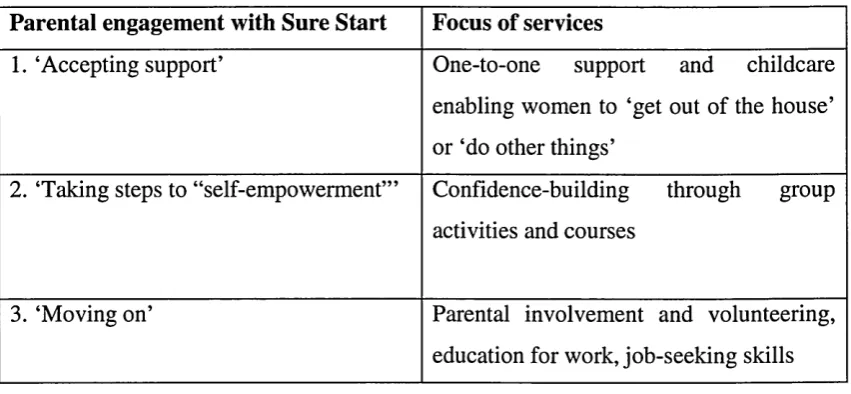
Table 2: Constructions of the agency of mothers and the Brambleton Sure

References

Related documents