
Critical Issues in Promotion of Environmentally Benign Manufacturing and Materials Processing
7
0
0
Full text
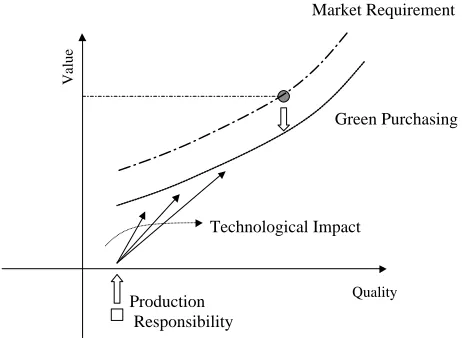
(2) Critical Issues in Promotion of Environmentally Benign Manufacturing and Materials Processing. 391. Table 1 Agenda of the first US-Japan Seminar on the Environmentally Benign Manufacturing and Materials Processing.. Recyclable material. – Materials recycling in OECD countries – Effect of microstructure on tensile properties of consolidated Fe–Cu alloy from rapidly solidified powder – Synthesis of molecular sieves as environmental conscious materials. Light-weight materials selection. – Solid-state recycle processing of light alloys – Preliminary study on recycling of wood materials by water vapor explosion process. High performance for long-term use. – High performance materials for long-term usage – Ultrahigh strengthening sintered low-alloy steels by advances powder processing-MIM. Industrial ecology. – Material flow challenges in industrial ecosystem – Production of automotive parts using an environmentally friendly P/M process – Intergrated environment-conscious life-cycle design of building structural composite materials, components and/or systems. Virgin material Tolerance in use/reuse. Up-recycling Down-recycling. Quality. Disposal Fee. Negative-recycling Waste. Fig. 1 Definition of various recycling processes in the value-quality diagram.. Market Requirement Value. Among the candidate methods in EBM, the best or better approach to reduce the total mass flow must be selected by using some rules. Without any rules, some case studies need to be done for each material system and for every step in the strategy of recycling. One rule for perspective in the recycling process is a value/cost-quality diagram. This diagram is explained after Gutowski.7) The virgin materials are processed and manufactured to a product, having a positive value in the market by its own positive quality. In using this product, its quality decays with time and finally turns to be a waste, as shown in Fig. 1. Value of a waste is usually negative so that a disposal fee is necessary only to change it into soil, land, air or water, which is a common resource to human being. This level is a standard origin of value in this diagram. While, since the waste material houses usually useful matter, it has some positive quality. Then, the recycling process is defined as a technology to increase the value for the waste to the endurable level for reusing by increasing its quality. Upgrade recycling is a process to increase both value and quality of recyclable wastes up to the level within the tolerance range in reuse. Although its value in market seems to be still lower than that for a virgin material, its use and reuse leads to actual reduction of total mass flow in the life cycle. While, in most cases, the final level of value and quality after recycling is terminated to be below the tolerance border, even by increasing the quality in the positive range. These processes are called here by a downgrade recycling. It becomes sometimes a negative recycling where the finally obtained gain in value is still negative even by promoting its quality high. Common feature to these modes of recycling is that the recycling scenario should be represented as a climb through the value-quality space, with an average slope of ∆V /∆Q. How to design this climbing schedule is important to discriminate the upgrade recycling from the downgrade recycling or negative recycling. Since the difference between the recycling cost and value is a profit ( p) or p = ∆V − ∆C, the recycling, where the processed materials have less quality than that for virgin materials, must be classified as a downgrade recycling. Some of the downgrade recycling processes becomes a negative processing when negative profit becomes too large to. Value. 2. Recyclable Materials. Green Purchasing. Technological Impact. Production Responsibility. Quality. Fig. 2 Influence of various regulations and technological impacts on the recycling process in the value/cost-quality diagram.. be compensated for the obtained quality. On the other hand, positive or allowable-negative profits can be expected in the upgrade recycling. When using this value/cost-quality diagram, the influence of regulations, market requirements or technological impacts on the recycling process can be understood as a direction. As illustrated in Fig. 2, the value-quality border for market requirement can be lowered by additional cost-payment in the green purchasing. Production responsibility works as a support to compensate for an additional cost to process the waste to recyclable materials. Owing to the technological impacts.
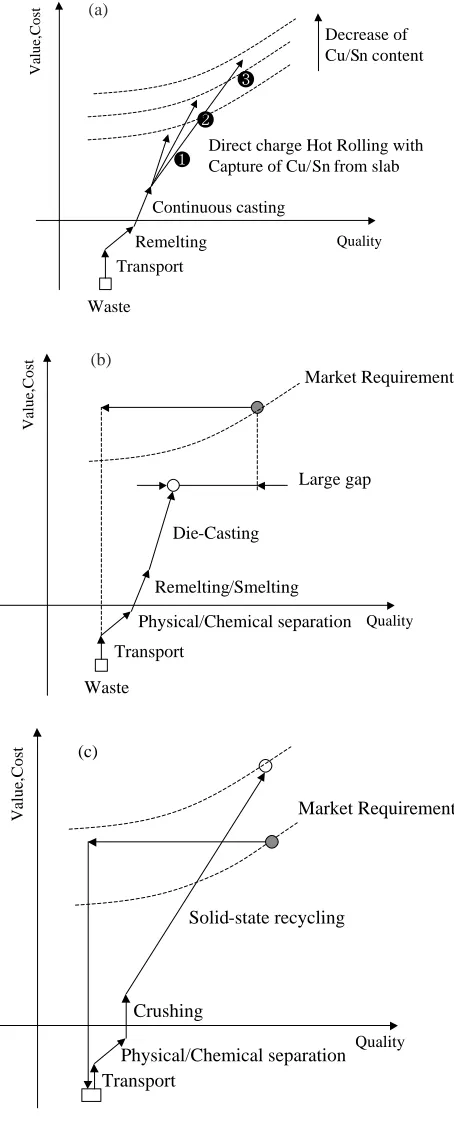
(3) 3. Light Weight Material Selection Among various materials selection for recycling, lightweight materials are targeted here to discuss over their role for dematerialization. These light-weight materials are classified into three categories: natural materials (woods or plants), industrial materials (magnesium, aluminum and titanium, or, graphite, polymers and FRP) and tailored materials (porous and cellular materials). They have a common feature as a candidate material to reduce the environmental burdens in use. At the same time, however, each material system has its intrinsic barrier to minimize its total mass requirement and to build up. (a) Decrease of Cu/Sn content. Direct charge Hot Rolling with Capture of Cu/Sn from slab Continuous casting Remelting Transport. Quality. Waste. Value,Cost. on the recycling, both the gradient ∆V /∆Q and the quality increment ∆Q can be controlled to increase. Both upgrade and downgrade recyclings are utilized in EBM as a technological process to reduce the total mass requirement or to make dematerialization. The above valid/cost-quality diagram becomes a compass to evaluate different directions in EBM. First, tolerance in using and reusing the recycled materials/products is considered both in value and quality. As shown in Fig. 3(a), high Cu/Sn-content steel has far less quality than that needed as a sheet or plate for deep drawing or stamping. Then, without an innovative technology, these steels after remelting or continuous casting have still low quality and value. As had been reported in Refs. 8) and 9), if copper and/or tin contaminants can be smelt out from a steel slab together with iron oxide scale in hot rolling, and, if residual Cu/Sn content can be in-situ controlled, various tolerance lines for market requirement can be fixed in the diagram with dependence on the residual Cu/Sn contents. As shown in Ref. 9), the recycled steel can be utilized in the higher-grade applications with in-process decreasing the Cu/Sn contaminant concentration. Solid-state recycling10–12) is a typical upgrade recycling in EBM. Magnesium metals and alloys have low workability and ductility in principle so that fine smelting and die-casting should be a way to reuse the recycled magnesium. In addition to large energy consumption during the above processes, a lot of slag and dross are ejected to be a nuisance of environmental issues. As depicted in Fig. 3(b), the attained mechanical properties are limited to lower level than required in market because of large grain size and rough precipitation of intermetallics. On the contrary, in the solid-state recycling, the starting materials, after physical/chemical separation of mixed large/medium sized contaminants, are once crushed and recycled to the solid billet or high dense compact without remelting or smelting, as shown in Fig. 3(c). In addition to large energy saving during this processing, the recycled products have fine microstructure and superplasticity by dynamic recrystallization, resulting in higher strength and ductility. Elemental contaminants can be utilized to drive the in-process hardening mechanism through fine precipitation. The intermetallic compounds, leading to weak ductility and low strength in the conventionally recycled materials, can be also refined in process. Besides the scalability to an industrial technology, its fundamental features are all favored for upgrade recycling. As illustrated in Fig. 3, EBM is characterized by its innovation in manufacturing and materials processing with technological impact on much increase of quality.. Value,Cost. T. Aizawa, K. Halada and T. G. Gutowski. (b) Market Requirement. Large gap Die-Casting Remelting/Smelting Physical/Chemical separation Quality Transport Waste. Value,Cost. 392. (c). Market Requirement. Solid-state recycling. Crushing Physical/Chemical separation Transport. Quality. Fig. 3 Classification of recycling process on the value/cost-quality diagram.. its adequate recycling. Lightness itself has great influence on the effective reduction of environmental burden when using these products. Alumineering of automobiles is a typical example, where significant reduction of fuel consumption and CO2 emission is predicted.13) New innovations are required for EBM to much save the mass and energy consumption in the stage of manufacturing and to increase creep ductility and wear toughness for their working in the severe conditions at the elevated tem-.
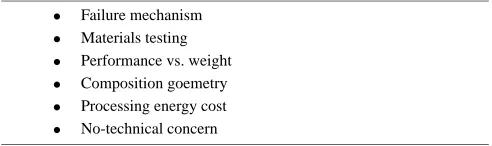
(4) Critical Issues in Promotion of Environmentally Benign Manufacturing and Materials Processing. perature. Second common feature is user-friendliness with sufficient reliability as the market requirement. Light-metal chairs can be relocated or moved only by one human hand; e.g. interior in the inside of a car can be easily realigned as desired by consumer. Various equipments for handicapped or disabled persons might well be constructed by using these light metals to lower their personal burdens. In these examples, any significant reduction of mass and energy is not performed in manufacturing and processing. Quality of various services necessary in the daily human life can be increased by this material selection. Continual reuse of wood materials might be a driving force to broaden this type of engineering tolerance and to lower the market requirement border for recycled product. In addition to the above technological and non-technical concerns on the usage of light weight materials, some fatal issues to each material system must be considered in the design of EBM. Woods are a typical consumable mass with large waste ejection and low recycling ratio. Two main barriers on their recycling in the mass transport are severe contamination to original wood components and negative influence of lignin or other chemical components on the forming in the EBM. The ejected wood members from houses, furniture or wooden infrastructure have many metallic, ceramic or polymer contaminants which are difficult or nearly impossible to be separated from pure fibrous components of woods. Typical example is a steel rivet or nail; many nails were used for joining of wooden members and they become an inseparable contaminant. As discussed in Ref. 14), explosive separation processing provides us a way to pick up fibrous components from a mess of mixture. This technology is indispensable to aim for high qualification to transform the as-ejected wastes to reusable wooden components. With consideration of various morphologies of wooden wastes, morphology-free forming is the first item of EBM for woods. At the optimum conditions in the pressuretemperature diagram, where the ligneous components commence to soften, the pulverized wooden particles can be easily net-shaped and densified with low viscosity. To be noted, no binders or additives are necessary to assist the densification by positive use of lignin. This second feature broadens the material selection in wood recycling and near-net shaping. Magnesium alloys have been utilized not only to replace with more heavy materials but also to realize high stiffness with sufficient robustness. High speed transportation and small-scaled mobile telephone require for improvement of reliability with high specific strength, high stiffness and high dumping capacity of magnesium alloys. These highgrade, market requirements cannot be satisfied by the conventional manufacturing. Due to large grain size and intermetallic phase, the attained strength-ductility relation must be just within the standard trade-off-balancing. Since fine grain size and well-tailored microstructure can be yielded via the solid-state recycling, high strengthening can be attained inprocess together with high ductility or superplasticity.11, 12) This break-through from the normal trade-off-balancing between strength and ductility is essential in the upgrade recycling of magnesium and aluminum alloys. Among polymers or engineering plastics, the fiber-. 393. reinforced plastic materials (FRP) are difficult to construct the mass flow with recycling. Interface between fibers and polymer matrix is usually designed to be strong as possible for structural applications. This stiff interface, however, makes it difficult to separate fibers from matrix physically or chemically in recycling. Hence, as reported in Ref. 15), separable interface must be equipped into an assembly technology in manufacturing. That is, adequate inclusion infiltrated into an interface drastically reduces the interfacial strength to the level, where it breaks away from itself by the thermal stress or the thermal shock. This pretreatment is expected to be working at the first stage of recycling for FRP. Porous or cellular polymers and metals have been utilized for structural members.16, 17) Reduction of relative density directly leads to reduction of total mass without significant loss of functionality in their use. In particular, the super-light materials with the relative density less than 10% can afford to broaden their applications as a new type of structural member. Further research and development is needed both in design and manufacturing to find out new material solutions. In the above discussion on the common and individual characteristics of light-weight materials in recycling, environmentally conscious design (eco-design) for service in material usage has to be considered in the research activities toward EBM. Adaptive design to the well-defined pretreatment before recycling and the reliable long-term usage of products must be effectively included into EBM. 4. High Performance for Long Term Use There have been reported in many phrases and copies telling about the active prolongation of life time with high qualification of materials and products: “Doubling the life time by halving the mass”, “Positive print never to disappear for hundred years” or “Houses with eighty-year endurance”. Besides of these recent propaganda,18) several safety programs have been executed to preserve the nuclear fuel waste and radio-active wastes with thousand year safety insurance or to increase crashworthiness of car bodies with low attacking capacity to pedestrians. Hence, two directions must be considered in the discussion of high performance for long term use: life time extension and high qualification of service for safety. In fact, when using the conventional engineering materials, various items must be considered to improve the high performance for long time use as listed in Table 2. Some occurrence of troubles or accidents with the prescribed frequency and damage must be taken into account in the reliability analysis or the failure analysis. Sufficient amount of proofdata needs to be obtained by materials testing. Several trade-. Table 2 Various items affecting the high performance for long time use. • • • • • •. Failure mechanism Materials testing Performance vs. weight Composition goemetry Processing energy cost No-technical concern.
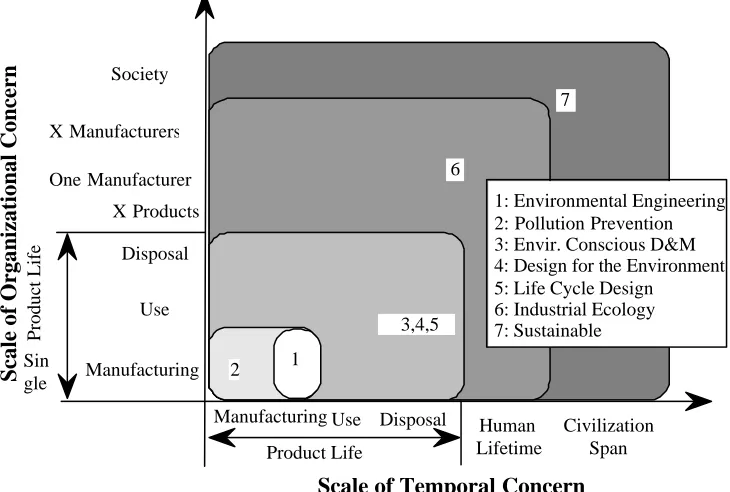
(5) 394. T. Aizawa, K. Halada and T. G. Gutowski. off-balancing concepts like performance vs. weight, limit the free hand to utilize the recyclable materials. Traditional influences on the productivity and design must be carefully solved to change the conventional material flow: e.g. composition/geometry or processing/energy cost. Besides the above technical issues, non-technical concerns also become a barrier to improve material performance in practice. Hence, global optimization becomes indispensable to find a material solution in high performance for long term use. One balancing optimization is to maximize the quality of service in using the materials/products within their intrinsic lifetime. Each product is thought to have its own lifetime from the economical point of view. Use of product over this limit always leads to deterioration of quality in service. Hence, technological effort is indispensable to prove that actual service quality by materials/products should never be below the prescribed limit by regulation or economics. This type of product lifetime varies from country to country or from product to product. Common items to promote EBM, are difficult to build in. In order to be free form the above optimization, a powerful way leading to high performance in long-term use of products is necessary: i.e. a new impact from the materials science and technology. As had been reported in Ref. 12), grain size refinement by the in-process microstructure control can afford to open the ways to make full use of the sub-micron sized and nano-structured materials in practice and to accommodate the high-strain-rate and the low-temperature superplastic forming as an innovative EBM. Solid-state recycling10, 11) is also a promising approach to make in-process microstructure for high qualification. Conceptual innovations are also necessary to be away from the conventional trade-off-balancing. Although the homogeneous microstructure is usually favored for safety material design against fatigue cracking, as demonstrated in Ref. 19), a sort of heterogeneous microstructure should be effective to improve both strength and ductility for steel product via the metallic injection processing. Surface-structuring technique20) provides us a new frontier to make material control on the surface with the depth from sub-micrometer to centimeter. Different from the conventional surface treatment by the gas-nitriding, the hardness profile in the direction of thickness can be graded so that the higher scuffing load or the higher wear-endurance should be obtained even at the same surface hardness. 5. Industrial Ecology As had been discussed by Bert,21) the concept of industrial ecology can be understood as a systematic movement toward the sustainable society with promoting the personal attention to recycling and reuse up to the social context toward dematerialization. Figure 4 depicts a growth of eco-system related to the above movement. Starting from an origin, where personal motivation to preserve the ecology drives to make separation of wastes and to minimize the mass emission, the recycling process is invented and enlarged to change an open mass flow to a closed loop in the society. In order to continually keep this challenge towards construction of sustainable society, more powerful driving mechanism is necessary.. In the environmentally benign manufacturing and materials processing (EBM), various technological impacts on the reduction of environmental burden are proposed and developed as before mentioned. In parallel with those activities, control theory and system analysis tools are well prepared to describe the targeting eco-system. Typical example is a combination of mass flow analysis with LCA for precise analysis of both total and local mass requirement/flow in the ecosystem. Optimization theory is also effective to find an optimal mass flow schedule among the related processes in the total recycling loop, by minimizing the waste, or, by minimizing the environmental burden. In discussion over the optimal eco-system, a natural ecosystem is cited for a reference: e.g. zero-emission concept comes from the food chain in nature. The ecosystem to be targeted in EBM is an artificial system including the economical activities of human being and various enterprises. The reason why the eco-town in Denmark is admired as a typical ecosystem, lies in the optimal balancing among different enterprises with minimization of ejected waste from a system. Hence, regulations and regulatory strategies must be taken into account in the design of ecosystem together with the technological issues. 6. Issues over Research for EBM Several issues were noticed through discussion on the further research activities on the ecomaterials and related EBM. As the first item of direct issues to EBM, importance of technological impacts was restressed to actually improve materials/product performance when using the recycled materials. These impacts, invented through R&D in the barrier free processing project, are categorized and summarized in Table 3. The first item is a gradient, ∆V /∆Q, in the value/cost-quality diagram. This metric is used to search for upgrade recycling impact among various technologies. Contaminant-free processing is typical to this technological impact since the recycling process can be free from contaminants which usually deteriorate the value of waste. Industrial innovations toward the net-shaping is included in this category since value of product can be increased with the same amount of materials. Various design-oriented processes are also effective to increase this gradient. The second one is ∆Q, a metric for technological impact, itself. Most of recycling processes are categorized into this group; capacity to increase the quality during process is the first condition to evaluate its effectiveness. ∆Q/∆C is employed as the third item to evaluate the cost efficiency for increase of service. Typical example is an inprocess microstructure control. In the conventional approach, various tedious and long processes are necessary to improve the material grade. Energy and mass consumption can be saved to decrease the processing cost. High qualification is expected by the microstructure control. In parallel with the technological challenges in EBM, importance of non-technological concerns is also weighing. Typical example is a green-purchasing law where every governmental agency should buy the recyclable materials with relatively high cost even when the same quality is expected. This type of regulations is effective to lower the market re-.
(6) 395. Society 7 X Manufacturers 6. One Manufacturer X Products Product Life. Scale of Organizational Concern. Critical Issues in Promotion of Environmentally Benign Manufacturing and Materials Processing. Sin gle. Disposal Use Manufacturing. 3,4,5 2. 1: Environmental Engineering 2: Pollution Prevention 3: Envir. Conscious D&M 4: Design for the Environment 5: Life Cycle Design 6: Industrial Ecology 7: Sustainable. 1. Manufacturing Use Disposal Product Life. Human Lifetime. Civilization Span. Scale of Temporal Concern Fig. 4. Growth of ecological system with aid of recycling.21). Table 3 Classification of technological impacts on the environmentally benign manufacturing and materials Processing. Technological impact ∆V /∆Q. ∆Q. ∆C/∆Q. Barrier-free processing • Contaminant-free processing • Design-oriented manufacturing • Net-shaping • Morphology-free processing • Functional grading/Composite structuring • Materials processing with easy interfacial separation • Physical separation processing • In-process microstructure control • In-process grain size refinement • High-strain-rate/Low-temperature superplastic forming. quirement border in the value/cost-quality diagram, so that some of downgrade recycling processes can cross over the lowered border. Without technological impact to these processes, recycling in twice or third times could be difficult to be accepted even against the above lowered border. Various kinds of researchers with different academic backgrounds are necessary to construct a perspective of ecomaterials with EBM. Besides materials or ecological scientists and environmental engineers, the sociologists, the economists or the political scientists must be integrated to sit around the same table to define the problems related to ecomaterials. In particular, the metric to evaluate the EBM-efficiency from the economical and sociological aspects must be determined on the basis of the material flow in recycling. Through intimate discussions over this metric, technological impacts in EBM on the control of value and quality can be rationally understood to construct the candidate ecosystem. Together with the above integration of research human re-. sources, new type of research field might well be defined: Ecoresearch. This field is first defined in the adaptive manner to the above integration of academia and engineers/managers in charge for practical operation. In addition, it must drive the direction of research and development of EBM for ecomaterials. In particular, this new academic field is needed to find a solution against the wide-spectrum of ecosystem problems with the subsidiary conditions when the present economicalmarketing society changes to a sustainable society with minimum total material requirement. The present two-country discussion is expected to be a starting point to encourage the world-wide network on the ecomaterials and EBM. 7. Conclusion This first US-Japan workshop on the environmentally benign manufacturing and materials processing (EBM) was a chance for both delegates to understand the difference of directions in the research activities and to redefine the essential meaning of EBM. US-side has been concerned with the perspective design of recycling and the conceptual frame toward sustainability in economics. This trend naturally converges to the theoretical discussion by using the LCA and mass flow analysis. Japan-side has persisted in the importance of barrier-free processing to broaden the material selection in the recycling loop of mass flow and to improve the quality of recycled materials and products as a concrete method leading to EBM in the sustainable society. The above difference and distance in opinions for both sides reflects on the reconsideration of EBM as a possible means to reduce the total mass requirement or toward dematerialization. Through discussions, there were several issues to be noticed in the future work. Integration of academia persons with different backgrounds is needed to build up the perspec-.
(7) 396. T. Aizawa, K. Halada and T. G. Gutowski. tive of EBM. New research field must be cultivated to drive the joint research of these integrated academic persons. Ecoresearch is a candidate name to make continuing ecomaterial research activities for a long term. In particular, an aid from the economists or sociologists is necessary to define the rational metric to evaluate the recycling process in EBM. Through the further research and development on the barrier free processing, the invented technological impacts on EBM are promoted to build up the proto-type of adaptive manufacturing and materials processing to the sustainable society with dematerialization. Acknowledgements This first US-Japan Workshop on the environmentally benign manufacturing and materials processing was financially supported by NSF (National Science Foundation) and MEST (Ministry of Education, Science and Technology). Co-organizers of this workshop would like to express their gratitude to delegates from two countries for presentation and stimulation of discussion. REFERENCES 1) T. Gutwoski, M. Cynthia, A. David, B. Diana, B. Bert, T. Piwonk, P. Sheng, J. Sutherland, D. Thurston and E. Wolff: WTEC Panel Report on Environmentally Benign Manufacturing (2001). 2) The Society of Non-Tradinational Technology Ecomateriald Forum: Proc. First Int. Conf. ECOMATERIALS (1993, Tokyo, Japan). 3) The Society of Non-Traditional Technology Ecomateriald Forum:. Proc. Second Int. Conf. ECOMATERIALS (1995, Xi’an China). 4) The Society of Non-Traditional Technology: Final Report on Life Cycle Assessment Project (1998). 5) The Society of Non-Traditional Technology: Annual Progress Report on the Barrier Free Processing Projects (2000). 6) NSF and JST: Agenda on the first US-Japan Workshop on the Environmentally Benign Manufacturing and Materials Processing (2001, Oct. Hawaii). 7) T. Gutowski: Mater. Trans. 43 (2002) 282–284. 8) S.-J. Seo, K. Asakura and K. Shibata: ISIJ Inter. (1997) 232–237. 9) K. Shibata: Proc. 5th Int. Conf. ECOMATERIALS (2001, Oct., Hawaii) (in press). 10) T. Aizawa, T. Luangvaranunt and K. Kondoh: J. Japan Inst. Metals 65 (2001) 581–588. 11) K. Kondoh, T. Luangvarnunt and T. Aizawa: Mater. Trans. 42 (2001) 1254–1257. 12) Y. Chino, M. Mabuchi, K. Shimojima, Y. Yamada, C. E. Wen, K. Miwa, M. Nakamura, T. Asahina, K. Higashi and T. Aizawa: Mater. Trans. 42 (2001) 414–418. 13) D. MacMillan: Abstract of COM-2000 (2000, August, Ottawa, Canada) 69–70. 14) Y. Hiramatsu, Y. Tsunetsuge, M. Kurobe, M. Tonosaki and T. Fujii: Mater. Trans. 43 (2002) 332–339. 15) Y. Kubota, N. Nakada and Y. Sugi: Mater. Trans. 43 (2002) 326–331. 16) L. J. Gibson and M. F. Ashby: Cellular Solids, Structure and Properties–Second Edition, (Cambridge University Press, Cambridge, UK, 1997). 17) H. Kanahashi, T. Mukai, Y. Yamada, K. Shomojima, M. Mabuchi, T. Aizawa and K. Higashi: Mater. Trans. 42 (2001) 2087–2092. 18) The Society of Non-Traditional Technology Ecomaterials Forum: Proc. 4th Int. Conf. ECOMATERIALS (1999, Gifu). 19) M. Matsuda and H. Miura: Jpn. J. Powder and Powder Metallurgy. 47 (2000) 681–685. 20) N. Granito, H. Kuwahara and T. Aizawa: J. Materials Research (2002) (in press). 21) B. Bras: Mater. Trans. 43 (2002) 364–367..
(8)
Figure
Related documents