
Original citation:
Chalmers, Alan and Debattista, Kurt. (2017) HDR video past, present and future : a
perspective. Signal Processing: Image Communication . doi: 10.1016/j.image.2017.02.003
Permanent WRAP URL:
http://wrap.warwick.ac.uk/86274
Copyright and reuse:
The Warwick Research Archive Portal (WRAP) makes this work by researchers of the
University of Warwick available open access under the following conditions. Copyright ©
and all moral rights to the version of the paper presented here belong to the individual
author(s) and/or other copyright owners. To the extent reasonable and practicable the
material made available in WRAP has been checked for eligibility before being made
available.
Copies of full items can be used for personal research or study, educational, or not-for-profit
purposes without prior permission or charge. Provided that the authors, title and full
bibliographic details are credited, a hyperlink and/or URL is given for the original metadata
page and the content is not changed in any way.
Publisher’s statement:
© 2017, Elsevier. Licensed under the Creative Commons
Attribution-NonCommercial-NoDerivatives 4.0 International
http://creativecommons.org/licenses/by-nc-nd/4.0/
A note on versions:
The version presented here may differ from the published version or, version of record, if
you wish to cite this item you are advised to consult the publisher’s version. Please see the
‘permanent WRAP url’ above for details on accessing the published version and note that
access may require a subscription.
HDR video past, present and future: A perspective
Alan Chalmers
WMG, University of Warwick, United Kingdon Kurt Debattista
WMG, University of Warwick, United Kingdon
Abstract
High Dynamic Range (HDR) video has emerged from research labs around the
world and entered the realm of consumer electronics. The dynamic range that a
human can see in a scene with minimal eye adaption (approximately 1,000,000 :
1) is vastly greater than traditional imaging technology which can only capture
about 8 f-stops (256 : 1). HDR technology, on the other hand, has the potential
to capture the full range of light in a scene; even more than a human eye can see. This paper examines the field of HDR video from capture to display; past,
present and future. In particular the paper looks beyond the current marketing
hype around HDR, to show how HDR video in the future can and, indeed,
should bring about a step change in imaging, analogous to the change from
black and white to colour.
Keywords: High dynamic range imaging, HDR, HDR video
1. Introduction
There can be a very broad range of lighting in a scene, from parts in bright
sunshine to areas of dark shadow. The ratio between the darkest and brightest
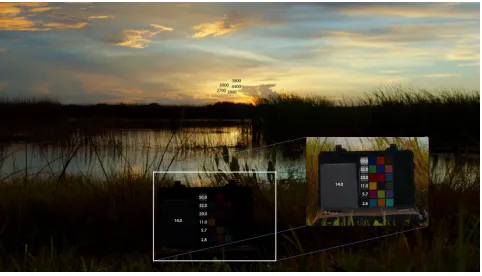
parts of a scene is known as its dynamic range. Figure 1 shows a sunset with a
dynamic range of 10.6 f-stops. The dark area has a lighting level of 2.8 cd/m2
(also known as nits), whilst the setting sun behind the clouds has a light level
of 4,400 cd/m2, giving the scene a dynamic range of 4400/2.8 = 1571.4≈210.6
Figure 1: Captured with an ARRI Alexa camera and tone mapped for print; 10.6 f-stops of dynamic range in a sunset scene with a minimum lighting level of 2.82 and a maximum of 4,400cm/m2. Note detail is lost in the tone mapping process. Image courtesy of Brian Karr.
As humans can see approximately 20 f-stops of light with no noticeable eye
adaption, all the detail in this scene would be visible. However, if an image of
this scene was captured by a traditional, or Low Dynamic Range (LDR) (aka
SDR=Standard Dynamic Range)1digital camera significant detail would be lost
as such technology is only capable of capturing 8 f-stops. This is worse than
film cameras which were capable of capturing approximately 15.5 f-stops, while
as early as the 1960s a special silver halide photographic film was developed in
order to capture the wide dynamic range of, for example, nuclear explosions and
rocket motor flames [3, 4]. This film was capable of capturing 26.6 f-stops.
In the early 1990s, it became clear to a number of researchers that existing digital imaging techniques were inadequate to cope with the data required to
store the full range of lighting available in a real world scene. This was driven
primarily by computer graphics, where rapid advances in physically-based
ren-dering techniques in the 1980s, such as ray tracing [5] and radiosity [6], had
1In an attempt to standardise the definition of what constitutes HDR the MPEG adhoc
brought about the synthesis of highly realistic computer imagery. In 1991,
Ward introduced a data format which was able to represent HDR pixel values
to support his physically-based rendering engine, Radiance [7]. A breakthrough for capturing HDR images came with Debevec and Malik’s paper in 1997 [8],
which clearly demonstrated how an HDR image could be captured from a series
of LDR exposures using knowledge of the camera response curve. It would still,
however, be many years before the first displays capable of displaying HDR
video (2004) [9], or HDR video cameras (2009) [10] would appear.
Currently, HDR video is gaining wider adoption, helped mainly through the
specification of Ultra High Definition (UHD) for the broadcasting sector,
ITU-R ITU-Recommendation BT.2020 [11]. Although a single standard for HDITU-R has
yet to be agreed, consensus is forming around the HDR10 [12] and HLG [13]
proposals, both of which have been encapsulated in the recent ITU-R HDR-TV Recommendation BT.2100 [14]. The key question now is: Has enough been done
to ensure that HDR technology can indeed capture and later display at least all
the detail that a human eye can see in any scene, and preferably even the detail
that the human eye cannot see?
2. The HDR video Pipeline
Figure 2 shows the HDR video pipeline as envisaged by cartoonist Lance
Bell for EU COST Action IC1005 [1]. The 25 years since Ward published his
pioneering data format for storing HDR data [7], has seen significant
develop-ments in HDR technology, albeit in step changes rather than steady progress.
The development has been a classic case ofwhat comes first, the chicken or the
egg? Before the arrival of HDR displays, HDR images could be captured with
multiple exposures, or created using computer graphics, but they could only be
displayed on LDR displays. This led to a large number of tone mapping
oper-ators (TMOs) being proposed to better display the HDR images on the LDR screens [15]. With the advent of HDR displays, HDR images could finally be
Figure 2: The HDR pipeline. Image courtesy of EU COST Action IC1005 [1].
HDR video. The multiple-exposure technique, which worked well with static
scenes, resulted in ghosting artefacts when parts of the scene, or the camera,
were moving.
2.1. Capture
To minimise ghosting artefacts, systems that use a multiple exposure
ap-proach to capture HDR video, such as the work by McNamee et al. [16], require
sophisticated, real-time de-ghosting algorithms [17]. Other HDR video systems
avoid the need for multiple exposures by using, for example, multiple sensors
with the same integration time through a single lens [10]. The sensors need
different sensitivities to cover the whole dynamic range of the scene which can
be created by analogue-gain and/or neutral density-filters. Such an approach
has the advantage that artefacts from moving objects are avoided and correct motion blur is achieved from the identical integration-time. However, matching
the images from the sensors is challenging to achieve due to restrictions on
sen-sor alignment precision. Furthermore, building cameras with multiple sensen-sors
having a larger format is difficult and the result could be physically cumbersome.
While research prototype HDR video cameras have been able to achieve 20
f-stops at 30fps, commercial HDR video cameras can currently only capture a
much more modest dynamic range. A recent survey of the dynamic range of 18
that current commercial systems were only able to capture < 18 f-stops, and
thus not yet suitable to adequately image a rocket launch (>20 f-stops).
2.2. Storage
The full range of light in a scene can be represented using 32 bit IEEE
floating point single precision values for each colour channel, ie with 96 bits per
pixel (bpp) [15]. LDR is typically stored using just 24 bpp, 8 bits per colour
channel. The data requirements of HDR are significant. A single HDR frame of uncompressed 4K UHD resolution (3,840×2,160 pixels) requires approximately
95Mbytes, and a minute of data at 30fps is 167 Gbytes. Efficient data formats
and compression techniques are thus essential if HDR video is to be used with
existing ICT infrastructure.
Since Wards Radiance format [7], a number of other ways of representing
HDR pixels have been proposed, including LogLuv encoding used in a custom
HDR-version of the TIFF images [19], and OpenEXR. Developed by Industrial
Light and Magic for the film industry, OpenEXR has since been released as
free software [20]. Adopted by the Academy Color Encoding System (ACES)
for ensuring consistent colour within the life cycle of a film [21], OpenEXR is, however, not suitable for HDR video as each frame at HD resolution requires
about 8 Mbytes when compressed with lossless compression. Instead efficient
video compression is required.
2.3. Compression
Compression of HDR video may be classified as one-stream or two-stream
[22]. One-stream methods benefit from the higher bit-depths (≥10) available
in modern video codecs. Compression is achieved via a transfer function that
maps the input HDR video stream into a more compact representation. Meta
data can be included in the resulting compressed stream to provide additional
information necessary for reconstructing the HDR video signal at the display.
Examples of one-stream HDR video compression include HDRv [23], adaptive
Two-stream methods, on the other hand, separate the single HDR video
in-put stream into base and detail streams which are then compressed separately.
One of the two streams is frequently backward compatible, allowing it to be played directly on an existing LDR player, while the other stream contains the
additional information required to reconstruct the HDR video. A key advantage
of two-stream methods is that they work on legacy 8-bit infrastructure,
includ-ing mobile devices, as well as with more recent higher bit-depth frameworks.
Examples of two-stream compression for HDR video include HDR-MPEG [28],
rate distortion [29], the base and detail method [30], and optimal exposure [31].
A recent evaluation of one- and two-streams showed that one stream methods
perform better, on the whole, than two-stream methods in both subjective and
objective evaluations [22].
2.4. Displays
One of the earliest HDR displays was a stereoscopic viewer developed by
Ward in 2002 [32], Figure 3. Comprising a bright uniform backlight connected
to a set of LEEP ARV-1 stereo optics, the system provided a 120 degrees field
of view in each eye. The HDR images were provided by printed transparencies which, when layered, provided a dynamic range of 10,000 : 1. This viewer was
subsequently validated against real scenes and a close match found in terms of
visibility and contrast [33].
The Sunnybrook Technologies SBT1.3 HDR Display was a rear-projection
based dual-modulation display system. An Optoma EzPro737 DLP (Digital
Light Projection) video projector was modified. The colour wheel was removed
and the greyscale video was projected through an array of lenses onto the back
of a 15” XGA colour Sharp LQ150X1DG0 LCD display. The system was capable
of displaying HDR images with a dynamic range of more than 75,000 : 1 [34].
Future versions of Sunnybrook Technologies (which became known as Brightside in March 2005) HDR displays replaced the data projector with a backlight
com-prising an individually controlled array of white LEDs. These were projected
pix-Figure 3: Earliest HDR display [32] (left) and Validating HDR against reality [33] (right) .
els. This, together with software correction algorithms that took into account
how the human eye perceives light scattering, provided a substantial increase
in dynamic range. The DR37-P display was capable of a dynamic range of 16 f-stops [9].
In February 2007 Brightside was acquired by Dolby. Subsequent
develop-ment of HDR displays was undertaken by SIM2, which in 2009 released their
first HDR display, the HDR47, with a peak luminance of 4,000 cd/m2. In 2014
SIM2 announced the HDR47ES6MB. The backlight for this display is provided
by 2202 LEDs with 12 bits of brightness resolution for each LED, giving a peak
brightness of 6,000 cd/m2. The front panel is a 47 LCD TFT, High
Tempera-ture panel with full HD (1,920× 1,080) resolution and the display is capable
of a video frame rate of 60Hz. At IBC in September 2016, SIM2 together with
partners, University of Warwick, TrueDR Ltd and Vicomtech-IK4, showed the world’s first 10,000 cd/m2display. Section 3 highlights how this compares with
some of the modern consumer HDR displays.
2.5. Quality Metrics
Although substantial research has been undertaken in evaluating the quality of LDR video [35, 36], the only recent wider availability of HDR video means
that far less has been done with HDR video. Using LDR metrics directly with
HDR video has been shown to result in a low correlation between the results
[image:8.612.178.435.125.233.2]for HDR if the metrics take into account the human visuals system’s (HVS)
propensity to light perception. The Perceptually Uniform (PU) encoding [37]
can be used to modify traditional metrics such as PSNR and SSIM [38] to be more amiable to HDR video quality validation. Metrics designed directly
for HDR, for example, the High Dynamic Range-Visible Difference Predictor
(HDR-VDP) [39], and others designed directly for HDR video such as High
Dynamic Range-Visual Quality Metric (HDR-VQM) [40] and Dynamic Range
Independent Visual Quality Metric (DRI-VQM) [41] perform well also and, as
with the PU-modified metrics, provide a good objective measure of the quality
of HDR video [22].
3. The Present: Consumer HDR
From relative obscurity just three years ago, HDR has now become a widely
recognised term and a first wave of televisions which claim to support HDR are
appearing [42]. At the Consumer Electronics Show (CES) in January 2016, a
number of leading manufacturers, including Sony, LG, Panasonic and Samsung,
all showed TVs claiming to support HDR. In addition, a consortium of TV
manufacturers, broadcasters and content producers, the UHD Alliance [43], was formed to promote their view of HDR. They proposed a benchmark, Ultra
HD Premium, above which they were happy to certify that the platform was
suitable for a “premium 4K experience”. To satisfy manufacturers of both LED
and OLED HDR displays, the UHD Alliance proposed two definitions of HDR
[44]:
1. 1,000 cd/m2 peak brightness and<0.05 cd/m2black level (contrast ratio
20,000 : 1, 14.3 f-stops) for LED TVs which are brighter but with less
black levels, or
2. > 540 cd/m2 brightness and < 0.0005 cd/m2 black level (contrast ratio
1,080,000 : 1, 20 f-stops) for OLED TVs which have deep blacks but
There are currently three proposals to support consumer HDR in this first
wave: HDR10 [12], HLG [26] and Dolby Vision [45]. HDR10 is based on a 10-bit
PQ curve [25] which is part of SMPTE standard ST.2084 [12]. Television sets which support HDR10 are allowed by the UHD Alliance to use their Ultra HD
Premium logo. Furthermore, the Consumer Technology Association (CTA),
re-quires any television labelled as HDR-compatible to be able to decode HDR10
inputs [46]. Any metadata is static for the entire length of any content. Dolby
Vision is a proprietary standard which includes a 12-bit PQ curve. The
meta-data for any content may vary scene by scene [46, 47]. HLG has been designed
by the BBC and NHK for the television industry [26], and was standardised
as ARIB STD-B67 [13]. It needs no metadata, the management of which is
a major challenge in live broadcast. Both HLG and PQ are now contained in
ITU-R Rec BT.2100 [14].
The first wave of consumer HDR displays are, however, unable to deliver
the full potential of HDR. Despite the impressive 20 f-stops of dynamic range
claimed for OLED televisions, these devices have serious limitations. To be able
to actually see detail in the dark areas of the screen, the content needs to be
watched in a totally dark room. In fact it is even recommended that the walls
of the room are not painted white to avoid any increase in ambient light levels
[48]. Even for the consumer LED HDR displays certified by the UHDA, it is
recommended that, to be able to clearly see the benefits of HDR, the displays
should be placed in an ambient lighting on no more than 5 cd/m2.
A further limitation of consumer HDR displays, highlighted by the recent survey of HDTVtest [49], is that they do not provide an overall brighter image,
but rather maintain the average picture level of the frames. The HDR effect is
achieved by deeper black levels and a few bright highlights. In addition to the
need to use these displays in dark environments so that the deeper black levels
can actually be seen, it is in fact not possible to simply increase the overall
brightness of the screen to get a brighter image as one would with a traditional
LDR display. This is because the maximum backlight brightness is being used
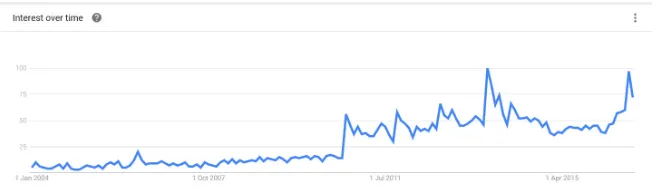
Figure 4: Searches for HDR video since 2004 (from Google trends).
is the lack of flexibility in the ST.2084 EOTF to adapt to different ambient
lighting conditions because every input signal value is mapped directly to the
same output luminance level on all HDR displays [12].
4. Applications
As HDR video become more widely known, so has the number of requests
for more information and applications become more widespread. Figure 4 shows the trend as to how information requests about HDR video have grown since
2004. In addition there has been a significant increase in special sessions at
conferences, for example, [BN11, CC14], special issues of journals, for example
[50, 51] and even books dedicated to HDR video, for example [52, 53]. HDR
video is now being used in applications across most fields of imaging, including:
filming spacecraft [54], automotive [55], object tracking [56], etc.
4.1. Linear vs Perceptual Encoding
One issue that is now being realised is that nearly all tone mapping operators
and video encoding schemes are designed to provide HDR video content for
human viewers and not for computer vision applications. Perceptual encoding
can exploit knowledge of the HVS, such as the fact the HVS is able to discern
luminance threshold differences more clearly in darker areas than brighter ones
to achieve efficient encoding [57]. However, for computer vision applications,
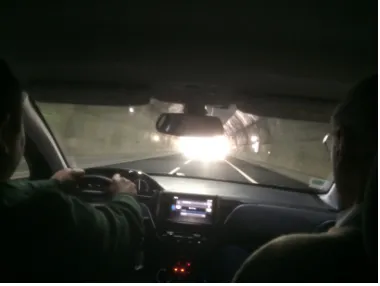
Figure 5: Failure to capture all the detail in a scene with traditional imaging systems.
over-accentuated by the computer vision algorithms [44, 58, 59]. Simple linear
encoding is not the answer either. Rana et al. [60] showed that although
computer vision algorithms can be more effective working directly on HDR
pixel values, these values first should be encoded to perceptually linear values. Further research is required to provide conclusive evidence how best to encode
HDR video efficiently to provide a single compressed video stream for both
human and computer requirements.
The use of HDR imaging for computer vision applications is set to increase
significantly in the coming years, with more and more reliance on imaging
tech-niques rather than humans to, for example, control autonomous cars, and
in-crease surveillance capabilities. The consequences of a camera failing to capture
and accurately analyse all the information in a scene can have tragic
conse-quences, as shown by the fatal Tesla car accident where the on-board imaging
system was unable to detect a large 18-wheel white truck and trailer against a bright sky [61]. Figure 5 shows the failure of a traditional imaging system to
capture detail inside a car or outside the tunnel.
5. The Future: Fulfilling its Potential
The first wave of HDR technology can be thought of as being “display
image for a particular display [Wri13]. This is of course highly subjective,
lim-ited by any displays capabilities, and not necessarily a true representation of
the real scene being portrayed. HDR technology has the ability to provide a one-to-one relationship between the actual dynamic range in the scene, and that
which is captured and delivered to a display. While creative intent may permit
the use of adapting original content, ideally the technology should have the
ca-pability of reproducing real world lighting. Thus to achieve the full potential
of HDR video, it should be “scene referred”, Figure 6. The real world contains
a wide range of lighting. A scene referred HDR image is one that reproduces
the lighting in the actual scene. Of course, the dynamic range of the camera
may not be sufficient to capture all the lighting. One advantage of a scene
re-ferred approach is that images of the same scene from different scene rere-ferred
cameras should look the same. This is a key feature of the ACES workflow which is being increasingly used for managing images within motion picture
and television production [21]. A challenge of scene referred content for live
broadcast though is, for example, having to intercut a news reader captured in
a dim studio, with content captured in a very bright environment, resulting in
significant flicker [62]. The solution to this is to use knowledge of the lighting in
both scenes to smooth out any flicker prior to displaying the combined content.
Furthermore, to ensure an enhanced viewing experience, how the image should
be displayed should also take into account the capabilities of the display device
and the ambient lighting conditions under which the content is being viewed.
Defined by EU COST Action IC1005 [1], TrueHDR is a scene referred system that ensures the full range of HDR data is preserved throughout the entire
pipeline from capture to display. No tone mapping occurs within the pipeline
until just before display. As Figure 8 shows, with TrueHDR, an appropriate
TMO (chosen dynamically from a range of TMOs) is used to tone map the
received HDR video content on to the display (per scene if necessary), ensuring
an enhanced viewing experience as this tone mapping takes into account, the
actual characteristics of the display, the ambient lighting conditions, any creative
Figure 6: Scene referred data: A one-to-one relationship with a real scene. Image courtesy of EU COST Action IC1005 [1].
Figure 7: TrueHDR framework.
manual, such as a the viewer selecting which player he/she wishes to see clearly
whatever the scene lighting conditions or automatic, such as “see ball mode”,
which would show, for example the golf ball clearly (in one exposure) up against
the bright sky (shown in another exposure).
Although scene referred, ACES is not suitable for bit-rates used in live video
[21]. One scene referred HDR video codec that is suitable for live broadcast is
the Power Transfer Function (PTF) [27]. An analytical implementation of PTF has been shown to be 29 times faster than an analytical implementation PQ
[image:14.612.218.400.298.432.2]Time per frame (in ms) Speedup
Analytical Look Up Table PTF4
PTF4 PQ PTF4 PQ vs PQ vs LUT
2.70 69.39 3.89 3.99 25.69 1.44
[image:15.612.158.454.124.246.2]2.69 98.08 3.95 3.91 36.90 1.47
Table 1: Comparison of HDR video encoding between PQ and PTF [27].
Figure 8: Comparison of displays seen at IBC 2016 (left) Samsung 1,500 cd/m2(right) SIM2 10,000 cd/m2.
6. Discussion
HDR and HDR video in particular has come a very long way in just the last
five years. HDR is now being used as a powerful marketing tool in the drive to
sell “next generation” televisions. In traditional economics terms, the barriers that could limit widespread adoption of HDR technology are [63]:
1. The lack of a clear benefit of HDR in a specific application:
HDR is already starting to affect every aspect of imaging from gaming, to
entertainment to surveillance and autonomous vehicles. This is thus not
a barrier as the benefits to these applications are clear: more immersive
gaming experiences; better quality images and therefore increased sales
of HDR-enabled televisions; the ability to see and track objects even in
extreme lighting; and, increased safety.
2. High costs in moving to from LDR to HDR technology: This
[image:15.612.212.401.276.356.2]Low-cost consumer HDR video cameras do not yet exist, although it is
possible to create HDR video using multiple exposures with off-the-shelf
DSLR cameras [16], for example a Canon 5D using Magic Lantern [64]. As discussed above, consumer televisions are claiming to be HDR, however,
HDR displays capable of delivering a true HDR experience with peak
luminance > 4,000 cd/m2, such as those from SIM2, are still relatively
expensive. It can be expected though that consumer HDR displays will
continue to improve their peak brightness as customers increasingly want
to watch HDR content in conditions other than a dark room; for example
Sony has announced a 4,000 cd/m2 display [65].
3. If some key parts in the HDR pipeline contain (expensive)
pro-prietary IPR: Dolby Vision is a proprietary HDR ecosystem that
en-sures the delivery of high-quality HDR content [45]. Fortunately for the widespread uptake of HDR video, two free alternative HDR compression
schemes have been standardised, HDR10 and HLG [14], while a number
of equally good methods are freely available in the academic literature
[23, 24, 27]. Standardisation may be a key issue to facilitate large-scale
industry adoption of HDR, however many other users, including OTT
broadcasting, have no such restrictions.
4. The lack of backward compatible solutions to ease the
transi-tion from LDR to HDR:Backward compatibility is a major problem
facing the adoption of HDR at present. The one-stream encoding
meth-ods encapsulated in ST.2100 [14] assume a 10-bit infrastructure and that the display will be HDR enabled. It is not clear yet precisely how HDR
content will be shown on legacy displays which are not HDR enabled.
Fur-thermore, although mobile devices are rapidly becoming the platform of
choice to watch video content [66], until these too become 10-bit
architec-tures, viewers will have to content with some form of image which is tone
mapped at the client. An alternative is that a two-stream compression
method will be needed to deliver the HDR content, perhaps in a novel
as that proposed by Melo et al. [67].
Another major factor affecting the adoption of HDR is that, despite the
fact that HDR televisions are being highly marketed, HDR content is still not widely available. For example, in April 2016 Netflix offered viewers Season 1 of
the Marco Polo series in 4K HDR, but required the viewers to join the Netflix
4K content streaming plan for $12 per month [68]. Amazon Prime, now offers
27 4K HDR films, but again viewers need to be customers of Amazon Prime
subscription service and own an HDR 4K TV [69]. At present, viewing (the
limited) HDR video content on consumer HDR televisions is impressive, but
only in a dark room.
Although consumer adoption of HDR may currently be slow and there are
still barriers to overcome, research and development continues apace. A 10,000
cd/m2SIM2 HDR display was shown within the Future Zone section of IBC in September 2016 [70], Figure 8. This demonstration can be regarded as a “game
changer” for the future of HDR. The 10,000 cd/m2 display clearly showed that
HDR does not have to be watched in a dark room, perhaps even with the walls
painted black. With a 10,000 cd/m2 display you can, for example, enjoy the
HDR experience within sports in the afternoon with your curtains open; and,
despite previous “fear-mongering” about bright displays, you do not need sun
glasses to look at a 10,000 cd/m2 display nor do you need your own power
station to power it; it has a peak power consumption of 1.5kW [71].
Existing HDR video codecs, such as HDR10, HLG and even the 12-bit PQ
within Dolby Vision, only do not produce artefacts on displays with peak lumi-nance of less than 10,000 cd/m2. Now that a 10,000 cd/m2display is a reality,
new codecs need to be developed. To fully exploit the future of HDR, these new
video codecs need to be “scene referred”; capable of coping with the full range
of light in a scene rather than a peak luminance of a display. Furthermore,
such “future-proof” codecs should go beyond just HDR and take into account
all components of UHD video: spatial resolution (at least 4K), higher dynamic
necessary for further significant innovation in the media and creative industries,
and beyond.
Acknowledgements
Both Alan Chalmers and Kurt Debattista are Royal Society Industrial
Fel-lows, for whose support we are most grateful.
References
[1] EU COST Action IC1005, HDRi: The digital capture, storage, transmission
and display of real-world lighting (2015).
URLhttps://www.itu.int/rec/R-REC-BT.2100
[2] A. Luthra, E. Francois, W. Husak, Call for evidence (CfE) for HDR and WCG video coding, ISO/IEC JTC1/SC29/WG11 MPEG2014 N 15083.
[3] C. W. Wyckoff, An experimental extended response film, SPIE Newslett
(1962) 16–20.
[4] C. W. Wyckoff, Silver halide photographic film having increased
exposure-response characteristics, US Patent 3,450,536 (Jun. 17 1969).
[5] T. Whitted, An improved illumination model for shaded display, in: ACM
SIGGRAPH Computer Graphics, Vol. 13, ACM, 1979, p. 14.
[6] C. M. Goral, K. E. Torrance, D. P. Greenberg, B. Battaile, Modeling the in-teraction of light between diffuse surfaces, in: ACM SIGGRAPH Computer
Graphics, Vol. 18, ACM, 1984, pp. 213–222.
[7] G. Ward, Real pixels, Graphics Gems II (1991) 80–83.
[8] P. E. Debevec, J. Malik, Recovering high dynamic range radiance maps
[9] H. Seetzen, W. Heidrich, W. Stuerzlinger, G. Ward, L. Whitehead,
M. Trentacoste, A. Ghosh, A. Vorozcovs, High dynamic range display
sys-tems, ACM Transactions on Graphics (TOG) 23 (3) (2004) 760–768.
[10] A. Chalmers, G. Bonnet, F. Banterle, P. Dubla, K. Debattista, A. Artusi,
C. Moir, High dynamic range video solution, in: ACM SIGGRAPH ASIA
2009 Art Gallery & Emerging Technologies: Adaptation, ACM, 2009, pp.
71–71.
[11] M. Sugawara, S.-Y. Choi, D. Wood, Ultra-high-definition television (rec.
ITU-R BT. 2020): A generational leap in the evolution of television
[stan-dards in a nutshell], IEEE Signal Processing Magazine 31 (3) (2014) 170–
174.
[12] S. Standard, High dynamic range electro-optical transfer function of
mas-tering reference displays (2014).
[13] Association of Radio Industries and Businesses (ARIB). STD-B67: Essential parameter values for the extended image dynamic range
television (EIDRTV) system for programme production ,
how-published = http://web.archive.org/web/20080207010024/http:
//www.808multimedia.com/winnt/kernel.htm, note = Accessed:
2010-09-30.
[14] TU-R Rec BT.2100, Image parameter values for high dynamic range
tele-vision for use in production and international programme exchange (2016).
URLhttps://www.itu.int/rec/R-REC-BT.2100
[15] F. Banterle, A. Artusi, K. Debattista, A. Chalmers, Advanced high
dy-namic range imaging: theory and practice, CRC press, 2011.
[16] J. McNamee, J. Hatchett, K. Debattista, A. Chalmers, Live hdr video
streaming on commodity hardware, in: SPIE Optical Engineering+
Appli-cations, International Society for Optics and Photonics, 2015, pp. 95990U–
[17] O. T. Tursun, A. O. Aky¨uz, A. Erdem, E. Erdem, The state of the art in
HDR deghosting: A survey and evaluation, in: Computer Graphics Forum,
Vol. 34, Wiley Online Library, 2015, pp. 683–707.
[18] B. A. Karr, A. Chalmers, K. Debattista, High dynamic range digital imag-ing of spacecraft.
[19] G. W. Larson, LogLuv encoding for full-gamut, high-dynamic range images,
Journal of Graphics Tools 3 (1) (1998) 15–31.
[20] F. Kainz, R. Bogart, D. Hess, The OpenEXR image file format, GPU
Gems: Programming Techniques, Tips and Tricks for Real-Time Graphics,
R. Fernando, Ed. Pearson Higher Education.
[21] Academy of Motion Picture Arts and Sciences, Academic color encoding
system (2016).
URL http://www.oscars.
org/science-technology/sci-tech-projects/aces
[22] R. Mukherjee, K. Debattista, T. Bashford-Rogers, P. Vangorp, R. Mantiuk,
M. Bessa, B. Waterfield, A. Chalmers, Objective and subjective evaluation
of high dynamic range video compression, Signal Processing: Image Com-munication 47 (2016) 426–437.
[23] R. Mantiuk, G. Krawczyk, K. Myszkowski, H.-P. Seidel,
Perception-motivated high dynamic range video encoding, ACM Trans. Graph. 23 (3)
(2004) 733–741. doi:http://doi.acm.org/10.1145/1015706.1015794.
[24] J.-U. Garbas, H. Thoma, Temporally coherent luminance-to-luma mapping
for high dynamic range video coding with H. 264/AVC, in: IEEE
Interna-tional Conference on Acoustics, Speech and Signal Processing (ICASSP),
IEEE Computer Society, 2011, pp. 829–832.
[25] S. Miller, M. Nezamabadi, S. Daly, Perceptual signal coding for more
effi-cient usage of bit codes, SMPTE Motion Imaging Journal 122 (4) (2013)
[26] T. Borer, A. Cotton, A display-independent high dynamic range television
system, SMPTE Motion Imaging Journal 125 (4) (2016) 50–56.
[27] J. Hatchett, K. Debattista, R. Mukherjee, T. Bashford-Rogers, A. Chalmers, An evaluation of power transfer functions for HDR video
compression, The Visual Computer.
[28] R. Mantiuk, A. Efremov, K. Myszkowski, H.-P. Seidel, Backward
com-patible high dynamic range MPEG video compression, ACM Trans.
Graph. 25 (3) (2006) 713–723. doi:http://doi.acm.org/10.1145/
1141911.1141946.
[29] C. Lee, C.-S. Kim, Rate-distortion optimized compression of high dynamic
range videos, in: 16th European Signal Processing Conference (EUSIPCO
2008), 2008, pp. 461–464.
[30] F. Banterle, A. Artusi, K. Debattista, P. Ledda, A. Chalmers,
G. J. Edwards, G. Bonnet, HDR video data compression devices and
methods, Available athttps://register.epo.org/application?number=
EP08012452&tab=main, eP Patent App. EP20,080,012,452 (July 2008).
[31] K. Debattista, T. Bashford-Rogers, E. Selmanovi´c, R. Mukherjee,
A. Chalmers, Optimal exposure compression for high dynamic range
con-tent, The Visual Computer 31 (6-8) (2015) 1089–1099.
[32] P. Ledda, G. Ward, A. Chalmers, A wide field, high dynamic range, stere-ographic viewer, in: Proceedings of the 1st international conference on
Computer graphics and interactive techniques in Australasia and South
East Asia, ACM, 2003, pp. 237–244.
[33] P. Ledda, A. Chalmers, H. Seetzen, HDR displays: a validation against
reality, in: Systems, Man and Cybernetics, 2004 IEEE International
[34] H. Seetzen, L. A. Whitehead, G. Ward, 54.2: A high dynamic range display
using low and high resolution modulators, in: SID Symposium Digest of
Technical Papers, Vol. 34, Wiley Online Library, 2003, pp. 1450–1453.
[35] K. Sayood, et al., Statistical evaluation of image quality measures, Journal of Electronic imaging 11 (2) (2002) 206–223.
[36] H. R. Sheikh, M. F. Sabir, A. C. Bovik, A statistical evaluation of recent
full reference image quality assessment algorithms, IEEE Transactions on
image processing 15 (11) (2006) 3440–3451.
[37] T. O. Aydın, R. Mantiuk, H.-P. Seidel, Extending quality metrics to full
luminance range images, in: Electronic Imaging 2008, International Society
for Optics and Photonics, 2008, pp. 68060B–68060B.
[38] Z. Wang, A. C. Bovik, H. R. Sheikh, E. P. Simoncelli, Image quality
as-sessment: From error visibility to structural similarity, IEEE Transactions
on Image Processing 13 (4) (2004) 600–612.
[39] M. Narwaria, R. K. Mantiuk, M. P. Da Silva, P. Le Callet,
HDR-VDP-2.2: a calibrated method for objective quality prediction of high-dynamic
range and standard images, Journal of Electronic Imaging 24 (1) (2015) 010501–010501.
[40] M. Narwaria, M. P. Da Silva, P. Le Callet, HDR-VQM: An objective quality
measure for high dynamic range video, Signal Processing: Image
Commu-nication 35 (2015) 46–60.
[41] T. O. Aydın, M. ˇCad´ık, K. Myszkowski, H.-P. Seidel, Video quality
assess-ment for computer graphics applications, ACM Trans. Graph. 29 (6) (2010)
161:1–161:12. doi:10.1145/1882261.1866187.
URLhttp://doi.acm.org/10.1145/1882261.1866187
[42] Trusted Reviews, What is Ultra HD Premium? New HDR standard
ex-plained (2016).
[43] UHD Alliance (2016). [link].
URLwww.uhdalliance.org
[44] A. Chalmers, B. Karr, R. Suma, K. Debattista, Fifty shades of HDR, in: Digital Media Industry & Academic Forum (DMIAF), IEEE, 2016, pp.
53–58.
[45] Dolby, Dolby Vision: White Paper (2016).
URL http://www.dolby.com/us/en/technologies/dolby-vision/
dolby-vision-white-paper.pdf
[46] M. Brennesholtz, HDR10 vs Dolby Vision (2016).
URL http://www.displaydaily.com/article/152-display-daily/
42427-hdr10-vs-dolby-vision
[47] N. Pino, HDR10 vs Dolby Vision: Heres what you need to know about the
HDR format war (2016).
URL http://www.techradar.
com/news/hdr10-vs-dolby-vision-heres-what-you-need-to-know-about-the-hdr-format-war
[48] T. Schulte, HDR demystified.
[49] V. Teoh, 4K Blu-ray vs Blu-ray Reveals HDR Is Too Dim for Daytime ,
HDTVtest (2016).
URLhttp://www.hdtvtest.co.uk/news/4k-vs-201604104279.htm
[50] M. Mrak, C. Robert, P. Le Callet, Editorial: Special issue on advances in high dynamic range video research, Signal Processing: Image
Communica-tion 29 (2) (2014) 189–190.
[51] L. P. Santos, K. Debattista, Foreword–high dynamic range imaging,
Com-puters & Graphics 7 (37) (2013) A11–A12.
[52] A. Chalmers, P. Campisi, P. Shirley, I. Olaizola, High dynamic range video,
[53] F. Dufaux, P. Le Callet, R. Mantiuk, M. Mrak, High Dynamic Range Video:
From Acquisition, to Display and Applications, Academic Press, 2016.
[54] B. Karr, A. Chalmers, K. Debattista, High dynamic range digital imaging of
spacecraft, in: F. Dufaux, P. L. Callet, R. Mantiuk, M. Mrak (Eds.), High Dynamic Range Video: From Acquisition, to Display and Applications,
Elsevier, 2016, Ch. 20.
[55] U. Seger, HDR imaging in automotive applications, in: F. Dufaux, P. L.
Callet, R. Mantiuk, M. Mrak (Eds.), High Dynamic Range Video: From
Acquisition, to Display and Applications, Elsevier, 2016, Ch. 18.
[56] N. Ladas, Y. Chyrsanthou, C. Loscos, Improving tracking accuracy
us-ing illumination neutralization and high dynamic range imagus-ing, in:
A. Chalmers, P. Campisi, P. Shirley, I. Olaziola (Eds.), High Dynamic
Range Video: Concepts, Technologies and Applications, Elsevier, 2016,
Ch. 11.
[57] C. Poynton, Digital video and HD: Algorithms and Interfaces, Elsevier,
2012.
[58] A. Rana, G. Valenzise, F. Dufaux, Optimizing tone mapping operators for keypoint detection under illumination changes, in: 2016 IEEE Workshop
on Multimedia Signal Processing (MMSP 2016), 2016.
[59] R. Suma, G. Stavropoulou, E. K. Stathopoulou, L. van Gool, A.
Geor-gopoulos, A. Chalmers, Evaluation of the effectiveness of HDR
tone-mapping operators for photogrammetric applications, Virtual Archaeology
Review 7 (15) (2016) 54–66.
[60] A. Rana, G. Valenzise, F. Dufaux, Evaluation of feature detection in HDR
based imaging under changes in illumination conditions, in: Multimedia
(ISM), 2015 IEEE International Symposium on, IEEE, 2015, pp. 289–294.
[61] Tesla, A tragic loss (2016).
[62] T. Borer, Personal communication.
[63] C. Moir, A. Chalmers, Factors Influencing theWidespread Uptake of HDR
Video, in: A. Chalmers, P. Campisi, P. Shirley, I. Olaziola (Eds.), High Dynamic Range Video: Concepts, Technologies and Applications, Elsevier,
2016, Ch. 12.
[64] Magic Lantern (2016). [link].
URLhttps://www.magiclantern.fm/
[65] Trusted Reviews, Sony Backlight Master Drive TV (2016).
URL http://www.trustedreviews.
com/sony-backlight-master-drive-tv-review
[66] Cisco, Global mobile data traffic forecast update, 2012-2017 (2013).
URL http://www.cisco.com/c/en/us/solutions/collateral/
service-provider/visual-networkingindex-vni/white paper
c11-520862.html
[67] M. Melo, L. Barbosa, M. Bessa, K. Debattista, A. Chalmers,
Context-aware HDR video distribution for mobile devices, Multimedia Tools and
Applications (2016) 1–19.
[68] S. Jukic, Netflix has quietly rolled out 4K HDR content, starting with
Marco Polo Season 1, (4K news (2016).
URLhttp://4k.
com/news/netflix-has-quietly-rolled-out-4k-hdr-content-starting-with-marco-polo-season-1-13823/
[69] S. Jukic, A complete list of 600 new 4K UHD titles and 27 new
HDR 4K titles being released by Amazon Prime , year = 2016, url =
http://4k.com/news/a-complete-list-of-600-titles-of-new-content-and-27-new-hdr-4k-titles-being-released-by-amazon-prime-12685/, note= (4K
[70] A. Pennington, 10,000nit display dazzles in the Future Zone (2016).
URL http://www.tvbeurope.
com/10000nit-display-dazzles-in-the-future-zone/
![Figure 2: The HDR pipeline. Image courtesy of EU COST Action IC1005 [1].](https://thumb-us.123doks.com/thumbv2/123dok_us/9434487.450411/5.612.218.390.129.240/figure-hdr-pipeline-image-courtesy-eu-cost-action.webp)
![Figure 3: Earliest HDR display [32] (left) and Validating HDR against reality [33] (right) .](https://thumb-us.123doks.com/thumbv2/123dok_us/9434487.450411/8.612.178.435.125.233/figure-earliest-hdr-display-left-validating-reality-right.webp)
![Figure 6: Scene referred data: A one-to-one relationship with a real scene. Image courtesy ofEU COST Action IC1005 [1].](https://thumb-us.123doks.com/thumbv2/123dok_us/9434487.450411/14.612.218.400.298.432/figure-scene-referred-relationship-scene-image-courtesy-action.webp)
![Table 1: Comparison of HDR video encoding between PQ and PTF [27].](https://thumb-us.123doks.com/thumbv2/123dok_us/9434487.450411/15.612.212.401.276.356/table-comparison-hdr-video-encoding-pq-ptf.webp)
