1
March 2009
A Field experiment
|
A. Bakker
B
ACHELOR
THESIS
B
USINESS PROCESS REDESIGN
:
A
N OPTIMAL
P
ROCESS MODELING REPRESENTATION FOR
ii Enschede, March 2009
Author
A. Bakker
Supervisor University of Twente Phd R.M. Mueller
Second supervisor Universiteit of Twente Dr. ir. C.M. Katsma
Supervisor OHRA
iii
Acknowledgements
This thesis has come together thanks to the support of many people: at work, within the University and also my friends and family. I wouldn’t have been able to accomplish this without the help of so many people who supported me during the whole project and some during short periods for interviews and questions. It is therefore not possible to thank
everyone personally, so I will instead only thank those people whose contribution was critical to the success of my thesis.
Most of all I would like to thank my supervisor within the University of Twente: Roland Mueller. During the sometimes turbulent periods within the company and my personal life he stayed calm and helpful, but also gave the criticism necessary to successfully complete my bachelor thesis.
At work, OHRA, I thank my supervisor Carola Wijkamp. She showed me around the company and thanks to her connections with employees gave me the contacts needed for participants to accomplish the field experiment. Even though she had a tight schedule herself she did her best to accommodate me as best as possible.
Furthermore I would like to thank all the employees within OHRA who took part in interviews and were participants in the field experiment and of course to the portfolio
management department where I worked, for always answering my questions and entertaining me.
Last but not least my thanks go out to my fellow students, friends and family who checked my work, read it critically and just stood by me during this process. A special thanks goes out to Bouke, who read my thesis over ten times and to Martenique who helped me with the layout.
iv
Abstract
The current researches on business process redesign have focused on the use of process representations that are well-aligned with a production orientated process view. According to Kock and Murphey (2001) not enough attention is given to analyzing the processes based on information flow. More and more companies are dependent on information and knowledge for their core processes. Therefore the knowledge of which process modeling representation fits knowledge intensive organizations is essential in order for them to perceive business process redesign success. This research focuses on the perceived success of business process redesign projects based on representational approaches.
Using three different process modeling representation approaches, an attempt is made to distinguish which is most beneficial to business process redesign success in a knowledge intensive organization: a (1) Communication flow approach, (2) Activity flow approach or a (3) combination in which the processes and communication flows will be depicted.
This research is conducted by means of a quantitative analysis of questionnaire results on specific modeling representations. Each model is rated based on five criteria: completeness of the models, ease of understanding, support for visualization of process change, usefulness of identifying opportunities for improvement, usefulness in the development of a generic IT solution.
This thesis contributes to the existing process modeling representation theory by addressing the gap in existing knowledge by studying the different modeling approaches in an actual organizational context as opposed to an experimental setting with students. The outcome of this thesis is valuable not only for business process analysts and employees within
organizations, but also for academics.
To business process analysts, this thesis presents theoretical knowledge that can be used to improve practices of describing business processes within an organization, which then benefits the employees who use the business processes.
v
Summary
What this research has shown is that the way a process is presented can be crucial to the success of the redesign project. From this research it also becomes clear that the choice of a business process modeling representation depends on the main goal of the modeling. The type of model used depends on whether the goals of the organization is to develop an
understandable model or a model that is useful in the development of an IT solution. It is therefore crucial for a company to first state goals before deciding on a model.
The theoretical model used is based on the model proposed by Kock, Danesh & Komiak (2008). A comparison was made between three process modelling representation models: communication flow, activity flow and a combination. The main conclusions of this study are the following:
Communication versus Activity model representation
Even though the majority of current research has focused on the chronological flow of activities, this research supports the idea that a communication flow representation has a greater ease of understanding, better visualization of process change, is more useful in the identification of opportunities for improvement and in the development of a generic IT solution than an activity flow representation. There was however not enough evidence supporting the notion that the communication flow representation enables a greater degree of redesign success compared to the activity flow representation.
Communication versus Combination model representation
The combination model (the chronological flow of activities combined with the flow of information) did prove to provide a greater visualization of process change than the
communication flow representation; Even though there was no support for superiority in the identification of opportunity for improvements. The ease of understanding of the
1
Table of content
TABLE OF CONTENT 1
1 MOTIVATION FOR RESEARCH 4
2 RESEARCH DEFINED 5
2.1 Research scope 5
2.2 Research statement 5
2.3 Practical and theoretical significance of research 5
2.4 Main objectives 5
2.5 Research questions 6
3 THEORETICAL FRAMEWORK 7
3.1 Assumptions research scope 7
3.2 Business Process Redesign Success model (Kock et al.) 7
3.3 Proposed Theoretical model 9
4 RESEARCH DESIGN 12
4.1 Research method 12
4.2 Data Collection methods 12
4.3 Overview of the experiment 13
4.3.1 Design and Measures 13
4.3.2 Materials 14
4.3.3 Participants 14
4.3.4 Procedure 14
4.3.5 Questionnaire type 14
4.4 Characteristics of the process modeling representation approaches 15
4.4.1 Activity flow representation 17
4.4.2 Communication flow representation 17
4.4.3 Combination: Activity diagram with information 18
2
5 RESULTS 21
5.1 Cronbach’s Alpha 21
5.2 Correlation coefficient 21
5.3 Path analysis 22
5.4 Multivariate analysis of variance 24
5.4.1 Communication flow versus activity flow model 24 5.4.2 Communication flow versus Combination model 27
5.5 Suggested model 29
6 CONCLUSIONS AND RECOMMENDATIONS 31
6.1 Answers to research questions 31
6.2 Recommendations 35
DISCUSSION 36
7.1 Population 36
7.2 Modeling representation 36
7.3 Procedure 36
7.4 Statistical power 36
7.5 Statistical test 37
7.6 Theoretical model 37
REFERENCES 38
Appendix 1 Activity diagram 40
Appendix 2 Data flow diagram 41
Appendix 3 Combination 42
Appendix 4 Overview of hypotheses of Kock, Danesh and Komiak 43
Appendix 5 Questionnaire items 45
Appendix 6 Cronbach’s alpha 46
Appendix 7 Regression analysis 47
3
Appendix 9 Descriptive statistics per model type 50
Appendix 10 Inferential data- Communication versus activity 51
Appendix 11 Inferential data- Communication versus combination 52
Appendix 12 Path analysis 53
Appendix 13 MANOVA 57
4
1 Motivation for research
Today more and more companies are dependent on information and knowledge for their core business processes. Meanwhile the current researches on business process redesign have focused on the use of process representations that are well-aligned with a production oriented process view. According to Kock and Murphy (2001) not enough attention is given to
analyzing the processes based on information flow. Often students are used as subject in process modeling research; This study will focus on experienced employees in an organizational context.
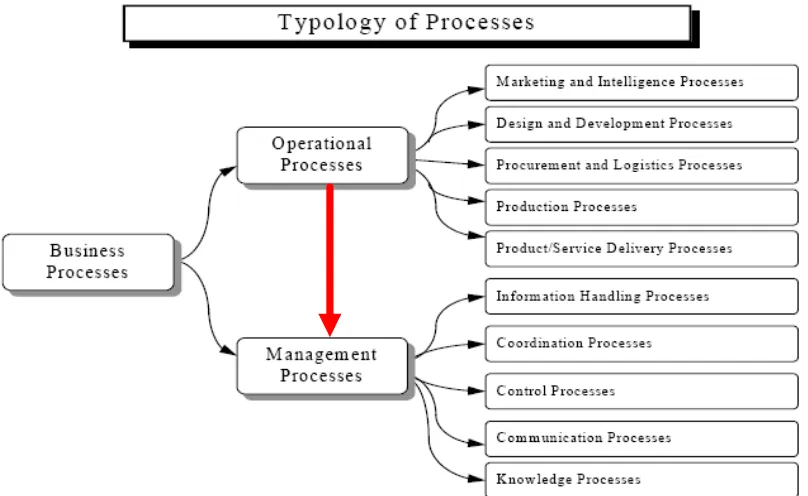
[image:9.612.100.504.344.592.2]Mooney (2001) created a typology of business processes as shown in figure 1. The above stated productions oriented process can be seen as the operational processes while the processes described by Kock and Murphy are based on the management processes; A shift is suggested, away from an operational process view to a management process view. Mooney (2001) states that this typology is “used to (...) distinguish between processes associated with primary business operations (Operational processes), and the associated information handling, coordination, and control processes required to ensure the efficiency and effectiveness of the primary operations (management processes)”.
5
2 Research defined
2.1 Research scope
This research will be conducted for a bachelor thesis. Therefore the time scope will be relatively small, about three full-time months. The research population is limited to employees of OHRA. Three types of business process representation models will be used: Communication Flow, Activity Flow and a combination. Their impact on perceived business process redesign success will be examined.
2.2 Research statement
Which process modeling representation approach is most beneficial in business Process Redesign of a knowledge intensive service organization like OHRA: A Communication Flow Approach, an Activity Flow modeling approach or a combination?
2.3 Practical and theoretical significance of research
This research is based on and continues that of Kock, Danesh and Komiak (2008): A discussion and test of a communication Flow Optimization approach for Business Process Redesign. Their research describes the key success factors involved in organizational change through business process redesign. One of the limitations is that the subjects of testing are students enrolled in junior and senior level courses: in a college context. Clearly, college students will have a different perspective from those who have already graduated and entered the workforce (Kock, Danesh, Komiak, 2008, p. 83).
The present research question addresses a gap in existing knowledge by studying the different modeling approaches in an actual organizational context as opposed to an experimental setting with students. Therefore this theoretical knowledge can be used to improve practices of describing business processes within an organization. Secondly, a third type of model is introduced, a combination (between an activity and communication) model, next to the basic two (1) activity and (2) communication described by Kock et al (2008). The theoretical model proposed by Kock et al. (2008) was not changed; there is construct equalization. The model was created using a literature study, which, as opposed to their research itself did not focus on students but on an actual organizational context.
2.4 Main objectives
The goal is to measure the results of the business process modeling representations in an organization actually dealing with a redesign project to extend the knowledge of which process modeling approach is more beneficial to the implementation of a business process redesign: the communication flow modeling representation, the activity flow process modeling representation or a combination.
6
1. What are the main similarities and differences between the results of the research by Kock, Danesh and Komiak (2008) and this research?
2. Which process modeling representation approach is most beneficial within OHRA?
2.5 Research questions
From the research statement two research questions are derived and stated below. This study relies on the work of Kock and Murphey (2008); their theoretical model is used as basis here to find the most beneficial process modeling representation approach within OHRA, though using different process modeling representation types and a different population. A
7
3 Theoretical framework
The following section has two functions. First of all to clearly define and create insight in this research. Secondly, it will define the terminology used.
3.1 Assumptions research scope
As stated in the former section this research’s focus is to identify which business process model is most suitable for a knowledge intensive organization, OHRA, through an experiment with employees.
“The category of knowledge-intensive companies refers to firms where most work is said to be of an intellectual nature and where well-educated, qualified employees form the major part of the work force. The company claims to produce qualified products and/or services (as cited in Mats Alvesson, 2001)”. OHRA, the insurance company used in this experiment, fits the profile as a knowledge intensive organization and therefore qualifies for this research.
Barr & Hitt (1986) did research on differences in decision making between students and managers in evaluating applicants for jobs. Their findings were that managerial decision models vary significantly from student decision models. For one, “significantly more explanatory power is noted in the managerial decision models than in the student decision models. Furthermore managers also used substantially fewer factors in evaluating applicants than did the students (Barr, H & Hitt, A, 1986, p. 610)”. Surely this could mean that the decision model for students and managers differ in the evaluation of business process models.
Management information systems (MIS) research seeks to find methods for reducing the communication gap between top management and the organizational information systems (IS) function. Business process models contribute to this goal. “However, it is not always practical or parsimonious to conduct these methods using top managers. Therefore, researchers often rely on students acting as surrogates for organizational managers and decision makers.(…) Findings from this study indicate that students are poor surrogates for measuring the
perceptions and attitudes of CEOs (Walstrom, K.A. 2006)”. Peterson (2001) also emphasizes the importance of replicating research based on college student subjects with nonstudent subjects before attempting any generalizations in research.
3.2 Business Process Redesign Success model (Kock et al.)
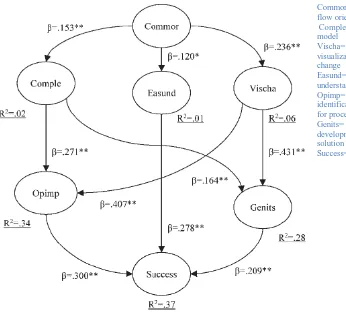
According to Kock, Danesh and Komiak (2008) BPR success is predicted by six factors: flow representation, completeness, ease of understanding, visualization, opportunities for
8
Commor= communication flow orientation
Comple= completeness of model
Vischa= support for visualization of process change
Easund= ease of understanding Opimp= Usefulness in identification of opportunity for process improvements Genits= usefulness in the development of generic IT solution
Success= redesign Success
In the section below the results of the research of Kock, Danesh and Komiak (2008) will be described. In appendix 4 an overview of the literature and hypotheses of Kock et al. is given. The hypotheses in this research are based on their work.
The findings of Kock’s research were that the ease of understanding, opportunities for
improvement, and generic IT solutions were all significantly (p<0.01) positively related to the perceived success of a BPR project. Furthermore approximately 37% of the variance in perceived BPR success was accounted for by the six independent variables. In total the proposed model was acceptable.
Their findings on their hypotheses related to the variables were the following:
A Communication flow representation, business process model with a higher communication flow orientation, will be perceived to produce a better visualization of process change and a more complete model than a model with a lower communication flow orientation
A business process model that is perceived to produce a better visualization of process changes and is more complete is also perceived as more useful for the identification of opportunities for improvement and in the development of generic IT solutions than a model with lower visualization and less complete.
A business process model that is perceived as more useful for the identification of opportunities for improvement, the development of generic IT solutions and is easier to understand is perceived as enabling a greater degree of redesign success than a model that is less useful for the identification of opportunities for improvement, less useful in the
[image:13.612.105.451.65.377.2]development of generic IT solutions and less easy to understand (N. Kock, A. Danesh and P. Komiak, 2008, p. 82).
9
The whole idea is that the amount of orientation toward communication flow in a BPR project is reflected in the BPR success. The underlying assumption of Kock et al. (2008) is that organizations are highly dependent on structured communication in order to create action to produce and deliver services. They conclude that the majority of business process
inefficiencies are due to communication related problems.
Students who have no past experience in a work environment have not undergone these problems and therefore are less able to act upon them in choosing an appropriate model.
This theoretical model proposed by Kock et al. (2008) was not changed; there is construct equalization. The model was created using a literature study, which, as opposed to their research itself did not focus on students but on an actual organizational context.
3.3 Proposed Theoretical model
This research is theory testing, which means that from the literature review, predictions or hypothesis are made. Then data is collected within the organizational context to refine the theory. The theoretical model used by Kock, Danesk and Komiak (2008) (figure 3) shows the following latent variables –
• Flow representation • Completeness
• Ease of understanding
• Support for visualization of process change
• Usefulness in identification of opportunities for improvement • Usefulness in the development of generic IT solutions
The independent variable is the Flow representation type and the dependent variable is BPR success. The semantic definitions of the variables are stated below:
Flow representation Communication flow, Activity flow or combination
Ease of understanding Ease of interpreting the symbols and understanding the relations between the model constructs
Completeness of the model Degree to which the model contains/reflects all parts necessary to work with the model
Visualization of process change Degree to which possible changes in the process can be made graphically visual
Opportunities for improvement To which extent improvement opportunities can be identified from the model
Usefulness in the development of a generic IT solution
Degree to which the model can be used in the representation of the information technology as it relates to the proposed process after the redesign has been fully implemented; A generic IT solution is a diagram about the computer- based solution used for the proposed redesign.
Redesign success Degree of accomplished improvements by means of elevating
efficiency and effectiveness of the business process that exist
10 Table 1: Hypotheses for research question 2
Communication flow versus activity flow model Combination model versus communication flow model
H1 A communication flow model has a higher communication flow orientation than an activity flow model and therefore will be perceived to produce a more complete model than an activity flow model.
H11 The combination model representation will be perceived to produce a more complete model than a communication flow model (according to assumption 1).
H2 The communication flow model will be perceived to have a lower ease of understanding than an activity flow model.
H 12
The combination model representation will be perceived to have a lower ease of understanding than a Communication flow model (according to assumption 2).
H3 A communication flow model has a higher communication flow orientation than an activity flow model and therefore will be perceived to produce a better visualization of process change.
H 13
The combination model representation will be perceived to produce a better visualization of process change than a communication flow model (according to assumption 1)
H4 A communication flow model is perceived to produce a better visualization of process change and therefore will also be perceived as more useful for the identification of opportunities for improvement
H14 The combination model representation will be perceived to produce a better visualization of process change than a communication flow model (H13). Therefore it will also be perceived as more useful for the identification of opportunities for improvement than a Communication flow model.
H5 A communication flow model is perceived to produce a more complete depiction of processes and therefore will also be perceived as more useful for the identification of opportunities for improvement.
H15 Due to H1 the combination model will also be perceived as more useful for the identification of opportunities for improvement than a Communication flow representation.
H6 A communication flow model is perceived to produce a more complete view of processes and therefore will also be perceived as more useful in the development of generic IT solutions than an activity flow model.
H16 The combination model representation is perceived to produce a more complete view of processes and therefore will also be perceived as more useful in the development of generic IT solutions than a Communication flow representation.
H7 A communication flow model is perceived to produce a better visualization of process change and therefore will also be perceived as more useful in the development of generic IT solutions than an activity flow model.
H 17
The combination model representation is perceived to produce a better visualization of process change and therefore will also be perceived as more useful in the development of generic IT solutions than a Communication flow representation. H8 A communication flow model is perceived as more useful in the development of generic IT
solutions and therefore is also perceived as enabling a greater degree of redesign success than an activity flow model.
H 18
The combination model representation is perceived as more useful in the development of generic IT solutions and therefore is also perceived as enabling a greater degree of redesign success than a Communication flow representation.
H9 A communication flow model is perceived as more useful for the identification of opportunities for improvement and therefore is also perceived as enabling a greater degree of redesign success than an activity flow model.
H19 The combination model representation is perceived as more useful for the identification of opportunities for improvement and therefore is also perceived as enabling a greater degree of redesign success than a Communication flow representation.
H10 A communication flow model is perceived as having a lower ease of understanding than an activity flow model and therefore is also perceived as enabling a lower degree of redesign success than an activity flow model.
11
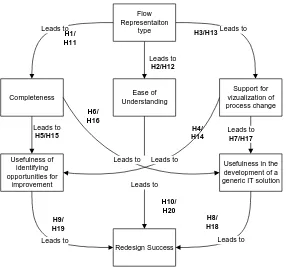
Figure 3 links the hypotheses to the theoretical model:
Figure 3 Theoretical model (N. Kock, Danesh and Komiak (2008), p. ) specified for hypotheses 1 to 20 Throughout this research certain terminology will be used. To avoid confusion on the
meaning of these terms, table 1 will give an overview of definitions used within this research.
Business process A set of actions, automated or manual, that transform some input (data) into
output (other data or information) (Katsma, 2005) Process model representation Process modeling language Business process redesign (BPR) Activity
Fundamental rethinking of business processes (Aalst, van der W.M.P. & Hee, van K.M, 1996)
A set of actions to realize a process Activity flow
representation
The chronological flows of activities in processes ( (Kock & Danesh, 2008)
Communication flow representation
Process modeling representation in which the information flow in processes is central
Data Characters that are accepted as input to an information system for further storing
and processing. After processing, the data may become information. (Katsma) Information
Knowledge
Data that have been processed and organized into output that is meaningful to the person who receives it. (Katsma) (Information can be mandatory, essential, or discretionary)
a fluid mix of framed experience, values, contextual information, and expert insight that provides a framework for evaluating and incorporating new experiences and
information. It originates and is applied in the minds of knowers (Davenport & Prusak, 1998).
Table 2: Basic definitions
Flow Representaiton type Completeness Support for vizualization of process change Usefulness of identifying opportunities for improvement Redesign Success
Usefulness in the development of a generic IT solution Ease of Understanding Leads to Leads to H2/H12 Leads to H7/H17 Leads to H5/H15
Leads to Leads to
Leads to Leads to
12
4 Research design
The section below describes the research method, data collection method and gives an overview of the experiment and the process models used for the experiment.
4.1 Research method
Employees within OHRA will evaluate the three process modeling representation approaches through a questionnaire. This research is a field experiment; A Field setting isalmost always preferred over laboratory for reasons of better external validity, though sacrificing some level of control of internal validity. As the research question states, the focus will be on three approaches: the Communication flow representation, the Activity Flow representation and a combination of the two approaches in which an Activity diagram with information flow will be used. The data type required is quantitative. This research is theory testing, in which hypothesis on the use of different process modeling representations will be tested. Quantitative research results in answers that are useful in accepting or rejecting the
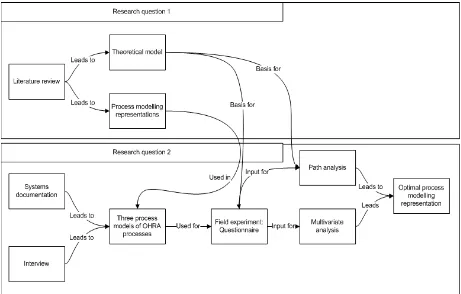
[image:17.612.93.554.346.640.2]predictions made in the next section. Figure 4 shows the steps to be taken in this research. A detailed description follows below.
Figure 4 Research steps
4.2 Data Collection methods
13
documentation can be used as starting point for the interviews. Any contradicting information in the documentation can be clarified in the interviews.
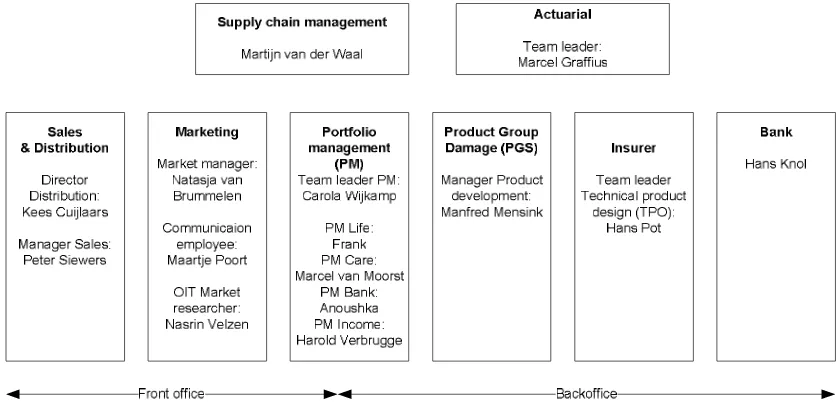
[image:18.612.99.519.184.387.2]Data gathering will require interviews with subject matter experts who perform their jobs within the pricing process (see figure 5). A semi-structured interview is the method of choice. Interviewing can be time-consuming and can lead to personal biases. Self-interest may produce inaccurate information. A semi-structured interview has an open framework. Only a few questions are formulated beforehand. A matrix containing the basic topics is sufficient. This allows for flexibility to probe for details and follow up with new questions.
Figure 5: People interviewed per department
Observations are not feasible in this research due to the physical distance between actors. The employees within OHRA work on different locations in different cities: Arnhem, Zwolle or Amsterdam. Furthermore the above two methods should give sufficient information on the process. The information collected through interviews was based on facts on processes and was compared to the documentation. The data and information collected in the above phase combined with the process modeling theories from the literature review will be used to create the three context models.
4.3 Overview of the experiment
The three flow representation models described above will be used in the field research in which participants will each examine one of the three models. Then a questionnaire will be administered to convey their opinion on the modeling representation . The results of the questionnaire should ultimately lead to the choice of a process modeling representation for perceived business process redesign success.
4.3.1 Design and Measures
The factor that varies between the participants is the type of representation: communication flow, activity flow or a combination. The dependent measure is perceived business process redesign success. This is measured using the following five dependent variables:
• Completeness
• Ease of understanding
• Support for visualization of process change
14 4.3.2 Materials
Three modeling diagrams were created: a Data flow diagrams, the second an Activity diagram and the third a combination (Activity diagram with information flow). Each participant received four forms: one to fill in their personal information, one description of the assignment, one type of model and the questionnaire questions.
4.3.3 Participants
Participants in the field experiment are 15 employees within OHRA who work in portfolio management or interact with Portfolio management: The Portfolio management team itself, Marketing, Sales, Distribution, OHRA Insurer and OHRA Bank. The participant had previous experience with process modeling, mainly activity diagrams, as the year before they had participated in the modeling of the processes in a redesign project (REFRESH).
4.3.4 Procedure
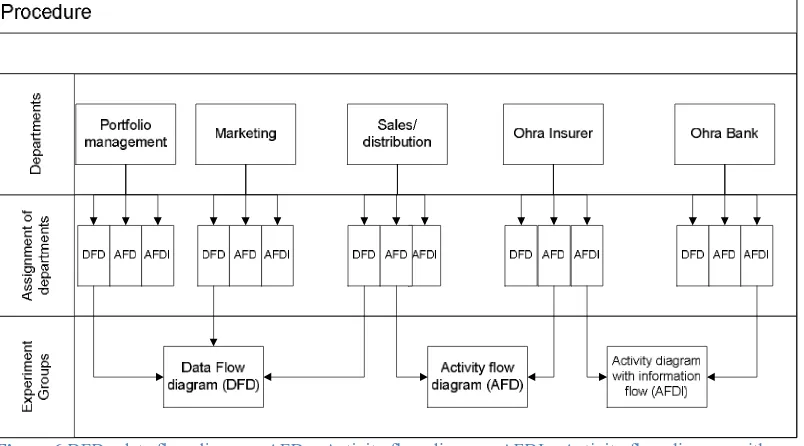
[image:19.612.96.498.410.633.2]The participants are divided into three groups using stratified random sampling: Employees from each department (Portfolio, Marketing, Sales, Distribution, OHRA Insurer and OHRA Bank) were randomly split into three groups. Each groups is randomly assigned to assess one of the three modeling representations. The administration of the questionnaires leads to three data sets: one for DFD, one for AFD and one for AFDI each containing five questionnaires. The participants conduct the experiment individually. They first received two forms, one to fill in personal information as occupation and department and one on the procedure of the experiment. Then an instruction form was given in which the goal of the experiment was stated and the semantics of the specific modeling representation were described. The model and the questionnaire are given simultaneously; the participants are allowed to review the model while filling in the questionnaire. There is no time limit to complete the questionnaire.
Figure 6 DFD= data flow diagram, AFD = Activity flow diagram, AFDI – Activity flow diagram with information flow
4.3.5 Questionnaire type
15
In this research a six point Likert scale was chosen. It is often used in instruments measuring opinions, beliefs, and attitudes, in this case attitudes toward different representation models. It is useful for these statements to be fairly strong when used in a Likert format (DeVellis R.F. 2003, p. 79). The choice for six response items as opposed to seven stems from the fact that a definite preference for side A or side B is wanted. There is no midway.
4.4 Characteristics of the process modeling representation approaches
Although overlap occurs, process modeling representations must not be confused with the process modeling language used. Here, the representation refers to the actual graphical representation of the business processes in terms of a business process model; In this case the possible models are activity, communication or a combination. While the process modeling language refers to the semantics used in the model. This research focuses on the various process modeling representation.
Process representations may differ between process modeling techniques. An Activity flow representation model describes processes as a set of interrelated chronological flows of activities whereas a Communication flow model is based on information flow.
“A successful modeling requires the use of an adequate notation or language. The primitives of a software process modeling language have to be chosen so that process concepts can be naturally expressed. Nevertheless, we should be aware that probably “the” process language will never be defined (Armenise et al. 1993)”.
The effectiveness of (…) a process description language in particular, depends on the context in which it is used, the objectives it is used for and the degree to which its features are understood and used (Rombach, D, 1990).
The above two statements show that the choice of a process modeling language is not a trivial decision. Yet BPMN is becoming the standard. An adaptation of BPMN was chosen for this research; Why? The answer is quite simple:
The most important aspects in choosing a language are (1) that the language depends on the context in which it is used, (2) the objectives and (3) the degree to which its features are understood.
Within OHRA the shapes (language notations) shown in table 3 and figure 7 for the activity flow diagram were already being used in the organization. To comply with the context in which the models were used and the degree to which the features are understood these symbols were used in the modeling representations. In the next section the different process representations and languages will be explained.
BPMN uses four groups of elements, flow objects, connecting objects, swim lanes and artifacts. Here, each of these groups will be explained.
Flow Objects: Events, Activities, Gateways
Event: An Event is represented with a circle and is something that happens. It could be Start, Intermediate or End. This element is a trigger or a result.
Activity: An Activity is represented with a rounded-corner rectangle and shows us the kind of work which must be done. It could be a task or a sub-process. A sub-process also has a plus sign in the bottom line of the rectangle.
Gateway: A Gateway is represented with a diamond shape and will determine different decisions. It will also determine forking, merging and joining of paths.
Connecting Objects: sequence flow and message flow
16
Sequence Flow: A Sequence Flow is represented with a solid line and arrowhead and shows in which order the activities will be performed. A diagonal slash across the line close to the origin indicates a default choice of a decision.
Message Flow: A Message Flow is represented with a dashed line and an open arrowhead. It tells us what messages flow between two process participants.
Artifacts: allow developers to bring some more information into the model/diagram. In this way the model/diagram becomes more readable. There are three pre-defined Artifacts and they are: Data Objects, Group, Annotation.
17 4.4.1 Activity flow representation
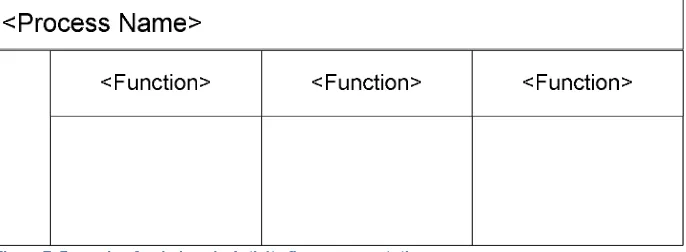
[image:22.612.96.439.148.274.2]In an activity flow representation, in this case a BPMN activity diagram, the main process being modelled (e.g. product development) consists of swim lanes. These represent the organizational functions (e.g. Marketing, Distribution etc). In swim lanes the rectangles depict the activities performed by that specific function.
Figure 7: Example of swimlane in Activity flow representation
The arrows represent the direction of execution, or the chronological flow of activities. The diamonds represent decisions to be made. The parallelogram is the data that flow from a specific activity and the curved rectangle an actual tangible document. These are types of artifacts in BPMN. Table 2 shows the main symbols used in the adapted activity diagrams in this research.
(Computer) processing
A (computer) performed processing function. Usually results in a change
in data or information.
Decision
A decision-making step; used to show branching to
alternative paths.
Data
A unit of data that is considered indivisible and
may consist of data items.
Document
A document or report: the document may be prepared
by hand or printed by a computer.
Document or processing flow
Direction of processing or document flow; normal flow is down and to the
right.
Table 3 Activity diagram symbols
For an example of an activity diagram appendix 1 can be referred to. It contains the activity diagram belonging to the flow model used in this research.
4.4.2 Communication flow representation
[image:22.612.88.527.386.620.2]18
individuals, departments or external organizations. The circles depict the activities and the double horizontal lines represent the information repositories. The arrows in this model represent the flow of information in the process. Chronology of activities is not shown.
Data flow diagram
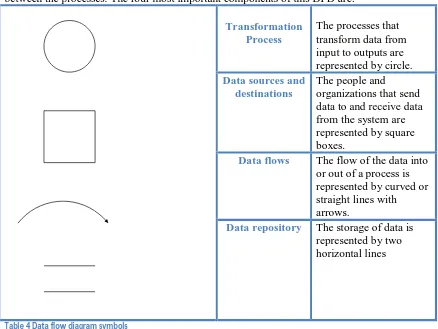
Data Flow Diagrams (DFD) can be used to map the business processes and the data flows between the processes. The four most important components of this DFD are:
Transformation Process
The processes that transform data from input to outputs are represented by circle. Data sources and
destinations
The people and
organizations that send data to and receive data from the system are represented by square boxes.
Data flows The flow of the data into or out of a process is represented by curved or straight lines with arrows.
[image:23.612.89.527.141.470.2]Data repository The storage of data is represented by two horizontal lines
Table 4 Data flow diagram symbols
For an example of a Data flow diagram appendix 2 can be referred to. It contains the Data flow diagram belonging to the communication flow model used in this research.
4.4.3 Combination: Activity diagram with information
The same BPMN language was used in the creation of this third business process modeling representation. The swim lane construction as in the activity diagram will be used in this representation as for the chronology of activities. The symbols for data and documents of the activity diagram also apply in this model representation.
The element of the communication flow representation that will be used is the flow of
information between functions through activities. Therefore there will be two types of arrows as shown in the diagram below.
Activity flow Direction of processing activity
Information flow Direction of information flow
Table 5 Extra symbols for combination model
[image:23.612.90.523.615.689.2]19
4.5 Data analysis methods
The data analysis requires various steps and tests which will be described here. Steps in data analysis:
First all the questions are changed into variables in SPSS. The scaling for all the variables is interval. Then a last variable is made for representational approach in which a communication flow approach is given value one, an activity diagram a value two and the combination model value three. Then the data from the questionnaires is filled in the data view. In this section the numbers of the questionnaire results of the negatively worded questions are reversed for an unproblematic analysis. Now the analysis can proceed.
1. The reliability of the questionnaire items scaling in measuring the corresponding variables is found using Cronbach’s alpha coefficient. This will be done to determine whether the contructs are reliable measures of the latent variables. 2. Correlation coefficients are determined. These show if there is any relationship
between the variables in the theoretical model. Pearsons correlations are used to answer the question if two or more variables are related to each other. This correlation can be positive, negative or non-existing, but does not say anything about the direction of the relation (which variable causes the other). This is a starting point for the next two analyses.
3. Path analysis is done to verify the path of the theoretical model; In this section the direction of the relationships will be determined; Path analysis will be done to assess the direct and indirect effects of the variables that were theorized to be causes of other variables and what amount of the variation of perceived BPR success is accounted for using the latent variables as suggested by Meyers et al. (2006). Regression analysis is used to determine to what extent the independent variables (the variables “doing the pointing”) are good predictors of the dependent variables (the variables “being pointed towards”) in the theoretical model to assess the prediction power of perceived BPR success. This model is a “multistage model” meaning that there is more than one independent variable. For each independent variable a separate regression analysis needs to be done; Here, a total of five analyses need to be done.
4. Multivariate analysis of variance (MANOVA): Rarely is one behaviour (variable) so isolated from other aspects of the overall response that it can paint a
comprehensive picture of a situation. MANOVA (multivariate analysis of variance) is applied to designs with multiple dependent measures, which is very relevant in this research.
In measuring the perceived BPR success, the three variables Ease of understanding,
development of a generic IT solution and Opportunities for improvement may affect it. The variables Opimp and Genits are on their turn influenced by multiple variables (Comple and Vischa). With MANOVA many dependent variables are simultaneously analyzed within a single ANOVA design; The dependent variables in a MANOVA design are combined into a weighted linear composite in which the variate is maximally distinguished between the groups.
20
In this research the number of responses per variable varies between ten and fifteen. A confidence level of 95% which is used in most tests is on the high side for this research because of the low number of responses (10 to 15 per variable). Dealing with a population with a normal distribution, a confidence level of 88% was chosen even though 95% is more common. This means that a two-sided significance of 0.24 is required, corresponding to a one-sided test of 0.12.
To answer the hypotheses two separate MANOVA tests will be done. One in which the means of the communication flow and activity flow representation will be compared and one for the communication flow and the combination model representations. MANOVA tests exist in which three or more variables can be compared simultaneously; due to the hypothesis statements and the researchers lack of experience with statistical analysis, this is discouraged (Meyers, Gamst and Guarino).
In this analysis 1j, 2j, 3j are the means of the scores on each criteria of respectively the
(1) Communication flow representation, (2) the Activity flow representation and (3) the Activity flow representation with information flow. In which j represents the individual variable scores for that specific approach.
Name Factor µij, where i=approach (1,2,3),
j=variable (1,..,6)
Easund Ease of understanding µi1
Comple Completeness µi2
Genits Identification of generic IT solution µi3
Opimp Opportunities for improvement µi4
Vischa Visualization of process change µi5
Succes Perceived BPR success µi6
MANOVA (Hotelling T²) creates a vector (variate or weighted linear composite) that best separates the levels or categories of the independent variable. Hotelling’s T²in this research tests a multivariate null hypothesis of the form:
H0: H1: and H0: H1:
21
communication flow and the activity flow model. The last ten hypotheses have to do with the combination and communication flow model.
5 Results
In this section the hypothesized causal relationships between the variables in the theoretical model will be tested to determine how well they fit the data; The technique, Path analysis, will be used. Then, the mean values of the variables of the different process models will be compared to determine which process model is most suitable; Here MANOVA proves to be an appropriate test.
5.1 Cronbach’s Alpha
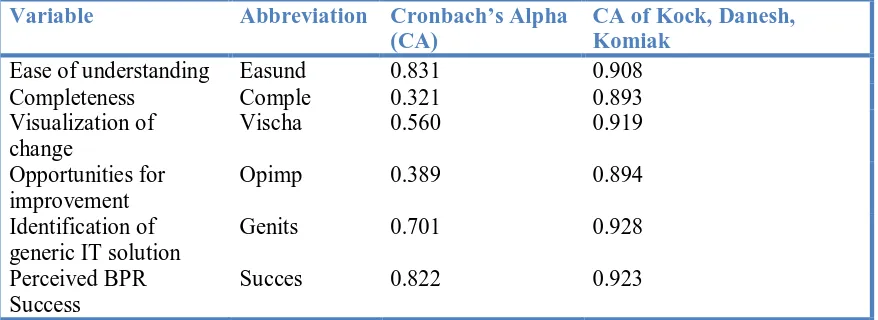
Table 6 shows on the left side the variables as stated in the theoretical model and on the right the results of the analysis. Appendix 4 shows the Study measures and the corresponding questionnaire items and in appendix 6 the full list of alpha’s can be found.
The reliability of the constructs is determined using Cronbach’s alpha coefficient of internal validity.
Variable Abbreviation Cronbach’s Alpha
(CA)
CA of Kock, Danesh, Komiak
Ease of understanding Easund 0.831 0.908
Completeness Comple 0.321 0.893
Visualization of change
Vischa 0.560 0.919
Opportunities for improvement
Opimp 0.389 0.894
Identification of generic IT solution
Genits 0.701 0.928
Perceived BPR Success
[image:26.612.89.528.336.496.2]Succes 0.822 0.923
Table 6 Construct validity refers to the degree to which inferences can legitimately be made from the operationalizations in a study to the theoretical constructs on which those operationalizations were based.
The response items belonging to the variables Easund, Vischa, Genits and Succes all have high reliability (>0.5); The items or constructs belonging to these variables relate well to each other in measuring the variables. The two variables Comple and Opimp on the other hand have relatively low values. Kock, Danesh and Komiak (2008) have already verified the reliability of the construct in a larger research population. Therefore I conclude that the difference in values of the constructs in this research and that of Kock et. Al. is due to the low amount of respondents in this research.
5.2 Correlation coefficient
22
Easund Comple Gentis Opimp Vischa Succes
Easund 1
Comple -0.20 1
Genits 0.432** 0.172 1
Opimp 0.320*** 0.287 0.204 1
Vischa 0.238 0.121 0.490** 0.337* 1
Succes 0.460** 0.317*** 0.729** 0.201 0.427** 1
Approach 0.569*** -0.297* 0.174 0.297** 0.040 0.192
[image:27.612.94.352.394.632.2]*Correlation is significant at 0.12-level **Correlation is significant at 0.05-level ***Correlation is significant at 0.01-level
Table 7: Correlation coefficients between variables
The stars mark the level at which the correlation is significant; in this research an alpha-level of 0.12 is significant. Of the significant correlations the categorization can be made of large, moderate and small correlation. Using the categorization provided by Cohen (1988)
(correlation: 0.5= large, 0.3=moderate and 0.1=small) the blue boxes reflect large correlation, the purple the moderate. Of course the context in which the correlation is judged has effect on the appropriate appraisal of the statistical significance of a correlation coefficient. Smaller samples require higher correlations for statistical significance. For that reason the test of significance at α= 0.05 and α=0.01 is mentioned as well as the significance level used in this research 0.12.
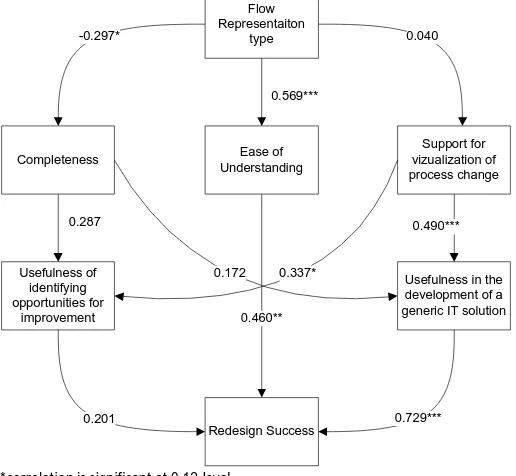
As one can see in the table, the theoretical model does not contain all significant relationships and needs to be adjusted. First we will go on with testing this model, in a next section (5.5) a revised model will be given based on the outcomes.
Flow Representaiton
type
Completeness
Support for vizualization of process change
Usefulness of identifying opportunities for
improvement
Redesign Success
Usefulness in the development of a generic IT solution Ease of
Understanding
0.460** 0.569***
0.490*** 0.287
0.201 0.729***
-0.297* 0.040
0.337* 0.172
*correlation is significant at 0.12-level **correlation is significant at 0.05-level ***correlation is significant at 0.01-level
5.3 Path analysis
In the test, the adjusted R-squared or determination coefficient reflects the explained
23
regression weights produced by the analysis and describe the relative importance of each independent variable in the multiple regression equation.
[image:28.612.95.396.163.435.2]The SPSS output for the regression analysis is given in appendix 7 and that of the path analysis per dependent variable in appendix 12. Figure 8 shows the theoretical model with R-squared and β coefficients. The blue colored arrows show significant Beta-values; The thicker the arrow, the stronger the predictive power of that variable on the dependent variable is.
Figure 8: Model of perceived BPR success with R² coefficients
For the dependent variable perceived BPR success, the R² coefficient of 0.557 (see table 5) means that 55.2% of the variation in the dependent variable BPR success was explained by the three variables ease of understanding, support for generic IT solution and opportunities for process change meaning they are good predictors of perceived BPR success. A value of R²
larger than 0.5 corresponds to a large interpretation power. Appendix 12 presents a summary of the R² and β coefficients between the independent and dependent variables in the
theoretical model. The main conclusion will be discussed below.
Of the three predicting variables of BPR success, support for generic IT solution is the variable that most powerfully predicts BPR success.
Model Summary
,747a ,557 ,502 ,639 Model
1
R R Square
Adjusted R Square
Std. Error of the Estimate
Predictors: (Constant), Genits, Opimp, Easund a.
Table 8: Model summary of regression analysis for prediction of perceived BPR success
[image:28.612.100.355.605.659.2]24
Descriptive Statistics
4,80 ,789 10
4,38 1,061 8
4,61 ,916 18
3,80 1,549 10
2,75 1,488 8
3,33 1,572 18
4,40 ,843 10
3,75 1,165 8
4,11 1,023 18
3,20 1,317 10
4,00 1,309 8
3,56 1,338 18
4,40 ,843 10
3,63 1,061 8
4,06 ,998 18
4,20 ,789 10
3,88 1,126 8
4,06 ,938 18
Approach Communication Activity Total Communication Activity Total Communication Activity Total Communication Activity Total Communication Activity Total Communication Activity Total Easund Comple Genits Opimp Vischa Succes
Mean Std. Deviation N
proved significant predictors. While for the variable “the development of a generic IT solution”, only the variable visualization of change provides a statistically significant unique contribution (p<0.12).
These results can to some extent be used to say something about the hypotheses stated on the various modeling representation approaches. For example, considering the relationship between visualization of process change and the identification of a generic IT solution; The initial theoretical model shows a strong positive causal relationship between them, meaning that a high value in visualization of process change will result in a high value of identification of a generic IT solution. These figures however were not specified for the different groups of hypotheses separately (communication versus activity and combination versus
communication). This could have been done, but this was not the objective of this analysis. The objective of the path analysis was to test the causal relationships stated in the theoretical model in general for all three types of process modeling approaches. Now that the causal relationships have been determined, the next section (MANOVA) will test the mean differences of the variables using different process modeling approaches. These two results together (causal relationships and mean differences) can be used to accept or reject the hypotheses.
5.4 Multivariate analysis of variance
In this research the dependent variables have small to moderate correlations with each other. Appendix 8 shows the correlation matrix. One warning is in its place; There exists a moderate correlation between Genits and Easund (0.432). For the other dependent variables the
correlation varies between 0.17 and 0.32 corresponding to small and moderate correlations. Furthermore under the assumption that the population has a normal distribution and the fact that the variables have an interval scale MANOVA is an acceptable model for analysis. The results of the two separate multivariate analyses of variance consisting of (1) the
communication flow versus activity flow and (2) the communication flow versus combination model will be presented in this section.
5.4.1 Communication flow versus activity flow model The descriptive statistics in table 9
shows that the communication group had somewhat higher mean scores than the Activity group on the variables Ease of understanding (Easund), Completeness of the model (Comple), development of a Generic IT solution (Genits), Visualization of process change (Vischa) and perceived BPR success (Succes). Only on the variable Identification of opportunities for improvement (Opimp) did the Activity group score higher. Further analysis will show if this difference is
[image:29.612.264.522.476.715.2]statistically significant or not and what the implications are for the hypotheses.
25
Bartlett's Test of Sphericitya
,000 47,483 20 ,001 Likelihood Ratio
Approx. Chi-Square df
Sig.
Tests the null hypothesis that the residual covariance matrix is proportional to an identity matrix.
Design: Intercept+Approach a.
Bartlett’s test of sphericity is shown to be statistically significant in table 8. This indicates that there is sufficient correlation between the dependent variables to proceed with the analysis.
Table 10: Bartlett’s test of Sphericity
Now the multivariate test results in table 10 will be reviewed. The Hotelling’s T² value is translated into four multivariate test statistics that are expressed as F values. Because this is a two group comparison, all four values are equal. In this research the test shows that Roy’s largest root yields an F value of 97.223, which is statistically significant. Now that statistical significance is detected, a deeper analysis of the variables can be done.
[image:30.612.101.565.347.488.2]
Table 11 also depicts a partial eta-squared value of 0.637 indicating that nearly 65% of the variance is accounted for by the combined dependent variables. The significance level of 0.045 (<p=0.05) shows that it is not probable that this occurred due to chance.
Multivariate Testsb
,981 97,223a 6,000 11,000 ,000 ,981
,019 97,223a 6,000 11,000 ,000 ,981
53,031 97,223a 6,000 11,000 ,000 ,981
53,031 97,223a 6,000 11,000 ,000 ,981
,637 3,212a 6,000 11,000 ,045 ,637
,363 3,212a 6,000 11,000 ,045 ,637
1,752 3,212a 6,000 11,000 ,045 ,637
1,752 3,212a 6,000 11,000 ,045 ,637
Pillai's Trace Wilks' Lambda Hotelling's Trace Roy's Largest Root Pillai's Trace Wilks' Lambda Hotelling's Trace Roy's Largest Root Effect
Intercept
Approach
Value F Hypothesis df Error df Sig.
Partial Eta Squared
Exact statistic a.
Design: Intercept+Approach b.
Table 11: Multivariate test for dependent variables
26
Variable Mean Std. deviation F Sig.
G1 G2 G1 G2
Easund 4.80 4.30 0.789 0.945 0.953 0.343
Comple 3.80 3.10 1.549 1.542 2.113
Genits 4.40 3.75 0.843 1.165 1.890
Opimp
3.27 3.80 1.438 1.082 1.649
Vischa 4.40 3.56 0.843 1.014 2.992
Succes 4.27 3.82 0.884 0.982 0.519 0.482
G1= Communication flow model G2= Activity flow model
Table 12: Summary of MANOVA for dependent variables
Hypothesis 1 The difference between Completeness of the Activity and Communication
model was significant. Therefore H0 , suggesting that the means of the two models would be
equal, will be rejected and therefore the hypothesis is statistically accepted: A communication flow model is perceived to produce a more complete model than an activity flow model.
Hypothesis 2 In this case the H0 of equal means is accepted; There is insufficient evidence to
support the hypothesis and it is rejected: A communication flow model is not perceived to have a lower degree of ease of understanding than an activity flow representation.
Hypothesis 3 is accepted: A communication flow model has a higher communication flow
orientation than an activity flow model and therefore will be perceived to produce a better visualization of process change.
Hypothesis 4 states that a communication flow model is perceived to produce a better
visualization of process change and therefore will also be perceived as more useful for the identification of opportunities for improvement. The MANOVA results show that the opposite is the case: There is statistical evidence that the Activity flow model is more useful for the identification of opportunities for improvement than the Communication flow model despite the lower visualization of process change. So although path analysis determined that Visualization for change was a significant predictor of the variable Opportunities for process improvement this hypothesis is rejected.
Hypothesis 5 A statistically significant difference between the variable Opportunities for
Improvement and Completeness of the model of the Activity and Communication model was found. Path analysis furthermore found a significant causal relation between the
Completeness of the model and the usefulness in finding opportunities for improvement. Therefore this Hypothesis is accepted: A communication flow model is perceived to produce A more complete depiction of processes and will therefore lead to a higher perceived
usefulness for the identification of opportunities for improvement.
Hypothesis 6 As in the case of hypothesis 5, in testing both the variables Completeness of
the model and the development of a generic IT solution, a statistical difference was found in the advantage of the Communication flow model. But here the Path analysis showed that the completeness of the processes depiction is not a good predictor of the application of a generic IT solution for that model. Therefore this hypothesis is rejected.
Hypothesis 7 From path analysis the conclusion was drawn that Visualization of process
27
solution. The MANOVA test supports this: there is a statistical significant mean difference for the variables ‘development of a generic IT solution’ and ‘Visualization of process change’ in the advantage of the communication flow model. Therefore this hypothesis is accepted: A communication flow model is perceived to produce a better visualization of process change and therefore will also be perceived as more useful in the development of generic IT solutions than an activity flow model.
Hypothesis 8 As stated before, there was a significant difference between the models,
looking at the development of a generic IT solution. Furthermore, the path analysis showed that the development of a generic IT solution was a strong predictor of perceived BPR
success. But even though there is a strong relationship between Genits and Succes and Genits’ mean was significantly different in both models, the difference in means between the Activity flow and Communication model was not statistically significant for the variable perceived Success of BPR and the hypothesis is rejected. Obviously the contributions of the other variables to BPR success also played a role.
Hypothesis 9 Path analysis found that Opportunities for process improvement was a weak
predictor of perceived BPR success, meaning that the values of the one variable does not predict the values of the other. Secondly, as stated in hypothesis 8 there was no significant difference in means of the variables BPR success in the Activity and Communication model. Therefore this hypothesis is rejected: A communication flow model is perceived as more useful for the identification of opportunities for improvement but is therefore not perceived as enabling a greater degree of redesign success than an activity flow model.
Hypothesis 10 This hypothesis is rejected: A communication flow model is not perceived as
having a lower ease of understanding than an activity flow model and is therefore also not perceived as enabling a lower degree of redesign success than an activity flow model.
[image:32.612.108.379.474.713.2]5.4.2 Communication flow versus Combination model
Table 13 containing the descriptive statistics shows that the Communication group had somewhat higher mean scores than the Combination group on the variables Easund, Genits, Vischa and Succes. On the variables Comple and Opimp the Combination group scores higher. In the next section the statistical significance of these differences will be tested.
Descriptive Statistics
2,60 ,699 10
4,80 ,789 10
3,70 1,342 20
4,10 ,994 10
3,80 1,549 10
3,95 1,276 20
3,40 ,699 10
4,40 ,843 10
3,90 ,912 20
2,80 ,422 10
3,20 1,317 10
3,00 ,973 20
3,50 ,527 10
4,40 ,843 10
3,95 ,826 20
3,40 ,699 10
4,20 ,789 10
3,80 ,834 20
Approach Combination Communication Total Combination Communication Total Combination Communication Total Combination Communication Total Combination Communication Total Combination Communication Total Easund Comple Genits Opimp Vischa Succes
28
Table 13: Descriptive statistics of Combination/ communucation approaches
The multivariate test, which is depicted fully in appendix 13 reveals that the MANOVA test found statistical significance, with an F value of 12.062. Further analysis of the separate variables shows that the variables Easund, Genits, Vischa and Succes show statistical
significance. The difference in mean values for these variables is significant when comparing the Communication with the Combination model. The difference between the mean values of the Communication and Combination model are not statistically significant for the variables Comple and Opimp (See table 14).
Variable Mean Std. deviation F Sig.
G1 G2 G1 G2
Easund 4.80 2.60 0.789 0.945 43.566 000*
Comple 3.80 4.10 1.549 1.542 0.266 0.613
Genits 4.40 3.40 0.843 1.165 8.333 0.010*
Opimp 3.20 2.80 1.438 1.082 0.837 0.372
Vischa 4.40 3.50 0.843 1.014 8.191 0.010*
Succes 4.20 3.40 0.884 0.982 5.760 0.027*
[image:33.612.89.527.182.369.2]G1= Communication flow model G2= Combination model Table 14: Summary of MANOVA for dependent variables
For the hypotheses, this leads to the following conclusions. The judgement on the first three hypotheses are easily determined, only by examining the MANOVA results. Later hypotheses will require MANOVA as well as path analysis to determine whether to accept or reject it.
Hypothesis 11 This hypothesis is rejected. The MANOVA test found that the combination
model representation will be not be perceived to produce a more complete model than a communication flow model.
Hypothesis 12 This hypothesis is accepted according to the above findings: The combination
model representation will be perceived to have a lower ease of understanding than a Communication flow model.
Hypothesis 13 The Communication, and NOT the Combination model representation, was
found, according to the MANOVA test, to be perceived to produce a better visualization of process change. Therefore this hypothesis is rejected.
Hypothesis 14 No statistical significance was found for the difference in mean for either the
Completeness of the model or for the usefulness in Opportunities for improvement. Therefore this hypothesis is rejected. Furthermore, path analysis found Comple to be a weak predictor of Opimp.
Hypothesis 15 The hypothesis is rejected: The combination model representation will not be
perceived to produce a better visualization of process change than a communication flow model, as stated in hypothesis 3. Furthermore, there was no statistical evidence that the Combination model will be perceived as more useful for the identification of opportunities for improvement than a Communication flow model.
Hypothesis 16 The combination model representation was perceived to produce a more
29
solution. The path analysis further showed a weak relationship between Comple and Genits. For these two reasons the hypothesis is rejected: The combination model representation is perceived to produce a more complete view of processes but it does not lead to a higher perceived usefulness of the development of generic IT solutions than a Communication flow representation.
Hypothesis 17 As stated in hypothesis 3, the Communication model was perceived to produce
a better visualization of process change than the Combination model. The relationship
between the visualization of process change and development of a generic IT solution is large and positive according to the path analysis. This corresponds to the related higher mean of the Communication model of the development of a generic It solution. This leads to the
conclusion that the hypothesis is rejected: The combination model representation is not perceived to produce a better visualization of process change and therefore will also not be perceived as more useful in the development of generic IT solutions than a Communication flow representation.
Hypothesis 18 Based on the conclusions of hypothesis 7 this hypothesis too is rejected. The
combination model representation was not perceived as more useful in the development of generic IT solutions and therefore was also not perceived as enabling a greater degree of redesign success than a Communication flow representation. The opposite was found, that the mean value of the variable BPR success of the Communication model was statistically higher than that of the Combination model.
Hypothesis 19 Based on hypothesis 6 the conclusion can be drawn that this hypothesis should
be rejected. The combination model representation is not perceived as more useful for the identification of opportunities for improvement and therefore is also not perceived as enabling a greater degree of redesign success than a Communication flow representation.
Hypothesis 20 The combination model representation was, just as in hypothesis 1, perceived
as having a lower ease of understanding. According to this hypothesis this would lead to a lower perceived degree of redesign success than in a Communication flow representation. The MANOVA test results support this result: the BPR success mean value of the communication flow representation is statistically significantly higher than that of the combination model. This hypothesis is therefore accepted.
The differences in outcomes concerning the hypotheses between path analysis and MANOVA can be attributed to the fact that the analyses were done on different data sets. The path analysis was done on the whole data set, whereas two separate MANOVA tests were done: one containing the data on the communication and activity model representation approach and one containing the data on the communication and combination mode representation
approach.
5.5 Suggested model
The results of the path analysis and pearsons correlation test suggest that the current theoretical model does not fit the data best. The primary goal of this research is to test the proposed theoretical model, not to create an optimal model. Therefore it is not necessary to use a model-fitting approach to revise the model. “It should be borne in mind that
30
The correlation and regression schemes seem to suggest a number of relationship:
1. BPR Success relates directly to the variables (1)visualization of process change, (2) identification of a generic IT solution, (3) completeness of the model and (4) ease of understanding.
These four variables in effect also relate to other variables:
2. Visualization of process change relates directly to identification of generic IT solution and opportunities for improvement
3. Identification of generic IT solution relates to approach
4. Approach relates to ease of understanding, completeness of the model and opportunities for improvement
5. Opportunities for improvement relates to visualization of change
This leads to the following figure containing the revised model and the subsequent analyses of the causal relationships (again using path analysis):
Flow Representaiton
type
Completeness
Support for vizualization of process change
Redesign Success
Usefulness in the development of a generic IT solution Ease of
Understanding
Β=0.205* B=0.569*
B=0.474*
B=0.218*
Β=0.603* B=-0.297*
[image:35.612.95.364.249.503.2]Opportunities for improvement B=0.297*
Table 15: Revised theoretical model
All the Beta’s are significant assuming sound causal relationships between the variables in the model. The amount of explained variance though varies between the variables. For the
dependent variable BPR success, the amount of explained variance due to the three variables Completeness of model, ease of understanding and identification of generic IT solution R-squared is 0.603 (as shown in the table below), suggesting high interpretation power.
Model Summary
,777a ,603 ,553 ,605 Model
1
R R Square
Adjusted R Square
Std. Error of the Estimate
Predictors: (Constant), Easund, Comple, Genits a.
Table 15: Model summary for revised model
[image:35.612.102.356.612.664.2]31
The R-squared coefficients contributing to the power of the other variables are low, suggesting that there are more variables that need to be identified that contribute to the explanation of those variables (see appendix 14).
6 Conclusions and recommendations
At the beginning of this research two research questions were stated. In this section the answers will be given; Two tables containing the hypotheses, the expected relations and the findings of this research will be given to further clarify the fir