Bristol Air Quality Masterclass
Summary Report
Air Quality Masterclass Partners
The contribution to the Air Quality Masterclass from each partner, through organising, hosting, financing and supporting the event has been vital to its success. Without the contribution of these partners and of those facilitating the workshops such an event would not have been possible.
Air Quality Management Resource Centre, University of the West of England (UWE) The AQMRC is widely recognised by air quality and carbon management practitioners,
nationally and internationally as a leading provider of information, advice, research and consultancy. AQMRC organised the speakers and chaired the Air Quality Masterclass.
Bristol City Council
Bristol is the winner of the European Green Capital award for 2015 and financed the Air Quality Masterclass. Bristol City Council encourages innovative technology and solutions to address challenges across the domestic, public, commercial and transport sectors, and to support the growth of sustainable energy and environmental industries in the city-region.
City of Copenhagen
Copenhagen was the winner of the European Green Capital award for 2014. Copenhagen invited Bristol City Council to host the Air Quality Masterclass. The city of Copenhagen is renowned for its high levels of cycling and continues to show leadership in sustainable transport development, air quality and climate change.
European Green Capital
For further information on this Masterclass please contact: Dr Jo Barnes,
Research Fellow,
Air Quality Management Resource Centre, UWE Tel: 0117 32 81626 Email: [email protected]
Report Author: Ben Williams,
Research Associate,
Executive Summary
This report synthesises information gathered during a two day Air Quality Masterclass held in Bristol on the 28th and 29th of October, 2014. The aim of the Masterclass is to inform stakeholders (ranging from members of the public to politicians to air quality practitioners) on current challenges and explore possible solutions to improving urban air quality using suggestions crowd-sourced from this event.
During the first day, introductory presentations outlining current air quality issues across Europe were given. This was followed by a series of case study presentations on current challenges and potential solutions to improving air quality in several European cities. Each presentation from the first day is summarised within this report and is available on the event website:
http://www.bristol.gov.uk/page/environment/green-capital-masterclass.
During the second day an interactive workshop, facilitated by technology from Crystal Interactive Limited, gave delegates an opportunity to respond to the presentations and contribute their own experiences. In the first task, teams of delegates were asked to identify challenges to improving urban air quality. The most common challenges identified were communication, governance and improving public transport. Delegates were then tasked with identifying solutions to these challenges. Solutions to improving communication included publicising the health impacts associated with poor air quality and engaging with societal role models to champion urban air quality messages. For improving governance delegates
suggested experts present politicians with regular digestible air quality briefs and force major parties to sign a joint declaration on a right to clean air. Public transport could be improved through giving priority to buses and cyclists and through developing regional transport groups. Delegates also suggested that type approval of vehicles should reflect real road conditions to improve the role of
technology in addressing air pollution and that by emphasising the impact of air pollution on public health and embracing other communication techniques, vested interests could also be overcome.
Table of Contents
1. Introduction and Background ... 1
2. Day 1: Presentations ... 2
2.1. Introductory presentations ... 2
2.1.1. “Air Quality Management in European Cities” – Good Practices from European Green Capital Award (Steen Solvang Jensen: Danish Centre for Environment and Energy, Aarhus) ... 2
2.1.2. “EU Air Quality Overview” (Anke Lϋkewille: European Environment Agency) .. 2
2.1.3. “Health Challenge” (Ian Mudway: King’s College London) ... 2
2.1.4. “EU Legal Challenges” (Alan Andrews: ClientEarth) ... 3
2.2. Case study presentations ... 3
2.2.1. “Cycling in Copenhagen” (Brian Hansen: Technical and Environmental Administration, Copenhagen) ... 3
2.2.2. “The impact of LEZ and other measures in Berlin’s Air Quality” (Martin Lutz: Senate Department for Urban Development and Environment, Berlin) ... 3
2.2.3. “Air Quality Management in Port Cities” (Carlo Trozzi: Techne Consulting) ... 4
2.2.4. “Electric Vehicles and Air Quality in Barcelona” (Simon Hayes: Global-Local) . 4 2.2.5. “Bristol Air Quality Strategy and Health” (Steve Crawshaw: BCC) ... 4
2.3. Summary ... 4
3. Day 2: Workshop ... 5
3.1. ‘What are the challenges to improving air quality?’ (Session 1) ... 5
3.1.1. Communication ... 6
3.1.2. Governance ... 6
3.1.3. Improving public transport ... 7
3.1.4. Urban Planning ... 8
3.1.5. Technology ... 8
3.1.6. Other Challenges ... 8
3.1.7. Summary... 9
3.2. ‘What are the solutions to improving air quality?’ (Session 2) ... 10
3.2.1. Communication ... 10
3.2.2. Governance ... 11
3.2.3. Improving public transport ... 12
3.2.4. Technology ... 12
3.2.5. Vested Interests ... 12
4. Going forward ... 13
1. Introduction and Background
This summary report presents the key findings obtained from the Bristol Green Capital Air Quality Masterclass, run by the University of the West of England and Bristol City Council on the 28th and 29th of October, 2014, entitled ‘The good urban life of the future – Air Quality Management in European Cities: Sharing Successes and challenging challenges’. A summary of the key findings from each presentation is given. Additionally, a synthesis of the information provided in the workshop is
presented and discussed.
The aim of this report is to provide a summary of the key issues raised at the event in terms of challenges and solutions for air quality management. The target audience includes all stakeholders, from members of the public to policymakers and
practitioners.
Bristol City was awarded Green Capital status for 2015 as part of the European Commission’s European Green Capital Award Programme. This programme was initiated on the 15th May 2006 following the signing of a memorandum of
understanding1 between 15 European cities and the Association of Estonian cities in Tallinn, Estonia.
The first European Green Capital was awarded in 2010 to Stockholm, Sweden, and since then has been awarded to 6 other cities including Copenhagen, Denmark (2014), Bristol, UK (2015) and Ljubljana, Slovenia (2016).
The Green Capital Air Quality Masterclass was run at the request of the City of Copenhagen, the 2014 Green Capital City, in the lead-up to the Bristol Green Capital, 2015. Its aim was to bring together experts and practitioners from across Europe to present good practice examples of air quality management, and
subsequently, through interactive workshops, highlight current air quality challenges and suggest means of addressing key issues.
1
2. Day 1: Presentations
During Day 1 of the Green Capital Air Quality Masterclass, a range of speakers, invited by AQMRC, UWE, from across Europe presented introductory issues (e.g. health challenges) and case studies, (e.g. cycling in Copenhagen). A summary of the key points of note is given. All of the presentations are available from the event website2.
2.1. Introductory presentations
2.1.1. “Air Quality Management in European Cities” – Good Practices from European Green Capital Award (Steen Solvang Jensen: Danish Centre for Environment and Energy, Aarhus)
In this presentation, Steen set out the 12 environmental performance indicators used to determine the winner of the European Green Capital Award. Relevant indicators include mitigation and adaptation to climate change, local transport and ambient air quality. Good practices from European cities applying for the award were also presented, including the provision of air quality information and awareness raising in Umeå, Sweden, a health-based air quality index in Ljubljana, Slovenia and the promotion of greener transportation including cycling (e.g. Amsterdam), Low Emission Zones (LEZ) (e.g. Essen) and alternative fuels (e.g. Oslo).
2.1.2. “EU Air Quality Overview” (Anke Lϋkewille: European Environment Agency)
Anke began this presentation by defining the role and responsibilities of the
European Environment Agency, in particular its position as an independent agency. The role of the EEA includes the analysis, assessment and provision of
environmental information and is an interface between science and policy. Other work includes the development of a European Environmental Information and Observation Network (EIONET) for air quality, and reporting on the state of, and identification of, trends in Europe’s environment (SOER2015). Anke highlighted that air pollutants were on a continuous downward trend since 1990, however eleven EU Member States were in breach of at least one of their emissions ceilings, most frequently nitrogen oxides (NOx). Furthermore, it was noted that 3 out of 10
Europeans were still exposed to PM10 levels above the EU daily limit value and that 9 out of 10 were exposed to levels above World Health Organization (WHO) guideline values. The presentation was concluded by highlighting the importance of a uniform index for environmental pollutants across the EU in order to effectively compare data and communicate air quality information to the public.
2.1.3. “Health Challenge” (Ian Mudway: King’s College London)
Ian began this presentation by noting that 340,000 years of life (equivalent to 29,000 deaths) had been lost in the UK in 2008 as a result of poor air quality with 188 of these ‘deaths’ occurring in Bristol (based on anthropogenic PM2.5). This is compared
to only nine deaths due to road traffic collisions (RTCs) in Bristol during the same period. Ian highlighted the difficulty in communicating the impact of poor air quality as deaths from air pollution cannot necessarily be seen, whereas deaths from RTCs are more obvious. Air pollution was highlighted as being the second greatest cause of premature death in the UK after smoking, with RTCs seventh in the ranking presented. Ian also noted that emerging evidence suggested that the impact of nitrogen dioxide (NO2) on health is equivalent to that of PM2.5.
2.1.4. “EU Legal Challenges” (Alan Andrews: ClientEarth)
Alan began his presentation by stating that 16 out of 43 zones and agglomerations within the UK (including London, South East England and Belfast) would not be compliant with the NO2 limit value until after 2015. Alan noted that there were two cases against the UK for a breach of the NO2 limit value, one by the European Commission and another by ClientEarth. The lack of political will within the UK government to combat air pollution was highlighted, in particular, a key paragraph from the government’s Red Tape Challenge which suggested amending the Air Quality Directive3 to reduce the risk of infraction and therefore reduce/delay the potential for legal action over exceedences.
2.2. Case study presentations
2.2.1. “Cycling in Copenhagen” (Brian Hansen: Technical and Environmental Administration, Copenhagen)
Brian’s presentation on cycling in Copenhagen began with a breakdown of transport use in 2013. In this period, 41% people cycled to work, compared with 24% people using their cars. Brian noted that the majority of Copenhageners (56%) cycle
primarily because it’s quick, whilst 5% cycle for environmental reasons. In addition it was noted that bicycle infrastructure is cheap compared to other modes of transport and therefore its encouragement is more straightforward. Incentives for encouraging more cycling included: cycle tracks along all major roads, a bike sharing system and green cycle routes throughout Copenhagen. The health and environmental impacts of cycling were presented and it was noted that adult cyclists have a 30% lower mortality rate than others and that 90,000 tonnes of carbon dioxide (CO2) emission is avoided each year as a result of cycling.
2.2.2. “The impact of LEZ and other measures in Berlin’s Air Quality” (Martin Lutz: Senate Department for Urban Development and Environment, Berlin)
In this presentation, Martin began by showing the long-term trends in nitrogen oxides (NOx)4 within Berlin with nitric oxide (NO) showing a steep decline but no significant change in nitrogen dioxide (NO2). He also highlighted that a reduction in NO2 will only be effective if there is a focus on reducing emissions from road transport. The
3http://eur-lex.europa.eu/LexUriServ/LexUriServ.do?uri=OJ:L:2008:152:0001:0044:EN:PDF
introduction of a Low Emission Zone (LEZ) in Berlin had brought forward the introduction of cleaner vehicles into the fleet, however, it was noted that LEZs are only effective if they are based on ambitious emission criteria, cover a large enough area to cover shift in traffic to surrounding areas and that exemptions are restricted. A reduction in speed from 50 to 30 kph was also highlighted for its positive impact in reducing particulate matter and NO2. On a more concerning point, Euro 6 average Real Driving Emissions tests for NOx were 7 times higher than manufacturers’ test emissions and needed to be addressed.
2.2.3. “Air Quality Management in Port Cities” (Carlo Trozzi: Techne Consulting)
Carlo’s presentation highlighted the contribution of NOx emissions from ships in port cities. It was noted that whilst NOx emissions from road transport has been
decreasing since 1990, emissions from ships has remained consistent. Carlo presented some novel methods for emission reduction, including the connection of ships to land-based electric networks, thus allowing ships to turn off their auxiliary power. Overall, the reduction in emissions at ports can result in a 40% reduction of total emissions for its host city.
2.2.4. “Electric Vehicles and Air Quality in Barcelona” (Simon Hayes: Global-Local)
The significant positive impact on air quality from electric cars was highlighted in Simon’s presentation. In support of this it was noted that 47% of NOx emissions and 45% of PM10 emissions in Barcelona were from road transport. Simon also suggested that electric vehicles have the most potential to deliver deep cuts in car/van
emissions in the future and that public fleet procurement can play a key role in the take-up of electric vehicles.
2.2.5. “Bristol Air Quality Strategy and Health” (Steve Crawshaw: BCC) Steve’s presentation addressed air quality issues in Bristol, from nationally regulated pollutants (e.g. PM2.5 and ozone) to local authority managed traffic pollutants (e.g. PM10 and NO2). Despite predictive trends showing a decrease in NO2 over time Steve stressed that this trend was not evident in local monitoring data. Additionally, the cumulative impact of development across Bristol is likely to be exacerbating pollutant levels. Steve noted that Bristol City’s AQMA has expanded over the last decade to incorporate new areas of exceedence and that reduced funding from Local Transport Plans (LTP) is resulting in delays in implementing measures to improve air quality.
2.3. Summary
3. Day 2: Workshop
During Day 2 of the Green Capital Air Quality Masterclass an informal interactive workshop, facilitated by technology from Crystal Interactive5, was held in which speakers and delegates were divided into eight groupings (approximately 6-8 people per group). Each group were given iPad minis pre-loaded with an app that posed two questions: firstly, ‘What are the challenges to improving air quality?’, and secondly, ‘What are the solutions to improving air quality?’ The groups were given 45-60 minutes for each question to discuss and enter their thoughts. Nvivo 106 qualitative data analysis software was used to code the responses into common themes. Several delegate quotes are also included within this section and are presented within square brackets […].
3.1. ‘What are the challenges to improving air quality?’ (Session 1)
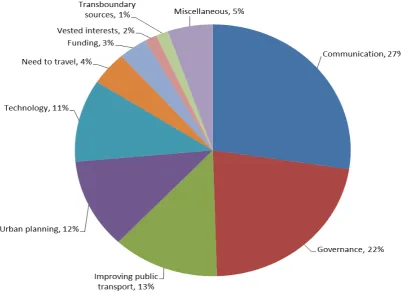
[image:10.595.93.495.342.635.2]Over 200 responses were made by the workshop delegates during this session which spanned a variety of fields. The following section summarises the responses under these themes (Figure 1).
Figure 1: Response frequencies to Q1 ‘What are the challenges to improving urban air quality’ by theme
5http://www.crystal-interactive.co.uk/
3.1.1. Communication
The theme of ‘communication’ received 27% of the responses. A number of key challenges were identified:
• Ineffective communication between air quality experts, the public, politicians and health professionals. For example, communicating technical detail to the public, beyond information provision in an easily understandable format was thought to be a challenge to motivating behavioural change and increasing political pressure [“Politicians don't understand the scale and impact that air quality has”].
• Overcoming entrenched misconceptions, for example that poor air quality doesn’t have a major impact on health, was thought by many to hinder the implementation of improvements in air quality. Delegates thought that communicating the health impacts of air pollution caused by both acute and chronic exposure on vulnerable groups including children and the elderly, needed to be addressed. The fact that improvements in air quality can benefit the entire cross-section of society and not just the ‘well-off’, as was perceived, needs to be reinforced.
• ‘Visualisation’ of air pollution, considering its description as an unseen problem, whereas for example, health impacts from road traffic collisions are very visual [“Air quality difficult to "sell" as a problem as unseen”].
• Promoting the measures being taken to improve air quality such as the communication of benefits of sustainable transport to the public. Of particular note was the communication of the health and financial benefit of using sustainable transport as well as its contribution to improving air quality. In addition, communicating actual (as opposed to perceived) safety/accident data for various forms of sustainable transport to the public, to instil
confidence in transport modes such as cycling and walking was thought to be a challenge. Improving the public perception of cycling within communities, with perceived hostility from both other road users and local media was also thought to be important.
• Encourage and develop effective communication networks from the public to air quality experts and politicians. For example, encouraging community feedback on proposed air quality improvement measures,
sustainable transport and any additional air quality concerns was seen to be a pressing issue.
• Improving coverage of air quality issues in local and national media. Through addressing this, delegates thought that a significant amount of other challenges (e.g. vested interests and improvements in funding) could also be addressed [“Poor media coverage”].
3.1.2. Governance
The theme of ‘governance’ received 22% of the responses. Delegates thought that governance on all levels was a challenge to improving air quality in urban
• Decentralisation of responsibilities without powers. Although local authorities have responsibility for local air quality, they do not necessarily have the powers to address the problem [“Many factors influencing air quality are not under local control. E.g. national emission limits, privatised public transport system”]. Decentralisation of powers commensurate with
responsibilities to address air quality challenges was identified as the best driver for change at a local level. Additionally, lack of high-level cooperation on air quality between regions and an inconsistent approach across local authority boundaries was highlighted.
• Political will/short-termism. A lack of foresight and ambition among politicians was seen to be an issue [“Governments and councils are too focused on short term election periods rather than long term vision”].There is a need to overcome the lack of political will to address air quality, in particular when other matters (i.e. economic growth) are deemed more important. Furthermore, overcoming the influence of lobbying and vested interests to encourage political ambition in improving air quality needs to be addressed [“Vested interests (car, business lobby)”].
• Tiered governance and departmental silos. A lack of shared outcomes/targets between different tiers of governance, for example,
differences in legislation at European, national and local level [“Gap between legislations (WHO, EU, national, local)”] and a lack of sustained cooperation between each level, was identified as an important challenge. Additionally, there is a perceived lack of leadership on air quality and an understanding of its impact at all levels. Delegates agreed that air quality is not integrated across all relevant departments and that despite air quality being considered in planning applications it was not a ‘deal-breaker’ in terms of outcomes.
3.1.3. Improving public transport
The theme of ‘improved public transport’ received 13% of the responses. Some of the key challenges included:
• Improving both the frequency and reliability of services and making public transport more accessible for rural communities were considered necessary to reduce the need to drive into town.
• Addressing the increased costs of public transport systems and the absence of regional transport plans with neighbouring local authorities was also thought to be a challenge. Encouraging the uptake of sustainable transport and the encouragement for public transport systems including buses, trains and taxis to be more bicycle-friendly.
3.1.4. Urban Planning
The theme of ‘urban planning’ received 12% of the responses. Some of the key challenges included:
• In most cities, the physical space for traffic movement was restrictive and ongoing development leading to a creeping increase in baseline pollutant concentrations was thought to be a problem which needed addressing, although delegates noted the difficulty in controlling developments whilst simultaneously regenerating cities.
• An increase in development within poorly-serviced satellite towns was resulting in an increase in traffic within cities.
• The lack of importance given to air quality in planning applications. Few, if any, planning applications are refused on the basis of air quality.
• Delegates considered that urban development is primarily focused on car use and access, and not sustainable transport.
• Scope for infrastructure improvements for increased uptake of sustainable transport mechanisms, for example, delegates thought that current cycling space encourages conflict with both pedestrians and vehicles.
3.1.5. Technology
The theme of ‘technology’ received 11% of the responses. A key challenge identified by delegates was a misplaced faith in technological solutions, e.g. Euro standard vehicles, and underdeveloped cleaner technologies to replace fossil fuels.
• Electric Vehicles, although a potential future solution for air quality
improvements were not currently considered a large-scale viable alternative to fossil fuel [“Lack of infrastructure for electric/hydrogen vehicles”]; in addition, the capital cost of purchasing electric vehicles was also considered restrictive. Furthermore, more local authorities could lead by example by introducing electric vehicles into their fleets.
• Euro Standards - The risk of failure of the Euro standards, including the latest Euro 6 standard was seen as an important challenge particularly in addressing the disparity between testing and real-world use road emission data. Additionally, addressing the increased dieselisation of the vehicle fleet and the impact of this on emissions was identified.
3.1.6. Other Challenges
An assortment of other challenges accounted for 15 % of the responses and included:
• Funding - The lack of funding for local authorities was seen as a challenge to improving urban air quality. For example, investment in alternative transport and the support for retrofitting was thought to be lacking. Additionally, health protection and therefore pollution reduction measures were not thought to be funded sufficiently. Furthermore, delegates thought that a lack of funding to support private companies and individuals in retrofitting vehicles to achieve and exceed Euro 6 standards was a challenge.
• Vested Interests - Vested interests are often counter to that of improved air quality. For example, delegates suggested that overcoming the car lobby and the lobbying power of vehicle manufacturers at a European level were
hindering improvements in emissions which was also linked to the failure of Euro standards [“Lobbying power of vehicle manufacturers at European level”]. In addition certain groups of citizens, by age and background, were identified as being very wedded to being able to use their cars freely and opposed to measures seen as ‘anti-car’.
• Background pollution - The transboundary transportation of air pollution from other sources is an issue, particularly for local authorities with little or no influence over this contribution. Regional background PM10 levels were difficult to control and therefore difficulties arise in trying to control any increase in this level. Additionally, the generation of particulate matter from friction sands (used on roads during winter) and other non-exhaust sources needs addressing.
• Miscellaneous - Several challenges were raised by delegates that didn’t fit within the aforementioned themes. For example, a one size fits all approach to improving air quality in multiple cities does not work and local geography can be a challenge in itself. Furthermore, delegates noted that there are different air quality issues in city suburbs to city centres, which requires bespoke solutions.
3.1.7. Summary
3.2. ‘What are the solutions to improving air quality?’ (Session 2)
In the second part of the workshop, each group chose two key challenges from those that they had previously identified in Session 1. They were then tasked with
identifying solutions to those two challenges. In total there were more than 180 solutions suggested to the themes considered by the groups. A summary is set out below:
3.2.1. Communication
Eight communication based challenges were addressed by delegates and are set out below. These were:
• “Lack of public understanding and political demand”
• “Communicating technical subject to the public”
• “Air quality difficult to sell as a problem, as unseen”
• “Communicating complex messages to a wider audience”
• “Getting people to care about Air Quality”
• “Engaging people (offline), creating demand for change”
• “Public awareness of air quality health issues”
• “Weak consideration of Air Quality in regional strategic planning and transport”
Delegates suggested mapping air quality data regularly as a means of facilitating visual communication. Furthermore delegates suggested utilising current
infrastructure such as highway warning signs and interactive street displays to ‘visualise’ air pollution [Interactive street displays which engage citizens to engage around air quality]. Additionally, adding a colourant to car emissions was thought to be a novel way of visualising pollutants, as was the introduction of a ‘death counter’ to acknowledge and assess the contribution of air pollution to health impacts. The inclusion of air quality data (i.e. associated contribution) on household bills was also thought to be a novel means of communicating the potential impact of activities on air quality.
As noted previously, delegates identified that the communication of health impacts was not sufficient at present. Therefore, delegates suggested the implementation of a campaign similar to that of the ‘No Smoking’ campaign was necessary. Delegates suggested that there should be a campaign to raise awareness of poor air quality and to personalise the health impacts, by highlighting personal pollutant exposure when sitting in cars, compared to cycling and walking, for example. Regular digestible air quality briefs for politicians were recommended. Delegates also suggested that health commissioners should be tasked with emphasising the impact of air pollution on health. They also suggested incorporating public health commissioners into planning committees to ensure adequate coverage of any potential health impact. On a similar note, the delegates suggested an amendment to the consultation process, ensuring that the public have as equal a say in planning matters as developers. In addition to this, delegates suggested highlighting the financial burden of air pollution on individuals and on the nation [“Take account of damage costs of development across the region i.e. link additional burden on NHS of traffic impact of
Delegates also suggested that encouraging an ‘Air Quality Champion’ such as a celebrity or sports icon would be an option for improving communication of air pollution to the general public. Another method that delegates suggested to improve the communication of air quality was to teach it widely in schools and colleges and in doing so address both impacts and actions for improvement [“Teach air quality in schools”]. Additionally, in order to increase engagement with children and teenagers, delegates suggested developing an air quality computer game.
Another potential solution put forward by delegates to improve communication of air quality impacts was to form lobbying groups at community, regional, national and European level to help inform policymakers. In addition to this, delegates gave support to the idea of using non-governmental organisations and social justice campaigners (e.g. 38 Degrees) to propagate information on air quality impacts and utilise media outlets fully. It was also thought that behavioural psychologists and communications experts should play a part in such movements, to further enhance understanding and dissemination of information.
3.2.2. Governance
Four governance challenges were addressed by delegates. These were:
• “Lack of holistic approach to funding and policymaking”
• “Lack of remedy and measures and clear responsibility and fines within policies and legislation”
• “Governments and councils are too focused on short term election periods rather than long term vision”
• “Lack of government leadership on air quality”
In addressing a lack of governance, delegates suggested that clear responsibilities for air quality should be given to government departments at national and local levels. In addition, delegates thought that giving more power to regional government and unitary authorities to develop local planning guidance was important [“Develop local Supplementary Planning Documents to give local authorities proper strong control over development”].
Delegates suggested that systematic cross-border cooperation between regional and local authorities that wasn’t reliant on individual relationships could lead to more funding opportunities and more informed policy development.
Other suggestions include the need to develop a long term strategy based on
3.2.3. Improving public transport
Two challenges to improving public transport were addressed by delegates and are set out below. These were:
• “Sustainable transport isn’t a priority”
• “Insufficient funding of public transport by national government”
In addressing the improvement of public transport delegates suggested that bus lanes and cycle lanes should be given priority across cities and that real-time transport data should be widespread to allow informed decisions on daily transport choices. Furthermore, delegates suggested that rewards for cycling and walking should be given out at schools and workplaces.
The development of national and regional transport policies which make sustainable transport a priority was a key theme identified by delegates. Additionally, delegates suggested the introduction of congestion charging and increased car parking charges as a means of reducing traffic levels and as a means of raising funds for public transport[“Congestion charging of cars that provide funds for public transportation”].
3.2.4. Technology
One topic focusing on providing solutions for a risk of failure of new technologies was addressed by delegates.
• “Risk of failure of Euro 6 Standard for diesel private cars”
In addressing the potential failure of modern technology for reducing air pollution, delegates suggested that type approval (standard vehicle emissions test) should reflect real road driving conditions which should, in particular, address concerns regarding Euro 6 standards [“Type approval should reflect real road testing”]. Additionally, delegates suggested that by instigating Low Emission Zones appropriate mitigation technologies would be developed to meet this need.
3.2.5. Vested Interests
• Vested interests (car, business lobby)
4. Going forward
The Air Quality Masterclass held over two days in Bristol on the 28th – 29th October, allowed stakeholders from a cross-section of society to come together to hear the current state of urban air quality research from within the UK and across Europe. During the Masterclass delegates heard presentations on, amongst other topics, air quality management in European cities, the health challenges associated with air pollution, cycling in Copenhagen and the air quality strategy in Bristol. Furthermore, delegates contributed to identifying the key challenges to improving urban air quality. The three principal challenges delegates identified were communication,
governance and improving public transport. Delegates were also tasked with identifying solutions to a selection of key urban air quality challenges which were drawn from those previously identified, namely communication, governance, improving public transport, technology and vested interests.
Solutions to improving communication included publicising the health impacts associated with poor air quality and engaging with societal role models to champion urban air quality messages. For improving governance delegates
suggested experts present politicians with regular digestible air quality briefs and force major parties to sign a joint declaration on a right to clean air. Public transport could be improved through giving priority to buses and cyclists and through developing regional transport groups. Delegates also suggested that type approval of vehicles should reflect real road conditions to improve the role of
technology in addressing air pollution and that by emphasising the impact of air pollution on public health and embracing other communication techniques, vested interests could also be overcome.
Several other challenges were identified by delegates but were not specifically addressed during this workshop. These included urban planning, transboundary sources and the need to travel. This does however provide the opportunity for interested parties to identify solutions to these unaddressed challenges and present them at the next Air Quality Masterclass.
Appendices
Delegate list (as provided by Bristol City Council)
Abbie
Gloucester City Council
Adaorah
Okonkwo
University of the West of England
Ade Olaiya
University of the West of England
Alan Andrews
ClientEarth
Alaric Lester
Temple Group Ltd
Albert Edman
City of Umea, Sweden
Alex Minshull
Bristol City Council
Andreas
Forsgren
City of Umea, Sweden
Andrew
Edwards
Bristol City Council
Anke Lükewille
European Environment Agency
Ann Bennett
Arriva ASTL
Annika
Soderlund
Umea Municipality, Sweden
April Richmond
Bristol City Council
Austin Cogan
Air Quality Consultants
Barry O'Brien
Greater London Authority
Ben Robinson
Bristol City Council
Ben Williams
AQMRC University of the West of England
Ben Wilson
University of the West of England
Beth Conlan
Ricardo-aea
Bob Thomas
Air Quality Assessments Ltd
Brianna
O'Malley
University of the West of England
Carlo Trozzi
Techne Consulting
Carmen Rusu
University of the West of England
Carolin
Blumenberg
Behörde für Stadtentwicklung und Umwelt
Caroline Odbert
Air Quality Consultants
Caroline Twigg
Future Cities Catapult
Charlotte
Goodman`
Royal Haskoning DHV
Chris Bennett
Sustrans
Chris Morris
Environment Agency
Christine Park
ACCON UK
Claire Holman
Brook Cottage Consultants
Claire Lowman
Bristol City Council
Clare Beattie
Air Quality Consultants
Daniel Mullick
ACCON UK
Darren Hall
Big Green Week
David Williams
Transport and Travel Research Ltd
David Wright
Environment Agency
Deb Joffe
Bristol Green Party
Dr Ann
McDonagh
Air Quality Consultants
Dr Michael
Yearworth
University of Bristol
Dr Egils Praulitis N/A
Duncan Laxen
Air Quality Consultants
Ellie Mitchell
Arup
Emily White
University of Bristol
Emma Deen
Land Use Consultants
Emma
Pemberton
Environment Agency
Enda Hayes
AQMRC University of the West of England
Faris Salim
Abdali
City of Copenhagen, The Technical Environmental
Administration
Fiona Franklin
Sustrans
Gabor Kis
Environment Agency
Gayle Davis
Cardiff Metropolitan University
Glenn Vowles
Sustainable Knowle (and Open University)
Greta
Nedergaard
City of Copenhagen, The Technical Environmental
Administration
H. B. Adediran
Olaiya
University of the West of England
Hala Samour
University of the West of England
Hannah Sabido
Ambition Lawrence Weston
Hannah-Mari
Torniainen
City of Helsinki Environment Centre
Helen Pillinger
Invited by Bristol City Council
Ian Mudway
King's College London
Irene
Buckingham
One
Jack Pease
Environmental Management Publishing
James Fink
Bristol City Council
James
Longhurst
Janis Kleperis
Riga City Council, Housing and Environment
Department
Jeroen
Schenkels
City of Utrecht
Jim Campbell
Sutherland Campbell International
Jim Hodgson
Environment Agency
Jo Barnes
AQMRC University of the West of England
Jodi Savickas
Bristol City Council
John Carter
Wiltshire Council
Kathy Derrick
Bristol City Council
Karen Bell
University of Bristol
Katie
University of Bristol
Katrina Young
Aether
Keith Brierley
Environment Agency
Kevin O'Malley
Bristol City Council
Laura Gosling
Wiltshire Council
Leonie Roberts
Bristol City Council
Lesley-Anne
Stone
Arup
Lheah Zorlakkis
Temple Group Ltd
Lucy Hodgkins
SLR Consulting
Luke N. Farrugia CH2M Hill
Maddy Thacker
Environment Agency
Marius Jennings Bristol City Council
Mark Jefferies
Bristol City Council
Mark Pepper
Ambition Laurence Weston
Martin Bigg
University of the West of England
Martin Lutz
Senate Department for Urban Development and
Environment
Matthew Wright
University of Bristol
Mella O'Driscoll
Environment Agency
Mike Thorne
Local Resident / Bristol Civic Society
Miriam Stenning South Gloucestershire Council
Nicola
Courthold
Bath and North East Somerset Council
Nina Skubala
BCCI
Penny Wilson
Air Quality Consultants
Philip Insall
Sustrans
Rachael Grills
Environment Agency
Rebecca Geden
Environment Agency
Richard Claxton
Aether
Robin North
Transport Systems Catapult / Imperial College
London
Robin Spalding
Bath and North East Somerset Council
Robyn
Environment Agency
Roger Sabido
Ambition Lawrence Weston
Rollo Wood
University of Bristol
Rupert
Williamson
Mendip District Council
Ryan Loftus
Bristol City Council
Sally Radwell
South Gloucestershire Council
Samuel
Owen-levi
Sara Basterfield
Freelance
Sarah Booley
University of the West of England
Simon Hayes
Global-Local
Simon Hughes
Environment Agency
Simon Reeves
Cgon Limited
Steen Solvang
Jensen
Danish Centre for Environment and Energy, Aarhus
Stephen Hoskin
Air Monitors Ltd
Steve Crawshaw Bristol City Council
Steven Dewar
Coventry City Council
Sue Turner
Suzanne
Hodgson
Air Quality Consultants
Tamsin Williams London Borough of Lewisham
Teresa Gonzales
Rico
Future Cities Catapult
Thomas Judd
Environment Agency
Tim Chatterton
AQMRC University of the West of England
Tim Hinson
Sustrans
Tom Carey
Environment Agency
Tom Kennedy
Community Group
Tom Parker
Transport & Travel Research Ltd
Tony Dyer
Bristol Green Party