• No results found

Fuzzy Exemplification of Hypertension Using Matrix Laboratory (MATLAB)

N/A
N/A
Protected

Academic year: 2020

Share "Fuzzy Exemplification of Hypertension Using Matrix Laboratory (MATLAB) "

Copied!
11
0
0

Loading.... (view fulltext now)

Full text

(1)

Fuzzy Exemplification of Hypertension Using Matrix Laboratory (MATLAB)

Okengwu U.A

1

& Ejiofor C. I

2

Department of Computer Science, University of Port-Harcourt, Port-Harcourt. Nigeria

1,2

. +234(0)8063773363

2 &

+234(0)8037239319

1

Abstract

Fuzzy logic as a concept with its adjoining structure, fuzzy system has indeed been the bedrock of most applications within and outside the domain of computer science. Its versatility has been viewed even within the boundaries of experimental medicine. Though its limitations have been observed in certain fields of application, its usefulness in term of classification has been felt in medicine. This paper has applied fuzzy logic to the classification of hypertension. The fundamental signs and symptoms such as AGE, Systolic and Diastolic was used as fundamental fuzzified input while High Blood Pressure (HBP) and Normal Blood Pressure (NBP) was used as defuzzified output components. The rich mathematical capability of Matric Laboratory:

MATLAB as a simulation tool was used in simulating the experimental data obtained from Biostat repository. These simulations have shown the versatility of fuzzy logic for the classification of hypertension.

Keywords: Hypertension, Fuzzy logic, classification, MATLAB

(2)

1.0 Introduction

The persistent and continuous pressure mounted against the wall of the blood vessel can be seen as High Blood Pressure (HBP) or Hypertension (Markus, 2016). Usually HBP is an associated condition for other illnesses such as stroke, heart failure, vision loss and chronic kidney disease (Mendis et al., 2011;

Lackland, 2015). Acute stress, intense exercise and other factors can briefly elevate blood pressure even in people whose blood pressure is normal; a diagnosis of hypertension requires several readings showing high blood pressure over time (Lifton et al, 2001; Kato et al., 2015).

The categorization of HBP could be viewed from genetic (primary) and non-genetic (secondary) (Carretero et al., 2000 and Poulter et al., 2015).

Generally, genetically induced hypertension is associated usually with human genome and environmental variants, distorting the wall of the blood vessels. These genetic issues perhaps are linked with family history having the propensity of been transmitted from parent to siblings (Ehret et al., 2003;

Lifton et al, 2001).

Non-genetic (secondary hypertension) hypertension is caused by non-genetic issues usually not associated with environment or genetic factors as contributing ingredient. Secondary HBP could be associated with disease complication such as kidney failure or un-prescribed consumption of drugs resulting in human body complications. Other cause may be associated with obesity, sleep apnea and even pregnancy (Dluhy and Williams, 1998; O'Brien et al, 2007 Kato et al., 2015).

HBP can be measured in two forms (Lackland, 2015); systolic (maximum) and diastolic (minimum).

Normal blood pressure at rest falls within the range of 100 – 140 millimeters mercury (mmHg) systolic and 60 – 90 mmHg diastolic. HBP is present if the resting blood pressure is persistently at or above 140/90 mmHg for most adults (Poulter et al., 2015).

Hypertension; in most cases are diagnosed as a particular illness due to lack of symptoms recognition, although individuals might experience certain symptoms such as headaches, vertigo, tinnitus, altered vision or fainting episodes (Giuseppe et al., 2013). On physical examination, hypertension can be traced along with certain illnesses (Carretero et al., 2000). Lifestyle changes and medications can lower blood pressure and decrease the risk of health complications drastically (Carretero et al., 2000). If lifestyle changes are not sufficient in addressing, managing, monitoring and controlling HBP, the complementary role of medication is introduced.

With a future prediction of 1.56billion persons living with hypertension by 2025 (Markus, 2016), there is

indeed a pressing need for a well-coordinated approach in handling, managing and organizing all

information relating to the managing of hypertension.

(3)

It is the intent of this research paper to apply fully, the components of fuzzy logic with its rich propensity for overlapping and eliminating sharp boundaries for the classification of hypertension. Matrix Laboratory (MATLAB): MATLAB 2007Rb will be explored in eliciting the components of fuzzy logic.

2.0 Applied Method

Fuzzy sets were introduced by Zadeh in 1965 (Zadeh, 1965) to represent and manipulate non statistical data with high propensity for uncertainties. Fuzzy sets provide a means of representing and manipulating data that are not precise, but rather fuzzy. Fuzzy logic is a superset of conventional (Boolean) logic that has been extended to handle the concept of partial truth - truth values between

"completely true" and "completely false (Kasabov 1998; Robert 2000; Christos and Dimitros, 2008).

Fuzzy classification assumes the boundary between two neighbouring classes as a continuous, overlapping area within which an object has partial membership in each class. It not only reflects the reality of many applications in which categories have fuzzy boundaries, but also provides a simple representation of the potentially complex partition of the feature space. Sun and Jang (1993) propose an adaptive-network-based fuzzy classifier to solve fuzzy classification problems. Conventional approaches of pattern classification involve clustering training samples and associating clusters to given categories.

The complexity and limitations of previous mechanisms are largely due to the lacking of an effective way of defining the boundaries among clusters. This problem becomes more intractable when the number of features used for classification increases (Kasabov 1998; Robert, 2000; Rudolf, 2008; Christos and Dimitros, 2008). Fuzzy classifier a subset of fuzzy logic can assign classes or boundaries (Robert, 2000 Rudolf, 2008; Christos and Dimitros, 2008).

A Fuzzy classifier is an algorithm that assigns a class label to an object, based on the object description. It is also said that the classifier predicts the class label (Angelov and Zhou, 2008). The object description comes in the form of a vector containing values of the features (attributes) deemed to be relevant for the classification task (Ishibuchi et al., 1995, Takagi and Sugeno, 1985, Yager and Kacprzyk, 1997). Typically, the classifier learns to predict class labels using a training algorithm and a training data set. When a training data set is not available, a classifier can be designed from prior knowledge and expertise. Once trained, the classifier is ready for operation on unseen objects (Cordon et al., 1999, Roubos et al., 2005).

Classification belongs to the general area of pattern recognition and machine learning (Babuska, 1998).

Soft labeling fails within these categories which assume that the classes are mutually exclusive. A standard classifier will assign a single crisp label. A fuzzy classifier can assign degrees of membership (soft labels). A fuzzy classifier, D, producing soft labels can be perceived as a function approximator D:

F→ [0, 1] c, where F is the feature space where the object descriptions live, and c is the number of classes.

These Classes C must exist within a fuzzy set which takes boundary between 0 and 1 (0 – 1). While tuning

(4)

such a function approximator outside the classification scenario would be very difficult, fuzzy classifiers may provide a solution that is both intuitive and useful (Mamdani 1977, Nauck et al., 1997 and Kuncheva, 2000).

Interpretability another form of pattern matching, automatically classify in most challenging applications such as medical diagnosis has been sidelined due to ethical, political or legal reasons, and mostly due to the black box philosophy underpinning classical pattern recognition. Fuzzy classifiers are often designed to be transparent, i.e., steps and logic statements leading to the class prediction are traceable and comprehensible (Kuncheva, 2003).

3.0 MATLAB Hypertension Fuzzification

Matrix Laboratory (MATLAB) is a high level technical computing language and interactive environment for mathematical function, algorithms development, data visualisation, data analysis and numerical computation (Mathworks, 2012). MATLAB possess tools and inbuilt mathematical function which provides a platform in solving computing problems possibly faster with traditional programming tool (C, C++ or JAVA). Matrix Laboratory (MATLAB); specifically MATLAB 7.5 (R2007b) was used in this study for model simulation.

The experimental dataset for hypertension comprising of three main attributes (AGE, SBP: Systolic Blood Pressure and DSP: Diastolic Blood Pressure) shown on Table 1, with 20 samples (fourteen male and six females) was obtained from http://biostat.mc.vanderbilt.edu/wiki/Main/DataSet. These experimental data was used for Matlab simulation.

Table1: Experimental Date from Hypertension

SN Gender AGE SBP DBP SN Gender AGE SBP DBP

1 Male 56 150 100 11 Male 51 190 110

2 Male 42 120 90 12 Male 56 90 50

3 Male 69 120 90 13 Male 60 130 80

4 Male 70 180 80 14 Male 36 120 76

5 Male 62 138 78 15 Female 43 200 120

6 Male 63 115 80 16 Female 50 140 70

7 Male 31 130 80 17 Female 34 110 80

8 Male 35 150 90 18 Female 59 134 90

9 Male 40 200 100 19 Female 52 160 105

10 Male 38 120 80 20 Female 56 150 100

The conventional diagnostic rule for hypertension given as: If systolic ≥ 140mmhg and diastolic = 90 then

HBP was obtained based on a constructive interview with physicians. Figure 1 - 7 portrays the MATLAB

simulations.

(5)

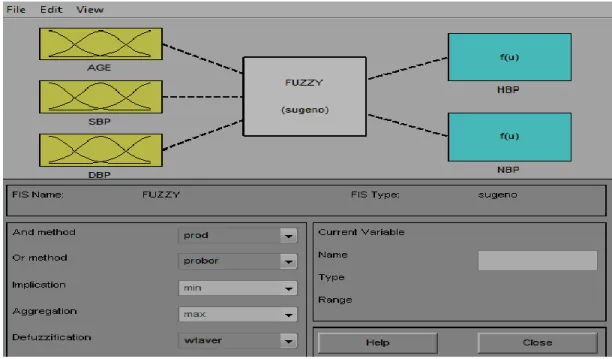
Figure 1: Hypertension Fuzzy Inference System

Figure 1 shows the Fuzzy Inference System (FIS) for hypertension showing the relationship between AGE, Systolic Blood Pressure (SBP) and Diastolic Blood Pressure (DBP) as fuzzified input variables and High Blood Pressure (HBP) and Normal Blood Pressure (NBP) as defuzzified output. These input variables are enhanced using the Fuzzy Sugeno system which produces a weighted average defuuzzifed output. The sugeno implication process utilises AND operator in returning the minimum antecedent and truncated consequent value. With the aggregation process in play, the middle of middle of maximum defuzzified is produced.

Figure 2: Fuzzy Hypertension AGE Membership Function

(6)

Figure 2 shows the fuzzy Generalized Bell Membership Function (GBMF) viewer portraying AGE as an input contributing to High Blood Pressure (HBP) and Normal Blood Pressure (NBP). The X-axis shows the varied input variables while the Y-axis shows the degree of membership functions. The membership function was tagged from dilation or contraction using the small square drag points on the membership function lines.

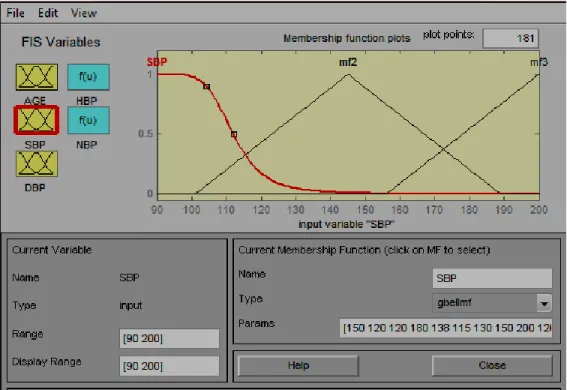
Figure 3: Fuzzy Hypertension SBP Membership Function

Figure 3 shows the fuzzy generalized membership function viewer portraying input (SBP) with associated membership function and output variables (HBP and NBP) generated with the Generalized Bell Membership Function (GBMF). The X-axis shows the range of input as (90 – 200) while the Y-axis shows the degree of membership function (0 - 1).

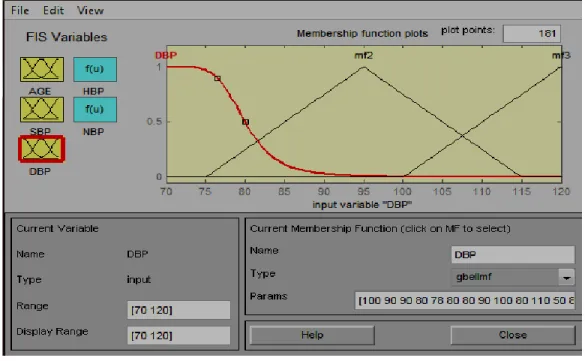
Figure 4 shows the fuzzy generalized membership function viewer portraying input (DBP) with

associated membership function and output variables (HBP and NBP) generated with the Generalized

Bell Membership Function (GBMF). The X-axis shows the range of input as (70 – 120) while the Y-axis

shows the degree of membership function (0 - 1).

(7)

Figure 4: Fuzzy Hypertension DBP Membership Function

Figure 5: Fuzzy-Hypertension Rule Viewer

Figure 5 depicts the rule viewer with each hypertension rule shown as a row number. The first three

column plots; AGE, SBP and DBP shows varied membership functions referenced by its antecedent,

or the if-then-part of each rule. The last two column plot represents the aggregate weighted

prediction output values for High Blood Pressure (HBP) or Normal Blood Pressure (NBP) with the

deffuzzified value captured as the marker within these column.

(8)

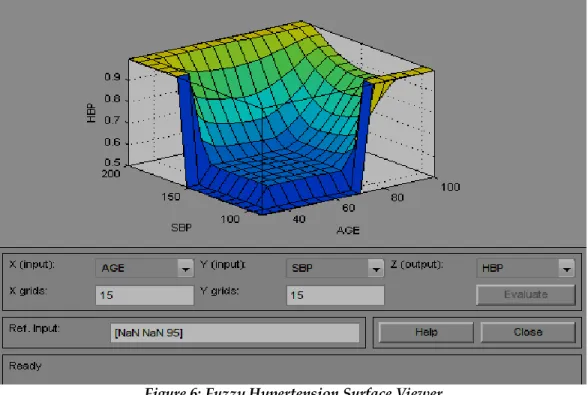
Figure 6: Fuzzy Hypertension Surface Viewer

Figure 6 depict a three-dimensional view of the Fuzzy hypertension variables: AGE (40 - 100), Systolic (100 – 150) and HBP (0.5 – 0.9). Each variable, X, Y or Z is given a grid plot line of 15 to enhance clarity. In this viewer AGE and Systolic are taken as input and the output is High Blood pressure (HBP).

4.0 Result: Simulation Analysis

The following finding and result were captured from the simulation Figures.

a. Figure 1: the input variables (AGE, SBP and DBP) accommodate overlapping membership function portrayed by the curve within each variable which perhaps could be impossible with the conventional classification.

b. Figure 2-4: The input variables (AGE, SBP and DBP) are fuzzified with the range of values streaming between 0 -1 as opposed to conventional classification with crisp values ( x > 0)

c. Figure 5: The prediction values accommodated with the fourth and fifth columns are adjusted based on fuzzy set values (0 - 1) and produces a defuzzifed output (0-1) which could be impossible with conventional approaches

d. Figure 6: This figure produces a three-dimensional view with the capability of identifying the

contributing input of two values to the final output, possibly difficult with conventional

approaches.

(9)

5.0 Conclusion

Hypertension has been identified as a complicated condition bearing largely on several illnesses.

This complication has been tenacious base on the traditional meaning of classifying hypertension with it bivariate boundaries not accommodating overlapping boundaries. This research paper has applied fuzzy logic as a mean for classifying hypertension utilising it rich components: membership function, fuzzy inference system, fuzzy rule with the aim of lowering this sharpness in classification boundaries while accommodating multivariate classification. MATLAB was used in portraying integral components simulation. This paper has addressed uncertainty and preciseness in hypertension classicisation.

References

Angelov P., Zhou X. (2008), Evolving Fuzzy-Rule-based Classifiers from Data Streams, IEEE Transactions on Fuzzy Systems, ISSN 1063-6706, special issue on Evolving Fuzzy Systems, December 2008, vol. 16, No6, pp.1462-1475.

Babuska R. (1998), Fuzzy Modeling for Control, Kluwer Academic Publishers, Boston, USA.

Carretero O. A, Oparil S; Oparil (2000), "Essential hypertension: Part I: definition and etiology", Circulation. 101 (3): 329–35. PMID 10645931.

Christos S. and Dimitros S. (2008) “Neural Network”, retrieved from http://www.docstoc.com/docs/15050/neural-networks.

Cordon O., Jesus M. J., Herrera F. (1999), “A proposal on reasoning methods in fuzzy rule-based Classification systems”, International Journal of Approximate Reasoning, 20 (1), 1999, Pp.22-45.

Dluhy R. G, Williams G. H (1998). "Endocrine hypertension". In Wilson JD, Foster DW, Kronenberg HM. Williams textbook of endocrinology (9th ed.). Philadelphia; Montreal: W.B. Saunders.

pp. 729–49. ISBN 0721661521.

Ehret G.B., Munroe P.B. Rice K. M. (2011), Genetic Variants in novel pathway influence blood pressure and cardiovascular disease risk., Nature 478 (7367): 103 – 09. PMC 3340926.

Giuseppe, Mancia; Fagard, R; Narkiewicz, K; Redon, J; Zanchetti, A; Bohm, M; Christiaens, T; Cifkova, R;

De Backer, G; Dominiczak, A; Galderisi, M; Grobbee, DE; Jaarsma, T; Kirchhof, P; Kjeldsen, SE; Laurent, S; Manolis, AJ; Nilsson, PM; Ruilope, LM; Schmieder, RE; Sirnes, PA; Sleight, P;

Viigimaa, M; Waeber, B; Zannad, F; Redon, J; Dominiczak, A; Narkiewicz, K; Nilsson, PM; et

al. (July 2013). "2013 ESH/ESC Guidelines for the management of arterial hypertension: The

(10)

Task Force for the management of arterial hypertension of the European Society of Hypertension (ESH) and of the European Society of Cardiology (ESC). European Heart Journal 34 (28): 2159-219. PIMD23771844.

Ishibuchi H., Nozaki K., Yamamoto N., Tanaka H. (1995), Selecting fuzzy if-then rules for Classification problems using genetic algorithms, IEEE Trans. on Fuzzy Systems, 3(3), 1995, Pp.260-270.

Kasabov N. K. (1998), “Foundations of Neural Networks, fuzzy systems, and knowledge engineering”, A Bradford Book, The MIT Press Cambridge, Massachusetts London, England. ISBN, 0-262- 11212-4.

Kato, N.; Loh, M.; Takeuchi, F.; Verweij, N.; Wang, X.; Zhang, W.; Kelly, T. N.; Saleheen, D.; Lehne, B.

(2015). "Trans-ancestry genome-wide association study identifies 12 genetic loci influencing blood pressure and implicates a role for DNA methylation". Nature Gentics 47 (11).

Kozanoğlu O., Özok, A.F., A fuzzy quality function deployment model for personnel selection problem under ergonomics considerations. Proceedings of 35th International Conference on Computers and Industrial Engineering, Pp. 19-22 June, Istanbul, Turkey Pp.1203-1208, 2005.

Kücü, H., Promethee sıralama yöntemi ile personel seçimi ve bir işletmede uygulanması, M.S. thesis, Department of Industrial Engineering, Gazi University, Ankara, Turkey, 2007.

Kuncheva L.I. (2000), Fuzzy Classifier Design, Springer-Verlag, Heidelberg,

Kuncheva L.I. (2003) "Fuzzy" vs "Non-fuzzy" in combining classifiers designed by boosting, IEEE Transactions on Fuzzy Systems, Vol. 11 Iss.6, 2003, Pp. 729-741.

Lackland D. T.; Weber M. A. (2015), “Global Burden of Cardiovascular Disease and Stroke: Hypertension at the care, The Canadian Journal of Cardiology 31 (5): 569 – 71. PMID.

Lifton R.P., Gharai A.G.; Geller, D.S. (2001), Molecular mechanism of human hypertension, Cell 104 (4):

545 – 56. PMID 11239411.doi:1016/S0092-8674 (01) 00241-0.

Mamdani E. H. (1977), “Application of fuzzy logic to approximate reasoning using linguistic synthesis”, IEEE Trans. Computers 26(12), Pp. 1182-1191.

Markus M. (2016), Hypertension: Causes, Symptoms and Treatments, retrieved online http://www.medicalnewstoday.com/articles/150109.php

Mayson S., Barrett R., The science and practice‟ of HRM in small firms, Science Direct Human Resource

Management Review, 16, 447–455, 2006.

(11)

Mendis, S.; Puska, P.; Norrving, B. (2011), Global atlas on cardiovascular disease prevention and control (PDF) Geneva: World Health Organization in collaboration with the World Heart Federation and the World Stroke Organization, Pp. 38. ISBN 9789241564373.

Nauck D., Klawonn F. and. Kruse R. (1997), Foundations on Neuro-Fuzzy Systems, Wiley, Chichester.

O'Brien, E.; Beevers, D. G.; Lip, G. Y. H. (2007), ABC of hypertension, London: BMJ Books, ISBN 1- 4051- 3061-X.

Poulter N.R. Prabhakaran D., Caulfield M. (2015), Hypertension, Lancet, 386 (9995): 801 – 12. PMID 25832858. Doi:10.1016.

Robert F. (2000), “Introduction to Neuro-Fuzzy Systems, Advances in Soft Computing Series”, Springer-Verlag, Berlin/Heildelberg, 289 page (ISBN3-7908-1256-0) and (MR1760972).

Roubos J., M. Setnes, J. Abony I (2003), Learning fuzzy classification rules from data, Information Sciences, 150, 2003, pp.77-93.

Rudolf K. (2008), Neuro-Fuzzy System, retrieved from www.surrey.ac.uk/computing/people

Sun C.T. and Jang J.S. (1993), “A Neuro-fuzzy classifier and its applications”, in: Proc. IEEE Int.

Conference on Neural Networks, San Francisco, pp.94–98.

Takagi T. and M. Sugeno (1885), “Fuzzy identification of systems and its application to modeling and control”, IEEE Trans. on Syst., Man & Cybernetics, 15, 1985, pp. 116-132.

Yager R.R. and Kacprzyk J, (1997), “The Ordered Weighted Averaging operators”. Theory and Applications, Kluwer Academic Publishers, USA,

Zadeh L.A. (1965), “Fuzzy sets. Information and Control”, Vol.8, pp.338-353.

Figure

Figure 1: Hypertension Fuzzy Inference System
Figure 2 shows the fuzzy Generalized Bell Membership Function (GBMF) viewer portraying AGE as an  input contributing to High Blood Pressure (HBP) and Normal Blood Pressure (NBP)
Figure 4: Fuzzy Hypertension DBP Membership Function
Figure 6: Fuzzy Hypertension Surface Viewer

References

Related documents

Ameliorating Effect of Gamma Irradiated Chicory Against Carbon Tetra-Chloride Induced Kidney And Testis Damage In

Twelve candidate CNBPs were identified from Arabi- dopsis leaf and callus extracts using an affinity pull- Table 4 Gene ontology biological process annotations of the

that biotic uptake of LMWON is largely driven by microbial demand for C rather than N, particularly in soils with high N supply, with large 13 C losses via mineralisation and other

On the individual side of things, I was able to reflect on a few personal influences derived from different cultures, which have influenced my understanding and experience of Thai

It is difficult to determine the cause of the adverse events to be indeed glycyrrhizin (which is extracted from Glycyrrhiza uralensis ) for the fol- lowing reasons: (1) no

Theme 1 was the actions that PHC professionals took to reduce maternal mortality; its central ideas were home visits, health education, active searches, consultations, referral