Int J Clin Exp Pathol 2013;6(12):2683-2696 www.ijcep.com /ISSN:1936-2625/IJCEP1308064
Original Article
Morphological and functional characterization of
non-alcoholic fatty liver disease induced by a
methionine-choline-deficient diet in C57BL/6 mice
Hiroko Itagaki1, Kazuhiko Shimizu1, Shunichi Morikawa1, Kenji Ogawa2, Taichi Ezaki1
1Department of Anatomy and Developmental Biology, Graduate School of Medicine, Tokyo Women’s Medical
University, Tokyo, Japan; 2Department of Surgery, Tokyo Women’s Medical University Medical Center East, Tokyo,
Japan
Received August 26, 2013; Accepted September 23, 2013; Epub November 15, 2013; Published December 1, 2013
Abstract:Background: Non-alcoholic fatty liver disease (NAFLD), including non-alcoholic steatohepatitis (NASH), appears to be increasingly common worldwide. Its histopathology and the effects of nutrition on liver function have not been fully determined. Aim: To elucidate the cellular mechanisms of NAFLD induced by a
methionine-choline-deficient (MCD) diet in mice. Particular focus was placed on the role of phagocytic cells. Methods: Male C57BL/6 mice were fed an MCD diet for 30 weeks. A recovery model was also established wherein a normal control diet was provided for 2 weeks after a period of 8, 16, or 30 weeks. Results: Mice fed the MCD diet for ≥2 weeks exhibited
severe steatohepatitis with elevated serum aspartate aminotransferase (AST) and alanine aminotransferase (ALT)
levels. Steatohepatitis was accompanied by the infiltration of CD68-positive macrophages (Kupffer cells). The sever
-ity of steatohepatitis increased in the first 16 weeks but was seen to lessen by week 30. Fibrosis began to develop
at 10 weeks and continued thereafter. Steatohepatitis and elevated serum hepatic enzyme concentrations returned
to normal levels after switching the diet back to the control within the first 16 weeks, but fibrosis and CD68-positive
macrophages remained. Conclusions: The histopathological changes and irreversible fibrosis seen in this model
were caused by prolonged feeding of an MCD diet. These results were accompanied by changes in the activity of CD68-positive cells with temporary elevation of CCL-2, MMP-13, and MMP-9 levels, all of which may trigger early
steatohepatitis and late fibrosis through phagocytosis-associated MMP induction.
Keywords: CD68 antigen, Kupffer cells, liver fibrosis, matrix metalloproteinase (MMP), mouse, non-alcoholic fatty
liver disease (NAFLD)
Introduction
Non-alcoholic fatty liver disease (NAFLD) is a
recently defined form of metabolic liver damage
that is found in patients who regularly consume alcohol, but in lower quantities than those at risk of liver injury due to excessive alcohol intake [1]. Pathological changes in the liver are characterized predominantly by macrovesicular steatosis, a symptom commonly associated with alcoholic liver diseases. In Western coun-tries 20-40% of adults may have NAFLD. Fatty liver disease used to be considered benign, but 30-40% of NAFLD patients also develop non-alcoholic steatohepatitis (NASH) and approxi-mately 5-8% develop cirrhosis after 5 years [2]. Generally, NAFLD is associated with a 15-20%
risk of progression to cirrhosis, which may fur-ther develop into hepatocellular carcinoma [1]. The major risk factor leading to NAFLD is over-nutrition. Conversion to a healthy diet is impor-tant in the treatment of early stage NAFLD. Therefore, it is necessary to diagnose NAFLD as
soon as possible. Hepatic fibrosis is an early
characteristic of the progression of NAFLD to cirrhosis. It was previously considered irrevers-ible, but recent studies suggest that improve-ment can occur through early treatimprove-ment and
diet modification [3].
shown that Kupffer cell activation contributes to the pathogenesis of NAFLD [4-6]. Admini- stration of a methionine-choline-deficient
(MC-D) diet to mice induces a rapid, persistent, and severe state of steatohepatitis [3, 7]. How- ever, the cellular and molecular mechanisms of the ensuing liver damage are unknown. Simi- larly, it is unclear whether the pathological changes associated with NAFLD are at all reversible.
In the present study, an NAFLD model compris-ing C57BL/6 mice that were fed an MCD diet was employed. The long-term effect of this diet was investigated, focusing particularly on liver function, histopathology, and the role of Kupffer cells. During the course of the MCD diet, a recovery model was also established by switch-ing mice to a normal control diet, to determine whether the effects could be reversed by a
change in eating habits. It was found that CD68-positive Kupffer cells may play key roles in the irreversible changes of NAFLD at relatively late disease stages.
Materials and methods
Animals and experimental de-sign
Nine-week-old pathogen-free ma- le C57BL/6 mice were purchased from SLC Japan (Shizuoka, Ja- pan). The mice were maintained
in air-filtered clean rooms and fed
[image:2.612.92.363.83.442.2]either a control diet or an MCD diet purchased from the Oriental Yeast Co., Ltd. (Tokyo, Japan). The procedures employed for the han-dling and care of the animals were approved by the Animal Experiment Committee, Tokyo Women’s Medical University, and conformed to the national guide-lines for animal usage in research. Mice were fed the MCD diet (group M) for 2, 4, 8, 16, or 30 weeks (n=5 mice per subgroup). A diet recovery model (group R) was established by switching the group M mice to the control diet for 2 weeks after administration of the MCD diet for 8, 16, or 30 weeks (n=5 mice per subgroup).
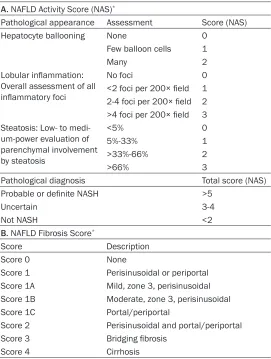
Table 1. Estimation of NAFLD A. NAFLD Activity Score (NAS)*
Pathological appearance Assessment Score (NAS)
Hepatocyte ballooning None 0
Few balloon cells 1
Many 2
Lobular inflammation:
Overall assessment of all
inflammatory foci
No foci 0
<2 foci per 200× field 1 2-4 foci per 200× field 2
>4 foci per 200× field 3 Steatosis: Low- to
medi-um-power evaluation of parenchymal involvement by steatosis <5% 0 5%-33% 1 >33%-66% 2 >66% 3
Pathological diagnosis Total score (NAS)
Probable or definite NASH >5
Uncertain 3-4
Not NASH <2
B. NAFLD Fibrosis Score*
Score Description
Score 0 None
Score 1 Perisinusoidal or periportal Score 1A Mild, zone 3, perisinusoidal Score 1B Moderate, zone 3, perisinusoidal Score 1C Portal/periportal
Score 2 Perisinusoidal and portal/periportal Score 3 Bridging fibrosis
Score 4 Cirrhosis
*According to the Nonalcoholic Steatohepatitis Clinical Research Network (Kleiner et al. 2005).
During the experiment, body weight was mea-sured three times weekly.
General tissue preparation
Mice were anesthetized by intramuscular injec-tion of ketamine (87 mg/kg) and xylazine (13 mg/kg). The thorax was opened and the aorta was perfused from the left ventricle with 4% paraformaldehyde (PFA) in phosphate-buffered saline (PBS, pH 7.4) for 10 min at 120 mmHg.
Blood and fixative were drained by incising the
right atrium. After perfusion, the liver was removed, weighed, and cut into small pieces. Prior to cryosectioning, tissue samples were
postfixed in 4% PFA for 2 h, rinsed in PBS for 1 h, and finally immersed in PBS containing a gra-ded series of sucrose concentrations (≤30%).
snap-Pathomechanism of MCD diet-induced NAFLD
frozen in liquid nitrogen. The remaining
sam-ples were post-fixed in 4% PFA overnight. The
following day they were rinsed under running tap water for 1 h, dehydrated in a series of eth-anol solutions (70, 80, 90, 95, and 100%) for 45 min per solution and cleared twice in xylene for 45 min. Finally, all tissue samples were
embedded in paraffin for sectioning.
Biochemical analyses of blood samples
After anesthetizing the animals, but prior to
sacrificing, blood was collected from the left
[image:3.612.91.521.70.379.2]ventricle and allowed to coagulate overnight at 4°C. Serum samples were collected and centri-fuged at 6000 rpm for 10 min to remove blood cells. Serum levels of aspartate aminotransfer-Figure 1. Changes in body weight and liver weight. A: Direct comparison of changes in body weight (circles) and liver weight (triangles) between the control diet (open marks) and MCD diet (closed marks) group mice. Effects of diet reverse at 8, 16, and 30 weeks on body weight (B) and liver weight (C). Control diet (control group: open columns), MCD diet (group M: black column), and reversed diet (group R: gray columns). **P<0.01, ND (not determined).
[image:3.612.89.526.446.559.2]ase (AST) and alanine aminotransferase (ALT) were then measured using a SPOTCHEM SP- 4420 biochemistry analyzer (Arkray, Inc., Kyoto, Japan).
Histology
For ordinary hematoxylin and eosin (H&E)
stain-ing and Azan stainstain-ing, 3-μm paraffin sections were made and de-paraffinized in xylene with
three changes of 10 min each. Sections were then dehydrated in a descending series of etha-nol/PBS concentrations for 5 min per solution, and rinsed in PBS for an additional 10 min. For
other histological analyses, 14-μm cryosec -tions were prepared. Some cryosec-tions were stained with Oil Red O to evaluate hepatic fat deposits [8].
Immunohistochemistry
To minimize non-specific background staining, 14-μm-thick cryosections were rehydrated in
PBS and treated for 20 min at room tempera-ture (RT) with a 1% blocking solution (Block Ace; Dainippon Sumitomo Seiyaku, Tokyo,
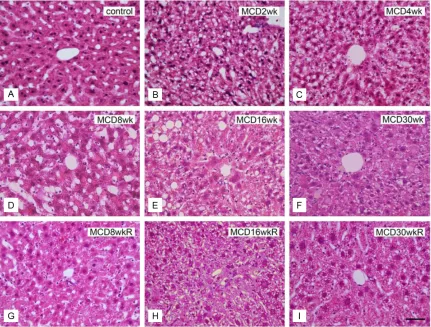
[image:4.612.91.522.72.399.2]Japan). The samples were first incubated over -night at 4°C with either anti-CD68 (Macrosialin; rat monoclonal antibody, 1:100 dilution; AbD Serotec, Oxford, UK) or anti-proliferating cell nuclear antigen (PCNA; rabbit polyclonal anti-body, 1:100 dilution; Abcam PLC., Cambridge UK). The ideal concentrations of these primary antibodies were determined in advance. The antibodies were diluted in PBS containing 1% bovine serum albumin (BSA; Jackson Immuno- Research Laboratories Inc., West Grove, PA, USA). After several washes in PBS, sections were incubated for 1 h at RT with biotin-SP-con-jugated goat anti-rat immunoglobulin G (IgG) or goat anti-rabbit IgG (dilution, 1:200; Jackson ImmunoResearch Laboratories Inc.). The sec-tions were rinsed in PBS several times and then incubated for 1 h at RT in streptavidin-conjugat-ed horseradish peroxidase (HRP; dilution, Figure 3. H&E staining of liver sections in groups M and R. A: Normal control liver section. B-F: Liver sections of the MCD diet group (group M) fed for 2 weeks (B), 4 weeks (C), 8 weeks (D), 16 weeks (E), and 30 weeks (F). G-I: Liver
Pathomechanism of MCD diet-induced NAFLD
1:200; Jackson ImmunoResearch Laboratories, Inc.). The HRP reaction was then developed at RT for 5-10 min in a solution containing 10 mg
3,3’-diaminobenzidine tetrahydrochloride (Doji-
ndo Laboratories, Kumamoto, Japan) and 10 μl
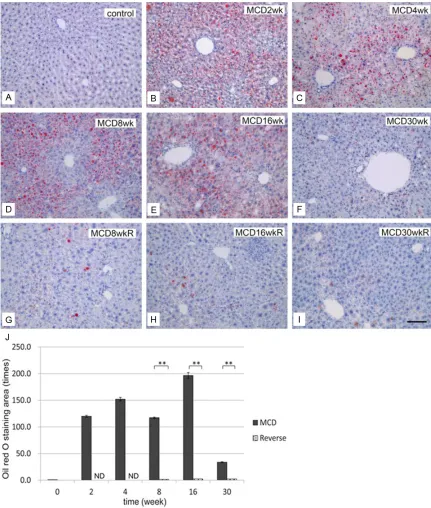
[image:5.612.90.521.70.578.2]of 30% H2O2 in 50 ml PBS. Sections were then Figure 4. Development of hepatic steatosis by the MCD diet and effect of diet reverse. Oil Red O staining of the liver in controls (A), group M (B: 2 weeks, C: 4 weeks, D: 8 weeks, E: 16 weeks, and F: 30 weeks), and group R (G: 8 weeks, H: 16 weeks, and I: 30 weeks). Note that fat deposits developed from 2 to 16 weeks, but deposit levels were
reduced at 30 weeks in group M. In group R (G-I), the fat deposition areas decreased remarkably. Bar=10 μm in
all panels. J: Quantification of fat deposition in the liver. Areas of lipid deposition in liver sections were identified by
Oil Red O staining and expressed as multiple numbers; the control level was set to 1, as described in the Materials
and Methods. Note that the Oil Red O-stained areas increased significantly from 2 weeks in group M, but decreased
rinsed with distilled water to stop the reaction.
Next they were fixed for 10 min at RT with 1%
glutaraldehyde in PBS, rinsed once more with distilled water, and counterstained with 1% hematoxylin. All stained sections were observed under an Olympus BX-51 light microscope (Olympus, Tokyo, Japan) and the resulting imag-es were procimag-essed using Photoshop software (Adobe, Mountain View, CA, USA).
Ultrastructural analyses of semi-thin sections
After perfusion with 4% PFA in PBS, livers were removed and cut into small blocks. These
blocks were post-fixed in 2.5% glutaraldehyde
for a minimum of 2 h at RT, treated with 1% OsO4, dehydrated in an ascending series of eth-anol/propylene oxide concentrations, and then
embedded in epoxy resin. Sections 500 μm in
thickness were then prepared and stained with toluidine blue.
Immunohistological staining and preparation of semi-thin sections for CD68-positive cells Cryosections of 14-μm thickness were immu -nohistochemically stained as described above.
After HRP staining, the sections were fixed in
2.5% glutaraldehyde at RT for 10 min, followed by 1% osmium tetroxide for 1 h, and then dehy-drated in an ascending series of ethanol con-centrations. These sections were next embed-ded in a gelatin capsule containing epoxy resin and incubated for 48 h at 64°C. Following this incubation step, the embedded sections were
then further separated into
addition-al 1-μm-thick samples, stained with
toluidine blue, and observed under an Olympus BX-51 light microscope.
Evaluation of the proliferative ca-pacity of liver cells and enumera-tion of CD68-positive cells
PCNA- and CD68-positive cells were
counted in 10 randomly selected
fie-lds while viewing each slide at ×200
magnification. The average cell num -ber in each group was calculated.
Histopathological evaluation of he-patic fat deposition and fibrosis
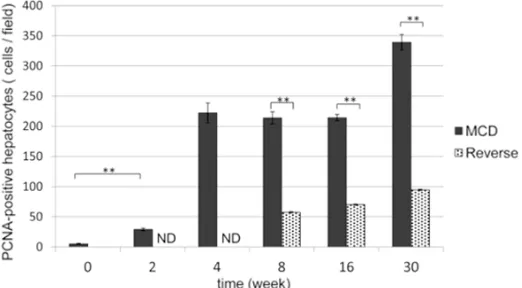
[image:6.612.91.352.73.217.2]Using a BZ-Analyzer (Keyence, Osa- ka, Japan), hepatic lesions with fat deposits were stained with Oil Red O Figure 5. Quantification of PCNA-positive cells in the liver. The
aver-age number of PCNA-positive cells was counted in group M (black columns) and group R (gray columns) liver sections. The number of
PCNA-positive cells increased significantly from 2 weeks in group M. In group R, they decreased significantly after changing the diet back
to control. **P<0.01, ND (not determined).
and analyzed at a magnification of ×200 in 10 randomly selected fields. The ratio of stained areas to unstained areas per field was estimat -ed in each group and normaliz-ed to control liver sections. Hepatic pathology was evaluated according to the NAFLD activity score (NAS;
Table 1A) and the NAFLD fibrosis score (Table
1B) [9, 10].
RNA isolation and real-time polymerase chain reaction (PCR)
Total RNA from a 50-mg sample of liver tissue was isolated using Direct-zol RNA MiniPrep (Zymo Research Co., CA., USA) with a TRI-Reagent kit (Zymo Research Co.), and mea-sured using a Biowave II spectrophotometer (Biochrom Ltd., Cambridge, UK). Reverse tran-scription was performed using the SuperScript® VILOTM cDNA Synthesis Kit (Invitrogen Inc., CA,
USA). Total RNA (1 μg) from each sample was
used to synthesize cDNA. Gene expression was measured through real-time PCR using the TaqMan® Fast Universal PCR Master Mix (App- lied Biosystems, Carlsbad, CA, USA). The
per-Pathomechanism of MCD diet-induced NAFLD
formed using the Step One Plus™ Real Time PCR System for an initial 20 s at 95°C, followed by 40 cycles of denaturation at 95°C for 3 s,
and finally annealing and extension at 60°C for
30 s. The delta-delta comparative threshold
(ΔΔCT) method was used to quantify fold chang-es between the samplchang-es [11].
Statistical analyses
All data were expressed as means±standard deviations (SD). Statistical analyses were per-formed using Student’s t-test, wherein P<0.05
[image:7.612.92.522.72.399.2]was considered significant and P<0.01 was considered highly significant.
Figure 6. Histological evaluation of hepatic fibrosis by Azan staining. A: Control liver section. Sections of MCD-diet-fed livers from group M after 2 weeks (B), 4 weeks (C), 8 weeks (D), 16 weeks (E), and 30 weeks (F). Liver sections
of the reversed diet group R at 8 weeks (G), 16 weeks (H), and 30 weeks (I). Note that fibrosis typically progressed to stage 3 in portal areas and bridging areas after 16 weeks in groups M and R. Bar=10 μm in all panels.
[image:7.612.94.525.468.591.2]Results
Changes in body and liver weight
Compared with mice fed the control diet for identical durations, mice fed the MCD diet
[image:8.612.92.523.71.557.2](group M) lost >40% of body weight and >60% of liver weight after 30 weeks (Figure 1A). Body weight in those receiving the MCD diet recov-ered to pre-treatment values 2 weeks after switching to the control diet. In addition, 2 weeks after switching to the control diet in all Figure 8. Immunohistochemical identification of CD68-positive cells in liver sections. A: Normal control liver section. Liver sections in group M at 2 weeks (B), 4 weeks (C), 8 weeks (D), 16 weeks (E), and 30 weeks (F). Liver sections in group R at 8 weeks (G), 16 weeks (H), and 30 weeks (I). CD68-positive cells became swollen at 16 weeks in groups
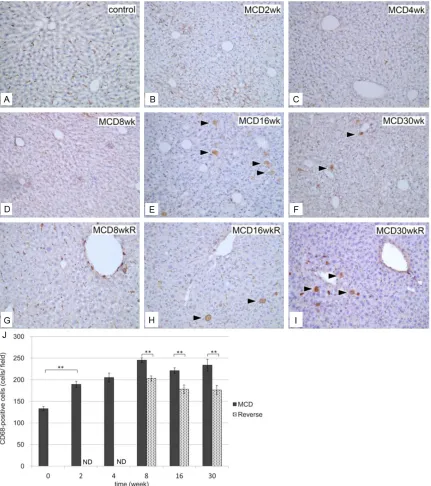
M and R. Bar=10 μm in all panels. J: Quantification of CD68-positive cells in the liver. The number of CD68-positive cells per view field in liver sections was compared between groups M (black columns) and R (gray columns). The number of CD68-positive cells increased significantly in group M from 2 weeks and continued thereafter. **P<0.01,
Pathomechanism of MCD diet-induced NAFLD
subgroups, both body and liver weights in group
R significantly recovered when compared to
those in group M. This indicates that both body and liver weights were nearly restored after 2 weeks of being fed the control diet (Figure 1B
and 1C).
Functional changes in the liver induced by the MCD diet and diet switching
In group M, serum AST and ALT levels increased progressively from weeks 2 to 16, but decr-
eased significantly by 30 weeks. In contrast,
both enzyme levels returned to their normal lev-els in group R (Figure 2A and 2B).
Hepatic histological changes induced by the MCD diet and diet switching
To evaluate structural changes, liver sections were stained with H&E (Figure 3) or Oil Red O (Figure 4A-I). Severe degeneration associated with fatty deposits was observed,
accompa-nied by inflammatory cell infiltration in all liver
samples from group M (Figure 3B-F). Steat-
ohepatitis and inflammatory cell infiltration in
group M started as early as 2 weeks and became prominent by 16 weeks (Figure 3B-E). Oil Red O staining of the livers in group M revealed fat deposition in hepatocytes after 2
weeks, increasing in concentration until 16 weeks (Figure 4B-E), but decreasing by week 30 (Figure 4F). In group R, the areas of fat
deposition decreased significantly (Figure 4G-I) after 2 weeks of switching to a control diet. The increased fat accumulation during the initial 2 to 16 weeks period in group M, and the relative decrease in fat levels in group R, were both
highly significant (Figure 4J).
Proliferative capacity of liver cells by PCNA im-munostaining
In group M the number of PCNA-positive hepa-tocytes increased progressively from 2 to 30 weeks. In contrast, the number of PCNA-posi-
tive hepatocytes was significantly lower at all
stages in group R (Figure 5).
Histological evaluation of NAS and NAFLD fi-brosis score
Mice fed the control diet for 30 weeks showed
statistically non-significant levels of fibrosis
throughout the course of this study (Figure 6A). In group M the degree of NAS was scored at 7 as early as 2 weeks after initiation of the MCD diet (Figure 7A). The NAS score increased to 8 during weeks 10-16, before decreasing to 6 at
30 weeks, similar to the findings of fat deposi -Figure 9.Ultrastructures at the semi-thin section level. A: Normal control liver section. Liver sections in group M at 2 weeks (B), 8 weeks (C), 16 weeks (D), and 30 weeks (E). Swollen cells appeared among hepatocytes from 16 weeks in group M (D and E). F: Immunohistochemical identification of swollen cells with a CD68 marker in semi-thin sections. A liver section in group M at 16 weeks. A typical swollen CD68-positive cell is seen. Bar=1 μm applies to
tion presented in Figure 4F and 4J. In contrast,
NAS scores improved to 5 in group R, signifi -cantly lower than the group M scores (Figure
7A). In group M, the NAFLD fibrosis score was classified as stage 1 at 10 weeks of receiving
the MCD diet (Figure 7B), and was localized mainly in periportal areas. After 16 weeks, the
fibrosis level progressed to stage 3 in the portal
and bridging areas and remained there after 30 weeks (Figures 6E, 6F and 7B). In contrast,
NAFLD fibrosis score reached only stage 2 after
16 weeks in group R (Figure 6H). However, at
30 weeks and after, stage 3 fibrosis was
observed in the bridging areas of group R (Figure 6I), with no significant difference when
compared to group M scores (Figure 7B). This
indicates that the levels of fibrosis at 30 weeks
were irreversible.
Immunohistochemical identification of CD68-positive cells
To investigate the roles of macrophage popula-tions in the pathological changes associated with NAFLD, both immunohistochemical and functional analyses of macrophages were per- formed.
A significant increase in the number of
CD68-positive cells in group M was observed as early as 2 weeks (Figure 8). Furthermore, a small but substantial number of swollen CD68-positive
cells were observed in the liver at 16 weeks (Figure 8E and 8F). In group R, the numbers of
CD68-positive cells were significantly less than
those in group M (Figure 8G-J), but swollen CD68-positive cells remained evident after 16 and 30 weeks (Figure 8H and 8I).
Liver ultrastructure in semi-thin sections
After 2 weeks large fat deposits were observed in the hepatocytes recovered from group M (Figure 9B and 9C). After 16 weeks, the sinu-soids became indistinct and swollen cells appeared among the hepatocytes (Figure 9D
and 9E). Swollen cells were also observed after 16 weeks in group R. CD68 immunostaining in semi-thin sections revealed that the swollen cells were CD68-positive and contained dead cell fragments (Figure 9F). Some became abn- ormally large due to cell aggregation.
Inflammatory activity of hepatic macrophages assessed by real-time PCR
To clarify the functional roles of the CD68-positive cells, the mRNA expression of CCL-2, MMP-13, and MMP-9 were determined as typi-cal functional markers of hepatic macrophages (Figure 10). CCL-2 mRNA and MMP-13 mRNA expression was highest after 8 weeks but
Pathomechanism of MCD diet-induced NAFLD
and 10B). In contrast, MMP-9 mRNA expres-sion was seen to increase at 16 weeks, but returned to almost normal levels by 30 weeks
(Figure 10C). In group R, CCL-2 and MMP-13
mRNA expression decreased significantly after
8 weeks, but increased slightly after 16 weeks (Figure 10A and 10B). In contrast, MMP-9 mRNA expression decreased until week 16, but then showed a prominent increase at 30 weeks (Figure 10C).
Discussion
The aim of this study was to determine the roles played by macrophages in causing liver
damage in NAFLD. This analysis was performed using one of the most common dietary NAFLD animal models-mice fed an MCD diet [7, 12]. It
is believed that dietary choline deficiency pro
-motes steatohepatitis [13]. Mice fed a diet defi -cient in both choline and methionine develops
hepatic inflammation and fibrosis in addition to
simple steatohepatitis. Although our NAFLD model lacks obesity, the major characteristic of human NASH, the observed association bet- ween Kupffer cell activation and liver
patholo-gy, such as steatohepatitis and fibrosis, mirrors
[image:11.612.93.522.73.502.2]longed MCD diet. The possibility of a reversal effect was also addressed by instituting a rela-tively brief, 2-week switch to a control diet.
Several major histopathological findings were identified. First, the typical signs of NAFLD
started to appear after 2 weeks of feeding the mice the MCD diet. Serum AST and ALT levels increased along with fat deposition from weeks 2 to 16, but these changes were largely reversed (to near pre-treatment baseline) by
week 30. Second, hepatic fibrosis was first
observed after 10 weeks and lasted for the
duration of the experiment. This fibrosis
appeared to be irreversible at 16 weeks, even after switching to the control diet. Serum AST
and ALT levels did not appear to be significantly
associated with the severity of hepatic cirrho-sis. This is consistent with reports of studies on
humans [15]. At 30 weeks, fibrosis was more
prominent than steatohepatitis in mice being fed the MCD diet. Third, the number of
PCNA-positive hepatocytes increased significantly
after 2 weeks in group M, whereas liver weight showed a marked decrease. Conversely, the number of PCNA-positive hepatocytes was
sig-nificantly lower in all R subgroups, and the liver
weights were almost identical to those of the control group mice. Therefore, the number of PCNA-positive hepatocytes, rather than their active proliferation, may be a more accurate marker of hepatocyte injury [16]. Finally, the number of CD68-positive macrophages in the liver increased as early as 2 weeks, in accor-dance with the onset of changes in cellular liver composition. Furthermore, swollen and fused phagocytes became prominent after 16 weeks. Therefore, active steatohepatitis progressed at earlier stages (<16 weeks), and then decreased,
whereas irreversible fibrosis became promi
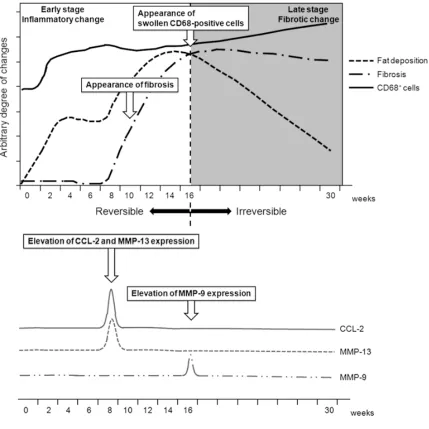
-nent at late stages (≥16 weeks). These histo -pathological changes are summarized chrono-logically in Figure 11.
Regarding the cellular mechanisms responsible for MCD diet-induced NAFLD, our results sug-gest that CD68-positive Kupffer cells play a key role in the progression and eventual irreversibil-ity of liver damage in this mouse model (Figure 11). Activated Kupffer cells may cause injury to hepatocytes and other cells by releasing a vari-ety of biologically active mediators, including cytokines and chemokines [17]. The CD68 pro-tein is located in lysosomes and can be detect-ed in all Kupffer cells regardless of their
loca-tion in the liver [18]. Consequently, Kupffer cell concentrations have been reported to correlate with pathological severity in human patients with NAFLD [19]. In the murine NAFLD model, CD68-positive cells appeared after 2 weeks in group M and reached peak numbers at week 8, whereas they decreased in number in group R. Thus, an early change to a normal diet may
pro-mote the recovery of liver inflammation.
However, after 16 weeks on the MCD diet, CD68-positive cells eventually became swollen or began to fuse, as reported by Lefkowitch et al., indicating an increase in their phagocytic activity. This phenomenon also correlates with
the irreversible fibrosis observed after 16
weeks on the MCD diet (Figure 11). The appear-ance of swollen CD68-positive cells after 16 weeks may be one of the typical signs of the “Kupffer cell ruining phenomenon” caused by excessive phagocytosis in the late stages of steatohepatitis [4].
In addition, real-time PCR analyses revealed that the expression of several proteins in CD68-positive cells may mediate the pathological responses seen in animals fed the MCD diet. CCL-2, or monocyte chemoattractant protein-1, is the main ligand of CC chemokine receptor 2
[20] and primarily controls the infiltration of
blood monocytes into the liver [21]. Reports indicate that within the liver, Kupffer cells are the predominant producers of MMP-9, which is associated with their activation [22]. MMP-13 is also produced by Kupffer cells to hydrolyze the extracellular matrix [22] and aid in
eliminat-ing fibrosis [22, 23].
In this model, both CCL-2 and MMP-13 mRNA expression peaked at 8 weeks but decreased
significantly thereafter. In contrast, MMP-9 mRNA expression increased significantly after
16 weeks in animals being fed the MCD diet. Therefore, it is suggested that as steatohepati-tis progressed during the early stage of the MCD diet (until 8 weeks), CCL-2 expression resulted in an increase of CD68-positive cells. These cells would have been activated to
inhib-it fibrosis by producing MMP-13. As feeding of
the MCD diet became prolonged, Kupffer cells seemed to decrease MMP-13 expression,
lead-ing to a characteristic fibrogenic liver at late stages (≥16 weeks). The appearance of swollen
Pathomechanism of MCD diet-induced NAFLD
so does the stress placed on the macrophage populations that maintain healthy liver function [6]. Hepatocytes and other non-parenchymal cells may also be candidate producers of MMPs, including MMP-13 [24]. Further studies using other functional markers are needed to test these possibilities.
In conclusion, an MCD diet administered to CD57BL/6 mice for <16 weeks resulted in severe but reversible steatohepatitis, whereas
an MDC diet lasting ≥16 weeks induced irre
-versible liver fibrosis, even after restoration of
choline and methionine to the diet. Kupffer cells may play a key role in both the early stag-es of steatohepatitis and the late irreversible
fibrosis resulting from phagocytosis-associated
MMP induction. Controlling these phagocytic activities during the various stages of NAFLD may be crucial in effectual treatments for
ste-atohepatitis and hepatic fibrosis.
Acknowledgements
Thanks are given to Dr. S. Kitahara, Dr. S. Kikuta-Miyamoto, Ms. Y. Yamazaki, Ms. K. Nakada, Ms. H. Sagawa, and Ms. K. Motomaru (Department of Anatomy and Developmental Biology, Graduate School of Medicine, TWMU) for their support and technical assistance. This work was supported in part by the Global COE program in TWMU, the Multidisciplinary Education and Research Center for Regenerative Medicine (MERCREM), and the Ministry of Education, Culture, Sports Science, and Technology (MEXT), Japan.
Address correspondence to: Dr. Taichi Ezaki, Depar- tment of Anatomy and Developmental Biology, Gra- duate School of Medicine, Tokyo Women’s Medical University, 8-1 Kawada-cho, Shinjuku-ku, Tokyo 162-8666, Japan. Tel: 5269-7407; Fax: 81-3-5269-7407; E-mail: [email protected]
References
[1] Sanyal AJ. NASH: A global health problem. Hep-atol Res 2011; 41: 670-674.
[2] Krawczyk M, Bonfrate L and Portincasa P. Non-alcoholic fatty liver disease. Best Pract Res Clin Gastroenterol 2010; 24: 695-708. [3] Mu YP, Ogawa T and Kawada N. Reversibility of
fibrosis, inflammation, and endoplasmic retic -ulum stress in the liver of rats fed a
methio-nine-choline-deficient diet. Lab Invest 2010;
90: 245-256.
[4] Lefkowitch JH, Haythe JH and Regent N. Kupffer cell aggregation and perivenular distri-bution in steatohepatitis. Mod Pathol 2002; 15: 699-704.
[5] Baffy G. Kupffer cells in non-alcoholic fatty liv-er disease: the emliv-erging view. J Hepatol 2009; 51: 212-223.
[6] Maina V, Sutti S, Locatelli I, Vidali M, Mombello C, Bozzola C and Albano E. Bias in macrophage
activation pattern influences non-alcoholic ste -atohepatitis (NASH) in mice. Clin Sci (Lond) 2012; 122: 545-553.
[7] Oz HS, Chen TS and Neuman M. Methionine
deficiency and hepatic injury in a dietary ste -atohepatitis model. Dig Dis Sci 2008; 53: 767-776.
[8] Kawashima T. Oil red O stain. Medical Technol-ogy. Tokyo: ISHIYAKU Publishers, Inc., 1999; pp: 45-46.
[9] Kleiner DE, Brunt EM, Van Natta M, Behling C, Contos MJ, Cummings OW, Ferrell LD, Liu YC, Torbenson MS, Unalp-Arida A, Yeh M, Mc-Cullough AJ, Sanyal AJ; Nonalcoholic Steato-hepatitis Clinical Research Network. Design and validation of a histological scoring system for nonalcoholic fatty liver disease. Hepatology 2005; 41: 1313-1321.
[10] Brunt EM, Kleiner DE, Wilson LA, Belt P, Neuschwander-Tetri BA; NASH Clinical Re-search Network (CRN). Nonalcoholic fatty liver disease (NAFLD) activity score and the histo-pathologic diagnosis in NAFLD: distinct clinico-pathologic meanings. Hepatology 2011; 53: 810-820.
[11] Livak KJ and Schmittgen TD. Analysis of rela-tive gene expression data using real-time quantitative PCR and the 2(-Delta Delta C(T)) Method. Methods 2001; 25: 402-408. [12] McCuskey RS, Ito Y, Robertson GR, McCuskey
MK, Perry M and Farrell GC. Hepatic microvas-cular dysfunction during evolution of dietary steatohepatitis in mice. Hepatology 2004; 40: 386-393.
[13] Anstee QM and Goldin RD. Mouse models in non-alcoholic fatty liver disease and steato-hepatitis research. Int J Exp Pathol 2006; 87: 1-16.
[14] Tsujimoto T, Kawaratani H, Kitazawa T, Hirai T, Ohishi H, Kitade M, Yoshiji H, Uemura M and Fukui H. Decreased phagocytic activity of Kupffer cells in a rat nonalcoholic steatohepa-titis model. World J Gastroenterol 2008; 14: 6036-6043.
[15] Khosravi S, Alavian SM, Zare A, Daryani NE, Fereshtehnejad SM, Keramati MR, Abdol-lahzade S and Taba Taba Vakili S. Non-alcohol-ic fatty liver disease and correlation of serum alanin aminotransferase level with
[16] Karlmark KR, Weiskirchen R, Zimmermann HW, Gassler N, Ginhoux F, Weber C, Merad M, Luedde T, Trautwein C and Tacke F. Hepatic
re-cruitment of the inflammatory Gr1+ monocyte subset upon liver injury promotes hepatic fibro -sis. Hepatology 2009; 50: 261-274.
[17] Diehl AM. Nonalcoholic steatosis and steato-hepatitis IV. Nonalcoholic fatty liver disease abnormalities in macrophage function and cy-tokines. Am J Physiol Gastrointest Liver Physiol 2002; 282: G1-5.
[18] Armbrust TS, Chitnis PR and Guikema JA. Orga-nization of photosystem I polypeptides exam-ined by chemical cross-linking. Plant Physiol 1996; 111: 1307-1312.
[19] Park JW, Jeong G, Kim SJ, Kim MK and Park
SM. Predictors reflecting the pathological se -verity of non-alcoholic fatty liver disease: com-prehensive study of clinical and
immunohisto-chemical findings in younger Asian patients. J
Gastroenterol Hepatol 2007; 22: 491-497. [20] Zhao J, Zhou G, Li M, Li W, Lü J, Xiong L, Liang
L, Zhao Y, Xu D and Yu J. A novel non-alcoholic steatohepatitis animal model featured with
in-sulin resistance, hepatic inflammation and fi -brosis. Scand J Gastroenterol 2010; 45: 1360-1371.
[21] Baeck C, Wehr A, Karlmark KR, Heymann F, Vu-cur M, Gassler N, Huss S, Klussmann S, Eul-berg D, Luedde T, Trautwein C and Tacke F. Pharmacological inhibition of the chemokine CCL2 (MCP-1) diminishes liver macrophage
in-filtration and steatohepatitis in chronic hepatic
injury. Gut 2012; 61: 416-426.
[22] Sakaida I, Hironaka K, Terai S and Okita K. Gadolinium chloride reverses
dimethylnitrosa-mine (DMN)-induced rat liver fibrosis with in -creased matrix metalloproteinases (MMPs) of Kupffer cells. Life Sci 2003; 72: 943-959. [23] Hironaka K, Sakaida I, Matsumura Y, Kaino S,
Miyamoto K and Okita K. Enhanced interstitial collagenase (matrix metalloproteinase-13) pr- oduction of Kupffer cell by gadolinium chloride
prevents pig serum-induced rat liver fibrosis.
Biochem Biophys Res Commun 2000; 267: 290-295.
[24] Uchinami H, Seki E, Brenner DA and D’Armiento J. Loss of MMP 13 attenuates murine hepatic