EFFECT OF SELF-CURING AGENTS ON THE DIFFERENT PROPERTIES OF CEMENT AND MORTAR
*
,1Awham M. Hameed
1
Applied Sciences Department, University
2
Building and Construction Engineering Department, University
ARTICLE INFO ABSTRACT
The effect of Polyethylene glycol
ordinary cement and mortar, such as setting time, flow
been studied by adding 1,3,5,7wt% additive of PEG400 and (PEG/PAA) by weight of cement. Flexural strength has been determined using center point bending system. Bulk density and water absorption of resulting products was tested.
cement and the other specimens from the mixing of fly ash by conventional method (water based
Polyethylene glycol alone and the different weight ratios (1,3,5,
under work has positive effect on the workability and strength of the mortar specimens. Mortar specimens cured by self
found that the performance of self developed in this study indicates that the self water is difficult. However, between the t better mechanical properties than the water
Copyright©2017, Awham M. Hameed.This is an open access article distributed under the Creative Commons Att use, distribution, and reproduction in any medium, provided the original work is properly cited.
INTRODUCTION
Concrete is a composite material that comprises of cement, aggregate, and water. It has been generally utilized for infrastructure construction, including pavements built on soil foundations and overlays paved on bridges to support vehicle loading. Under the effects of repeated vehicle loading, temperature cycling, material shrinkage, and chemical reaction, concrete structures may be experienced with cracking and interface debonding that shorten their service life and quality (Zengzhi, 2008). Polymer-modified cement materials have been utilized commercially in Portland cement mortars and concretes for more than 20 years, and yet they are still considered as relatively new in the construction industry. Concrete polymer composites are environment conscious and confirm to concerns of saving of natural resources, the longevity of infrastructures and environmental protection. Concrete has high compressive strength but relatively weak in tension and adhesion, and its porosity can lead to physical and chemical deterioration, while polymers are weaker in compression but have higher tensile strength, and prov
*Corresponding author: Awham M. Hameed,
Applied Sciences Department, Universityof Technology, Baghdad, Iraq.
ISSN: 0975-833X
Article History:
Received 30th April, 2017
Received in revised form 11th May, 2017
Accepted 15th June, 2017
Published online 31st July, 2017
Citation: Awham M. Hameed, Rasha R. Rawdhan and ShakirA. Al
and mortar”, International Journal of Current Research
Available online at http://www.journal
Key words:
Self-curing, Mortar,
Polyethylene glycol, Polyacrylamide, Polymer blend, Strength.
RESEARCH ARTICLE
CURING AGENTS ON THE DIFFERENT PROPERTIES OF CEMENT AND MORTAR
Awham M. Hameed,
2Rasha R. Rawdhan and
2Shakir A. Al-Mishhadani
Applied Sciences Department, University of Technology, Baghdad, Iraq
Building and Construction Engineering Department, University of Technology, Baghdad, Iraq
ABSTRACT
The effect of Polyethylene glycol (PEG) and Polyacrylamide (PAA) addition, on the properties of the ordinary cement and mortar, such as setting time, flow-ability, compressive, and tensile strength has been studied by adding 1,3,5,7wt% additive of PEG400 and (PEG/PAA) by weight of cement. Flexural strength has been determined using center point bending system. Bulk density and water absorption of resulting products was tested. The plain mortar specimens were prepared from Portland cement and the other specimens from the mixing of fly ash with cement together, which were cured by conventional method (water based-curing). Self-curing mortar was performed by adding Polyethylene glycol alone and the binary polymer blend (Polyethylene glycol/ polyacrylamide) with different weight ratios (1,3,5,7)% by weight of cement. Results indicate that the self
under work has positive effect on the workability and strength of the mortar specimens. Mortar specimens cured by self-curing method exhibited higher efficiency in decreasing bulk
found that the performance of self-curing is better than that of water
developed in this study indicates that the self-curing could be utilized in situations where curing with water is difficult. However, between the two investigated curing methods, self
better mechanical properties than the water-based curing mortar.
is an open access article distributed under the Creative Commons Attribution License, which use, distribution, and reproduction in any medium, provided the original work is properly cited.
Concrete is a composite material that comprises of cement, generally utilized for infrastructure construction, including pavements built on soil foundations and overlays paved on bridges to support vehicle loading. Under the effects of repeated vehicle loading, temperature cycling, material shrinkage, and chemical reaction, concrete structures may be experienced with cracking and interface debonding that shorten their service life and modified cement materials have been utilized commercially in Portland cement mortars for more than 20 years, and yet they are still considered as relatively new in the construction industry. Concrete polymer composites are environment conscious and confirm to concerns of saving of natural resources, the ironmental protection. Concrete has high compressive strength but relatively weak in tension and adhesion, and its porosity can lead to physical and chemical deterioration, while polymers are weaker in compression but have higher tensile strength, and provide good
Applied Sciences Department, Universityof Technology, Baghdad,
adhesion to other materials as well as the resistance to physical (i.e., abrasion, erosion, impact) and chemical attack. Combinations of these two materials can exploit the useful properties of both composites with excellent strength and durability properties (Muthadhi
cement are materials, which are that fractional replacement of
cement displays low flexural strength which differs with its chemical compositions and level of hydration and thus cement is never used in tension without the reinforcement. The addition of water-soluble polymers allows the forma highly workable paste with very little water. The additive acts as lubricant facilitating close packing of different constituents which are then held tightly together causing higher strength and toughness observed in the modified cement products 2005). Polymer alteration for cementinous material nowadays is utilized in rebuilding also repair industry and in particular situations, where high requests forwards adhesion, durability and climate capacity (Aggarwal
maintain operation of the suitable moisture conditions to build up optimization cement hydration instantly after positioning. With inadequate water the hydration will not progress and the mortar producing may not possess the desired strength. The near surface region of mortar is particularly affected, failing to provide a protective barrier against ingress of harmful agents.
International Journal of Current Research Vol. 9, Issue, 07, pp.54586-54594, July, 2017
Awham M. Hameed, Rasha R. Rawdhan and ShakirA. Al-Mishhadani, 2017. “Effect of self-curing agents on the different properties International Journal of Current Research, 9, (07), 54586-54594.
Available online at http://www.journalcra.com
CURING AGENTS ON THE DIFFERENT PROPERTIES OF CEMENT AND MORTAR
Mishhadani
Technology, Baghdad, Iraq
of Technology, Baghdad, Iraq
(PEG) and Polyacrylamide (PAA) addition, on the properties of the ability, compressive, and tensile strength has been studied by adding 1,3,5,7wt% additive of PEG400 and (PEG/PAA) by weight of cement. Flexural strength has been determined using center point bending system. Bulk density and water
The plain mortar specimens were prepared from Portland with cement together, which were cured curing mortar was performed by adding binary polymer blend (Polyethylene glycol/ polyacrylamide) with Results indicate that the self-curing method under work has positive effect on the workability and strength of the mortar specimens. Mortar curing method exhibited higher efficiency in decreasing bulk density. It is curing is better than that of water-based curing. The data curing could be utilized in situations where curing with wo investigated curing methods, self-curing mortar recorded
ribution License, which permits unrestricted
adhesion to other materials as well as the resistance to physical (i.e., abrasion, erosion, impact) and chemical attack. of these two materials can exploit the useful properties of both composites with excellent strength and Muthadhi, 2014). Polymer-modified cement are materials, which are made by polymeric binders fractional replacement of hydraulic cement. Ordinary cement displays low flexural strength which differs with its chemical compositions and level of hydration and thus cement is never used in tension without the reinforcement. The soluble polymers allows the formation of highly workable paste with very little water. The additive acts as lubricant facilitating close packing of different constituents which are then held tightly together causing higher strength and toughness observed in the modified cement products (Rai, Polymer alteration for cementinous material nowadays is utilized in rebuilding also repair industry and in particular situations, where high requests forwards adhesion, durability Aggarwal, 2007). Curing of mortar is the intain operation of the suitable moisture conditions to build up optimization cement hydration instantly after positioning. With inadequate water the hydration will not progress and the mortar producing may not possess the desired strength. The e region of mortar is particularly affected, failing to provide a protective barrier against ingress of harmful agents.
INTERNATIONAL JOURNAL OF CURRENT RESEARCH
However, even in mixes containing enough water, any loss of
moisture from the mortar, will diminish the initial W/C
proportion and result in inadequate hydration of cement particularly with mixes having low W/C proportion, this results in extremely low quality of mortar (Venkateswarlu, 2015). Curing permits continuous hydration of cement and consequently continuous gain in the strength, once curing stops
strength gain of the concrete also stops. Different variables, for
example wind velocity, relative humidity, atmospheric temperature, ratio of water/cement of the mixture and cement type (Junaid, 2015). Currently a large number of technicality are introduced with rapid improvement in the mortar technology. Self-curing technique is one of the techniques, used in less water resource places. The utilization of self-curing admixtures is extremely imperative from the viewpoint of water provision needed daily (Jagannadha, 2012).
The idea of self-curing agents is to diminish the water evaporation from concrete, and hence increment the capacity of water retention of the concrete compared to conventional concrete. These compounds will rise to the finished concrete surface and effectively seal the surface against evaporation. It was found that water soluble polymers can be used as self-curing agents in concrete. The utilization of self-self-curing admixtures is very important from the point of view that water
resources are getting valuable every day (i.e., each 1 m3 of
concrete requires about 3 m3 of water for construction most of
which is for curing).The benefit of self-curing admixtures is more significant in desert areas where water is not adequately available (Siddharth, 2015). In the self-curing technique continuous evaporation of moisture takes place from an exposed surface due to the distinction in chemical potentials (free energy) between the vapors and fluid stages. Adding of polymers in the mixing mainly form hydrogen bonds with water particles and decrease the chemical potential of the atoms which thus diminishes the vapors pressure, thus lessening the rate of evaporation from the surface (Jagannadha, 2012 and Siddharth, 2015).
The findings of Rai and Singh's study,(2005) showed that the effect of polyacrylamide PAA addition on the properties of the ordinary cement and mortar. Setting time, heat of hydration, compressive and tensile strength were examined. The added polymeric phase is interspersed into cement causing decrease in water absorption and also its interaction with hydrating cement resulting furthermore bond formation leading to the
increase in strength (Rai, 2005). The study of Suna and Xub,
(2008) explained how polyacrylamide PAA modifies the physicochemical and mechanical properties of concrete. The
microstructure of PAA modified concrete and the
physicochemical reaction between PAA and concrete. PAA additionally fundamentally changes the microstructure at the aggregate–cement interfacial transition zone (Zengzhi, 2008).
The study by El-Dieb's et al. (2012) indicated tothe effect of
utilizing water-soluble polymers (polyethylene glycol PEG and polyacrylamide PAA) as self-curing agents on the water retention, degree of hydration, water absorption, permeable pores and microstructural characteristics of Portland cement mixes with and without silica fume asreplacement of cement. It is found that the hydrationrate at 28 days of hardening for mixes containing 8% silica fume is higher with using the blend
(PEG+PAA). Examination of the microstructural
characteristics demonstrated a denser microstructure and a lower tendency for formation microcrack of self-cured mixes
(Amr, 2012). Other study by Dahyabhai et al. (2014) showed
that the self-curing concrete is one type of advanced concrete, which cures itself by retaining water by content of moisture in it. The utilization of polyethylene glycoladmixture in
conventional concrete,helps better hydration and hence the
strength of concrete (Patel Manishkumar Dahyabhai, 2014). At
the same time, Sathanandham et al., (2014) reported that the
utilization of shrinkage reducing admixture polyethylene
glycol PEG 4000, in concrete which helps inself-curing and
helps in better hydration and hence strength, the effect of admixture (PEG 4000) on compressive strength, split tensile strength and modulus of rupture by varying the percentage of PEG by weight of cement from 0% to 2%. It was found that
PEG 4000, could help in self-curing by giving strength on par
with conventional curing. It is found that addition of 1% of PEG 4000 by weight of cement can be considered ideal for M20 grade concrete to obtain the maximum strength without compromising workability (Sathanandham, 2013). The
research conclusions by Mousa et al, (20 14) illustrated
that the mechanical properties of concrete containing self-curing agents, two materials were chosen as self-self-curing agents with various amounts, and the addition of silica fume was examined. The self-curing agents of pre-soaked lightweight aggregate (LECA) and polyethylene-glycol PEG (CH) were used. The result demonstrates that concrete utilized polyethyleneglycol as self-curing agent, achieved higher values of mechanical properties than the concrete with saturated LECA (Magda, 2015). Bashandy's study,(2016) reported that the self-cured concrete is a concrete type which can be cured without utilizing any external curing regimes. It can perform by few techniques, for example using lightweight aggregate or chemical agents (Bashandy, 2016).
Polymer Blends
blend depends on the properties of each polymer in the blend, their content, and morphology. The cost of the blend depends on the material, compounding method, and blend morphology, which can be tailored for a specific application. Most blends have been developed for the improvement of a specific property such as impact strength, or extending the performance of an engineering resin, improving the process ability or recycling facility, etc.
Polymer blends can be classified into the following categories:
Miscible Polymer Blends. These are homogeneous
blends with a single-phase structure. In this case, one glass transition temperature will be observed.
Immiscible Polymer Blends. These blends have large
size domains of dispersed phase and poor adhesion between them. If the blend is formed by two polymers, two glass transition temperatures will be observed.
Compatible Polymer Blends. These are immiscible
polymer blends that exhibit macroscopically uniform physical properties caused by sufficiently strong interface interactions between the polymer blend components.
Compatibilized Polymer Blends. Immiscible blends in
which the microstructure and physical properties can be stabilized by adding surface-active species called compatibilizers. These compatibilizers will influence various morphological processes, such as deformation, breakup, and coalescence of droplets (Enrique Sald´ıvar-Guerra, 2016).
The main objective of this paper is to study how binary polymer blend (PEG/PAA) modifies mortar’s engineering properties, such as compressive, flexural and tensile strength, bulk density of mortar as well as study the effect of weight
ratio of the polymer blend (PEG
/
PAA) on all these propertiesof the prepared mortar.
Experimental Work
Materials and their Properties
Cement
Iraqi ordinary Portland cement produced by (AL-Christa) cement factory (type I) was used throughout this study. It was put away in a dry place (air-tight plastic containers) to lessen the effect of humidity and temperature. The chemical composition and physical properties of this cement are given in (Tables 1 and 2), respectively. Test results demonstrate that the adopted cement complies to the Iraqi specifications (IQS No.5/ 1984) (Iraqi standard Specification, 1984).
Fine Aggregate
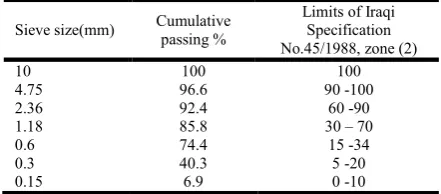
[image:3.595.305.560.76.266.2]The fine aggregate, natural sand was utilized all through this work of 4.75mm most extreme with grading limited zone II. (Table 3) reports the sieve analysis were made in the laboratory. Results indicate that the fine aggregate grading were within the requirements of the Iraqi specification (IQS No. 45/1988) (Iraqi Standard Specification, 1984).
Table 1. Chemical composition and main compounds of cement
Composition of Oxide Abbrev iation
Percentage by Weight
Limits of (IQS NO.5
/1984)
Lime CaO 66.11 -
Silica SiO2 21.93 -
Alumina Al2O3 4.98 -
Iron oxide Fe2O3 3.10 -
Sulphate SO3 2.25 ≤ 2.8 %
Magnesia MgO 2.0 ≤ 5 %
Loss on Ignition L.O.I 2.39 ≤ 4 % Insoluble Residue I.R. 1.29 ≤ 1.5 % Lime Saturation Factor L.S.F. 0.93 0.66 – 1.02 Main Compounds (Bogue’s equations)
Name of Compound Formula Abbreviation Percentag es Tricalcium silicate 3CaO.SiO2 C3S 58.16
Dicalcium silicate 2CaO.SiO2 C2S 19
Tricalcium aluminate 3CaO.Al2O3 C3A 7.95
Tetracalciumaluminoferrite 4CaO.Al2O3.
Fe2O3
C4AF 9.43
[image:3.595.321.550.316.445.2]*Chemical tests were made by the National Center for Construction Laboratories and Research (NCCLR)
Table 2. Physical properties of cement
Physical property Test Results
Limits of Iraqi Specification
No.5/1984 Specific surface area
(Blaine method), m2/kg 376 230
Setting time (vicat’s method) Initial :by minutes Final, by minutes
2.05 4.00
1 hr.
10.00 hrs. Soundness (autoclave method) % 0.12 0.8% Compressive strength
(70.7mm cube) (N/mm2)
3days 7days
20 25
15
23
*Physical tests were made by the National Center for Construction Laboratories and Research (NCCLR).
Table 3. Grading of fine aggregate used throughout this work
Sieve size(mm) Cumulative passing %
Limits of Iraqi Specification No.45/1988, zone (2)
10 100 100
4.75 96.6 90 -100
2.36 92.4 60 -90
1.18 85.8 30 – 70
0.6 74.4 15 -34
0.3 40.3 5 -20
0.15 6.9 0 -10
Polyethylene Glycol
PEG 400H (OCH2Ch2)n OH is highly hydrophilic. PEG400 is
soluble in water, acetone, alcohols and is somewhat soluble in hydrocarbons. Rely on molecular weight the extensive variety of the physicalproperty such as solubility, Hygroscopic, vapor pressure, freezing point and viscosityare variable, solubility increasing the molecular weight of PEG results in diminishing solubility in water and solvents.
Polyacrylamide
PAA is a water-soluble acrylate polymer formed from acylamide subunits. It is highly water-affiliated because of the amide ionogenin of its molecular chain, the NH3 released
through hydrolysis reacts with cations such as Ca+2 and Al+3 to
[image:3.595.322.543.496.593.2]three configurations: solvent colloid, latex, and dry powder. It can be mixed directly with cement, aggregate, and water to compose concrete without the need for additional equipment.
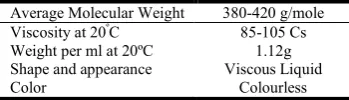
Table 4. Specifications of PEG400 according to the manufacturer
Average Molecular Weight 380-420 g/mole Viscosity at 20ºC 85-105 Cs
Weight per ml at 20ºC 1.12g Shape and appearance Viscous Liquid
Color Colourless
Anionic PAA is most suitable for inducing cement flocculation
because its anions interact with Ca+2 ions produced by mortar
[image:4.595.304.564.121.209.2]hydration. PAA can improve the impermeability, penetration resistance, and workability of cement mortar, and the flexural and tensile strengths, toughness of cement and mortar (1). Polyacrylamide has CH2 and NH2 functional groups out of which NH2 which on hydrolysis is likely to interact with cement phases forming products which remain dispersed uniformly in the rest of the materials modifying the physical and mechanical properties of the product. Thus increase in mechanical properties is not only because of the physical interaction between the cement and polymer producing a dense microstructure of very low porosity but also because of chemical interaction between the cement phases and the functional groups present in the additive (3).
Table 5. Specifications of PAA according to the manufacturer
Average Molecular Weight 5000000 g/mole
Stability Stable
Water Solubility Soluble Density at 25ºC 1.189 g/ml Shape and appearance Powder
Colour White
Fly Ash
Fly ash is fine and glassy powder that is recuperated as an aftereffect of coal burning during creation of electricity from ISKENment-Turkey power station. It is viewed as coal ignition waste. Composition of Fly ash relies on upon source. Fly ash particles are mostly spherical in shape and range in size from 0.5 µm to 100 µm. Two fundamental types of fly ashes: one Class F fly ash and Class C fly ash. Class F fly ash has been explored and it contains not exactly than 20% CaO (ASTM C 618, 2005) (19).
Table 6. Chemical Composition of Fly ash
SO3%
CaO% Al2O3%
SiO2%
Materials
0.07 1
19.17 57.36
Fly ash
Strength Activity Index for Fly Ash
The strength activity index for Fly Ashis conducted according to the ASTM C311–05.
Mix Procedure
Distinctive mixes were utilized to examine the effect of PEG/PAAon the compressive, tensile, flexural strength and bulk density of mortar. (Table 7) gives the specifics of the mix proportions. The reference mix M* had weight of 1 cement to 2 sand and mix Mhad weight of 1cement to 2.5 sand with 5%
fly ash of weight of cement and did not include PEG/PAA. Mixes M1, M3, M5 and M7, the PEG/PAA mortar of 1, 3, 5 and 7 wt.% respectively.
Table 7. Mix proportions
PB/C ratio Fly ash g 5% G% W/C ratio C/S ratio Sand g Cement g Mix type
- -
3.5 0.35 1:2.5 1000 500
M*
- 25 3.5 0.35 1:2.5 1000 475
M
1 25
3 0.3 1:2.5 1000 475
M1
3 25
3 0.3 1:2.5 1000 475
M3
5 25
3 0.3 1:2.5 1000 475
M5
7 25
3 0.3 1:2.5 1000 475
M7
Before molding, the molds were oiled carefully to be prepared for casting fresh mortar. The mortar was cast in layers (3 layers) for all specimens; every layer was compacted by a rod then all specimens were wet-cured by covering the completed surface and molds with polyethylene sheet. After one day, the molds were opened and the specimens were cured in water for a period of 7,28 and 90 days except PEG/PAA mortar which was cured in air for the same duration. High performance Superplasticizer admixture (Glenium 54) has appropriate consistency with low water to binder (W/B) ratio and tap water is utilized as a part of the test work for both mixing and curing purposes of conventional, self-curing mortar.
Testing of Fresh Mortar
Setting time: This test was specified according to the
ASTMC191-03(20). This procedure is utilized to determine initial setting and final setting time of cement paste by utilizing Vicat needle.
Flow Test : This test gives an allusion of the consistence of
mortar and its inclination to isolation by measuring the spread of a pile of mortar undergo to jolting. It is concerning isolation that the flow test is of greatest value, yet it additionally gives a good estimation of stiff, rich, and rather cohesive mixes .The test was covered by ASTM standard C1437 – 15 (21).
Testing of Hardened Mortar
Compressive Strength: The compressive strength test was
specified according to B.S.1881, part 16(22). This test was made on 50 mm cubes utilizing ancompression testing machine (ELE) with a capacity of 2000kN, a vibrating machine was used for uniform packing. Samples were kept in the mould in
90% relative humidity at 25±2◦C for the first 24 h and then
demoulded and kept in chamber at the same humidity and
temperature for 7, 28 and 90 days for curing at 27±2◦C. Each
compressive strength value was taken as the average of three samples. The compressive strength of the specimen was calculated by dividing the maximum load carried by the specimen during the test by the average cross-sectional area of the specimen.
Tensile Strength
[image:4.595.79.247.387.449.2]27±2◦C for the first 24h and then demoulded and cured under similar conditions in the same humidity chamber for 7, 28 and 90 days. Each tensile strength value was taken to be an average of three samples. Form of dumb-bell shaped briquette test specimens were utilized and load was connected constantly up to failure.
Flexural Strength
The flexural strength test was measured by using prism specimens with dimensions of 160 mm length, 40 mm width and 40 mm thickness. The specimen was subjected to simply support over the length of the prism on perpendicular direction of cast and the load was applied in the center of the prism. The test was obtained by 10kN Flexural/Tensile testing machine of ELE International company. This machine is given the maximum load of flexural process in kN and the flexural strength was calculated according to ASTM C293-02 (24) by the equation:
Fr=3PL/2bd2 ……… (1)
Where
Fr: Modulus of rupture (flexural strength MPa) P: maximum load (N)
L: length of the span(mm)
b: width of the specimen (mm), and
d: thickness of the specimen (mm)
Center point load test was carried out according to ASTM C293-02 using ELE (10)kN capacity machine. Average modulus of rupture of three prisms was obtained for each testing age (7,28 and 90) days.
Bulk Density
The bulk density test was specified by B.S 1015, Part 10(25). Three test samples of standard shape are set up from the fresh mortar to be tested and cured. The hardened test samples are
dried to a constant mass at a temperature of 70 0C, the dry
mass is recorded and the volume of the test specimens is determined. The bulk density of each test specimen is computed by divided the mass on volume of specimen.
Water Absorption
The Water absorption test was specified by ASTM (27). Water absorption measurements were carried out on the cubic specimens with specific cross-sectional. Mortar specimens was prepared adopting to the same mixing condition as for strength specimens, after demoulding, specimens were immersed into
water within 25ºC. The absorbed water was calculated as the
difference between saturated and dry masses of specimens. The test was carried out by weighing the specimens before the test. All tests were performed at 7, 28 and 90 days for all mixes of mortar. These properties are particularly important in concrete, as well as being important for durability. It can be used to predict mortar durability to resist corrosion. This test was determined according to the ASTM C642-97 (27). The water absorption is determined by dividing the weight difference of specimen on its dry weight.
A= [(Ws-Wd)/Wd] x100 ………. (2)
A=absorption value (%).
Ws=saturated or wet weight of specimen after immersion it into water for certain time, (g).
Wd= dry weight of specimen in air, (g)
RESULTS AND DISCUSSION
Setting Time
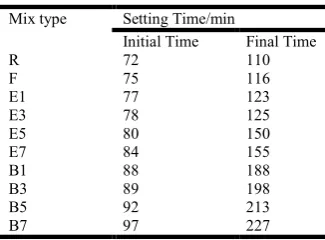
The setting time of cement containing 1,3,5,7 wt% of PEG400
and polymer blend (PEG/PAA) are given in (Table 8). The
value of initial setting time and final setting time, of cement
paste, was observed to be 72 and 110 min, respectively. It is
evident from the Table that whenPEG400 and (PEG/PAA)is
mixed with cement it changes, the setting time. It was found to
act as a retarder and has prolonged the initial setting time from 77 to 84 min with 1,3,5,7 wt %addition of PEG 400 in cement. Final setting time was also prolonged from 123 to 155 min for similar percentages of 1,3,5,7 wt % added in cement, and the initial setting time from 88 to 97 min with 1,3,5,7 wt %addition of (PEG/PAA) in cement. Final setting time was
also prolonged, from 188 to 227 min for similar percentages,
of 1,3,5,7 wt % added in cement. It is the characteristic property of the functional group in the organic compound, its nature, chain length etc, which effect thecementitious
properties, of cement in which it is mixed, it has been
demonstrated that it may be essentially due to retarding of the hydration of 3CaO·SiO2 through the chemisorption of organic
molecule, on to Ca(OH)2nuclei. The hydroxyl group, being
polar and hygroscopic in nature, thus, diminishes the amount of water available for the hydration of silicate. It appears that
the retardation procedure, in the presence ofPEG400 and
(PEG/PAA),because of the chemical interaction between
hydrated cement phases,(C3S, C2S and C3A), and polar
functional groups, of organic polymers to yield amorphous
[image:5.595.351.514.444.564.2]materials, which are scattered between the crystalline mass of cement paste (3).
Table 8. Setting time of all mixes
Setting Time/min Mix type
Final Time Initial Time
110 72
R
116 75
F
123 77
E1
125 78
E3
150 80
E5
155 84
E7
188 88
B1
198 89
B3
213 92
B5
227 97
B7
Flow Test: The effect of polymer addition on W/C ratio
required to maintain the desired flow (105–115 mm). The
needed quantity of water decreases with the addition, of both
polymers. The fluidity and water-reducing effect increases with increasing PEG400 and (PEG/PAA) percentage. This might affect starting with the water-absorption effect of
PEG400 and(PEG/PAA), and also those lubrication effects, of
the formed latex around cement particles will lessening the W/C proportion from 0.35 to 0.3, and with addition of fly ash, it is found that the presence of very fine fractions has positive effect on the workability of the mix (26).
Compressive Strength: The test results of compressive
strength, (it may describe material brittleness) at a curing age of 7, 28 and 90 days are detailed in (Table 9). The PEG400 and
(PEG/ PAA) modified mortar displays, higher compressive
strength, which concurs with other investigate on the PEG400 and (PEG/ PAA) modified cement mortar, and lower
brittleness, than reference mortar which may be attributed, to
lower voids, and pores, and greater bond force between, the cement paste and aggregates (12). However, it demonstrates that the compressive strength decreases to some extent. Meanwhile, it diminishes with increasing PEG400 and
(PEG/PAA)/Cproportion. Therefore, PEG400, and (PEG/
PAA) modified mortar,might viably enhance the performances
of these infrastructures. The chemical interaction, between
cement and polymer functional group also contributes, to the
improvement of mechanical properties. The compressive
strength, of fly ash mortar at 7, 28 and 90 days were observed
[image:6.595.323.545.273.390.2]to be 20.6, 23.1 and 24.2MPa as shown in (Table 9) and the graphical representation which is appeared in (Figure1)In the mixes of PEG400 and (PEG/PAA) mortar, 3wt% additive content at 7 days has given maximum compressive strength 23.2MPa, at 28 days, 25.9MPa and at 90 days, 27.6MPa, and in the mixes of (PEG/PAA) mortar, 3wt% additive content at 7 days has given maximum compressive strength 20.3MPa, at 28 days, 21.7MPa and at 90 days, 25.1MPaThe effect of strength relies on upon the nature and amount of additive and W/C ratio. The organic set retarders increase the strength of mortar at late curing periods (3). The partial replacing of cement with fly ash caused increase in compressive strength of PEG400 and (PEG/ PAA) modified mortars at the all ages of curing (26).
Table 9. Compressive strength results of polymer blend (PEG/PAA) modified mortar specimens
Compressive strength (MPa) Mix type
90day 28 day 7 day
23.6 22.2
19.3 R
24.2 23.1
20.6 F
27.4 25.7
22.6 E1
27.6 25.9
23.2 E3
24.6 21.4
20.8 E5
20.3 19.6
18.4 E7
25.9 22.8
19.8 B1
25.1 21.7
20.3 B3
22.4 17.5
16.7 B5
19.8 16.8
[image:6.595.52.273.356.643.2]16.1 B7
Figure 1. Compressive strength results of (PEG400) modified mortar specimens at 7, 28 and 90 days
Figure 2. Compressive strength results of polymer blend (PEG/PAA) modified mortar specimens at 7, 28 and 90 days
ThePEG400 and polymer blend (PEG/PAA) provided optimum results compared to other curing methods, There was a slight lessening in the compressive strength with the addition of self-curing agent at 5,7wt% ofPEG400 and (PEG/PAA) (5).
Tensile Strength
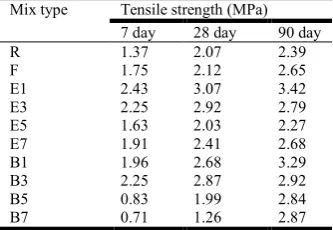
Test results of mortar containing polymer blend (PEG/PAA) with various proportions are represented in (Table 10) and the
graphical representation, is appeared in (Figure 3,4) Results
indicated higher strength of mortar with PEG400 and (PEG/PAA) relative to reference mortar. After 7,28 and 90 days, the strength of mortar with 1,3,5,7 wt% increase compared to reference mortar, the incorporation of self-curing agents into mortar mixtures provides internal curing for the mortar and thus permitting continuous hydration, which
results, in an improvement in the tensile strength of the mortar
(12), these results are tabulated below.
[image:6.595.320.543.440.560.2]Figure 3. Tensile strength results of polymer blend (PEG/PAA) modified mortar specimens at 7, 28 and 90 days
Figure 4. Tensile strength results of (PEG400) modified mortar specimens at 7, 28 and 90 days
Table 10.Tensile strength values of polymer blend (PEG/PAA) modified mortar specimens
Tensile strength (MPa) Mix type
90 day 28 day
7 day
2.39 2.07
1.37 R
2.65 2.12
1.75 F
3.42 3.07
2.43 E1
2.79 2.92
2.25 E3
2.27 2.03
1.63 E5
2.68 2.41
1.91 E7
3.29 2.68
1.96 B1
2.92 2.87
2.25 B3
2.84 1.99
0.83 B5
2.87 1.26
0.71 B7
Flexural Strength
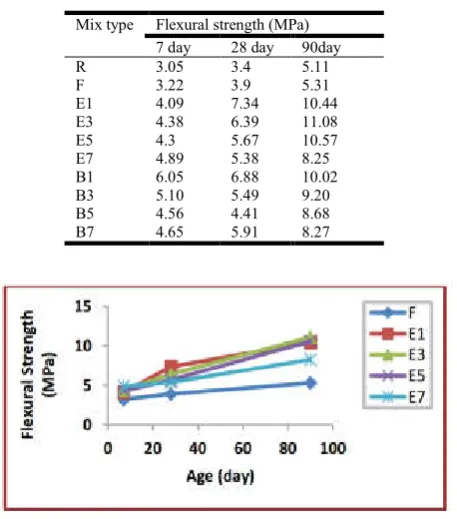
The results of the flexural strength, are represented in (Table
[image:6.595.350.517.634.749.2]5&6) The flexural strength was found to increase, up to5, 7 wt% of (PEG/PAA) modified mortar. The flexural strength values acquired were 4.38,6.39, 11.08MPa with 3wt% of PEG400 after curing for 7,28 and90 days, respectively, and the flexural strength values of (PEG/PAA) were 6.05,6.88,10.02 MPa with 1wt%. These values increase with increasing percentage of PEG400 and (PEG/PAA), at the lower W/C proportion of 0.3. Ordinary cement displays low flexural
strength, which varies with its chemical compositions, and
level of hydration, and therefore cement is never utilized in
tension without the reinforcement. The addition of
water-soluble polymers,allows the formation of highly workable
paste, with very little water. The additive acts, as lubricant
facilitating,close packing of different constituents which are
then held tightly together causing higher strength, addition of
polymer blend, (PEG/PAA) are interspersed and react with
each other at room temperature to make a material with high
[image:7.595.50.279.298.558.2]flexural strength, which is free from defects,(3).
Table 11. Flexural strength values of polymer blend (PEG/PAA) modified mortar specimens
Flexural strength (MPa) Mix type
90day 28 day 7 day
5.11 3.4
3.05 R
5.31 3.9
3.22 F
10.44 7.34
4.09 E1
11.08 6.39
4.38 E3
10.57 5.67
4.3 E5
8.25 5.38
4.89 E7
10.02 6.88
6.05 B1
9.20 5.49
5.10 B3
8.68 4.41
4.56 B5
8.27 5.91
[image:7.595.320.547.318.556.2]4.65 B7
Figure 5. Flexural strength results of (PEG400) modified mortar specimens at7, 28 and 90 days
Figure 6. Flexural strength results of polymer blend (PEG/PAA) modified mortar specimens at7, 28 and 90 days
Bulk Density
The influence of polymer blend (PEG/PAA) on bulk density of
polymer-modified hardened mortar, was studied. (Table12)
illustrates that the bulk density, of all mortar mixes (self-curing
and reference mortars),diminishes gradually with time under
air curing, due to water dissipation from mortar. The varieties
of bulk density, due to changes in C/P proportion are appeared
in (Figures 7, 8) at different self-curing periods. As indicated by this figure, it can be concluded that any increments in C/P
proportion in the given range result in a significant decrease, in
bulk density. Such a positive effect, of PEG 400 and
(PEG/PAA)on hardened mortar can be absolutely credited to the lubricating effect of which improve both dispersion and
close packing of cement molecules, which are then held
closely with each other by the binding properties of both hydration products of cement phases and the polymer matrix created. The presence of fly ash and self-curing agents in mortar caused an extra diminishment in bulk densityrelative to conventional mortar during the experiment to confirm that a better water retention happened. The mortar containing 5% of fly ash and 7wt% of PEG400 and (PEG/PAA) showed better performance compared to the reference mortar.
Table 12. Bulk density values of polymer blend (PEG/PAA) modified mortar specimens
Bulk Density (g/cm3)
Mix type
90 day 28 day 7 day
2.15 2.32 2.63
R
2.37 2.45 2.52
F
2.04 2.12 2.11
E1
2.14 2.24 2.22
E3
2.12 2.13 2.17
E5
2.01 2.07 2.16
E7
2.11 2.14 2.17
B1
2.05 2.12 2.14
B3
2.03 2.1
2.12 B5
2 2.05 2.07
[image:7.595.49.281.593.724.2]B7
Figure 7. Bulk density results of PEG400 polymer modified mortar specimens at 7,28 and 90 days
Figure 8. Bulk density results of PEG/PAA polymer modified mortar specimens at 7, 28 and 90 days Water Absorption
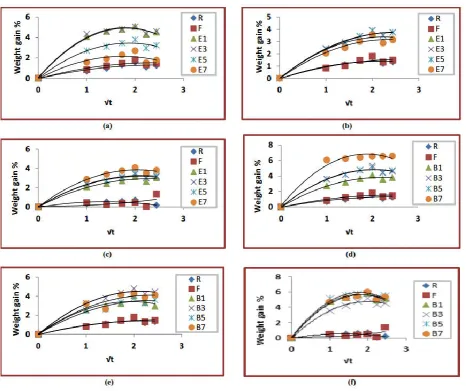
Figure 9 demonstrates the details of water absorption capacity
of conventional concrete without self-curing compounds, and
[image:7.595.312.552.593.718.2]there is increase in the water retention capacity with the
addition of self-curing compounds, due to increase, in the
moisture content that is provided by the hydrophilic compounds. It can also be said that self-curingis giving optimum results compared to other curing conditions. The
weight gain,of the specimens were calculated and plotted
against the in square root, of time in days as appeared in
(Figure 9) From this figure it is observed that weight gain increased with the addition of self-curing compounds when compared with water cured specimens (5).
Conclusion
The addition of PEG400 and (PEG/PAA), alters the physical and mechanical properties of cement mortar. The studies demonstrate that polymer-modified mortar possesses higher strength compared to reference mortar. Mortar with 1 and 3 wt% of PEG400 and (PEG/PAA) dosage gives higher compressive strength, as compared to conventionally cured mortar. This is because of reduction in porosity, with increment in rate of added substance. The organic polymer, interspersed in the hydrated cement may lead to the formation of crosslinks among the grains solidified in originally free space. By the use ofPEG400, and (PEG/PAA) it is observed that the workability of mortar also increases, and mortar becomes flowable. Up to certain dosage, of PEG400 and (PEG/PAA) we can save water which is required for external
curing. It has been observed during testing; internally cured mortarPEG400 and(PEG/PAA) demonstrates lesser cracks than the mortar. Addition of PEG400 and(PEG/PAA) effectively enhances its tensile and flexural strength. However, the compressive strength decreases to some extent. Hence, PEG400 and (PEG/PAA) modifier can be a good candidate for infrastructure utilizes particularly those subjected to the flexural stress and interface shear stress, such as bridge overlays and pavements.
REFERENCES
Aggarwal L.K., Thapliyal P.C., Karade S.R. 2007 "Properties of polymer-modified mortars using epoxy and acrylic
emulsions", "Construction and Building Materials",
Vol.21, PP.379–383.
Amr S. El-Dieb, Tamer A. El-Maaddawy, Ahmed A. M. Mahmoud, 2012"Water-soluble polymers as self- curing
agents in cement mixes", J. of Advances in Cement
Research, Vol.24, No.5.
AndrzejGarbacz, Joanna J. Sokołowska, 2013. "Concrete-like
polymer composites with fly ashes Comparative study", J.
of Construction and Building Materials, Vol.38, PP.689–
699.
ASTM C 293-02, 2002. "Standard test methods for flexural strength of concrete using simple beam with center-point loading".
[image:8.595.68.535.57.448.2]ASTM C1437 – 15, 2004. "Standard Test Method for Flow of Hydraulic Cement Mortar" Annual Book of ASTM Standards, PP. 1-2.
ASTM C191-03, 2004 "Standard Test Method for Time of Setting of Hydraulic Cement by Vicat Needle", Annual Book of ASTM Standards, PP.1-8.
ASTMC 642 – 06, 2000 "Standard Test Method for Density, Absorption, and Voids in Hardened Concrete", Annual Book of ASTM Standards, PP.1-3.
B.S.1881, Part116 1989"Method for Determination of Compressive Strength of Concrete Cubes" British Standard Institution.
Bashandy A. A., 2016. "Self-Curing Concrete Under Sulfate
Attack", J. of Archives of Civil Engineering, Vol. Lxii,
No.2.
BS 1015, Part 10 1999. "Methods of test for mortar, Determination of dry bulk density of hardened mortar. BS 6319, Part 71985. "Testing of resin compositions for use in
construction: Method for measurement of tensile strength", PP. 1-4.
Enrique Sald´ıvar-Guerra, Eduardo V. L., 2013. "Handbook of
Polymer Synthesis, Characterization, and Processing", 1st
edition, John Wiley & Sons, Inc.
Iraqi Standard Specification No.45, 1984. "Aggregate of Natural Sources Using in Concrete and Building", Central Organization for Standardization and Quality Control, Baghdad.
Iraqi standard Specification No.5, 1984. "Portland Cement" Central Organization for Standardization and Quality Control, Baghdad.
Jagannadha M.V. Kumar, Srikanth M., JagannadhaRao K., 2012. "Strength Characteristics of Self-Curing Concrete",
International Journal of Research in Engineering and
Technology, Vol. 01, No. 01, PP.51 -57.
Junaid S.M., Saddam S., Junaid M., Yusuf K., Huzaifa S.A.,
2015 "Self-Curing Concrete", J. of IAFRSE, Vol.1, Special
Issue 26.54.
KIM E.H. 2012. "Understanding effects of silicon/aluminum ratio and calcium hydroxide on chemical composition,
nanostructure and compressive strength for
metakaolingeopolymers", MSc. thesis, Civil Engineering in the Graduate College, University of Illinois at Urbana-Champaign.
Leszek A. U., Charles A. W. 2010. "Polymer Blends Handbook", Second Edition.
Lloyd Robeson, 2014. "Historical Perspective of Advances in the Science and Technology of Polymer Blends", Polymers, Vol.6, PP.1251-1265.
Magda I. Mousa, Mohamed G. Mahdy, Ahmed H. Abdel-Reheem a, Akram Z. Yehia, 2015. " Self-curing concrete
types; water retention and durability", J. of Alexandria
Engineering, Vol.54, PP.565–575.
Muthadhi A., Kothandaraman S., 2014. "Experimental investigations on polymer-modified concrete subjected to
elevated temperatures", Materials and Structures, Vol. 47,
PP.977–986.
Patel Manishkumar Dahyabhai, Jayeshkumar R. P., 2014" Introducing the Self-Curing Concrete in Construction
Industry", J. of IERT, Vol.3, No.3.
Rai U.S., Singh R.K. 2005" Effect of polyacrylamide on the different properties of cement and mortar", J. of Materials Science and Engineering, Vol.392, PP.42–50.
Sathanandham. T, Gobinath.R, NaveenPrabhu.M,
Gnanasundar. S, Vajravel. K, Sabariraja. G, Manojkumar. R, Jagathishprabu. R. 2013. "Preliminary Studies of Self Curing Concrete with the Addition of Polyethylene
Glycol", J. IJERT, Vol.2, No.11.
Siddharth J., Sharma S.P., 2015. "To Study the Strength Characteristics of Concrete by Replacing Curing Water
with Self Curing Compounds", J. of IJAER, No.10.
Venkateswarlu M., Balaji V., Susmitha M., Suresh D. 2015 "Study on Durability Characteristics of Conventional Concrete with PEG-600 as Self Curing Compound",
"European Journal of Advances in Engineering and
Technology" , Vol.2, No.12, PP.47-52.
Zengzhi S., Qinwu X., 2008. "Micromechanical analysis of
polyacrylamide-modified concrete for improving
strengths", J. of Materials Science and Engineering, Vol.
490, PP.181–192.