Abstract— Vegetable oils are triglyceride-based biomass that
can be processed in various ways to produce biofuel. Steam reforming of these oils can be used to produce hydrogen, synthesis gas or gaseous fuel. In the present study, ChemCad 6.4 simulation package was used to predict equilibrium product composition for a modeled vegetable oil steam reforming as a function of temperature (400-1000oC) and steam amounts added to the feed (10 to 90 wt.%). The obtained data predict that for maximum H2 production from vegetable oil through steam reforming, high steam content in the feed is required and that steam contents of ca. 50 wt.% in the feed are optimal for the production of synthesis gas suitable for the Fischer-Tropsch process (H2/CO ratio of 2/1) over a temperature range of 600oC to 1000oC.
Index Terms— Equilibrium products, steam reforming,
vegetable oils
I. INTRODUCTION
ENEWABLE energy sources significantly receive more attention than ever before. This is mainly due to the increase in energy demand across the world while fossil energy sources are dwindling and to the increase in environmental challenges. Vegetable oils are triglyceride-based biomass which can be transformed into biofuel through various processes such as trans-esterification with an alcohol to biodiesel, cracking and reforming to produce gas and liquid biofuel. Biofuels are considered to be ‘‘CO2
neutral’’ as they do not add to the CO2 levels in the
atmosphere since they are from plant sources which typically remove CO2 from the atmosphere, and release the
same amount when burnt [1]. Steam reforming of vegetable oils is a process of adding heat to the oil in presence of steam and a suitable catalyst. Marquevich et al. [2] have reported H2 production by catalytic reforming of vegetable
oils. Gornay et al. [3] showed that atmospheric pressure thermal cracking of waste cooking oil in the presence of steam (steam reforming) would be a potential option, particularly when the operating conditions direct the process in order to produce specific target bioenergy vectors: hydrogen, synthesis gas, or gaseous fuel.
Most studies only report kinetics of steam reforming and the information on thermodynamic equilibrium product is very limited. This information is very important for further
Manuscript received July 23, 2012; revised August 10, 2012. This work has benefited from the financial support of the Dean’s office of the Faculty of Engineering and The Built Environment, University of Johannesburg.
K. Jalama is with the Department of Chemical Engineering in the School of Mining, Metallurgy and Chemical Engineering, University of
process development and improvement. The present study aims at predicting the equilibrium product selectivity for vegetable oil steam reforming and determining the operating conditions that favor the production of H2 and synthesis gas
suitable for the Fischer-Tropsch process.
II.METHODOLOGY
ChemCad 6.4 simulation package was used to predict equilibrium product composition for a modeled vegetable oil steam reforming as a function of temperature and amounts of steam added to the feed (10 to 90 wt.%). A temperature range of 400-1000oC and steam contents of 10, 30, 50, 70 and 90 wt.% in the feed were considered. A process pressure of 1 bar was used throughout this study. The vegetable oil was modeled by triolein and the steam reforming process was modeled by Gibbs free energy minimization in ChemCad. The Gibbs reactor model is based on the principal that at chemical equilibrium the total Gibbs energy of the system has its minimum value. By attempting to minimize the total energy of the system, individual equilibria constants are not considered. Rather, the possible reaction species are noted, and the distribution of these species is established using a general mathematical technique to give a minimum free energy for the system [4]. The selected possible components in the predicted equilibrium product included H2, CO, CO2, alkanes (C1 to
C15), olefins (C2 to C15), cyclic hydrocarbons, aromatic
compounds, light ketones, alcohols, carboxylic acid and solid carbon. Except for the solid carbon, all the selected components with their physical and chemical properties were available in ChemCad components database. The solid carbon was added to the ChemCad components database and was modeled as graphite. The graphite heat capacity polynomial coefficients determined by Butland and Maddison [5] were used for the simulation. The enthalpy and Gibbs energy of formation for the solid carbon were entered as 0 kJ/mol.
III. RESULTSANDDISCUSSION
An example of equilibrium products distribution as a function of temperature for a feed containing 10 wt.% steam is presented in table 1. The major reaction products were H2, CO, CO2, light hydrocarbons and aromatics in
agreement with earlier experimental catalytic reforming studies [3, 6, 7]. H2 is a valuable fuel as it can be used in
fuel cells for power generation. The mixture of H2/CO,
referred to as synthesis gas, is a useful feedstock for liquid fuel production using the Fischer-Tropsch (FT) process. For
Steam Reforming of Vegetable Oils:
Equilibrium Product Selectivity
K. Jalama
TABLE I
PREDICTED EQUILIBRIUM PRODUCTS AS A FUNCTION OF TEMPERATURE FOR A FEED CONTAINING 10 WT.% STEAM
Components Chemical formula 400oC 500oC 600oC 700oC 800oC 900oC 1000oC
Hydrogen (H2) 0.2907 1.2677 3.9543 9.3617 17.8981 28.3830 38.6164
Carbon monoxide (CO) 16.3781 27.8559 29.2428 28.6869 27.5647 26.1617 24.7872 Carbon dioxide (CO2) 8.1943 1.1862 0.1253 0.0192 0.0038 0.0009 0.0003
Water (H2O)
Triolein (C57H104O6) 0.0000 0.0000 0.0000 0.0000 0.0000 0.0000 0.0000
Methyl oleate (C19H36O2) 0.0000 0.0000 0.0000 0.0000 0.0000 0.0000 0.0000
Ethyl oleate (C20H36O2) 0.0000 0.0000 0.0000 0.0000 0.0000 0.0000 0.0000
Coke C 0.0000 0.0000 0.0000 0.0000 0.0000 0.0000 0.0000 0.0000 0.0000 0.0000 0.0000 0.0000 0.0000 0.0000
Paraffins 62.7489 59.5072 56.6334 51.5013 43.4236 33.4734 23.7240
Methane (CH4) 62.7161 59.4725 56.5970 51.4655 43.3923 33.4495 23.7077
Ethane (C2H6) 0.0327 0.0347 0.0363 0.0357 0.0312 0.0239 0.0163
N-propane (C3H8) 0.0001 0.0001 0.0001 0.0001 0.0001 0.0001 0.0000
N-butane (C4H10) 0.0000 0.0000 0.0000 0.0000 0.0000 0.0000 0.0000
N-pentane (C5H12) 0.0000 0.0000 0.0000 0.0000 0.0000 0.0000 0.0000
N-hexane (C6H14) 0.0000 0.0000 0.0000 0.0000 0.0000 0.0000 0.0000
N-heptane (C7H16) 0.0000 0.0000 0.0000 0.0000 0.0000 0.0000 0.0000
N-octane (C8H18) 0.0000 0.0000 0.0000 0.0000 0.0000 0.0000 0.0000
N-nonane (C9H20) 0.0000 0.0000 0.0000 0.0000 0.0000 0.0000 0.0000
N-decane (C10H22) 0.0000 0.0000 0.0000 0.0000 0.0000 0.0000 0.0000
N-Undecane (C11H24) 0.0000 0.0000 0.0000 0.0000 0.0000 0.0000 0.0000
N-dodecane (C12H26) 0.0000 0.0000 0.0000 0.0000 0.0000 0.0000 0.0000
N-tridecane (C13H28) 0.0000 0.0000 0.0000 0.0000 0.0000 0.0000 0.0000
N-tetradecane (C14H30) 0.0000 0.0000 0.0000 0.0000 0.0000 0.0000 0.0000
N-pentadecane (C15H32) 0.0000 0.0000 0.0000 0.0000 0.0000 0.0000 0.0000 0.0000 0.0000 0.0000 0.0000 0.0000 0.0000 0.0000
Olefins 0.0011 0.0072 0.0310 0.0959 0.2279 0.4335 0.6871
Ethylene (C2H4) 0.0011 0.0069 0.0301 0.0937 0.2236 0.4268 0.6781
Propylene (C3H6) 0.0001 0.0003 0.0009 0.0021 0.0040 0.0061 0.0077
1-butene (C4H8) 0.0000 0.0000 0.0000 0.0000 0.0000 0.0000 0.0000
1,3-butadiene (C4H6) 0.0000 0.0000 0.0000 0.0001 0.0002 0.0006 0.0012
1-pentene (C5H10) 0.0000 0.0000 0.0000 0.0000 0.0000 0.0000 0.0000
1-hexene (C6H12) 0.0000 0.0000 0.0000 0.0000 0.0000 0.0000 0.0000
1-heptene (C7H14) 0.0000 0.0000 0.0000 0.0000 0.0000 0.0000 0.0000
1-octene (C8H16) 0.0000 0.0000 0.0000 0.0000 0.0000 0.0000 0.0000
1-nonene (C9H18) 0.0000 0.0000 0.0000 0.0000 0.0000 0.0000 0.0000
1-decene (C10H20) 0.0000 0.0000 0.0000 0.0000 0.0000 0.0000 0.0000
1-undecene (C11H22) 0.0000 0.0000 0.0000 0.0000 0.0000 0.0000 0.0000
1-dodecene (C12H24) 0.0000 0.0000 0.0000 0.0000 0.0000 0.0000 0.0000
1-tridecene (C13H26) 0.0000 0.0000 0.0000 0.0000 0.0000 0.0000 0.0000
1-tetradecene (C14H28) 0.0000 0.0000 0.0000 0.0000 0.0000 0.0000 0.0000
1-pentadecene (C15H30) 0.0000 0.0000 0.0000 0.0000 0.0000 0.0000 0.0000 0.0000 0.0000 0.0000 0.0000 0.0000 0.0000 0.0000
Cyclic hydrocarbons 0.0000 0.0000 0.0000 0.0000 0.0000 0.0000 0.0000
Cyclopentene (C5H8) 0.0000 0.0000 0.0000 0.0000 0.0000 0.0000 0.0000
Cyclopentane (C5H10) 0.0000 0.0000 0.0000 0.0000 0.0000 0.0000 0.0000
Cyclohexene (C6H10) 0.0000 0.0000 0.0000 0.0000 0.0000 0.0000 0.0000
Cyclohexane (C6H12) 0.0000 0.0000 0.0000 0.0000 0.0000 0.0000 0.0000
Cycloheptene (C7H12) 0.0000 0.0000 0.0000 0.0000 0.0000 0.0000 0.0000
Cycloheptane (C7H14) 0.0000 0.0000 0.0000 0.0000 0.0000 0.0000 0.0000 0.0000 0.0000 0.0000 0.0000 0.0000 0.0000 0.0000
Aromatics 12.3869 10.1757 10.0131 10.3351 10.8820 11.5474 12.1851
Benzene (C6H6) 11.1004 9.4611 9.4912 9.9102 10.5242 11.2427 11.9281
Toluene (C7H8) 1.2302 0.6925 0.5094 0.4165 0.3519 0.3005 0.2540
Ethylbenzene (C8H10) 0.0042 0.0021 0.0015 0.0012 0.0010 0.0008 0.0006
O-xylene (C8H10) 0.0130 0.0052 0.0030 0.0020 0.0014 0.0010 0.0007
M-xylene (C8H10) 0.0280 0.0105 0.0057 0.0037 0.0025 0.0017 0.0011
P-xylene (C8H10) 0.0112 0.0043 0.0023 0.0015 0.0010 0.0007 0.0005
0.0000 0.0000 0.0000 0.0000 0.0000 0.0000 0.0000
Short chains alcohols, ketone and carboxylic acids 0.0000 0.0000 0.0000 0.0000 0.0000 0.0000 0.0000
Methanol (CH4O) 0.0000 0.0000 0.0000 0.0000 0.0000 0.0000 0.0000
Ethanol (C2H6O) 0.0000 0.0000 0.0000 0.0000 0.0000 0.0000 0.0000
Propanol (C3H8O) 0.0000 0.0000 0.0000 0.0000 0.0000 0.0000 0.0000
Acetone (C3H6O) 0.0000 0.0000 0.0000 0.0000 0.0000 0.0000 0.0000
Acetic acid (C2H4O2) 0.0000 0.0000 0.0000 0.0000 0.0000 0.0000 0.0000
Acrylic acid (C3H4O2) 0.0000 0.0000 0.0000 0.0000 0.0000 0.0000 0.0000
Total 100 100 100 100 100 100 100
Light hydrocarbons and aromatics can be used as fuel. CO2
is an undesired product as it is a loss of carbon and decreases the process carbon efficiency. The system overall enthalpy minimization did not predict any solid carbon deposition which was observed in some experimental catalytic studies (3, 6, 7). This could suggest that solid carbon is an intermediate product but not an equilibrium product for vegetable oil steam reforming.
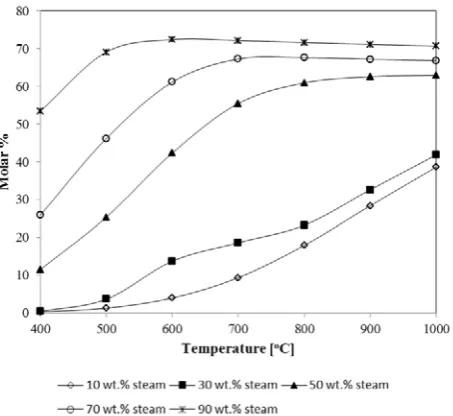
Fig. 1 shows the calculated H2 molar percentage in the
[image:3.595.58.285.227.435.2]reforming product as a function of temperature and the amount of steam added to the oil feed.
Fig. 1.Molar contents (dry basis) of H2 in the predicted reforming product
as function of temperature and amounts of steam added to the oil feed
The data show that H2 production increases with the
increase of the steam amounts added to the feed. For example at 400oC, almost no H2 is produced for the feed
containing up to 30 % steam. The produced H2 molar
composition in the product increases with the temperature and reaches 39 and 42% at 1000oC for the feed containing 10 and 30% steam respectively. As the amount of steam in the feed is increased to 50 %, an H2 composition of ca. 10%
is predicted at 400oC and increases with the reaction temperature up to ca. 800oC where it almost flattens at 62-63%. Further increase of steam in the feed shows a maximum in H2 production at ca. 800oC (ca. 67%) and
600oC (ca. 72%) for the feed containing 70 and 90% respectively. These data suggest that for maximum H2
production from vegetable oil through steam reforming, high steam contents in the feed are required. In terms of process, this creates a penalty for high energy requirements for the feed but also an advantage of operating at lower temperatures. A proper process energy requirements analysis (not covered in this study) would determine whether the lower operating temperature will offset the high energy requirements for the feed.
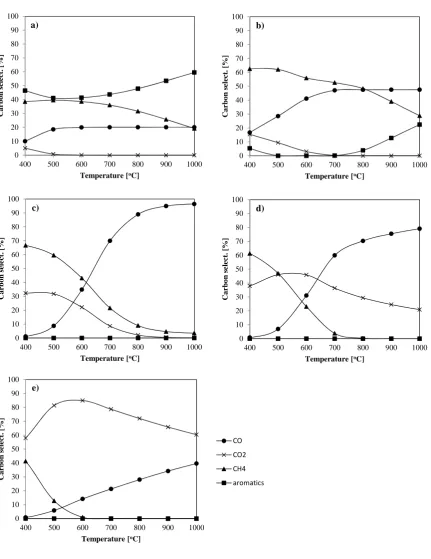
Fig. 2 shows the carbon atom based selectivity to CO, CO2, CH4 and aromatics as a function of reforming
temperature and steam contents of the feed. For the feed with 10% steam, the aromatics have the highest selectivity which passes through a minimum at ca. 500oC and further increases with the reaction temperature (Fig. 2a). This selectivity drops to ca. 0% from 500oC for the feed containing 30% steam (Fig. 2b) and for the whole temperature range, i.e. 400 – 1000oC for the feed containing 50, 70 and 90% steam. This can be explained by an increase in steam-derived H2 in the reactor for the feed with high
steam contents. The CH4 selectivity decreases with the
increase in temperature for the feed containing 10 to 90% steam (Fig. 2 a-e) and reaches zero, i.e. the CH4 becomes an
intermediate product from ca. 600 and 800oC for the feed containing 90 and 70% steam respectively (Fig. 2 d and e). This suggests that the produced CH4 possibly undergoes
steam reforming to CO and H2 as the temperature and the
steam contents in the feed increase. The operating conditions leading to the CH4 complete disappearance from
the equilibrium product spectrum are the same as those for the maximum H2 production (Fig. 1) and hence support the
above explanation. The CO selectivity increases with the increase in steam contents (for 10, 30 and 50% steam) and temperature up to a point when it flattens off (Fig. 2 a-c). With higher steam contents (70 and 90% steam), the CO selectivity increases with temperature but decreases with steam contents that favor more CO2 formation. This
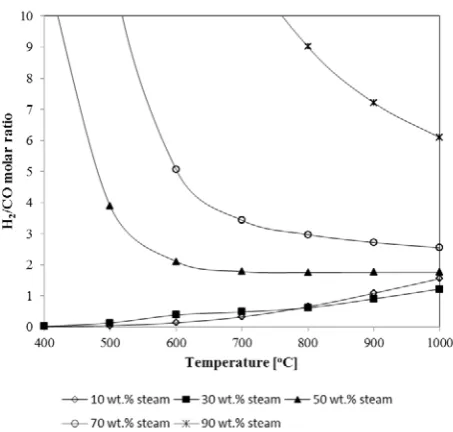
indicates that more carbon is lost at higher steam contents possibly via the water gas shift reaction. To select optimal conditions for synthesis gas production, the H2/CO ratio as
function of steam contents in the feed and reaction temperature (Fig. 3) must be considered. The data in Fig. 3 suggest that for the production of synthesis gas as a feed to an FT process, steam contents in excess of 50% must be avoided as they will lead to an H2/CO ratio well above 2/1.
Steam contents of ca. 50% in the feed are optimal for FT syngas production as they lead to H2/CO ratios of ca. 2/1
over a wide range of temperature (600oC to 1000oC).
IV. CONCLUSION
This study aimed at predicting the equilibrium product selectivity for vegetable oil steam reforming and determining favorable operating conditions for the production of H2 and synthesis gas suitable for the
Fischer-Tropsch process. The obtained data predict that for maximum H2 production from vegetable oil through steam
reforming, high steam contents in the feed are required and that steam contents of ca. 50 wt.% in the feed are optimal for the production of synthesis gas suitable for the Fischer-Tropsch process (H2/CO ratio of 2/1) over a temperature
0 10 20 30 40 50 60 70 80 90 100
400 500 600 700 800 900 1000
Ca
rbo
n
se
le
ct
. [
%
]
Temperature [oC]
a)
0 10 20 30 40 50 60 70 80 90 100
400 500 600 700 800 900 1000
Ca
rbo
n
se
lec
t.
[%]
Temperature [oC]
b)
0 10 20 30 40 50 60 70 80 90 100
400 500 600 700 800 900 1000
Ca
rb
o
n
sele
ct
.
[%]
Temperature [oC]
c)
0 10 20 30 40 50 60 70 80 90 100
400 500 600 700 800 900 1000
Ca
rbo
n
se
le
ct
.
[%]
Temperature [oC]
d)
0 10 20 30 40 50 60 70 80 90 100
400 500 600 700 800 900 1000
Carb
o
n
s
elec
t.
[%
]
Temperature [oC]
CO
CO2
CH4
aromatics
[image:4.595.61.493.92.652.2]e)
Fig. 2.Effect of steam contents in the feed and reforming temperatures on the carbon-based selectivity to CO, CO2, CH4 and aromatics: a) 10 wt.% steam in
Fig. 3. H2/CO ratio as function of steam contents in the feed and reaction
temperature
REFERENCES
[1] N. Taufiqurrahmi, S. Bhatia, “Catalytic cracking of edible and
non-edible oils for the production of biofuels”, Energy Environ. Sci., vol.
4, 2011, pp. 1087-1112
[2] M. Marquevich, X. Farriol, F. Medine, D. Montane, “Hydrogen
production by steam reforming of vegetable oils using nickel-based catalysts”, Ind. Eng. Chem. Res., vol. 40, 2001, pp. 4757-4766
[3] J. Gornay, L. Coniglio, F. Billaud, G. Wild, “Steam cracking and
steam reforming of waste cooking oil in a tubular stainless steel reactor with wall effects”, Energy Fuels., vol. 23, 2009, pp. 5663
[4] ChemCad 6 Help and References manual, Chemstations, Inc.
11490,Westheimer Road, Suite 900, Houston, Texas 77077
[5] A.T.D. Butland, R. J. Maddison, “The specific heat of graphite and
evaluation of measurements”, J. Nuclear. Mat., vol. 49, 1973/74, pp.
45-61
[6] L. Dandik, H.A. Aksoy, In Proceedings of the World Conference on
Oilseed and Edible Oils Processing, S. S. Koseoglu, K.C. Rhee, R.F. Wilson, Eds.; AOCS Press: Champaign, 1998; Vol. 1, pp 126-129
[7] A.O. Adebanjo, A.K. Dalai, N.N. Bakhshi, “Production of diesel-like
fuel and other value-added chemicals from pyrolysis of animal fat”,