Simulative Study and Investigation of Multi Fuel
Combustion Engine with Alternate and
Conventional fuel using CFD
Amit Kumar1, Shalin John 2
1
M. Tech Scholar Mechanical Engg. Dept. PCST BHOPAL
2
Asst. Professor Mechanical Engg. Dept. PCST BHOPAL
Abstract: Various solutions have been proposed, including utilizing alternative fuels as a dedicated fuel in spark ignited engines, diesel pilot ignition engines, gas turbines, and dual fuel and bi-fuel engines. Among these applications, one of the most promising options is the diesel derivative dual fuel engine with Alternate fuel as the supplement fuel. In present study we are using Ethanol and Methanol as alternate fuel with Diesel to investigate the Dual fuel model with non-premixed combustion. Complex combustion process that different kind of blending grade can be used with alternate fuels and nano additives TiO2 for increasing the combustion efficiency and reducing the emissions for CI engines. Alternate fuels are very cheaper, easily available in nature and can be formed at very low cost as compare to the conventional fuels.
Keywords: Dual fuel, Alternate Fuel, Ethanol, , combustion, Ansys (Fluent), CFD, Chemkin mechanism, NOx etc.
I. INTRODUCTION
The demand for energy, specifically the demand for petroleum fuels around the world is increasing every day. From 2012 to 2015, 41% increase in global energy consumption is forecasted, 30% and 52% increase over last ten and last twenty years respectively. Non-OECD economies will account for 95% of this growth, half of which is expected to come from China and India. Compared to 2012, 69% higher energy will be used in 2035 in the non-OECD economics. Due to having benefits such as adaptability, high combustion efficiency, availability, reliability as well as the handling facilities, fossil fuels results in most energy consumption. Shares of the major fossil fuels are converging, with natural gas, oil and coal each contributing 27% of the total mix by 2035 and the remaining share supplied by nuclear and renewable energy. Table 1 shows the primary energy consumption by fuel type between 2012 and 2035. Burning of fossil fuels produces emissions that have serious effect on both the environment as well as human health. Fuel, coal and gas each contributes 38% of the increase in emissions and 24% increase is coming from oil. It is predicted that by 2035 global CO2 emissions from energy use will increase 29%. Compared to 1990, global emissions will be nearly double in 2035. Price hiking of the petroleum products, world-wide environmental concerns as well as the rapid depletion of fossil diesel fuel have encouraged researcher to search for alternative fuel sources which will provide cleaner combustion of diesel engines. Therefore, it has become a global agenda to develop clean alternative fuels which are domestically available, environmentally acceptable and technically feasible. According to the Energy Policy Act of 1992 (EPACT, US), natural gas, biofuel, electricity and methanol are the most suitable substitute to fossil fuels that can reduce global warming, fossil fuels consumption and exhaust emissions. As an alternative fuel, biofuel such as ethanol, biodiesel are the best choices due to having properties such as environment friendly behaviour and similar functional properties with diesel fuel. In both developing and developed countries biofuel are at the top of their agendas and thus it is predicted that world biofuel production will be quadruple by 2020.
A. Blended Fuel
Under section 1.8 of the National Greenhouse and Energy Reporting (Measurement) Determination 2008 (NGER Measurement Determination)) a blended fuel is a fuel that is a blend of fossil and biogenic carbon fuels. For example, E10 is a blend of gasoline (fossil fuel) and up to 10 per cent ethanol (biogenic carbon fuel).
The NGER Measurement Determination defines ‘biogenic carbon fuel’ as energy that is:
1) Derived from plant and animal material, such as wood from forests, residues from agriculture and forestry processes and industrial, human or animal wastes, and
Examples of biogenic carbon fuels under the NGER legislation are listed in items 10–16 and 28–30 of Schedule 1 of the National Greenhouse and Energy Reporting Regulations 2008 (NGER Regulations).
The NGER legislation does not define fossil fuels. However, taking the ordinary meaning of the term, a fossil fuel is a carbon-based fuel from fossil hydrocarbon deposits, including coal, oil and natural gas.
The problem with crude oil depletion has arisen in the last years. There has been intensive research to find out alternatives to fossil fuels. Alternative fuels are derived from resources other than petroleum. When these fuels are used in internal combustion engines, they produce less air pollution compared to gasoline and most of them are more economically beneficial compared to oil. Last but not least, they are renewable. The most common fuels that are used as alternative fuels are natural gas, propane, ethanol, methanol and hydrogen. Lots of works have been written on engines operating with these fuels individually; but a small number of publications have compared some of these fuels together in the same engine .
II. LITERATURE
1) B. Prabakaran *, Anurag Udhoji- This study is to investigate the effect of zinc oxide nano particle addition to diesel biodiesel- ethanol blends. Solubility tests were done for the fuels at three different temperatures. Out of eighteen blends, six blends were stable at 5 _C, 15 _C and above 25 _C. Out of the six blends, two blends were checked for properties as per ASTM standards. One of them was chosen for testing the performance, combustion and emission characteristics in a diesel engine. In the same blend, zinc oxide was added in the amount of 250 ppm. Property testing of the blended fuel indicated that there was an increase in calorific value due to addition of nano particle. The performance tests were conducted on a single cylinder four stroke direct injection diesel engine at a constant speed of 1500 rpm. For the blend containing zinc oxide, there was an increase in BSFC, HRR and cylinder pressure. Also, there was a decrease in BTE, NOx and smoke, as compared to diesel. The addition of zinc oxide nano particles increased the BTE and decreased the BSFC as compared with the biodiesel diesel ethanol blend at full load. This study gives a direction to utilize the renewable fuel to reduce the consumption of fossil fuel.
2) C. A. Harch, M. G. Rasul*, N. M. S. Hassan, M. M. K. Bhuiya- Increasing interest in diesel engine technology and the continuous demand of finding alternative sustainable fuels as well as reducing emissions has motivated over the years for the development of numerical models, to provide qualitatively predictive tools for the designers. Among the alternative fuels, biodiesel especially second generation biodiesel is considered as a sustainable and the most promising option for diesel engine. In this study an engine combustion model has been developed using computational fluid dynamics (CFD) software, AVL Fire, which can predict the engine performance, and emission characteristics for second generation biodiesel produced from Australian native beauty leaf seed (BLS). This model involves simulation of fuel atomization, burning velocity, combustion duration, and temperature and pressure development in a combustion chamber. The model has been developed for petroleum diesel (normal diesel used in automobiles), 5% BLS biodiesel (B5) and 10% BLS biodiesel (B10) for different injection timings and compression ratios. The simulation results revealed that overall B10 biodiesel provides better performance and efficiency, and significantly reduced engine emissions. On the other hand, the B5 blend provides slightly improved performance and efficiency, and moderately reduced emissions compared to petroleum diesel.
4) Szuhánszki J.a, Black S.a, Pranzitelli A.*a, Ma L.a, Stanger P.J.a,b, Ingham D.B.a, Pourkashanian M.a- The utilisation of biomass in coal-fired power plants can mitigate CO2 emissions, especially when combined with carbon capture and storage (CCS) technologies, such as oxy-fuel combustion. In this paper, a commercial computational fluid dynamics software was used, with small or no modifications to the physical submodels, to predict the performance of a 500 MWe sub-critical coal fired boiler under air and oxy-fuel conditions when firing coal, biomass, and a 20% biomass blend, for the same thermal input. The results suggest that for a wet recycle retrofit, the optimum oxygen concentration lies between the simulated range of 25 and 30%, where heat transfer characteristics of the air-fired design could be matched when firing either coal or a 20% biomass blend. However, for 100% biomass firing modifications of the firing arrangement may be necessary to achieve an output closer to the original design.
5) Y. Datta Bharadwaz *, B. Govinda Rao, V. Dharma Rao, C. Anusha- The main objective of this work was to improve the performance of biodiesel–methanol blends in a VCR engine by using optimized engine parameters. For optimization of the engine,operational parameters such as compression ratio, fuel blend, and load are taken as factors, whereas performance parameters such as brake thermal efficiency (Bth) and brake specific fuel consumption (Bsfc) and emission parameters such as carbon monoxide (CO), unburnt hydrocarbons (HC), Nitric oxides (NOx) and smoke are taken as responses. Experimentation is carried out as per the design of experiments of the response surface methodology. Optimization of engine operational parameters is carried out using Derringers Desirability approach. From the results obtained it is inferred that the VCR engine has maximum performance and minimum emissions at 18 compression ratio, 5% fuel blend and at 9.03 kg of load. At this optimized operating conditions of the engine the responses such as brake thermal efficiency, brake specific fuel consumption, carbon monoxide, unburnt hydrocarbons, nitric oxide, and smoke are found to be 31.95%, 0.37 kg/ kW h, 0.036%, 5 ppm, 531.23 ppm and 15.35% respectively. It is finally observed from the mathematical models and experimental data that biodiesel methanol blends have maximum efficiency and minimum emissions at optimized engine parameters.
III. OBJECTIVE OF THE STUDY
The research on alternative fuels for internal combustion engine has become essential due to depletion of petroleum products and its major contribution for pollutants, where blends of methanol, ethanol & diesel fuel is one of the most promising fuel alternatives for the future. Physical properties relevant to the fuel were determined for the four blends of Diesel. In this study, methanol will be used to increase performance and decrease emissions of a single-cylinder engine. This method is used for increasing the fuel efficiency of a vehicle by adding different percentage of methanol to the conventional fuel and to decrease the pollutants produced during combustion process. CI engine will be tested on blends containing methanol Ethanol, Diesel with Nano additives TiO2 and investigate the performance characteristics, and exhaust emissions by CFD. Ansys (Fluent14.5) is used for simulation process to find out the exact comparative study of fuels for different blending grades.
Present study investigates the mixing of chemical species and the combustion of a dual fuel (Diesel/Methanol). A cylindrical combustor burning (Diesel +Methanol + Ethanol) in air is studied using the eddy-dissipation model in ANSYS (Fluent). Our main objective of the study is to analyze the multi fuel combustion model with non-premixed type of combustion and compared the previous research on the basic of combustion rate and emissions.
A. Problem Formulation
The cylindrical combustor considered in Present study is shown in Figure 1. The flame considered is a turbulent diffusion flame. A small nozzle in the centre of the combustor introduces (Diesel + Methanol+ Ethanol) at 80 m/s. Ambient air enters the combustor coaxially at 0.5 m/s .The overall equivalence ratio is approximately 0.76 (approximately 28% excess air).The high-speed methane jet initially expands with little interference from the outer wall and entrains and mixes with the low-speed air. The Reynolds number based on the dual fuel jet diameter is approximately 5.7x10 -3 mm.
IV. METHODOLOGY Basic Steps to Perform CFD Analysis
1) Pre-processing: CAD Modeling: Creation of CAD Model by using CAD modeling tools for creating the geometry of the part/assembly of which you want to perform FEA.CAD model may be 2D or 3d.
and duration depends on the mesh size and orientations. With the increase in mesh size (increasing no. of element), the CFD analysis speed decrease but the accuracy increases.
3) Type of Solver: Choose the solver for the problem from Pressure Based and density based solver.
4) Physical model: Choose the required physical model for the problem i.e. laminar, turbulent, energy, multi-phase, etc. Material Property: Choose the Material property of flowing fluid.
5) Boundary Condition: Define the desired boundary condition for the problem i.e. temperature, velocity, mass flow rate, heat flux etc.
A. Solution
1) Solution Method : Choose the Solution method to solve the problem i.e. First order, second order 2) Solution Initialization: Initialized the solution to get the initial solution for the problem.
3) Run Solution: Run the solution by giving no of iteration for solution to converge.
4) Post Processing: For viewing and interpretation of Result. The result can be viewed in various formats: graph, value, animation etc.
[image:4.612.191.439.274.408.2]V. RESULTS
[image:4.612.183.434.437.555.2]Figure no. 1 Mass fraction of Soot in case 1 (DIESEL)
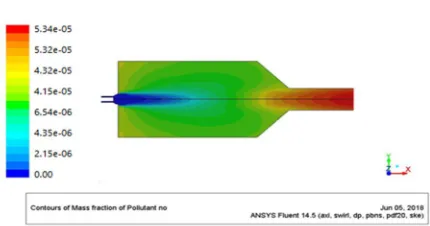
Figure no. 2 Mass fraction of Pollutant NO in case 1 (DIESEL)
[image:4.612.191.424.603.714.2]Figure no. 4 Mass fraction of Pollutant CO2 in case 1 (DIESEL)
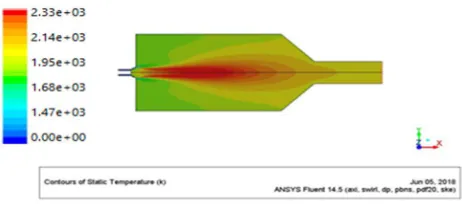
[image:5.612.207.417.91.228.2]Figure no. 5 Contour of Static Temperature in case 1 (DIESEL)
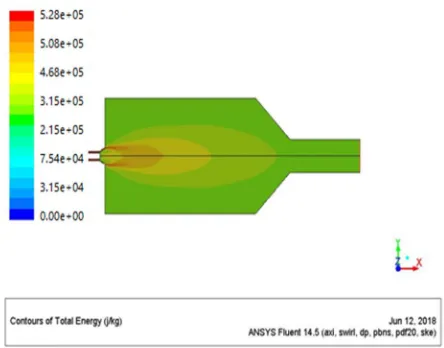
Figure no. 6 Contour Total Energy in case 1 (DIESEL)
[image:5.612.205.416.596.712.2]Figure no. 8 Mass fraction of Pollutant NO in case 2 (D90E5M5)
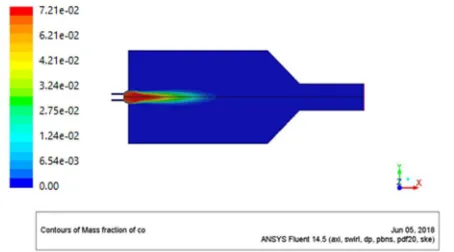
[image:6.612.214.429.84.197.2]Figure no. 9 Mass fraction of Pollutant CO in case 2 (D90E5M5)
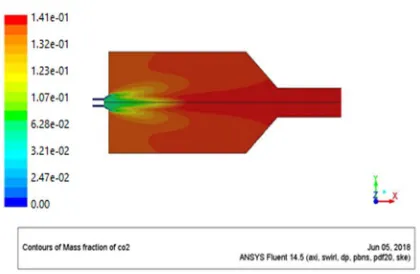
Figure no. 10 Mass fraction of Pollutant CO2 in case 2 (D90E5M5)
Figure no. 12 Contour Total Energy in case 2 (D90E5M5)
Figure no.13 Mass fraction of Soot in case 3 (D80E10M10)
Figure no. 14 Mass fraction of Pollutant NO in case 3 (D80E10M10)
Figure no. 16 Mass fraction of Pollutant CO2 in case 3 (D80E10M10)
Figure no. 17 Contour of Static Temperature in case 3 (D80E10M10)
Figure no. 18 Contour Total Energy in case case 3 (D80E10M10)
Figure no. 20 Contour of SOOT in case 4(D70E15M15)
Figure no. 21 Contour of mass fraction of NO in case 4(D70E15M15)
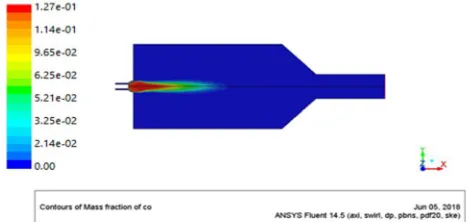
Figure no. 22 Contour of mass fraction of CO in case 4(D70E15M15)
Figure no. 24 Contour of Static Temperature in case 4(D70E15M15)
Figure no.25 Mass fraction of Soot in case 5 (D75E10M10+TiO2)
Figure no.26 Mass fraction of NO in case 5 (D75E10M10+TiO2)
Figure no.28 Mass fraction of CO2 in case 5 (D75E10M10+TiO2)
Figure no. 29 Contour of Static Temperature in case 5(D75E10M10+TiO2)
Figure no. 30 Contour Total Energy in case case 5 (D75E10M10+TiO2)
VI. CONCLUSION
1) Simulation results show a stable flow phenomenon which is required in CFD method for accuracy of flow system and authenticity of results.
2) Temperature is increasing with increased percentages of alternative fuels in Diesel that shows combustion rate is getting higher from Conventional fuel Diesel to Blending of alternate fuels percentages, which means efficiency of fuels is increasing with higher blending grade.
3) conventional fuel and alternate fuels is better as compare to other cases and due to this higher combustion efficiency as well as the low emission percentages is achieved in stable conditions.
4) Nano Additive TiO2 is used in case 5 which give an excellent combustion rate and lower emission rate that shows the nano additive plays an important role for better mixing, penetration and combustion rate in fuel blending.
5) Total energy is increased with higher grade alternate fuel.
6) Emissions percentages of COX and NOX are continuous decreasing while we go from case1 to case5.
REFERENCES
[1] B. Prabakaran *, Anurag Udhoji “Experimental investigation into effects of addition of zinc oxide on performance, combustion and emission characteristics of diesel-biodiesel-ethanol blends in CI engine” School of Mechanical Sciences, Hindustan Institute of Technology and Science, Padur, Chennai, TN, India Received 28 March 2016; revised 25 July 2016; accepted 25 August 2016 Available online 21 September 2016.
[2] C. A. Harch, M. G. Rasul*, N. M. S. Hassan, M. M. K. 10th International Conference on Mechanical Engineering, ICME 2013 Modelling of Engine Performance Fuelled with Second Generation Biodiesel Bhuiya School of Engineering and Technology, Central Queensland University, Rockhampton, Queensland 4702, Australia
[3] Dean Bishopa, Rong Situa*, Richard brownb, Nicholas Surawskic 1st International Conference on Energy and Power, ICEP2016, 14-16 December 2016, RMIT University, Melbourne, Australia Numerical modelling of biodiesel blends in a diesel engine a School of Engineering and Physical Science, James Cook University, Townsville, Queensland 4811, Australia.
[4] Szuhánszki J.a, Black S.a, Pranzitelli A.*a, Ma L.a, Stanger P.J.a,b, Ingham D.B.a, Pourkashanian M.a Evaluation of the performance of a power plant boiler firing coal, biomass and a blend under oxy-fuel conditions as a CO2 capture technique a CFD Centre, Energy Technology and Innovation Initiative (ETII), Faculty of Engineering, University of Leeds, Leeds, LS2 9JT, UK T T bE.ON New Build and Technology, Technology Centre, b Ratcliffe-on-Soar, Nottingham NG11 0EE, UK.
[5] Y. Datta Bharadwaz *, B. Govinda Rao, V. Dharma Rao, C. Anusha Improvement of biodiesel methanol blends performance in a variable compression ratio engine using response surface methodology Department of Mechanical Engineering, Gayatri Vidya Parishad College of Engineering, Visakhapatnam, India Received 21 January 2016; revised 20 March 2016; accepted 4 April 2016 Available online 23 April 2016.
[6] A. Andreinia, M. Ceruttib, B. Facchinia, A. Innocentia,* CFD analysis of NOx emissions of a natural gas lean premixed burner for heavy duty gas turbine a Department of Industrial Engineering of Florence, University of Florence, Via di S. Marta 3,Florence 50139, Italy bGE Oil & Gas, Via F. Matteucci 2, Florence 50139, Italy.
[7] Debo Lia, Qiang Lvb, Yongxin Fenga, Chang’an Wangb, Xuan Liub, Kai Chenb, Kai Xua, Jun Zhonga, Defu Cheb Effects of Coal Blending and Operating Conditions on Combustion and NOx Emission Characteristics in a Tangentially-fired Utility Boiler * aElectric Power Research Institute of Guangdong Power Grid Corporation, Guangzhou, 510080, China bState Key Laboratory of Multiphase Flow in Power Engineering, School of Energy and Power Engineering, Xi’an Jiaotong University, Xi’an, 710049, China.
[8] Maria Grazia De Giorgi*, Aldebara Sciolti, Stefano Capilongo, Antonio Ficarella Experimental and Numerical Investigations on the Effect of Different AirFuel Mixing Strategies on the Performance of a Lean Liquid Fueled Swirled Combustor University of Salento, Department of Engineering for Innovation, Via per Monteroni, Lecce 73100, Italy.
[9] Antonio Andreinia, Bruno Facchinia, Alessandro Innocentia,∗, Matteo Ceruttib Numerical analysis of a low NOx partially premixed burner for industrial gas turbine applications aDepartment of Industrial Engineering of Florence (DIEF), University of Florence, Florence 50139, Italy bGE Oil&Gas, Via F. Matteucci 2, Florence, Italy.
[10] Vincenza Liguori ∗Numerical investigation: Performances of a standard biogas in a 100 kWe MGT University of Naples Federico II, Polytechnic School and of the Basic Sciences, P.le V.Tecchio 80, 80125, Italy.
[11] Murugan Sivalingam a,b,*, Subranshu Sekhar Mahapatra b, Dulari Hansdah b, Bohumil Hora´k a Validation of some engine combustion and emission parameters of a bioethanol fuelled DI diesel engine using theoretical modelling a Department of Cybernetics and Biomedical Engineering, VSB Technical University, Ostrava, Czech Republic b Department of Mechanical Engineering, National Institute of Technology, Rourkela, India.
[12] Xiao Ha*, Howard MSb, Valera-Medina Aa, Dooley Sb, Bowen Pa Reduced Chemical Mechanisms for Ammonia/Methane CoFiring for Gas Turbine Applications a Cardiff University, Queen’s Building, Cardiff CF24 3AA, United Kingdom.
[13] Simone Malagutia*, Giuseppe Baglia, Stefano Piccininib, Giuseppe Cantorea Development of a multi-component based methodology for the simulation of reacting high injection pressure Diesel sprays a University of Modena and Reggio Emilia, Strada Vignolese 905, Modena, 41125, Italy b Istituto Motori CNR, Viale Marconi, 8, Napoli, 80125, Italy.
[14] Del Zotto L.a, Tallini A.a, Di Simone G.b, Molinari G.a, Cedola L.a,* Energy enhancement of solid recovered fuel within systems of conventional thermal power generation a Faculty of Engineering, Department of Mechanical and Aerospace Engineering, Sapienza University, Rome 00184, Italy bCivil Engineer, L'Aquila 67100, Italy.
[16] Obed M. Alia,*, Nik Rosli Abdullahb, Rizalman Mamata, Abdul Adam Comparison Of The Effect Of Different Alcohol Additives With Blended Fuel On Cyclic Variation In Diesel Engine Abdullaha aFaculty of Mechanical Engineering, Universiti Malaysia Pahang, 26600, Pekan, Pahang, Malaysia bFaculty of Mechanical Engineering, Universiti Teknologi MARA (UiTM), 40450 Shah Alam Selangor Darul Ehsan, Malaysia.
[17] 8 Amir Khalid1,a*, Mirnah Suardi1,b, Ronny Yii Shi Chin1 and Shahrin Hisham Amirnordin18th International Conference on Sustainability in Energy and Buildings, SEB-16, 11-13 September 2016, Turin, ITALY Effect of Biodiesel-water-air derived from Biodiesel Crude Palm Oil Using Premix Injector and Mixture Formation in Burner Combustion .
[18] Dinesh Kumar Soni *, Rajesh Gupta Numerical investigation of emission reduction techniques applied on methanol blended dieselengine Department of Mechanical Engineering, M.A.N.I.T, Bhopal, India Received 2 December 2015; revised 2 February 2016; accepted 20 February 2016 Available online 20 April 2016.
[19] Dulari Hansdah a,*, S. Murugan a, L.M. Das b Experimental studies on a DI diesel engine fuelled with bioethanol-diesel emulsions a Mechanical Engineering Department, NIT Rourkela, Odisha 769 008, Indiab Centre for Energy Studies, Indian Institute of Technology, Delhi, India Received 18 February 2013; revised 20 May 2013; accepted 4 June 2013 Available online 1 July 2013.
[20] Liming Cai ⇑, Heinz Pitsch Optimized chemical mechanism for combustion of gasoline surrogate fuels Institute for Combustion Technology, RWTH Aachen University, 52056 Aachen, Germany, Contents lists available at Science Direct Combustion and Flame journal homepage:
[21] Jo-Han Nga,b, JingHuey Khora, Kang Yao Wonga, Srithar Rajooc,d, Cheng Tung Chongd The 7th International Conference on Applied Energy –ICAE2015 Statistical Analysis of Engine System-Level Factors for Palm Biodiesel Fuelled Diesel Engine Responses.
[22] Gabriel Pereira 1 , Yosio E. Shimabukuro 1 , Elisabete C. Moraes 1 , Saulo R. Freitas 2 , Francielle S. Cardozo Karla M. Longo Monitoring the transport of biomass burning emission in South Americ Atmospheric Pollution Research Journal.
[23] A. Gimelli, A. Luongo* 68th Conference of the Italian Thermal Machines Engineering Association, ATI2013 THERMODYNAMIC AND EXPERIMENTAL ANALYSIS OF A BIOMASS STEAM POWER PLANT: CRITICAL ISSUES AND THEIR POSSIBLE SOLUTIONS WITH CCGT SYSTEMS University of Naples Federico II, Departement of Industrial Engeenering,via Claudio, 21, 80125 Napoli, Italy.
[24] Thomas Bohl, Guohong Tian, Andrew Smallbone ⇑, Anthony P. Roskilly Macroscopic spray characteristics of next-generation bio-derived diesel fuels in comparison to mineral diesel Sir Joseph Swan Centre for Energy Research, Newcastle University, Newcastle upon Tyne NE1 7RU, UK.