Abstract—The management of business processes is a major challenge for many companies and much research is being done in this area. With regard to the assessment of process performance, researchers point out that companies have to be context-aware in order to fully understand the measured performance of their processes. Due to a continuously changing environment there are factors affecting performance which are not sufficiently considered. Methods to analyse performance such as the Data Envelopment Analysis need to be filled with the relevant data. However, research lacks of frameworks which structure contextual factors according to their different specifications. Thus, this paper aims to outline a holistic conceptualisation of contextual factors. Based on related research, a framework is derived which will guide companies through the different categories of contextual factors and allow them to rank the required awareness of these factors. The framework is applied to an exemplary process within a bank for visualisation purposes.
Index Terms—Analysis, business process, context-aware, performance
I. INTRODUCTION
USINESS Process Management (BPM) is a topic of interest for academics and simultaneously of great importance for practitioners [1]. It deals with “methods, techniques, and tools to support the design, enactment, management, and analysis of operational business processes.“ [2, p. 1]. Regarding the analysis of business process performance, understanding the root causes for performance variation can be considered as one challenge faced by companies. Various methodologies such as the Data Envelopment Analysis (DEA) exist which can be used to analyse the performance of business processes [3]. However, these methods need to be filled with relevant input data such as the related influencing factors. Thus, in practice companies often neglect the effect of context on performance, although it is as a major reason for performance deviation [4].
For an analysis of the impact of the context on performance indicators it is necessary to operationalize the context in the form of contextual factors [5]. The origins of
D. K. is with the Frankfurt School of Finance and Management, Sonnemannstraße 9-11, 60314 Frankfurt am Main, Germany (e-mail: [email protected]).
D. M. is with the Frankfurt School of Finance and Management, Sonnemannstraße 9-11, 60314 Frankfurt am Main, Germany (e-mail: [email protected]).
M. L. is with the Frankfurt School of Finance and Management, Sonnemannstraße 9-11, 60314 Frankfurt am Main, Germany (e-mail: [email protected]).
these factors can either be the corporate environment or internally [6]. Contextual factors which might be relevant are for instance the time when activities are performed, the location where activities are performed, or the culture within a company [7].
As contextual factors have many facets both in terms of their origin as well as their characteristics it is difficult for companies to identify all of them. There are recommendations how to find contextual factors which have an influence on the process performance [e.g. 4, 8]. But this is difficult when not knowing on which contextual factors to concentrate. Therefore, a categorisation of contextual factors seems to be an appropriate first step in order to get an understanding of their different natures [9]. Thus, the research question is how contextual factors for business process performance can be conceptualised. Several approaches to this already exist in literature but none provides a general applicable framework, which is shown in the following.
Rosemann et al. [4, 7] propose an onion model to classify the different types of contexts. This model, however, focusses mainly on the distinction of general layers for classifying contextual factors. A derivation of different subgroups within each layer is omitted. Ramos et al. [8] develop external context categories and, thus, misses out possible internal origins of contextual factors completely. As opposed to Ramos et al. [8], the process context tree of Bessai et al. [10] concentrates exclusively on internal characteristics contextual factors can have which neglects the external dimension. A more comprehensive context tree is developed by Saidani and Nurcan [11]. The authors assume that their context tree is only applicable to a particular domain and adaptations are needed for other domains. Therefore, results are non-transferable and the disadvantage of their model is a not given applicability for other domains.
All listed disadvantages or non-considered aspects of the previous approaches should be overcome by a new framework of contextual factors which incorporates external as well as internal characteristics of the context and comes up with more tangible context types. Moreover, the framework presented in this article has the intention to guide companies through the importance of different kinds of contextual factors for a specific business process and whether these can be influenced by the company. The main aim of the framework is to raise the companies’ context awareness.
The paper has the following structure: In section 2, the theoretical background of contextual factors and its different research streams are outlined. Secondly, in section 3, work related to the categorisation of contextual factors is summarised. Based on theory the framework for the
Conceptualisation of Contextual Factors for
Business Process Performance
D. Kronsbein, D. Meiser, and M. Leyer, Member, IAENG
structuring of contextual factors is developed in section 4 and the functioning is explained in general means. In section 5 the framework is applied to a banking process in order to get a clear understanding of how the framework can be used in practice. Finally, the main findings of the paper, its limitations, as well as its implications for practise and future research are summarised in section 6.
II. THEORETICAL BACKGROUND
This section gives a summary of the main research streams concerning contextual factors. Four different research interests have been identified which are important for a generic understanding of contextual factors as well as for the construction of the framework.
A. Context Awareness
To get a better understanding of inefficiency drivers that arrive from an extrinsic source, researchers attach high importance to the context in which a business process takes place [e.g. 7, 8, 10, 12]. Such an approach is often connected with the term “context-awareness” which will also be a central point of this article. Indeed, the term was already used in 1994 by Schilit and Theimer [13] with regard to mobile distribution computing and should not totally be new to those responsible for designing business processes. There have been made several approaches how to combine business process modelling with the associated sensitivity to the context. Pugh et al. [14] consider the context in relation to the customer by introducing context related knowledge which should guarantee that business processes become more and more “self-managing, automatic and minimising” [11, p. 8]. Context-awareness should primarily be triggered by the introduction of diverse conceptual foundations like it is the case with the “complex adaptive system” [15]. This complex adaptive system should enable individuals that are interacting in the process to respond quickly to any externally induced change. Consequently, changes in the environment are in the best case anticipated and the business process is adapted immediately. Some further research tends also to outline a causal relationship between context-awareness and the radical changes declared by Hammer and Champy [16] with respect to business process reengineering. This is based on the idea that business process reengineering can exclusively be successful when the premise of permanent context awareness is met at each step of evaluating and redesigning the process [10].
A special focus in the literature is on the context-aware design as well as on the techniques of context-awareness that have been suggested by Ploesser et al. [12]. The authors highlight that context-awareness spans all cycles of business process management and should be separated into four complementary pieces. As a matter of fact, the four introduced techniques of context-awareness (i.e. context mining, context modelling, context taxonomies for industries, and context-awareness) play a prominent role within each attempt to improve business processes.
B. Definition of Contextual Factors
Even though the general idea of contextual factors is known since decades [e.g. 14, 17], academic literature lacks of precise definitions of what is meant by contextual factors. In 2001, Dey [9, p. 5] defined context in a generic way on
an operational level: “Context is any information that can be used to characterise the situation of an entity.” Another more narrow definition referring to business processes is given by Rosemann et al. [7, p. 3]: “The combination of all implicit and explicit circumstances that impact the situation of a process can be termed the context in which a business process is embedded.” Summarising both definitions it can be concluded that context is any implicit and explicit information about circumstances or situations which affect an entity. A certain characteristic of such a circumstance or situation is termed as contextual factor.
C. Levels of Contextual Factors
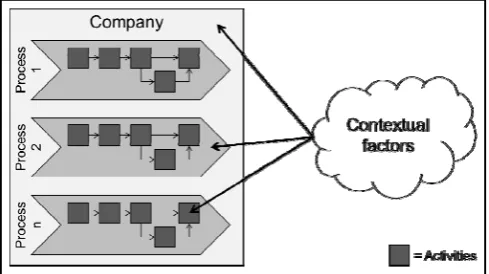
[image:2.595.305.550.341.478.2]When examining the academic literature regarding how contextual factors influence companies, papers can be distinguished according to their focus on different corporate entities, namely the whole company, its processes, and its activities. From a process perspective, it can be said that a company consists of a number of processes and each processes consists of a number of activities [16]. In the following, this section summarises each of these research streams. Figure 1 shows the relationships between contextual factors and the different corporate entities revealed in the literature.
Fig. 1. Contextual Factors Influencing Entities
Early research concentrated on the influence of contextual factors on the company level [e.g. 14, 17, 18]. For example, Pugh et al. [14] examined the impact of contextual variables such as origin and history, ownership and control, size, charter, technology, location, resources, and dependence of organisations on their structure. Similar Youssef [18] investigated the influence of contextual factors on the effectiveness of control strategies. However, early research remained vague as it did not specify the link between contextual factors and the company clearly. Nevertheless, this research was the first who revealed the dependency of an organisation on the context and pointed out that it is always important to consider the context when analysing a specific business situation.
season of the year. Ramos et al. [8] try to identify contextual factors within a credit analysis process of a German bank by measuring variations of the process output.
Regarding the influence of contextual factors on activities only one paper can be found in the literature [19]. It studies the effect of three environmental and organisational contextual factors (i.e. type of loan, level of approval, and weekdays) on activities within a loan application process of a German bank. The paper reveals that activities within a process are affected differently by the same contextual factors. Some activities are more sensitive to certain context characteristics than others. This is an important insight when thinking about a modification of the process in adaptation to a changed context as each activity has to be analysed individually.
Altogether, until now researchers showed that contextual factors can have an influence on the whole company, processes within the company, or on activities within processes.
D. Performance of Business Processes influenced by Contextual Factors
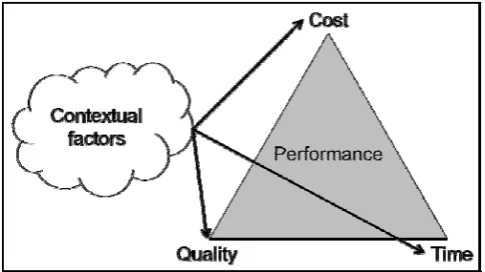
[image:3.595.46.289.398.534.2]Detecting the reasons for process variations and diminishing the reasons for poor process performance or facilitating the reasons which enhance the performance of the process is the main aim of investigating the context [12]. As there are a variety of Key Performance Indicators (KPIs), Figure 2 shows three main groups KPIs can be assigned to [20].
Figure 2: Contextual Factors Influencing Performance
The first category of performance indicators is related to quality. These indicators measure the accordance of products or services with specifications by monitoring factors such as the number of defects or the effort needed to prevent unacceptable quality. The second category is related to time. Typical KPIs to indicate manufacturing performance of a firm are for example cycle time or time-to-market. In the third category are those KPIs which assess the costs of a firm. This can be done by looking at the cost type (e.g. accounting cots or absorbed costs) as well as by distinguishing the different sources of costs (e.g. material costs, labour costs) [21].
Unfortunately, there is no strong empirical evidence about the influence of contextual factors on certain performance indicators. Previous research always takes only a few or just one performance indicator. Rosemann et al. [4, 7], for example, are exclusively interested in the time the reservation and check-in procedure needs. In addition, the exact magnitude of the impact remains unclear almost at all
times. However, the research done by [19] is an exception as it shows that contextual influence can be precisely validated empirically. First, with the aid of process mining, the process activities are identified before the effects of assumed contextual factors on the processing time of each activity are analysed using statistical methods. This seems to be a reasonable approach which should be replicated by other researchers in order to find out more about the link between the context and the KPIs of a process. But first, a more comprehensive framework is needed which clarifies the principal categories of contextual factors and classifies the required level of context-awareness. Therefore, the next subsections look at suggested categories and characteristics of contextual factors in literature.
III. RELATED WORK
This section of the paper is like aforementioned intended to accentuate the different categories and types of contextual factors which can be found in the literature. A first mentionable overview of contextual factors, even though not with any connection to business processes, has been provided by Pugh et al. [14]. Some of the accentuated contextual variables (e.g. ownership, resources, leadership) found entrance in later investigations of identifying appropriate context dimension and categories [e.g. 5, 6, 18]. Already in the early stages of the identification and clustering of contextual variables, researchers reached consensus that it is useful to differentiate between context factors that are internal and external of the company [e.g. 8, 11]. In general, there is a variety of different contextual variables that are cited in the literature and which provide subcategories of the external and internal dimension. The spectrum of different dimensions and characteristics is relatively broad as it ranges from the industry type [22] and normative factors within the organisation [23] to the availability respectively competence of employees [24] and different product characteristics [25]. Moreover, there are also variables which are difficult to measure such as customer expectations behaviour [19]. In addition, there is a tendency within the literature to make use of the PESTEL framework (abbreviation for political, economic, social, technological, ecological and legal) in order to classify contextual factors more precisely [e.g. 8, 12]. This is intentionally done with the motivation to adopt a well-established framework which is able to categorise factors from a macro-environmental perspective. Another interesting and concrete characteristic of contextual factors is the dynamic of each context variable [26]. Due to the fact that the external environment is considered to be fast changing, the variation and volatility of contextual factors should not be neglected and companies are well advised to have this component in contemplation [15].
IV. FRAMEWORK OF THE CONTEXTUAL INFLUENCE The development of the framework is based on the theoretical background that was revealed in the previous section. A depiction of the framework is shown in Table 1 and is explained in the following.
TABLEI
FRAMEWORKFORSTRUCTURINGTHECONTEXT
Dimension Context type
Internal Organisational conditions
Resource related Customer related
External Political
Economical Social Technological Environmental Legal
The starting point represents the unstructured contextual factors comparable to a black box. Indeed, companies might know about the existence of contextual factors, but do not know about their origin, their different attributes, as well as their impact on the company`s business process performance. Therefore, as a first step in accordance with the approaches made by many other researches, all context factors are classified by the criterion if they originate from inside or outside the company (i.e. whether it is an internal or external contextual factor). The next step can be considered as a first attempt of the authors to provide comprehensive subgroups for the internal and external dimension. From an internal perspective, three context types are derived which have from the authors’ point of view the capacity to include all contextual variables related to the internal dimension. The first context type to be mentioned is “organisational conditions” and a common example could be the leadership style [27]. The other two context types that are illustrated are “resource related” [28] (e.g. the skill level of the employees) and “customer related” [29] (e.g. the collaboration of customers with a company). In line with previous research the authors are convinced that the PESTEL framework suits for the purpose of clustering the external context. The PESTEL framework is also able to reflect all contextual factors that influence business processes from an external source. Examples of the PESTEL framework that are valid for some business processes could be in a chronological order: Political unrest, level of competition, technical acceptance, IT-development, weather and regulatory standards.
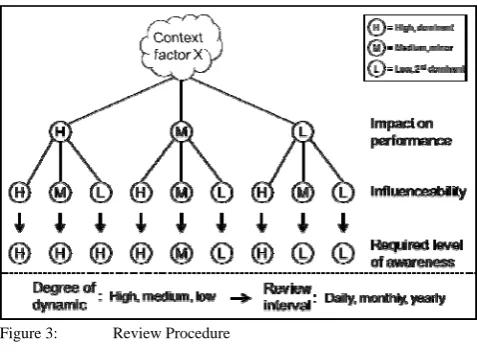
In addition to the dimension and type of the contextual factors, these have to be further evaluated to indicate their relevance. Figure 3 gives an overview on the review procedure with which the required level of awareness can be derived.
The very first aspect is the assessment whether the contextual factor has an impact on performance. This can be regarded as one of the main challenges when applying the framework to real world examples because contextual factors often correlate with each other and, therefore, can only hardly be evaluated on a standalone basis [5]. However, these dependencies have to be detected if existent and contextual factors have to be combined if necessary. Once the impact has been determined it has to be checked if
a contextual factor can be influenced. While some contextual factors can be influenced easily others cannot. Generally, companies should be aware of factors which cannot be influenced. However, these do not require the same level of attention as these can only be monitored but not directly altered to the benefit of the company. Both characteristics contribute to give a concrete advice on how sensitive companies should be to the respective contextual variable. Hence, the required level of awareness from the company`s side is the final outcome of the illustrated review procedure. In order to receive a clear decision on how intensive a contextual factor needs to be considered, the final outcome should avoid the medium level. Thus, the characteristic “high” is set to be dominant to highlight the importance of contextual factors which have an impact on performance or can strongly be influenced. This for instance leads to the recommendation to consider contextual factors which have a low impact but can be influenced easily. The second dominant characteristic is “low” meaning that in case if the impact on performance or the influenceability is “low” the required level of awareness is set to be “low”. In such cases a consideration of the contextual factor can be neglected. Overall, the framework enables companies to rank contextual factors due to their required level of awareness and concentrate on the most important ones.
[image:4.595.46.281.148.264.2]Another important aspect is the frequency of the described analysis which depends on the degree of dynamic of a contextual factor. The degree of dynamic states how often a certain contextual factor changes its attributes (i.e. the more frequently the contextual variables do so, the more dynamic they are). Thus, the desired review interval of the above described procedure can be derived depending on the “degree of dynamic”. In the next section the framework is applied to an exemplary process within a bank to illustrate the constructed framework more clearly.
Figure 3: Review Procedure
[image:4.595.305.544.469.647.2]Figure 4: Exemplary Process
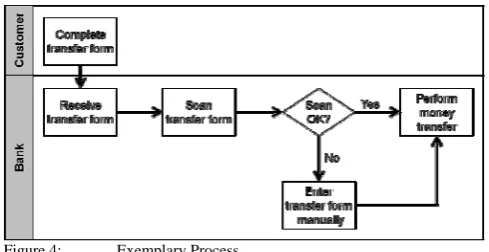
The process starts with the customer who completes the transfer form. Thereafter, the bank receives the transfer form. In the following, it is the task of a machine to scan the transfer form. If the transfer form has been filled out properly and the scan is satisfying, the bank immediately performs the money transfer. However, if problems emerge (e.g. due to unclear hand writing) an employee of the bank has to enter the transfer form manually before the money transfer is performed.
Even in such a simple process there are already numerous contextual factors which might have a significant effect on the performance of this business process. For each dimension and context type, one relevant example of a contextual factor is listed which might has an impact on performance or is influenceable and, thus, requires context awareness. The list is exemplary and does not claim to be complete as the purpose is to illustrate general applicability of the framework. For reasons of clarity and comprehensibility the framework is applied as shown in Table 2.
In the following, one example for each context dimension is chosen from the table with the intention to make the functioning of the framework clear. The first one is the internal customer related context “accuracy of the handwriting” of the customer when completing the transfer form. Looking at the impact of the accuracy of handwriting, the “impact on performance” is ranked as “high” due to the fact that an inaccurate handwriting can result in making an intervention of an employee necessary which is an additional activity and, thus, decreases the overall performance of the process. The influenceability from the company’s side is ranked “medium” because the bank can on the one hand try to influence the customer’s handwriting by asking the customer to write legibly but on the other
hand the final completion of the transfer form is out of the bank’s control. As a result, the required level of awareness for the context factor “accuracy of handwriting” must be “high” because its high impact on performance is dominant. In the end, the “degree of dynamic” has to be analysed in order to determine the review interval. The degree of dynamic can be considered as being “low” because the handwriting differs generally for customers. Thus, a yearly review interval is suggested.
The other external context example within the context type “political” refers to the political decision towards a Single European Payment Area (SEPA). Its impact on performance is “high” because of the fundamental changes for the money transferring process caused by SEPA. But its influenceability by banks is only “low” (e.g. through lobbyism). All in all, the required level of awareness of SEPA is “high” because the high impact on performance is dominant. The degree of dynamic is “low” as there are no modifications foreseeable after SEPA has been introduced once and, therefore, a yearly review interval seems to be sufficient. As indicated by the analysis of these two contextual variables, contextual factors have various aspects which could be incorporated in their analysis. However, a deeper analysis would go far beyond the purpose of this example as it would not enhance the understanding of the framework.
VI. CONCLUSION
This paper has introduced a new framework that helps to get an overview of contextual factors that influence the performance of processes. Previous attempts in research mainly aimed at raising context awareness of companies. A comprehensive framework was missing which addresses all potential types of contextual factors and helps companies to determine their required level of awareness as well as the review interval for a contextual factor. This weakness has been overcome by introducing a clear and comprehensive framework which can be applied by companies in their day-to-day operations.
Methods to analyse process performance (e.g. DEA) can be provided with adequate input using the framework. Thus, DEA analyses to determine process efficiency can be performed with and without a certain contextual factor. The results of the DEA can be compared whether the objects in the process are still in the same performance ranking or how TABLEII
OVERVIEWOFTHECONTEXTUALFACTORSOFTHEEXEMPLARYPROCESS Context
dimension
Context type Example of context
Impact on
performance Influenceability
Required level of
awareness Review internal Internal Organisational Workload of the
process
High Medium High Monthly
Resource related Deterioration of the machine
Medium High High Yearly
Customer related Accuracy of the handwriting
High Medium High Daily
External Political SEPA High Low High Yearly
Economical Economic growth Medium Low Low Yearly
Social Acceptance of
online banking
High Medium High Monthly
Technological Alternative money transfers
Medium Low Low Monthly
Ecological - - -
Legal Clearing by the central bank
a contextual factor is influencing the performance ranking. Each company should be emboldened to analyse its business processes in order to identify contextual factors from inside and outside the company. Thus, companies will be able to operate their processes more efficiently. A holistic framework like the one derived in this article prevents that some contextual factors fall into oblivion or that companies concentrate on analysing unimportant factors. To sum up, by applying the proposed framework to reality companies can get an impression of the required level of context awareness of different types of contextual factors which affect a certain business process.
Limitations of the paper which might also indicate potential for future research are elaborated in the following. Firstly, there is no guidance of how to derive a specific contextual factor. Thus, the quality and quantity of identified contextual factors depends on the process knowledge of the user of the framework. Nevertheless, the different proposed context types can guide companies to potential contextual factors. Moreover, a clear distinction between low, medium, and high is missing. Right now the classification is purely subjective and a more precise measurement would be needed if different employees should work with the framework. Another limitation of the framework is that it has only been applied to one small running example. Applications to reality (e.g. in form of case studies) in different industries are needed in order to evaluate the true applicability of the framework. Despite its limitations the framework helps companies to structure the context affecting their business processes and concentrate on those contextual factors which require the highest level of awareness.
REFERENCES
[1] M. Weske, Business Process Management. Concepts, Languages, Architecture. 2nd ed., Heidelberg: Springer, 2012.
[2] W. M. P. van der Aalst, A. H. M. ter Hofstede, and M. Weske, "Business Process Management. A Survey, " in W.M.P. van der Aalst, A.H.M. ter Hofstede, and M. Weske, Eds. Berlin Heidelberg, Springer, 2003, pp. 1-12.
[3] A. Charnes, W. W. Cooper, and E. Rhodes, "Measuring the efficiency of decision making units," European Journal of Operational Research, vol. 2, no. 6, pp. 429-444, July 1978.
[4] M. Rosemann, J. C. Recker, and C. Flender, "Contextualization of Business Processes," International Journal of Business Process Integration and Management, vol. 3, no. 1, pp. 47-60, 2008.
[5] R. D. Banker and R. Natarajan, "Evaluating Contextual Variables Affecting Productivity Using Data Envelopment Analysis," Operations Research, vol. 56, no. 1, pp. 48-58, January, February 2008.
[6] V. M. Papadakis, S. Lioukas, and D. Chambers, "Strategic Decision making processes. The role of management and context," Strategic Management Journal, vol. 19, no. 2, pp. 115-147, 1998.
[7] M. Rosemann, J. Recker, C. Flender, and P. Ansell, "Understanding context-awareness in business process design, " in Proceedings 17th Australasian Conference on Information Systems, S. Spencer, and A. Jenkins, Eds. Adelaide, 2006, pp.
[8] E. Ramos, F. M. Santoro, and F. Baiao, "Process Improvement Based on External Knowledge Context," In Proceedings of the Proceedings of the 21th Australasian Conference on Information Systems, Brisbane, 2010, ACIS. 2010, Paper 34.
[9] A. K. Dey, "Understanding and using context," Personal and Ubiquitous Computing, vol. 5, no. 1, pp. 4-7, Feb 2001.
[10] K. Bessai, B. Claudepierre, O. Saidani, and S. Nurcan, "Context-aware business process evaluation and redesign, " in S. Nurcan, R. Schmidt, and P. Soffer, Eds. Montpellier, 2008, pp.
[11] O. Saidani and S. Nurcan, "Towards context aware business process modelling," In Proceedings of the 8th Workshop on Business Process
Modeling, Development, and Support, Trondheim, 2007, BPMDS. 2007, pp.
[12] K. Ploesser, M. Peleg, P. Soffer, M. Rosemann, and J. C. Recker, "Learning from context to improve business processes," BPTrends, vol. 6, no. 1, pp. 1-7, January 2009.
[13] B. N. Schilit and M. M. Theimer, "Disseminating active map information to mobile hosts," IEEE Network, vol. 8, no. 5, pp. 22-32, Sep/Oct 1994.
[14] D. S. Pugh, D. J. Hickson, C. R. Hinings, and C. Turner, "The context of organization structures," Administrative Science Quarterly, vol. 14, no. 1, pp. 91-114, 1969.
[15] K. Ploesser, J. Recker, and M. Rosemann, "Challenges in the context-awareness management. A multiple case study, " in Proceedings of The 19th European Conference on Information Systems. ICT and Sustainable Service Development, V.K. Tuunainen, Ed. Helsinki, Aalto University School of Economics, 2011, pp. 1-13.
[16] M. Hammer and J. Champy, Reengineering the Corporation. A Manifesto for Business Revolution. New York: HarperCollins, 1993. [17] D. S. Pugh, D. J. Hickson, and T. Lupton, "A conceptual scheme for
organisational analysis," Administrative Science Quarterly vol. 8, no. 3, pp. 289-315, 1963.
[18] S. M. Youssef, "Contextual factors influencing control strategy of multinational corporations," Academy of Management Journal, vol. 18, no. 1, pp. 136-143, March 1975.
[19] M. Leyer, "Towards a context-aware analysis of business process performance," In Proceedings of the Proceedings of the 15th Pacific Asia Conference of Information Systems (PACIS 2011), Brisbane, 2011. 2011, Paper 200.
[20] D. Parmenter, Key Performance Indicators (KPI). Developing, Implementing, and Using Winning KPIs. 2 Hoboken, NJ: Wiley, 2010.
[21] A. D. Neely, M. Gregory, and K. Platts, "Performance measurement system design," International Journal of Operations & Production Management, vol. 15, no. 4, pp. 80-116, 1995.
[22] G. D. Bhatt, "Exploring the relationship between information technology, infrastructure and business process re-engineering," Business Process Management Journal, vol. 6, no. 2, pp. 139-163, 2000.
[23] R. Jelinek, M. Ahearne, J. Mathieu, and N. Schillewaert, "A longitudinal examination of individual, organizational, and contextual factors on sales technology adoption and job performance," Journal of Marketing Theory and Practice, vol. 14, no. 1, pp. 7-23, 2006. [24] M. N. Davies, "Bank-office process management in the financial
services. A simulation approach using a model generator," The Journal of the Operational Research Society, vol. 45, no. 12, pp. 1363-1373, December 1994.
[25] B. Wetzstein, P. Leitner, F. Rosenberg, I. Brandic, S. Dustdar, and F. Leymann, "Monitoring and analyzing influential factors of business process performance, " in Enterprise Distributed Object Computing Conference 2009, Piscataway, 2009, pp. 118-127.
[26] D. J. Ketchen, J. B. Thomas, and R. R. McDaniel, "Process, content and context. Synergistic effects on organizational performance," Journal of Management, vol. 22, no. 2, pp. 231-257, 1996.
[27] J. H. Y. Tsang and J. Antony, "Total quality management in UK service organisations. Some key findings from a survey," Managing Service Quality, vol. 11, no. 2, pp. 132-141, 2001.
[28] J. R. Anderson, "Managing employees in the service sector. A literature review and conceptual development," Journal of Business and Psychology, vol. 20, no. 4, pp. 501-523, 2006.