1
Exploring gender and climate justice
:A multiscalar analysis of gender mainstreaming in climate change
adaptation, evidence from Malawi
Jane Maher
A thesis submitted to the Geography Department, University of Dublin, Trinity College, in fulfilment of the requirements for the Doctor of Philosophy
September 2018
Declaration
I declare that this thesis is entirely my own work and has not been submit as an exercise for a degree at this or any other university. Where information is not my own, it is acknowledged accordingly within the text of this thesis. I agree to deposit this thesis in the University’s open access institutional repository or allow the Library to do so on my behalf, subject to Irish Copyright Legislation and Trinity College Library conditions of use and acknowledgement
Signed:
Abstract
Thesis Summary
Climate change is recognised as the greatest threat to societies across the world. It is already affecting millions of people, and it is predicted, that over the forthcoming decades, billions of people will experience the, largely negative, impacts of climate change. An increase in global temperatures between 2.5°C and 4°C will result in an extra 45–125 million people threatened with hunger. While climate change is a global phenomenon, it is also considered unequal and unjust. This is because, globally, emission production is unevenly dispersed, as are the effects of climate change. It is often low greenhouse gas emitting countries that are more vulnerable to climate change impacts. These countries are often found in low-income regions, particularly countries in Asia and sub-Saharan Africa, which often have a lower adaptive capacity.
Adaptive capacity is determined by underlying social and economic factors, such as gender. Therefore, climate change experiences are differentiated within, and between, communities, groups and individuals. There has been a growing emphasis on the differentiated impacts and vulnerabilities of climate change, and research on gender and climate change has been a key aspect of this. Women are often portrayed in literature as being more vulnerable to the impacts of climate change, due to their socially constructed roles and responsibilities, especially within the developing world. There has also been a noted underrepresentation of women in at all levels of climate change decision-making fora. These views have resulted in climate change policies and actions increasingly considering gender and women.
There is a gap in the literature surrounding how gender relations and considerations within climate change interact across scales. To rectify this, this research conducts a multiscalar analysis of climate justice issues regarding gender within climate change adaptation. A multi-method, embedded case study approach, which drew on intersectional feminist approaches, was used to carry out this multiscalar research. By examining the trickle-down of gender considerations in climate change policy from the international to the local, this research explored the distribution of climate change adaptation resources, based on gender mainstreaming, to communities in the Lower Shire Valley in Malawi.
extended the knowledge in the field of climate justice and climate change adaptation by highlighting barriers and pitfalls of current practices of gender mainstreaming in climate change adaptation across international, national, subnational and local scales.
The findings show that there has been an observable improvement in the discussions of gender issues within the climate change policy domain across scales. This research indicates that there is a clear trickle-down of gendered language from international policy to national policy, and on to subnational implementation. All the national policies that were analysed showed the use of gendered language, directly informed by and mirroring the guiding international policies. There was also an observed gender balance in climate change adaptation activities in the Lower Shire Valley. However, the use of gender considerations did not translate to the empowerment of women. Furthermore, women often have a lower adaptive capacity to climate change and its impacts, as compared to other groups within the community.
Local level data and analysis provided new findings on perceptions of vulnerability to climate change and the role of traditional leaders in the distribution of climate change adaptation. The findings show that there is a disparity between the understanding of vulnerability between policy-makers and communities. Policy-makers view women as the most climate vulnerable group based on their assigned roles and responsibilities, while the people in the Lower Shire Valley attribute vulnerability based on capabilities. The research also presented novel empirical evidence of the power of traditional leaders within climate change distribution in the Lower Shire Valley. The research noted the common practice of redistribution of resources by traditional leaders. This highlights the limitations of participatory approaches and a resistance by traditional leaders to change existing norms, particularly in light of the influence of external value systems. Finally, through use of an intersectional lens, the research could explore local experiences of climate change and access to adaptation across more diverse groups than merely a male/female divide. It shows how age, household structure and land status have implications on access to adaptation.
Acknowledgements
Firstly, I would like to sincerely thank to my two supervisors, Professor Anna Davies and Assistant Professor Susan Murphy, both of whom have been a great support throughout this project. I am very grateful for this and to have had the opportunity to have worked with you both.
This PhD would not have been possible without the financial support of Trinity College Dublin and the Irish Research Council. In particular, I would like to offer many thanks to the Irish Research Council, who provided the support that allowed me to conduct data collection in Malawi, and the opportunity to share my research in various forums.
There are so many people within the Geography department, past and present, who have helped me through this process. I would particularly like to thank Dr Padraig Carmody, Dr Mary Bourke, Elaine Tracey, Terry Dunne and Mary Forde. Also, thanks to Laragh Larsen, who provided me the opportunity to embark on my research career and who also encouraged my notions of starting this PhD journey. Thanks to the postgrads, particularly: Ankit Verma, Adowa Ofori, Chris Casey, Immanuel Darkwa, Jane Feeney, and Lauren McKeown. A big thanks to Gayle McGlynn and Niamh Cullen, who have been great friends to share lunches, pancakes, tea breaks and to chat with throughout all of this.
There are so many people who supported fieldwork and made data collection in Malawi possible. Firstly, thank you to Dr Stern Kita, a friend and colleague who I collaborated with during fieldwork in Malawi and whose support was greatly appreciated during this time. Secondly, thank you to the team of research assistants who provided invaluable assistance during fieldtrips to the Lower Shire Valley, particularly: Angela Thom, Esther Matiya, Joseph Chisani, Pemphoro Mumba and Tresfore Dambe. A big thanks to my Lilongwe taxi driver, Willy Petro, who provided so many lifts to and from interviews and meetings, and ensured that I was safe; this was a big reassurance to my family at home. The friends I made long the way, particularly Chris Blois-Brooke and Sil Boedi, who started as roommates and became the amazing friends that made my time in Lilongwe very special. Thanks too, to Dan and Andrew.
A big thanks to my great friends Alanna, Carolann, Erica and Yvonne, who have always been there for light relief over the phone or in person.
I would like to thank my uncles Frank and Liam, and particularly my uncle Denis – whose generosity during my time as a PhD student has meant so much to me. Also, thanks to my boyfriend’s family: Marie, Peter, Emma and Joakim – I am very grateful to feel a part of this family and for all the support.
A heartfelt thanks to my own family. Thank you to my mam and dad Edel and Paul, who both have provided unwavering support and belief in me, I hope I have done you proud. Thanks to my sister Kate, brother-in-law Kevin and little nephew Daniel, who have provided so many good laughs, happy distractions and memories. A special thanks to Daniel who has changed my world forever – I cannot wait to see you continue to grow.
Table of Contents
DECLARATION ... I ABSTRACT ... II THESIS SUMMARY ... III ACKNOWLEDGEMENTS ... V LIST OF ABBREVIATIONS ... XI
1. INTRODUCTION ... 1
1.1. CLIMATE CHANGE AND ADAPTATION ... 1
1.2. CLIMATE CHANGE ADAPTATION AND GENDER ... 2
1.3. RESEARCH RATIONALE ... 4
1.4. THESIS STRUCTURE ... 7
2. LITERATURE REVIEW ... 9
2.1. INTRODUCTION ... 9
2.2. CLIMATE JUSTICE ... 9
2.2.1. Transboundary climate change and assigning responsibility ... 12
2.2.2. Examining inequality ... 13
2.3. GENDER AND CLIMATE CHANGE: RELEVANT FEMINIST THEORIES ... 14
2.3.1. Gender and poverty ... 14
2.3.2. Ecofeminism and feminist political ecology ... 18
2.3.3. Intersectionality ... 20
2.4. GENDER AND CLIMATE JUSTICE ... 22
2.4.1. Women as vulnerable to climate change: a narrative of climate change vulnerability and resilience ... 24
2.5. CLIMATE CHANGE ADAPTATION ... 28
2.5.1. Finance for CCA and remedial justice ... 30
2.6. GOVERNANCE AND CLIMATE CHANGE ADAPTATION ... 32
2.6.1. Scale ... 33
2.6.2. Power and empowerment ... 35
2.7. CONCLUSION ... 39
3. CASE STUDY LOCATIONS FOR DATA COLLECTION: THE LOWER SHIRE VALLEY, MALAWI . 41 3.1. INTRODUCTION ... 41
3.2. BACKGROUND ... 41
3.3. GOVERNANCE ... 43
3.3.1. Government ... 44
3.3.2. Traditional leaders ... 45
3.3.3. Donors and development organisations ... 46
3.4. AGRICULTURE ... 47
3.4.1. Agriculture policies and programmes ... 49
3.5. CLIMATE CHANGE ... 51
3.6. GENDER IN MALAWI ... 53
4. METHODOLOGY ... 59
4.1. METHODOLOGICAL FRAMEWORK ... 59
Project design ... 59
4.2. THE CASE STUDY APPROACH ... 61
Fieldwork ... 64
4.3. DATA COLLECTION, SAMPLING AND ANALYSIS ... 64
Sampling framework: identifying data collection locations ... 64
Content analysis and coding: policy review ... 68
Semi-structured interviews ... 71
Focus group discussions ... 74
Household surveys ... 76
Demographics of research participants in the Lower Shire Valley explored. ... 78
Data analysis ... 80
4.4. RESEARCHER REFLECTIONS ... 81
Reflexivity and positionality ... 82
4.4.2. Research ethics ... 84
5. GENDER ANALYSIS OF INTERNATIONAL AND NATIONAL CCA POLICY ... 86
5.1. INTRODUCTION ... 86
5.2. GENDER ANALYSIS:POLICY PROGRESS OVER TIME ... 86
5.3. GENDER ANALYSIS:PROGRESS IN INTERNATIONAL POLICIES. ... 90
5.3.1. Gender in development policies: The Millennium Development Goals and the Sustainable Development Goals ... 91
5.3.2. Gender in climate policies and decisions: The Kyoto Protocol, UNFCCC decisions and the Paris Agreement ... 95
5.3.3. Gender in disaster risk management policies: The Sendai Framework for Disaster Risk Reduction and the Hyogo Framework of Action ... 100
5.4. GENDER ANALYSIS: PROGRESS IN NATIONAL POLICIES IN MALAWI. ... 102
5.4.1. Gender in governing strategies ... 103
5.4.2. National Gender Policy 2015 ... 105
5.4.3. Gender in Malawi’s UNFCCC documents ... 107
5.4.4. Gender in climate change policies ... 109
5.4.5. Gender in disaster risk management policies ... 111
5.5. CONCLUSION ... 113
6. NATIONAL AND SUBNATIONAL ACTOR PERCEPTIONS OF GENDER AND GENDER MAINSTREAMING IN CCA ... 116
6.1. INTRODUCTION ... 116
6.2. PERCEPTIONS GENDER AT NATIONAL AND SUBNATIONAL LEVEL ... 116
6.2.1. Thematic analysis: Perceptions of gender across scale ... 118
6.3. PERCEPTIONS OF GENDER MAINSTREAMING ACROSS NATIONAL AND SUBNATIONAL SCALE ... 123
6.4. BARRIERS PREVENTING THE TRANSLATION OF GENDER MAINSTREAMING FROM NATIONAL POLICIES TO SUBNATIONAL ACTIONS. ... 129
6.5. CONCLUSION ... 137
7. THE IMPACT OF CURRENT PRACTICES OF GENDER MAINSTREAMING VERSUS THE INTERSECTING ADAPTATION NEEDS ... 140
7.2. THE MAJOR CHALLENGES IDENTIFIED IN LOWER SHIRE VALLEY ... 140
7.3. VIEWS ON VULNERABILITY ... 148
7.4. ADAPTATION ... 154
7.4.1. Access to formal adaptation ... 156
7.4.2. Actions of informal adaptation: ganyu and income generating activities ... 159
7.4.3. Negative coping mechanisms ... 162
7.4.4. Lineage and access to adaptation ... 166
7.4.5. The female-headed household and adaptation ... 169
7.4.6. The gendered view of resettlement as an adaptation strategy ... 172
7.4.7. Gender mainstreaming in CCA and empowerment ... 176
7.5. CONCLUSION ... 179
8. DISCUSSION ... 182
8.1. INTRODUCTION ... 182
8.2. PROCEDURAL JUSTICE AND GENDER ACROSS SCALES ... 182
8.2.1. Procedural justice, participation and empowerment at local level ... 185
8.3. (RE)DISTRIBUTIVE JUSTICE? COMMUNITY ADAPTATION VERSUS EXTRENAL ADAPTATION ... 187
8.3.1. Distributive justice and views on vulnerability ... 190
8.3.2. Distributive justice and negative coping mechanisms ... 192
8.4. JUSTICE FOR THE “FORGOTTEN GROUP” AND THE VALUE OF THE INTERSECTIONAL LENS ... 194
8.5. GENDER MAINSTREAMING OR MAINSTREAMING THE STATUS QUO IN CCA? ... 197
8.6. CONCLUSION ... 200
9. CONCLUSION ... 202
9.1. KEY FINDINGS AND CONTRIBUTIONS ... 203
9.2. RESEARCH IMPLICATIONS ... 212
9.2.1. Implications for national CCA actions in Malawi ... 212
9.2.2. Implications for gender mainstreaming in CCA policies internationally ... 213
9.3. SUGGESTIONS FOR FUTURE RESEARCH ... 214
9.4. CONCLUDING REMARKS ... 215
APPENDIX ... 217
Table of figures
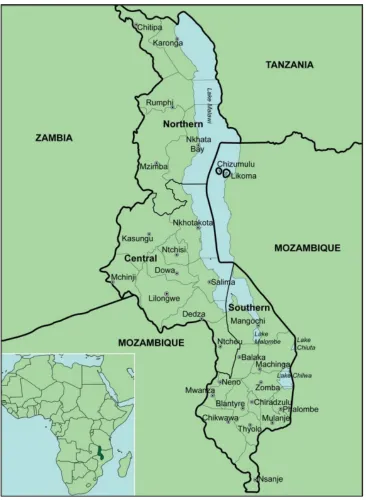
Figure 1: Map of Malawi ... 43
Figure 2: Map of the Lower Shire Valley: consisting of two districts Chikwawa and Nsanje ... 57
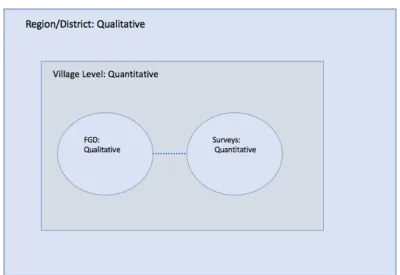
Figure 3: Embedded case study design ... 63
Figure 4: Mixed-method sampling framework ... 65
Figure 5: Chikwawa district and TA areas ... 67
Figure 6: Nsanje district and TA areas ... 67
Figure 7: Timeline of key policies and progress of gender mainstreaming ... 89
Figure 8: UNFCCC gendered decisions (data from UNFCCC, 2015a) ... 97
Figure 9: Disaggregated key challenges ... 141
Figure 10: Challenge ranking identified in FGDs ... 142
Figure 11: Comparative overview of importance of key challenges identified in FGDs ... 148
Figure 12: Views on vulnerability (from survey data) ... 149
Figure 13: Comparative overview of groups considered vulnerable identified in FGDs ... 150
Figure 14: Access to formal adaptation: (A) agricultural/development inputs, (B) humanitarian aid ... 157
Figure 15: Perspectives of resettlement identified in FGDs ... 174
Table of tables Table 1: Research Questions ... 6
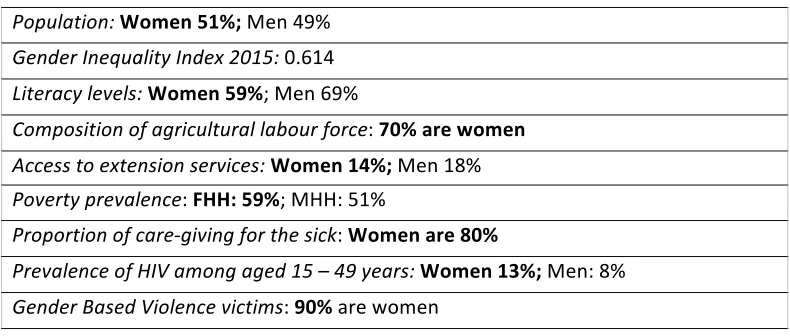
Table 2: Situation analysis of gender (Government of Malawi, 2012b; UNDP, 2018) ... 55
Table 3: Research questions and relevant case study subunit ... 60
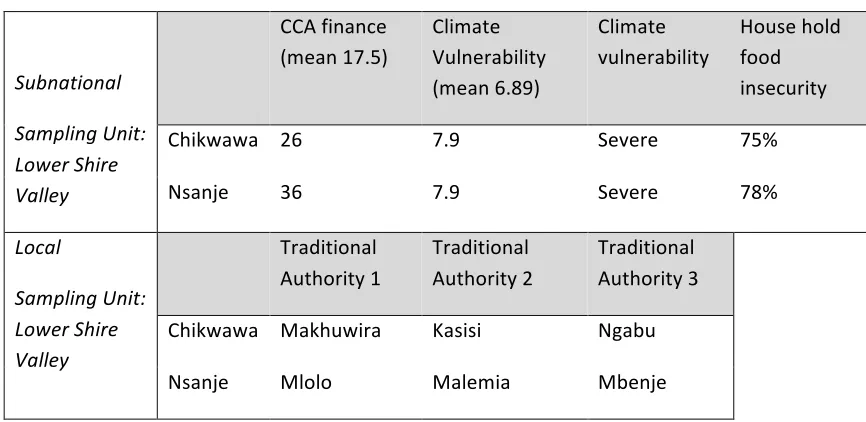
Table 4: Case study location sites justification ... 66
Table 5: International and national policies reviewed ... 69
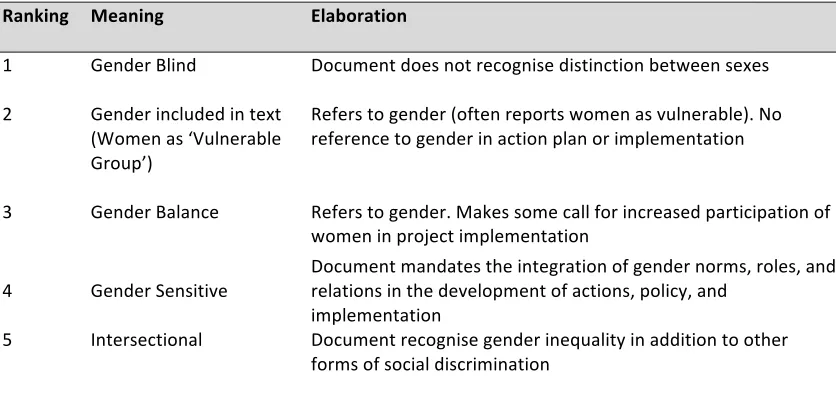
Table 6: Gender analysis ranking scheme ... 70
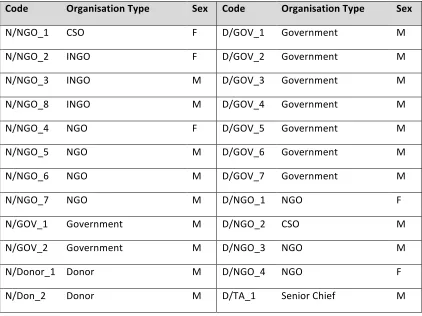
Table 7: Outline of national and subnational interviewees and identifier codes ... 72
Table 8: Interview schedule ... 73
Table 9: Outline of FGDs and identifier codes ... 76
Table 10: Thematic areas of household survey ... 77
Table 11: Demographic distribution of research participants (from survey data) ... 78
Table 12: Word frequency of national and subnational actors ... 117
Table 13: Disaggregated coping strategies employed by communities (from survey data) ... 155
Table 14: Distribution of ganyu amongst groups (from survey data) ... 159
Table 15: Distribution of informal labour amongst groups (from survey data) ... 160
Table 16: Distribution of negative coping mechanisms amongst groups (from survey data) ... 163
Table 17: Linage and CCA activities (from survey data) ... 167
Table 18: Demographics of female-headed households (from survey data) ... 170
Table 19: Comparison of adaptation between women in female-headed households to women in male-headed households (from survey data) ... 171
Table 20: Disaggregated decision-making and community participation ... 176
Table 21: Disaggregated education levels ... 177
Table 22: Disaggregated time use ... 178
List of Abbreviations
ASWAp – Agriculture Sector Wide Approach
AU/NEPAD – African Union and New Partnership for Africa’s Development BPfA – Beijing Platform for Action
BPfA+20 – 20 years since Beijing Platform for Action
CAADP – Comprehensive Africa Agriculture Development Programme CCA – Climate Change Adaptation
CEDAW - Convention on the Elimination of all Forms of Discrimination Against Women COP – Conference of Parties
CSO – Civil Society Organisation DRM – Disaster Risk Management EU – European Union
FAO – Food and Agriculture Organisation FGDs – Focus Group Discussions
FHH – Female Headed Households FISP – Food Input Subsidy Program FPE – Feminist Political Ecology
INGO – International non-Governmental Organisation IOM – International Organisation for Migration IPCC – Intergovernmental Panel on Climate Change
IUCN/WEDO – International Union for Conservation of Nature and Women’s Environment and Development Organisation
GDP – Gross Domestic Product GFP – Gender Focal Point ha – Hectare
HFA – The Hyogo Framework for Action
LDC – Least Developed Countries
LGBTQ – Lesbian, Gay, Bisexual, Transgender and Queer community MDGs – Millennium Development Goals
MGDS II – Malawi’s Second Growth and Development Strategy MVAC – Malawi’s Vulnerability Assessment Committee NAPA – National Adaptation Programme of Action NDC – Nationally Determined Contributions NGM – National Gender Machinery
NGO – non-Governmental Organisation
OHCHR – Office of the United Nations High Commissioner for Human Rights UN – United Nations
UNDP – United Nations Development Programme
UNFCCC – United Nations Framework Convention on Climate Change UNISDR – United Nations International Strategy for Disaster Reduction RQ – Research Questions
SDGs – Sustainable Development Goals
SDSN – Sustainable Development Solutions Network SFDRR – Sendai Framework for Disaster Risk Reduction SSA – sub-Saharan Africa
TA – Traditional Authority
VDC – Village Development Committee WASH – Water, Sanitation and Hygiene
1.
Introduction
1.1. Climate change and adaptation
Climate change is recognised as the greatest threat to societies across the world. It is already affecting millions of people, and it is predicted that over the forthcoming decades billions of people will face water and food shortages and greater risks to health and life as a result of climate change (UNFCCC, 2006). It has the potential to reshape our views of a healthy environment and the basis of prosperous human life and society (Brandstedt & Bergman, 2013). Climate change is resultant from the emission of carbon dioxide, along with other greenhouse gases, into the atmosphere (IPCC, 2014). The main source of these greenhouse gas emissions is the production and consumption of fossil fuels, along with contributing factors such as industrial activity, agriculture, land use changes and deforestation (Posner & Weisbach, 2010). The Intergovernmental Panel on Climate Change (IPCC) Fifth Assessment Report (2014) confirms that human activity is forcing climate change, and that it is occurring at a faster rate than previously reported. This has implications on the rate of global temperature rise, sea-level rise and ocean acidification, all of which have implications for human prosperity. Due to the atmospheric change in global temperature, many will face harsher conditions such as an increase in extreme weather events and food shortages. An increase of between 2.5°C and 4°C will result in an extra 45 – 125 million people threatened with hunger (Caney, 2008). It is predicted that by 2100 the impact of climate change on maize crop yields within 4°C temperature rise scenarios ranges between –20 and –45 percent (FAO, 2016). Climate change has been described as an “all-enveloping crisis: every social formation, and every dimension of social life, is profoundly affected” (Goodman, 2009, p. 509).
& Weisbach, 2010). Adaptive capacity is defined in this research as the ability of a system to adapt or adjust to climate change (Smit & Wandel, 2006). The acknowledgment for the need for adaptation as a mechanism for tackling climate change has been cemented in recent years (Adger, et al., 2005), as the intensification of impacts has been felt.
Climate change adaptation (CCA) refers to the process of adjustment to both actual and projected climate change impacts, as well as to moderate or avoid harm and exploit beneficial opportunities (IPCC, 2014). Examples of adaptation include livelihoods diversification, climate smart agriculture, water conservation projects and disaster management (Barrett, 2013). CCA is considered a mechanism to redress climate vulnerability, improve adaptive capacity and resilience. The key objectives of CCA are to reduce vulnerability to climate change impacts and to promote the resilience of a system to cope with experienced or projected impacts (Moreno & Shaw, 2018; Nelson, et al., 2007). Vulnerability to climate change is understood as the predisposition to be adversely affected by climate change. It encompasses sensitivity to harm and lack of capacity to adapt (IPCC, 2014). Resilience is often considered the opposite to vulnerability (Bahadur, et al., 2010) and considered the capacity to prepare for and respond to disturbances, which are not always predicted or foreseen (Chandler & Coaffee, 2017). The capacity to adapt to climate change is considered as being determined by the underlying social and economic weaknesses of a system, which also determine vulnerability to climate change in the first place (Ayers, 2011).
1.2. Climate change adaptation and gender
due to their productive and reproductive roles, particularly as household food producers, which closely links them to natural resources (Jost, et al., 2016; Kakota, et al., 2011).
As a result, gender mainstreaming has been increasingly recognised in policies and decisions made under the United Nations Framework Convention on Climate Change (UNFCCC) to leverage co-benefits of gender equality and climate action (UN Women, 2016; Burns & Patouris, 2014). Gender mainstreaming is defined by the United Nations (1997, p. 2) as:
“mainstreaming [of] a gender perspective is the process of assessing the implications for women and men of any planned action, including legislation, policies or programmes, in all areas and at all levels. It is a strategy for making women’s as well as men’s concerns and experiences an integral dimension of design, implementation, monitoring and evaluation of policies and programmes in all political, economic and societal spheres so that women and men benefit equally and inequality is not perpetuated. The ultimate goal is to achieve gender equality”.
Gender equality is understood throughout this thesis as the equal rights, responsibilities and opportunities of women and men (girls and boys) in all aspects of CCA. This includes their rights, responsibilities and opportunities in the decision-making process of CCA across scales; the equal access to finance, resources and inputs; and the acknowledgement of the intersectional gender relations throughout all CCA policies, processes and actions across scales.
climate change, can restrict women’s full and equal participation in decision-making processes, plans and actions (Denton, 2002).
Despite criticism, there is widespread reluctance to disregard gender mainstreaming (Lessa & Rocha, 2011). In 2015, twenty years after the BPfA was implemented (BpfA+20), the commitment to gender mainstreaming was reaffirmed by global leaders (UN Women, 2015). Gender mainstreaming is still considered an imperative policy strategy for social change. Moreover, the discussions of gender mainstreaming in climate change policy and practice has increased over the last ten years. It has been suggested that key barriers of gender mainstreaming can be unmasked within the climate change and CCA space, and in times of rebuilding or adapting to climate change, there can be a recommitment to the transformative nature intended in the BPfA (Alston, 2014). Correspondingly, there has been a noted increased commitment to language of gender mainstreaming within UNFCCC actions (UNFCCC, 2015a).
The following section explores the research rationale of this research by exploring the specific research questions and situating the project within climate justice.
1.3. Research rationale
change among groups and individuals (Johansson-Stenman & Konow, 2010). Procedural justice is the normative judgement of fairness in the participation of decision-making processes (Svarstad, et al., 2011). Remedial justice, or remedial action, demands respects for rights and the just compensation for the infringement of rights (Ikeme, 2003).
Discussions of climate justice have often been restricted to individual scales in isolation from one another, without a comparison or a discussion of how these interact. This includes discussions about international policies and negotiations, (Albin, 2001; Fermann, 1997) and the hyperlocal analysis of households in climate vulnerable countries (Kakota, et al. 2015; Dulal, et al., 2010). However, there have been efforts to strengthen links and research between scales by conducting empirical multiscalar research to test and measure climate justice. This is reflected in research conducted by Barrett (2014; 2013; 2012) who viewed finance for CCA as one means of creating a tangible and measurable proxy for analysing climate justice across international, national, subnational and local scales. Under the UNFCCC, developed states are required to provide finance for CCA as compensation to climate vulnerable regions (Paavola & Adger, 2006), and can therefore be used as a proxy for analysing climate justice. In theory, CCA should not only be assigned to climate vulnerable regions but to those most impacted by climate change within these regions (Wong, 2016; Barrett, 2014). The attention to women’s climate vulnerability has created a growing emphasis on gender mainstreaming considerations within UNFCCC decisions, policies and agreement. However, the relationship between CCA and gender across scales remains an under-researched area.
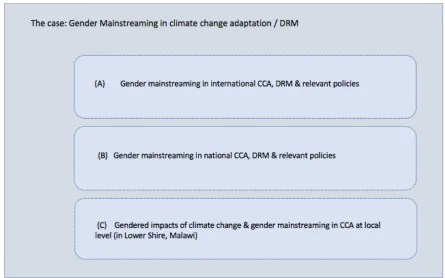
economic processes that shape societal impacts of climate change and its governance (Betsill & Bulkeley, 2006). This is especially relevant when exploring issues of gender and CCA, as gender relations are socially, spatially and culturally diverse across scales and place (Donkersloot, 2012). This research complements and extends existing knowledge in the field of climate justice and CCA by contributing a multiscalar gender analysis of CCA and providing empirical research to highlight barriers and pitfalls of gender mainstreaming across these scales. This research is focused on four key questions set out in Table 1.
Table 1: Research Questions Research Questions
RQ1 To what extent do gender considerations in international climate change policy influence gender mainstreaming in CCA policies at national scale in Malawi? RQ2 How are CCA resources distributed at subnational scale influenced by gender
mainstreaming in the Lower Shire Valley, Malawi?
RQ3 Are there differentiated experiences of climate change (based on gender, age and other social identifiers) in the Lower Shire Valley?
RQ4 How do different groups (based on gender, age and other social identifiers) in the Lower Shire Valley access CCA resources?
There is a need to conduct this research because, while academic exploration has investigated the gendered experience of climate change, there remains a key gap in empirical knowledge on the understanding of gender considerations in policy, the influence gender policies have across scales and their potential impact at local scale in climate vulnerable communities.
The inclusion of key disaster policies was determined appropriate within the context of this research for a number of reasons. Firstly, the increase of extreme weather events resulted in a more apparent climate-disaster nexus. As with the noted increase in attention to adaptation, there has also been an increased acknowledgement of the need for disaster risk management (DRM). Numerous scholars have called on the integration of DRM and CCA within policy approaches (Djalante & Thomalla, 2012; Schipper, 2009; Mitchell & van Aalst, 2008). UNISDR, the United Nations Office for Disaster Risk Reduction (2018, p. 13) defines DRM as “the application of disaster risk reduction policies, process and actions to prevent new risk, reduce existing disaster risk and manage residual risk, contributing to the strengthening of resilience”. Both climate risk and disaster risk are context specific, they are experienced in places and times, in ways that are shaped by local patterns (UNISDR, 2018). Secondly, during the time of data collection, Malawi, and specifically the Lower Shire Valley, had undergone two consecutive climate related disasters: extensive flooding in 2015 and an ongoing drought in 2016. Therefore, CCA and DRM are highly interlinked, often discussed and used interchangeably, or treated as one entity by relevant actors in Malawi. While this research has a central focus on gender mainstreaming within CCA actions, the climate-disaster nexus is acknowledged throughout and referenced at various points within this thesis.
This research contributes to the knowledge and progress of debates on gender and climate change, by analysing CCA policies and actions across scales through a gender-sensitive lens to give a well-rounded insight to this current policy action.
1.4. Thesis structure
2.
Literature Review
2.1. Introduction
This chapter presents the conceptual framework used in this research to set the basis for the following chapters and the justification for the empirical research conducted. The chapter provides the state of knowledge in the fields of climate justice in the context of CCA and gender to date, and highlight gaps in this literature. The chapter is divided into five sections. Firstly, the chapter situates this research within the context of climate justice. Secondly, feminist theoretical frameworks relevant for this research, specifically intersectionality, are explored. Thirdly, key climate change narratives such as vulnerability and resilience. Research on climate change adaptation is then explored. Finally, a discussion on governance and climate change, which explores notions of scale and power is presented.
2.2. Climate justice
Climate justice is a multivalent concept without one fixed definition. It consists of a complex body of theories, and has been applied across academia, activism and advocacy. It involves novel global issues spanning over long time periods, large spatial scales, and scientific uncertainty (Roser, et al., 2015). The concept first evolved from broader global justice activism, which combined grassroots environmentalism with a growing concern for climate change (Jenkins, 2018; Goodman, 2009). Unlike the origins of the environmental justice movement, which are firmly located in local struggles, climate justice has predominantly engaged at the international level (Jenkins, 2018; Bulkeley, et al., 2013).
industry. The principles also called for the elimination of greenhouse gas production by phasing out fossil fuels and reducing the dependency on extractive industries. The principles also sought to gain better protection and representation in decision making for those most vulnerable in the Global South, specifically referring to indigenous peoples, those living in poverty, women and youth groups. Since then, issues of justice, equity and legitimacy within a climate change context have grown extensively among civil society, academia, policy and practitioners.
Over the last two decades, scholarly research within climate justice has conceptualised responses to climate change in terms of rights, responsibilities, procedures and distributional outcomes (Bailey, 2017; Holland, 2017; Bulkeley, et al., 2013; Caney, 2010). Those advocating for distributive justice are concerned with assigning the rights and responsibilities, the advantages and burdens associated with climate change (Bulkeley, et al., 2013; Paavola & Adger, 2006). Distributive justice can be considered synonymous with fairness in “the distribution of social and economic benefits and burdens among a group of individuals” (Johansson-Stenman & Konow, 2010, p. 151). Advocates for procedural justice consider the inclusion, participation and distribution of power in the process of climate change action (Bulkeley, et al., 2013; Paavola & Adger, 2006). Within the theoretical framing of adaptation, procedural justice is concerned with “how and by whom decisions on adaptive responses are made” (Thomas & Twyman, 2005, p. 116).
to build global governance structures for managing climate change (Schlosberg & Collins, 2014). There have been analyses of justice in various aspects of climate change issues and sectors: ecological justice (Schlosberg & Collins, 2014); intergenerational justice, the safeguarding of resources, health, and sustainable livelihoods for future generations (Schuppert, 2011; Gardiner, 2006; Page, 1999); energy justice (Jenkins, 2018); global cities and urban adaptation (Bulkeley, et al., 2013), disaster management (Byrnes, 2014); climate justice within national conversations (Bailey, 2017) and the agency of vulnerable groups in decision-making (Running, 2015). There have been few empirical investigations to analyse the implementation of actions to achieve climate justice. One example is the research conducted by Barrett (2014; 2013; 2012) in which climate change adaptation (CCA) and its corresponding finance were viewed as a proxy measurement of climate justice. There remain gaps within the exploration of gender in climate justice, especially in relation to the gender implications of climate policy (Pearse, 2017), which this research aims to contribute to.
ethical action in climate change. Some of the key ethical issues surrounding climate justice are discussed in the following sections.
2.2.1. Transboundary climate change and assigning responsibility
Assigning responsibility for climate change, initially, appears a simple task. The debate was originally cast from a Global North-South perspective. The argument held that developed countries have the greatest responsibility for causing climate change, through current and historic greenhouse gas emissions, while developing countries are the least responsible for emissions, but are often the most vulnerable to its impacts (Bulkeley, et al., 2013; Ayers, 2011). However, the question of responsibility on this global scale is contentious for two reasons, as described by Jenkins (2018). Firstly, continued insufficient action is increasing the potential for profound loss from climate impacts globally, resulting in national adaptive resilience being more critical. Secondly, the increasing emissions and the shift in emission production has put pressure on countries already facing continued human development challenges. When considering middle income and emerging economic powers such as China and India, both of which have had rapidly increasing emissions over the last twenty years, assigning responsibility becomes a more complex process (Bulkeley, et al., 2013).
Within the argument of assigning responsibility, wealthier, developed nations which have led us to our current rate of climate change through historical greenhouse gas emissions since industrialisation, bear causal responsibility for climate change and should pay for these transgressions (Schlosberg & Collins, 2014). This is known as the polluter pays principle. In this principle, it is expected that those who contributed to pollution should bear the cost of mitigation and adaptation measures. Even within this principle, there has been a noted lack of pro-environmental behaviour, such as the reduction in emissions. This is argued to be due to the intangible nature of climate change (Adger, et al., 2017), due to its abstract and uncertain nature.
for numerous decades by several activists, policy-makers, lobbyists and scientists who dismiss this causal link (Biber, 2009). This has considerably slowed down progress within decision-making processes and the assigning of responsibility.
Henry Shue (2014; 1999; 1980) studied responsibility for climate change at international level and stated that powerful nations have manipulated international agreements and institutions to violate their duties with respect to climate change. Initially, climate agreements such as the Kyoto Protocol, determined a level of responsibility for developed countries to do more. This was articulated in the common but differentiated responsibilities of developed and developing states. Some scholars have argued that developed countries’ responsibility for climate change has been weakened in recent climate agreements, specifically the 2015 Paris Agreement (Clémençon, 2016). The Paris Agreement, it was argued, let “the developed world largely off the hook” for historically and accumulated emissions, and has placed further pressure on developing countries (Clémençon, 2016, p. 4).
2.2.2. Examining inequality
evident inequality within climatic disaster events were vividly seen in the aftermath of Hurricane Katrina, where low-income African-American citizens, who had limited adaptive capacity and support, were left stranded in the city, while wealthy white citizens, who had better access to infrastructures and resources, could flee to safety and protect their assets (Byrnes, 2014; Elliott & Pais, 2006). Hurricane Katrina provided evidence that structural inequalities resulting from racism can determine who is most affected by climate change (Cuomo, 2011). Climate change has also exacerbated other pre-existing inequalities, such as gender inequality.
2.3. Gender and climate change: Relevant feminist theories
Gender refers to the socially acquired notions of masculinity and femininity by which men and women are identified (Momsen, 2004). Gender identities are not simple binary constructions, they are flexible and can vary across timescales, places and power structures (Alston, 2013; Momsen, 2004). Notions of gender are grounded in cultural and political contexts. Gender relations, the socially constructed relations between men and women, and gender roles, the household and employment duties socially assigned to men and women, are crosscut by class, race, ethnicity, religion and age (Momsen, 2004). This section outlines key feminist theories identified as important when considering the societal impacts of climate change.
2.3.1. Gender and poverty
women (Bentley, 2004). The factors which have contributed to the uptake of the feminisation of poverty concept are gender disparities in rights, entitlements, informalisation and feminisation of labour, the erosion of kin-based support networks and, especially, the growing number of female headed households in the developing world (Chant, 2003). Other factors contributing to the narrative of feminisation of poverty are economic access and activity, life expectancy, literacy, education, political representation and health (Bentley, 2004). While the concept gained momentum within development literature, it has been widely critiqued (Chant 2016a; 2009; 2003; 1997). Chant (2009) suggests that one problem with the assumption of female poverty is the consistent use of income as a key indicator of gendered poverty gaps. This fails to capture the dimensions of poverty that appear to be most meaningful to women. A study by Murphy (2015) argues that the drivers of poverty are complex and multifaceted. When analysing the gender dimensions of poverty, there is a need to focus on the broader social structures that impact gender relations, rather than on women alone (Murphy, 2015).
Within the BPfA, gender mainstreaming was identified as the most important instrument to reach the ambitious goals laid out to address the 12 critical areas identified to achieve gender equality. As a result, gender mainstreaming as a policy action gained strong support. In 1997, the UN established that gender mainstreaming was to be used in all policies and programmes in the UN system (Moser, 2005). The most commonly used definition was set out by the UN Economic and Social Council in 1997:
“Mainstreaming a gender perspective is the process of assessing the implications for women and men of any planned action, including legislation, policies or programmes, in all areas and at all levels. It is a strategy for making women's as well as men's concerns and experiences an integral dimension of the design, implementation, monitoring and evaluation of policies and programmes in all political, economic, and societal spheres so that women and men benefit equally and inequality is not perpetuated. The ultimate goal is to achieve gender equality.” (United Nations , 1997, p. 28).
The United Nations (2002) further stipulated that mainstreaming should position gender equality issues at the centre of analyses, decisions, plans, budgets, and institutional structures and processes. To achieve this, explicit and systematic attention to gender perspectives in all areas was required (United Nations, 2002). In a process of global diffusion over the decade following BPfA, governments, Civil Society Organisations (CSOs) and NGOs adopted gender mainstreaming terminology and practices (Alston, 2014; Moser, 2005; True & Mintrom, 2001). This resulted in the establishment of gender machinery, a coordination body to ensure gender mainstreaming activities and monitor outcomes (Manjoo, 2005), to advance gender and the cause of women in most countries, even those with poor gender equality records (Alston, 2014; True & Mintrom, 2001). Moser (2005) describes the four stages of gender mainstreaming as; firstly, embracing the terminology of gender mainstreaming; secondly, gender mainstreaming included in policy; thirdly, implementing gender mainstreaming in practice; and finally, evaluating the outcomes of gender mainstreamed policies.
mainstreaming facing serious critiques from feminist scholars and activists. The key criticisms of gender mainstreaming are the lack of clarity and direction as to what gender mainstreaming means in practice (Moser, 2005), what gender equality should entail (Meier & Celis, 2011), and who is responsible for achieving gender equality commitments (Payne, 2011; Mukhopadhyay, 2004). Feminist critiques have suggested that gender mainstreaming has been co-opted and de-coupled from its initial transformative potential, and can be used to reinforce institutionalised patriarchy, which does little to address the embedded social and cultural barriers women often face (Meier & Celis, 2011; Prügl, 2010). Moreover, gender mainstreaming has been criticised for becoming a routine process in bureaucracy, and described as a box ticking exercise (Wittman, 2010). In addition, Mukhopadhyay (2004) states there is an absence of professional and political accountability within international institutions with regards to gender mainstreaming. Although gender machineries and gender focal points, a role responsible for the implementation of gender mainstreaming in substantive programmes of an organisation (United Nations, 2018), within institutions have been established, they often have weak influencing power (Kusakabe, 2005).
Consequently, within this thesis gender mainstreaming is not considered a failed policy strategy. Rather, the current practice of gender mainstreaming in CCA policy and implementation is explored from its international formation to its local implementation. Doing this will allow this research to explore whether climate change policy has the potential to greatly contribute to gender equality in climate vulnerable regions which Alston (2014) suggests.
2.3.2. Ecofeminism and feminist political ecology
group, and to an extent, made men’s connections with the environment invisible (Leach, 2007).
Many gender and environmental scholars insist on locating themselves outside the realm of ecofeminism (Momsen, 2004). The 1990’s saw some scholars question the natural connections between women and the non-human environment presented in ecofeminism (Rocheleau, et al., 1996; Jackson, 1993; Agarwal, 1992). Leach (2007) stressed concerns that the arguments presented in ecofeminism regarding women’s special relationship with the environment drew on stereotypes concerning female farming systems, including natural connections to nature, and a natural extension of their roles as carers. This body of critical work addressed concerns that development projects and programmes which mobilised women, usually through women’s groups, to address environmental issues often increased the burden for women and failed to conserve the environment (Leach, 2007). Research in the 1990’s also indicated that focusing on women as a homogenous group often marginalised the interests and concerns of women not represented in community groups (Green, et al., 1998; Jackson, 1993). This school of thought suggested that ecofeminism, and the projects implemented as a result, “ran the risk of giving women responsibility for saving the environment without addressing whether they had the resources or capacity to do so” (Leach, 2007, p. 72).
considerations of scale to include the household (Elmhirst, 2011). Rocheleau et al. (1996) also treated gender as a critical variable that affects access and control of resources. It was argued that social constructs, including gender, interact to influence ecological change, and noted the different struggles of men and women to create sustainable development. Since the emergence of FPE, the focus of literature has shifted from women–nature to gender–environment connections, with an emphasis on context and identity (Leach, 2007).
However, Elmhirst (2011) notes that FPE has failed to mature and take root as a sub-field of political ecology, despite the promise which it held in the 1990s. She acknowledges that although many scholars have produced work that could be labelled as FPE, many do not as the feminist label often carries unhelpful connotations (Elmhirst, 2011). This has resulted in unwanted political meanings, particularly in the Global South, where postcolonial critiques and conservatism complicate the understanding and intentions of feminism. Additionally, Mollett and Faira (2013) liken FPE to ecofeminism as it has a tendency for a narrow reading of gender with a focus on sexual differences, gender roles and patriarchy. Furthermore, it has been argued that FPE “rarely moves beyond class/nature as entangled formations of gendered subjectivity” (Mollett & Faria, 2013, p. 117). Mollett and Faira (2013) also state that development literature discursively states the Global South as “different” or “inferior” and as a result call for race, racism and racialisation to be explicitly stated as central to FPE due to the geographic trend for FPE to focuses on this area.
With gender increasingly viewed as a technical problem, to be fixed with a series of tools and techniques rather than acknowledged as a source of oppression, there are concerns that gender has lost its critical and politicised edge in development policy and natural resource management (Mollett & Faria, 2013; Elmhirst, 2011).
2.3.3. Intersectionality
ultimately face the same criticisms as these theories. Recently, within the feminist movement and in academia, including research on climate change, there has been a noted increase in engagement with intersectional feminism, which aims to move past the homogenous views of gender inequality presented to date. Intersectionality, a theory coined by Kimerblé Crenshaw (1989), originally examined the distinct layers of discrimination African-American women faced in the work place and legal system. It was concerned with forms of injustice that emerged when identities of race, class and gender intersect and interact. It has since evolved within feminist theory and is grounded in an understanding of power and knowledge production (Kaijser & Kronsell, 2014). Intersectionality adopts a distinctive stance and dynamic approach where systems of race, gender and class converge (MacKinnon, 2013; Davies, 2008). By taking account of the social and cultural dynamics, policies and regulations in place, discriminatory stereotypes and power and politics, a clearer picture of oppression appears. The intersectional theory understands that social categorisations often serve as grounds for inclusion or exclusion (Kaijser & Kronsell, 2014). By using an intersectional lens to conduct this research, the aim is to move from a binary analysis based on sex, and considers the context of each case being examined (Aylward, 2010).
The empirical application of intersectionality has been debated due to the context specific nature and difficulty in developing a clear methodological framework (Kaijser & Kronsell, 2014; Cho, et al., 2013; Davies, 2008). However, it is argued here that to understand and to analyse the distribution of CCA, an intersectional framework is necessary to assess power relations and institutional practices that influence access to CCA from the international to local level. Scholarly intersectional analysis works on the basis that climate vulnerability is shaped by the intersections of social norms, responsibilities, politics, power and environmental conditions. Recent climate change and social impact research have opted to use an intersectional lens (van Aelst & Holvoet, 2016; Eriksen, et al., 2015b; Osborne, 2015; Kaijser & Kronsell, 2014), as vulnerability to climate change emerges from the ability to access resources across time, space and between actors (Eriksen, et al., 2015b).
vulnerability, the scholarly outputs remain confined within narrow binary constructs and remain largely focused on women. For example, Alaimo (2009) highlights how the gendered perspectives of climate change to date have failed to acknowledge how sexual orientation may result in marginalisation and heightened vulnerability to climate change. In addition, issues of race and class have been explored (Byrnes, 2014; Mollett & Faria, 2013; Elliott & Pais, 2006). However, it is contended that these social identities remain largely studied in silos, and how these intersections of constructs interact remain largely unexplored.
By using an intersectional lens, this research can contribute to the strengthening of knowledge towards more just climate change actions, through the acknowledgement of differentiated experiences based not only on gender, but also on other social constructs.
2.4. Gender and climate justice
men had more skills, such as swimming and tree-climbing, which increased their survival rates during the event. This also demonstrates that existing social roles can increase inequalities and susceptibility to harm (Cuomo, 2011). Kakota et al (2011) noted that labour-intensive social roles responsibilities traditionally assigned to women in rural Malawi, such as collecting firewood and water, are greatly impacted by changes in climate and this results in an increase in labour time and physical strain.
argued, persistently fail to acknowledge different experiences and limited representation in decision-making structures.
2.4.1. Women as vulnerable to climate change: a narrative of climate change vulnerability and resilience
Within gender and climate change research there has been a tendency to present women as vulnerable to climate change due to their roles and responsibilities and their limited representation within decision-making structures (Terry, 2009; Momsen, 2004; Dankelman, 2002; Denton, 2002; Dikito-Wachtmeister, 2000). The IPCC (2014, p. 5) defines vulnerability as:
“the propensity or predisposition to be adversely affected … [it] encompasses a variety of concepts and elements including sensitivity or susceptibility to harm and lack of capacity to cope and adapt.”
Vulnerability to climate change is conceptualised in various ways, which include factors such as wealth, social status and gender (Otto, et al., 2017; Yadav & Lal, 2017; Füssel, 2007; O'Brien, et al., 2004). The concept of vulnerability has become a powerful analytical tool for describing states of susceptibility to harm, powerlessness and marginality of both physical and social systems, and for guiding normative analysis of actions to enhance well-being through the reduction of risk (Alaimo, 2009; Adger, 2006). Vulnerability can also be understood to be a measure of the capacity of individuals to respond to hazards, referring to the capacity to preserve the structure of systems (Bahadur, et al., 2010). In any definition of vulnerability in relation to environmental change, the key parameters are: the stress to which a system is exposed; its sensitivity and its adaptive capacity (Adger, 2006).
especially related to agricultural productivity and poverty (Dasgupta, et al., 2014; Cuomo, 2011). Vulnerability is compounded by limited resources, poor infrastructure and weak or ineffective systems of governance (Ayers, 2011). For example, in developing countries, the economic effects of weather-related shocks can reach up to a quarter of GDP and result in thousands of premature deaths (Paavola & Adger, 2006; Guranko, 2003). It is those most dependent on agriculture and natural resource-based livelihoods that bear the greatest risk of loss as a result of climate change (Guranko, 2003). Vulnerability analyses are designed to identify the most vulnerable populations and determine adaptive actions to reduce their vulnerability to stress while promoting sustainability (Nelson, et al., 2007).
There is a commonality between vulnerability and resilience narratives, generally suggesting resilience as the opposing value to vulnerability (Bahadur, et al., 2010; Adger, 2006). Within policies, both vulnerability and resilience terminology are used regularly. Most geography literature agrees that the relationship is not linear nor entirely independent (Weichselgartner & Kelman, 2015), and it is argued that their points of convergence are more numerous than their points of divergence (Adger, 2006). Use of the term resilience has risen rapidly over the last decade to become a key term in international policy and academic debates, often replacing the language of vulnerability (Chandler & Coaffee, 2017; Weichselgartner & Kelman, 2015). Resilience is commonly used to signify the ability to return quickly to a previous, and good, condition (Bahadur, et al., 2010). For example, UNISDR (2018, p. 12) defines resilience as:
“the ability of a system, community or society that is exposed to hazards to resist, absorb, accommodate and recover from the effects of a hazard in a timely and efficient manner, including through the preservation and restoration of its essential basic structures and functions. It means the ability to ‘bounce’ or ‘spring back’ from a shock. Developing resilience and/or coping capacities contributes to reducing disaster risk.”
bouncing back is not the aim of resilience, rather growth and development is. In this approach, resilience is not about returning to the equilibrium but is a process of ongoing transformation, which is likened to bouncing forward. The final approach to resilience put forward by Chandler & Coaffee (2017) is more concerned with rethinking contextual possibilities in the present, with a focus on developing resilience through micro-politics using reflexive approaches. This approach aims to engage with communities to develop new ideas, new tools and skills-sets to include in policy.
The concept of resilience is not without its critics. Rothe (2017, p. 171) states “resilience seems to be everything – ideology, discourse, governmentality, strategy or assemblage – yet it is anything but a coherent or fixed program”. Chandler and Coaffee (2017) suggest that resilience has resulted in a world where “clarity is less possible and separations between threats and objects to be secured, between insider and outsider, human and nature, problems and solutions, past and future, seem less stable than before” (Chandler & Coaffee, 2017, p. 4). Advocates of resilience claim that less precision enables a more open and fluid approach, which is more iterative and sensitive to feedback (Chandler & Coaffee, 2017). Some scholars suggest an inherent danger of the elasticity and flexibility of the concept is that resilience becomes an empty signifier, and its meaning can be tailored to justify actions that do not demonstrate results (Rothe, 2017; Weichselgartner & Kelman, 2015). Others state that while resilience may be important to support and maintain a desirable state, it may also maintain an undesirable state, making recovery or transformation difficult (Weichselgartner & Kelman, 2015). Furthermore, as with many concepts, resilience is defined by external forces from academia, international organisations and government, and the responsibility is placed on communities to adapt to the logic of these external influences (Weichselgartner & Kelman, 2015; Welsh, 2013).
2.5. Climate change adaptation
The key objective of most CCA actions is the reduction in vulnerability (Nelson, et al., 2007) or the capacity to be resilient, leading to positive functioning after a disturbance (Moreno & Shaw, 2018). The capacity to adapt to climate change is considered by Ayers (2011) as determined by the underlying social and economic weakness of a system, which also determines the vulnerability to climate change in the first place. It is a standard practice for societies to undergo change, adjusting their activities and locations to take advantage of new opportunities. That said, adaptation is often imposed on societies due to undesirable events (Leary, et al., 2008; Nelson, et al., 2007). CCA is defined by the IPCC (2014) as the process of adjustment to climate change impacts, actual and projected, and to moderate and avoid harm or the exploitation of beneficial opportunities. CCA aims to address essential requirements to combat the level of global warming we have already committed to (Gardiner, 2011). The realisation of the necessity for CCA has been acknowledged in recent years as the frequency and magnitude of climate-related events has increased (Eriksen, et al., 2015a; Jennings, 2011). As discussed, those who are most vulnerable to the impacts of climate change are often the poor and marginalised, living in low income areas, and for these communities, adaptation is a necessity, not an option (Kaijser & Kronsell, 2014; Boko, et al., 2007).
While adaptation is the process of adjustment, the definition of adaptive capacity is contested among scholars. Some consider it the ability of a system to adjust to climate change (Smit & Wandel, 2006). Others consider adaptive capacity as the improvement of capacity, resulting in the reduction of vulnerability to the impacts of climate change (Bahadur, et al., 2010), and some scholars view adaptive capacity as a synonym of resilience (Berkes, 2007; Nelson, et al., 2007; Osbahr, 2007). Finally, other scholars view resilience as one tool in the arsenal to achieving adaptive capacity (Folke, 2006). Adaptive capacity has also increasingly become a topic within climate justice debates, to develop more just communities.
men’s adaptation practices vary and are specific to their socioeconomic and cultural contexts (Pearse, 2017; Bee, 2014). Resources and support inputs required for resilience are found to be socially differentiated by gender (Othniel Yila & Resurreccion, 2014). Research by Deressa et al. (2009) indicates that male-headed household adapt more readily to climate change. There are many reasons why women are often viewed as having limited adaptive capacity to climate change, including limited livelihood opportunities due to their roles as household and family carers (Jones & Boyd, 2011), greater dependence on environmental resources (Kakota, et al., 2011), less access to education, skills and training (Oxfam, 2005) and restricted rights, such as limited land rights (Deressa, et al., 2009). While Pearse (2017), using examples from Sugden et al. (2014) and Djoudi and Brockhaus (2011), show that with increased economic autonomy and opportunities for income-generating activities, women can increase their adaptive capacity. However, there remains an underrepresentation of gender issues in CCA, especially in terms of distribution and justice (Jerneck, 2018a).
2.5.1. Finance for CCA and remedial justice
From CCA multiple social dilemmas arise which involve issues of morals and justice, including questions of who gains and benefits from adaptation strategies, and the legitimacy of collective and governance responses (Adger, et al., 2017). Distributive justice is unlikely to be sufficient when considering CCA. As a result, procedural justice is needed to underpin legitimacy and determine the decision-makers on adaptation, as well as who accesses adaptation (Paavola & Adger, 2006). As stated by Bulkeley et al. (2013) developing a just approach for CCA poses a different set of questions as compared to those of mitigation. This is primarily because adaptation raises questions about the rights and access of vulnerable communities and individuals to CCA, which is considered a private good that only the recipient directly benefits from (Barrett, 2012). The benefits of mitigation on the other hand are systematic, and can be felt across large spatial and temporal scales (Barrett, 2012), and considered a public good (Hasson, et al., 2010).
This research views finance for CCA as a beneficial tool to measure remedial justice for those most impacted by climate change. Remedial justice, or remedial action, demands respect for rights and the just compensation for infringement of these rights (Ikeme, 2003). Within the context of CCA, remedial justice recognises states causing climate change are responsible for just compensation to remedy the damage caused to climate vulnerable regions or states (Adger, et al., 2006; Baer, 2006; Paterson, 2001; Albin, 2001). The distribution of finance for CCA across scales and actors provides insights into remedial efforts from international processes to local level implementation.
of an effective global climate action plan (Vanderheiden, 2015). Within the Paris Agreement (2015), Parties confirmed the Green Climate Fund and the Global Environmental Facility as the operating financial entities of the Agreement (UNFCCC, 2018). Global climate finance flows were reported as $383 billion in 2016 (Buchner, et al., 2017). However, developed countries has consistently fallen short of their obligations to provide adequate funding to climate vulnerable countries, and about 10 percent of climate finance flows are reported to be for adaptation, with developed nations favouring support of mitigation finance to offset their emissions (Schalatek, 2016).
Within climate justice scholarship, examinations have been conducted on compensation given by developed states to address the inequalities of climate change in developing countries (Barrett, 2014; Barrett, 2013; Barrett, 2012; Ciplet, et al., 2013). In theory, finance for CCA should be assigned to the most climate vulnerable communities and those most affected by climate change impacts within these communities (Wong, 2016). Although questions can be raised about what countries are most vulnerable and who decides this (Mace, 2006), the crux of climate justice is that the most climate vulnerable people receive the essential assistance they need to ensure their survival and wellbeing. Barrett (2012) examined this across scales by creating a climate justice framework that identified the distribution paths of justice, using climate finance as a proxy, to reveal whether the most climate vulnerable states are receiving adequate assistance. In addition, the study examined if this finance is being distributed to the most climate vulnerable districts and communities within those countries. The actualisation of climate justice depends on CCA finance lessening climate vulnerabilities for local communities (Barrett, 2012).
understanding of access within climate vulnerable areas. When examining the distributive, procedural and remedial justice issues regarding CCA, the scalar, multi-sector and multi-actor nature of the issue must be acknowledged. As a result, the next section examines the governance structures involved in CCA.
2.6. Governance and climate change adaptation
It is argued that the abstract, intangible nature of climate change dampens reactions and fails to activate our moral intuitions to govern climate change successfully (Adger, et al., 2017). This is attributed to the lack of causal connections in relation to the complex, large-scale and contemporary hazards that climate poses, which limits moral accountability (Adger, et al., 2017). In this research, governance is used to describe to the range of institutions, and their interactions, involved in CCA (Huitema, et al., 2016). Climate change governance involves multiscale actors, specifically ranging across the international, supranational, regional, national, subnational and local scales. Multiscale governance can be understood in a narrow context of governance shared between local, national and international governmental institutions, or, in a broader context which considers traditional state actors but also a more diverse range of actors and institutions (Kern & Bulkeley, 2009). As a result of the wide range of actors involved in driving the debate on climate justice, including scholars, non-state actors, grassroots activists, and highly climate vulnerable state actors, a broad understanding of multiscale governance is adopted in this thesis.
to protect diverse social goals, such as health, resilience of infrastructure, climate smart agriculture and the preservation of livelihoods. It therefore encompasses the protection of ‘everything’, which may lead to confusion and misunderstanding of project actions (Huitema, et al., 2016), as impacts, experiences and approaches vary among stakeholders.
Many suggest that subnational governments represent a critical scale in climate change governance as CCA is generally addressed at this jurisdiction (Huitema, et al., 2016). In this thesis, subnational is used to refer to municipal or district level governance actors. There is evidence from Betsill and Bulkeley (2006) that shows urban subnational governments responding to predefined policies from national and international forum but also taking the initiative to refine and define local adaptation strategies. With that said, there is criticism that adaptation has failed to involve local communities (Orlove, 2009). Jennings (2011) suggests that adaptation serves political interests, as how CCA is defined and implemented is decided by those in power with diverse interests (Eguavoen, et al., 2013). Both Jennings (2011) and Eguavoen et al. (2013) argue that current CCA governance structures fail to include the local communities in which they aim to assist. This is also captured in examples from development and disaster studies which recognise that climate change governance is failing to adequately address the needs of the most vulnerable (Ayers, et al., 2010). Eguavoen et al. (2013) argue that donor and government CCA interventions remain technocratic and politically conservative, without acknowledging the social and political frameworks, interest of actors, perceptions, priorities and bargaining power of affected people across scales (Eguavoen, et al., 2013). Scale and power are therefore important concepts to acknowledge throughout this research.
2.6.1. Scale