
A framework for the evaluation of quality of care in maternity services
40
0
0
Full text
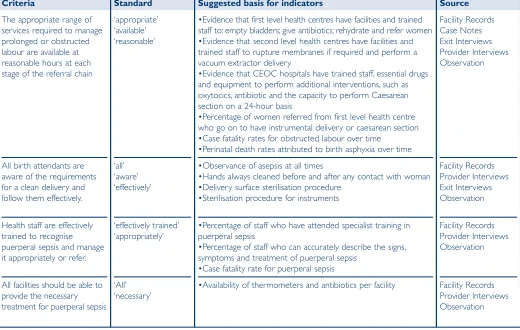
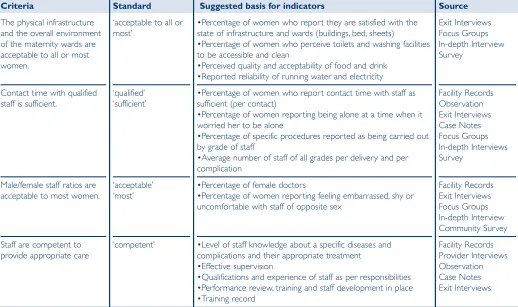
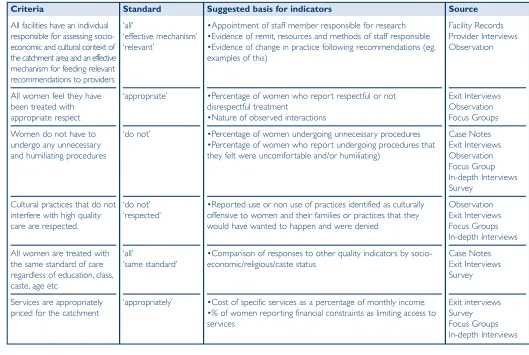
(2) Acknowledgements. Contents. This work was carried out as part of a research project on maternal health in India sponsored by the Wellcome Trust. The authors would like to thank the following people for their help and comments on various drafts of the text; Marge Berer, Libby Willis, Carolina Montoro-Gurich, Shelah Bloom, Judith Fortney, Jean Robinson, Maya Unnithan and Carine Ronsmans. The work was also made possible by support from the following bodies; the Parkes Foundation, the Economic and Social Research Council, the Social Sciences Faculty at the University of Southampton and the Department for International Development. Opportunities and Choices, a knowledge programme on reproductive health in developing countries funded by the Department for International Development based at Southampton University, has also supported the production and distribution of this monograph. Views expressed in this publication are, however, solely the responsibility of the authors.. 1 Introduction .........................................................................................................................................................................................................................1 2 Background............................................................................................................................................................................................................................3 3 Quality of Care .............................................................................................................................................................................................................5 3.1 Why is Quality Important? ...........................................................................................................................................................5 3.2 A Reproductive Health Approach ..................................................................................................................................7 4 What is Quality? .........................................................................................................................................................................................................9 5 Quality of Care Framework .............................................................................................................................................................10 5.1 Ten Elements of Care .......................................................................................................................................................................10 5.2 Criteria and Standards .....................................................................................................................................................................11 5.3 Indicators ..................................................................................................................................................................................................................12 5.4 Data Collection ............................................................................................................................................................................................14. The authors Louise Hulton is a researcher and occasional lecturer in the Department of Social Statistics at the University of Southampton, currently working on health-seeking behaviour among the urban poor of Mumbai. She has previously worked on AIDS research in sub-Saharan Africa and maternal health care in rural India. She is also the secretary of AIMS (Association for Improvements in Maternity Services), UK. Her work on quality in maternal health care is dedicated to the birth of her daughter Ella. Zoë Matthews is a researcher and lecturer in Demography in the Department in Social Statistics at the University of Southampton. She has research interests in reproductive and child health in developing countries, with particular emphasis on maternal health in South Asia.. R.William Stones presently holds the appointment of Senior Lecturer in Obstetrics and Gynaecology, University of Southampton and Consultant, Southampton University Hospitals NHS Trust. He has research interests in interdisciplinary work on women's reproductive health including pelvic pain, contraception and maternity services and also in laboratory studies of human ovarian vascular biology.. 6 Expanded Quality Assessment Framework .........................................................................................................18 6.1 Provision of Care.......................................................................................................................................................................................19 6.1.1 Human and Physical Resources 6.1.2 Referral 6.1.3 Maternity Information Systems 6.1.4 Appropriate Technologies 6.1.5 Internationally Recognised Good Practice 6.1.6 Management of Emergencies 6.2 Experience of Care ...............................................................................................................................................................................38 6.2.1 Human and Physical Resources 6.2.2 Cognition 6.2.3 Respect, Dignity and Equity 6.2.4 Emotional Support 7 Use of the Framework ...............................................................................................................47 8 Implementing Change..................................................................................................................49 9 Conclusion..........................................................................................................................................50 Appendix....................................................................................................................51 Bibliography ...............................................................................................................67.
(3) 1 Introduction The existence of maternal health services does not guarantee their use by women. Neither does the use of maternal health services guarantee optimal outcomes for women. An important aspect of care that has been highlighted to explain why women either do not access services at all, access them late or suffer an avoidable adverse outcome, despite timely presentation, relates to the intangible concept of quality of care. Part of the reason for the intangible nature of quality is that it is very difficult to measure. As long as avoidable deaths and morbidity continue to occur that can, at least in part, be attributed to poor quality care, there is an imperative to overcome the difficulties of definition and measurement (both perceived and real) associated with quality. This monograph develops a framework that enables the measurement of quality within institutional delivery services for use by public health researchers, policy makers, managers and a range of health professionals.The framework divides the provision and experience of care into ten elements, drawing on a wide body of research and evidence-based good practice. For each element, broad standards, criteria and selected indicators are suggested. The framework is designed to function in two possible ways.. Firstly, as a tool by which to help structure a situation analysis review of quality of care as provided at a facility, and experienced and perceived by its clients, actual and potential. Secondly, as a tool by which to improve the quality of care through the ongoing critical examination of activities, compared with an agreed standard. Where care falls short of agreed standards it would then be possible to instigate a process to identify opportunities and implement change to bring practice closer to the standard. This framework provides an instrument by which to guide and structure the measurement and monitoring of quality in this vital area of maternal health care. The framework weaves together a number of distinct yet integrated components of institutional delivery care: care during normal delivery; care during a complicated delivery; psychosocial-cultural care during labour and delivery; hospital logistics and management; and the overarching health system of which the unit is part. The hospital administrator and the head of the maternity wards are usually responsible for the first four components mentioned above while the district health authority is responsible for the latter. The complexity of the task of assessing. 1.
(4) quality using a framework that draws on elements of care that fall under the remit of different authorities should not be underestimated. However, as the quality of each component is dependent on the quality of the others, their inclusion conceptually within one broad framework is important. A fully equipped operating theatre is of no use if it is impossible to locate an anaesthetist. Similarly while care in normal delivery may be clinically exemplary, if a woman is unhappy with the psycho-social support she receives, she and her family may prefer that she deliver at home for any future pregnancy, with the support of traditional birth attendants. The framework is flexible. How it is used in practice will depend on a number of factors such as location, resources, management structure, type of institution, capacity for data collection, political will, local circumstances and the degree of staff involvement. Unless the process by which the framework is implemented is appropriate, effective change will not result. However, it is the content of the framework that provides the foundation for a successful quality assessment process. The unique contribution of the approach taken in this monograph is the drawing together of research from medical, health policy and social science disciplines to produce an evidencebased model by which to assess. 2. quality. While the process of implementation is briefly touched on, the primary aim is to examine the potential content of a quality assessment of institutional delivery care. It is important to note that this framework has been designed for use in institutional facilities only, and is limited in its current form to quality of care to pregnant and labouring women and new mothers. While it is recognised that care of the labouring woman and the unborn fetus and newly born infant are closely related, expanding the focus of this monograph would have rendered it unwieldy. If services are acceptable to women and provide appropriate, timely care, commensurate benefits to the unborn child would be anticipated; see Johansen and Hod (1999) for a discussion of quality development in perinatal care and Mancey-Jones and Brugha (1997) for a review of the use of perinatal audit to promote change.. 2 Background More than 585,000 women each year die of pregnancy-related causes worldwide, 99% of these occur in the less developed world (WHO, 1996a). If timely and appropriate obstetric care were accessed in the event of a complication, an estimated 75% of the above deaths could be prevented. While in many areas services simply do not exist, where they do they are often under-utilised. In addition, late presentation by pregnant women in the event of a complication, combined with poor quality of care, contributes to high levels of maternal and perinatal mortality and severe morbidity (Thaddeus and Maine, 1994). As all pregnant women are at risk of obstetric complications, access to adequate essential obstetric care (EOC) needs to be universal (WHO 1998). The existence of such care, however, guarantees neither use nor improved outcome. This will be possible only if the care that exists is of a high enough quality to provide adequate treatment and encourage early utilisation. Furthermore, quality of care is an essential component of any programme that upholds the basic principles of a reproductive health approach. Quality is not easy to measure or define. However, significant progress has been made in defining quality of care in relation to the family planning. element of reproductive health (Bruce, 1990). The recognition that the quality of services has an impact on the use of services has given suppliers of such services a strong incentive to improve quality of care with the goal of greater acceptance and more sustained use of contraceptive technologies. At the same time, more couples are able to achieve the family size and spacing they desire and a concomitant reduction in overall fertility can be expected, a winwin situation. However, while the elements of quality care within family planning are relatively well defined and amenable to measurement, a broad approach to quality of care in maternity services has received relatively little attention. Historically, the major focus in maternity services has been to reduce maternal mortality by the provision of hospital based services. The effectiveness of this approach in developed and developing countries has perhaps detracted from the broader issues of quality of care, which affect womens health and influence the acceptability and uptake of services. Where services exist they should provide at the very least a standard of care that results in the best possible outcome given the resources available and should not inhibit utilisation. It is clear from a review of the current literature that no systematic. 3.
(5) framework is currently available by which to assess quality in maternity care. There is a need for well-defined criteria and standards at all stages of the complex maternal health-care chain. As a response, this monograph focuses on quality in one specific section of the care chain: the provision of institutional delivery services. A framework of meaningful and measurable elements of quality of care is developed, based on an extensive review of evidence from a range of disciplines. The creation of this framework provides a practical basis on which the systematic improvement of care in this vital part of the maternal health chain may be developed.. 4. 3 Quality of Care 3.1 Why is Quality Important? A maternal death is defined by the 9th and 10th revisions of the International Classification of Diseases as: ‘The death of a woman while pregnant or within 42 days of the termination of pregnancy, irrespective of the duration or site of the pregnancy and which results from any cause related to or aggravated by pregnancy or its management’ (WHO, 1992). Clinical literature suggests that about 75% of maternal deaths result from direct obstetric causes, such as haemorrhage, obstructed labour, infection, toxaemia and unsafe abortion (WHO, 1985). This literature also suggests that a majority of these deaths could be prevented with timely medical treatment. Delay - that is an avoidable time delay from the onset of a complication to the accessing of appropriate services - has emerged as a pertinent and indeed central factor contributing to maternal death and disability (Thaddeus and Maine, 1994). In the past decade, growing attention has been given to the vital role of essential obstetric care in the prevention of maternal deaths. As all pregnant women are at risk of obstetric complications, effective access to adequate essential obstetric care needs to be universal and women should be able to access that. care promptly in the event of a complication. In practice, the facilities that provide essential obstetric care in an emergency also provide care in normal delivery. A womans experience of care for an uncomplicated delivery is likely to influence her future health seeking behaviour. It is conceivable that after experiencing good but disrespectful treatment in a previous normal delivery, a woman with a complication may delay accessing care from a facility that provides essential care of clinically high quality in favour of staying at home a little longer or travelling slightly further to a unit where the perceived, though not necessarily actual, care is of a higher standard. The relationships are complex. What needs to be understood is that while the availability of appropriate essential obstetric care is the only way to prevent a complication becoming a death, the quality of care provided and experienced in normal delivery may impact negatively on overall outcomes if the timing of use is delayed as a result of poor perceived standards of care. An assessment of quality must necessarily conceptualise the various components of care as interdependent. Increasing the availability of services does not always increase the use of services, and the reasons for this have been investigated. Delays to accessing care can range from delaying the actual decision. 5.
(6) to seek care on the part of the individual and her family, to delays in reaching an adequate health-care facility and finally, delays in actually receiving adequate care at the facility. Factors that influence delays in the decision to seek care include the status of women, illness characteristics, distance from the facility, and perceived quality of care. Delay in actually accessing care refers to factors such as the distribution of facilities and the condition of the roads, while delays in receiving adequate care include the adequacy of referral systems, shortages of supplies, and the competence of available personnel (Thaddeus and Maine, 1994). Thus the theoretical availability of services does not mirror access, and a number of socio-economic and cultural factors combine with individual and group perceptions and experience of quality of care to influence the utilisation of maternal health services. The quality of care that a health service provides is thought to influence use in a number of ways, although little is known about the mechanisms by which this relationship functions. Studies have shown that quality can affect the decision to seek care (Iyun, 1983; Stock, 1983; Mwabu, 1986). Where service users have access to more than one facility, it is often their perceptions of quality of care, related to their own experiences or those of people they know, rather than proximity that determines their choice of facility. It is a combination of dissatisfaction with the service received and the effectiveness of. 6. treatment given that shapes a patient’s and her friend’s and family’s perception of care, which in turn influences healthseeking behaviour (Thaddeus and Maine, 1994). Quality may also have an impact on the timing of presentation at a facility. In circumstances where the percentage of institutional delivery is high (above 70%) and the option of delivery at home particularly undesirable (such as within urban slums) services ideally need to discourage late presentation by women already planning to deliver at a facility. Late presentation (arrival within an hour of delivery) does not enable staff to assimilate an adequate medical and antenatal history effectively or undertake basic checks such as blood pressure and temperature. In addition, in the event of a complication for which no symptoms are recognised by the woman, sufficient time to assemble emergency staff, drugs and equipment is key to improving outcome. Late presentation is an example of an indication of poor quality of care in these circumstances. It may represent poorly communicated health messages, or a desire to stay at home for as long as possible before delivery so as to avoid labouring alone in the hostile environment of a hospital maternity ward. In addition, for those women who do access services, at whatever stage, the outcome is partly dependent on the quality of care they receive. The existence and prompt use of services. alone is not sufficient to reduce the number of maternal deaths. Facilities need to be providing adequate services. A community-based investigation of maternal deaths, undertaken in both rural and urban areas of Zimbabwe to assess their preventability, identified suboptimal clinic and hospital management as an avoidable factor in nearly 70% of cases. Lack of appropriately trained personnel contributed significantly to sub-optimal care (Fawcus et al., 1996). Similarly, a study conducted at a university hospital in Nigeria found that delays in obtaining appropriate treatment were responsible for a significant number of deaths, and that such delays were more common among women of lower socio-economic status and among younger women (Okonofua et al., 1992). Findings from this study indicate that delays relating to health service failures were more significant than postponing the initial decision to seek emergency care. Health service failures identified included incorrect treatment, lack of facilities, poor staff attitude, and delays in the referral process. Poor co-operation between health providers, and inadequate equipment and supplies were identified by women themselves as constraints to essential obstetric care (Okafor and Rizzuto, 1994). In a review of hospitalbased studies, Sundari documents evidence of avoidable factors and identifies a range of failures in the health service delivery system that contributed to maternal deaths in developing countries.. ‘Failures ranged from the lack of minimal life-saving equipment at the first referral level; lack of equipment, personnel and know-how even in referral hospitals, and, worst of all, faulty patient management’ (Sundari, 1992; p.513).. 3.2 A Reproductive Health Approach The concept of reproductive health, which gained currency initially in the 1980s, is premised on the feminist principle that every woman has the right to control her own sexuality and reproduction without discrimination as to age, marital status or income. Ensuring the highest possible standards of reproductive health-care for girls and women is fundamental to the exercise of their reproductive rights and freedoms, and to the exercise of the broad array of other human rights to which girls and women are entitled (Dixon-Mueller, 1993). Quality of care is an essential component of any programme that upholds three principles of a reproductive health approach: 1) A woman’s ability to regulate her fertility safely and effectively by conceiving only when desired, by terminating unwanted pregnancies, and by carrying wanted pregnancies to term. 2) To remain free from avoidable disease, disability or death associated with her sexuality and reproduction.. 7.
(7) 3) To bear and raise healthy children. (Adapted from Germain and Ordway, 1989, cited in Dixon-Mueller, 1993). Where the nature of maternal care is such that it inhibits effective utilisation and receipt of effective care, women are being denied the basic right to bear and raise healthy children and remain free from disease and disability associated with their reproduction. Evidence suggests that there are procedures specific to childbirth in an institutional setting that women dislike or fear, and which may therefore inhibit utilisation. They may feel uncomfortable exposing their genitals in a hospital ward, or they may intensely dislike positions favoured by hospitals for delivery (Thaddeus and Maine, p.1096). Not only does good quality of care afford a woman dignity in childbirth, it also endeavours to avoid those aspects of care that are disrespectful - even unnecessary - and may impact negatively on patterns of use.. 4 What is Quality? Definition and Measurement The definition of quality of care determines both the content and the process of care. In 1966 Donabedian defined quality of care in a unique way: ‘quality of care is the extent to which actual care is in conformity with present criteria for good care’. The unique feature of this conceptualisation of quality at the time was the introduction of evaluation into the definition. Evaluation became the link between quality and quality assurance.This definition makes an important distinction between the quality of actual care, which is established at the end of an evaluation procedure, and the expected quality of care as it is described in terms of criteria and clearly defined standards (Reerink, 1990).A more recent definition states that: Quality of care is the degree to which health services for individuals and populations increase the likelihood of desired outcomes and are consistent with current professional knowledge. (Institute of Medicine, 1990, p.94) The above definition has been adapted to achieve a definition of quality of care relevant in the context of maternal health. This definition incorporates the concept of both effective and timely access and of reproductive rights thus: ‘Quality of care is the degree to which maternal health services for individuals and. 8. populations increase the likelihood of timely and appropriate treatment for the purpose of achieving desired outcomes that are both consistent with current professional knowledge and uphold basic reproductive rights’. This working definition provides the basis from which to create a quality assessment framework for maternal health in an institutional setting. The definition allows quality in this context to be separated into two constituent parts: ■ The quality of the provision of care within the institution. ■ The quality of the experienced by users.. care. as. For quality of care to be meaningful, it is fundamental that elements of these two components of care be consistent with the basic norms of internationally agreed reproductive rights. The division of quality into these two components recognises the fact that use of services and outcome are the result not only of the quality of the provision of care but of women’s experience of that care. The provision of care may be deemed of high quality against all recognised standards of good practice but unacceptable to the woman and her family. Conversely, certain aspects of provision may be popular with women but objectively ineffective or even harmful to health.. 9.
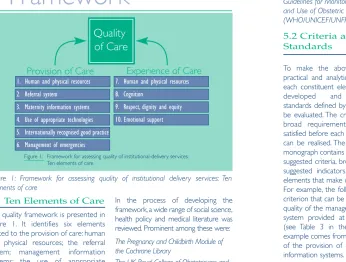
(8) 5 A Quality of Care Framework Quality of Care Provision of Care. Experience of Care. 1. Human and physical resources. 7. Human and physical resources. 2. Referral system. 8. Cognition. 3. Maternity information systems. 9. Respect, dignity and equity. 4. Use of appropriate technologies. 10. Emotional support. 5. Internationally recognised good practice 6. Management of emergencies Figure 1: Framework for assessing quality of institutional-delivery services: Ten elements of care. Figure 1: Framework for assessing quality of institutional delivery services: Ten elements of care. 5.1 Ten Elements of Care The quality framework is presented in Figure 1. It identifies six elements related to the provision of care: human and physical resources; the referral system; management information systems; the use of appropriate technologies; internationally recognised good practice; and the management of emergencies. Four aspects relating to women’s experience of care are also identified namely; human and physical resources; cognition; respect, dignity and equity and emotional support.. 10. In the process of developing the framework, a wide range of social science, health policy and medical literature was reviewed. Prominent among these were: The Pregnancy and Childbirth Module of the Cochrane Library The UK Royal College of Obstetricians and Gynaecologists Clinical Audit Unit WHO Safe Motherhood Series (including Care in Normal Birth and the Mother and Baby Package) The Design and Evaluation of Safe Motherhood Programmes (Maine et al, 1997). The Evaluation Project Indicators for Safe Motherhood (Carolina Population Centre, University of North Carolina) Guidelines for Monitoring the Availability and Use of Obstetric Services (WHO/UNICEF/UNFPA, 1997).. 5.2 Criteria and Standards To make the above framework a practical and analytic tool, criteria for each constituent element need to be developed and corresponding standards defined by which quality can be evaluated. The criteria are a set of broad requirements that must be satisfied before each element of quality can be realised. The Appendix to this monograph contains ten tables detailing suggested criteria, broad standards and suggested indicators for each of the elements that make up the framework. For example, the following illustrates a criterion that can be used to assess the quality of the management information system provided at a maternity unit (see Table 3 in the Appendix). This example comes from the third element of the provision of care: management information systems. CRITERION. STANDARD. Basic registers in facilities are designed to record data that is sufficient to monitor and evaluate activities effectively.. ‘sufficient’ ‘effectively’. Standards define the limits by which the criteria can be assessed. In this example, sufficient and effectively are the standards that need to be defined. Sufficient in a maternity home may not have the same meaning as sufficient in a large university hospital. Given the enormous variability that exists in health-care systems and economic and socio-cultural conditions throughout the developing world, setting universal standards is problematic. What is acceptable and achievable in one setting may be impossible in another. The criteria within the framework can be applied universally among institutions of similar status but local conditions should dictate the exact standards that are appropriate in that setting. Given this, however, for certain aspects of maternity care it is possible to set universal standards applicable regardless of the context; for example, the maintenance of asepsis at all times. This is what Donabedian referred to as certain limits which should not be transgressed (1966, p.183). It is particularly difficult to set minimum standards for the elements of the framework relating to the experience of care. Research conducted in the developed countries indicates that perceived quality may vary among members of different socio-economic groups (Calnan, 1988a: Roberge et al., 1996; Haddad et al., 1998). Perceptions are influenced by the social, organisational and technological context in which the health services are. 11.
(9) delivered (Palmer, 1991; Ellis and Whittington, 1993). However, even when staff are overwhelmed by the volume of users, rudeness and disrespectful behaviour, should not be condoned (Mensch, 1993). Notions of privacy vary culturally, as do definitions of respect. Where the communication of important information is inhibited, such as details of medical conditions from the patient to the provider, or of details of side-effects from certain drugs, such behaviour is more than simply rude, it can contribute to adverse outcomes. Agreeing on minimum standards for communication and respect within institutions is therefore an important part of the quality process.. 5.3 Indicators Once appropriate standards have been explicitly defined, a variety of indicators may be selected to evaluate how closely these standards are being met. There already exist numerous publications that offer a range of indicators that can be drawn on to aid the evaluation process (Koblinsky et al., 1995, Maine et al., 1997, Campbell et al., 1995, UNICEF/WHO/UNFPA, 1997). These indicators are usually organised into an input-process-output structure leading to outcomes. That is, indicators have been developed to evaluate the inputs to a programme, and how these are converted through processes (activities) to produce results (outputs) at the programme. 12. level and eventually changes at the population level (outcomes) (Koblinsky et al., 1995). This is a useful way to conceptualise the whole. However, in an assessment of quality of care at the facility level the range of indicators so far developed fails to capture important aspects of service provision that contribute to women’s experience of care. The detailed framework presented in the Appendix offers a number of suggested indicators to assess whether criteria to assess users experience of care are being met. The development of such indicators is in its infancy and the corresponding examples given in Tables 7-10 represent working suggestions. In addition, the indicators that are currently most commonly used do not on the whole help evaluate either the appropriateness of intrapartum and postpartum care or whether that care falls within recognised standards of good practice. For this reason we have paid particular attention to these aspects of the quality framework. The degree of difficulty in measuring quality increases as one moves from input, otherwise known as structural, variables to process measures and then to outcomes of patient care. Certain outcomes, such as maternal mortality rates or ratios, case fatality rates, perinatal mortality rates and so forth can reveal certain things about maternal health at a general level, but alone reveal very little about the. process of care at the institutional level. It would be presumptive to infer that improved outcomes were the result of improving the process in most cases (De Geyndt, 1995). For example, a reduction in maternal mortality at the facility level may be the result of an improved transportation system and have little to do with the quality of care provided. The cause-effect relationship between process and outcome is often tenuous. No indicator used in isolation is sufficient to provide a meaningful insight into the element of quality being examined. There are two important drawbacks of the input-process-output trilogy.The first, as indicated above, relates to the complex relationship that exists between cause and effect. The link between structural attributes and the process of care is inconsistent and empirically unproved (De Geyndt, 1995). The simple existence of human and physical resources necessary to provide high quality essential care is not enough to assure the provision of such care. The second methodological problem relates to the relative importance of the ten elements. Failing to meet standards set for certain criteria may result in such poor quality care as to influence the health outcome directly (for example, empty blood stores in a referral hospital), while failing to meet other standards will have a less immediate impact (for example, prohibiting social support in labour). Aspiring to meet all criteria to. the highest standards would be the ultimate goal, but in practice, given limited resources, decisions will inevitably be made about the relative importance of specific interventions to redress areas of poor quality identified in the assessment process. Given this, however, it is not useful to have a limitless supply of blood if there is no one qualified to transfuse that blood, just as the existence of an effective communication system with referral hospitals is practically redundant if transport between the units is not available 24 hours a day.To reduce the number of maternal deaths it is vital that the interdependence of the elements of care be recognised in the assessment of care. Optimal care in one element can go hand in hand with high levels of maternal death and morbidity if care in other areas falls below an acceptable standard. In practice, many of the problems experienced in the provision of essential obstetric care, especially in developing countries would cost little to address, at least in financial terms. For example, operating theatres may be locked and the person responsible for the key cannot be found, the theatre may not have been cleaned after the previous operation, anaesthetists are usually on call during the night but often cannot be contacted or are unable to attend during public holidays. Furthermore there is evidence that an increase in the quality of care provided and. 13.
(10) experienced could actually reduce the cost of the service by decreasing waste, curtailing inappropriate use of limited resources, eliminating inefficiencies, optimising the use of existing inputs, and applying correct processes (De Geyndt, 1995).. 5.4 Data Collection Experience has shown that, depending on the source of the information, data can be conflicting. For example, in order to measure the normal waiting time between arrival at the facility and the first examination, multiple sources need to be drawn on to piece together the most probable timing of events. Provider interviews may suggest that women are generally examined within half an hour of arrival. An examination of case notes, which should theoretically record time of arrival and the time of first examination, may or may not contradict this claim. Yet a woman’s recall of events may or may not be reliable depending on her education, progress of labour and so on. All of this information combined with an observation of normal events, including an assessment of the accuracy of time reporting in case notes, over a period of time will enable the investigator to define an average normal waiting time for both uncomplicated and complicated deliveries.The investigator will need to make value judgements as to the reliability of different sources. This. 14. enables a systematic verification process that will ultimately produce a more objective assessment. While the criteria for quality require local discussion and definition, the framework approach, using a variety of indicators, has the potential to best reflect a valid notion of quality. The panel opposite briefly reviews a range of sources and methodologies that may be used to calculate indicators in a quality assessment process.. Approaches to Data Collection Facility Records These can be divided into two groups: information that is available in the public domain (for example, annual reports and annual accounts) and source documents, that is, information routinely collected by the institution (such as the admissions register). Facility records include annual reports, accounts, staff lists, registers (admissions, delivery, discharge), hospital guidelines (procedural/protocol, documents), blood-bank records, inventories of facility’s equipment, stocks and supplies and operating theatre records. The quality of this information is likely to be variable, but important data can be extracted, if used with care. Provider Interviews Structured and semi-structured interviews with a full range of health providers can be used to obtain information on a range of factual, impressionistic, theoretical and substantive issues. An attempt should be made to ensure interviews are held in private and that confidentiality is maintained. One drawback of provider. interviews is that they often elicit responses that reflect idealised behaviour. In a structured interview many providers respond with what they know should be the case, rather than an accurate description of existing services (Simmons and Elias, 1994). Exit Interviews Structured and semi-structured interviews with women who have delivered are best taken on the day of discharge. They should be relatively short (30 minutes maximum) and held in private.They are effective for obtaining information on the course of a woman’s labour ; the decisionmaking process; and circumstances governing the timing of presentation, the choice of facility and actual experience of care. Certain questions relating to her experience of care are not appropriate in this setting and are unlikely to provide meaningful data (courtesy bias). Women may be unlikely to speak as candidly about their experiences of care as they might at their own home. However, the timing of this interview facilitates accurate data on, for example, the. 15.
(11) number of vaginal examinations received - information that may be less easy to remember accurately some time after the delivery. Interviews should be designed to obtain some socio-economic data and basic information about the number of previous pregnancies and deliveries, place of delivery, outcome, and the nature of complications during and after delivery. Case Notes The quantity and quality of information in case notes is notoriously variable. However, when used in conjunction with an exit interview they can be useful for piecing together events. They can help distinguish between poor management and poor recordkeeping. For example, case notes alone do not reveal whether blood pressure is being routinely taken on arrival but staff are failing to record this in case notes, or whether blood pressure is simply not being taken at all. They do, however, reveal if it is being routinely taken and recorded, and can therefore provide a useful indicator of good quality. Observation General observation techniques are essential in the assessment of basic quality indicators relating to cleanliness, crowding, state of equipment, provider-client relations at a general level and so on. Moreover, it is an effective means of. 16. verifying aspects of care described in provider and client interviews. Observational approaches have the advantage that data reflects an action or interaction itself rather than someones rendering and recollection of what happened. Providers tend to be affected by the presence of outsiders (bestbehaviour bias), so observation techniques require that the assessor is either internal and specifically trained, or present for a sufficiently long period of time to gain a fairly accurate insight into normal care. This will result in a more complete and accurate picture of all aspects of care. In reality, where quality of care norms are not yet widely accepted and implemented in the field, providers may not feel the need to disguise their approach to clients when being observed (Simmons and Elias, 1994). Community Survey Household surveys designed to elicit client perspectives and information about their experience of care are an important methodology. Undertaking a survey is often not possible, requiring too much time and too many resources. However, if it is possible, survey data can provide some unique insights into healthseeking behaviour in the community. Surveys enable information to be gathered about previous birth experiences, and can include specific. questions relating to many aspects of quality of care, from interpersonal relations and waiting times to the use of specific procedures. If the survey covers a large enough area it can provide information for and about a range of institutions (public, charitable, non-governmental and private) as well as providing information about women who delivered at home. This offers the opportunity to examine factors that determine use, non-use and choice of provider. Surveys can also be used to obtain information indirectly that is difficult to obtain from providers directly. For example, researchers have found that information relating to operational delivery rates are often not forthcoming from private providers, who fear regulation and the potential limitation of what is a very lucrative aspect of their service (Matthews, 2000). Caesareansection rates by provider, however, can be calculated using survey data where the survey covers a sufficiently large number of women delivering in a range of institutions. It should be noted that surveys that intend to reveal meaningful information about levels of satisfaction need to ask questions that are detailed enough to reveal how women and their families discriminate among service attributes. Surveys from developing countries are reported to have noted uniformly high levels of. satisfaction despite great variability in the quality of services (Simmons and Elias,1994). Focus Groups and In-depth Interviews A further limitation of surveys is that they cannot adequately capture the complex feelings and perspectives of clients or the underlying dynamics of power and status. Simmons and Elias (1994) draw attention to the fact that research on social services in developed countries has shown that survey data typically reveal high levels of client satisfaction with services, while in-depth street-level approaches show extensive evidence of dissatisfaction (Lipsky, 1981). If it is possible to follow up women who have delivered in the facility under assessment, their inclusion in focus group discussions can yield important insights into womens experience of care in the facility, and their reasons for accessing care when, and where they did. Insights into why women did not access care at that particular facility can be equally revealing. In order to identify potential aspects of care that may inhibit utilisation, the organisation of focus groups and indepth interviews with women who live in close proximity to the facility but that chose another provider or delivered at home, would be necessary.. 17.
(12) 6 Expanded Quality Assessment Framework Opposite the ten elements of care that make up the framework are reviewed in more detail.. Quality of Care Provision of Care. Experience of Care. 1. Human and physical resources. 7. Human and physical resources. 2. Referral system. 8. Cognition. 3. Maternity information systems. 9. Respect, dignity and equity. 4. Use of appropriate technologies. 10. Emotional support. 5. Internationally recognised good practice 6. Management of emergencies Framework for assessing quality of institutional-delivery services: Ten elements of care. 18. 6.1 Provision of Care 6.1.1 Human and Physical Resources Human resources include the quantity and quality of health and non-health personnel employed for providing and supporting the delivery of patient care (De Geyndt, 1995). The term refers also to the configuration of staff, levels of supervision, management styles, population-based staffing ratios, and nature and frequency of staff training. Physical resources are the grounds, buildings fixed and movable, medical and non-medical equipment, vehicles, furniture, medical and office supplies, pharmaceuticals, warehousing and storage conditions and maintenance of physical assets (De Geyndt, 1995, p.33). The term covers general hospital infrastructure, including water and electricity supplies. A quality assessment tool needs to be able to record in some detail the availability, use and quality of the above. The review process would need to assess not only the clinical skills of staff, their experience, training and communication skills, but also their hours and salaries. Facilities can suffer from staff shortages, a dysfunctional skill mix as compared with case mix, unclear job descriptions, underskilled staff and staff who lack confidence in their skills (Huque et al., 1999). They can also employ staff who feel isolated,. unmotivated and undervalued - all of which have an impact on the quality of both clinical and interpersonal care provided by the institution. The Safe Motherhood Project in Nigeria draws attention to the fact that inadequate pay and benefits for health staff are frequently mentioned as determinants of poor quality of care. Okafor and Rizzuto (1994) recommend that such practices should be reviewed and, if possible, remuneration for health professionals should more closely reflect the value of the critical service they provide. Simmons and Elias (1994) warn that researchers must be aware of the profound sense of alienation that shapes providers behaviour in many settings. Where the threat of unemployment and resource scarcities dictate assignments to rural work settings, rather than an intrinsic motivation to serve, providers are bound to communicate their sense of frustration and lack of concern for their clients (p.4). Effective provision of maternity services requires that staff are managed and supported effectively in their roles. Delay in payment of salaries, excessive patient loads and insensitive line management will promote an adverse professional environment. Conversely efficient and responsive management of an institution will tend to enhance the quality of the working environment and motivate staff. Areas suitable for the application of. 19.
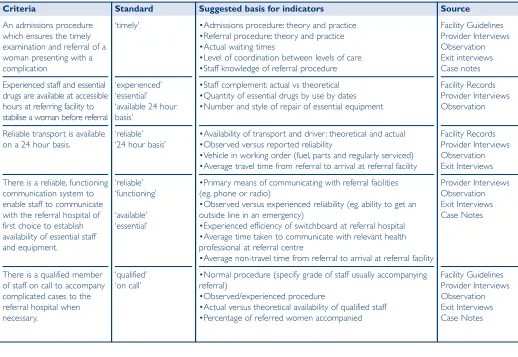
(13) quality standards related to human resources include: Safety at work, staff training and development and the management of human resources Staff require protection from risks associated with their work.These include physical violence, verbal abuse from patients and relatives and transmissible infectious diseases, especially Hepatitis B and HIV.These are especially pertinent in maternity facilities where exposure to large volumes of body fluids is likely. Effective systems for staff appraisal linked to personal and professional development opportunities such as the availability of courses and in-service training are key to maintaining the quality of the human resource base. Staff operate more effectively where there are clear management structures and clear lines of accountability. Basic and Comprehensive Essential Obstetric Care Insufficient and unqualified staff, unavailability of blood, shortages of essential drugs and missing supplies limit access to life-saving procedures (Thaddeus and Maine, 1994).A WHO working group (1996) identified two levels of essential obstetric care: basic and comprehensive.A facility at the level of a health centre is expected to be able to provide six essential functions: antibiotics (injectable), oxytocics (injectable), anticonvulants (injectable), manual removal of the placenta,removal of retained products and. 20. assisted vaginal delivery. A facility providing a comprehensive level of essential care, such as a district hospital, is expected to be able to provide not only all of the above but also caesarean-sections and blood transfusions. The provision of these services requires that other aspects of the physical infrastructure function efficiently. In the developing world there are frequent problems with the provision of the continuous supply of power and water. In addition, the maintenance of buildings and equipment in a state of adequate repair is often problematic in settings where budgets are constrained, and increased demand for services compromises the efficient operation of facilities.The ability of a facility to perform effectively the functions expected of it is the outcome not only of the quality of human and physical resources but also of the other aspects of quality identified in this framework.. Criteria that may be used to assess the quality of the provision of care relating to human and physical resources include: 1) The skill mix is appropriate to cope with patient flow and the case mix of deliveries at the facility. 2) The maternity wards are adequately equipped to perform their function effectively and consistent with internationally recognised good practice. 3) The operating theatre is in good repair and fully equipped with drugs and surgical equipment to perform life-saving procedures when required. 4) The general infrastructure of the facility is of sufficient size and state to cope with demand, and essential support services are reliable. 5) The organisational and management structure of the labour, delivery and postpartum suite ensures most efficient use of resources. 6) Staff should always be adequately protected from risks associated with their work. 7) Effective systems for maintaining the quality of the human resource base should be in place at all facilities. 8) All facilities should have a clear management structure and clear lines of accountability. 6.1.2 Referral The quality of the referral system is crucial to preventing maternal death. The hierarchy of maternity facilities only becomes a functioning unit if the referral system from the lower-order health centre to the referral unit is efficient and effective. While the majority of complications are unpredictable, it is possible to identify antenatally certain high-risk groups (such as breech presentation and multiple pregnancies), which should be referred to the appropriate facility well before labour begins.This framework is not concerned with referrals made antenatally, however, but with the quality of referral procedures once a woman in labour or with a complication presents at the facility under assessment. Poor referral procedures were identified as a significant constraint to the accessing of emergency care in a study in Nigeria (Okafor and Rizzuto,1994). Here, midwives in Akwa-Ibom were reportedly frustrated that registered maternitycentre patients were treated as unbooked cases when they went to general hospitals for emergency assistance, and were therefore denied prompt treatment. Among facilities in urban India, it has been reported that units providing basic emergency care may deny care to any unbooked woman presenting in labour, regardless of her condition. This policy adds. (also see Table 1 in the Appendix). 21.
(14) avoidable delays to the accessing of prompt and appropriate care for women who go on to have an uncomplicated delivery. For women with a complication the delay can be far more serious where an insufficient attempt is made to stabilise her condition before referral. The time taken to travel between facilities on often crowded roads is unpredictable, and in the late stages of labour it can be uncomfortable, distressing and potentially fatal for both mother and child (Matthews et al., 2000). It is important that referral protocols are defined with input and cooperation from managers at all levels within the system. Managers should determine locally which conditions can be treated in a given facility and which must be referred. An effective referral and transport system is the link that allows facilities to work together in a continuous chain. There must be good communication and cooperation throughout the chain if the system is to be effective (WHO, 1994). This element of the framework aims to identify components of sub-standard care, such as poor coordination between providers, which may delay the referral process and consequently negatively affect the pregnancy outcome. Criteria that may be measured to help determine the quality of the referral process include:. 22. 1) An admissions procedure that ensures the timely examination and referral of a woman presenting with a complication. 2) Experienced staff and essential drugs and equipment are available at accessible hours at the referring facility to stabilise a woman before referral. 3) Reliable transport is available on a 24-hour basis. 4) There is a functioning and reliable communication system to enable staff to communicate with the referral hospital of first choice to ensure that essential staff and equipment are available. 5) There is a qualified member of staff on call to accompany complicated cases to the referral hospital when necessary. (See also Table 2 in Appendix). 6.1.3 Maternity Information Systems A review of record-keeping procedures by the Prevention of Maternal Mortality (PMM) network at ten facilities in Kumasi, Ghana (Danqua et al., 1997), and a recent study involving facilities in urban India (Matthews et al., 2000) have revealed. that information on obstetric complications is often inconsistent or missing. Some hospital record systems were not designed to collect such information at all. Individual patient records are indispensable for casemanagement and peer review, and for appropriate record-keeping to determine the impact of programmes (Geefhuysen, 1999). In these studies, case notes were often nonexistent, incomplete or illegible. No formal procedure existed to classify and then record maternal complications by primary cause. Nor did any functional procedure exist to review causes of death. For example, many perinatal deaths will inevitably remain unexplained, but obvious obstetric and paediatric causes should be identified. Deaths due to prematurity are relatively common, but if their number is compared with the total number of low birthweight babies delivered at the facility, the ratio can give an impression of the standard of intrapar tum and neonatal care (Driessen, 1987). Regression models in a study of the measurement of quality of essential obstetric care in Nigeria showed that the most consistent and important predictor of quality scores was the use of printed forms (ie, routine records of labour) during intrapar tum care. Printed forms served as job aids, providing prompts that reminded midwives to perform specific tasks (Adeyi and Morrow, 1997).. The PMM network also identified problems in record-keeping at the human resources and management levels where they noted a lack of trained records personnel and training programmes. They found that medical personnel lacked knowledge and skills in recording and managing information, and that administrators poor use of available information contributed to inefficient planning of services. Any quality assessment exercise would need to review the record-keeping practices and skills of the department and the way in which information is routinely used. It will then be possible to upgrade effectively both recordkeeping instruments to ensure all necessary information is recorded, and the skill base to ensure staff are adequately trained to record the correct information accurately and use it effectively. Regular reporting of baseline data, analyses and dissemination of data for the purposes of policy, planning and case review are essential components of a maternity information system.. 23.
(15) Criteria for assessing the quality of management information systems include:. 1) Basic registers in facilities are designed to record data that is sufficient to monitor and evaluate activities effectively. 2) Current procedures for recording information result in complete and accurate data entry. 3) A review process is in place to ensure data is comprehensive and used effectively to improve patient management and service delivery. 4) Each complicated case (severe morbidity or mortality, maternal or infant) is effectively reviewed and analysed, and avoidable factors identified. (See also Table in 3 in the Appendix). 6.1.4 Appropriate Technologies It is now increasingly recognised that certain technologies within maternity care are not always appropriate, being at best wasteful and at worst harmful. However, assessing the extent to which inappropriate technologies are used has not yet been widely embraced as an indicator of quality of care. For this reason this element of the framework is examined in some depth here.. 24. Good care relies on the use of technologies that have been justified scientifically. Inappropriate technologies can compromise safety, use up scarce resources unnecessarily, and in the case of certain specific procedures be not only uncomfortable and humiliating for the labouring woman, but even harmful. According to the World Health Organisation a technology is: ’an association of methods, procedures, techniques and equipment which together with the people using them can contribute to solving a health problem.An appropriate technology is one that is scientifically sound, adapted to local needs, acceptable to those who use it or for whom it is used, and that can be maintained and utilized with resources that the community can afford’ (WHO, 1996b). Ideally, only interventions that support the process of normal birth should be used, and those that are poorly evaluated or potentially harmful stopped. The WHO has published a report on care in normal birth, in which it details aspects of normal care and identifies technologies that have been demonstrated by randomised controlled trials to be inappropriate, unnecessary and sometimes harmful (WHO, 1996b). While there are myriad potential interventions that can be, and are, used by midwives and obstetricians all over the world, a selected number identified in the WHO report are included as criteria. for this element of the framework and will be discussed here. Those selected are relatively easy to identify in an assessment exercise. The assessment process would attempt to ascertain whether or not these were used by the facility being assessed, and how often. Routine Enemas. Pubic. Shaving. and. Preparation for birth in a health centre or hospital often includes several routine procedures such as taking a woman’s blood pressure and checking her pulse and temperature, all of which have implications for the birth.As a rise in temperature may indicate infection or dehydration, and a rise in blood pressure may signal pre-eclampsia, both should normally be checked at least every four hours. Routine procedures such as pubic shaving and enemas before delivery, however, are common but have no proven benefits and can both be uncomfortable and humiliating. Pubic shaving was popularly thought to reduce infection and make suturing easier. While there is no evidence to support this, the likelihood is that the risk of infection for the woman (and indeed the provider) will rise through contamination from a non-sterile blade. The transmission of HIV and hepatitis are among the more serious potential consequences. A study examining this practice as early as 1922 (Johnston and Sidall, 1922) and a more recent randomised controlled. trial in 1965 were both unable to detect any lowering of puerperal morbidity by pubic shaving. Rather, there was a tendency towards increased morbidity in the shave groups (Kantor et al, 1965). Enemas are used in the mistaken belief that they will help the uterus to contract and the head to descend, and to reduce contamination at delivery and so minimise the risk of infection to mother and baby. While some women do ask for enemas, many find them an embarrassment. Two randomised controlled trials have evaluated the effects of routine enemas, and no effects on the duration of labour or on neonatal infection or perineal wound infection were detected (Romney and Gordon, 1981; Drayton and Rees, 1984). Routinely administering enemas to women in labour confers no benefit. Aside from being particularly uncomfortable during labour, they carry some risk of bowel damage (rectal irritation, gangrene and anaphylactic shock). Intravenous Infusion and Vaginal Examination Other routine procedures still widely used include intravenous infusion of glucose and fluid. Fasting in labour is commonly observed in order to minimise the contents of the stomach should a general anaesthetic be necessary. However, there is no guarantee that withholding food and drink will result in a stomach volume of. 25.
(16) less than 100ml. Nor can fasting be relied on to lower the acidity of the gastric contents (Crawford, 1956; Roberts and Shirley, 1976; McKay and Mohan, 1988). Restricting food and drink in labour continues in many institutions. Dehydration and ketosis are possible outcomes of this type of restriction, the common response to which being the use of intravenous infusion of glucose and fluid. Dehydration can cause veins to collapse, which would make putting in a drip, if needed, difficult. Moreover, not only can the use of intravenous infusion interfere with a woman’s ability to move freely in labour, and so interfere with the natural process, it may have potentially serious unwanted effects on the baby such as, hyperinsulinism (Lucas et al., 1980; Rutter et al., 1980;Tarnow-Mardi et al., 1981; Lawrence et al., 1982). Labour requires enormous amounts of energy. The WHO (1996b) concludes that the correct approach should be not to interfere routinely with womens wish for food and drink during labour and delivery (p.11). Checking cervical dilatation is the most common method used to assess the progress of labour. This requires a vaginal examination.To reduce the risk of infection, these examinations should be kept to a strict minimum - once every four hours during the first stage according to the WHO (1994) and should be carried out only by skilled attendants, with clean hands and. 26. wearing gloves. It is important to keep invasive techniques to a minimum. Attendants impatience often results in the over-use of this technique. Intravenous Infusion of Oxytocin Impatience is sometimes a reason for the liberal use of another technology: intravenous infusion of oxytocin.When the membranes rupture early and labour does not follow spontaneously labour is often augmented in order to avoid chorioamnionitis.The practice of using an intravenous infusion of oxytocin, to speed up labour after early amniotomy if the rate of cervical dilatation is less than 1cm per hour, has been investigated in a number of randomised trials (Read et al., 1981; Hemminki et al., 1985; Bidgood and Steer, 1987; Cohen et al., 1987 and Lopez-Zeno et al., 1992). Three of the trials provided data on the length of labour after oxytocin augmentation compared with control groups only. Only one of these demonstrated a shorter mean duration with oxytocin. In one trial women in the control group were encouraged to get out of bed and move as they wanted. In this group the mean length of labour was slightly shorter than in the augmented group. No difference in AGPAR scores were found (Hemminki et al., 1985). The majority of women in this trial described the augmentation process as unpleasant, and more than 80% said that it increased their pain. The WHO (1996b, p. 23) concludes that it is not clear from available data that the. liberal use of oxytocin augmentation (active management of labour) is of benefit to women or infants. Additionally, the WHO (1996b) concludes that as a general rule oxytocin should only ever be used to augment labour in facilities where there is immediate access to Caesarean section should the need arise. Intramuscular Oxytocin In many areas of the world intramuscular oxytocin is administered by injection to augment labour. Use of any intramuscular oxytocin before the birth of the infant is generally regarded as dangerous because the dosage cannot be adapted to the level of uterine activity. Hyperstimulation may result which is harmful to the fetus (WHO 1996b). An increased incidence of ruptured uterus has also been linked to this practice (Kane, 1993). Recent studies of hospitals in urban India, and of assisted home deliveries in rural Karnataka, observed the frequent use of intramuscular oxytocin before delivery to augment labour (Matthews et. al. 1999, Matthews et al. 2000). This harmful practice should be abandoned (WHO, 1996b). Caesarean Delivery Caesarean delivery can be life saving for mothers and infants, but more and more often it is being used for reasons other than this.The appropriate use of Caesarean delivery can lead to a. decrease in maternal mortality and morbidity as well as decreasing perinatal mortality and morbidity. The rate of Caesarean section varies considerably among countries from about 5% to over 30% of all deliveries. Rates also vary considerably within countries. In a resource-poor setting rates can suffer from being too low in municipal facilities yet too high in private ones. In Brazil, where delivery in hospital is the norm, the Caesarean delivery rate for the country has been estimated as 36.7% (DHS, 1996). A recent study found rates in private hospitals as high as 72% (Chacham and Perpetuo, 1998). The optimal rate of Caesarean delivery is unknown, and will inevitably vary by institution according to its status within the referral chain. But the national data available suggest that little improvement in outcome appears to occur when overall rates rise above 7% (Enkin et al., 1995). The WHO (1997) suggests that rates of below 5% may indicate inadequate availability and access to obstetric care, while rates of above 15% may suggest over-utilisation for reasons that are not essential. Excess use of Caesarean section exposes women to anaesthesia and major surgery with their concomitant risks. It is also expensive, at a cost to either the wider health-care resource pool or to the woman and her family if they are paying for the operation and associated costs. A study of 221 consecutive Caesarean sections at a. 27.
(17) large London teaching hospital demonstrated that maternal morbidity was common after the operation. Anaesthetic problems, haemorrhage, paralytic ileus, wound problems and infective complications were both frequent and often unrelated to the condition that mandated the Caesarean section (Kelleher and Cardozo, 1994). Studies indicate that the growing use of this technology is partly the result of the lucrative nature of this intervention for the providers of care. Other factors that have been suggested to explain differentials in use include the fear of malpractice litigation, convenience for the clinician, the socio-economic situation of women and patient demand. Of women who stated that they would prefer to deliver by Caesarean section in the Metropolitan Area of Belo Horizonte County in Brazil, 43% gave ‘less painful’ as the reason, 22% wanted to have a tubal ligation at the same time, and 16% had had a previous Caesarean section. The same study set out to establish the extent to which patient demand could explain the high Caesarean section rate in the county. Of the 400 women interviewed 71% said that they wanted a vaginal delivery, 21% wanted a Caesarean section delivery and 8% said they had no preference. These figures suggest that patient preference is not a sufficient explanation for the very high rates experienced in this area (Perpetuo et al 1998).. 28. Supine Position Many facilities move women from a labour room to a delivery room at the start of the second stage of labour and then require them to lie on their backs to deliver. Yet moving a woman at this stage of labour is an added discomfort, serves no physiological purpose and can be disruptive at this point. This is true also of the latter procedure of ensuring women are lying on their backs to deliver, in some cases with their legs tied in stirrups or held by hospital staff. In the absence of a complication women should be free to adopt whatever position feels most comfortable for them at the time of delivery. Generally, if given the choice, women choose positions such as squatting or standing that more closely complement the physiology of the labouring woman, ensuring that gravity aids the process. Lying on her back, or semi-reclining, effectively results in a more restricted birth passage. In these positions, particularly the latter, the woman will be sitting on her coccyx and sacrum, curving the interior of her pelvis and bringing her pelvis and spine closer together, which reduces the space available for the babys head (Sutton and Scott, 1996). A number of trials (Stewart and Spiby, 1989; Liddell and Fisher, 1985; Crowly et al., 1991; Bhardwaj et al., 1995) suggest that an upright position or a lateral tilt during second stage labour has greater advantages than a supine position. Findings demonstrate that the upright. position causes less discomfort and difficulty when bearing down, less labour pain, less perineal trauma and fewer wound infections. In one trial a shorter second stage was observed in the upright position. Despite this, the supine position for delivery is generally the position favoured by the staff attending, and is preferred not only in most of the developing world but in much of the developed world as well. Much of the positive effect of the vertical position depends on the ability of the birth attendants and their experience with any position other than the supine. Birth attendants may need to be trained to help women deliver in positions other than the supine (WHO, 1996b, p. 27). Episiotomy In many parts of the world, episiotomy is used liberally, particularly for first births. It is generally justified on a number of grounds. It is thought to prevent damage to the sphincter and rectum, and permit better healing than a spontaneous tear. It is thought to prevent trauma to the fetal head, and, finally, it is thought to prevent serious damage to the muscles of the pelvic floor. In practice, all of the above can be prevented by appropriate management of labour and delivery. Not only do episiotomies, like other surgical procedures, carry a number of risks such as excessive blood loss and infection, evidence has shown that the routine use of episiotomy does not reduce the risk of perineal trauma or. improve healing, nor does it prevent damage to the fetal head or improve APGAR scores. Also, use of episiotomy has not been shown to reduce the risk of urinary stress incontinence after delivery (Sleep et al., 1991). Where rates of infectious diseases such as HIV and hepatitis are high, not only is the overuse of episiotomy unnecessary for the above reasons it may increase the risk of transmission for the health-care provider responsible for the cut and subsequent repairs. Despite this, episiotomy is the USA’s most common surgical operation, as most women undergo this procedure at the birth of their first child for the primary purpose of avoiding a perineal tear. Routinely substituting a straight cut for a ragged tear, results in many thousands of women having cuts when only a few may have suffered tearing. Episiotomy certainly has a place in safe maternal care, but only if used appropriately. Indiscriminate routine use is not appropriate use, especially in areas where levels of hygiene are low, in and outside the institution. Data from randomised trials do not support a ‘blanket’ policy, such as those in place in many developing world hospitals, which require all primiparous women to have an episiotomy (Carroli, 1997). The WHO (1996b) suggests that a good goal to pursue would be an episiotomy rate of 10%, the figure attained without harm to mother or infant in a British trial (Sleep et al., 1984).. 29.
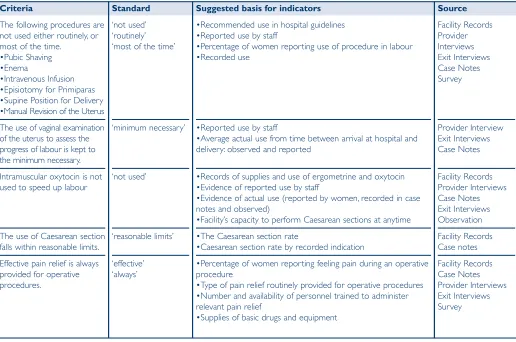
(18) Manual Revision of the Uterus. by Enkin et al., 1995) as:. The delivery of the placenta is the next point at which appropriate care is vital. At this point the major risks for the mother are postpartum haemorrhage and retained placenta. The routine manual revision of the uterus post delivery is an example of another widely used and yet inappropriate technology. Manual revision of the uterus refers to the practice of checking the contents of the uterus by hand for retained sections of the placenta. The process, as well as being uncomfortable for the newly delivered, episiotomised mother, increases the risk of postpartum infection, can cause shock or mechanical trauma and is of no proven benefit.. ■ Techniques that reduce painful stimuli, such as maternal movement and position changes, counter pressure (steady strong force applied to an area of the lower back during labour).. Pain Relief: Behavioural and Drug Based Methods. Pharmacological control of pain in childbirth has a long history.The use of opiates was mentioned in early Chinese writings. There have been more clinical trials of pharmacological pain relief during labour and childbirth then any other intervention in the perinatal field (Enkin et al., 1995). Methods have been classified as:. A woman’s experience of pain in labour may be modified by a variety of circumstances, including the cultural context, the support she receives from caregivers and companions, and the labouring environment (Enkin, 1995). A number of factors can result in intensified feelings of pain such as abnormal labour, prolonged or complicated by dystocia, induced or accelerated by oxytocics or instrumental delivery (WHO, 1994). The study of pain transmission and its modulation has provided findings that are applied in a variety of behavioural approaches to relieving the pain of childbirth. These have been classified. 30. ■ Techniques that activate peripheral sensory receptors such as superficial hot and cold, immersion in water, during labour, touch and massage and acupuncture and acupressure. ■ Techniques that enhance descending inhibitory pathways such as attention focusing and distraction, hypnosis, or music and audio-analgesia.. ■ Systemic agents such as narcotics, sedatives and tranquillisers. ■ Inhalational analgesia (such as, nitrous oxide). ■ Regional analgesia, usually epidural or spinal analgesia. For many in the developing world, access to drug based methods of pain relief are very limited. More. fundamentally, clear evidence of the extent to which lack of drug based pain relief in labour is associated with adverse sequelae, distress and suffering is lacking. In contrast, studies of cancer pain in different sociocultural settings has clearly shown comparable levels of distress and suffering, which has led to current WHO initiatives to enhance the availability of effective drug treatment, especially by addressing the legal problems surrounding the medical use of opioids in many countries. It is not yet possible, from the existing literature, to identify a consensus to inform the development of general criteria about the extent to which methods of pain relief should be available to women in labour and primary research in this field is urgently required. However, effective pain relief for operative procedures is mandatory and its availability and provision should form part of the evaluation framework. In the light of the above the following criteria may be measured to assess the quality of the provision of care.. 1) The following procedures are not used either routinely, or most of the time: Pubic shaving Enema Intravenous infusion Episiotomy for primisparas Lithotomy position for delivery Manual revision of the uterus 2) The use of vaginal examination to assess the progress of labour is kept to the minimum necessary. 3) Intramuscular oxytocin is not used to speed up labour 4) The use of Caesarean section falls within reasonable limits 5) Effective pain relief is always provided for operative procedures. (see also Table 4 in the Appendix). 6.1.5 Internationally Recognised Good Practice There are a number of procedures in maternity care that have, through carefully designed randomised studies been shown to be of benefit to the mother or her baby. The UK Royal College of Obstetricians and Gynaecologists (RCOG) has published a list of effective procedures suitable for audit (Benbow et al.,1997). The present framework draws almost. 31.
Figure

+5
Related documents