www.impactjournals.com/oncotarget/
Oncotarget, 2017, Vol. 8, (No. 19), pp: 32237-32257
Robotic vs. Retropubic radical prostatectomy in prostate cancer:
A systematic review and a meta-analysis update
Kun Tang
1,*, Kehua Jiang
1,2,*, Hongbo Chen
2, Zhiqiang Chen
1, Hua Xu
1and Zhangqun
Ye
11 Department of Urology, Institute of Urology, Tongji Hospital, Tongji Medical College, Huazhong University of Science and
Technology, Wuhan, China
2 Department of Urology, The Central Hospital of Enshi Autonomous Prefecture, Enshi, China * These authors have contributed equally to this work
Correspondence to: Hua Xu, email: [email protected]
Keywords: robotic-assisted radical prostatectomy; retropubic radical prostatectomy; prostate cancer; meta-analysis; update Received: February 18, 2016 Accepted: October 21, 2016 Published: November 12, 2016
Copyright: Tang et al. This is an open-access article distributed under the terms of the Creative Commons Attribution License (CC-BY), which permits unrestricted use, distribution, and reproduction in any medium, provided the original author and source are credited.
ABSTRACT
CONTEXT: The safety and feasibility of robotic-assisted radical prostatectomy (RARP) compared with retropubic radical prostatectomy(RRP) is debated. Recently, a number of large-scale and high-quality studies have been conducted.
OBJECTIVE: To obtain a more valid assessment, we update the meta-analysis of RARP compared with RRP to assessed its safety and feasibility in treatment of prostate cancer.
METHODS: A systematic search of Medline, Embase, Pubmed, and the Cochrane Library was performed to identify studies that compared RARP with RRP. Outcomes of interest included perioperative, pathologic variables and complications.
RESULTS: 78 studies assessing RARP vs. RRP were included for meta-analysis. Although patients underwent RRP have shorter operative time than RARP (WMD: 39.85 minutes; P < 0.001), patients underwent RARP have less intraoperative blood loss (WMD = -507.67ml; P < 0.001), lower blood transfusion rates (OR = 0.13; P < 0.001), shorter time to remove catheter (WMD = -3.04day; P < 0.001), shorter hospital stay (WMD = -1.62day; P < 0.001), lower PSM rates (OR:0.88; P = 0.04), fewer positive lymph nodes (OR:0.45;P < 0.001), fewer overall complications (OR:0.43; P < 0.001), higher 3- and 12-mo potent recovery rate (OR:3.19;P = 0.02; OR:2.37; P = 0.005, respectively), and lower readmission rate (OR:0.70, P = 0.03). The biochemical recurrence free survival of RARP is better than RRP (OR:1.33, P = 0.04). All the other calculated results are similar between the two groups.
CONCLUSIONS: Our results indicate that RARP appears to be safe and effective to its counterpart RRP in selected patients.
INTRODUCTION
Prostate cancer (PCa) is the most common cancer
in the worldwide and its morbidity,mortality is the first
and second common cancer in men, respectively [1]. RP
is the standard therapy for patients with localized PCa
[2]. However, open retropubic radical prostatectomy
(RRP) is associated with higher overall complications,
including estimated blood loss (EBL), wound infections.
With the development of surgical techniques, laparoscopic
techniques and robot assisted surgeries have become a
very popular procedure for the management of urological
disease throughout the world [3]. Compared with RRP, the
advantages of laparoscopic radical prostatectomy (LRP)
are less EBL, fewer complications, better cosmetic effect
and shorter hospital stay [4]. The disadvantages of LRP is
lack of 3D visualization and poor ergonomics.
As alternatives to open surgery, RARP has became
a predominant procedure for the treatment the localized
prostate cancer in the world [5]. Assessing of the robotic
Clinical Research Paper
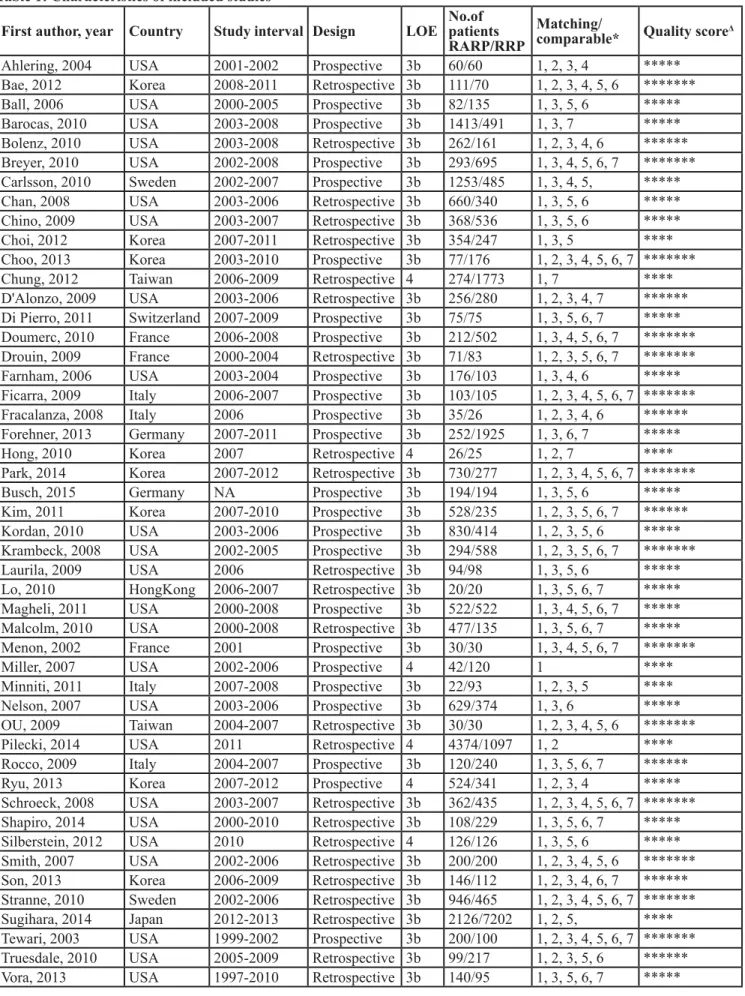
Table 1: Characteristics of included studies
First author, year Country
Study interval Design
LOE
No.of
patients
RARP/RRP
Matching/
comparable*
Quality score
ΔAhlering, 2004
USA
2001-2002
Prospective
3b
60/60
1, 2, 3, 4
*****
Bae, 2012
Korea
2008-2011
Retrospective 3b
111/70
1, 2, 3, 4, 5, 6
*******
Ball, 2006
USA
2000-2005
Prospective
3b
82/135
1, 3, 5, 6
*****
Barocas, 2010
USA
2003-2008
Prospective
3b
1413/491
1, 3, 7
*****
Bolenz, 2010
USA
2003-2008
Retrospective 3b
262/161
1, 2, 3, 4, 6
******
Breyer, 2010
USA
2002-2008
Prospective
3b
293/695
1, 3, 4, 5, 6, 7
*******
Carlsson, 2010
Sweden
2002-2007
Prospective
3b
1253/485
1, 3, 4, 5,
*****
Chan, 2008
USA
2003-2006
Retrospective 3b
660/340
1, 3, 5, 6
*****
Chino, 2009
USA
2003-2007
Retrospective 3b
368/536
1, 3, 5, 6
*****
Choi, 2012
Korea
2007-2011
Retrospective 3b
354/247
1, 3, 5
****
Choo, 2013
Korea
2003-2010
Prospective
3b
77/176
1, 2, 3, 4, 5, 6, 7 *******
Chung, 2012
Taiwan
2006-2009
Retrospective 4
274/1773
1, 7
****
D'Alonzo, 2009
USA
2003-2006
Retrospective 3b
256/280
1, 2, 3, 4, 7
******
Di Pierro, 2011
Switzerland 2007-2009
Prospective
3b
75/75
1, 3, 5, 6, 7
*****
Doumerc, 2010
France
2006-2008
Prospective
3b
212/502
1, 3, 4, 5, 6, 7
*******
Drouin, 2009
France
2000-2004
Retrospective 3b
71/83
1, 2, 3, 5, 6, 7
*******
Farnham, 2006
USA
2003-2004
Prospective
3b
176/103
1, 3, 4, 6
*****
Ficarra, 2009
Italy
2006-2007
Prospective
3b
103/105
1, 2, 3, 4, 5, 6, 7 *******
Fracalanza, 2008
Italy
2006
Prospective
3b
35/26
1, 2, 3, 4, 6
******
Forehner, 2013
Germany
2007-2011
Prospective
3b
252/1925
1, 3, 6, 7
*****
Hong, 2010
Korea
2007
Retrospective 4
26/25
1, 2, 7
****
Park, 2014
Korea
2007-2012
Retrospective 3b
730/277
1, 2, 3, 4, 5, 6, 7 *******
Busch, 2015
Germany
NA
Prospective
3b
194/194
1, 3, 5, 6
*****
Kim, 2011
Korea
2007-2010
Prospective
3b
528/235
1, 2, 3, 5, 6, 7
******
Kordan, 2010
USA
2003-2006
Prospective
3b
830/414
1, 2, 3, 5, 6
*****
Krambeck, 2008
USA
2002-2005
Prospective
3b
294/588
1, 2, 3, 5, 6, 7
*******
Laurila, 2009
USA
2006
Retrospective 3b
94/98
1, 3, 5, 6
*****
Lo, 2010
HongKong 2006-2007
Retrospective 3b
20/20
1, 3, 5, 6, 7
*****
Magheli, 2011
USA
2000-2008
Prospective
3b
522/522
1, 3, 4, 5, 6, 7
*****
Malcolm, 2010
USA
2000-2008
Retrospective 3b
477/135
1, 3, 5, 6, 7
*****
Menon, 2002
France
2001
Prospective
3b
30/30
1, 3, 4, 5, 6, 7
*******
Miller, 2007
USA
2002-2006
Prospective
4
42/120
1
****
Minniti, 2011
Italy
2007-2008
Prospective
3b
22/93
1, 2, 3, 5
****
Nelson, 2007
USA
2003-2006
Prospective
3b
629/374
1, 3, 6
*****
OU, 2009
Taiwan
2004-2007
Retrospective 3b
30/30
1, 2, 3, 4, 5, 6
*******
Pilecki, 2014
USA
2011
Retrospective 4
4374/1097
1, 2
****
Rocco, 2009
Italy
2004-2007
Prospective
3b
120/240
1, 3, 5, 6, 7
******
Ryu, 2013
Korea
2007-2012
Prospective
4
524/341
1, 2, 3, 4
*****
Schroeck, 2008
USA
2003-2007
Retrospective 3b
362/435
1, 2, 3, 4, 5, 6, 7 *******
Shapiro, 2014
USA
2000-2010
Retrospective 3b
108/229
1, 3, 5, 6, 7
*****
Silberstein, 2012
USA
2010
Retrospective 4
126/126
1, 3, 5, 6
*****
Smith, 2007
USA
2002-2006
Retrospective 3b
200/200
1, 2, 3, 4, 5, 6
*******
Son, 2013
Korea
2006-2009
Retrospective 3b
146/112
1, 2, 3, 4, 6, 7
******
Stranne, 2010
Sweden
2002-2006
Retrospective 3b
946/465
1, 2, 3, 4, 5, 6, 7 *******
Sugihara, 2014
Japan
2012-2013
Retrospective 3b
2126/7202
1, 2, 5,
****
Tewari, 2003
USA
1999-2002
Prospective
3b
200/100
1, 2, 3, 4, 5, 6, 7 *******
Truesdale, 2010
USA
2005-2009
Retrospective 3b
99/217
1, 2, 3, 5, 6
******
surgery by expert indicate better ergonomics and quicker
learning curve, but its shortage is high cost of the robotic
surgery system.
In recent years, many experts have reported
on comparative study of RARP and open RRP. And
some meta-analysis were performed to evaluate the
advantages and disadvantages of two approaches,
including perioperative outcomes, oncologic outcomes
[5]. Their early experience showed that the outcomes of
this approach with fewer overall complications, quicker
convalescence, and lower EBL and transfusion [5-7].
However, the outcomes of RARP compared with RRP
have not been fully evaluated, and no conclusive results
are available. Therefore, a systematic review and
meta-analysis of the included published studies was performed
to compare RARP with RRP.
RESULTS
Characteristics of eligible studies
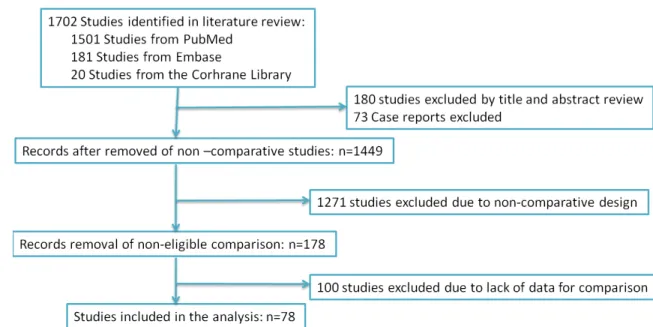
According to search strategy, the included 78
studies[4, 8-85] assessing RARP vs. RRP met the inclusion
criteria and were applied to perform this meta-analysis
(Figure 1). Those studies include forty-three retrospective
and thirty-five prospective studies and were listed in Table
1.
Quality of the studies and level of evidence (Table 1)
In this meat-analysis, the Newcastle-Ottawa Scale
quality assessment method of the observational studies
[86], and the US Preventive Services Task Force grading
system [87] were applied to evaluate the quality of
included studies. Twenty studies scored seven stars and
White, 2009
USA
2005-2008
Retrospective 3b
50/50
1, 3, 5, 6
*****
Williams, 2010
USA
2005-2008
Retrospective 4
604/346
1, 3, 5, 6
*****
Wood, 2007
USA
2003-2005
Prospective
4
165/152
1, 3, 7
*****
Yi, 2010
Korea
2006-2009
Retrospective 3b
153/641
1, 2, 3, 6, 7
*****
Rush, 2015
Canada
2009-2012
Retrospective 3b
331/643
1, 2, 3, 4, 7
*****
Ong, 2015
Australian
2009-2012
Prospective
3b
885/1117
1, 3, 5, 6, 7
******
Porcaro, 2015
Italy
2013
Retrospective 4
108/43
1, 2, 3, 4, 5, 6, 7 *******
O'Neil, 2015
USA
2011-2012
Prospective
3b
933/1505
1, 3, 6, 7
****
Niklas, 2015
Germany
2003-2010
Retrospective 3b
932/499
1, 2, 3, 4, 5, 6, 7 *******
Haglind, 2015
Sweden
2008-2011
Prospective
3b
1847/778
1, 2, 3, 5, 6
******
Gagnon, 2014
Canada
NA
Retrospective 3b
200/200
1, 2, 3, 4, 5, 6, 7 ******
Davison, 2014
Canada
2007-2009
Prospective
3b
78/73
1, 3, 5
*****
Akand, 2015
Turkey
1999-2012
Retrospective 4
79/50
1, 2, 3, 4, 5, 7
******
Korets, 2014
USA
2007-2012
Retrospective 3b
12746/3398 1, 2, 7
*****
Wallerstedt, 2015
Sweden
NA
Prospective
3b
1847/778
1, 2, 3, 5, 6, 7
******
Hu, 2015
USA
2004-2009
Retrospective 3b
5524/7878
1, 2, 3, 5, 6, 7
******
Davis, 2014
USA
2004-2010
Prospective
3b
27348/13840 1, 7
****
Rithch, 2014
USA
2003-2009
Retrospective 3b
742/237
1, 2, 3, 5, 6, 7
******
Gandaglia, 2014
USA
2008-2009
Retrospective 3b
3476/2439
1, 3, 5, 6, 7
*****
Koo, 2014
Korea
1992-2008
Retrospective 3b
175/175
1, 3, 5, 6, 7
******
Busch, 2014
Germany
NA
Retrospective 3b
110/110
1, 2, 3, 4, 5, 6, 7 *******
Alemozaffar, 2015 USA
2000-2010
Prospective
3b
282/621
1, 2, 3, 4, 5, 6, 7 *******
Harty, 2013
USA
2000-2010
Prospective
3b
152/153
1, 3, 4, 5, 6, 7
*******
Silberstein, 2013
USA
2007-2010
Retrospective 3b
493/961
1, 3, 5, 7
*****
Ludovico, 2013
Italy
2004-2008
Retrospective 3b
82/48
1, 3, 5, 6, 7
******
Musch, 2013
Germany
2009-2010
Retrospective 3b
105/105
1, 2, 3, 4, 5, 6, 7 ******
Hall, 2014
Australia
2007-2009
Retrospective 3b
100/100
1, 3, 6
*****
Geraerts, 2013
Belgium
2009-2011
Prospective
3b
64/116
1, 2, 7
*****
Drouin, 2014
France
2007-2010
Prospective
3b
73/44
1, 3, 5, 6, 7
******
Pierorazio, 2013
USA
2002-2011
Retrospective 3b
105/743
1, 2, 3, 4, 5, 6, 7 *******
RARP=robot-assisted radical prostatectomy; RRP= retropubic radical prostatectomy; NA= data not available; LOE= level
of evidence.
*:Matching/comparable variable: 1=age, 2=BMI, 3=PSA, 4=prostate size, 5=clinical stage, 6= biospy Gleason score, 7=follow
up
were evaluated as the high quality studies. Additionally,
The clinical variables of RARP and RRP were extracted
independently from included literatures (Table 1).
Description of included studies and patients
Demographics (Table 2)
Patients underwent RARP are younger (WMD =
-1.00 years; 95% CI: -1.56 to -0.44; P < 0.001) (Figure
S1), and have the lower level of pre-PSA (OR = -0.93;
95% CI: -1.47 to -0.40; P < 0.001) (Figure S2). But there
is no significant difference on BMI (OR = -0.10; 95% CI:
-0.39 to 0.20;P = 0.20) (Figure S3), and prostate volume
(WMD = 2.35ml; 95% CI: -0.92 to 5.61; P = 0.16) (Figure
S4) between the RARP and RRP group. (Table 2).
Outcomes of perioperative variables (Table 3)
Operating time and estimated blood loss (EBL)
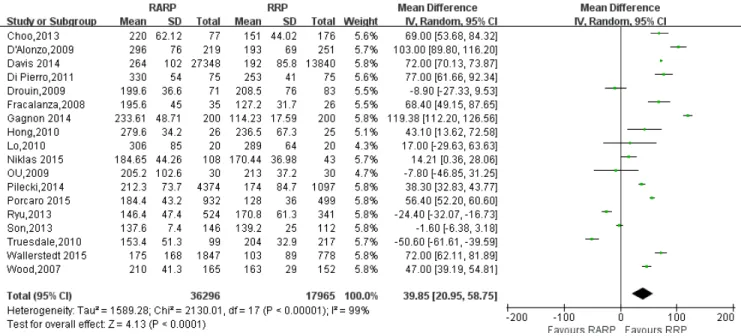
With respect to perioperative variables, pooling data
of 18 studies [21, 23, 24, 26, 29, 32, 34, 40, 54, 59, 60,
64, 70, 75, 78, 81, 84, 85] involving 54261 participants
indicated that RARP has longer operative time than
RRP (WMD: 39.85 minutes; 95% CI: 20.95 to 58.75; P
< 0.001) (Figure 2). Pooling data of 13 studies [10, 21,
23, 29, 30, 34, 40, 60, 70, 75, 78, 84, 85] results showed
that RARP has less intraoperative blood loss (WMD
= -507.67ml; 95% CI: -633.21 to -382.12; P < 0.001)
(Figure 3).
Transfusion rate and postoperative recovery
Pooled data from the 26 studies [9, 10, 14, 21, 23,
24, 26, 29, 30, 34, 35, 40, 44-46, 54, 59, 64, 72, 73, 78, 80,
82, 84] reported transfusion rate between RARP and RRP,
and the results showed that RARP was associated with
lower transfusion rate (OR = 0.13; 95% CI: 0.08 to 0.21;P
< 0.001) than RRP (Figure 4). Pooling data of 5 studies
reported on the time to remove catheter, the forest plot
showed that RARP had shorter time to remove catheter
than RRP group (WMD = -3.04; 95% CI: -4.59 to -1.49;
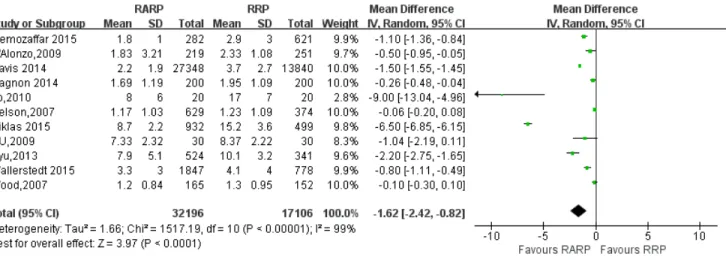
P < 0.001) (Figure S5). And pooling date of 11 studies
[10, 23, 24, 34, 53, 54, 64, 75, 78] reported on length of
hospital stay (LOS), the forest plot showed that RARP had
a shorter LOS than RRP (WMD = -1.62; 95% CI: -2.42 to
-0.82; P < 0.001) (Figure 5).
Table 2: Overall analysis of demographic and clinical characteristics compared RARP with RRP
Outcomes of interest No. of
studies
No. of patients
RARP/RRP
OR/WMD(95% CI ) p-value
Study heterogeneity
Chi
2df I
2p-value
Age(year)
33
41866/227181 -1.00[-1.56,-0.44]
<0.001
1260.51 32
97%
<0.001
BMI(kg/m
2)
17
9365/4690
-0.10[-0.39,0.20]
0.52
87.93
16
82%
<0.001
Pre-PSA(ng/ml)
23
6161/5250
-0.93[-1.47,-0.40]
<0.001
234.69 22
91%
<0.001
Prostate volume(ml) 12
3995/3288
2.35[-0.92,5.61]
0.16
136.49 11 92%
<0.001
RARP=robot-assisted radical prostatectomy; RRP=retropubic radical prostatectomy; OR = odds ratio; WMD = weighted mean
difference; CI = confidence interval; BMI = body mass index.
Figure 3: Forest plot and meta-analysis of estimated blood loss between RARP and RRP.
RARP = robot-assisted radical prostatectomy; RRP = retropubic radical prostatectomy.Figure 2: Forest plot and meta-analysis of operating time between RARP and RRP.
RARP = robot-assisted radicalprostatectomy; RRP = retropubic radical prostatectomy.
Table 3: Overall analysis of perioperative outcomes comparing RARP with RRP
Outcome of interest
No. of
studies
No.of
patients
RARP/RRP
OR/WMD(95%CI)
†
p
-value
Study heterogeneity
Chi
2df I
2p-value
Operation time, min
18
36296/17965 39.85[20.95,58.75]
†<0.001
2130.01 17 99%
<0.001
Estimated blood loss, ml 13
3446/2791
-507.67[-633.21,-
382.12]
†<0.001
390.34
12 97%
<0.001
Transfusion rate
26
54847/32967 0.13[0.08,0.21]
<0.001
693.85
25 96%
<0.001
Remove the catheter, day 5
2135/1264
-3.04[-4.59,-1.49]
†<0.001
260.52
4
98%
<0.001
Hospital stay, day
11
32196/17106 -1.62[-2.42,-0.82]
†<0.001
1517.19 10 99%
<0.001
RARP=robot-assisted radical prostatectomy; RRP=retropubic radical prostatectomy; OR = odds ratio; WMD = weighted mean
difference; CI = confidence interval.
Outcomes of oncological variables
pathologic stage and pathologic Gleason score (Table 5)
14 studies [9, 20, 27-29, 32, 46, 48, 66, 70, 73, 76,
77, 80] on ≤pT2a, pT2b, ≥pT2c, 48 studies [8-13, 15, 16,
18, 19, 21, 26-29, 31, 32, 34, 42-44, 46-50, 52, 54, 55, 57,
58, 60, 61, 64-71, 73, 74, 76-78, 82, 85] on pathologic
Gleason score (≤6; 7; ≥8) were reported, respectively. The
results showed a statistical differences more Gleason score
Figure 4: Forest plot and meta-analysis of transfusion rate between RARP and RRP.
RARP = robot-assisted radical prostatectomy; RRP = retropubic radical prostatectomy.Figure 5: Forest plot and meta-analysis of the length of hospital stay between RARP and RRP.
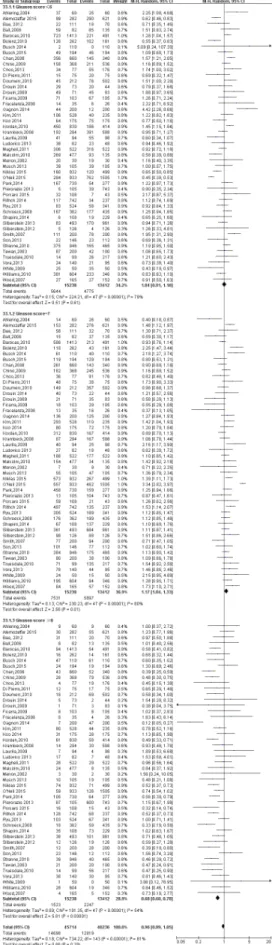
RARP = robot-assisted radical prostatectomy; RRP = retropubic radical prostatectomy.= 7 (OR: 1.17; 95% CI: 1.04 to 1.33; P = 0.01; Figure
6) performed RARP and more Gleason score ≥8 (OR:
0.68; 95% CI: 0.60 to 0.78; P < 0.001; Figure 6) in RRP.
However, there were no statistical differences with respect
to Gleason score≤6 (OR: 1.04; 95% CI: 0.91 to 1.18; P =
0.61; Figure 6) and pathologic T stage in the two groups
(Figure S6,7,8)(Table 5).
Positive surgical margins and lymph node yield(Table
5)
49 studies [9-12, 14-16, 18, 19, 21, 26-29, 31-34,
36, 37, 39, 41-44, 46-49, 52, 54, 56-58, 61, 62, 65,
67-69, 73, 76-78, 80-82, 84] evaluating RARP and RRP
reported positive surgical margins(PSM) rates. The
results showed a significant difference with higher PSM
rates in RRP group (OR:0.88; 95% CI: 0.78 to 1.00; P =
Table 4: Overall analysis of complications comparing RARP and RRP
Outcome of interest
No. of
studies
No.of patients
RARP/RRP
OR (95%CI)
p
-value
Study heterogeneity
Chi
2df I
2p-value
Overall complications
25
43087/28834 0.43 [0.32, 0.58]
<0.001
499.59
24 95%
<0.001
Rectal injury
8
3888/8110
0.16[0.07, 0.39]
<0.001
5.22
7
0%
0.63
Pulmonary embolism
9
37575/24635 0.47[0.37, 0.59]
<0.001
5.04
8
0%
0.75
Wound infections
10
11161/10587 0.23[0.11, 0.46]
<0.001
31.49
9
71%
<0.001
Bladder neck contracture
4
1993/2409
0.21[0.08,0.60]
0.003
8.39
3
64%
0.04
UTI
4
6586/2546
0.75[0.37,1.54]
0.44
15.35
3
80%
0.002
Urinary retention
3
2042/960
0.63[0.47,0.84]
0.002
2.44
2
18%
0.29
Obturator nerve injury
2
1453/585
0.09[0.01,0.75]
0.03
0.01
1
0%
0.91
DVT
7
7479/3072
0.40[0.25,0.66]
<0.001
10.82
6
45%
0.09
Urinary leakage
8
30940/15631 0.64[0.58,0.70]
<0.001
8.87
7
21%
0.26
ileus
8
3412/8501
0.92[0.56,1.51]
0.73
2.20
7
0%
0.95
lymphocele
9
45258/2639
0.52[0.29,0.94]
0.03
8.93
8
10%
0.35
Urinary continence-3mo
9
997/941
1.54[0.92,2.58]
0.10
22.06
8
64%
0.005
Urinary continence-12mo
9
1565/2179
1.03[0.84,1.27]
0.75
17.41
8
54%
0.03
Potent recovery-3mo
5
1169/820
3.19[1.19,8.56]
0.02
51.94
4
92%
<0.001
Potent recovery-12mo
7
1395/1574
2.37[1.30,4.33]
0.005
55.43
6
89%
<0.001
Readmission rate
7
11632/7060
0.83[0.74,0.94]
0.002
36.82
6
84%
<0.001
RARP=robot-assisted radical prostatectomy; RRP= retropubic radical prostatectomy; OR = odds ratio; WMD = weighted
mean difference; CI = confidence interval; UTI=urinary tract infection; DVT=deep venous thrombosis.
Table 5: Overall analysis of pathologic and oncological outcomes comparing RARP with RRP
Outcome of interest
No. of
studies
No.of
patients
RARP/RRP
OR/WMD(95%CI) p-value
Study heterogeneity
Chi
2df I
2p-value
Pathologic T stage
≤pT2a
13
2147/2174
1.11[0.93,1.31]
0.26
8.84
12 0%
0.72
pT2b
11
1959/2098
1.11[0.93,1.33]
0.25
13.91
10 28%
0.18
≥pT2c
14
2268/2485
0.93[0.76,1.13]
0.44
11.19
13 0%
0.60
Pathological Gleason score
≤6
48
15238/13412 1.04[0.91,1.18]
0.61
224.21
47 79%
<0.001
7
48
15238/13412 1.17[1.04,1.33]
0.01
230.23
47 80%
<0.001
≥8
48
15238/13412 0.68[0.60,0.78]
<0.001
101.358 47 54%
<0.001
PSM
49
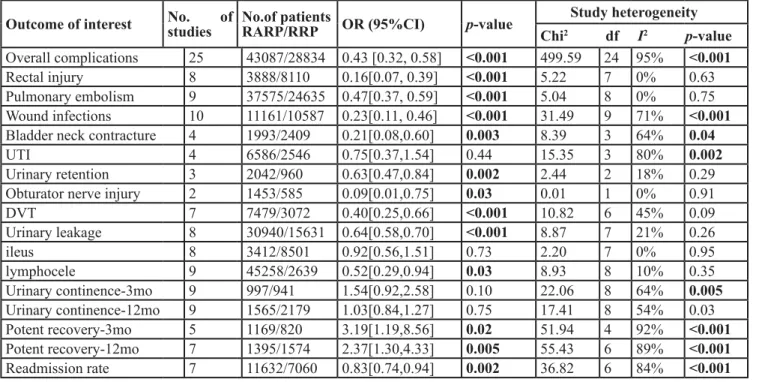
20804/23133 0.88[0.78,1.00]
0.04
198.74
48 76%
<0.001
PSM for T2
28
10086/9711
0.77[0.63,0.95]
0.01
82.23
27 67%
<0.001
PSM for T3
18
2011/2125
1.46[1.27,1.67]
<0.001
18.66
17 9%
0.35
Mean lymph node yield 4
837/565
2.85[-0.92,6.63]
†0.14
115.32
3
97%
<0.001
Positive lymph node
16
4162/6500
0.45[0.31,0.65]
<0.001
32.02
15 53%
0.006
BCR for free survival
10
4342/4176
1.33[1.01,1.76]
0.04
39.04
9
77%
<0.001
RARP=robot-assisted radical prostatectomy; RRP=retropubic radical prostatectomy; OR = odds ratio; WMD = weighted mean
difference; CI = confidence interval; PSM=positive surgical margins;
†value of WMD.
Figure 6: Forest plot and meta-analysis of pathological Gleason Score between RARP and RRP.
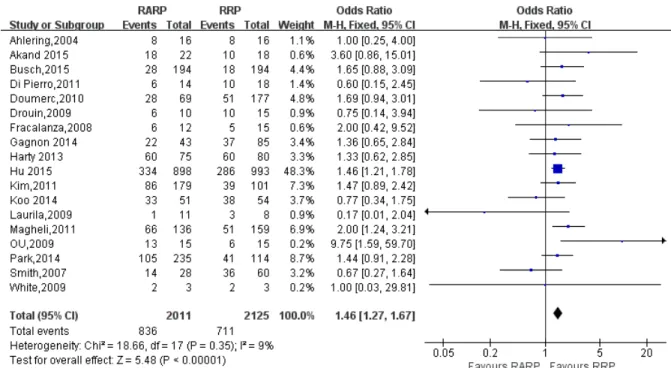
RARP = robot-assisted radical prostatectomy; RRP = retropubic radical prostatectomy.0.04)(Figure 7). PSM rates in pT3 cancers was higher in
RARP group (OR:1.46; 95% CI: 1.27 to 1.67; P < 0.001)
(Figure 8). However, the results showed that PSM rates
in pT2 cancers was lower in RARP (OR:0.77; 95% CI:
0.63 to 0.95; P = 0.01)(Figure 9). Four studies [20, 43,
60, 73] comparing mean lymph node yield and the results
showed that lymph node yield is higher in RARP (WMD:
1.61; 95% CI: 1.18 to 2.05; P < 0.001)(Figure S9), and 16
studies [20, 26, 33, 34, 39, 49, 58, 61, 64-68, 73, 84, 85]
reported on positive lymph node, There was a statistical
differences decreased positive lymph node in RARP than
RRP (OR:0.45; 95% CI: 0.31 to 0.65; P < 0.001)(Figure
10).
Outcomes of complications(Table 4)
Pooling data from 25 studies [9, 11, 17, 23, 24,
26, 27, 29, 31, 34, 35, 40, 42, 46, 48, 52-54, 59, 64,
72, 73, 80, 82, 84] reported on overall complications,
RARP had lower overall complications in the RARP
than RRP(OR:0.43; 95% CI: 0.32 to 0.58; P < 0.001)
(Figure 11). Next, a meticulous classification of overall
complications showed that RRP had a higher incidence of
rectal injury(OR:0.16; 95% CI: 0.07 to 0.39; P < 0.001)
(Figure S10), pulmonary embolism(OR:0.47; 95% CI:
0.37 to 0.59; P < 0.001) (Figure S11), wound infections
(OR:0.23; 95% CI: 0.11 to 0.46; P < 0.001) (Figure S12),
bladder neck contracture(OR: 0.21; 95% CI: 0.08 to 0.60;
P = 0.003) (Figure S13), urinary retention(OR:0.63; 95%
CI: 0.47 to 0.84; P = 0.002)(Figure S14), deep venous
thrombosis(OR:0.40; 95% CI: 0.25 to 0.66; P < 0.001)
(Figure S15), urinary leakage(OR: 0.64; 95% CI: 0.58 to
0.70; P < 0.001) (Figure S16), lymphocele (OR:0.52; 95%
CI: 0.29 to 0.94; P = 0.03) (Figure S17), and obturator
nerve injury(OR:0.09; 95% CI: 0.01 to 0.75; P = 0.03)
(Figure S18). There was no statistical differences between
two groups in term of urinary tract infections(UTI)
(OR:0.75; 95% CI: 0.37 to 1.54; P = 0.44)(Figure S19),
ileus (OR:0.92; 95% CI: 0.56 to 1.51; P = 0.73) (Figure
S20).
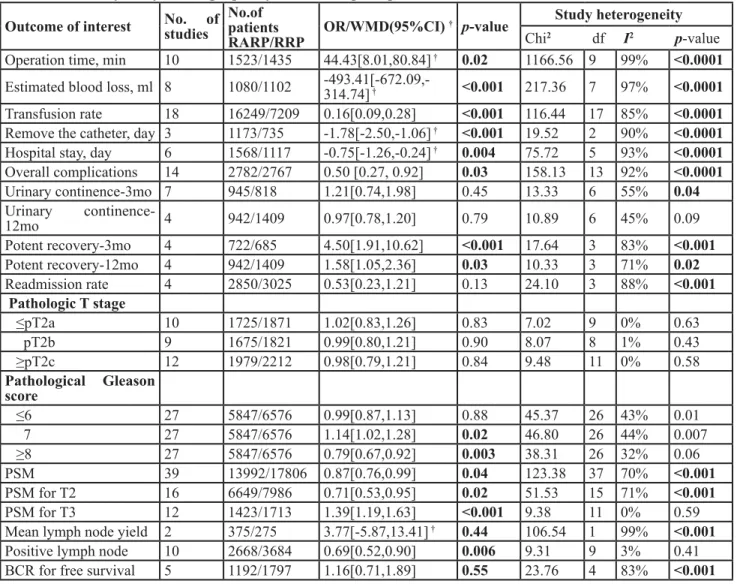
Table 6: Sensitivity analysis of high quality studies comparing RARP with RRP
Outcome of interest
No. of
studies
No.of
patients
RARP/RRP
OR/WMD(95%CI)
†
p
-value
Study heterogeneity
Chi
2df I
2p-value
Operation time, min
10
1523/1435
44.43[8.01,80.84]
†0.02
1166.56 9
99%
<0.0001
Estimated blood loss, ml 8
1080/1102
-493.41[-672.09,-
314.74]
†<0.001
217.36
7
97%
<0.0001
Transfusion rate
18
16249/7209
0.16[0.09,0.28]
<0.001
116.44
17 85%
<0.0001
Remove the catheter, day 3
1173/735
-1.78[-2.50,-1.06]
†<0.001
19.52
2
90%
<0.0001
Hospital stay, day
6
1568/1117
-0.75[-1.26,-0.24]
†0.004
75.72
5
93%
<0.0001
Overall complications
14
2782/2767
0.50 [0.27, 0.92]
0.03
158.13
13 92%
<0.0001
Urinary continence-3mo 7
945/818
1.21[0.74,1.98]
0.45
13.33
6
55%
0.04
Urinary
continence-12mo
4
942/1409
0.97[0.78,1.20]
0.79
10.89
6
45%
0.09
Potent recovery-3mo
4
722/685
4.50[1.91,10.62]
<0.001
17.64
3
83%
<0.001
Potent recovery-12mo
4
942/1409
1.58[1.05,2.36]
0.03
10.33
3
71%
0.02
Readmission rate
4
2850/3025
0.53[0.23,1.21]
0.13
24.10
3
88%
<0.001
Pathologic T stage
≤pT2a
10
1725/1871
1.02[0.83,1.26]
0.83
7.02
9
0%
0.63
pT2b
9
1675/1821
0.99[0.80,1.21]
0.90
8.07
8
1%
0.43
≥pT2c
12
1979/2212
0.98[0.79,1.21]
0.84
9.48
11 0%
0.58
Pathological Gleason
score
≤6
27
5847/6576
0.99[0.87,1.13]
0.88
45.37
26 43%
0.01
7
27
5847/6576
1.14[1.02,1.28]
0.02
46.80
26 44%
0.007
≥8
27
5847/6576
0.79[0.67,0.92]
0.003
38.31
26 32%
0.06
PSM
39
13992/17806 0.87[0.76,0.99]
0.04
123.38
37 70%
<0.001
PSM for T2
16
6649/7986
0.71[0.53,0.95]
0.02
51.53
15 71%
<0.001
PSM for T3
12
1423/1713
1.39[1.19,1.63]
<0.001
9.38
11 0%
0.59
Mean lymph node yield 2
375/275
3.77[-5.87,13.41]
†0.44
106.54
1
99%
<0.001
Positive lymph node
10
2668/3684
0.69[0.52,0.90]
0.006
9.31
9
3%
0.41
BCR for free survival
5
1192/1797
1.16[0.71,1.89]
0.55
23.76
4
83%
<0.001
RARP=robot-assisted radical prostatectomy; RRP=retropubic radical prostatectomy; OR = odds ratio; WMD = weighted mean
difference; CI = confidence interval.
Urinary continence recovery and potent recovery(Table
4)
Pooling data of 9 studies [9, 21, 26, 50, 62, 70, 81,
83, 84] reported on 3-mo and 12-mo urinary continence
recovery between two groups. The forest plot showed
that there were no statistical differences on the 3-mo and
12-mo urinary continence between two groups (3mo:
OR:1.54; 95% CI: 0.92 to 2.58; P = 0.10; 12mo: OR:1.03;
95% CI: 0.84 to 1.27; P = 0.75,respectively)(Figure 12,
Figure 7: Forest plot and meta-analysis of PSM between RARP and RRP.
RARP = robot-assisted radical prostatectomy; RRP = retropubic radical prostatectomy.Figure 9: Forest plot and meta-analysis of PSM for pT2 between RARP and RRP.
RARP = robot-assisted radical prostatectomy; RRP = retropubic radical prostatectomy.Figure 8: Forest plot and meta-analysis of PSM for pT3 between RARP and RRP.
RARP = robot-assisted radical prostatectomy; RRP = retropubic radical prostatectomy.Figure S21). And the 3- and 12-mo potent recovery rate of
RARP were better than RRP group, respectively (OR:3.19;
95% CI: 1.19 to 8.56; P = 0.02; OR: 2.37; 95% CI: 1.30 to
4.33; P = 0.005,respectively)(Figure 13,14).
Biochemical recurrence free survival and Readmission
rate(Table 5)
Pooling data from 10 studies[12, 16, 34, 49, 56, 61,
65-67, 74] reported on biochemical recurrence(BCR) free
survival, these results showed that RARP had a better BCR
Figure 11: Forest plot and meta-analysis of overall complications between RARP and RRP.
RARP = robot-assisted radical prostatectomy; RRP = retropubic radical prostatectomy.Figure 10: Forest plot and meta-analysis of positive lymph node between RARP and RRP.
RARP = robot-assisted radical prostatectomy; RRP = retropubic radical prostatectomy.free survival than RRP(OR:1.33; 95% CI: 1.01 to 1.76; P
= 0.04) (Figure 15). Pooling data from 7 studies[22, 35,
38, 53, 54, 59, 75] reported on readmission rate, the forest
plot showed that RARP had a lower readmission rate than
RRP(OR:0.83; 95% CI: 0.74 to 0.94; P = 0.002) (Figure
16).
Sensitivity analysis
42 qualified studies with patients’ baseline
characteristic consistency(age, pre-PSA, BMI, prostate
volume, P > 0.5) are analyzed by sensitivity analysis
(Table 6). Compared with the original analysis, there was
no change in the significance of any other outcomes except
that readmission rate(P = 0.002 vs P = 0.13), and BCR
for free survival(P = 0.04 vs. P = 0.55) were significantly
different in sensitivity analysis. The method of sensitivity
analysis can reduce the heterogeneity of studies to a
certain extent.
DISCUSSION
The incidence of prostate cancer and its mortality
is the first and the second common cancer in man,
respectively[1]. Our results indicated that RARP seemed
to have an younger age (WMD: -1.00; P < 0.001), and
to have the lower level of pre-PSA (WMD: -0.93; P
< 0.001) than RRP group, and that these differences
are primarily due to surgeon’s preference for surgical
modality. Another reason is that the younger is more
easier to choose new approach. However, there is no
difference on BMI and prostate volume between the two
groups. Sensitivity analysis showed that there was no
change in the significance of any other outcomes except
that readmission rate(P = 0.002 vs P = 0.13) and BCR for
free survival(P = 0.04 vs. P = 0.55).It demonstrated that
selection bias of demographic and clinical data of patients
is small between two groups.
Novara G et al[6] evaluated oncologic outcomes
of RARP and RRP, and the results indicated that RARP
had less EBL and transfusion rate than RRP. Their results
presented similar results and strengthened our results. The
Figure 13: Forest plot and meta-analysis of 3-mo potent recovery rate between RARP and RRP.
RARP = robot-assisted radical prostatectomy; RRP = retropubic radical prostatectomy.Figure 12: Forest plot and meta-analysis of 3-mo urinary continence rate between RARP and RRP.
RARP =other analyzed parameters operative time and complication
rate were similar. However, in our meta-analysis, RARP
had longer operative time than RRP(WMD:39.85min,
P<0.001), which likely reflects the early learning curve
with RARP. But the learning curve indicated that operative
time was decreased with growing operative experience
and it won’t influenced operative outcomes[88].
With regard to the pathologic outcomes, patients
underwent RARP had more pathological Gleason score =
7, less pathological Gleason score ≥8, higher lymph node
Figure 14: Forest plot and meta-analysis of 12-mo potent recovery rate between RARP and RRP.
RARP = robot-assisted radical prostatectomy; RRP = retropubic radical prostatectomy.Figure 15: Forest plot and meta-analysis of BCR free survival rate between RARP and RRP.
RARP = robot-assisted radical prostatectomy; RRP = retropubic radical prostatectomy.Figure 16: Forest plot and meta-analysis of readmission rate between RARP and RRP.
RARP = robot-assisted radical prostatectomy; RRP = retropubic radical prostatectomy.yield and fewer positive lymph node than RRP. However,
the pathological T stage is no significant difference
between the RARP and RRP group. LN yield was deemed
an indicator of surgical quality by many surgeons[89].
RARP had a higher LN yield than RRP, the reason is
that RARP has meticulous dissection with 3D vision and
decrease the intraoperative blood loss which made the
surgeon have more time and patience to acquiring higher
LN yield. Therefore, the oncological outcomes in terms of
PSM for T3 is higher in RARP than RRP. With the results
that BCR free survival was higher in RARP than RRP.
Some studies showed that the predictors of BCR were
preoperative PSA. Gleason score, pathological stage, and
PSM[49].
The experts suggested that patient outcomes and
surgical approach were mainly required to improve for
an accurate characterization of complications[90]. In
our meta-analysis, Patients underwent RARP had fewer
overall complications than RRP. The possible reason
may be associated with lower EBL and less transfusion
rate in RARP. Then a comprehensive classification of
complications indicated that RRP had a higher incidence
of rectal injury, pulmonary embolism, wound infections,
bladder neck contracture, urinary retention, deep venous
thrombosis, urinary leakage, lymphocele, and obturator
nerve injury. There were no significant differences with
regard to ileus and UTI between two groups.
Ficarra V et al[91] compared RARP with RRP
with respect to 12-mo urinary continence. Their results
indicated that RARP had a better 12-mo urinary continence
recovery than RRP(OR:1.53; P = 0.03). However, our
results indicated that there were no statistical differences
with regard to 3-mo and 12-mo urinary continence
in two groups. The urinary continence receiving RP
is influenced by preoperative patient characteristics,
surgical techniques, and so on. Some studies found that
patient age[92, 93], BMI[94], comorbidity index[95], and
prostate volume[96, 97] were also the potential predictors
of urinary incontinence. Increasing age, higher BMI,
and large prostate volume are correlated with high risk
of urinary incontinence who underwent RP. However,
the 3- and 12-mo potent recovery rate of RARP was also
better than RRP group, respectively. Analysis of predictors
indicated that peroperative parameters might influence
potency results. Relevant predictors included age at
surgery, baseline erectile function, and comorbidities[98].
Other authors also confirmed that age and baseline erectile
function of patients were affected the potent recovery in
nerve-sparing RARP[93, 99].
On the other hand, we found better BCR free
survival and lower readmission rate in RARP group in the
original analysis. The reason is that meticulous dissection,
lower blood loss and complications might provide patients
better oncologic prognosis in RARP group. However, we
observed no statistical differences between RARP and
RRP in sensitivity analysis. Therefore, multicenter, large
sample, long follow-up RCTs are required to prove our
findings.
Nevertheless, there were several limitations when
analyzing and interpreting results in our meta-analysis.
The major limitation is lack of well designed prospective,
randomized control studies in our meta-analysis. Secondly,
there existed heterogeneities of studies, especially in the
comparing of the continuous data such as the length of
hospital stay, operative time. whereas these parameters
were influenced by the heterogeneities of patients’
conditions, surgeon’s surgical skills and the sample
size of studies. In addition, short follow-up duration
may have an influence on the confidence of outcomes.
In the future, well-designed, prospective, multicenter
randomized control studies are required to help us better
demonstrate the advantages as well as drawbacks of this
novel approach.
MATERIALS AND METHODS
Literature search strategy
To update previous systematic review[5-7, 91, 98,
100, 101], a systematic review of published literature
was performed according to the Cochrane Handbook
recommendations[102]. No ethic issues get involved
in this article. A systematic dissertion was conducted
using Medline, Embase, Pubmed, CNKI, and all relevant
studies had been identified by the Cochrane Library. The
following key words were used: “comparative studies”,
“retropubic”, “open”, “radical prostatectomy “, “Da
Vinci”, “robot-assisted”, and “prostate cancer”.
Data extraction and outcomes of interest
Two of the authors(JKH and TK) extracted data
from the selected studies including: author identification,
country, publication year, study design, age, No. of
patients, operative approaches were mentioned previously,
and results of intervention. All disagreements about
eligibility were reached a consensus through authors
discussion. Perioperative outcomes including operative
time, EBL, LOS, overall complications, and oncological
outcomes were compared between the two methods
from all the studies that were finally selected. Overall
complications were graded on the basis of the
Clavien-Dindo system[103].
Inclusion criteria and exclusion criteria
Studies should satisfy the following requirements:
(1) to compare RARP with RRP, (2) to display on
outcome of two approaches, (3) to document the surgery
as RARP or RRP, (4) to clearly document indications
for prostatectomy with prostate cancer. Studies will be
excluded if (1) the study was not satisfied inclusion criteria
or (2) the outcomes of literature were not mentioned or
the parameters were impossible to analysis for either
RARP or RRP from the published findings and (3) studies
focusing on pure robot surgery system and/or on
single-site techniques.
Study quality assessment and level of evidence
In accordance with the criteria of Centre for
Evidence-Based Medicine in Oxford, we evaluated the
level of evidence(LOE) of included sixteen studies. The
Jaded Score was applied to evaluated the methodological
quality of RCTs[104]. The Newcastle-Ottawa Scale(NOS)
was applied to assessed the methodological quality of
non-RCTs observational studies [86, 105]. Two authors(JKH
and TK) evaluated the quality of the studies and
discrepancies were rechecked by the third reviewer(CZQ)
and consensus was achieved by discussion.
Statistical analysis
All meta-analysis were conducted by Review
Manger 5.3(Cochrane Collaboration, Oxford, UK).
Continuous and dichotomous variables were calculated by
weighted mean differences (WMDs) and odds ratios(ORs).
All analysis results were reported with 95% confidence
intervals(CIs). I
2test and chi-square-based Q test were
applied to evaluated the quantity of heterogeneity, and
when I
2> 50%, the evidence was considered to have
substantial heterogeneity, the random- effects(RE)
model would be applied, otherwise, the fixed effects(FE)
model was applied. The presence of publication bias was
evaluated by Egger’s test and funnel plot. Sensitivity
analysis was used to estimate the influence of studies with
a high risk of bias on the overall effect.
CONFLICTS OF INTEREST
The authors have no conflict of interest to disclose.
REFERENCES
1. Siegel RL, Miller KD, Jemal A. Cancer statistics, 2015. CA Cancer J Clin. 2015; 65: 5-29. doi: 10.3322/caac.21254. 2. Heidenreich A, Bellmunt J, Bolla M, Joniau S, Mason
M, Matveev V, Mottet N, Schmid HP, van der Kwast T, Wiegel T, Zattoni F. EAU guidelines on prostate cancer. Part 1: screening, diagnosis, and treatment of clinically localised disease. Eur Urol. 2011; 59: 61-71. doi: 10.1016/j. eururo.2010.10.039.
3. Gratzke C, Dovey Z, Novara G, Geurts N, De Groote
R, Schatteman P, de Naeyer G, Gandaglia G, Mottrie A. Early Catheter Removal after Robot-assisted Radical Prostatectomy: Surgical Technique and Outcomes for the Aalst Technique (ECaRemA Study). Eur Urol. 2015. doi: 10.1016/j.eururo.2015.09.052.
4. Allan C, Ilic D. Laparoscopic versus Robotic-Assisted Radical Prostatectomy for the Treatment of Localised Prostate Cancer: A Systematic Review. Urol Int. 2015. doi: 10.1159/000435861.
5. Tewari A, Sooriakumaran P, Bloch DA, Seshadri-Kreaden U, Hebert AE, Wiklund P. Positive surgical margin and perioperative complication rates of primary surgical treatments for prostate cancer: a systematic review and meta-analysis comparing retropubic, laparoscopic, and robotic prostatectomy. Eur Urol. 2012; 62: 1-15. doi: 10.1016/j.eururo.2012.02.029.
6. Novara G, Ficarra V, Mocellin S, Ahlering TE, Carroll PR, Graefen M, Guazzoni G, Menon M, Patel VR, Shariat SF, Tewari AK, Van Poppel H, Zattoni F, et al. Systematic review and meta-analysis of studies reporting oncologic outcome after robot-assisted radical prostatectomy. Eur Urol. 2012; 62: 382-404. doi: 10.1016/j.eururo.2012.05.047. 7. Novara G, Ficarra V, Rosen RC, Artibani W, Costello
A, Eastham JA, Graefen M, Guazzoni G, Shariat SF, Stolzenburg JU, Van Poppel H, Zattoni F, Montorsi F, et al. Systematic review and meta-analysis of perioperative outcomes and complications after robot-assisted radical prostatectomy. Eur Urol. 2012; 62: 431-52. doi: 10.1016/j. eururo.2012.05.044.
8. Ball AJ GB, Fabrizio MD, Davis JW, Given RW, Lynch DF, Shaves M, Schellhammer PF. Prospective longitudinal comparative study of early health-related quality-of-life outcomes in patients undergoing surgical treatment for localized prostate cancer: a short-term evaluation of five approaches from a single institution. J Endourol. 2006; 20: 723-31. doi: 10.1089/end.2006.20.723.
9. Ahlering TE, Woo D, Eichel L, Lee DI, Edwards R, Skarecky DW. Robot-assisted versus open radical prostatectomy: a comparison of one surgeon’s outcomes. Urology. 2004; 63: 819-22. doi: 10.1016/j. urology.2004.01.038.
10. Alemozaffar M, Sanda M, Yecies D, Mucci LA, Stampfer MJ, Kenfield SA. Benchmarks for operative outcomes of robotic and open radical prostatectomy: results from the Health Professionals Follow-up Study. Eur Urol. 2015; 67: 432-8. doi: 10.1016/j.eururo.2014.01.039.
11. Bae JJ, Choi SH, Kwon TG, Kim TH. Advantages of robot-assisted laparoscopic radical prostatectomy in obese patients: comparison with the open procedure. Korean J Urol. 2012; 53: 536-40. doi: 10.4111/kju.2012.53.8.536. 12. Barocas DA, Salem S, Kordan Y, Herrell SD, Chang
SS, Clark PE, Davis R, Baumgartner R, Phillips S, Cookson MS, Smith JA, Jr. Robotic assisted laparoscopic prostatectomy versus radical retropubic prostatectomy for clinically localized prostate cancer: comparison of
short-term biochemical recurrence-free survival. J Urol. 2010; 183: 990-6. doi: 10.1016/j.juro.2009.11.017.
13. Bolenz C, Gupta A, Hotze T, Ho R, Cadeddu JA, Roehrborn CG, Lotan Y. Cost comparison of robotic, laparoscopic, and open radical prostatectomy for prostate cancer. Eur Urol. 2010; 57: 453-8. doi: 10.1016/j.eururo.2009.11.008. 14. Breyer BN, Davis CB, Cowan JE, Kane CJ, Carroll PR.
Incidence of bladder neck contracture after robot-assisted laparoscopic and open radical prostatectomy. BJU Int. 2010; 106: 1734-8. doi: 10.1111/j.1464-410X.2010.09333.x. 15. Busch J, Gonzalgo ML, Leva N, Ferrari M, Cash H,
Kempkensteffen C, Hinz S, Miller K, Magheli A. Matched comparison of robot-assisted, laparoscopic and open radical prostatectomy regarding pathologic and oncologic outcomes in obese patients. World J Urol. 2015; 33: 397-402. doi: 10.1007/s00345-014-1326-1.
16. Busch J, Magheli A, Leva N, Hinz S, Ferrari M, Friedersdorff F, Fuller TF, Miller K, Gonzalgo ML. Matched comparison of outcomes following open and minimally invasive radical prostatectomy for high-risk patients. World J Urol. 2014; 32: 1411-6. doi: 10.1007/ s00345-014-1270-0.
17. Carlsson S, Nilsson AE, Schumacher MC, Jonsson MN, Volz DS, Steineck G, Wiklund PN. Surgery-related complications in 1253 robot-assisted and 485 open retropubic radical prostatectomies at the Karolinska University Hospital, Sweden. Urology. 2010; 75: 1092-7. doi: 10.1016/j.urology.2009.09.075.
18. Chan RC, Barocas DA, Chang SS, Herrell SD, Clark PE, Baumgartner R, Smith JA, Cookson MS. Effect of a large prostate gland on open and robotically assisted laparoscopic radical prostatectomy. BJU Int. 2008; 101: 1140-4. doi: 10.1111/j.1464-410X.2007.07428.x.
19. Chino J, Schroeck FR, Sun L, Lee WR, Albala DM, Moul JW, Koontz BF. Robot-assisted laparoscopic prostatectomy is not associated with early postoperative radiation therapy. BJU Int. 2009; 104: 1496-500. doi: 10.1111/j.1464-410X.2009.08588.x.
20. Choi D, Kim D, Kyung YS, Lim JH, Song SH, You D, Jeong IG, Kim CS. Clinical experience with limited lymph node dissection for prostate cancer in Korea: single center comparison of 247 open and 354 robot-assisted laparoscopic radical prostatectomy series. Korean J Urol. 2012; 53: 755-60. doi: 10.4111/kju.2012.53.11.755.
21. Choo MS, Choi WS, Cho SY, Ku JH, Kim HH, Kwak C. Impact of prostate volume on oncological and functional outcomes after radical prostatectomy: robot-assisted laparoscopic versus open retropubic. Korean J Urol. 2013; 54: 15-21. doi: 10.4111/kju.2013.54.1.15.
22. Chung SD, Kelle JJ, Huang CY, Chen YH, Lin HC. Comparison of 90-day re-admission rates between open retropubic radical prostatectomy (RRP), laparoscopic RP (LRP) and robot-assisted laparoscopic prostatectomy (RALP). BJU Int. 2012; 110: E966-71. doi: 10.1111/j.1464-410X.2012.11183.x.
23. D’Alonzo RC, Gan TJ, Moul JW, Albala DM, Polascik TJ, Robertson CN, Sun L, Dahm P, Habib AS. A retrospective comparison of anesthetic management of robot-assisted laparoscopic radical prostatectomy versus radical retropubic prostatectomy. J Clin Anesth. 2009; 21: 322-8. doi: 10.1016/j.jclinane.2008.09.005.
24. Davis JW, Kreaden US, Gabbert J, Thomas R. Learning curve assessment of robot-assisted radical prostatectomy compared with open-surgery controls from the premier perspective database. J Endourol. 2014; 28: 560-6. doi: 10.1089/end.2013.0534.
25. Davison BJ, Matthew A, Gardner AM. Prospective comparison of the impact of robotic-assisted laparoscopic radical prostatectomy versus open radical prostatectomy on health-related quality of life and decision regret. Can Urol Assoc J. 2014; 8: E68-72. doi: 10.5489/cuaj.480.
26. Di Pierro GB, Baumeister P, Stucki P, Beatrice J, Danuser H, Mattei A. A prospective trial comparing consecutive series of open retropubic and robot-assisted laparoscopic radical prostatectomy in a centre with a limited caseload. Eur Urol. 2011; 59: 1-6. doi: 10.1016/j.eururo.2010.10.026. 27. Doumerc N, Yuen C, Savdie R, Rahman MB, Rasiah
KK, Pe Benito R, Delprado W, Matthews J, Haynes AM, Stricker PD. Should experienced open prostatic surgeons convert to robotic surgery? The real learning curve for one surgeon over 3 years. BJU Int. 2010; 106: 378-84. doi: 10.1111/j.1464-410X.2009.09158.x.
28. Drouin SJ, Comperat E, Varinot J, Vaessen C, Bitker MO, Chartier-Kastler E, Mozer P, Shariat SF, Cussenot O, Roupret M. The surgical approach can be determined from the pathological specimen obtained after open or robot-assisted laparoscopic radical prostatectomy. World J Urol. 2014; 32: 489-93. doi: 10.1007/s00345-013-1107-2. 29. Drouin SJ, Vaessen C, Hupertan V, Comperat E, Misrai
V, Haertig A, Bitker MO, Chartier-Kastler E, Richard F, Roupret M. Comparison of mid-term carcinologic control obtained after open, laparoscopic, and robot-assisted radical prostatectomy for localized prostate cancer. World J Urol. 2009; 27: 599-605. doi: 10.1007/s00345-009-0379-z. 30. Farnham SB, Webster TM, Herrell SD, Smith JA, Jr.
Intraoperative blood loss and transfusion requirements for robotic-assisted radical prostatectomy versus radical retropubic prostatectomy. Urology. 2006; 67: 360-3. doi: 10.1016/j.urology.2005.08.029.
31. Ficarra V, Novara G, Artibani W, Cestari A, Galfano A, Graefen M, Guazzoni G, Guillonneau B, Menon M, Montorsi F, Patel V, Rassweiler J, Van Poppel H. Retropubic, laparoscopic, and robot-assisted radical prostatectomy: a systematic review and cumulative analysis of comparative studies. Eur Urol. 2009; 55: 1037-63. doi: 10.1016/j.eururo.2009.01.036.
32. Fracalanza S, Ficarra V, Cavalleri S, Galfano A, Novara G, Mangano A, Plebani M, Artibani W. Is robotically assisted laparoscopic radical prostatectomy less invasive than retropubic radical prostatectomy?
Results from a prospective, unrandomized, comparative study. BJU Int. 2008; 101: 1145-9. doi: 10.1111/j.1464-410X.2008.07513.x.
33. Froehner M, Koch R, Leike S, Novotny V, Twelker L, Wirth MP. Urinary tract-related quality of life after radical prostatectomy: open retropubic versus robot-assisted laparoscopic approach. Urol Int. 2013; 90: 36-40. doi: 10.1159/000345320.
34. Gagnon LO, Goldenberg SL, Lynch K, Hurtado A, Gleave ME. Comparison of open and robotic-assisted prostatectomy: The University of British Columbia experience. Can Urol Assoc J. 2014; 8: 92-7. doi: 10.5489/ cuaj.1707.
35. Gandaglia G, Sammon JD, Chang SL, Choueiri TK, Hu JC, Karakiewicz PI, Kibel AS, Kim SP, Konijeti R, Montorsi F, Nguyen PL, Sukumar S, Menon M, et al. Comparative effectiveness of robot-assisted and open radical prostatectomy in the postdissemination era. J Clin Oncol. 2014; 32: 1419-26. doi: 10.1200/JCO.2013.53.5096. 36. Geraerts I, Van Poppel H, Devoogdt N, Van Cleynenbreugel
B, Joniau S, Van Kampen M. Prospective evaluation of urinary incontinence, voiding symptoms and quality of life after open and robot-assisted radical prostatectomy. BJU Int. 2013; 112: 936-43. doi: 10.1111/bju.12258.
37. Haglind E, Carlsson S, Stranne J, Wallerstedt A, Wilderang U, Thorsteinsdottir T, Lagerkvist M, Damber JE, Bjartell A, Hugosson J, Wiklund P, Steineck G, committee Ls. Urinary Incontinence and Erectile Dysfunction After Robotic Versus Open Radical Prostatectomy: A Prospective, Controlled, Nonrandomised Trial. Eur Urol. 2015; 68: 216-25. doi: 10.1016/j.eururo.2015.02.029.
38. Hall RM, Linklater N, Coughlin G. Robotic and open radical prostatectomy in the public health sector: cost comparison. ANZ J Surg. 2014; 84: 477-80. doi: 10.1111/ ans.12097.
39. Harty NJ, Kozinn SI, Canes D, Sorcini A, Moinzadeh A. Comparison of positive surgical margin rates in high risk prostate cancer: open versus minimally invasive radical prostatectomy. Int Braz J Urol. 2013; 39: 639-46; discussion 47-8. doi: 10.1590/S1677-5538.IBJU.2013.05.05.
40. Hong JY, Kim JY, Choi YD, Rha KH, Yoon SJ, Kil HK. Incidence of venous gas embolism during robotic-assisted laparoscopic radical prostatectomy is lower than that during radical retropubic prostatectomy. Br J Anaesth. 2010; 105: 777-81. doi: 10.1093/bja/aeq247.
41. Hu JC, Gandaglia G, Karakiewicz PI, Nguyen PL, Trinh QD, Shih YC, Abdollah F, Chamie K, Wright JL, Ganz PA, Sun M. Comparative effectiveness of robot-assisted versus open radical prostatectomy cancer control. Eur Urol. 2014; 66: 666-72. doi: 10.1016/j.eururo.2014.02.015.
42. Kim SC, Song C, Kim W, Kang T, Park J, Jeong IG, Lee S, Cho YM, Ahn H. Factors determining functional outcomes after radical prostatectomy: robot-assisted versus retropubic. Eur Urol. 2011; 60: 413-9. doi: 10.1016/j. eururo.2011.05.011.
43. Koo KC, Tuliao P, Yoon YE, Chung BH, Hong SJ, Yang SC, Rha KH. Robot-assisted radical prostatectomy in the Korean population: a 5-year propensity-score matched comparative analysis versus open radical prostatectomy. Int J Urol. 2014; 21: 781-5. doi: 10.1111/iju.12447. 44. Kordan Y, Barocas DA, Altamar HO, Clark PE, Chang
SS, Davis R, Herrell SD, Baumgartner R, Mishra V, Chan RC, Smith JA, Jr., Cookson MS. Comparison of transfusion requirements between open and robotic-assisted laparoscopic radical prostatectomy. BJU Int. 2010; 106: 1036-40. doi: 10.1111/j.1464-410X.2010.09233.x.
45. Korets R, Weinberg AC, Alberts BD, Woldu SL, Mann MJ, Badani KK. Utilization and timing of blood transfusions following open and robot-assisted radical prostatectomy. J Endourol. 2014; 28: 1418-23. doi: 10.1089/end.2014.0225. 46. Krambeck AE, DiMarco DS, Rangel LJ, Bergstralh EJ,
Myers RP, Blute ML, Gettman MT. Radical prostatectomy for prostatic adenocarcinoma: a matched comparison of open retropubic and robot-assisted techniques. BJU Int. 2009; 103: 448-53. doi: 10.1111/j.1464-410X.2008.08012.x.
47. Laurila TA, Huang W, Jarrard DF. Robotic-assisted laparoscopic and radical retropubic prostatectomy generate similar positive margin rates in low and intermediate risk patients. Urol Oncol. 2009; 27: 529-33. doi: 10.1016/j. urolonc.2008.05.001.
48. Ludovico GM, Dachille G, Pagliarulo G, D’Elia C, Mondaini N, Gacci M, Detti B, Malossini G, Bartoletti R, Cai T. Bilateral nerve sparing robotic-assisted radical prostatectomy is associated with faster continence recovery but not with erectile function recovery compared with retropubic open prostatectomy: the need for accurate selection of patients. Oncol Rep. 2013; 29: 2445-50. doi: 10.3892/or.2013.2365.
49. Magheli A, Gonzalgo ML, Su LM, Guzzo TJ, Netto G, Humphreys EB, Han M, Partin AW, Pavlovich CP. Impact of surgical technique (open vs laparoscopic vs robotic-assisted) on pathological and biochemical outcomes following radical prostatectomy: an analysis using propensity score matching. BJU Int. 2011; 107: 1956-62. doi: 10.1111/j.1464-410X.2010.09795.x.
50. Malcolm JB, Fabrizio MD, Barone BB, Given RW, Lance RS, Lynch DF, Davis JW, Shaves ME, Schellhammer PF. Quality of life after open or robotic prostatectomy, cryoablation or brachytherapy for localized prostate cancer. J Urol. 2010; 183: 1822-8. doi: 10.1016/j.juro.2009.12.102. 51. Miller J, Smith A, Kouba E, Wallen E, Pruthi RS.
Prospective evaluation of short-term impact and recovery of health related quality of life in men undergoing robotic assisted laparoscopic radical prostatectomy versus open radical prostatectomy. J Urol. 2007; 178: 854-8; discussion 9. doi: 10.1016/j.juro.2007.05.051.
52. Musch M, Roggenbuck U, Klevecka V, Loewen H, Janowski M, Davoudi Y, Kroepfl D. Does changeover by an experienced open prostatic surgeon from open retropubic
to robot-assisted laparoscopic prostatectomy mean a step forward or backward? ISRN Oncol. 2013; 2013: 768647. doi: 10.1155/2013/768647.
53. Nelson B, Kaufman M, Broughton G, Cookson MS, Chang SS, Herrell SD, Baumgartner RG, Smith JA, Jr. Comparison of length of hospital stay between radical retropubic prostatectomy and robotic assisted laparoscopic prostatectomy. J Urol. 2007; 177: 929-31. doi: 10.1016/j. juro.2006.10.070.
54. Niklas C, Saar M, Berg B, Steiner K, Janssen M, Siemer S, Stockle M, Ohlmann CH. da Vinci and Open Radical Prostatectomy: Comparison of Clinical Outcomes and Analysis of Insurance Costs. Urol Int. 2015. doi: 10.1159/000431104.
55. O’Neil B, Koyama T, Alvarez J, Conwill RM, Albertsen PC, Cooperberg MR, Goodman M, Greenfield S, Hamilton AS, Hoffman KE, Hoffman RM, Kaplan SH, Stanford JL, et al. The Comparative Harms of Open and Robotic Prostatectomy in Population Based Samples. J Urol. 2015. doi: 10.1016/j.juro.2015.08.092.
56. Ong WL, Evans SM, Spelman T, Kearns PA, Murphy DG, Millar JL. Comparison of oncological and health related quality of life (HRQOL) outcomes between open (ORP) and robotic-assisted radical prostatectomy (RARP) for localized prostate cancer - findings from the population-based Victorian Prostate Cancer Registry (PCR). BJU Int. 2015. doi: 10.1111/bju.13380.
57. Park J, Yoo DS, Song C, Park S, Park S, Kim SC, Cho Y, Ahn H. Comparison of oncological outcomes between retropubic radical prostatectomy and robot-assisted radical prostatectomy: an analysis stratified by surgical experience. World J Urol. 2014; 32: 193-9. doi: 10.1007/s00345-013-1168-2.
58. Pierorazio PM, Mullins JK, Eifler JB, Voth K, Hyams ES, Han M, Pavlovich CP, Bivalacqua TJ, Partin AW, Allaf ME, Schaeffer EM. Contemporaneous comparison of open vs minimally-invasive radical prostatectomy for high-risk prostate cancer. BJU Int. 2013; 112: 751-7. doi: 10.1111/j.1464-410X.2012.11757.x.
59. Pilecki MA, McGuire BB, Jain U, Kim JY, Nadler RB. National multi-institutional comparison of 30-day postoperative complication and readmission rates between open retropubic radical prostatectomy and robot-assisted laparoscopic prostatectomy using NSQIP. J Endourol. 2014; 28: 430-6. doi: 10.1089/end.2013.0656.
60. Porcaro AB, Molinari A, Terrin A, De Luyk N, Baldassarre R, Brunelli M, Cavalleri S, Cerruto MA, Gelati M, Salvagno GL, Guidi GC, Artibani W. Robotic-assisted radical prostatectomy is less stressful than the open approach: results of a contemporary prospective study evaluating pathophysiology of cortisol stress-related kinetics in prostate cancer surgery. J Robot Surg. 2015; 9: 249-55. doi: 10.1007/s11701-015-0522-3.
61. Ritch CR, You C, May AT, Herrell SD, Clark PE, Penson DF, Chang SS, Cookson MS, Smith JA, Jr., Barocas DA.
Biochemical recurrence-free survival after robotic-assisted laparoscopic vs open radical prostatectomy for intermediate- and high-risk prostate cancer. Urology. 2014; 83: 1309-15. doi: 10.1016/j.urology.2014.02.023.
62. Rocco B, Matei DV, Melegari S, Ospina JC, Mazzoleni F, Errico G, Mastropasqua M, Santoro L, Detti S, de Cobelli O. Robotic vs open prostatectomy in a laparoscopically naive centre: a matched-pair analysis. BJU Int. 2009; 104: 991-5. doi: 10.1111/j.1464-410X.2009.08532.x.
63. Rush S, Alibhai SM, Xu L, Xu W, Louis AS, Matthew AG, Nesbitt M, Finelli A, Fleshner NE, Hamilton RJ, Kulkarni G, Zlotta A, Jewett MA, et al. Health-related quality of life in robotic versus open radical prostatectomy. Can Urol Assoc J. 2015; 9: 179-87. doi: 10.5489/cuaj.2618.
64. Ryu J, Kwon T, Kyung YS, Hong S, You D, Jeong IG, Kim CS. Retropubic versus robot-assisted laparoscopic prostatectomy for prostate cancer: a comparative study of postoperative complications. Korean J Urol. 2013; 54: 756-61. doi: 10.4111/kju.2013.54.11.756.
65. Schroeck FR, Sun L, Freedland SJ, Albala DM, Mouraviev V, Polascik TJ, Moul JW. Comparison of prostate-specific antigen recurrence-free survival in a contemporary cohort of patients undergoing either radical retropubic or robot-assisted laparoscopic radical prostatectomy. BJU Int. 2008; 102: 28-32. doi: 10.1111/j.1464-410X.2008.07607.x. 66. Shapiro EY, Scarberry K, Patel T, Bergman A, Ahn JJ, Sahi
N, RoyChoudhury A, Deutch I, McKiernan JM, Benson MC, Badani KK. Comparison of robot-assisted and open retropubic radical prostatectomy for risk of biochemical progression in men with positive surgical margins. J Endourol. 2014; 28: 208-13. doi: 10.1089/end.2013.0393. 67. Silberstein JL, Su D, Glickman L, Kent M, Keren-Paz
G, Vickers AJ, Coleman JA, Eastham JA, Scardino PT, Laudone VP. A case-mix-adjusted comparison of early oncological outcomes of open and robotic prostatectomy performed by experienced high volume surgeons. BJU Int. 2013; 111: 206-12. doi: 10.1111/j.1464-410X.2012.11638.x.
68. Silberstein JL, Vickers AJ, Power NE, Parra RO, Coleman JA, Pinochet R, Touijer KA, Scardino PT, Eastham JA, Laudone VP. Pelvic lymph node dissection for patients with elevated risk of lymph node invasion during radical prostatectomy: comparison of open, laparoscopic and robot-assisted procedures. J Endourol. 2012; 26: 748-53. doi: 10.1089/end.2011.0266.
69. Smith JA, Jr., Chan RC, Chang SS, Herrell SD, Clark PE, Baumgartner R, Cookson MS. A comparison of the incidence and location of positive surgical margins in robotic assisted laparoscopic radical prostatectomy and open retropubic radical prostatectomy. J Urol. 2007; 178: 2385-9; discussion 9-90. doi: 10.1016/j.juro.2007.08.008. 70. Son SJ, Lee SC, Jeong CW, Jeong SJ, Byun SS, Lee SE.
Comparison of continence recovery between robot-assisted laparoscopic prostatectomy and open radical retropubic prostatectomy: a single surgeon experience. Korean J Urol.