White Paper
The growth of social media over the last 5 years has been nothing short of spectacular. The current young generation (born in late 80’s & early 90’s) is growing up getting accustomed to communicate with each other via Social Networks. The business world, not to be left behind, is rapidly catching up with this change in interpersonal communication. The Enterprise software domain and Business Process Management Systems (BPMS) are no exception to this change and are being increasingly shaped by the ideas behind successful Social Networks. To delve deeper into this trend it is important to understand the fundamental deviation in purpose for which BPMS and Social Software Systems are built. Social Software is based on sharing of common spaces by many individuals and is essentially rooted in ad-hoc communication enabling creativity and flexibility, whereas BPMS help process participants to orchestrate processes in a structured way towards a specific goal with collaboration being restricted to sending emails, populating inboxes and sharing Business Activity reports. Therefore BPMS are not designed for rich, ad-hoc communication; in fact, BPM enabled Straight-Through-Processing (STP) solutions have zero or minimal human intervention to make the processes efficient. The moot question is therefore how these seemingly different worlds can be brought together and made to enrich business outcomes and positively impact customer experience? The answer lies in Social BPM.
Social Process Design, Execution and Intelligence
for a better Customer Experience
Organizations embarking on a Social BPM journey need to find
explicit answers to how they can enhance Customer Experience
Shankar KrishnamurthyTo appreciate the possible synergies it is important to understand how structured communication in a typical BPM solution can be enriched using social networking principles. Broadly there are two types of communication that happens in a typical BPM solution involving human participants. These are communicating assignment of tasks and outcomes; and communicating the information needed to take a decision or to complete a task at hand. While BPMS handle the former quite effectively, they are not yet adept at handling the latter as it is not always possible to know beforehand how much information would be needed for completing a task. This is an area where Social BPM can excel by enabling information that is available with a few people to be discovered and accessed for effective decision making.
Social BPM Adoption Model
Social features can be introduced at multiple levels while designing BPM solutions. It is pertinent to note that not all business processes would be “socially amenable” and the need for providing social features to BPM solutions must be driven by the overall process requirement. An evolutionary perspective on Social BPM adoption model has been presented in Fig.1
At the lowest level of the model, we have the conventional BPM solutions that are built top-down and are model based process execution solutions. They are characterised by rigid task allocation to different process participants with communication among process participants being restricted to task allocation and outcome communication and often
facilitating Straight-Through-Processing with almost no communication between process participants. Tasks in the process are defined within boundaries, process participants are known before hand and pre-registered and workflows happen based on well-defined logic and escalation rules. The communication among different process participants are governed and controlled by user interfaces (either inbuilt within the BPM suite or on a separate UI layer), with outcomes, tasks and exceptions being communicated via email or task inboxes. Majority of the BPM solutions that are implemented today fall under this category.
The next step in Social BPM evolution is to enable collaborative process design. This throws open process design to multiple people who can collectively design business processes. BPM vendors like SoftwareAG (ARISalign) and Metastorm (M3)
Figure 1: An evolutionary perspective on Social BPM adoption
Source: Infosys Research
Conventional BPM solutions hi gher lo we r Cont ro l In te ns ity Social Intensity lower higher Collaborative Process Design Runtime Participation Social Collaboration
End -End Process management driven by Social
Intelligence Social BPM Evolution
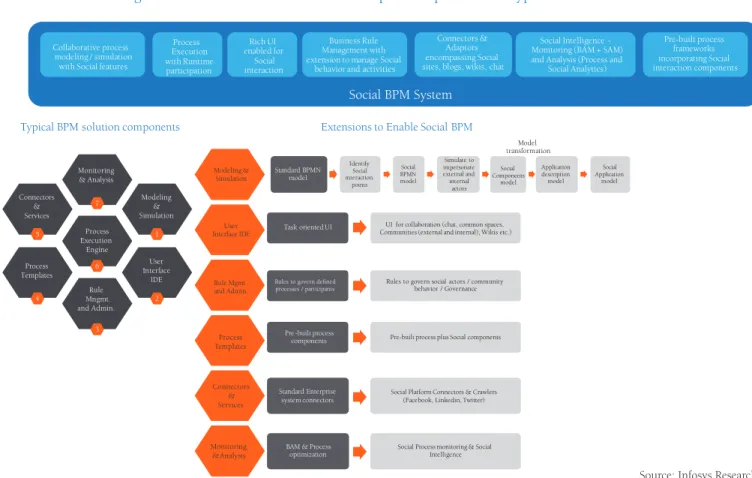
Figure 2: Social extensions need to encompass components of a typical BPM solution
Source: Infosys Research
have come out with a collaborative platform for process design in the recent past. Collaborative process modeling provides a compelling value proposition if the BPM teams are geographically dispersed. This is the starting point for Social BPM in most cases.
The next evolutionary step is to extend collaboration from process design to process execution through runtime participation. In this stage, though the process participants are fixed as in any conventional BPM solution, they are enabled with social tools that help them in better collaboration. These social tools are integrated into the BPMS landscape and can provide features like chat, VOIP enabled calls, commenting on tasks, providing ratings, voting mechanisms etc.
A significant upgrade to run-time participation is enabling social collaboration by routing tasks in the process execution to process participants who were not envisaged to be a part of that process during deployment time. These tasks can be executed by participants in the social media and the process continues taking those inputs. A classic example is work allocation and scheduling for community based software development and testing. The key requirement is the ability to route a part of process execution to open communities
and to be able to follow those processes to completion with all the traditional advantages of a BPM solution.
The last stage of evolution results in end to end processes being designed, executed, managed and optimized by Social Intelligence, which is community based process intelligence that is fed back into process modeling, very similar to the feedback loop on process improvement in typical BPM solutions.
Extending BPM Solutions with Social Features
The Social BPM approach is oriented towards providing a method for process designing and deployment extended with Social interaction features. This essentially calls for extensions to the traditional BPM solution as presented in Fig.2. The objective of process design is to produce two kinds of models viz. Social BPMN model (BPMN + social interaction features) and an Application model. The Application model describes how the application behaves independently of the deployment platform. It is mostly used for high level verification of application features, prototyping and can also be used to generate application code. The social extensionsUser Interface IDE Rule Mgmt . and Admin. Process Templates Connectors & Services Monitoring & Analysis Standard BPMN model Identify Social interaction points Social BPMN model Simulate to impersonate external and internal actors Social Components model Application description model Social Application model
Task oriented UI UI for collaboration (chat, common spaces, Communities (external and internal), Wikis etc.)
Standard Enterprise
system connectors Social Platform Connectors & Crawlers(Facebook, Linkedin, Twitter)
Model transformation
BAM & Process
optimization Social Process monitoring & Social Intelligence Modeling &
Simulation
Rules to govern defined
processes / participants Rules to govern social actors / community behavior / Governance
Pre -built process
components Pre-built process plus Social components
Social BPM System Collaborative process
modeling / simulation with Social features
Process Execution with Runtime participation Rich UI enabled for Social interaction Business Rule Management with extension to manage Social
behavior and activities
Connectors & Adaptors encompassing Social sites, blogs, wikis, chat
Social Intelligence -Monitoring (BAM + SAM) and Analysis (Process and
Social Analytics)
Pre-built process frameworks incorporating Social interaction components
Typical BPM solution components
Process Execution Engine Modeling & Simulation User Interface IDE Rule Mngmt. and Admin. Process Templates (4) Connectors & Services (5) Monitoring & Analysis 7 6 3 1 2 Connectors & Services 5 4
Extensions to Enable Social BPM
Process Templates
for BPM User Interface includes design for collaboration as compared to task oriented User Interfaces. This includes UI components / widgets to facilitate chatting, sharing common spaces, enabling community interaction both internal as well as outside the corporate firewall, voting, rating etc. The process frameworks and templates that are now typically restricted to packaging business rules, reports and workflows by specific industry domain or process would get extended to include components to enable social interaction. Accordingly the current availability of connectors, adaptors and services that are restricted to enterprise sytems (like SAP, Oracle etc) would be extended to include communities and social sites (connector for Facebook, Twitter etc.). Crawlers on the social community would provide valuable intelligence to enhance business processes. Monitoring and Process Analysis would get enlarged in scope to cover social process monitoring and provide inputs to optimize business processes. This also provides a base for Social Intelligence.
Process Design for Social BPM
Based on the broad guidelines outlined in the above section, let us try and take a sample BPMN process and extend it to include social interaction features. Let us take a standard Healthcare claims process. There are four process actors in this process viz. the Physician, Healthcare providers Billing specialist, Insurance Company and Second Insurance Company. The Physician submits the diagnosis and treatment report to the Billing specialist who sends it to the related group that determines the liability amount, the billing specialist then invoices the insurance company and sends “Not a bill” notification to the client. The Insurance Company pays the liability and sends an “Explanation of Benefits” notification to the client. The billing specialist receives payment, and if payment is not received within 30 days contacts the client to chase the insurer. The billing specialist checks if the entire liability is executed by single insurance company or a second insurance company is also involved in the liability. He accordingly sends the invoice for the remaining liability amount to the second insurer and receives payment from them. If the client does not have a second insurer then the client is invoiced for the remaining amount. Now, let us discuss how we can enrich this process by adding social interactions. From a billing specialist’s perspective, in the above process, there are multiple social touch points.
Touch Points with Client (B2C)
• Communication with Client for “Not a Bill” notification
• Contact client for assistance in following up with insurer for non-payments up to 30 days
• Invoice client for payment
Assuming that the Healthcare Provider has an Enterprise social network (ESN) that spans both the employees as well as the clients and has features like blogs, wikis, chat-tools etc., the billing specialist has a powerful array of channels to reach the customer. For example he can update the page of the client on the ESN and post the “Not a Bill” notification and can reach out to the client either through text based chat, voice over IP on non-payment status of the healthcare claims. Alternatively client complaints can reach the Insurance Company through blog interaction and can directly start a case for resolution. Such interactions would enable positive client experience while ensuring efficient processing.
Touch Points with Insurance Company (B2B) • Invoice notification
As in the above case, the ESN platform can provide a mechanism for the insurance companies to get together and finalize the liability split, which can save a lot of back and forth communications between them and significantly enhance customer experience. The interactions on the social media can be audited and attached to every client case. Needless to say the introduction of social interaction features impacts process analysis. It is therefore important to recognize this during requirements engineering phase of a typical BPM solution design. The social interaction requirements can be considered by understanding the social dimensions like Type of process participants (Internal Process Participants, Internal viewers and External viewers), State of process visibility (Complete, Restricted, Indirect) and Extent of Social participation (Informed, Comment, Social groups or Social power users).
Now that we have seen how we can enrich processes by incorporating social interaction features, we can now look at how the social interactions can be represented on a process map using extensions provided by BPMN 2.0. BPMN 2.0 incorporates a native extension for special process requirements like those arising out of a Social BPM. The primary extension is that of a Community Pool which is a used to represent social activities. This can be applied to both public and private social networks. While the above notations take care of most social interactions, a detail set of annotations to describe social activities at a task level and at an event level would be convenient to represent the depth and breadth of Social interactions. For a comprehensive list
of BPMN 2.0 extensions to social interactions at a task level and at an event level refer to Reference [6]. With this context in the background, let us look at our sample healthcare claims process and extend it using BPMN 2.0 annotations. Fig. 3 represents the Healthcare claim process that has been enriched by identifying several areas where social media could be leveraged. Let us now see how this Social BPM process model can be taken up for further execution.
Social BPM Process Execution
Social BPM processes can be broadly executed in two ways viz. Development of Application models from Social BPM process models and Incorporating Social features in BPM solutions using integration.
The Social BPM process model as a result of the process design phase is subsequently taken up for design of the application
model. Application models specify the interface requirements, interaction commands, service exchanges and data flows that are necessary to carry out the process. The above details are mentioned for each process participant. There are several standards that are being worked on presently to enable conversion of Social BPM process models into application models. One such upcoming standard is the WebML notation, which is a visual language for designing data and service intensive applications on the Web. So when the web is chosen as the implementation platform for Social BPM solutions, the application model can be encoded using WebML. At a high level the WebML model consists of site views, which represent hypertext application used to publish or change data and provide seamless connectivity with backend business logic. One site view per process participant can be developed which can contain a set of pages, atomic interface units, components for data and services publishing etc. Each unit
Figure 3 Healthcare Claims process with Social interaction annotations
is related to the other units through links that represents the navigational paths and parameters are passed using rules to determine navigation. The webML model also contains definitions of Web Services and their invocations. From the Social BPM process model, a model to model transformation can be done that produces a WebML application model for each role and a database for storing case related data. Few tools like WebRatio BPM already support standard BPMN to WebML transformation. While these are very early days for application development standards for Social BPM processes, we are already seeing lot of discussions in the BPM forums. This is one area that would see a lot of action in the future with the view of developing application development standards to facilitate model to model conversion of BPMN process models extended with social interactions.
While standards based application model development of Social BPM process would take time, few BPM vendors have already announced their plans for incorporating Social BPM features in their BPM suites. These are essentially first steps in incorporating social interaction features and are capabilities like enabling integration with corporate blogs, chat, crawlers for social sites etc. While providing social capabilities to existing BPM suites is an ongoing process, the incremental addition of social features to BPM suites would provide a
perfect platform for entry. For example the social site crawlers provided by few BPM product vendors like Pegasystems can be utilized to enhance pre-product launch processes and for gauging customer reception for products and enhancing features and functionalities based on community feedback.
Enhancing Customer Experience through
Social Intelligence
Extending BPM solutions to include Social Media provides a very effective platform for mining Social Intelligence, which is a collective, actionable source of information about social behavior and provides a feedback loop to enhance Social BPM processes. The challenge in generating value add from social interaction is to make sense out of huge unstructured, community generated content that are generated by different set of social process participants. It is important to realize that proper tools are required to measure sentiments and intent of the social community. Traditional process analytics would prove inadequate in such circumstances. Social Analytics is a brand new area which aims to provide means and mechanisms to gauge sentiments and intent on the social media and is a powerful extension to Social BPM suites. Social Intelligence refers to tools and practices used by organizations
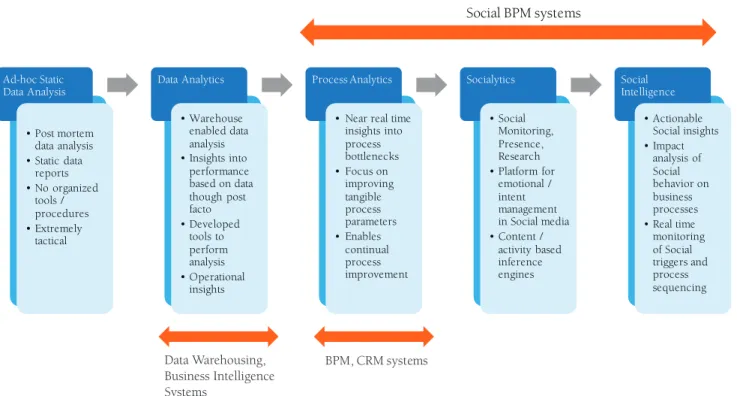
Figure 4: Capabilities of Social BPM systems in enabling Social Intelligence
Source: Infosys Research Ad-hoc Static Data Analysis • Post mortem data analysis • Static data reports • No organized tools / procedures • Extremely tactical Data Analytics • Warehouse enabled data analysis • Insights into performance based on data though post facto • Developed tools to perform analysis • Operational insights Process Analytics
• Near real time insights into process bottlenecks • Focus on improving tangible process parameters • Enables continual process improvement Socialytics • Social Monitoring, Presence, Research • Platform for emotional / intent management in Social media • Content / activity based inference engines Social Intelligence • Actionable Social insights • Impact analysis of Social behavior on business processes • Real time monitoring of Social triggers and process sequencing Social BPM systems BPM, CRM systems Data Warehousing, Business Intelligence Systems
to aggregate social data (gathered via social media monitoring tools) and integrate it with other enterprise systems and real-time analytics engine. The results are actionable insights that provide process owners with new information on their customers, products, and even effectiveness of campaigns and areas of improvement. Using this information, coupled with traditional process analytics and operational intelligence to proactively predict and anticipate customer needs and deliver on their specific wants and wishes is the value of Social Intelligence.
Social BPM systems provide a combination of process and social insights that can be leveraged to further business processes with the aim of providing customized and enhanced customer experience. The range of features that are targeted by Social BPM platforms is depicted in Fig. 4. Customer experience KPIs which is a combination of process KPIs reflecting factors like turnaround time for service or resolution, satisfaction ratings etc can be combined with Social KPIs like behavioral, attitudinal and sentimental KPIs and can be monitored on the Social BPM systems thereby providing a holistic view into aspects impacting customer experience. The extension of Social Intelligence to typical Process Intelligence (BAM and Process Analytics), provides a basis to leverage community behavior on social media to improve business processes. On Social BPM systems, Social Intelligence features are provided by three layers viz.
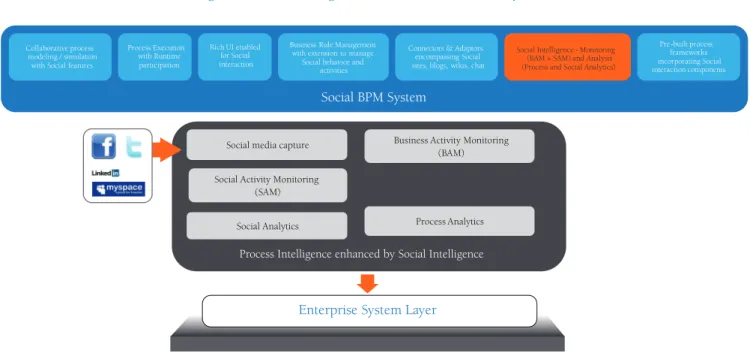
Figure 5: Social Intelligence features on Social BPM systems
Source: Infosys Research
Social Media Capture, Social Activity Monitoring (SAM) and Social Analytics as depicted in Fig.5. In the present times, we are seeing capabilities being developed by few BPM product vendors like Pegasystems, SoftwareAG, and Intalio in developing social media capture capabilities. One key mechanism to achieve that has been through domain crawlers that crawl social sites for mining information. These are essentially key word searches that are sharpened by applying business rules to filter out relevant information. This gives a peek into rudimentary social behavior, but is nowhere near the realms of Social Analytics.
The next obvious progression is to provide Social Activity Monitoring (SAM) capabilities to BPM product suites. These are substantially superior to simple key word searches and rule application, and are more robust in depicting social behavior in a user friendly way that enables decision making on improving business processes. SAM has dashboards specifically to understand social activities like drawing correlation between ranking on social sites to buying pattern for a product or a service, polling statistics for enhancing product features, satisfaction ratings on social sites etc. All these social features combined with traditional process monitoring and analytics features of typical BPM suites provide intelligent, agile, socially and contextually aware systems that enhance customer experience to its highest levels.
5 Social BPM System
Collaborative process modeling / simulation
with Social features
Process Execution with Runtime participation Rich UI enabled for Social interaction
Business Rule Management with extension to manage Social behavior and
activities
Connectors & Adaptors encompassing Social sites, blogs, wikis, chat
Social Intelligence - Monitoring (BAM + SAM) and Analysis (Process and Social Analytics)
Pre-built process frameworks incorporating Social interaction components
Process Intelligence enhanced by Social Intelligence
Social media capture Social Activity Monitoring
(SAM) Social Analytics
Business Activity Monitoring (BAM)
Process Analytics
This whitepaper has attempted to bring into focus how Social BPM solutions can be designed and developed with the objective of enhancing customer experience. This also provides a view of how typical BPM solutions can be extended to incorporate social interaction features. Some of the views expressed here are conceptual as Social BPM is a very nascent area and has not seen wide spread adoption on the ground yet. However the signs are promising as Social BPM is generating lots of discussion in the community forms and among BPM product companies and thought leaders. Also the fact that few BPM products have been launched with Social BPM capabilities speaks of the utility and value that customers can hope to leverage in the future. Though it is clear that Social BPM provides new dimensions to managing structured processes, it needs to be further researched and analysed in the light of industries and processes that are first movers in adopting Social BPM. This dimensional view is valuable to clarify the benefits from combining social software and business processes. It helps to determine the business
processes that are likely to benefit from utilizing social interactions and gives some guidelines on what kind of features should be provided on the Social BPM platform. It is also important to understand that social interactions would be more applicable to certain processes given their inherent purpose and goals. Not all processes can be extended for social interactions and it would even be detrimental in certain processes that are bound by legal/ compliance/secrecy clauses. Adequate care is required to fully evaluate these cases before implementing social features. The benefits of Social BPM are facilitated by a completely new approach that collectively brings forth the inputs from different process participants. Instead of predefining the inputs of all participants in a top-down manner, all stakeholders are encouraged to provide their inputs without the existence of an overall plan in a bottom-up manner. Content creators are not predefined, each user can add to the context by tagging, evaluating, commenting or even reading. The sum of all these interactions is a new content in itself and a part of the collective intelligence. This situation, while throwing up exciting possibilities of improving business processes also throws unique challenges. Uncontrolled creation of content from the social media has its own issues of trust, content quality and reliability and the prudence in utilizing such information to orchestrate business processes. This is a very tricky area as building more checks to control content flow and creation impacts the effects of speed, directness, ease of use, flexibility and motivation levels of the community. This calls for newer methods of risk management and governance which are needed at different levels to ensure compliance and at the same time without sacrificing all the openness and agility that comes with social interactions. This is an exciting new area for further study.
References
1. Nurcan S., Schmidt R. Introduction to the First International Workshop on Business Process Management and Social Software (BPMS2 2008). Business Process Management Workshops 2008: 647-648, Springer 2009.
2. M. Granitzer, G. Granitzer, K. Tochtermann, S. Lindstaedt, A. Rath, and W. Groiß, “Automating Knowledge Transfer and Creation in Knowledge Intensive Business Processes,” Proceedings of the First Workshop on Business Process Management and Social Software BPMS2’08 in conjunction with 6th International Conference on Business Process Management, 2008.
3. A. Koschmider, M. Song, and H.A. Reijers, “Social Software for Modeling Business Processes,” Proceedings of the First Workshop on Business Process Management and Social Software BPMS2’08 in conjunction with 6th International Conference on Business Process Management, 2008.
4. G. Neumann and S. Erol, “From a social wiki to a social workflow system,” Proceedings of the First Workshop on Business Process Management and Social Software BPMS2’08 in conjunction with 6th International Conference on Business Process Management, 2008.
5. Marco Brambilla, Stefano Butti, Piero Fraternali. Business Process Modeling and Quick Prototyping with WebRatio BPM. Proc. of BPM Demonstration Track 2010, Hoboken, USA, September 14-16, 2010, Vol. 615 CEUR-WS.org. Online: http:// ceur-ws.org/Vol-615.
6. Piero Fraternali, Marco Brambilla, Carmen Vaca. A Model Driven Approach to Social BPM Applications. Social BPM Handbook - BPM and Workflow Handbook Series. Published in Association with the Workflow Management Coalition (WfMC. org)
7. Elise Olding, Carol Rozwell, and Jim Sinur. Social bpm: Design by doing. Technical report, Gartner, May 2010.
8. Pegasystems, PRPC v6.1. https://www.pega.com
9. Intalio. Intalio Social BPM, 2011. http://www.intalio.com/socialbpm 10. Software AG – ARISalign, 2011. https://arisalign.com
11. http://blogs.forrester.com 12. http://blogs.gartner.com
About the Author
Shankar Krishnamurthy is a Principal Consultant within the Manufacturing vertical unit at Infosys Ltd. He has
successfully led several transformational programs spanning Strategic and Implementation aspects across Business Process Management (BPM), Enterprise Application Integration (EAI), Enterprise Content Management (ECM) and Service Oriented Architecture (SOA) spaces.
© 2011 Infosys Limited, Bangalore, India. Infosys believes the information in this publication is accurate as of its publication date; suchinformation is subject to change without notice. Infosys acknowledges the proprietary rights of the trademarks and product names of other companies mentioned in this document.
About Infosys
Many of the world's most successful organizations rely on Infosys to deliver measurable business value. Infosys provides business consulting, technology, engineering and outsourcing services to help clients in over 30 countries build tomorrow's enterprise.
For more information about Infosys (NASDAQ:INFY), visit www.infosys.com.