University of South Florida
Scholar Commons
Graduate Theses and Dissertations Graduate School
November 2018
Teacher Attitude and Self-Efficacy Differences
Regarding English Language Learners and
Disabled Learners.
Miriam Carballo
University of South Florida, [email protected]
Follow this and additional works at:https://scholarcommons.usf.edu/etd
Part of theAdult and Continuing Education and Teaching Commons, and theBilingual, Multilingual, and Multicultural Education Commons
This Dissertation is brought to you for free and open access by the Graduate School at Scholar Commons. It has been accepted for inclusion in Graduate Theses and Dissertations by an authorized administrator of Scholar Commons. For more information, please contact
Scholar Commons Citation
Carballo, Miriam, "Teacher Attitude and Self-Efficacy Differences Regarding English Language Learners and Disabled Learners." (2018).Graduate Theses and Dissertations.
Teacher Attitude and Self-Efficacy Differences Regarding English Language Learners and Disabled Learners.
by
Miriam Carballo
A dissertation submitted in partial fulfillment of the requirements for the degree of
Doctor of Philosophy
in Curriculum and Instruction with an emphasis in Adult Education
Department of Leadership, Counseling, Adult, Career, Higher ED College of Education
University of South Florida
Major Professor: Waynne B. James, Ed.D. Edward C. Fletcher, Ph.D.
Ann Cranston-Gingras, Ph.D. Thomas E. Miller, Ed.D.
Date of Approval November 6, 2018
Keywords: Teacher Professional Development, Cultural and Linguistic Diverse Professional Teaching Certificate, multi-cultural
Dedication
Dedicated to my beloved parents,
Acknowledgements
I would like to begin by acknowledging those who worked tirelessly to make this degree and dissertation possible. To Dr. Pete Borghese, thank you for helping me through the
statistical process of this dissertation that was crucial for this degree. To Dr. Ann Cranston-Gingras, thank you for pushing me to pay attention to detail through the dissertation process and always making the time for me. To Dr. Eddie Fletcher, thank you for looking at different perspectives and the constructive criticism to make my manuscript better. To Dr. Thomas Miller for accepting to be part of the committee and also helping with constructive criticism to better my manuscript. Also, to Dr. Waynne James, thank you for being patient and guiding me throughout the entire process. Because of your help, I was able to complete this dissertation. Your guidance throughout the entire process is what helped me from the very beginning to complete this program.
I would also like to thank Mrs. Lucinda Kelley for giving me an opportunity to teach at your school eight years ago. Your decision to take a chance on me has made a great impact on my work at University of South Florida and as a professional. I will be forever grateful.
Finally, I would like to thank my mother, Miriam, and my father, Fernando. My father taught me how to work hard and never to give up. With the combination of hard work and support from my parents, the opportunities have been endless. Thank you for the unselfish acts of love made throughout my life. I would not be here without you today. To my son Alex
Carballo, may our struggles, sacrifices, and triumphs pave the way for your future dreams. I would also like to thank Kathy Gebhardt who was there for Alex when I could not be. He is an amazing child because of all the support and guidance that has been given to him.
i
Table of Contents
List of Tables ... iv
List of Figures ... v
Abstract ... vi
Chapter One: Introduction ... 1
Problem Statement ... 2
Purpose of Study ... 6
Research Questions ... 7
Theoretical Framework ... 7
Standards for language learning ... 7
Communicative ... 9 Cultures ... 10 Connections ... 11 Comparisons.. ... 11 Communities ... 12 Professional development.. ... 12 Definition of Terms ... 14 Glossary of Acronyms ... 16
Organization of the Study ... 16
Chapter Two: Literature Review ... 18
Special Needs and IDEA ... 18
Learning disability ... 21
Culturally and linguistic diverse families ... 22
Cross-cultural misunderstanding ... 23
Cultural competence and multicultural education ... 25
Rate of Second Language Acquistion ... 26
Language acquisition or disability ... 28
Identifying ELLs with Disabilities ... 29
Latin/Hispanic Population ... 33
Immigration ... 33
States with largest Latin/Hispanic population ... 34
ELL Lifestyle Challenges ... 36
Characteristics Influencing ELLs in academics ... 37
ELL, Special Education, Disproportionality ... 38
Disproportionality of ELL ... 38
ii
Underrepresentation ... 40
Misidentification ... 40
ELLs Disabled/Non-disabled Difficulties ... 43
Teacher Attitudes and Beliefs ... 44
Lack of ELL services ... 45
Bandura’s Self-Efficacy Dimensions ... 46
Conceptual Rational ... 49
Summary ... 49
Chapter Three: Methods ... 52
Research Design and Questions ... 52
Population and Sample ... 53
Sample ... 56
Instrumentation ... 57
Demographic Survey ... 58
Teacher Attitudes and Self-Efficacy Towards Students with Disabilities (TASTSD) ... 59
Reliability for TASTSD ... 59
Validity for TASTSD ... 61
Teacher Attitudes and Self-Efficacy Towards ELL Students (TASTES) .. 63
Reliability for TASTES ... 63
Validity for TASTES ... 65
Pilot Study ... 67
Administering the pilot study ... 67
Results and brief analysis ... 68
Demographic Survey, TASTSD. and TASTES ... 69
Data Collection ... 69
Data Analysis ... 71
Chapter Four: Results ... 74
Research Questions ... 74
Demographic Characteristics of Respondents... 74
Data Preparation ... 77
Analysis of Research Questions ... 79
Research question one ... 80
Research question two ... 82
Research question three ... 87
Summary of Findings ... 94
Chapter Five: Summary, Limitations, Conclusion, Implications, and Recommendations ... 97
Summary of the Study ... 97
Limitations ... 98
Conclusions ... 99
Implications... 101
Recommendations for Further Research ... 104
iii
Comparing with Florida districts of ELL/ESE population ... 104
Expanding and comparing ELL/ESE populations with other states ... 105
Research in depth of ELL/ESE professional development... 105
Research types of curriculum beneficial to ELL/ESE Students ... 106
Bilingual Teachers in the Classroom. ... 107
References ... 108
Appendices ... 116
Appendix A:Teacher Demographic Survey ... 117
Appendix B: Permission to Use Measurement ... 120
Appendix C: List of Content Validity Panel Members ... 121
Appendix D: Teacher Attitudes and Self Efficacy Toward Students with Disablities (TASTSD) ... 122
Appendix E: Permission to Use Measurement ... 126
Appendix F: Teacher Attitudes and Self-Efficacy Toward ELL Students ... 127
Appendix G: Permission Letter to Conduct Research ... 131
Appendix H: Informed Consent to Participate in Research ... 132
Appendix I: USF IRB Exempt Study of Approval ... 135
Appendix J: Participant Survey Email ... 136 About the Author ... End Page
iv
List of Tables
Table 1. District Elementary School Population ... 55
Table 2. Characteristics of Respondents. ... 76
Table 3. Mean Responses to Categories with Scales ... 77
Table 4. Teaching ELLs and ESE With and Without Imputation ... 82
Table 5. Regression Model Predicting Teachers’ Perceived Self Efficacy of Training in and ESE and ELL ... 83
Table 6. Regression Model Predicting Teachers’ Perceived Self-efficacy of Training in ESE, Training in ELL, ESE/ELLs Certification, and Speaking Spanish ... 84
Table 7. Regression Model Predicting Teachers’ Perceived Self-efficacy of Training in ESE, Training in ELL, ESE/ELL Certification, Speaking Spanish, and Age ... 85
Table 8. Regression Model Predicting Teachers’ Perceived Self-efficacy of Training in ESE, Training in ELL, ESE/ELL Certification, Speak Spanish, Age, and Years Taught. ... 86
Table 9. Regression Model Predicting Teachers’ Perceived Self-efficacy of Training in ESE, Training in ELL, ESE/ELL Certification, Speaking Spanish, Age, Years Taught, and Highest Degree. ... 87
v
List of Figures
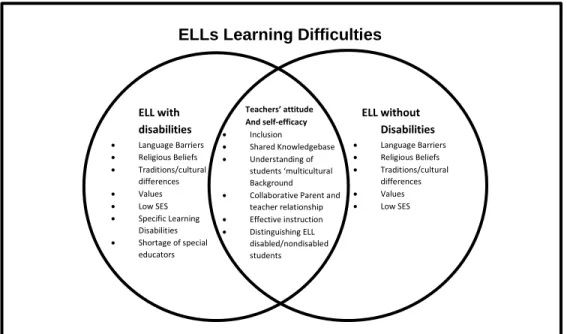
Figure 1. Venn Diagram of Learning Difficulties for ELLs with
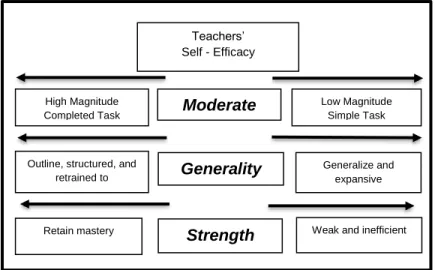
or without disabilities ... 43 Figure 2. Overview of teacher self-efficacy. ... 47
vi
Abstract
There has been little research combining both groups of students who were English Language Learners (ELLs) and Exceptional Student Education (ESE) students in relation to teacher attitudes and self-efficacy. The purpose of this study was to compare teacher attitudes and self-efficacy related to instructing either ELLs with or without disabilities in elementary schools
Teachers from six elementary schools in the XYZ Excellence School District participated in a 52-item comprehensive survey. Two questionnaires and the
demographic form were combined to create one comprehensive questionnaire totaling 52 questions for the purposes of this study. Teachers were solicited to participate in the study by email, which generated 92 responses for analysis.
The results of this study indicated there were no significant differences between the perceptions of individuals when instructing English Language Learners (ELLs) and Exceptional Student Education (ESE) students. If people feel confident teaching ELLs, they probably feel confident teaching ESE. Equally, if they do not feel confident
teaching ESE students, they are more than likely to not feel comfortable teaching ELLs. Thus, there were no significant differences between beliefs and attitudes in both groups. Still, data gathered from the regression analysis demonstrated training in ELL and ESE were strong indicators regardless of which other variables were added to teacher attitudes and self-efficacy when instructing ELLS or students with or without disabilities.
vii
The results of this study also indicated teachers felt they needed additional training in special education and communication was the greatest barrier between teacher and students, since many teachers could not speak Spanish and students could not
comprehend or speak English very well. The results also indicated some teachers felt resources available to them in teaching a lesson were a positive component for ELLs, with or without disabilities, to be able to grasp content.
The findings from this study could serve as positive change for reform of a multi-culturally and diverse climate in public schools. States, school districts, and on-site school administrators could support teachers by creating professional development programs in the learning of learning profiles, preferences, interests, and readiness proficiency levels are essential to multicultural diverse education. The states could also encourage these actions by restructuring certification policies recognizing multicultural diverse education.
1
Chapter 1 Introduction
Over the past decade there has been a substantial increase in individuals from diverse racial and ethnic population in the United States. Between 2000 and 2010, data provided by the 2010 Census show rapid growth among Latin/Hispanic population increasing to 15.2 million (Humes, Jones, & Ramirez, 2011). The 2010 Census defines a person of Latin/Hispanic background as any person of Mexican, Cuban, Puerto Rican, South American, Central American, or anyone who is of a Spanish culture or origin regardless of race (Humes et al., 2011). The total population in the United States during the 2010 census was 27.3 million including 15.2 million people from the
Latin/Hispanic population, which was over half of the total population during that time. As previous data have shown, if Latin/Hispanic individuals continue to migrate consistently into the United States, it is projected by 2050 the United States will have approximately 400 million Latin/Hispanic residents. The Census Bureau expects the Latin/Hispanic population to nearly triple during the 2008-2050 period making the Latin/Hispanic population the fastest growing minority group.
The dramatic change of the Latin/Hispanic population in the United States is reflected within diversified classrooms in public schools. According to Fry and Gonzales (2008), enrollment of Latin/Hispanic students in public school systems nearly doubled
2
from 1990 to 2006. The data show the enrollment of these students account for 60% of the total growth in the public-school system.
As stated previously, Latin/Hispanics account for several ethnic groups within multi-cultural populations displaying a dramatic shift of an overall makeup in population currently, as well as for the future. The International Federation of Library Associations (2016) defines multi-culture as the “coexistence of diversity where culture include racial, religious, or cultural groups and is manifested in customary behaviors, cultural
assumptions and values, patterns of thinking, and communication styles” (para. 1). Consequently, by the year 2050, Fry and Gonzales (2008) foresee “one in every three U.S residents will be Hispanics” (para. 2).
Problem Statement
The increase of a multicultural population which is also mirrored in public schools illustrates an increase of 166% Latin/Hispanic school-aged students of 5-17 years. Nationwide, this will increase the numbers of the Latin/Hispanic population in public schools at 11 million students from 2006 to 28 million students by the year 2050. Although not all school-aged children are classified as immigrants, almost 80% of all Latin/Hispanic students are English Language Learners (ELLs) with Spanish being their native language. Professionals often use varied terms when addressing Latin/Hispanic students in academics such as English language learners (ELLs), students with limited English proficiency (LEP), native language speakers, dialect speakers, and students who are learning English as a second language (ESL). Bardack (2010) defines an ELL as “An individual who in the process of actively acquiring English, and whose primary language is one other than English” (p. 7).
3
While the Latin/Hispanic population increases in American public schools, the ELL student population also rises. Halle, Hair, Wandner, McNamara, and Chien (2012) compare the growth of ELLs at more than 60% in the K-12 student population with a 10-year period (1994-2005) whereas the overall growth in the K-12 student population was only 2%. Thus, any discussion regarding ELLs and/or students with disabilities must involve an analysis of the teachers’ attitude and self-efficacy. Moreover, a debate of whether a connection exists between teachers’ attitudes and self-efficacy, and if so, the results in the learning of ELLs with or without disabilities in American schools may be important. Goodwin (2002) expresses apprehension about whether teachers are
prepared to meet the needs of Latin/Hispanic students who are ELLs and/or disabled in their classroom.
The learning of English is only one of the many factors ELLs are confronted with which will lead to either successful or unsuccessful transition into U.S. public education. Although overall ELLs have many things in common, they also possess different
strengths and weaknesses. According to Andreou (2016), strengths and weaknesses also acknowledged as abilities and disabilities, are responded to by varied additional instruction through special education. Florian (2007) states that the definition of special education is “concerned with the educational responses that are made when students experience difficulties in learning and to those who have or are considered to have disabilities” (p. xxi). For this reason, the proper education for exceptional students is contingent on special education since it sets the course in their daily lives and in their life long achievements in learning. The debate of conceptualizing differences in students has been ongoing. Andreou (2016) clarifies a number of stakeholders who
4
see disabilities as a result of students’ limitations and deficits, while others see disabilities in light of the limitations and deficits of the school system and the lack of accommodations for the students’ varied learning abilities.
Countless factors influence teachers’ self-efficacy, determining the level of confidence when meeting the needs of Latin/Hispanic ELLs with or without disabilities. In Yoo’s (2016) research, self-efficacy has been extensively analyzed because it closely relates to the field of education and has been acknowledged as an important element which affects student learning success and behavior. Teachers’ self-efficacy refers to the concept of what individuals can do to maintain high levels of student engagement; at the same time for students who are struggling, can more instruction be allowed for teachers to realize they are teachable with extra attention and support (Yoo, 2016). However, a teacher’s self-efficacy is often challenged because of preconceived assumptions which have resulted from the multi-cultural populations’ background religious, traditions, values, and beliefs. Kolano and King’s (2015) research indicates teachers’ support on multicultural education and social inequalities is often influenced by the teachers’ experiences. Amidst the 2011-2012 school year, innumerable schools have taken in 4.4 million ELLs, often leaving teachers’ unprepared to meet the
complicated needs of ELLs’ academic learning (Kolano & King, 2015). The importance of teachers’ attitudes controls self-efficacy and stresses a powerful critical pedagogy based heavily on the teachers’ personal and professional lives (Kolano & King, 2015). Degener (2001) defines critical pedagogy as instruction services which are culturally relevant, participant driven, and socially empowering. While, attendance of multicultural students increases in American public schools, teachers become the essential piece to
5
the academic failure or success of ELL and/or students with disabilities. Alliaud and Feeney (2015) continue to explain how teachers’ personal and professional lives are the
key players for the improvement of education systems through a pedagogic perspective.
The study revealed teachers’ pedagogic perspectives relied on the creation of knowledge, school contexts, and teaching practice, which ultimately impacts the
development of methodologies which have an effect on classroom instruction practices.
Alliaud and Feeney (2015) observe teachers’ curriculum as a complex conversation
containing topics of paradigms, knowledge, popular culture, socio-political, power, etc., mixed with teachers’ and students’ own personal experiences. Through the pedagogic perspective, both the students and the teachers discover themselves and the world they live in as well as the world they already know.
The demographics are quickly changing, not only within our communities, but also for Latin/Hispanic students with or without disabilities. These students are rapidly filling American public schools altering the student body across the United States. Teachers have the challenging task of being innovative when instructing Latin/Hispanic students taking into account their religion, values, and traditions. However, this task of instructing Latin/Hispanic students can be even more challenging for some teachers since many do not understand or speak the Spanish language (Goodwin, 2002). Often misidentification takes place labeling ELLs with disabilities, because of improper
training, preconceived judgments, and lack of cultural competence. As a result,
disproportionality occurs with over representation of ELLs in special education programs receiving improper services and support. Shepherd, Linn, and Brown (2005) insist the over representation of ELLs in special education programs is a complex problem when
6
several factors, such as incorrect use of pre-referral interventions and the inadequate and inequitable assessment procedures, are also added. The over placement of ELLs placed in special education programs who are not learning disabled is known as
disproportionality.
Purpose of Study
The purpose of this study was to compare teacher attitudes and self-efficacy related to instructing English Language Learners (ELLs) with or without disabilities in elementary schools. The outcome of this exploratory study could contribute to further understanding of the type of relationship between teachers’ attitude and self-efficacy, if any, when teaching ELL students with or without disabilities. Exploring existing
personal views on this specific population could reveal obstacles professionals
encounter such as traditions, habits, and language barriers among ELLs. Additionally, another goal of this study was to provide understanding and insight to determine varied interventions when instructing ELL and/or ESE students.
Quantitative research methods guided by the Standards for Language Learning were used for this exploratory study. The purpose of using the Standards for Language Learning provided a guide for educators to focus on students’ proficiency in language when distinguishing difficulties in academics due to a language deficit rather than a learning disability (Magnan, Murphy, Sahakyan, and Suyeon, 2012). Using the framework of the Standards for Language Learning allowed for an investigation of teachers’ attitudes, self-efficacy, and perspectives on interventions and
7
Research Questions
The following questions guided this study:
1. Are there differences in elementary teacher attitudes and self-efficacy with regard to teaching ELLs or students with disabilities?
2. To what extent, if any, do demographic variables (gender, age, highest degree earned, years of teaching, certification, training level on teaching special needs education, training level on teaching English language learners, and level of proficiency in Spanish) predict teacher attitude and self-efficacy? 3. What do K-5 teachers identify as barriers and supports when instructing ELLs
with or without disabilities?
Theoretical Framework
Magnan et al. (2012) explain the Standards for Foreign Language, also known
as the Standards for Language Learning, is a framework which provides a strategy for setting goals for language instruction implemented at various instructional levels in schools across the United States. This method implements five areas known as the five Cs--communication, cultures, connections, comparisons, and communities. Byrnes (2008) stated the five Cs “pertain to diverse facets of language use” (p. 106). The five standards for language learning provide a framework which guides organizations to pursue interconnected goals. This framework can be carried out by teachers’ providing learning goals that ELLs are able to achieve (Magnan et al., 2012).
Standards for language learning. In order to provide teachers an overview of
encouraging effects when applying positive attitudes and beliefs when teaching ELLs who are also disabled, the standards-based approach for language education provides
8
a way to focus on students’ proficiency in language. The standards-based approach for language is a framework consisting of five categories communication, cultures,
connections, comparison, and communities.
The National Capital Language Resource Center (2014) supports the focus of the standards-based approach is for ELLs to use language in real-life situations. The general education teacher needs to consider the standards framework when working with ELLs disabled or non-disabled. According to the National Capital Language
Resource Center (2014), the standards-based approach has major implications for both curriculum and assessment.
Either spoken and written language or both are the foundation of all learning and instruction. Most students in public schools are able to understand and express
themselves in a learning environment and are able to learn; however, some are not (Turnbull, Turnbull, Wehmeyer, & Shogren, 2013). Students who display a
communication disorder can have difficulty in varied settings within the school environment (e.g., during teacher instruction, social interaction, in advancement of literary skills, and the learning of knowledge and language). For ELLs with or without disabilities, English is important because all courses in the schools are taught in
English. If ELLs are unable to express themselves in English, then education will falter since only the basics will be taught, creating a mediocre education system in the United States (McMillan, 2016). Consequently, it is essential for teachers to be able to teach
ELLs. Centering on the communicative approach provides a framework for teachers to
provide activities using language with patterns associated with the audiological method engaging ELLs in more meaningful and authentic use of language. Per Bowen (2016),
9
the audiological method is used by teachers when students are directed to repeat and use grammatical structures such as rhythms and intonation,
Communicative. The communicative approach has shown through research to
be more effective because ELLs feel more at ease when learning the English language, because it allows them to express themselves without feeling the stress of being
grammatically correct. Byrnes (2008) also explains within the multilingual society, the communicative language teaching method is an essential approach since its goals focus on the learning of information. McMillan (2016) adds ELLs do not respond positively to a grammatical approach in learning a second language. The most
important factor when considering the five elements of the theoretical framework is oral communication because it allows ELLs to express themselves with the basic knowledge of English which is required before applying the systematic grammatical technique. The overall standards shorthand descriptor for the communicative approach is “what
students know and be able to do with another language” (Byrnes, 2008, p. 104). Before the standards were implemented in the 1990s, students learned through the form of an activity the student was doing. Even if this activity included receptive (listening or reading) or productive skills (speaking or writing), these activities did not necessarily consider a reason about why the communication took place (National Capital Language Resource Center, 2014). However, the Standard for Language Learning (Magnan et al., 2012) centers on the purpose of what activity the student is doing and uses three communication modes when language is being taught:
• Interpersonal communication uses the technique of ongoing negotiation of
10
similarly state interpersonal communication may also happen when the student is conversing (speaking or listening) or during writing communication (writing,
reading, signing) (National Capital Language Resource Center, 2014).
• Interpretive communication involves the student in an activity while listening,
viewing, or reading. This type of communication may involve any type of activity which may take place during the day such as listening to music or an
announcement, watching a movie, or reading a letter. Interpretive communication does not allow for the student to ask questions or repeat information (National Capital Language Resource Center, 2014).
• Presentational communication permits the student to offer one-way
communication to the audience. This kind of communication permits students an opportunity to best express themselves to be better understood. Presentational communication lets students fully use their language proficiency by entirely expressing their ideas, concepts, and information. This form of communication includes oral presentations such as poetry readings, telling stories, performing skits, writing reports, brochures, and essays (National Capital Language Resource Center, 2014).
Cultures. Culture is another element which is closely embedded in the Standards
for Language Learning and is an essential piece of the theoretical framework. The National Capital Language Resource Center (2014) confirms language occurs within a cultural context, this the language proficiency of ELLs is learned with the understanding of cultural knowledge. The emphasis of learning the English language also provides ELLs the chance to learn the culture’s world view as well as its perspectives, values,
11
concepts, and attitudes. The National Capital Language Resource Center (2014) goal is for students to be able to make a connection between language, perspectives, and cultural practices. For ELLs in American schools, it allows them to be able to adapt in cultural practices in the classroom environment to how their peers behave or act. The National Capital Language Resource Center (2014) asserts as ELLs acquire the English language, they learn where and how to address people, age appropriate customs, and awareness of the American culture.
Connections. The connection part of the Standard for Language Learning (Magnan
et al., 2012) provides ELLs the chance to learn another language in ways which were not available to them before. The National Capital Language Resource Center (2014) believes by increasing their content knowledge in learning their second language English, they are using resources which are introduced by second language learning strategies and connections when reading about events online, using multimedia, or using other assistive technology devices in the language they are learning. This type of method permits ELLs to expand their views and learn about world events in the second language they are learning.
Comparisons. The comparison piece is connected to the communication and
cultures sections. The National Capital Language Resource Center (2014) suggests ELLs analyze and compare the English language and its culture, the broader abstract concepts of the English language become easier to understand. ELLs become cognizant of aspects of the human life as they can appreciate the commonalities of people’s behavior and habits and distinguish differences as the students begin to self-actualize through the learning of a second language and compare it with their own. This
12
method teaches students that, although all cultures represent a different value system, no one language or culture is better than the other (The National Capital Language Resource Center, 2014)
Communities. The final objective for the Standards for Language Learning is the
definitive goal, which is to provide ELLs the prospect of belonging and have access to a community which in any other way would have not been possible (The National Capital Language Resource Center, 2014). By means of progressing through the five goals (communication, culture, connections, comparisons, communities), ELLs become world citizens and take their knowledge and apply it to a much larger community other than the classroom through personal and professional events.
Professional development. The theoretical framework is only one resource from many which is organized to help teachers prepare to teach ELL students in the
classroom. It comprises five areas which are essential for teachers in properly teaching ELLs. However, the growth of foreign language learners in public schools has
continued to increase; organizations have determined an urgent need for professional development in training teachers on techniques and strategies to meet the growing demand of culturally diverse needs (Shreve, 2005).
There is a myriad of professional development programs available, some offered at the university level while others are provided as in-service sessions in school districts. Programs such as study abroad and/or immersion experiences are now an option for university students seeking certification in teaching (LeLoup & Schmidt-Rinehart, 2015). This type of program provides pre-service teachers the opportunity to interact with
13
The Target Language proficiency program is designed to provide professional development to teachers who are seeking an integration of technology, classroom strategies, authentic materials, and in-depth understanding of cultural traditions necessary to teach in a multi-cultural society present today (LeLoup & Schmidt-Rinehart, 2015).
The Connection Cultures program provided by school districts is similar to the immersion program for pre-service teachers. The Connection Cultures program allows teachers to study abroad while on the job developing their own strategies and materials to use in their classroom. Data have shown this type of pedagogical sophisticated professional development is a necessity specific to the communicative era existent in public schools today. According to LeLoup and Schmidt-Rinehart (2015), teachers in public schools are exposed to professional development which is generic and does not relate to the specialized content or provide informative academic material beneficial to their classroom. As a result, the teacher is left with a feeling of inadequacy, which reduces their self-efficacy.
Sheltered Instruction is a best practice which has been adopted by districts in the United States (Short, 2013). Sheltered instruction professional development is an approach, which provides teachers with strategies and techniques at the same time combining them with language, making the content of the curricula topics relevant and understandable to ELL students (Short, 2013). The Sheltered Instruction Observation Program uses the (SIOP) model using lesson preparation, building background, comprehensive input, strategies, interaction, practice and application, lesson delivery, and review and assessment. This research-based model is easier for school districts to
14
offer teachers other than the immersion programs. Additionally, this model offers guidance to plan and deliver effective in-service teacher training, so ELLs can access the core curriculum at the same time they become English proficient (Short, 2013). According to Abbott and Rossiter (2011) for newcomers with limited English proficiency to participate fully in society, they need opportunities to develop communicative and cultural competence.
Definition of Terms
The following terms are used in this study:
Barriers--Obstacles teachers face in their careers as educators.
Cultural and Linguistically Diverse (CLD)--A student who speaks a different language other than English as their primary language, is from another country, and has varied traditions, customs, and backgrounds (Florida Department of Education, 2017b).
English Language Learners (ELL)--Students who do not speak English as their first language (Florida Department of Education, 2017b).
Exceptional Special Education (ESE)--Programs in schools provided to students who have varied exceptionalities who require specific instruction which addresses in individual differences and needs. It is used interchangeably with students with disabilities in this research (Florida Department of Education, 2017c).
Inclusion--Each state must establish procedures to assure children with disabilities are educated with children who are not disabled. However, a disabled child who cannot be educated with other peers in a regular classroom due to the student’s severe disability even with the use of supplementary aids is considered self-contained (Florida
15
Individuals with Disabilities Education Act (IDEA)--A law enacted by congress to guarantee children with disabilities are provided a Free Appropriate Public Education adapting it to their unique needs preparing them for future education, employment, and
independent living (Florida Department of Education, 2017c).
Latin/Hispanic--The background of any person of Mexican, Cuban, Puerto Rican, South American or Central American, or anyone who is of a Spanish Culture or origin
regardless of race (Florida Department of Education, 2017b).
Learning Disabled (LD)--A person who has difficulty learning in a conventional manner caused by varied factors (LDonline, 2017)
Least Restrictive Environment (LRE)--A student with a disability and is educated with non-disabled peers in a general education classroom (Florida Department of Education, 2017c).
Multi-culture--The existence of diversity where culture includes racial, religious, or cultural groups, and is displayed in customary behaviors, cultural assumptions, and values, patterns of thinking, and communication styles.
Self-efficacy--The concept of one’s belief in one’s ability to succeed in specific situations
or accomplish a task.
Special needs--A special or unique, out-of-the ordinary concern created by a person’s
medical, physical, mental, or developmental condition or disability.
Supports--Assistance given to teachers during instruction and activities in their careers as educators.
Teacher Attitude—Beliefs and how teachers feel about teaching their students.
16
Glossary of Acronyms
CLD Culturally and Linguistically Diverse
ELL English Language Learner
ESE Exceptional Student Education
ESL English Second Language
FAPE Free Appropriate Public Education
IDEA Individuals with Disabilities Education Act
IEP Individualized Education Program
LD Learning Disabled
LEP Limited English Proficient
LRE Least Restrictive Environment
MTSS Multi-Tiered System of Supports
NCATE National Council for Accreditation of Teacher Education
NES Native English Speaking
RTI Response to Intervention
SLD Specific Learning Disabled
Organization of the Study
The study consists of five chapters. Chapter 1 of this study introduced the
problem statement and describes the specific problem addressed, purpose of the study, research questions, theoretical framework, definition of terms, glossary of acronyms, and organization of the study. Chapter 2 is a review of literature which includes; special needs and IDEA; cultural and linguistic diverse families; rate of second language
17
challenges; ELL special education; disproportionality; ELLs disabled/nondisabled difficulties; Bandura’s self-efficacy dimensions; conceptual rational; and summary. Chapter 3 consists of the research design and questions followed by population and samples, instrumentation, pilot study, data collection, and data analysis. Chapter 4 consists of the research questions, demographic characteristics of respondents, data preparation, analysis of research questions, and summary of findings. The data was interpreted to allow comprehension of the data results and how they corresponded to the review of literature. Chapter 5 includes the summary of the study, limitations, conclusions, implications and recommendations for future research.
18
Chapter 2 Literature Review
The purpose of this study was to compare teacher attitudes and self-efficacy related to instructing English Language Learners (ELLs) with or without disabilities in elementary schools.
This chapter is organized beginning with a synopsis of special needs and the
mandates the regulations the Public Law 94-142 Individuals with Disabilities Act (IDEA)
enforces students with disabilities who must be provided with the same education as their non-disabled peers. The chapter further explains culturally and linguistic diverse families. The chapter then concentrates on the rate of acquisition of ELLs second
language and identifying ELLs with disabilities. The chapter provides an overview of the Latin/Hispanic population increasing the United States, as well as its effects of the growth of the Latin/Hispanic enrollment in American schools. The chapter further centers on the ELL’s lifestyles challenges. The next section includes ELL, special education, and disproportionality followed by ELLs disabled/nondisabled difficulties. Bandura’s self-efficacy dimensions are discussed next. Finally, the chapter ends with conceptual rational and summary.
Special Needs and Individuals with Disabilities Education Act (IDEA)
Bullock, Gable, Lewis, Collins, Zolkoski, Carrero, and Lusk (2013) indicated in 2011 research accounted for an approximate number of 75 million children living in the United States. Seventy million children, 6.6 mill-five million of those students receive
19
specialized services in public schools. The official website of Sarawak State Library
(2017) defines special needs as “A special or unique, out-of-the ordinary concern
created by a person’s medical, physical, mental, or developmental condition or
disability” (para. 1). This one term with many definitions often provides students with a special needs requirement of additional services to help them function in public
classrooms. Frequently many of these services are included in some of the following areas: communication (speech and language), behavioral and emotional, self-care, academic instruction, and independent functioning (occupational therapy and physical therapy). Under the umbrella of diagnoses of students with special needs, these
students are also referred to as students with varied exceptionalities, students with
disabilities, and disabled students.
Before Congress executed The Education for All Handicapped Children Act (Public Law 94-142) in 1975 to help states to advocate and defend the rights of meeting the needs of and developing the results for students with disabilities. Many individuals with mental illness and intellectual disabilities have been subjected to living in state institutions (U.S. Office of Special Education Programs, 2007). Historically, research established approximately 200,000 individuals with disabilities were simply
accommodated rather than being evaluated, provided with interventions, and educated
focusing on rehabilitation. In 1997, Public Law 94-142 was amended to Individuals with
Disabilities Education Act (IDEA) providing individuals with disabilities the opportunity
with Free Appropriate Public Education (FAPE) advocating for all students to be given
the chance to reach their full potential. The IDEA strives to administer laws to all states, these laws are targeting proper early interventions for the majority of children with
20
disabilities in all public schools, improvement in graduation rates, and employment among high school students with disabilities, as well as promoting the rights of students with disabilities and their parents for an equal education, which empathizes special education and related services suitable for their unique needs (U.S. Office of Special Education Programs, 2007). However, teachers today have expressed concern about their lack of experience and training in teaching children with varied and significant exceptionalities (Scarborough & Deck, 1998). With regulations mandated by the Federal Government and passed down to states, school districts are then expected to train general education teachers to instruct all students, including students with varied exceptionalities within an inclusion classroom. It is IDEA’s belief that students with disabilities are to be educated with non-disabled peers within a general education
classroom. The definition for inclusion in Exceptional LivesSpecial Education in
Todays Schools states:
each state must establish procedures to assure that, to the maximum extent appropriate, children with disabilities are educated with children who are not disabled, and special classes, separate schooling or other removal of children with disabilities from the regular educational environment occurs only when the nature or severity of the disability of a child is such that education in a regular education with the use of supplementary aids cannot be achieved satisfactorily. (Turnbull et al., 2013, p. 38)
As teachers apply the states’ mandated curriculum in the general classroom, the IDEA advocates for students with disabilities to be educated in a Least Restrictive
Environment (LRE). Turnbull et al. (2013) define LRE as “students with disabilities should participate in the school’s academic, extracurricular, and other activities with students without disabilities” (p. 36).
21
Learning disability. The diversity of Latin/Hispanic students throughout the U.S. continues to evolve into large numbers of enrollments in the public schools
demanding more resources to properly educate tomorrow’s future. This is a struggle for teachers who are often unprepared to instruct students with extreme eclectic learning needs and, at the same time, who can conform to the standard mandated state
curriculum. There is a broad dissimilarity between an individual who displays a learning difficulty from an individual who has a learning disability (LD). The student with learning difficulties can learn with the use of traditional instructional techniques, while the student with LD is contingent on specialized interventions depending on the type of disability. Previous research has excluded LD as type of mental delay; however, research strongly indicates a LD is related directly to some form of brain impairment (Carlson, 2005). LD has been identified dating back to the 1800s. Although researchers have learned a vast amount about LD in previous years, scientists, researchers, and educators still struggle with LD in the classrooms since students recognized with varied learning disabilities
have doubled in the late 1980s to over 2.8 million students (Carlson, 2005).
School professionals have been confused for many years about why some students struggle with the ability to learn, comprehend, and succeed with the general curriculum. While some students do well and achieve in academics, others get
frustrated only to obtain unexceptional outcomes (Carlson, 2005).. At the same time,
some students may do well in elementary school only to struggle in middle school and high school, while others proceed to higher education; others become aggravated with the entire public-school system, which continuously fails them and eventually drop out altogether. Despite countless speculations of the many reasons why students do not
22
achieve success or fail in public education, the most common cause is underachievement.
Culturally and Linguistically Diverse Families
Latin/Hispanic families bring with them an array of cultural norms, which have been previously learned behavior patterns. These behavior patterns are learned from parents, teachers, and peers, as well other members of the community within their culture. Values, beliefs, and attitudes are behavior patterns, which are not embraced by American educators, since they do not comprehend how Latin/Hispanic students’ views and interactions with their new environment are adapted from previous accustomed cultural norms. As the total number of all children living in the United States rises, the population of children with special needs also increases. Harry (2002) believes the role of cultural norms regarding diversity present great challenges for families of children with disabilities. This is because culturally and linguistically diverse (CLD) families struggle to learn to adapt to their new environment with the learning of a new language as well as comprehending the perplexing and unfamiliar systems, which govern U.S. public schools. Equally, in the field of Exceptional Student Education (ESE), the roles of cultural norms have contributed to the conflict and uncertainty of teacher instruction, student evaluation programs, norm-referenced assessments, and accommodations and services to be provided. Because teachers do not have an in-depth understanding of cultural norms, evaluating diverse exceptional learners in American education has
created disproportionate representation among CLD families of children with disabilities. In addition to cultural norms, socio-economic status, academic, learning styles, and social class are often a concern with CLD families of children with disabilities (Terry &
23
Irving, 2010). ELL students attending public schools in the United States face many challenges not limited to language barriers, cultural differences, discrimination, etc. It becomes more complicated when ELL students along with their diverse struggles have a disability. These students may reveal a variety of characteristics differing from one student to the next. For example, one ELL student may display strength in reading, but struggle in math. Another ELL student may show strength in receptive language but may display weakness in expressive language. Turnbull et al. (2013) affirm it is common for students with disabilities to have average to above average intelligence. Nonetheless, individuals with disabilities most of the time show low academic
achievement in one or more areas and have difficulty in how the student learns and processes new information (Turnbull et al., 2013).
Cross cultural misunderstanding. Regulations are holding general education teachers more accountable and mandate that teach all non-disabled and students with disabilities in an inclusion environment. Districts’ main concern is providing students with disabilities with an LRE and providing them with the proper support. Wright and Wright (2015) believe, as much as possible, school districts must provide instruction to students with disabilities in general education using appropriate aids and supports along with their nondisabled peers in the public schools. As previously indicated, many
general teachers have a difficult time with instructing students with disabilities as well as CLD and/or disabled students due to proper lack of training. Although many universities have programs where students are required to receive dual certification in general education and exceptional student education, teachers are still finding themselves unprepared because they either do not have the skills, experience, and/or their attitudes
24
need to be modified in the areas of teaching and learning strategies to meet the needs of CLD students with disabilities. Based on the CLD students with disabilities individual needs, the general education teacher must develop a curriculum providing support and strategies to ensure quality of educational services. Seasoned teachers also encounter difficulty in teaching CLD students, because the lack of communication between schools and CLD families has led research to focus on issues related to discrimination and cross-cultural misunderstanding (Turnbull et al., 2013). Since schools are held to strict regulations and policies related to ESE, programs and services, which are ideal to educate families about ESE and their child’s needs are almost non-existent and thus CLD families of students with disabilities needs are undermined. Additionally, cross-cultural misunderstandings prevent diverse students with disabilities to be properly provided with effective programs. Because the United States will continue to
experience an increase in individuals from the diverse racial and ethnic group. Among Latin/Hispanic population including those with disabilities, the general education
classroom teachers must diligently plan lessons to make sure all students are engaged in high-interest exercises, which are directly relevant to the students’ life (Moore &
Hansen, 2011). In Teaching Diverse Students to maximize student learning (Moore &
Hansen, 2011) the source states, general education teachers need to create culturally sensitive learning communities, develop positive teacher-student-parent relationships, design lessons to motivate all CLD students with or without disabilities to learn, and implement those lessons using differentiated instructional strategies. According to Cassady (2011), many general educators feel they are not able to teach large groups of students and at the same time teach diverse students with disabilities, because of the
25
lack of enough training and support. Furthermore, teachers’ attitudes dramatically affect the success and effectiveness of their instruction towards CLD students with disabilities. Many educators are not willing to accommodate CLD students with disabilities, because they do not have the confidence to effectively manage an inclusion classroom.
Teachers today feel concerned mainstreaming CLD students with disabilities in the general education classroom, because many of these students display lack of social skills, emotional outbursts, plus their curriculum needs to be modified, and the teachers do not know the proper procedures in capably handling their classroom.
Cultural competence and multicultural education. General education teachers’ today need to exercise cultural competence in their classrooms on a deeper level. Since extensive data have confirmed a substantial increase of diversity in the classroom, teachers need to have the breadth, understanding, and varied skills to be able to meet the exclusive needs of CLD and/or disabled students (Samson & Collins, 2012). It is essential for the teacher to have a deeper empathetic appreciative
understanding towards students’ language, traditions, values and beliefs, habits,
attitudes, and religious beliefs. Piotrowski and Stark (2014) define cultural competence as a “characterized set of skills and developmental experiences constituting on ongoing awareness of important differences among individuals from communities with different backgrounds related to biological, environmental, historical, political, psychological, religious, and other social aspects of heritage” (p. 529). An educator’s responsibility is to provide proper instruction to CLD students with disabilities and be able to appreciate, be aware, and assess interaction with other students of varied cultural backgrounds (Piotrowski & Stark, 2014). These educational relationships among all stakeholders are
26
the basis for academic achievement for all students involved. For nearly four decades, multicultural education has become an integral component for teacher readiness
programs (Yang & Montgomery, 2011). Multicultural education is defined by the
National Council for Accreditation of Teacher Education (2017, NCATE) as “preparation for social, political, and economic realities that individuals experience in culturally
diverse and complex human encounters” (p. 1). Furthermore, the NCATE uses this definition to evaluate university teacher preparation programs. Multicultural education and cultural competence are interchangeable and a requirement for teachers to
successfully teach students with diversified backgrounds. According to Yang and Montgomery (2011), knowledge and praxis are two core components relevant to grasping cultural competence. Yang and Montgomery (2011) explain that for teachers to be culturally competent, it is essential for them to have the quantity and profoundness of knowing and understanding multicultural diversity in student ethnic backgrounds. Historical research affirms the ignorance of diversity knowledge to teaching and learning, which has been argued in the past by theorists in multicultural education, is due to the lack of knowing and understanding. Additionally, Yang and Montgomery (2011) confirm being culturally competent relies heavily in comprehending prejudice, racism, discrimination, and white privilege as well as understanding varied and cultural differences.
Rate of Second Language Acquisition
Immigrant families move to the United States for a promise of a better life for their children leaving family, traditions, and everything they know behind. Children who migrate into the United States earlier into the school system have a better chance of
27
developing pre-critical skills needed for future academic success. An ELL student who begins school in the first grade will have much better opportunity to learn and master the English Language than an ELL student who begins school in the tenth grade. According to Ardasheva, Tretter, and Kinny (2012), research shows ELL students may take 2-5 years to master oral skills of the English Language. Oral skills for mastery of English include sound discrimination, vocabulary, listening comprehension, oral expression, syntactic, morphological and pragmatic skills (Ardasheva et al., 2012). Additionally, to reach high levels of literacy skills comparable to native English speaking (NES) students performing on standardized testing, ELL students need up to seven years or more apart from the 2-5 years’ mastery of oral skills to reach high levels of literacy skills (Ardasheva et al., 2012). Teachers, administrators, and policy makers often confuse conversational English fluency with academic language fluency. They falsely assume because ELL students can informally talk about personal topics they can also participate in formal academic content capable of being able to read, write, and converse naturally (Szpara, 2017). Migration into the United States for families can be overwhelming, but ELL students are also at a greater risk for low academic
achievement not only because of language challenges, but also because many are living in poverty, parents themselves have low education levels, and for children of
immigrant parents the stress of legal status pending for their families (Halle et al., 2012). The rate of second language acquisition varies among ELL students and
depends on personality traits, immigrant status, socioeconomic status, the development of ELL students’ first language, second language exclusive features, and the difference between first and second language. Furthermore, second language acquisition is also
28
contingent on how many years they have been in the United States, to what degree their home and school environment are similar in relation to language and literacy experiences (Halle et al., 2012). Thus, the learning of a second language involves interaction of complicated factors between family and the student’s attributes mixed with policies, classroom, and teacher characteristics.
Language acquisition or disability. English language learners who are having difficulty with reading, because of a disability or language challenges have become a controversial topic among school leaders. Klingner, Artiles, and Barletta (2006) add many teachers become perplexed about the practice of identifying ELL students with disabilities, because of district policies (e.g. the referral process) and the ELL students’ level of English proficiency before the referral procedure begins. The ELL population continues to grow with 20% of people after the age of five years who speak another language other than English at home. Additionally, by the year 2030, it is projected the school population speaking English as a second language will be at 40% (Klingner at al., 2006).
Previous research looks at the causes of ELL’s struggles and the type of
interventions needed for them to learn and achieve proficiency in the English language. The common concern, which continues to complicate the identification process is “Do ELL’s struggle to develop literacy because of their limited proficiency of the English language or because of a learning disability?” (Klingner et al., 2006, p. 109).
Additionally, Klingner et al. (2006) confirm research in the past has been deficient in this issue. Limited data on ELL’s with disabilities is separated into two different categories: the first category includes 56% of learning disabled ELL’s with reading deficits as the
29
core problem, and the second most common type of disability among ELL’s is speech-language impaired. Kirk, Gallagher, Coleman, and Anastasiow (2015) explain speech-language develops differently for CLD students who are bilingual. For this reason, general
education teachers have the responsibility to determine if the students have a learning disability or simply are having a normal delay due to becoming proficient in both
languages.
Identifying ELLs with Disabilities
When identifying ELL students with a disability, schools rely on a system which distinguishes an ELL student with a disability from one with an English language deficit. Definitions of disabilities are indefinite and a challenge to define since disabilities is a broad term classifying many developmental delays. According to Fletcher (2015), to regulate a consistent model in determining a learning disability, there would need to be considerable amount of discrepancy between achievements in one or more areas: (a) oral expression, (b) listening comprehension, (c) written expression, (d) basic reading skills, (e) reading comprehension, (f) mathematics calculation; or (g) mathematic reasoning.
Fletcher (2015) presented a learning disability model in 1977, he believed would be used for the next 30 years by public schools to shape the practices used to identify students with specific learning disabilities (SLD) many who are also ELL. However, in 2004, IDEA adjusted the seven areas where lack of academic performance may occur adding an eighth domain of reading fluency and changed mathematics problem solving as opposed to reasoning (GreatSchool Staff, 2010). This newly revised definition by IDEA (2004) guides public schools to use a variety of models (e.g., Response to
30
Intervention [RTI]) to represent an alternative inclusionary criterion for labeling students SLD (Fletcher, 2015). The definition for SLD is aligned with the seven areas of IDEA learning disabled model; “a disorder in one or more of the basic learning processes involved in understanding or in using language, spoken or written, that may manifest in significant difficulties affecting the ability to listen, speak, read, write, spell, or do
mathematics” (Florida Department of Education, 2017, para, 1). Moreover, it is essential to separate a student who has been designated as SLD applying the RTI process and is not categorized due to socio-economic status, limited English
proficiency, cultural, environmental, emotional/behavioral, visual, hearing, motor, and intellectual disabilities (Florida Department of Education, 2017c).
Public schools who chose to implement the model need to follow a consistent and structured process in which to distinguish ELL students who may be SLD as opposed to ELL students who may only have a language barrier because of their culture. According to Fuchs and Fuchs (2008), the main purpose of RTI is to not only identify ELL students at the beginning of their academic career with a learning disability, but also provide interventions in which to address their specific learning disability. Fuchs and Fuchs believe implementing RTI in the classroom is an ambitious and complex process which requires administrators to be knowledgeable and organized. There are a variety of models and procedures in which a district may choose to implement RTI.
RTI can be applied by means of three to seven tiers. According to “Florida’s Multi-Tiered System of Support,” (n.d., para 1), RTI exemplifies a Multi-Tiered System of Supports (MTSS) which administers high quality instruction and interventions (Florida
31
Department of Education, 2017b). These methods are coordinated for ELL students’ needs utilizing rate over time and performance level allowing for further instructional decisions. In 2011, the implementation of RTI (problem solving) emerged with phase II of MTSS statewide. The first and second phases are taught in the regular classroom by the general education teacher; however, the third tier is for students who need intensive intervention. Within the Tier 1 phase, a preventative method is instructed to all students in the general education classroom using a comprehensive curriculum. Equally, Tier 2 is then implemented, and data are collected showing which students are responding to the curriculum and which students are struggling. Students who respond during Tier 2 can then benefit from instruction in the general education classroom. Students who do not respond to the curriculum in Tier 2 validate they need the outmost intense
instruction and interventions and move on to the third tier. Fuchs and Fuchs (2008) reaffirm Tier 3 to be initiated by specialized instruction using appropriate interventions by trained RTI/MTSS professionals. This implies during Tier 3 when students are not meeting benchmarks of academic achievement, additional support staff get involved, such as school psychologists and reading coaches. RTI/MTSS specialists determine the severity of the student’s struggles, evaluate its cause, recommend a goal-directed intervention, monitor the student progress, modify interventions, determine if modified interventions were effective, and record data and determine future strategies (Fuchs & Fuchs, 2008).
Since the RTI/MTSS method is primarily used to determine students who may be eligible for SLD services, part of the evaluation process is to also assess language impairment by the speech therapist. The language evaluation can determine if the
32
student is in need of language services for expressive and receptive therapy. Turnbull et al. (2013) emphasize students who possess a language disorder may have difficulty receiving, understanding, or formulating ideas and information. A receptive language disorder is described as the challenge of receiving and understanding information. Expressive language disorder is described as the challenge of formulating ideas and information. Blanton, Pugach, and Florian (2014) insists the RTI/MTSS model provides a much-needed consistent process in identifying specific learning disabilities which has instigated a positive movement in the field of education. The RTI/MTSS model provides the opportunity to recognize students who are wrongly referred for evaluations for
eligibility to exceptional student education programs (Blanton et al., 2014). Either spoken and written languages or both are the foundation of all learning and instruction. Despite most students in public schools can understand and express themselves in a learning environment and can learn, some are not able to (Turnbull et al., 2013). ELL students who display a communication disorder can have difficulty in varied settings within the school environment (e.g., during teacher instruction, social interactional in advancement of literary skills, and the learning of knowledge and language).
Students who do not qualify for the Individualized Education Program (IEP), but may still be struggling in school, a good alternative may be Section 504 of the
Rehabilitation Act of 1973. Stanberry (2017) clarifies the 504 is a plan created by the Rehabilitation Act of 1973. This plan protects students against discrimination in public schools. The 504 plan, like the IEP, allows students with learning and attention deficits to participate and learn in the general education classroom. Unlike an IEP, which provides a plan for the students’ special education experience at a public school, the
33
504 plan allows students to have access to learning at school. Also, an IEP provides students with individualized special education and related services to meet the unique needs of the student, whereas a 504 provides services and changes to the learning environment to meet the needs of the students similar to their peers. The IEP is a federal special education law for students under the Individuals with Education Act for students in K-12 schools. Because 504 comes from the Rehabilitation Act of 1973, which is a federal civil rights law, people with disabilities are protected
in all environments outside of public education. The 504 defines disabilities in broad terms, which explains why individuals who are not eligible for an IEP may qualify for a 504. Stanberry (2017) defines a 504 as a “person with disability as someone who has a physical or mental impairment that substantially limits one or more major life activity (such as reading or concentrating), has a record of impairment, if regarded as having an impairment, or a significant difficult that isn’t temporary” (p. 1).
Latin/Hispanic Population
Wenze (2004) affirmed the structure of American society was assembled by immigrants from diverse cultural backgrounds. Historically, U.S. society is
characterized as the melting pot conveying character when describing America’s
diversified population. However, the Latin/Hispanic population is steadily becoming larger, not only because of the migration of the Latin/Hispanics into the United States, but also the increase of minority births within the Latin/Hispanic population.
Immigration. Immigration previously was the primary cause for the rising population in the United States among the Latin/Hispanic culture. However, Passel, Livingston, and Cohn (2012) assert birth rates among Latin/Hispanics have taken
34
precedence regarding the rapid growth across the country causing non-Hispanic whites to be the minority in births in the United States. Passel et al. (2012, p. 1) reported the Census Bureau’s definition of minorities “as anyone who is not a single-race
non-Hispanic white--made up 50.4% of the nation’s population younger than age 1 on July 1, 2011. Moreover, the Census Bureau claims children who are younger than five years of age account for 49.7% of members of Latin/Hispanic group. This minority group
constitutes 36.6% of the total population in the U.S. As the Census Bureau’s primary set of estimates in relation to national population since 2010, Latin/Hispanics are more than a quarter of the youngest U.S. residents with 49.5% of the Hispanic minority babies under the age of one. The birth rates for other major non-Hispanic groups are Asians 4.4%, blacks 13.7%, and whites at 49.6% with the Latin/Hispanic group outnumbering white births at 49.7% (Passel et al., 2012). These data of minority births reflect a
continuous, consistent, and rapid growth of the Latin/Hispanic population. This analysis of minority births among the variety of races is important since it further adds and
emphasizes the long-term results of Latin/Hispanics becoming the majority and non-Latin/Hispanic whites the minority residing in the United States by 2050 (Passel et al., 2012).
States with largest Latin/Hispanic population. In 2010 Census report, California had the largest Latin/Hispanic group. Equally, the 2010 Census announced the states with the largest Latin/Hispanic population also had the largest non-Hispanic white population (Humes et al., 2011). However, the Latin/Hispanic population has been quickly expanding in non-traditional states of the midwest and southwest and the country is experiencing a growing presence among Latin/Hispanic population including