
ScholarWorks
Walden Dissertations and Doctoral Studies Walden Dissertations and Doctoral StudiesCollection
2017
Optional Flexible Year Program and Middle School
Student Achievement in Reading
Robyn Alane Fender
Walden University
Follow this and additional works at:https://scholarworks.waldenu.edu/dissertations
Part of theElementary and Middle and Secondary Education Administration Commons,Junior High, Intermediate, Middle School Education and Teaching Commons, and theLiberal Studies Commons
This Dissertation is brought to you for free and open access by the Walden Dissertations and Doctoral Studies Collection at ScholarWorks. It has been accepted for inclusion in Walden Dissertations and Doctoral Studies by an authorized administrator of ScholarWorks. For more information, please [email protected].
Walden University
College of Education
This is to certify that the doctoral study by
Robyn Alane Fender
has been found to be complete and satisfactory in all respects, and that any and all revisions required by
the review committee have been made.
Review Committee
Dr. Tammye Turpin, Committee Chairperson, Education Faculty Dr. Cheryl Bullock, Committee Member, Education Faculty Dr. Kathleen Kaye Montgomery, University Reviewer, Education Faculty
Chief Academic Officer Eric Riedel, Ph.D.
Walden University 2017
Abstract
Optional Flexible Year Program and Middle School Student Achievement in Reading by
Robyn Alane Fender
MA, Walden University, 2006 BA, Texas Lutheran University, 1987
Doctoral Study Submitted in Partial Fulfillment of the Requirements for the Degree of
Doctor of Education
Walden University July 2017
Local student reading results on the State of Texas Assessments of Academic Readiness have decreased. It is of great concern that many students had less than full mastery of the prerequisite, fundamental skills in reading. The study site used the Optional Flexible Year Program for remediation of students at risk of not passing the state assessment. The purpose of this concurrent explanatory study was to explore the relationship between participation and nonparticipation in the remediation program and student reading achievement and to better understandstaff perceptions regarding the remediation program. Guided by Vroom’s expectancy theory of motivation, quantitative research
questions asked whether at risk students who participated in the remediation program showed greater increases on reading state assessments than comparable students who did not participate in the remediation program. Qualitative questions examined staff
perceptions of the remediation program on the impact of student achievement. Findings showed no statistically significant difference in reading achievement between the experimental and control groups. Perceptions collected through questionnaires and interviews revealed staff negativity towards the remediation program and its ability to positively affect student achievement. This study has the potential for positive social change by contributing to the literature on the Optional Flexible Year Program remediation plan. Study findings will also benefit policy makers, school leaders, and students as they consider strategies presented to improve reading performance.
by
Robyn Alane Fender
MA, Walden University, 2006 BA, Texas Lutheran University, 1987
Doctoral Study Submitted in Partial Fulfillment of the Requirements for the Degree of
Doctor of Education
Walden University July 2017
This work is dedicated to several people without whom I never would have pursued and accomplished this milestone in my life. I want to thank my parents, Ralland and Lois Harrison. From as early as I can remember, you always planted the seed that I was capable of doing anything. Thank you for your unfailing love and support. Although no one will understand our game from my childhood, I’ll say it anyway—I love you more
than you love me.
Secondly, I also wish to dedicate this achievement to my husband, my rock, Mark Fender. I cannot put into words how much I love you and how much your support and encouragement through this process contributed to its completion. You are the best part of me, and I am so honored to be your wife.
A final dedication is to Evelyn Grace Hajek. Our darling little one, you bring joy to all around you. You inspire me to be a better person. As you grow, I hope this
A special thank you goes to my doctoral committee for their enduring patience, support, and feedback through this process. In particular, I want to thank Dr. Turpin for the continuous encouragement. Your guidance through this process has been invaluable.
i
List of Tables ... vii
List of Figures ... viii
Section 1: The Problem ...1
Introduction ...1
The Local Problem ...2
The Problem in the Larger Educational Setting ...3
Rationale ...3
Purpose ...5
Definitions...6
Significance...7
Research Questions and Hypotheses ...8
Review of the Literature ...9
Theoretical Foundation: Expectancy Theory of Motivation ... 9
Review of the Broader Problem ... 11
Literature on Increased Learning Time ... 12
Literature on Class Size ... 17
Literature on Response to Intervention at the Secondary Level ... 22
Summary ...26
Section 2: The Methodology ...27
Introduction ...27
Study Design and Approach ...27
ii
Quantitative Data Set and Collection Plan ... 29
Integration of the Approaches ... 30
Setting and Sample ...31
Population ... 31
Qualitative Sampling ... 32
Quantitative Sampling ... 33
Role of the Researcher ... 35
Protection of Participants ... 35
Data Collection Strategies...36
Qualitative Sequence ... 36
Quantitative Sequence ... 40
Data Analysis ...42
Qualitative Data Analysis ... 42
Quantitative Data Analysis ... 43
Validity and Trustworthiness of Findings... 43
Integration of Qualitative and Quantitative Data ... 44
Data Analysis Results ...44
Quantitative Findings ... 46
Qualitative Findings ... 53
Conclusion ... 61
Project Deliverable... 63
iii
Rationale ...64
Review of the Literature ...64
Literature on Differentiated Instruction ... 65
Literature on Small-Group Instruction ... 68
Literature on Literature Circles ... 71
Summary ... 73
Project Description...73
Detailed Overview of the Project ... 73
Needed Resources and Existing Supports... 78
Potential Barriers and Solutions... 78
Implementation Timeline ... 80
Roles and Responsibilities of Students and Others... 80
Project Evaluation Plan ...81
Project Implications and Social Change ...83
Importance of the Project to Local Stakeholders ... 83
Importance in the Larger Context ... 83
Conclusion ...84
Section 4: Reflections and Conclusions ...85
Introduction ...85
Project Strengths and Limitations ...85
Recommendations for Alternate Approaches ...87
iv
Project Development ... 89
Leadership and Change ... 90
Analysis of Self as Scholar ... 91
Analysis of Self as Practitioner ... 91
Analysis of Self as Project Developer ... 91
Reflection on the Importance of the Work ...92
Implications, Applications, and Directions for Future Research ...92
Conclusion ...93
References ...95
Appendix A: The Project ...115
Appendix B: Sample Transcript...254
Appendix C: Evidence of Member Checking ...260
v
Table 1. Student Sample Sizes in the Data Collection Sets ...48
Table 2. Group Statistics for Multiple Years of Student Data Sets ...49
Table 3. Independent Samples t test Comparing 2013 Student Data ...50
Table 4. Independent Samples t test Comparing 2014 Student Data ...51
Table 5. Independent Samples t test Comparing 2015 Student Data ...52
vi
Section 1: The Problem Introduction
Under the Every Student Succeeds Act (ESSA), signed by President Obama in December of 2015, states are held accountable for development and implementation of high quality state assessments, and local schools are held accountable for elevated levels of student achievement (U.S. Department of Education [USDE], n.d.). Recent changes in Texas state assessments increased rigor and implemented measures of postsecondary readiness standards. After these changes, there was a decline in student reading performance across all assessed grade levels (Texas Education Agency [TEA], 2007-2016b). Fewer students meeting acceptable levels of student achievement in reading gave rise to the need for new solutions. The TEA offered schools the opportunity to apply for a waiver and utilize the Optional Flexible Year Program (OFYP) as part of an intervention and remediation plan for struggling students. The OFYP allows districts to reduce the number of instructional days for select students while remaining in session for students who may not pass the state assessment or be promoted to the next grade (Texas
Administrative Code, 2008). The purpose of this doctoral project study was to explore the relationship between the OFYP remediation program and reading student achievement, as measured by the Texas state assessment instrument. I also explored the perceptions of administrators, counselors, and teachers regarding the use of OFYP for improving student performance.
The Local Problem
The local district was in a small rural community in South Central Texas with a population of just over 1,750 students. According to a recent Texas Academic
Performance Report published by the TEA, the student ethnic distribution was 80% Hispanic and 18% White, with all other reported ethnicities less than 1%. Economically disadvantaged students made up 72% of the population; 55% of students were designated at-risk. Percentages of students categorized as economically disadvantaged and at-risk in the local district were both higher than the state average (TEA, 2012-2015). Two of the district’s campuses had been rated Improvement Required for two of the three years since
the new state accountability system had been in place (TEA, 2015b).
On the new State of Texas Assessments of Academic Readiness (STAAR) reading exam, local passing percentages were lower than the state average. From 2012-2015, the percentage of students passing the reading exam in Grades 3-8 was also consistently lower than on the Texas Assessment of Knowledge and Skills (TAKS), the previous state assessment instrument (TEA, 2007-2012; TEA, 2012-2015). The problem that prompted this study was the decline in reading scores with the inception of STAAR. There was a gap in practice resulting in this low student achievement in reading. Under current daily instructional practices, at-risk students were not adequately prepared for the increased rigor of the new state assessment instrument. One means of addressing this gap in practice was the OFYP.
The Problem in the Larger Educational Setting
The multiple iterations of the Elementary and Secondary Education Act of 1965 (ESEA) provided large amounts of federal funding for education (Federal Education Budget Project, 2014). The 2002 reauthorization of ESEA, known as No Child Left Behind (NCLB) Act of 2001, might be best known for its mandates related to testing and accountability, holding schools accountable for high standards. The 2015 passage of the ESSA became the most recent reauthorization of ESEA, mandating a continued focus on accountability for student performance (USDE, n.d.).
The TEA first implemented state assessments in 1979, with continuous increases in rigor over subsequent assessment instruments (TEA, 2010b). In 2012, Texas instituted a new state assessment program, the STAAR. This most recent change was in response to the passage of Senate Bill 1031 in 2007 and House Bill 3 in 2009 by the Texas
Legislature, which required increasing the rigor of state assessments once again, as well as addressing college and career readiness standards (TEA, 2010b). Under the new STAAR, passing rates on the reading assessments had dropped dramatically statewide as compared to the previous TAKS assessment program (TEA, 2007-2016b). In the first four years the STAAR was administered, statewide passing rates for Grades 3-8 reading ranged from 62%-80% (TEA, 2011-2015), compared to 84%-89% in 2011, the final year of the TAKS (TEA, 2010-2011).
Rationale
In June 2003 the 78th Texas Legislature adopted Texas Education Code Section
to designate up to 10 days of instruction for students not likely to pass state assessments or be promoted to the next grade. The Commissioner’s Rules regarding the OFYP,
adopted in November of 2008, are outlined in Texas Administrative Code §129.1029 (Texas Administrative Code, 2008). These rules further clarified that students in participating schools who were not eligible for the OFYP remediation may have their required instructional days reduced, effectively decreasing the number of students on these instructional days and providing the opportunity for campuses to use scheduling and staff in unique ways to meet the remedial needs of attending students. Schools wishing to participate in the OFYP must submit an application to the TEA (TEA, 2007-2015a). The local school district had submitted the required waiver applications and participated in the OFYP remediation model since its inception.
The Director of Dropout Prevention and At-Risk Programs for the TEA reported that the state had not conducted any studies to determine if any relationship exists between participation in the OFYP and increased student achievement (Julie Wayman, personal communication, June 16, 2015). As state assessment scores for reading had dropped in recent years, there was a need to reconsider whether or not there was a relationship between students attending the increased instructional days as part of the OFYP and improvement on the reading exam.
Student achievement in reading is of concern at the national level. The National Assessment of Educational Progress (NAEP) is the largest national data collection initiative designed to monitor what students in the United States know and are able to do. Oversight of this long-term project for collecting longitudinal data is assigned, by law, to
the USDE (Institute of Educational Sciences [IES], 2015). Achievement levels on the NAEP assessments are categorized as Basic, Proficient, and Advanced. Results from the 2013 NAEP reading exam indicated only 35% of fourth graders, 36% of eighth graders, and 38% of twelfth graders scored at the Proficient achievement level, leaving an average of 64% of students at or below Basic in reading achievement (Kena et al., 2015).
Achievement at the Basic level on this assessment represents only partial mastery of basic skills (IES, 2012). It is of great concern that over half of America’s students had
less than full mastery of the prerequisite, fundamental skills in reading. Even with the increased focused on accountability and rigorous assessment under NCLB, there was little change in NAEP average scale scores from 1992 through 2013. Although from 1992 through 2013 Grades 4 and 8 reading scale score averages evidenced increases of 5 and 8 scale score points out of a possible 500 points, respectively, the average scale score in Grade 12 decreased over this same time frame (Kena et al., 2015).
Purpose
The purpose of this mixed-methods study was to explore the relationship between participation in the OFYP remediation program and student reading achievement. This relationship was explored by collecting student state assessment data before and after participation in the OFYP remediation and comparing those results to data from similar students who did not participate in the OFYP. Administrator, teacher, and counselor perceptions regarding the use of the OFYP as a remediation model were collected and analyzed to provide further insight into the benefits for students participating in the program.
Definitions
At-risk student: This study used the term “at-risk” to describe students not
meeting basic proficiency levels in reading. This definition was in alignment with the USDE study on characteristics of at-risk students, which described students as at risk of dropping out of school if they had not evidenced proficiency in math and reading
(Kaufmann, Bradbury, & Owings, 1992).
Improvement Required: One of five possible state accountability labels that may
be applied to campuses and districts, Improvement Required is the designation received by institutions with unacceptable performance levels (TEA, 2007-2016a).
Motivation: Motivation is the internal force that determines an individual’s
decision to put forth effort. This decision is based on their perceived value of the reward, or avoidance of negative consequences, relative to the exertion required (Vroom, 1964).
Optional Flexible Year Program: The OFYP is a legislature-approved waiver
allowing Texas schools flexibility in their instructional calendar to provide intensive instruction on specified days for struggling students while releasing other students from attendance requirements (TEA, 2007-2015a).
Remediation: Techniques used to improve student achievement (Ortlieb, 2012),
such as the time students spend in tutoring and supplemental instruction (Bachman, 2013) during OFYP described the term remediation for this study.
Scale score: Scale scores are measures of student performance relative to the
the difficulty of assessment items and allows for comparison of student performance across different test administrations (TEA, 2007-2016c).
STAAR: The State of Texas Assessments of Academic Readiness (STAAR) is the
statewide assessment program for Texas. The STAAR was first administered in 2012 (Texas Education Agency, 2007-2015b).
Student achievement: For this study, student achievement was defined as the level
of student mastery of state standards as measured by the STAAR. Significance
This study added to the body of research on innovative ways designed to increase instructional time for students at risk of failing state assessments. As the TEA continues to accept applications for the OFYP, it is in the best interest of schools and policy makers to have access to research on these programs. Minimal research had been conducted across implementation sites (Longbotham, 2012), and no studies had been done in the local context, to determine how participation in the OFYP impacted student academic achievement. In the local setting, the study findings informed the district of any
relationship between the use of the OFYP and increased student achievement in reading, as measured by the STAAR, and also provided staff perceptions on the effectiveness of the OFYP for impacting student performance. The study provided valuable insight into how the district might improve their efforts to support struggling students.
This study will bring about positive social change. It was apparent from the assessment data that an effort needed to be made to address the local and state decline in reading assessment scores. Local school leaders in a position to determine remediation
strategies can use the results of this study to better inform their decisions on how to best support improved academic achievement for reading students. Policy makers can use the results of this study to inform decisions regarding the OFYP. In the local setting, these decisions would impact over 1,600 students. At the state level, policies have the potential to impact over 5 million students in more than 1,200 public schools.
Research Questions and Hypotheses
The decline in students meeting passing standards on state reading assessments was concerning. School districts in Texas have the opportunity to address the needs of struggling students through the OFYP remediation. This study focused on the correlation, if any, between the OFYP and improved student performance in reading achievement. A collection of qualitative data provided understanding of staff perceptions regarding OFYP and its impact on improving student performance.
The research study was guided by the following questions:
RQ1: Do at-risk students who participate in the OFYP remediation model evidence greater increases in reading student achievement, as measured by STAAR, than at-risk students who do not participate in the OFYP remediation model?
H01: The mean increase in STAAR reading scores for students participating in
the OFYP remediation model will have no statistically significant difference than the mean increase of similar students who do not participate in the OFYP remediation model.
H11: The mean increase in STAAR reading scores for students participating in
the OFYP remediation model will be greater than the mean increase of similar students who do not participate in the OFYP remediation model.
RQ2: What are the faculty perceptions of the OFYP remediation model for impacting students to improve academic performance?
RQ3: What are the faculty perceptions of the curriculum and resources utilized in the OFYP for students to improve achievement in reading?
Review of the Literature Theoretical Foundation: Expectancy Theory of Motivation
This study was grounded in the expectancy theory of motivation. Expectancy theory, proposed by Vroom (1964), is a process theory, attempting to explain the process by which individuals make conscious choices based on the effort required and the
potential positive or negative outcomes that will result based on their decisions. A person’s actions and efforts can be attributed to their perceived value of the rewards
contingent upon meeting certain expectations or, conversely, the avoidance of negative consequences (Vroom, 1964). This theory describes three interconnected facets of motivation: valence, expectancy, and instrumentality (Vroom, 1964). An essential question for each of these facets, respectively, might be: (a) how important is the
potential reward to the individual, (b) does the individual feel effort will lead to improved performance, and (c) will improved performance result in gaining the reward? Vatsa (2013) described Vroom’s theory as a process by which “behavior is energized, directed, sustained, or stopped” (p. 98). In other words, an individual will be motivated to engage
in activities they feel will result in outcomes that fulfill intrinsic needs or shield them from undesirable outcomes.
Initially, Vroom’s expectancy theory was discussed in connection with job
satisfaction. Multiple applications of expectancy theory in post-secondary education have been made, asserting that students are motivated to apply themselves in academic settings when they sense, or expect, a positive outcome as a result of their effort (Edgar, Johnson, Graham, & Dixon, 2014; Ernst, 2014; Geiger & Cooper, 1995; Hodge, 2014; Robles & Roberson, 2014).
Škoda, Doulík, Bílek, and Šimonová (2015) applied Vroom’s expectancy theory
in a study comparing motivation styles of 15-year olds in inquiry-based science education. However, little additional research was found connecting Vroom’s original
expectancy theory to K-12 students. The motivation theory more frequently applied to this learner range is Eccles’ expectancy-value model of achievement-related choices, or EVMARC (Eccles et al., 1983). Similar to Vroom’s (1964) theory, the EVMARC
considers the value a student places on the outcome in relation to the effort required to obtain the outcome. Applications of EVMARC to K-12 education and student
achievement, across multiple content areas, have been made in many studies (Andersen & Ward, 2014; Burak, 2014; Gråstén, Watt, Hagger, & Liukkonen, 2015; Lawanto & Stewardson, 2013; Lykkegaard & Ulriksen, 2016).
The intent of student participation in the OFYP remediation was to improve academic achievement on state assessments. The expectancy theory supported the idea that students see a perceived value in putting forth initial effort to do well on state
assessments based on earning rewards and avoiding negative consequences, specifically avoiding assignment to additional instructional days during the OFYP remediation. For those students designated as needing assistance and assigned to the OFYP remediation days, motivation to take advantage of the remediation in order to achieve a passing score on subsequent state assessments, effectively earning the future reward of additional “vacation” days during next year’s OFYP remediation, may be a factor in student
willingness to fully commit their efforts during the OFYP instructional days. Review of the Broader Problem
The OFYP is an option unique to Texas schools. As such, there was a dearth of professional literature on the practice. For this study, the characteristics of the intent and structure of OFYP were considered to identify topics available within the literature that would inform development of the conceptual framework for the study. The OFYP requires struggling students to attend more schools days than students identified as on pace for passing courses and the state assessment. With reduced numbers of students in attendance on the OFYP days, while maintaining full staffing, student groups and schedules can be reconfigured to accommodate smaller class sizes and targeted instruction to meet the needs of students. The overarching purpose of the OFYP is to provide intervention time for struggling students. With these characteristics in mind, three relevant topics were identified: increased learning time, class size, and Response to Intervention. Each of these topics will be discussed here.
Multiple literature databases were accessed through the Walden University Library to locate research relevant to the study topic. The key search terms utilized were:
increased learning time, extended learning time, class size, class size and student
achievement, Response to Intervention, and secondary reading remediation. Searches
were limited to peer-reviewed sources published within the last five years. Literature on Increased Learning Time
The OFYP approach to remediation provides an opportunity for increased learning time for struggling students. The students assigned to attend school on the designated OFYP days have up to ten additional instructional days as compared to students not required to attend the OFYP days.
Efforts to positively increase student achievement, especially in struggling schools, has been a long-term focus for the USDE, as the legislature has continued to reauthorize ESEA for over 50 years (USDE, n.d.). Increased learning time is one of the supported strategies under multiple reform efforts, such as Race to the Top, Investing in Innovation, and Title I School Improvement Grants (Kolbe, Partridge, & O’Reilly, 2012; Owen, 2012). The ESEA Flexibility Waiver document (USDE, 2012) outlines seven school turnaround principles, including redesign of the school calendar and/or schedule to allocate additional student learning time for students and teacher collaboration. Statistics show that 90% of Title I School Improvement grantees utilize extended learning time as part of their turnaround strategy (Silva, 2012). Despite frequent cuts to education funding, financial support for increased learning time continues to grow (Owen, 2012; Silva, 2012). Recently, the USDE provided the option for state flexibility in the use of 21st Century Community Learning Center funding to support expanded learning time
within the school day, as opposed to the original intent of the funding to support after-school or summer programs (Owen, 2012).
Increasing learning time has been approached in a variety of ways. School redesign to expand learning time may include increased minutes in the school day, re-allocated minutes to core subject areas as opposed to other nonpriority content or
activities, an extended school week to include instructional time on nontraditional school days, such as Saturdays, or extended length of the school year (Kidron & Lindsay, 2014; Kolbe et al., 2012; McMurrer, 2012). However, the current approach to the school calendar and school day, originally designed to meet the needs of a primarily agrarian society, has changed little over time (Kolbe et al., 2012). Even within the last decade under NCLB, little change has been made in the average number of days in the school year, and schools only slightly lengthened the school day. Kolbe et al. (2012) found that, on average, public schools have added an additional 4 minutes, and private and charter schools have increased the school day by an average of 6 minutes. The most common approach to increasing learning time has been summer school or before- and after-school academic programs during the school year (Kidron & Lindsay, 2014).
One example of extended learning time most closely aligned to the Texas OFYP option was utilized by Metropolitan Nashville Public Schools (Midkiff & Cohen-Vogel, 2015). The Nashville schools used a school calendar that was a cross between the
traditional school calendar and a year-round calendar, creating intercessions—periods of time between regularly scheduled school days—in which students retake courses or prepare for state assessments.
Other sources differentiate between extended learning time and expanded learning time. The premise for expanded learning time is that learning can, and does, occur
outside of the formal school setting. Avenues of expanded learning time include after-hours school programs, summer learning programs, and community-centered programs to provide extended learning opportunities and resources (Deschenes & Malone, 2011; Little, 2010; McMurrer, 2012). These partnerships between community organizations and schools can provide continuity of student learning and access to resources. Deschenes and Malone (2011) conducted interviews of key informants from 14 year-round learning organization and examined program evaluations and other documents from these
programs. Recommendations for successful expanded learning initiatives derived from this study emphasized the need to remain focused on the specific needs of students and the necessity of sharing data across entities, such as schools and community
organizations, for the benefit of student learning (Deschenes & Malone, 2011). Targeted audiences for increased learning time also differs. The USDE
recommended extended learning time for all students, not just a targeted group (Silva, 2012). A Michigan approach aligned with the USDE recommendation primarily
increased time dedicated to core content learning time for all students (McMurrer, 2012). Others, such as the Louisiana Recovery School District and schools in Idaho, have utilized increased learning time to target low-achieving students (McMurrer, 2012; Owen, 2012). A pattern emerged in the review of learning time in schools conducted by Kolbe et al. (2012). Common characteristics of schools more likely to increase learning time were urban settings, larger enrollments, and larger percentages of minority students.
Additionally, they found that middle schools and high schools were more likely to increase learning time than elementary schools (Kolbe et al., 2012).
Studies on increased learning time and academic achievement have shown mixed results. Kidron and Lindsay (2014) and Patall, Cooper, and Allen (2010) conducted meta-analyses of multiple studies on increased learning time and academic achievement and arrived at similar conclusions. Results showed mixed effects and sizes related to a variety of factors. Patall et al. (2010) identified a neutral to small effect on student achievement, stating increased learning time may be especially important for students at risk of failing. However, no causation could be concluded. Kidron and Lindsay (2014) agreed that students struggling to meet grade level academic standards in English language arts benefitted from increased learning time. This was further demonstrated in high achieving charter schools in New York. These schools have over 25% more instructional time than typical New York City schools and have shown greater gains in both English language arts and mathematics (Dobbie & Fryer, 2011; Owen, 2012). Kidron and Lindsay (2014) found positive effects for elementary mathematics and negative effects on middle school mathematics. However, there was a statistically significant effect on both math and literacy when extended learning opportunities were led by certified teachers. In a quantitative study on data from California elementary schools, Jez and Wassmer (2015) found a statistically significant positive relationship between the amount of allocated instructional time and state assessment scores. With an increase of 15 minutes per day, overall student achievement increased 1%. The socioeconomically disadvantaged
academic achievement over the previous year (Jez & Wassmer, 2015). Harris, Deschenes, and Wallace (2011) identified expanded learning opportunities coordinated with
communities influenced increased attendance rates and motivation, student connectedness to school, and improved student health.
The literature does consistently suggest that increasing learning time should be one part of a more comprehensive approach to improving academic performance. Schools need to consider howthe time is used, increasing the quality of instruction during new and existing time to promote student gains (Del Razo, Saunders, Renee, Lopez, & Ullucci, 2014; Silva, 2012; Owen, 2012; Kolbe et al., 2012; Patall et al., 2010;
McMurrer, 2012). In a case study of Colorado’s learning time, researchers found well-intentioned reforms were viewed as ineffective by some parents, creating merely opportunities for “more of the same” (p. 5) rather than instruction with an intensified
level of quality (DiGiacomo, Prudhomme, Jones, Welner, & Kishner, 2016). The emphasis should be on the importance of academic learning time, the period of time a student is highly engaged in learning, as opposed to merely allocated time for learning (Farbman, 2012; Fisher et al., 2015; Jez & Wassmer, 2015). This may be better
accomplished through strategically planned lessons designed to address specific
identified gaps in student learning, coupled with continuous monitoring and adjustments as students make progress (Fisher et al., 2015; Kidron & Lindsay, 2014; McMurrer, 2012; Owen, 2012).
Resistance does exist for increasing learning time. Patall et al. (2010) states that the strongest opposition, especially for extended school years, comes from middle- to
upper-class families who value summer vacation time (p. 405). Researchers also found resistance from teachers asked to take on additional learning time, such as an extended year or school day, without increased compensation or planning time (DiGiacomo et al, 2016). The financial challenges for supporting expenses related to increasing learning time has also been a deterrent for schools (Gabrieli, 2011; Jez & Wassmer, 2015). Gabrieli (2011) estimated expanding learning time would require as much as $1,300 per student per year to cover building expenses, teacher compensation, and other resources. An administrator in Michigan expressed concern that once School Improvement Grant funding was gone, they would not be able to continue with an extended school day (McMurrer, 2012). If increased learning time is correlated to improved student
achievement, schools need to determine how to make such efforts sustainable for the long term.
Literature on Class Size
The reduction in the number of students present during the OFYP instructional days is a core component of OFYP. As such, student-to-teacher ratios are reduced. The resulting reduction in class sizes provides increased opportunities for individualized attention to each student.
Reductions in class size became especially popular in the late 20th century. Indeed, Snyder and Dillow (2015) identified a continual decrease in the student-to-teacher ratio from 1960-2011 in the United States. In 2010, 36 states had at least one policy in place limiting the number of students in classes, with the majority of these policies regarding primary classrooms (Zinth, 2010). Smaller classes are a preference for
most stakeholders, including administrators, teachers, and parents (Chingos, 2013; Cho, Glewwe, & Whitler, 2012). McDonald (2013) pointed out that low student-staff ratios are often used as a point of pride for educational institutions.
Discussions on the effects of class size on student achievement have the potential to be quite contentious. There is a wide spectrum of research, with conflicting results. Those stakeholders supporting smaller classes claim such practices are correlated to improved student achievement and individualized attention for students. Those opposed indicate the minimal academic gains in small classes may not justify the economic impact (Cho et al., 2012; Harfitt & Tsui, 2015; McDonald, 2013). One point in the research remained consistent—results are mixed.
Glass and Smith (1978) conducted a systematic review of the literature on class size, identifying 80 studies comparing class size and student achievement. Later
researchers agreed the results indicating higher achievement in smaller classes, however, may be interpreted differently by others, as many of the studies did not control for other factors (Chingos, 2013; Nye, Hedges, and Konstantopoulos, 2000). A landmark study was conducted by Nye et al. (2000) using four years of data from the Tennessee STAR (Student-Teacher Achievement Ratio) project. This was the first large-scale randomized study in the United States on class size effects on student achievement. The experiment compared the progress of randomly-assigned kindergarten students in classes ranging from 13-17 students, as opposed to classes with 22-26 students. Based on an analysis of four years of data, researchers concluded that smaller class sizes in the early grades led to higher academic achievement. They also indicated the number of years students spent in
smaller classes further impacted the effects (Nye et al., 2000). Chingos (2013) points out that, although well designed, the Tennessee STAR experiment is not without flaws. Schools opting to participate in the class-size reduction experiment received additional financial resources from the state government (Chingos, 2013: Nye et al., 2000), which may have impacted results. Konstantopoulos (2011) re-evaluated the Tennessee STAR data using alternate formulas and concluded the impact of small class sizes were inconsistent, beneficial in some, yet not beneficial, or a disadvantage, in others. Sohn (2016) also stated that the magnitude of the impact of smaller class sizes indicated in the Tennessee STAR study was overestimated, as protocols for the study were not followed with fidelity by the schools and randomization of students to class-size groups was suspect (Sohn, 2015; Sohn, 2016).
More recent studies continued to indicate mixed results. Breton (2014) found large class sizes had substantial negative effects on fourth grade math student
achievement in Colombia. Konstantopoulos and Shen (2016) and Nandrup (2016) also identified negative effects for larger class sizes at elementary grade levels, but
insignificant effects for the middle grades. Other studies indicated smaller class sizes had minimal to no effect on student achievement (Coupé, Olefir, & Alonso, 2016;
Konstantopoulos & Traynor, 2014; Krassel & Heinesen, 2014; Watson, Handal, & Maher, 2016).
Altinok and Kingdon (2012) compared class size and student achievement across subject areas for students in 47 different countries using data from the Trends in
statistically significant, negative effect of larger class sizes in 14 of the 47 countries, concluding that class size does not have a consistent, substantial effect on student performance. The authors did point out that positive effects of smaller classes are larger in developing countries than in resource-rich countries. This finding is consistent with findings in other studies that stated smaller classes do show some positive effects for students from low socioeconomic, disadvantaged backgrounds (Bosworth, 2014; Fan, 2012; McDonald, 2013; Shin, 2012), as well as having a positive effect for black students (Dee & West, 2011; Shin, 2012).
Two studies continued to explore class size effects in state-specific contexts. Cho et al. (2012) compiled 17 years of data on enrollment in Minnesota schools and
achievement results from the Minnesota Comprehensive Assessment. Findings indicated positive effects of smaller classes on student achievement, but not to the extent purported by the Tennessee STAR study. Conversely, a study was conducted in Florida following the 2002 voter-approved Florida state amendment requiring schools to reduce student-to-teacher ratios at all grade levels. Chingos (2013) stated the effects of the class size
reductions on student achievement were “small at best, and most likely close to zero,” (p.
556).
The reason behind the impact of class sizes on increased student achievement has also been the subject of multiple studies. Harfitt (2012) conducted three case studies with secondary school students to better understand how class size impacted teaching and learning. Classroom observations were utilized to collect data on teacher and student behaviors; student interviews were conducted to gain the student perspective. Results
from the observations indicated a greater level of voluntary participation in class
discussions in small classes, with higher student-initiated responses and challenges to the teacher, which was consistent with the student interview data in which students in the smaller classes stated they felt more able to ask questions. Students in the smaller classes also indicated teachers had better classroom management and there was more time on task (Harfitt, 2012). In contrast, a study of students in introductory college mathematics courses reported students in larger classes expressed a higher degree of satisfaction in the course (Gleason, 2012).
One concern is the impact increased class sizes will have on the ability of the instructor to provide quality feedback to students. Sorensen (2015) studied instructor performance with online courses, a context in which class sizes might be limitless due to the lack of physical space constraints. Data for this nonexperimental study were collected from peer reviews and classroom walk-throughs. Although not statistically significant, the data indicated that as class sizes increased, instructor feedback and ratings of instructional expertise decreased (Sorensen, 2015).
In the midst of conflicting study results, several researchers advised approaching changes with caution. Problems occurred in many of the studies, considering the multiple factors that might influence achievement results or cause bias in results (Bosworth, 2014; De Paola, Ponzo, & Scoppa, 2013). One anomaly that exists in the class size argument is the consistent high performance of students in China and other Asian countries where large class sizes are the norm. In these countries the focus is on teacher quality
(McDonald, 2013). In a qualitative study on teacher behaviors, Englehart (2011) similarly concluded teacher quality can offset class size effects.
Literature on Response to Intervention at the Secondary Level
The OFYP, at its core, is an intervention strategy intended to increase academic achievement of underperforming students. On secondary campuses, which are typically characterized by educators with subject-specific training, teachers may be asked to tutor students during the OFYP in subjects outside of their primary area of expertise.
Examining the components of Response to Intervention (RtI), and specifically the challenges of RtI at the secondary level, further informed this study.
RtI is a multi-tiered approach to meeting the needs of struggling general education students, with the first tier as regular classroom instruction and tiers two and three
providing varying levels of interventions based on student needs. The goal of the RtI process is to accurately identify and address student needs and increase academic achievement, as well as serve as a precursor to identifying students with disabilities (Bradley et al., 2011). The Individuals with Disabilities Act (IDEA) of 2004 and the focus on closing achievement gaps in the NCLB Act of 2001 prompted school implementation of RtI. Common components of RtI frameworks include the use of universal screeners to identify students requiring interventions, utilization of research-based instructional strategies as part of a multi-tiered prevention system, progress monitoring, and data-driven decision making (McInerney & Elledge, 2013). With its foundation grounded in research on early literacy and in elementary school settings
(Faggella-Luby & Wardwell, 2011), RtI implementation has proven challenging within traditional secondary school structures.
Several studies have been conducted to ascertain the attitudes of various stakeholders, such as school psychologists, special education directors, campus
administrators, and teachers, regarding secondary school implementation of RtI (Isbell & Szabo, 2014; Fisher & Frey, 2013; Regan, Berkeley, Hughes, & Brady, 2015; Sansosti, Goss, & Noltemeyer, 2011; Sansosti, Noltemeyer, & Goss, 2010; Sansosti, Telzrow, & Noltemeyer, 2010). Common themes emerged across these studies as people in various school roles identified barriers to RtI implementation in secondary settings. The
importance of understanding the purpose and structure of RtI was identified as a critical component to the success of RtI programs, especially at the secondary level (Fisher & Frey, 2013; Regan et al., 2015), considering that much of the research on RtI has been done at lower levels. Regarding one school’s tier two focus on small group instruction, a secondary teacher stated, “I never thought I’d be working with small groups like our kids get in elementary school,” (Fisher & Frey, 2013). See, Gorard, and Siddiqui (2015)
conducted a randomized control trial of RtI programs in the United Kingdom for students in their final year prior to transitioning to secondary school. Although their results
suggested RtI had a positive effect on student performance in reading and literacy, misunderstandings on the criteria for students to receive the prescribed interventions complicated outcomes (See, Gorard, and Siddiqui, 2015). Professional development aimed to provide clarity on the “who” and the “what” for RtI, and ongoing support, was cited as a key necessity for successful implementation (Regan et al., 2015).
A lack of time intersects several reasons for these challenges. Secondary school schedules often prove inflexible, creating a lack of available time to commit to
interventions. Secondary school courses cover a large amount of content, moving beyond the acquisition of basic skills prevalent in the lower grade levels (Prewett et al., 2012). This precipitates the feeling that any time dedicated to RtI will be at the expense of time necessary to cover required content (Sansosti et al., 2011), and potentially compromise credit acquisition and graduation (Sansosti, Telzrow, et al., 2010). School psychologists also perceived teachers were reluctant to commit time to RtI because secondary students are viewed as adults, therefore held highly accountable for being personally responsible for their learning (Sansosti, Telzrow, et al., 2010).
Another time issue identified in the studies was the lack of time for teachers to collaborate, problem-solve, and plan for RtI, especially in the highly departmentalized, and potentially isolating, structure of secondary schools (Sansosti et al., 2011; Sansosti, Telzrow, et al., 2010). The amount of time needed to engage in these professional communities of learning is exacerbated by the lack of clarity on appropriate secondary RtI approaches and teacher feelings of inefficacy about RtI. Planning and preparation for RtI may prove challenging, even for the highly experienced teacher (Wilson, Fagella-Luby, & Yan, 2013). School psychologists surmised that most secondary educators are unfamiliar with RtI and its core features (Sansosti, Telzrow, et al. 2010). Teachers felt unsure about their role and the processes in RtI, citing reasons such as inconsistent meetings and trainings and the lack of support from RtI specialists and administrators (Isbell & Szabo, 2014). A lack of support gives rise to inconsistencies in RtI
implementation and failure to appropriately document progress (Isbell & Szabo, 2014; Regan, et al. 2015; Sansosti et al., 2011; Sansosti, Telzrow, et al., 2010).
Sansosti et al. (2011) identified the importance of collaboration across campus and district leadership for a successful RtI effort, yet such collaboration is frequently lacking. As a systemic approach, RtI requires cooperation from campus leaders, special education departments, and curriculum departments in schools. However, conflicting priorities and demands hamper opportunities for key leaders to work together in supporting RtI implementation on a consistent basis (Sansosti et al., 2011; Sansosti, Telzrow, et al. 2010).
Despite these difficulties, principals and teachers still expressed the importance of RtI as a means to better meet the individual needs of students. They were not ready to abandon efforts to support expanding capacity of staff to successfully utilize intervention strategies (Isbell & Szabo, 2014; Sansosti, Noltemeyer, et al., 2010; See et al. 2015). Teachers expressed frustration in their inability to provide the sufficient time and attention to students that could lead to positive results (Isbell & Szabo, 2014). While Sansosti, Telzrow, et al. (2010) identified some negativity from school psychologists regarding RtI in secondary schools, it was inferred this negativity came from frustration with the challenges of secondary implementation, not negativity towards the prevention framework. Effective implementation of RtI requires a cultural shift on secondary campuses with strong instructional leaders committed to integration of RtI practices (Johnson & Smith, 2011; Sansosti et al., 2011).
Summary
Section 1 identified the persistent local problem of low student achievement scores in reading, as measured by the Texas state assessments. The OFYP option available to Texas schools to mediate low student performance is utilized by the local district. A review of the literature revealed minimal research conducted on the correlation between participation in the Texas-specific OFYP initiative and increased student
achievement, with no peer-reviewed sources available. Topics relevant to the
characteristics of the OFYP, however, were found in the literature and contributed to the conceptual framework for this study. Those topics included increased learning time, class size, and Response to Intervention at the secondary level.
Section 2 discusses the study methodology, including the study design, data collection strategies, and analysis processes through which a better understanding of the connection between student participation in the OFYP and student achievement was derived.
Section 2: The Methodology Introduction
The declining student performance in reading at a small rural school district in Texas was alarming. As the STAAR testing program began to raise passing standards in 2016, the local school remained challenged to meet accountability measures with the current level of student performance. The local problem that prompted this study was the decline in student performance on the reading state assessment under the new state assessment program. A current method to remediate and support struggling students, the OFYP, needed to be evaluated to determine if there was a relationship between the OFYP remediation efforts and increased student achievement.
This project study used a mixed-methods approach with a concurrent explanatory design to explore the extent to which a relationship existed between student participation in the OFYP remediation programs and improved student performance on the state reading exam. Additionally, faculty perceptions were collected regarding the OFYP and its motivational impetus on students to improve their performance.
Study Design and Approach
This study used a mixed-methods approach with a concurrent explanatory design. The quantitative portion of the study was quasi-experimental research that included the collection and statistical analysis of archival student assessment data from a campus utilizing the OFYP as well as a control group consisting of campuses not utilizing the OFYP. Questionnaires and interviews were conducted with administrators, teachers, and counselors from the local campus using the OFYP to better understand staff perceptions
regarding the OFYP and its potential impact on student achievement. This mixed-methods approach may help the local district, as well as the larger educational
community, better understand the OFYP and its correlation, if any, to student motivation and achievement.
Justification for Study Design and Approach
A mixed-methods approach is identified by Creswell (2012) as a means to provide a deeper understanding of the research problem than if a qualitative or quantitative
methodology was used in isolation. Furthermore, utilizing either a qualitative or quantitative method in isolation would not have fully informed the identified research questions in this study. Mixed methods is an appropriate choice when outcomes and processes are under investigation (Creswell, 2012). This study used state assessment results as quantitative measures to indicate if growth in student achievement existed after participation in the OFYP. The use of archival assessment data in this study allowed for the concurrency of data collection. The qualitative portion of the study provided an improved understanding of the remediation processes within the OFYP and the staff perceptions of the program.
Qualitative Data Set and Collection Plan
The qualitative portion of this study sought to answer the following research questions:
RQ2: What are the faculty perceptions of the OFYP remediation model for impacting students to improve academic performance?
RQ3: What are the faculty perceptions of the curriculum and resources utilized in
the OFYP for students to improve student achievement in reading?
Merriam (2009) described the importance of obtaining an “insider’s perspective” on investigated topics (p. 14). To gain this insider’s viewpoint, administrator, counselor,
and teacher perceptual data were collected through questionnaires and interviews of staff on the local campus that used the OFYP remediation model. The focus of the qualitative data collection was on the faculty perceptions of the OFYP remediation and suggestions based on their experiences with the program. This information provided insight into the study results from the quantitative portion of the study.
Quantitative Data Set and Collection Plan
The quantitative portion of the study used a pre- and posttest quasi-experimental design. The pre- and posttest design aligned with the research question indicating analysis of the STAAR reading results to determine a relationship, if any, between participation in OFYP and improved student performance as compared to the prior year’s
state assessment.
The independent variable in the quantitative portion of the study was participation in the OFYP, a remediation model providing specialized instructional days for at-risk students. The dependent variable was reading academic achievement as measured by STAAR, the state assessment instrument. Two consecutive years of STAAR scale scores were collected for each student. The STAAR assessment was an appropriate assessment to use as the measure of the dependent variable due to the consistency of testing dates and conditions across sites and the numerous reliability and validity studies on the STAAR
exams, including Kudor-Richardson 20, stratified coefficient alpha, and studies linking STAAR performance to ACT and SAT results (TEA, 2007-2015b). Also, the scale score results on STAAR can be used to compare student performance from one year to the next as a vertical scale score had been developed for Grades 3-8 assessments (TEA, 2013). Gain scores were calculated for each student and entered into IBM SPSS Statistics (IBM Corp., 2012). An independent samples t test was conducted to determine any statistical difference between the gain scores of students participating in OFYP as compared to students not participating in OFYP.
With the research question for the quantitative portion of this mixed-methods study, I sought to determine whether at-risk students who participated in the OFYP remediation model evidenced greater increases in student achievement than at-risk students who did not participate in the OFYP remediation model, in terms of STAAR reading assessments. The null hypothesis was that the change in STAAR reading scores for students participating in the OFYP remediation would have no statistically significant difference than those who did not participate in the OFYP. The directional alternative hypothesis for this portion of the study was the students participating in the OFYP would have greater increases in student achievement on STAAR reading than similar students who attended a school with a traditional school year, therefore not participating in the OFYP remediation calendar option.
Integration of the Approaches
Integration of the qualitative and quantitative approaches occurred after data had been collected and analyzed independently. As a mixed-methods concurrent explanatory
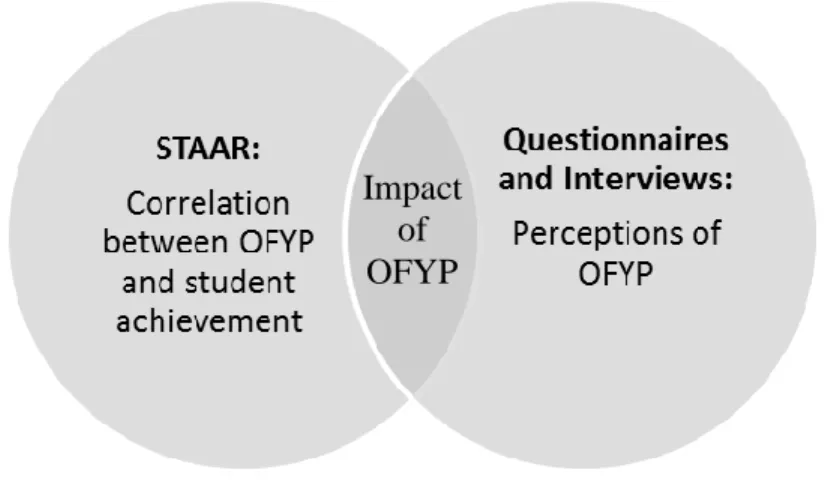
design, the qualitative data provided insight into the results evident in the quantitative data. The relationship between the two methods is summarized in Figure 1, which served as the conceptual framework for this study based on Vroom’s theory of expectancy.
Figure 1. Integration of Quantitative and Qualitative Data.
Setting and Sample Population
The local setting for this study was a small, rural school district located on the outskirts of a metropolitan area. The student population of the district was just over 1,750 students. Each year the TEA publishes open-access data, available on their website, on school districts and campuses in the state. The published data for this district indicated the ethnic distribution in the district was 80% Hispanic and 18% White. All other represented ethnicities were less than 1% of the total student population. The district percentages of economically disadvantaged students (72%) and at-risk students (55%) exceeded the state average (TEA, 2012-2015).
Impact of OFYP
Qualitative Sampling
Questionnaires were administered to all teachers with OFYP experience and interviews were conducted with the campus administrator, counselor, and reading teachers to obtain information on the practices during and perceptions of the OFYP as a means of motivating students and improving student performance on state assessments. Lodico, Spaulding, and Voegtle (2010) identified homogenous sampling as appropriate to attain an “insider’s perspective” on experiences under study (p. 134). Purposeful
sampling was used in this study to identify participants, as the specific experience in the local school was under study. A purposeful sampling method is also supported by Chein (1981) and Patton (2002) as the most appropriate sampling method for gaining
information from persons who hold the most information about the experience under investigation.
Qualitative eligibility criteria. Questionnaire participants included all current teaching staff who had experience with the OFYP. Interviewees included the campus administrator, counselor, and reading teachers from the middle school campus in the OFYP-implementing school district. Different types of staff members were included in an effort to gain varying viewpoints on the OFYP experience, as their different roles had the potential to yield different perspectives. Staff members from the control group schools were eliminated as they lacked experience with the OFYP and the ability to provide information regarding its motivating effect on students.
Participant number. The number of participants asked to complete the questionnaire was determined by the number of teachers on the campus having
experience with the OFYP. Based on current campus personnel, this number would not have exceeded 34. The target sample size for teacher interviews was 6-8 teachers. This number was selected to include all the teachers on the campus who might have had knowledge of the OFYP remediation practices relevant to reading at the middle school level. Lincoln and Guba (1985) suggested that sampling continues until data saturation is reached. This guideline was considered while teacher interviews were conducted.
The campus principal and the campus’s single counselor were also interviewed.
These interviews represented 100% of the available faculty subsets in these role categories.
Quantitative Sampling
Nonprobability convenience sampling was used to identify students for whom assessment data were compiled. Creswell (2012) explained nonprobability sampling as a viable option when participants represent a specific characteristic the researcher desires to study. In this case, the treatment group was comprised of at-risk seventh grade students who participated in the OFYP. The control group included at-risk seventh grade students from demographically similar schools as identified on Texas state accountability reports that do not offer the OFYP. Students identified as part of the control group were
academically and demographically as similar as possible to the students in the study group.
Quantitative eligibility criteria. The sampling frame for the treatment group was all at-risk seventh graders who attend the local school utilizing the OFYP as a
results are available for the prior year and STAAR is administered only once each assessment cycle for these grade levels, as opposed to other grade levels that have multiple administrations. Eligibility requirements for selecting participants in the treatment group were:
The student must have taken the STAAR reading assessment in both sixth and seventh grade.
The student must have participated in the OFYP remediation days in the school year of their seventh grade assessment used in this study.
A similar frame applied to the control group, with the exception of participation in the OFYP. As a part of the state accountability system, Texas identifies comparison groups for schools of similar type, size, and demographics. The TEA suggested these
comparison groupings can be used by schools to gauge their performance relative to those peer campuses (TEA, 2015a). Schools listed on the comparison group for the local site were contacted for permission to access student assessment results for inclusion as part of the control group in this study.
Participant number. The number of participants in the study were defined by the number of students in the local district that met the study criteria. With an average of 35 local sixth grade students not meeting standard on the STAAR reading exam in recent years (TEA, 2012-2015), the potential number of students participating in OFYP for reading was a manageable sample size, which was anticipated to be 20-30 students.
Role of the Researcher
Identified faculty participants were provided an explanation of the study, how the information they provided would be used, and assurances of confidentiality. They were asked to complete and sign an informed consent document prior to participation, and were informed that they could choose to opt out at any time. These processes of informed consent were identified as research best practices (Creswell, 2012; Lodico et al., 2010; Merriam, 2009).
No direct contact was necessary with students for whom state assessment results were collected, as archival data were used for this study. The researcher made contact with the local district for access to data on the treatment group. Identified
demographically similar districts were contacted for access to data on students for the control group.
Protection of Participants
In considerations of the confidential nature of student assessment results, all collected quantitative data were de-identified. Student names, nor the names of any of the participating schools, are used in the study report.
Steps were also taken to protect the interviewees and those that completed the questionnaire. Data were only collected upon the consent of the prospective participants. The online questionnaire responses were password protected. Data from the interviews were kept secure through the use of codes in place of names, by storing names and matching codes separately from the data, and discarding of names once the study was completed. In alignment with the assurances of confidentiality communicated to faculty
participants (Creswell, 2012), the final research study report does not include information that would identify the individual participants. Findings are communicated in a general way, utilizing wording that will not indicate the individual, or role, from whom
information was garnered.
Data Collection Strategies Qualitative Sequence
Data collection instrumentation and process. Two forms of qualitative data collection were used in this study: questionnaires and interviews. Both forms were
collected following protocols suggested by Creswell (2012). Due to the uniqueness of the OFYP, implemented in only a small subset of Texas school districts, I developed
questions to best fit the program under investigation. Prior to administering the
instruments, drafts of the questions were piloted with educational professionals to garner feedback and refine the questions, as suggested by Merriam (2009).
Questionnaires were administered to all teaching staff on the campus to gain a wide perspective on staff perceptions regarding the OFYP without influence from the researcher’s presence. The questionnaire prompts were developed into a digital survey
using Google Forms. A link to access this digital survey was sent to all campus staff members using e-mail addresses provided by the principal. By using open-ended questions on this instrument, staff had the opportunity to provide any information they felt was relevant.
Questionnaire prompts included:
2. What are the benefits, or problems, of using OFYP for student remediation? 3. In your opinion, how do the curriculum and resources used during OFYP help
to improve student achievement?
4. What suggestions would you give for improving the use of OFYP as a remediation strategy?
5. In what ways has OFYP positively or negatively influenced student
motivation to improve their academic performance?
6. To what extent do you feel OFYP has influenced student performance? More in-depth interviews were conducted with the campus administrator, counselor, and campus reading teachers. A semi-structured interview protocol was used to obtain the desired information, while still allowing for flexibility to respond to interesting, relevant ideas that emerged during the interviews, as suggested by Merriam (2009).
The interviews were conducted in a one-on-one format. This arrangement was utilized for the interviews so respondents felt confident in the confidentiality of their answers and encouraged fully transparency (Creswell, 2012), as opposed to a focus group interview that might have inhibited full disclosure in front of peers (Lodico et al., 2010). The interviews were scheduled to accommodate up to an hour per interviewee, as
recommended by Weiss (1994). The length of each interview was adjusted based on the willingness and capacity of the participant to continue providing information relevant to the study topic.
Interviews were audio-recorded with the consent of the interviewee. At the conclusion of each interview, I manually transcribed responses, which were then analyzed in the context of all interviews to identify trends and consider if the data indicated saturation (Lodico, et al., 2010).
Interview questions, which were piloted with educational professionals ahead of time to garner feedback, included:
1. Tell me about your experience with the Optional Flexible Year Program (OFYP) on your campus.
2. Describe your perceptions of the student experience with the OFYP.
3. In what ways, if any, does OFYP motivate students to improve their reading performance?
4. Describe any instances in which the OFYP does not motivate students to improve their performance in reading.
5. How has the OFYP been structured, specifically in the area of reading (e.g. schedules, student groupings, etc.)?
6. Tell me how the curriculum and resources used during the OFYP for reading remediation improves student achievement.
7. In what ways, if any, has the OFYP allowed your school to better meet the needs of students struggling in reading?
8. If the OFYP was no longer utilized in your school, how might students struggling in reading be affected?
Triangulation of data. Triangulation is a primary means to ensure credibility and trustworthiness in qualitative research (Merriam & Tisdell, 2016). Collecting data from both questionnaires and interviews provided the opportunity for triangulation in this study. This use of multiple instruments and information from a wide variety of individuals with varying perspectives allowed for cross-checking of information (Merriam & Tisdell, 2016) and provided the sought after “corroborating evidence”
(Creswell, 2012, p. 259).
Procedure for gaining access. Once permission was granted from the district’s central office to conduct the study at the local site, contact was made with the campus principal to introduce myself and the study. The desired questionnaire and interview processes were discussed.
Role of the researcher. The researcher role in this specific study was an important consideration. The researcher is a member of the community and former employee of the district in the study, separating from the district on good terms in 2012. As such, a positive relationship existed between the researcher and many of the intended participants. This position had the potential to benefit the ease of access to the site and each participant’s sense of comfort during the interview process. On the other hand, the
researcher needed to take measures to guard against any personal bias or unintended inferences from the collected data. As suggested by Merriam (2009), the researcher encouraged respondents by remaining interested, yet maintaining neutrality. Member checking, a common means of avoiding misinterpretation (Creswell, 2012; Lodico et al.,
Figure
Related documents
Do Mathematics and Reading Competencies Integrated into Career and Technical Education Courses Improve High School Student State Assessment Scores.. Kristin
In 2012-13, the School performed a complete revision of its program goals and learning outcomes and continues to collect assessment data each academic year to measure
Student reading achievement results will be collected three times per calendar year and will be analyzed in grade alike groupings at staff meetings, during data team meetings, as
Studies have identified the variables that have the greatest impact on student achievement; investigated how school boards make decisions; how local, state, and national polices
From the research that was conducted in this study 100% of the data indicates that there is a significant positive relationship between the success of a high school athletic
Were there any differences in student mathematics achievement as measured by mean developmental scale score and the percentage of students making learning gains on sixth-grade
Based on the analysis of student achievement data, and reference to "Guiding Questions", identify and define areas in need of improvement for the following
The Single Plan for Student Achievement (SPSA) is a site plan that describes the actions and strategies that based on analysis of quantifiable and qualitative data will serve
