CONTROL OF A BENCHMARK STRUCTURE USING
GA-OPTIMIZED FUZZY LOGIC CONTROL
A Thesis by
DAVID ADAM SHOOK
Submitted to the Office of Graduate Studies of Texas A&M University
in partial fulfillment of the requirements for the degree of MASTER OF SCIENCE
December 2006
CONTROL OF A BENCHMARK STRUCTURE USING
GA-OPTIMIZED FUZZY LOGIC CONTROL
A Thesis by
DAVID ADAM SHOOK
Submitted to the Office of Graduate Studies of Texas A&M University
in partial fulfillment of the requirements for the degree of MASTER OF SCIENCE
Approved by:
Chair of Committee, Paul N. Roschke Committee Members, Harry Jones
Sergiy Butenko
Head of Department, David Rosowsky
December 2006
ABSTRACT
Control of a Benchmark Structure Using GA-Optimized Fuzzy Logic Control. (December 2006)
David Adam Shook, B.S., Texas A&M University Chair of Advisory Committee: Dr. Paul N. Roschke
Mitigation of displacement and acceleration responses of a three story benchmark structure excited by seismic motions is pursued in this study. Multiple 20-kN magnetorheological (MR) dampers are installed in the three-story benchmark structure and managed by a global fuzzy logic controller to provide smart damping forces to the benchmark structure. Two configurations of MR damper locations are considered to display multiple-input, single-output and multiple-input, multiple-output control capabilities. Characterization tests of each MR damper are performed in a laboratory to enable the formulation of fuzzy inference models. Prediction of MR damper forces by the fuzzy models shows sufficient agreement with experimental results.
A controlled-elitist multi-objective genetic algorithm is utilized to optimize a set of fuzzy logic controllers with concurrent consideration to four structural response metrics. The genetic algorithm is able to identify optimal passive cases for MR damper operation, and then further improve their performance by intelligently modulating the command voltage for concurrent reductions of displacement and acceleration responses. An optimal controller is identified and validated through numerical simulation and full-scale experimentation. Numerical and experimental results show that performance of the controller algorithm is superior to optimal passive cases in 43% of investigated studies.
Furthermore, the state-space model of the benchmark structure that is used in numerical simulations has been improved by a modified version of the same genetic algorithm used in development of fuzzy logic controllers. Experimental validation shows that the state-space model optimized by the genetic algorithm provides accurate prediction of response of the benchmark structure to base excitation.
DEDICATION
ACKNOWLEDGEMENTS
I gratefully acknowledge support of the National Center for Research on Earthquake Engineering, Taipei, Taiwan. In addition, this research is supported in part by the National Science Foundation (Grant No. OISE-0553917, Dr. Anne Emig, Project Officer).
NOMENCLATURE
ANFIS Adaptive Neuro-Fuzzy Inference System FLC Fuzzy Logic Controller
FIS Fuzzy Inference System GA Genetic Algorithm
LVDT Linear Variable Displacement Transducer ER Electrorheological
MR Magnetorheological
NSGA-II Non-Dominated Sorting Genetic Algorithm II
NSGA-II CE Non-Dominated Sorting Genetic Algorithm II with Controlled Elitism
PAES Pareto-Archived Evolution Strategy
RMS Root-Mean Squared
RMSE Root-Mean-Squared-Error
SPEA Strength Pareto Evolutionary Algorithm V Volts
TABLE OF CONTENTS
Page ABSTRACT... iii DEDICATION... iv ACKNOWLEDGEMENTS... v NOMENCLATURE ... viTABLE OF CONTENTS... vii
LIST OF TABLES... x
LIST OF FIGURES ... xi
1. INTRODUCTION ... 1
1.1. General... 1
1.2. Structural Control Systems ... 2
1.3. Overview of Structural Control ... 3
1.4. Justification for Proposed Control System ... 5
1.4.1. Control Device ... 5
1.4.2. Controller Algorithm ... 6
1.4.3. Controller Inputs ... 8
1.4.4. Optimization Algorithm... 9
1.4.5. Summary of Proposed Control System... 11
1.5. Numerical Modeling and Simulation... 11
1.6. Experimental Studies ... 12
1.7. Software ... 13
2. REVIEW OF LITERATURE AND RELEVANT TOPICS... 14
2.1. General... 14
2.2. Modeling of a MR Damper... 14
2.3. Control System Background and Optimization ... 16
2.4. GA System Identification ... 18
2.5. Summary... 19
3. OVERVIEW OF BENCHMARK STRUCTURE ... 20
3.1. General... 20
3.2. Test Structure... 20
3.2.1. Experimental Setup... 24
3.2.2. MR Damper Locations in Benchmark Structure ... 27
3.3. Training Excitations... 28
3.4. Seismic Records... 30
3.5. Summary... 31
Page
4.1. General... 32
4.2. Fuzzy Logic for MR Damper Modeling ... 32
4.2.1. Advantages to Fuzzy Logic Modeling of MR Dampers ... 33
4.2.2. Design of MR Damper... 34
4.3. Experimental Characterization Tests ... 35
4.4. Fuzzy Modeling of a MR Damper... 39
4.4.1. Selection of Training Data ... 39
4.4.2. Optimal ANIFS Training Parameters ... 44
4.4.3. Validation of FIS for MR Damper... 47
4.4.4. Ensuring Realistic Results of Fuzzy Model... 51
4.5. Investigation of Benchmark Structure and MR Damper Relationship ... 54
4.6. Summary... 55
5. DEVELOPMENT OF MULTI-OBJECTIVE GENETIC ALGORITHM ... 56
5.1. General... 56
5.2. Overview of NSGA-II CE ... 57
5.3. Makeup of Chromosome ... 57
5.4. Objectives ... 59
5.5. Crossovers and Mutations... 60
5.5.1. Crossovers... 60
5.5.2. Dynamic Mutations... 61
5.6. Fronts and Crowding Distances... 62
5.6.1. A Description of Pareto Fronts ... 63
5.6.2. A Description of Crowding Distances ... 64
5.6.3. Longitudinal and Lateral Diversity... 65
5.7. Controlled Elitism... 66
5.8. Optimization Examples... 67
5.8.1. F6 Optimization Problem... 67
5.8.2. ZDT4 Optimization Problem ... 69
5.9. Summary... 71
6. GENETIC ALGORITHM SYSTEM IDENTIFICATION... 72
6.1. General... 72
6.2. Summary... 77
7. RESULTS OF GA OPTIMIZATION AND EXPERIMENTAL TESTING.... 78
7.1. General... 78
7.2. Results of GA Optimization ... 78
7.2.1. Results of Numerical Simulations ... 86
7.2.2. Results of Experimental Trials... 100
7.2.3. General Summary of FLC Performance ... 114
7.3. Summary... 115
8. CONCLUSIONS... 117
8.2. Future Work... 119
REFERENCES ... 122
APPENDIX AMATLAB CODE FOR NEURO-FUZZY TRAINING ... 128
APPENDIX BMATLAB CODE FOR FLC OPTIMIZATION... 131
APPENDIX CMATLAB CODE FOR GA SYSTEM IDENTIFICATION ... 159
APPENDIX DMATLAB CODE FOR COMPARING FLCS... 162
LIST OF TABLES
Page
Table 1. Example Implimentations of Structural Control Devices... 2
Table 2. Benchmark Structure Information ... 21
Table 3. Identified Stiffness and Damping Values ... 23
Table 4. Benchmark Eigenvalues ... 23
Table 5. Benchmark Eigenvectors ... 24
Table 6. MR Damper Characteristics... 35
Table 7. Performance of Fuzzy Models of MR Dampers A and B... 48
Table 8. Numerical Evaluation of FLC Controllers... 100
Table 9. Experimental Evaluation FLC Controllers ... 114
LIST OF FIGURES
Page
Fig. 1. Tower 101 in Taipei, Taiwan ... 1
Fig. 2. Example Control Devices... 3
Fig. 3. Sketches of (a) Variable Orifice and (b) Rheological Dampers... 7
Fig. 4. Nonspecific Fuzzy Inference System ... 8
Fig. 5. Typical Flow of Logic of a Nonspecific Genetic Algorithm... 10
Fig. 6. Flow Chart of Numerical Simulation ... 12
Fig. 7. Free Body Diagram of Simple Structure ... 12
Fig. 8. Benchmark Structure ... 20
Fig. 9. Idealization of Benchmark Structure... 22
Fig. 10. Mode Shapes of Benchmark Structure ... 24
Fig. 11. (a) NCREE Control Room and (b) dSPACE Hardware ... 25
Fig. 12. (a) VCCS and (b) Power Supply ... 25
Fig. 13. Benchmark Transducer Photos... 25
Fig. 14. Experimental Setup... 26
Fig. 15. FLC Sketch of MIMO Case... 26
Fig. 16. Rendering of MISO (a) and MIMO (b) Structures... 27
Fig. 17. (a) Initial Random Data, (b) Post-Shaping Filter Data... 29
Fig. 18. Shaping Envelope ... 29
Fig. 19. Artificial Seismic Base Excitation (a) Time History and (b) FFT ... 30
Fig. 20. Recorded Ground Motion Records (100 gal) ... 31
Fig. 21. MR Dampers (a) A and (b) B... 32
Fig. 22. Fuzzy Inference System for MR Damper... 33
Fig. 23. Comparison of CPU Time for MR Damper Models ... 34
Fig. 24. Schematic of MR Dampers A and B... 35
Fig. 25. RD1 and RD2 Time Histories ... 37
Fig. 26. Displacement vs. Velocity for RD1 and RD2 ... 38
Fig. 27. Hysteretic Behavior of MR Damper A Over RD1... 38
Page
Fig. 29. MR Damper A Training Data... 41
Fig. 30. MR Damper B Training Data ... 42
Fig. 31. Trimmed (a) A and (b) B Training Data ... 43
Fig. 32. Resulting Fuzzy Surfaces (a) With and (b) Without Sparse Regions of Data ... 43
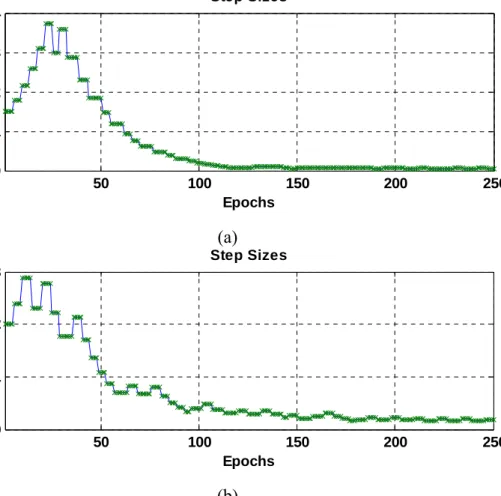
Fig. 33. Step Size Alterations of ANFIS Training for MR Damper (a) A and (b) B... 45
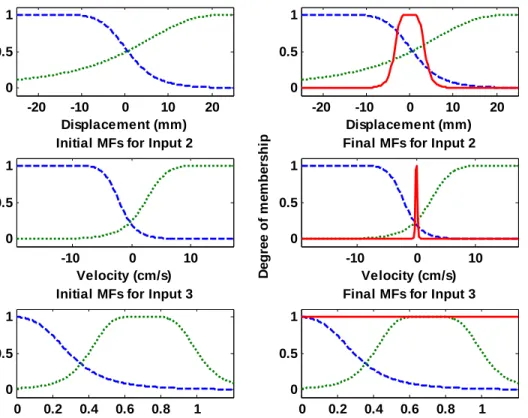
Fig. 34. Membership Functions Before/After Training: MR Damper A... 46
Fig. 35. Membership Functions Before/After Training: MR Damper B... 46
Fig. 36. Data Set 1 (0 V): MR Damper A... 49
Fig. 37. Data Set 2 (1.2 V): MR Damper A... 49
Fig. 38. Data Set 2 (0 V): MR Damper B... 49
Fig. 39. Data Set 2 (1.2 V): MR Damper B... 49
Fig. 40. FIS Surface Plots: (a, b, c) MR Damper A and (d, e, f) MR Damper B... 51
Fig. 41. Membership Functions with Addition of Seat for MR Damper B... 53
Fig. 42. Fuzzy Surfaces with (a) Unrealistic Surface and with (b) Realistic Surface... 54
Fig. 43. NSGA-II CE Flow Chart ... 58
Fig. 44. Example Chromosome ... 58
Fig. 45. Example of Membership Function ... 59
Fig. 46. Crossover Operation... 61
Fig. 47. Delta Computations for Many Generations... 62
Fig. 48. Flowcharts (a) PAES and (b) SPEA Algorithms... 63
Fig. 49. Pareto Fronts and Crowding Distances ... 64
Fig. 50. Types of Diversity ... 66
Fig. 51. Population Size for Each Pareto Front for Different r Values ... 67
Fig. 52. F6 Surface... 68
Fig. 53. F6 2D Slice ... 68
Fig. 54. Results of F6 Optimization... 69
Fig. 55. Griewangk Problem with 2 Variables ... 70
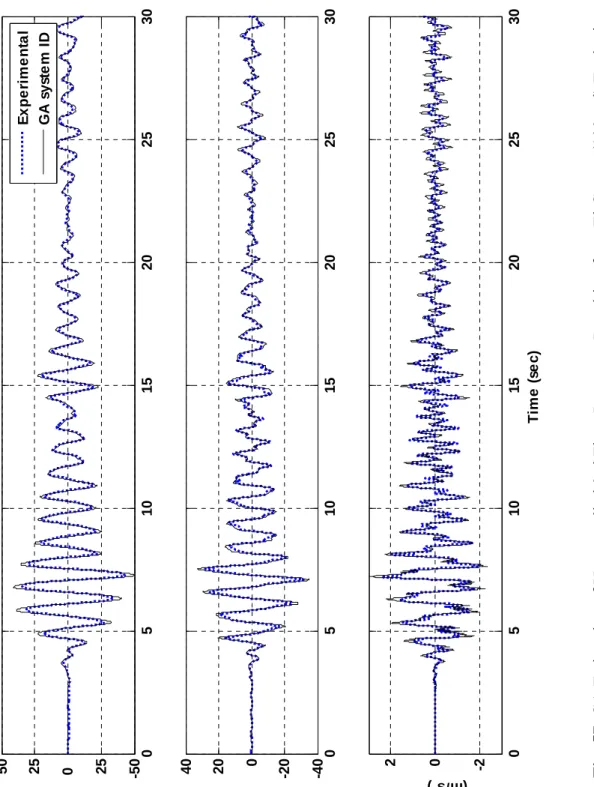
Fig. 57. GA Estimation of Uncontrolled 3rd Floor Response Resulting from
El Centro (100 gal) Excitation ... 75
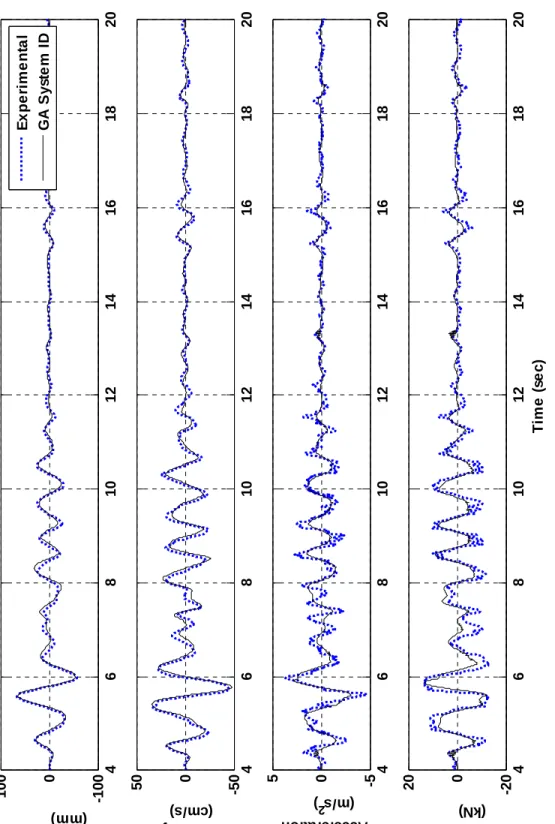
Fig. 58. GA Estimation of MIMO Controlled 3rd Floor Response Resulting from Kobe (200 gal) Excitation... 76
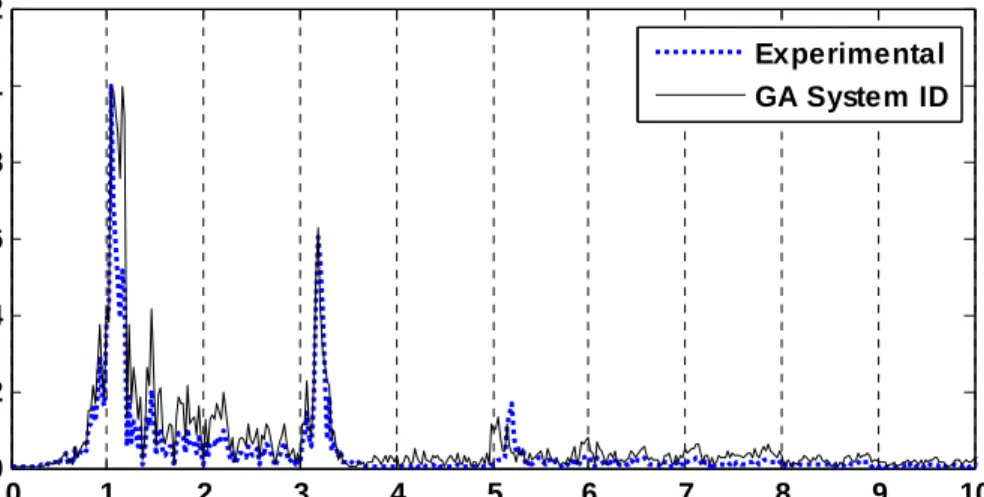
Fig. 59. FFT of Acceleration Responses for 3rd Floor: El Centro 100 gal... 77
Fig. 60. FFT of Acceleration Responses for 3rd Floor: Sinusoidal Excitation... 77
Fig. 61. Pareto Fronts Resulting from MISO GA Optimization... 79
Fig. 62. Pareto Fronts Resulting from MIMO GA Optimization ... 80
Fig. 63. Several Generations Resulting from MISO GA Optimization... 81
Fig. 64. Several Generations Resulting from MIMO GA Optimization... 82
Fig. 65. MISO Control Surfaces ... 83
Fig. 66. MIMO Control Surfaces... 84
Fig. 67. Input/Output of Controllers in (a) 100 gal and (b) 200 gal excitations ... 86
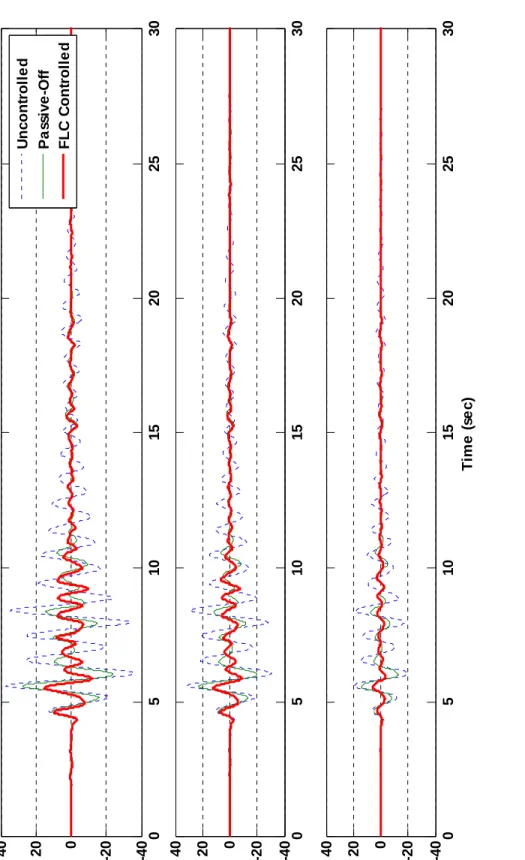
Fig. 68. Numerical Simulation of MISO: Displacement from 100 gal Kobe Earthquake ... 89
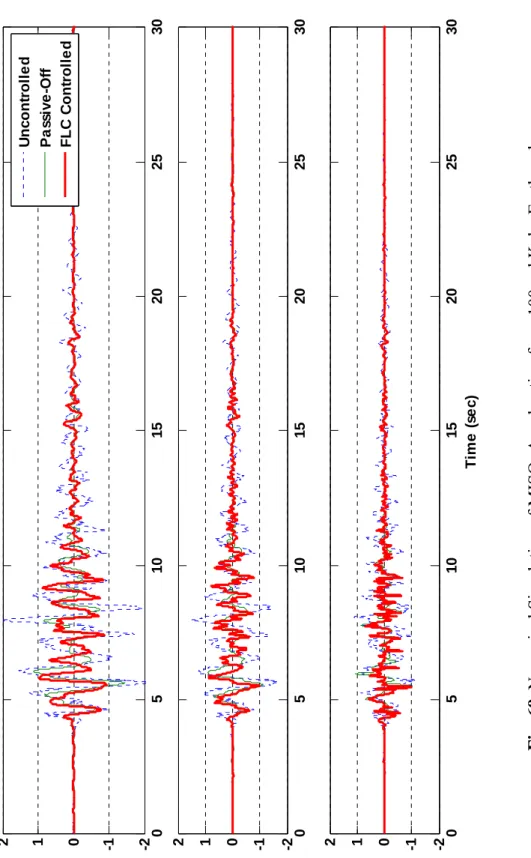
Fig. 69. Numerical Simulation of MISO: Acceleration from 100 gal Kobe Earthquake ... 90
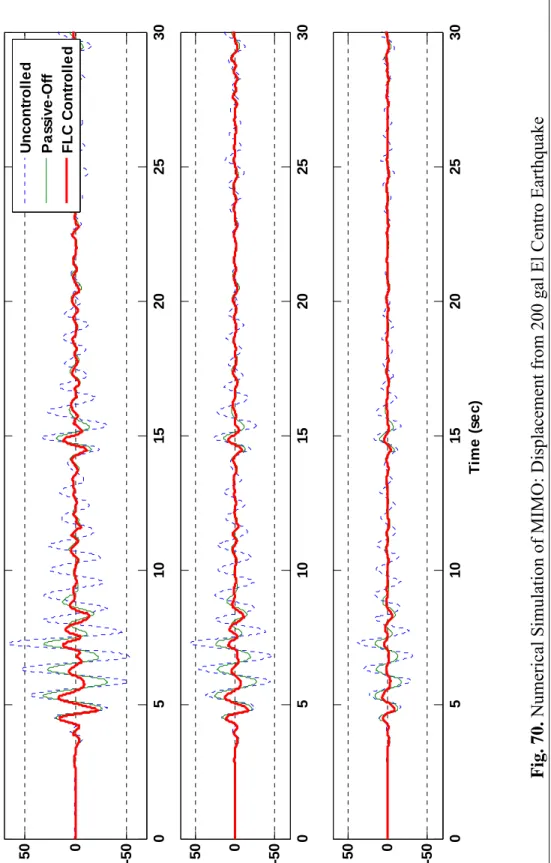
Fig. 70. Numerical Simulation of MIMO: Displacement from 200 gal El Centro Earthquake ... 91
Fig. 71. Numerical Simulation of MIMO: Acceleration from 200 gal El Centro Earthquake ... 92
Fig. 72. Numerical Simulation of MISO: Hysteresis from 100 gal Kobe Earthquake ... 93
Fig. 73. Numerical Simulation of MIMO: Hysteresis from 200 gal El Centro Earthquake ... 93
Fig. 74. Numerical Simulation of MISO: Displacement from 100 gal TCU076 Earthquake ... 94
Fig. 75. Numerical Simulation of MISO: Acceleration from 100 gal TCU076 Earthquake ... 95
Page Fig. 76. Numerical Simulation of MIMO: Displacement from 200 gal TCU082
Earthquake ... 96 Fig. 77. Numerical Simulation MIMO: Acceleration from 200 gal TCU082
Earthquake ... 97 Fig. 78. Numerical Simulation of MISO: Hysteresis from 100 gal TCU076
Earthquake ... 98 Fig. 79. Numerical Simulation of MIMO: Hysteresis from 200 gal TCU082
Earthquake ... 98 Fig. 80. Numerical Simulation of MISO: Voltage from 100 gal Kobe
Earthquake ... 99 Fig. 81. Numerical Simulation of MISO: Voltage from 100 gal TCU076
Earthquake ... 99 Fig. 82. Numerical Simulation of MIMO: Voltage from 200 gal TCU082
Earthquake ... 99 Fig. 83. Experimental Results of MISO: Displacement from 100 gal Kobe
Earthquake ... 103 Fig. 84. Experimental Results of MISO: Acceleration from 100 gal Kobe
Earthquake ... 104 Fig. 85. Experimental Results of MIMO: Displacement from 200 gal El Centro
Earthquake ... 105 Fig. 86. Experimental Results of MIMO: Acceleration from 200 gal El Centro
Earthquake ... 106 Fig. 87. Experimental Results of MISO: Hysteresis from 100 gal Kobe
Earthquake ... 107 Fig. 88. Experimental Results of MIMO: Hysteresis from 200 gal El Centro
Earthquake ... 107 Fig. 89. Experimental Results of MISO: Displacement from 100 gal TCU076
Earthquake ... 108 Fig. 90. Experimental Results of MISO: Acceleration from 100 gal TCU076
Fig. 91. Experimental Results of MIMO: Displacement from 200 gal TCU082
Earthquake ... 110 Fig. 92. Experimental Results of MIMO: Acceleration from 200 gal TCU082
Earthquake ... 111 Fig. 93. Experimental Results of MISO: Hysteresis from 100 gal TCU076
Earthquake ... 112 Fig. 94. Experimental Results of MIMO: Hysteresis from 200 gal TCU082
Earthquake ... 112 Fig. 95. Experimental Results of MISO: Voltage from 100 gal Kobe
Earthquake ... 113 Fig. 96. Experimental Results of MISO: Voltage from 100 gal TCU076
Earthquake ... 113 Fig. 97. Experimental Results of MIMO: Voltage from 200 gal TCU082
Earthquake ... 113 Fig. 98. Torsional Benchmark Structure with Eccentric Masses... 120 Fig. 99. Base Isolated Benchmark Structure... 121
INTRODUCTION
General
Since the first ages of civilization technological advancement has progressed rapidly during certain periods and has been caught in doldrums through others. In more recent years, engineers have continued to inspire the imagination and surmount prior limitations. One such example is construction of the Tower 101 building in Taipei, Taiwan (Fig. 1), which has a height of 508 m and is currently the tallest building in the world. Although it was once thought to be impractical to construct such a tall building in a location that is often subject to seismic temblors and is susceptible to numerous typhoons each summer, Tower 101 has shown the resilience of technological progress and innovation. As architects and designers continue to push the limits of structural steel and other modern materials, simple solutions of the past must make way for innovations of the future. New technologies are continually being employed by structural engineers in their practice. Smarter, not stronger, is the language of the populous.
Fig. 1. Tower 101 in Taipei, Taiwan
Structural Control Systems
One recent innovation for constructed facilities such as buildings and bridges that has garnered much attention is the concept of structural control, which was first proposed by Yao (1972). Structural control can be defined as any system that dissipates unwanted energy in a structure that is imparted to it by internal or external perturbations.
Numerous domestic and foreign structures are incorporating this technology into new and retrofit construction projects. Engineers from the United States have pioneered these technologies as exampled by the Citicorp building in New York City, New York. Here a passive tuned mass damper was installed during construction of the building in 1977. A variety of other North American examples include the base isolation system installed in the University of Southern California University Hospital located in Los Angles, California, and the tuned water damping system installed in the One Wall Centre tower in Vancouver, British Columbia, Canada. A more recent example of such technology includes the largest mechanical damping system in the world, which was installed in Tower 101 in 2004. Each of these full-scale implementations of structural control devices share one key similarity: passive control. That is, the control device is not altered by any external system during operation.
In Asian countries researchers have ventured into active and semi-active control systems where the properties of the implemented damping device are altered in real time for the intelligent reduction of motion experienced by the structure. An abbreviated listing of currently installed semi-active and active structural control systems is shown in Table 1. For a more complete list of full-scale installations consult Spencer and Nagarajaiah (2003).
Table 1. Example Implimentations of Structural Control Devices
Structure Location Control System
Yokohama Land Mark Tower Yokohama, Japan (1993) Active mass damper
T.C. Tower Kau-Shon, Taiwan (1997) Active mass damper
Laxa Osaka Osaka, Japan (1999) Semi-active mass damper
Shin-Jei Building Taipei, Taiwan (1999) Active mass damper
Keio University Engineering Bldg. Tokyo, Japan (2000) Variable-orifice damper
Overview of Structural Control
In the following section a brief synopsis of structural control devices is provided. These structural control devices are classified into three groups: active, passive, and semi-active. An example of each of these control devices is shown in Fig. 2.
(a) Active Control Device
(Toda: www.toda.co.jp) (b) Passive Control Device (Popular Mechanics: www.popularemechanics.com)
(c) Semi-Active Control Device
Fig. 2. Example Control Devices
Active control techniques utilize mechanical systems to impose actuated forces on a structure for the purpose of mitigating excitation. These systems employ a variety of technologies, but generally include hydraulic actuators such as the one shown in Fig. 2a. Here an active mass damping system is used to mitigate wind loads in a tall structure. To provide optimal control these devices often produce significant forces on a structure to counteract external disturbances. However, when internal forces acting on a structure
exceptionally large as well. Thus, very large actuators are needed which, in turn, require exceedingly large amounts of power. In the event of a loss of power (e.g. in an earthquake), beneficial effects of the actuators would be nullified. Moreover, dynamic instability can occur with active control and possibly aggravate response of a building instead of reducing it.
By contrast, passive control approaches utilize inert force-resisting mechanical systems that absorb the energy of a structure and thereby mitigate excitation. Passive control devices employ a variety of technologies, and are effective in a number of situations. A commonplace example of a passive control system is the set of shock absorbers that are commonly installed in automobiles. A structural engineering example is the pendulum and tuned mass dampers that are installed in Tower 101 as shown in Fig. 2(b). Passive devices can be categorized into three basic types: springs, viscous dampers, and energy absorbing structural elements. When correctly tuned to the motion of the structure, these devices can effectively absorb energy from unwanted perturbations. These techniques are very reliable and generally require no power. Moreover, dynamic instability is not a concern since no energy is imparted to the structure; rather, energy is absorbed. Passive devices are often only optimized for a single scenario, and thus lack adaptive capabilities. As a consequence if structural characteristics change beyond the operational range of the passive device, it becomes ineffective in fulfilling its intended purpose.
The final category of structural control is termed semi-active. This approach utilizes variable force-resisting mechanical systems that absorb energy and thereby mitigate undesirable motion. Semi-active control systems employ a variety of technologies including its more common form, variable viscous damping. This variable component, of an otherwise passive system, highlights a key difference between passive and active control, namely controllability. With a modest amount of power semi-active control combines the adaptability of semi-active control with the reliability of passive control. Furthermore, dynamic instability is not a concern for semi-active control approaches since these semi-active devices only modulate their level of resistance and do not impart energy into the structure.
In a recent publication by Spencer and Nagarajaiah (2003) an overview of current technologies in the realm of structural control are discussed. Evidence justifying the need for semi-active control systems is provided. This paper calls for the continued development of both technology and controller algorithms. Toward this goal, the current study intends to advance the development of effective structural control algorithms and improve optimization methods.
Justification for Proposed Control System
In what follows, control of a multi-degree of freedom structure is pursued. Several key components are required for the implementation of such control systems. An overview of the rationale and background for each component is provided below to give the reader a foundation before providing details of their development and integration.
Control Device
For this study semi-active devices are selected as a means to mitigate structural responses to excitation. Two general categories of semi-active devices include variable orifice dampers and rheological dampers. Variable orifice dampers typically consist of a piston in a casing that is filled with a fluid such as water or oil (see Fig. 3). Controllability is derived from constricting the flow of fluid during motion of the piston. Recently, these types of viscous dampers have been determined to be effective in mitigating wind excitations as noted by Kim and Adeli (2005) and Reigles and Symans (2005). Generally, mechanical properties of the damper are tuned for optimal alleviation of acceleration responses of the structure where wind excitation is most taxing. As a result, the reduction displacement responses are often a secondary priority. Moreover, constricting the flow of the fluid through an orifice can require more power than a simple backup battery system could provide. This is crucial in the event of a power failure. Although variable orifice dampers often require less power than active control applications, it is a concern of engineers.
Rheological dampers offer a similar resistance to motion, yet resistance is derived from the modulation of fluid properties rather than the alteration of orifice size. Two commonly employed fluids that exhibit such a rheological phenomenon are electrorheological (ER) and magnetorheological (MR) dampers. Both fluids alter their resistance to motion when current is applied. This idea was initially proposed by
significant resistance to motion and requires a large amount of voltage; consequently, it has been largely abandoned by engineers who instead are opting for use of MR fluid.
Dampers that utilize MR fluid for the modulation of resistance are termed MR dampers. An example of this type of device is shown in Fig. 3(b). MR dampers typically consist of a piston in a steel casing that is filled with MR fluid. MR fluid consists of base oil, magnetizable particles (iron), and a stabilizer. An electrical current is applied to the MR fluid through a coil wrapped around the piston head which produces a magnetic field. The magnetized particles align with the magnetic field created by the coil when a current is applied. Upon alignment of the rheological particles the effective density of the oil-based liquid changes drastically. Since the particles generally align within a few milliseconds, the fluid converts from a free flowing oil-based liquid to a high density semi-solid almost instantaneously. This conversion process is also reversible when the magnetic field is removed. Thus, by continuously varying the current the MR fluid can produce a sweeping range of effective densities, thus providing the damper with significant controllability.
Two key advantages of rheological dampers in comparison with variable orifice dampers include reaction time of the controlling event and lower power requirements. Primarily for these reasons, rheological dampers, or more explicitly, MR dampers, are selected for control system implementation in this study.
In the previous text justification for the semi-active components of control has been provided. The next step in development of an efficient vibration control system is to exploit the beneficial characteristics of MR dampers. The following section presents the controller algorithm that is to be developed.
Controller Algorithm
For active and semi-active systems a controller is necessary to manage the mechanical equipment. A controller is any algorithm that adjusts characteristics of a control device. Since a semi-active control device is selected for use in this study, namely an MR damper, a controller is also necessitated.
Oil/Water Piston Rod Valve Casing (a) Rheological Fluid Piston Rod Magnetic Coil Magnetic Field Casing (b)
Fig. 3. Sketches of (a) Variable Orifice and (b) Rheological Dampers
Numerous algorithms have been developed prior to and since the inception of the concept of structural control. Control algorithms have a sweeping range of applications and capabilities. In the past, much of the structural control research community gravitated towards use of what is termed here as “traditional” control methods. Examples of these controllers include Proportional, Integration, and Derivative (PID), Linear Quadratic Gaussian (LQG), and H-Infinity (H∞). Traditional control algorithms can
provide adequate control management for certain classes of problems, but this is often at the expense of a strong robust nature. This is due to the sensitivity of traditional controllers to characteristics of the structure itself such as mass, stiffness, and damping. Thus, if the structural properties vary from those used to develop the control algorithm, the effectiveness of many of these control algorithms diminishes significantly as discussed by Casciati et al. (1994) and Deoskar et al. (1996).
In more recent studies, controllers that make use of fuzzy logic have gained acceptance in the research community for their robust nature and ability to account for uncertainties. Fuzzy sets were first introduced by Zadeh (1965) as a means of effective
of IF [ ], THEN [ ] statements, that, when combined in unison, provide a unique form of control. Avoiding complex and computationally expensive state observers or estimators that are often used in traditional control, fuzzy logic seeks a more simplistic approach to save computational time and account for non-linear relationships with relative ease. Logic statements or ‘rules’ relate any provided input signal to desired output signals. Fuzzy logic shows its multifaceted nature in that it can be developed for both numerical modeling of systems and as a controller of a system. In this study fuzzy logic is used for both numerical modeling of MR dampers and management of MR damper command signals.
Fuzzy inference systems are adaptable for control of multiple-input, single-output (MISO) and multiple-input, multiple-output (MIMO) systems. Nonlinear relationships are required for mapping specified inputs to desired outputs for both MR damper modeling and development of a fuzzy logic controller (FLC). Fuzzy logic is inherently proficient at nonlinear relationships, thus making it an even more viable candidate for MR damper modeling and controller implementation. A sketch of a nonspecific fuzzy inference system is shown in Fig. 4.
Fig. 4. Nonspecific Fuzzy Inference System
Controller Inputs
Dynamic motion of the structure must be characterized to provide fuzzy logic controllers with information in order to identify voltage singals to modulate MR damper resistance levels. In general there are three commonly used metrics for characterization
of dynamic motion: displacement, velocity, and acceleration. Although displacement is an ideal characterization of building motion, it is fiscally expensive to acquire accurate displacement data in real time for a civil engineering structure such as a tall building or bridge. For example, displacements are generally measured with linear velocity displacement transducers (LVDTs). They are often unreliable for use in actual structures in the event of a strong seismic motion that could damage such devices. Furthermore, they usually require some fixed location for installation which is often impossible to acquire in real civil engineering structures. Velocity transducers are simply accelerometers fitted with a state-estimator. Thus, accuracy of the signal depends on the accuracy of real-time time integration of acceleration signals. This is not a computationally efficient means of response observation. Accelerometers, which measure acceleration, are relatively inexpensive and are more reliable than LVDTs or velocity transducers. Therefore, for this study, building characterization is quantified by acceleration feedback from specified degrees of freedom.
Since accelerometers are very sensitive to excitation, a common issue with their use is their inherent “noisy” signal or poor signal quality. That is, they are prone to a poor signal to noise ratio. A key advantage for the of fuzzy inference systems is their ability to provide acceptable and even optimal output signals despite significant noise in input signals. Many algorithms based on traditional control theory are hampered by unwanted noise that is common in readings from most accelerometers. What is more, many traditional control methods require multiple building characterization types such as displacement and acceleration to compute control signals, whereas fuzzy logic can be optimized for any set of input or output signals.
Optimization Algorithm
The system proposed in this study for optimal control of a civil engineering structure utilizes MR dampers which are managed by a fuzzy logic controller that employs acceleration feedback for characterization of building motion. This system is inherently nonlinear due to the nonlinearity associated with the MR dampers response to motion. The complexity of this system requires automation to develop an optimal FLC. A heuristic optimization process that is reasonably free of user guidance is desired since understanding the complex relationships involved such a system is a daunting task. For
algorithm (GA). A robust trial-and-error approach to optimization is studied that allows the user to optimize a FLC by training with a specified data set and adjustment of a relatively few user-defined parameters.
Use of genetic algorithms for optimization, since first bring proposed by Holland
et al. 1975, has striven towards a blind optimization process that identifies unexpected relationships where other optimization processes can not. The optimization is to be robust and consider numerous potential solutions. With these thoughts in mind, genetic algorithms have been employed to identify optimal solutions for a variety of optimization objectives. The general flow of logic of a rudimentary genetic algorithm can be described as shown in Fig. 5.
Fig. 5. Typical Flow of Logic of a Nonspecific Genetic Algorithm
A population of solutions is considered at each generation as opposed to a single solution as exampled by neural network optimization techniques. By this fundamental principle, genetic algorithms are much more explorative than many prior optimization processes.
Recent advances in GA methodology have been exploited by numerous researchers. For example, Schaffer (1985) incorporated the idea of non-domination. In later studies Fonseca and Fleming (1993) and Goldberg (1989) considered a truly multi-objective optimization with the employment of Pareto fronts. The ability to optimize on multiple objectives simultaneously was crucial in bringing GA into the robust automated optimization process it is today. In recent years researchers of genetic algorithms such as Deb (2001) have brought GA-based approaches to the forefront of multi-objective optimization.
Summary of Proposed Control System
Thus, for the proposed control system MR dampers that are managed by a FLC are used to provide optimal control forces to a civil engineering structure. The FLC must be able to consider multiple concurrent structural response optimization objectives. Thus, a GA is employed for its robust and multi-objective optimization capabilities. FLC performance is then experimentally substantiated through full-scale testing on a benchmark structure.
Numerical Modeling and Simulation
Since no online learning algorithms are pursued in the current study, two entities require numerical modeling in advance of experimental testing to produce a fuzzy logic controller. To numerically simulate dynamic responses of the building to external forces, a feedback control loop is required as shown in Fig. 6. As described in a later section, a
state-space model of the benchmark structure is created using a modified version of the genetic algorithm originally used in FLC development. Second, the MR dampers are modeled using a neuro-fuzzy approach. Both the state-space model of the benchmark structure and fuzzy models of the MR dampers are created using results from experimental tests that isolate each entity to investigate their dynamic characteristics independently of each other. Subsequently, these models are incorporated into the numerical simulation such that the MR dampers are assumed to be “force producers” as can be shown by basic mechanics of free bodies and (see Fig. 7). Notation of excitation and response forces in Fig. 7 are derived from Chopra (2006). Also, FMR is the resistance force of the MR damper and V denotes voltage specified for damper operation.
∑
Fig. 6. Flow Chart of Numerical Simulation
( ) g a t ( ) g ma t ( ) ku t cu t&( ) FMR( , , )u u V& ( ) mu t&&
Fig. 7. Free Body Diagram of Simple Structure
Experimental Studies
In this study experimental substantiation of GA-optimized FLCs is conducted with employment of two 20 kN MR dampers and a 9 m tall benchmark structure. Experimental trials were conducted at the National Center for Research on Earthquake Engineering (NCREE) located in Taipei, Taiwan, with the aid of local researchers. A seismic simulator located at NCREE is used for experimental testing of the FLCs for a variety of near- and far-field excitations. Furthermore, performance tests of MR dampers were conducted by an NCREE researcher to aid in the formulation of numerical models representing the MR dampers.
Software
MATLAB 7.2, Simulink, and a complementary set of toolboxes are used to conduct numerical simulation and computations in the work that follows. Moreover, a genetic algorithm is used which is based on work by Deb and Goel (2001), and further advanced by Kim and Roschke (2006b). Significant alterations of these algorithms are described in what follows and are used in the simulations. Since a GA is computationally intensive a cluster-based supercomputer is employed for GA calculations to expedite optimization.
1.
REVIEW OF LITERATURE AND RELEVANT TOPICS
1.1.GeneralCurrent and prior research to this study are noted and discussed in the following section. The compilation of relevant research is vital to understanding the intellectual merit of the proposed control system. What is more, many key topics are derived from prior work which is disseminated in what follows.
1.2.Modeling of a MR Damper
Any method used in MR damper modeling requires several key components, the most important of which is the ability to generate non-linear relationships that accurately describe the response of the damper to motion and voltage. Resistance of an MR damper is modulated by application of a range of voltages as discussed in subsequent sections. Generally, numerical models consist of a set of input variables and they output one or more results that correspond to the device that is being modeled. The methods of mapping these relationships differentiate the various modeling techniques.
Several, often competing, factors are to be considered when designing a numerical model of an MR damper. The first and most important is accuracy. Accurate models of dampers are critical for future controller formulation. Robustness is also a vital aspect of a numerical model. That is, the model must be adept in accounting for new scenarios and uncertainties. Finally, the model should be as computationally fast as possible. In subsequent development of FLC controllers numerous computational cycles will be required; as such rapid calculation of MR damper forces is needed.
Modeling techniques for MR dampers can be summarized into two categories: analytical and non-analytical. A well known analytical technique that accurately models MR damper behavior through a set of seven governing differential equations has previously been proposed by Spencer et al. (1997). This proposed method is a modified version of the classic Bouc-Wen model initially proposed by Wen (1976). Validation of the Bouc-Wen model involves using several types of motion and voltage time-histories both of which are sinusoidal and random. All presented data show validity of a highly accurate model. Also, three error metrics have been proposed to quantify the accuracy of force prediction of the Bouc-Wen model. A significant shortcoming of the Bouc-Wen
model is computational efficiency. Although a highly accurate model of the MR damper is formulated, computational time is quite expensive as described by Schurter and Roschke (2000). Since heuristic optimization, as employed in this study, requires numerous expensive computational cycles for FLC development, this type of modeling is not selected for this study.
Other researchers have since developed numerous modified Bouc-Wen models that have more efficient computational algorithms. A modified Bouc-Wen model has been proposed by Lin et al. (2005) for a 3 kN MR damper in which on-line parameter identification is conducted. Here several models of the 3 kN MR damper operating at discrete voltage levels are generated. Then cubic interpolation is used to identify MR damper characteristics with specified voltages lie between identified models. Although this model is not as accurate as the one proposed by Spencer et al. (1997), it is very computationally efficient and suitable for heuristic optimization of a control system. As an alternative to on-line parameter identification, a genetic algorithm has been proposed by Giulea et al. (2004) for the identification for Bouc-Wen parameters.
More recently Jiménez and Álvarez-Icaza developed an alternative modeling method, termed the LuGre friction model (2005). This modified LuGre friction model, original proposed by Canudas et al. (1995), has been simplified and utilizes a set of linear approximations to model an inherently non-linear device. The LuGre friction model is reported to be more computationally efficient than the Bouc-Wen model as proposed by Spencer et al. (1997). The modified LuGre approach models damper behavior with a set of two differential equations. When results are compared to the Spencer et al. (1997) Bouc-Wen model a similar degree of accuracy can be noted.
Other researchers have incorporated fuzzy logic in modeling of MR dampers as referenced by Schurter and Roschke (2000), Likhitruangsilp and Roschke (2003), Atray and Roschke (2004), Oh et al. (2004), and Kim et al. (2006). In these studies a neuro-fuzzy approach to MR damper modeling has been proposed that shows high accuracy in tandem with efficient computational effort. Previous neuro-fuzzy modeling studies from this group of researchers utilized an Adaptive Neuro-Fuzzy training of Sugeno-type (ANFIS) for fuzzy training of the fuzzy model as initially developed by Jang (1993). ANFIS is an automated optimization process which, through trial and error, formulates a
the current study, but modifications from prior modeling efforts are incorporated. 1.3.Control System Background and Optimization
A number of control strategies exist in the research community today. They can be generally summarized into two approaches: traditional and non-traditional control. Traditional control is an umbrella term that describes numerous control algorithms including commonly used algorithms such as PID, LQR, skyhook, or H∞. These types of
controllers are prevalent in many of the research communities interested in control. Less commonly utilized are non-traditional controllers. Examples of this classification include fuzzy logic and neural network controllers. Generally speaking, traditional controllers directly use structural characteristics such as mass and stiffness in their formulation. Non-traditional controllers incorporate a wide variety of algorithms but, in general, are logic-based algorithms which incorporate weights and bias. These control strategies are generally not derived, but formulated through an iterative process and make use of error metrics.
Other methods such as modal control strategies (Cho et al., 2005) have been recently applied to management of MR dampers in seismic scenarios. Here researchers seek to control specific modes of the structure that are prevalent in response to seismic excitation. For optimal control they assume linear elastic analysis of the structure. The developed controller utilizes displacement, velocity, and acceleration feedback for controller operation. A Kalman filter is usually employed to estimate these states. However, use of a Kalman filter is computationally expensive in real-time application of a control system. Although this control system has limitations, it does perform well for its intended purpose of controlling a set of selected modes. Alternatively, a non-traditional model control strategy has been developed by Rao and Datta (2006) with employment of an artificial neural network. The neural network is optimized to mitigate response of a few select modes instead of the total response of the structure. Results also show effective reductions to of building response.
Skyhook control has been employed by Nagarajaiah and Narasimhan (2003) for control of a numerical benchmark base-isolated structure that is augmented with MR dampers. Here assessments of both semi-active and active control schemes are pursued.
The skyhook controller is determined to be not quite as effective as a clipped optimal controller for the semi-active case.
Many structural engineering researchers have used widely known control strategies such as Lyapunov and energy based methods for semi-active control of MR dampers (Sahasrabudhe and Nagarajaiah, 2005; Yoshida and Dyke, 2005; Renzi and Serino, 2004, Dyke et al., 1996). These controllers have been shown to be effective in numerical and physical testing. Each of these strategies relies on the accurate determination of structural characteristics such as mass and stiffness prior to controller formulation. These methods have been shown to be effective when highly accurate models of the structure can be attained. When accurate models cannot be attained the effectiveness of the controller often diminishes.
Prior efforts for optimization of fuzzy logic controllers have employed automated strategies such as neural networks and neuro-fuzzy optimization algorithms (Schurter and Roschke, 2001). In the cited study artificial neuro-networks are employed for modeling of MR damper behavior and control system development separately. Since the employed neuro-fuzzy optimization process (ANFIS) is limited to one output researchers were limited in the number of control devices they could include in the global control scheme. Schurter and Roschke (2001) optimized a single and multiple degree of freedom control system with superior results for the MDOF case. Researchers were also limited to the control capabilities of an LQR controller since LQR controller output is selected as a means to calculate controller error.
GA optimization for fuzzy logic controller optimization has been conducted by several groups of researchers. Ahlawat and Ramaswamy (2004a and 2004b) optimized controllers for wind and seismic excitations in separate studies with positive results from of each. Researchers were limited to numerical simulations in evaluating their GA optimized fuzzy controller. Researchers optimized the proposed control system considering only two objectives. In the cited study feedback of velocity and acceleration are used for building characterization. In a similar effort a semi-active control strategy has been proposed by Yan and Zhou (2004) which incorporates optimization of a FLC by a genetic algorithm. Here only one optimization objective is considered.
of fuzzy logic controllers related to structural control applications. In each of these applications control of a hybrid base isolation system augmented by one or more MR dampers is pursued. Kim and Roschke (2006b) pursued concurrent minimization of four structural response objectives utilizing a non-dominated sorting genetic algorithm (NSGA-II) in each case. Favorable results are observed, especially when considering performance of traditional methods such as skyhook control.
Prior efforts to experimentally investigate the effectiveness of structural systems that incorporate MR damper technology have been primarily limited to small scale structures. However, one recent example of a large scale test utilized a decentralized control strategy to mitigate the seismic response of a four degree of freedom steel frame building (Renzi and Serino, 2004). Four MR dampers are attached to the structure using a bracing configuration that spanned two floors. Results show that MR dampers can be very effective in reducing both displacement and acceleration response of the structure to seismic excitations. Other researchers utilized a 24,000 kg single degree of freedom structure for large scale testing of a hybrid base isolation system (Kim et al., 2006). A friction pendulum system augmented by a 20-kN MR damper is employed to effectively mitigate response of the structure to a suite of scaled earthquakes. Soda et al. (2003) also conducted a large scale experiment with linear roller bearings augmented by a 40 kN MR damper as a base isolation system for a three degree of freedom structure. Favorable reductions in seismic response of the structure were obtained. These three studies consist of the majority of large scale tests involving MR dampers in structural control applications that have been reported in the literature. Clearly further large-scale experimental investigations are needed to bring MR damper technology into full fruition as an effective control device.
1.4.GA System Identification
Past endeavors to use a GA as a means for system identification of civil engineering structures have entertained few large-scale experimental studies available for verification of accuracy and single objective optimization as exampled by Perry et al.
(2006). In this study a GA algorithm is used to accurately identify only the acceleration response of a structure. Displacement and velocity are not predicted since they would be
difficult to attain from a full-scale civil engineering structure. Few large scale verification studies have been attempted by prior researchers that employ this type of parametric identification. Other popular methods include frequency-domain system identification (Jin et al., 2005) and subspace methods (Overschee and DeMoor, 1996) which utilize state-space formulations. The frequency-domain based methods offer rapid convergence towards a solution, but generally exhibit difficulties with data that have a high frequency component due to instrumentation noise (Perry et al., 2006)
1.5.Summary
In the previous narrative concepts and results from existing literature have been discussed to aid the reader in understanding the currently proposed study. With discussion of current literature provided, focus now turns to the benchmark structure that is to be tested, modeled, and controlled in a series of large-scale laboratory tests.
2.
OVERVIEW OF BENCHMARK STRUCTURE
2.1.GeneralIn the following text the proposed benchmark structure and related equipment used in experimental testing are described. The test structure and equipment reside at the National Center for Research on Earthquake Engineering (NCREE) located in Taipei, Taiwan, and are shown in Fig. 8.
Fig. 8. Benchmark Structure
2.2.Test Structure
The benchmark structure is 9 m tall and has a total mass of approximately 18,440 kg. Details pertaining to the benchmark geometry and mass are provided in Table 2. All columns, beams, and braces are composed of H150×150×7×10 rolled shapes of grade A36 steel. Density of the steel is assumed to be 7,850 kg/m3. Moreover, lead weights are placed on each floor to increase the mass to stiffness ratio. This is important since the benchmark structure should exhibit similar response characteristics as a real civil engineering structure. Since many tall structures have a fundamental frequency of approximately 1 Hz, the target frequency for the benchmark structure is similar. As
described in Table 2 the approximated lumped mass of each floor includes all components attached to the benchmark structure such as floor beams, columns, floor plates, lead weights, and etc. It can be observed in Table 2 and in Fig. 8 that more lead weights are attached to the 3rd floor than to the 1st or 2nd floors. Note also that some lead weights are removed from the 1st and 2nd floors to make room for the installation of MR dampers. This can also be observed in Table 2.
Table 2. Benchmark Structure Information
Parameter Value
Floor Height 3 m
Floor Dimensions 2 m × 3 m
Column, Beam, and Chevron Size (A36) H150×150×7×10 Estimated Lumped Floor Masses
1st Floor 5,800 kg 2nd Floor 5,800 kg 3rd Floor 6,840 kg Total 18,440 kg Mass of One ‘Rack’ of Lead Weights 250 kg Number of Lead Weight Racks Per Floor
1st Floor 10 2nd Floor 10 3rd Floor 14
Floor Plate Thickness 25 mm
Density of Steel 7,850 kg/m3 Density of Lead 11,340 kg/m3 Modulus of Elasticity of Steel 210 GPa
Yield Strength of Steel 250 MPa
The structure is idealized into three degrees of freedom as illustrated in Fig. 9. Since a state-space model of the structure is necessary for numerical simulation purposes, it must also be composed. Eqs. (1), (2), and (3) list the mass, stiffness, and damping coefficient matrices, while Eqs. (5), (6), and (7) are used describe the state-space model of the structure (Franklin et al., 2002):
2 3 M 0 m 0 0 0 m ⎢ ⎥ = ⎢ ⎥ ⎢ ⎥ ⎣ ⎦ (1) 1 2 2 2 2 3 3 3 3 k k -k 0 K -k k k -k 0 -k k + ⎢ ⎥ ⎢ ⎥ =⎢ + ⎥ ⎢ ⎥ ⎣ ⎦ (2) C=αM +βK (3) 1 2 1 2 2 ζω ω α ω ω = + 2 1 2 ζ β ω ω = + (4) x&=Ax Bu+ (5) y Cx Du= + (6) 3 3 1 1 0 I A M K− M C− ⎡ ⎤ = ⎢− − ⎥ ⎣ ⎦ 3 1 0 B M− ⎡ ⎤ = ⎢ ⎥ ⎣ ⎦ -1 -1 M K M C C = ⎣⎡ ⎤⎦ D ⎡M−1⎤ = ⎣ ⎦ (7)
where M, K, and C denotes the mass, stiffness, and damping coefficient matrices, respectively, m and k denote mass and stiffness, respectively, of an individual floor, ω is a fundamental frequency defined by an eigenvalue analysis, ζ is the values, u is a vector of pertebation inputs, and A, B, C, and D are state-space coefficient matrices.
As shown in Eqs. (3) and (4), Raleigh damping is employed for calculation of the damping coefficient matrix (Chopra, 2006). Identification of stiffness and damping parameters is pursued later in the text with the aid of a genetic algorithm. GA identified values are presented in Table 3 to provide a complete description of the state-space model in the current section of the manuscript. State-space modeling is a linear modeling technique and is utilized for numerical simulations to be conducted in MATLAB/Simulink (2006). As discussed later, these GA-optimized values do not hold a unique physical meaning since state-space formulations are non-unique. Yet, by employment of these values in the state-space model highly accurate predictions of the response of the benchmark structure are achieved.
Table 3. Identified Stiffness and Damping Values
Parameter GA Identified Value 1 k 1,172.82 kN/m 2 k 1,750.02 kN/m 3 k 1,998.30 kN/m ζ 0.00525
Identified mass and stiffness values are used to compute eigenvalues and eigenvectors as shown in Tables 4 and 5. Here it can be observed that the benchmark structure exhibits a fundamental frequency of approximately 1 Hz, thus the addition of lead weights to the structure is justified. Note that the eigenvectors have been normalized to unity. A sketch of the mode shapes is shown in Fig. 10.
Table 4. Benchmark Eigenvalues
Fundamental Frequencies (Hz)
Mode 1 1.05
Mode 2 3.25
Mode 1 Mode 2 Mode 3 Floor 3 -1 -0.682 -0.423 Floor 2 -0.851 0.290 1 Floor 1 -0.558 1 -0.631
Fig. 10. Mode Shapes of Benchmark Structure
2.2.1.Experimental Setup
Tests conducted using the MTS seismic simulator at NCREE require use of the control room and experimental hardware as shown in Fig. 11(a). The control room is used by the NCREE staff to control the shake table and record all data collected from installed transducers. The FLC is implemented into a computer that manages the dSPACE data acquisition and control system shown in Fig. 11(b). The FLC specifies unique voltages to be applied to one or more MR dampers. The dSPACE hardware sends this voltage to a voltage controlled current source (VCCS) where the voltage is used to specify proportional amplitude of current to be applied to the MR dampers as shown in Fig. 12(a). The VCCS requires 24 V of power and can be operated using two automobile batteries connected in series. However, NCREE researchers choose to use a standard power supply as shown in Fig. 12(b). To measure the motion of the benchmark structure an array of transducers are installed on each floor of the structure. To monitor displacements, velocities, and accelerations of each floor LVDTs, velocity transducers, and accelerometers are installed, as shown in Fig. 13(a). To monitor the displacement experienced and force produced by the MR damper a LVDT and load cell are installed as shown in Fig. 13.
(a) (b)
Fig. 11. (a) NCREE Control Room and (b) dSPACE Hardware
(a) (b)
Fig. 12. (a) VCCS and (b) Power Supply
components of the experiment are realized in this schematic diagram that describes their relationships. Accelerations measured on each floor by accelerometers are sent to the dSPACE hardware system where FLC computations are performed. A sketch relating inputs and outputs of a MIMO case FLC is rendered in Fig. 15 with employed units. Then the FLC-specified voltages are sent to the MR dampers via one or more VCCSs. Data from all transducers and voltages sent to the MR dampers are collected by the hardware at NCREE for a complete set of experimental results.
Fig. 14. Experimental Setup
2.2.2.MR Damper Locations in Benchmark Structure
The benchmark structure contains three potential locations for MR damper installation. Two MR damper configurations are studied to show the adaptability of fuzzy logic control and genetic algorithm optimization. The first case involves multiple-input, single-output (MISO) control and the second case involves multiple-multiple-input, multiple-output (MIMO) control. In the MISO case MR damper A is attached to the inverted chevron brace between the ground and 1st floor. In the MIMO case MR damper
A is attached to the inverted chevron brace between the ground and 1st floor and the MR damper B is attached to the inverted chevron brace between the 2nd and 3rd floors. Both MISO and MIMO cases are graphically rendered in Fig. 16 to aid in understanding their installations.
(a) (b)
A variety of excitations need to be accounted for in the training process of the FLC. Artificial earthquake motions are created as described in what follows. Generation of this artificial earthquake was first proposed by Nagarajaiah and Narasimhan (2005). All parameters for this artificial earthquake are obtained from Kim and Roschke (2006b).
Generated artificial seismic excitations consist of amplitude and frequency content located in near-field seismic records. A set of near-field seismic records are compiled and studied to produce parameters required by a shaping filter. Near-field seismic records can be fundamentally differentiated from far-field seismic records by several metrics including their peak velocity (Chopra, 2006). Near-field excitation characteristics are used for training data since they exhibit higher velocities than far-field tremblers.
Creation of the artificial earthquake occurs in three stages. In the first step random data points are generated and passed through a shaping filter as follows:
2 2 4 ( ) g g g g g s F s s s w ζ ω ζ ω = + + (8)
where s is the generated white noise in the time domain. Values for the shaping filter are ωg = 2π radian/sec and ζg = 0.3. Here, frequencies with near-field characteristics are extracted from the random data. In Fig. 17, a 10 sec portion of the initial random data and post shaping filter data are shown. The total time span of the excitation is 30 sec.
Data retrieved from the shaping filter are processed through a shaping envelope, see Fig. 18. This is done to give a realistic growth and decay of excitation, as is typical for most seismic records. Exponential and logarithmic decay functions are used for time intervals from a to tb, and tc to d, respectively. Values for the shaping envelope are as follows: tb = 7, tc = 12, td = 30, and α = 0.3, (see Fig. 18).
0 5 10 -2 -1 0 1 2 Time (sec) A ccel er ati o n ( g ) 0 5 10 -0.5 -0.25 0 0.25 0.5 Time (sec) A ccel er ati o n ( g ) (a) (b)
Fig. 17. (a) Initial Random Data, (b) Post-Shaping Filter Data
I(t) I(t)=(t/t )b 2 I(t)=e- (t-t ) α c a b c d tb tc td Time
Fig. 18. Shaping Envelope
Due to inter-story drift limitations of 30 mm as mentioned earlier, the excitation is scaled to 100 gal to ensure that the structure remains linearly elastic during experimental testing. Fig. 19 displays the excitation created by the artificial earthquake generator with respect to time and frequency content. Notice that the majority of excitation is near 1 Hz.
0 5 10 15 20 25 30 -1 -0.5 0 0.5 1 Time (sec) A ccel er at io n ( m /s 2 ) (a) 0 1 2 3 4 5 6 7 8 9 10 0 2.5 5 7.5x 10 -3 Frequency (Hz) A b s ( D is cr et e F o u ri er T ra n sf o rm ) (b)
Fig. 19. Artificial Seismic Base Excitation (a) Time History and (b) FFT
2.4.Seismic Records
In addition to the artificial record, four recorded ground motions are used for a variety of applications in the current study. Acceleration time histories of these recorded events are shownin Fig. 20. Selected excitations consist of a variety of near- and far-field seismic events. Records include excitations from the El Centro (1940), Kobe (1995), and Chi-Chi (1999) earthquakes. Two stations are selected from the Chi-Chi earthquake: TCU076 and TCU082. The amplitude of the excitations are limited such that the materials of the benchmark structure remain linear and in the elastic range. It has been determined through experimentation that inter-story drifts beyond 30 mm incite material yielding of the steel in the columns. Therefore, for the uncontrolled case the peak acceleration of most temblors must be scaled to no more than 100 gal. With the addition of two MR dampers excitations can be scaled to as high as 300 gal depending on the frequency content of the seismic record.
0 5 10 15 20 25 30 35 40 -1 -0.5 0 0.5 1 El C e n tr o Se is m ic R e c o rd (m /s 2 ) 0 5 10 15 20 25 30 35 40 45 -1 -0.5 0 0.5 1 K o b e S e is m ic R eco rd (m /s 2 ) 0 5 10 15 20 25 30 35 40 45 -1 -0.5 0 0.5 1 C h i-C h i Se is m ic R e c o rd S ta ti o n: TC U 0 7 6 (m /s 2 ) 0 5 10 15 20 25 30 35 40 45 -1 -0.5 0 0.5 1 C h i-C h i Se is m ic R e c o rd S ta ti on: TC U 0 8 2 (m /s 2 )
Fig. 20. Recorded Ground Motion Records (100 gal)
2.5.Summary
A test structure has been identified for implementation of a structural controller in numerical simulation and experimental testing. Furthermore, an artificial excitation has been established for training purposes with the GA optimization. Now generation of neuro-fuzzy models of MR dampers A and B are discussed.
3.
MAGNETORHEOLOGICAL DAMPERS
3.1.GeneralMR dampers provide a significant amount of controllability for a structural engineer. Their controllability is derived from rheological properties exhibited by iron particles suspended in an oil-based MR fluid when a magnetic field is applied to the damper. The magnetic field is the result of current being applied to the coil. Amplitude of the current is specified by a voltage originating from a dSPACE data acquisition and control system. Thus, the terms voltage and current are used interchangeably in what follows. In the next subsections, the rationale for employment of neuro-fuzzy modeling techniques and details pertaining to experimental characterization tests of MR dampers A
and B are discussed. MR dampers A and B are each approximately 1 m in length (see Fig. 21).
(a)
(b)
Fig. 21. MR Dampers (a) A and (b) B
3.2.Fuzzy Logic for MR Damper Modeling
Fuzzy logic is a non-analytical method of modeling nonlinear behavior. A fuzzy inference system (FIS) is composed of a set of rules that contain input and output relationships. For neuro-fuzzy modeling Sugeno-type FISs are used where membership functions compose the antecedent portion and polynomial equations compose the subsequent portion (see Fig. 22).
h=ax by cz+ +
Fig. 22. Fuzzy Inference System for MR Damper
For this study generalized bell-shaped membership functions are used as inputs and a polynomial is used for the output. To model damper behavior inputs must be selected that yield accurate MR damper behavior. Displacement is important since casing and piston alignment are typically imperfect which affects damper resistance. Velocity is also used since resistance of the piston head through the viscous MR liquid is best described by velocity. Voltage is an important variable since it can drastically change the effective density of the MR fluid. Acceleration is not used since ample information is provided by displacement, velocity, and voltage data.
3.2.1.Advantages to Fuzzy Logic Modeling of MR Dampers
MR dampers have been employed as semi-active variable viscous dampers for a number of structural engineering research studies. A common problem associated with MR dampers is their non-linear response to motion, especially when current is applied to the coil. To model the non-linear nature of MR dampers researchers have derived accurate, but computationally expensive differential equations (Spencer et al., 1997). This differs from fuzzy logic which requires almost negligible computational time. To contrast this computational difference Fig. 23 shows the computational processing time required for a phenomenological model of a SD-1000 MR damper proposed by Spencer
et al. (1997) and a fuzzy logic model as proposed by Schurter and Roschke (2000). Schurter and Roschke (2000) discovered that the ratio of the computational time between the phenomenological model and fuzzy model is approximately 150:1. Since phenomenological models are computationally taxing it is advantageous to use the fuzzy
GA optimization used later in development of a FLC. Furthermore, MR damper A is a two stage model and no phenomenological model has been proposed with such a configuration.
Fig. 23. Comparison of CPU Time for MR Damper Models
Moreover, fuzzy logic has an inherent component of robustness that allows the numerical model to account for some uncertainties. Although accuracy of the FIS is still very dependent on the training data, FISs are more reliable than typical analytical models when motions occur that are not accounted for in training. This robustness is primarily derived from the continuous membership and linear functions that fully describe the inputs and outputs, respectively.
Despite the advantages of using FIS numerical models, an important disadvantage must be considered. In general, FISs are not quite as accurate as these other modeling techniques. That is, there is a compromise between accuracy and computational speed for numerical modeling methods. FISs reside in the faster yet modestly less precise spectrum of numerical models. The reduction in precision is not considered to be a problem since the FIS has been shown to accurately mimic experimental results. Thus, a good compromise between computational time and numerical precision is ascertained.
3.2.2.Design of MR Damper
MR dampers A and B are both two-stage MR dampers as demonstrated in Fig. 24. Two coils rather that one are installed around each piston head to increase the resistance of the damper. Unfortunately, due to a manufacturing mistake the coils are wound in the
same direction and thus the magnetic fieldes cancel each other in the region between the two coils. If they had been wound in opposite directions, even more resistance could be achieved. Also, it should be noted that for MR damper A one of the two coils is believed to be malfunctioning. As shown later (see pages 38 and 39), this alters the resistance capacity of the damper; however, this malfunction is not fatal to its operation. Displacement and voltage ranges for MR dampers A and B are listed in Table 6.
Table 6. MR Damper Characteristics
Characteristic Range Displacement ± 140 mm Voltage 0 – 1.2 Volts MR Fluid Piston Rod Magnetic Coils Magnetic Fields Casing
Fig. 24. Schematic of MR Dampers A and B
3.3.Experimental Characterization Tests
In preparation for installation in the benchmark structures, a series of characterization tests are performed on MR dampers A and B (see Fig. 21). The objective of the characterization tests is to experimentally quantify the response of each damper to a variety of motions and applied currents.
Performance tests of each MR damper are conducted by NCREE researchers who provided data that are used to produce a fuzzy model of each device. Acquiring robust and thorough data from experimental tests is important when preparing training data. Prior approaches by Schurter and Roschke (2000) employed a philosophy of acquiring data beyond the operational use of the damper. Thus, if a maximum velocity of 30 cm/s