AIS Electronic Library (AISeL)
PACIS 2018 Proceedings
Pacific Asia Conference on Information Systems
(PACIS)
6-26-2018
Cloud Computing Adoption for E-Commerce in
Developing Countries: Contributing Factors and
Its Implication for Indonesia
Fahrizal Budiono
University of Wollongong, [email protected]
Sim Lau
University of Wollongong, [email protected]
William Tibben
University of Wollongong, [email protected]
Follow this and additional works at:
https://aisel.aisnet.org/pacis2018
This material is brought to you by the Pacific Asia Conference on Information Systems (PACIS) at AIS Electronic Library (AISeL). It has been accepted for inclusion in PACIS 2018 Proceedings by an authorized administrator of AIS Electronic Library (AISeL). For more information, please [email protected].
Recommended Citation
Budiono, Fahrizal; Lau, Sim; and Tibben, William, "Cloud Computing Adoption for E-Commerce in Developing Countries: Contributing Factors and Its Implication for Indonesia" (2018).PACIS 2018 Proceedings. 90.
CLOUD COMPUTING ADOPTION FOR
E-COMMERCE IN DEVELOPING COUNTRIES:
CONTRIBUTING FACTORS AND ITS
IMPLICATION FOR INDONESIA
Completed Research Paper
Fahrizal Lukman Budiono
School of Computing and Information
Technology, University of Wollongong
Australia
[email protected]
Sim Kim Lau
School of Computing and Information
Technology, University of Wollongong
Australia
[email protected]
William John Tibben
School of Computing and Information
Technology, University of Wollongong
Australia
[email protected]
Abstract
This study examines literature in cloud computing adoption for e-commerce in developing countries. The goal is to investigate contributing factors affecting cloud computing adoption of e-commerce in developing countries, in particular its implication for Indonesia. Ten themes have been identified: business size and type, customer service improvement, security, economic value, infrastructure, business process improvement, cloud computing framework, regulatory framework, user acceptance, and stakeholders’ support. Among these ten themes, the infrastructure, security, stakeholders’ support, regulatory framework, user acceptance and business size/types themes are particularly relevant to Indonesia. The paper also presents efforts and projects that are currently in place, at the governmental level, that facilitates cloud computing adoption and e-commerce in Indonesia.
Keywords: Cloud computing, E-Commerce, Developing countries, Indonesia
Introduction
Research on cloud computing and e-commerce adoption for developing countries has been extensively studied (Busalim and Hussin 2015; Khan et al. 2017; Nawaz et al. 2016; Rukhsara et al. 2016; Yu and Ni 2013). Results from studies showed that developing countries have leveraged the Internet technology to transform into digital economy leading to global market penetration and national economic growth (Dai et al. 2014; Guo and Gao 2015; Liu and He 2017; Rao et al. 2013; Rukhsara et al. 2016). Cloud computing, an important component in the e-commerce ecosystem, has also been adopted in developing countries (Goel and Goel 2017; Nawaz et al. 2016; Neumann et al. 2010; Talib and Alomary 2016; Yu and Ni 2013).
The aim of this paper is to present a comprehensive understanding of key research themes of cloud computing adoption for e-commerce in developing countries and to investigate its implication for Indonesia, a developing country located in the South-east Asia. Indonesia has the fourth largest
population in the world with a population of more than 260 million. The Gross Domestic Product (GDP) for Indonesia in 2016 is US$ 932.259 billion (The World Bank 2018). Indonesia has approximately 55 million netizen population (22.4 percent of the total population), and e-commerce adoption is gaining widespread use (Machfud and Kartiwi 2013). Machfud and Kartiwi (2013) explain that cloud computing and e-commerce technology integration can accelerate Indonesian economic development. In order to achieve a comprehensive understanding of the challenges and benefits of cloud computing adoption in ecommerce in developing countries, a literature review is conducted using literature review method recommended by Webster and Watson (2002). The research questions are: (1) What are the contributing factors affecting the cloud computing adoption of e-commerce in developing countries? and (2) What are the implications for Indonesia? A thematic analysis on factors influencing cloud computing adoption in developing countries will be conducted with the goal to gain deeper understanding of research reported in the literature and to identify research trends in this area.
This paper is organized as follows. Section 2 discusses the methodology used in this research, section 3 presents results and findings and section 4 is the discussion section and conclusion is presented in section 5.
Methodology
The literature review process is conducted using the approach of Webster and Watson (2002). The steps are as follow:
Step 1. Identification of keywords and search strategies
The main keywords used include cloud computing, e-commerce, adoption, developing countries and Indonesia. The search strings include: “cloud computing” and “e-commerce”; “cloud computing” and “e-commerce” and “adoption”; “cloud computing” and “e-commerce” and “developing countries”; “cloud computing” and “e-commerce” and “adoption” and “developing countries”.
Step 2. Literature search, screening and selection Step 2.1. Searching of articles
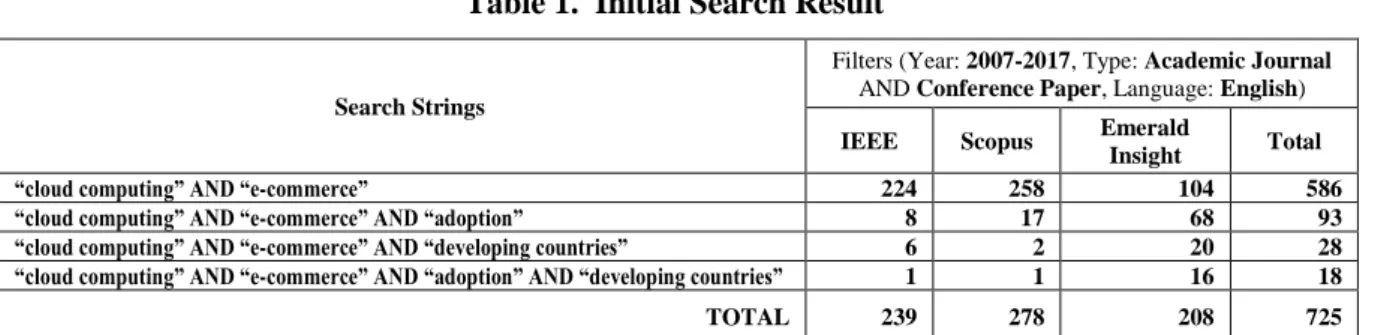
This process aims to select relevant articles related to cloud computing adoption for e-commerce in developing countries using keywords and search strings described in Step 1. The search was conducted using three academic databases, namely Scopus, IEEE Explorer and Emerald Insight. The search is restricted to journal and conference papers published between 2007 and 2017 in English language. The ten-year time frame is decided to ensure an adequate information of publication trend can be identified. The initial search result is shown in Table 1.
Table 1. Initial Search Result
Search Strings
Filters (Year: 2007-2017, Type: Academic Journal AND Conference Paper, Language: English)
IEEE Scopus Emerald
Insight Total
“cloud computing” AND “e-commerce” 224 258 104 586
“cloud computing” AND “e-commerce” AND “adoption” 8 17 68 93
“cloud computing” AND “e-commerce” AND “developing countries” 6 2 20 28
“cloud computing” AND “e-commerce” AND “adoption” AND “developing countries” 1 1 16 18
TOTAL 239 278 208 725
Step 2.2. Screening literatures for selection
Articles were selected based on the research objectives identified above. Articles were first screened by title and abstract, followed by conclusions, and finally by full text. The screening process was decided by the inclusion/exclusion criteria as following:
a) Inclusion criteria: Articles related to cloud computing adoption for e-commerce in developing countries that include adoption level, architecture framework proposed, benefits, challenges of cloud and e-commerce for developing countries are included.
b) Exclusion criteria: Articles that only concerned with cloud computing or e-commerce aspect without explaining either the adoption level, architecture, proposed framework, benefits and challenges were excluded.
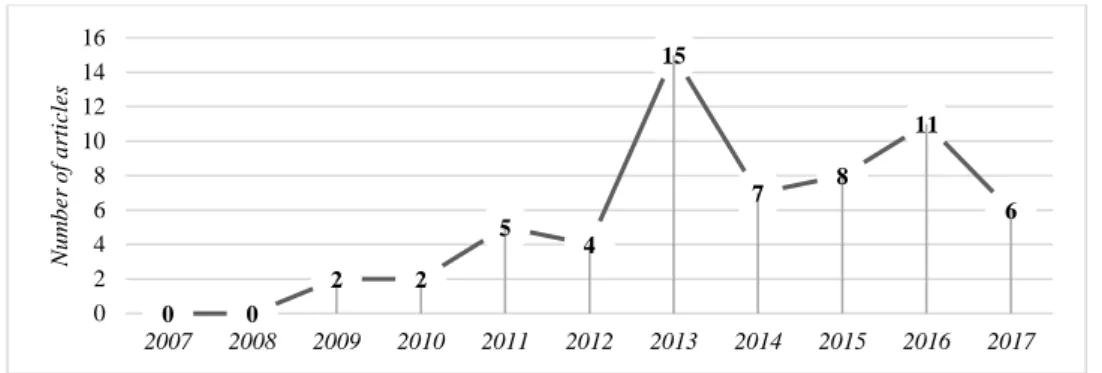
After four iterations, 60 articles (17 journal papers and 43 conference papers) were selected as shown in Figure 1 below.
Figure 1. Number of articles per year
Step 3. Analysis of selected articles for thematic analysis
The thematic analysis process follows the process suggested by Saldaña (2015), to develop themes that describe groups of closely related concepts. The concepts derived from terms used in the literature are organized into a matrix. Four iterations of assembling and reassembling were conducted with ten themes formulated. The ten themes identified are: business size/type, customer service improvement, security, economic, infrastructure, business process improvement, cloud computing framework, regulatory framework, user acceptance, and stakeholders’ support.
Results and Findings
The ten themes identified are as follow:
1. Business size and type – This theme focuses on how the business size and type affects cloud computing adoption strategy for e-commerce. Business size/type investigated include small medium enterprises (SME), larger enterprises, to-business (B2B) enterprises, business-to-customer (B2C) enterprises, customer-business-to-customer (C2C) enterprises, e-marketplace, and mobile e- commerce.
2. Customer service improvement – This theme focuses on how cloud computing improves the service for customer in e-commerce adoption. This theme includes concepts of data mining (in customer tracking), needs analysis, customer relationship management (CRM), and buying behavior analysis. This theme also includes research issues relating to service improvement such as customer privacy, customer trust, service level agreement (SLA) negotiation and customer perception.
3. Security – This theme focuses on security issues relating to integration of cloud computing adoption for e-commerce. This includes threats such as denial of service (DOS) attack, transaction risk, brute force attack, illegal transaction, fraudulent behavior, deceptive activity, information overload, and poor cyber security infrastructure. Mitigation strategy to overcome vulnerability such as security feature/model, application security, and transaction security such as authentication, cryptography, data security, data confidentiality, data privacy, and data credibility are also included in this theme.
0 0 2 2 5 4 15 7 8 11 6 0 2 4 6 8 10 12 14 16 2007 2008 2009 2010 2011 2012 2013 2014 2015 2016 2017 N u m b er o f a rt ic le s
4. Economic value – This theme focuses on how cloud computing promotes economic value of e-commerce entities when adopting cloud computing. This theme includes cost reduction, improved sales, cost predictability, national economic growth, improved purchasing opportunity, extension of business and geographical coverage. This theme also covers research issues relating to cost such as cost of implementation, shipping cost, and the impact of poverty on cloud computing adoption. 5. Infrastructure – This theme focuses on infrastructure needs of cloud computing adoption for
e-commerce. This theme highlights the benefits of cloud computing to e-commerce through reduced equipment needs, maintainability, and sustainability. The theme also includes challenges of cloud computing adoption in developing countries that take into account of limited internet access, connectivity problem, rural area infrastructure, and its impact of geography and telecommunication infrastructure.
6. Business process improvement – This theme focuses on how cloud computing can provide new opportunities to enable adoption and innovation of business processes. The theme focuses on business process innovation, improved services, increase product cycle, new business opportunity such as multi-platform interoperability, market expansion through online economy, data mining for business process improvement such as market segment, stock analysis, sales forecasting, increase competitiveness, lowering barrier for SMEs, and improved business integration.
7. Cloud computing framework – This theme focuses on cloud computing adoption on issues related to cloud computing architecture, platform, service model, deployment model and application framework.
8. Regulatory framework – This theme focuses on challenges of cloud computing adoption for e-commerce in terms of standards and regulations. This will include issues related to cloud computing adoption for e-commerce due to lack of standardization, lack of regulation, legal concern, and lack of effective service model.
9. User acceptance – This theme focuses on social factors that affect user acceptance and challenges of cloud computing adoption for e-commerce in developing countries. This includes socio-economic and socio-cultural constraints, lack of awareness, inconvenience in the form of usage due to education and literacy levels, and language difficulty.
10. Stakeholders’ support – This theme focuses on the role of stakeholders for effective cloud computing adoption for e-commerce, which include collaboration among stakeholders (cloud computing providers, e-commerce vendors, logistic suppliers, internet service providers, customers, and government), ecosystem and service establishment, application delivery chain and market participation. Issues included in this theme include implication of poor stakeholders support such as lack of government support, lack of logistic services from vendors, incompatible information system, competition among vendors, and lack of human resource.
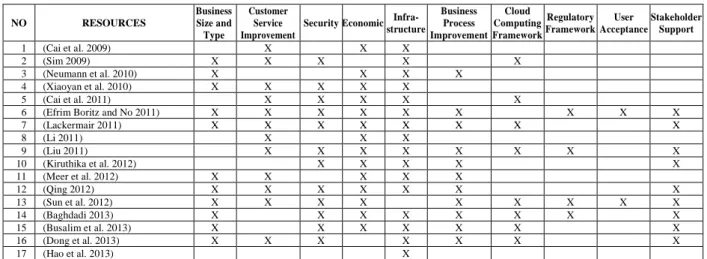
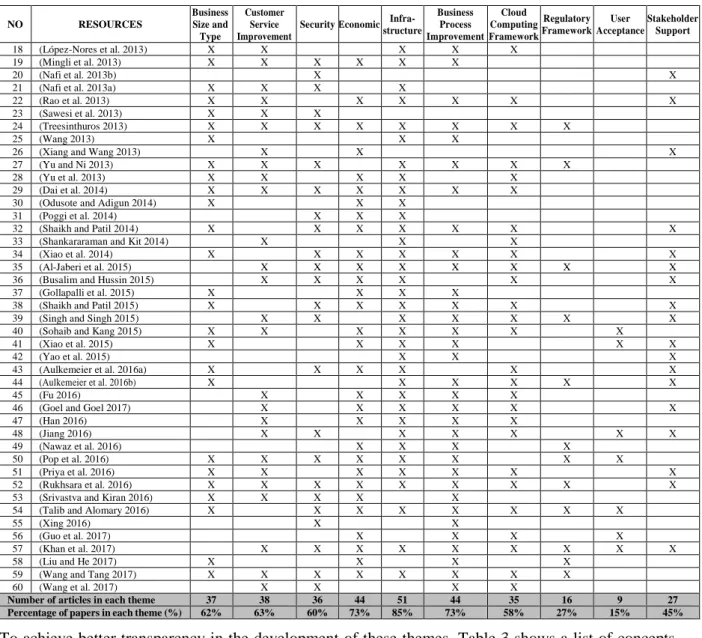
Table 2 shows the list of ten themes and the related articles.
Table 2. Matrix of Themes Categorization
NO RESOURCES Business Size and Type Customer Service Improvement
Security Economic Infra-structure Business Process Improvement Cloud Computing Framework Regulatory Framework User Acceptance Stakeholder Support 1 (Cai et al. 2009) X X X 2 (Sim 2009) X X X X X 3 (Neumann et al. 2010) X X X X 4 (Xiaoyan et al. 2010) X X X X X 5 (Cai et al. 2011) X X X X X
6 (Efrim Boritz and No 2011) X X X X X X X X X 7 (Lackermair 2011) X X X X X X X X 8 (Li 2011) X X X 9 (Liu 2011) X X X X X X X X 10 (Kiruthika et al. 2012) X X X X X 11 (Meer et al. 2012) X X X X X 12 (Qing 2012) X X X X X X X 13 (Sun et al. 2012) X X X X X X X X X 14 (Baghdadi 2013) X X X X X X X X 15 (Busalim et al. 2013) X X X X X X X 16 (Dong et al. 2013) X X X X X X X 17 (Hao et al. 2013) X
NO RESOURCES Business Size and Type Customer Service Improvement
Security Economic Infra-structure Business Process Improvement Cloud Computing Framework Regulatory Framework User Acceptance Stakeholder Support 18 (López-Nores et al. 2013) X X X X X 19 (Mingli et al. 2013) X X X X X X 20 (Nafi et al. 2013b) X X
21 (Nafi et al. 2013a) X X X X
22 (Rao et al. 2013) X X X X X X X 23 (Sawesi et al. 2013) X X X
24 (Treesinthuros 2013) X X X X X X X X
25 (Wang 2013) X X X
26 (Xiang and Wang 2013) X X X
27 (Yu and Ni 2013) X X X X X X X 28 (Yu et al. 2013) X X X X X
29 (Dai et al. 2014) X X X X X X X 30 (Odusote and Adigun 2014) X X X
31 (Poggi et al. 2014) X X X
32 (Shaikh and Patil 2014) X X X X X X X 33 (Shankararaman and Kit 2014) X X X
34 (Xiao et al. 2014) X X X X X X X 35 (Al-Jaberi et al. 2015) X X X X X X X X 36 (Busalim and Hussin 2015) X X X X X X 37 (Gollapalli et al. 2015) X X X X
38 (Shaikh and Patil 2015) X X X X X X X 39 (Singh and Singh 2015) X X X X X X X 40 (Sohaib and Kang 2015) X X X X X X X
41 (Xiao et al. 2015) X X X X X X
42 (Yao et al. 2015) X X X
43 (Aulkemeier et al. 2016a) X X X X X X 44 (Aulkemeier et al. 2016b) X X X X X X
45 (Fu 2016) X X X X X
46 (Goel and Goel 2017) X X X X X X 47 (Han 2016) X X X X X 48 (Jiang 2016) X X X X X X X 49 (Nawaz et al. 2016) X X X X 50 (Pop et al. 2016) X X X X X X X X 51 (Priya et al. 2016) X X X X X X X 52 (Rukhsara et al. 2016) X X X X X X X X X 53 (Srivastva and Kiran 2016) X X X X X
54 (Talib and Alomary 2016) X X X X X X X X
55 (Xing 2016) X X
56 (Guo et al. 2017) X X X X
57 (Khan et al. 2017) X X X X X X X X X 58 (Liu and He 2017) X X X X
59 (Wang and Tang 2017) X X X X X X X X 60 (Wang et al. 2017) X X X X
Number of articles in each theme 37 38 36 44 51 44 35 16 9 27 Percentage of papers in each theme (%) 62% 63% 60% 73% 85% 73% 58% 27% 15% 45%
To achieve better transparency in the development of these themes, Table 3 shows a list of concepts from each theme with the supporting references. The themes are ranked from the most popular to the least popular. The numbers in the references column are numbers in the first column in Table 2.
Table 3. List of Concepts from Themes
Themes Concepts References
Infrastructure
Reduce equipment needs [2] [3] [7] [8] [11] [22] [24] [27] [32] [36] [46] [49] [51] [54] Rural area infrastructure [30] [48] [52] [56] [57]
Maintainability [10] [32] [36] [38] Connectivity [7] [13] [35] [54] Limited internet access [4] [24] [46] Sustainability [7] [55]
Economic Value
Cost reduction [11] [12] [15] [26] [39] [35] [38] [41] [49] [57] Promotion of national economic growth [6] [29] [37] [56]
Cost of implementation [12] [52] Increase sales [34] Cost predictability [7] Increase purchasing opportunity [38] Improve business and geographic coverage [56] Shipping cost [57] Impact of poverty [57] Business Process
Improvement
Faster service [12] [14] [17] [22] [28] [46] [47] [52] [55] [59] Market expansion through online economy [3] [9] [18] [19] [25] [37] [53] [54] [58] [49] Improve business integration with ICT [39] [40] [43] [44] [48] [52]
Business process innovation [9] [27] [46] [49] [54] Market segment/stock analysis [19] [26] [31] [53] [60] Multi-platform interoperability [1] [10] [44] [48] Lowering barrier for SME [3] [18] [27] [32] Sales forecasting [43] [44] [45] [47]
Themes Concepts References
Increase product cycle [27] [32] [59] Increase competitiveness [6] [56] Customer Service
Improvement
Customer tracking [1] [5] [6] [9] [11] [18] [22] [33] [39] [45] [53] SLA negotiation [2] [7] [15] [36] [51]
Customer need analysis [28] [45] [47] [53] Trust 6] [20] [35] [ [59] Customer trust [6] [21] [60] CRM [4] [9] 24] Buying behavior analysis [15] [54] Customer privacy [23] [60] Customer perception [18] [48] Technology mistrust [21]
Business Size and Type SME [2] [3] [13] [22] [27] [30] [38] [43] [44] [49] [52] [55] [58] B2C [6] [7] [12] [15] [16] [22] [23] [24] [25] [29] [36] [37] B2B [6] [14] [16] [19] [22] [37]
Larger enterprises [13] [18] [28] [34] [60]
C2C [22] [37]
Mobile e-commerce [4] [55]
Security Data security [4] [7] [9] [24] [21] [35] [52] [39] [59] Data confidentiality [15] [24] [38] [39] [48]
Security feature/model [8] [12] [14] [22] [39] Denial of service (DOS) attack [20] [29] [39] [45] Data privacy [6] [7] [35] Information overload [16] [31] Data credibility [5] [24] Transaction risk [16] Brute force attack [23] Illegal transaction [13] Fraudulent behavior [13] Deceptive activity [13] Poor cyber security infrastructure [58] Application security [53] Authentication [23] Cryptography [53] Cloud Computing
Framework
Security related framework and architecture [6] [13] [20] [21] [29] [50] [52] [60] Mobile technology framework and architecture [4] [33] [35] [53] [55] [57] [50] Internet of Things and Cloud Integration framework [39] [40] [42] [53] [56] SLA related framework and architecture [2] [10] [15] [36] Integrated service model [1] [46] Sales forecasting framework [43] Pluggable service model [44] Multi-tenant SaaS [32] Stakeholders’ Support Stakeholder’s collaboration [1] [6] [49] [53]
Ecosystem and service establishment [43] [44] Lack of logistic from vendors [26] [57] Lack of government support [13] [57] Competition among vendors [7] [35] Application delivery chain [15] Market participation [13] Incompatible information system [13] Lack of human resource [52]
Regulatory Framework Lack of regulation [9] [13] [24] [39] [50] [54] Lack of standardization [13] [14] [44] [49] Lack of effective service model [58]
User Acceptance Socio-economic benefit [6] [57] [58] Low literacy [4] [24] [57] Socio-cultural constrains [57] [58] Inconvenience in the form of usage [20] [24] Lack of awareness [57] Lack of education [57] Language difficulty [57]
Discussion
The themes of economic value, business process improvement, and customer service improvement can be viewed as benefits of cloud computing adoption. On the other hand, the themes of infrastructure, security, regulatory framework, user acceptance and stakeholders support are challenges of cloud computing adoption, particularly for ecommerce in developing countries. In addition, business size/types and cloud computing framework are themes that have been widely researched relating to issues of cloud computing adoption in e-commerce.
As presented in the Introduction section, the two research questions are: (1) What are the contributing factors affecting the cloud computing adoption of e-commerce in developing countries? and (2) What are the implications for Indonesia? To answer the first research question, this discussion section will discuss the benefits and challenges category. Then the discussion section will address the second research question, that is, its implication for Indonesia.
Articles in the economic value theme reported on economic benefits that can be derived when cloud computing is adopted for ecommerce. Economic value can be generated through cost reduction from the essential characters of cloud computing technology such as on-demand service, rapid elasticity, resource pooling, broad access network and measured service (Goel and Goel 2017; Hao et al. 2013; Odusote and Adigun 2014; Talib and Alomary 2016). Guo et al. (2017) argue that e-commerce can promote economic growth for developing countries because it can extend the business beyond geographical coverage of local areas, for examples products such as local produce in agriculture (Jiang 2016) and organic product (Neumann et al. 2010).
Cloud computing adoption can deliver faster and improved business processes to organizations (Shaikh and Patil 2014; Wang and Tang 2017) and at the same time minimizing service maintenance cost (Kiruthika et al. 2012). Due to its elasticity characteristic, cloud computing provides multi-platform interoperability for different e-ecommerce entities (Cai et al. 2009; Jiang 2016; Kiruthika et al. 2012). For developing countries, this capability benefits SMEs as it enables ease of integration that leads to market expansion and lowering of barrier for SMEs to enter e-commerce (Liu and He 2017; Yu and Ni 2013). Similarly, cloud computing adoption in e-commerce enables organizations, particularly SMEs in developing countries, to have the capacity to improve customer service. Previously SMEs may not have the capability due to technological constraints, lack of expertise and cost constraints to invest in technological solution such as using data mining to analyze customers’ data and purchasing behavior (Jiang 2016; Rao et al. 2013).
Nevertheless, issues such as customer privacy (Sawesi et al. 2013; Wang and Jiang 2017) and customer trust (Efrim Boritz and No 2011; Nafi et al. 2013b; Wang and Jiang 2017) need to be considered. It is proposed that service level agreement between organizations and its service providers should be negotiated to ensure security, backup and recovery and data storage (Busalim and Hussin 2015; Priya et al. 2016; Sim 2009).
Among the challenges face in cloud computing adoption in e-commerce, infrastructure theme has been widely reported in the literature. This theme mainly involves articles that investigate the role of infrastructure in the adoption of cloud computing in e-commerce. Nevertheless this theme also reported the benefits that can arise as a result of the infrastructure of cloud computing which include reduction of equipment requirement (Goel and Goel 2017), facilitation of infrastructure virtualization for the e-commerce entities (Al-Jaberi et al. 2015), and reduction of infrastructure operation costs (Lackermair 2011). The ability to use cloud computing for e-commerce is particularly important for SMEs because SMEs generally faced with resources limitation barrier (Yu and Ni 2013) such as technology expertise, cost investment and maintenance. In the case of developing countries, infrastructure in the rural areas can be a challenging factor to influence adoption of e-commerce. Examples of challenges reported include lack of telecommunication infrastructure that resulted in limited internet access and low connectivity (Al-Jaberi et al. 2015; Khan et al. 2017; Rukhsara et al. 2016; Sun et al. 2012).
The security theme describes challenges of cloud computing adoption for e-commerce. Issues reported include data security (Lackermair 2011; Treesinthuros 2013), data confidentiality (Busalim et al. 2013; Singh and Singh 2015), cyber security attacks (Fu 2016; Sawesi et al. 2013; Singh and Singh 2015) and transaction risks caused by fraudulent behavior and deceptive activity which potentially harm the e-commerce entities and its customers in developing countries (Dong et al. 2013; Sun et al. 2012). Solutions proposed to overcome security threats include data privacy management (Al-Jaberi et al. 2015; Efrim Boritz and No 2011), application security and cryptography (Rukhsara et al. 2016), authentication (Sawesi et al. 2013) and data credibility (Treesinthuros 2013).
In the stakeholder support theme, it highlights the importance of collaboration between stakeholders (Cai et al. 2009; Efrim Boritz and No 2011). The stakeholders may include cloud computing providers, e-commerce vendors, logistic suppliers, internet service providers, customers, and government (Cai et
al. 2009; Dong et al. 2013; Sun et al. 2012). Service and ecosystem establishment in stakeholders’ collaboration is crucial to achieve successful cloud computing adoption in e-commerce (Aulkemeier et al. 2016a; Aulkemeier et al. 2016b).
The regulatory framework theme emphasizes standards and regulations related to cloud computing adoption for e-commerce. Sun et al. (2012) propose to standardize transactions rule within a cloud computing environment by enforcing what they described as market player rules, market information rules and market transaction rules. As cloud computing is a virtualization of IT services , the regulation of services such as maintenance, data storage, information processing, security and service quality should be considered (Treesinthuros 2013). Furthermore legal concern is also necessary in place in order to clearly define service ownership rules between cloud providers and service users (Singh and Singh 2015).
The user acceptance theme discusses socio-economic barrier for developing countries in adopting the cloud computing for e-commerce. The barriers may include poverty, low purchasing power, lack of education (Khan et al. 2017) and low literacy (Treesinthuros 2013; Xiaoyan et al. 2010). Constraints due to infrastructure such as slow internet speed and lack of internet infrastructure in the rural area can also impact user acceptance as these constraints may result in the inconvenience from the users’ perspective (Khan et al. 2017; Nafi et al. 2013a). The lack of computer literacy and lack of consumers’ awareness in developing countries, particularly in the rural areas, may also impact on cloud computing adoption in e-commerce (Khan et al. 2017).
In the business size and type theme, the literatures recommend small and B2C enterprises to adopt software as a service (SaaS) architecture, as it delivers more affordable cloud computing service model and fit to business size and purpose (Aulkemeier et al. 2016a; Khan et al. 2017; Nawaz et al. 2016; Shaikh and Patil 2015; Yu and Ni 2013). This is because cloud computing adoption provides reduction in capital cost, flexibility and efficiency (Nawaz et al. 2016). For larger and B2B enterprises, platform as a service (PaaS) or infrastructure as a service (IaaS) are more appropriate (Talib and Alomary 2016; Xiao et al. 2014; Xiao et al. 2015).
In the cloud computing framework theme, issues on architecture, platform and application have been extensively researched. Furthermore, security related framework that aims to reduce critical security issues in developing countries such as privacy framework (Efrim Boritz and No 2011) and trust model framework (Nafi et al. 2013a; Pop et al. 2016) have been reported too. Emerging issues related to mobile technology related framework has also been reported (Xiaoyan et al. 2010).
Implications for Indonesia
Based on the findings, themes that have implication for Indonesia include infrastructure, security, stakeholders’ support, regulatory framework, user acceptance and business size/types themes. In particular the infrastructure theme is predominantly relevant as lack of internet connection in rural area can inhibit cloud computing adoption in Indonesia (Mangula et al. 2012; Mangula et al. 2014).
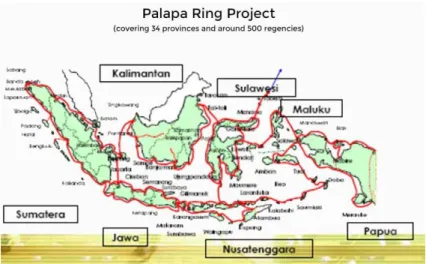
At the governmental level, Indonesian government has developed e-commerce digital economy plan in the presidential decree of E-Commerce Road Map 2017-2019 (President of Indonesia 2017). This decree consists of policy of funding, tax, consumer protection, education and human resource support, communication infrastructure, logistic, cyber security, and the formation of operating committee. It can be seen that the E-commerce Road Map can provide solutions to the five challenging themes identified in this research. These five themes are infrastructure, security, stakeholders’ support, regulatory framework, and user acceptance. The Indonesian government recognized the needs to provide and support communication infrastructure development to the country (President of Indonesia 2017). In this aspect, the Indonesian government has developed the national telecommunication infrastructure project, called Palapa Ring, which intended to reduce digital divide and lack of infrastructure in rural area, especially in the eastern part of the country. For instance, four hundred cities/regencies have already connected by fiber optic as shown in Figure 2 (Iskandar 2007).
Figure 2. Indonesian National Palapa Ring Project Development (Iskandar 2007)
However, there still exists a significant digital divide between rural and urban areas, such as between Jakarta and Papua. Figure 3 shows the Indonesia digital divide per province compared to Jakarta, the capital region with the highest digital penetration in the country. It can be seen that the Papua province has the highest digital divide index, whereas the Yogyakarta province has the lowest index. The high index digital divide in Papua is due to low ICT infrastructure, limited internet access, and low literacy (Ariyanti 2016).
Figure 3. Indonesia Digital Divide per Province (Ariyanti 2016)
As a result of digital divide in Indonesia, it has implication affecting internet access and low computing literacy levels in the rural areas. For example, limited internet access and low computing literacy and limited technological knowledge on e-commerce among SMEs in the rural area of Indonesia can hinder technological uptake of cloud computing in e-commerce (Mangula et al. 2014). This issue particularly affecting the small number of online shopping penetration rate in rural area.
A survey conducted by E-commerce Association of Indonesia (idEA) and Marketing Research Indonesia (MARS) in 2016 reported that online shopping participation rate in rural area is only 11.1%, compare to 39.0% in the urban areas. The rural population in Indonesia constitutes to about 55.9% of total population, however the online shopping participation rate is relatively low compare to the urban area (E-commerce Association of Indonesia 2016). In this regard, issues that include low literacy, lack of education and language difficulty in the user acceptance theme can influence e-commerce adoption
0,000 0,010 0,020 0,030 0,040 0,050 0,060 0,070 0,080 0,090 P ap u a Ea st N u sa Te n g g ar a C en tr al S u la w esi W es t S u la w esi W es t P ap u a A ce h N o rt h M al u k u S o u th -Ea st S u la w esi R ia u La mp u n g C en tr al Ja v a W es t N u sa Te n g g ar a W es t K al iman ta n C en tr al K al ima n ta n B an g k a B el it u n g Ea st Jav a B en g k u lu S o u th S u ma te ra Jam b i W es t S u mat er a N o rt h S u ma te ra M al u k u W es t Ja v a S o u th K al iman ta n Ea st K al iman ta n G o ro n ta lo S o u th S u la w esi A rc h ip el ag o o f R ia u N o rt h S u la w esi B an te n B al i Y o g y ak ar ta S p ec ia l R eg io n Jak ar ta C ap it al R eg io n DI g ita l DI v id e In d ex
Digital Divide Index for each Province in Indonesia compared to Jakarta
in Indonesia (Khan et al. 2017; Treesinthuros 2013). The Indonesian government provides digital literacy training for housewives and people with disabilities in rural areas (ICT Research and HRD Agency 2017; Ministry of CIT of Indonesia 2017). It is worth noting that issue such as long delivery time may influence user acceptance. Traditionally, Indonesian customers demand quick, easy to track and safe delivery in online shopping. Thus, non-IT issue such as poor logistic distribution network can influence user acceptance.
Research from E-commerce Association of Indonesia (2016) also show that trust and security concerns in e-commerce transaction can influence e-commerce participation in Indonesia. In this regard, the security theme identified in this research can contribute to understanding and resolving security concerns for cloud computing adoption in e-commerce with its ability to provide the solution of security threats (Al-Jaberi et al. 2015; Efrim Boritz and No 2011). Moreover, the presidential decree of E-Commerce Road Map 2017-2019 (President of Indonesia 2017) is an evidence that shows the Indonesian government takes the security threats seriously. The decree places emphasis on national regulation such as revised law of information and electronic transaction (President of Indonesia 2016) which covers data privacy and data confidentiality protection to overcome the trust issue in the security theme (Busalim et al. 2013; Lackermair 2011). In addition, government regulation on electronic system and transaction (President of Indonesia 2012) has been in place to ensure security concerns on electronic transactions are addressed.
Other efforts pursued at the governmental level include the program of “National Movement of 1000 New Digital Start-up” (Kibar 2017). This program aims to raise one thousand new startups using digital technology including e-commerce to actualize Indonesian digital economy in 2020. This is an example of stakeholders’ support and collaboration between government and e-commerce vendors. However, it is observed that the collaboration effort has not included extensive support from Indonesian cloud computing providers, in particular providers that cater for SMEs in rural area (Mangula et al. 2012). It is suggested that human resource training and financial incentives be provided for cloud computing providers and SME e-commerce entities.
Mangula et al. (2012) also reported in their research that the majority of cloud computing providers in Indonesia focus their business on medium to larger enterprises. Therefore, the government of Indonesia has introduced the device, network and application concepts in promoting the support of cloud computing adoption for SMEs (Ministry of CIT of Indonesia 2015). Regarding this concept, the government standardizes the equipment, provide infrastructure facilities, and force the providers to support application development and adoption. However, there is no quantifiable evidence this effort from government is successful.
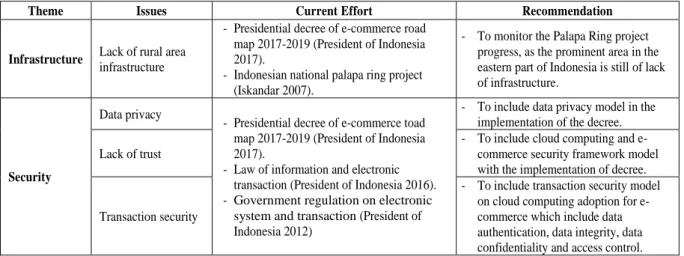
The summary of current governmental support and recommendations on the themes identified in this research is shown in Table 4 below.
Table 4. Current Effort and Recommendation for Cloud Computing Adoption for E-commerce Implication for Indonesia
Theme Issues Current Effort Recommendation
Infrastructure Lack of rural area infrastructure
- Presidential decree of e-commerce road
map 2017-2019 (President of Indonesia 2017).
- Indonesian national palapa ring project
(Iskandar 2007).
- To monitor the Palapa Ring project
progress, as the prominent area in the eastern part of Indonesia is still of lack of infrastructure.
Security
Data privacy
- Presidential decree of e-commerce toad
map 2017-2019 (President of Indonesia 2017).
- Law of information and electronic
transaction (President of Indonesia 2016).
- Government regulation on electronic
system and transaction (President of Indonesia 2012)
- To include data privacy model in the
implementation of the decree. Lack of trust
- To include cloud computing and
e-commerce security framework model with the implementation of decree.
Transaction security
- To include transaction security model
on cloud computing adoption for e-commerce which include data authentication, data integrity, data confidentiality and access control.
Theme Issues Current Effort Recommendation
Fraudulent behaviour
- To implement law of information and
electronic transaction by providing trusted e-commerce policy and better law enforcement.
Deceptive activity
- To implement law of information and
electronic transaction by providing trusted e-commerce policy and better law enforcement.
Stakeholders’ support
SME low adoption
- Presidential decree of e-commerce road
map 2017-2019 (President of Indonesia 2017).
- National movement of 1000 new digital
start-up (Kibar 2017).
- To follow up the national movement
with better monitoring and evaluation program in order to achieve success of new start-up business establishment. Lack of cloud
computing providers involvement
- Government support on device, network
and application (DNA) of cloud computing (Ministry of CIT of Indonesia 2015).
- Currently no quantifiable evidence is
available, efforts should be in place to measure the success in this area.
- To encourage collaboration with cloud
computing providers.
Lack of logistic services
- Presidential decree of e-commerce road
map 2017-2019 (President of Indonesia 2017).
- To provide better collaboration
between suppliers and logistic service providers to ensure improved delivery service support.
- To empower the national logistic
company with incentives to improve logistic service delivery.
Regulatory
framework Lack of regulation
- Presidential decree of e-commerce road
map 2017-2019 (President of Indonesia 2017),
- Law of information and electronic
transaction (President of Indonesia 2016).
- To pursue regulatory framework by
providing effective stakeholders’ support mechanism.
User acceptance
Low literacy - Training for digital literacy improvement
for housewives and people with disabilities in rural areas (ICT Research and HRD Agency 2017; Ministry of CIT of Indonesia 2017).
- To provide digital literacy training
program
- To provide opportunity for housewives
or disabled people to build start-up and small e-commerce.
Lack of education Language difficulty
Conclusion
The purpose of this research is to study benefits and challenges of cloud computing adoption in e-commerce and to use thematic analysis to identify themes reported in the literature in this research area, with a particular reference to issues related to developing countries. Ten themes (business size and type, customer service improvement, security, economic value, infrastructure, business process improvement, cloud computing framework, regulatory framework, user acceptance, and stakeholders’ support) have been identified from literature search that covers the period 2007 to 2017 from three databases: Scopus, IEEE Explorer and Emerald Insight. Implication of findings to Indonesia has also been discussed. Of the ten themes, the themes that have the most implications to Indonesia include infrastructure, security, stakeholders’ support, regulatory framework, and user acceptance.
For future research direction, stakeholders’ support, regulatory framework and user acceptance themes will be explored to gain in-depth knowledge of these themes in affecting cloud computing adoption in Indonesia. The next phase of the research is to conduct focus group investigation to investigate stakeholders’ support for cloud computing adoption in e-commerce for small and medium enterprises in Indonesia.
Acknowledgement
The first author acknowledges the Indonesia Endowment Fund for Education (Lembaga Pengelola Dana Pendidikan-LPDP), Ministry of Finance, The Republic of Indonesia for the scholarship funding support.
References
Al-Jaberi, M., Mohamed, N., and Al-Jaroodi, J. 2015. "E-Commerce Cloud: Opportunities and Challenges," IEOM 2015 - 5th
International Conference on Industrial Engineering and Operations Management, Proceeding.
Ariyanti, S. 2016. "Studi Pengukuran Digital Divide Di Indonesia," Buletin Pos dan Telekomunikasi (11:4), pp. 281-292.
Aulkemeier, F., Daukuls, R., Iacob, M. E., Boter, J., Van Hillegersberg, J., and De Leeuw, S. 2016a. "Sales Forecasting as a
Service: A Cloud Based Pluggable E-Commerce Data Analytics Service," ICEIS 2016 - Proceedings of the 18th
International Conference on Enterprise Information Systems, pp. 345-352.
Aulkemeier, F., Paramartha, M. A., Iacob, M. E., and van Hillegersberg, J. 2016b. "A Pluggable Service Platform Architecture
for E-Commerce," Information Systems and e-Business Management (14:3), pp. 469-489.
Baghdadi, Y. 2013. "From E-Commerce to Social Commerce: A Framework to Guide Enabling Cloud Computing," Journal
of Theoretical and Applied Electronic Commerce Research (8:3), pp. 12-38.
Busalim, A. H., and Hussin, A. R. C. 2015. "An Integrated Framework for E-Commerce Cloud Service Level Agreement," Pacific Asia Conference on Information Systems, PACIS 2015 - Proceedings.
Busalim, A. H., Hussin, A. R. C., and Ibrahim, A. 2013. "Service Level Agreement Framework for E-Commerce Cloud
End-User Perspective," International Conference on Research and Innovation in Information Systems, ICRIIS, pp. 576-581.
Cai, H., Li, Z., and Tian, J. 2011. "A New Trust Evaluation Model Based on Cloud Theory in E-Commerce Environment," Proceedings - 2011 International Symposium on Intelligence Information Processing and Trusted Computing, IPTC 2011, pp. 139-142.
Cai, H., Zhang, K., Wang, M. M., Li, J. L., Sun, L., and Mao, X. S. 2009. "Customer Centric Cloud Service Model and a Case
Study on Commerce as a Service," CLOUD 2009 - 2009 IEEE International Conference on Cloud Computing, pp. 57-64.
Dai, W., Zhang, X., and Hu, P. 2014. "A Study on Security Technique of Cloud Data Processing in Electronic Commerce," International Journal of Security and its Applications (8:2), pp. 283-290.
Dong, F., Luo, J., Zhu, X., Wang, Y., and Shen, J. 2013. "A Personalized Hybrid Recommendation System Oriented to
E-Commerce Mass Data in the Cloud," Proceedings - 2013 IEEE International Conference on Systems, Man, and
Cybernetics, SMC 2013, pp. 1020-1025.
E-commerce Association of Indonesia. 2016. "Studi E-Commerce Indonesia 2016." Retrieved 28 February, 2018, from https://www.slideshare.net/arifadyl1/studi-ecommerce-indonesia-2016-71365955
Efrim Boritz, J., and No, W. G. 2011. "E-Commerce and Privacy: Exploring What We Know and Opportunities for Future
Discovery," Journal of Information Systems (25:2), pp. 11-45.
Fu, Z. 2016. "Research on the Prediction of the E-Commerce Profit Based on the Improved Parallel Pso-Lssvm Algorithm in
Cloud Computing Environment," International Journal of Grid and Distributed Computing (9:6), pp. 369-380.
Goel, K., and Goel, M. 2017. "Cloud Computing Based E-Commerce Model," 2016 IEEE International Conference on Recent
Trends in Electronics, Information and Communication Technology, RTEICT 2016 - Proceedings, pp. 27-30.
Gollapalli, M., Al-Blushi, M., Al-Meer, Z., Al-Mahmoud, R., Naji, B., and Al-Zahrani, A. 2015. "The Saudi Recycling
Ecommerce Framework: Creating, Collaborating & Promoting Recycling Online Business in Saudi Arabia," 2015
International Conference on Cloud Computing, ICCC 2015.
Guo, H., and Gao, S. 2015. "Exploring Driving Factors for Consumers' Acceptance of E-Commerce in Chinese Rural Areas," Proceedings of the International Conference on Electronic Business (ICEB), pp. 258-261.
Guo, P., Han, M., Cao, N., and Shen, Y. 2017. "The Research on Innovative Application of E-Commerce in Iot Era," 2017
IEEE International Conference on Computational Science and Engineering (CSE) and IEEE International Conference on Embedded and Ubiquitous Computing (EUC), pp. 410-413.
Han, G. 2016. "Research on the E-Commerce Sales Forecast Based on the Improved Parallel Chaos Algorithm in the Cloud
Computing," International Journal of Grid and Distributed Computing (9:6), pp. 359-368.
Hao, W., Walden, J., and Trenkamp, C. 2013. "Accelerating E-Commerce Sites in the Cloud," 2013 IEEE 10th Consumer
Communications and Networking Conference, CCNC 2013, pp. 605-608.
ICT Research and HRD Agency. 2017. "Kominfo Melaksanakan Bimtek Literasi Tik Bagi Ibu Rumah Tangga Di Kabupaten Barru." Retrieved 28 February, 2018, from https://balitbangsdm.kominfo.go.id/berita-kominfo-melaksanakan-bimtek-literasi-tik-bagi-ibu-rumah-tangga-di-kabupaten-19-285
Iskandar, B. Y. 2007. "Indonesia’s Initiative to Deploy Ngn," 7th Global Symposium Regulator 2007, The Road to
Next-Generation Networks (NGN): Can Regulators Promote Investment and Open Access.
Jiang, Y. 2016. "Research on E-Commerce Consumer Factors of Agricultural Products in Agritourism Based on Data Mining
Technology," International Journal of Multimedia and Ubiquitous Engineering (11:11), pp. 297-308.
Khan, M., Xu, X., Dou, W., and Yu, S. 2017. "Osaas: Online Shopping as a Service to Escalate E-Commerce in Developing
Countries," Proceedings - 18th IEEE International Conference on High Performance Computing and Communications,
14th IEEE International Conference on Smart City and 2nd IEEE International Conference on Data Science and Systems, HPCC/SmartCity/DSS 2016, pp. 1402-1409.
Kibar. 2017. "Gerakan Nasional 1000 Startup Digital." Retrieved 25 February 2018, 2018, from https://1000startupdigital.id/i/ Kiruthika, J., Horgan, G., and Khaddaj, S. 2012. "Quality Measurement for Cloud Based E-Commerce Applications," Proceedings - 11th International Symposium on Distributed Computing and Applications to Business, Engineering and Science, DCABES 2012, pp. 209-213.
Lackermair, G. 2011. "Hybrid Cloud Architectures for the Online Commerce," Procedia Computer Science (3), pp. 550-555.
Li, S. 2011. "Research About E-Commerce Customer Value Classification Based on Affiliations Cloud Clustering Algorithm," 2011 International Conference on Management and Service Science, pp. 1-4.
Liu, P., and He, W. 2017. "Research on the E-Commerce Operation Performance of Smes Based on Cloud Computing Service
Liu, T. 2011. "E-Commerce Application Model Based on Cloud Computing," Proceedings - 2011 International Conference of Information Technology, Computer Engineering and Management Sciences, ICM 2011, pp. 147-150.
López-Nores, M., Blanco-Fernández, Y., and Pazos-Arias, J. J. 2013. "Cloud-Based Personalization of New Advertising and
E-Commerce Models for Video Consumption," Computer Journal (56:5), pp. 573-592.
Machfud, A. K., and Kartiwi, M. 2013. "E-Commerce Adoption by Indonesian Small Agribusiness: Reconsidering the
Innovation-Decision Process Model," 2013 5th International Conference on Information and Communication Technology
for the Muslim World, ICT4M 2013.
Mangula, I. S., van de Weerd, I., and Brinkkemper, S. 2012. "Adoption of the Cloud Business Model in Indonesia: Triggers,
Benefits, and Challenges," Proceedings of the 14th International Conference on Information Integration and Web-based
Applications & Services: ACM, pp. 54-63.
Mangula, I. S., van de Weerd, I., and Brinkkemper, S. 2014. "The Adoption of Software-as-Service: An Indonesian Case
Study," PACIS, p. 385.
Meer, D. V., Dutta, K., and Datta, A. 2012. "A Cost-Based Database Request Distribution Technique for Online E-Commerce
Applications," MIS Quarterly: Management Information Systems (36:2), pp. 479-507.
Mingli, W., Hui, Z., and Yebai, L. 2013. "Data Mining Pattern Valuation in Apparel Industry E-Commerce Cloud," 2013 IEEE
4th International Conference on Software Engineering and Service Science, pp. 689-692.
Ministry of CIT of Indonesia. 2015. "Penerapan Komputasi Awan Sangat Relevan Dengan Kondisi Indonesia." Retrieved 28 February, 2018, from https://kominfo.go.id/index.php/content/detail/5832/Cloud-Computing-IT-Simplified---Simple-IT--Simple-Business--Simple-Life-/0/berita_satker
Ministry of CIT of Indonesia. 2017. "Tingkatkan Literasi Dan Pemanfaatan Tik Penyandang Disabilitas." Retrieved 28
February, 2018, from
https://www.kominfo.go.id/content/detail/7022/tingkatkan-literasi-dan-pemanfaatan-tik-penyandang-disabilitas/0/berita_satker
Nafi, K. W., Kar, T. S., Hossain, M. A., and Hashem, M. M. A. 2013a. "A Fuzzy Logic Based Certain Trust Model for
E-Commerce," 2013 International Conference on Informatics, Electronics and Vision, ICIEV 2013.
Nafi, K. W., Kar, T. S., Hossain, M. A., and Hashem, M. M. A. 2013b. "A New Trusted and Secured E-Commerce Architeture
for Cloud Computing," 2013 International Conference on Informatics, Electronics and Vision, ICIEV 2013.
Nawaz, S., Malik, A. W., Shafi, A., and Khan, S. U. 2016. "Cloud and E-Commerce Adoption," 2015 12th International
Conference on High-Capacity Optical Networks and Enabling/Emerging Technologies, HONET-ICT 2015.
Neumann, R., Dumke, R., and Schmietendorf, A. 2010. "Organic Product Catalogs: Towards an Architecture for Cloud-Based
Micro Enterprise E-Commerce," 2010 IEEE 3rd International Conference on Cloud Computing, pp. 530-531.
Odusote, B. O., and Adigun, M. O. 2014. "Technologically Enabling Resource-Constrained Enterprises in Developing Nations
through the Implementation of E-Commerce on-Demand Service Portals for a Grid Utility Computing Platform," 2014
IEEE 6th International Conference on Adaptive Science & Technology (ICAST), pp. 1-7.
Poggi, N., Carrera, D., Gavaldà, R., Ayguadé, E., and Torres, J. 2014. "A Methodology for the Evaluation of High Response
Time on E-Commerce Users and Sales," Information Systems Frontiers (16:5), pp. 867-885.
Pop, F., Dobre, C., Mocanu, B., Citoteanu, O., and Xhafa, F. 2016. "Trust Models for Efficient Communication in Mobile
Cloud Computing and Their Applications to E-Commerce," Enterprise Information Systems (10:9), pp. 982-1000.
President of Indonesia. 2012. "Peraturan Pemerintah Republik Indonesia Nomor 82 Tahun 2012 Tentang Penyelenggaraan Sistem Dan Transaksi Elektronik," President of Indonesia (ed.).
President of Indonesia. 2016. "Undang Republik Indonesia Nomor 19 Tahun 2016 Tentang Perubahan Atas Undang-Undang Nomor 11 Tahun 2016 Tentang Informasi Dan Transaksi Elektronik," President of Indonesia (ed.).
President of Indonesia. 2017. "Peraturan Presiden Republik Indonesia Nomor 74 Tahun 2017 Tentang Peta Jalan Sistem Perdagangan Nasional Berbasis Elektronik (Road Map E-Commerce) Tahun 2017-2019," President of Indonesia (ed.). Indonesia.
Priya, V., Subha, S., and Balamurugan, B. 2016. "Analysis of Performance Measures to Handle Medical E-Commerce
Shopping Cart Abandonment in Cloud," Informatics in Medicine Unlocked (8), pp. 32-41.
Qing, H. L. 2012. "Research on the Model and Application of E-Commerce Based on Cloud Computing," Proceedings - 2012
International Conference on Computer Science and Service System, CSSS 2012, pp. 142-146.
Rao, T. K. R. K., Khan, S. A., Begum, Z., and Divakar, C. 2013. "Mining the E-Commerce Cloud: A Survey on Emerging
Relationship between Web Mining, E-Commerce and Cloud Computing," 2013 IEEE International Conference on
Computational Intelligence and Computing Research, IEEE ICCIC 2013.
Rukhsara, L., Aklam, F., Nawer, T., Chauhan, N. S., and Islam, M. N. 2016. "A Conceptual Cloud-Based Model for
Developing E-Commerce Applications in Context of Bangladesh," 2016 5th International Conference on Informatics,
Electronics and Vision, ICIEV 2016, pp. 117-121.
Saldaña, J. 2015. The Coding Manual for Qualitative Researchers. Sage.
Sawesi, K. G. A., Saudi, M. M., and Jali, M. Z. 2013. "Designing a New E-Commerce Authentication Framework for a
Cloud-Based Environment," Proceedings - 2013 IEEE 4th Control and System Graduate Research Colloquium, ICSGRC 2013,
pp. 53-58.
Shaikh, F., and Patil, D. 2014. "Multi-Tenant E-Commerce Based on Saas Model to Minimize It Cost," 2014 International
Conference on Advances in Engineering and Technology Research, ICAETR 2014.
Shaikh, F., and Patil, D. 2015. "Saas Based Multi-Tenant E-Commerce to Reduce Cost and Improve Resource Utilization," Proceedings of 2015 IEEE 9th International Conference on Intelligent Systems and Control, ISCO 2015.
Shankararaman, V., and Kit, L. E. 2014. "Enterprise Systems Enabling Smart Commerce," 2014 IEEE 16th Conference on
Business Informatics, pp. 50-53.
Sim, K. M. 2009. "Agent-Based Cloud Commerce," IEEM 2009 - IEEE International Conference on Industrial Engineering
Singh, S., and Singh, N. 2015. "Internet of Things (Iot): Security Challenges, Business Opportunities & Reference Architecture
for E-Commerce," 2015 International Conference on Green Computing and Internet of Things (ICGCIoT), pp.
1577-1581.
Sohaib, O., and Kang, K. 2015. "Internet of Things (Iot) in E-Commerce for People with Disabilities," Proceedings of the
International Conference on Electronic Business (ICEB), pp. 308-311.
Srivastva, A., and Kiran, P. 2016. "Transforming Customer Experience in E-Commerce Market Place: A Smact Approach," Indian Journal of Science and Technology (9:32).
Sun, H., Liu, Y., Chai, Y., and Sun, X. 2012. "A Novel Architecture Towards Trusted E-Commerce Cloud," 2012 International
Conference on E-Learning and E-Technologies in Education, ICEEE 2012, pp. 223-229.
Talib, A. M., and Alomary, F. O. 2016. "Cloud Computing Based E-Commerce as a Service Model: Impacts and
Recommendations," ACM International Conference Proceeding Series.
The World Bank. 2018. "The World Bank in Indonesia: Overview." Retrieved 24 February 2018, 2018, from https://data.worldbank.org/country/indonesia
Treesinthuros, W. 2013. "E-Commerce Transaction Security Model Based on Cloud Computing," Proceedings - 2012 IEEE
2nd International Conference on Cloud Computing and Intelligence Systems, IEEE CCIS 2012, pp. 344-347.
Wang, B., and Tang, J. 2017. "The Analysis of Application of Cloud Computing in E-Commerce," Proceedings - 2016
International Conference on Information System and Artificial Intelligence, ISAI 2016, pp. 148-151.
Wang, C., Wei, X., and Wang, R. 2017. "The Research on the Electronic Commerce Security Evaluation Based on
Combination Weighting Method under Cloud Computing Environment," Revista de la Facultad de Ingenieria (32:1), pp.
207-218.
Wang, F. 2013. "Study on E-Commerce Service Supply Chain Coordination Based on Contract Theory," 2013 International
Conference on Information Science and Cloud Computing Companion, pp. 207-212.
Wang, P., and Jiang, J. 2017. "Research on Data Mining and Electronic Commerce Information Push Application Based on
Pmml," Proceedings - 4th International Conference on Applied Computing and Information Technology, 3rd
International Conference on Computational Science/Intelligence and Applied Informatics, 1st International Conference on Big Data, Cloud Computing, Data Science and Engineering, ACIT-CSII-BCD 2016, pp. 426-430.
Webster, J., and Watson, R. T. 2002. "Analyzing the Past to Prepare for the Future: Writing a Literature Review," MIS
quarterly), pp. xiii-xxiii.
Xiang, A., and Wang, D. 2013. "Optimization for the Locations of Urban E-Commerce Distribution Network Based on a
Genetic Algorithm," 2013 International Conference on Information Science and Cloud Computing, pp. 67-72.
Xiao, Z., He, W., Li, T., and Cui, L. 2014. "A Context-Based Collaboration Supported Framework for E-Commerce Paas
Platform," Proceedings of the 2014 IEEE 18th International Conference on Computer Supported Cooperative Work in
Design (CSCWD), pp. 253-258.
Xiao, Z., Zhang, W., Li, Q., Liu, L., and Cui, L. 2015. "A Method of E-Commerce Trading Process Construction Based on
Paas Platform," 2015 IEEE 12th International Conference on e-Business Engineering, pp. 220-227.
Xiaoyan, Y., Tiejun, P., and Jingjing, S. 2010. "On 3g Mobile E-Commerce Platform Based on Cloud Computing," 2010 3rd
IEEE International Conference on Ubi-Media Computing, pp. 198-201.
Xing, J. 2016. "The Research Based on Ssl and Wpki of Mobile E-Commerce," International Journal of Security and its
Applications (10:6), pp. 205-214.
Yao, Y., Yen, B., and Yip, A. 2015. "Examining the Effects of the Internet of Things (Iot) on E-Commerce: Alibaba Case
Study," Proceedings of the International Conference on Electronic Business (ICEB), pp. 247-257.
Yu, J., and Ni, J. 2013. "Development Strategies for Sme E-Commerce Based on Cloud Computing," Proceedings - 2013 7th
International Conference on Internet Computing for Engineering and Science, ICICSE 2013, pp. 1-8.
Yu, X., Zhao, Y., and Wang, Y. 2013. "The Innovation of E-Commerce Financial Service Product Based on Cloud Computing
- Taking Alibaba Finance as an Example," 2013 10th International Conference on Service Systems and Service