Dissertations
3-2017
Community, Purpose, and Empowerment:
Developing a Support Program with Student
Veterans
Cari Stevenson
Follow this and additional works at:https://digitalcommons.nl.edu/diss Part of theCommunity Psychology Commons
This Dissertation - Public Access is brought to you for free and open access by Digital Commons@NLU. It has been accepted for inclusion in Dissertations by an authorized administrator of Digital Commons@NLU. For more information, please [email protected]. Recommended Citation
Stevenson, Cari, "Community, Purpose, and Empowerment: Developing a Support Program with Student Veterans" (2017).
Dissertations. 231.
NATIONAL LOUIS UNIVERSITY
COMMUNITY, PURPOSE, AND EMPOWERMENT:
DEVELOPING A SUPPORT PROGRAM WITH STUDENT VETERANS
A DISSERTATION SUBMITTED TO
THE GRADUATE SCHOOL IN PARTIAL FULFILLMENT OF
THE REQUIREMENTS OF THE DEGREE
DOCTOR OF PHILOSOPHY
COMMUNITY PSYCHOLOGY DOCTORAL PROGRAM
IN THE COLLEGE OF ARTS AND SCIENCES
BY
CARI STEVENSON
© Cari Stevenson 2017
Chicago, Illinois
Table of Contents
Abstract……….. 2
Introduction……… 3
Physical and psychological injuries….……….. 4
Traumatic brain injuries………. ……….. 4
Other physical injuries………..……… 5
Post traumatic stress disorder………..……….. 6
Navigating the academic system………..………. 7
Mentoring……….. 8
Veteran Cohort Models………. 9
Veteran Resources Centers……… 10
Sense of community ………..……….………... 11
Purpose of the study……….………. 17
Study 1 Method…….……… 18 Design………….….………. 18 Participants……… 18 Instruments ……….………..……… 19 Procedures………. 19 Study 1 Results………...… 20 Descriptive Results ………..………. 20 Findings………..………… 21 Exploratory Analysis……….. 22 Study 1 Discussion……….… 23
Limitations ……… 23 Study 2 Methods ……… 24 Design ……… 24 Participants ……… 24 Instruments ……… 25 Procedures ………. 25 Study 2 Results/Discussion ……… 26
The impact of injuries ……… 27
Administrative processes ……… 29
Transitioning ……….. 31
Sense of community ………... 32
Suggestions for improvements ……… 36
Other stakeholders ……….. 36
Practical implications: A support model….……….…... 37
Awareness raising……… 38
Individual needs ……….. 39
Classroom success……… 39
Sense of community………. 40
Study 3 ………. 44
Participatory nature of the process………... 45
Research questions ……….. 47
Study 3 Methods ……….. 47
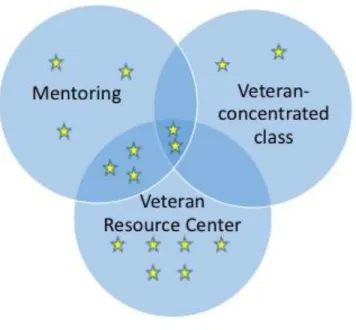
Participants ……….. 48 Instruments ……….. 50 Procedure ………. 51 Study 3 Results/Discussion ………... 53 Program elements ……….... 53 Mentoring ………. 54 Veteran-concentrated classes ……… 60
Veteran resource center ………... 66
Addressing the research questions ………... 74
Sense of community, sense of purpose, and empowerment ……….. 79
Lessons learned ………. 88
Limitations and future studies……… 89
References………..……… 91
Appendices……… 99
Appendix A: Student veterans survey………... 99
Appendix B: Interview questions for student veterans..……… 103
Appendix C: Interview questions for family members..……… 107
Appendix D: Interview questions for faculty and administration….……… 108
Appendix E: Interview questions for employers..………. 109
Appendix F: Interview questions for mentoring participants ………... 110
Appendix G: Interview questions for veteran-concentrated class …………. 112
Appendix I: Interview questions for staff ………. 115 Appendix J: Focus group guiding questions: Planning meeting...…………. 116 Appendix K: Focus group guiding questions: Student veteran experience… 117 Appendix L: Focus group guiding questions: Veteran resource center…….. 118 Appendix M: Focus group guiding questions: Overall evaluation………….. 119 Appendix N: Mentoring application and training materials……… 120
Tables and Figures
Figure 1: A Support Model ………... 37
Table 1: Description of Methodology ……… 48
Figure 2: Representation of Participant Involvement ………. 50
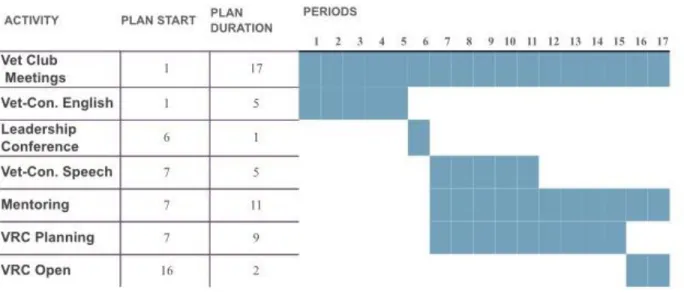
Figure 3: Timeline of Support Program Elements ……….. 54
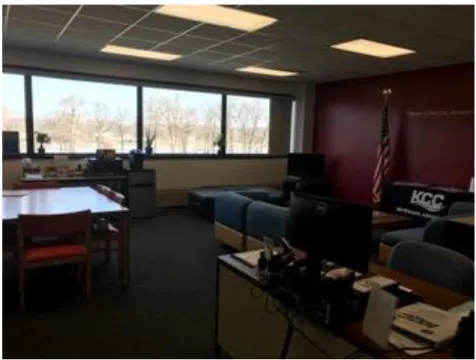
Figure 4: Photo of VRC from Entrance ……….. 71
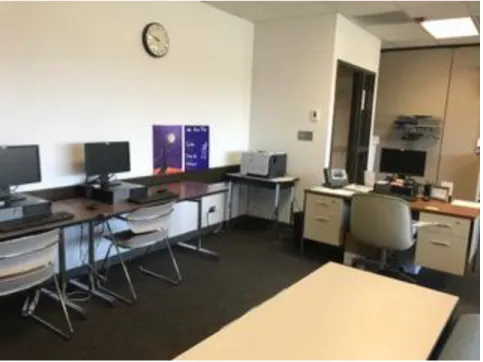
Figure 5: Photo of Computer Desks ……… 71
Figure 6: Photo of Student Worker’s Desk ………. 72
Figure 7: Photo of Lounging Area ……….. 72
Figure 8: Photo of Conference Table ……….. 73
Figure 9: Photo of Community Resources Information ……….. 73
Figure 10: Theoretical Model ……….. 80
Abstract
This set of mixed-method studies evaluated factors impacting student veterans at a Midwestern community college, particularly their sense of community and how their perceptions and experiences relate to academic success. Research on student veterans indicates that many face challenges beyond physical and psychological injury, including difficulties in acclimating to an academic culture and navigating bureaucratic processes. The quantitative and qualitative studies also examined the impact of the academic setting, social climate, supportive services that relate to student veteran perceptions of their sense of community and other academic processes. In the quantitative study, relationships were found between sense of community, membership,
connectedness, and academic persistence. Regression analyses indicated that a sense of connectedness was the strongest predictor of academic persistence. In the participatory
qualitative study, observations, individual interviews and focus groups included student veterans, administrators, faculty members, family, and other community stakeholders (i.e., employers that regularly hire veterans). The findings suggested that student support services, such as veteran-concentrated classes and mentoring, seem to have a more beneficial impact when they emphasize components that enhance a sense of community and sense of purpose.
Community, Purpose, and Empowerment: Developing A Support Program with Student Veterans
Over the past decade, colleges have seen a steady rise in student veteran population. Nearly one million veterans have attended or are currently pursuing post-secondary education on the post 9/11 GI Bill (Cate, 2014). Student veterans are typically older than traditional students, must often balance their education with family responsibilities, and take longer to complete their education. These challenges may be a result of veterans having different supportive needs than traditional students. Reports on the completion rates of student veterans have been mixed, with media outlets emphasizing high “failure” rates. Colorado Workforce Development Council reported an 88% dropout rate for veterans within the first year, with only 3% of Colorado student veterans actually graduating (as cited in Briggs, 2012). Studies show dropout rates are much lower than that reported by the media (Student Veterans of America, SVA, 2014). According to the Million Records Project (c.f. Cate, 2014), 52% of student veterans have completed degrees or certificates Data compiled from the American Community survey consistently suggest that over 60% of student veterans complete their degree programs (as cited in Cate, 2013). In comparison, the national completion rate for a bachelor’s degree is 59% (National Center for Educational Statistics, 2012). The collection of these findings suggest student veteran completion rates are closer to the national average than the media reports. Yet given that nearly 40% of veterans are not completing their goals for higher education suggests there is great room for improvement in the support these students receive.
The unique challenges student veterans face can impede their transition from the military into student life and eventually their academic success. Some difficulties relate to the physical and psychological injuries sustained during military service, others to readjustment to civilian
communities, and some to challenges navigating the educational system. Community colleges may be integral to smoother transitions for veterans because they allow students to live within their home community while pursuing higher education. More comprehensive student support services programs, dedicated to the unique needs of student veterans, could also enhance their transition into the academic community.
Physical and Psychological Injuries
Many educational institutions have disability services that support students, although, prior to service, few veterans required academic accommodations, and therefore are most often unaware of the resources available and, for reasons of stigma, may be less likely to seek them out (Grossman, 2009). Many student veterans may struggle without realizing that supportive
resources are available. For instance, some injuries are not considered a disability by the military, and yet veterans may qualify under the Americans with Disabilities Act Amendments Act of 2008 (ADAAA) (Madaus, Miller & Vance, 2009). Additionally, as a result of military culture, many student veterans are hesitant to self-identify disabilities sustained during service (Shackelford, 2009).
Traumatic Brain Injuries. Between 2000 and 2014, over 300,000 cases of Traumatic Brain Injuries (TBIs) were reported to the Defense and Veterans Brain Injury Center (2014). These injuries can result in cognitive impairments in areas such as attention, concentration, planning, organization, judgment, problem–solving, and impulsivity; accommodations have been found to improve student veteran academic performance.
The rigorous demands of a college curriculum can be taxing for any student, but it is particularly demanding for those impacted by TBIs. Surveys of student veterans with TBIs reported high rates of “cognitive fatigue” due to mental demands, and approximately 25% had
previously dropped out of college, citing cognitive fatigue as the cause (Smee, Buenrostro, Garrick, Sreenivasan & Weinberger, 2013). The mode of teacher communication and instruction can reduce cognitive demands, thus decreasing cognitive fatigue. One neuropsychological study, not limited to student veterans, indicates that verbal learning and memory performance was significantly reduced after sustaining a TBI, while visual learning and memory performance remained largely unaffected (Sozda, Muir, Springer, Partovi, & Cole, 2014). Applied in an academic setting, these findings suggest the importance of the visual representation of concepts, such as presenting information in charts and diagrams, as opposed to disseminating course information solely through auditory means such as lecturing. Additionally, information provided by the administrative offices may be best understood through written documentation rather than verbal instruction.
Other Physical Injuries. Although TBIs generally receive more attention in the education world than other physical problems, other physical injuries often present serious challenges for student veterans. Hearing impairment (including tinnitus) is one of the most common injuries sustained during service (U.S. Department of Veterans Affairs, 2015). Blast waves from explosives can rupture eardrums, causing irreparable damage to audioreceptors; yet rarely do they lead to veteran referrals for hearing-related services, and when referrals do occur, rarely are they followed through due to stigma associated with hearing impairments (Oleksiak, Smith, St. Andre, Caughlan & Steiner, 2012). Such impairments result in some student veterans missing information presented orally in class, and they can even impede communication with peers, exacerbating feelings of loneliness and isolation (Kersting, 1997).
Other physical injuries limit mobility, such as back or leg injuries, burns and
takes to navigate campus on crutches adds to the challenge of scheduling classes, and the energy expended getting to class leaves her with little energy to focus (Branker, 2009). Students with injuries experience frequent absences due to severe pain or appointments for medical care (Church, 2009). Pre-registration for student veterans could allow more flexibility for students to develop course schedules that could allow more time for them to navigate the campus; and more consideration could be given to student veterans in courses with strict attendance policies.
Post Traumatic Stress Disorder. Psychological injuries such as Post Traumatic Stress Disorder (PTSD) also make transitioning into an academic environment challenging, and can seriously impede academic performance. Higher levels of PTSD are negatively associated with academic adjustment (Ingala, 2012) and are strongly related to suicide risk (Rudd, Goulding & Bryan, 2011). In a survey of 525 student veterans, Rudd et al. (2011) found nearly half of the respondents reported symptoms of PTSD, and 46% reported suicidal ideation. Further, 82% of student veterans reporting a suicide attempt also reported symptoms of PTSD, highlighting the urgency of support systems within academic institutions.
PTSD symptoms include the re-experiencing of trauma, avoidance, detachment, and hyperarousal (U.S. Department of Veteran Affairs, 2015). Hyperarousal tends to make people with PTSD hypervigilant. As a result, students with PTSD are often scanning the environment for potential danger, resulting in difficulties in focus and concentration and increased anxiety. A qualitative Participatory Action Research study examined how these symptoms can encumber academic performance (Ellison, Mueller, Smelson, Corrigan, Stone, Bokhour, Najavits, Vessella, & Drebing, 2012). Participants reported overwhelming anxiety within the classroom as a result of triggering stimuli such as loud noises or feeling uncomfortable, surrounded by too many other people. Student veterans reported coping with anxiety by sitting near the back of the room, using
substances, or leaving school altogether; the students suggested variations such as smaller class sizes, and alternative settings for exams, or online classes, which have the potential to moderate anxiety.
The anxiety experienced by student veterans may be exacerbated by their cognitive challenges, such as difficulty concentrating, or their perceptions of these challenges. Cognitive deficits as a result of PTSD negatively impact test taking ability, and yet exam-related anxiety may be reduced by more effective coping strategies (Rutkowski, Vasterling, Proctor &
Anderson, 2010). Student veterans in the PAR study (Ellison et al., 2012) indicated
accommodations such as allowing tape recorders and additional time for assignments and exams may also reduce anxiety and compensate for cognitive barriers.
Traditionally, academic institutions rely on students to self-identify and request accommodations. Because many student veterans choose not to self-identify injuries, nor
recognize the potential negative impact on academic performance, student support services must take a proactive approach in outreach to raise awareness in the faculty as well as the student veterans themselves.
Navigating the Academic System
Rigid military structure contrasts greatly with the individualistic, sometimes fragmented, organization found in academic institutions. Being long accustomed to strict protocols can result in a cultural challenge for veterans trying to transition from soldier to student, particularly in navigating institutional systems (Ellison, et al., 2012). Military orders are absolute and daily life is prescribed; yet college students are expected to demonstrate initiative, adapt as problems arise, and make independent decisions. The process of registering, selecting courses, and obtaining financial aid can be daunting and confusing. In an interview, one student veteran stated “I mean,
we used to be told to go here, there, and everywhere, but if you don’t know really what you’re looking for, it’s kind of hard to find it. ... (In the military) there was always a commanding officer to tell you what to do and how to do it.” (Ellison, et al., 2012, p 214).
Military culture suppresses any natural tendency to ask for assistance. A student veteran who encountered a problem with registration may be much less likely to ask for help. Interviews with student veterans indicated their experiences of difficulties finding staff knowledgeable about veteran-specific financial aid questions, or faculty familiar with the challenges faced by student veterans (Ellison, et al., 2012). The variety of veteran-specific issues highlights the importance of establishing a department, or, at minimum, a specially-trained staff person dedicated to veteran-related administrative services (Vance & Miller, 2009). Illinois State Senator and veteran, Michael Hastings, has proposed Senate Bill 705 which would require colleges to post veterans’ guidebooks on their websites as well as require colleges with at least 1000 students to hire a veterans’ coordinator providing centralized guidance (“Hastings helps centralize,” 2017).
Mentoring
Literature addressing peer-mentoring in higher education indicates successful academic outcomes. An experimental study examining the efficacy of three mentoring styles found significant positive outcomes in higher grades and successful completion rates compared to a control group, regardless of mentoring style (Leidenfrost, Strassnig, Schütz, Carbon & Schabmann, 2014). In another analysis of a mentoring program in a community college, participation predicted social and academic integration and indirectly predicted academic persistence (The Impact of Mentoring, 2010).
In addition to mentee outcomes, students serving as mentors may develop as well. In a study examining the impact of mentoring programs on the mentors themselves, it was found that mentors gained altruistic gratification, enhanced communication, leadership skills, and positive social connections (Beltman & Schaeben, 2012). Similarly, a qualitative study examining the role of mentoring relationships on academic success found that mentoring led to positive
outcomes such as increased academic engagement and reduction of anxiety in both mentees and mentors (Snowden & Hardy, 2012).
Research on veteran-specific peer-mentoring is scarce. However, a recent dissertation suggests the benefits of a veteran peer mentoring program could extend beyond an academic context (Buechner, 2014). Using a phenomenological approach to the transition from military to academia, mentoring was found to play a profound role in reintegration into civilian life in addition to transition into a student role. Even without substantial empirical evidence, veteran mentoring programs are becoming more common on university campuses. Through the Peer Advisors for Veteran Education (PAVE) program, developed at University of Michigan, student veterans are partnered with trained mentors (Spinner, 2016). Over 40 universities have
collaborated with University of Michigan to receive training and replicate the program; however, few of the partner institutions are community colleges.
Veteran Cohort Models
Participation in a learning community increases academic engagement in the classroom and collaboration with faculty, which in turn impacts academic outcomes (Rocconi, 2011). Self-determination theory suggests that cohort and learning community models create environments where students feel a greater sense of social relatedness, which, in turn, can enhance motivation (Beachboard, Beachboard, Li, & Adkison, 2011). The construct “relatedness”, defined as “a
feeling of belongingness and connectedness with others” (p. 859), corresponds with
connectedness, and was found, by the researchers, to be the most influential variable predicting students’ sense of contribution to their academic development.
Another study, using a learning community model, and employing a mixed methods evaluation, found that participants in the program were significantly more likely to re-enroll and report more active engagement in learning, compared to the comparison group (Tinto & Russo, 1994). Results also suggested that students built stronger social connections with peers and spent more time studying with peers, suggesting, from the interview data, increased class attendance and academic persistence. In another study, several students indicated their desire to persist was directly related to their participation in the learning community (Tinto & Russo, 1994).
Consequently, civilian literature supporting the efficacy of learning communities suggests promise for the student veteran population.
A pilot program at University of Arizona employed a cohort model to deliver curriculum to veterans transitioning into higher education addressing resiliency, learning-teaching, and leadership (Markel, Trujillo, Callahan, & Marks, 2010). Results revealed a high retention rate in the program and indicated that cohort participants had a strong perception of success and the likelihood to graduate. It was unclear whether the results were a result of the social connections fostered through the cohort model, the curriculum itself, or a combination of both factors. The promising results of learning community-based models warrant further exploration.
Veterans Resource Centers
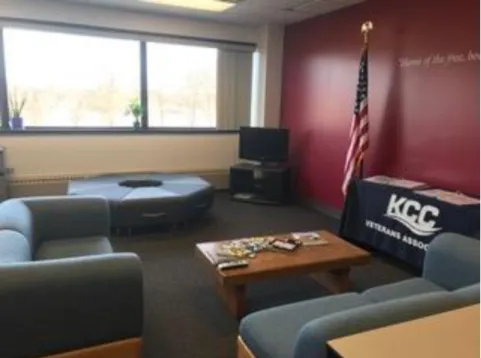
In response to a growing awareness of student veterans’ needs, some colleges have developed Veterans Resources Centers (VRC), physical spaces in which the college can
Alaska, a recently opened Veterans Center streamlines enrollment, financial aid, and support services while also providing space “for veterans who rely on one another to regain the camaraderie lost when they left active duty” (Community College Week, 2014, p. 1).
Salt Lake Community College (SLCC) developed a Veterans Resource Center including administration staffing, a lounge area where student veterans could relax and decompress, as well as a small computer lab where veterans could study in a quiet environment (Ahern, Foster, & Head, 2015). SLCC staff had observed that student veterans with PTSD, often hypervigilant of their surroundings, were distressed while working in crowded public computer labs. The smaller lab designated for student veterans offers a safe space in where veterans can work more
comfortably with fewer distractions. Additionally, the Center offers a location where student veterans can connect with each other, thus providing mutual social support while more effectively facilitating their transition into higher education.
Though there is currently little research exploring the development and efficacy of Veterans Resource Centers on student learning, retention, or transition, their growing popularity indicates their necessity. As Church (2009) suggests, the culture of solidarity and reliance on one another within the military develops a strong sense of camaraderie that can assist veterans in their transition into civilian student life; and as such, colleges can utilize this as they create transition programs for student veterans. Mentoring, veteran cohorts, and VRCs offer opportunities for student veterans to foster positive relationships critical to enhancing their success.
Sense of Community
A survey study of 692 institutions of higher learning revealed that 62% of institutions offer some type of program geared toward student veterans (McBain, Kim, Cook, & Snead,
2012). Most programs emphasize assistance in financial aid and support for service-related injuries, but only 37% included services that assist students in transitioning from military duty to college life. Support programs that address the needs of student veterans with disabilities are undoubtedly essential; however, the majority of student veterans do not have disabilities. Programs that solely emphasize response to “wounded warriors” may alienate veterans who sustained no injuries and yet could still benefit from academic support services (Bonar & Domenici, 2011).
Although only a minority of veterans sustained disabling injuries, the majority of returning soldiers do face considerable challenge in reintegrating into daily life (Danish & Antonides, 2013). Many veterans return home to face questions about their sense of purpose and identity. Social support systems are key to successful reintegration. Consequently, academic programs should address social engagement.
In a qualitative case study examining student veteran transition issues, many reported difficulties transitioning from social supports received in the military to an academic setting (Schiavone & Gentry, 2014). Respondents referred to their military peers as family, starkly contrasted by their perception of fellow students, who were seen in a much more individualistic, sometimes competitive nature, within the academic culture. Student veterans felt separated from their civilian peers by differences in personal characteristics as well as life experiences. They reported frustration with peers, citing perceived poor work ethic and immaturity, which contrasted with the expectation of military self-discipline. Global awareness and unique life experiences set these students apart from what they perceived as naïve, inexperienced peers. Although some student veterans reported appreciation for the respect they received from peers, they did not feel their peers understood their lives or the challenges they currently face.
Results in a similar study echo these themes as well as indicate a sense of separation from faculty members (DiRamio, Ackerman, & Mitchell, 2008). Some student veterans indicated a desire to blend in with other students and avoid being identified as veterans. One participant suggested civilian students seem unsure of appropriate conversation topics, as evidenced by one student asking him if he had ever killed anyone. Some student veterans perceived a sense of hostility within the classroom environment, particularly when discussions involving politics arise. One professor referred to American soldiers as “terrorists” (p. 89). Another student reported dreading attending a class because the professor often prodded him for insights about military experiences. Several respondents were motivated to connect with fellow student veterans, though no formal organization existed within the institution. These results underscore the need for awareness raising cultural diversity for students and faculty as well as a need for formal student veteran organizations.
A definitive construct of sense of community may seem elusive. Sarason (1974) likens understanding sense of community to hunger: it may be difficult to clearly articulate how hunger feels, but one clearly recognizes the dangers of starvation. Similarly, student veterans may not necessarily articulate experiencing the lack of sense of community; yet, the feelings of isolation as a result of its absence are palpable. Sarason defines sense of community as “the sense that one was part of a readily available, mutually supportive network of relationships upon which one could depend and as a result of which one did not experience sustained feelings of loneliness…”
(p. 1). This clearly expresses the need for student veterans to establish connections within a supportive network of faculty and peers.
McMillan and Chavis (1986) identified four key elements that contribute to a sense of community: membership, influence, integration and fulfillment of needs, and emotional
connection. Although all four elements are vital to the development of sense of community, this study focuses on the elements of membership and emotional connection. Membership involves a sense of belonging within a group, and student veterans often report lacking this sense of
belonging within educational communities. Further, membership provides a means of emotional safety, a secure social setting in which members feel safe sharing feelings. This is an essential factor in student veterans feeling comfortable in disclosing emotional challenges. Shared emotional connections involve a shared sense of past events. As McMillan and Chavis explain, group members do not need to share the same history, but rather a sense of identification with one another’s history. Student veterans may not have served in the military together or even in
the same branches of service, yet their shared histories are enough to define their experiences as unique from those of civilian students, providing a range of distinct understandings amongst themselves.
A large survey study of college students, not limited to student veterans, revealed student sense of belonging was closely related to a feeling of being valued as an individual and treated with care and respect (Cheng, 2004). As simple as this sounds, the finding highlights the
importance of engaging individually with each student, and addressing the diverse needs of each student veteran, not just approaching the population as a whole. Further, the study found that loneliness had the most impact on a student’s negative perception of sense of community.
Considering that veterans in many previous studies indicate a sense of loneliness, this is a critical element to address when designing support services programs for this group. Study results suggested that organized social events and student clubs are important vehicles that foster
faculty-student interaction, underscoring the necessity for faculty awareness of student veteran needs.
A separate, related study supported the assertion that out-of-classroom involvement is related to general student perception of sense of community (Elkins, Forrester & Noel-Elkins, 2011). Students who were involved in student activities felt higher levels of engagement in learning as well as campus community connectedness. Participation in conferences and workshops related to a stronger sense of community which researchers attributed to increased interactions with faculty. Additionally, students participating in recreational sports and fine arts reported lower feelings of loneliness.
Most of the aforementioned research was conducted within four-year institutions which typically offer a wider variety of resources and opportunities for social programming as
compared to community colleges. Nevertheless, community colleges and smaller universities with limited resources can impact the cultures of their own settings in a way that maximizes the quality of social interactions for student veterans. Contextual factors such as institutional policy, attitudes of faculty and peers, and the culture of the local community influences the sense of campus community.
Researchers and veterans themselves, Summerlot, Greene, and Parker (2009), identified three classifications of campus climate that describe veteran perceptions of social connectedness: supportive, challenging, and ambivalent. Supportive climates tend to have strong ties to military services, and to faculty and administration who are veterans, and to opportunities that help them connect with fellow veterans through student organizations. Challenging climates are campuses with political upheaval and anti-military sentiments, often leading student veterans to conceal their veteran statuses to avoid criticism. In ambivalent climate, student veterans tend to succeed
in easily blending in with other students; though connecting with fellow veterans is difficult. Commuter institutions such as community colleges tend to foster ambivalent climates,
highlighting the importance of developing strong student-veteran organizations to foster a sense of community.
Tinto’s model (1975), the preeminent model of academic retention, underscores the necessity of social connections. In addition to personal attributes related to academic integration, such as prior education and grade performance, social integration is necessary to develop
institutional commitment which in turn leads to academic persistence. Social integration is achieved primarily through positive interactions with faculty, participation in extracurricular activities, and most frequently, informal peer interactions. These interactions allow for social as well as academic support, thus increasing the likelihood of academic success and retention. Moreover, students who perceive themselves as different from the normative student culture are less likely to dropout if they are able to make social connections to others they perceive to be similar to themselves. This suggests subcultures within the institutional social system is particularly important for non-traditional students to develop a sense of belonging. In a more recent model, Tinto and Pusser (2006) assert that support is especially important to
underrepresented student groups. They recommend that colleges foster social connections through clubs, mentoring programs, learning communities, and specialized student centers. “Such centers provide much needed support for individual students and a safe haven for groups
of students who might otherwise find themselves out of place in a setting where they are a distinct minority” (Tinto & Pusser, 2006, p. 14). Though the authors do not specifically identify student veterans as a minority group, their nontraditional student status and specific learning needs differentiate them from traditional students and frequently lead to a sense of isolation.
Thus, programs designed to foster social connections with similar students could enhance a sense of community within the college yielding greater institutional commitment.
A strong sense of community in the classroom is related to satisfaction of an educational experience as well as measurable academic performance. An experimental study evaluated the impact of six variables of sense of community (connection, participation, safety, support, belonging, and empowerment) on civilian student perceptions of the course as well as their academic outcomes (McKinney, McKinney, Franiuk, & Schweitzer, 2006). Students in the experimental group received instruction infused with elements incorporating each of the six variables, which included three important constructs for this study, connection, belonging, and empowerment. Results indicate that students with a stronger sense of community had more positive perceptions of the course as well as higher academic performance. Connection in this study referred to the personal awareness students had of one another, and belonging referred to the instructor’s personal acquaintance with each student. The present study considers both
constructs together, defining connectedness as a personal or emotional acquaintance with another individual, within the community, regardless of role. The present student considers a sense of belonging to a class, group, or community as membership.
Empowerment in the McKinney et. al. study (2006) referred to the students’ active participation in daily classes as well as the planning and execution of some course activities. Empowerment in this present study is defined in terms of Rappaport’s (1987) description as the student’s sense that he/she is in control of his/her own decisions.
Purpose of the Studies
The purpose of this set of studies was three-fold: 1) to evaluate the relationship between sense of community (with particular emphasis on membership, connectedness, and
empowerment) and intended academic persistence; 2) to gain a broader understanding of student veteran experiences and their perceptions of support services; and 3) to trace and evaluate the development of a veteran-led support services program. Study 1 focuses on the evaluation of relationships between sense of community and academic persistence.
Study 1: Method
It is hypothesized that a stronger sense of community, as well as the sub-constructs of membership and connectedness, will positively correlate with academic persistence plans. Additionally, it is hypothesized that empowerment will positively correlate with academic persistence.
Design
Quantitative measures were collected to evaluate the student veterans’ perceived sense of community with emphasis on membership, connectedness, and empowerment. Measures of student veterans’ long-term plans were also collected to determine whether a relationship existed between sense of community and student sense of persistence in their current academic program.
Participants
Survey participants were recruited through the campus Veterans’ Financial Aid (FA) Coordinator. An email was sent to all student veterans in the email database (89 students) explaining the purpose of the study, inviting them to participate in interviews, and requesting completion of an anonymous online survey with the survey link embedded in the email. Paper copies were also distributed at a weekly Veterans’ Club meeting. Participants received a coupon for a free drink from the cafeteria as a token of appreciation for their participation in the study.
Instruments
The questionnaire was developed based on a compilation of demographic information, measures of academic persistence, assessment of student support service needs, modified versions of the Sense of Community Scale 2 (Chavis, Lee, & Acosta, 2008), the Psychological Sense of School Membership (Goodenow, 1993), the Campus Community Scale (Cheng, 2004), and a modified version of an Empowerment Scale (Rogers, Chamberlin, Ellison, & Crean, 1997) (See Appendix A for the full survey). Respondents were asked to indicate their level of academic persistence using a 4-point Likert scale ranging from “strongly disagree” to “strongly agree.” Participants were asked questions such as: “I plan to enroll in courses at this institution next semester,” and “I intend to graduate from this institution.” The same Likert scale was also used to assess respondents’ evaluations of student support needs with questions such as “I would use a Veteran Center if one was available.” Scales measuring sense of community utilized a 4-point Likert scale asking questions such as: “I feel valued as a person at this institution,” “I have felt lonely on this campus,” and “I feel accepted as part of the campus community”
Procedures
Quantitative data using the survey instruments were collected via an online questionnaire using SurveyMonkey as well as a paper version. Participants received a paper version of the questionnaire at a Veterans Club meeting, and a follow-up email was sent to all student veterans on a listserv containing a link to the questionnaire. Surveys were either anonymously completed online and automatically submitted; or returned in a self-addressed envelope with the consent form returned separately to protect anonymity.
SurveyMonkey was used to collect and store quantitative data. Interviews were
transcribed with codes instead of names to ensure anonymity. All study-related material was kept in a locked cabinet in a locked office on campus to maintain confidentiality.
Regression analysis was used to determine relationships between sense of community, empowerment, and self-reported academic persistence plans. Descriptive measures of perceived student support needs were intended for use by the college to prioritize attention to fulfilling the most urgently identified needs.
Study 1: Results
Through surveys, the study evaluated student veteran perceptions of their college experiences, academic needs, the interrelation of education and reintegration, as well as the perceived sense of community and student academic persistence plans. The following variables were assessed in relation to sense of community: membership, connectedness, and empowerment. Regression analyses were used to identify predictors of persistence.
Descriptive Results
Thirty surveys (of 89 student veterans) were completed (yielding a 33.7% return rate). The majority of respondents were male (87.5%). The branches of service were represented as follows: Army (78.3%), Navy (8.7%), Air Force (8.7%), and Marines (4.3%). Thirty percent of the respondents listed at least one service-related injury: Twenty percent of the respondents indicated they had been diagnosed with a back injury, 16.7% with PTSD, 13.3% with a hearing impairment, 10% with a mood disorder, 6.7% with an anxiety disorder, and 3.3% had a TBI. The mean age was 29. The mean length of time since service discharge was 9.47 years with a
Findings
The Sense of Community Index scale consisted of 6 items (α=.832). The Membership subscale consisted of 9 items (α=.802), the Connectedness subscale consisted of 7 items (α=.897), and the Empowerment subscale consisted of 5 items (α=.704). Cronbach’s alpha for
the 4 items measuring Academic Persistence was .751.
Participants reported on a 4-point Likert scale with 1 indicating unfavorable responses and 4 favorable responses, yielding mean scores: sense of community (M=3.06), membership (M=3.36), connectedness (M=3.13), and empowerment (M=3.33).
Step-wise regression analysis was used to determine if sense of community, membership, connectedness, or empowerment predicted academic persistence. Results indicated that the model accounted for 24% of the variance (R2=.244, F(1,28)=9.045) of academic persistence. Of the four predictors, only a sense of connectedness was significant (β=.494, p<.01).
A second regression analysis was run to determine whether aspects of sense of
community predicts empowerment. In a separate paper, the researcher theorized that sense of community and empowerment may be interdependent; further, the sense of feeling connected to others may enhance one’s sense of control of one’s own life (Stevenson, 2015). In this present study, the regression analysis evaluating sense of community, membership, and connectedness as predictors for empowerment also indicated that connectedness predicted empowerment (β=.465, p<.01).
Due to redundancy of related variables, the regression analysis likely failed to show individual relationships. Additional correlational analyses illustrate the relationships between each variable. Academic persistence was significantly correlated with sense of community (r=.427, p<.01), membership (r=.482, p<.01), and connectedness (r=.494, p<01). There was no
significant correlation between empowerment and academic persistence (r=.271, p=.074), but empowerment was significantly correlated with sense of community (r=.322, p<.05),
membership (r=.435, p<.008), and connectedness (r=.465, p<.005).
Exploratory Analysis
As previous literature (Kersting, 1997) suggested, civilian students with hearing
impairments feel more isolated, therefore, similar results were predicted within this sample. This led to an independent samples t-test comparing items related to loneliness and feelings of being different between student veterans with and without hearing impairments. Students veterans with hearing impairments (M=2.25, SD=1.50) reported significantly higher levels of loneliness on campus than student veterans without hearing impairments (M=1.32, SD=.63). Student veterans with hearing impairments (M=2.25, SD=1.50) did not significantly differ from student veterans without hearing impairments (M=1.92, SD=1.00) on a measure of feeling different from other students.
Beyond measurement of individual attributes, additional analyses examined participant perceptions of setting and supports. Items were included on the questionnaire for future use in developing a support service program, including questions about a Veteran Center and Disability Services. A majority of respondents (86.7%) indicated participants would use a Veteran Center (a space designated solely to student veterans for studying or social gatherings) if one was made available. When asked if students were aware of the support Disability Services offered, 63.3% responded there were not aware of these services. Although a minority of participants (30%) reported a service-related injury, the lack of awareness of Disability Services may suggest that more information provided during registration could be helpful.
Study 1: Discussion
This study explored the relationship between sense of community, specifically membership and connectedness, empowerment, and academic persistence. The participant sample focused on student veterans within a small Midwestern community college. Previous studies consider student veterans within universities; however, sense of community differs within an institution designed for commuting students, and resources can vary for smaller schools. A great number of veterans attend community colleges, thus it is important to assess their experiences within these settings.
As hypothesized, the quantitative data revealed sense of community, membership, and connectedness positively correlated with academic persistence. No significant correlation was found between empowerment and academic persistence; however, this may be attributed to a small sample size. Empowerment was significantly related to sense of community, membership, and connectedness, suggesting that this construct still warrants consideration when developing supportive academic programs as well as future study using larger sample sizes. Regression analysis revealed connectedness predicts academic persistence. This finding underscores the importance of fostering positive, meaningful relationships among student veterans and with faculty.
Limitations
Due to the small sample size in this study, generalizability is limited. However, it is important to note that the findings in this study were consistent with those of previous studies. Further, due to the small sample size, the present study did not differentiate between branches of service or method of instruction (seated versus online courses) and perceived campus
community college. Experience within larger institutions or four-year universities could vary. Future studies should include a large, more diverse sample within a variety of academic settings.
Study 2
Aqualitative approach was used to gain a broader, contextual understanding of student veteran academic experiences, needs, and strengths. Interviews were conducted with student veterans, family members, faculty, administration, and community employers in an effort to understand the experience from an ecological perspective.
Research questions for the qualitative portion include: 1) the enrollment process; 2) the barriers student veterans face; 3) the perception of student veterans of community college sense of community; and the 4) impact of transition from military to civilian life on education.
Study 2 examined stakeholder perceptions of the need for enhanced awareness of both faculty and students, social support, classroom modifications, and specific procedures for student veterans with disabilities.
Study 2: Methods Design
In Study 2, qualitative interviews were conducted with student veterans, family members, faculty, administration, and community employers to gain broader, contextual understandings of student veteran academic experiences, needs, and strengths. Emphasis was placed on varying perceptions of student veteran experiences and sense of community within and around the community college.
Participants
The Veteran Financial Aid Coordinator and the advisor of the Veterans Club verbally solicited volunteers for student interviews. One transferred student veteran and five current
student veterans, two family members, several faculty and administration, and a community employer, identified by members of the Veterans’ Club, were interviewed.
Instruments
Semi-structured qualitative interview questions were developed, seeking student veteran responses to their perceptions of campus community and identified needs (See Appendix B for full list of questions). Sample questions include: “Can you tell me about your best experience since you decided to enter college?”“How connected do you feel to other students? To faculty?” and “What would you love to see that would be really different at KCC that would completely make you feel better, more empowered, more connected here and beyond?”
The interview for family members (Appendix C) were designed to address how those interpersonally close to student veterans see the students’ educational outlook impacted by the college, home, and prior military experiences. Questions included: “How is the student
balancing coursework and home responsibilities?” and “What impact has attending school had on the veteran’s transition?”
Interviews for faculty and administration (Appendix D) addressed awareness and
perceptions of veteran needs, such as “Considering student veterans you’ve had in the past, what types of support needs do you perceive?” and “What type of training do you think would be helpful to better address these needs?” Employer questions focused on graduating veteran work performance (Appendix E): “What are some of the strengths that veterans bring to the
workplace?” and “What are some skills/attributes that you think colleges can help develop to enhance work performance?”
Procedures
All participants signed consent forms. To ensure comfort for the student veteran
participants, interviews were conducted in a private conference room that minimized loud noises and unexpected interruptions. To enhance the comfort level of the remaining student veteran interviewees, a former student veteran assisted the researcher in conducting the student veteran interviews. This was particularly important given some questions addressed psychological injuries such as PTSD and its relation to academic performance. Most questions that could trigger negative emotional responses were avoided. Participants were advised they could stop the interview if they became uncomfortable at any time.
Once the data was collected, the interviews were transcribed, and a grounded theory approach was utilized to determine themes. After examinations of the data two evaluators were used to increase reliability in the identification of themes. After data were coded and themes identified, results were shared with the participants and other members at the college’s Veterans Club. This member-checking technique was used so participants could affirm their experiences were accurately interpreted, and to help them in thinking more deeply about their future
initiatives to better support student veterans.
Study 2: Results/Discussion
The eventual student qualitative sample included six male veterans and one female veteran. Three participants served in the Army, and one Marine, Navy, and Air Force veteran each. Half of the respondents had been diagnosed with at least one psychological injury, and two with physical injuries.The additional stakeholders beyond the veterans provided much
The modified grounded theory approach was used to derive themes rooted in the narratives of the college’s student veterans. While keeping an eye out for narratives related to empowerment and sense of community an otherwise open coding method was used with the data. Using an inductive method, repeating themes were identified and organized into coherent categories. The veteran who conducted the interviews additionally and independently coded the interviews to enhance reliability in deriving themes. When the full set of themes were identified and agreed upon, they were brought back to the participants as a form of member-checking, to ensure their voices were properly reflected in the categories.
The interview themes tapped into several areas that were emotionally challenging for student veterans: the impact of injuries, difficulty navigating administrative processes,
challenges in transitioning from military to education, and themes related to sense of community, including cultural differences, and feelings of isolation, as well as positive experiences
connecting with other veterans and faculty.
The Impact of Injuries
Students with injuries indicated they had difficulty concentrating in classes, managing time to complete coursework, and developing plans to complete assignments. A spouse of one student veteran stated:
Something as little as writing assignments down, he didn’t think about. He was so used to routine, now if a schedule changes, he forgets assignments because of all that and all the other internal struggles. He’s struggling with PTSD. It’s hard to focus on homework when he didn’t sleep the night before and he’s just thinking about the flashbacks.
Sometimes he didn’t turn in homework. He showed up drunk for an exam once. I wasn’t even focused on the education part. Once he was home, I was more focused on what
needed to be done at home. I didn’t realize what he was going through. Looking back, I don’t feel like I did enough to help him manage and focus. (Spouse A)
Additionally, some respondents indicated that side effects from medications including dizziness, fatigue, and restlessness added challenges in focusing. “The only way I can be in some classes is by using pain meds, but I can’t do some things because of the meds.” (Veteran F).
As the quantitative data suggested, student veterans were either not aware of campus resources that could alleviate some of the challenges or were reluctant to seek assistance. This was further explained within the interviews:
• I thought of disability services as helping people with dyslexia and things like that, not for people like me. (Veteran F)
• No, I don’t know the process. I don’t know who to ask. I guess I could’ve found it online, but I didn’t. A professor told me about it, but I didn’t think it was worth the effort. (Veteran A)
• A lot of vets are used to being told when to go to services. Having services are amazing when they are utilized, but you cherish the moments you don’t have to [bolding added to reflect participant’s spoken emphasis]. (Veteran C)
Although participants were unaware of services or declined to seek resources, many of them learned to successfully adapt independently. As one veteran described, “I’m 40% deaf in both ears and have tinnitus. I have to sit at the front of the class to hear. I’m good at reading lips and I show up early to sit in the front.” (Veteran D).
As predicted by previous literature, student veterans were not likely to ask for assistance when they encountered problems and only one participant indicated using tutoring services.
Interviews with faculty indicated that few student veterans asked for additional help or support.
Administrative Processes
Students reported on their experiences with registration and course scheduling processes and their views were mixed with some indicating it was an easy process and others reporting difficulties and overall confusion:
• It was like going to the dentist – it was painful. I didn’t know what to do, where to start, how to coordinate between KCC and the VA. Payments got messed up because the reporting hadn’t been done right. A friend had to help sign me up. In the army, we get step by step directions, we’re reacting to an order. School requires you to be proactive. As a soldier, you’re reprimanded for saying ‘what are we doing next?’ as a student, I had to learn to be proactive. For 8 years I was told what to do and reminded, now as a student I had to learn to take
responsibility for myself. (Veteran A)
• I went through a two-day lecture [in marines] of all the GI bills. The guy told us to use regular GI bills first. Here it was a whole new system. I had to take
placement tests and I failed those miserably. Paperwork was foreign. (Veteran F)
• There’s nothing permanent about military life. When you get out you have all these possibilities. It’s hard to find purpose. It’s overwhelming to find
direction…you’re overwhelmed by choices because you get to pick. Advisors are important. We’ve had some good experiences, sometimes not as good. Not bad, they just don’t have answers. And student needs help, but especially for a vet. We really relied on advisors. Maybe a former vet or spouse would make it easier. Sometimes it felt like they just didn’t understand the mindset. (Veteran D)
One respondent stated getting answers to questions was particularly frustrating because it was difficult to find the correct person, the one with full knowledge; this was a stark contrast to the well-informed structure he had been accustomed to in the military, where roles with specific tasks were more clearly defined.
On the other hand, two students who had tried attending other institutions before the present college where they had even more trouble:
• I was doing this while I was living in Kansas thinking I was going to give [a different college] a try. They kept saying they couldn’t help unless I was there. I decided to try KCC and even on the website they said you didn’t have to be here. That helps vets because they might not be here. KCC was like come in, we’re open for you. (Veteran C)
• It wasn’t too difficult to make the transition. I’m used to processes, it was quick and easy…there wasn’t much support at [the other college]. More support from [the present Financial Aid Coordinator]. Advisors took me right away every time I came in. I never had a bump in the road. (Veteran B)
Students responded favorably to the financial aid process, stating it was helpful that the college had someone who was trained in veteran services. “[The Financial Aid Coordinator] is an amazing person. I came knowing nothing left in an hour knowing everything I needed to know.” (Veteran C). “At one point I had trouble coming to class because of money. [The Financial Aid Coordinator] helped get Pell grants and student loans to help my family.” (Veteran F).
Some of the veterans as well as an administrator suggested it would even be more helpful to have one or two designated contact people who could guide student veterans through the entire administrative process.
Transitioning
Students reported mixed experiences first encountering higher education subsequent to transitioning from military life. One student indicted that he felt like he was still trying to figure out how he fit in at home after an eight-year absence, and the added responsibility of school compounded the stress. “Last semester was tough, the whole experience. Getting used to being a student again. I’m getting there.” (Veteran C).
Other students reported that they did not feel like their family members understood the pressures from school, and faculty did not recognize the pressures that the veterans were experiencing in their transition and in their home life.
The results from family interviews were mixed. Some family members were supportive of their loved one’s academic pursuits and saw it as a way to establish a new sense of purpose
following military services:
“Going to school gave him a distraction. It’s so integral to find something he cared about. He didn’t see the purpose in it at first, but once he did, it became his purpose. It prolonged the transition, but it helped.” (Spouse A).
Others viewed it as an obstacle that impaired their loved one’s transition back into family life:
“It was tough in the beginning. He’d slack on one thing or the other. He’d forget he was even in school, but when he got into it, it was all he did. He’d either miss tests or forget to pay bills.” (Spouse B).
However, the majority of responses suggested that pursuing higher education positively impacted their reintegration process, and did provide a greater sense of purpose toward the future:
• School made transition tremendously easier. When you go from a community when given tasks to complete weekly, you do your own tasks. It allowed me to continue on the path where a teacher gives me a task and I do it. I also didn’t have to focus on getting a job. (Veteran B)
• Being in the military, it’s different from being in the civilian world…school helps by giving more of a role in getting back into the civilian world. It’s more relaxed. In the military, we’re held to higher standards. (Veteran E)
• It was really hard to get to class. Hard to prioritize. But I think it helped overall in my transition. Classes in psychology has helped with dealing with PTSD. What I previously saw as character flaws, I found out it was actually because of my illness. It was very freeing. (Veteran A)
• Going to school has been one of the best opportunities of my life. (Veteran D)
Sense of Community
Consistent with the previous literature, student veterans indicated a disconnect between themselves and peers. The veterans stated they felt as though few people understood what their lives were like in service, and some indicated that they felt they had little in common with their younger, civilian counterparts, who had fewer international experiences:
• A lot of people don’t know anything. How do I tell the people behind me that their talking is pissing me off? They might think I’m about to go crazy. It’s lack of support from the civilian world. (Veteran B)
• They think we can be out of control, that we can’t focus, that they can’t go to us for help. In some ways we’re just like them. They can ask us questions, but not…keep it to school stuff. For them to ask what did you do in Iraq? Did you kill anyone? No one here has asked me that, I tell them I did boring stuff so they don’t ask me questions. (Veteran C)
• Unless a person has a family member in the service, they don’t understand. Veterans understand veterans and people don’t know how to react to that. We’re not all crazy. We are, but we’re not. We’re not afraid to answer questions. If they’re out of line we’ll just say shut up or not answer. (Veteran E)
• I want people to know I’m a vet. I feel out of place because of my age. I want people to know that I delayed school because of my service. I feel like people avoid me, like, in group projects. I think people find me intimidating. I think it’s unnecessary. Vets are diverse. (Veteran A)
Though most participants indicated they preferred to be identified as a veteran, others were uncomfortable about disclosing their status.
I want people to know that vets aren’t right-winged, gun-toting, war mongers. You can tell people that don’t like vets. I got spit in the face at [the airport] and called a baby killer. That never happened here at KCC. If it did I would tell a faculty member, but I’d rather people didn’t know I was a veteran. (Veteran D)
Another student reported a negative incident at the college as a result of wearing a shirt with a military-related emblem.
I was heading to class wearing with my army unit shirt on and a worker from KCC stopped me and bitched that I couldn’t wear that and it was a disgrace. I ended up failing
two tests that day because I was so upset. I had just been diagnosed with PTSD and I just couldn’t control it then. (Veteran E)
Many of the aforementioned themes related to an overall sense of isolation, the opposite of possessing a psychological sense of community. Given that the student veterans felt different from, and did not perceive strong connections to civilian counterparts, they nevertheless reported feeling connected to and supported by at least one faculty member:
• Most students don’t understand veterans. Having the same instructors over and over has been a saving grace… The instructors in the industrial center really understand. There have been some days I couldn’t get out of bed because of my back and knees, and they get it. (Veteran E)
• I felt most connected to faculty, particularly two professors who took an interest in me. I wouldn’t have had the courage to pursue a degree without them... I didn’t identify as a student. I was a soldier, not a student…it wasn’t until I took [a specific class] that I started to feel like I could stick with it. I developed a relationship with the professor, the assignments were applied, in class students were collaborating with the professor. I realized if this is something I’m doing, then it’s something I can do [bolding added to reflect participant’s spoken emphasis]. (Veteran A)
This sub-theme of feeling connected to a faculty member was further supported by an interview with a student veteran spouse:
Professors made such a big impact in his life and education. They were totally invested in him as a person, his history. KCC was a turning point for him. It’s what got him inspired. Teachers inspired him which helped him find his value. If he went to [a large university]
right away, he would’ve gotten swallowed up. He felt out of place when he transitioned. He needed positive experiences to draw on. (Spouse A)
Beyond feeling some connection with at least one faculty member, and despite reports of feeling isolated from civilian counterparts, every student veteran did feel a sense of community through other veterans, whether through informal encounters or formal connections, such as in the Veterans Club:
• Connected to students? Not students really. More student vets. If it wasn’t for having a vet in other classes I probably wouldn’t talk to anyone. (Veteran E)
• If you really needed it, you can go up to any vet and have a conversation…Dave* stopped me in the hallway and asked if I was a vet. We hit it off and became friends. I connected to him. Because of him, I felt connected to vets through him…having someone to relate to, having Dave was a big deal. The familiarity made me more comfortable. My advice would be find one person to be more familiar with. (Veteran B)
• I felt connected by getting into the vet club and having like-minded people. Being in a class with 17-18 year olds that don’t know…vet club gives me the push to keep coming to school. (Veteran D)
• We have vet club. That’s been a huge help. We’re all like-minded in a way. Yeah, definitely vet club. We get a sense of community, camaraderie. We might not all be going for [the same major] but there’s a sense of family in and of ourselves. Even though we served in different branches, it doesn’t matter. We’re all a family. (Veteran F)
Suggestions for Improvements
In addition to providing their experiences, participants shared their ideas for improve program support. The coded themes on this question were presented to a larger group of student veterans to create an action plan for further development. As a result of this larger discussion the solutions included: 1) workshops to develop successful skills for the classroom and employment; 2) a dedicated staff person trained in veteran issues that could assist with the administration process and provide academic support; 3) more information regarding available resources provided during registration; 4) a mentoring program; and 5) a Veteran Center. The student veteran group strongly favored beginning the mentoring program immediately and planned to take action. While the Veteran Center was a popular suggestion, development of this plan is contingent upon approval of space and funding from the college. One student summarized the need for this dedicated space:
It would be helpful to have a Veteran Center - a lounge. I need a place to unwind. There’s no place to do homework here because of PTSD. I need a safe place where I know only vets can be in there. It would mean I could feel safe. Know the culture is the same. (Veteran A)
Other stakeholders
Twofaculty members two staff, and two veteran-friendly employers were interviewed to gain a broader perspective of student veteran strengths and needs, and whether the stakeholder felt adequately prepared to support them. The employer identified leadership skills and maturity as strengths, suggesting student veterans could be better supported by maximizing the skills they already possess.
•Specially-trained Financial Aid rep
•Disability Services •Academic support •Dedicated advising •Learning community •Dedicated physical space •Mentoring •Veterans Club •Faculty training •Student awareness •Veteran awareness Awareness Raising Sense of Community Individual Needs Classroom Success
Faculty interviews suggested that faculty and staff could benefit from being trained to become more aware of veteran needs. Veteran interviews also addressed the need for such training:
There’s a big difference between veteran-aware professors and non-aware. The ones who know give seating preference, they give warning before showing graphic content. They understand missing assignments. They should mandate training. (Veteran A)
While one staff interviewee stated training was unnecessary, he characterized veterans as having “a better idea of what program they want”, which contrasts with veteran experiences of feeling overwhelmed by course selection. As one veteran stated “It’s hard to find purpose. It’s overwhelming to find direction…you’re overwhelmed by choices because you get to pick.” This discrepancy suggests awareness training may be beneficial for all staff regardless of recognized need.
Practical Implications: A Support Model
This study, in combination with previous studies, suggests a need for a broad, ecological approach to support services. In addition to services addressing individual needs such as
Disability Services and Financial Aid, results from this present study indicate a need to incorporate aspects of community and connectedness within student veteran support models.