Citation: Cutter, Richard (2016) A longitudinal study mapping changes in explicit and implicit measures of gambling behaviour. Doctoral thesis, Northumbria University.
This version was downloaded from Northumbria Research Link: http://nrl.northumbria.ac.uk/30239/
Northumbria University has developed Northumbria Research Link (NRL) to enable users to access the University’s research output. Copyright © and moral rights for items on NRL are retained by the individual author(s) and/or other copyright owners. Single copies of full items can be reproduced, displayed or performed, and given to third parties in any format or medium for personal research or study, educational, or not-for-profit purposes without prior permission or charge, provided the authors, title and full bibliographic details are given, as well as a hyperlink and/or URL to the original metadata page. The content must not be changed in any way. Full items must not be sold commercially in any format or medium without formal permission of the copyright holder. The full policy is available online:
A longitudinal study
mapping changes in explicit and implicit
measures
of gambling behaviour
Richard Cutter
PhD
i
A longitudinal study
mapping changes in explicit and implicit
measures
of gambling behaviour
Richard Cutter
This thesis is submitted in partial fulfilment of the requirements of University of Northumbria at Newcastle for the degree of Doctor of Philosophy
Research undertaken in the Faculty of Health & Life Sciences.
Funded by the Responsible Gambling Trust
iii Declaration
I declare that the work contained in this thesis has not been submitted for any other award and
that it is all my own work. I also confirm that this work fully acknowledges opinions, ideas and
contributions from the work of others.
Any ethical clearance for the research presented in this thesis has been approved. Approval has
been sought and granted by the Health & Life Sciences Faculty Ethics Committee on 09/02/2011.
I declare that the word count of this Thesis is 79,266 words.
Name: Richard Cutter
Signature:
v Abstract
Gambling is a popular activity, both globally and in the UK, with the majority of adults
engaging in some degree of gambling behaviour. Contemporary views of gambling behaviour,
addiction and behaviour change suggest that such behaviours move along a continuum and are
subject to a variety of influences. Theories such as dual processing have highlighted the effects
of implicit mechanisms on changing problem behaviours.
In a longitudinal mixed methods design, a group of sixty regular gamblers were
interviewed and tested at three-month intervals for up to two years. Data was gathered via
semi-structured interviews, explicit self-report questionnaires (PGSI, Fallacious Beliefs, Dissociation)
and implicit tasks (Gambling Stroop Task, Roulette MouseTracker Task). From the first session
data levels of problem gambling (PGSI) were predicted by elements of each type of data collected
(Self-reported gambling behaviours, MouseTracker and interview content analysed by
LIWC2007). The same measures were analysed as potential predictors of change in PGSI (N41),
but found no significant relationships. A quantitative analysis of interview data revealed
measurable change in gamblers’ narratives (N12) when comparing interviews from low scoring
PGSI periods to interviews during high scoring PGSI periods. Further in-depth IPA analysis
(N12) identified six main themes including; external influence, conflict, self-identity,
organisation and change.
The findings support concepts of dual processing theory, demonstrating that a variety of
methods are a stronger predictor of change than any one. Gambling behaviour as a multifaceted
construct, which relies on individual self-concept alongside unconscious processes, held in place
by gamblers’ narratives which adhere to a modern acceptance of gambling behaviour. The
resulting conflict appears to sustain problem gambling for many regular gamblers, rather than
allowing them either an acceptable gambling identity or a social view that assists their cessation.
Suggested applications of the findings require an equally multi-faceted approach,
exploring the psychological processes involved and helping both the individual and the society
vii List of Contents
Title page...i
Declaration...iii
Abstract...v
List of contents... vii
Chapter One contents...ix
Chapter Two contents...x
Chapter Three contents... xi
Chapter Four contents... xii
Chapter Five contents... xiii
Chapter Six contents... xiv
Chapter Seven contents... xv
List of Tables and Figures... xvii
Acknowledgements... xxiii
Chapter One: Introduction...1
Chapter Two: Method...55
Chapter Three: Session one quantitative analysis...101
Chapter Four: Longitudinal quantitative analysis...133
Chapter Five: Qualitative data theoretical analysis...165
Chapter Six: Qualitative data I.P.A...191
Chapter Seven: Discussion and conclusions...241
Appendix...275
ix 1 Chapter One: Introduction
1.1 Problem gambling: Setting the scene ………..…...………1
1.1.1 Contemporary views of addiction ………..…...……….3
1.1.2 Excessive appetites (Orford, 2001)………...……….8
1.1.3 Gambling addiction………..…………12
1.1.4 DSM-5 definition of gambling addiction……….………..…13
1.2 Applying theory to problem gambling………...……15
1.2.1 Learning theories……….……….15
1.2.2 Cognitive theories………..………...………16
1.2.3 The illusion of control………...………18
1.2.4 The gamblers fallacy………...………..19
1.3 Individual differences……….………25
1.3.1 Impulsivity………...………..26
1.3.2 Dissociation………...……….27
1.3.3 Gambling as a coping mechanism………...…………29
1.4 Understanding behaviour change………..………….30
1.4.1 Behaviour change theories………30
1.5 Measuring problem gambling………...…………..……36
1.5.1 Self-report questionnaires………..…………..36
1.5.2 Interviews……….…..………38
1.5.3 Implicit tasks……….…………44
1.6 Aims of the current research………...…………51
x 2 Chapter Two: Method
2.1 Design………..…...………55
2.2 Recruitment of participants………...…...……….55
2.3 Overview of measures………..…...………58
2.4 Explicit measures...61
2.4.1 Problem Gambling Severity Index (PGSI)………...…..…………..66
2.4.2 Fallacious beliefs and dissociation……….…………71
2.4.3 Interview………..………..…..74
2.5 Implicit measures...77
2.5.1 Gambling Stroop Task: Development...77
2.5.2 Gambling Stroop Task: Methodological recommendations...78
2.5.3 Gambling Stroop Task: Word selection...81
2.5.4 Gambling Stroop Task: Procedure...85
2.5.5 Roulette MouseTracker Task: Development...86
2.5.6 Roulette MouseTracker Task: Procedure...91
2.6 Ethical issues………...………...………….96
xi 3 Chapter Three: Session one quantitative analysis
3.1 Introduction………....……….………101 3.2 Method………...………..105 3.2.1 Design……….………..105 3.2.2 Participants………..………...105 3.2.3 Materials………...………...105 3.2.4 Procedure………...………..105 3.3 Results: Self-reports………...………107 3.3.1 Participant demographics………...……….…..107
3.3.2 Participant gambling activities………109
3.3.3 Self-report questionnaires...111
3.3.4 Interview data……….………113
3.4 Results: Implicit measures………....…….116
3.4.1 Gambling Stroop Task: Analyses……….……….116
3.4.2 Roulette MouseTracker Task: Analyses………..…...117
3.4.3 Roulette MouseTracker Task: Maximum deviation……...……...118
3.4.4 Roulette MouseTracker Task: Maximum deviation and self-report measures………..………119
3.4.5 Roulette MouseTracker Task: Probability of alternation……....120
3.5 Predictors of problem gambling………...………122
3.6 Summary ………...……….125
3.6.1 Self-report summary………..………...…….125
3.6.2 Implicit measure summary………..………..127
3.6.3 Limitations………130
xii
4 Chapter Four: Longitudinal quantitative analysis
4.1 Introduction………133 4.2 Method……….………136 4.2.1 Design………..……….136 4.2.2 Participants……….………136 4.2.3 Materials………..………137 4.2.4 Procedure………...…………..137 4.3 Results……….……….139 4.3.1 Participant demographics...139 4.3.2 Attendance to sessions...141 4.3.3 Self-report questionnaires………...…………...142 4.3.4 Interview data………..…………...145 4.3.5 Implicit measures………...……….150
4.3.6 Predictors of change in problem gambling……….…………156
4.4 Summary ………..………....………….157
4.4.1 Self-report summary……….…...…….157
4.4.2 Implicit measure summary………..……..158
4.4.3 Limitations……….159
xiii
5 Chapter Five: Qualitative data theoretical analysis
5.1 Introduction………165
5.2 Method……….………169
5.2.1 Design……….………..169
5.2.2 Participants...169
5.2.3 Materials: Development of the theoretical analysis map…...……172
5.2.4 Procedure………...…………..175
5.3 Results………..………178
5.3.1 Definitions and quotes………..………..178
5.3.2 Quantitative analysis of qualitative data………….………183
5.4 Summary……….………188
5.4.1 Limitations……….188
xiv 6 Chapter Six: Qualitative data I.P.A.
6.1 Introduction………191
6.1.1 Interpretive Phenomenological Analysis………192
6.1.2 Interpretive Phenomenological Analysis: Methodology…..…….193
6.2 Method………...…….……..196 6.2.1 Design………...……….………196 6.2.2 Participants……….……….…………196 6.2.3 Materials………..……….…………196 6.2.4 Procedure……….………...……….………..196 6.2.5 Analysis procedure………...………...………..196 6.3 Results………..…………200
6.3.1 Main theme 1: External influence and facilitation………201
6.3.2 Main theme 2: Disorganised gambling behaviour………...…..201
6.3.3 Main theme 3: Conflict………..……….211
6.3.4 Main theme 4: Self-identity and narrative………218
6.3.5 Main theme 5: Organised behaviour…………...……...…228
6.3.6 Main theme 6: Change………..……….232
6.4 Summary……….…………...………238
6.4.1 Limitations……….………238
xv 7 Chapter Seven: Discussion and conclusions
7.1 Introduction………241
7.2 Aims and methods………..………...………242
7.3 Explicit and implicit measures………..………244
7.4 Longitudinal quantitative analysis………....………252
7.5 Qualitative approaches………..………255
7.6 Mixed methods………..………..261
7.7 Limitations……….…267
7.8 Future directions………..………..269
xvii List of Tables and Figures
Chapter One...1 Table 1.2.2 Dual process theories: Key Characteristics (Evans, 2003)
Chapter Two...55 Table 2.2 Percentage of regular gamblers rated as problem gamblers and gambling
frequency (Wardle et al., 2011)
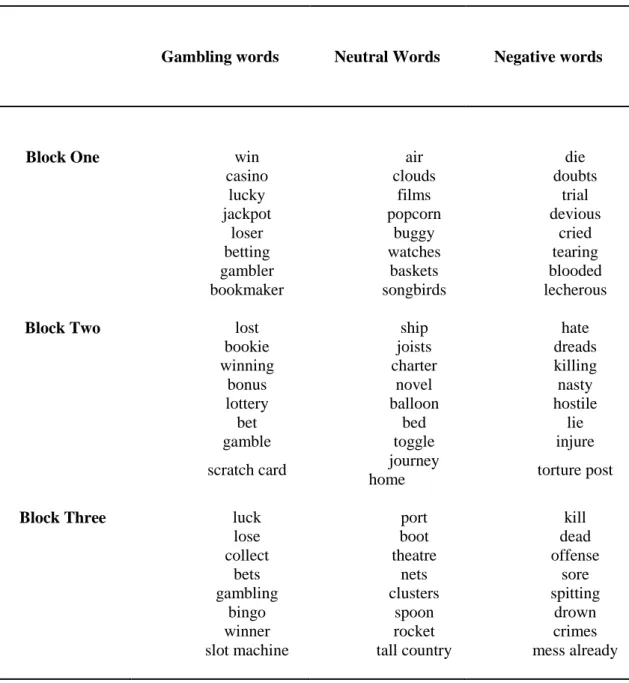
Table 2.3 Overview of methods, measures, theoretical construct and analysis Table 2.5.3 Gambling Stroop Task: Final selection of words
Table 2.7 Procedure: Sequence of tasks, questionnaires and interview
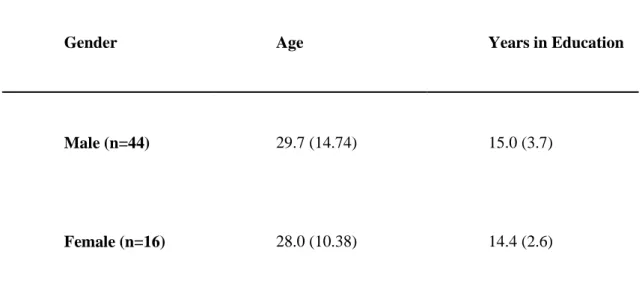
Chapter Three...101 Table 3.3.1 Participant mean age, education and gender ratio
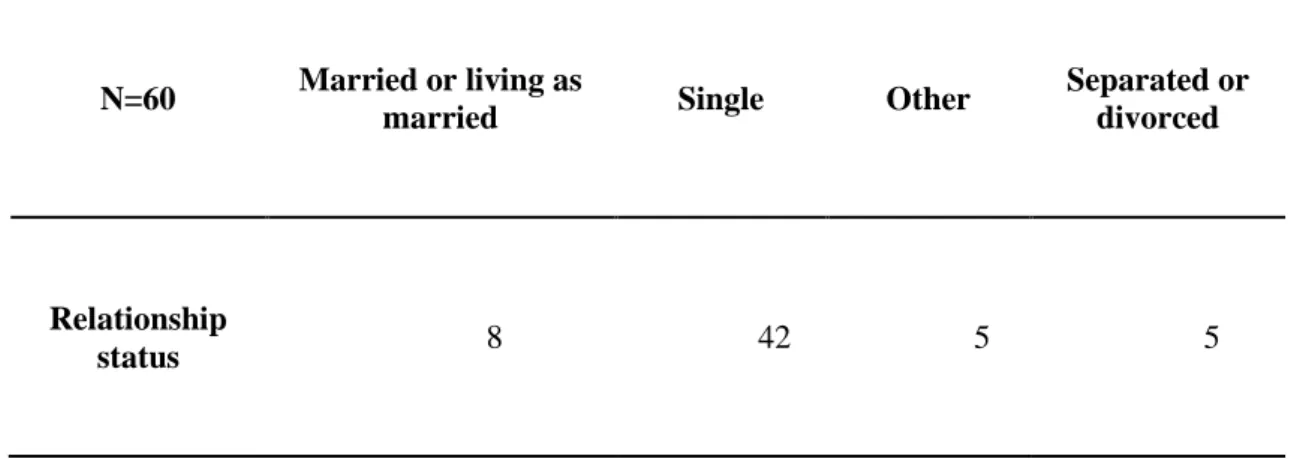
Table 3.3.1b Participant relationship status Table 3.3.1c Participant employment status Table 3.3.1d Participant ethnicity
Table 3.3.2 Participants (N=60) gambling engagement past twelve-months, three months and past week
Table 3.3.2b Self-report: Mean figures for first session gambling engagement Table 3.3.3 Self-report: Mean scores for PGSI, fallacious beliefs and dissociation Table 3.3.3b PGSI: Frequency of participant scores across categories
Table 3.3.4 LIWC2007: Means of core linguistic features in participant interviews Table 3.3.4b LIWC2007: Means for the four key categories (% of overall content) Table 3.3.4c Correlations of PGSI, self-report measures and LIWC2007 categories Table 3.4.1 Gambling Stroop Task: Mean RT for each word category and mean
differences between neutral to negative and neutral to gambling categories
Table 3.4.2 Roulette MouseTracker Task: Mean number of switch and stick responses for experimental and random trials
Table 3.4.3 Roulette MouseTracker Task: Means of MD values for each condition; experimental and random trials; switch and stick responses and totals Table 3.4 Correlations between self-reports and implicit tasks
Table 3.5 Predictors of problem gambling (PGSI)
Table 3.5b Beta values of all predictors in final model from session one
Chapter Four...133 Table 4.3.1 Self-report measures: Participant mean age, education and gender ratio for
low and high session
Table 4.3.1b Self-report measures: Participant relationship status in low and high sessions
Table 4.3.1.c Self-report measures: Participant employment status in low and high session
Table 4.3.1d Self-report measures: Participant ethnicity in low and high sessions Table 4.3.2 Self-report measures: Attendance and Self-Report mean figures for all
testing sessions
Table 4.3.3 Self-report measures; Comparison of means of low and high scoring sessions
Table 4.3.3b Self-report measures: Frequency of participant scores across PGSI categories in low and high sessions
xviii
Table 4.3.3c Self-report measures; Correlations of change in self-report measures Table 4.3.4 LIWC2007: Means of core linguistic features for low and high scoring
sessions
Table 4.3.4b1 LIWC2007: Means for the four key categories (% of overall content) for low and high scoring sessions
Table 4.3.4c Pearson correlations of change in self-report and interview data
Table 4.3.5 Implicit measures: Comparisons of means between low and high scoring sessions
Table 4.3.5b Pearson correlations between change in self-report measures and implicit measures
Table 4.3.5c Pearson correlations of all measures during the low scoring session Table 4.3.5d Pearson correlations of all measures during the high scoring session
Chapter Five...165 Table 5.2.2 Participants who moved more than 3 points, across a category, and are
problem gamblers at least once during the research
Table 5.2.2b Participants who moved more than 5 points on the PGSI but not been problem gamblers
Table 5.2.2c Problem gamblers who have reported change, but not across a category Table 5.3.2 Mean scores across categories for both positive and negative utterances
during high and low scoring interviews.
Chapter Six...191 Table 6.2.5 The twelve key changeable gamblers sessions and PGSI scores
xix
Chapter One...1 Figure 1.1.2 The excessive appetites model (Orford, 2001)
Figure 1.1.4 DSM-5 diagnostic criteria for gambling disorder (APA, 2013) Figure 1.4.1 Prochaska and DiClemente’s 10 processes of change (1986) Figure 1.5.3 Stroop Task: An example of colour word incongruence
Chapter Two……….……….55 Figure 2.4 Demographic questionnaire
Figure 2.4b Gambling activities questionnaire Figure 2.4.1 Original PGSI (Ferris & Wynne, 2001) Figure 2.4.1b Adapted PGSI questionnaire
Figure 2.4.2 Dissociation questions Figure 2.4.2b Fallacious beliefs questions Figure 2.4.3 Interview schedule
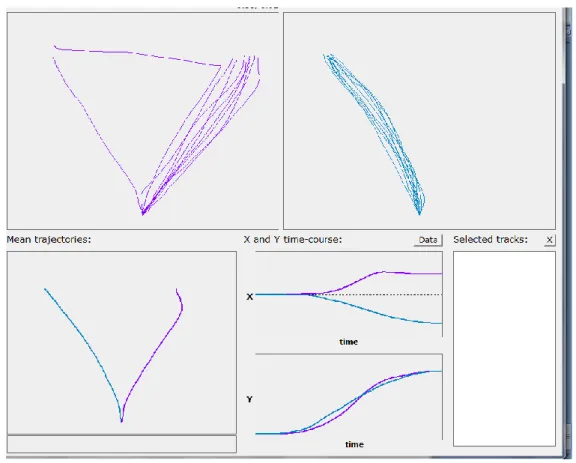
Figure 2.5.5 MouseTracker: Example of mouse movement capture
Figure 2.5.5b Roulette MouseTracker Task: Screen shot of trajectories mapped during experimental trials
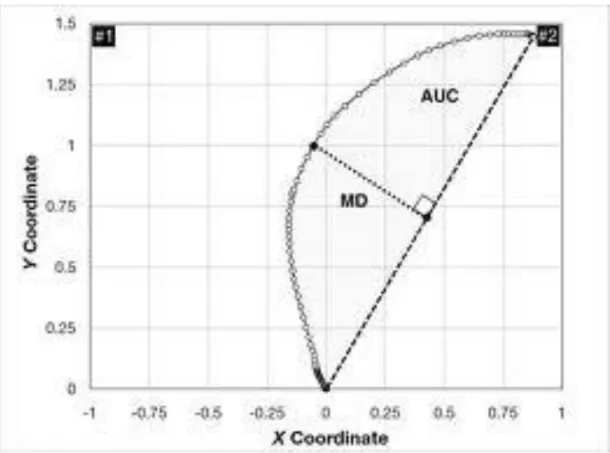
Figure 2.5.5c Roulette MouseTracker Task: MD and AUC measurements (Freeman & Ambady, 2009)
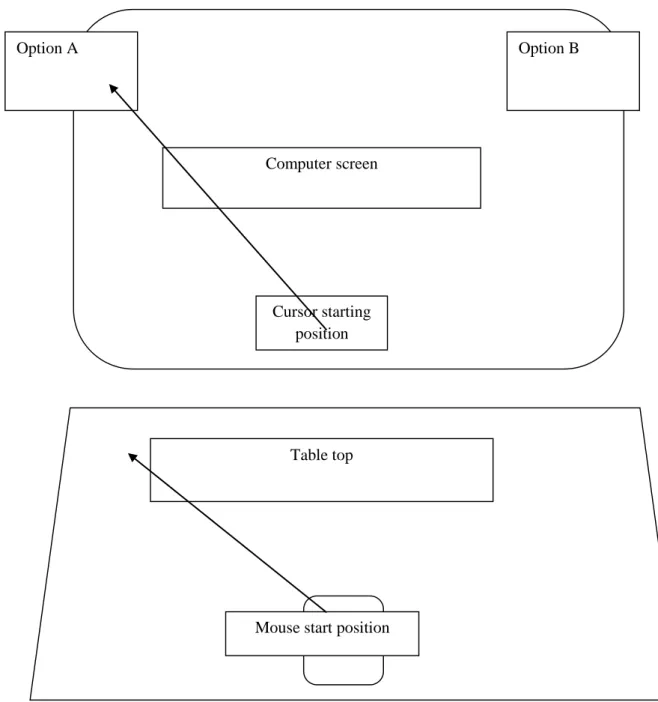
Figure 2.5.6 Roulette MouseTracker Task: Screenshots of the display showing the position of the selection squares, sequences presented in the centre of the screen followed by the star indicating the participant’s opportunity to select their preference
Figure 2.5.6b Roulette MouseTracker Task: Questions
Chapter Three...101 Figure 3.3.3 PGSI scoring
Figure 3.4.3 Roulette MouseTracker Task: Switch MD and stick MD values for experimental and random trials
Chapter Five...165 Figure 5.2.3 Theoretical analyses map
Figure 5.3.2 Interaction between type and number of utterance (positive and negative) during high scoring and low scoring interviews
xxi Acknowledgements
Dr Mark Moss, Professor Kenny Coventry, Professor Nick Heather & Dr Tamsin Saxton for the thesis.
xxiii
I declare that the work presented in this thesis is entirely my own.
Richard Cutter January 2016
1
Chapter One:
Introduction
1.1 Problem gambling: Setting the scene
The global gambling industry has experienced significant growth in recent years. The
Global Gaming Report showed gaming revenue in 2014 was in excess of $450 billion, a growth
of over 3% on the previous year (Graham, 2015). The E.U. Commission estimates annual
revenues in Europe were over €84.9 billion, with annual increases of around 3% (EU, 2015 online). In the UK, gambling is an increasingly popular leisure activity, with an estimated 73%
of the adult population taking part in some form of gambling in 2010 (Wardle et al, 2011), an
increase from 68% in the previous British Gambling Prevalence Survey conducted in 2007.
Whilst the majority of those engaging in gambling activities have no problems arising from their
gambling, it is estimated that between 250,000 to almost 600,000 adults may be currently
experiencing problem levels of gambling behaviour in the UK (Wardle et al., 2011; Wardle,
2007), estimated to be in line with those for the global adult population (ranging from 0.5% to
7.6%, the average rate being 2.3%; (Williams, Volberg, & Stevens, 2012). Furthermore it is
estimated that between 10 and 17 further people are directly affected by each problem gambler,
which equates to 4-16% of the UK population (Rogers, 2013).
Research into loss of control of gambling behaviour has been conducted for several
decades. During that time an analysis of the British Gambling Prevalence Survey 2007 concluded
that future research in gambling should examine longitudinal gambling behaviour and multiple
measures of gambling involvement (LaPlante, Nelson, LaBrie, & Shaffer, 2011). The recent view
2
of problematic phases of addiction (Cox, Enns, & Michaud, 2004). It has also been noted in
gambling research that there has been a distinct lack of qualitative research that has examined
problem gambling in the context of talking to the gambler in order to understand problem
behaviour (Wood & Griffiths, 2007).
Traditionally self-report measures have been popular in psychological research, but open
to the question of reliability in the participants’ ‘honest’ responses. This is particularly the case
when one considers gambling. A key hallmark of problem gambling is that gamblers, like other
addicts, do not want to admit they have a problem and often lie about their gambling behaviour
(Heiskanen, 2012; Locke, Shilkret, Everett, & Petry, 2013; Weinstock, Massura, & Petry, 2012).
In an ideal world, a method capable of identifying problem gamblers without asking them directly
or relying on self-reported behaviour alone would clearly be a step forward.
Addiction epitomises the complexity of hard to maintain behaviour change and in recent
years gambling addiction has specifically been identified as key to a complete understanding of
addiction and behaviour change (Association, 2013; Orford, 2001). A variety of complex methods
and theories have emerged in attempts to give a holistic understanding of the forces acting on an
individual’s behaviour. Rather than continually diverging towards opposing theoretical standpoints one of the aims of this thesis is to explore coherence between different methods and
theoretical traditions which may offer a practical understanding of these issues.
This thesis has two primary goals. Firstly, it aims to employ multiple methods of
assessing problem gambling amongst a sample of regular gamblers and secondly, it aims to
examine change within that sample over a period of two years, via repeated sessions at
three-month intervals. The remaining part of this introductory chapter will review some of the key
theories regarding gambling, addiction and behaviour change. It will also explain some of the
different methodological approaches to their measurement, setting the stage for the methods and
3 1.1.1 Contemporary views of addiction
To begin to understand how problem gambling behaviour fits within a modern concept
of addiction there are some issues with understanding addiction per se that need to be considered. This section will review key theories and approaches relevant to the current research, without
being an exhaustive account of literature in the area.One very recent definition of addiction comes
quite explicitly from a disease/biological approach.
“Addiction is a primary, chronic disease of brain reward, motivation, memory and related circuitry. Dysfunction in these circuits leads to characteristic biological, psychological, social and spiritual manifestations. This is reflected in an individual pathologically pursuing reward and/or relief by substance use and other behaviours. Addiction is characterized by inability to consistently abstain, impairment in behavioural control, craving, diminished recognition of significant problems with one’s behaviours and interpersonal relationships, and a dysfunctional emotional response. Like other chronic diseases, addiction often involves cycles of relapse and remission. Without treatment or engagement in recovery activities, addiction is progressive and can result in disability or premature death.”
American Society for Addiction Medicine (http://www.asam.org/for-the-public/definition-of-addiction, 03/09/2014)
There is much data from animal studies that might support the disease model of addiction.
B.F. Skinner’s early behavioural experiments involved individual rats, placed into boxes, and presented with levers that would enable self-administration of food and/or drugs. This often led
to the rejection of food in favour of the drug, eventually culminating in fatal self-administration
(Skinner, 1969). However, later approaches to animal models revealed a more complex
interaction that cannot be explained only by the medical biological effects of the drugs being
administered (Alexander, Beyerstein, Hadaway, & Coambs, 1981; Alexander, Coambs, &
Hadaway, 1978). When rats were placed in a more realistic social setting, involving a colony of
other rats with a variety of activities and options as behavioural outlets, the rats did not behave in
the same way, more often rejecting the consumption of drugs and instead engaging in other
socially rewarding activities. This brings the role of the social element and the availability of
4
of addiction theory. Gorski (1996) in evaluating the disease concept specifically when applied to
alcoholism, acknowledged evidence that biomedical processes take place amongst users of
addictive substances, causing biological reinforcement and adaptation of reward systems. This
leads to changes in the brain’s reward mechanisms and physiological symptoms which can be
interpreted as a medical condition. However, Gorski also suggested that a reframing of addiction
from a purely physiological disease, to a broader concept bio psychosocial model is a positive
move in defining addiction.
The biological approach which leads to the medical model of addiction focuses purely on
brain function prior to, during, and after drug use. Some factors are believed to be genetic,
predisposing individuals to addiction (Crabbe, 2002) and other changes are believed to take place
due to consumption of substances which alter brain function and response, leading to changes in
behaviour (Kalivas & O'Brien, 2008). In recent years there has been much criticism of the
medical model of addiction, largely originating from psychological research in the area. Questions
can also be posed to a disease model of addiction from the social domain. For instance, if addictive
behaviour is attributed to a medical condition, it raises questions as to why addicts can find
themselves punished as criminals for enacting the symptoms which form part of the definition of
the disease. These blurred lines between medical definitions and social responses to addictive
behaviour require a more thorough understanding of the concept of addiction (Kurti & Dallery,
2012).
Several contemporary psychological and sociological approaches have challenged the
disease model and suggest instead that addiction is a consequence of a complex interaction
between individual differences, cognitive and biological mechanisms and the social context in
which one finds themselves (Heyman, 2009; Orford, 2012). To highlight some of the key issues
that support this, there is evidence that suggests drug addiction can vary dramatically in a
population depending on the date of one’s birth. For example in the USA, it has been reported that people born between 1917 and 1936 were thirteen times less likely to develop a drug addiction
that those born between 1952 and 1963, a difference that is interpreted as due to wider
5
(Robins & Regier, 1991). Other socio-demographic factors such as average income in the area
someone lives is also found to be predictive of developing a drug addiction (Brownsberger, 1997).
In a longitudinal study of randomly sampled Vietnam veterans assessing pre, during, and
post tour narcotics use, it was found that prior to arriving in Vietnam less than 1% of the sample
had ever been addicted to narcotics. However, during their time in Vietnam, approximately 50%
of the sample had used narcotics, with 20% reporting addiction to narcotics. Of particular interest
is that on return to the US the reported levels of narcotic use and addiction returned to pre-tour
levels. One interpretation of this acute period of narcotic use and addiction is that the
environmental and social variables that mediate consumption were distinctly different during the
period in Vietnam, and this interpretation offers a viable alternative to the proposition that
addicted levels of drug use may be mainly due to a medical or biological predilection (Robins,
Heltzer & Davis, 1975). Based on data from the National Comorbidity Survey in the US it has
been suggested that there are extremely high rates of spontaneous recovery amongst addicts, with
recovery from addiction ultimately more likely than continued addiction to a fatal end. Without
any medical intervention approximately 80% of addicts reach recovery without any medical or
professional intervention (Anthony & Helzer, 1991). Davies (1998) also refers to the difficulties
in labelling addiction as a disease disorder, when much of contemporary social views surrounding
addiction involve an aspect of free will being engaged by the addict and that in many ways they
are regarded as having a weakness of will, not a disease. Davies examines some of the key
colloquial common social considerations regarding addiction, and the use of phrases such as ‘I can’t’ which is applied to the inability to control Parkinson’s disease tremors on one end of the scale, and in response to an unwanted party invite at the other. When an addict uses ‘I can’t’ in
response to the question ‘why don’t you stop?’ are they verbalising the addictive uncontrollable compulsion that prevents such action, or simply a preference to not stop using, or an inability to
consider or want to stop? It is argued by Heyman (2009) that if addiction is purely a disease of
the brain, then it should not be influenced in this way by social determinants. Whilst brain changes
may take place during substance use, or addictive behaviour, it clearly does not reveal the
6
Key ideas that have developed from a broader definition of addiction include
‘melioration’, a concept of how people match their choices regarding reward to either immediate or delayed gratification, specifically when choosing a short term reward over a larger more
beneficial long term one (Herrnstein & Prelec, 1992). According to Herrnstein’s matching law,
people match their levels of behaviour to the levels of reinforcement received for that behaviour
(Herrnstein, 1970). Herrnstein and Prelec also use the term ‘bookkeeping’ to refer to how this
matching behaviour takes place with regard to immediate or delayed gratification. When a person
works from a local bookkeeping perspective, they are seeking immediate gratification, while from
a global bookkeeping perspective they are delaying immediate gratification for more beneficial
long-term goals. It is argued that addicts always work from a local bookkeeping perspective,
always choosing immediate reward, even at long-term detriment to themselves and others. In
order to achieve change in the cycle of addictive behaviour, a more global bookkeeping
perspective must be developed and nurtured (Herrnstein, Loewenstein, Prelec, & Vaughan, 1993).
Global bookkeeping and long term higher rewards correspond with social and moral
responsibilities that are beyond the personal and immediate cost and reward functions that are
acted out during addictive behaviour. This will be discussed further in relation to Orford’s (2001) model of excessive appetites later in this chapter (1.1.2 page 8).
Another important concept when discussing change in an individual’s addictive
behaviours is that of relative reinforcement value (RRF) (Orford, 2001). This originates from a
behavioural economics perspective, which places the value of enjoyment gained from engaging
in the addictive behaviour in direct comparison to the enjoyment or satisfaction gained from
alternatives which do not involve links to the problem behaviour. It has been shown that
individuals who engage in several positive (drug-free) activities require only a small increase in
the positive reward from these activities in order to move away from drug taking. However, those
individuals who receive a lot of reward and reinforcement from drug taking and drug related
behaviour require substantial change and reward from alternatives if there is to be any reduction
in the problem behaviour (Kurti & Dallery, 2012). Again this relates to Orford’s (2001) model,
7
individuals who may find their daily routine, social networks and environment completely
encompassed by cues and reinforcing factors related to addictive behaviour. In order to
successfully move out of the problem behaviour, changes must be made to the wider infrastructure
that holds the problem behaviour in place. This also draws parallels with considerations of
automaticity, which is reference to an unconscious automatic response developed over repeated
exposure, or training in a particular situation, which produces the same unconscious
physiological, physical or cognitive reaction whenever a particular stimulus is received.
Increased engagement in an activity leads to automaticity of actions related to the activity, as well
as building strong social networks and behavioural habits that help perpetuate the addictive
behaviour and make it increasingly difficult to abandon once established, as no alternate networks
or habits are readily achieved (Bargh, Schwader, Hailey, Dyer and Boothby, 2012).
Another key notion relating to the multiple influencing factors in people’s behaviours and
unconscious or uncontrolled responses is that of dual system processing (Wiers & Stacy, 2006).
Dual system processing proposes two different systems interacting and producing choice
outcomes. One system is regarded as conscious and deliberate, requiring higher levels of
concentration, thought and consideration; the other system is intuitive, impulsive and automatic.
Dual processing theory will be discussed in more detail later in this chapter when applying
theoretical explanations of gambling addiction.
In stark opposition to a biological medical model, Davies (1998) takes a more extreme
view that addiction only exists as a personal manifestation of a social construct, with no real entity
or underlying cognitive processes taking place. Heyman (2009) also refers to addiction as a
question of choice, rather than affliction. Both Davies and Heyman move away from the medical
biological concepts of addiction that have been popular in models considered above. Whereas
Davies approaches his analysis of drug users’ discourse with doubts over the honesty or clarity that can be achieved, more recently Orford (2001, 2012) argues that individuals do attempt to
give honest accounts of their behaviour in their discourse, and while it will by its nature contain
contradictions and inconsistency due to the complex conflicts taking place, we should not be
8
views (that is, as addiction being either a free choice or a medical disease), regarding these views
as attempts to over simplify a much more complex phenomenon. There is no single definition of
addiction that suits all people from all alternative scientific approaches at all times. Varying
backgrounds, understanding what constitutes knowledge in a particular area and the constantly
changing landscape of psychological research make pinning down one truth to cover all a difficult
thing to do. This is the view constructivist approaches to addiction subscribe to, where the
addicted state is no more than creation of addict identity, by both the individual and the collective
wider socio cultural construct which maintains it. Orford does not go that far, but he does welcome
the movement away from a positivist scientific, medical approach to understanding addiction,
toward a multifaceted model incorporating socio-cultural elements. It is to a more detailed
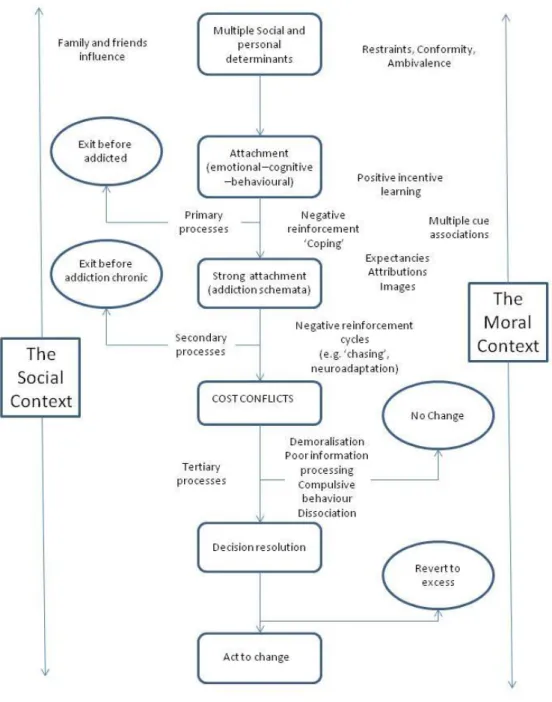
consideration of Orford’s model that we now turn. 1.1.2 Excessive appetites (Orford, 2001)
Orford’s (2001, 2012) approach to addiction and addiction theory as a whole provides a complex model incorporating social, behavioural, cognitive and moral elements. Excessive
appetites and addictive behaviours cannot, he states, be limited simply to the excessive or addicted
consumption of substances, either legal or illegal. The notion of addiction must, if we are to begin
to understand it comprehensively, include behaviours that include such things as gambling, not
just consumption of substances. There are many routes into addiction, stemming from not only
individual differences, but also social and environmental determinants, which all contribute to the
development of an addiction. Within individuals, different aspects of addictive activities provide
different functions for that individual. The notion that gambling can be compartmentalised as a
single activity which generates the same emotional or physiological response, or is engaged in
the same way by an individual irrespective of which type of gambling it is, is an over
simplification of the issue. Orford’s excessive appetites model focuses on a behavioural
framework of psychology, with both learning theory and cognitive behavioural aspects. However
as mentioned the social contribution and the wider moral stand point on issues surrounding
9
model. Orford’s model is not one of disease or biological basis, in that he claims there is a more integrated approach required of modern addiction knowledge. This does not reject the notion that
individual differences and pharmacological effects of substances do have an effect, but that these
factors are not on their own sufficient to explain the multi-faceted interactions taking place in the
evolution of an individual’s addiction. This is clearly stated as a psychological model of addiction that incorporates the conception and the maintenance of not only substance, but also behavioural
addiction such as gambling (see Figure 1.1.2).
What is often ignored in approaches to understanding changes in addictive behaviour are
the social structures that contribute to change, whether it be close support or broader opportunities
to bring about a supportive journey out of addiction, and the moral processes, which point toward
the wider attitudes found within the addict’s cultural environment, i.e. is this behaviour tolerated,
or judged to be harmful to oneself and/or others? This is possibly due to the strong adherence in
popular culture to a medical model of addiction, or a colloquial attitude of having an “addictive
personality”, that then requires focus on the individual rather than the wider social context they
find themselves in.
Orford suggests that giving up addiction is a natural consequence of conflict built up over
increasing costs against strong attachment, interacting with a variety of other complex factors
beyond the scope of individual differences, or psychobiological limitations, and that there are two
elements to the change process regarding addiction – a cognitive stage of re-evaluation and
10
11
There have been to date four broad interpretations of how addiction develops (Skog,
2003):
One, addiction as disease. This has been largely abandoned.
Two, addiction as rational self-medication. Here the addict begins as a rational free choosing self-medicator, who gradually develops attachments that diminish rational
ability to change.
Three, addiction as a primrose path. The addict slowly slips into a state of addiction without awareness.
Four, the divided self. The addict has conflicting attitudes and beliefs about the behaviour, either in succession or simultaneously, which creates huge internal conflict.
Orford draws on aspects of the three final elements, but largely from the last. It is the
internal conflict that is a key central point, and the elements which contribute to creating and
maintaining that conflict are multiple and various. It is also Orford’s view that there are three key
indicators that an individual may be experiencing addiction, which are cognitive, behavioural and
emotional changes, the combination of which is as strong an indicator of gambling addiction as it
is any other substance based addiction, which brings us to the current definition of gambling
addiction specifically.
To summarise, Orford’s definition of addiction is “an attachment to a particular object of consumption, so strong that the person finds it very difficult to curtail consumption despite the
considerable harm it is causing” (Orford, 2011. p. 72).
In addition to Orford’s concise definition, Griffiths (2013) presents six core components of addiction. He argues that any behaviour fulfilling the six components can be defined as addiction.
Salience – If the activity/behaviour totally preoccupies a person’s thoughts. Even when not currently engaging in the behaviour, the person is thinking about it.
12
Mood Modification – Associated consequences of the behaviour that achieve an experience of heightened sensations, such as a buzz or a high: or alternatively a subdued,
relaxing sensation such as escape, or numbing.
Tolerance – an increased level of activity in order to achieve the previous effects. Withdrawal symptoms – If the activity is stopped or prevented somehow, the person
experiences negative physical and or/emotional effects.
Conflict – Conflicts can be numerous, referring to conflicts with other people due to the behaviour; conflicts with other behaviours or activities (work, family commitments);
conflict with self.
Relapse – A tendency for reverting to past behaviours even after long periods of control, and for the behaviour to return to extreme levels quickly.
Griffiths argues that these core components are present in any behaviour that might be
regarded as additive.
1.1.3 Gambling addiction
Moving from addiction in general, as we begin to discuss the development of gambling
addiction, there is an issue raised with the distinction between gambling problems and problem
gambling (Blaszczynski & Nower, 2002). The definitions and criteria used to categorise problem
gamblers may make reference to individuals experiencing gambling-related problems that are not
the same as being gamblers who have problems controlling or regulating their gambling impulses.
For instance, a definition of problem gambling that uses social problems arising from gambling
behaviour as a criterion by which to label the gambler as a problem gambler, may find that the
social problems arise from religious differences or disagreements in family finances that are not
actually issues of individual impairment of self-control or any underlying psychological disorder.
This can be exemplified by the self-justifying problem gambling definition which states that
problem gambling leads to harm for the individual, their social network or community (Ferris,
13
religious person if their spouse spent two pounds a week on the lottery, would contribute to this
definition of problem gambling (Walker & Barnett, 1999). Likewise, if a person chose a gambling
activity over another recreational alternative of the same monetary cost, much to the distress of
their partner, leading to a negative emotional outcome, this could contribute to a diagnosis of
problem gambling. The subjective nature of the criteria used to define problem gambling was also
raised, that it is often ill-defined or uses arbitrary terms, often self-justifying, when defining
addiction of any kind (Davies, 1998).
1.1.4 DSM-5 definition of gambling addiction
The most widely accepted current definition of addictive behaviour can be found via the
DSM-5 (2013), which places all substance use disorders on a continuum from mild to severe, and
whilst each separate substance is dealt with separately, it is acknowledged that there are
commonalities between them when diagnosing substance use disorder. In addition to the use of
substances, for the first time there is now present a category of addictive behaviours, which
contains only gambling disorder. This is due, as stated in the DSM-5, to recognition of similarities
between gambling disorder and substance use disorders. It is of key interest for the present
research that gambling disorder is now recognised by the DSM-5 as the first and only behavioural
addiction and is categorised alongside substance use disorder. Someone is defined as having a
gambling disorder if they exhibit four or more of the criteria in Figure 1.1.4 over a twelve-month
14
DSM – 5 Non-Substance-Related Disorders Gambling Disorder: Diagnostic Criteria 312.31 (F63.0)
1.
Needs to gamble with increasing amounts of money in order to achieve the desired excitement.2. Is restless or irritable when attempting to cut down or stop gambling.
3. Has made repeated unsuccessful efforts to control, cut back, or stop gambling.
4. Is often preoccupied with gambling (e.g., having persistent thoughts of reliving past gambling experiences, handicapping or planning the next venture, thinking of ways to get money with which to gamble).
5. Often gambles when feeling distressed (e.g., helpless, guilty, anxious, depressed).
6. After losing money gambling, often returns another day to get even (“chasing” one’s losses).
7. Lies to conceal the extent of involvement with gambling.
8. Has jeopardized or lost a significant relationship, job, or educational or career opportunity because of gambling.
9. Relies on others to provide money to relieve desperate financial situations caused by gambling.
Figure 1.1.4 DSM-5 diagnostic criteria for gambling disorder (APA, 2013)
From this general discussion of addiction theory and armed with a contemporary
definition of gambling addiction, we now look at how problem gambling develops and specific
15 1.2 Applying theory to problem gambling
Again the aim of this section is not to provide an exhaustive account of theories of
problem gambling, but rather to consider some of the main theoretical constructs that have been
proposed to underpin problem gambling which are directly applicable to the current research.
1.2.1 Learning theories
One of the simplest and clearest ways to explain the development of addiction is through
the psychological behavioural understanding of conditioning (Skinner, 1969). This is in keeping
with most modern views of addiction formation and explains the way people acquire and maintain
behavioural habits. Also referred to as Skinnerian conditioning, operant conditioning is explained
by the way a specific behaviour is reinforced when it is met with a reward. Increases in the specific
behaviour lead to increased reward, and the associated rewards, and changes in physiological
arousal all lead to an increased desire to engage in the activity. In the case of gambling, the
primary reward may be winning money. However, it is not the only reward. Many gambling
activities have social settings, so engaging in gambling activities also leads to increased social
interaction, and successful gambling in a social setting can lead to raised social status.
Furthermore, the increased level of arousal when watching a sports game, and the potential for
not only watching your team win, but also gaining a financial reward alongside the win, or risking
but avoiding a loss may also be rewarding (Orford, Wardle, Griffiths, Sproston, & Erens, 2010).
The fact that financial winnings can then be exchanged for many other rewarding goods and
services, which are in themselves appealing in some way, such as items of value, drugs and
alcohol, or sex should not go unnoticed (Orford, 2012). Quite often one of the initial reasons a
gambler will give for gambling is the potential to receive money. An initial early win experience
will reinforce the view that money will be won easily (Sharpe, 2002; Haw, 2008), although the
desire to play to win each time can change along a gamblers’ career. It is often found that early
stage problem gamblers most commonly report playing to win money, while later stage problem
16
Bearing in mind that all mainstream organised gambling establishments will operate on
the basis that most customers lose money, how does operant conditioning explain the increased
levels of gambling amongst a group who mostly does not receive the reward they desire? Factors
that may influence operant learning include the notion of gradient of reinforcement. Here
immediate rewards, possible physiological benefits, and occasional wins, outweigh the long term
outcomes which will not be realised until hours or even weeks later, when the gambler has to
return home without money, or fails to pay a bill at the end of the month. The immediate
occasional money reward outweighs the distant penalty of poverty, even though it is ultimately
greater. This corresponds with the concept of local and global bookkeeping discussed earlier
(Herrnstein & Prelec, 1992).
Predictable outcomes in an activity allow the individual taking part to reliably know when
to expect a reward. However, if the rewards come without any definite predictability, the
individual participates actively at each juncture in the hope that the desired outcome will be the
next one to arrive. Predictability allows a degree of certainty, while unpredictable outcomes allow
hope. This feeds well into the gamblers’ fallacy covered further in section 1.2.4.
Classical conditioning would suggest that previously neutral stimuli such as dice, betting
slips or roulette tables develop incentive meaning to the individual through association. This type
of conditioning is experienced unconsciously through regular exposure to certain cues in a
gambling environment, or certain associated behaviours and interactions with others in a social
setting. These associations and stimuli which previously held no inherent potency gradually
become linked to the emotional and psychological states of arousal experienced during gambling
behaviour.
1.2.2 Cognitive theories
Moving on from some of the general addiction concepts that are applicable to gambling,
what follows are some of the cognitive concepts which are found to be particularly relevant to
17
strategies people generally employ in everyday life also can affect gambling beliefs and behaviour
(Wagenaar, 1988). Heuristics, such as the availability heuristic and the representative heuristic
are used to explain people’s misunderstanding of probability. Kahneman and Tversky’s work
suggests that people in general are more influenced in their beliefs about outcomes based on
striking individual cases than general statistical evidence. So presenting a gambler with statistics
which demonstrate the percentage of losses experienced by gamblers in a casino or bookmakers,
will not have the same effect on their beliefs about gambling as a compelling individual case
where someone wins a large amount of money (Kahneman & Tversky, 1974; Tversky &
Kahneman, 1973).
This misunderstanding of probabilities during random gambling tasks may go some way
to explain the persistent and compulsive gambling, despite reoccurring losses. While operant
conditioning may be very important in our understanding of the development of gambling
addiction, there are other contributing processes believed to be taking place. The previously
mentioned dual processing approach is based on two internal systems involved in
decision-making and behaviours. Table 1.2.2 shows some of the typical characteristics attributed to the
two systems.
Table 1.2.2 Dual-process theories: Key characteristics (Evans, 2003)
System One System Two
Unconscious Conscious
Evolved Early Evolved late
Shared with animals Uniquely human
Nonverbal Verbal
Rapid, parallel Slow, sequential
High capacity Low capacity
Domain specific Logical, abstract
Pragmatic Hypothetical
18
Recent models of addiction have begun to highlight the role of the relationship between
conscious, explicit behaviour and unconscious, implicit processes that are less subject to
conscious awareness and control (Borland, 2013; Wiers & Stacy, 2006). System One is a quick
unconscious intuitive system which people tend to defer to when making decisions as it is less
demanding; System Two is a slower more thoughtful and demanding system which requires some
effort to override the quicker, impulsive, System One (Wiers & Stacy, 2006).
One aspect of System One thinking relates to cognitive biases and errors that individuals
make by relying on intuitive misunderstandings of probabilities, and/or causal relationships. The
present research incorporates a self-report of fallacious beliefs, tapping in to erroneous beliefs
during decisions of risk and probability which have been of interest since the illusion of control
was first examined by Langer (Langer, 1975) and Tversky and Kahneman’s (1971) work on the
gamblers’ fallacy.
1.2.2.1 The illusion of control
A key element in gamblers’ erroneous cognitions is that of the illusion of control (Langer,
1975). Many different things can affect an individual’s illusion of control, which is essentially the
belief that the individual possesses some influence on the outcome of a random event, greater
than the actual probability of outcome. This could be such things as believing that one possesses
skill in a game that is purely chance. Likewise, prolonged play of a specific game can lead to
increasing confidence, due to familiarity with the game, whilst chance remains random. In a
similar vein, individuals will choose a familiar game over an unfamiliar game, even when the
likelihood of winning is unaffected by the familiarity. There is also the assumption that a near
miss represents an outcome that is closer to winning, as opposed to a loss, and therefore promotes
the belief that skill is developing, and promotes further play (Parke & Griffiths, 2004).
Following the illusion of control, erroneously perceived control in a gambling task may
lead to increased wagers and risk, even when no control is present. Recent research looking at
19
a group of problem gamblers to non-problem gamblers, neural correlates of perceived control
exist amongst problem gamblers that mistakenly lead to a belief of perceived control where no
control exists (Hudgens-Haney et al., 2013). Problem gamblers were in fact five times more
confident in their decision-making during the gambling task than the non-problem gamblers. The
magneto encephalography responses comparing outcomes in two different tasks, one with some
levels of possible control and one without any possible control, found only the non-problem
gamblers demonstrating neural differences in response to the different tasks. This lack of
discrimination and over confidence amongst problem gamblers during their decisions during
non-control tasks is believed to demonstrate lack of inhibitory non-control when engaged in gambling tasks
in problem gamblers (Hudgens-Haney et al., 2013).
1.2.2.2 The gamblers’ fallacy
The gamblers’ fallacy as previously mentioned is the tendency to expect a natural balance
in chance occurrences (Tversky & Kahneman, 1971). While outcomes are unknown at each point,
the gambler (mistakenly) believes that the probability of individual outcomes is dependent upon
the total range of outcomes. For example, if a fair coin is tossed fifty times, then probability theory
indicates that the most likely overall outcome would be 25 heads and 25 tails. The gamblers’ fallacy would lead them to believe that an equal number of heads and tails will be revealed across the fifty outcomes. Therefore, if a larger proportion of heads are revealed early in the sequence,
there is a belief that due to an overall outcome of equality, more tails will be revealed later in the
sequence, and that this is more likely the longer the sequence goes on. So the losing gambler will
continue to place money on their lucky number on roulette, believing that the longer they play the
greater the chance of their number coming up. The reality is that at each spin (or coin toss) the
probability is reset and length of play has no effect on outcome (Tversky & Kahneman, 1971).
This type of sequence is known as a variable ratio reinforcement. Many people fall into this error,
believing that if their number has not come up on roulette, that it is due, or that certain lottery
numbers are due, because they have not come up for a long time (Orford, 2001). However, at each
20
of the coin toss, each outcome is equally probable, heads or tails, and previous outcomes have no
bearing on that. This is known as Random Ratio reinforcement. The probability of 50 heads is
just as likely as any other specific sequence, however the likelihood of tails appearing during any sequence is greater, because of the greater number of possible sequences which may include a tails at any point (Orford, 2001).
Whilst some of these cognitive biases appear explicitly, there is strong evidence that
addicts of all kinds are affected by unconscious attentional bias (System One). This has been
demonstrated through use of the Stroop task in a variety of addictions (Cox, Fadardi, & Pothos,
2006). Attentional bias refers to the diversion of attention away from the task in hand, by objects,
words or other items which are strongly associated with the addiction of the individual.
There is evidence that gamblers develop cognitive biases which allow them to focus more
on wins and near misses, during recall of a gambling episode, and dismiss clear losses. By
examining the role of near losses in gambling machine play, it is suggested that gambling
establishments produce large numbers of near losses, which are misrepresented by the gambler
as almost wins. This leads to heightened arousal and physiological effects which produce rewards
even though the gambler is losing, as well as a misinterpretation of the event as one of skill and
the illusion of control on the part of the gambler, encouraging further play, which would not be
encouraged by a clear loss (Clark et al., 2013).
Research into near miss outcomes has revealed some interesting concerns regarding the
exploitation of industry regulations. A near miss outcome can be defined for the purposes of
gambling activities, as an outcome that offers no reward, but presents itself as similar in many
other respects to a full win. Such outcomes are often misinterpreted by gamblers as a
demonstration that they are acquiring skill at a particular game, and encourages play by those
individuals under this misapprehension (Clark et al., 2013).
Moderate amounts of near miss outcomes of around 30% promote persistent continued
play, specifically amongst slot machine players (MacLin, Dixon, Daugherty, & Small, 2007).
Whilst near misses are accepted as being less desirable than full wins, there is neuro-imaging
21
full wins, and that these responses may be increased amongst problem gamblers (Clark,
Lawrence, Astley-Jones, & Gray, 2009). Evidence of near misses heightening reward expectancy
has also been demonstrated in animal studies. In a task where a ‘win’ was indicated by three
continuous lights in a simulated slot machine ‘game’, two out of three lights produced heightened reward expectancy and behaviour in rats. These findings have been interpreted as dopamine
modulating reward expectancy in near miss outcomes, leading to an enhanced near miss effect
which encourages continued gambling behaviour (Winstanley, Cocker & Rogers, 2011).
However, the extrapolation from neurochemical responses to psychological meaning in animals is a large gap to span. In recent human research, 122 participants were assessed using the Problem
Gambling Severity Index (PGSI) and measured for skin conductance responses and post
reinforcement pauses during a slot machine simulation. The findings suggest an interpretation of
frustration by the participants at near miss trails, stimulating aspects of the reward system which
in turn encourage further gambling behaviour (Dixon, MacLaren, Jarick, Fugelsang & Harrigan,
2011). From a gambling environment perspective, near miss outcomes are not regulated by the
industry in the same way as full win outcomes are. But as demonstrated, the evidence suggests
that near win outcomes may play a significant part in promoting continued game play, even in the
face of losses, amongst gamblers. Problem gamblers have also reported belief in insider
information, or secret systems that eventually will lead to profitable gambling success. Some
individuals finally accept that such a system does not exist, whilst others believe that any failure
is due to them not following the system correctly (Wood & Griffiths, 2007).
In other decision-making research which involved a simulated gambling task, it was
found that people generally demonstrated a feeling about whether an outcome would be good or
bad before they had enough information to know if it really was the case (Hinson, Whitney,
Holben, & Wirick, 2006). Hinson et al argue that individuals who lack the emotional reactions
that signal good or bad choice outcomes are particularly bad at making good choices in such a
task. During the experiment good and bad outcomes were accompanied by salient words, which
were either congruent or incongruent to the outcome. Congruent word to outcome results
22
relationships interfered with performance. In another version of the experiment, salient words,
either positive or negative were held in working memory, whilst engaging in the gambling task.
Positive words improved performance during the task, and negative words inhibited performance,
suggesting that embedded value or meaning of words can affect performance implicitly during a
decision-making task. (It is for this reason that negative words have been selected as one of the
word categories for the Gambling Stroop Task used in this thesis, detailed in Chapter Two.)
Somatic markers are regarded as unconscious emotional reactions to salient stimuli, and
are believed to affect decision-making (Bechara, Damasio & Damasio, 2000). Skin Conductance
response as a measure of somatic marker was taken during the gambling task research by Hinson
et al (2006), and appeared only when performance was better, but also only appeared as the
session progressed and good performance was established. Findings from this research suggest
that pre-existing biases can influence gambling task decision-making. Well established somatic
markers can have a positive influence in unconscious decision-making during a gambling task,
and even when specific knowledge of a task may suggest certain decision contingencies, somatic
markers can still unconsciously influence decision-making. Reactions that are being triggered
unconsciously during deliberation of a decision may be being influenced by somatic markers
modulating response without a person’s conscious awareness. The physiological reactions that accompany good decision-making have an unconscious effect on people’s future decision-making
when similar physiological responses occur. The authors conclude that poor decision-making
during a gambling task can stem from interference with cognitive processes that are required to
anticipate good outcomes. Interference in this ability can come from increased cognitive load, and
emotional biases produced from stress, anxiety or depression, all characteristics that are
associated with problem gambling (Hinson et al., 2006).
Pathological gambling as previously mentioned is categorised by the DSM-5 as the only
behavioural addiction, relying not on consumption of a substance but developing through
engaging in a type of decision-making behaviour, relating to the concepts of reward described as
conditioning. Gambling (particularly organised) as an activity, has the striking characteristic of
23
Addiction of many kinds, including gambling, contains a paradox of behaviour where a person
may consciously state that they know the harm of the behaviour; however, they still engage in the
harmful act despite this conscious awareness. Wiers and Stacy (2006) explain this with their dual
processing model of decision-making, which proposes two systems at work when decisions are
being made. The first, a fast impulsive system based on instincts and heuristics, is quick and often
inaccurate. The second, a slower more conscious, thoughtful system, takes more time and effort
to consider the options based on actual information present. It is believed that repeated addictive
behaviour strengthens the automaticity of impulsive tendencies (System One) related to that
addiction, which are outside the control of the slower conscious System Two (Wiers & Stacy,
2006; Redish, Jensen, & Johnson, 2008).
Cognitive explanations of addiction can reflect differences between implicit, System One
impulses and conscious, System Two decisions. Those differences are based on impulsiveness,
illusion of control and shifting balances. These refer to imbalances between conscious
decision-making that are overridden by impulsive, cognitive errors in the appraisal of risk and probability.
Pathological gamblers may have impaired decision-making due to the inability to inhibit
irrelevant information, and be more prone to cognitive distortions. The negative biological
consequences of high frequency, repetitive behaviour patterns often include neuroadaptation, a
change in neural function as result of experience (Karim & Chaudhri, 2012). Certain aspects of
addiction fit within a framework of neuroadaptation, such as tolerance. Gamblers can report a
pattern of increasing bets to achieve the same level of excitement, and also experience withdrawal
(Shaffer & Kidman, 2003).
Research has recently started looking at the idea that problem gamblers have impaired
decision-making abilities. This impairment has been compared to patients with lesions of the
ventromedial prefrontal cortex, which can result in faulty decision-making based on immediate
instead of delayed gratification. In research comparing 25 problem gamblers to healthy controls
in a gambling dice game task, it was found that problem gamblers displayed inferior
decision-making to the healthy counterparts. A possible explanation suggested by the researchers is a