W&M ScholarWorks
W&M ScholarWorks
Dissertations, Theses, and Masters Projects Theses, Dissertations, & Master Projects 2018
A State-Level Superintendent Evaluation Policy Analysis
A State-Level Superintendent Evaluation Policy Analysis
Tracey L. Schneider
College of William and Mary - School of Education, [email protected]
Follow this and additional works at: https://scholarworks.wm.edu/etd
Part of the Educational Administration and Supervision Commons
Recommended Citation Recommended Citation
Schneider, Tracey L., "A State-Level Superintendent Evaluation Policy Analysis" (2018). Dissertations, Theses, and Masters Projects. Paper 1550153937.
http://dx.doi.org/10.25774/w4-gp5a-2b66
This Dissertation is brought to you for free and open access by the Theses, Dissertations, & Master Projects at W&M ScholarWorks. It has been accepted for inclusion in Dissertations, Theses, and Masters Projects by an authorized administrator of W&M ScholarWorks. For more information, please contact [email protected].
A STATE-LEVEL SUPERINTENDENT EVALUATION POLICY ANALYSIS
A Dissertation
Presented to
The Faculty of the School of Education
The College of William and Mary in Virginia
In Partial Fulfillment
Of the Requirements for the Degree Doctor of Philosophy
Educational Policy, Planning & Leadership
By
Tracey L. Schneider, J.D. September 17, 2018
A STATE-LEVEL SUPERINTENDENT EVALUATION POLICY ANALYSIS By
Tracey L. Schneider, J.D.
Approved September 17, 2018 by
Steven R. Staples, Ed.D.
Chairperson of Doctoral Committee
Michael F. DiPaola, Ed.D. Committee Member
Jennifer Parish, Ed.D. Committee Member
i Table of Contents Acknowledgements ... iii List of Tables ...v Abstract ... vi Chapter 1 ...2
Statement of the Problem ...5
Conceptual Frameworks ...14
Research Questions ...14
Significance of the Research ...15
Definition of Terms...16
Chapter 2 ...22
Educational Leader Evaluations ...23
Superintendent Evaluations ...25
Defining the Superintendent’s Role ...25
History of the superintendency ...26
Accountability and school reform ...28
Performance standards ...32
Performance outcome expectations ...35
Unique Structure and Challenges of Superintendent Evaluation ...36
State-Level Superintendent Evaluation Policy ...38
Criteria Congruent with the Joint Committee Standards ...40
Propriety standard ...42
Utility standard...45
Feasibility standard ...48
Accuracy standard ...49
Role of Policy Actors and the Influence of Political Cultures ...53
Conclusion ...57
Chapter 3 ...58
Research Questions ...59
Method ...60
Policy Analysis Step One: Verify, Define, and Detail the Problem ...60
Policy Analysis Step Two: Establish Evaluation Criteria...61
Policy Analysis Step Three: Identify Alternative Policies ...71
Policy Analysis Step Four: Assess Alternative Policies ...72
Policy Analysis Steps Five and Six: Display and Distinguish Among Alternatives and Evaluate Policies...74
Ethical Considerations ...78
Assumptions, Delimitations, and Limitations ...78
Chapter 4 ...80
ii
Evaluation Policies Compare Across States? ...81
Sub-Question a: To What Extent do States Mandate Superintendent Evaluation? ...85
Sub-Question b: To What Extent and Frequency do States Update Superintendent Evaluation Policies with Changes in the Accountability and Reform Movement? ...88
Sub-Question c: To What Extent do States Meet the Propriety Standard set Forth by the Joint Committee (1988, 2009)? ...89
Sub-Question d: To What Extent do States Meet the Utility Standard set Forth by the Joint Committee (1988, 2009)? ... 95
Sub-Question e: To What Extent do States Meet the Feasibility Standard set Forth by the Joint Committee (1988, 2009)? ... 101
Sub-Question f: To What Extent do States Meet the Accuracy Standard set Forth by the Joint Committee (1988, 2009)? ... 104
Research Question Number Two: How do State-Level Superintendent Evaluation Policies Compare Within Geographic Regions of the United States with Differing Political Cultures? ... 109
Chapter 5 ...111
Discussion & Implications for Policy and Practice ...111
States lacking superintendent evaluation policy breadth ...111
Influence of the accountability and reform movement ...114
State coherence with the Joint Committee standards ...116
Recommendations for Future Research ...127
Appendices ...135
Appendix A: State-Level Superintendent Evaluation Policy Content Analysis Rubric ...135
Appendix B: State-Level Superintendent Evaluation Policy Sources with Annotations ...140
Appendix C: State Listing by Rank Order & Political Culture ...146
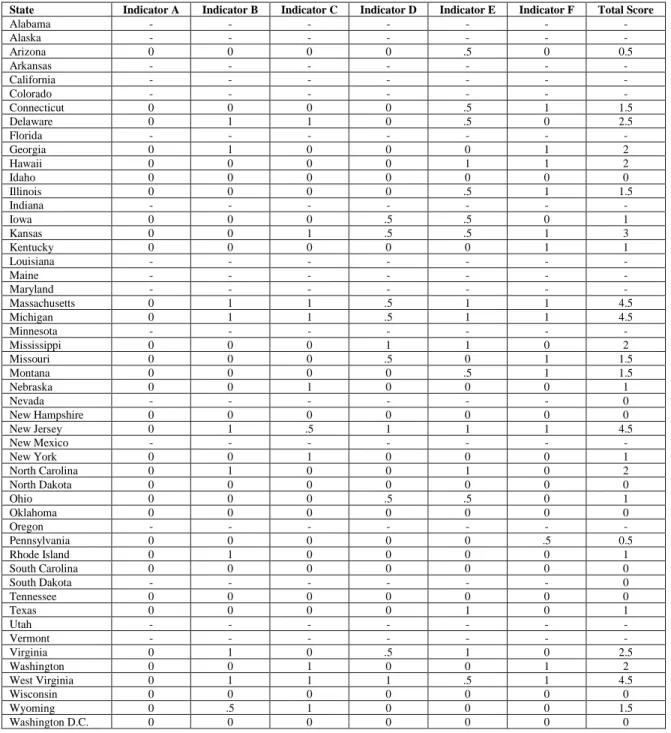
Appendix D: Rubric Scores for the Propriety Standard...148
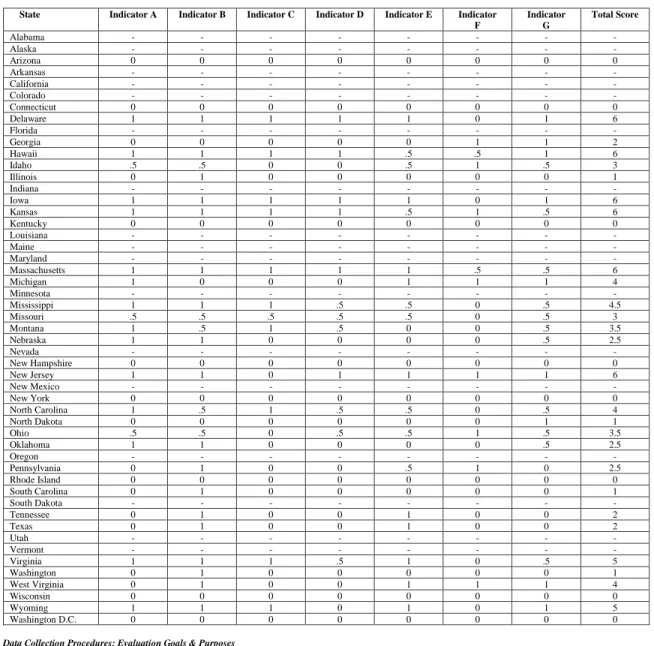
Appendix E: Rubric Scores for the Utility Standard ...153
Appendix F: Rubric Scores for the Feasibility Standard ...159
Appendix G: Rubric Scores for the Accuracy Standard ...161
Appendix H: SPSS Output for Chi-Square Test of Independence ...167
Footnotes ...169
References ...170
iii
Acknowledgments
I would like to acknowledge the people who have impacted me throughout my life, both personally and professionally, and helped support my journey to this point. I am blessed to be able to say that there are too many individuals to acknowledge by name. I always hope that I have shown and continue to show these individuals how very much they mean to me and how I could not have taken this journey without them.
The most recent part of my journey has been this research and my dissertation. For that, I am honored to acknowledge my committee: Dr. Steven Staples, Dr. Michael DiPaola, and Dr. Jennifer Parish. As part of my research, I identified an expert panel, but the truth is my committee members are the experts. Your knowledge, feedback, and support were beyond compare and heightened the quality of my inquiry to a level I could never have otherwise imagined I could reach. Dr. Staples, I truly appreciate the endless hours of your time, attention, and guidance that you provided to me throughout the research and writing process, in addition to our previous work together in this program as we integrated law and education. I have learned so much from you about how to make a valuable contribution to the scholar and practitioner community. Dr. DiPaola, I truly mean what I have always said, that all good things that have happened to me throughout my Ph.D. program have happened because of you. You have not only taught me what educational leadership means, you have shown me through your words and actions. I hope that I am able to pay forward all that I have learned from you in the years to come. Dr. Parish, your insight and perspective into the superintendency has brought my research to a new level. Your invaluable contribution of knowledge and time has been vital to my
iv
research and is so greatly appreciated. To all of you, I will be honored to be able to be in your company as a colleague. Thank you!
Finally, I would be remiss if I did not thank the William & Mary Law School for providing me access to the Westlaw legal research system. Anyone who has worked with this system knows its value, both its practical value in facilitating the ease of legal
research and its financial value in the cost of gaining access to this research system. William & Mary Law School recognized me as a visiting scholar and their actions allowed me to ensure the most accurate and up-to-date research.
v
List of Tables
Table 1: State-level Superintendent Evaluation Policy Criteria Propriety Standard ...67
Table 2: State-level Superintendent Evaluation Policy Criteria Utility Standard...68
Table 3: State-level Superintendent Evaluation Policy Criteria Feasibility Standard ...69
Table 4: State-level Superintendent Evaluation Policy Criteria Accuracy Standard ...70
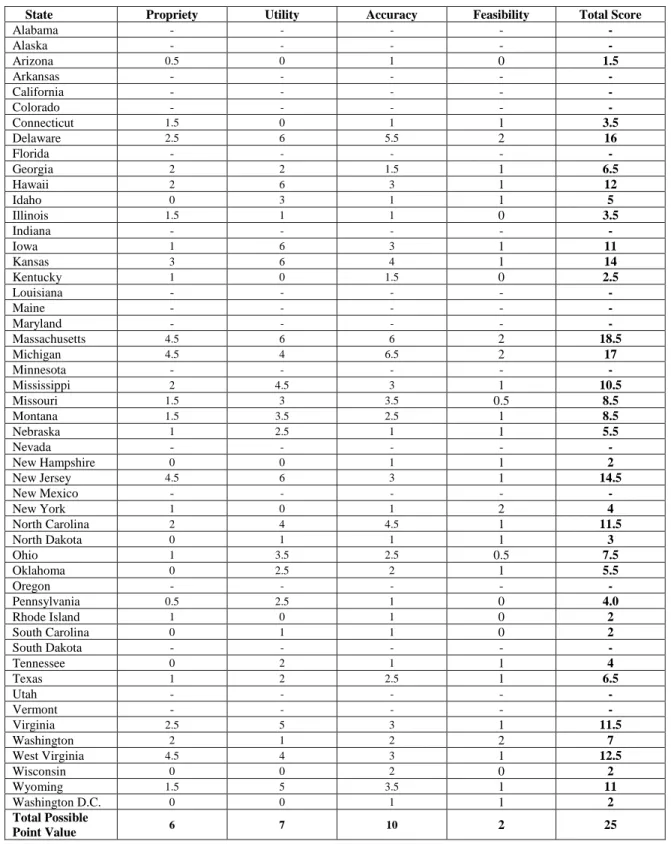
Table 5: Summary Rubric Results for All Standards by State...84
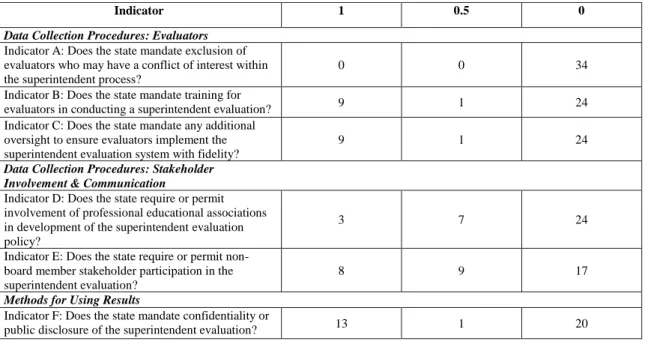
Table 6: Statewide Frequency of Rubric Scores by Indicator for the Propriety Standard .90 Table 7: Summary Rubric Results for the Propriety Standard by State ...94
Table 8: Statewide Frequency of Rubric Scores by Indicator for the Utility Standard ...96
Table 9: Summary Rubric Results for the Utility Standard by State ...100
Table 10: Statewide Frequency of Rubric Scores by Indicator for the Feasibility Standard ...101
Table 11: Summary Rubric Results for the Feasibility Standard by State ...103
Table 12: Statewide Frequency of Rubric Scores by Indicator for the Accuracy Standard ...104
Table 13: Summary Rubric Results for the Accuracy Standard by State ...108
Table 14: Chi-Square Table ...109
vi
Abstract
It is the superintendent’s complex role and ultimate leadership responsibility for all district outcomes that suggests superintendents hold the key to successful reform. Research in the wake of the federal accountability and reform movement has focused on the principal as the mediator of school reform. Consequently, there is a dearth of
research focusing on the superintendent’s role in school reform, superintendent performance evaluation, and the state’s responsibility to ensure a fair, equitable, and high-quality superintendent evaluation process through state-level policy. This study is a comprehensive policy analysis of state-level superintendent evaluation policies
nationwide using a basic content analysis methodology and a researcher-developed content-analysis rubric. The study investigated the impact of the accountability and reform movement on superintendent performance evaluations, identified the current status of state-level superintendent evaluation policies and policy coherence with the personnel evaluation standards developed by the Joint Committee on Standards for Educational Evaluation (Joint Committee), and determined whether a significant
relationship exists between the breadth and depth of state-level superintendent evaluation policy and a state’s political culture. Results show that 34 states have superintendent evaluation policies, but states vary substantially on the depth of superintendent evaluation policies and coherence with the Joint Committee standards. More states scored higher on the utility and feasibility standards than on the propriety and accuracy standards. There was no significant relationship, however, between a state’s political culture and the breadth and depth of its superintendent evaluation policy as determine by the state’s total content analysis rubric score.
vii
Keywords: accountability and reform, accuracy standard, basic content analysis, feasibility standard, Joint Committee on Standards for Educational Evaluation, political culture, propriety standard, superintendent evaluation policy, utility standard
2
CHAPTER 1
School superintendents are leaders of the school district and bear the ultimate responsibility for all district outcomes (Saltzman, 2017). With this responsibility comes role complexity and an expansive array of performance expectations. The school
accountability and reform movements over the past two decades have only served to add additional complexity and expectations. Yet, it is the superintendent’s complex role and ultimate leadership responsibility for all district outcomes that suggests superintendents hold the key to successful reform (Hoyle, Bjork, Collier, & Glass, 2005).
Despite the important role of the superintendent in reform, research surrounding educational leadership performance in the wake of the accountability and reform
movement focuses by-and-large on the principal as building leader (Davis et al., 2010; Jacques, Clifford, & Hornung, 2012). The principal is often identified as the mediator of school reform for teachers (Shaked & Schechter, 2017) but superintendents are the ultimate mediator for both teachers and principals. Research has not yet focused on the superintendent as mediator. Consequently, there is a dearth of research focusing on superintendent performance evaluation and more specifically, state-level superintendent evaluation policies. In fact, state-level superintendent evaluation policies have not received significant research attention since the early 2000s and have not been investigated in the context of the influential accountability movement (Mayo & McCartney, 2004).
3
In 2001, DiPaola and Stronge (2001b) undertook a comprehensive investigation into superintendent evaluation policies nationwide. DiPaola and Stronge’s research focused on the inclusion of student achievement and academic progress as a criterion used by states in superintendent evaluation. Perhaps their research foreshadowed the efforts to hold educational leaders more accountable for student achievement as part of the accountability reform efforts yet to come. Regardless, no such investigation of state-level superintendent policies continued post-accountability reform.
Instead, the limited superintendent evaluation research conducted since the early 2000s focuses on perceptions of the superintendent evaluation process at the local-level (Kowalski, McCord, Peterson, Young, & Ellerson, 2011; McMahon, Peters, &
Schumacher, 2014; Reeves, 2008; Jacques et al., 2012), not the state-level. Research on perceptions of the evaluation process at the local-level provides insight into
superintendent and board of education relations and identifies superintendent evaluations as having the potential to take one of two widely divergent paths. One path is a path of “mutual respect and improvement” and the other is a path of “political game playing” (Hoyle & Skrla, 1999, p. 405). In other words, the superintendent evaluation process can contribute to a positive working relationship between the superintendent and the board of education, potentially positively impacting the district. In the alternative, the
superintendent evaluation process can contribute to the breakdown of the relationship between the superintendent and board of education, potentially negatively impacting the district (Hendricks, 2013).
Hoyle and Skrla’s (1999) use of the word “political” (p. 405) is fitting and relevant. The superintendent role is inextricably tied to politics. In fact, the
4
superintendent reports to the public and is, essentially, a political figure. Elected superintendents report directly to the public. Though appointed superintendents technically report to the board of education, the board of education is the elected or appointed representative of the public. Thus, elected or appointed, superintendents report to public, either directly or indirectly, and serve as political figures.
Moreover, as Hoyle and Skrla noted, politics can easily corrupt the crucial
relationship between the superintendent and the board of education. To effectively lead a school district, the superintendent must have a strong relationship with the board, a relationship that can rise above the politics. The superintendent evaluation process can facilitate this positive relationship when it is fair, equitable, and of high quality. State-level superintendent evaluation policy can help to ensure that a fair, equitable, and high-quality process is in place to protect the superintendent and board relationship and to buffer the political game playing. Given the critical role of the superintendent in
ensuring successful district outcomes and the importance of the superintendent/board of education relationship, research is needed to thoroughly investigate the superintendent evaluation process. Research must determine the appropriate state-level superintendent evaluation policy structures that can serve to support and facilitate the path of positive relationships and successful outcomes.
This study will be a comprehensive policy analysis of state-level superintendent evaluation policies nationwide. This study will place an intentional focus on the past 15-20 years (early 15-2000s to date) to investigate the impact of the accountability and reform movement on superintendent performance evaluations and to identify the current status of state-level superintendent evaluation policies. In doing so, this policy analysis study will
5
evaluate the content of state superintendent evaluation policies as well as the role of influential policy actors and political cultures. It is only by studying the overlap of leadership, policy, and political culture that research can begin to explain and inform how states and local schools respond to and implement accountability and reform initiatives (Louis, Thomas, Gordon, & Febey, 2008) and the extent to which states are able to establish fair, high-quality superintendent evaluation procedures. The results will fill the gap in superintendent performance evaluation policy research and further inform the state-level superintendent evaluation policy development process.
Statement of the Problem
School superintendent responsibility encapsulates a host of educational leadership responsibilities, not the least of which is responsibility for all major district improvement efforts, including school accountability and reform. Accountability reform has overtaken school systems since the early 1990s. It has received the most significant attention with the adoption of large-scale federal accountability and reform legislation and grants. In 2002, the No Child Left Behind Act (NCLB) placed stringent performance requirements and benchmarks upon school districts (Bjӧrk, Kowalski, & Young, 2005; No Child Left Behind [NCLB], 2001). Schools were required to ensure all teachers were highly qualified, that all students reached the proficient level on state testing within a ten-year period, and that all schools made adequate yearly progress toward goals (NCLB, 2001). After NCLB, Race to the Top (RTTT) manifested a direct link between accountability and educational leadership by incentivizing evaluations of individual educators, including school-level leaders, based on student performance (Jacques et al., 2012; McGuinn, 2012; United States Department of Education, 2015). Most recently, the Every Student
6
Succeeds Act (ESSA) furthered the accountability movement but began to shift responsibility for outcomes from the individual school level to the school district level (Cohen, Spillane, & Peurach, 2018; Elementary and Secondary Education Act as amended by the Every Student Succeeds Act [ESSA], 2015). ESSA removed the focus from student or school-based requirements, instead focusing on state plans for district or system-based requirements like hiring, professional learning, and evaluation.
Improvement efforts for low-performing schools are developed by the local education agency, the school district. By doing so, the system-based requirements and
responsibility apply not only to teachers and school leaders but also to district leaders (Learning Forward, 2017).
Federal accountability and reform legislation, in turn, required states to develop accountability and reform systems that implement the federal legislation on the state and local level. Yet, such legislation, ESSA specifically, declines to mandate an educational leader (including principal supervisors or superintendents) evaluation system (ESSA, 2015). Thus, states are not required, and often pay little attention, to the evaluation systems that are designed to provide the necessary feedback and influence the district-level leader’s performance (Reeves, 2008). After new accountability standards, licensure and preparation standards are researched and sometimes updated (Finnan et al., 2015; Bjӧrk, Kowalski, & Young, 2005; Kowalski & Glass, 2002) but evaluation systems rarely receive the same attention. District-level leader performance evaluation policies must be updated and developed alongside accountability and reform efforts. As Reeves (2008) expressed “while the transformation of an accountability system represents an
7
incomplete unless leadership evaluation becomes as multifaceted and constructive as the best accountability systems” (p. 13).
States have begun to recognize the need to incorporate accountability and reform efforts into the educational leader evaluation process as it relates to school-level
leadership (principals) but not as it relates to district-level leadership (superintendents) (Bjӧrk, Kowalski, & Browne-Ferrigno, 2005; Davis et al., 2010; DiPaola & Stronge, 2003; Mayo & McCartney, 2004). Even for principals, evaluation policies have certainly not developed alongside accountability and reform efforts. There has been a significant delay from the start of the accountability and reform movements to the incorporation of those movements into the principal evaluation process. Jacques, et al. (2012) conducted a comprehensive analysis of state principal evaluation legislation and found that state principal evaluation legislation emerged only in the wake of RTTT, in 2009 through 2012. This timeframe represents a decade lag from the start of significant school accountability and reform, NCLB, to the adoption of principal evaluation policy. Superintendents cannot afford the same decade lag before states incorporate superintendent expectations for accountability and reform into the superintendent evaluation process.
States must ensure that superintendent performance is fairly and comprehensively measured to evaluate progress toward school accountability and reform outcomes. In doing so, states must recognize that accountability and reform efforts are realized through superintendents and boards of education working together to adopt and implement reform measures in school districts. Superintendent evaluation is said to be evidence of the strength of the relationship between a board of education and a superintendent, a
8
relationship that can be tenuous and fragile (Eadie, 2004). Fair, consistent, and
transparent superintendent performance evaluations can be used to facilitate and sustain such relationships by underscoring the trust between superintendent and board of
education (Henrikson, 2018) and proactively uncovering potential relational breakdowns before they occur.
State-level superintendent evaluation policy is the starting point for helping to ensure districts undertake a fair, consistent, and transparent superintendent evaluation process. Well-formed state superintendent evaluation policies provide the structure that supports the board of education and superintendent relationship, ensures fair and high-quality superintendent performance evaluation, protects against “political game playing” (Hoyle & Skrla, 1999, p. 405), and improves the district’s ability to grow and, if
necessary, reform (Henrikson, 2018). A structured performance evaluation can potentially provide district-wide benefits of improved communication, budgeting, planning, accountability, and overall school improvement and reform (DiPaola &
Stronge, 2001a, 2001b, 2003; Mayo & McCartney, 2004). Conversely, poorly-formed or non-existent state superintendent evaluation policies can lead to the breakdown of the board of education and superintendent relationship, the invasion of “political game playing” (Hoyle & Skrla, 1999, p. 405), rapid superintendent turnover, and the
deterioration of goals and policies necessary for school reform (Alsbury, 2008; Grady & Bryant, 1989).
Well-formed state superintendent evaluation policies can also serve as a vehicle to develop a coherent, consistent, state-wide system that ensures boards of education and superintendents are devoting necessary attention to this vital process. The superintendent
9
evaluation process is like no other professional, executive evaluation. The superintendent reports to an elected or appointed board of education, representatives of the general public within that community. To be elected or appointed and to evaluate the superintendent, board members are not required to have a background or specialized knowledge of education. Without a state requirement, board members need not even have training on how to conduct the superintendent’s performance evaluation.
Unfortunately, current data shows that boards of education may not be
recognizing the unique nature of the superintendent evaluation process and may not be paying adequate attention to conducting the superintendent’s evaluation. As noted, there is a scarcity of research on superintendent evaluations. However, the American
Association of School Administrators (AASA) conducts a survey of the status of the superintendency every 10 years, which includes data on superintendent evaluations (American Association of School Administrators [AASA], 2007; T. Glass, 2007)1. In the
2010 decennial survey, 80% of the approximately 2000 superintendents surveyed, reported being evaluated once annually. Still, 3% of school boards did not even evaluate the superintendent annually. Additionally, the AASA survey results showed that most superintendent evaluations do not have a formative and summative evaluation
component. In fact, only 13% of superintendents surveyed reported receiving any mid-year evaluation (Kowalski et al., 2011).
Not only does the frequency of evaluation point to the importance placed on the superintendent evaluation process, it also serves as evidence that boards of education are not paying attention to ensuring evaluations are methodologically sound. Evaluations should include formative components throughout the year to supplement the summative
10
component and to serve evaluation goals of facilitating professional growth and evaluating performance (Kowalski et al., 2011). Despite some improvements in the evaluative process since the AASA’s 2000 survey and 2006 mid-decade update, including a 25% increase in the number of superintendents formally evaluated, critical components of a methodologically sound, quality, fair evaluation process are still not present. AASA’s 2010 survey results demonstrated limited use of multiple data sources, with less than 20% of superintendents reporting evaluative input from key stakeholders such as other administrators, teachers, or parents/community members (Kowalski et al., 2011). Further, though the majority of superintendents indicated that they were evaluated based upon agreed upon criteria, only a minority of the surveyed superintendents
identified state or national performance standards as the selected criteria (Kowalski et al., 2011). Unfortunately, this is consistent with other studies indicating that individual board members are providing subjective narratives that are not tied to standards (Costa, 2004; DiPaola, 2007); that evaluations overwhelmingly lack school and district improvement as an evaluative component; and that even if where criteria exist, such criteria were not being used (AASA, 2007; T. Glass, 2007; Mayo & McCartney, 2004).
Although boards of education are not following standards for a methodologically sound evaluation process, such evaluation standards exist. In 1975, a committee of professional associations interested in personnel evaluation in the United States and Canada joined together to create the Joint Committee on Standards for Educational Evaluation (Joint Committee). The Joint Committee met in 1988 and 2008 to identify and refine standards for evaluation of all educational personnel and published such standards in 1988 and 2009 (Joint Committee, 1988, 2009). Though these standards
11
exist, quite simply, there has been no comprehensive research to determine the level of coherence between superintendent evaluations and the Joint Committee standards, particularly considering the impact of the school accountability and reform movement.
Given lack of research on the coherence of superintendent evaluation policies with the Joint Committee standards and the overall lack of state-level research on superintendent evaluation policies, there is certainly a potential risk that superintendent evaluation policy may face the same policy development lag, if not a greater lag, and the one faced by principal evaluation policy. Given the role of superintendents as ultimately responsible for district reform, the ESSA’s shift in focus from the school-level to the district-level reform, the unique structure of the superintendent evaluation process, and the unique political nature of the superintendent/board of education relationship,
superintendent evaluation policies cannot afford to experience the same lag as principal evaluation policies. To wait another 10 years from the passage of ESSA would mean state-level superintendent evaluation policies would not be evaluated for coherence with the Joint Committee methodological quality standards or updated to reflect accountability and reform efforts until approximately 2025. States and school districts cannot afford to wait. In fact, states are starting to introduce legislation that at least touches upon district-level performance evaluation and development (Scott, 2017). Nevertheless, many of those states have only introduced, but not enacted the legislation. Of those enacted, some merely reference district-level performance evaluation and others merely establish a task force to review the issue further (Scott, 2017). The time has come to determine the status of state-level superintendent evaluation policies, whether the states have adopted more
12
stringent requirements in the post-accountability reform era, and whether certain key characteristics of effective performance evaluations are included.
Determining the status is the first step in understanding state-level superintendent evaluation policy. A crucial second step to ensuring superintendent evaluation policy does not experience the same 10-year delay post accountability and reform, is to understand the role of state-level policy actors and political culture. There is a wide range of policy actors with interest in influencing educational policy (Bjӧrk & Gurley, 2005; Fowler, 2013; Kraft & Furlong, 2018). In fact, early superintendent evaluation research of the 1980s was conducted by two national associations, the AASA and the National School Boards Association (NSBA). These organizations attempted to bring the issue of superintendent standards and evaluations to light (AASA, 1980). Still today, AASA is the primary provider of what little superintendent evaluation research exists. State affiliates of these two associations remain involved in developing superintendent evaluation policy at the state-level (DiPaola & Stronge, 2003). The most recent AASA survey of superintendents found that the majority of superintendents perceived state school boards associations as either very influential or somewhat influential in board of education policy decisions (Finnan et al., 2015).
Moreover, the role of policy actors is often driven by political cultures (Elazar, 1966; Fowler, 2013). Political culture is the collection of expressed attitudes and patterns of behavior of both individuals and groups within a defined geographical context.
Political culture persists over time and influences how states address policy issues (Louis et al., 2008).
13
The defined geographical context of political cultures inevitably means that political cultures vary across geographic regions, thus grouping states by shared political culture. Nationally, states are described as belonging to one of three political cultures: traditionalistic, moralistic, and individualistic (Elazar, 1966). The Upper South, Lower South, and Southwest states, typically adopting a traditionalistic culture, see policy actors limited to the elite with the social connections and personal relationships that influence policy. The New England, Mid-Western or Near West, Northwest, and the Far West, typically adopting a moralistic culture, see policy actors embedded within all aspects of society, leading to significant participation in government and policy development. The Middle Atlantic and Pacific states, as well as one state in the Far West and one state in the Southwest, typically adopting an individualistic culture, view policy actors as trying to minimize government regulation and influence policy through mutual obligation (Elazar, 1966; Fowler, 2013).
The differing roles, levels of involvement of policy actors, and extent of influence within in each of these cultures necessarily influences the policy initiation and policy change process. Change within the policy process is less likely when states are tightly coupled or surrounded by a tightly coupled network, meaning that policy actors in states with similar political cultures are working closely together within and among states to influence the policy process and limit or moderate the change (Roach, Smith, & Boutin, 2011). The rate of change, whether slow or fast, is magnified when dealing with policies impacting politically charged, wide-scale reform initiatives. Superintendent evaluation policies that are connected to school reform are just the type of policy that can magnify the rate of change (Keedy & Bjӧrk, 2002). Thus, it is crucial to determine whether there
14
is a dependence between state-level superintendent evaluation policy development and political culture to understand and begin to project the trajectory of future state-level superintendent evaluation policy.
Conceptual Frameworks
Three conceptual frameworks guide this analysis. First, superintendents are school personnel whose evaluations should follow the overarching guidelines for fair and effective personnel evaluations (Joint Committee, 1988, 2009). Yet, there are special considerations given the unique role and functions of the superintendency, as well as the unique political nature of the relationship between the board of education and the
superintendent. Second, superintendent evaluations are inextricably intertwined with and influenced by the accountability and reform framework. This framework will explore the impact of federal accountability and reform movements on the unique role and functions of the superintendency and inform the manner in which superintendent evaluations
should be updated and refined in light of this accountability movement (Owen & Ovando, 2000). Finally, state-level superintendent evaluations policies are developed, adopted, and implemented within the overarching state education governance framework (Kraft & Furlong, 2018; Railey, 2017). This state education governance framework acknowledges and recognizes the role of the state government in education policy as well as the
influence of state-level policy actors (Railey, 2017).
Research Questions
1. How does the content of superintendent evaluation policies compare across states? a. To what extent do states mandate superintendent evaluation?
15
b. To what extent and frequency do states update superintendent evaluation policies with changes in the accountability and reform movement? c. To what extent do states meet the propriety standard set forth by the Joint
Committee (1988, 2009)?
d. To what extent do states meet the utility standard set forth by the Joint Committee (1988, 2009)?
e. To what extent do states meet the feasibility standard set forth by the Joint Committee (1988, 2009)?
f. To what extent do states meet the accuracy standard set forth by the Joint Committee (1988, 2009)?
2. How do state-level superintendent evaluation policies compare within geographic regions of the United States with differing political cultures?
Significance of the Research
This study will contribute to the gap in the research that fails to inform superintendent evaluations, and, in particular, state-level superintendent evaluation policy. The study has the potential to transform practical action by several groups: state policy actors (both those that make and influence policy), national and state educational leadership and governance associations, and local boards of education and
superintendents. By understanding the varying frameworks across states, state policy actors can work to improve the breadth and depth of superintendent evaluation regulations that are more tailored to informed practice. Likewise, with a deeper understanding of informed superintendent evaluation regulatory frameworks, national and state educational leadership and governance associations can support boards of
16
education and superintendents in evaluation formats and procedures. Finally, by bringing awareness to the importance of the superintendent evaluation process, boards of
education and superintendents can make informed decisions on their own local evaluation process. For all groups, by better understanding the progression of superintendent
evaluation regulations in the wake of an increased focus on accountability, the vital role of superintendent in accountability, student achievement, and educational reform can be explored.
Definition of Terms
Abductive analytic arguments: Abductive arguments are a component of the basic content analysis. The researcher uses descriptive literal content to create inferential links to evaluate and explain the data (Krippendorff, 2013).
Accountability and reform movement: For the purposes of this study, the accountability and reform movement is broadly defined as the collection of federal legislation and initiatives that seek to hold schools and educational leaders accountable for improvements in student achievement and district-wide school reform.
Accuracy Standard: The accuracy standard is one of the four Joint Committee standards for quality evaluations. The accuracy standard ensures that evaluations are technically accurate, based on data that can be documented, and that conclusions are linked logically to data. The accuracy standard does this through the following
components: validity orientation, defined expectancy, analysis of context, documented purposes and procedures, defensible information, systemic data control, bias
identification and management, analysis of information, justified conclusions, and meta-evaluation (Joint Committee, 1988, 2009).
17
American Association of School Administrators (AASA): A national association representing the voice and interests of school district leaders. They advocate for school district leadership issues at the federal level. The AASA is also known as The School Superintendents Association (AASA, 2018).
Basic Content Analysis: The “basic content analysis” (Berelson as cited in Drisko & Maschi, 2015, p. 3), to be employed in the present research, is a process whereby the researcher uses a literal coding approach to extricate quantitative data that describes the document (the policy).
Chi-Square: The Chi-Square test of association/independence is a statistical procedure that compares observed frequencies to expected frequencies to determine if there is a significant relationship or dependence between group membership on two variables (Warner, 2013)
Criteria Standard: A rubric element for analyzing state-level superintendent evaluation policies that is based on the quality evaluation standards developed by the Joint Committee (1988, 2009).
Criteria Category: A rubric element for analyzing state-level superintendent evaluation policies that falls within the Joint Committee standards and further categorizes each standard for unique application to superintendent evaluations based on research by DiPaola (2010) and Jacques et al. (2012).
Criteria Indicator: A rubric element that asks a specific question to determine the presence or absence of a particular category and standard in a state-level superintendent evaluation policy.
18
Databases on State Teacher and Principal Evaluation Policies: An online database developed by the American Institutes for Research that contains nationwide evaluation criteria and evaluation data used by states in teacher and principal evaluation policies (American Institutes for Research, 2018).
Educational Leader: An individual who provides leadership in a school setting, including both school-level leaders, principals, and district-level leaders, superintendents. Where distinction is appropriate, the level of educational leadership, whether school-level or district-level, is noted. This definition recognizes that school leader is typically
associated with principal or school-level leadership for the purposes of policy. Educational leader provides a broader definition.
Every Student Succeeds Act (ESSA): ESSA is federal legislation that is part of the accountability and reform movement and is a reauthorization of the Elementary and Secondary Education Act of 1965. Among other things, ESSA removed the focus from student or school-based requirements, instead focusing on state plans for district or system-based requirements like hiring, professional learning, and evaluation (ESSA, 2015).
Feasibility Standard: The feasibility standard is one of the four Joint Committee standards for quality evaluations. The feasibility standard ensures that evaluations are easy to implement, efficient, and adequately funded through practical procedures, political viability, and fiscal viability (Joint Committee, 1988, 2009).
Joint Committee on Standards for Educational Evaluation (Joint Committee): A committee started in 1975 and convened in 1988 and 2008 (published in 2009) to identify standards for evaluation of all educational personnel. Committee members include
19
professional associations in the United States and Canada interested in personnel evaluation quality (Joint Committee, 1988, 2009).
National School Boards Association (NSBA): A national association representing the voices of school board leadership and advocating for equity and excellence in school issues at the federal level (NSBA, 2018).
No Child Left Behind (NCLB): Federal legislation enacted in 2001 that is part of the accountability and school reform movement. Among other requirements, NCLB placed stringent performance requirements and benchmarks upon schools (Bjӧrk,
Kowalski, & Young, 2005; NCLB, 2001). NCLB required schools to ensure all teachers were highly qualified, that all students reached the proficient level on state testing within a ten-year period, and that all schools made adequate yearly progress toward goals (NCLB, 2001).
Performance Standards: Criteria developed to identify the expectations of educational leader performance.
Political Cultures: Political culture is the collection of expressed attitudes and patterns of behavior of both individuals and groups within a defined geographical context (Elazar, 1966). Political culture persists over time and affects how states address policy issues (Louis et al., 2008). Political cultures describe the norms and context surrounding the policy process, including beliefs about the role of government and the level of public involvement in the political and policy development process. States are described as belonging to one of three political cultures: traditionalistic, moralistic, and individualistic (Elazar, 1966; Fowler, 2013).
20
Professional Standards for Educational Leaders: A set of performance standards governing school-level and district-level leaders developed by the National Policy Board for Educational Administration (National Policy Board for Educational Administration, 2015). The standards were formally known as the Interstate School Leaders Licensure Consortium (ISLLC) Standards.
Propriety Standard: The propriety standard is one of the four Joint Committee standards for quality evaluations. The propriety standard ensures that evaluations are legal, ethical, and consider the welfare of the employee, through the following
components: service orientation, appropriate policies and procedures, access to the evaluation, interactions with the employee, comprehensive elements, consideration of conflicts of interest, and legal viability (Joint Committee, 1988, 2009).
Race to the Top (RTTT): A federal grant program developed in 2010 that provided funding to states as grant recipients. Among other grant provisions, RTTP directly linked school accountability and personnel evaluations by incentivizing
evaluations of individual educators, including school-level leaders, on the basis of student performance (Jacques et al., 2012; United States Department of Education, 2015).
Rubric Scores: Fully Present, Partially Present, Not Present. Fully present is defined as the policy clearly containing the mandated presence of a particular indicator. Partially present is defined as the policy containing the permissive presence of a
particular indicator. Not present is defined as the policy containing no language related to the presence of a particular indicator.
21
State Associations of School Administrators: State-level associations that are affiliated with or connected to the AASA. They represent the voice and interests of school district leaders and advocate for school district leadership issues at the state-level.
State School Board Governance Associations: State-level associations that are affiliated with the NSBA. They represent the voice and interests of school board leadership and advocate for school equity and excellence issues at the state-level.
Student Performance Measures or Outcomes: The measure of student
performance and/or student growth within a state or local school district. This can be narrowly defined as student standardized test scores or more broadly defined to incorporate multiple measures of student performance and growth.
Superintendent Evaluation Policies: Collectively, the state statutes, state board of education regulations, and state board of education guidance documents mandating the existence and content of superintendent evaluations.
Utility Standard: The utility standard is one of the four Joint Committee standards for quality evaluations. The utility standard ensures that evaluations are informative, timely, and influential, through the following components: constructive orientation, defined uses, evaluator quality measures, explicit criteria, functional
reporting, and follow up professional learning and development (Joint Committee, 1988, 2009).
Westlaw legal research system: Westlaw legal research system is an electronic system for researching primary and secondary legal resources owned and operated by Thompson Reuters (Thompson Reuters, 2018).
22
CHAPTER 2
Superintendents are educational leaders whose evaluations should follow the overarching guidelines for fair and effective school personnel evaluations (Joint Committee, 1988, 2009). When educational leader evaluations are designed to meet standards of quality, not only are the evaluations effective in assessing superintendent performance and designing incentives for superintendent compensation, the evaluations are also effective in facilitating collective, organizational accountability (Goldring, Porter, Murphy, & Elliott, 2009). Yet, superintendent evaluations can only be effective in facilitating accountability when the evaluations acknowledge the influence of the accountability movement on the unique role and expectations of the superintendent. The accountability and reform movement has altered the role and expectations of all
educational leaders. However, the influence has served to make the role of
superintendent and principal more divergent. Superintendent performance evaluation policies, to ensure fairness, equity, and the critical link to implementation of
accountability reform, require their own criteria, analysis, and implications for informed policy development.
State-level superintendent policies must ensure that local boards of education are meeting the standards of quality, fairness, and effectiveness in both process and content. Yet, the state-level policy process is influenced by policy actor input and political culture. Analyzing state-level superintendent evaluation policies requires investigation into the content and the extent of these influences to determine the status of state progress
23
towards ensuring high quality superintendent evaluation standards and the incorporation of accountability and reform movement outcomes.
Educational Leader Evaluations
Educational leader evaluations, like all personnel evaluations, are held to a certain set of standards to ensure quality, fairness, and equity. The Joint Committee (1988, 2009) identified four practice standards for evaluation of all educational personnel:
propriety, utility, feasibility, and accuracy (DiPaola, 2010; Joint Committee, 1988, 2009). Each standard further identifies components that should be present in evaluation
instruments to ensure the standard is met. The propriety standard ensures that evaluations are legal, ethical, and consider the welfare of the employee. The propriety standard provides this assurance through the following components: service orientation, appropriate policies and procedures, access to the evaluation, interactions with the employee, comprehensive elements, consideration of conflicts of interest, and legal viability. The utility standard ensures that evaluations are informative, timely, and influential. The utility standard provides this assurance through the following
components: constructive orientation, defined uses, evaluator quality measures, explicit criteria, functional reporting, follow up professional learning and development. The feasibility standard ensures that evaluations are easy to implement, efficient, and adequately funded. The feasibility standard provides this assurance through practical procedures, political viability, and fiscal viability. The accuracy standard ensures that evaluations are technically accurate, based on data that can be documented, and that conclusions are linked logically to data. The accuracy standard provides this assurance through the following components: validity orientation, defined expectancy, analysis of
24
context, documented purposes and procedures, defensible information, systemic data control, bias identification and management, analysis of information, justified
conclusions, and meta-evaluation (DiPaola, 2010; Joint Committee, 1998, 2008). While many factors of educational leader evaluations are similar to any other personnel evaluation, there are certain features that add an additional layer of complexity. In 2002, the Center for Performance Assessment conducted the National Leadership Evaluation Study to analyze the evaluation instruments of educational leaders, in a
variety of positions nationwide (Reeves, 2008). Reeves (2008) identified several features of educational leadership that makes evaluation particularly complex. First, the
definition of school or educational leadership is widely varied and covers a multitude of positions, which in turn, leads to widely varied and ambiguous standards for performance and performance expectations. Second, the evaluation continuum is ambiguous, using vague terminology to determine whether the leader “meets” or “exceeds” expectations (Reeves, 2008).
Given the complexity of educational leader evaluations, it is incredibly difficult for local boards of education to develop evaluation instruments that meet these standards for quality evaluation procedures. Local boards of education may be aware that they should develop evaluation instruments and processes that comply with the Joint
Committee standards or risk an unfair, biased educational leader performance evaluation system that does not produce useful results. Unfortunately, on the whole, boards of education “lack the will and training to develop and implement a comprehensive evaluation process” (DiPaola, 2010, p. 23).
25
The analysis must, therefore, take place at the state level to ensure the fairness and consistency demanded by the Joint Committee. State-level policy can serve to mandate a particular process that conforms to the Joint Committee standards. While mandates run the risk of local boards of education taking a minimal compliance-only stance, when state-level policy has breadth and depth, it is able to inform and provide guidance to local boards of education in the implementation of the evaluation process (Fowler, 2013; Jacques et al., 2012; Kraft & Furlong, 2018).
Superintendent Evaluations
Superintendent evaluations can and should serve as a key tool to improve educational performance (Marzano & Waters, 2009). To do so, superintendent evaluations must be held to the same standard of quality assurance. Research shows superintendent evaluations are not held to that standard of quality, which Glasman and Fuller (2002) infer to be a result of the unique structure and challenges of the
superintendent position and evaluation process. To fully understand how the Joint Committee standards manifest themselves within superintendent evaluation policy, it is essential to define the superintendent’s role and position, which, in turn, informs performance expectations to be measured in the evaluation.
Defining the Superintendent’s Role
Defining the superintendent’s role is a complex task. The superintendent’s role has significantly evolved throughout the 20th century as superintendent autonomy increased and superintendents needed to respond to the public demand for efficiency and for an increased public connection to the schools (Owen & Ovando, 2000). Thus, fully
26
understanding the superintendent’s role requires an understanding of how the superintendent’s role has changed over time.
History of the superintendency. The superintendent position originated in the
late 1830s (Kowalski, 2005), though school administrators first became a recognized profession, separate from teaching, in the late 19th century (Glasman & Fuller, 2002). The evolution of the superintendency has passed through four, arguably five, stages (Callahan, 1966). Although these stages may not have had a distinct start and end date, the first, occurred generally between the years of 1850-1900, and found the
superintendent as a scholarly leader. The second, occurred generally between the years of 1900-1930, and found the superintendent as a business manager. The third, occurred generally between the years of 1930-1950, and found the superintendent as an
educational statesman. The fourth, occurred generally between the years of 1950-1967, and found the superintendent as a social scientist (Callahan, 1966). A fifth was
championed in 2003 by Theodore J. Kowalski and found the superintendent as a communicator.
The stages of the superintendent role development correspond directly to the five essential components of the superintendent position: teacher-scholar, manager,
democratic leader, applied social scientist, and communicator (Callahan, 1966; Kowalski, 2005). Interestingly, those essential role components remain quite similar today, even if referred to by different terms (Bjӧrk, Browne-Ferrigno, & Kowalski, 2014; Bjӧrk, Kowalski, & Browne-Ferrigno, 2005). Within each of these essential role components, the skills and standards required of the superintendent position significantly evolved
27
throughout the 20th century and there is no question that the superintendency is a role that requires continuous adaptation to a multitude of societal changes (Bjӧrk et al., 2014).
Over time and as the superintendent role adapted and changed, superintendents experienced increased autonomy. That autonomy is tied to a responsibility to respond to the public demand for efficiency and for an increased public connection to the schools (Owen & Ovando, 2000). The autonomy also came with the ultimate responsibility for all positive and negative school achievements and an increased level of public scrutiny. As public confidence in public officials decreases, so does public confidence in the schools, and in turn, superintendents.
All of this scrutiny sets the stage for increasing expectations on the superintendent both externally and internally. External expectations come from legal decisions (Bjӧrk, Kowalski, & Young, 2005), accountability laws, and the public (both directly and through the board of education). Internal expectations come from students, school employees, and from the superintendent’s employer, the board of education (Owen & Ovando, 2000). These expectations are not always congruous. Expectations on the superintendent as an administrator, operational manager, instructional leader, politician, champion for the staff, students, community, often compete, leaving the superintendent’s position complex to say the least (Fusarelli, Cooper, & Carella, 2002). In the AASA’s 2010 Decennial Study of the American Superintendent survey and the mid-decade
update, every single role and function of the superintendent, except for the superintendent as an applied scientist, was considered very important to the majority of boards of
education (Finnan et al., 2015). Thus, changes in the superintendent’s role do not serve to narrowly tailor expectations placed upon superintendents. Instead, superintendents are
28
expected to continue to perform to high standards and expectations in every role and facet of their position.
The complexity of the superintendent’s role necessitates a complex set of areas of expertise as well as the possession of specific skills. No one individual can possess every expertise and every skill. In fact, boards of education may have fluctuating demands for superintendents with particular expertise and skills for particular reasons at particular times, depending on the context and circumstances of the particular school district (Fusarelli et al., 2002). Superintendents must interpret their respective board of education’s view of the superintendent’s role and corresponding demand for expertise, skills, and performance (Finnan et al., 2015). Evaluations are, at their very core, the mechanism through which expected expertise/skills are compared to possessed expertise/skills.
The expectations for expertise and skills are translated into specific
superintendent tasks to be evaluated (Glasman & Fuller, 2002). These tasks have been defined in a wide variety of ways. Early scholars identified four key tasks: instructional program, personnel administration, funds and facilities management, and interpreting schools to a variety of public stakeholders (Glasman & Fuller, 2002; Griffiths, 1966).
Accountability and school reform. The evolution of the superintendent position
continues into the 21st century. At the turn of the 21st century, the key roles of the superintendent were defined as areas of leadership responsibility, specifically the
superintendent as a political leader, managerial leader, and educational leader (Owens & Ovendo, 2000). However, the 21st century has brought with it several significant
29
national school accountability and reform efforts that substantially alter the nature of the superintendent’s role, nationwide.
The first significant national school accountability and reform effort was the 2002 federal legislation, No Child Left Behind (NCLB). NCLB placed stringent performance requirements and benchmarks upon school districts (Bjӧrk, Kowalski, & Young, 2005; NCLB, 2001). Though not explicitly stated, the superintendent, as the school district leader, bears the ultimate responsibility for school district operations, including NCLB performance standards (Johnstone, Dikkers, & Luedeke, 2009). Thus, NCLB impacted the superintendent in the role areas of instructional program, personnel administration, and stakeholder engagement.
After NCLB, the second significant accountability and reform effort was a 2010 federal grant program called Race to the Top (RTTT). RTTT manifested a direct link between accountability and evaluations by incentivizing evaluations of individual
educators, including school-level leaders, on the basis of student performance (Jacques et al., 2012). RTTT’s focus on student performance meant that the link to educational leader evaluation was to the school- level leader, the principal (Canole & Young, 2013; Jacques et al., 2012). Still, there was no recognition of the district-level leader, the superintendent, and accountability for student performance (Holliday, 2013; Learning Forward, 2017). Thus, despite RTTP’s impact on the superintendent in the role area of personnel administration (with a direct link to instructional program), RTTP maintained a school-based focus.
As standards-based systemic reform started to place increased accountability demands on schools, autonomy over instruction began to shift from individual schools to
30
the school system or school district-level (Cohen et al., 2018). Naturally, that shift led to a corresponding shift in responsibility for meeting the accountability demands from the principal to the superintendent.
The third, and most recent, significant reform effort has been the 2015 Every Student Succeeds Act (ESSA), which is a reauthorization of the Elementary and Secondary Education Act of 1965. ESSA promoted a combination of evidence-based initiatives with state flexibility in educational leadership practices and interventions, including performance evaluation (Herman, Gates, Chavez-Herrerias, & Harris, 2016). ESSA’s flexibility was specifically directed to the state-level and district-level, not only the school-level emphasized by its predecessors (Young, Winn, & Reedy, 2017). For example, the local educational agency, the school district, is responsible for developing plans for low performing schools and stakeholder engagement (Aragon, Griffith, Wixom, Woods, & Workman, 2016; ESSA, 2015). ESSA has marked a clear focus on district-level accountability initiatives (Whitehouse, 2017). Thus, ESSA has impacted the superintendent in every role area while also shifting the focus from the school-based focus to the district-based focus.
All educational leaders, principals and superintendents included, faced intense increased scrutiny in the wake of the accountability and reform movements over the past twenty years. The principal, as the school building leader, was first to receive the intense focus. The focus of principal evaluation is on instruction and the principal’s ability to increase student achievement (Jacques et al., 2012). For principals, reform
implementation is more directly tied to instruction and includes implementation of curricular reform such as the Common Core State Standards and classroom digital
31
innovation. In fact, much of the discussion surrounding accountability reform, including NCLB and RTTT, has centered on the principal (Fullan, 2014). In response to RTTT’s focus on the principal’s role in accountability, states began to pass legislation that emphasized individual principal accountability as part of a broader strategy to improve principal preparation, licensure, and evaluation (Jacques et al., 2012). Despite these initial legislative attempts, it still took more than 10 years for state legislatures to align school-level accountability expectations with principal evaluations.
It was not until after RTTT and the implementation of the ESSA, that the focus began to shift from the individual school-level to the school district-level (Jimenez & Sargrad, 2017). The post-accountability and reform scrutiny on superintendents is not limited to instructional leadership and increasing student achievement as it is with school principals. Historically, the superintendent’s role, though varied in function as it
transitioned from business manager, to educational statesman, to social scientist, and to communicator, was always described as an expansion of the principal’s role for each function. In other words, the principal served each of the same functions, simply to a lesser degree than the superintendent. This description is no longer applicable (Owen & Ovando, 2000). Certainly, at the district level, the reform measures of the past two decades have forced an increased focus on the superintendent’s role in instructional leadership, curriculum development, and assessment (Bredeson & Kose, 2007), much like the principal. Unlike the principal, the superintendent is more significantly impacted by additional heightened expectation to balance legal and political external demands. Superintendent performance expectation criteria and evaluation policy has lagged behind the accountability movement (Mayo & McCartney, 2004) and even further behind
32
principal performance expectation criteria and evaluation policy. These heightened expectations have not been clearly incorporated into evaluation performance standards (Bredeson & Kose, 2007).
Performance standards. In the late 20th century, setting performance standards
and incorporating those standards into evaluation criteria began to garner attention. During the 1980s, the Association of School Administrators worked to define a set of performance goals, competencies, and standards for all educational leaders (Bjӧrk, Kowalski, & Young, 2005). The result, Skills for Successful School Leaders, identified eight leadership outcome goals: (1) defining, implementing, and evaluating school climate; (2) building support for schools; (3) developing school curricula; (4) conveying instructional management; (5) evaluating staff; (6) developing staff; (7) allocating resources; and (8) engaging in research, evaluation, and planning (Hoyle, English, & Steffy, 1990). In 1990, the Educational Research Service in its report, Evaluation of Superintendents and School Boards, generated a list of criteria via a survey methodology that were most common to superintendent evaluations in a majority of school districts (Robinson & Bickers, 1990). However, the Educational Research Service’s list of criteria was just that, the commonly used criteria and not a set of research-based professional standards.
Again in 1993, the AASA accepted recommendations of the Commission on Professional Standards for the Superintendency (“Commission”; AASA, 1993). The Commission outlined eight professional standards for superintendents: leadership and culture, policy and governance, communication and community relations, organizational management, curriculum planning and development, institutional management, human
33
resources management, and values and ethics of leadership (AASA, 1993; DiPaola & Stronge, 2003; Glasman & Fuller, 2002).
Despite the Commission’s recommendations, there is no universally accepted set of superintendent performance standards. DiPaola and Stronge (2003) outlined several standards frameworks upon which superintendents are evaluated. These include the ISSLC standards (now the PSEL standards), AASA standards, NSBA standards. Each set of standards touches upon similar performance expectations, but each uses different terminology and emphasis. The most recently adopted and updated standards are the PSEL standards adopted in 2015, which include the following standards: mission, vision, and core values; ethics and professional norms; equity and cultural responsiveness; curriculum, instruction, and assessment; community of care and support for students; professional capacity of school personnel; professional community for teachers and staff; meaningful engagement of families and community; operations and management; and school improvement (National Policy Board for Educational Administration, 2015). Though AASA was involved in shaping the PSEL standards, AASA still maintains the Professional Standards for the Superintendency, adopted in 1993 (AASA, 1993). Likewise, the National School Boards Association maintains its own set of standards for superintendents adopted in 2000, which include: vision, standards, assessment,
accountability, alignment, climate, collaboration and continuous improvement (National School Boards Association [NSBA], 2000).
Yet, overwhelmingly, superintendents report that because there are no universally accepted standards, superintendents are left with overlapping criteria that lack clarity, lack relevancy, lack a results-based focus, and lack consistency (Mayo & McCartney,
34
2004). There are questions about the extent to which these standards align with the commonly accepted domains of superintendent performance: policy and governance, planning and assessment, instructional leadership, organizational management, community relations, and professionalism (DiPaola & Stronge, 2003).
Efforts to determine congruence, if not alignment, have been promulgated in the years since, with Bjӧrk, Kowalski, and Browne-Ferrigno (2005) finding that the AASA standards and the Interstate School Leaders Licensure Consortium (ISSLC) standards (the predecessor to the PSEL standards) were congruent. However, the ISSLC standards were replaced by the PSEL in 2015 and it is unclear if such congruence remains.
Moreover, there is nothing that requires a state to formally adopt these standards as required educational leader standards. In fact, some states, like Texas, have developed their own standards (Hendricks, 2013). Texas places emphasis on three domains for its superintendent standards: educational leadership, district management, and board and community relations (DiPaola, 2010; Texas Association of School Boards, 2007). When states adopt their own standards, it only adds to the complexity of potential divergence of expectations of superintendent performance. As an example, Texas’ selection of three broad domains lends the potential for much variation within each domain.
These questions manifest themselves in superintendent perceptions of policy actor influence in the superintendent evaluation process. Forty-one percent of the
superintendents surveyed in AASA’s 2010 survey indicated that guidelines of either the state school board association or the state administrators association served as a factor in the superintendent’s performance evaluation (Kowalski et al., 2011).