Consultation skills for
pharmacy practice:
taking a patient-centred
approach
A CPPE distance learning programme
for pharmacy professionals
DLP 172
help you with your enquiry.
[email protected]
Telephone
0161 778 4000
By Post
Centre for Pharmacy Postgraduate Education (CPPE)
Manchester Pharmacy School
1st Floor, Stopford Building
The University of Manchester
Oxford Road
Manchester M13 9PT
Share your learning
For information on all our
experience with us:
programmes and events:
email us at
[email protected]
visit our website
www.cppe.ac.uk
A core learning programme for:
Developed by: Funded by:
tio
n
sk
ill
s
fo
r
p
h
a
rm
a
c
y
p
ra
c
tic
e
:
ta
k
in
g
a
p
a
tie
n
t-c
e
n
tr
e
d
a
p
p
ro
a
ch
taking a patient-centred
approach
A CPPE distance learning programme
for pharmacy professionals
Educational solutions for the NHS pharmacy workforce
A core learning programme for:
Acknowledgements
Lead writersLesley Grimes, CPPE senior pharmacist, learning development
Nina Barnett, consultant pharmacist, care of older people, East and South East England Specialist Pharmacy Services (contributory author for Section 5 – Health coaching in patient consultations)
Reviewers
Leah Davies, clinical development pharmacist, Rowlands Pharmacy James Desborough, lecturer in pharmacy practice, University of East Anglia Elizabeth Fidler, principal pharmacy technician, Health Education Kent, Surrey and Sussex - Pharmacy
Delyth James, senior lecturer, Cardiff University
Barry Jubraj, associate professor, Chelsea and Westminster Hospital NHS Foundation Trust and UCL School of Pharmacy
Raminder Sihota, senior professional L&D manager, Boots UK CPPE reviewers
Anna Graves, regional tutor, North West Matthew Shaw, deputy director
Karen Wragg, regional manager, South Central Thanks
The two videos referred to in Section 5 of this programme have been co-produced by Imperial College and London Consortium Television. Thanks go to:
Nina Barnett, consultant pharmacist, care of older people Paul Craddock (camera and editor)
Zulema Dene (actress) Bartek Dziadosz (camera) Douglas Hing (project advisor) Lis Paice (project lead)
We have used some content from the CPPEPatient-centred careopen learning programme in this learning programme. CPPE recognises the contribution made by Louise Winstanley and the other contributors and reviewers of that resource. Production
Outset Publishing Ltd, Sussex
Published in February 2014 by the Centre for Pharmacy Postgraduate Education, Manchester Pharmacy School, University of Manchester, Oxford Road,
Manchester M13 9PT
About CPPE distance learning programmes
vii
About this learning programme
x
Patient-centred care and pharmacy practice
xv
What do we mean by a consultation? xv
The patient-centred consultation in pharmacy today xvi Putting the patient at the centre of the consultation xviii
Practice points xvii, xix
Reflective questions xv, xvii, xx
Section 1 Medicines optimisation and medicines adherence
1
1.1 Medicines optimisation 1
1.2 Understanding medicines adherence 2
1.3 The reasons for non-adherence 3
1.4 Unintentional and intentional non-adherence 6 Internal and external causes of non-adherence 7
1.5 Assessing adherence 10
Self-reporting 10
1.6 Discussing adherence with a patient 11
1.7 Interventions to improve adherence 13
1.8 Considering the needs of different patient groups 14
Older people and adherence 14
Younger patients and adherence 15
Physical or learning disabilities and adherence 16 People with severe mental health problems and adherence 16
Summary and intended outcomes 18
Suggested answers 19
Case study 1 George 12
Case study 2 Rebecca 15
Exercises 2, 4, 7, 9, 17
Practice points 5, 6
Section 2 Effective communication
23
2.1 Key communication skills 24
Body language 24
Verbal language 27
Listening 27
2.2 Basic principles of effective communication 28
2.3 Transactional analysis model 29
2.4 Barriers to effective communication 32
Telephone consultations 32
Blocking behaviours 34
2.5 Taking a patient history 37
2.6 Tools to support your practice 39
2.7 Recording your consultation 40
Summary and intended outcomes 41
Suggested answers 42
Case study 3 Lily 35
Exercises 25, 30, 40, 41
Practice points 26, 31, 39, 40
Reflective questions 23, 29, 35
Section 3 Consultation models and the theory behind them
44
3.1 The history of consultation theory 45
Bio-medical model 45
Balint theory 46
Transactional analysis model 46
Health belief model 46
Anthropological or ‘folk’ model 47
3.2 Consultation models and current practice 47
Calgary-Cambridge guide 49
Pendleton’s framework 52
Roger Neighbour – The inner consultation (1987) 57
BARD – Ed Warren (2002) 57
3.3 Consultation styles 59
Summary and intended outcomes 61
Suggested answers 62
Case study 3 Lily – revisited 55
Exercises 51, 58
Practice points 58, 60
Section 4 Effective consultation skills
65
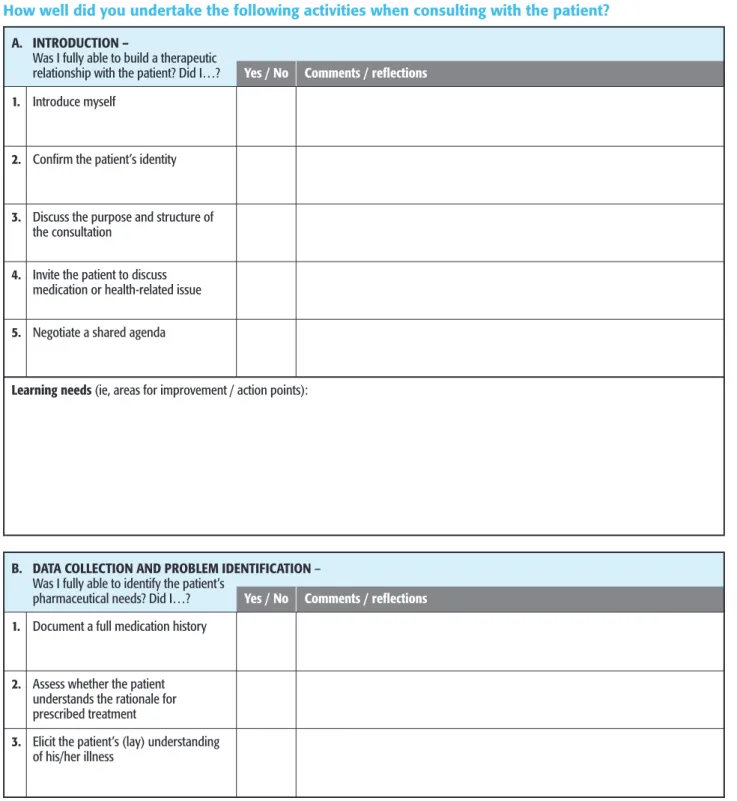
4.1 The medication related consultation framework (MRCF) 664.2 Skills for effective consultation 71
Initiating the session 71
Gathering information and eliciting the patient’s perspective 73
Explanation and planning 80
Closing the session 80
Providing structure 81
Building the relationship 81
4.3 Shared decision making 83
Sharing expertise 84
Summary and intended outcomes 90
Suggested answers 91
Case study 3 Lily – revisited 86
Exercises 66, 76
Practice points 66, 71, 80, 89
Reflective questions 65, 83, 89
Section 5 Health coaching in patient consultations
93
5.1 Health coaching and medicines optimisation 945.2 The background to health coaching 94
5.3 Evidence for health coaching 97
Health promotion and health coaching 98
Medicines adherence and health coaching 98
5.4 The skills needed for health coaching 99
Patient factors 100
5.5 Health coaching models and medicines adherence 102
GROW 102
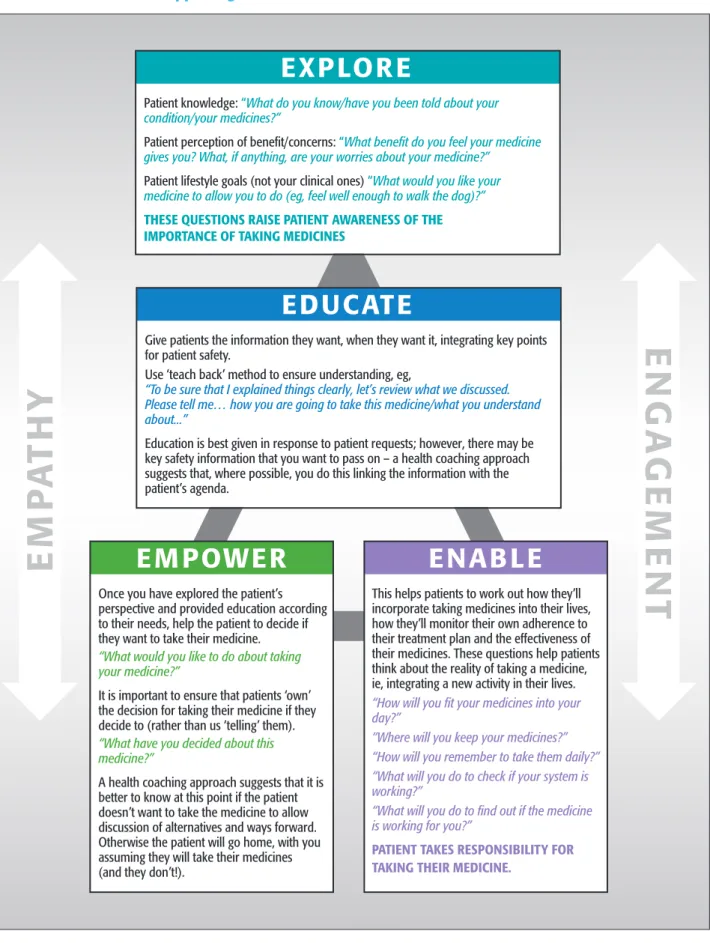
The four Es 102
5.6 Motivational interviewing 105
OARS 108
Scaling questions 109
Rollnick’s top ten useful questions 109
Summary and intended outcomes 111
Suggested answers 112
Case study 1 George – revisited 100
Exercises 95, 99, 104, 105, 107, 108, 110
Section 6 Moving your practice forward
114
6.1 Consultation models – application to practice 115 6.2 Key consultation skills – application to practice 116 6.3 Taking a patient-centred approach – application to practice 117 6.4 Adopting a health coaching approach to the consultation 118Summary and intended outcomes 119
References
120
Tables and figures
FiguresFigure 1 Example of self-reporting from NICE Clinical 10 guideline CG76
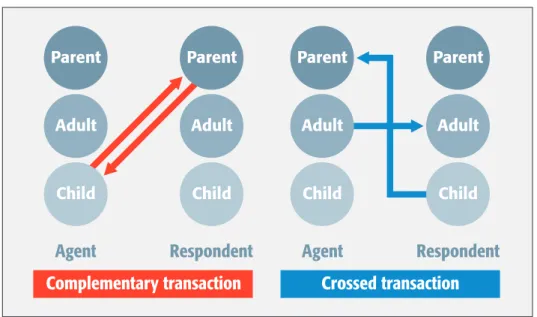
Figure 2 Complementary versus crossed transactions in 30 communication
Figure 3 The basic guide 49
Figure 4 Moving towards a patient-centred approach 59 Figure 5 The medication-related consultation framework 67
(MRCF)
Figure 6 Three pillars of health coaching 98
Figure 7 The four Es: supporting ExcEllEncE in medicines 103 adherence
Figure 8 Stages of change model 106
Tables
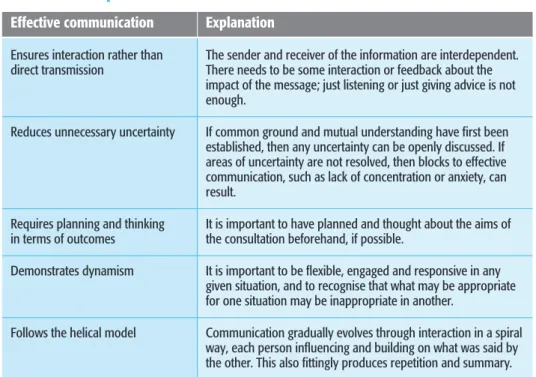
Table 1 Key strategies to support adherence 9 Table 2 Principles of effective communication 28
About CPPE
The Centre for Pharmacy Postgraduate Education (CPPE) offers a wide range of learning opportunities in a variety of formats for pharmacy professionals from all sectors of practice. We are funded through the NHS Multi-professional Education and Training Fund from Health Education England to offer continuing
professional development for all pharmacists and pharmacy technicians providing NHS services in England. For further information about our learning portfolio, visit:www.cppe.ac.uk
We recognise that people have different learning needs and not every CPPE learning programme is suitable for every pharmacist or pharmacy technician. Some of our programmes contain core learning, while others deliver more
complex learning that is only required to support certain roles. So we have created three categories of learning – CPPE 1 2 3 – and allocated each programme to an appropriate category.
Core learning (limited expectation of prior knowledge) Application of knowledge (assumes prior learning)
Supporting specialisms (CPPE may not be the provider and will signpost you to other appropriate learning providers).
This is a learning programme; however, some of the learning does involve the application of knowledge.
Continuing professional development
You can use this learning programme to support your continuing professional development (CPD). Consider what your learning needs are in this area. Use your CPD record sheets to plan and record the actions you have taken.
Activities
Exercises
We include exercises throughout this programme as a form of self-assessment. Use them to test your knowledge and understanding of key learning points.
Practice points
Practice points are an opportunity for you to consider your practical approach to the effective care of patients or the provision of a service. They are discrete activities designed to help you to identify good practice, to think through the steps required to implement new practice, and to consider the specific needs of your local population.
We have designed the practice points in this programme to help you and your team to make links between the learning and your daily practice and to co-ordinate with other healthcare professionals.
Case studies
We base case studies on actual or simulated events. They are included to help you to interpret protocols, deal with uncertainties and weigh up the balance of
judgements needed to arrive at a conclusion. We design the case studies to prepare you for similar or related cases that you may face in your own practice.
Reflective questions
These questions are included to give you an opportunity to pause and reflect on your current practice and skills throughout the programme. Thinking about these questions will help you to meet the objectives of the programme and will extend and reinforce your learning.
Assessment
Associated assessments have been developed as part of the toolkit for developing consultation skills. You can access the assessments at:
www.consultationskillsforpharmacy.com
References and further reading
You can find references for all the books, articles, reports and websites mentioned in the text, together with a list of further reading to support your learning at the end of the programme. References are indicated in the text by a superscript number (like this3).
Programme guardians
CPPE has adopted a quality assurance process called ‘programme guardians’. A programme guardian is a recognised expert in an area relevant to the content of a learning programme who will review the programme every six months. We will post any corrections, additions, deletions or further supporting materials that are needed, as an update to the programme on the CPPE website. We recommend that you refer to these updates if you are using this (or any other) learning programme significantly after its initial publication date. A full list of programme guardians is available on our website. You can email your comments about this programme to them at:[email protected]
External websites
CPPE is not responsible for the content of any non-CPPE websites mentioned in this programme or for the accuracy of any information to be found there. The fact that a website or organisation is mentioned in the programme does not mean that CPPE either approves of it or endorses it.
Disclaimer
CPPE recognises that local interpretation of national guidance may differ from the examples used in this learning programme and you are advised to check with your own relevant local guidelines. You are also advised to use this programme with other established reference sources. If you are reading this programme significantly after the date of initial publication you should refer to current published evidence. CPPE does not accept responsibility for any errors or omissions.
Feedback
We hope you find this learning programme useful for your practice. Please help us to assess its value and effectiveness by completing the online feedback form available on our website. Visit:www.cppe.ac.uk/mycppeand then selectMy CPPE recordfrom the menu and log in; scroll down to find the learning
programme title, and click on theTell us what you thinkicon. CPPE may email you a reminder to do this. You can also email us direct if you think your comments are urgent using the email address:[email protected]
Welcome to the CPPE distance learning programmeConsultation skills for
pharmacy practice: taking a patient-centred approach, which forms the first step in the learning pathway for developing the consultation skills of pharmacists and
pharmacy technicians in all sectors of pharmacy.
In 2012, proposals were issued as part of the Modernising Pharmacy Careers (MPC) programme to help strengthen and develop the careers of post-registration pharmacists and pharmacy technicians. The proposals included the need to enhance the skills of pharmacy professionals in working with patients, other healthcare professionals and members of the public to improve the safety, value and effectiveness of medicines through medicines optimisation, and to enhance their skills in the delivery of public health interventions. Enhancing the
communication and consultation skills of pharmacy professionals was identified as a key priority and has led to the development of a set of practice standards for consultation skills which set out the standard of knowledge, skills and behaviours expected of all pharmacy professionals in order for them to carry out effective patient-centred consultations. This is supported by a national learning and development programme, which is hosted on a new website
(www.consultationskillsforpharmacy.com). The website outlines the different steps a pharmacy professional should take in developing their practice to ensure that they are the best they can be when speaking with and consulting with patients. Oversight of work being taken forward as part of the MPC legacy, including the Consultation skills for pharmacy practicelearning and development programme, has now transferred to Health Education England (HEE) and forms part of HEE’s national programmes.
TheConsultation skills for pharmacy practicelearning pathway is outlined below and poses the following questions in relation to your consultation skills education and training needs.
How do I know what standard is expected of me?
A set of national practice standards for consultation skills has been developed. As a pharmacy professional, it is your responsibility to take steps to meet these
standards. This learning programme will support you in meeting some of the national practice standards, but due to the nature of the topic, you will need to complement your learning by putting it into practice with face-to-face training and peer review.
How do I know how effective my consultation skills are now?
There are a range of options available for you to establish how effective your current practice is when conducting medicines and public health consultations. TheConsultation skills for pharmacy practicewebsite provides guidance and evidence-based tools on how to self-assess and suggestions about how to work together with your team and peers to improve practice, take feedback from patients and critique others. These steps will contribute to your own personal development portfolio and are essential in improving your performance.Enhancing the communication and consultation skills of pharmacy professionals was identified as a key priority and has led to the development of a set of practice standards for consultation skills.
How do I improve my performance?
People learn in different ways, and with that in mind, we recommend a set of learning steps to help you achieve your development goal. There are many learning options (set out in detail on theConsultation skills for pharmacy practicewebsite), as we recognise that people will be at different stages of their development journey. Completing a learning programme or attending a consultation skills workshop should not be the end of your learning journey.
How can I check my learning and development?
Developing effective consultation skills should be part of everyday practice. There is always the opportunity to improve and learn new skills and techniques and your learning should be ongoing. Working through the online assessment process will provide you with reassurance that you can recognise good practice versus poor practice or practice which can be improved. The assessment runs via the CPPE website and is available to all pharmacy professionals.
How do I continue to develop my performance?
As a healthcare professional, you have a responsibility to continually revisit your personal development. We are all fallible and bad habits can soon creep into routine practice.
Maintaining a portfolio of your professional development in relation to the consultations you conduct will provide evidence to others of the steps you have taken to improve your practice and highlight the areas in which you need to develop further. This can include completing and revisiting the self-assessment, feedback from colleagues, patients and other healthcare professionals and reflecting on individual consultations.
At this stage of the process there are options for you to regularly reassess your performance and identify opportunities to further improve your approach to consultations.
To find out more about theConsultation skills for pharmacy practicelearning and development programme, visit:www.consultationskillsforpharmacy.com
Aim
The overall aim of this programme is to support you in developing your consultation skills in order to conduct effective consultations which integrate a patient-centred approach to everyday practice. By improving your consultation skills you will make a positive contribution to the lives of your patients, work towards improving patient outcomes and ensure that you are the best you can be when speaking with patients.
Working through the online assessment process will provide you with reassurance that you can recognise good practice versus poor practice or practice which can be improved.
Learning objectives
When you have completed this programme you should be able to: ● explain the concept of patient-centred care
● describe the key communication and consultation skills and techniques required to conduct patient-centred care
● apply methods to assess your own practice and identify areas of improvement ● incorporate patient-centred care into your everyday practice
● adapt your consultation style to individual patients and the context of practice within which you work
● explore patient knowledge, understanding and concerns during the consultation ● support patients, by using a patient-centred approach, to help them get the best
from their medicines and/or in making healthy lifestyle choices
● offer patients the opportunity to be involved in decisions around their own healthcare
● take your practice one step further by exploring tools and techniques, such as health coaching
● continually review your practice relating to consultation skills and identify areas for development.
Working through this programme
As a pharmacy professional you will be taking an increasingly patient-facing role as part of your everyday practice. Your current knowledge of the patient-centred consultation will depend on your previous learning on this topic and your existing experience of talking with patients in practice. Many pharmacy undergraduate courses include an element of communication and consultation skills training, but this has not always been the case and some pharmacists may have had little or no training in consultation skills. Similarly, pharmacy technicians may have a varying range of experience in consultation skills training.
With this in mind, we have developed this programme as a flexible resource. We have set out a ‘road map’ overleaf showing the six sections and indicating different learning routes you can take, depending on your existing level of knowledge, skills and experience in consultation skills. Each section includes exercises to support you in translating your knowledge into practice; helpful for all learners even if you are working through a particular section as a revision exercise.
The programme aims to provide a balance of background theory and practical tools that you can ‘test drive’ in practice. As you read through the programme consider the information and how it applies to you personally – how will it enable you to move forward and develop your practice?
Remember the aim of your hard work is to feel confident to meet the challenges facing you in your daily practice. Bear this in mind as you work through this programme – it will help you to decide if your approach to study is working. Many pharmacy undergraduate
courses include an element of communication and
consultation skills training, but this has not always been the case and some pharmacists may have had little or no training in consultation skills.
We acknowledge that people will have different levels of knowledge, skills and experience for each topic in this distance learning programme.
Follow the road map below to help you identify your learning needs.
Medicines optimisation and medicines adherence
1
SectionThe fundamentals of effective communication and taking a patient history
Section
2
Health coaching in patient consultations and how motivational interviewing can help to support behavioural change
Section
5
ROUTE PLANNING
This route gives you the chance to work through topics which contain the fundamental knowledge and skills for your consultation practice. Take this route if you are confident about the fundamentals of effective communication.
Take this route if you feel sure you can support your patients with medicines optimisation and medicines adherence.
Don’t miss this detour to advance your skills and access useful tools for your practice.
This route takes you through the three core sections of this programme, which all pharmacy professionals need to work through.
The history and background to consultation models and theory and how different consultation styles can affect practice
Section
3
Effective consultation skills, shared decision making and tools to support your practice
Section
4
Action planning to move your practice forward
Section
6
Note:Once you have finished working through your chosen sections we recommend all pharmacy professionals complete Section 6 – Moving your practice forward.
Although we have designed the programme for self-study, as you progress through the sections it will be essential for you to talk through some of the issues with your colleagues and complement your learning with face-to-face training and peer review.
We appreciate that consultations cover many different areas of practice, such as medicines optimisation, public health and self-care. The first section of this programme provides some background to the concepts of medicines optimisation and medicines adherence. A comprehensive understanding of medicines
adherence is important in medicines consultations as it can help you to consider medicines-taking from a patient’s perspective.
We then move on to the different skills and techniques you can apply to every consultation. First we look at basic communication skills, which are the
cornerstone of good consultation skills. Section 3 provides the background and theory to the consultation process and includes useful models and frameworks which you can apply to practice. Section 4 of the programme encourages you to assess your current consultation and communication skills and suggests ways that you can adapt and develop your everyday practice. Once you feel more confident in applying the basic consultation skills you can explore methods of advancing your practice in health coaching in Section 5.
We recommend that everyone works through the final section of the programme, which will help you develop an action plan to support you in moving your practice forward.
The study time will depend on you and your personal learning requirements, but we estimate that completing the whole programme will take a total of 10 hours.
Target audience
This programme is intended to support pharmacists, pre-registration pharmacists and pharmacy technicians working in all sectors of pharmacy practice.
Online resources
Some of the references in this programme are to material which is only available online, and we assume that you have access to a computer connected to the internet. Where we think it will be helpful we have provided the URL to take you directly to an article or specific part of a website. However, we are also aware that web links can change (eg, the Department of Health links) so in some cases we have provided the URL for the organisation’s home page only. If you have difficulty accessing any web links, please go to the organisation’s home page and use appropriate key words to search for the relevant item.
Note on NICE guidance:To find any of the NICE guidelines or technology appraisals mentioned in this programme visit the NICE website at:
www.nice.org.uk On their home page, click on ‘Find guidance’ and then enter the relevant topic in ‘Search NICE guidance’.
Note on articles:If you have difficulty locating an article on the internet, search via:www.google.co.ukby typing in the title, author, date and name of the journal. It can also be helpful if you add in, at the end of the search criteria, the website where you think the information may be, eg, dh.gov.uk You may prefer to use the NHS Evidence website to search at:www.evidence.nhs.uk/default.aspx
1 2 3 4 5 6 7 8 9 10
(not confident) (fully confident)
1 2 3 4 5 6 7 8 9 10
(not confident) (fully confident)
1 2 3 4 5 6 7 8 9 10
(not confident) (fully confident)
This distance learning programme looks at the skills and techniques you can develop to support you in conducting an effective patient-centred consultation. This introduction outlines the key principles of patient-centred care and how it applies to pharmacy today.
What do we mean by a consultation?
A consultation is ‘a meeting to discuss something or get advice’1with the goal of discovering the best course of action to take.
When we think of a pharmacy consultation we tend to think of the more structured interaction between a healthcare professional and a patient, but every time you speak with a patient you have an opportunity to make a difference. In this learning programme we are using the term ‘consultation’ to refer to any discussion between a healthcare professional and a person. We have also used the word ‘patient’ throughout, although this could be any person in the consultation environment, including customers in a community pharmacy and carers.
Reflective
questions
Thinking about your last consultation, answer the following questions. a. How confident are you that you...
...explored the patient’s agenda at the beginning of the consultation?
...explored and considered the patient’s views and beliefs about their health, disease or medicines fully in a consultation?
...viewed the patient as a true partner in the discussion?
b. Moving forward, what do you hope to achieve by working through this programme?
In this learning programme we are using the term
‘consultation’ to refer to any discussion between a healthcare professional and a person.
The patient-centred consultation in pharmacy today
The NHS is committed to putting patients at the centre of their own healthcare, enabling them to make informed choices and share in the decision-making process for their own health.2, 3
Pharmacy professionals play a key role in supporting people to manage their own health, with the consultation process forming the basis of most patient interactions. This is the case whether you are a hospital pharmacist discussing treatment with a patient at the bedside or in a specialist clinic setting, a community pharmacist conducting a medicines use review or a pharmacy technician delivering a smoking cessation service.
The NHS Constitution states that as NHS healthcare professionals, pharmacy professionals have a responsibility to support people to promote and manage their own health2and the Royal Pharmaceutical Society has echoed this by making patient-centred care the focus of the four key principles of medicines optimisation.4 Being an effective healthcare professional is not just about knowledge of medicines and public health. Applying effective communication and consultation skills means that patients are more likely or perhaps more willing to follow healthy lifestyle advice and adhere to treatment, which in turn may lead to improved healthcare outcomes.5 Although most pharmacists and pharmacy technicians have had either an element of structured education and training and/or experience in conducting
consultations, there is evidence to suggest that skills in conducting a patient-centred approach are lacking.6, 7, 8
One study showed that pharmacists exhibit good use of some skills, such as signposting and closing the consultation; however, skills such as listening
effectively, eliciting the patient’s perspective and taking a patient-centred approach are poorly demonstrated.6Healthcare professionals can be too eager to share information and move into the advice-giving role without establishing what a patient knows or would like to know. If this happens then patients may resist or reject the advice and feel their competence to self-manage has been questioned.7 There is a significant amount of research that considers the patient’s perspective of medical consultations by doctors, but little that evaluates the relationship between patient and pharmacist. However, we can still use the research that exists to consider how it might apply to pharmacy professionals.
A number of studies have been carried out to look at how doctors performed in consultations.9, 10, 11, 12A GP usually works within a ten-minute timescale to conduct a consultation with a patient, reach a diagnosis and plan treatment or give advice. It is not surprising to learn that sometimes patients come away from the GP feeling as though they have not gained as much from the consultation as they would have liked. The style of communication used by the GP is an important factor in the consultation and may contribute to patients finding it difficult to raise their concerns. Patients may have issues that they want to raise but feel they cannot, for example, issues relating to side-effects, or a lack of understanding about
prescribing decisions. This can result in patients feeling worried, undervalued and may lead to non-adherence.13, 14Taking a patient-centred approach and using everyday language as much as possible may help prevent this.15, 16
The NHS Constitution states that as NHS healthcare professionals, pharmacy professionals have a
responsibility to support people to promote and manage their own health.
In summary, studies have demonstrated the following about patient consultations with doctors:
● only half of the complaints and concerns of patients were identified ● doctors obtained little information about the patients’ perceptions of their
problems or about the physical, emotional and social impact of the problems ● doctors provided information in a rigid way, tending to ignore what individual
patients wished to know
● little attention was given to checking how well patients had understood what they have been told
● doctors recognised less than half of the psychological problems of their patients ● only about half of patients adhere to the treatment and advice given by the GP,
and the levels of patient satisfaction with the consultation process were variable. These findings suggest that we still have a long way to go to achieve healthcare that is truly patient-centred.
It would be reasonable to translate some of these issues to the pharmacy
consultation, however, there are some differences to consider. The end point of the consultation with a prescriber is often the prescription, creating an opportunity to continue the doctor-patient consultation with a pharmacy-patient consultation regarding the prescription. Pharmacy professionals are ideally placed to offer evidence-based information and advice, should patients choose to know more about their medicines and health.
Practice point
You can find out more about what patient-centred care means for pharmacy, and the GP perspective, by accessing the following video links.
The GP perspective: how has patient-centred care encouraged a change in your practice? https://vimeo.com/78354366
The professional perspective: what does patient-centred care and effective consultation skills mean to the pharmacy profession?
http://vimeo.com/78619272
Reflective
questions
Before reading on, think about what a patient-centred care approach means to you and make some notes below.
Pharmacy professionals are ideally placed to offer evidence-based information and advice, should patients choose to know more about their medicines and health.
Putting the patient at the centre of the consultation
Patient-centred care simply means that we should put the patient at the centre of all decisions about their healthcare. It is defined by the Institute of Medicine as:
‘providing care that is respectful of and responsive to individual patient preferences, needs and values, and ensuring that patient values guide all clinical decisions’.17
Taking a patient-centred approach involves a culture shift from a position where the healthcare professional makes the decisions within the consultation
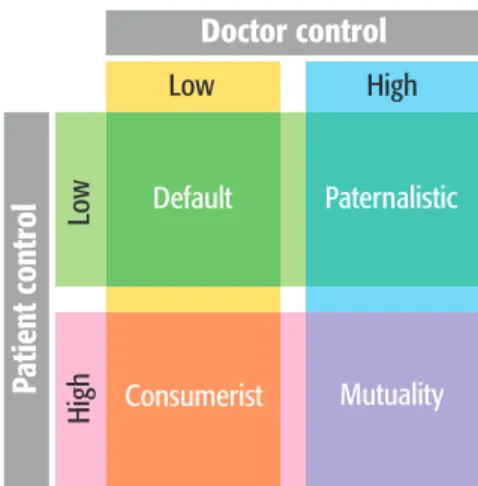
(a paternalistic approach) to one of partnership working with the patient; a
situation of equal power balance and shared decision making, based on eliciting the beliefs of the patient and providing evidence-based information and advice. This change in approach reflects a shift from counselling a patient about their
medicines, to true consultation with the patient, or in other words, a shift from one-way communication of ‘telling’ to partnership working, involving eliciting the patient’s perspective and ‘listening’.8This may sound straightforward but can be complex and challenging to do.
‘Patient-centred care’ is care that meets and responds to patient’s wants, needs and preferences and where patients are autonomous and able to decide for themselves.’18
Supporting patients to take ownership and responsibility for their own health has the potential to improve health outcomes. It is important to remember, though, that while all patients should be given the opportunity to be involved in decisions about their health, not all will wish to be involved. Sometimes the healthcare professional needs to take a paternalistic approach, if the patient is at risk due to unfounded beliefs or unsafe behaviour. It is understandable that pharmacy professionals may sometimes be guilty of focusing purely on the medicines a patient is prescribed, but there are many factors that influence a patient’s
behaviour towards their medicines and health. Taking a patient-centred approach will support you to explore these with the patient, ensuring they:
● have full involvement in the discussion ● feel respected and valued
● are listened to.
There are some key steps to the patient-centred approach, which we have noted below, each of which will be addressed in more detail throughout this programme. Communication
For healthcare professionals to be effective they need to communicate well with patients. One of the most important skills to apply is to listen. When
communication goes well both the healthcare professional and the patient
benefit.19By using effective listening skills, problems are identified more accurately and patients have a better understanding of their health problems, investigations and treatment options.9Using the right communication techniques at the
appropriate time also has the potential to support people in making healthy choices Taking a patient-centred
approach reflects a shift from counselling a patient about their medicines, to true consultation with the patient.
One of the most important skills to apply is to listen. When communication goes well both the healthcare professional and the patient benefit.
with respect to their lifestyle behaviours. Effective communication and consultation skills should be applied to the three key parts of the consultation: ● the information and messages that are communicated by both patient and
healthcare professional (ie, the content)
● the way in which the information is communicated (ie, the process) ● consideration of what the patient is thinking/feeling.
Partnership working
In a patient-centred consultation the patient is a true partner in the discussion and is empowered to engage in decision making and planning should they wish to. This helps the patient to feel valued and redresses the balance of responsibility within the consultation, encouraging the patient to take greater ownership of relevant decisions.
Taking a holistic view
Consider the full picture. Take a holistic view of the patient – socially, physically, psychologically and behaviourally. This requires exploring all aspects of a patient’s life that may impact on their health. What is life like at home for them once they leave the hospital or the pharmacy? Work, family and social life, as well as their own beliefs about a long-term condition or health issue, may all have an impact.
Structuring the consultation
Applying elements of a consultation model or framework to your practice will support the structure of the consultation and ensure a more patient-centred approach. It is true that sometimes patients may have their own ideas and beliefs about their medicines or health, which are not evidence-based. Regardless of this, they should be given the opportunity early in the consultation to communicate these. The only way to understand the patient’s perspective is to ask them and establishing a shared agenda with the patient at the introduction phase of the consultation should achieve this. There may also be situations where the patient is well informed about their condition and medicines and their knowledge should be respected, for example, you may think you are being helpful by saying, “I’ll just explain to you how these inhalers work” when actually the patient may already know. Offering premature advice and information without first establishing a patient’s perspective can have a negative effect on the consultation.7Although it is not your intention, they may feel patronised. Appropriate questioning techniques can support this part of the process. There may be other situations when it may be necessary to correct erroneous beliefs so that the patient can follow informed adherence.
Practice point
Watch the following video to see the patient’s perspective of patient-centred care.
The patient’s perspective – what does patient-centred care mean to you?
https://vimeo.com/78354106
In a patient-centred consultation the patient is a true partner in the discussion and is empowered to engage in decision making and planning should they wish to.
To assess your own learning needs related to patient-centred care and consultation you need to have an open and self-critical approach to your current performance and be aware of any barriers that may exist which prevent you from taking a patient-centred approach. Barriers can be practical, such as the environment of the consultation and the amount of time you have available to speak with a patient; they can be about knowledge; but most often they are about attitudes to others, for example, casting judgement on a patient, lack of consideration or empathy.
Reflective
questions
You may have many years’ experience of talking to patients, but how do you know you are really getting it right? What steps have you taken to develop your skills and get assurance that your consultations are effective and patient-centred? This could include attending face-to-face training or peer review by a colleague.
Write your thoughts here.
Key documents about consultation
There are several texts that are considered essential reading for medical students. However, they also contain useful ideas and information for all healthcare professionals. We would encourage you to read through them when you have the opportunity.
Pendleton, D.The consultation – an approach to learning and teaching. 198420 There is a wealth of useful information in this text, which describes in detail the framework recommended for a patient-centred consultation, as mentioned above. The approach has been widely used and taught.
MacLeod’s clinical examination21
This book links the consultation with examination skills and is an essential text for non-medical prescribers looking to extend their practice.
Neighbour, R.The inner consultation. 198722
This is a very readable and entertaining view of consultation skills. It contains some insights that are invaluable. If you only read one book, read this one. As well as extending your own learning you may understand better how your GP’s mind works.
adherence
Objectives
On completion of this section you should be able to:
describe the concept of medicines optimisation and medicines adherence
appreciate the patient experience when receiving a medicine state the reason for using the term adherence, as defined by the National Institute for Health and Care Excellence (NICE CG76)23 appreciate the reasons why patients may not take their medicines as intended
outline the role of the pharmacy professional in supporting patients to make informed decisions about their medicines which support a move towards adherence
apply further consideration to adherence to medicines in different patient groups.
Medicines use today is too often suboptimal.4Studies have shown that many patients (between 30 and 50 percent) do not take their medicines as intended.24 As few as 16 percent of patients prescribed a new medicine take it as prescribed, experience no problems and receive as much information as they need.25It is clear therefore that there is much scope to support patients in getting the best outcomes from their medicines.
In this section we look at medicines adherence, what it means for you as a
healthcare professional, what it means for the patient and the issues that surround it. We consider the skills that healthcare professionals can apply to recognise non-adherence and support improvements in medicines-taking. Any healthcare professional involved in the prescribing, dispensing and reviewing of medicines should, of course, be aware of and work within legal and professional codes of practice, but there are a number of additional skills you can develop that will further enhance your practice.
1.1 Medicines optimisation
Patient-centred care underpins the core principles of medicines optimisation. The Royal Pharmaceutical Society publication,Medicines optimisation: helping patients to make the most of medicines, highlights that a step change is needed in the way healthcare professionals support patients in maximising the outcomes from their medicines.4The figures are becoming all too familiar, with at least £300 million per year of medicines wasted in primary care26and at least six percent of
Patient-centred care underpins the core principles of medicines optimisation.
potentially be avoided.27With this in mind it is crucial that the right support is given to patients to ensure they get the most from their medicines. Improving adherence is likely to contribute to the reduction of medicines wastage, as well as to improved patient outcomes and reduced costs for the NHS.
Pharmacy professionals need to adopt the principles of medicines optimisation to everyday practice, which includes trying to understand the patient’s experience of their medicines and health and offering an evidence-based choice of medicines. Discussing a patient’s problems and concerns may clarify many issues for the patient, whether these are legitimate or not, and support the patient in making decisions about how they take their medicines.
‘The way a consultation is conducted influences patient adherence... Patients both prefer, and do better, when they are involved in the medical decision-making process.’ (Pendleton, 2003)28
1.2 Understanding medicines adherence
How much do you know or understand about medicines adherence? Before reading on through this section work through Exercise 1 below to discover your learning needs in this area.
Exercise 1
Consider the following statements and decide whether you agree or disagree with each statement about adherence and medicines-taking.
Agree Disagree a) Adherence is just another word for concordance.
b) Patients and healthcare professionals share decisions as part of adherence.
c) If the patient prefers the healthcare professional to take responsibility for decisions, adherence is not possible. d) Adherence involves giving patients information before
letting them decide what they want.
e) Research has shown that healthcare professionals’
perceptions about patient expectations are mainly accurate. f) Discussing the patient’s views will lead to longer
consultations.
g) In a consultation it is important that the healthcare professional explains their recommendations.
Turn to the end of the section for suggested answers.
Discussing a patient’s problems and concerns may clarify many issues for the patient, whether these are legitimate or not, and support the patient in making decisions about how they take their medicines.
In January 2009 NICE published a clinical guideline on medicines adherence (CG76):Medicines adherence: involving patients in decisions about prescribed medicines and supporting adherence.23
NICE define adherence as:
‘the extent to which the patient’s behaviour matches agreed recommendations from the prescriber’.23
There are several other terms that may be used in relation to how a patient takes their medicines:
● compliance – defined as the extent to which the patient’s behaviour matches the prescriber’s recommendations. This term is no longer in common use as it has a tendency to imply that healthcare professionals consider non-compliance issues are the patient’s fault. It also implies a lack of shared decision making.
● concordance – relates to the nature of the prescribing relationship and subsequent medicines-taking behaviour
● persistence – which relates to the length of time a patient continues to take their medicine.
The NICE guideline provides guidance on three key ways that healthcare professionals should support patients in adhering to their medicines: a) involving patients in decisions about their treatment(see Section 4) b) supporting adherence and offering evidence-based advice c) reviewing medicines.23
1.3 The reasons for non-adherence
Non-adherence has consequences for both the patient and the healthcare system. For patients, the costs are a missed opportunity for treatment gain and potentially impaired health outcome. Findings from a meta-analysis suggested that the difference in health outcomes between high and non-adherers is 26 percent.29 Non-adherence inevitably increases the risk of treatment failure and disease progression, but the extent of that effect is difficult to predict. Our understanding of the barriers to adherence, how to improve it and the evidence base is limited. Meta-analysis of available randomised controlled trials suggests multiple
interventions are required to maintain high adherence to long-term therapy.23High adherence follows a process, not a single event, and therefore adherence support must be integrated into all health contact with patients, especially during any follow-up consultations.
Researchers from a range of disciplines have explored the reasons why patients do not take their medicines as prescribed. Demographic factors (eg, age, gender) are not consistently associated with adherence so there is no easy way to identify a patient who may have adherence problems. Identifying which other factors predict non-adherence has been an elusive aspiration for researchers in this field for several decades. Taken together, it is clear there are many wide-ranging reasons for
High adherence follows a process, not a single event, and therefore adherence support must be integrated into all health contact with patients, especially during any follow-up consultations.
complex and related to a combination of factors, such as not having any support at home or having strong beliefs against taking prescribed medicines.
Social science research has shown that people are neither passive nor obedient in their responses to treatment.30They are experts in ‘themselves’ and how they live with their condition or issue and draw on their own experience of treatment in order to decide what is ‘best’ for them. Patients amass a body of knowledge and use all kinds of information sources and materials in order to manage their illness. However, this approach may be at odds with the best medical evidence. On the other hand, patient understanding of their own healthcare needs may be significantly richer, more detailed and far more complex than that provided in medical texts and guidelines.
Sharing information with the patient about how they can get the best from their medicines is, of course, a professional duty. It is equally important, however, to explore their views, fears and experiences about medicines and treatment. There is growing awareness that these issues are relevant to the quality of patient care and that they may significantly affect health outcomes.
Adherence is not simple to achieve and non-adherence should not be viewed simply as the patient’s problem.23However, exploring patients’ beliefs and experiences about treatment, in an open and non-judgemental manner, is a key step towards developing truly professional patient-centred care.31
The introduction to the NICE guideline emphasises that:
‘Addressing non-adherence is not about getting patients to take more medicines per se. Rather, it starts with an exploration of patients’ perspectives of medicines and the reasons why they may not want or are unable to use them. Healthcare professionals have a duty to help patients make informed decisions about treatment and use appropriately prescribed medicines to best effect.’23
Exercise 2
Most of us have taken at least one medicine at some point. If, for instance, you have been prescribed a course of antibiotics you may or may not, have found it a challenge to take the medicine as prescribed. Reflect on your experience as a healthcare professional and think about how this may compare to that of a patient who is prescribed multiple medicines.
Write down some of the feelings a patient may have towards taking their medicines and specific reasons for their behaviour towards adherence. It may also help to discuss this with friends or family members who have been prescribed medicines to gain a true patient perspective.
Write your thoughts here: Exploring patients’ beliefs and
experiences about treatment, in an open and non-judgemental manner, is a key step towards developing truly professional patient-centred care.
Here are some of things we considered:
● they may have experienced side-effects with the last medicine they took which may make them apprehensive
● they may know someone who has taken the same medicine but the medicine has not worked or has caused problems
● they may associate the medicine with the death of another person ● they may be afraid if they have had a new diagnosis
● they may be afraid of ‘filling their body full of chemicals’ ● they may feel as if they are no longer in control
● they may feel ‘ruled’ by their medicines
● they may have difficulty remembering to take them ● they may not understand the reasons for the medicines.
Sometimes it is difficult to understand why a patient has decided to use their medicines in a certain way, or not to use them at all, but by considering the patient’s perspective and their previous experience of medicines you will be taking a patient-centred approach.
Practice point
The following video highlights a patient’s perspective of taking medicines. Make a note of the most striking thought you take from the video and how this will influence the way you speak with patients who are non-adherent.
1.4 Unintentional and intentional non-adherence
One of the most useful conceptual distinctions in understanding why adherence is low for patients is to think about whether the reasons are intentional or
unintentional. Unintentional non-adherence may reflect patients wanting to take their medicines in the right way and being quite happy to discuss any problems or barriers they are facing. Many patients who show intentional non-adherence have their own reasons and beliefs for this.
In Section 4 we look at the medication-related consultation framework (MRCF), a validated framework developed to support you in reflecting on your consultation skills.32The MRCF embraces the principles of pharmaceutical care and draws on the perceptions and practicalities model of adherence, as described by Professor Rob Horne.33
Practice point
Before you read on access the following video, which provides an interesting explanation of the perceptions and practicalities model of adherence and may support you in understanding the patient’s perspective of their medicines and illness.
www.youtube.com/embed/R-6m7DTuXWI?rel=0
As we mentioned above, patients who show unintentional non-adherence may be willing to take the medicine as prescribed, but there is a barrier or problem that prevents them. Examples of unintentional factors include forgetfulness, an inability to open containers (for example, a patient with rheumatoid arthritis trying to open a foiled pack of tablets), tablets being too big to swallow, dosing regimes that do not match their lifestyle, devices they cannot operate. There may also be external reasons why the person cannot adhere, such as a child being unable to take a lunchtime dose of a medicine because the school will not allow it.
Patients who show non-adherence intentionally have made a decision not to take the medicine as prescribed. Their reasons for deciding not to adhere could include: ● a general concern about taking a medicine and the associated risks
● their health beliefs
● feeling that the doctor has not really listened to them or understood their problem ● taking the medicine and suffering unacceptable side-effects
● being unconvinced of the necessity of the medicine.
In reality, there is some overlap between these intentional and unintentional reasons for non-adherence; for example, if you are not particularly convinced that the medicine is useful, you may not put any effort into overcoming barriers to taking it. A typical example of this is a patient prescribed a medicine for high blood pressure. They may feel completely healthy and therefore feel, from a personal perspective, that the risks of taking the medicine outweigh the benefits. They may simply not see the reason for it. Conversely, a patient who is prescribed analgesics may be reminded to take their medicines by the pain they experience. There is some overlap
between these intentional and unintentional reasons for non-adherence; for example, if you are not particularly convinced that the medicine is useful, you may not put any effort into overcoming barriers to taking it.
Exercise 3
Think back to Exercise 1(page 2)where you identified some of the reasons why patients may be non-adherent.
Now group these reasons under the headings below.
Intentional non-adherence Unintentional non-adherence
We have included some suggestions at the end of this section.
Internal and external causes of non-adherence
An alternative approach is to think of the causes of non-adherence as internal and external. Internal causes are, crudely speaking, the ones within the patient’s head. These could include the conscious decisions we make about medicines, but could also include forgetfulness, misunderstandings about how the medicine works and therefore should be used, and the odd errors that our brains make, such as slips and lapses when we know what we should do but unintentionally do the wrong thing. Mood and anxiety can also affect adherence.
External causes may involve the medicines themselves, such as ease-of-use, the ease of the dose regime that has been prescribed, the family and close friendship groups around the patient (for example, if the patient is a carer of someone else, or has a carer themselves), social factors, such as deprivation, the cost of
Reflective
questions
When you are consulting with a patient, have you ever considered what happens when the patient gets home? Are they supported by other family members? Do they feel motivated by other factors to take their medicines or the converse? How will you adapt your consultation to acknowledge the challenges a patient faces? Which phrases could you introduce to check that a patient will cope with their medicines in their home environment? Write your thoughts below.
The overall approach recommended by NICE is one in which healthcare professionals are non-judgemental about discussing non-adherence with patients and the concerns they may have about their medicines; and patient-centred in dealing with relevant issues and encouraging informed adherence.23
Informed adherence means that the relevant evidence-based information is discussed with the patient and forms the basis for the patient’s decision to take a medicine. When reviewing a patient’s medicines you can improve your
understanding of the patient’s perspective by asking the patient what they already know and believe about their need for a medicine.23
Some patients may still make an informed choice to rationalise their medicines. One of the key principles set out by NICE23states that healthcare professionals should:
‘Accept that the patient has the right to decide not to take a medicine, even if you do not agree with the decision, as long as the patient has the capacity to make an informed decision and has been provided with the information needed to make that decision.’ To ‘let go’ and allow the patient to make this decision could present a challenge for some healthcare professionals(see Section 4.3 Shared decision making). However, as long as the most up-to-date information has been discussed together and the different options explored (including the risks versus the benefits of taking/not taking a medicine), then you should feel more comfortable with the patient’s choice.
When reviewing a patient’s medicines you can improve your understanding of the patient’s perspective by asking the patient what they already know and believe about their need for a medicine.
Exercise 4
If a patient is firm in their decision not to take a medicine, which other factors should be discussed?
Turn to the end of the section for suggested answers.
Strategies to support adherence are recommended in the NICE guideline. There is no ‘one size fits all’ intervention, so the strategies used to support adherence should be considered on a case-by-case basis to meet patient’s unique needs, and the concerns or specific difficulties they are experiencing. A set of examples of the key strategies from the NICE guideline are shown in Table 1.23
TABLE 1 Key strategies to support adherence
1. Determine whether patients are having problems with adherence for intentional or unintentional reasons. Intentional reasons usually involve patients’ beliefs, concerns or problems, such as side-effects. Unintentional reasons are mostly related to lack of understanding, poor memory or practical issues, eg, difficulty opening the medicine container.
2. Consider the options for supporting patients with their adherence and ask the patient what form of support they would prefer.
3. Address any beliefs and concerns that patients have that may have resulted in reduced adherence. 4. Practical problems should be tackled if patients raise a specific need. Strategies may include:
suggesting patients monitor their condition and/or medicines-taking; simplifying the treatment plan; using a multi-compartment medicines system.
5. If side-effects are a problem then discuss with the patient how they would like to deal with them. Practical solutions can be suggested (eg, timing of medicines) or it may be necessary to refer back to the prescriber in order to consider adjusting the dosage or switching to another appropriate medicine.
Adapted from NICE, 200923
There is no ‘one size fits all’ intervention, so the strategies used to support adherence should be considered on a case-by-case basis.
NICE acknowledges that evidence for adherence-enhancing interventions is not conclusive, reflecting a lack of well-designed interventions and studies in this area. There is strong and consistent anecdotal evidence that patients’ concerns are a frequent cause of non-adherence, so a patient-centred approach will allow pharmacy professionals to understand each patient’s unique concerns and needs, and tailor their advice and support accordingly.
1.5 Assessing adherence
There is currently no standard way of measuring adherence; a range of methods are used in clinical trials, many of which are not suitable for use in everyday practice. One of the main methods is self-reporting.
Self-reporting
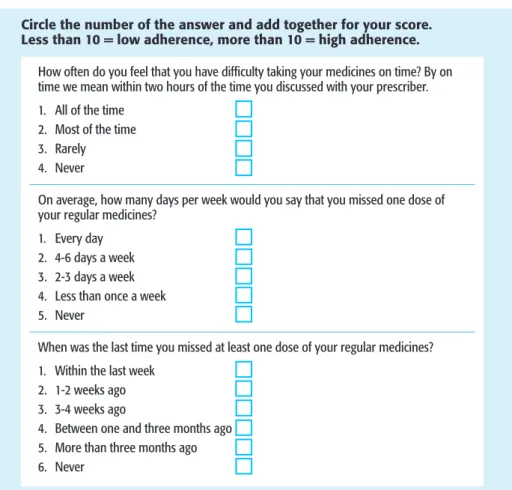
Patient self-reporting is a commonly-used measurement. The patient is asked to answer three questions, giving one answer from a range which has already been set. In research, the use of self-completed questionnaires has been validated as highly accurate, although not perfect, since self-reporting may overestimate adherence to therapy(see Figure 1).
FIGURE 1 Example of self-reporting from NICE clinical
guideline CG76
23Circle the number of the answer and add together for your score. Less than 10 = low adherence, more than 10 = high adherence.
How often do you feel that you have difficulty taking your medicines on time? By on time we mean within two hours of the time you discussed with your prescriber. 1. All of the time
2. Most of the time 3. Rarely 4. Never
On average, how many days per week would you say that you missed one dose of your regular medicines?
1. Every day 2. 4-6 days a week 3. 2-3 days a week 4. Less than once a week 5. Never
When was the last time you missed at least one dose of your regular medicines? 1. Within the last week
2. 1-2 weeks ago 3. 3-4 weeks ago
4. Between one and three months ago 5. More than three months ago 6. Never
There is strong and
consistent anecdotal evidence that patients’ concerns are a frequent cause of
Whether a patient takes their medicine as intended is more often than not
unknown to the healthcare professional. Assessing adherence should not be about monitoring a patient but about applying the right skills to find out what the patient knows and believes about their medicine and whether more information may support them with adherence. You could begin to assess adherence by asking the patient if they have missed any doses of medicine recently; however, consider the power balance in the consultation and avoid posing questions that may appear judgemental. Mention a specific time period, such as “Have you reduced the dose, or stopped or started any of your medicines in the past few days”. Explain why you are asking the questions. Use open questions that acknowledge that non-adherence is common.
This question taken from the new medicine service interview schedule provides a good example:
6. People often miss taking doses of their medicines, for a wide range of reasons. Have you missed any doses of your new medicine, or changed when you take it? (Prompt: when did you last miss a dose?)
You can access the full new medicine service interview schedule at the following link:
http://psnc.org.uk/services-commissioning/advanced-services/nms/
1.6 Discussing adherence with a patient
There are a number of different approaches you can take to help you discuss medicines adherence with a patient.
A health coaching approach, for example, takes into account that although the pharmacy professional is an expert in medicines, the patient is an expert in themselves, how their condition and medicines affect them and the social circumstances that may influence this.34Healthcare professionals who adopt a health coaching approach would:
● explore the patient’s perspective
● share information and discuss the advantages and disadvantages of different options
● reach a position of shared decision making ● negotiate, agree and record the plan.
There is much more to learn about health coaching in Section 5. Shared decision making is critical to discussions about adherence. To learn more about this and the power balance within the consultation, visit Section 4.
Assessing adherence should not be about monitoring a patient but about applying the right skills to find out what the patient knows and believes about their medicine and whether more information may support them with adherence.
Case study 1
George
George Redmond, age 71 years, has been admitted to hospital with a stroke. He has a history of alcohol abuse and has no fixed abode. While warfarin is recommended for reduction of stroke risk, you are told he is refusing to take warfarin. You are asked to speak with him.
Think about the questions you might ask George to establish the reasons why he has chosen not to take warfarin. It may be difficult to think of a logical order of questions, as any replies the patient may give would direct you to the next appropriate question, but consider the actual words/phrases you would use and the main issues to raise to ensure the consultation you deliver is patient-centred.
It may help you to consider the following factors:
● what are George’s ideas, concerns and expectations of taking warfarin? ● can you take a holistic view to consider the other things that may be
happening in George’s life which may influence his medicines-taking? ● what are George’s perceptions about his illness and how do these balance
with his perceptions of warfarin?
● what information would help support George to make a decision about taking warfarin?
Write your questions here:
Turn to the end of the section for some suggested questions.
This case study is intended to get you thinking about the actual words you are going to use when carrying out a patient-centred consultation, ie, your ability to communicate effectively. The notes you have made should provide a basis for two tools that you can use on repeated occasions with different patients, ie,
i) a phrase to gauge the patient’s interest and willingness to engage in medicines adherence, that you can use as a ‘foot in the door’ phrase
ii) a series of questions to use in a consultation. You will read more about George in Section 5.