Seton Hall University Dissertations and Theses
(ETDs) Seton Hall University Dissertations and Theses
Spring 2-25-2014
An Analysis of Principal Preparation Programs at
Pennsylvania State Schools
Karlin Burks
Follow this and additional works at:https://scholarship.shu.edu/dissertations
Part of theEducational Leadership Commons
Recommended Citation
Burks, Karlin, "An Analysis of Principal Preparation Programs at Pennsylvania State Schools" (2014).Seton Hall University Dissertations and Theses (ETDs). 1934.
AN ANALYSIS OF PRINCIPAL PREPARATION PROGRAMS AT PENNSYLVANIA STATE SCHOOLS
Karlin Burks
Dissertation Committee
Christopher H. Tienken, Ed.D., Mentor Barbara V. Strobert, Ed.D.
Lauren Schoen, Ed.D. Thomas Tramaglini, Ed.D.
Submitted in partial fulfillment of the requirements for the degree of Doctor of Education
Seton Hall University 2014
iii
Abstract
In this era of data-driven accountability for school success and high student achievement, successful school leadership has been hailed as one of the most import tools in creating effective schools. Principal preparation programs have an ever-demanding job of producing high-quality principals capable of effective school leadership, as the failure or success of a school can be directly attributed to the training and preparation of the school principal. It is the desire of the researcher that the findings of this study will add to the research on school leadership and perhaps encourage university principal preparation programs to examine their practices and engage in ongoing communication with the school districts in which they serve.
The purpose of this study was to examine principal preparation programs within the Pennsylvanian State System of Higher Education (PASSHE) and to ascertain whether their programs were structured in a way that would equip principal candidates with the
leadership roles deemed essential for 21st century school leadership. The four leadership
roles uncovered in this research as essential for 21st century school leadership success
are: (1) instructional leadership, (2) ethical leadership, (3) distributed leadership, and (4) visionary leadership. The sample size for this qualitative case study consisted of nine schools (N=9), and data for this study were collected by means of available online program documentation.
Examining principal preparation through the lens of General Systems Theory and Systems thinking, the researcher analyzed the program structure and overall program design for each principal preparation program within the PASSHE system of schools. Study results revealed two important findings of note: (1) principal preparation programs
iv
within the PASSHE system of schools overwhelmingly structured their programs around the ideals of instructional leadership, with the other three leadership roles only sparsely covered in program content and (2) although PASSHE is purported to be a collective system of schools, none of the schools in the study adopted a set of common principles or operated their principal preparation program in the same way. Each school operated as a separate entity, with varying requirements and program objectives.
v
Acknowledgments
I thank God for his MANY blessings, for His strength in allowing me to pursue this dream and see it to fruition, and for HIS granting me comfort and peace of mind during this incredible journey.
This dissertation is dedicated to a long list of people starting first and foremost with my beloved Mother Betty, who started this LONG journey with me but was called HOME before having the pleasure of seeing it completed. Mom, I KNOW that you are proud of me and that you are smiling down on me from Heaven. Thank you for your unwavering support.
To MY Memo, I thank you for being in the trenches with me as I fought so hard to complete this dissertation. Thank you for letting me complain, whine, and cry without judgment. Thank you for reading my chapters and offering your feedback. You were my biggest supporter, my champion, and YES my HARDEST critic and DRILL
SERGEANT! Thank you for loving me through this process and for loving me still.
To my sister Keia, who never failed to inquire, “When are you finishing that
dissertation?!” Thank you for encouraging me to KEEP writing and for making me believe that I could be successful at anything I attempted.
To my Father James and Stepmother June, thank you for constantly checking in on me and for encouraging me to write when I didn’t feel like writing at all.
vi
I would like to thank my mentor, Dr. Christopher Tienken, for taking the time to read my dissertation and for making sure that this paper came to fruition.
Thank you, Dr. Barbara Strobert and Dr. Tramaglini, for your guidance and comments during this journey.
I would also like to thank Dr. Lauren Schoen for serving on my committee. Thank you, Dr. Schoen, for making time in your busy schedule to read my dissertation and for providing comments that were most timely concrete. Thank you also for your words of encouragement; they were very much appreciated.
To my Seton Hall Sisters of Cohort XV, you are simply WONDERFUL! You
made this SHU experience so MUCH more than I ever thought it could be! You have all
become life-long friends and family; I will truly miss our weekends together! I love you all and wish you GREAT success in your future endeavors!
I would be remiss if I did not acknowledge Dr. James Caulfield, Executive
Director for Seton Hall University's Executive Ed. D. Doctorate Program. Thank you, Dr. Caulfield, for granting me admittance into such an outstanding program. This opportunity has truly changed my life and opened many doors in my professional career. I feel very fortunate to have had the opportunity to matriculate alongside such an elite group of individuals as Cohort XV and will forever count this among the highlights of my professional career.
vii TABLE OF CONTENTS Abstract. ...iii Acknowledgments...v Table of Contents...vii List of Tables...xi List of Figures...xii CHAPTER I. INTRODUCTION Background of the Problem ...1
Interstate School Leader Licensure Consortium Standards...3
21st Century School Administrator Expectations...4
Principal Preparation Programs and ISLLC...6
Pennsylvania Principal Preparation ……...7
Statement of the Problem ...8
Purpose of the Study ...9
Significance of the Study...10
Research Questions ...11
Design and Methodology ...12
Delimitations...13
Limitations...13
Definitions of Terms...14
Summary and Organization of the Study ...15
CHAPTER II. REVIEW OF RELATED LITERATURE Introduction...17
Overview of Existing Research ...17
Focus of the Review ...19
Literature Search Methods...20
Criteria for Inclusion and Exclusion of Literature... 20
The Evolution of Leadership...20
Principal as School Leader ...21
Standards and Accountability Impact on School Leadership ...23
The Evolution of the Principal’s Job...24
Principal Standards ...27
Interstate School Leader Licensure Consortium Standards...27
ISLLC in Pennsylvania ...29
Criticism of ISLLC...34
The Leadership Roles of 21st Century Principals …...36
viii
Training Principals for Instructional Leadership ...44
Principal as Visionary Leader ...44
Training Principals for Visionary Leadership ...45
Principal as Distributed Leader ...47
Training Principals for Distributed Leadership ...48
Principal as Ethical Leader ...50
Training Principals for Ethical Leadership ...51
The Link between School Leadership and Student Achievement ...52
Restructuring Principal Preparation Programs ...55
Criticism of Current Principal Preparation Programs ...57
Devising Coherent Principal Preparation Programs ...59
Characteristics of Effective Principal Preparation Programs ...60
Roadmap to Revamping Principal Preparation Programs ...62
Examining Principal Preparation Programs in Pennsylvania ...64
Conceptual Framework ...65
General Systems Theory ...65
Systems Theory/Thinking ...66
Chapter Summary...68
CHAPTER III. DESIGN AND METHODS Purpose of the Study ...70
Research Question ...70 Research Design ...71 Case Study...73 Single-Case Study ...74 Multiple-Case Study ...75 Setting ...75
University Program Description ...76
School A ...76 School B ...77 School C ...77 School D ...78 School E ...78 School F ...78 School G ...79 School H ...79 School I ...79 Site Selection ...80
Role of the Researcher ...81
Researcher Biases ...81
Data Collection...82
School Catalogs ………....83
School Website ………...83
Conceptual Framework/Program Philosophy ………...84
ix Data Management ………84 Credibility ...84 Data Analysis ...86 Coding ...87 Categorizing ...88 Making Comparisons ...89 Data Representation ...91 Chapter Summary ...91
CHAPTER IV. RESEARCH FINDINGS Introduction...93
Addressing Main Research Question………....94
Finding 1 – Instructional Leadership……….………...94
Finding 2 – Ethical Leadership……….……….…...95
Finding 3 – Visionary Leadership……….………....97
Finding 4 – Distributed Leadership……….….………...98
Addressing Subsidiary Research Question 1………...99
Addressing Subsidiary Research Question 2………...100
Additional Findings ………101
Availability of Information.……….101
Capstone Requirement……….102
Program Delivery Format....………..………..102
Individual School findings...103
School A ...103 School B ...106 School C ...110 School D ...113 School E ...116 School F ...119 School G ...121 School H ...123 School I ...126 Cross-Case Analysis ...129
Targeted Admission/Selection Requirements...129
Cohort Model… ...130
Field Experiences ...130
Program Curriculum...131
Instructional Leadership Curriculum ...132
Ethical Leadership Curriculum ...133
Visionary Leadership Curriculum ...133
Distributed Leadership Curriculum ...134
x
CHAPTER V. CONCLUSION AND RECOMMENDATIONS
Introduction...137
Summary of Existing Research.……….………...138
Findings of Study.………...140
Recommendations for Policy and Practice ...141
Recommendations for Future Research ...143
Concluding Remarks ...144
Personal Reflections……….………...146
xi
List of Tables
Table 1. ISLLC Educational Leadership Policy Standards...31
Table 2. Leadership Roles Percentage Breakdown ...100
Table 3. Summary of Program Criteria………..……...131
xii
List of Figures
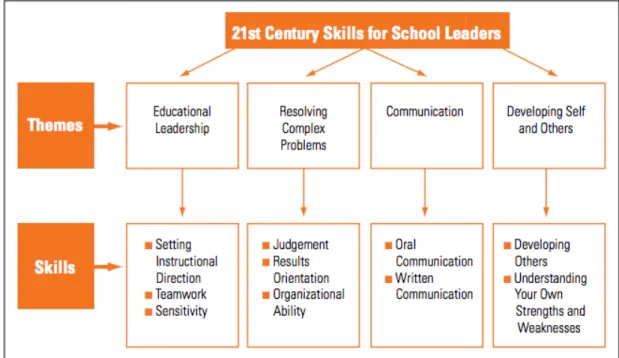
Figure 1. Themes and Skills of 21st Century School Leaders... 38 Figure 2. Conceptual Framework Depiction ...68
CHAPTER I INTRODUCTION
The No Child Left Behind Act of 2001 (NCLB, 2002) resulted in a national standards-based reform movement in our nation’s public schools. Part A of NCLB stipulated that student academic achievement could be increased by the placement of highly qualified principals and assistant principals in every school building (NCLB, 2002), as effective school leadership was found to be a necessary condition for successful school reform efforts (Marzano, 2003). However, results from research studies suggest that legislation alone cannot effect the type of change currently needed in today’s schools (Marzano, Waters, & McNulty, 2005; Mathis, 2004; Meier et al., 2004).
In 2003, The National Commission on Teaching and America's Future cited teacher quality as the single greatest component required for student achievement. Subsequent research conducted by Leithwood et al. (2004) and Louis et al. (2010) also cited the importance of teacher quality. However, there is a growing body of correlational research that suggests principal leadership to also be a factor in influencing student achievement and overall student success (Cotton, 2003; Hallinger & Heck, 1998; Marzano et al., 2005. According to a report by the Wallace Foundation (2012), the school principal is the primary individual that is in a position to ensure that high-quality teaching happens in every classroom in the school building.
Background of the Problem
The legislation of the No Child Left Behind Act (NCLB, 2001) positioned school leadership at the center of the national school reform effort outlined by three goals: (1)
creating effective schools, (2) closure of subgroup achievement gaps, and (3) a focus on the need for effective school leadership. According to the Wallace Foundation (2007), effective school leadership and successful school reform efforts depend on having principals properly trained to improve instruction and change schools. Several
researchers contend that 21st century schools require leaders experienced beyond that of
school manager to encompass the varied roles of visionary, community builder, budget analyst, facility manager, social worker, therapist, and curriculum expert (Darling-Hammond et al., 2007; Dembowski, 2006; DiPaola & Tschannen-Moran, 2003; Fullan, 2007; IEL, 2000). However, current university-based principal preparation programs charged with adequately training future school leaders for the challenging work of school reform have been questioned as to their effectiveness (Darling-Hammond, 2009, Murphy, Moorman, & McCarthy, 2008) and also criticized as one of the primary weaknesses in our country's education system (Levine, 2005). Levine (2005) further questioned whether higher education institutions are capable of re-engineering their leadership preparation
programs to educate principals to lead effectively in the 21st century.
According to critics, current principal preparation programs fail to address the myriad roles required of principals to become effective leaders (Davis et al., 2005) and do not equip them with the necessary tools to effectively deal with instructional leadership, community relationships, and time management issues (McNeese et al., 2009). Darling-Hammond et al. (2009) concurs with this position and posits that the problem with leadership preparation programs is two-fold: (1) lack of knowledge on the best ways to prepare and develop highly qualified candidates and (2) lack of established methods for assessing the effectiveness of a program's impact on the graduates or on the graduates'
performance in their leadership role. Darling-Hammond et al. (2007) further state that much of the principal training and preparation programs of today focus on the
management rather than the leadership role of principals, centering on “a collection of courses of general management principles, school laws, administrative requirements, and procedures—with little emphasis on knowledge about student learning, effective
teaching, professional development, curriculum, and organizational change” (pp. 9-10).
Interstate School Leader Licensure Consortium Standards
Effective leadership is necessary to the successful operation of schools (Marzano
et al., 2010); and schools in the 21st century require visionary leaders, as one factor, to be
successful (Snyder et al., 2008). The National Policy Board for Educational
Administration (2007) designed and adopted the Interstate School Leader Licensure Consortium (ISLLC) Standards, first introduced in 1996 and revised in 2008 as a national model for the desired standards of practicing administrators. Assessment standards provide test specifications to determine how licensed administrators should demonstrate entry-level knowledge and skills. Evaluation standards guide how practicing
administrators should be evaluated as they move toward expert performance as defined by ISLLC. Practice standards can be used to establish professional career plans and guide professional development as leaders demonstrate continuous improvement toward expert performance.
The revised 2008 ISLLC Standards, adopted by The National Policy Board for Educational Administration, are as follows:
1. An education leader promotes the success of every student by facilitating the
learning that is shared and supported by all stakeholders.
2. An education leader promotes the success of every student by advocating,
nurturing, and sustaining a school culture and instructional program conducive to student learning and staff professional growth.
3. An education leader promotes the success of every student by ensuring
management of the organization, operation, and resources for a safe, efficient, and effective learning environment.
4. An education leader promotes the success of every student by collaborating
with faculty and community members, responding to diverse community interests and needs, and mobilizing community resources.
5. An education leader promotes the success of every student by acting with
integrity, fairness, and in an ethical manner.
6. An education leader promotes the success of every student by understanding,
responding to, and influencing the political, social economic, legal, and cultural context.
Although many states have adopted the ISLLC standards as a guideline for effective principal performance, it is important to note that the requirements of university-based principal preparation programs are dictated by state and national prerequisites; therefore, the blame for poor school leadership performance cannot solely be placed with the universities or with school administrators.
21st Century School Administrator Expectations
School administration expectations have changed from the early 20th century
serve as visionaries, instructional leaders, change agents, and curriculum and assessment experts (Darling-Hammond et al., 2007). The school administrator role of today is met with an accumulation of expectancy that has increased the complexity of the position (Kafka, 2009). To adequately prepare school administrators for current and future demands, a major shift in principal preparation needs to occur (Barnett, 2004). Higher education institutions provide the training and opportunities necessary in order to meet the needs of current and future school leaders. NCLB was a catalyst for this change, as administrator preparation programs were heavily scrutinized and held accountable to produce higher quality principals capable of providing the instructional leadership
necessary to improve student achievement in 21st century schools.
Efforts to improve school leadership and preparation programs have also been of concern in the state of Pennsylvania. According to the Pennsylvania’s Department of Education (PDE), school leaders are a critical component to the success of
Pennsylvania’s educational system (Pennsylvania Department of Education, 2008). As a result, PDE established the Framework and Guidelines for Principal Preparation
Programs, a set of mandated standards aimed at placing effective school leaders in all schools within the Commonwealth of Pennsylvania. Another important goal of the Framework and Guidelines for Principal Preparation Programs is to increase program consistency throughout the state and to raise student achievement, as “it has become increasingly clear that there are commonalities in the leadership programs that have correlated program design to higher student outcomes” (Pennsylvania Department of Education, 2008, p. 2).
Pennsylvania’s Framework and Guidelines for Principal Preparation Programs works in tandem with the Interstate School Leaders Licensure Consortium (ISLLC): Standards for School Leaders. ISLLC, a program under the authority of the Council of Chief State School Officers, is a set of six guiding principles and professional
expectations for school leaders. In order to work as an administrator in Pennsylvania, one must successfully pass Educational Testing Services’ (ETS) School Leaders Licensure Assessment, a content of assessments based on the six ISLLC standards. ETS’ School Leaders Licensure Assessment was designed to encapsulate the essential role of school administrators and to focus on the essential aspects of school leadership as it relates to student success (ETS, 2003).
The role of school principal was not formally recognized in education until the 1920s (Grogan & Andrews, 2002). The role began with school administrators functioning as building managers, responsible for building facilities and student discipline concerns (Cotton, 2003). According to Holland (2004), the managerial tasks of the school
administrator comprised much of what a principal did in the early years, as it was viewed as the responsibility of the principal to oversee the work being done and the quality of the work being produced in the organization. However, according to Fullan (2007), the principal’s job has become dramatically more complex and overloaded within the last decade and has moved further away from the building manager role. DiPaola and
Tschannen-Moran (2003) supported this notion, stating that the job responsibilities of the principal have been expanded to include significantly more instructional leadership responsibilities.
Principal Preparation Programs and ISLLC
Since its inception in 1996, the Interstate School Leaders Licensure Consortium’s (ISLLC) Standards for School Leaders has gained recognition by many as the model for principal preparation programs, certification, professional development, and leadership performance evaluation across the United States (Council of Chief State School Officers, 1996; Lashway, 2002; Murphy & Shipman, 1999; Murphy, Yff, & Shipman, 2000). According to Standard 2 of the professional standards identified by the Interstate School Leaders Licensure Consortium, the principal should be “an educational leader who promotes the success of every student by advocating, nurturing, and sustaining a school culture and instructional program conducive to student learning and staff professional growth” (Council of Chief State School Officers, 2008, p. 20). The ISLLC standards illustrate the scope of educational expectations required of current school administrators and the level of accountability placed on principal preparation programs (Gupton, 2003)
to raise their training standards to meet the needs of 21st century schools.
Murphy (2007), one of the writers of the ISLLC standards, questioned the effectiveness of preparation programs when he asserted, "What universities have been doing to prepare educational leaders is, at best, of questionable value and, at worst, harmful" (p. 582). Brown (2006) supports this assertion, stating, “If current and future educational leaders are expected to foster successful, equitable, and socially responsible learning and accountability practices for all students, then substantive changes in educational leadership preparation and professional development program are required” (p. 705). Experts agree that a predictor of effective school administration can be
statewide education system” (Council of Chief State School Officers, 2008, p. 10).
Pennsylvania Principal Preparation Programs
Principal preparation programs in the state of Pennsylvania are approved through Pennsylvania’s Department of Education. The quality of each program is dictated through the guidelines and mandated standards detailed in The Framework and Guidelines for Principal Preparation Programs (2008). As of 2012, Pennsylvania has fourteen state schools under the Pennsylvania State System of Higher Education (PASSHE), nine of which offer approved programs for principal certification.
According to The Framework and Guidelines for Principal PreparationPrograms
(2008), Pennsylvania school administrators are expected to implement effective management practices that influence student success and achievement. There is a growing body of research that supports the idea of school administrators’ influence on student achievement. The idea of school administrators directly influencing student achievement began in the late nineties, as Peterson (1999) noted that principals
significantly influenced student achievement by providing new teachers with effective instructional leadership and nurturing. Additionally, several other researchers suggested school principals positively influence student achievement through the daily interactions and communications with the school’s teachers (Hallinger et al., 1996; Leithwood et al., 2004; Murphy et al., 2006). Although student achievement has historically been
associated with the direct actions of the classroom teacher, along with other internal and external factors outside the control of school personnel, current research finds student achievement can be attributed to the nurturing and guidance received from the school administrator, as principals have been proven to produce gains in student achievement
(Marzano et al., 2010) through their daily actions and interactions.
Statement of the Problem
The preparation of school administrators has come under considerable scrutiny in recent years (Levine, 2005; Murphy, 2007) with the U.S. Department of Education (USDOE) description of conventional administrator preparation programs as "well-intentioned, but insufficient," and "lacking vision, purpose, and coherence" (Orr, 2006, p. 493). According to Darling-Hammond et al., (2007) and Levine (2005), principal
preparation programs have not advanced far enough to meet the training demands of the new principal paradigm, which is to redesign schools that will prepare students to
compete in the 21st century global context.
Critics argue that current principal preparation programs are archaic, focus on a weak knowledge base and managerial duties, (Levine, 2005; Orr 2006) and do not align coursework to meet the needs of practitioners out in the field (Murphy, 2007). However, as most requirements for university principal preparation programs are dictated by state standards, researchers need to focus the reform work of principal preparation programs towards the national scale. The lack of qualitative research describing the methods for assessing the alignment between the course of study in principal preparation programs and the extant research on the characteristics of effective principals needs to be
addressed.
Purpose of the Study
The proper training of school administrators is essential if principals are to successfully navigate the education reform landscape that requires them to perform as building manager and knowledgeable instructional leader, ultimately responsible for the
success of every student in their school (Marzano et al., 2005). Principals play a role in creating effective schools, but existing knowledge on the best ways to prepare and develop highly qualified principals is sparse (Darling-Hammond, 2009). Thus, my purpose for this qualitative study was to examine principal preparation programs at Pennsylvania State System of Higher Education (PASSHE) schools and describe whether the programs include coursework and field experiences that would imbue school
administrators with the leadership and practical skills needed to successfully function in
21st century schools. Specific to this study, research will be conducted to understand how
each program is structured in a way that would equip principal candidates with the four
leadership roles found to be essential for 21st century school leadership: (1) instructional
leadership, (2) ethical leadership, (3) distributed leadership, and (4) visionary leadership.
Significance of the Study
According to NCLB (2002), school administrators are solely responsible for student achievement and overall student success in their school buildings. Pennsylvania’s Accountability Plan, a plan established to measure school improvement and student achievement in Pennsylvania schools, also delineates school improvement and school reform efforts as the sole responsibility of school administrators (Pennsylvania
Department of Education, 2006). An examination of Pennsylvania’s principal preparation programs is prudent, as other states around the nation have overhauled their leadership preparation programs (Darling-Hammond et al., 2009), to address the level of
preparedness of those individuals responsible for student achievement and reform efforts
in 21st century schools.
preparation programs to include a focus on the development of strong theory and practice and a complete understanding of principal preparation (Brown, 2006; Elmore, 2003). Darling-Hammond et al. (2009) posit that it is possible to create preparation programs that train school administrators to implement the practices associated with effective schools and that such programs would be research-based, have curricular coherence, provide experiences in authentic contexts, use cohort groupings and mentors, and are structured to enable collaborative activity between the program and area schools (Darling-Hammond et al., 2007; Levine, 2005). However, to date, limited research has been done to evaluate the effectiveness of university-based leadership preparation programs (Darling-Hammond et al., 2009; Murphy & Vriesenga, 2004; Orr, 2003); and no empirically based metrics of success have been developed.
Given what the research theorizes about effective leadership preparation programs, higher education institutions have a duty to ensure school administrators are
well prepared (Darling-Hammond et al., 2007; Levine, 2005) for the rigors of 21st century
school administration. By examining the current research and best practices on current principal preparation programs, this research can add to the discourse on effective
training methods for 21st century principals. Additionally, principal preparation programs
could utilize these findings to evaluate their programs’ alignment with school leadership best practices and implement changes as needed. Finally, this research provides future school districts and future principals with a realistic understanding of the practical skills
and leadership requirements needed to successfully lead 21st century schools.
Research Questions
preparation programs at the nine approved Pennsylvania State System of Higher Education (PASSHE) schools structured to imbue principal candidates with the
leadership and practical skills needed to successfully function as principals in 21st century
schools?
Two subsidiary questions were also examined:
Subsidiary Question 1: How do the course content and program design of each of the nine principal preparation programs in the PASSHE system of schools support the acquisition of the four leadership roles identified in the literature: (1) instructional leadership, (2) visionary leadership, (3) distributed leadership, and (4) ethical leadership.
Subsidiary Question 2: What are the opportunities in each principal preparation program for candidates to develop the four leadership roles identified in the literature through provided internships and field experiences?
Design and Methodology
This study is a qualitative case study describing the published content of principal preparation programs across multiple sites (n=9) in the Pennsylvania State System of Higher Education schools. An analysis of the nine approved principal certification programs were examined by means of available print and online documents that describe the curriculum from each university for the years 2000-2011. According to Huberman and Miles (2002), limiting a study to document analysis eliminates the concern with the distortion of information or a lack of factual accuracy.
Documents were examined to review the content, structure, and overall program design within each principal preparation program. Specific evaluation was given to the Program Goals/Philosophy, Program Curriculum/Course Content, and Program
Internship/Field Experiences. The data were evaluated to determine each program’s alignment with current research and theories on effective school administration and the characteristics of high-quality principal preparation programs as identified by scholars in the field. Additionally, each program was analyzed as to its ability to prepare candidates for the four leadership roles outlined in the study through specific course offerings and field experiences. The 2008 Interstate School Leaders Licensure Consortium (ISLLC) Standards served as criteria for evaluation for this study.
Delimitations of the Study
This study was delimited by the choice to describe principal preparation programs at Pennsylvania State System of Higher Education schools as evaluated through the institution’s publicly accessible media documents. Only publicly available media documents from the years 2000-2011 were examined.
Limitations of the Study
The limitations of this qualitative research study are as follows:
1. The study used a qualitative case study design, and thus, the results cannot be
used to draw casual connections between preparation programs and the effectiveness of their candidates as principals.
2. As researcher, I was the primary instrument of data collection (Merriam,
2009).
3. Possible inconsistencies may exist between the published documents and the
actual practices of the respective principal preparation programs.
4. The availability of documents and information in each of the 9 PASSHE
impacting the strength of the inferences that can be generated (Patton, 2002).
5. The available print and online documents were aimed at attracting students
into the program and were written from a public relations as opposed to an empirical perspective (Yin, 2003).
6. The study results may not be generalizable, as the findings were limited to the principal preparation programs in the Pennsylvania State System of Higher Education schools.
Definitions of Concepts and Terms
The following are definitions and abbreviations relevant to the study:
Distributed Leadership – Leadershipthatenhances the skills and knowledge of
people in the organization, creating a common culture of expectations around the use of those skills and knowledge, holding the various pieces of the organization together in a productive relationship with one another, and holding individuals accountable for their contribution to the collective result (Elmore 2000, p. 15).
Educational leader – A leader who promotes the success of each student by
advocating, nurturing, and sustaining a school culture and instructional program conducive to student learning and staff professional growth (Officers, 2008).
Ethical Leader – A leader who embraces the domains of ethical enactment, treats
everyone in the schools as human beings and citizens with rights and responsibilities and engages his or her staff in the ethical core work of the school; namely, authentic teaching and learning (Staratt, 2005, p. 131).
Field-related Experiences – Any experience, as part of a preparation program, in
a low-risk setting (Schon, 1991).
Instructional Leader – A leader who utilizes his or her skills to exercise the
functions that enables schools to achieve the goals of ensuring quality in what students learn (s, 2000).
Interstate School Leaders Licensure Consortium (ISLLC) Standards –The ISLLC
standards were first introduced in 1996 and revised in 2008 and are a set of six guiding principles and professional standards expected of school leaders.
PASSHE – Pennsylvania State System of Higher Education, a system containing
fourteen state schools.
PILS – The Pennsylvania Inspired Leadership Initiative, a statewide,
standards-based leadership development and support system for school leaders in Pennsylvania.
Principal Preparation Programs – Programs at accredited universities through
which individuals become certified to serve as school principals.
Principalship – The post of principal
Servant Leader – See ethical leader
Visionary Leadership – A leaderwho is prepared to provide professional support
and guidance at all levels of the school (Bottoms et al., 2003; Koerner, 1990).
Summary and Organization of the Study
This study is divided into five chapters. Chapter I provides an introduction to the study, a statement of the problem and significance of the study as well as a general description of the design and study methodology. Chapter II presents a review of the relevant research on effective school administration and the changing demands of school
procedures for data collection, and process used for data analysis. Chapter IV presents
the data, data analysis, and interpretation ofthe findings as it pertains to the research
questions. Chapter V presents a summary of the study and implications and
CHAPTER II
REVIEW OF THE LITERATURE
The following literature review examines the characteristics inherent to highly effective school leadership. Literature relevant to the principal's job as examined through
the various leadership roles required of 21st century school administrators is also
included. The chapter begins with a historical overview examining principal preparation programs and past practices of training school leaders. Finally, characteristics of effective principal preparation programs are examined across the nation, followed by an overview of the current condition of principal preparation in the state of Pennsylvania.
Overview of Existing Research
Research into principal preparation and leadership has been extensive over the years. Researchers such as Morrow (2003), Cotton (2003), Waters et al. (2003), Marzano et al. (2005), Levine (2005), and Murphy, Moorman, and McCarthy (2008) all examined the relationship of principal preparation or principal leadership. The following is a synopsis of the major studies in the area of principal leadership and training.
Morrow’s (2003) qualitative study examined Illinois public school principals’ perceptions of the ISLLC standards found to be most crucial to the daily job performance of practicing school administrators. The study also examined the importance of the ISLCC standards in 21st century principal preparation programs. Morrow’s survey of 182 principals concluded that principals in the study perceived the ISLLC standards to be valuable in the execution of their jobs. Two additional conclusions pertinent to this study were as follows: (1) the principal’s role has shifted away from building resource manager to instructional leader, and (2) principals viewed the responsibility for making the vision
of learning in the school clear and understood by all stakeholders as a critical component of their role.
Cotton’s (2003) qualitative study examined the link between principal
characteristics and behaviors and their relationship to student outcomes. Cotton found that principals of high achieving schools exhibited similar characteristics and behaviors. Similar to the research of Morrow (2003), Cotton’s research found that effective
principals are (1) vision and goal oriented and focus on high levels of student learning, (2) understand the importance of instructional leadership, and (3) use student data for program improvement (pp. 67-72).
Levine’s (2005) qualitative study on leadership examined the utility of principal preparation programs across the country. Levine’s (2005) study was a follow-up to the 1987 National Council on Excellence in Educational Administration (NCEEA) study that found major deficiencies in the alignment of the training conducted in principal
preparation programs to the actual demands of the principal’s job. Levine’s four-year study consisted of 28 case studies of diverse principal preparation programs around the country and survey data from principals and other educators affiliated with principal preparation. Levine’s overall conclusions concurred with the original results from NCEEA that found the quality of university-based principal preparation programs to be deficient. Also of note from this study were the survey results that found 89% of
participants cited that their leadership preparation programs failed to adequately prepare them for the rigors of real practice (Levine, 2005).
Marzano, Waters, and McNulty (2005) examined the notion of school leadership from a quantitative perspective by conducting a meta-analysis of 69 studies over a 35-
year span. Marzano et al. (2005) examined the effect of school leadership on student achievement and found that the more effective the leader, in terms of leadership abilities, the greater the gains in student achievement. Marzano’ s (2005) research was the first of its kind to quantify the leadership traits and actions of school principals and placed a statistical analysis to the 21 leadership behaviors uncovered in the study.
Murphy, Moorman, & McCarthy’s, (2008) qualitative study, A Framework for
Rebuilding Initial Certification and Preparation Programs in Educational Leadership:
Lessons from Whole-State Reform Initiatives, investigated the extent to which meaningful
reform was occurring in university-based school leadership preparation programs in 54 universities across six states. This study found that leadership preparation programs were inconsistent and fell short of the goal of adequately preparing school leaders. Another important finding was that leadership preparation programs still adhered to an outdated and unproductive training paradigm focused primarily on weak curriculum and course content.
Focus of the Review
The proper training of school administrators is essential to the success of all schools, as it is the school principal that is ultimately responsible for the success of every student in his or her charge (Marzano et al., 2005). Although principals play a vital role in student achievement and school success, existing knowledge on the best ways for principal preparation programs to train highly qualified principals is sparse (Darling-Hammond, 2009). According to Darling Hammond et al., (2007) and Levine (2005), principal preparation programs have not progressed far enough to meet the training demands of the new principal paradigm, which is to redesign schools that will prepare
students to compete in the 21st century global context. This study will examine relevant literature on principal preparation programs utilizing the framework outlined in Boote and Beile (2005) for effectively organizing a literature review. The review of related literature serves as the foundation for this research study.
Literature Search Methods
Literature to be reviewed for this study was accessed for the years 1996-2011 via online databases: (a) Pro Quest, (b) JSTOR, (c) ERIC and (d) Google Scholar. In
addition, several works by known scholars in the field such as Darling-Hammond, Marzano, and Elmore, who advocate for increased rigor in principal preparation programs, were reviewed.
Criteria for Inclusion and Exclusion of Literature
There is little quantitative or qualitative research conducted on principal
preparation. This literature review includes theoretical research on principal preparation programs as well as limited available empirical case studies describing characteristics of highly effective principal preparation programs. The literature chosen for selection in this study represents a list of documents that helped form the basis of the research topic.
I restricted the parameters of my search to peer-reviewed journals and used the key words/phrases of principal preparation, principal preparation programs, and school administration to guide my search. To provide a more comprehensive study, both quantitative and qualitative studies were included. The ProQuest database was also used to access doctoral dissertations that researched principal preparation programs and principal training to support my study focus. Additionally, relevant research on educational leadership and the principalship was included.
The Evolution of Leadership
The idea of leadership has evolved over the past one hundred years beginning with Carlyle’s (1888) “great man” theory, which is the notion that leaders are born with predisposed characteristics rendering them capable of assuming a variety of leadership roles and responsibilities. During the 1960s, however, behavior theorists rejected Carlyle’s notion that leaders were born with gifted traits better suited to leadership positions and opted to examine the observable patterns of behavior leaders exhibited that could be categorized as specific “leadership styles” (Jago, 1882) or traits. Present day researchers such as Northouse (2004), have moved beyond investigating leadership through the sole examination of the leader, to encompass a more complete understanding of the relationship between the leader and his or her followers and the combined efforts on organizational performance (Bass & Riggio, 2006; Northouse, 2004).
Although the notion of leadership has been examined for nearly one-hundred years, no defining or universal trait distinguishing effective leaders from ineffective leaders has been uncovered (Northouse, 2004). Much of the research on leadership is examined through the lens of the leader and fails to consider external forces such as those individuals working with the leader or the leader’s context or task (Northouse, 2004). Particularly germane to this study, the current leadership research fails to distinguish between effective leadership and effective management, (Kotter, 1990), which continues to be a central issue in the evolution of the principal’s job.
Principal as School Leader
The role of school principal was not formally recognized in education until the 1920s (Grogan & Andrews, 2002). Researchers first identified the varied duties of school
principals as functioning as building managers, responsible for building facilities and student discipline concerns (Cotton, 2003). Holland’s (2004) research supported earlier study findings concluding that the early job of school principal was comprised mainly of the day-to-day management and operation of the school.
The literature on school leadership and principal preparation suggests that the training of school leaders, and their ultimate success in schools, has been at the forefront of education reform for over 40 years. The National Policy Board for Educational Administration (NPBEA) stated that every educational reform report of the last decade concludes that the United States cannot have excellent schools without excellent leaders (NPBEA, 2002). As early as 1969, researchers called for a new breed of school principal to effectively and productively lead the reforms efforts in our schools (Culbertson et al., 1969). However, early researchers examining preparation of school administrators found the programs lacking, citing significant discrepancies between the training needs of school leaders and the opportunities provided them in their formal preparation programs (Culbertson et al., 1969). Twenty years later, researchers continued to call for a change in principal preparation and professional development programs to focus more on the areas of content knowledge, skills, and leadership ability proven to make a difference in today’s schools (Bookbinder, 1992). Under the current era of standards accountability, principals are required to possess the skills and knowledge necessary to improve teacher instruction and student achievement (Elmore, 2000).
School principals are so essential to effective schools that promote powerful teaching and learning for all students (LaPointe, Meyerson, & Darling-Hammond, 2006) that their skills and abilities must be broad enough to encompass the full range of duties
required of effective leaders. According to Rooney (2008), leaders in today’s schools must be equipped with the skills or characteristics of (a) relationship builder, (b) listener, (c) reflector, prior to making major decisions, and (d) mentor. In the 2012 report jointly commissioned by The National Center for School Leadership (NCSL) and The Wallace
Foundation entitled Preparing a Pipeline of Effective Principals: A Legislative Approach
(2012), five key roles were outlined for effective principal leadership. Effective
principals (a) shape a vision of academic success for all students, one based on high standards, (b) create a climate hospitable to education, (c) cultivate leadership in others so teachers and other adults assume their part in realizing the school vision, (d) improve instruction to enable teachers to teach at their best and students to learn at their utmost, and (e) manage people, data, and processes to foster school improvement. As outlined in
NCSL’s (2012) report, the job of the 21st century school principal is multifaceted and
increasingly challenging to master.
Standards and Accountability Impact on School Leadership
The driving force behind the increased demand placed on 21st century principals
is the current era of high-stakes standards and school accountability that began in the 1980s. The Goals 2000 standards-based reform initiative required all students to reach higher levels of academic achievement by the year 2000. Following the Goals 2000 initiative, the No Child Left Behind Act (NCLB), another standards-based initiative, required all states to steadily improve in academic performance by the year 2014 and required statewide accountability systems be put in place for all public schools (Cotton, 2003). In addition to the statewide accountability measures of NLCB, all schools were expected to show consistent progress towards the 2014 academic goals that NCLB
termed adequate yearly progress (AYP) in order to continue receiving federal school funds. Of particular importance to school leaders, the nationwide reform efforts held schools, students, and by extension, principals accountable for achieving high academic standards through the establishment of standardized tests to measure students’ attainment, or lack thereof, towards the required goals (Heinecke et al., 2003). Schools failing to make Adequate Yearly Progress (AYP) toward state proficiency goals faced a variety of sanctions up to and including state takeover of the school district (U.S. Department of Education, 2001).
The standards and accountability movement greatly increased the importance of the principal’s role in school effectiveness (Lashway, 2003) and placed principal
preparation firmly in the center of the education reform movement. In order to be deemed effective in this highly accountable era, Goodwin et al., (2003) contends principals must master effective instructional leadership and demonstrate knowledge of teaching and learning. In 2005, the Southern Regional Education Board (SREB) issued a challenge to educators to equip every school with the leadership necessary to improve student
performance, as Levine (2005) contends leadership begins with an effective school principal.
The Evolution of the Principal’s Job
According to National Association of Secondary School Principals (NASSP, 2010) the landscape of our schools has changed and is driven by factors such as greater accountability, technological innovation and complexity, and greater diversity of school communities. Thus, the school principal’s job needs to change to accommodate the scope and demands placed on current school administrators, which has become dramatically
more complex and overloaded within the last decade (Fullan, 2007). Current school administrator duties have shifted away from building manager to encompass a more multi-faceted role with significantly more instructional leadership responsibilities (DiPaola & Tschannen-Moran, 2003).
According to NASSP (2010), school principals face complex societal issues influencing education today; and effective principals need skills to resolve these issues with judgment, an orientation toward results, and organizational ability. Along these lines, The Southern Regional Education Board SREB (2007) noted that effective principals are crucial to improved student performance so much so that substantial improvements are not likely to take place without highly effective principals in all
schools. Thus, 21st century schools require principals that can be effective building
managers, capable of managing the facilities side of their school buildings, and effective instructional leaders, capable of leading the educational reform efforts in their schools towards greater student achievement and outcomes.
According to Orr (2007), the manner in which a principal leads his or her school influences the school’s outcomes in terms of improvement, student achievement, and teacher satisfaction. Further research on school leadership, school effectiveness, and the role of the school principal suggests that, second only to the influences of classroom instruction, school leadership strongly affects student learning (Leithwood et al., 2004). In spite of what the latest research shows about the importance of placing effective school leaders in all schools, many principals may not be equipped for the role of instructional leader (Davis et al., 2005), capable of increasing the achievement of students in their charge (Hale & Moorman, 2003; Hess, 2003; Waters, Marzano, & McNulty, 2003).
The blame for poor principal performance traditionally was placed with university principal preparation programs, as many researchers believed current programs were ill
equipped to handle the training demands required of 21st century school administrators.
Levine, a strong critic of principal training, concluded that principal preparation programs were the primary weakness in our country's education system (2005).
Historically, the focus of principal preparation programs emphasized management and administrative issues over curricular and instructional concerns, causing a profound disconnect between the university training of school administrators and the current realities and demands of the job to be instructional leaders (Hale & Moorman, 2003). In spite of the fact that teaching and learning have taken the front row in the list of skills the school principal is expected to perform (Hale & Moorman, 2003), many principal
preparation programs have resisted change.
Researchers contend that 21st century schools demand highly qualified, efficient
school leaders. Thus, tremendous expectations have been placed on school leaders to improve student achievement (NCLB, 2001) and solve the ills facing the nation’s schools
(Darling Hammond et al., 2007).In order to manage this changing landscape, 21st century
schools must be equipped with principals that exhibit high degrees of educational leadership expertise (NASSP, 2010).
The hiring of qualified principals is an urgent issue in many school districts across the country as they scramble to meet the requirements for greater student achievement under NCLB and other standards-based reform initiatives. Mallory (2007) contends that the costs associated with hiring a principal ill-equipped to function as an effective school leader can potentially damage the district’s financial outlook as well as their public
persona in their communities. The only way to ensure all schools are equipped with excellent principals is to ensure school administrator preparation programs reflect the
new training paradigms required of 21st century schools (Orr, 2003). The outlook for
principal preparation programs is improving as, according to Green (2005), many higher education institutions across the country have restructured and updated their preparation programs to incorporate research-based and practice-oriented approaches that respond to the new and emerging need of accountability, efficiency, effectiveness, and excellence.
Principal Standards Interstate School Leader Licensure Consortium Standards
The Interstate School Leader Licensure Consortium (ISLLC) Standards, first introduced in 1996 and revised in 2008, have emerged as the definitive model for
principal preparation programs and leadership performance evaluation across the United States (Council of Chief State School Officers, 1996; Lashway, 2002; Murphy &
Shipman, 1999; Murphy, Yff, & Shipman, 2000) and is considered by many educators to be a national model for the desired standards of practicing school administrators. The ISLLC standards provide a set of common expectations for the knowledge, skills, and dispositions of school administrators, grounded in principles of effective teaching and learning (NPBEA, 2001). As of 2010, 46 states, including Pennsylvania, have adopted the ISLLC standards for principal preparation certification for its school administrators (Darling-Hammond et al., 2010). The ISLLC assessment standards provide test
specifications to determine how licensed school administrators should demonstrate entry-level knowledge and skills to be deemed effective in their role.
relevancy to the principal profession. However, The Standards We Need: A Comparative
Analysis of Performance Standards Shows Us What Is Essential for Principals To Know
and Be Able To Do To Improve Achievement (Waters, & Kingston, 2005) was a
comparative analysis of the six key findings of the Mid-continent Research for Education & Learning (McREL)’s Balanced Leadership Framework with the 184 ISLLC Indicators. The purpose of the study was to provide insight about what future standards for school- leaders should encompass. The study found that both the McREL and ISLLC Standards propose a wide range of principal responsibilities; however, neither set of standards provides a clear distinction between important and essential responsibilities of the principal (Waters, & Kingston, 2005). Ultimately, this study confirmed that what effective principals must know and be able to do on the job encompasses a vast amount of responsibilities.
Another study on the ISLLC standards was conducted by Morrow (2003) and examined the usability of ISLLC standards in the everyday work of school principals. The study also examined the practicality of the ISLCC standards in 21st century principal preparation programs. The study drew several conclusions as a result of surveying
principals; however, two were pertinent to this study: (1) the principal’s role has shifted away from building resource manager to instructional leader and (2) principals viewed the responsibility for making the vision of learning in the school clear and understood by all stakeholders as a critical component of not only the principal’s role but also critical to current principal preparation programs.
Evaluating principals by means of standards and accountability has become the norm in education. Most states around the nation rely heavily on various assessments as
part of their certification processes for principals (Sanders & Simpson, 2005) and include use of the ISLLC standards completely or in part to evaluate the effectiveness of
principals in their everyday roles. In an evaluation of effective leadership capacity building programs around the nation, Darling-Hammond et al. (2007) found that those programs utilizing curriculum aligned to state and professional standards, such as the ISLLC standards, when preparing future school principals to be most successful.
ISLLC Standards in Pennsylvania
Like other states around the nation, Pennsylvania modeled their curriculums, administrator standards, and certification requirements for its principal preparation programs school after the standards outlined in the Interstate School Leaders Licensure Consortium (ISLLC). The ISLLC standards, organized by the Council of Chief State School Officers, is a set of six guiding principles and professional expectations for school leaders, devised for the purpose of developing model standards and assessments for school leaders. The ISLLC standards were devised to address the critical components of school leadership as they related to student success and achievement and to help
transform the profession of educational administration and the roles of school administrators.
The Pennsylvania Department of Education (PDE) deems school administrators critical to the success of the entire Pennsylvania educational system and has begun examining its leadership preparation programs in an effort to improve leadership practices around the Commonwealth. Education experts agree that a predictor of strong school leadership can be directly linked to “incorporating clear and consistent standards and expectations into a statewide education system” (Officers, 2008, p. 10) and
Pennsylvania recognizes the accountability level at which school principals are placed and the important leadership role principals must assume to facilitate the success of the schools they administer (Pennsylvania Department of Education, 2006).
In the state of Pennsylvania, principal preparation program quality is dictated through the guidelines and mandated standards detailed in The Framework and
Guidelines for Principal Preparation Programs (2008). The Pennsylvania K-12 School Leadership Project of the Education and Policy Leadership Center (EPLC), a twenty- member study team of education experts selected from the local, state, and federal sectors, were also charged with identifying issues and concerns regarding district and school leadership in the state and developing recommendations that would lead to improved practice and greater student achievement. The primary goal of EPLC was to clearly define the roles of school principals, based on current research and leadership best practices, and to develop a list of knowledge and skills required for effective school and district leadership to be implemented in principal preparation programs around the state.
The updated six ISLLC standards of 2008 currently in use in Pennsylvania were born out of the following set of principles for school leaders to follow (Council of Chief State School Officers, 2008). The following seven principles set the direction and
priorities during the development of the new policy standards: (1) reflect the centrality of student learning, (2) acknowledge the changing role of the school leader, (3) recognize the collaborative nature of school leadership, (4) improve the quality of the profession, (5) inform performance-based systems of assessment and evaluation for school leaders, (6) demonstrate integration and coherence, and (7) advance access, opportunity, and empowerment for all members of the school (Council of Chief State School Officers,
2008). From the principles outlined above, the following six ISLLC standards and functions were devised and implemented in several states across the nation, including Pennsylvania:
Table 1
ISLLC Educational Leadership Policy Standards
ISLLC Standard
Description Expected Principal Function
1 An education leader
promotes the success of every student by facilitating the development,
articulation,
implementation, and stewardship of a vision of learning that is shared and supported by all
stakeholders.
A. Collaboratively develop and implement a shared vision and mission.
B. Collect and use data to identify goals, assess organizational effectiveness, and promote organizational learning
C. Create and implement plans to achieve goals D. Promote continuous and sustainable improvement E. Monitor and evaluate progress and revise plans
2 An education leader
promotes the success of every student by
advocating, nurturing, and sustaining a school culture and instructional program conducive to student learning and staff professional growth.
A. Nurture and sustain a culture of collaboration, trust, learning, and high expectations
B. Create a comprehensive, rigorous, and coherent curricular program
C. Create a personalized and motivating learning environment for students
D. Supervise instruction
E. Develop assessment and accountability systems to monitor student progress
F. Develop the instructional and leadership capacity of staff
G. Maximize time spent on quality instruction H. Promote the use of the most effective and
appropriate technologies to support teaching and learning
I. Monitor and evaluate the impact of the instructional program
3 An education leader
promotes the success of every student by ensuring management of the
organization, operation, and resources for a safe,
efficient, and effective learning environment.
A. Monitor and evaluate the management and operational systems
B. Obtain, allocate, align, and efficiently utilize human, fiscal, and technological resources C. Promote and protect the welfare and safety of students and staff
D. Develop the capacity for distributed leadership E. Ensure teacher and organizational time is focused to support quality instruction and student learning
4 An education leader
promotes the success of every student by
collaborating with faculty and community members, responding to diverse community interests and needs, and mobilizing community resources.
A. Collect and analyze data and information pertinent to the educational environment
B. Promote understanding, appreciation, and use of the community’s diverse cultural, social, and intellectual resources
C. Build and sustain positive relationships with families and caregivers
D. Build and sustain productive relationships with community partners
5 An education leader
promotes the success of every student by acting with integrity, fairness, and in an ethical manner
A. Ensure a system of accountability for every student’s academic and social success
B. Model principles of self-awareness, reflective practice, transparency, and ethical behavior
C. Safeguard the values of democracy, equity, and diversity
D. Consider and evaluate the potential moral and legal consequences of decision-making
E. Promote social justice and ensure that individual student needs inform all aspects of schooling
6 An education leader promotes the success of every student by
understanding, responding to, and influencing the political, social, economic, legal, and cultural context.
A. Advocate for children, families, and caregivers B. Act to influence local, district, state, and national decisions affecting student learning
C. Assess, analyze, and anticipate emerging trends and initiatives in order to adapt leadership strategies
Source: ISLLC 2008
The National Council for Accreditation of Teacher Education (NCATE) also uses the ISLLC Standards to accredit university-based preparation programs (NCATE, 2007) as evidence that those programs continually improve their practices and align leadership behaviors with effective education outcomes (ISLLC, 2008). As of 2012, there are 14 state schools under the Pennsylvania State System of Higher Education (PASSHE), nine of which offer approved programs for principal certification and incorporate the ISLLC standards into their program guidelines. To date, eight out of the nine schools selected for this study are NCATE certified and utilize the ISLLC standards, as well as the knowledge and skills identified by the Pennsylvania K-12 School Leadership Project of the
Education and Policy Leadership Center (EPLC), to guide principal expectations in their preparation programs.
According to the Southern Regional Education Board (2006), “Better prepared school leaders are essential to achieving state goals for higher student achievement and economic progress” (p. 13). Thus, the ISLLC standards provide a template for success for
the 21st century principal (Morrow, 2003). Additionally, the ISLLC standards serve to
accurately describe the daily job duties needed by a school leader to be successful (Barnet, 2004).
Criticism of the ISLLC Standards
The ISLLC standards, accepted by most of the educational community as the definitive set of common expectations for the knowledge, skills, and dispositions required of school administrators (Davis et al., 2005), has not been without its critics. Researchers such as English (2003), Hess (2003), and Murphy (2005) contend that there are major deficiencies with the ISLLC standards such as the lack of an empirical base and proven research methodology. Murphy (2005) continues his criticisms, asserting that the ISLLC standards includes intangible assessment elements of one’s beliefs and values as a way to assess a principals’ effectiveness, as there is no research stating that an effective principal possessed one belief or value over that of another that directly led to their school
leadership success.
Hale & Moorman, (2003) contend that the ISLLC standards are vague about what school principals must know and be able to do to successfully lead schools. Murphy (2005) supports that assertion, stating that the standards place too little emphasis on the specific responsibilities required of school leaders to improve schools and increase student achievement. Simply put, the concepts within the ISLLC standards do not go deep enough nor do they make successful administrative practice (Hess, 2003; Marshall & McCarthy, 2002). Thus, the current ISLLC standards are not specific enough to warrant the level of influence yielded in the profession (Murphy, 2005).
Particularly germane to this study is the criticism that the ISLLC standards do not serve to measure the work of university training programs in effectively preparing school
administrators for the task of successfully leading 21st century schools. English (2006)