STUDY
in employment
and occupation
Directive 2006/54/EC
European Implementation
Assessment
Directive 2006/54/EC
European Implementation Assessment
In September 2014, the Committee on Women's Rights and Gender Equality (FEMM) of the European Parliament decided to undertake an implementation report on the application of Directive 2006/54/EC on the implementation of the principle of equal opportunities and equal treatment of men and women in matters of employment and occupation. MEP Anna Záborská was appointed rapporteur.
Implementation reports of EP committees are now routinely accompanied by European Implementation Assessments, drawn up by the Ex-Post Impact Assessment Unit of the Directorate for Impact Assessment and European Added Value, within the European Parliament's Directorate-General for Parliamentary Research Services.
Abstract
The principle of equal pay is anchored in the EEC founding Treaty of 1957. Directive 2006/54/EC was a recast of secondary law dating back to 1975 pursuing gender equality in (access to) employment and it ‘consolidated’ case law in this area developed by the European Court of Justice. In many resolutions, the European Parliament has called for rendering legislation more effective in reducing or eliminating the persistent gender pay gap (GPG) and, more generally, in guaranteeing equal conditions for men and women at work and equal opportunities for access to work.
For this European Implementation Assessment, input was received from four independent groups of experts on discrete aspects of the application of the Recast Directive:
- legal aspects and in particular direct and indirect discrimination; - effectiveness of the Directive in tackling the equal pay and pension gap; - proper consideration of the role of job evaluation and classification systems; - necessary protection of pregnancy and the role of maternity leave and related
schemes in view of gender equality at work and for careers.
The introduction compares the findings of the Commission’s impact assessment of 7 March 2014 to the Commission's recommendation of 7 March 2014 on reducing the GPG. Then the findings and recommendations of the research papers are presented in a condensed form. The conclusion is that there is a very strong case for immediate and vigorous actions at EU level, going beyond voluntary measures, in line with EP resolutions.
AUTHORof the introduction and synthesis: Helmut Werner, Ex-Post Impact Assessment Unit
AUTHORSof the research papers:
- Prof. Dr Susanne Burri, Utrecht School of Law and co-ordinator of the European Network of Legal Experts in the Field of Gender Equality;
- Prof. Dr Marcella Corsi, Sapienza University of Rome;
- Prof. Dr Isabell M. Welpe, Dr Prisca Brosi, Dipl.-Psych. Tanja Schwarzmüller, Technische Universität München, Munich;
- Dorota Szelewa PhD, University of Warsaw.
ABOUT THE PUBLISHER
This paper has been edited by theEx-Post Impact Assessment Unitof the Directorate for Impact Assessment and European Added Value, within the Directorate–General for Parliamentary Research Services of the Secretariat of the European Parliament.
To contact the Unit, please [email protected]
LANGUAGE VERSIONS
Original: EN
Translations: DE, FR
This document is available on the internet at:www.europarl.europa.eu/thinktank
DISCLAIMER
The content of this document is the sole responsibility of the author and any opinions expressed therein do not necessarily represent the official position of the European Parliament. It is addressed to the Members and staff of the EP for their parliamentary work. Reproduction and translation for non-commercial purposes are authorised, provided the source is acknowledged and the European Parliament is given prior notice and sent a copy.
Manuscripts completed in April/May 2015. Brussels © European Union, 2015. PE 547.546
ISBN: 978-92-823-7105-3 DOI: 10.2861/263527 CAT: QA-04-15-329-EN-N
Table of contents
Introduction ... 4
Key findings on the implementation of Directive 2006/54/EC... 10
1. General issues ... 10
2. Sectorial issues... 11
3. Implementation of the Directive for aspects of maternity leave... 12
Recommendations ... 14
1. Recasting and/or amending the Directive ... 14
2. Improving the effectiveness of the Directive ... 16
3. On job evaluation and classification ... 18
4. On protection of maternity ... 19
Conclusion ... 21
Further references ... 22
Annexes
I. Legal aspects of the application of the Recast Directive, in particular regarding direct and indirect discrimination
Research paper by S. Burri
II. Equal Pay and Pension Gap
Research paper by M. Corsi
III. Job evaluation and classification
Research paper by I. M. Welpe/P. Brosi/T. Schwarzmüller
IV. The role of maternity leave and parental leave in view of gender equality in employment and occupation.
Introduction
The current assessment is based on input from four research papers on discrete aspects of the implementation of Directive 2006/54/EC, commissioned specifically for the purpose and provided by:
- Prof. Dr Susanne Burri, senior lecturer, Utrecht School of Law and co-ordinator of the European Network of Legal Experts in the Field of Gender Equality, for analysing the legal aspects of the application of the Directive, and in particular for the aspects of direct and indirect discrimination;
- Prof. Dr Marcella Corsi, Sapienza University of Rome, for analysing the effectiveness of the Directive in tackling the equal pay and pension gap; - Prof. Dr Isabell M. Welpe (team Dr Prisca Brosi/Tanja Schwarzmüller),
Technische Universität München, Munich, for analysing the effectiveness of the Directive with respect to job evaluation and classification;
- Dorota Szelewa PhD, University of Warsaw, for analysing the role of maternity leave and parental leave in view of gender equality in employment and
occupation.
These research papers were presented and discussed at the FEMM meeting of 31 March 2015. In the same meeting rapporteur Anna Záborská presented her draft report. This European Implementation Assessment comes two years after the European Added Value Unit of the Directorate for Impact Assessment and European Added Value, within the Directorate-General for Parliamentary Research Services (DG EPRS), published the European Added Value Assessment on 'Equal pay for men and women for equal work for equal value', underpinning the 'Bauer-report' on the application of the principle of equal pay for male and female workers for equal work or work of equal value, adopted as European Parliament resolution on 24 May 2012.
a) The Recast Directive and the EC report
The provision that 'Each Member State shall ensure that the principle of equal pay for male and female workers for equal work or work of equal value is applied', now article 157(1) TFEU, was already part of the founding Treaties of 1957 (article 119 EEC Treaty). Since 1975 the European legislator adopted various directives in order to combat gender discrimination in employment, and the European Court of Justice contributed case law concerning the interpretation and application of these directives. With the purpose of consolidating, updating and modernising Community law in respect of gender equality in employment and occupation, the Commission initiated a recast of several of these directives in one text (COM(2004)279 of 21.04.2004). The legislative process ended as Directive 2006/54/EC of the European Parliament and of the Council of 5 July 2006 on the implementation of the principle of equal opportunities and equal treatment of men and women in matters of employment and occupation (the 'Recast Directive').
The Commission report1of 6.12.2013 on the application of the Recast Directive noted still
open 'questions for most Member States, to be 'clarified as a matter of priority, if necessary through infringement proceedings', and stated that 'the practical application of
equal pay provisions in Member States seems to be one of the Directive’s most problematic areas', 'illustrated by the persistent gender pay gap'.
This Commission report on the application of the Recast Directive had been drawn up following the obligation arising from article 31(1) of the Recast Directive. Article 32 of the directive required the Commission also to 'review the operation of this directive and if appropriate, propose any amendments it deems necessary.' However, neither the Commission report of December 2013 nor any other report of the Commission seems to have considered a review of the operation of the Recast Directive nor proposed any amendments.
This is surprising as the European Parliament resolution of 24 May 2012 with recommendations to the Commission on application of the principle of equal pay for male and female workers for equal work or work of equal value2expressly requested the
Commission 'to review Directive 2006/54/EC by 15 February 2013 at the latest, in accordance with Article 32 thereof, and to propose amendments to it on the basis of Article 157 TFEU, following the detailed recommendations set out in the annex to this resolution, at least in relation to the following aspects of the gender pay gap issue:
– definitions,
– analysis of the situation and transparency of results, – work evaluation and job classification,
– equality bodies and legal remedy, – social dialogue,
– prevention of discrimination, – gender mainstreaming, – sanctions,
– streamlining of EU regulation and EU policy;’
b) The EC recommendation with its impact assessment
On the 2014 International Women's Day (7 March 2014) the Commission published its 'Recommendation on strengthening the principle of equal pay between men and women through transparency'3, accompanied by an impact assessment 4. This Commission
recommendation as well as the impact assessment made explicit reference to the European Parliament resolutions adopted on 18 November 2008 and 24 May 2012 on equal pay between men and women with recommendations on how to better implement the principle of equal pay.
The impact assessment was based on a wide range of Commission internal and external studies including the European Added Value Assessment of the application of the principle of equal pay for men and women for equal work of equal value of June 2013 which followed the Bauer report and the European Parliament resolution of 24 May 2012. The impact assessment examined the benefits and costs of the following measures to enhance the transparency of pay:
- Entitlement for employees to obtain information on pay levels upon request; - Regular reporting of companies on pay levels;
2T7-0225/2012(based on the 'Bauer-report'A7-0160/2012)
3 C(2014)1405(71 kB),published in OJ L 69/112 on 8.3.2014
http://eur-lex.europa.eu/legal-content/EN/TXT/?qid=1430898182715&uri=CELEX:32014H0124
- Pay audits (on wage structures of companies with more than 250 employees and considering job evaluation and classification system);
- Consideration of equal pay as a separate issue by social partners in collective bargaining.
For each one of these possible measures the Commission impact assessment assessed two options:
- introduction of the measure as abindinglegislation in the form of a directive, and - introduction of the measure as anon-bindinginitiative, i.e. a recommendation. Based on the wide range of internal and external studies it considered, the Commission Impact Assessment arrived at a clear conclusion: Introduced by binding legislation in the form of a directive, these measures would 'produce substantially larger benefits than if introduced on the basis of a non-binding initiative in the form of a Commission Recommendation.'5
More precisely, the figures presented by the impact assessment show the following: 1. Introduced in the form of directives, the measures would have an annual positive
EU-wide effect of € 49 000 million, compared to only € 17 000 million if introduced by voluntary measures.
2. The administrative cost for the companies is less than 2% of this gain in gross domestic product (GDP), and the benefit for the companies themselves in terms of accrued female work force and competence has not even been considered in these calculations.
For the estimation of the overall EU-wide gain in terms of GDP the Commission Impact Assessment based itself on several studies amongst which a study by Matrix Insight of 20126and a European Added Value assessment of 20137and used an assumption that
each 1% reduction in the gender pay gap would translate into an increase in the EU GDP of 0.1%. This - at first sight astonishing - relation appears however explained and justified e.g. by the chapters on the economic impact of GPG on GDP in annex II of the European Added Value study.8It even appears that the above-mentioned ratio between reduction
of GPG and increase of GDP is a rather conservative approach as some of the studies discussed there arrived at an even stronger relationship.9 10
Given the almost threefold GDP benefit of the binding measures compared to the voluntary ones (see the following table),one would have expected the Commission to
5SWD(2014)58(69 kB) (chapter 6. Comparison of Options/Preferred Option)
6'Study to assess possible measures to tackle the pay gap between women and men', Final Report,
April 2012, by Matrix Insight for European Commission DG Justice, 169 pages
7'Equal pay for men and women for equal work for equal value', European Added Value
Assessment accompanying the European Parliament’s Legislative own-Initiative Report (Rapporteur: Edit Bauer MEP), by European Added Value Unit, Micaela del Monte, DG EPRS, European Parliament
www.europarl.europa.eu/thinktank/en/document.html?reference=IPOL-JOIN_ET(2013)504469 8ibidem pages II-19 to II-25, discussing the findings of several studies world-wide.
9For example, the Australian National Centre for Social and Economic Modelling (NATSEM) at the
University of Canberra estimated that the Australian economy could grow by0.5 %of GDP if the gender pay gap was reduced by 1%.
10These calculations did not yet consider the positive impact an enhanced protection of pregnancy
and maternity could have not only on reducing the GPG but also on reducing Europe's long term dramaticdemographicproblems.
decide in favour of initiating a legislative proposal for a directive or for amending the Recast Directive so as to implement the envisaged measures for reducing the GPG. This would have been compatible with the Commission’s 2020 strategy, i.e. with the EU's growth strategy for the coming decade, striving for “a smart, sustainable and inclusive economy.”11
Furthermore, deciding in favour of the binding measures would be in line with the request of the European Parliament for tackling the GPG by a review or a recast of Directive 2006/54/EC, re-iterated in various resolutions.12, 13
Cost and benefit of some measures reducing the Gender Pay Gap14
Policy option voluntary Binding/
Annual net positive EU-wide economic effect in € billion Annual administrative burden for companies EU-wide in € billion Decrease in GPG (in %) min.- max. Employees' entitlement to obtain information on pay levels voluntary 3 0.009 0.33 - 0.5% binding 8 0.258 1% - 1.5% Regular reporting of companies on pay levels voluntary 6 0.038 0.66 - 1.5% binding 18 0.244 2 - 3% Pay audits (with considering job evaluation and
classification)
voluntary 7 0.188 0.66 - 2%
binding 20 0.440 2 - 4%
Consideration of equal pay as a separate issue by social partners in collective bargaining
voluntary 1 0.012 0 - 0.33%
binding 3 0.036 0 - 1%
Total of the measures if voluntary
(i.e. as a recommendation) 17 0.247 1.65 - 4.33 %
Total of the measures if
binding (i.e. as a directive) 49 0.978 5 - 9.5 %
Source: Author, based on the Commission Impact Assessment SWD(2014)59, p. 50
11http://ec.europa.eu/europe2020/index_en.htm
12 See footnote 2; more recently e.g. EP resolutions P7_TA(2013)0375 of 12 September 2013,
P7_TA(2013)0247 of 1 June 2013.
13 Resolution of 10 March 2015 on Progress on equality between women and men in the EU in 2013,
www.europarl.europa.eu/sides/getDoc.do?type=TA&language=EN&reference=P8-TA-2015-0050 : ‘12. … urges the Member States to give full effect to the rights provided for under Directive 2006/54/EC, including the principle of equal pay and pay transparency, and to revise their national laws on equal treatment with a view to the simplification and modernisation thereof; calls on the Commission to keep the transposition of gender equality directives under regular review and invites the Commission to propose a recast of Directive 2006/54/EC as soon as possible, in accordance with Article 32 thereof and on the basis of Article 157 TFEU, following the detailed recommendations set out in the annex to Parliament’s resolution of 24 May 2012;’
c) Calculation of the GPG
In the Commission’s impact assessment accompanying the recommendation, the calculation of the gender pay gap was calculated on the methodology of the Structure of Earnings Survey (SES), for the years 2006 to 2011. According to Prof. Corsi (see her contribution as annex II of this Implementation Assessment) SES is a considerable improvement on previous measures for comparing the GPG of EU Member States, but has still some shortcomings like insufficient consideration of women’s employment in smaller firms and in the public sector of some MSs, as well as of matching earnings at individual level with personal and household characteristics.
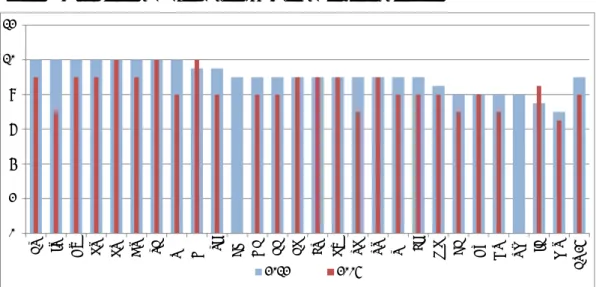
Therefore, she has calculated the GPG in EU27 and in the individual Member States also with the so-called EU-SILC (European Union Statistics on Income and Living Conditions) data. With the SES data, the GPG average for EU27 fell from 17.3% in 2008 to16.5% in 2012, whereas with the EU-SILC data, the figures for the GPG in EU27 fell from 33.9% in 2008 to31.1% in 2012.
Furthermore, using EU-SILC data she detects an upward trend of the GPG in Austria, Germany, Hungary, Norway and Poland, and, by contrast, a reduction of the GPG in Spain, Italy, Portugal, Greece, Cyprus, Ireland and United Kingdom. Furthermore, she finds the lowest GPG values in countries which joined EU recently like Slovenia, Croatia, Romania, Lithuania and Latvia, whereas the values for ‘old’ MSs like Germany, Austria and the Netherlands are above EU27 average (31.1%).
These figures, trends and disparities between MSs as well as the persistence of high GPG values (further elaborated in Corsi's paper in the annex) underline the necessity to envisage strong and appropriate measures for decreasing the GPG so as to properly implement the remit of Article 157 TFEU which goes back to the 1957 Treaty of Rome, by further strengthening and fine-tuning, by way of amendments or recast, of the existing directives in favour of gender equality in employment and occupation.
The Gender Pay Gap and Gender Pension Gap for EU27 for 2006-2012
Source: Corsi, elaborations on SES and EU-SILC; see annex II p.24
35.0 34.2 33.9 33.2 32.3 32.4 31.1 17.7 17.6 17.3 17.2 16.2 16.3 16.4 37.9 38.4 31.2 38.5 38.6 38.3 38.3 2006 2007 2008 2009 2010 2011 2012
*
* *
In this context, consideration of the four research papers in the annexes is very helpful. They analyse various aspects of the implementation of Directive 2006/54/EC and were commissioned specifically for this Implementation Assessment. They were written by the following academic experts who have a sound track of professional and practical expertise in the areas of their contributions:
- Prof. Dr Susanne Burri, senior lecturer, Utrecht School of Law and co-ordinator of the European Network of Legal Experts in the Field of Gender Equality, analysing the legal aspects of the application of the Directive, and in particular for the aspects of direct and indirect discrimination;
- Prof. Dr Marcella Corsi, Sapienza University of Rome, analysing the effectiveness of the Directive in tackling the equal pay and pension gap;
- Prof. Dr Isabell M. Welpe (team Dr Prisca Brosi/Tanja Schwarzmüller),
Technische Universität München, Munich, analysing the effectiveness of the Directive in respect to job evaluation and classification;
- Dorota Szelewa PhD, University of Warsaw, analysing the role of maternity leave and parental leave in view of gender equality in employment and occupation. These research papers were presented and discussed at the FEMM meeting of 31 March 2015. The following two chapters reproduce their key findings and recommendations in one condensed text. The quotes refer to the respective full papers in the annex.
Key findings on the implementation of Directive
2006/54/EC
1. General issues
1.1 Transposition and Implementation of the Directive(Burri p. 15)
The obligation for the MS to transpose the provisions of the Directive is limited to substantive changes compared to earlier directives, but no list of substantive changes is provided in the Directive or in an annex to the Directive.
According to the initial proposal of the Commission, there are ‘innovations’ in the directive. But the obligations of the MS regarding these ‘innovations’ are not clear.
The ultimate text of the Directive has left considerable legal uncertainty on the implementation obligations of the MS.
1.2 ‘Novelties’(Burri p. 19)
Uncertainty about what can be considered a ‘novelty’ in the Directive complicates the assessment of whether MS have correctly complied with the obligations to transpose the Directive.
So-called clarifications or novelties primarily concern issues related to the purpose and the scope of the Directive.
1.3 Enforcement(Burri p.46)
The so-called horizontal provisions also apply to occupational social security schemes.
Some case law of the Court has been codified, for example regarding compensation or reparation. Case law concerning time limits has not been codified.
The burden of proof in sex equality cases is more lenient than in labour law or civil law.
Legal aid and procedures are often long and costly and might discourage persons who feel discriminated against from starting legal proceedings.
The position of job applicants is rather weak in relation to access to information.
1. 4 Definitions and concepts(Burri p. 26)
The definition of direct sex discrimination suggests that a comparator (who might be hypothetical) is required in all cases. However, no comparator is required in pregnancy cases.
The Court has clarified that financial consequences cannot provide a justification for direct sex discrimination.
Budgetary considerations cannot in themselves provide a justification for indirect sex discrimination. The same is true for mere generalisations.
More emphasis should be placed on measures to prevent discrimination.
2. Sectorial issues
2.1 Equal pay(Burri p. 36)
The principle of equal pay for equal work and work of equal value has an economic and social aim, the economic aim being secondary to the social aim.
The concept of pay in Article 157 TFEU is broad and includes occupational social security schemes. The provisions of the Recast Directive concerning pay have to be interpreted consistently with the case law of the Court on Article 157 TFEU.
Discrimination in pay between men and women is prohibited, whatever the system gives rise to unequal pay (e.g. a job classification or a pension system).
Transparency requires that the principle that equal pay be observed in respect of each of the elements of remuneration.
The Commission’s Recommendation on strengthening the principle of equal pay between men and women through transparency provides a useful approach to further wage transparency and merits broad dissemination and attention.
The principle of equal pay between men and women does not apply if the differences in pay cannot be assigned to a single source. This limitation is problematic in case of outsourcing.
2.2 Causal factors for unequal pay(Corsi, p.25)
Both Gender Pay Gap (GPG) and Gender Gap in Pensions (GGP) have decreased
over the period 2006-2012 in those countries where the Directive has been applied.
The impact of the introduction of the Directive has to be evaluated considering structural elements of national labour markets that influence the evolution of unequal pay over time (choice of educational path, horizontal and vertical segregation, parenthood and elderly care responsibilities, broken careers, etc.).
Increasing shares of female employees with secondary and tertiary education push up the gender pay gap, because high skilled workers experience major differentials in pay and best-paid jobs.
Sectorial employment structure has a major effect on pension gaps in fact increasing shares of men employed in education, health and public administration, which are typically “female-oriented” sectors, decrease the pension gaps between men and women. By contrast, a higher proportion of female workers in services drives up GGP.
Institutional factors matter. Major pay differentials are detected in those countries characterised by a higher segregation in terms of care activities, which is also reflected in terms of pension gaps. As expected, a worsening position at country level for economic power, namely equal representation as members of boards in the largest quoted companies or as members of the central bank, increases GPG. Surprisingly, those countries performing worst in terms of gender mainstreaming register lower gender pay gaps. Conversely, political commitment towards gender mainstreaming is reflected on lower pension differentials.
2.3 Occupational social security schemes(Burri p. 41)
The exceptions allowed in relation to actuarial factors in statutory social security schemes (Directive 79/7/EEC), the Recast Directive and the Goods and Services Directive (2004/113/EC) differ with respect to occupational social security schemes, given recent case law of the Court.
The distinction in the case law of the Court on statutory social security schemes and occupational social security schemes is crucial with respect to different pensionable ages of men and women. This issue is problematic in countries where pension schemes are considered to be neither statutory nor occupational.
2.4 Promotion of equal treatment and social dialogue(Burri p. 49)
Equality bodies have an important role at national level in enforcing the provisions of the Directive. However, budgetary restrictions and lack of independence might hamper optimal fulfilment of their tasks.
Monitoring by the MS and social partners in particular of policies and practices at national level can be improved by developing monitoring tools on the application of the principle of equal pay and equal treatment at the workplace, in vocational training etc. and by disseminating these tools widely.
Protection against victimisation is extended with codification of case law of the Court.
Prevention against discrimination merits more attention.
3. Implementation of the Directive for aspects of maternity leave
(Szelewa, p. 31)3.1 Different implementation in MS of specificities
While the protection of pregnant workers or of persons using maternity leave, parental leave or adoption leave is comprehensive, in all the Member States, important differences can be observed when it comes to specificities.
One example is themoment, when the protection startsand if the employer has to be notified. In some countries, such as in Poland, Spain or Italy, the protection against dismissal is in force irrespective of a notification. In Cyprus, the protection runs from the moment of a written notification of an employer, while in Austria and Hungary some form of a notification is required. In some countries the protection is extended beyond the length of a maternity leave. This is the case of Cyprus, and similar provisions regarding extended protection exist in Germany or Italy. Croatia provides significantly extended protection, as it provides a ban on dismissal during pregnancy, maternity leave, parental and adoption leave, as well as part-time work or reduced working hours due to care for a disabled child.
3.2 Different implementation by sectors and by size of company
Sectoral differentiation: in principle, more protection is granted in the public sector, compared with the private one. The size of a company matters: discriminatory measures decline with the size of a company (the smaller the company, the more discrimination). Of some importance, though only in some countries, is the protection of workers who are employed on the basis of a typical
contract. If the protection principles are embedded in the labour law, and this type of regulation does not cover such persons, then the possibility of a loophole arises. A similar phenomenon can be observed in the case of the self-employed, which in some countries constitutes an ambivalent category in the labour market.
3.3 Widespread practice of termination of fixed-term contracts
An important issue relates to a widespread practice of termination of fixed-term contracts in the protection period. The CJEU has maintained that the refusal to extend a fixed-term contract in the case of pregnant worker is an instance of direct discrimination. As the authors state, such practices remain in place in several countries, such as Greece, Luxembourg, the Netherlands, Germany, Austria and Croatia). At the same time, in Italy, the workers tend not to extend their contract. Such practices also occur in the public service sector.
3.4 The practice of litigation against unlawful dismissals is relatively rare
It is remarkable that while the protection is strongly embedded in the national legislation, the practice of litigation against unlawful dismissals is relatively rare. While the comprehensive statistics regarding both personal experiences of dismissals, as well as litigation, are missing, one can argue that only in the fraction of unlawful dismissal cases, do they reach the judicial system. It is especially striking, given the fact that the issue of dismissals is the major focus of cases related to maternity and pregnancy.
There are multiple reasons for such limited litigations.
o Firstly, such cases often lack the supporting evidence, which makes
litigation challenging.
o Secondly, there is a fear related to victimisation or the stigma of a
trouble-maker, in particular, during the period of crisis. Moreover, individuals are afraid to be exposed, especially in smaller settlements. In some countries, individuals refrain from taking a case to court as they are aware that the procedure will be difficult and costly, while it does not guarantee success.
o Thirdly, the common practice is to induce the voluntary job resignation
of a pregnant worker. This has been the case of Italy, where specific measures (such as a third party – a representative of the Ministry of Labour - presence at the termination of the contract is required) have been established in order to restore the protection of parents of children under three.
To sum up, at least two conditions need to be met in order to safeguard the protection of vulnerable individuals. These conditions are:
o An efficient judiciary system friendly towards the potential claimants; o Widespread social awareness (understood as the knowledge of rights,
but also knowledge of case laws etc.). One can argue, that the higher the awareness, the more litigation and a more efficient judiciary system, a better and real protection for individuals. Unfortunately, both of them remain under-researched, as we are missing the comparative data on the legal awareness of societies, but we also lack the systematic knowledge on the functioning of the legal and judiciary systems.
Recommendations
1. Recasting and/or amending the Directive
15If any amendments are made to the Directive, it should be specified whether they constitute a substantive change compared to earlier directives or not. Mentioning that the obligation to transpose a (recast) directive is confined to those provisions which represent a substantive change with respect to earlier directives, as mentioned in Article 33 of the Directive, provides insufficient clarity and leads to legal uncertainty. Such uncertainty can be remedied by providing a list of the articles containing substantive changes which have to be transposed into national law if no such provisions exist in national law.
1.1 References to relevant international law
MS have to comply with obligations of international and human rights law instruments that they have ratified (e.g. UN Treaties, ILO Conventions). Some Treaties and Conventions have been ratified by all 28 MS. Such Treaties should be mentioned explicitly in the preambles of the relevant directives. A good example is Recital 3 of Directive 2000/43/EC.
1.2 Recitals on mainstreaming
The Directive contains a specific mainstreaming obligation for the MS in Article 29. However, no reference is made in the preamble of the Directive to the mainstreaming obligation of the Union in Article 8 TFEU to eliminate inequalities and to promote equality between men and women in all its activities (see also Article 10 TFEU). It is submitted that such reference would underline the importance of mainstreaming gender equality not only at the level of the MS, but also at EU level. Recital 14 of Directive 2000/43/EC (the Race Directive) and Recital 3 of Directive 2000/78/EC (the Framework Directive) explicitly refer to this obligation. Similar recitals would promote coherence between these three EU law instruments which have similar objectives.
1.3 Reference to multiple discrimination
The Recast Directive and its preamble include no reference to multiple discrimination. Such reference is included in Recital 14 of Directive 2000/43 (the Race Directive) and Recital 3 of Directive 2000/78/EC (the Framework Directive). Acknowledging multiple discrimination, especially since women are often victims of multiple discrimination, by providing a similar reference as in Directives 2000/43/EC and 2000/78/EC, would also enhance the coherence between these three directives.
Discrimination of transgender persons can take place in relation to pregnancy and maternity as the provisions of the Directive explicitly apply to women. If these provisions applied to persons, they would also apply to transgender men who become pregnant. Given the fact that in many countries the requirement of sterilisation no longer applies to transgender persons, more men can become pregnant.
1.4 Incorporation of the Commission Recommendation
Provisions of the Commission’s Recommendation of 7 March 2014 on strengthening the principle of equal pay between men and women through transparency (2014/124/EU)
could also be incorporated in this Chapter in order to enhance wage transparency by providing specific tools to tackle the gender pay gap.
1.5 Incorporation of case law
Any discrimination between men and women with regard to pay is prohibited, whatever the system giving rise to such inequality. If the Directive were amended, a codification of this case law in the Chapter on equal pay would be recommended.
Case law of the Court shows the requirement that differences in pay have to be attributed to a single source. This limits the application of the principle of equal pay and is problematic where outsourcing is involved. If the Directive were amended, it should be considered how situations concerningoutsourcingcan be brought under the scope of the Directive.
Case law regarding requirements that apply to time limitshas not been codified in the Directive. If the Directive were amended, such codification should be included in Title III of the Directive.
Discrimination based on gender reassignment amounts to sex discrimination according to the case law of the Court. Therefore, if the Directive were amended, it would be recommended to codify that discrimination based ongender reassignmentor concerning transgender persons amounts to sex discrimination, in order to include the obligation for MS to transpose such provision.
1.6 Occupational social security schemes
The exceptions concerning sex-based actuarial factors in the Recast Directive (Article 9(1)(h) and 9(1)(j)) are no longer consistent with the interpretation of the Court of the Statutory Social Security Directive (79/7/EEC) and the Goods and Services Directive (2004/113/EC). Consistency would require harmonization of these provisions in the light of the relevant case law of the Court.
1.7 Different pensionable ages between men and women
The distinction between statutory pension schemes and occupational pension schemes in relation to different pensionable ages for men and women is problematic for countries where schemes are considered to be neither statutory nor occupational. If amendments to the Directive are considered, differences in pension scheme systems should be taken into account.
1.8 Recast of the directives addressing gender specific forms of leaves
A number of EU directives address different forms of leave. Pregnancy and maternity leave are regulated in Directive 92/85/EEC, parental leave in Directive 2010/18/EU and the Recast Directive also applies to leaves. Legal clarity would be enhanced if provisions on leave were addressed consistently in one single comprehensive legal instrument. Given the different legal bases of the above-mentioned directives, this is not likely to happen. Still, amendments to the Recast Directive should be aimed at increasing consistency between the above-mentioned directives.
1.9 Rights of job applicants
The rights of job applicants could be strengthened by specifying that job applicants have the right to obtain information on the selection criteria that have been applied in a selection procedure and which procedure has been followed.
2. Improving the effectiveness of the Directive
16Correct framing of the Directive’s rights and obligations in the light of the relevant case law of the Court could be enhanced by taking into account the following recommendations.
2.1 Mainstreaming, preventing and monitoring
2. 1.1 Mainstreaming and monitoring
Further development and dissemination of useful tools enabling MS to gender mainstream their policies, legislation and activities is recommended, as gender mainstreaming requires specific attention and constant efforts. Such tools – e.g. gender impact assessments - could be explicitly mentioned in relation to the application of Article 29 of the Directive. Mainstreaming and regular monitoring by different actors (the European Commission, the MS, social partners, employers, works councils etc.) can contribute to preventing discrimination.
2.1.2 Prevention of discrimination
More emphasis should be placed on measures preventing sex discrimination. Research could provide more information on good practices in the MS on prevention of discrimination and the results of such research should be disseminated. Examples of such measures and their impact in practice can improve the effectiveness of the Recast Directive in the light of the Articles 2(2)(a) on (sexual) harassment and Article 26 on prevention.
Prevention in particular is also relevant in relation to harassment and sexual harassment. In this respect, a soft-law instrument could be developed, also providing means to combat incitation to discriminate.
Preventive measures could also include information on prejudices and negative stereotyping and how to combat them. Exchanging information on relevant projects at national level should be encouraged. Such approach is in line with Article 5 CEDAW.
2.2 Concepts
2.2.1 Substantive equality
The result pursued by the Directive in matters of employment and occupation is substantive equality. This should be emphasized and the substantive equality approach should be further explained in publications and campaigns of the European Commission aimed at combatting sex discrimination. Such information could be provided in particular on the website of the European Commission. MS also have a role in disseminating such information.
2.2.2 Pregnancy discrimination
Publications and campaigns of the European Commission should expressly state that in pregnancy cases no comparator is required and that financial consequences cannot justify such discrimination, with reference to relevant case law.
At national level, research should be conducted on the (non)-application of the prohibition of direct sex discrimination in relation to pregnancy and maternity in practice, and
information should be disseminated to relevant stakeholders on the prohibition of direct sex discrimination, in particular in relation to pregnancy and maternity.
2.2.3 Gender reassignment
Discrimination based on gender reassignment amounts to sex discrimination according to the case law of the Court. Publications and campaigns aimed at preventing discrimination should explicitly provide this information.
2.2.4 Indirect discrimination
The application of the concept of indirect sex discrimination is difficult in practice and this is one of the reasons why the relevant case law of the Court should receive more attention. The Court clarified in particular that indirect sex discrimination cannot be justified by mere generalisations and that budgetary considerations in themselves cannot justify indirect sex discrimination. Attention to the key points of the relevant cases in publications and campaigns of the Commission, MS and stakeholders can contribute to a correct interpretation of the concept of indirect sex discrimination in practice.
2.3 Burden of proof
Information on the more lenient burden of proof in sex equality cases, compared with labour law and civil law, could be disseminated among practitioners even more widely than has been done up to now by in particular the European Commission and MS. Monitoring the application of the burden of proof in sex equality cases can contribute to a correct application of the burden of proof in future cases.
2.4 Equal pay
2.4.1 Information campaigns and wage transparency
Any discrimination between men and women with regard to pay is prohibited, whatever the system giving rise to such inequality. In particular those responsible for working conditions (including pay) should receive specific information on the relevant case law of the Court.
The same is true for the transparency requirement. The principle of equal pay has to be applied to each element of pay. A useful tool to enhance pay and wage transparency is the Commission’s Recommendation of 7 March 2014 (2014/124/EU). This information should be widely disseminated, e.g. by the Commission, (European) social partners and the MS.
2.4.2 Beneficiaries of positive actions17
The case for taking action on unequal pay is important for women as individuals for equity reasons, for the economic well-being of their children and families, but also for society at large as an improvement of the position of women in the labour market – including pay equality – is crucial for economic growth.
2.4.3 Involve the different actors
Tackling the unequal pay is necessarily a long-term objective that requires: i) a combination of a variety of strategies and policies; ii) the involvement of different actors and stakeholders at different levels. A key role for the European Union is to bring together this variety of initiatives and multiple actors involved in promoting equality in the labour market.
2.4.4 Simultaneous actions at different levels
The work for removing unequal pay should be carried on simultaneously and in close collaboration at the European, national, sectorial and organizational level.
2.4.5 Removing gender gap in pensions
In focusing the work specifically towards removing gender gap in pensions, the European Parliament can play a decisive role: to place the issue on the agenda and, through benchmarking, help to galvanise the type of national initiatives that would be in a position to deal with actions ameliorating the worse effects. As for the European Commission work, once sufficient visibility is given to a benchmarking exercise, the question could be put to each member state to ‘respond’ by explaining and projecting its own national issues
2.5 Self-employment
Self-employment is partially covered by the Recast Directive, Directive 2010/41/EU on Self-employment and Directive 2004/113/EC on Goods and Services. Identifying gaps in the protection of self-employed persons both at EU level in relation to the scope of these directives and at national level should be the subject of specific research.
2.6 Enforcement
Equality bodies play a crucial role in the enforcement of the Directive. They should be independent and should receive a budget that enables them to fulfil the required tasks. Monitoring by the European Commission in this field is a tool to ensure such independence, but the MS also have a specific responsibility in this respect. This is particularly true in relation to gender equality in the light of the Treaty provisions and the gender mainstreaming obligations.
In the short term, improving the effectiveness of the Directive by various means in an effort by all actors involved seems the best option. If amendments to the Directive were considered in the future, this study will hopefully provide useful suggestions.
3. On job evaluation and classification
183.1 For ensuring gender-neutrality of job evaluation / classification, the description of gender-neutral job evaluation and classification systems in the Directive should be complemented by the following guidelines.
In each organisation, an evaluation committee for conducting job evaluation / classification, which ismixed-sex, trained, critical and accountable,should be set up.
Job evaluations should be made for all positions described by gender-neutral job titles, using clearly defined sub-factors generated from structured free recall procedures. They should be based on standardized interviews from various perspectives including both male and female interviewees, which should be translated into factor points byseveral members of the evaluation committee.
Internal and external weighting should be controlled for gender-neutrality by means of aweighting grid.
Job classification should be conducted by blind assignment of point levels to job classes (before job evaluation) andcheckedfor gender-neutrality.
3.2 Forincreasing female access to employment,gender-neutral selection processes can be created by using job descriptions from job evaluation / classification for the following steps in the recruitment and selection process.
Generation of objective, behaviourally-based job descriptions.
Formulation ofgender-neutral job advertisements.
Creation of gender-neutral assessments of participants’ competence including
work samplesandbehaviourally-anchored rating scales.
3.3 Forreducing the gender pay gap, the following steps should be taken in addition to increasing gender-neutrality in the application of job evaluation / classification.
Transparency on starting wagesshould be increased and thesalience of genderin pay negotiation processes should be reduced.
The principles of gender-neutrality for job evaluation / classification should be transferred toperformance-based pay.
The notion of“equal pay for work of equal value”should include the notion of“equal pay for equal performance”.
3.4 Governments, social partners and equality bodies in Member Statesshould
Support thepreventive examinationof gender neutrality in pay schemes.
Provide clear and unambiguous guidelines on the necessary steps to implement gender-neutral job evaluation / classification systems.
Governments should establish databasesincluding (sub-)factors and point ratings for specific jobs and occupations on national level and/or databases should be established on European level by the European Commission.
3.5 Recommendations on strengthening the principle of equal pay through
transparencyshould include thetransparency of human resource processes.
3.6 Monitoring of the implementation of the Directive 2006/54/ECshould include
Surveys on the application of job evaluation / classification in organisations across European countries.
Longitudinal examinationsof the implementation in discrete time intervals.
Analysis of internal and external weightingof factors and sub-factors on a national or European level.
4. On protection of maternity
19A stronger monitoring of the Directives’ implementation is recommended. It is especially important, that the vast majority of the Member States conform to the Directives’ provisions, to observe the less visible aspects, such as litigations, the issuance of fines and other administrative measures. A specific form of monitoring should cover the functioning of the legal system and its dissuasive effects regarding the different forms of discrimination.
Therefore,
4.1the European Commission should
ensure that the legal standards in all the Member States are in line with the European provisions;
closely monitor the cases of discrimination in the field and occupation, with regard to their number, character, and following legal redress. The latter is of special importance, as while the legal framework present in the Member States in the great majority is in line with the Directives’ provisions, the sanctions in the case of equal treatment breach significantly differ;
undertake actions regarding the improvement of the knowledge on the experience of harassment/discrimination among European citizens specifically related to pregnancy, maternity leave, parental leave, paternity leave and adoption leave. A suitable platform for such repeated actions could be the Eurobarometer survey;
increase its knowledge about the scale of awareness on the rights of pregnant workers, and maternity leave and paternity leave and parental leave takers. 4.2the European Parliament should
consider further steps regarding the monitoring and evaluation of the Directives’ impact on fighting discrimination against pregnant workers, and maternity leave and paternity leave and parental leave takers;
continue to take initiatives aimed at pointing out the loopholes from the Member States’ legal systems, causing differential treatment of certain categories of workers (‘atypical’ workers, self-employed). This applies especially to workers not covered by labour laws.
4.3the social partners should
become more active in ensuring the protection of pregnant workers and parents, and actively engage, both in the prevention of discrimination and in the process of legal actions if discrimination occurs.
4.4the European Institute for Gender Equality should:
pay more attention to the analysis of reasons behind the gender discrimination in the field of maternity, paternity, parental and adoption leave;
take into account the socio-legal impact of the individual sanctions on the practice of gender discrimination in a wider context;
create and maintain the database of good practices in this field of combating gender discrimination in the workplace.
4.5 Finally,the Council shouldtake the necessary steps to adopt the new Maternity Leave Directive as soon as possible, in order to strengthen the rights of working parents.20
20Cf.European Parliament resolution of 20 May 2015 on maternity leave (2015/2655(RSP))
http://www.europarl.europa.eu/sides/getDoc.do?pubRef=-
%2f%2fEP%2f%2fTEXT%2bTA%2bP8-TA-2015-0207%2b0%2bDOC%2bXML%2bV0%2f%2fEN&language=EN
See also European Parliament Press release of 20 May 2015
http://www.europarl.europa.eu/news/en/news-room/content/20150513IPR55443/html/Maternity-leave-MEPs-urge-Council-to-restart-talks
MEPs pressed the European Commission not to withdraw the draft EU directive on maternity leave, despite four years’ deadlock over it in the EU Council of Ministers, in a resolution voted on 20 May 2015. They also urged the ministers to resume talks and agree an official position.
Conclusion
Progress in reducing the gender pay gap is still extremely slow. The gender gap in pensions tends even to increase. This jeopardises social justice and makes substantial parts of society vulnerable to poverty.
Therefore, measures for assuring gender equality in employment and occupation, and in particular for reducing the gender pay gap and the gender gap in pensions, should be pursued vigorously.
This holds so much the more as the Commission Impact Assessment of March 2014 on costs and benefits of measures to enhance the transparency of pay showed that certain binding measures in form of directives are much more effective than mere voluntary measures for reducing the GPG. The other good news of the impact assessment was that such measures also have a strong positive effect on economy as a whole.
Therefore, the Commission recommendation of March 2014 was only a step in the right direction but failed to launch the legislative procedure for the vigorous necessary measures. The Commission can still do so21and should do so, for this would not only be
in favour of gender equality at work but also beneficial for the EU economy as a whole. This will be in line with Article 157 TFEU, with numerous EP resolutions and with the current FEMM committee report on the application of the Recast Directive 2006/54/EC.
21In his opening statement of 15 July 2014 A new start for Europe: My agenda for Jobs, Growth,
Fairness and Democratic Changethe Commission President elect said: 'In future there will be no
adjustment programmes unless they are preceded by a thorough social impact assessment' and:
'Discrimination must have no place in our Union, whether on the basis of nationality, sex, racial or
ethnic origin, religion or belief, disability, age or sexual orientation, or with regard to people belonging to a minority.'
In the case of transparency measures for gender equality in employment, impact assessments have been done in abundance; now the conclusions need to be drawn coherently and vigorously.
Further references
European Network of Legal Experts in the Field of Gender Equality, S. Burri & H. van EijkenGender equality in 33 European countries. How are EU rules transposed into national law in 2014?European Commission 2015, available at:
http://ec.europa.eu/justice/gender-equality/files/ge_law_33_european_countries_2015_en.pdf
European Network of Legal Experts in the Field of Gender Equality, C. Barnard & A. Blackham Self-Employed. The implementation of Directive 2010/41 on the application of the principle of equal treatment between men and women engaged in an activity in a self-employed capacity, European Commission 2015, available at:
http://ec.europa.eu/justice/gender-equality/files/your_rights/self_employed_en.pdf European Network of Legal Experts in the Field of Gender Equality, Maria do Rosário Palma Ramalho, Petra Foubert & Susanne Burri The Implementation of Parental Leave Directive 2010/18 in 33 European Countries, European Commission 2015, available at:
http://ec.europa.eu/justice/gender-equality/document/files/parental_leave_report_final_en.pdf
European Added Value Unit, Micaela del Monte, DG EPRS, European Parliament
Equal pay for men and women for equal work for equal value
European Added Value Assessment accompanying the European Parliament’s Legislative own-Initiative Report (Rapporteur: Edit Bauer MEP)
http://www.europarl.europa.eu/thinktank/en/document.html?reference=IPOL-JOIN_ET(2013)504469
European Implementation Assessment
ANNEX I
Legal aspects and
direct and indirect discrimination
Research paper
by Dr Susanne Burri,
in collaboration with
Prof. Dr Linda Senden and Alice Welland (LL.M)
Abstract
This research paper on the implementation of Directive 2006/54/EC provides an independent legal analysis of the main provisions of this Directive, taking into account relevant case law of the Court of Justice of the EU. The aim of this paper is also to identify gaps in its implementation at the level of the Member States. To this end an in-depth study with a focus on the interpretation and application of the concepts of direct and indirect discrimination has been carried out in six Member States: France, Latvia, Slovakia, Spain, the Netherlands and Sweden.
The following aspects of the Directive are addressed in the legal analysis: the background and structure of the Directive; its transposition and implementation; novelties; the purpose and scope; its concepts (in particular direct and indirect discrimination); equal pay; occupational social security; equal treatment; enforcement; and the promotion of equal treatment and social dialogue. This paper identifies legal problems and gaps. It provides specific recommendations on all these aspects and also offers suggestions in the event that the Directive were to be subjected to a recasting process and/or were to be amended
Parliamentary Research Services (DG EPRS) of the General Secretariat of the European Parliament. Prof. Dr Linda Senden and Alice Welland (LL.M) have collaborated to this study.
The current paper is part of the European Implementation Assessment of the Directive 2006/54/EC ('Recast Directive') for the Committee on Women's Rights and Gender Equality FEMM, together with other analyses on the same issue.
RESPONSIBLE ADMINISTRATOR
Helmut Werner, Ex-Post Impact Assessment Unit
To contact the Unit, please [email protected]
LINGUISTIC VERSIONS
Original: EN
DISCLAIMER
The content of this document is the sole responsibility of the author and any opinions expressed therein do not necessarily represent the official position of the European Parliament. It is addressed to the Members and staff of the EP for their parliamentary work. Reproduction and translation for non-commercial purposes are authorised, provided the source is acknowledged and the European Parliament is given prior notice Manuscript completed in March 2015. Brussels © European Union, 2015
PE 547.546
ISBN 978-92-823-7144-2 DOI 10.2861/478599 CAT QA-02-15-387-EN-N
Contents
Executive summary... 6 Chapter 1 Introduction... 8
I - Background to the request of the European Parliament ... 8 II - Methodology... 9 III - Outline... 9
Chapter 2 Background and structure of the Directive ... 11
I - Background of the Directive ... 11 II - Recasting some sex equality Directives... 12 III - Structure of the Directive... 13
Chapter 3 Transposition and implementation of the Directive ... 15
I - Transposition obligations for the MS limited to substantive changes ... 15 II - Noconsiderablesubstantive changes included in the Commission’s amended
proposal... 16 III - Consolidation of existing case law or substantive change? ... 17
Chapter 4 Novelties ... 19 Chapter 5 The purpose and scope of the Directive... 21
I - Human rights and fundamental rights... 21 II - Equal treatment and equal opportunities... 22 III - Employment and occupation ... 24 IV - Self-employment... 25
Chapter 6 Definitions and concepts ... 26
I - Direct discrimination ... 26 II - Indirect discrimination ... 27 III - Harassment and sexual harassment... 30 IV - Instruction to discriminate ... 31 V - Sex or gender discrimination... 31 VI - Positive action ... 32
Chapter 7 Equal pay ... 36
I - Article 157 TFEU... 36 II - The concept of pay ... 37 III - The principle of equal pay for equal work and work of equal value ... 38 IV - Relationship between primary and secondary EU law in relation to equal pay .... 40
Chapter 8 Occupational social security schemes... 41
I - The relationship between Article 157 TFEU and Directive 86/378/EEC ... 41 II - Actuarial factors ... 42 III - Different pensionable ages for men and women... 42
Chapter 9 Equal treatment as regards access to employment, vocational training, and promotion and working conditions... 44
I - Material scope ... 44 II - Return from maternity leave ... 45 III- Paternity and adoption leave ... 45
Chapter 10 Enforcement ... 46
I - Defence of rights... 46 II - Sanctions, compensation and reparation ... 47 III - Burden of proof... 47
Chapter 11 Promotion of equal treatment and social dialogue ... 49
I - Equality bodies ... 49 II - Social dialogue and dialogue with NGOs ... 49 III - Victimisation... 50 IV - Prevention of discrimination... 51
Chapter 12 Conclusions and recommendations... 52
I - Conclusions ... 52 II - Summary of recommendations ... 53 1. Recasting and/or amending the Directive... 53 1.1 References to relevant international law ... 53 1.2 Mainstreaming ... 53 1.3 Multiple discrimination ... 53 1.4 Gender reassignment and transgender persons... 54 1.5 Equal pay ... 54 1.6 Occupational social security schemes... 54 1.7 Different pensionable ages between men and women... 54 1.8 Leaves... 54 1.9 Time limits ... 55 1.10 Rights of job applicants... 55 2. Improving the effectiveness of the Directive ... 55 2.1 Mainstreaming, preventing and monitoring ... 55 2. 1.1 Mainstreaming and monitoring... 55
2.1.2 Prevention of discrimination... 55 2.2 Concepts and burden of proof ... 55 2.2.1 Substantive equality ... 55 2.2.2 Pregnancy discrimination... 56 2.2.3 Gender reassignment... 56 2.2.4 Indirect discrimination... 56 2.2.5 Burden of proof ... 56 2.3. Equal pay ... 56 2.4 Self-employment... 57 2.5 Enforcement... 57 Bibliography ... 58 Annex I Questionnaire... 62 Annex II ... 66
Executive summary
The independent legal analysis and assessment of the implementation of Directive 2006/54/EC provided in this research paper is based on relevant (academic) literature and case law of the Court of Justice of the EU, in particular on the concepts of direct and indirect discrimination. This paper aims also to identify gaps and difficulties in the implementation of the Directive by Member States and its application at national level. This aspect of the analysis is mainly based on a number of reports of the European Commission’s European Network of Legal Experts in the Field of Gender Equality that have been made available to the public.1In order to further assess these difficulties and
gaps in the implementation of this Directive in Member States, in-depth research has been carried out regarding six countries: France, Latvia, Slovakia, Spain, the Netherlands and Sweden. Experts in the field of gender equality were asked to respond to a questionnaire (see Annex I) during an interview. Their answers have been summarized (see Annex II). The experts have checked the summary based on their answers and could amend or add information if they considered it necessary. These six country reports show in particular the diversity of the national (legislative) contexts.
The legal analysis of the Directive in the first place highlights difficulties related to the recasting process itself. Subject to this process were four sex equality directives, of which two had been amended by new directives. These six directives had to be transposed into national law. The obligations of the Member States to implement Directive 2006/54/EC are limited to the provisions that represent a substantive change compared to these older directives, which have now been repealed. No information is provided in the Directive on which provisions represent a substantive change compared to earlier directives and this has complicated the implementation process. An assessment whether the Member States have correctly complied with their obligations under the Directive therefore also presents difficulties. The Directive contains some novelties which are discussed in the research paper. These novelties concern inter alia the purpose of the Directive, the prohibition of discrimination on the ground of gender reassignment, the definition of indirect sex discrimination, positive action, and occupational social security schemes. The research paper provides specific recommendations that could be taken into account if the Directive were subjected to recasting and/or were to be amended. Most recommendations relate to the novelties in the Directive and/or problems that have become (more clearly) visible due to case law of the Court. In addition to the recasting process itself, recommendations mainly concern:
the relation between various equality directives
the relevance of international law
gender mainstreaming, both at national and EU level
multiple discrimination
transgender discrimination
equal pay
1See the website of the European Commission, DG Justice at:
http://ec.europa.eu/justice/gender-equality/document/index_en.htm#h2-8. Most publications of this Network are also available from
sex-based actuarial factors
the distinction between statutory and occupational schemes, and its consequences
leaves
time limits
information rights of job applicants.
The suggestions and recommendations in the research paper follow from the legal analysis of the Directive, but the list is certainly not meant to be exhaustive. Recasting and/or amending the Directive will present specific difficulties, inter alia due to the relation with other directives. It is submitted that in the short term, improving the effectiveness of the Directive can be reached by various means. Specific recommendations aimed at improving the effectiveness of the Directive address the following issues:
mainstreaming and monitoring
prevention of discrimination
concepts of discrimination, in particular
o substantive equality o pregnancy discrimination
o gender reassignment
o indirect discrimination
the burden of proof
equal pay
self-employment
enforcement, including the role of equality bodies.
These recommendations are targeted at a range of actors: the European Commission, the Member States, the (European) social partners, works councils, employers and equality bodies. Suggestions are made for further research, e.g. on the scope of protection of EU law of self-employed persons against diverse forms of sex discrimination.
Chapter 1 Introduction
I - Background to the request of the European Parliament
The European Parliament’s Committee on Women’s Rights and Gender Equality (FEMM) has issued an own-initiative report on the application of Directive 2006/54/EC (hereafter: ‘the Directive’ or ‘the Recast Directive’) of the Parliament and of the Council of 5 July 2006 on the implementation of the principle of equal opportunities and equal treatment of men and women in matters of employment and occupation.2 The Committee on
Employment and Social Affairs has requested the application of Rule 54 of the Rules of Procedure of the European Parliament to this report (procedure with associated committees). The Ex-Post Impact Assessment Unit (IMPT) of Directorate C - Impact Assessment and European Added Value (within Directorate General for European Parliament Research Services, DG EPRS) was requested to provide a ‘Detailed European Implementation Assessment’ on the situation in respect of this Directive. This research paper was commissioned by the Ex-Post Impact Assessment Unit of the Directorate for Impact Assessment and European Added Value of the European Parliament (DG EPRS). In accordance with Article 32 of the Directive, the European Commission published a report for the European Parliament and the Council on the application of this Directive in December 2013.3 The Commission has published no proposal up to now to amend
Directive 2006/54/EC.
The present study has been carried out by Dr. Susanne Burri, Associate Professor Gender and Law at the Utrecht University School of Law and specialist co-ordinator in gender equality of the European Commission’s European Network of Legal Experts in Gender Equality and Non-Discrimination.4Prof. Dr. Linda Senden, Professor of International and
European law and member of the executive committee of the above-mentioned network has collaborated in this research.5The in-depth research into six Member States has been
carried out by Alice Welland (LL.M), assistant coordinator of the same network.
The aim of this research paper on the application of Directive 2006/54/EC is to identify gaps in its implementation at the level of the Member States, provide an independent assessment of this Directive, and if necessary present suggestions for amendments to this Directive.
2Directive 2006/54/EC of the European Parliament and of the Council of 5 July 2006 on the
implementation of the principle of equal opportunities and equal treatment of men and women in matters of employment and occupation (recast),OJL 204, 26 July 2006, pp. 23–36.
3COM (2013) 861 final.
4See for more information:
http://www.uu.nl/leg/staff/SDBurri/0?t=fbd33a85-eaa5-41eb-aa6f-9b582b3bbda2, accessed