University of Cape Town
THE EFFECT OF NEGATIVE USER-GENERATED CONTENT ON CONSUMER-BASED BRAND EQUITY: COMPARING BRAND LOYAL VERSUS NON-LOYAL CUSTOMERS IN THE LUXURY WINERY MARKET
CLAIRE WOUTERS
E-mail: [email protected]
Student number: WTRCLA001
Submitted in fulfilment towards a Masters in Business Science Degree Specialising in Marketing (BUS5000W) for the School of Management Studies,
University of Cape Town
Supervisor Dr E. Botha Date submitted
The copyright of this thesis vests in the author. No
quotation from it or information derived from it is to be
published without full acknowledgement of the source.
The thesis is to be used for private study or
non-commercial research purposes only.
Published by the University of Cape Town (UCT) in terms
of the non-exclusive license granted to UCT by the author.
ii DECLARATION REGARDING PLAGIARISM
1. I know that plagiarism is wrong. Plagiarism is to use another’s work and pretend that it is one’s own.
2. I have used the Harvard referencing guide for citation and referencing. Each contribution to, and quotation in this dissertation from the work(s) of other people has been attributed, and has been cited and referenced. Any section taken from an Internet source has been referenced to that source.
3. This dissertation is my own work and is in my own words (except where I have attributed it to others).
4. I have not allowed, and will not allow, anyone to copy my work with the intention of passing it off as his or her own work.
5. I acknowledge that copying someone else’s assignment or essay, or part of it, is wrong and declare that this is my own work.
iii ABSTRACT
With the rise of user-generated content (UGC), negative UGC could have disastrous consequencesforbrands:Onesinglepostcouldeasilyspreadlikea virus, might even go viral and brand managers have no power in limiting the damage. Negative UGC contributes towards an overall negative brand perception, which harms the process of building long-term consumer-based brand equity (CBBE). CBBE is especially relevant for luxury brands, where decisions are heavily reliant on brand perceptions, and perceptions contrary to or different from exclusivity could be established. Luxury wines, in particular,are complex products in the mind of the consumer: wine customers are overwhelmed by too many choices in wine brands with very few objectives decision cues. While CBBE is critical in an extremely competitive wine market, little research has been done on CBBE of luxury wines. This study therefore questions whether CBBE is affected through negative UGC, and if that effect is different for brand loyalversus non-loyal customers. The “love becomes hate” argument proposes that loyal consumers are more impacted by extreme negative UGC, because betrayal in brand trust leads to strong CBBE damage. The “love is blind” argument, on the other hand, proposes that loyal customers are more forgiving towards negative UGC because of their relationship with the brand. Moreover, non-loyal consumers are more influenced by negative UGC, since they exclude brands more easily in a decision-making process after consuming negative UGC. Previous researches regarding CBBE have not found evidence yet of how negative UGC impacts the perception of brand loyal and non-loyal wine consumers. This study therefore attempted to better understand this phenomenon in the luxury wine context.
In order to truly understand the impact of negative UGC on CBBE, use is made of Aaker’s four-asset CBBE model. This model proposes that CBBE consists of brand awareness, brand associations, perceived quality and brand loyalty. This study used an experimental research design and 154 respondents participated in a quasi-experimental design that tested the effect of fictitious negative UGC, that appeared on Facebook, on CBBE. This study found that negative UGC reduces CBBE and customers’ perception of the luxury brand is damaged after exposure to negative UGC. Brand loyal customers’ CBBE had the greatest decrease, which supports the ‘love becomes hate’ argument. Marketing managers therefore need to understand the risks of UGC on CBBE and set up an online brand strategy in order to know how to act and react on negative UGC to prevent CBBE from being damaged. They also need to pay particular care in managing loyal customers’ exposure to negative UGC.
Keywords: negative brand-related UGC, CBBE, brand loyalty, luxury brands, brand associations, brand perception, purchasing behaviour, luxury wine, social media
iv ACKNOWLEDGEMENTS
Studying in a new and unknown environment far away from home has always been my aspiration. At the same time, I had this research idea in mind for a while that I wanted to realise so eagerly. I have been incredibly fortunate that the University of Cape Town gave me the unique chance to explore my own research topic, in a country whose beauty still overwhelms me every day: South Africa. It has been an amazing educational journey for me and I can honestly say that this adventure positively changed me, personally and professionally.
Naturally, a very big thank you to my supervisor, Elsamari Botha, who never lost faith in me and my research, even when deadlines seemed tough or even impossible. I was fortunate we were on the same page so often, which made it possible to bring this study to a deeper level. She always asked the right questions and without her continuous support this dissertation would not have been accomplished.
I would also like to show gratitude to the persons who gave me professional insights in the South African luxury wine market. To start, wine expert Sue Proudfoot, for her interesting point of view and high knowledge about South African wines. I also want to express my deepest appreciation to Meerlust, in particular marketing manager Eddie Turner, who had full respect and understanding for Meerlust’s involvement in this study. And of course, the UCT Wine Society cannot be left out, in particular Augusta Babeta Jean Wicht. I am thankful for the devotion to my research and all the effort that has been spent within the wine club to bring my research to a good end. Lastly, I am grateful to everyone who participated in the experiment. Without your valuable insights it was never possible for me to find scientific answers to the research problem.
My love and respect also goes to all the interesting people I met in Cape Town, who definitely contributed to the outcome of this study. You guys were always supportive. A special thanks to my marketing friends Gabi Goldberg and Ania Chikh. Because of their marketing expertise I was able tofindmywayoutofanystrugglingsituation.I thank my brothers, Vincent and Thomas Wouters, who guided me through the wondrous world of statistics.Lastly, I thank my parents, whoarealways therefor me.Even from theother side of the world they knew exactly how to push me to the limit and to never give up. Lastly, I want to thank you, the reader, for taking in my dissertation. I hope it leaves you inspired.
Claire Wouters
v
TABLE OF CONTENTS
CHAPTER I: INTRODUCTION ... 1
1.1 INTRODUCTION ... 1
1.2 BACKGROUNDTOTHESTUDY ... 4
1.2.1 Production of negative UGC ... 5
1.2.2 The effect of negative UGC on CBBE ... 6
1.2.3 CBBE in the luxury wine market ... 9
1.3 SUMMARYOFRESEARCHQUESTIONANDOBJECTIVES ... 10
1.3.1 Research question ... 11
1.3.2 Research objectives ... 11
1.4 METHODOLOGY ... 11
1.4.1 Research design and method ... 11
1.4.2 Target population and sampling method ... 12
1.4.3 Ethical considerations ... 14
1.5 INTENDEDCONTRIBUTIONSOFTHESTUDY ... 14
1.6 DEMARCATIONOFTHESTUDY ... 16
1.7 CONCLUSION ... 18
CHAPTER II: USER-GENERATED CONTENT ... 19
2.1 INTRODUCTION ... 19
2.2 DEFININGUSER-GENERATEDCONTENT ... 19
2.2.1 UGC versus eWOM ... 20
2.2.2 Defining UGC ... 20
2.2.3 Gaps in the research concerning UGC ... 21
2.3 UGCANDTHEORGANISATION’SPOWER ... 22
2.4 POSITIVEVERSUSNEGATIVEUGC ... 23
2.4.1 Negative UGC is uncontrollable... 23
2.4.2 Negative UGC causes reputational damage ... 24
2.4.3 Negative UGC leads to consumers’ revenge ... 25
2.5 UGCGOINGVIRAL ... 25
2.6 RECENTOCCURRENCEOFASOCIALMEDIACRISIS ... 26
vi
CHAPTER III: CONSUMER-BASED BRAND EQUITY ... 29
3.1 INTRODUCTION ... 29
3.2 CONSUMER-BASEDBRANDEQUITY ... 29
3.2.1 Definition of CBBE ... 30
3.2.2 The influence of CBBE ... 30
3.2.3 Measuring CBBE: Aaker (1996) versus Keller (1993) ... 31
3.3 AAKER’SFOUR-DIMENSIONALMODELOFCBBE(1996) ... 31
3.3.1 Brand awareness in CBBE ... 32
3.3.2 Brand associations in CBBE ... 35
3.3.3 Perceived quality in CBBE ... 36
3.3.4 Brand loyalty in CBBE ... 36
3.4 PREVIOUSSTUDIESONTHELONG-TERMEFFECTSOFUGCONCBBE ... 39
3.4.1 Negative online reviews and CBBE (Bambauer-Sachse and Mangold, 2011) . 39 3.4.2 Impact of negative eWOM on brand equity (Ng and Rao Hill, 2009) ... 41
3.4.3 Other studies on the influence of negative UGC... 42
3.5 CONCLUSION ... 43
CHAPTER IV: CBBE IN THE SOUTH AFRICAN LUXURY WINE MARKET ... 45
4.1 INTRODUCTION ... 45
4.2 THEGROWTHOFLUXURYBRANDS ... 46
4.3 SYMBOLICVALUEOFLUXURYBRANDS ... 47
4.4 DEFININGALUXURYWINEBRAND ... 48
4.4.1 Heritage and pedigree ... 49
4.4.2 Stylistic consistency ... 49
4.4.3 Quality commitments ... 49
4.4.4 Relationship to place ... 50
4.4.5 Method of production ... 50
4.4.6 Downplaying commercial motives ... 50
4.5 BRANDEQUITYINTHELUXURYWINEMARKET ... 51
4.5.1 High quality in wine market ... 51
4.5.2 Relevance of measuring CBBE in wine market ... 52
4.5.3 Luxury brands in social media: The impact of negative UGC on CBBE ... 52
4.5.4 Brand loyalty in wine market ... 53
vii
CHAPTER V: METHODOLOGY ... 57
5.1 INTRODUCTION ... 57
5.2 SUMMARYOFRESEARCHQUESTIONANDOBJECTIVES ... 59
5.2.1 Research question ... 59
5.2.2 Research objectives ... 59
5.3 RESEARCHDESIGN ... 60
5.3.1 Conclusive research design ... 60
5.3.2 Causal research ... 61
5.3.3 Experimental research ... 62
5.3.4 Online questionnaire supported by pre-tests ... 68
5.4 TARGETPOPULATIONANDSAMPLINGDESIGN ... 77
5.4.1 Target population ... 77
5.4.2 Sampling frame ... 79
5.4.3 Sampling techniques ... 81
5.4.4 Sampling size ... 83
5.4.5 Target population and sampling method in an overview ... 84
5.5 MEASUREMENTINSTRUMENTS ... 85
5.5.1 Measuring brand awareness ... 86
5.5.2 Measuring brand associations ... 86
5.5.3 Measuring perceived quality ... 87
5.5.4 Measuring brand loyalty ... 87
5.5.5 Measuring consumer-based brand equity ... 89
5.6 ETHICALCONSIDERATIONS ... 90
5.6.1 Respondents’ anonymity ... 90
5.6.2 Involvement of alcoholic topic ... 91
5.6.3 Misrepresentation of Meerlust ... 91 5.6.4 Other considerations ... 92 5.7 DATACOLLECTION ... 92 5.7.1 Pre-test one ... 93 5.7.2 Pre-test two ... 93 5.7.3 Main questionnaire ... 94
5.7.4 Overview pre-tests and questionnaire ... 94
5.8 DATAANALYSIS ... 95
5.8.1 Descriptive statistics ... 95
5.8.2 Inferential statistics ... 96
viii
CHAPTER VI: RESULTS ... 101
6.1 INTRODUCTION ... 101
6.2 FIELDWORKANDFINALSAMPLESIZE ... 101
6.2.1 Fieldwork ... 102
6.2.2 Sample size ... 102
6.3 DESCRIPTIVESTATISTICS ... 103
6.3.1 Analysis of the selection of brand loyal and non-loyal customers ... 103
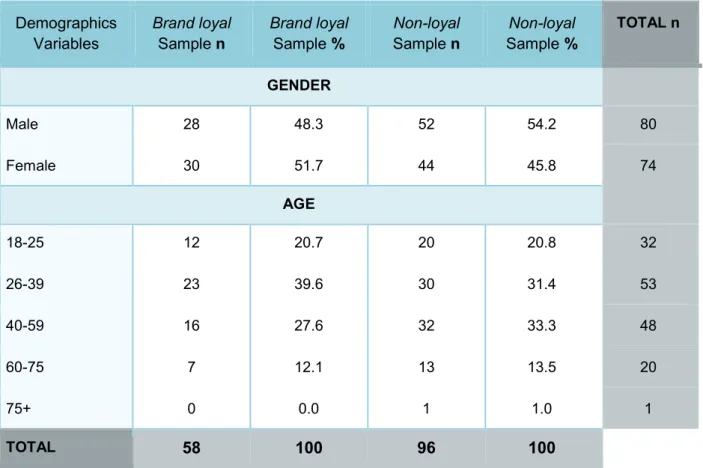
6.3.2 Socio-demographic statistics ... 105
6.3.3 Descriptive statistics: Brand awareness ... 107
6.3.4 Descriptive statistics: Brand associations ... 109
6.3.5 Descriptive statistics: Perceived quality ... 111
6.3.6 Descriptive statistics: Brand loyalty ... 113
6.4 INFERENTIALSTATISTICS ... 115
6.4.1 Overall effect of negative UGC on CBBE ... 117
6.4.2 Effect of negative UGC on CBBE: Loyal vs. Non-loyal Customers ... 125
6.4.3 Analysis of the development of all dimensions ... 133
6.5 CONCLUSION ... 134
CHAPTER VII: DISCUSSION AND RECOMMENDATIONS ... 136
7.1 INTRODUCTION ... 136
7.2 OVERVIEWOFTHESTUDY ... 136
7.3 CONCLUSIONSREGARDINGOBJECTIVES ... 139
7.3.1 Conclusion regarding research objective one ... 139
7.3.2 Conclusion regarding research objective two ... 142
7.4 MANAGERIALIMPLICATIONS ... 145
7.4.1 The power of UGC ... 146
7.4.2 Awareness risks negative UGC on CBBE ... 148
7.4.3 Creation of online brand strategy in reducing impact CBBE damage ... 149
7.5 LIMITATIONSOFTHISSTUDY ... 150
7.6 FUTURERESEARCH ... 151
7.7 CONCLUSION ... 153
LIST OF REFERENCES ... 155
ix LIST OF FIGURES
Figure 1: Causal development of negative UGC, CBBE and luxury wine market ... 4
Figure 2: Demarcation of the study ... 17
Figure 3: Conceptual framework - Impact of negative UGC on Brand Evaluation ... 24
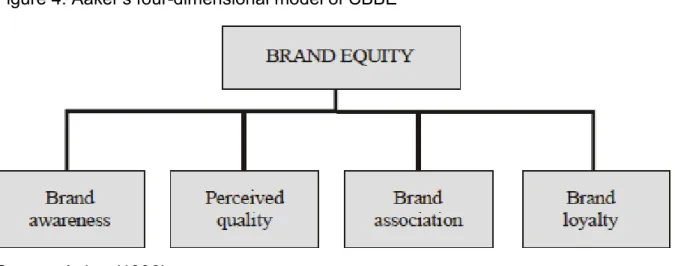
Figure 4: Aaker’s four-dimensional model of CBBE ... 32
Figure 5: Overview of this study's research design ... 58
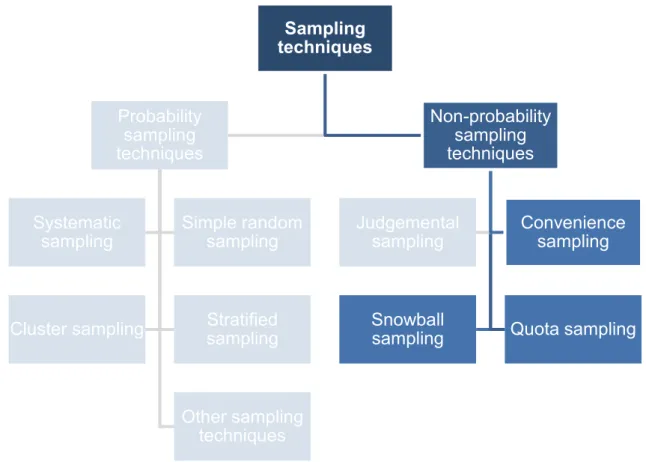
Figure 6: Overview of this study’s sampling techniques ... 83
Figure 7: Impact nUGC on CBBE - comparing brand loyal and non-loyal customers 132 Figure 8: Development CBBE dimensions - brand loyal ... 133
Figure 9: Development CBBE dimensions - non-loyal ... 133
Figure 10: Conclusions of findings H1 to H5 ... 140
Figure 11: Conclusions of findings H6 to H10 ... 143
Figure 12: Action plan marketing managers ... 147
LIST OF TABLES Table 1: Concept of causality in experimentation research ... 63
Table 2: Classification of experimental design ... 67
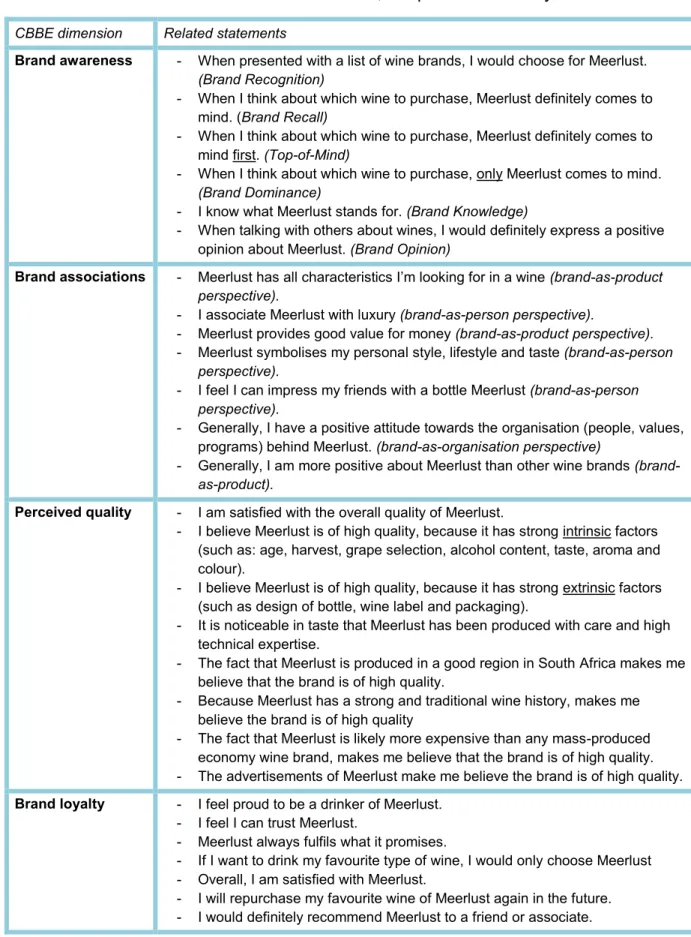
Table 3: Questions related to CBBE dimensions, adapted to this study ... 76
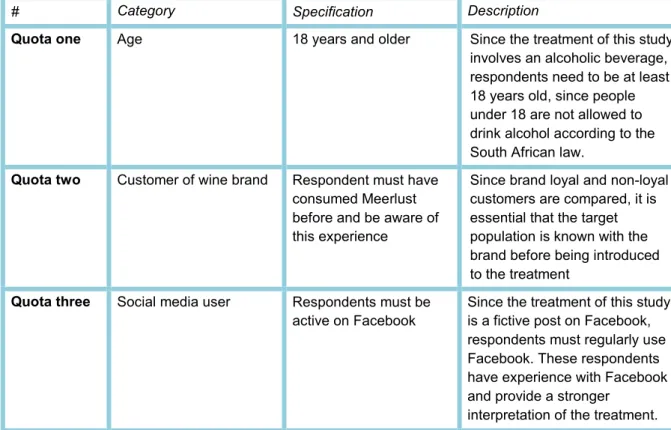
Table 4: Overview of used quotas in non-probability sampling technique ... 82
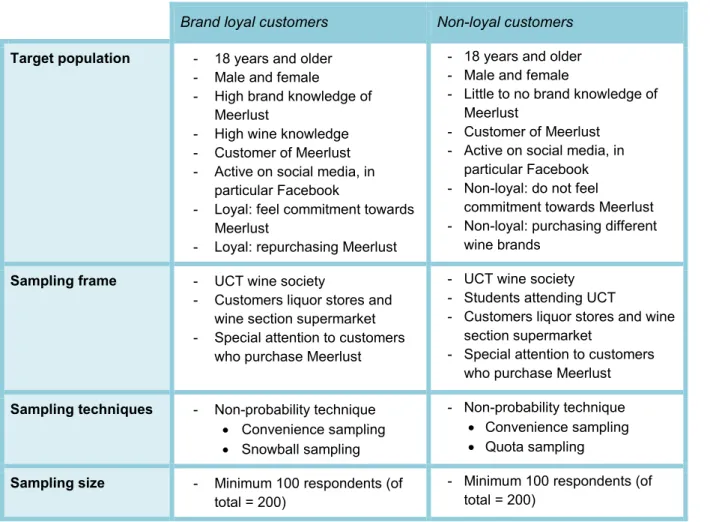
Table 5: Overview of target population and sampling method ... 84
Table 6: Interpretation of findings CBBE ... 89
Table 7: Overview of data collection... 94
Table 8: Total respondents divided in brand loyal and non-loyal Meerlust customers 104 Table 9: Socio-demographic statistics ... 105
Table 10: Descriptive statistics - Brand awareness ... 108
Table 11: Descriptive statistics - Brand associations ... 110
Table 12: Descriptive statistics - Perceived quality... 112
Table 13: Descriptive statistics - Brand loyalty ... 114
Table 14: Paired sample t-test brand awareness ... 119
Table 15: Paired sample t-test brand associations ... 120
Table 16: Paired sample t-test perceived quality ... 121
Table 17: Paired sample t-test brand loyalty ... 122
Table 18: Impact negative UGC on CBBE ... 123
Table 19: Paired sample t-test brand awareness of loyal vs. non-loyal customers .... 125
x
Table 21: Paired sample t-test perceived quality of loyal vs. non-loyal customers ... 128
Table 22: Paired sample t-test brand loyalty of loyal vs. non-loyal customers ... 129
Table 23: Impact negative UGC on CBBE of brand loyal vs. non-loyal customers .... 131
LIST OF APPENDICES APPENDIX A: Pre-Test One 164
APPENDIX B: Pre-Test Two 167
APPENDIX C: Main Questionnaire 177
1
CHAPTER I: INTRODUCTION
1.1 INTRODUCTION
The powerful role marketing managers once had in controlling consumers’ individual perceptions of their brand is not what it used to be (Hutter, Hautz, Dennhardt and Füller, 2013). By the advent of Web 2.0, a paradigm shift took place from traditional one-way brand communication through marketing campaigns, to online brand-related interactions by consumers (Christodoulides, Jevons and Bonhomme, 2012; Schivinski and Dabrowski, 2014a; Campbell, Pitt, Parent and Berthon, 2011). That means that it is in fact the consumers who do most of the branding activities, whether deliberately or not. The power lies in their hands and thus they have major influence on the general branding process of a brand (Christodoulides et al., 2012).
The occurrence of this empowerment is mainly due to the production of user-generated content (UGC), whereby consumers create, share and participate in content about a product, company or service, influenced by their own attitudes and experiences (Bruhn, Schoenmueller and Schäfer, 2012). The exposure of this content to other consumers may influence their attitude regarding the brand (O’Brien, 2011). In this study, emphasis is placed on the impact of negative UGC. Previous studies have come to the conclusion that research on negatively valued production of online content is of most relevance, as it is in fact the negative aspects that can send a brand into disrepute.
Due to the global growth of social media users and online communities, development of brand conversations has also grown via UGC (Christodoulides et al., 2012). It is essential for managers to understand the multidimensional nature and individual motivations of consumers’ online content production. Companies should also know how to anticipate a situation where the brand is strongly targeted (Campbell et al., 2011). Brand managers should therefore keep in mind that managerial efforts to build, manage and protect the production of UGC are now futile, as such content is outside their immediate control (Vanden Bergh, Lee, Quilliam and Hove, 2011). In the end, the only control that is left for brand managers is simply damage control (Christodoulides,
2
Jevons and Blackshaw, 2011). Although previous studies have appointed the damage negative UGC could cause to CBBE, little to no depth has been provided to the specific impact on CBBE and the development of this process (Schivinski and Dabrowski, 2014b).
By knowing how to react, brand managers firstly need to understand the subsequent impact negative UGC has on the brand (Berthon, Pitt and Campbell, 2008). Brand-related UGC could strongly damage corporate reputations and the effects on consumer-based brand equity (CBBE) are lasting and strong. Negative content could even change the face of marketing and affects its ‘very purpose and stature’ (Fournier and Avery, 2011). CBBE is an organisation’s most relevant key marketing asset (Ouwersloot and Tudorica, 2001; Schivinski and Dabrowski, 2014a) and is constructed by consumers’ favourable, unique and long-lasting brand associations, which positively affects consumer behaviour (Keller, 1993). When negative brand comments and discussions take place online, users create associations towards the brand that are contrary to the ones positioned by the company (Bambauer-Sachse and Mangold, 2011). Brand equity dilution may also occur, which can be difficult to rebuild (Bambauer-Sachse and Mangold, 2011). Since CBBE is strictly based on how a brand is perceived by customers, consumer’s brand associations play an essential role in this study. This research also examines whether these brand associations differ between brand loyal and non-loyal customers, since both types are separately affected by negative UGC and could have different impact on CBBE.
In order to understand the impact of negative UGC on CBBE, the wine industry is an excellent market to focus on. Branding is important in the wine market, as wine brands are usually powerful and generally have high brand equity (Vrontis and Papasolomou, 2007). The global wine market is strongly competitive and wine makers should therefore concentrate on producing the best quality of wine, in order to outshine their competitors (Vrontis and Papasolomou, 2007). Moreover, the wine industry is divided in a high variety of product categories and price ranges, which makes the market accessible for a wide, divergent marketing audience (Berthon, Pitt, Parent and J. Berthon, 2009). Each group segment values wine in a different way; wine collectors go for rare, high-class wine brands, while for example teenagers care less about quality and authenticity and would go for the cheapest variants (Vrontis and
3
Papasolomou, 2007). This makes wine a very complex product for consumers to purchase, where CBBE forms a competitive asset that may motivate a consumer to prefer one wine with similar attributes and price over another (Nowak, Thach and Olsen, 2006). The complexity of the wine market, as well as the importance for wine brands to focus heavily on strong CBBE, makes the involvement of the wine market in this study especially relevant. This study is also the first to research if and to what extent the ordinarily strong brand equity of a wine brand would be seriously prejudiced after receiving multiple negative UGC on social media.
This study particularly focuses on the luxury wine brands. It is important for wineries to be perceived as a luxury brand, since luxury evokes associations of exclusivity and high quality (Jin, 2012). The perceived quality is a core component of CBBE and consumers are more driven to choose a wine brand with high-perceived quality, rather than its competitors (Yoo, Donthu and Lee, 2000). This makes luxury an influential element in building CBBE. It is challenging for luxury wine brands to maintain an exclusive and high quality reputation with the advent of UGC production by consumers (Jin, 2012), which makes it even more interesting to research the impact of this. Very little empirical research has yet been done on brand equity in the luxury wine market (Berthon et al., 2009) and the involvement of UGC in this study therefore fills an empirical gap. Understanding is needed of how wine consumers still perceive a wine brand after being exposed to negative UGC, especially since taste is personal and digitally not communicable. In other words, the purpose of this study is to examine if and how negative UGC impacts both loyal and non-loyal wine consumers, to determine the consequences for wineries’ CBBE of luxury brands.
This study ought to answer the following research question: Does negative UGC influence the CBBE of South African luxury wine brands and is this influence different between both loyal and non-loyal customers?
More specifically, this research question can be broken down into the following two primary objectives:
(1) To determine if negative UGC influences the CBBE of luxury wine for its customers
4
(2) To determine whether the influence of negative UGC on the CBBE of luxury wine is different for loyal customers as compared to non-loyal customers Next section begins by reviewing the extant literature relevant to the influence of negative UGC on the CBBE of luxury wine brands. Thereafter, a summary of this study’s research question and research objectives is composed. This is followed by the methodology, which describes the research design and method relevant to this study, as well as the target population and used sampling technique. Next, the contribution of this study is proposed, which emphasises the relevance of this study. Then, the demarcation of this study illustrates the construction of the final research paper, followed by a list of references.
1.2 BACKGROUND TO THE STUDY
To provide theoretical understanding of the relevance of this study, this section outlines the key motivations for conducting this research subject. The nature and purpose of this study is described, which provides indication of why and how this study contributes to existing scientific marketing literature. In this section, three research concepts are outlined, which all have a mutual causal relationship. The first concept describes the phenomenon UGC, in particular negatively valued UGC, which is directly linked to the development of the second concept: consumer-based brand equity (CBBE). Consequently, both UGC and CBBE are separately important for the luxury wine market. Figure 1 illustrates the link these between three concepts. Figure 1: Causal development of negative UGC, CBBE and luxury wine market
The question arises how these three concepts relate to each other and the aim of this study is therefore to measure the impact of negative UGC on the CBBE of luxury wine brands. This paragraph outlines the literature of every concept.
Production of negative UGC
The effect of negative UGC on
CBBE
CBBE in the luxury wine market
5
This introductory chapter begins by reviewing relevant literature related to UGC. This is followed by the conceptualisation of customer-based brand equity, how it is related to UGC and how important it is to maintain a strong brand. Thereafter, this review discusses the relevance of customer’s brand loyalty and how luxury brands provide an adequate theoretical basis in measuring the impacts of UGC on CBBE. Lastly, this study refers in detail to the luxury wine market, since brand equity is very essential in this sector while little research has been done on the relationship between both. 1.2.1 Production of negative UGC
In order to describe the relevance of measuring negative UGC in this study, the phenomenon of UGC is discussed first, whereafter the purpose of involving UGC is explained, which introduces the motivation for measuring UGC in this study.
1.2.1.1 The nature of producing negative UGC
Due to the development and growing popularity of social media networks and brand communities, the online production and consumption of UGC has experienced an expeditious growth (Schivinski and Dabrowski, 2014a). Since consumers are more and more motivated to produce, share and consume UGC, consumers now have the control to the way a brand is perceived and therefore gain major influence on the general branding process (Christodoulides et al., 2012). In past years, brands have increasingly embedded in social media platforms, but experience that competitive strategies and symbolic meanings of the brand are now co-created by consumers via UGC (Jin, 2012). Consumers create, share and participate in online conversations related to a product, company or service, where individual attitudes and experiences are exchanged (Bruhn, Schoenmueller and Schäfer, 2012).
This study places emphasis on the impact of negative UGC. Research on negatively valued production of online content is more relevant than positive UGC, as it is in fact the negative aspects that could turn a brand into a reputational crisis (Fournier and Avery, 2011; Bambauer-Sachse and Mangold, 2011; Grégoire, Salle and Tripp, 2014 and Ng and Rao Hill, 2009). Brands firstly need to understand the valence and motivations of the production of negative UGC, as well as gain knowledge how to act
6
and react when the brand is affected by negative UGC (Berthon, Pitt and Campbell, 2008). Social media communication created by companies cannot improve a brand’s image or reputation, as consumer experiences through UGC have stronger influence on how a brand is perceived in the long term (Godes and Mayzlin, 2009). However, the damage of negative UGC could last long, where brand managers have little to no power in controlling and minimising the impact on CBBE.
1.2.1.2 The purpose of studying the concept of UGC
The creation of UGC became part of the daily life of consumers and the production of UGC consequently is now uncontrollable, since the creation of negative UGC is completely outside of managerial control (Tirunillai and Tellis, 2011). Besides, social media content is not always detectable, because not every brand-related post is shared publicly (Jin, 2012). Research regarding the development of negative UGC is therefore essential, since brand managers have no control in drawing conclusions on what is being said online about the brand. In recent years, extensive scientific studies have been done on the nature of UGC, the subsequent control consumers obtained over a brand (Van Noort and Willemsen, 2011) and how managers should react to it (Campbell et al., 2011). However, there is still a gap in literature of how UGC affects consumers’ brand perceptions and behaviour, and therefore CBBE (Christodoulides
et al., 2012). Next paragraph analyses how negative UGC could have negative impact on CBBE. First, the conceptualisation of CBBE is presented, followed by an explanation of the relevance of focusing on CBBE.
1.2.2 The effect of negative UGC on CBBE
As explained in previous paragraph, negative UGC could change the overall brand perception of consumers who are exposed to this content. Brand-related UGC could strongly damage corporate reputations and the effects on consumer-based brand equity (CBBE) are lasting and strong (Fournier and Avery, 2011). Next subparagraphs explain the literature regarding the multidimensional nature of CBBE followed by an explanation on the relevance of measuring CBBE.
7
1.2.2.1 The multidimensional nature of CBBE
CBBE is established when consumers hold favourable, unique and long lasting brand associations in the long-term memory, which positively affects consumer behaviour (Keller, 1993). CBBE is an organisation’s most relevant key marketing asset (Ouwersloot and Tudorica, 2001; Schivinski and Dabrowski, 2014a), which is identified by the following four conceptual dimensions of brand equity, based on Aaker’s four asset model: brand awareness, brand associations, perceived quality and brand loyalty (Aaker, 1996). In the process of building CBBE, the focus is first to create brand awareness, where consumers start learning about a brand or a new product of a brand, Then, consumers start to develop associations towards the brand, which are related to the value and personality of a brand (Aaker, 1996). Also, the way the quality of a brand is perceived has consequences for brand equity. The perceived quality is a core component of brand value, since consumers are more driven to choose a brand with high-perceived quality, rather than its competitors (Yoo, Donthu and Lee, 2000). When established associations are generally positive, a consumer could establish a commitment towards the brand, which could eventually lead to brand loyalty. By this occurrence, brand equity is established (Boyle, 2007; Schivinski and Dabrowski, 2014b).
Brand loyalty plays an important part in this study, since a consumer’s loyalty and its strong emotional commitment to a brand drive the desire to create UGC (Boyle, 2007) and therefore empowers new brand associations to the ones who have consumed the content and which gives inspiration for further dialogue (Christodoulides et al., 2012). Besides, both brand loyal customers and non-loyal customers are separately affected by negative UGC and could have a different impact on CBBE. Once the trust of loyal customers is damaged, they may feel betrayal, which results in intentionally expressing their anger and disappointment online to cause damage to the brand. In this situation, the consumer is aware of the power of UGC and deliberately uses this power to take down the brand (Grégoire and Tripp, 2011). On the other hand, negative UGC created by non-loyal customers are more powerful than brand loyal customers, because they know little about a brand and have the mutual interest in gaining new brand or product information produced by consumers who are in the same position. Online content derived from brand loyal customers could therefore be misinterpreted
8
as content with commercial value (Godes and Mayzlin, 2009). In conclusion, both brand loyal and non-loyal customers are interesting research groups in this research. This research therefore examines whether the brand perception differs between brand loyal and non-loyal customers after reading or seeing negative UGC. The ‘love is blind versus love becomes hate’ theory (Grégoire and Fisher, 2005) is a relevant measurement to study the impact of negative UGC on consumers’ brand loyalty towards a brand. This theory studies the effect of strong consumer relationships to a brand or a brand’s product when brand loyal customers have had bad experience with the brand. A consumer either experiences the “love is blind” effect, where they ignore these negative occurrences and hold on to the brand commitment, or the “love becomes hate” effect, where consumers intentionally strike back in order to get justification for the betrayal (Grégoire and Fisher, 2005). Next subparagraph explains why it is decided to focus this study on CBBE.
1.2.2.2 The purpose of studying CBBE
The impact of negative UGC on CBBE is an appropriate and relevant topic to focus this study on, since it fills multiple gaps in literature of online marketing. Several recent studies indicate that more understanding is needed of the relationship between negative UGC and CBBE (Hutter et al., 2013; Grégoire, Laufer, and Tripp, 2010; Christodoulides et al., 2010). In addition, most studies regarding UGC focus on the challenges and opportunities of UGC (Laroche, Habibi and Richard, 2012) and the creators’ motivations to generate UGC (Berthon et al., 2008) and not on the impact of UGC on brand perception in times of negative publicity (Wattegama and Qing, 2014). Since the target of this study fills a gap in the literature of UGC and CBBE, the outcome brings added value to the science of online marketing. Moreover, none of the few studies related to the measurement of CBBE after negative UGC has involved brand loyalty before. Therefore, this study contributes to previous studies, since it gains knowledge on whether or not brand loyalty affects the customer-based value of a brand. In the light hereof, it can be indicated if each customer type influences CBBE in a different way.
9
In order to find out the impact on each customer type, two objectives related to measuring brand loyalty have been drafted in section 1.3. First, the relevance of measuring CBBE in the South African luxury wine market is discussed.
1.2.3 CBBE in the luxury wine market
As explained in previous paragraphs, CBBE very important for brand building, since positive brand associations regarding brand awareness, brand associations, perceived quality and brand loyalty leads to positive consumer behaviour (Keller, 1993). This study particularly focuses on the luxury wine market. Next subparagraphs describe the importance of the luxury wine market, followed by an explanation on the relevance of applying this study to the South African luxury market.
1.2.3.1 An overview of the South African luxury wine market
The importance of CBBE in both the luxury market and the wine market is very high (Berthon et al., 2009). Luxury brands have the target to be perceived as exclusive, authentic and unique. By the rise of the production of UGC, luxury brands find themselves in a position, where associations contrary to or different from exclusivity and uniqueness could be established (Jin, 2012). This could lead to CBBE damage, because a luxury brand could lose its reputation of luxury when an incorrect or even negative brand perception is established. Moreover, many luxury brands are not active on social media, in order to maintain an image of exclusive. In these situations, there are no bounds to the spread of negative UGC and it is difficult for brands to have little control in positively influencing and responding to content related to the wine brand. Besides, negative UGC also has a strong impact on luxury wine brands. Amongst other things, consumers intentionally choose for luxury wine brands to symbolise their social status, which could easily be expressed on social media platforms via social media (Berthon et al., 2009). Therefore, consumers of luxury goods are generally motivated to express this social image of luxury on social media (Jin, 2012).
Building CBBE is very important in the competitive market of wines. It is not easy for brands to become recognisable in a market where there are so many options for consumers to choose from (Vrontis and Papasolomou, 2007). CBBE is therefore the
10
most essential marketing instrument for wine brands, since high brand equity creates a stronger place in the mind of the customers than competitive brands. CBBE evokes brand name recognition in the consumer’s decision-making process and consumers eventually choose this brand to another when being confronted with many wine brands (Vrontis and Papasolomou, 2007; Aaker, 1996). Also, the degree of trust and commitment towards a brand is varied, because generally young adults are not loyal to a specific wine brand and mostly purchase wines in the lowest price category, while older-aged consumers are more brand loyal to one specific wine brand (Vrontis and Papasolomou, 2007). Therefore, comparing brand loyal and non-loyal customers in the wine market is interesting for research and has also not been conducted before. 1.2.3.2 The purpose of focusing on the luxury wine market
The global luxury market experienced growth in recent years, but at the same time little empirical studies have been conducted on luxury brands (Berthon et al., 2009). Furthermore, there is little knowledge about CBBE in the wine market and no study has specifically focused on the impact of negative UGC on CBBE in the wine market. Understanding is needed of how wine consumers still perceive a wine brand after being exposed to negative UGC. This study fills a literature gap and is therefore relevant for research, since it offers new scientific insights to the study field of digital marketing.
Now theoretical understanding of this study’s relevance and importance has been provided in this paragraph, the research question and research objectives are composed in next section.
1.3 SUMMARY OF RESEARCH QUESTION AND OBJECTIVES
The aim of this study is to gain insight into the impact of negative UGC on CBBE in the luxury wine market, with a specific focus on the difference in impact for brand loyal and non-loyal customers. Concluded from the literature review given in previous section, the research question and related research objectives are drafted below, which clarify the purpose of this study.
11 1.3.1 Research question
This study is guided by the following research question:
To what extent does negative user-generated content affect customer-based brand equity of South African luxury wine brands?
1.3.2 Research objectives
The proposed research question ought to find answers that are not yet researched before in literature. Moreover, no distinction has been argued between loyal and non-loyal consumers. The above stated research question can therefore be broken down into the following two primary objectives:
(1) To determine if negative UGC influences the CBBE of luxury wine for its customers
(2) To determine whether the influence of negative UGC on the CBBE of luxury wine is different for loyal customers as compared to non-loyal customers Following section provides a discussion of this study’s methodology.
1.4 METHODOLOGY
In this section, the specific research design and employed method for this study are discussed, followed by the sampling technique that treats the target population and sampling method.
1.4.1 Research design and method
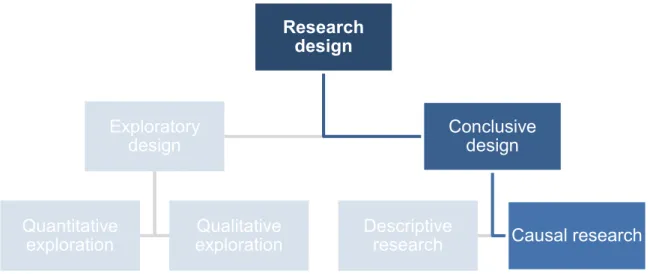
This study makes use of a conclusive research design, as the intention of this study is to measure the perception of a wine brand before and after exposure of negative UGC. Also the relationship between the perception of loyal and non-loyal customers is examined. In order to prove and demonstrate the research outcome of both comparisons, statistics are needed, which can only be obtained with the use of structured research techniques. The research process is therefore formal and data
12
analysis is quantitative (Malhotra and Birks, 2007, p. 70). This research ought to discover the cause-and-effect relationship between the production of negative UGC and the consequences for CBBE, and therefore a causal research approach forms the basis of this study.
The commonly used research method for a causal design is an experiment (Malhotra and Birks, 2007, p. 79). A one-group pretest–posttest pre-experimentation is the most appropriate research method for this study, since it measures one single group of test units twice and the dependent variable is taken in one single measurement (Malhotra and Birks, 2007, p. 313). A structured online questionnaire is carried out to respondents and the experiment is set up by presenting fictive negative UGC related to a specific wine brand. The treatment of the experiment is presented in this online questionnaire, which consists of negative brand comments related to a specific wine, presented on a social media platform; for example users’ comments on Facebook, publications in online communities or a vlogger’s wine review on YouTube. The pre-treatment and post-pre-treatment measure is the same in this study, which consists of the same questionnaire measuring brand perception. The results of the online questionnaire must gain insight in how respondents perceive a specific luxury wine brand before being exposed to negative social media comments of this specific brand. The experimentation evokes new associations towards the wine brand. With in mind the four dimensions of brand equity (Aaker, 1996), the comparison of the perceived associations prior and post to the consumption of negative UGC gives an impression of the effect of negative UGC on CBBE, based on individual brand perceptions. 1.4.2 Target population and sampling method
The target population and sampling methods used in this study is examined in below subparagraphs.
1.4.2.1 The Target Population
The target population for this study is divided in two groups of luxury wine customers produced in South Africa: brand loyal customers and non-loyal wine consumers.
13
Loyal wine customers
Most brand loyal wine customers of luxury wines are middle-aged and older-aged (Vrontis and Papasolomou, 2007). However, younger adults who are brand loyal are also approached in this study, for example students who are member of the UCT’s wine society. The target population for this experiment are customers of a specific South African luxury wine brand, who have high brand knowledge of this favourite wine brand, as well as wine in general. Since these customers are exposed by content placed on social media, the sampled population must be active on social media and must have user experience in all online forms of UGC before. Since these consumers are brand loyal to a specific luxury wine brand, they are interested in spending their leisure time in activities related to wine, such as visiting wine farms or being part of (online) wine communities.
Non-loyal wine customers
Non-loyal customers mostly consist of youths and the young adulthood. Naturally, respondents of this study cannot be lower than the allowed legal drinking age, which is 18. It is also self-evident that enough middle and older aged wine consumers could not feel commitment to one specific wine brand as well. Therefore, non-loyal wine consumers of all different ages are selected for this target population, with a minimum age of 18 years old. This group consumes South African luxury wine brands, but generally has little to no knowledge towards luxury wine brands. Since these customers are not brand loyal, they do not feel any commitment towards a specific luxury wine brand and consequently purchase different wine brands in a wide range of offered wine brands. Customers could prefer a specific type of wine, but do not prefer one specific luxury wine brand.
In order to make an obvious conclusion of the different effects UGC has on brand loyal and non-loyal customers, this study equally selects respondents of both segments. 1.4.2.2 Sampling Method
The sampling frame of this study for both loyal and non-loyal customers includes student members of University of Cape Town’s (UCT) wine society, other students
14
attending UCT and individuals in wine farms and liquor stores. This sampling requires selecting only wine drinking consumers, in particular consumers of the specific brand that is applied in this study. The selected sample also consumes and/or produces UGC on social media platforms. Therefore, this study follows a non-probability sampling technique, which obtains a sample of both convenience, quota and snowball elements. Members of wine clubs and consumers in liquor stores are deliberately selected, because the respondents happen to be in the right place at the right time. This can be described as convenience sampling (Malhotra and Birks, 2007, p. 411). On the other hand, also quota sampling is used. ‘Street interviewing’ is conducted at the campus of UCT and selecting wine drinkers of a particular brand is not self-evident. For this reason, controlling characteristics, or quotas, of population elements are developed first, based on whether the person consumes the wine brand or not, and has the correct age to participate in the experiment. Lastly, snowball sampling is used in sampling brand loyal customers. Brand loyal customers might be hard to reach and hard to find and the personal and professional network of brand loyal respondents are used to get in touch with others who are brand loyal to the brand as well.
1.4.3 Ethical considerations
Human subjects are involved during the implementation of this study. Any student undertaking any research that involves the use of human subjects or that may lead to ethical consequences for the University of Cape Town is required to agree to ethical and professional guidelines. No alcoholic beverages are consumed during the experiment and all approached human subjects are asked for their age, after which only individuals of 18 years and older are selected for the experiment.
1.5 INTENDED CONTRIBUTIONS OF THE STUDY
This section summarises the contribution this research gives to the science of online marketing. These contributions ultimately form the most important conclusions of this study.
Concluded from the literature review of this study, it is obvious that little empirical research has been done yet on consumer’s changed perception of a brand after
15
exposure of negative UGC. Previous studies have mainly focussed on the customer’s nature of producing negative UGC and how companies should handle in social media crisis. In past years, the relationship between UGC and CBBE has regularly been studied: Christodoulides et al. (2012), Christodoulides et al. (2010), Schivinski and Dabrowski (2014a), Schivinski and Dabrowski (2014b), Vanden Bergh et al. (2011), Bruhn et al. (2012) and Severi et al. (2014). However, most of these studies focus on the general impact of UGC, instead of solely negative brand-related UGC, and the outcome of these studies mostly describes the chances and opportunities of UGC. Grégoire (2009, 2011, 2014) is one of the few scientific writers that specifically focuses on the strong impact of negative UGC and conducted multiple studies about revenge writing. However, Grégoire does not include brand equity in his study, but emphasises the consumer’s power and the motivations of online public complaining.
Few studies have focussed on the impact of negative UGC on CBBE: Bambauer-Sachse and Mangold (2011) and Ng and Rao Hill (2009). All studies concluded that negative UGC does in fact negatively affect CBBE. However, none of the studies has used Aaker’s four-scaled brand equity model in measuring the impact of UGC on brand equity, while it is recommended to use CBBE dimensions in future research (Ng and Rao Hill (2009). Therefore, this study fills a gap by using Aaker’s four-asset brand equity model. This study also contributes to prior studies by researching whether brand loyal and non-loyal consumers are differently affected by negative UGC. No research regarding the impact of UGC has compared brand loyal and non-loyal customers before in the measurement of CBBE. Brand loyalty is an important dimension of CBBE and this study seeks to find out if companies can still rely on their brand loyal customers after negative exposure of UGC. Lastly, brand equity in the luxury wine market has not been researched yet (Berthon et al., 2009). Luxury is important in building CBBE, since a perception of high quality stimulates consumers to prefer one brand to another. Besides, little research has been done yet on CBBE in the wine market (Berthon et al., 2009). Generally, wine customers are committed to a specific wine brand and this makes CBBE important for the wine industry. This study provides new scientific insight in the way consumers perceive luxury wine brands after consuming negative UGC.
16
Findings from this study provide some insights for marketers in the wine industry. With the outcome of this study, wineries could make an estimation of how their brand is still perceived in times of social media crisis, and which brand equity dimension is the biggest cause of CBBE damage. Based on the results of the study, marketers can compose or adapt their social media crisis strategy, in a way that offers the best resistance against the most affected CBBE dimension(s). Managers can set up precautions when they are aware of how and why dimensions are negatively developed after social media crisis. Besides, wine brands gain more insight into the question if they could still count on their loyal customers and if the non-loyal customers would still be triggered to ever buy the brand again after being negatively influenced by online comments.
1.6 DEMARCATION OF THE STUDY
There are seven chapters in this study, illustrated in Figure 2. This chapter (Chapter I) provided an introduction to the study and Chapter II to Chapter VII is explained below Figure 2 on the next page.
17 Figure 2: Demarcation of the study
Chapter II places emphasis on the scientific literature related to user-generated content. Chapter III gives an analysis of the conceptualisation of CBBE and past studies regarding the impact of negative UGC on CBBE are compared. In Chapter IV, the importance of high CBBE in the wine market is discussed. Chapter V explains the methodology used to measure the two objectives stated in paragraph 1.3.2. Chapter VI focuses on the findings from the quantitative data analysis. The final chapter, Chapter VII, discusses the interpretations of the study’s findings, but also managerial implications and suggestions for future research within the scientific area of negative UGC and CBBE.
Chapter I: Introduction Chapter II: User-generated content Chapter III:
Consumer-based brand equity
Chapter IV:
CBBE in the South African luxury wine market
Chapter V: Methodology Chapter VI:
Results Chapter VII:
Discussion and Recommendations 2.1
Introduction UGC and 2.3 organisation’s power 2.4 Positive vs negative UGC 3.1 Introduction 2.2 Definition of UGC 2.5 UGC going viral 2.6 Recent social media crisis 2.7 Conclusion 3.2 Definition of CBBE 3.3 Aaker’s CBBE model (1996) 3.4 Past studies impact negative UGC on CBBE 3.5 Conclusion 4.1
Introduction The growth of 4.2 luxury brands 4.5 CBBE in luxury wine market 4.4 Defining a luxury wine brand 4.6 Conclusion 4.3 Symbolic value of luxury brands
18 1.7 CONCLUSION
As concluded in paragraph 1.2.1.3, negative UGC could cause disastrous consequences for brands, since negatively valued content is uncontrollable for companies, could cause reputational damage and mainly brand loyal consumers intentionally use UGC to take down a brand after a negative experience. All consequences result in a negative brand perception, where consumers consequently express and share this negative perception online on social media. Additionally, paragraph 1.2.2.1 explained the development of CBBE, which occurs when consumers hold favourable, unique and long-lasting brand associations in memory that eventually leads to a positive purchasing behaviour. As concluded in paragraph 1.2.3 and paragraph 1.2.4, CBBE is especially relevant in the luxury wine market, since strong CBBE is the only answer in establishing a unique position in the minds of the customers in an extremely competitive market. CBBE is particularly relevant for luxury wine brands, since luxury brands need high CBBE in order to maintain an exclusive and high-quality reputation. Besides, consumers with wine knowledge are generally attached to one specific type of wine and therefore wine brand. This means that brand loyalty plays an important part in the CBBE process, which is also an important dimension in Aaker’s four-dimensional model of CBBE. Moreover, brand loyal consumers seem to be more impacted by extreme negative UGC, because betrayal in brand trust could lead to strong CBBE damage. Thus, further understanding is required on the influence of negative UGC on brand loyal consumers is different from non-loyal wine customers.
The following chapter provides depth in the scientific literature related to user-generated content.
19
CHAPTER II: USER-GENERATED CONTENT
2.1 INTRODUCTION
The development and growing popularity of social media platforms and brand communities has led to a rapid increase of UGC production and consumption (Schivinski and Dabrowski, 2014a). Through brand-related UGC, such as YouTube vlogs, Facebook comments and Twitter feeds, people’s associations towards a brand could change. This has brought brand managers into a situation in which customers have taken over control and become an obstacle in building CBBE (Christodoulides et al., 2012). Customers could make a brand, but also break a brand, and managers should therefore never overlook misperceptions in negative brand conversations online (Wattegama and Qing, 2014).
The following sections gives an analysis of the definition of UGC. Thereafter, the remained power of organisations in the Web 2.0 is described, followed by a comparison between the relevance of both positive and negative UGC. Then, the scientific theory related to negative UGC going viral is introduced. This chapter ends with a conclusion related to the mentioned subjects above.
2.2 DEFINING USER-GENERATED CONTENT
This section opens with a literature review on the definition of UGC. Since the Internet has empowered ways for consumers to proactively express brand-related opinions and experiences online and in public, user-generated content (UGC) has been an important topic in previous scientific marketing studies (Schivinski and Dabrowski, 2014b). The growth of online social media platforms and online communities has turned UGC into an emergent phenomenon that changed the power of manager-generated content into user-manager-generated content (Christodoulides, Jevons and Bonhomme, 2012). However, there are still uncertainties about how UGC should exactly be defined and what kind of content can be labelled as ‘UGC’.
20
This section gains insight into the scientific definitions previous studies have given to UGC and how these definitions still leave gaps in literature, considering the complexity of this phenomenon.
2.2.1 UGC versus eWOM
Besides the terms “social media brand communication”, “user-generated branding” and “brand co-creation”, past studies mainly have used two different terms for social media communication: user-generated content (UGC) and electronic word-of-mouth (eWOM). In literature, both are conceptualised in a similar way, since both types are related to brands, have no commercial intention and aren’t controlled by companies (Berthon et al., 2008). However, the two concepts do have differences, depending on whether the content is generated or only conveyed by users (Schivinski and Dabrowski, 2014a). For example, posting a video on YouTube is UGC, but becomes eWOM when the YouTube link has been spread to others by e-mail. Since eWOM depends on the dissemination of content and mainly focuses on the influence of content, UGC is a less complex concept to use. Therefore, this study makes use of the concept ‘UGC’.
2.2.2 Defining UGC
Since UGC is a relatively new phenomenon in marketing and in particular brand management, there is no widely accepted scientific definition of UGC yet (Hass, Walsh and Kilian, 2008) and fewer still agree on how to measure the social, cultural and economic consequences of it (Wunsch-Vincent and Vickery, 2007). For this reason, different definitions of UGC have been formulated in past empirical literature.
The most generally cited definition of UGC has been drafted by Wunsch-Vincent and Vickery (2007) in a research study for OECD (Organization for Economic Cooperation and Development) and define UGC as “content made publicly available over the Internet, which reflects a certain amount of creative effort and is created outside of professional routines and practices”. Huberman, Romero and Wu (2009) refer in their definition to the term “crowdsourcing”, leading to a situation where million users create content in the form of blogs, news, videos and comments. Besides eWOM, UGC can
21
in literature be unchangeably referred to as user-created content, user-led content creation and consumer-generated media (CGM). CGM describes “a variety of new sources of online information which are created, initiated, circulated and used by consumers intent on educating each other about products, brands, services, personalities and issues” (Blackshaw and Nazzaro, 2006). One study gives a wider definition and describes UGC as “media content primarily distributed on the Internet” (Daugherty, Eastin and Bright, 2008). Hass, Walsh & Kilian (2008, p. 273) describe UGC as “content that is independently produced and consumed online by an indefinite public, without a direct profit orientation”. Also Hass et al. (2008) state in their study that UGC never has a direct profit orientation. Consumers who generate UGC can be described as “ordinary people, who represent the end users of products or services” (Cheong and Morrison, 2008).
2.2.3 Gaps in the research concerning UGC
It can be concluded that all analysed studies on the definition of brand-related UGC point out that UGC is accessible for the general public, is created by consumers rather than by marketing professionals and is primarily distributed on the Internet. However, UGC remains a difficult concept and some of these definitions do contain a few gaps. To start, not all definitions of UGC have determined whether or not UGC has been made publicly. It is unclear to what extent content is available to the public, because content could be partially accessible, for example to designated communities (Christodoulides et al., 2012). Additionally, several scientific definitions consider the Internet to be the only medium of spreading UGC. There are many media platforms that are emerging and converging, such as mobile applications, which make the reference to ‘the Internet’ too common. Another gap is that all studies mentioned above assume that UGC is always brand-related. UGC could also consist of simple, daily, personal practices, without any references to a brand. To avoid confusion, any reference in this study to UGC should be considered as brand-related.
Finally, it can be questioned whether UGC is always conducted outside of professional routines. UGC could still have a commercial purpose, in situations where fraudulous social identities are being created on social media, for instance by managers and
22
company owners, who intentionally make the suggestion that (positive) content is created by a consumer (Arnhold, 2010). Brand managers could intentionally praise a product or service, while pretending to be a consumer. Since recognising, tracing and measuring the effect of this ‘fictive’ content is difficult to realise, this study assumes that UGC is always consumer-related and thus does not have any profit intention. Although the power caused by UGC seems to be shifted into the consumers’ hands, organisations can still have influence on brand-related published online content by consumers. In order to gain deeper understanding of the nature of UGC and the control of both the consumer and the brand, the next paragraph specifies the opportunities and threats for organisations when it comes to the relation between UGC and online branding.
2.3 UGC AND THE ORGANISATION’S POWER
Since UGC is produced by consumers and should not have commercial value, organisations cannot take direct actions on the implementation of UGC. Still, it may be possible to indirectly influence UGC, because brands do always retain a certain ability to influence consumer-to-consumer communications through social media (Mangold and Faulds, 2009). By creating a brand platform, consumers can express their opinions, experiences and also absorb information about a brand (Mangold and Faulds, 2009). Social media give organisations the opportunity to initiate, which eventually generates sales (Godes and Mayzlin, 2009). Companies can actively apply word-of-mouth by leaving indelible impressions in the minds of consumers. Social media communication created by companies cannot improve a brand’s image or reputation, as consumer experiences through UGC have stronger influence on how a brand is perceived in the long term (Godes and Mayzlin, 2009).
According to Arnhold (2010), sponsored UGC offers companies the opportunity to directly effect online content creation. Sponsored USC can be described as "stimulated brand-related UGC, in which the brand manager deliberately asks social media users for contribution of UGC, such as bloggers" (Arnhold, 2010). Also Burmann’s study (2010) proofs that sponsored UGC has a market-oriented effect, but emphasises that this content is never produced spontaneously. Because of the daily
23
exposure to advertising, today’s consumer gets smarter by the day and could see through sponsored UGC. In this case, a consumer could perceive a brand as manipulative, since consumers could feel deceived towards the honesty of the brand, but also the freedom of producing UGC (Arnhold, 2010).
Since UGC is a broad concept, UGC can cause different effects on a brand. Both positive and negative UGC could change the way a person perceives a brand. The next paragraph analyses the relevance of positive and negative UGC, to determine on which this study can best focus.
2.4 POSITIVE VERSUS NEGATIVE UGC
Multiple previous studies have paid attention to the nature of UGC, the increasing power of consumers via UGC and how UGC affects companies. In the last mentioned research field, the advantages and disadvantages of UGC are mostly discussed, e.g. Christodoulides, Jevons and Bonhomme (2012), Schivinski and Dabrowski (2014a) and Mangold and Faulds (2009). However, these studies mostly focus on the general impact of UGC and have come to the conclusion that UGC mainly offers opportunities for companies. Studies on how negative UGC impacts CBBE have only been conducted by Bambauer-Sachse and Mangold (2011) and Ng and Rao Hill (2009). Given the little depth of prior studies in the effects of negatively valued production of online content, the emphasis of this study is placed on the negative side of UGC. More arguments confirm that research on the effects of negative UGC is more relevant than on positive UGC, which are discussed in the following paragraphs.
2.4.1 Negative UGC is uncontrollable
Firstly, positive UGC is possibly influenced and even established by the result of advertisements published by ‘well known and propagated firms’, whereas negative UGC is most likely ‘an uncontrolled outcome of consumers’ experiences’ (Tirunillai and Tellis, 2011). With other words, companies do have power in influencing the creation of positive UGC and thus creating positive brand perception by expressing its brand values, brand proposition, brand promise and the brand’s or product’s unique selling points via advertisements or any other marketing communication instrument.
24
However, the creation of negative UGC is completely outside of managerial control, because the valence of this is mostly based on a bad personal experience with the brand or a result of exposure to negative word-of-mouth offline or online (Tirunillai and Tellis, 2011).
2.4.2 Negative UGC causes reputational damage
Secondly, negative brand content created by social media users has a significant impact on consumer purchasing behaviour (Wattegama and Qing, 2014). After reading or seeing a post with negative value on Facebook, a consumer could change its attitude towards the brand, which results in declining repurchase intentions and generating new negative UGC about the brand (Wattegama and Qing, 2014). According to Wattegama and Qing (2014), negative UGC weakens consumers’ satisfaction and brand attitude and existing customers do not believe that their previous brand expectations are met any longer. This eventually leads to reputational damage and in times of post-social media crisis, consumers likely purchase a similar product from the brand’s competitor (Wattegama and Qing, 2014).
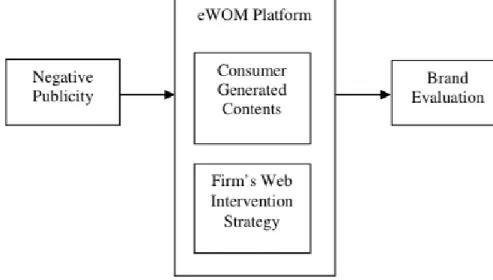
With a self-developed conceptual model, Wattegama and Qing (2014) constructed the process of reputational damage after social media crisis, demonstrated in below figure.
Figure 3: Conceptual framework - Impact of negative UGC on Brand Evaluation
25
Based on the conducted literature review and above conceptual model, Wattegama and Qing (2014) concluded that negative UGC eventually weakens consumers’ satisfaction, purchase intention and brand evaluation of the affected brand (Wattegama and Qing, 2014). In order to recover from a social media crisis, brand perceptions should be changed by publishing positive content about the brand, to compensate the bad light the brand was put into (Wattegama and Qing, 2014).
2.4.3 Negative UGC leads to consumers’ revenge
Thirdly, dissatisfied consumers who had negative experience with a brand or a brand’s product may even lead to customer’s desire for revenge towards the company and could become key driver of negative UGC. In this instance, consumers are aware of their perceived power and intentionally complain about a brand, with the goal to harm a company’s reputation, in order to gain justification and punishment for the dissatisfaction (Grégoire, Tripp and Legoux, 2009). Once negative UGC is spread online, users build on each other’s comments and the involved company may lose control over the conversation, which could lead to a serious social media crisis (Grégoire, Salle and Tripp, 2014). And because content is available 24/7, it can provide an immediate pulse of UGC performance that is not possible to maintain (Tirunillai and Tellis, 2011).
All external effects mentioned above are evident that the damage from negative UGC has a stronger impact than the gain from positive UGC. This also means that a brand could get into serious trouble when a negatively valued post, possibly posted out of revenge, goes viral (Grégoire, Salle and Tripp, 2014). The next section provides scientific insight into the valence of viral posts consisting of negative UGC and discusses the risks of extreme negative UGC getting virally disseminated.
2.5 UGC GOING VIRAL
In the landscape of Web 2.0, creating and sharing online content is part of the daily life (Berger and Milkman, 2012). People share and therefore spread posts created by other social media users. The power of the consumers’ behaviour of interpersonally
26
sharing online content makes it able to reach millions of social media users with one single post on social media, which eventually could become viral within a short period of time (Grégoire and Tripp, 2011; Botha & Reyneke, 2013; Vanden Bergh, Lee, Quilliam and Hove, 2011). When it comes to the valence of a message, negative social media posts that evoke anxiety or anger are mostly to be shared and have the highest chance to go viral than negative posts of sadness (Berger and Milkman, 2012). Specifically, negative content created by spite-driven customers are the most likely to go viral, with the risk that the brand reputation could get damaged (Grégoire, Salle and Tripp, 2014).
While companies could also benefit from positive UGC, virally distributed negative UGC should get closer attention. When consumers have negative or incorrect touch points with a brand, consumers’ brand expectations are also affected and complicate the process long-term brand building (Arnhold, 2010). Eventually, the viral spread of negative UGC could eventually turn into a social media crisis (Grégoire, Salle and Tripp, 2014) and reaches the attention of mainstream media offline and online, where the brand perception of an even greater public is negatively influenced (Mangold and Faulds, 2009). In this situation, targeted companies cannot do much, since consumers do not believe good intentions and feel a public crisis was needed for a company to fix a certain problem (Grégoire, Salle and Tripp, 2014).
The next section illustrates a practical example of a recent social media crisis, which offers a better comprehension of how the production of negative UGC could get a brand in trouble. This example provides understanding of the impact negative UGC could cause to a brand, which emphasises the common thread running through this chapter.
2.6 RECENT OCCURRENCE OF A SOCIAL MEDIA CRISIS
A recent example of a social media crisis is the case of KFC South Africa. KFC employees where caught on camera while washing off raw chicken outside the fast-food restaurant. A person witnessed this event, took a video with a smartphone and