Concordia University St. Paul Concordia University St. Paul
DigitalCommons@CSP
DigitalCommons@CSP
CUP Ed.D. Dissertations Concordia University Portland Graduate Research
Spring 4-25-2020
Academic Achievement and Development of Self-Efficacy of
Academic Achievement and Development of Self-Efficacy of
At-Risk girls Through Mentoring Programs
Risk girls Through Mentoring Programs
Latriace Wicks-WilliamsConcordia University - Portland, [email protected]
Follow this and additional works at: https://digitalcommons.csp.edu/cup_commons_grad_edd Part of the Education Commons
Recommended Citation Recommended Citation
Wicks-Williams, L. (2020). Academic Achievement and Development of Self-Efficacy of At-Risk girls Through Mentoring Programs (Thesis, Concordia University, St. Paul). Retrieved from https://digitalcommons.csp.edu/cup_commons_grad_edd/423
This Dissertation is brought to you for free and open access by the Concordia University Portland Graduate Research at DigitalCommons@CSP. It has been accepted for inclusion in CUP Ed.D. Dissertations by an authorized administrator of DigitalCommons@CSP. For more information, please contact [email protected].
Concordia University - Portland Concordia University - Portland
CU Commons
CU Commons
Ed.D. Dissertations Graduate Theses & Dissertations
Spring 4-25-2020
Academic Achievement and Development of Self-Efficacy of
Academic Achievement and Development of Self-Efficacy of
At-Risk girls Through Mentoring Programs
Risk girls Through Mentoring Programs
Latriace Wicks-WilliamsConcordia University - Portland
Follow this and additional works at: https://commons.cu-portland.edu/edudissertations Part of the Education Commons
CU Commons Citation CU Commons Citation
Wicks-Williams, Latriace, "Academic Achievement and Development of Self-Efficacy of At-Risk girls Through Mentoring Programs" (2020). Ed.D. Dissertations. 406.
https://commons.cu-portland.edu/edudissertations/406
This Open Access Dissertation is brought to you for free and open access by the Graduate Theses & Dissertations at CU Commons. It has been accepted for inclusion in Ed.D. Dissertations by an authorized administrator of CU Commons. For more information, please contact [email protected].
Concordia University–Portland College of Education Doctorate of Education Program
WE, THE UNDERSIGNED MEMBERS OF THE DISSERTATION COMMITTEE CERTIFY THAT WE HAVE READ AND APPROVE THE DISSERTATION OF
Latriace Antrell Wicks-Williams
CANDIDATE FOR THE DEGREE OF DOCTOR OF EDUCATION
Heather Miller, Ph.D., Faculty Chair Dissertation Committee Deborah Stone, Ph.D., Content Specialist
Academic Achievement and Development of Self-Efficacy of At-Risk girls Through Mentoring Programs
Latriace Wicks-Williams Concordia University–Portland
College of Education
Dissertation submitted to the Faculty of the College of Education in partial fulfillment of the requirements for the degree of
Doctor of Education in
Professional Leadership, Inquiry, and Transformation
Heather Miller, Ph.D., Faculty Chair Dissertation Committee Deborah Stone, Ph.D., Content Specialist
Judy Shoemaker, Ed.D. Content Reader
Concordia University–Portland
ii
Abstract
At-risk girls of color face a variety of challenges; even more when they are in an urban setting. Girls must gain the tools necessary to transition effectively into adulthood. The purpose of this qualitative case study was to examine the effect participating in a mentoring program had on the academic achievement and self-efficacy of girls of color in an urban setting who have been identified as at-risk. The primary focus of the study was academic achievement and self-efficacy. These two traits have been identified as essential to the successful transition into adulthood. The population of this study is girls of color who have been identified as at risk, live in an urban setting, and graduated from The Girl mentoring program, as well as women who served as mentors in the program over a 5-year period. Purposive sampling was utilized to solicit participants for the study. Graduates and mentors participated in semi structured interviews. Additionally, the mentors participated in an anonymous survey. There were three themes that emerged from the interviews and questionnaire. The implications and recommendations for future studies on this topic included in this study.
Keywords: mentoring programs, at-risk youth, self-efficacy, academic achievement, social cognitive theory, at-risk factors, protective factors, at-risk population, and the
iii
Dedication
I dedicate this doctoral research study to my oldest sister, Antrena Shalon “Unbreakable” Wicks. My big sister has been the S-hero of my life for as long as I can remember. She saved me from drowning when I was 8 years old. However, the real reason this is dedicated to her is because she was a girl of color, who should have been categorized as at-risk growing up in an urban setting. She faced many challenges at a very early age. She was a young teenage mother and had to figure out how to raise a child as a child with little to no support.
My sister took care of her son and her other siblings until she graduated high school. No matter what was going on in our lives, my sister and I had a bond that can only be described as unconditional love, she is the love of my life. Although she was the oldest, I always felt that I had to protect her. Even after her death, I vowed to protect her legacy and to ensure her story was told because I have always admired her strength and resilience in the face of adversity.
In September of 1999, she was diagnosed with ovarian cancer. Ten days later, our mother was diagnosed with terminal lung cancer. Antrena fought cancer for 19 years. She passed away in her sleep on May 5, 2018. At the time of her death, she was living with her son, whom she had put through college and was a Band Director. This was her ultimate goal, to ensure her son was well educated and had a promising future. Hopefully, this doctoral research study will help educators to understand how to assist at-risk girls like her around the world and provide the resources and support they need to become “Unbreakable.”
iv
This doctoral research study is also dedicated to my Godmother and Mentor, Mrs. Cathen Burnell Jones. In 1987, a 14-year-old girl who was traumatized, confused, and broken entered your English classroom. However, you saw my potential, not my scares. You became the mother I needed, when my mother could not fulfill that role. You gave me my first bible and although it was pink, I cherished it. You introduced me to Christ! Not the Christ of punishment and
restriction but the Christ of love and abundance. You kept my secrets and made me a part of your family.
You taught me about self-worth. When I made mistakes, you never judge me. Instead, you talked through things with me to help me learn to make good choices. I loved it when instead of sending me to the principal when I got in trouble, they started sending me to you. I must confess, a few times I got in trouble on purpose to come be with you, especially in Calculus class. You were my inspiration and the reason I became a teacher and a counselor. In my heart, I have always felt that I must give some little girl what you gave to me, HOPE.
You were the first person to be an example of what Christ wants from us, in my life, a light to draw others to him. Every milestone, I experienced in my life, you were one of the first people I would call. Because of you, I am dedicated to ensuring that girls of color have someone to advocate for them, to teach them to value themselves, and to have hope for their futures. I loved it when I was well into my thirties and you would still answer the phone “hey little girl.” That made me feel special. I owe you the world and I just hope that you are proud of the woman that I have become.
v
Acknowledgements
First and foremost, I would like to give thanks to my Lord and Savior, Jesus Christ for through him, I can do all things. To my soulmate, Arthur Ray Williams Jr, who calms my spirit and supports me in every endeavor I take on. Your love and support have made me a better woman and I appreciate your silent strength and undying love for me. My mother, Mary Alice Haynes, who made me promise in her last months of life to complete my Bachelor’s degree. I went a little further than you expected mommy. Thank you for encouraging me to pursue my dreams. To my grandmother, Mary Louise “Momma Mae” Hardy, I love you beyond words. I
am glad that I had you as a grandmother and that I was your special baby (even though we all were). Mack Emmitt Bryant, Rotesha Denera Haynes and Robert Earl Haynes II and my wonderful nieces, Tierra Mahnique Haynes and Tielah Mari Alyce Gowans and nephews, Lakeese Calon Denard Wicks, Trenell Haynes, Robert Haynes III, thank you for holding me to high expectation of excellence. I can do it, because you believe I can. To Lashaundra Seale and LaJia DeCarroll Carter, thank you for your love and support. Our father’s strong genes created four highly intelligent, strong, and driven individuals. I am proud to call you my sisters.
Thank you to Tamiko Williams, Triniti Frazier, and Adrian Barrett for being by my side for decades with love and support. You have stood by me, with me, and for me for several decades with unwavering loyalty and understanding of my weirdness. God saw fit to give me two sisters and a brother and I thank Him for you every day. To my wonderful in-laws, The Williams’ Sr., Cheryl, Chris, and Chas for your support and encouragement. To Alondra, T’erin, My’Toya, Yamilet, and Shamiria for helping me to realize my purpose and the ministry God gave me. I am immensely proud of all of you. To Valerie Sanderson, six long years we have stuck it out with these young ladies, I would not have been able to do it without you. Dr. Amber
vi
Reed and David and Meredith Downs for being great encouragers and supporters. Shaniece McGill and Gary Damon, whom I met through this program. We collaborated on several projects throughout this journey and formed a friendship, although we are on completely different sides of the country.
Dr. Kara Vander Linden, for a full year you provided guidance, support, encouragement and a great amount of patience to me. Without a person like you, I am not sure if I would have made it through this process. Dr. Shoemaker, and Dr. Stone, thank you for all you have done to help me to achieve this goal. Your support and wisdom are invaluable.
Dr. Heather Miller, you brought the absolute best out of me. It was hard at times, but I know now that you pushed me because you believed in my ability. I am so very grateful to you and I hope we get to go on a doggie play date one day! Thank you for your support and
understanding through one of the toughest years of my life. This journey has been great because of you.
vii
Table of Contents
Abstract ... ii
Dedication ... iii
Acknowledgements ... v
List of Figures ... xiv
Chapter 1: Introduction ... 1
Background, Context, History, and Conceptual Framework for the Problem ... 2
Personal Experience as a Mentor ... Error! Bookmark not defined. Expansion of the Mentoring Program ... 4
Social Cognitive Theory ... 5
Social Development Model... 5
Statement of the Problem ... 7
Purpose of the Study ... 8
Research Questions ... 8
Rationale and Relevance of the Study ... 8
Achievement Gap in Girls of Color ... 8
Increasing Community Diversity ... 9
Changes in Family Structure ... 9
Benefits of the Study for Stakeholders ... 10
Significance of the Study ... 10
Definitions of Terms ...11
Assumptions, Delimitations, and Limitation ... 13
viii
Limitations ... 14
Scope and Delimitations ... 14
Summary ... 14
Chapter 2: Literature Review ... 16
Conceptual Framework ... 18
Significance of the learner’s culture and background ... 19
Social constructivism ... 20
Learning through interaction... 21
Context and environment. ... 21
Summary. ... 23
Review of Research Literature and Methodological Literature ... 23
At-risk and protective factors. ... 24
At-risk factors. ... 25
Protective factors. ... 27
The Implications of At-Risk and Protective Factors ... 29
Self-Efficacy ... 30
Factors that contribute to positive self-efficacy. ... 31
Self-efficacy and at-risk girls. ... 32
Academic Achievement ... 33
Factors to Increase Achievement ... 34
Caring adult. ... 35
Mentoring programs for girls. ... 37
ix
Types of mentoring programs. ... 38
Mentoring relationship. ... 39
Mentor perspective... 40
Review of Methodological Issues ... 45
Synthesis of Research Findings ... 47
Critique of Previous Research ... 48
Summary ... 49
Chapter 3: Methodology ... 52
Research Question ... 53
Purpose and Design of the Study ... 54
Research Population and Sampling Method ... 55
Site Description ... 55
Research Population... 56
Sampling Method ... 56
Instrumentation ... Error! Bookmark not defined. Interviews ... 57 Questionnaire ... 58 Data Collection ... 58 Identification of Attributes ... 60 Academic achievement. ... 61 At-risk factors. ... 62 Girls of color. ... 62
x
Protective factors. ... 62
Self-efficacy. ... 63
Urban area. ... 63
Data Analysis Procedures ... 63
Member Checking Process ... 64
Questionnaire Analysis ... 65
Limitations and Delimitations of the Research Design ... 66
Limitations ... 66 Delimitations ... 66 Validation ... 67 Credibility. ... 67 Dependability. ... 68 Expected Outcomes ... 68 Ethical Issues ... 69
Conflict of Interest Assessment ... 69
Researcher’s Position ... 69
Ethical Issues in the Study ... 69
Summary ... 71
Chapter 4: Data Analysis and Results ... 72
Description of the Sample ... 72
Description of Participants ... 73
Carla. ... 73
xi Sharon. ... 74 Alicia. ... 74 Yolanda. ... 75 Cheryl. ... 75 Patrice. ... 75 Vera. ... 76 Ashley. ... 76 Kelly. ... 77
Research Methodology and Analysis ... 77
Data Collection ... 78
Semistructured Interviews ... 78
Questionnaire ... 79
Member Checking and Follow-Up Questions ... 79
Data Analysis ... 80
Coding ... 80
Interviews ... 82
Member Checking Data ... 82
Summary of Findings ... 83
Presentation of the Results ... 86
Semistructured Interviews and Member Checking ... 86
Code 1: Support from mentors. ... 86
Code 2: Guidance and support. ... 87
xii
Code 4: Feeling important. ... 89
Code 5: Belief in personal achievement. ... 90
Code 6: Next stage in life. ... 91
Code 7: Learning about themselves. ... 92
Code 8: Girls’ transition to womanhood. ... 94
Code 9: Coming out of comfort zone. ... 95
Code 10: How to behave in different situations. ... 96
Code 11: Rapport building. ... 97
Code 12: People with the same background. ... 98
Code 13: Follow-up with what was learned. ... 99
Code 14: College and career readiness. ... 100
Code 15: Meeting expectations. ... 102
Code 16: Academic achievement. ... 103
Code 17: Positive outcomes for participants. ... 104
Code 18: Career readiness. ... 105
Code 19: Self-efficacy. ... 106
Code 20: Curriculum... 108
Summary ... 109
Chapter 5: Discussion and Conclusion ... Error! Bookmark not defined. Summary of the Results ...110
Discussion of the Results ...112
Discussion of the Results in Relation to the Literature...113
xiii
Sample...119
Study Design ... 120
Research Method ... 120
Implications of the Results for Practice, Policy, and Theory ... 120
Practice ... 121
Policy ... 122
Social Constructivist Theory ... 122
Recommendations for Further Research ... 123
Conclusion ... 124
References ... 126
Appendix A: Mentee Structured Interview ... 138
Appendix B: Mentor Semistructured Interview Questions ... 139
Appendix C: Mentor Questionnaire ... 140
Appendix D: Member Checking Interview... 142
Appendix E: Recruitment Scripts to be used via Social Media and Email ... 143
xiv
List of Figures
Figure 1. Participant recruitment process. ... 73
Figure 2. Coding process. ... 81
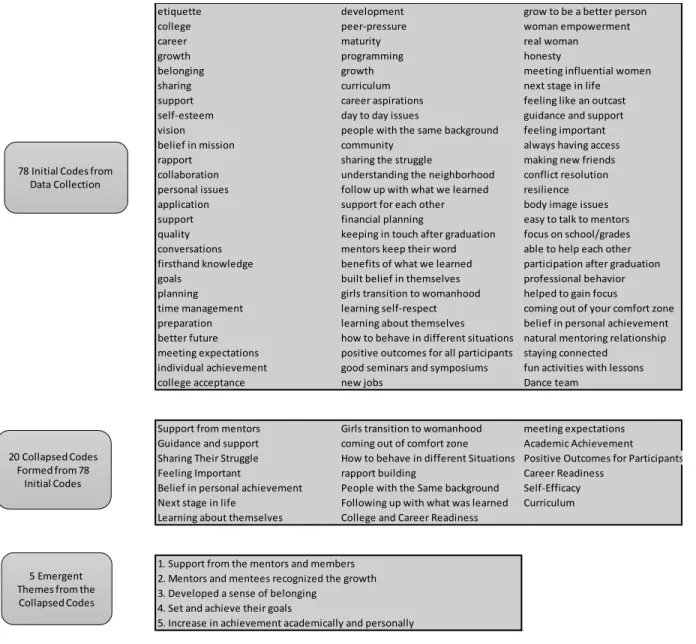
Figure 3. Initial codes, collapsed codes, and emergent themes. ... 83
1
Chapter 1: Introduction
The education system faces many challenges with today’s youth. Far too often youth come to the classroom with myriad issues that have little or nothing to do with education. These issues frequently impede their ability to focus fully on tasks and cause them to be unsuccessful in the educational setting. Once the issues that are hindering the youth’s abilities are defined, the youth is categorized as at-risk (Hamby, Grych, & Banyard, 2018).
At-risk is the term used for youth who have extenuating circumstances that predict they will not successfully transition from secondary education to postsecondary education or the workforce. At-risk factors can be physical, mental, or emotional issues that have an adverse effect on the youth (Centers for Disease Control and Prevention [CDC], 2018; Wesely, Dzoba, Miller, & Rasche, 2017). These factors are magnified in urban areas with families with low socioeconomic status and among youth who are bombarded with information on social media. In an effort to address the at-risk factors in this demographic, many schools and communities have developed mentoring programs (CDC, 2017). The purpose of these mentoring programs is to provide the students in urban setting with another caring adult who can help to guide the youth, help to make good choices, manage their emotions, and prepare for the future (Lakind, Eddy, & Zell, 2014; Mann, 2013). The scale of mentoring programs ranges from small neighborhood organizations to larger national organizations, like Big Brothers and Big Sisters of America.
The mentoring program goals is normally to help the youth to develop academically and to build on their resilience and self-efficacy. Self-efficacy can be attained in a variety of ways and refers to a sense of accomplishment and pride through personal experiences in academics, athletics, or other activities (Deutsch, Reitz-Krueger, Henneberger, Futch Ehrlich, & Lawrence, 2017; Dowd, Harden, & Beauchamp, 2015; Schwartz, & Rhodes, 2016). Self-efficacy can be
2
developed within social circles. If youth participate in events like sports, debates, or challenges in their social settings, hearing people cheer them on and demonstrating that they believe in them helps produce self-efficacy. Self-efficacy can also be developed vicariously when someone else believes in another person’s ability to achieve (Deutsch, Reitz-Krueger, Futch Ehrlich, & Lawrence, 2017). Through encouragement from someone whose opinion is valued, youth begin to believe in their ability to achieve, which develops self-efficacy. Mentoring programs are important to this process because they provide vicarious social development of academic achievement and help to facilitate the development of self-efficacy (Silveira & Boyer, 2015)
Mentoring programs have many components to address the issues of participants. The goal is to offer motivation, goal setting, support, training, coaching, and direction (Schwartz, & Rhodes, 2016; Mann, Smith, & Kristjansson, 2015; Tolbert, 2015). Another benefit of mentoring programs is access to resources that may not otherwise be readily available to the participants of the program. Providing access to technology and professional advice is a great benefit to youth who have been identified as at-risk (Gordon, & Cui, 2014; Smith, Newman-Thomas, &
Stormont, 2015; Tolbert, 2015). This access helps to close the achievement gap among youth in low socioeconomic areas and those in more affluent areas (Sullivan, & Larson, 2010). Providing these resources helps the participants set educational, career, and life goals to be able to move forward in their endeavors (Leu et al., 2015). This access helps to leverage opportunities that facilitate the development of high academic achievement and self-efficacy that will help the participants’ transition to adulthood.
Background, Context, History, and Conceptual Framework for the Problem
Mentoring organizations are not a new concept. There are many nationwide mentoring programs that have been in business for years, such as Boys & Girls Clubs that was founded in
3
1860, the YMCA established in 1844, and Big Brothers and Sisters established in 1904. These organizations had a simple purpose, to provide youth with a safe place to go afterschool. They provided guidance and support to the members of the organization while providing programming to help the youth to develop into productive citizens.
Personal Experience as a Mentor
My experience as a teacher and a school counselor for middle school youth, age 11 to age 14, has shown me that it is necessary to provide these youths with a safe place to express
themselves and acquire the tools necessary to make sound decisions, think critically, resolve conflicts, and solve problems. These youths live in a community that has a majority low
socioeconomic population and, therefore, they have few resources but numerous ways to indulge in behavior that is not conducive to transitioning successfully into adulthood. Those vices
include but are not limited to drugs, alcohol, gangs, and prostitution. Therefore, I created a girl’s empowerment group and developed a curriculum to use with the girls who participated in the group.
The group met every two weeks with a designated topic in mind. I would have two meetings about the topic, and on the third meeting we would invite a guest speaker from the community to present on the topic. In the first few years of the group, the girls were in sixth grade to eighth grade, which is ages 11 to 14. The program continued to grow because the school I worked at was a K–12 school, and these girls continued at the school. At one point we provided mentoring to at-risk girls from Grade 6 to Grade 12.
Mentoring at-risk girls became very important to me as we continued to grow because I saw the impact it had on the graduates who participated consistently. At this juncture, the older girls served as peer mentors to the younger girls. We gave them training and met with them in
4
smaller groups to help them to problem solve and provide guidance on conflict resolution for the younger girls. This helped both groups of girls. The younger girls felt that they had another layer of support on campus and the older girls felt more self-assured and realized that their actions had an influence on the younger girls, which caused them to become more cognizant of the choices they were making.
Expansion of the Mentoring Program
The mentoring programs branched out and began to participate in workshops and seminars in the community as guests and as hosts. We attended a variety of symposia and seminars and presented information at similar venues in the community. This allowed the
participants in the program to see women from the same community who successfully navigated the issues they faced and had success in their personal and professional lives. I began to think of what an impact we could have on the community if we were to expand out of the school and developed a community outreach program. Therefore, I began to develop a plan of action to provide our program to the community at large along with the existing mentors in the program.
We partnered with the local recreation center in the neighborhood where the school is located. We began to present seminars and symposia on common issues that the at-risk girl of color faced in the community. Parents were required to sign their child up to participate in the seminars or symposia and give approval for their youth to participate in the topic of the day. We were able to reach substantially more at-risk girls through this avenue; however, the
inconsistency with which some of the at-risk girls attended the seminars and symposia hindered the type of growth and progress we desired for the at-risk girls who attended this venue. The major impact was still in the school setting; however, the partnership with the recreation center still exists and efforts are being planned to increase the attendance at this venue.
5
Social Cognitive Theory
This study is framed in part by social cognitive theory. Social cognitive theory suggests in order for a person’s self-efficacy to increase, the person must experience successful
performance of any kind, witness another person’s success, or be encouraged by others, and have positive physiological factors (Bandura, 1986). These can increase his or her own self-efficacy (Bandura, 1986). These experiences cause the individual to have feelings of value and worthiness that motivate them to make better decisions in order to have that feeling again.
Self-efficacy refers to an individual’s belief in his or her capacity to execute behaviors necessary to produce specific performance goals (Bandura, 2001). Self-efficacy was a major predictor of academic, social, and emotional success in prior studies (Richardson et al., 2012; Robbins et al., 2004). The ability to demonstrate the application of self-efficacy should transfer to all areas of a person’s life, both personal and professional. It is an intrinsic characteristic that determines a person’s ability to self-regulate, self-motivate, and become self-sufficient in his or her day-to-day life. This study will focus on the academic achievement and development of self-efficacy in girls who have been identified as at risk in an urban setting. There is limited research on the effect of gender on the development of self-efficacy (Panadero et al., 2017); therefore, several researchers have suggested that more research in this area is necessary (Herrera, DuBois, & Grossman, 2013; King et al., 2018; Peifer, Lawrence, Williams, & Leyton-Armakan, 2016).
Social Development Model
The social development model is based on the concept that the behavior patterns of children are acquired through connections with family and community surroundings (Bandura, 1997). Both prosocial and antisocial personal development is formed through the child’s development of appropriate or inappropriate bonds and attachments to the social setting when
6
they engage with those in their environment (Hawkins & Weis, 2017). The formation of positive bonds with those in their social setting promotes the belief that the behaviors conform to the norms, values, and beliefs recognized by the community (Hardy, Bean, & Olsen, 2014). Children learn prosocial behavior when the behaviors, norms, and values displayed by the community are prosocial. Correspondingly, children learn antisocial behavior when the behaviors, norms, and values of the socializing unit are antisocial. While youth develop bonds with their families and communities, in the early stages of life, family members are the primary community influencing youth’s socialization style.
The development of antisocial behavior, as described by the Diagnostic and Statistical Manual (DSM), results from inadequate attachment to the primary care giver in the early stages of life (Hardy, Bean, & Olsen, 2014). Proper attachment in the early stages of life should lead to prosocial behavior that helps youth develop positive factors that enable them to have resilience and build self-efficacy. On the contrary, improper attachment in the early stages of development will lead to antisocial behavior and an increase in at-risk factors that impede the youth’s ability to make good choices and, instead, develop low self-esteem and low resilience. Once youth become school-aged that influence extended to their school, peers, and communities (Gross, Stern, Brett, & Cassidy, 2017). It is important to understand that antisocial behavior is not only isolating oneself from the family or community, but also partaking in behaviors that are not acceptable in all social settings.
Healthy development of youth is key to successfully transitioning to adulthood. Being able to bounce back from a setback has become increasingly important. The current generation of youth have an overwhelming need to reduce the at-risk factors in their lives and develop
7
2017). The need to fit in and the approval of others has increased dramatically with the
development of social media. It has also become increasingly difficult for parents to stay abreast of all of the different platforms youth use to communicate. Some proponents believe that social media should be added to at-risk factors for youth (Kim, Oesterle, Catalano, & Hawkins, 2015). This makes it essential for researchers to determine the relationship between at-risk factors and protective factors. The ability to identify recurring themes, issues, and ideation will be beneficial for promoting academic achievement and self-efficacy of at-risk girls of color in an urban
setting.
Statement of the Problem
The problem is a lack of information regarding the development of self-efficacy and academic achievement resulting from long-term participation—six to 12 months—in mentoring programs for girls of color in urban settings. The uncertainty that comes with adolescence is difficult for most students. Adolescence is particularly difficult for young girls in urban setting with the addition of issues that are considered at-risk factors for all students (Deutsch, Reitz-Krueger, Henneberger, Futch Ehrlich, & Lawrence, 2017; Hamby, Grych, & Banyard, 2018; Lakind et al., 2014; Mann, 2013). Without proper guidance and support, at-risk factors can lead to negative self-esteem, and poor academic performance and can counter the development of self-efficacy. The development of self-efficacy—beliefs about one’s capabilities to organize actions—exert control over one’s performance, and achieve one’s goals in each situation, results in positive performance outcomes (Bandura, 1989). Therefore, the development of resilience in the face of adversity in order to achieve one’s goals is paramount to the success of girls of color in urban settings. Development of resilience and efficacy fosters the ability to cultivate
self-8
control, willpower, and positive outcomes, which results in an optimistic outlook on future success (Bandura et al., 2001).
Purpose of the Study
The purpose of this study was to determine if long-term participation in a mentoring program lasting six to 12 months fosters an environment that encourages girls of color who have been identified as at-risk to excel academically and develop the belief that they can achieve their long-term goals and acquire strategies to effectively navigate challenges they may face in the future.
Research Questions
The research question that guide this study are as follows:
RQ1: What are the experiences of mentors and the participants regarding mentoring programs and development of academic achievement and self-efficacy in at-risk girls of color in an urban setting?
Rationale and Relevance of the Study Achievement Gap in Girls of Color
The foundation of this study is an achievement gap between girls of color who have been identified as at risk in an urban setting and their counterparts in more affluent areas. This
phenomenon is attributed to a lack of social capital, such as access to another caring adult who can help youth learn to make good choices, think critically, and become resilient (Cassidy, 2015; Dray et al., 2017; Honicke & Broadbent, 2016; Steese, Dollette, Phillips, & Hossfeld, 2006). These qualities lead to high academic achievement and the development of self-efficacy (Mann, Smith, & Kristjansson, 2015; Neel & Fuligni, 2013; van Rooij, Jansen, & van de Grift, 2017).
9
Increasing Community Diversity
There is increasing diversity in communities today. Additionally, the number of youth who harm themselves because of the stimuli they are exposed to daily is increasing (CDC, 2017). The development of social media provided a platform for people around the world to be
connected. Unfortunately, social media has also provided the opportunity for people all over the world to share their opinions whether they are solicited or not. These unwelcomed opinions, coupled with the at-risk factors girls of color identified as at-risk in an urban setting already face on a daily basis, can cause long-term damage to the youth’s esteem, image, and self-worth, which in turn decreases the likelihood that they will transition to adulthood successfully (Oman, Vesely, Aspy, & Tolma, 2015). For this reason, researchers must find different avenues to help youth develop resilience, which helps lead to the development of high academic
achievement and self-efficacy.
Changes in Family Structure
An additional motivation for this study is my experience as a classroom teacher in an urban school district in which the majority youth were identified as at-risk for a variety of reasons. Most of my students were from families of low socioeconomic status in a community that was inundated with poverty, violence, drug use, and other factors that affected their ability to excel academically and develop self-efficacy (CDC, 2018). This study is also significant to me because this is the community is similar to the one I grew up in, and it has changed significantly since my childhood, as have most urban communities in the United States.
Additionally, the typical household has transformed. Many students are either in a single parent home, living with other family members, or in government systems. This study may help
10
the education community to develop programs that focus on the needs of girls of color who have been identified as at risk in an urban setting
Benefits of the Study for Stakeholders
The results of this study may benefit the field of education by providing new mentoring program developers increased understanding of what attributes to include or exclude from their mentoring program frameworks for this specific population. A qualitative research approach was used to answer the research question. The researcher will collect data from various sources to illustrate the experiences of the participants regarding the effectiveness of the mentoring program, which is focused on the development of academic achievement and self-efficacy.
This study may help researchers examine the effect mentoring programs have on at-risk girls of color in an urban setting regarding the academic achievement and the development of self-efficacy. Having another caring adult or mentor in the lives of youth is important to me because as a youth in an urban community, I was in need of mentors and role models who could help me understand that, although my surroundings were dire, I could still achieve academically and learn to become independent through good decision making and critical thinking (Graves, Sentner, Workman, & Mackey, 2011).
Significance of the Study
This study is significant because there is insufficient literature available that on participants’ and mentors’ perspectives on the effectiveness of mentoring programs (Tolan, Henry, Schoeny, Lovegrove, & Nichols, 2014). With the increase in the development of
mentoring programs to address the many issues faced by girls of color who have been identified as at risk in an urban setting, which result in an increase in low self-esteem, low self-image, and higher risk of self-harm, it is important to find methods to help them excel academically and
11
improve critical thinking skills and resilience, which are important to the development of self-efficacy (Bandura, 2013). This study may provide important feedback from mentors on strategies that are effective and strategies that need more development to be beneficial to girls of color in an urban setting who have been identified as at risk. This insight is important because most often in mentoring programs the mentors are the ones who implement the strategies provided by the program developers.
Definitions of Terms
The definitions of critical terms used in the study are as follows:
Academic achievement: Academic achievement represents performance outcomes that indicate the extent to which a person has accomplished specific goals that were the focus of activities in instructional environments, specifically in school and higher education (Spinath, 2012). School systems mostly define cognitive goals that either apply across multiple subject areas or include the acquisition of knowledge and understanding in a specific intellectual domain (Spinath, 2012). High academic achievement is an indication that the individual will successfully transition to adulthood (Bandura, 2013).
At-risk: An at-risk youth is a child who is less likely to transition successfully into adulthood (CDC, 2018). Success can include academic success and job readiness, as well as the ability to be financially independent. It also can refer to the ability to become a positive member of society by avoiding a life of crime (CDC, 2018).
At-risk factors:At-risk factorsare characteristics at the biological, psychological, family, community, or cultural levels that precede and are associated with a higher likelihood of negative outcomes (CDC, 2018). Negative outcomes include but are not limited to not graduating from secondary education, becoming a teen parent, or low socioeconomic factors.
12
Girls of color: Girls of color are girls of any race except Caucasian American. For the purposes of this study, girls of color will include African American and Hispanic American girls between the ages of 18 and 22 who have been identified as at-risk in an urban setting. These girls of color are graduates of the Mentoring Program GIRL, which is a pseudonym.
Mentor/additional caring adult:A mentor/additional caring adult is an experienced and trusted person who gives another person advice and help, especially related to work or school, over a period of time (Cambridge English Dictionary, 2018). The presence of a mentor or additional caring adult cultivates a desire for academic achievement and the ability to become resilient which aids in the development of self-efficacy (Abbott, 2013; Guryan et al., 2017; Larsson, Pettersson, Skoog, & Eriksson, 2016; Spencer, & Liang, 2009).
Protective factors: Protective factors are characteristics associated with a lower
likelihood of negative outcomes or that reduce a risk factor’s impact. Protective factors may be seen as positive countering events (CDC, 2018). Protective factors come from the home, school, and/or community. The more ties the person has to family, school, and community, the more they are exposed to more protective factors that counter the effects of at-risk factors (Barry, Clarke, Morreale, & Field, 2018; Gordon & Cui, 2014; Houser, 2016; Steese, Dollette, Phillips, & Hossfeld, 2006).
Self-efficacy: Self-efficacy is the belief people have in their own abilities, specifically their ability to meet challenges and complete a task successfully (Akhtar, 2008). When youth are taught to think critically, problem solve, and make good choices, there is a greater chance of their transitioning successfully into adulthood.
Urban setting:An urban area is the region surrounding a city. Most inhabitants of urban areas have nonagricultural jobs. Urban areas are very developed, meaning there is a density of
13
human structures such as houses, commercial buildings, roads, bridges, and railways. Urban area can refer to towns, cities, and suburbs (National Geographic Society, 2018). In this study, the urban setting is in Texas.
Assumptions, Delimitations, and Limitation Assumptions
Assumptions are views and opinions that are important to conducting the study although they cannot be proven (Simon & Goes, 2013). One assumption of this study, which was
primarily completed through a semi structured interview process, is the honesty of the
participants because the participants were solicited and had the option of not participating in the study. I assume that the participants who respond to the invitation to participate will be
enthusiastic about participating and providing information about the program. A stipulation is that the participants be girls of color who are high school graduates who participated in the The Girl mentoring program. I assume that the participants can recall some of the activities that they participated in during their involvement in the program well enough to give competent answers to the interview questions.
Mentors in the program also participated in this study. I assume that they will be open and honest about their opinions due to their vested interest in the program. I assume that all of the mentors who choose to participate will make themselves available to complete the
questionnaire and conduct the semi structured interview in the time designated. Finally, I assume the mentors will thoughtfully reflect on the information presented in the program and offer suggestions for enhancing the program for future participants.
14
Limitations
The primary limitations of this study are that I had no control over which of the graduates of the program responded to the invitation to participate in the study. An additional limitation is only having been able to solicit participation from the graduates who participated in The Girl mentoring program, which is a pseudonym. The mentor perspective was limited to the mentors who participated in the program as well. An additional limitation is that I have mentoring experience, and therefore, I have some preconceived ideas about the impact the program has on the graduates. Finally, analyzing this particular program could only provide comparisons to the same population of participants in order to validate the results.
Scope and Delimitations
This study is based on the perspectives of mentors and mentees who respond to the invitation to participate in the study. Other influential adults in the graduates’ lives, such as parents, teachers, or community organizations, were not considered in this study. Mentors and mentees will be asked questions about their experience and interactions with one another. What they feel was effective in the program and what they believed to be counterproductive. Finally, the mentees will be asked how participation in the program impacted their ability to achieve academically and to make good choices in their day-to-day lives. The outcomes of this study are applicable to the participants in this organization.
Summary
This study was designed to determine if long-term participation in a mentoring program for six to 12 months fosters an environment that encourages girls of color who have been identified as at risk develop the belief that they can achieve their long-term goals and acquire strategies to effectively navigate challenges they may face in the future. The data collected from
15
the mentors and the participants of the mentoring program may help to demonstrate the effects of the program on the development of academic achievement and self-efficacy. It provided insight into what parts of the mentoring program were most beneficial to the development of these two characteristics in girls who participated in the mentoring program.
This section consisted of synopsis of the research study. I provided the statement of the problem faced by this population, the background, context, history, and conceptual framework for the problem. Additionally, I provided the purpose of the study, the basis of the study’s
framework, and the pertinent definitions, assumptions, limitations, and delimitations of the study. Additionally, I included the research questions and the method that will be used to collect data. Chapter 2 will provide a summary of the relevant literature that relates to this study. The
literature review will concentrate on how mentoring programs affect academic achievement and the development of self-efficacy in girls of color who have been identified as at risk in an urban setting. Chapter 3 will outline the research question, the purpose and design of the study, the research population and sampling method, instrumentation, data collection, identification of attributes, data analysis procedures, limitations and delimitations, validation, expected findings, ethical issues, and finally a summary of the study.
16
Chapter 2: Literature Review
Youth face many obstacles in today’s society that can impede academic success and the development of self-efficacy. Collectively, these obstacles are called at-risk factors. At-risk factors are things or events that interfere with a youth’s smooth transition into adulthood (CDC, 2017). To address this issue, there has been an increase in school and community-based
mentoring programs to provide youth with an additional caring adult who can help them use critical thinking and problem solving to make good decisions, as well as develop their self-efficacy and belief in their ability to achieve academically (Mann, Smith, & Kristjansson, 2015; Dowd, Harden, & Beauchamp, 2015; Lakind, Eddy, & Zell, 2014).
There is a lack of information regarding the development of self-efficacy and academic achievement due to participation for six to 12 months in mentoring programs for girls of color in urban settings. The uncertainty that comes with adolescence is difficult for most students. With the addition of issues that are considered at-risk factors for all students, adolescence is
particularly difficult for young girls in urban settings (Deutsch et al., 2017; Hamby, Grych, & Banyard, 2018; Lakind et al., 2014; Mann, 2013). Without proper guidance and support, at-risk factors can lead to negative self-esteem and poor academic performance and counter the
development of self-efficacy. Self-efficacy is beliefs about one’s capabilities to organize actions, exert control over one’s performance, and achieve one’s goals, and results in positive
performance outcomes (Bandura, 1989). Therefore, the development of resilience in the face of adversity in order to achieve one’s goals is paramount to the success of girls of color in urban settings. Development of resilience and self-efficacy fosters the ability to cultivate self-control, willpower, and positive outcomes, which results in an optimistic outlook on future success (Bandura et al., 2001).
17
Examining the literature about mentoring programs, academic achievement, and the development of self-efficacy involved obtaining peer-reviewed journal articles and previously submitted dissertations. The Concordia University Library provided access to several databases, such as ERIC, Education Research Complete, and Education from Sage. In addition, Google Scholar was used to retrieve journal articles. Books from a public library were used, as were course textbooks from Concordia University and previously attended schools. Key terms and phrases included mentoring programs, at-risk youth, self-efficacy, academic achievement, social cognitive theory, at-risk factors, protective factors, at-risk population, and the development of self-efficacy. These searches produced approximately 200 journal articles, books, dissertations, and reports; however, not all the literature attained was significant to the current study.
In this paper, at risk will be defined and the factors contributing to it will be listed and explained (CDC, 2017). Additionally, the chapter will include a discussion of how these at-risk factors hinder the growth and development process of students. In contrast, protective factors help students build academic achievement and self-efficacy. It will also include a discussion of how these factors can help to counteract the at-risk factors. In addition to uncovering at-risk factors that inhibit the development of academic achievement and self-efficacy in girls of color and the protective factors that counteract those at-risk factors, this paper will discuss a possible solution to some of these issues (Eddy et al., 2017). The proposed solution is the involvement of a caring adult who can build a relationship with youth, teach them strategies to problem solve, and help them become socially and emotionally resilient. The caring adult in these relationships is a mentor for the students from a reputable organization with results-based curriculum and strategies that have been properly vetted to ensure the desired result of the mentorship (Eddy et al., 2017).
18
In this section, I will offer an analysis of the literature related to the factors that contribute to the identification of youth as at-risk and the protective factors that counteract those factors. The literature review will open with an explanation of the conceptual framework of the study, followed by a review of research literature and methodology of literature. Next will be a review of the methodological issues and a synthesis of the research findings. Finally, I will critique the previous research and summarize the literature review.
Conceptual Framework
Constructivism is a theory of how knowledge is acquired (Carpendale, 2019; Charmaz, Lewis, & Mueller, 2019; Garneau & Pepin, 2015). It originates from Piaget’s system of
knowledge, known as schemata (Carpendale, 2019; Charmaz, Lewis, & Mueller, 2019; Garneau & Pepin, 2015). Proponents of constructivism contend that people attain understanding from relationships connecting their experiences and their ideas. The cognitive structure allows learners to look further than the information provided and make sound decisions based on their mental models and schematic thinking (Grant, 2016; Krahenbuhl, 2016; Ratcliff, 2018; Rob & Rob, 2018). The learning theory originated from Piaget’s belief that play was an essential part of learning for children, whereas others saw play as pointless and insignificant. Piaget believed that play was a necessary element of children’s cognitive development (Amineh & Asl, 2015; Carey, Zaitchik, & Bascandziev, 2019; Dennick, 2016).
Piaget’s constructivist learning theory focused on two primary processes that people use to attain knowledge: accommodation which occurs when we change our existing schema based on new information, and assimilation, which as a process in which people incorporate new information and experiences into their pre-existing ideas or world view (McKinley, 2015; Ratcliff, 2018; Weimer, Dowds, Fabricius, Schwanenflugel, & Suh, 2017). People create
first-19
hand knowledge through their life experiences. As learners assimilate, they combine new experiences with their background knowledge without shifting their structure. This happens when learners’ experiences are associated with their core values and beliefs. It can also occur when learners experience thought process miscues that cause them to hold on to defective perceptions instead of correcting the miscues (Grant, 2016; Ratcliff, 2018; Weimer et al., 2017). If the learner experiences an event and they do not understand the significance, misunderstand the response from other people, or believe that the occurrence was an anomaly, the event may be rendered insignificant to their beliefs and values (Gautam, Williams, Terry, Robinson, &
Newbill, 2018; McKinley, 2015, Schrader, 2015).
Significance of the learner’s culture and background.Constructivism urges learners to draw their own conclusions regarding what is acceptable based on their background, culture, values, and belief systems. Cultural attributes accounted for in constructivism theory include linguistics, reason, and numerical classifications (Charmaz, 2017; Dennick, 2016; Krahenbuhl, 2016). These attributes are acquired by the learner as a participant in a specific culture. These attributes hold true for the duration of the learner’s lifetime; however, the learner can learn attributes from other cultures if they are exposed to them in a meaningful way (Charmaz, 2017; Dennick, 2016; Krahenbuhl, 2016).
The quality of learners’ interactions within their social settings is paramount to the development of sound values and belief systems to become well-informed members of their societies. Absent relations with knowledgeable members of their social settings, the acquisition of meaning of their social systems is impossible, as is the use of those systems in day-to-day life (Amineh & Asl, 2015; Schrader, 2015). The development of cognitive skills and the application of those skills through interaction of the child with other children, adults in society, and the
20
physical world around them is one of the main reasons that Piaget believed play is important to the growth and development of youth. They learn skills such as sharing, conflict resolution, and fairness through interaction with others in their age group (Carey, Zaitchik, & Bascandziev, 2015; Dennick, 2016; Grant, 2016). For this reason, constructivists assert that it is invaluable to consider the background and culture of the child when introducing new information throughout the course of learning development. This background aids in the formation of knowledge and truth that the child produces, learns, and retains in the learning process (Rob & Rob, 2018; Weimer et al., 2017).
Social constructivism. Social constructivists assert that individuals learn from others based on interactions among the group (Amineh & Asl, 2015; McKinley, 2015; Schrader, 2015). Cognitive meaning and learning rely on interactions with others in a community. Meaning for individuals is highly dependent on the culture of the group they interact with most. The validity of this learning also depends on how often individuals interact with those who are well-informed and well-educated in the community from which they take these learning cues (Amineh & Asl, 2015; McKinley, 2015; Schrader, 2015). Social constructivism suggests there is no new learning, all learning is related existing information and is extended into and combined with prior
knowledge to form new knowledge. In order to consider the implementation of new knowledge as successful, the learner must join the old precept with the new precept to incorporate a new learning experience. Learners make meaning from their own prior knowledge in addition to the new experience, and therefore not every learner will draw the same conclusions from the same stimulus (Carey et al., 2017; Charmaz, 2017; Dennick, 2016). Constructivist learners develop a unique and individualized viewpoint of the world in conjunction with the values and beliefs of
21
their cultures. For this reason, it is important to understand the learner’s background when following the constructivist conceptual framework.
Learning through interaction. As a learner interacts with those in his or her culture and
community through shared experiences and open discussions, the learner applies the new information to his or her existing belief system to form new knowledge and develop a new approach to problem solving, critical thinking, and analytical thought processing. The primary premise is the learner is a part of a larger community that constructs meaning through
interactions with the larger community; it is not an intrinsic process but a result of the large community and its belief and value systems (Krahenbuhl, 2016; Ratcliffe, 2018). Although most learning takes place in the larger community or social group, there is still a uniqueness and complexity for the individual learner.
Social constructivists believe that learners’ ideas of reality are based on their own experiences with the world around them and the people in their social community (Amineh, 2015; Charmaz, 2017; Schrader, 2015). There is no pre-existing reality because until learners experience the activities, they have no frame of reference of how to make meaning of the activities. However, the people in the social community create their own principles, values, and beliefs based on their culture and community. When discussion is commingled with practical activity, this is the catalyst for intellectual growth (Amineh, 2015; Charmaz, 2017; Schrader, 2015).
Context and environment. The context and environment where intellectual constructs
are developed are key to the meaning that the learner attaches to the activity. When intentionally attempting to transfer knowledge, the information presented should always be challenging to the learner (background (Gautam et al., 2018; McKinley, 2015; Rob & Rob, 2018). This includes the
22
level of the information presented according to the learner’s age, maturity level, and cultural background (Gautam et al., 2018; McKinley, 2015; Rob & Rob, 2018). An additional factor in learners’ abilities to construct meaning is their motivation. Is the information presented relevant to the learner? Is it information that will have a direct impact on the growth and development of the social community to whom it is presented? These questions help in understanding whether the topic will affect the learner’s decision making, conflict resolution, or analytical though processes (Gautam et al., 2018; McKinley, 2015; Rob & Rob, 2018; Weimer et al., 2017).
Confidence in their ability to accomplish the goal of the learning has a direct effect on the amount of effort and the level of engagement learners have with the social community as they collaborate about the topic of discussion. This ability or inability to engage originates from the learner’s personal knowledge. If the learner has had an unsuccessful experience with the topic of discussion, subconsciously he or she will be hesitant to engage for fear of failure (Dennick, 2016; Garneau, Williams, Terry, Robinson, & Newbill, 2018). This phenomenon is called the
zone of proximal development. The principle was introduced by Vygotsky, who contended that learners participate at a level that is just above their current level of understanding. The zone of proximal development is defined as the distance between the actual developmental level as determined by independent problem-solving and the level of potential development as
determined through problem-solving under adult guidance or in collaboration with more capable peers (Ratcliff, 2018; Schrader, 2015). Scaffolding is used to extend the learner’s understanding further than the constraints of physical development to the level at which the development process has delayed the learning process. If the current experience is successful, it increases the learner’s confidence and their ability to master complicated task and facilitates the learner’s urge to take on more complicated challenges.
23
Summary. Constructivism is a conceptual framework that contends that understanding
and knowledge is established by learners’ experiences with the world around them. The world around them includes the people in their culture and community as well as others they interact with on a regular basis. In order to experience a shift in thinking, people must have new, meaningful experiences that can be reconciled with their previous beliefs about the event (Amineh & Asl, 2015; Dennick, 2016; Garneau & Pepin, 2015). There is also the option to disregard the new information as useless, which can cause the learner to become stunted in their growth intellectually.
Constructivist learning occurs by using new information combined with background knowledge to create a new idea or belief to be used in the future. This process is similar to a spiral (McKinley, 2015; Rob & Rob, 2018; Schrader, 2015). Learners use background
knowledge to understand new information and determine if it is beneficial to their growth. Once they determine if they will combine, apply, or disregard the new information, either a new idea, concept, or value is formed, or the learner retains the old precept. Perhaps the most important aspect of constructivism is that it requires learners to have authentic experiences with the world around them in order to draw their own conclusions about the value of the information
experience (Amineh & Asl, 2015; Carey et al., 2017; Garneau & Pepin, 2015; Dennick, 2016).
Review of Research Literature and Methodological Literature
This literature review is a thorough examination of the literature focused on the experiences of girls of color who have been identified as at-risk in an urban setting and their participation in a mentoring program. The at-risk and protective factors that contribute to the development of resilience, self-esteem, self-awareness, and self-regulation is explained through the literature. Additionally, mentoring programs’ effects from the participants’ perspectives and
24
the mentors’ perspectives, in conjunction with the importance of the mentor/mentee relationship, are explored.
At-risk and protective factors. A person is considered at risk if there are aspects of their
lives that predict an unsuccessful transition into adulthood (CDC, 2017). Many factors can lead to unsuccessful outcomes, so virtually every young person can be characterized as at risk. The measure of success is related to the young person’s ability to achieve academically, build self-esteem, or be prepared to achieve success in postsecondary education through college or career readiness. Successful transition into adulthood is fostered by protective factors in a young person’s life. These factors are the opposite of at-risk factors. They help to build self-esteem, self-efficacy, and academic success. Protective factors help young people become positive and productive members of society (CDC, 2017).
Examples of some of the factors that cause an individual to be identified as at risk are outlined in this section. The protective factors that counter the at-risk factors and support the development of academic achievement and self-efficacy are also outlined. The definition and development of self-efficacy are discussed based on the literature reviewed. Academic achievement is defined and analyzed as it relates to youth defined as at risk. The section also includes discussion of environmental factors and how the presence of a caring adult affects a young person’s ability to have high academic achievement and develop the resilience required to have self-efficacy and smooth transition to adulthood. Various formats for forming mentoring programs are delineated. The significance of the mentor and mentee relationship is examined and the goals and assessment of the effectiveness of the mentoring program are reviewed.
According to the CDC (2017), there are three contributors to at-risk and protective factors; at-risk factors are attributes that cause undesirable outcomes, and protective factors are
25
attributes that lead to desirable outcomes. These contributors are individual, family, and peer or societal factors. The individual factors are characteristics or beliefs within the individual that influence decision-making and behavior. Family factors are beliefs and behaviors that affect the individual’s decision-making ability. Peer or societal factors are beliefs and perceptions from outside influences that affect the way people feel, think, and react to stimulus in their daily decision-making (CDC, 2017).
At-risk factors. Many events in a young person’s life can cause trauma or faulty decision-making or thinking miscues (Wesely et al., 2017). These factors contribute to the delinquency of a young person and can cause lasting consequences. According to CDC (2017), individual at-risk factors fall into three primary categories: individual, family, and peers.
The individual at-risk factors youth may face are a history of violent victimization, attention deficits, hyperactivity or learning disorders, history of early aggressive behavior, and involvement with drugs, alcohol, or tobacco. These at-risk factors have to do with the youth’s environment. Additional individual at-risk factors can affect a youth’s ability to transition successfully into adulthood. These factors are associated with mental and cognitive ability. They include low IQ, poor behavioral control, and deficits in social cognitive or
information-processing abilities. High emotional distress, history of treatment for emotional problems, antisocial beliefs and attitudes, and exposure to violence and conflict in the family are also at-risk factors.
The environment the child grows up in and family belief systems, such as religious beliefs, work ethic, discipline, and independence, can shape how a child responds to stimuli in the world. According to the CDC (2017), risk factors that are associated with the family are authoritarian childrearing attitudes; harsh, lax, or inconsistent disciplinary practices; low parental
26
involvement; low emotional attachment to parents or caregivers; and low parental education and income. These factors are largely based on circumstances surrounding the child within the family.
Other factors have a lasting impact on a youth’s ability to transition successfully into adulthood, including parental substance abuse or criminality, poor family functioning, and poor monitoring and supervision of children (CDC, 2017). These issues are impactful because they have a direct effect on a youth’s attitude and beliefs regarding appropriate and inappropriate behavior. They shape the youth’s worldview and, without proper guidance, are extremely difficult to reverse (CDC, 2017).
School and social settings also have a great impact on children. This is particularly true for adolescents and teenagers. For a period of time, the most influential people in a young person’s life is their peer group; young people’s maturity levels and social media could
contribute to risk factors. According to the CDC (2017), those factors could be associated with delinquent peers, involvement in gangs, social rejection by peers, and lack of involvement in conventional activities. These factors affect school and the community at large.
Some at-risk factors that are more specific to the school environment are poor academic performance, low commitment to school and school failure, community risk factors, and diminished economic opportunities (CDC, 2017). These at-risk factors have a direct impact on the achievement gap between affluent students and their lower socioeconomic counterparts. Oftentimes, in schools in low socioeconomic areas, there are not enough resources available for each student to have an effective learning experience (CDC, 2017). Other factors that are more prevalent in the community are high concentrations of poor residents, high levels of transiency,
27
high levels of family disruption, low levels of community participation, and socially disorganized neighborhoods.
Researchers have shown there is an opportunity for at-risk young people to improve their projected outcomes due to the at-risk characteristics in their lives through mentoring programs (Lakind et al., 2014). Pairing young people with caring adults who can give them sound advice and coping strategies to overcome obstacles they may face, in addition to providing them with guidance a support on managing their social and emotional behaviors, has been impactful in at-risk youths’ lives (Lakind et al., 2014). Mentoring programs help to alleviate the damage caused to youth due to at-risk factors. When youth experience one or more of the listed at-risk factors it can cause them to be underdeveloped academically or in social or emotional maturity (Mann, 2013). The attributes that eliminate at-risk factors are categorized as protective factors. Protective factors support the growth and development of at-risk youth.
Protective factors. Protective factors, as they relate to at-risk young people, are
situations and circumstance that support or strengthen the youth’s ability to achieve
academically, develop emotional regulating skills, or foster social skills, as well as building self-esteem and self-efficacy (Hamby, Grych, & Banyard, 2018). According to the CDC, protective factors include individual, family, and peer factors. Individual protective factors include but are not limited to intolerant attitudes toward deviance, high IQ, high grade point average (as an indicator of high academic achievement), and high educational aspirations. These protective factors are closely affiliated with a youth’s sense of self as it relates to high academic performance.
Protective factors that relate to the youth’s self-esteem include but are not limited to positive social orientation, popularity acknowledged by peers, highly developed social
28
skills/competencies, highly developed skills for realistic planning, and religiosity. Positive affiliation with organizations in the community and within the school setting help youth to develop a sense of belonging that is essential to a successful transition into adulthood. If a child lives in a positive environment, where they feel loved, valued, and supported, these factors can have a positive impact on the student’s decision-making and counter any other risk factors that may exist in other areas. These positive factors help children to make good choices, use critical thinking skills, and problem solve. These protective factors are categorized as family protective factors.
According to the CDC (2017), family protective factors include connectedness to family or adults outside the family, ability to discuss problems with parents, high perceived parental expectations about school performance, and frequent shared activities with parents. These protective factors help to shape youths’ values and belief systems and develop the youths’ worldviews. Other family protective factors are consistent presence of parents during at least one of the following: when awakening, when arriving home from school, at evening mealtime or going to bed, social activities, using constructive strategies for coping with problems (provision of models of constructive coping). These protective factors help the youth to develop resilience and the ability to rebound after a difficult situation or event has occurred.
If children have a positive self-image and resilience, peers and social factors can be positive for them and those in their peer group. Developing strong bonds within their peer and social group will help to combat other risk factors in other areas of the child’s life. According to the CDC (2017), peer and social protective factors include possession of affective relationships with those at school who are strong, close, and prosocial oriented, commitment to school (an investment in school and in doing well at school), close relationships with peers who are not