Clemson University Clemson University
TigerPrints
TigerPrints
All Dissertations Dissertations
8-2019
Examining the Impact of Trauma-Informed Care Training on
Examining the Impact of Trauma-Informed Care Training on
Educators' Knowledge, Attitudes, and Behavior: A Qualitative
Educators' Knowledge, Attitudes, and Behavior: A Qualitative
Study
Study
Emily Smith Schafer
Clemson University, [email protected]
Follow this and additional works at: https://tigerprints.clemson.edu/all_dissertations
Recommended Citation Recommended Citation
Schafer, Emily Smith, "Examining the Impact of Trauma-Informed Care Training on Educators' Knowledge, Attitudes, and Behavior: A Qualitative Study" (2019). All Dissertations. 2450.
https://tigerprints.clemson.edu/all_dissertations/2450
EXAMINING THE IMPACT OF TRAUMA-INFORMED CARE TRAINING ON EDUCATORS’ KNOWLEDGE, ATTITUDES, AND BEHAVIOR:
A QUALITATIVE STUDY
A Dissertation Presented to the Graduate School of
Clemson University In Partial Fulfillment
of the Requirements for the Degree Doctor of Philosophy
International Family and Community Studies by
Emily Smith Schafer August 2019 Accepted by:
Dr. Susan Limber, Committee Chair Dr. Edmond Bowers
Dr. Martha Thompson Dr. Arelis Moore de Peralta
ABSTRACT
According to the National Survey of Children’s Health (NSCH), nearly 35 million children in the United States have experienced one or more types of significant childhood trauma. In the average public school, this statistic translates to as many as half of the students in a given teacher’s classroom. Children exposed to the toxic stress of trauma often experience negative consequences that affect their academic, psychological, social-emotional, and behavioral health. To aid educators in addressing this reality, trauma-informed care practices have increasingly begun to be translated into professional
development opportunities for educators. One such training, Compassionate Schools, has been recently evaluated using the Attitudes Related to Trauma-Informed Care (ARTIC) scale. Comparing pre and post-test scores in a previous study on the ARTIC, researchers found a significant change in the attitudes of participating educators of a standard
deviation. In an effort to clarify and contextualize these results, the current qualitative study involved conducting follow-up semi-structured interviews with ten participants of the Compassionate Schools training who were public school teachers in a southeastern school district in the United States. Findings added to the nascent literature evaluating the impact of trauma-informed care training, by exploring perceptions of changes in
knowledge, attitudes, and behavior of educators who attended the Compassionate Schools training, and by providing recommendations for improvement and additional needed resources to support implementation of the trauma-informed care practices.
This dissertation is dedicated to survivors of childhood trauma.
To the dozens I’ve known intimately: your courage, resilience, and bravery
to fight for the life you deserve inspires my work.
ACKNOWLEDGEMENTS
Thank you to the members of my committee for your time and dedication to making this final product the best it could be. Sue, I am thankful for your guidance, encouragement, and optimism throughout my time in the IFCS program.
As all things in life, this dissertation is a product of community. My parents believe I can do anything. What a gift. May all children be so lucky. Mama, thank you for instilling in me a love of learning, an analytical mind, and critical thinking. Daddy, your unwavering interest and support throughout my life have gotten me here. Thank you both for loving and caring for my children over the last several years, as always.
Angie, Natalia, and Suzie, your friendship, confidence, and encouragement have helped keep me going and grounded and sane. Thank you.
Emily, Laura, and Rachel, there’s no way I would have survived, much less graduated, if you weren’t my cohort. Thank you for commiseration, inside jokes, gifs, nicknames, private text threads, and screen shots. There are so many moments of joy and laughter that never would have happened without you three. We did it!
It is well-known that those closest to us are the ones who sacrifice the most for major achievements to happen. Brandon, Elena, and Benjamin, I love you. Thank you for your patience and understanding while I pursued this dream. I hope I can support you as well in yours. Ellie and Benjos, I will never forget London, Paris, dog sledding, or snowmobiling in the Upper Peninsula. Being your mom is my proudest accomplishment. Brandon, I am so grateful for you. What an insane four years we have had. There’s no one I respect or cherish more than you. Thank you for loving me.
TABLE OF CONTENTS Page ABSTRACT ... ii DEDICATION... iii ACKNOWLEDGEMENTS ... iv LIST OF TABLES ... ix LIST OF FIGURES ... x CHAPTER 1. INTRODUCTION TO THE STUDY... 1
Background ... 2
Statement of the Problem and Significance ... 5
Definitions ... 6
Research Questions ... 9
Theoretical Frameworks ... 10
Trauma Theory ... 10
Transformational Learning Theory... 11
Desimone’s Framework for Effective Professional Development ... 12
Organization ... 14
2. LITERATURE REVIEW ... 16
Overview of Trauma Theory ... 16
Prevalence of Trauma ... 18
Impact of Trauma ... 21
Compassionate (Trauma-Informed) Schools ... 28
Professional Development and Educator Knowledge and Attitudes ... 31
Relationship among Knowledge, Attitude, and Behavioral Change ... 34
Research on Trauma-Informed Care Professional Development in Schools ... 36
Compassionate Schools Spartanburg... 42
Quantitative Pre-Post-Test ARTIC Results ... 46
3. RESEARCH DESIGN AND METHODOLOGY ... .48
Participants ... 48 Procedures ... 50 Measures ... 53 Analysis Plan ... 54 Summary ... 58 4. RESULTS ... 60 Descriptive Statistics ... 60
Research Question 1: Core Features ... 60
Content Focus ... 61
Active Learning ... 63
Coherence ... 65
Duration ... 66
Collective Participation ... 68
Research Question 2: Changes in Knowledge\ ... 70
Previous Educational Exposure ... 70
Prior Knowledge ... 71
Research Question 3: Changes in Attitudes ... 76
Prior Attitudes ... 76
Current Attitudes ... 77
Research Question 4: Changes in Behavior ... 88
Prior Behavior ... 79
Current Behavior ... 81
Research Question 5: Student Impact ... 85
Research Question 6: Changes in School or District-Level Plans ... 89
Research Question 7: Improvement Suggestions ... 90
More Implementation Examples/Success Stories ... 92
Practical Tools and Strategies ... 92
Detailed Mandated Reporting Instruction ... 93
Research Question 8: Additional Resources ... 94
Barriers to Implementation ... 96 Other Themes ... 98 Prevalence of Trauma ... 99 Transformational Learning ... 100 Policy ... 102 Summary ... 104 5. DISCUSSION ... 107
Summary of Results in Desimone’s Framework... 107
Transformational Learning in Compassionate Schools Training ... 111
Other Key Findings ... 113
Resilience Building Relationships ... 114
What Teachers Need ... 115
Increasing Prevalence of Childhood Trauma ... 118
Policy Implications ... 119
State Policies ... 120
Local, District Policies ... 121
School Policies and Procedures ... 124
Teacher Training Implications ... 126
Undergraduate Teacher Education ... 126
Current Educators ... 127
Limitations ... 128
Recommendations for Future Research ... 130
Conclusion ... 131 REFERENCES ... 134 APPENDICES ... 149 Appendix A ... 150 Appendix B... 151 Appendix C... 154 Appendix D ... 157 Appendix E ... 158 Appendix F ... 160
LIST OF TABLES
Table Page
1. Prevalence of ACEs by Category from 1998 Adverse Childhood
Experiences Survey 28
2. Prevalence of ACEs by Category in 2010 from the Behavioral
Risk Factor Surveillance System 29
3. Coding Example Using Directive Content Analysis 64
4. Coding Example Using Conventional Content Analysis 67
5. Presence of Core Features of Effective Professional Development 70
6. Collective Participation Rates 77
LIST OF FIGURES
Figure Page
1. Proposed core conceptual framework for studying the effects of
professional development on teachers and students 22
2. Domains of Impairment in Children Exposed to Trauma 26
3. Summary of Core Training Modules for Educators 54
4. Results of Compassionate Schools Training in Desimone’s
Framework for Professional Development 117
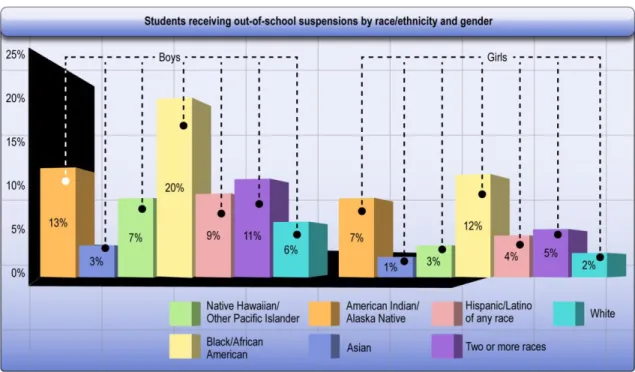
5. Impact by race and gender of the use of out-of-school suspensions,
2011-2012 131
6. Impact by disability status and gender on the use of out-of-school
CHAPTER ONE
INTRODUCTION TO THE STUDY
Childhood trauma is both common and profoundly detrimental to developmental outcomes (Bethell, Newacheck, Hawes, & Halfon, 2014; Feletti & Anda, 2010; Perfect,
Turley, Carlson, Yohanna, & Saint Gilles, 2016; Perry, 2001). In a nationally
representative survey conducted by Finkelhor and colleagues (2005) from December 2002 to February 2003, more than half of children and youth ages 2 to 17 years had experienced a physical assault during the previous year. One out of three had been a witness to violence; one out of eight had experienced abuse or neglect from caregivers; and one out of twelve had been sexually victimized. Only 29% of children and youth had no direct or indirect victimization. In a follow-up study conducted from August 2013 to April 2014, estimates of youth exposure rates to trauma ranged from 57% to 75% depending on the type of trauma (Finkelhor, Turner, Shattuck, & Hamby, 2015). Perfect and colleagues (2016) found similar prevalence rates, estimating that two out of three students had experienced at least one traumatic event before the age of 18.
Extensive research on adverse childhood experiences (ACEs) has also confirmed the pervasiveness of childhood trauma. Recent surveys indicate 45% of all children nationally have experienced at least one ACE, with significantly higher rates among black (61%) and Hispanic (51%) children (Sacks & Murphey, 2018). ACEs are experiences such as physical or sexual abuse, physical or emotional neglect, loss of a parent to death or divorce, or living in a household with an addict or mentally ill caregiver. Blaustein (2013) likens childhood trauma to a prevalent, complex virus that
has the potential to negatively impact brain development and functioning, well-being, nutrition, risk for other illnesses, and ultimately mortality (Felitti & Anda, 2010; Perry, 2001). In an effort to combat these negative effects, trauma-informed care approaches are being increasingly employed, and recently are being implemented and evaluated as potential school-wide interventions (Craig, 2016).
Background
Compassionate Schools (Hertel, Frausto, & Harrington, 2009) is a trauma-informed care framework aimed at moving educators in public schools toward more empathetic, informed, and evidence-based practices in the way they engage with students. The Compassionate Schools initiative was launched in Washington State in 2008 (Hertel, Frausto, & Harrington, 2009). The theoretical underpinnings of the training are based on evidence accumulated from various fields of study, such as trauma theory, neuroscience, and resilience, and significant convergent research about the impact of trauma on
children. Compassionate Schools training incorporates knowledge from socio-emotional curricula, such as mindfulness, meditation, and self-care; from the vast research on ACEs, such as how trauma manifests in ‘negative’ classroom behaviors (Blaustein, 2013); from neuroscience, such as the impact of trauma on brain development and function (Perry, 2001); and from research on resilience (Bethell et al., 2014), such as effective emotional regulation strategies, the importance of physical activity, and connection.
Compassionate Schools training, used for more than 10 years now, continues to be a statewide program in Washington supported by the Office of Superintendent of Public Instruction (Hertel et al., 2009). Another project based in Louisville, Kentucky is currently being conducted in partnership between the University of Virginia and
Jefferson County Public Schools. It has received millions of dollars in grant funding from the Sonima and Hemera Foundations for a seven-year project in Louisville schools (see www.compassionschools.org). According to Overstreet (2016), this movement is present in at least 17 states, ranging from small clusters of schools in Louisiana to district-wide programs in California and statewide implementation in Massachusetts and Wisconsin. Compassionate Schools Spartanburg (SC) is a local version of this same national program that is aimed at transforming the way public school faculty, staff, and administration in South Carolina interact with students (Parker, Olson, & Bunde, under review).
Federal legislation is also influencing the growth of the Compassionate Schools movement. In December 2016, President Obama signed The Every Student Succeeds Act (ESSA; Pub.L. 114–95), which outlines funding to support students in high needs
districts with trauma-informed, evidence-based practices. ESSA also authorizes grants for in-service training for effective trauma-informed practices in classroom management and to recognize when trauma-affected students need to be referred for additional services (Prewitt, 2016).
Even though trauma-informed care trainings have existed for a decade within public schools and are based on solid theoretical foundations (e.g., neuroscience, ACEs, and meditation), published research on the impact of the training are needed. A team of
scholars and practitioners at the University of South Carolina Upstate, in the Child Protection Training Center (CPTC), is addressing this need. The CPTC has recently received more than $500,000 in grant funding (from the Duke Endowment, Fullerton Foundation, Spartanburg County Schools, Mary Black Foundation, and Spartanburg Regional Foundation) to expand and increase their capacity to conduct trainings and evaluation research. With this funding, the CPTC will be able to offer more frequent Compassionate Schools trainings to educate more participants from a larger geographical region, and to conduct more rigorous evaluations of the training in order to improve practices and outcomes in schools. Faculty in the CPTC are in the process of publishing the results from a quantitative study of the effectiveness of trainings conducted in the summer of 2018 (Parker et al., under review). The 35-item Attitudes Related to Trauma-Informed Care (ARTIC; Baker, Brown, Wilcox, Overstreet, & Arora, 2016) measure for school settings was used to examine the changes that occurred in the attitudes of teachers, administrators, and staff after attending a three-day Compassionate Schools seminar. The ARTIC is currently the only measure available to assess changes in trauma-informed care attitudes that has shown psychometric reliability (a=.91; test-retest r=.84) and has been published in a peer-reviewed journal (Baker et al., 2016).
This dissertation presents the results from the study conducted by the CPTC as background to look at longer-term impact of the training. The CPTC team found a significant change of nearly one standard deviation overall and in each subscale of the ARTIC (Baker et al., 2016; Parker et al., under review). The changes were measured from the ARTIC scores obtained before the training and immediately following the
three-day training. The five main ARTIC subscales include educators’ perceptions of: (a) underlying causes of problem behavior and symptoms, (b) responses to problem behavior and symptoms, (c) on-the-job behavior, (d) self-efficacy at work, and (e) reactions to the work. The two supplementary subscales include (f) personal support of Trauma-Informed Care (TIC) and (g) system-wide support for TIC. These were a notably large changes, especially when considering the rather high start points of the pre-test scores.
Statement of the Problem and Purpose of the Study
According to a survey by the National Survey of Children’s Health (NSCH; Child and Adolescent Health Measures, 2013), nearly 35 million children in the United States have experienced one or more types of significant childhood trauma. In the average public school, this translates to nearly half of the students in a given teacher’s classroom. Children exposed to the toxic stress of complex trauma often experience negative
consequences that affect their academic, psychological, social-emotional, and behavioral health (Bethell et al., 2014; Child Welfare Information Gateway, 2015; Felitti, Anda, Nordenberg, Williamson, Spitz, Edwards, et al., 1998; Felitti & Anda, 2010; Garrett, 2014; Pefect et al., 2016; Perry, 2001; Shern, Blanch, & Steverman, 2016). To aid educators in addressing this reality, trauma-informed care practices have increasingly begun to be translated into professional development opportunities for educators. One such training, Compassionate Schools, has been recently evaluated using the Attitudes Related to Trauma-Informed Care (ARTIC) scale. Comparing pre and post-test scores on the ARTIC, researchers found a significant change in the attitudes of participating
educators of a standard deviation. In an effort to clarify and contextualize these results, the current qualitative study conducted semi-structured, follow-up interviews with participants of the Compassionate Schools training.
The purpose of this study was to evaluate the impact of the Compassionate Schools training through a qualitative study of participants six to nine months after the training. The study will examine participants’ perspectives of: (1) their experiences of the training six to nine months post-training and their recommendations for
improvements in the training; (2) pre- and post-training knowledge, attitudes, and
behaviors of teachers regarding students’ experiences with trauma; (3) the impact trauma-informed care has had on students; (4) the extent to which trauma-trauma-informed practices are being implemented or are planned at their school as a result of the training; and (5) additional resources or supports that may be needed to implement trauma-informed practices at school. Barriers to implementation will also be assessed.
Definitions
Several terms or phrases used in the current study require definition. The terms for childhood trauma, in particular, are varied in the literature. The following section provides explanations for what is meant by each term in this study.
• Adverse childhood experiences (ACEs): abuse, neglect, dysfunctions in the home, and exposure to other traumatic stressors, like witnessing violence, experiencing bullying or racism, or being separated from family, before the age of 18 (Center
for Disease Control and Prevention [CDC], 2018). ACEs are commonly experienced as traumatic, but in some instances may not be.
• Childhood trauma: an event that is emotionally painful or distressing to someone under 18, which often results in lasting (immediate or delayed) psychological and physical effects (National Child Traumatic Stress Network, 2018).
• Compassionate Schools: a training to provide resources to schools aspiring to become trauma-informed environments for students; intended to provide teachers with a basic understanding of ACEs, brain development and function,
interpretation of classroom behaviors, compassionate management of said behaviors, resilience, and the mandate for self-care (Hertel et al., 2009; Parker et al., under review).
• Complex trauma: chronic, usually early, exposure to multiple traumatizing experiences, often at the hands of caregivers (National Child Traumatic Stress Network, 2018).
• Educator/teacher: For the purposes of this study, these terms are used
interchangeably to refer to public school personnel who are the primary teachers in a K-12 classroom.
• Executive function and self-regulation: the mental processes that enable
individuals to plan, focus attention, remember instructions, and navigate/prioritize multiple tasks; involving working memory, mental flexibility, and self-control; crucial for learning and healthy development (Center on the Developing Child, 2018; Zelazo & Müller, 2002) .
• Mindfulness: the intentional cultivation of moment-by-moment, calm, non-judgmental focused attention and awareness on the present (Meiklejohn, 2012). • Neuroplasticity: the brain’s ability to prune, modify, or reorganize neurons in
response to stimulation, or lack thereof, in the environment; malleability is dependent on the stage of development and the area of the brain (Perry, 2001). • Resilience: the ability to overcome serious hardship; doing well despite adversity;
more likely to be developed in children who have at least one caring, committed adult relationship (Goldstein & Brooks, 2005).
• Toxic stress: prolonged activation of the stress response in the absence of protective relationships; the result of chronic adversity without adult support. Toxic stress disrupts the development of brain architecture and other organ systems, and increases the risk for stress-related disease and cognitive
impairment, well into the adult years (Shonkoff, Garner, Siegel, Dobbins, Earls., McGuinn, ... & Committee on Early Childhood, Adoption, and Dependent Care, 2012). Toxic stress can be caused by ACEs but also any other situation that is experienced as traumatic by the child.
• Trauma-informed care: a strengths-based framework based on the awareness of the impact of trauma that takes a universal precautions approach, emphasizing safety and reestablishing control; intended to be both preventative and
Research Questions
The proposed study seeks to answer the following questions through a qualitative analysis of semi-structured interviews of educators who participated in the
Compassionate Schools Summer Training:
1. To what extent were the core features of effective professional development— content focus, active learning, coherence, duration, and collective participation (Desimone, 2009) – present/experienced by participants in the Compassionate Schools training?
2. What changes do teachers perceive in their knowledge about the impact of trauma on the students in their classroom six to nine months after receiving
Compassionate Schools training?
3. What changes do teachers report in their attitudes about trauma-informed care six to nine months after receiving Compassionate Schools training?
4. What changes do teachers perceive in their behavior/interactions with students six to nine months after receiving Compassionate Schools training?
5. To what extent do teachers report trauma-informed care impacting academic or social-emotional student outcomes?
6. To what extent have trauma-informed practices been planned or implemented at their schools, as a result of staff participation in the Compassionate Schools training?
7. What suggestions for improvement do teachers recommend six to nine months after participating in the Compassionate Schools training?
8. What additional training, resources, or supports do teachers report needing in order to more effectively implement what they learned in the Compassionate Schools training?
Theoretical Frameworks
Three theoretical frameworks provided the foundation for this study: trauma theory, transformational learning theory, and Desimone’s theory of professional
development. Trauma theory provides the foundational understanding of the need for TIC training; transformational learning theory explains how professional development can change teachers’ perceptions of trauma-impacted students and, in turn, their interactions with students; and Desimone’s theory presents a conceptual framework that specifies how transformational learning can occur for teachers via professional development in a way that positively impacts student outcomes.
Trauma Theory
Trauma theory is based on the preponderance of evidence in scientific research demonstrating the negative effects of adverse experiences and the resulting toxic stress in childhood (Anda et al., 2006; Cook et al., 2017; Van der Kolk, 2014). The body’s
response to this traumatic stress affects a child’s brain development, influencing her ability to self-regulate, form healthy attachments, control impulses, and focus attention (Cook et al., 2005; Perry, 2001; Perry, 2007). These negative outcomes directly affect a
child’s ability to perform in an academic setting, as classroom behavior and learning are impacted by the brain’s hyperarousal (Perry. 2007). When an uninformed educator interacts with a child who is unable to prioritize appropriate behavior, has difficulty with authority, is unable to sustain attention, is impulsive, and is therefore unconcerned with academic performance, that educator may mistake trauma for negative attributes or a lack of morality (Craig, 2016; Plumb, Bush, & Kersevich, 2016).
Transformational Learning Theory
In order for educators to have the skills to accurately assess a child impacted by trauma, they must not only be informed about the impact of trauma on students, but also have a subsequent change in mindset. This necessary shift in perspective can be
explained by transformational learning theory (Mezirow; 1978, 1991). Transformational learning is more than a simple acquisition of knowledge or change in a point of view or belief. It is the kind of learning that fundamentally shifts a prior mindless acceptance of available information, resulting in a reflection and a conscious change in worldview (Merriam, Caffarella, & Baumgartner, 2007; Mezirow, 1991).
Transformational learning often leads to significant changes in thoughts, feelings, beliefs, and behaviors (Simsek, 2012). A foundational understanding of trauma theory gives educators the essential context required to examine their previous assessments of and interactions with trauma-impacted students. When, upon reflection, educators acknowledge the need for a new perspective, their beliefs about and attitudes toward trauma-impacted students shift. Adopting this new trauma-informed lens through which to view students’ ‘negative’ classroom behavior is an example of adult transformational
learning (Mezirow, 1978). It has the potential to positively impact student-teacher interactions, classroom management, and discipline policy. Historically, teachers’
professional development has not been evaluated rigorously enough to determine whether transformational learning is occurring (Guskey, 2002).
Desimone’s Framework of Effective Professional Development
Desimone (2009) proposed a model for evaluating the effects of teachers’ professional development (see Figure 1, below) on teachers and students. Based on an examination of the research, a general preliminary consensus has been reached regarding the core features that must be present in order for professional development to be
effective (Garet, Porter, Desimone, Birman, & Yoon, 2001; Wayne, Yoon, Zhu, Cronen, & Garet, 2008). Desimone (2009) incorporates these five core features into the model. These core features are, (a) content focus, (b) active learning, (c) coherence, (d) duration, and (e) collective participation.
Content focus is the core feature that assures that each activity, lecture, or discussion in the professional development focuses on the intended subject matter— trauma-informed care in the case of Compassionate Schools training. Active learning entails opportunities for teachers to engage in hands-on experiences that relate to the content of the professional development. Coherence refers to consistency of the training content, and the teachers’ ability to integrate the new content with their beliefs. Duration refers both to the span of time over which the activity is spread (longer is better) and the number of hours spent in it (at least 20 hours). The three-day Compassionate Schools training conducted by the CPTC was 21.5 hours in duration. The final feature, collective
participation, is accomplished through teachers from the same school, grade, or department attending together. Desimone (2009) argues that the presence of these components leads to increased teacher knowledge and skills as well as changes in
attitudes and beliefs (i.e. transformational learning; Mezirow, 1978), which in turn lead to a change in teacher behavior, ultimately culminating in an improvement in student
outcomes. Figure 1.
Proposed core conceptual framework for studying the effects of professional development on teachers and students (Desimone, 2009, p. 185)
Desimone (2009) granted permission to the researcher to use her framework in guiding this study. Research questions were articulated in a manner that reflects a progression through the framework, as are the questions in the interview protocol. The
first step was confirming that the core features of professional development were present in the Compassionate Schools training. Second was assessing teachers’ reported increase in knowledge and change in attitudes/beliefs, which was previously accomplished in the short-term by the pre- and post-ARTIC (Parker et al., under review). The third step was assessing whether this learning was transformational by asking whether it translated to a change in behavior. The final step in Desimone’s framework is measuring whether there is improved student learning. This final step was assessed by asking teachers what impact they have seen trauma-informed care have on students. The context of leadership and/or policy environment was evaluated by asking whether school or district level plans have been made or implemented.
Organization
The second chapter provides a review of the literature relevant to the proposed dissertation. This includes a brief overview of trauma theory, the short- and long-term effects on children, the mechanisms involved in how trauma affects developmental outcomes, and the relevance of trauma in an educational setting. It also reviews the implementation of trauma-informed care as professional development in educational settings, examines research on educators’ awareness of beliefs and attitudes, and reviews how/whether knowledge and change in attitudes affect behavioral change. This chapter also includes a review of the findings from the CPTC’s study of Compassionate Schools Spartanburg using the ARTIC (Baker et al., 2016; Parker et al., under review). Chapter three outlines the research methods, including an overview of the sampling and
participants, procedures, analysis, measures, and limitations. Chapter four presents the findings from the qualitative analysis of the interview data, and chapter five provides interpretation of these findings as well as implications and suggestions for future research.
CHAPTER TWO
REVIEW OF THE LITERATURE
“Our brains are sculpted by our early experiences. Maltreatment is a chisel that shapes the brain to contend with strife, but at the cost of deep, enduring wounds” (Teicher,
2002).
Overview of Trauma Theory
Manageable stress can have a positive effect on a developing child, leading to the development of resilience (Perry, 2007). However, when stress becomes intense,
persistent, and unpredictable, in the absence of a safe and supportive adult, it surpasses a child’s coping ability and begins to have negative developmental effects (Anda et al., 2006; Center on the Developing Child, 2016; Cook et al., 2005). This chronic stress response can result in trauma. The Diagnostic and Statistics Manual of Mental Disorders (5th ed.: DSM-5; American Psychiatric Association, 2013) defines a traumatic event as exposure to actual or threatened death, serious injury, or sexual violation. The exposure results from one of the following: (1) direct experience of the traumatic event, (2) witnessing the traumatic event, (3) learning that the traumatic event happened to a close friend or family member, or (4) experiencing repeated, extreme exposure to aversive details of the traumatic event.
Research on adverse childhood experiences (ACEs) spanning two decades confirms the negative effects toxic stress has on a child in multiple developmental domains: psychological, physical, social, behavioral, cognitive, and emotional (Anda et
al., 2006; Cook et al., 2005; Felitti et al., 1998; Van der Kolk, 2014). The academic and classroom difficulties that arise as a result of childhood trauma can range from inattention and anxiety to explosive outbursts or unexplained illnesses (Blaustein, 2013; Cook et al., 2005). See Figure 2 below, adapted from Cook and colleagues (2005) for more specific impairments in the various domains.
Figure 2.
Domains of Impairment in Children Exposed to Trauma
I. Attachment
Problems with boundaries Distrust and suspiciousness
Social isolation Interpersonal difficulties Difficulty attuning to other people’s
emotional states
Difficulty with perspective taking
II. Biology
Sensorimotor developmental problems Problems with coordination, balance,
body tone Somatization
Increased medical problems across a wide span (e.g., pelvic pain, asthma,
IV. Behavioral control
Poor modulation of impulses Self-destructive behavior Aggression toward others Pathological self-soothing behaviors Sleep disturbances Eating disorders Substance abuse Excessive compliance Oppositional behavior Difficulty understanding and
complying with rules Reenactment of trauma in behavior or play (e.g., sexual,
aggressive)
V. Self-concept
VI. Cognition
Difficulties in attention regulation and executive
functioning Lack of sustained
curiosity
Problems with processing novel information Problems focusing on and
completing tasks Problems with object
constancy Difficulty planning and
anticipating Problems understanding
responsibility Learning difficulties
skin problems, autoimmune disorders, pseudoseizures)
III. Affect regulation
Difficulty with emotional self-regulation Difficulty labeling and expressing
feelings
Problems knowing and describing internal states
Difficulty communicating wishes and needs
Lack of a continuous, predictable sense of self Poor sense of separateness Disturbances of body image
Low self-esteem Shame and guilt
Problems with language development Problems with orientation
in time and space
Prevalence of Trauma
The occurrence of adverse childhood events is prevalent. According to the Center for Disease Control and Prevention (CDC; 2018), the following prevalence rates were reported in the original Adverse Childhood Experiences study in the mid-1990s, where over 17,000 adults, who had completed a standardized medical evaluation at a large HMO, answered a confidential survey about their current health and childhood experiences (see Table 1; Felitti et al., 1998). The majority of these participants were white and had at least some post-secondary education.
Table 1.
Prevalence of ACEs by Category from 1998 Adverse Childhood Experiences Survey
ACE Category
Women Men Total
Percent (N = 9,367) Percent (N = 7,970) Percent (N = 17,337) ABUSE Emotional Abuse 13.1% 7.6% 10.6% Physical Abuse 27% 29.9% 28.3% Sexual Abuse 24.7% 16% 20.7% HOUSEHOLD CHALLENGES
Intimate Partner Violence 13.7% 11.5% 12.7% Household Substance Abuse 29.5% 23.8% 26.9% Household Mental Illness 23.3% 14.8% 19.4% Parental Separation or Divorce 24.5% 21.8% 23.3% Incarcerated Household Member 5.2% 4.1% 4.7% NEGLECT Emotional Neglect3 16.7% 12.4% 14.8% Physical Neglect3 9.2% 10.7% 9.9% Note: Reprinted from the Center for Disease Control and Prevention,
https://www.cdc.gov/violenceprevention/childabuseandneglect/acestudy/about.html?CDC_AA_refVal=http s%3A%2F%2Fwww.cdc.gov%2Fviolenceprevention%2Facestudy%2Fabout.html
Of the participants in the ACE study, 36.1% reported zero ACEs, 26% reported one ACE, 15.9% reported two ACEs, 9.5% reported three ACEs, and 12.5% reported four or more ACEs (CDC, 2018).
In 2010, ten states and Washington, DC included an ACE module on their state’s version of the Behavioral Risk Factor Surveillance System survey (BRFSS; CDC, 2018). See Table 2 for a summary of the over 50,000 surveyed participants, who were also majority white and with some post-secondary education.
Table 2.
Prevalence of ACEs by Category in 2010 from the Behavioral Risk Factor Surveillance System
ACE Category
Women Men Total
Percent (N =32,539) Percent (N =21,245) Percent (N =53,784) ABUSE Emotional Abuse 34.1% 35.9% 35.0% Physical Abuse 15.8% 15.9% 15.9% Sexual Abuse 15.2% 6.4% 10.9% HOUSEHOLD CHALLENGES
Intimate Partner Violence 15.6% 14.2% 14.9% Household Substance Abuse 27.2% 22.9% 25.1% Household Mental Illness 19.3% 13.3% 16.3% Parental Separation or Divorce 23.1% 22.5% 22.8% Incarcerated Household
Member 5.2% 6.2% 5.7%
Note: Reprinted from the Center for Disease Control and Prevention,
https://www.cdc.gov/violenceprevention/childabuseandneglect/acestudy/ace-brfss.html
Of the participants in the BRFSS survey, 40.7% reported zero ACEs, 23.6% reported one ACE, 13.3% reported two ACEs, 8.1% reported three ACEs, and 14.3% reported four or more ACEs (CDC, 2018).
In a nationally representative survey of youth conducted by Finkelhor and colleagues (2005), only 29% of children and youth had experienced no direct or indirect victimization. This included first-hand experience of physical assault of any kind, bullying, sexual victimization, or child maltreatment, and witnessing murder, domestic violence, abuse of a sibling, assault, or the violence of a war zone (Finkelhor et al., 2005). In a follow-up study, estimates of youth exposure rates to trauma ranged from 57% to
75% depending on the type of trauma (Finkelhor, Turner, Shattuck, & Hamby, 2015). Perfect and colleagues (2016) found similar prevalence rates, estimating that two out of three students had experienced at least one traumatic event before the age of 18.
Additional research on adverse childhood experiences (ACEs) has also confirmed the pervasiveness of childhood trauma. Recent surveys indicate 45% of all children nationally have experienced at least one ACE, with significantly higher rates among black (61%) and Hispanic (51%) children (Sacks & Murphey, 2018).
In South Carolina, according to the U.S. Department of Health and Human Services, Administration for Children and Families, Administration on Children, Youth and Families, Children’s Bureau (ACF; 2018), there were 14,856 victims of abuse or neglect in 2015, a rate of 13.6 per 1,000 children and an increase of 19.4% from 2014. Of these children, 62.6% were neglected, 46.6% were physically abused, and 5.2% were sexually abused (HHS, ACF, CB, 2018). As evidenced by both national and local data, childhood trauma is pervasive. If left untreated, the impact of trauma may persist throughout the lifespan of a victim (Anda et al., 2006; Van der Kolk, 2014). The following section will review the literature to explain how this prevalent societal ill impacts students.
Impact of Trauma
Childhood trauma can affect students in many ways. A primary effect of the toxic stress resulting from trauma is abnormal neurodevelopment (i.e. brain dysfunction). The full impact of the effect of abuse or neglect on a child’s developing brain is still being uncovered, but much has already been learned. Prenatal development until the fifth year
of life is the most critical period of brain architecture for a child (Perry, 2001). When traumatic stress or neglect happens during this time of brain development, abnormalities can occur. The brain, in an attempt to cope with the stress, increases production of cortisol or adrenaline. In the short term, this may help a child run from danger or hide from an intruder. However, when the stress is chronic, intense, and in the absence of a supportive adult, a tremendous negative impact can result (Perry, 2001).
A significant region of the brain that has been shown to be affected by stress is the prefrontal cortex, where higher-order skills reside. These skills of executive function and self-regulation are essential in academic success, and their absence makes behavioral regulation in a classroom difficult (Center on the Developing Child, 2018). When toxic stress disrupts the development of the cortex, it can also affect an individual’s ability to plan, problem solve, and use language, all of which are critical to classroom success (Perry, 2007; Plumb et al., 2016; Teichner et al., 2010). The prefrontal cortex is also where empathic understanding originates, and when under extreme stress, it can go “offline” so that higher-order abilities are inaccessible (Van der Kolk, 2014). When the functioning of the prefrontal cortex is suspended, “invention and innovation, discovery and wonder all are lacking” (Van der Kolk, 2014, p. 60), making engagement in learning quite challenging for a child.
The limbic system can also be affected by childhood trauma. The limbic system, which regulates memory, emotional reactivity or mood, and attachment, also plays a significant role in the fight or flight response (Perry, 2007; Teichner, 2002). The fight or flight response is an evolutionarily adaptive reaction to danger, but when this fear
response is continually triggered because of abuse or neglect, brain cells can be
destroyed, causing memory and attachment difficulties (Perry, 2001). When the limbic system’s development is disrupted, impulsivity can become problematic and sexual behavior may be affected, leading to an unhealthy increase in number of sexual partners, unprotected sex and increased sexually transmitted infections, or early pregnancy (Anda et al., 2006; Perry, 2001).
Less complex areas of the brain, like the brainstem and diencephalon, can also be affected by toxic stress. These areas of the brain regulate sleep, blood pressure, heart rate, body temperature, and appetite/satiety (Perry, 2007). The brainstem and diencephalon are more likely to become dysfunctional with trauma that occurs in infancy or early
childhood and affect a child’s stress-response system in a way that can disrupt future and more complex development (Perry, 2007). When children struggle with frequent sleep and/or eating issues, their ability to concentrate or even stay awake in class is impaired. They may appear distracted or bored.
In addition to brain development, childhood trauma affects physical health. In the original ACE study, an increase in the number of ACEs correlated with an increase in heart disease, liver disease, depression, risk for sexually transmitted diseases, adolescent pregnancy, and poor academic achievement, among adults who had experienced
childhood trauma (Felitti et al., 1998). Although these results and many replicated versions of this study represent the longer-term impact of childhood abuse or neglect on adult health, research is beginning to show that the negative health impact begins immediately. A large meta-analysis of the biological effects of childhood trauma
confirms that children exposed to toxic levels of stress can have increased inflammation, dysregulated (or suppressed) immune systems, impaired growth, or increased likelihood of metabolic syndrome (De Bellis & Zisk, 2014).
A recent study found that abused youth had higher resting blood pressure and blunted blood pressure reactivity, which can put a child on the road to future heart disease (Gooding, Milliren, Austin, Sheridan, & McLaughlin, 2016). Shenk, Noll, Peugh,
Griffin, and Bensman (2016) prospectively examined female adolescent health over five years. They found that maltreatment significantly increased the risk for teenage birth and cigarette use as compared to the control group. Traumatized children are also more likely to report unexplained pain and somatic (medically unexplained) symptoms, such as headache, stomachache, fatigue, or other body pain (Anda et al., 2006; Paras, Murad, Chen, Goranson, & Colbenson, 2009). These illnesses and pains, though medically inexplicable, are real to the children experiencing them and can adversely affect their ability to show up for or engage in school. Physical and mental health are often linked, as can be seen in somatization disorder, when a child’s mental or emotional distress
manifests as a physical illness or pain (APA, 2013; Kroska, Roche, & O’Hara, 2018). The increased inflammation that results from the chronic stress of childhood abuse or neglect affects both physical and mental health (De Bellis & Zisk, 2014; Van der Kolk, 2014).
Mental health can also be more directly linked to childhood trauma apart from physical effects. Van der Kolk (2003) describes how trauma can increase risk for mental health problems, including diagnoses such as post-traumatic stress disorder (PTSD),
dissociative identity disorder (DID), major depressive disorder (MDD), reactive
attachment disorder (RAD), or generalized anxiety disorder (GAD). Each of these mental illnesses disturb a child’s ability to fully participate in an educational environment, and each may increase a student’s inclination for aggressive or dysfunctional behavior (Van der Kolk, 2003).
Mental illness has been identified as a result of childhood trauma in many studies. In a longitudinal study of 1,093 urban, socio-economically disadvantaged high schools seniors, researchers examined the association between ACEs and three mental health outcomes, depression, drug abuse, and anti-social behavior (Schilling, Aseltine, & Gore, 2007). The young adults were interviewed in-person and then followed up with two years later by phone interview. Most ACEs were strongly associated with all three outcomes and the cumulative effect of ACEs was significant. Parental separation was not associated with depression or anti-social behavior. Interestingly, the adverse mental health impact was consistently greater on white participants than black or Hispanic (Schilling, Aseltine, & Gore, 2007). Similarly, in a nationally representative sample of 2,030 youth aged 2-17, sexual assault, child maltreatment, witnessing family violence, and other major violence exposure each made independent contributions to levels of depression and
anger/aggression (Turner, Finkelhor, & Ormrod, 2006).
Edwards and colleagues (2003) surveyed nearly 9,000 adults on exposure to ACEs and current mental health, using a subscale of the Medical Outcomes Study. A dose-response relationship was found between the number of ACEs and lower mental health scores. An emotionally abusive family environment amplified the decline in
mental health scores as well (Edwards et al., 2003). Suicidality is a significant behavioral manifestation of severe mental/emotional/psychological distress. In a 2017 meta-analysis, Zatti and colleagues reviewed seven unique studies linking childhood trauma and suicide attempts. Sexual, physical, and emotional abuse, as well as physical neglect were
significantly associated with suicide attempts. Emotional neglect and separated parents were not (Zatti et al., 2017).
Because of the brain impairment that occurs as a result of childhood trauma, a child who has been abused or neglected also likely has experienced behavioral effects that can intensify difficulties. As toxic stress interferes with the developing child, brain circuitry and architecture are affected in a way that impairs decision-making, self-control, and emotional regulation. Without the necessary scaffolding from caring adults, abused or neglected children can then struggle with impulsivity, sustaining attention, and working memory (Center on the Developing Child, 2018). When lack of self-regulation, impulsivity, and poor decision-making intersect, behavioral problems are much more common. For example, the original ACE study found a dose-response relationship between the number of ACEs experienced and drug and alcohol abuse, number of sexual partners, suicide attempts, smoking, and poor academic achievement (Felitti et al., 1998). Abused or neglected children may also display behaviors that are self-destructive (Van der Kolk, 2017). Children experiencing toxic stress do not intentionally choose
maladaptive behaviors, rather they are typically unaware of the motivations resulting from the brain impairment that drive their destructive behaviors.
Many children exposed to abuse or neglect develop extreme reactivity to typically neutral stimulation, resulting in overreaction to frustrations and inability to tolerate anxiety (Van der Kolk, 2003). These children also have a heightened sense of
vulnerability because the trauma often occurs at the hands of those who should provide love and protection. Children’s own parents are responsible for about 80% of child maltreatment (Van der Kolk, 2017). This maltreatment can increase the incidence of aggressive behavior as a means of communication (temper tantrums), unhealthy coping (self-mutilation), or even dysfunctional connection (provoking) with teachers or peers (Van der Kolk, 2003). These behavioral effects can translate into social difficulties for students at school.
Potential Intervention
The impact of trauma can be vast, across domains of a child’s functioning as well as across the lifespan. Much research has pointed to safe, consistent, caring adults as both inoculation and intervention in the treatment of abused or neglected children (Center on the Developing Child, 2018). Because school-age children and adolescents spend the majority of their waking hours in an educational environment, the faculty and staff of public schools are positioned to make a significant impact in the lives of their students. Bethell and colleagues (2014) found that when teachers taught resiliency strategies to their students such as mindfulness and remaining calm and in control during difficult situations, children (ages six to seventeen) were able to mitigate the negative effect of trauma and increase engagement with academics.
The Substance Abuse and Mental Health Services Administration (SAMHSA, 2019), a branch of the U.S. Department of Health and Human Services, recognized the potential positive impact of TIC and formed the National Center for Trauma-Informed Care (NCTIC) in order to advocate for and support systems in the implementation of trauma-informed care professional development. According to SAMHSA (2019), the six key principles of a trauma-informed approach are, 1) safety; 2) trustworthiness and transparency; 3) peer support; 4) collaboration and mutuality; 5) empowerment, voice, and choice; and 6) cultural, historical, and gender issues. A trauma-informed care approach in school would ensure that educators:
• Realize the widespread impact of trauma and understand the potential paths for recovery.
• Recognize the signs and symptoms of trauma in students.
• Respond by fully integrating knowledge about trauma into policies, procedures, and practices.
• Seek to actively resist retraumatization. (SAMHSA, 2019)
The next section presents one such school-wide philosophy.
Compassionate (Trauma-Informed) Schools
Trauma-impacted students may struggle behaviorally, academically, physically, socially, and emotionally in the school setting (Anda et al., 2006; Perry, 2001; Van der Kolk, 2003). ACEs have been shown to be predictive of academic difficulties, conduct problems, delinquency, and increased risk of suspension, expulsion, risky behaviors, low school attendance, and school disengagement (Bethell et al., 2014; Ford, Elhai, Connor,
& Frueh, 2010; Garrett, 2014; Greenwald, 2002). Without an understanding of the effects of toxic stress, trauma-impacted students are at risk of being labeled as ‘problems’ rather than as children in need of support and empathy (Dorado, Martinez, McArthur, and Leibovitz, 2016). Combining this reality with the fact that many teachers feel less than competent about how to handle traumatized students (Alisic, 2012), schools are faced with an important challenge to overcome. Although the evidence for the struggles of trauma-impacted students appears overwhelming, the reality of neuroplasticity, coupled with the significant impact of consistent, caring adults in the life of a student, gives room for much hope (Center on the Developing Child, 2018; Davis, Costigan, & Schubert, 2017; Van der Kolk, 2014). For teachers to feel more competent and to prevent
misattribution of driven behavior, they have expressed a need for more trauma-focused training (Alisic, 2012). Educators and researchers have predicted that with adequate support and understanding of the effects of trauma on students, teachers and administrators will be better equipped to manage challenging classroom behaviors (Plumb et al., 2016). Many have persuasively argued that trauma-informed school practices and policies targeted to help trauma-impacted children will benefit all children when applied universally (Cole, Eisner, Gregory, & Ristuccia, 2013).
In an effort to combat the significant problem of childhood trauma and its effect on students, researchers and practitioners developed the concept of Compassionate Schools (Wolpow, Johnson, Hertel, & Kincaid, 2009). Originating in the state of Washington, Compassionate Schools are focused on helping teachers understand “fundamental brain development and function, learning pedagogy, recognize a mandate
for self-care, correctly interpret behaviors, manage negative behaviors successfully with compassionate and effective strategies, and engage students, families, and the
community” (Wolpow et al., 2009, p. xiii). The first stage of Compassionate Schools training focuses on the basics of trauma theory, ACEs research, and ecological theory (Bronfenbrenner, 1979) and how these impact students and classroom dynamics. During this stage, teachers are encouraged to change their initial response to students’
problematic behavior from, “What is wrong with you?” to “What has happened to you?” (Wolpow et al., 2009). This seemingly minor shift in thinking can begin the process of transformational learning necessary for teachers to change long-held beliefs or attitudes. It can help contextualize students’ behavior, while fostering connection and compassion (Dorado et al., 2016).
Next, educators are instructed on the importance of self-care and the danger of vicarious trauma. Then, skills training is used to help teachers implement compassionate instruction and discipline in their classrooms to create more empathetic, connected environments that allow all students, but especially traumatized students, the opportunity to learn without being disciplined for reactions that are outside of their control. Three primary domains are emphasized: (a) safety connection and assurance; (b) emotional and behavioral self-regulation; and (c) competencies of personal agency, social, and academic skills. Teachers learn classroom strategies to minimize triggers, set limits, increase
mindfulness and listening practices, implement communication and processing instruction, and increase empathy (Wolpow et al., 2009).
Over the last decade, Compassionate Schools trainings have been increasingly implemented. Federal legislation is influencing the growth of the Compassionate Schools movement. In December 2016, President Obama signed The Every Student Succeeds Act (ESSA; Pub.L. 114–95), which outlines funding for supporting students in high needs districts with trauma-informed, evidence-based practices. ESSA also authorizes grants for in-service training for effective trauma-informed practices in classroom management and assistance recognizing when trauma-affected students need to be referred for additional services (Prewitt, 2016). According to Overstreet (2016), this movement is present in at least 17 states in the U.S., ranging from small clusters of schools in Louisiana to district-wide programs in California and state-district-wide implementation in Massachusetts and Wisconsin. A project based in Louisville, Kentucky is currently being conducted in partnership between the University of Virginia and Jefferson County Public Schools. It has received millions of dollars in grant funding from the Sonima and Hemera
Foundations for a seven-year project in Louisville schools (see
www.compassionschools.org). Professional development is useful only if it affects the participants in a way that changes their knowledge, attitudes, and behavior.
Professional Development and Educator Knowledge and Attitudes
In order to increase educators’ knowledge of or change their attitudes toward a salient topic, schools typically rely on professional development. Teachers come to the profession with personal beliefs and experiences that shape their knowledge base and attitude toward students (Cranton & King, 2003). These ways of understanding the world,
or ‘habits of mind,’ are often unconsciously absorbed throughout a teacher’s life, and as previously noted, most teachers have not had the experience or education to have correct interpretations of the behavior of students who have experienced trauma (Alisic, 2012). According to Mizell (2010), professional development is the only strategy school systems have to strengthen the performance of educators and the primary way educators can learn and improve their skills to raise student achievement. Transformational learning theory provides a framework for how professional development can help educators gain new knowledge and change their attitudes (Cranton & King, 2003; Mezirow, 1991). When adult learners engage in an opportunity to reflect on the meaning of what they are learning, they may reevaluate their familiar beliefs and assumptions, developing new understandings and experiencing shifts in their habits of mind (King, 2004).
In examining the effect of professional development on 58 educators, ages 21 to 59 years, King (2004) found that 36 (62%) indicated they have experienced a shift in perspective as a result of professional development. Participants reported a better
understanding of the students they work with, a more reflective orientation to their work, and a more open-minded attitude towards others and themselves (King, 2004). King’s (2004) findings reflected the kind of transformational learning Mezirow (1978, 1991) described as a process of revising the interpretation of one’s prior experience to guide future action. According to Merriam et al. (2007), Mezirow’s theory of transformational learning can be broken down into four parts:
1. An experience that does not align to the learner’s existing understanding, prompting a dilemma of cognitive dissonance.
2. Critical reflection on how one’s beliefs or assumptions created a discrepancy between what was perceived and what was true based on the new information (This can be accompanied by the emotions of guilt or embarrassment).
3. Reflective discussion with colleagues about the conflict to come to a new understanding.
4. Integration of new knowledge into an innovative perspective, culminating in implementing plans for action and behavior changes.
Compassionate Schools training seeks to provide educators the opportunity to experience transformational learning via exposure to a new trauma-informed lens through which to view students. When educators hear how trauma can present in their classroom, they may experience guilt for their previous poor handling of situations or discomfort with the ignorance uncovered by their new awareness. If this dissonance prompts self-reflection, critical analysis and discussion, concluding with a change in perspective, the first three stages of transformational learning have occurred. For example, a teacher may have had many interactions with a withdrawn, seemingly unengaged student. After several attempts to gain his attention, the teacher may conclude the student is
uninterested, distracted, and/or lazy. If the student’s behavior continues, the teacher may feel justified in confirming her suspicion. When this teacher is confronted with the reality of the student’s traumatic history and the science of trauma theory, she may experience the necessary discomfort to question her previously held beliefs about the student and reevaluate his behavior in light of the new knowledge (i.e. that the student is
As Merriam and colleagues (2007) suggest, an empathic understanding of other’s views is a priority in teacher’s interactions with students and with colleagues in order to have the necessary space to learn and dialogue. Transformational learning requires open, vulnerable examination of an educator’s practice; a safe environment is necessary for the task of critical reflection on beliefs or behaviors (Cranton & King, 2004).
Relationship among Knowledge, Attitude, and Behavioral Change
Mizell (2010) argues that professional development is ineffective unless it causes teachers to improve their instruction and implement what they learned by changing their behavior in the classroom. Consistent with this belief/argument, the final step in
transformational learning culminates with a new perspective that results in a plan of action and behavior change (Merriam et al., 2007; Mezirow 1991). Desimone’s model (2009) presumes that behavioral change follows an increase in knowledge and change in attitudes or beliefs. This is the path that many professional development curriculums assume. Guskey (2002), however, proposed an inverted theory of teacher behavior change following professional development. Guskey (2002) suggested that
behavioral/instructional change that results in improvement in student outcomes will precede true changes in teachers’ beliefs and attitudes. For example, if new tools or skills are acquired and implemented as a result of a training, even if the teacher has not
assented to their usefulness, positive student outcomes as a result of implementation can serve to solidify changes in attitudes or beliefs.
Kennedy (2016), using rigorous inclusion criteria, conducted a metanalysis of 28 studies evaluating if/how professional development improves teaching. Kennedy (2016) found varied results among all types of programs. Programs focused solely on content knowledge, programs with all levels of intensity (three to 80 contact hours), and programs that included or excluded collective participation showed no consistent outcomes of improving teacher effectiveness or student learning (Kennedy, 2016). Neither the structure, nor the amount of content, was therefore found to be a significant predictor of successful professional development, rather a more nuanced approach is recommended, considering the motivation and needs of the teachers attending. This finding is contrary to prominent consensus on effective professional development
(Guskey, 2002; Desimone, 2009), but was previewed by Cranton (2002), who pointed out that there are no specific professional development methods that guarantee
transformational learning. Rather, Cranton (2002) notes that individuals respond differently based on what speaks to their feelings or beliefs. The diversity of histories, cultures, or learning style must be respected by those leading professional development workshops.
A primary conclusion from Kennedy’s (2016) meta-analysis was that more attention must be paid to the people who provide professional development. Many of the more effective programs were offered by individuals or groups who had extensive histories working with teachers and were very familiar with the problems teachers face (Kennedy, 2016). A team of highly qualified experts conducted the Compassionate Schools training (Parker et al., under review), but their previous experience working with
teachers is unknown. A secondary conclusion by Kennedy (2016) related to mandatory versus voluntary participation. Effect sizes were significantly larger for teachers who were motivated to attend (.16) versus those who were mandated (.03) (Kennedy, 2016). All participants in the Compassionate Schools training in the current study were
volunteer attendees except for one who was mandated to attend.
Although trauma-informed care in schools has strong theoretical foundations and increasing implementation across the U.S., to date there is not a significant body of literature evaluating the effectiveness of trauma-informed professional development for educators (a broader category under which Compassionate Schools training falls). The next section details the few relevant studies that have been conducted.
Research on Trauma-Informed Care Professional Development
Dorado et al. (2016) describe the development and implementation of a multi-tier, trauma-informed school-wide program called Healthy Environments and Response to Trauma in Schools (HEARTS). The San Francisco United School District (SFUSC) initially began the HEARTS program as an intentional response to the ‘school to prison pipeline’ conversation, because when the program began in 2009-2010,
African-American students were being suspended at six and a half times the rate of white students (Dorado et al., 2016). Between 2009-2010 and 2013-2014, HEARTS was implemented in four schools in southern San Francisco (three elementary schools and one kindergarten through 8th grade school). The three tier approach involved: (a) school-wide universal
environments, (b) capacity building among school staff to facilitate the incorporation of a trauma-informed lens for school-wide concerns, disciplinary procedures, and at-risk students, and (c) intensive interventions for trauma-impacted students (Dorado et al., 2016). Each tier had an emphasis on supporting students, adults in the system, and the school system as a whole. Across all tiers, HEARTS applies the following core principles: (a) understand trauma and stress, (b) establish safety and predictability, (c) foster compassionate and dependable relationships, (d) promote resilience and social emotional learning, (e) practice cultural humility and responsiveness and (f) facilitate empowerment and collaboration (Dorado et al., 2016).
In conducting a program evaluation of HEARTS, Dorado et al. (2016) asked four questions: (a) Was there an increase in school personnel’s knowledge about addressing trauma and use of trauma-sensitive practices? (b) Was there an improvement in students’ school engagement? (c) Was there a decrease in behavioral problems associated with loss of students’ instructional time due to disciplinary measures? and (d) Was there a decrease in trauma-related symptoms in students who received HEARTS therapy? The evaluation team used a retrospective pre-post survey design to assess the learning outcomes of certified employees, with both the “before” and “after” being collected at the same time (Dorado et al., 2016). Across the four participating schools, 280 school personnel participated in HEARTS training and consultation for each of the 5 years of
implementation. Of these 280, 175 (62%) completed the program evaluation survey (Dorado et al., 2016). Results indicated that significant effect sizes were found within all survey domains of school personnel’s perceptions of gains in trauma-related knowledge,
adult use of trauma-informed care practices, secondary trauma, and changes in student ability to learn, focus on academics, and school attendance. Secondary trauma refers to the negative impact a child’s trauma can have on a teacher indirectly or vicariously. It is one of the primary rationales behind why self-care is included in Compassionate Schools training. T-values ranged from 6.67 to 21.86, with effect sizes ranging from .54 (My students’ school attendance) to 1.72 (My knowledge about trauma and its effects on children) (Dorado et al., 2016).
In the schools that had implemented the HEARTS program the longest (4-5 years), discipline referrals, violence, and out-of-school suspensions all decreased significantly. School leaders reported that their behavioral responses to problem
behaviors had transformed by demonstrating more empathy and allowing students time to regain control of their emotions (Dorado et al., 2016). Significant student-level gains were also found for traumatized students who received program-related therapy (Dorado et al., 2016).
Anderson, Blitz, and Saastamoinen (2015) suggest that university-school partnerships are a promising way to provide up-to-date research to aid in support and implementation of trauma-informed approaches through professional development. Their study first incorporated a needs assessment with classroom staff. Then, a series of
professional development workshops based on the needs assessment were developed and implemented. Finally, post-workshop surveys and focus groups were conducted to assess the impact of the workshops and identify areas for continued professional development (Anderson et al., 2015). Participants were 25 classroom staff from a small elementary