Pollcy Research WORKING PAPERS
K
Debt and International Finance Intemational Economics DepartmentThe World Bank February 1993
WPS 1103
Capital Mobility
in Developing Countries
Some Measurement
Issues
and Empirical Estimates
Peter J. Montiel
It is rare for developing countries to be strongly integrated with world financial markets, but most developing countries must be regarded as financially open, according to new estimates.
Ihe PoL;sy Rcsach Waking Pyapes dissmnte thefindmgs of wojk in pross and ecowagc thecxchangcof idearnmong Bank suff
and a11 others interested in devoproentiues .Thcspapcrs,disLbuted bythe Rcseuch Advisory Staff, cany thenames of thauthois.
Public Disclosure Authorized
Public Disclosure Authorized
Public Disclosure Authorized
Debt and Intrnaktlonal Flnance
WPS 1103
This paper - a product of the Debt and International Finance Division, International Economics
Department - is part of a larger effort in the department to study the effects of external financing on
developing countries. Copies of the paper are available free from the World Bank, 1818 H Street NW, Washington, DC 20433. Please contact Rose Vo, room S8-042, extension 31047 (February 1993, 57 pages).
An economy's financial integration with the integration with world financial markets. outside world (ttie extent of capital mobility
across its borders) is a key determinant of some The four tests are the: (1) magnitude of of its most important macroeconomic properties. gross capital flows; (2) uncovered interest rate
parity; (3) strength of saving-investment correla-Yet little is known about this characteristic tions; and (4) behavior of domestic consumption of many developing economies. An important over time.
stwunbling block in the empirical assessment of
financial integration (openness) is the many The evidence suggests that most developing approaches to measuring it. countries can be considered to be financially
open - in only 18 of the 57 developing
coun-Montiel describes and evaluates different tries classified did the data fail to show financial tests of capital mobility, surveys existing evi- openess - and that many countries may be
dence, and applies four tesis of capital mobility experiencing an increased degree of integration
- to assess the degree to vwhich the many with world finan_Aal mairets.
developing countries test 4 have achieved
The Policy Research Working Paper Seriesdi6sesinates the fmdingm of work under way ir. ;ae Bank An objective of the series is to get these findings out quickly, even if presentations are less than fully polished The fmdings, interpretationsm and conclusions in these papers do not necessarily represent official Bank policy.
CAPITAL MOBILITY IN DEVELOPING COUNTRIES: SOME MEASUREMENT ISSUES AND EMPIRICAL ESTIMATES1
PeterJ. Montiel Oberlin College
I am grateful for comments received on an earlier draft from participants at an IECDI seminar at the World Bank, and for research assistance provided by David Stewart.
Table of Contents
I. Introduction 1
II. Some Conceptual Measurement Issues 4
1. The magnitude of capital flows 4
2. The existence of arbitrage opportunities 5
III. Empirical Approaches to the Measurement of
Financial Integration 7
1. The magnitude of gross flows 7
2. Parity conditions 8
3. Tests of the effectiveness of sterilization 11
4. Saving-investment correlations 12
5. Euler equation tests 17
IV. Empirical Tests of Capital Mobility for Developing
Countries 19
1. The magnitude of gross flows 20
2. Tests of interest parity conditions 20
3. Tests of nonetary autonomy 24
4. Saving-investment correlations 25
5. Summary 26
V. Some Tests for Developing Countries 27
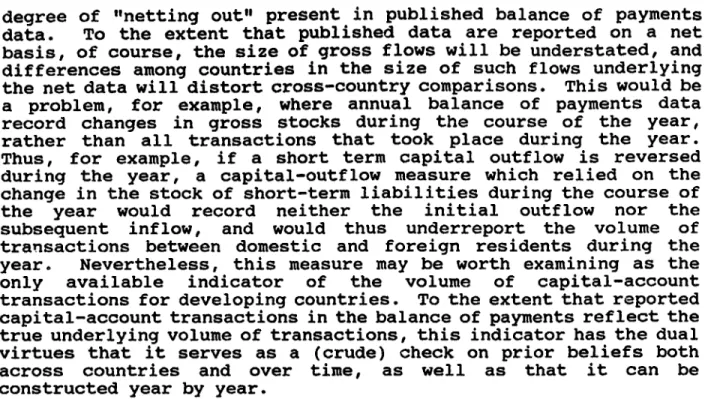
1. Gross capital flows 27
2. Saving-investment correlations 29
3. Arbitrage conditions 36
4. Euler equation tests 38
VI. Summary and Conclusions 40
Appendix 44
Tables
1. Haque-Montiel Estimates of Capital Mobility
Parameter for 15 Developing Countries 23
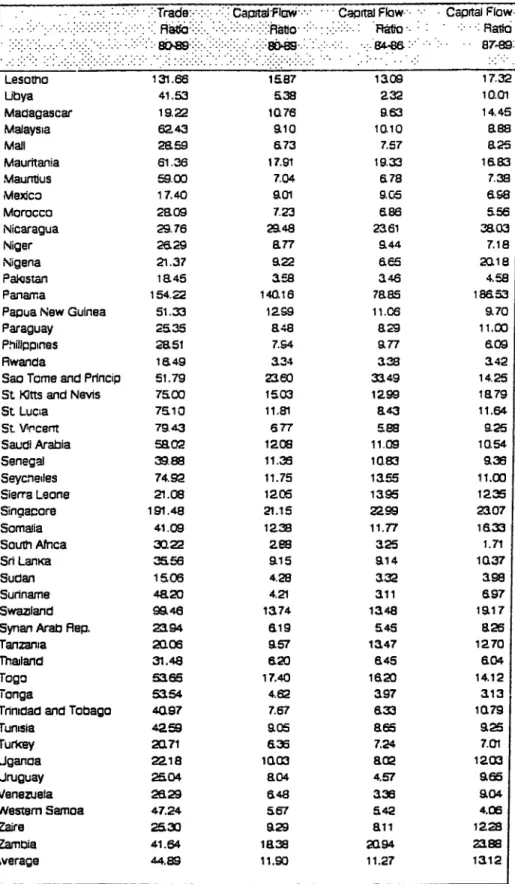
2. Ratios of Trade and Gross Capital Flows to GDP 28a
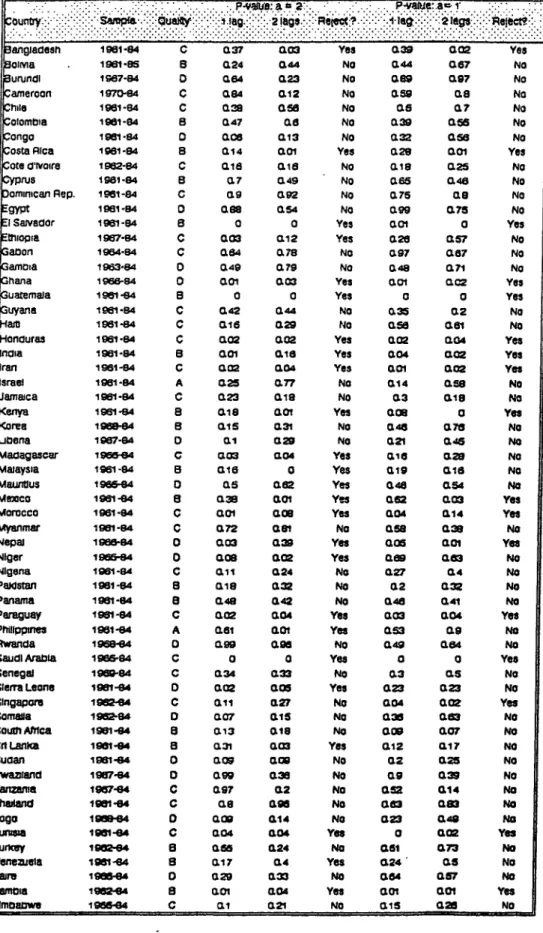
3. Feldstein-Horioka Regressions for Developing
Countries: Coefficient of the Saving Ratio 30a
4. Modified Feldstein-Horioka Regressions for
Developing Countries: Coefficient of the Saving
Ratio 35a
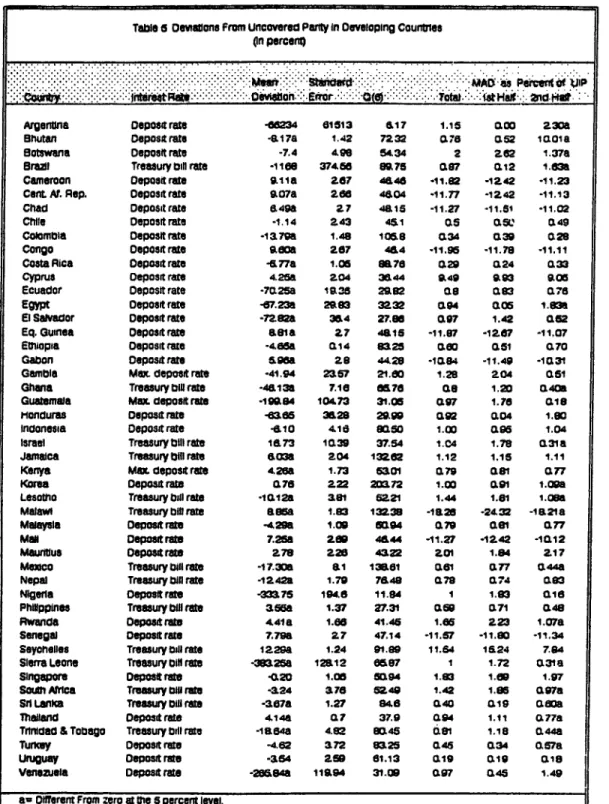
5. Deviations From Uncovered Parity in Developing
Countries 36a
6. Euler-Equation Estimates of Capital Mobility 39a
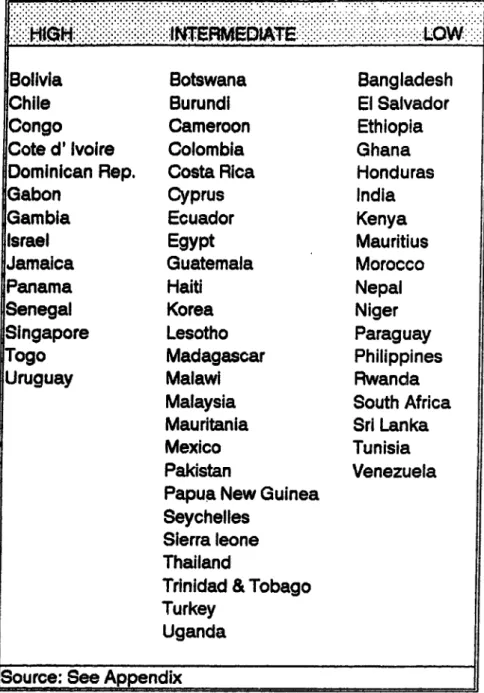
7. Classification of Countries by Degree of Financial
Integration 43a
I. Introduction
Financial openness exists when residents of one country are able to trade financial assets with residents of another country, i.e., when financial assets are traded goods. The degree of financial openness, however, is a somewhat amorphous concept, not always clearly defined in many applications and difficult to measure. This is unfortunate, because analytical models suggest that the nature of the relationship between domestic and world financial markets (also referred to as the degree of capital mobility) is one of the key characteristics of any economy, serving as a fundamental determinant of many of its most Dasic macroeconomic properties. These include the scope for promoting investment by stimulating domestic saving, the effectiveness of fiscal and monetary policies in influencing aggregate demand, the implication of a sustained fiscal deficit for the domestic rate of inflation, the incidence of taxes on capital, and the proper setting of controlled interest rates under financial repression, among others.
A weak definition of complete financial openness, which one might refer to as financial integration, can be given as a situation in which the law of one price holds for financial assets -- i.e., domestic and foreign residents trade identical assets at the same price. This definition relies on the absence of barriers to capital movements. However, it permits assets issued in one political jurisdiction to be imperfect substitutes in all private portfolios with otherwise identical assets issued in a differealt one, as well as differences in preferences between domestic and foreign agents as to the composition of their portfolios. A strong definition would add to this the restriction that identically-defined assets (e.g., a six-month Treasury bill) issued in different political jurisdictions and denominated in different currencies are perfect substitutes in all private portfolios. This would imply that the relative rates of return on such assets would be unaffected by their relative supplies. This assumption would, of course, also eliminate any scope for differences in preferences between domestic and foreign portfolio managers.
Important macroeconomic implications follow from financial integration in the strong sense. Even under the weak definition, however, these implications become increasingly relevant as the degree of substitutability between domestic and foreign assets increases in the portfolios of domestic and foreign agents. This could be termed an increase in the degree of financial integration.
A partial list of the implications of financial integration in the strong sense would include the following:
First, because changes in asset excess supplies and demands in a small economy leave world stocks of particular assets unaffected, such changes would have essentially no influence on the world prices of such assets. Thus, shocks to domestic saving and investment schedules, which affect the domestic flow excess supply and demand for financial assets, would leave the rates of return on such assets confronting domestic agents unchanged2. This means in
particular that changes in domestic investment would not affect the rates of return on assets available to domestic savers, and that changes in domestic saving would not affect the cost of capital for domestic firms3. Thus, increases in domestic investment would not
require increases in domestic interest rates in order to elicit the requisite financing. Instead, they would be financed voluntarily by foreign private agents. Similarly, reductions in domestic saving would not discourage capital accumulation in the domestic economy, but would simply decrease the country's rate of accumulation of foreign assets. The implication is that economic growth is not limited by a scarcity of domestic saving. It follows that lending to a developing economy in such circumstances by external public agencies would not add to the total pool of resources available to finance domestic investment, and policy measures to promote saving would not increJase domestic investment, but would merely reduce the current account deficit.
Second, the effects of domestic fiscal and monetary policies on aggregate demand also depend on the extent to which the economy is financially integrated with the rest of the world. Under the fixed (or predetermined) exchange rate regime that characterizes most developing countries, perfect financial integration in the strong sense would imply that in a small economy neither fiscal nor monetary policy can influence the terms for domestic borrowing and lending. This means that fiscal policy would fail to generate "financial crowding out", and that the effects of monetary policy would be limited to affecting the composition of private financial portfolios (through capital flows), not the prices of domestic financial assets. From the standpoint of short-run macroeconomic stabilization in developing countries, for example, credit ceilings would be very effe eive in improving the balance of payments in the short run, but would do so without affecting the level of aggregate I Notice that, if clams on residents of this country possess different characteristics from claims on foreigners, the economy is no longer "small" in the market for such assets.
I This statement needs to be interpreted with care. I mean it to imply only that domestic nominal interest rates are unaffected by such changes. As further discussion will show, real rates may well be affected.
demand and through it the current account balance, the rate of
inflation, or the level of real output.
Third, validity of the strong definition would affect an
economy's steady-state inflation rate. The revenue that a
government can collect from the inflation tax depends on the stock
of base money. and on the elasticity of bace money demand with
respect to the rate of inflation. Given the revenue to ba raised
through the inflation tax, the smaller the stock of base money and
the higher its elasticity with respect to the rate of inflation,
the higher the steady-state inflation rate. Even under the weak
definition of financial integration, domestic agents have more
means at their disposal to escape an inflation tax (i.e., by taking
capital abroad) than when the economy is financially closed. This
is likely to increase the elasticity of base money demand, and thus
means that the inflationary consequences of a given fiscal deficit
are magnified.
Fourth, the taxation of capital more generally becomes
problematic under a situation of high capital mobility, since such
taxes can be evaded by taking funds out of the country. With high
capital mobility the taxation o' capital would leave the domestic
economy with a suboptimal capital stock, since owners of capital
would require an after-tax rate of return in the domestic economy
equal to the pre-tax return available externally.
Finally, the design of interest rate policy in "repressed"
economies, in which domestic interest rates are subject to binding
legal restrictions, cannot afford to ignore the implications of
financial openness. Pending interest rate liberalization,
administered interest rates have to be set in some fashion. The
pursuit of positive real interest rates in such a setting, based on
a closed-economy view which takes the domestic marginal product of
capital as the relevant opportunity cost of funds, may easily be
frustrated by capital inflows if the economy is sufficiently open.
It is remarkable that, despite these well-known macroeconomic
implications, little is actually known about where many developing
countries may lie along a spectrum from effective financial autarky
to complete financial integration (i.e., financial integration in
the strong sense defined above). Although the vast majority of
these countries maintain controls on capital movements (see IMF
(1990)), their effectiveness is often questioned, and the view is
widespread that the mere existence of these controls does not
justify treating these economies as financially closed. Yet
empirical studies assessing the effective degree of capital mobility in developing countries have not been plentiful. Consequently policy and analytical work on developing-country
macroeconomic problems tends to be schizophrenic on this issue,
treating these economies sometimes as integrated with world capital
markets in the strong sense and at other times as financially autarkic.
This paper will attempt to shed some light on this issue both by examining what is currently known about the degree of financial integration that characterizes several developing countries and by applying the existing empirical techniques suitable to the purpose to attempt to measure this phenomenon in several large samples of such ccountries. I begin by briefly discussing some conceptual issues associated with the measurement of financial integration in the neXt section. This is followed by a survey of measurement techniques --- primarily developed for and applied to industrial
countries -- in Section III. Because industrial countries are typically considered to be more closely integrated with world capital markets than are most developing countries, Section III will also present an overview of the evidence on financial integration among industrial countries, to serve as a benchmark for the developing-country discussion. Section IV summarizes the results of existing empirical studies of financial integration in developing countries. The paper's empirical work is presented in Section V, where several of the techniques described previously are modified and applied to a large developing-country data set. The findings of this exercise are summarized in a concluding section, which also suggests some directions for further research.
II. Some Conceptual Measurement Issues
Perhaps one reason for the ambiguity that surrounds the empirical degree of financial integration that characterizes developing (and, for that matter, industrial) economies is that no single approach to its measurement has become widely accepted. Among the empirical methods that have been applied, either informally or formally, to measure capital mobility are the magnitude of gross capital flows, the degree to which a variety of arbitrage conditions are satisfied, the scope for sterilization of the effects of reserve movements on the domestic money supply, saving-investment correlations, and, more recently, tests based on the Euler equation for the path of optimal consumption. This section treats some conceptual issues that arise in the application of the first three of these. Because the use of saving-investment correlations as indicators of the degree of capital mobility has aroused d substantial controversy, conceptual issues associated
with this measure are best discussed in the context of specific papers, and are thus deferred to Section III. Similarly, since the use of Euler equation restrictions to measure financial integration is rather novel, further discussion of issues associated with this approach is deferred until the approach itself is presented in Section III.
1. The magnitude of capital flows
Many economists have a strongly held belief that industrial countries are, or at least have recently become, highly integrated financially. This belief is at least partly based on the observation that gross financial flows among such countries are
very substantial'. The magnitude of gross capital flows in and out of a country indeed indicates the extent to which financial transactions between residents of the country and the rest of the world actually occ---, but the size of gross flows is often taken to be an imperfect indicator of the degree of financial integration. The reason is that, while capital flows would indeed be zero under financial autarky, capital flows need not necessarily occur between
strongly integrated financial markets, because continuous
equalization of the prices of financial assets would remove the incentives for such flows.
Nevertheless, there are at least two reasons to expect that a country enjoying high degree of financial integration with the rest of the world should, on average, experience large gross capital flows. First, in markets that are strongly integrated, the geographic locations of the parties on the two sides of a financial transaction are indeterminate. Thus, borrowing and lending by
domestic residents should frequently cross international
boundaries.' Second, while changes in international rates of return should quickly be reflected in domestic rates under such conditions, preservation of portfolio equilibrium for domestic residents in response to such changes will typically require net capital flows. In the same vein, if the prices of domestic financial assets are determined in world capital markets, domestic financial disturbances will give rise to quantity adjustments in domestic portfolios, and thus to net capital flows.
2. The existence of arbitrage opportunities
The degree of financial integration has typically been assessed not in terms of the size of either gross or net capital flows between jurisdictions, but by the extent to which unexploited arbitrage opportunities exist in domestic capital markets. As indicated previously, weak financial integration between countries A and B means that a given financial asset is traded at the same price by residents of A and B, so that no profitable arbitrage opportunities remain. Thus, the degree of financial integration can in principle be measured as the difference between the prices of identical assets in A and B. Several conceptual problems arise, however, in applying this definition:
a. First, the identification of assets that can be taken to be "identical" in different political jurisdictions is not a trivial * Golub (1990) cites the examples of Feldstein (1983), p.150, Caprio and Howard (1984), p.4, Obstfeld (1986), p.70, and Penati and Dooley (1984), p.7.
' This basic insight formed the basis for an empirical test for capital mobility among industrial countries by Golub (1990)
(see Section III).
matter. If an asset can be taken to be defined by the probability
distribution of its prospective returns, then the requirement that
two assets, to be taken as "identical", offer the same payoff in
all states of the world, is a very stringent one. Lf the
dis4.ributions of prospective payoffs differ between two assets
under consideration, then we would not expect them to be priced so
as to yield the same expected rate of return, even in perfectly integrated financial markets, unless agents were risk-neutral.
Thus, differences in rates of return between otherwise identical
assets issues in different political jurisdictions are consistent
with weak financial integration. They may even be consistent with
strong financial integration if such assets are perfect subsitutes
up to a risk factor -- that is, if return d4fferentials do not
depend on relative asset supplies.
b. A wide range of assets will exist in each jurisdiction. If
transaction costs differ across assets, then those assets with
largest transaction costs may effectively be "nontraded" -- i.e,
their domestic prices may be free to vary within a broad band
before arbitrage with the rest of the world becomes effective. For
such assets, weak financial integration fails. Alternatively, members of a broad class of assets (say, equities) may be more
idiosyncratic than assets in arother class and thus may be less
"identical" to their foreign counterparts. Parity tests involving
assets in this class are simply uninformative about the degree of
financial integration. Under either of these conditions, arbitrage
tests may hold for some assets but not for others.
c. More fundamentally, an operationally meaningful measure of
financial integration must be one that focuses on the scope for
domestic variables to affect the prices of domestic financial assets, rather than on the existence of profitable arbitrage
opportunities per so. These notions are conceptually distinct. To
see this, suppose that asset X is traded in jurisdictions A and B,
at prices PI and PA, and suppose that pA > PA. If, however, the sale
of X in B involves incurring a transaction cost amounting to a
fraction t of the value of the asset, then arbitrage will be
profitable only if PO > PA(l+t). As long as this condition is not
met, profitable arbitrage opportunities are absent. Yet, if t is
sufficiently large, the range of variation of PO may never reach
this upper bound, implying that the price of X in B is effectively
determined by domestic phenomena, even though there are no profitable arbitrage opportunities. In this case, the relevant
operational description is that the markets for X in A and B are
n=
integrated, in spite of the absence of unexploited arbitrageprofits.
d. A fourth difficulty with parity conditions as estimates of
capital mobility can be described by analogy with the implications
of tariffs and quotas for goods. Both tariffs and quotas will
cause the domestic price of an importable good to exceed its world
the world price by an infinitely elastic supply, whereas in that of the latter the domestic price responds to supply and demand
conditions in the home country. Similarly, the failure of
arbitrage conditions need not have the policy implications
associated with imperfect capital mobility if there is a constant.
differential between domestic and external intarest rates arising,
for example, from taxation. In general, the policy implications to
be drawn from the failure of parity corditions depend on the source
of the failure.$
Why mighi. arbitrage fail between "identical" assets in different political jurisdictions? Among the reasons that have been cited are the following:
A. Transactions costs in asset trading that inhibit arbitrage.
ii. Information costs, coupled with asymmetric information between
domestic and foreign agents.
iii. Legal barriers to asset trading (capital controls), both those
already in place and (separately) prospective future barriers.
iv. Asymmetric risks or taxes borne by domestic and foreign
investors.
All of these represent obstacles to financial integration in the
weak sense.
III. Empirical Approaches to the Measurement of Financial
Integration
1. The magnitude of gross flows
As already mentioned, many economists' intuition that capital
has become highly mobile among industrial countries in recent years
is partly based on the observation that gross capital flows among
countries have becomn very large. Golub (1990) attempted to
formalize this intuition into an explicit test for the degree of
capital mobility. He reasoned that, if capital were perfectly mobile, the country origin of borrowers and lenders should not matter. This means that the share of total asset issues in country
A purchased by residents of that country should equal the country's
share in world lending. Golub tested this proposition for 12 OECD
countries during the 70s and 80s, and found that domestic creditors
took up a much larger fraction of each country's asset issues than
would be predicted based on that country's share in total OECD
lending. He +..Aerpreted this finding of a substantial "domestic
asset preferen..e" as contradicting the view that capital is highly
mobile among OECD countries, though he did find that even by this
me"sure capital mobility has been increasing among OECD countries
in recent years. In the terminology used here, Golub's findings
constitute evidence against strong financial integration, but are consistent with the weaker version.
2. Parity conditions
a. Simple interest parity
This condition states that, under perfect financial
integration, the nominal return on an asset denominated in the domestic currency should be equal to the return on an otherwise identical asset denominated in foreign currency when exchange risk is eliminated through forward cover:
(1+i) = (1+i ) f/s (1)
where i is the interest rate on the asset denominated in domestic currency, iv is the interest rate on the asset denominated in foreign currency, s is the spot exchange rate (price of foreign currency in terms of domestic currency), and f is the forward rate that applies to the same maturity as i and i^. Operationally, assets are identified as identical by choosing assets with the same legal definition in the same political jurisdiction. This condition seems to hold quite closely among industrial countries. It has been tested by comparing rates of return on Eurocurrency deposits, with the classic reference being Frenkel and Levich (1975). As several authors have noted, however (see, for example, Frankel (1986)), because the assets being compared must be within the same jurisdiction, this condition is not particularly useful in assessing the degree of financial integration among different countries.
b. Covered interest parity
The difference between the interest rate paid by a domestic asset and the "covered" rate paid by an asset which is identical to it except for the currency of denomination ad the political jurisdiction where the debtor is located is referred to as the "country," or "political" premium. Tests of covered interest parity (CIP) are in effect tests for the existence of such a premium. Until recently, the evidence (see, for example, Dooley and Isard (1980)) was consistent with a nonnegligible country premium among industrial countries. Data for the decade of the eighties, however, seems to suggest that this premium may have disappeared, at least for a large number of industrial countries
(see Obstfeld 1986), and Frankel (1991)).
c. Uncovered interest parity
In the absence of forward cover, the domestic-currency return on an asset denominated in foreign currency becomes random, even abstracting away from other sources of uncertainty, because of the possibility of an exchange-rate change. Uncovered interest parity (UIP) is the assertion that investors care only about the first moment of their subjective distributions of future returns on the risky (foreign) asset. If they do, then in the absence of barriers to capital movements such as those listed in Section II, the expected returns on the domestic and foreign assets should be equalized:
(l+i)= (1+i') E(s.1) /s(2
where E is the expectations operator. Sufficient (but not necessary) conditions for UIP are the validity of CIP and f=E(s.1) (the forward rate is an unbiased predictor of the future spot rate). This can be shown by writing (2) as:
(l+i)=(l+i *)(fs) (E(s,1)/f) (3)
Equation (1) and f=E(s,,) imply (3), yet (3) can hold without implying either (1) or f=E(s,,). If CIP holds, the condition f=E(s,1) becomes necessary and sufficient for UIP.
Testing UIP requires making an ancillary assumption about how the unobservable subjective expectations of future exchange rate movements are formed. With rational expectations, E(s.1) becomes the expectation of the true distribution of s.,, conditioned on the available information. Under these circumstances, s=E(s)+e, where the predictioan error e must be a mean-zero random variable. The contents of the information set used to form the expectation E(s) depend on the efficiency of the foreign exchange market. If the market is "weakly" efficient, the information set must contain at least the past prediction errors (i.e., lagged values of e). Under these circumstances, e must be serially uncorrelated. UIP can thus be tested by running the regression:
s = a +bf-l + e (4)
and testing the joint hypothesis that a=O, b=l, and e is white noise. Alternatively, without postulating CIP (or in the absence
of data on f), UIP can be tested directly by taking logs of the lagged version of (2) and estimating:
ln(s1s 1) = a + b(i 1 -il) + e (5)
and again testing whether a=O, b=l, and e is serially uncorrelated. That is, under UIP, rational expectations, and "weak" market efficiency, the interest differential should be an unbiased, efficient predictor of future exchange rate depreciation.
An important pitfall in conducting either of these tests is the "peso problem" (Krasker (1980)). When the exchange rate is fixed, but market participants perceive a finite probability of a discrete devaluation which does not in fact take place during the sample period, the observed forward rate will systematically exceed the future spot rate even if it truly reflects the expected future spot rate. In this case, the null hypothesis (of unbiasedness) will tend to be rejected, even when true, more often than the
investigator intends.'
The evidence for industrial countries is that UIP does
no
hold. Many researchers (see, for example, Cumby and Obstfeld (1984)) have verified this finding. One interpretation is that there is a non-constant (i.e., time-varying) risk premium. Such a premium could be consistent with strong financial integration, as long as the assets are perfect substitutes after the premium is taken into account. Alternatively, systematic differences in rates of return on otherwise similar assets denominated in different currencies and issued in different political jurisdictions could respond to changes in the relative supplies of such assets. This "imperfect substitutes" case is inconsistent with strong financial integration, and is discussed further in subsection 3 below.
d. Real interest parity
This condition requires that the expected domestic real rate of return (measured in terms of domestic goods) equal the expected foreign rate of return (measured in terms of foreign goods):
7 Strictly speaking, the difficulty here is not bias, but a
small sample problem. The problem is that the sampling
distribution for the hypothesis a=O, b=l converges very slowly to its limiting distribution under the conditions postulated, so statistical tests based on the asymptotic distribution result in Type I error.
r=(+i) P/E(P, 1) =r=(l+i )P/E(POI) (6) which can be rewritten as:
(1+i)=[(1+Pi) E(S, 1) /S] [ (sP/P) / (E(s,1 ) E(P.'1) /E(p 1))] (7)
Thus, sufficient conditions for RIP are UIP and ex ante relative PPP. Both of these fail tend to fail among industrial countries (see Mishkin (1984), and Frankel (1991)) so, not surprisingly, RIP has been widely rejected among these countries as well. Failure of ex ante RIP among seven OECD countries is found by Mishkin (1984), using quarterly data for the period 1967-1979. Similarly, Cumby and Obstfeld (1984) use, both monthly and quarterly data from January 1976 to September 1981 to reject ex ante RIP among six OECD countries (except between the US and UK). The same result was found by Mark (1985) for bilateral tests between the Us and five OECD countries from 1973:5 to 1982:2. More recently, Caramazza et. al. (1986), using monthly data over the period 1973-85, reject the equality of ex ante RIP for all pairs tested among seven OECD countries except Canada and the United States.
3. Tests of the effectiveness of sterilization
As suggested previously, one of the important policy implications of strong financial integration under fixed exchange rates is that monetary policy becomes powerless to affect aggregate demand. Essentially this is because the domestic monetary authorities lose control over the money supply. Changes in the domestic assets of the central bank (e.g., through open market operations) intended to influence the money stock would create incipient changes in the rates of return on domestic assets which could not in fact materialize, since they would quickly be arbitraged away through foreign borrowing and lending. In the process, the central bank's net foreign assets would change by an amount equal in magnitude but opposite in sign to the triggering change in its domestic assets, leaving the stock of high-powered money, and the total money supply, unchanged. This result would not hold if domestic and foreign interest-bearing assets were imperfect substitutes, because then changes in the relative supplies of such assets in private portfolios would affect their relative rates of return. In this case, changes in the domestic assets of central banks could, by changing the composition of outside assets in private portfolios, alter domestic interest rates and achieve changes in the domestic money stock.
For industrial countries operating flexible exchange rates, this issue arises in the context of the effectiveness of sterilized
intervention. Given that UIP fails to hold, the issue is whether this constitutes a rejection of strong financial integration --i.e. whether deviations from UIP car, be affected by changes in relative stocks of outside interest-bearing assets denominated in different currencies, such as would be achieved through sterilized intervention. If so, this would support a portfolio-balance model in which assets denominated in different currencies and issued in different jurisdictions are imperfect substitutes, rather than close substitutes with time-varying risk premia.
Explaining this premium remains an unresolved issue, but the weight of the evidence suggests that it cannot easily be accounted for by relative stocks of outside assets denominated in different currencies. Thus strong financial integration cannot easily be rejected by the data (see, for eiample, Rogoff (1984)).
4. Saving-investment correlations (Feldstein-Horioka)
For a small country producing a single good that is perfectly integrated with world goods markets as well as integrated in the strong sense with world financial markets, a change in domestic saving should have no effect on the rates of return faced by domestic agents, since these are determined in the world capital market, and accordingly should not affect domestic investment via this route. Based on this insight, Feldstein and Horioka (1980) (hereafter FH) proposed assessing the degree of financial integration in the world economy by measuring the extent to which national saving and investment rates are correlated. Using annual data for 21 OECD countries over the period 1960-74, they estimated
several cross-section OLS regressions of the form:
(IIY) 1=a+b(SIY) 1+e (8)
where (I/Y) is the ratio of gross domestic investment to GNP, and (S/Y) is the ratio of national saving to GNP, taken as the mean of 5-year periods as well as the full 15-year period. FH argued that, under the null hypothesis of perfect financial integration, b should be zero for small countries, whereas for large countries b should approximate the country's share of the world capital stock, since any increment in domestic saving should be invested without regard to national boundaries. Their estimates of b, however, were closely centered around 0.9. This finding was robust to the inclusion of a quadratic term for (S/Y), to the inclusion of the population growth rate as an additional explanatory variable, to a linear specification for b that permitted it to be a function of "openness" variables such as the share of trade in GDP or the size of the economy, as well as to the use of instrumental variables (taking the benefits/earnings replacement ratio of social security programs, the proportion of retirees to the population 20-65 years of age, and the ratio of younger dependents to the working age
population as instruments). This evidence was interpreted by FH as consistent with a low degree of financial integration among OECD countries during this period.
The findings of FH have been confirmed in broad terms by many other researchers, using different samples and different empirical techniques. Frankel (1985), for example, regressed time series observations of decade averages of I/Y on those of S/Y for the US, using data extending into the nineteenth century and instruments consisting of the share of military spending in GNP as well as a measure of the age distribution of the population, and derived an estimate of 0.96 for b. Bayoumi (1990) looked at ten industrial countries over the period 1965-86, estimating b in cross section for the full period as well as several subperiods, and also found high values of b, with no pattern over time, whether the estimates were conducted in levels or first differences.
At best, other investigators have been able, in certain samples, to detect values of b statistically different from the autarky value of unity, but the point estimates of b continue to be relatively high, even among industrial countries with few legal barriers to capital movements. Caprio and Howard (1984), for example, using the national income accounting identity CA = S-I (CA denotes the current account of the balance of payments), regressed:
d(CA/Y) 1 /d(S/Y) i=v.+e (9)
(where d is the first difference operator) for a sample of 23 OECD countries using data drawn from the period 1963-81, but using the business cycle as the unit of observation (i.e., annual data were averaged from cycle trough to cycle trough). With complete autarky, mu should be zero, whereas with perfect financial integration the value of mu shouldi be unity. Their point estimate of 0.45 was estimated precisely enough to permit them to reject both extremes. " Consistent with this estimate, their estimated value for b in a firt-differenced version of the FH equation was 0.63 which, though statistically different from unity and lower than that derived by FH, remains surprisingly high.
Earlier, Sachs (1982) had appeared to obtain results somewhat less in accordance with those of FH. Sachs estimated the equation:
I However, when Caprio and Howard estimated the corresponding version of equation (9) for investment, i.e., d(CA/Y)/d(I/Y)=mu+e, rather than the perfect integration value of -1 for mu their point estimate was -0.08, not significantly different from the autarky value of zero.
d(CA/Y) 1=c4.fd(I/Y) 1+e (10)
for a cross-section of OECD countries. Under perfect capital mobility, f should be -1, and in fact Sachs' point estimate was -0.65, seemingly contradicting the finding of almost complete financial autarky for these countries in FH. Dooley and Penati (1984), however, found that, whereas regressions of (I/Y) on (S/Y) as in FH tended to be stable across various subperiods, those of (CA/Y) on (I/Y) did not. They proved to be highly sensitive to the inclusion of data from the decade of the seventies and of certain outliers among the countries in their sample. Beyond this, Dooley and Penati addressed some of the received wisdom about the increasing financial integration among industrial countries during the postwar years. They argued that, if industrial countries are indeed becoming more integrated financially, them we should observe:
a. That the cross-section correlation between I/Y and S/Y was lower in the decade of the seventies than that of the fifties.
b. That the correlation in cross-section between CA/Y and I/Y was small in the decade of the fifties, and negative in the seventies. c.. That the correlation between d(I/Y) and d(S/Y) should be small, while that between d(CA/Y) and d(I/Y) should be negative.
The found that all of these predictions were rejected by the data. The view that b has not fallen over time among industrial countries, however, has proven to be somewhat less robust than the finding that the value of b has been relatively high on average. Both Obstfeld (1986) and Vos (1987) found that b fell after 1973, contrary to the the results cited above. Obstfeld used time series regressions based on quarterly observations of changes in (I/Y) and (S/Y) for several OECD countries, while the estimates of Vos were based on both cross-section and pooled cross section-time series results. Vos obtained an estimate of approximately 0.8 for b before 1973, 0.55 for 1973-79, and 0.49 for 1980-84. Note that, even in the most recent period used in both of these studies, the estimate of b remains far from its hypothesized full-integration value of zero. These results are consistent with those of Feldstein and Bachetta (1991), who found b declining from 0.91 during the decade of the sixties to 0.61 during 1980-86 for a cross-section sample of 23 OECD countries. The most extreme evidence of a decline in b was provided by Frankel (1991), albeit only for the US. Using cyclically-adjusted annual data and instrumental variable estimation, he found that, while b was approximately unity during 1930-79, it became statistically indistinguishable from zero during 1980-86.
difficult to refute, their interpretation of the evidence as suggesting that industrial countries are much less integrated financially than commonly believed has not been generally accepted. The response to the FH findings has broadly divided into two camps: a. Some analysts (Harberger (1980), Caprio and Howard (1984), Murphy (1984), Tobin (1983)e Summers (1988), Obstfeld (1986), Tesar (1988) and Bayoumi (1990)) interpret the correlations as simply uninformative about the degree of capital mobility. Within this group, one subset (Harberger, Caprio and Howard, Murphy, and Bayoumi) accepts on the basis of other evidence that financial integration is indeed high among OECD countries (or at least has become so recently), and interprets saving-investment correlations as arising from a variety of other causes. A second subset (Tobin) questions the degree of financial integration that industrial countries have actually achieved, but again on the basis of
independent evidence.
b. Another group (Penati and Dooley (1984), Frankel (1985), Dooley, Frankel, and Mathieson (1987), Feldstein and Bacchetta (1991)) accepts the FH correlations at face value as evidence that domestic saving and investment can indeed have direct effects on each other, as postulated by FH. Again this group divides into two subsets. Penati and Dooley, Dooley, Frankel, and Mathieson, and Feldstein and Bacchetta, interpret the evidence as suggesting that financial integration is indeed limited among OECD countries, and develop explanations that reconcile this view with the evidence for a high degree of capital mobility derived from other sources. More recently, Frankel (1986), (1991), (1992), has adopted the view that the FH evidence reflects imperfect integration in aoods markets, rather than financial markets.
The first group takes the position that, though zero capital mobility implies that (I/Y) and (S/Y) would be highly correlated, the converse is not true -- i.e., national saving and investment rates could be highly correlated even if world financial markets are perfectly integrated in the sense defined previously. Essentially, this is because national saving is endogenous in the FH equation - i.e., (S/Y) is correlated with the error term. The source of this correlation differs between time series and cross-section applications. In time series, the correlation could arise because:
i. Both I/Y and S/Y are functions of the state of the business cycle - i.e., of a third variable Y/YBAR. In particular, both I/Y and S/Y are known to be procyclical. On analytical grounds, there is reason to believe that temporary real shocks, such as to the productivity of domestic capital and labor, to the prices of imported inputs, or to world real interest rates, would move domestic saving and investment in the same direction (see Obstfeld
ii. Governments could respond to incipient current account deficits (increases of I/Y relative to S/Y) by contracting fiscal policy to achieve a current account target. Taking national saving as the sum of private and public saving, this makes national saving endogenous through its public component.
iii. The country in question could loom large in world financial markets. Shocks to national saving could thus affect world interest rates and through them domestic investment. Murphy (1984), in particular, shows that the high value of b in FH can be attributed to the inclusion of three large countries (the US, Japan, and the UK). When these are removed from the sample, the value of b falls to approximately 0.6.
In a cross-section context neither i nor iii are relevant. However, national saving and investment rates may both be functions of the country's long-run growth rate (see Obstfeld (1986)). The dependence of national saving on the rate of growth is a direct and familiar implication of life-cycle consumption theory, while steady-state growth implies:
(I/Y) = (n + delta) (K/i).
If (K/Y) depends on the real interest rate, which is common to all countries, then (I/Y) is an increasing function of n.
The key difference between the alternative interpretations of the Feldstein-Horioka results turns on whether phenomena such as these are taken as full explanations for the observed correlations between saving and investment ratios, leaving nothing to be explained by the direct effects of either variable on the other. The second group takes the position that saving-investment correlations have been too large and too robust to be accounted for in any of the ways described above. In part this view is based on refinements of the estimation technique to take some of these phenomena into account. Frankel (1986) addressed the large-country issue in a time-series study for the US by expressing saving and investment rates as deviations from rest-of-world rates, reasoning that under perfect capital mobility a drop in US saving may indeed crowd out investment worldwide, but there would be no reason for it to do so differentially in the US. Nevertheless, a high correlation betweeki US saving and investment rates expressed in this form remained during 1970-85.
In several papers, Frankel develops an argument that reconciles perfect financial integration as measured by tests of CIP and an interpretation of saving-investment correlations as reflecting, at least in part, bidirectional causation between the two variables, as in FH, rather than merely the common influence of some third domestic factor or external feedback through large-country effects, as suggested above. The argument relies crucially on the observation that the validity of CIP is compatible with the
failure of RIP. As we 'ave seen, this can be achieved if either UIP or ex ante relative IPP fail. Since saving and investment both depend on the domestic real interest rate, and since the domestic real interest rate can vary independently of the world rate in spite of CIP, then shocks to either saving or investment that alter the domestic real interest rate will cause each variable to affect the other. Suppose that UIP holds, but that a temporary exogenous increase in saving results in a temporary real exchange rate depreciation (i.e., ex ante relative PPP fails, because the real exchange rate will be expected to appreciate in the future). Since, under UIP, this would cause the expected domestic real interest rate to fall, investment would rise, resulting in a positive correlation between saving and investment. Even a permanent saving shock could have this effect, if the initial real exchange rate depreciation overshot its long-run level.
To summarize, the use of saving-investment correlations to draw inferences about the degree of financial integration is problematic, because there are at least two ways that saving and investment could be correlated even if financial markets were well integrated, in the sense that UIP held exactly:
i. First, I/Y and S/Y could be correlated even if RIP also held, because they are both endogenous variables which respond to movements in common factors, both in time series and cross section. ii. Second, shocks that are specific to saving or investment would also give rise to a positive correlation between the two variables, even under UIP, precisely because RIP does not hold.
To the extent that saving-investment correlations arise from this second source, however, they may nevertheless provide evidence of the extent to which exogenous shifts in domestic saving or investment can induce changes in the other variable. As indicated in Section I, this is one of the key policy issues motivating a concern with the degree of financial integration.
5. Euler equation tests
Recently, Obstfeld (1986) proposed an alternative to both arbitrage conditions and saving-investment correlations as measures of the degree of financial integration among countries. This test is based on the Euler equation that characterizes the optimal intertemporal behavior of consumption, and amounts to an attempt to detect whether residents of different political jurisdictions have access to the same risk-free asset.
For domestic residents, the Euler equation for optimal intertemporal consumption plans can be written as:
Et; (PC/ PC,) xp V (CC.1) / U/ (cc) =1/ +it(11)
for each period t. Here c denotes real per capita consumption, beta is a subjective discount factor, and i is the riskless interest rate. The corresponding condition for foreigners is:
st(Stt/StvPtvlxp U ^t+X)u (C)=l/(+it)(12)
where S is the nominal exchange rate and asterisks denote foreign variables, but the same risk-free rate i applies. Equations (11) and (12) imply that the expected marginal rates of substitution between current and future units of the domestic currency must be equal for foreign and domestic residents. To test this, Obstfeld assumes that domestic and foreign residents have the same utility function and that period utility takes the constant relative risk-aversion form:
u(Cc) -a ¢(13)a
Under these circumstances, one can define the variable:
n= t) (c pe )_( ) d ( SfPe (14)
cc+1 Pt. 4S C&1t:
and the equality of the expected marginal rates of substitution becomes:
E,n,=0 (15)
In other words, n, should be expected to be zero based on information available before it is observed -- i.e., no variable contained in the information set available prior to time t should help to predict the time-t value of n.
Obstfeld (1986) used a grid of values for the parameter a to construct quarterly time series for n, over the period 1962:II to 1985:II using Japan and Germany as the foreign countries and the US as the domestic country. He tested for perfect capital mobility
between each of these two pairs of countries by testing whether past values of nt (which would of course be in the time-t information set) helped predict its current value, using tests of exclusion restrictions. He found that, though the null hypothesis of zero coefficients on past nt's could be rejected over the whole sample (a finding which is inconsistent with perfect financial integration during the period as a whole), it could not be rejected at conventional significant levels between the US and Japan after 1973:I, suggesting that the two countries became highly integrated financially after that time.
This test posseses several attractive features compared to those that have considered above. Unlike arbitrage tests of CIP or UIP, it does not require comparisons between rates of return on what might be dissimilar assets, and unlike tests of RIP the null of strong financial integration would not be rejected due to a failure of ex ante relative PPP. Furthermore, unlike FH tests it is not vulnerable to indirect sources of saving-investment correlations. Moreover, it focuses specifically on what is meant by weak financial integration -- i.e., that residents in different political jurisdictions be able to trade the same asset on the same terms. The disadvantage of this test, of course, is that restrictive assumptions are equired to implement it -- i.e., the underlying consumption model must be correct for both countries, and cross-country differences in utility functions must be
negligible. Because the test therefore embodies multiple
hypotheses, rejections may be difficult to interpret. Finally, as :n the case of arbitrage tests, statistically significant rejections may not be economically important if ne is small on average.
IV. Empirical tests of capital mobility for developing countries As indicated in the introduction, developing countries tend to be treated, in both policy and analytical work, as either closed to capital flows (except perhaps for nonmarket-based lending from official sources or bank lending to their public sectors) or as completely open, with domestic interest rates bound by UIP to the levels prevailing internationally. The motivation for the former is that the vast majority of developing countries maintain formal legal restrictions on capital movements. According to the IMF's 1991 Annual Report on Exchange Arrangements and Exchange Restrictions, out of 136 member developing countries, 113 were classified as maintaining formal restrictions on capital account transactions. Yet, in spite of such controls, various types of evidence suggest that many developing countries are far from financially closed. This section reviews the available evidence, which takes the form of indications of the size of gross flows, tests of interest parity conditions, tests of the effectiveness of sterilization, and some limited evidence on saving-investment correlations.
1. The magnitude of gross flows
To the extent that the size of capital flows is indicative of the degree of financial integration, evidence on past episodes of substantial capital movements in and out of developing countries can be brought to bear on the issue. In Latin America, for example, the recent past has witnessed several episodes during which capital flows in both directions have been sufficienvly large as to become the focus of policy concern. These include the period of substantial external debt accumulation during 1974-82, the large short-term capital inflows associated with the Southern Cone stabilization programs in 1978-82, the gross private capital outflows associated with the "capital flight" phenomenon which afflicted several Latin American countries during the first half of the eighties and, more recently, a widespread resurgence of capital inflows, primarily to the private sector, during 1990-91 (see Calvo, Leiderman, and Reinhart (1991)).
Except for the most recent capital-inflow episode, each of these events has generated a substantial literature which documents the extent to which these economies have been financially linked to the world capital market. One way to summarize the implications of these capital-flow episodes is to measure, at a point in time, the gross stocks of financial claims between developing countries and external financial markets to which they have given rise. For the group of fifteen heavily-indebted developing countries, the stock of gross external debt as of 1988 amounted to about 75 percent of GDP.9 For the same year, Rojas-Suarez (1990) estimated that the total external claims of a very similar group of developing countries, overwhelmingly acquired in the form of private capital flight, amounted to about two-thirds of their external debt, or about half of GDP. Rojas-Suarez found a high correlation between the stock of flight -apital and a measure of default risk, corroborating the findings of others (e.g., Cuddington (1986) and Dooley (1986)) who have linked private capital outflows from developing countries to portfolio considerations. Thus, the gross-flow evidence, which unfortunately is available only for the major indebted developing countries, indicates that these countries have exhibited a substantial amount of at least de facto financial openness.
2. Tests of interest parity conditions
a. Covered and uncovered nominal interest parity
Lizondo (1983) conducted tests of both CIP and UIP for Mexico, using monthly data over the period 1977-80. Based on standard tests, he was able to reject the joint hypothesis of UIP and rational expectations, whether using the one-month forward rate or
the one-month interest differential as the predictor of the future spot rate. However, because of the "peso problem" he did not interpret these rejections as necesarily invalidating UIP for Mexico during this period. In testing CIP, Lizondo followed the methodology of Frenkel and Levich (1975), computing neutral bands around CIP based on estimated transactions costs and tabulating the number of observations of domestic interest rater lying outside those bands during the period. He found that percentage to be extremely high, ranging from 75 percent for one-month Treasury bills to 96 percent for three-month time deposits. Lizondo was able to account for this rejection of CIP in terms of legal regulations consisting of prior deposit restrictions on forward transactions and taxes on foreign exchange capital gains. The upshot is that, though unexploited profit opportunities were apparently absent, domestic rates could depart substantially from their CIP counterparts in Mexico during this period. More recently, however, Khor and Rojas-Suarez (1991) found that, during 1987 to 1990, yields on dollar-indexed Mexican government bonds were cointegrated with yields to maturity on Mexican public external debt traded in the secondary market. This suggests that Mexico's degree of integration with external financial markets may have increased in recent years.
Results similar to those of Lizondo for Mexico were obtained by Phylaktis (1988) for Argentina during 1971-84. Using the methodology of Dooley and Isard (1980), she was able to account for 83 percent of the quarterly variance of the differential between the 3-month domestic deposit rate and its UIP counterpart (using the US as the reference country) through the use of standard portfolio variables and step dummies for capital controls. The implication is that, while foreign financial variables influenced domestic interest rates in Argentina during this period (i.e., the economy was financially open), foreign and domestic assets were imperfect substitutes (strong financial integration did not hold) and certain types of capital controls proved to be effective in increasing the differential between foreign and domestic rates of return.
In a departure from the standard methodology, Edwards and Khan (1985) postulated that the actual domestic interest rate in a developing country could be expressed as a weighted average of the external (UIP) rate and the domestic interest rate that would prevail in a financially closed economy. The latter was expressed as a function of the excess money supply and the expected rate of inflation. When the determinants of the closed-economy interest rate are substituted into the weighted average expression for the domestic interest rate, the result is a reduced-form interest "parity" condition which expresses the domestic interest rate as a function not only of the external rate, but also of domestic monetary conditions. This approach, then, in effect uses domestic monetary variables to explain the "risk premium". Estimating this reduced form makes it possible to detect any influence of the
domestic monetary variables on the domestic interest rate. If UIP holds continuously, such variables should have no explanatory power in the reduced form. By contrast, if the economy is completely closed, the UIP variable should not enter. Edwards and Khan estimated this model using quarterly data for Colombia (1968-82). and Singapore (1976-83). They found that -or Colombia both external and domestic variables mattered, making this economy "semi-open", while for Singapore only the UIP foreign interest rate helped to explain the domestic interest rate, as would have been expected under strong financial integration.
A serious difficulty inhibiting tests of interest parity for large groups of developing countries is that many ouch countries engage in "financial repression" -- i.e., the practice of subjecUing interest rates in the formal financial system to binding legal constraints. Thus published interest rates in such countries do not tend to apply to assets with market-determined rates of return. Though "informal" credit markets tend to arise outside the controlled financial system, with interest rates that are free to respond to the forces of supply and demand, data on such rates is rarely available. In these circumstances, inferences about the extent to which market-clearing interest rates in the domestic financial system are affected by world financial conditions become difficult to draw.
Recently, Haque and Montiel (1991) adapted the methodology of Edwards and Khan to allow testing of UIP under such circumstances. Retaining the assumption that the (unoberved) domestic market-clearing interest rate is a stable weighted average of the autarky rate and the UIP rate, they were able to estimate the relevant weights by substituting the resulting expression for the market-clearing rate into the money-demand function and estimating the resulting nonlinear function of observable variables. In this estimation, the weight corresponding to the UIP emerges as the coefficient of this variable in the estimate of the money-demand function. This coefficient, which is bounded between zero and one, indicates the degree of financial integration, with values
approaching unity being indicative of perfect financial
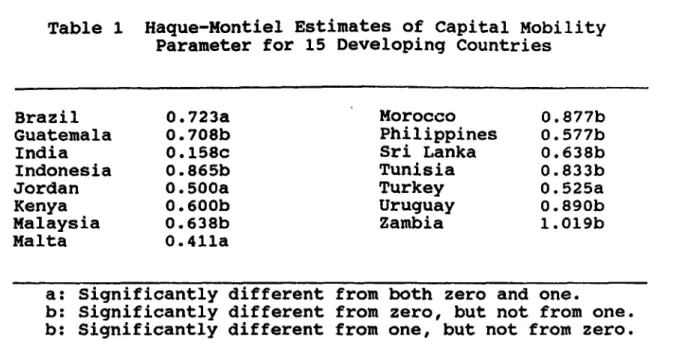
integration. Haque and Montiel's results for 15 developing countries during the period 1969-87 are reported in Table 1. In 10 of the 15 cases reported, the weight of the UIP rate could not be statistically distinguished from the perfect capital mobility value of unity. For four countries in the sample (Brazil, Jordan, Malta, and Turkey) an intermediate degree of financial integration prevailed during this period. The financial autarky value of zero failed to be rejected in only one case (that of India). Overall, these results are consistent with a substantial degree of integration with external financial markets for the countries considered.
Table 1 Haque-Montiel Estimates of Capital Mobility Parameter for 15 Developing Countries
Brazil 0.723a Morocco 0.877b
Guatemala 0.708b Philippines 0.577b
India 0.158c Sri Lanka 0.638b
Indonesia 0.865b Tunisia 0.833b
Jordan 0.500a Turkey 0.525a
Kenya 0.600b Uruguay 0.890b
Malaysia 0.638b Zambia 1.019b
Malta 0.411a
a: Significantly different from both zero and one.
b: Significantly different from zero, but not from one. b: Significantly different from one, but not from zero.
The Edwards-Khan and Haque-Montiel methodology was applied to Korea and Taiwan by Reisen and Yeches (1991) and to Thailand by Robinson (1991). The former used quarterly data for the decade of the eighties and direct observations on the curb market interest rate in these countries, finding a weight of 0.594 on the UIP rate in Korea and 0.353 in Taiwan during this period, in each case distinguishable from zero and unity. This places these countries among the intermediate group above. Kalman filter tests suggested that the degree of integration peaked for Korea during the period 1981-84, but was relatively constant for Taiwan over the decade. Robinson's findings for Thailand were similar, with a weight for the UIP of 0.590 during 1978-90.
Tests for changes in the degree of financial intearation due to domestic financial liberalization in Pacific Basin countries were also conducted by Faruqee (1991). Using monthly observations on money-market interest rates, the latter constructed time series on the differentials between such rates in Korea, Malaysia, Singapore and Thailand and the three-month Japanese yen LIBOR rate during the period 1978:9 to 1990:12. Mean differentials were large and positive for Korea and Thailand, but not for Singapore and Malaysia. In all four countries, both the mean and variance of the differentials decreased in the second half of the sample period. Time series modeling of the differentials revealed a statistically significant positive constant for Korea and Thailand only, and the Korean differentials exhibited a significant negative trend over the period. Mean-reverting behavior was weak in all four countries. Because the residuals from the ARMA estimates exhibited smaller variability in the second half of the period, Faruqee reestimated the time series models using an autoregressive
conditional heteroskedasticity (ARCH) approach and found that the variance of shocks to the ARMA residuals declined monotonically for Singapore, but not for the remaining countries. In all cases, however, the variance of shocks was smaller in 1990 than it had been in 1980, leading Faruqee to conclude that the degree of financial integration increased in these countries over the decade of the eighties.
3. Tests of monetary autonomy
In the developing-country context, tests of the effectiveness of sterilization have focused on estimates of the "offset coefficient" that relates changes in the stock of domestic assets of the central bank to changes in reserve flows. As already indicated (see Section III), under strong financial integration, this coefficient should iave a value of -1, since any expansion of the domestic assets of the central bank will give rise to an offsetting capital outflow, leaving the stock of money unchanged and implying a loss of monetary autonomy. The early literature on this subject, following the monetary approach to the balance of payments, invariably confirmed an offset coefficient of -1 and a loss of monetary autonomy. However, this work proved beset by a
number of methodological problems which undermined the
interpretation of this finding as suggestive of high capital mobility (see Kreinin and Officer (1978)).
More recent work by Cumby and Obstfeld (1984), using a structural model of the Mexican financial sector, found that, during the decade of the seventies, strong financial integration did not hold between Mexico and the United States. Slow portfolio adjustment and imperfect asset substitutability permitted Mexico to retain at least some short-run monetary autonomy during this period. Within a quarter, only 30-50 percent of a domestic credit increase was found to leak abroad via capital outflows. Rennhack and Modino (1988) applied the Cumby-Obstfeld model to Colombia, using quarterly data drawn from 1975 to 1985, with very similar results: the within-quarter offset coefficient amounted to about 40 percent, and monetary autonomy was at least partially retained even
in the long run. By contrast, the same approach yielded very different results in the case of Malaysia during 1978-81, where Bini (1982) found a 70 percent offset to changes in the stock of domestic credit within the first month.
An implicition of the retention of monetary autonomy is, of
course, that policy-induced changes in domestic financial
aggregates will affect macroeconomic variables other than the capital account. Thus the detection of domestic macroeconomic effects arisin' from monetary policy shocks under fixed exchange rates provides an indirect confirmation of the retention of at least some degree of monetary autonomy. While this means that any evidence that monetary policy can affect domestic macroeconomic