This Master’s Thesis is carried out as a part of the education at the University of Agder and is therefore approved as a part of this education. However, this does not imply that the University answers for the methods that are used or the conclusions that are drawn.
University of Agder, [2012] Faculty of [Economic and Social Sciences]
Department of [Development Studies]
The effectiveness of microcredit programmes on alleviating poverty
and empowering women in Cairo, Egypt
Sherin Gamaleldin Ahmed Taha
Supervisor
2
Abstract
The ability of microfinance and microcredit programmes to alleviate poverty and fuel development is often debated and questioned. This study aims to contribute to this literature by investigating the impact of microcredit programmes on alleviating poverty and empowering women in Cairo, Egypt. I also investigate the efficiency of management policies of microcredit institutions in targeting the ‘real’ poor. Lastly provide some insights on how to enhance these programmes effectiveness in alleviating poverty. Using a quasi experimental research design, this study supports the extant literature that found a positive impact of microcredit programmes on enhancing the participants’ income, expenditure, quality and quantity of food and children’s education. In addition the results reveal a significant positive correlation between microcredit and an increase in recipients’ business profits and capital. However I did not find that the provision of microcredit was able to enhance women’s feelings of empowerment and independence. Moreover the targeting criteria of microcredit institutions were found to be not that efficient in being able to reach the extreme poor. In addition I could not find results that verify the efficiency of women in managing microcredit compared to men. This finding questioned the validity of microfinance institutions policy (that usually target poor women rather than poor men) in the Egyptian society where men are considered the main household bread winners.
Finally the study referred to common challenges in microfinance business that apparently microfinance institutions in Cairo are facing. The focus of these institutions on making a profit often hinders these programmes in terms of their poverty alleviation strategies. In general for these programmes to be more effective in alleviating poverty a new paradigm or regulatory body is required to link microcredit institutions with each other, organize collective efforts, and make it more attached to the real developmental needs of the poor.
3
Acknowledgment
I am deeply indebted to everyone who helps me out in establishing this master thesis. At first I would like to express sincere gratitude and appreciation to Dr. Gregory Breetzke for all the support, comments, encouragement and guidance he gave me throughout the preparation and writing of my thesis till it come to fruition. He advised me in problems I faced, read carefully through my work and gave me valuable comments that enhanced the technical and editing quality of my work.
Also I am so much indebted to my professors at University of Agder, Prof. Arne Olav Øyhus, Prof. Sven Åke Bjørke and others who gave me great insights into the field of development management and guided me through till identifying the topic of this thesis. Also I would like to thank them for giving me the opportunity to meet new friends from different countries and exchange knowledge and experiences which enriched and widened my perspectives. I cannot also forget the special help I got from Ms. Jannik S. Timenes for which I am really thankful. I owe so much to my professors from the Faculty of Economics and Political Science in Cairo University. I am really grateful to Prof. Tarek Moursi, not only for his help in the technical part of this thesis but for his support and encouragement that I will remain forever indebted. I am also thankful to Prof. Kamal Selim for his guidance and technical advices. Special thanks and gratitude to Dr. Hanan Girgis from Bassera poll centre for her help with the questionnaire and especially her help in figuring how to overcome obstacles to do my field work. In this regard I would like to thank also Mr. Sobhi and his team for assisting me with the field work. I am also so much grateful to Ahmed A. Abdel Gawad for all the support he gave me. He helped me overcome many obstacles during the entire process of this master programme and was a main factor to join it in the first place. Special gratitude to my work colleagues and all my friends in and outside Egypt who were there for me, I am really thankful for their support, friendship and sharing my burdens and stress.
Last but not least I would like to express deepest gratitude for my family; brother, sister, sister- in- law, beloved nephews, and especially Mum and Dad where no words can express my real gratitude for their always support and care.
4
Table of Contents
List ofabbreviations...5
List of figures...6
List of tables ... 7
Chapter One: Introduction ... 8
1.1 Presentation of research topic ... 8
1.2 Problem statement ... 9
1.3 Research objectives ... 10
1.4 Research questions ... 11
1.5 Thesis outline ... 11
Chapter Two: Literature Review ... 12
2.1 Introduction ... 12
2.2 Microcredit and poverty reduction: Conceptual background ... 12
2.3 The impacts of microcredit programs on alleviating poverty... 14
2.4 Questioning the utility of microcredit for poverty alleviation ... 16
2.5 Theoretical Framework ... 20
Chapter Three: Research Design and Methodology ... 21
3.1 Research area ... 22
3.2 Research design ... 22
3.3 Sampling and data collection...23
Chapter Four Empirical findings ... 30
4.1 Characteristics of the sample ... 30
4.2 Data and method ... 32
4.3 Empirical analysis ... 37
Chapter Five: Discussion ... 48
5.1 Microcredit management system in Egypt ... 43
5.2 Microcredit programmes targeting criteria ... 45
5.3 Microcredit programs impact on alleviating poverty ... 47
5.4 Microcredit programme enhancements for better benefits to the poor ... 49
5.5 Limitations and research enhancements ... 50
Conclusion ... 52
References ... 55
Appendix (1): Microfinance institutions Questionnaire ... 62
5
List of abbreviations
MFI Micro Finance Institution
UN United Nations
NGOs Civil Society Organizations
MDGs Millennium Development Goals
PBDAC Principal Bank of Development and Agriculture
PF Productive Families Project
SFD Social Fund for Development
UNDP United Nations Development Programme
EBI Egyptian Banking Institute
AKDN Aga Khan Agency for Microfinance
CBE the Central Bank of Egypt
FMF First Microfinance Foundation
LF Lead Foundation
6
List of figures
Figure. 2.1 Theoretical framework
Figure. 4.1 Reasons for taking the loan
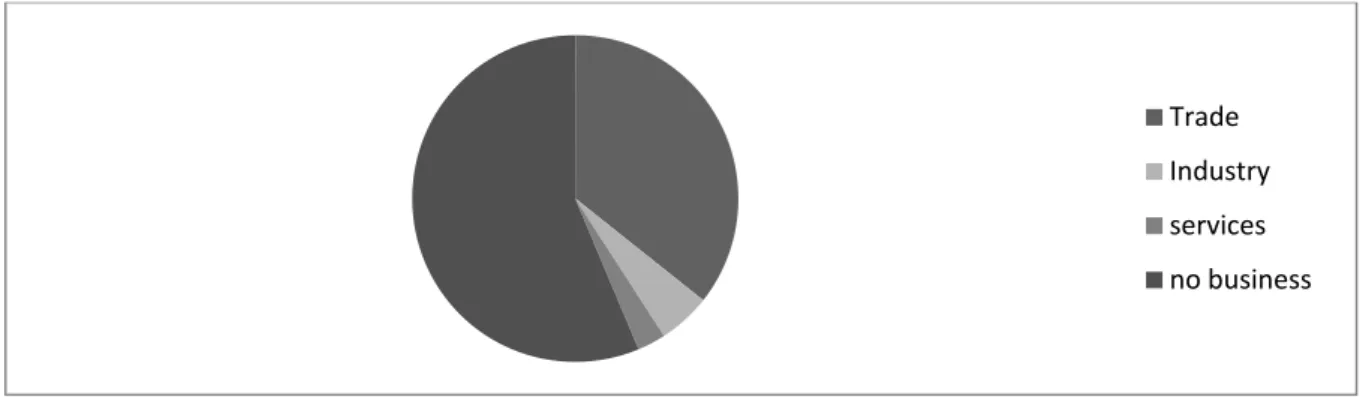
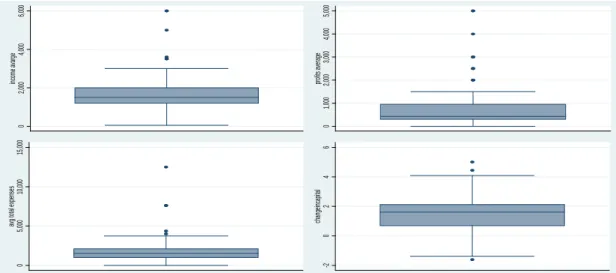
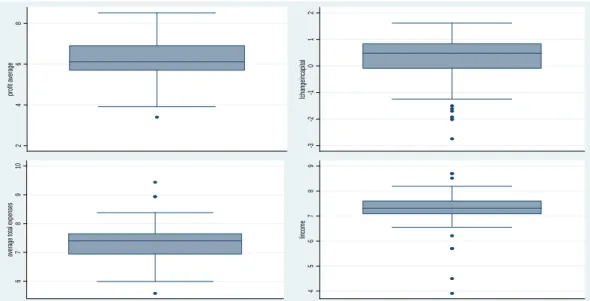
Figure. 4.2 Distribution of sectors of business for loan holders Figure. 4.3 Box plot for main interval variables with outliers Figure. 4.4 Box Plot for interval variables after log transformation
7
List of tables
Table 3.1 Distribution of microcredit organizations in greater Cairo Table 4.1 Relation between gender and type of loan holder
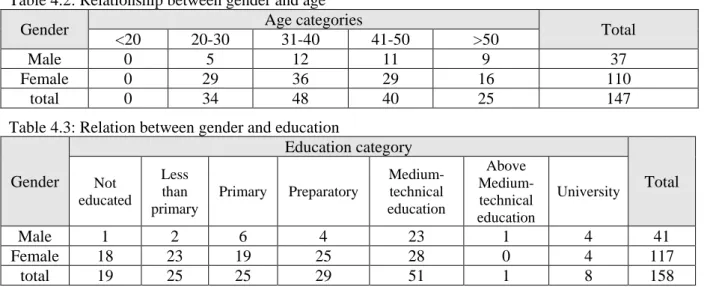
Table 4.2 Relation between gender and age
Table 4.3 Relation between gender and education
Table 4.4 Relation between gender and martial status
Table 4.5 Relation between type of loan holder and having a previous job
Table 4.6 The relationship between type of loan holder and whether the business is the main source of income
Table 4.7 The relationship between gender and whether the business is the main source of income
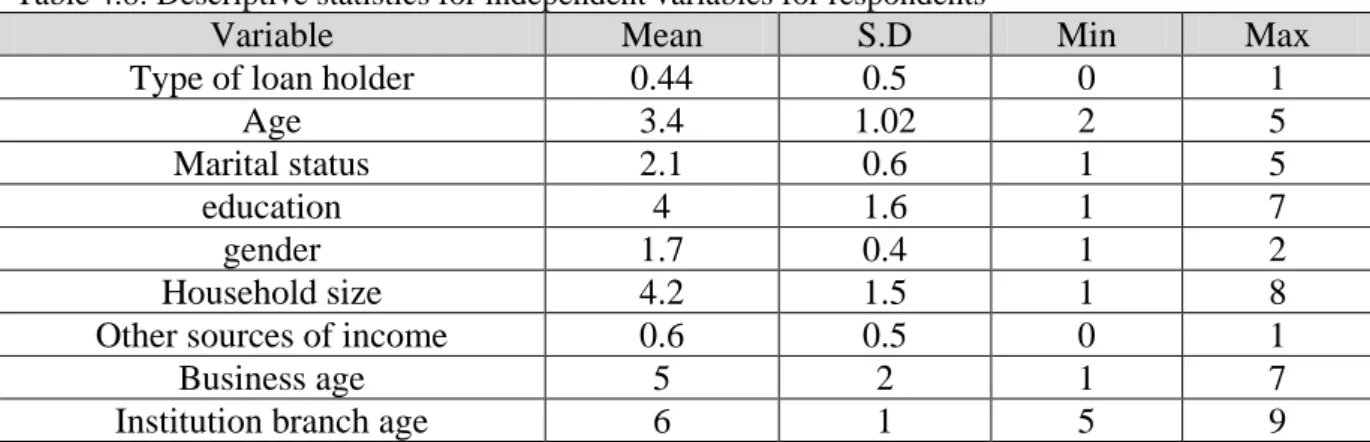
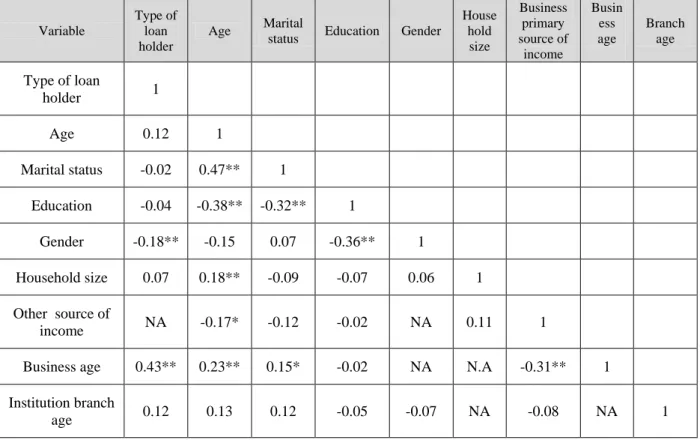
Table 4.8 Descriptive statistics for independent variables for respondents Table 4.9 Correlation matrix for interval independent variables
Table 4.10 Spearman correlation matrix for independent variables
Table 4.11 List of independent variables to be used in the regression models Table 4.12 List of dependent variables used in the regression models
Table 4.13 OLS regression results studying the impact of microcredit on income and
expenditure per capita
Table 4.14 Logistic regression results study the impact of microcredit on loan holder
perception on quality of food, children education level and expenditure on medication
Table 4.15 The relationship between kinds of loan holders and expenditure on medication
Table 4.16 Logistic regression results study the impact of microcredit on loan holder
perception Conflicts inside the household, independence, and ability to meet the family needs
Table 4.17 The relationship between Perception of Independence and Gender
Table 4.18 OLS regression results study the impact of microcredit on business profit
average and change in capital
Table 4.19 Logistic regression results study the impact of microcredit on respondents’ tendency to reinvest in their business.
Table 4.20 The relationship between type of loan holders and tendency to reinvest in their business
8
Chapter One: Introduction
There is currently a substantial amount of debate regarding the ability of microfinance and microcredit programmes to alleviate poverty and fuel development. The successful introduction of microfinance in 1976 by Mohamed Younis, through the establishment of the Grameen Bank in Bangladesh, grabbed worldwide attention. Since then it has been widely replicated in many other developing countries such as India, Indonesia, and Thailand. It was even mentioned by the United Nations (UN) as a significant contributing factor for achieving the goal of halving extreme poverty by 2015, one of the Millennium Development Goals (MDGs) (Hermes & Lensink, 2007).
Along with other developing countries, Egypt has adopted microcredit programmes in its strategy for alleviating poverty. Microcredit programmes have been depicted as an efficient tool not only for alleviating poverty but also for empowering women and fostering equality in society. However poverty alleviation and development is not only about income enhancement or meeting peoples’ basic needs but it is also about offering caregivers and their children an opportunity for a better life. Whilst microcredit loans may help the poor financially, there are other questions regarding their ability to enable them to have a better life in terms of education and health service provision, instituting better relations within their families, increasing their financial sustainability, empowerment and self-esteem.
This research aims to assess the impact of microcredit programmes on enhancing Egyptian recipient families’ income and welfare. This research is important for a number of reasons. First, given the dearth of empirical studies on the impact of microcredit programmes in Egypt, this research will provide a unique contribution to the existing literature on the efficiency of these programmes to uplift recipients. Second, the influence of these programmes on reducing poverty and enhancing peoples’ wellbeing can be investigated in a unique setting. We can see whether these programmes enhance the recipients’ ability to get health services, to provide adequate education to their children and to improve their families’ consumption levels. The research will focus on women recipients and their perceptions of empowerment, financial sustainability and the generation of peace inside their families. Given the Egyptian culture that conceives men as the breadwinners, it is not clear how these programmes will affect those women’s lives. In addition an assessment of the microfinance sector should enable the industry to improve the administration of their programmes as well as utilise them best in combating poverty. Lastly, this research should provide information on the efficiency of microcredit programmes in targeting the poor and in creating real economic growth.
1.1
Presentation of research topic
Poverty is one of the main challenges that face the development process in Egypt. According to Abou-Ali et al. (2009), around half of the Egyptian society is either poor or vulnerable to poverty. Poor people suffer social exclusion and lack access to various sources of income, markets, education and health services (Attia, 2008). Among the strategies for combating poverty, microfinance programmes are regarded as a mechanism for poverty alleviation and as a way of creating employment opportunities in Egypt. This was outlined in a package of economic reform policies adopted by Egypt in the 1990s. Based on these policies each donor or institution working in the field of poverty supports microfinance programmes in one way or another either by providing direct loans, or other services in the form of technical support or research and information dissemination (Barsoum, 2006). As a result microfinance
9
programmes have been incrementally adopted by the government, commercial banks and civil society organizations (NGOs)to aid poor people and enhance their well-being. In many cases, women are the intended beneficiaries of these loans, based on studies that show how women are more likely to invest in their children compared to men (UNDP & INP, 2008).
Microfinance services is not new in Egypt, however its scope has evolved from human development and social services to being more business oriented with the recent joining of the banking commercial sector. In the 1950s microfinance was provided mainly to farmers and workers in the agricultural sector through a governmental bank known as the Principal Bank of Development and Agriculture (PBDAC). Later in the 1970s a nongovernmental initiative known as the Productive Families Project (PF) was initiated by the Ministry of Social Solidarity to provide microcredit to low-income families with a guarantor from an employer in the public sector (Barsoum, 2006).
The microfinance services started to be more business oriented in 1988 by the initiative of the United States Agency for International Development (USAID) targeting small businesses in the poor urban. In 1991 the first quasi- governmental entity responsible for organising microfinance services for small and medium enterprises was established; the Social Fund for Development (SFD) is the largest donor and is responsible for coordinating the creation and development of successful microfinance institutions (MFIs) with many other international donors (PlaNet, 2008). Beside the USAID and SFD, other major donors in the field of microfinance include UNICEF, the Ford Foundation, the Canadian International Development Agency, the United Nations Development Programme (UNDP), the Italian Fund of Egypt the Egyptian-Swiss Development Fund European Commission's MEDA Programme, the Friedrich Ebert Foundation, and the Aga Khan Agency for Microfinance (AKDN) (Barsoum, 2006; Wesselink, 2011).
In 2004 the SFD was assigned the responsibility to coordinate the micro and small enterprises sector in Egypt. The microfinance sector role was further adopted with the launching of “The National Strategy for Micro-Finance" in 2006. Its main aim was to develop a microfinance industry capable of providing sustainable financial services to small business aimed at developing microfinance. This strategy was prepared and funded by big donors in the field like the United Nations Development Programme (UNDP), USAID and Germany's government-owned German Development Bank. The Central Bank of Egypt (CBE) was involved through its affiliate, the Egyptian Banking Institute (EBI) (PlaNet, 2008).
1.2 Problem statement
It is debatable whether microcredit programmes in Egypt have been effective in enhancing not only poor people’s income but their overall wellbeing. According to Abdul Hakim & Ismail (2010) the well-being or quality of life of people is as important for development as income. Graham (2005) found that people value aspects like health, stable employment, marriage as much as, if not more than, income. However it is not clear from the literature assessing the impact of microcredit on the poor in Egypt whether these programmes are really efficient in alleviating poverty and promoting the overall wellbeing of it recipients. Whilst, in many cases a beneficiary did enhance their income through a loan it remains unclear whether other aspects of their social wellbeing improved as well. In a survey in one of the poorest districts in Cairo called “Ain EL Sira” families were interviewed about the usefulness of the loans they received from microcredit programmes. Both women and men complained that they sometimes have to sell their basic household items in order to be able to repay the debt and its
10
interest (UNDP, 2008). In another survey by PlaNet (2008) half of the participants indicated a positive change in their quality and quantity of their food after receiving loans while only a few declared improvements in their children’s level of education and health conditions. Moreover, in a sample of 100 women from Cairo, Nader (2008) found that microcredit loans were highly correlated with beneficiaries’ children’s education, income and assets, yet it had no effect in terms of enhancing their accessibility to better health services and having less quarrels or stressful events inside their families. In her qualitative research using focus groups, interviews, and observations of 69 women in microcredit programmes in poor districts in Cairo, Drolet (2010, p.7) found that although these programmes helped women to meet their practical gender needs; like buying food, educating children, repaying debt, and getting health care, the programmes couldn’t enable them to meet their strategic gender needs; financial security, individual dignity, and peace in the household.
The impact of microcredit on women’s social harmony and peace inside their families has not been sufficiently investigated. When studying the impact of microcredit on the harmony inside the family, Nader (2008) found the relation to be insignificant, yet she noted that further research was needed to expand this finding. Moreover the microcredit policy of targeting females rather than males was argued by Barsoum (2006) to be “a myopic poverty alleviation strategy that can actually oppress women rather than empower them”. She found that loans were not enough to “challenge socially ingrained notions about women's economic dependency on men”. In a group discussion with female borrowers in Upper Egypt Barsoum (2006) found that women see that taking loans did not affect their role inside the family with a number of women indicating that “The man is the man and the woman is the woman". Moreover being the target audience to the microcredit programme is a burden on the females rather than an empowerment tool where usually men take that as an excuse not to meet the households’ needs and expenses and instead rely completely on the woman who had access to the loan. In other cases women became unpaid workers in their husbands business in addition to the liability of the debt. Some women ask for accessibility of loans to men to make them bear the responsibilities of their families instead of relying on the woman.
Finally, I could not find many studies evaluating microfinance institutions criteria to reach the poor, except for a study by USAID (2006); however it focused on investigating the level of gender equality in microfinance operations outreach. According to the UNDP (2008) around 20% of Egyptians or around 2 million families are living below the national poverty line in 2007. This raises a main question on the efficiency of microcredit programmes in reaching those poor. It has been pointed out by Hermes and Lensink (2007) that microcredit does not reach out to those in extreme poverty.
1.3 Research objectives
The main research objectives of this research are:
1- To assess the effectiveness of microcredit programmes in Cairo, Egypt.
2- To assess the impact of microcredit programmes on female recipients’ welfare and their perception of independence, empowerment, the creation of harmony inside their families and overall satisfaction.
3- To investigate the efficiency of policies of microcredit institutions in targeting the real poor compared to national/international poverty lines and the compatibility of these polices with their needs and expectations from such programmes.
11
4- To investigate the validity of the targeting policies of microcredit institutes that target females rather than males as main audience for such programmes.
5- To provide information to microcredit institutions on clients’ perceptions and
satisfactions levels for future service enhancements and microfinance industry expansion.
1.4 Research questions
Through the course of this research I intend to provide answers to the following research questions:
1. How are microcredit programmes in Egypt managed?
2. What are the impacts of microcredit programmes on poverty reduction?
• What are the impacts on recipients’ families’ income and average expenses? • What are the impacts on recipients’ families’ wellbeing?
• What the impacts of loans on female recipients? Do they gain more
independence and have peace inside their families? Do they feel more empowered and respected?
• What are the activities financed by these loans and is there enough profits for businesses expanding and reinvesting the loan money into their businesses? 3. How efficient are the microcredit programmes in targeting the poor?
4. How efficient is the microfinance institution policy of targeting females rather than males given the Egyptian context? Are really women more efficient in managing micro loans than men?
1.5 Thesis outline
This thesis is organised into five distinctive chapters:
Chapter1 gives an introduction to the topic and provides a rational for the study. The research objectives and research questions of the study are also provided.
Chapter 2 provides a literature review on the topic of microcredit and its complex relationship with poverty alleviation.
Chapter 3 presents the method used in conducting the research and outlines the data collection and analysis methods employed.
Chapter 4 outlines the empirical findings and lastly,
12
Chapter Two: Literature Review
2.1 Introduction
From the voluminous strands of literature on microfinance and microcredit, it is possible to distinguish between two main types. The first deals with the institutional system of the microcredit programmes and its financial performance (e.g. Hermes & Lensink, 2007; Cull et al., 2006; Cassar et al., 2007; Lapenu & Zeller, 2002; Jain, 1996; Gutiérrez-Nieto et al, 2007; Haq et al, 2009). The second is concerned with assessing the impact of microcredit on the welfare of the poor. It is this latter category that is the focus of this study. In this chapter I will explore the relationship between microcredit and poverty reduction, investigate the potential impacts of microcredit on the wellbeing of the poor and consider the debate on the effectiveness of microcredit programmes as a bottom up development engine.
2.2 Microcredit and poverty reduction: Conceptual background
2.2.1 The concept of poverty
The literature contains of number of definitions of poverty, starting with the lack of main resources to meet the basic needs to sustain life; to lacking access to main services and rights. As stated in Smith (1776, p.21) “every man is rich or poor according to the degree he can afford to enjoy the necessaries, convenience and amusement of human life”. It is the perception of poverty that really differs when defining what is really meant by poverty. As referred by Fasoranti (2010) perception differs according to the present experience of the individuals, conditions of the surrounding environment, their vocation, education and their definition of a good life. Hence “poverty has become a general phenomenon that is perceived to mean different things to different people at different times and places” (Fasoranti, 2010, p. 1439).
There are two conceptualizations for poverty; the traditional and the monetary concept. The former refers to the ability of the individual to meet the basics needs of food and consumption. The latter refers to the materialistic boundaries to include other aspects starting from education, health, shelter, nutrition, till enjoying security and rights like freedom of speech (Haughton & Khandker, 2009). In general poverty can be defined as the “pronounced deprivation in wellbeing.” (World Bank, 2000, chap. 1), where wellbeing here embraces not only material capabilities as measured by income and consumption levels but immaterial as well measured by the level of education, health, children nutrition and rights. It is even broadened to include vulnerability and exposure to risk, voicelessness and powerlessness. It is as referred by Amartya Sen (1987 in Haughton & Khandker, 2009) as the individual capability to function in the society.
Accordingly poverty is a multidimensional phenomenon that cannot be defined by just enhancing the income of the poor or increasing their levels of consumption rather it requires an integrated strategy to enable the poor to acquire the capabilities needed to enhance their wellbeing in general. Microfinance/microcredit programs are considered one of the effective tools that can enable the poor to not only enhance their income but their household overall well being as well.
13
2.2.2 The concept of microfinance and microcredit programmes
Microfinance/microcredit programmes are based on the theory of utilizing social capital to fuel development from below; as a result these programs have emerged as a favoured model of development (Rankin, 2002, p.9). Microfinance is a phenomenon that reflects the provision of credit and microloans to low income people in order to enable them to engage in productive economic activities that help them enhance their income (Awojobi & Bein, 2011). Microfinance is a wider concept than microcredit as it includes the provision of other financial services like saving funds and insurance services in addition to the provision of microcredit; however the two terms (microfinance and microcredit) are often used interchangeably (Khandker, 1998).
There are many definitions of microcredit. Generally the main idea behind it is to enable poor people to have access to financial services that they cannot attain through regular banks since they lack the collateral required in such a case. According to Schreiner & Colombet (2001, p. 339) it is an “attempt to improve access to small deposits and small loans for poor households neglected by banks”. It also includes “the mobilization of savings and disbursement of micro-credit to the economically active poor, so as to provide employment and means of sustainability to improve the living standard in an economy” (Awojobi & Bein, 2011, p. 160). In general the main purpose behind microcredit programmes are to “extend small loans to poor people for self-employment projects that generate income, allowing them to care for themselves and their families. In most cases, microcredit programs offer a combination of services and resources to their clients in addition to credit for self-employment. These often include savings facilities, training, networking, and peer support.” (The Microcredit Summit Campaign, 2009) Microcredit entails not only providing the poor with financial services but with the added capabilities needed to set up their self employment business projects and maintain their sources of sustainable livelihoods instead of waiting for employment opportunities from the government (Fasoranti, 2010). Microcredit are given to the poor either to help them establish their new business projects or to help small entrepreneurs who already have their business to expand it and be more sustainable (Johnson & Rogaly, 1997). Usually the duration of these kinds of loans are short-term, maximum two years, conditioned to be used in productive projects for example agriculture, industry, trading and not in consumption. Typically the interest rates are higher compared to traditional bank loans (Jaffer, 1999). Whilst microfinance institutions are not banks and should aim to serve people that do not have access to traditional banks, they still operate like traditional banks in that they are interested in making a profit. Hence microfinance institutions are two-faced in nature: “social nature and a for-profit nature” (Gutiérrez-Nieto et al., 2007, p. 131). There are different kinds of microcredit programmes; however in general microfinance institutions offer credit either through joint liability group lending or individual-based lending. The individual lending model is close to the banks model where there is a direct relationship between the programme and the loan holder, whereas the group lending model a group of borrowers are responsible for loan repayments. In this case if one of the group members does not repay the loan the others group members have to contribute otherwise the whole group will be deprived future access to loans from the programme (Hermes & Lensink, 2007).
There are different forms of microfinance institutions. A survey in developing countries by Lapenu & Zeller (2002), classified micro finance institutions as either: NGOs, cooperatives, registered banking institutions, government organizations, or projects. The research results showed that banks are the best in terms of staff productivity but are the worst in terms of
14
outreaching to the poor especially women. NGOS are the best in outreaching but have low productivity. On the other hand government institutions are low in both staff productivity and outreach. However microfinance institutions performance is not in the scope of this research rather it’s the efficiency of these programmes in alleviating poverty and enhancing the wellbeing of the poor.
2.3 The impacts of microcredit programs on alleviating poverty
The impact of microcredit programmes on reducing poverty and enhancing social well-being of the poor has been widely investigated. Reviewing the literature investigating the microfinance impact on poverty alleviation shows disparities between supporters and opponents. In summary one can identify three main positions in the microfinance literature: those that argue for the positive impact of microcredit on the poor; those that argue for the negative impact of microcredit on the poor; and the third position lies somewhere in between where there is a positive impact yet not for the poorest.
According to the first position microcredit programs have a positive impact not merely on the poor household income and consumption level but on their social wellbeing as well, reflected by the impact of these programmes on recipients’ level of education, health and children nutrition. Furthermore it extends to women feelings of empowerment and independence. The positive impacts of microcredit on income and consumption levels have been well documented. For example, in his study on participants of Grameen Bank in Bangladesh,
Hossain (1988) found significant impacts of the effect of microcredit programmes on alleviating poverty in Bangladesh. This was reflected in higher income, capital accumulation and employment among loan recipients. Similarly Khandker (1998) found that 5% of the loan recipients’ households in Bangladesh were able to get out of poverty due to the loans from microcredit institutions. In both studies there were spill-over effects where the overall employment rate and wages rate were enhanced in the whole village in which the microcredit programs operated. Additionally the significant effects for the programmes were found to be greater when the recipient was a woman (Pitt & Khandker, 1998). Other research in Bangladesh by Mustafa (1996) found that microcredit programmes enabled the recipients to enhance their material wellbeing reflected in indicators such as wealth, revenue earning assets, value of house structure, the level of cash earned, per capita expenditure on food, total household expenditure. While Zaman (1999) found microcredit programmes to enhance recipients’ ability to build assets and reduce their vulnerability by enabling them smooth their consumption through balancing between their savings and spending during different phases of their life, hence become less vulnerable to income shocks. The results showed that in general women’s participants are relatively more efficient than men in promoting the well-being of the households. As verified in Pitt et al (2003), women usually invest in their children’s health and enhance their nutritional status. These results were further emphasized in further studies in Bangladesh (see Khandker et al., 1998; Khandker, 2001, 2003).
Positive impacts of microcredit have also been found by Kaboski & Townsend (2005) who evaluated the impacts of microfinance institutions in rural Thailand. They found it to enhance asset growth, consumption smoothing and occupational mobility, while decreasing borrowers’ vulnerability, also especially if women are the main recipients. In another study Kaboski & Townsend (2009) found that income, consumption and agricultural investment increased among recipients as well as overall wages levels in a village in Thailand. In Mexico Bruhn & Love (2009) found positive impacts of opening a new microcredit institution branch on business ownership, income and employment. In a randomized experimental research in Manila Philippines, Karlan & Zinman (2009) found that microcredit institutions increased
15
business profits but only for male entrepreneurs not females. Similar results were found in another study by Banerjee (2010) in a randomized evaluation of the impact of introducing microcredit in a new market in Hyderabad, India. They took a random sample from clients before and after the introduction of the microcredit program in the market and found that only the expenditure on durable goods and number of new businesses increased in the treated areas while expenditure per capita per month did not change.
In addition microcredit programmes have been found to enhance household social well-being and women empowerment. In his study Khander (1998) found significantly higher levels of schooling for children and especially that of girls for all credit program participants. Other positive impacts of microcredit on households’ wellbeing were found in their children’s education, health and household nutrition especially when woman are the participants (e.g Zaman, 1999; Panjaitan-Drioadisuryo & Cloud, 1999; Pitt et al., 2003). Moreover, microcredit empowers women by enabling them to make their own decisions, increase their mobility, awareness, and self-esteem (Hashemi et al., 1996; Schuler et al., 1997; Husain, 1998; Zaman, 1999). Mustafa et al (1996) found that the impact on women lives although small was evident; women have better influence in decision making inside the household and better treatment from their husbands. However this significant positive impact of microcredit was not reached by other studies. Banerjee et al (2010) did not find such positive impacts on social wellbeing like measures of health, education, or women’s empowerment. Lastly, Karlan & Zinman (2009) found no positive impact on the social wellbeing of the household in India especially when women were the participants. On the contrary he found that males’ applicants are significantly more likely to enrol their children in school than female applicants.
On the other side of the argument Adams & Pischke (1992) found microcredit to be ineffective on the poor income and overall well-being status. The researchers argued that lacking financial services is not the most pressing problems faced by the poor; and further argued that their problems will not be solved by going into further debt. The cost of providing these financial services was also very high compared to the benefits received by recipients especially in poor countries. This was further emphasized by Buckley (1997) in his research on micro entrepreneurs in the informal sector in Kenya, Malawi and Ghana. He found that these form of “capital injections” offers the “illusion” of fixing the profound problems of these people which rather need more structural changes in the socioeconomic conditions that defines their activities. Utilizing case studies from Sri-Lanka and Bangladesh, Montgomery (1996) showed the disadvantages of group lending schemes. He argued that there is incompatibility between meeting the poor needs and extending the credit. These programs give more pressure to the recipients and resulted in added social costs.
In Bangladesh, Morduch (1998) used a cross sectional survey of 180 respondents from participants and nonparticipants in microcredit programmes. He found no evidence indicating higher consumption levels or educational enrolments for children of loan holders, but merely a reduction in consumption variability across the seasons for the participants. Accordingly microcredit programmes were not found to enable households to increase their consumption level but simply offered them “ways to smooth their consumption through smoothing income”. This benefit he found negligible compared to the programmes costs. In his work Mordouh (1998) argued that the estimation techniques used by both Khandker (1998) and Pitt & Khandker (1998) overestimated the significant positive impact of microcredit programmes. Pitt et al (1999) in turn questioned the estimation technique used by Mordouh (1998) accusing it of underestimating the programme impacts, yet Roodman & Morduch (2009) in their research replied to this study and questioned the validity of the results in term of the
16
econometric techniques used in the research. Using a randomized experiment analyzing about 5,000 households in rural Morocco who received loans of $125 to $1,850 for two years period, Dufflo, Esther (in Straus, 2010) found insignificant results on these households consumption, social well-being and women empowerment .
In the middle of the road some researchers see the benefits of such institutions but also identify the relative pitfalls. For example, Hulme and Mosley (1996) in their survey research in Bangladesh, India, Sri-Lanka and Indonesia found that more affluent recipients benefited more from the microcredit programmes than the poor, hence doubting the efficiency of microcredit program as a poverty alleviation tool. This is further emphasized by Mosley (2001) in his research study in Bolivia. He found that although these credits reduced poverty and increased participants’ income and assets it did not reduce extreme poverty. Furthermore in his note, Hulme (2000) indicated that effective microfinance institutions only provide services for the poor but not for the poorest and “the poorest of the poor”. Hulme supported Pischke (1992) in his naming for microcredit as “micro debt” since not all microcredit programmes were found to produce favourable results especially for the very poor working in low returns activities and vulnerable to environmental and economic shocks.
Additionally when evaluating the impact of two microcredit programmes in Thailand, Coleman (2006) found that the wealthier participants are more likely to participate in these programmes than the poor. Furthermore the positive impacts on the household were found to occur merely when the microcredit loans go to relatively wealthy households. Coleman recommended reconsideration for the eligibility criteria to be more vigilance to the poor. This finding was supported by Kondo (2007), in a research study in the Philippines where he found that microcredit did enhance income per capita and per capita expenditure but this applied mainly to the more affluent recipients while the impact was negative or insignificant in case of poorer loan recipients.Using panel data Khandker (2003) found significant positive impacts of microcredit programmes on per consumption levels and household non-land assets for the extreme poor in Bangladesh, although Roodman & Morduch (2009) questioned the validity of these results because of the technique used.
In summary, the research assessing the effectiveness of microcredit institutions on individual social and economic wellbeing is mixed. One cannot identify a clear positive or negative impact for microcredit programs either on enhancing the economic and social welfare conditions for the poor. It is obvious that further research is required in this area.
2.4 Questioning the ability of microcredit for poverty alleviation
As mentioned previously, on one side of the argument there are significant positive effects for microcredit programmes on household material and social well-being with further spill-over effects on the local economy while on the other side of the argument there are well-documented negative effects, particularly on the extreme poor. As noted by Khandker (2003), assessing the impact of microcredit programmes is sensitive to the methods used. Both quantitative and qualitative research methods have been used in impact assessment studies (Hulme, 2000). However, studies that are solely built on qualitative research methods are uncommon (Montgomery, 1996). There is an increasingly common trend in applying the mixed research methods by combining qualitative and quantitative research techniques (e.g. see Hashemi et al., 1996; Mustafa et al., 1996; Husain, 1998). Mixed research methods have been adopted for their usefulness in enhancing the validity of information and increasing confidence in research findings (Hulme, 2000).
17
Quantitative methods in particular have been widely applied in estimating the impact of microcredit programmes. As explained in Montgomery (2005) a perfect evaluation of these programs requires an accurate comparison between the status of the participants before and after joining micro credit programs. This kind of accuracy is hard to attain for many reasons: First in a panel data analysis (observation of same individuals through time) one cannot guarantee that any enhancement in microcredit program participants standards of living are purely due to the credit and not due to any other factors that might have happened to them over the same time period, hence separation of the impact of microcredit programs from other influences is hard to attain. Second in cross sectional data analysis (observation of many individuals at one point at a time) it is hard to compare two groups of individuals with identical characteristics who differ only in terms of credit taking because of the various personality and character traits of individuals. Other problems relate to differences in locations or areas of microcredit programs that are not chosen randomly. Usually microcredit program are located in specific areas like poor areas or that have certain physical infrastructure. Hence the impact of microcredit programmes on participants’ standard of living and well being cannot be completely attributed to the program itself since its impact cannot also be separated from any influences that return to certain characteristics of the area, like having access to roads or communication infrastructure. The existence of such unobservable characteristics or influences lead to two kinds of bias in any empirical impact evaluation: program placement bias and self-selection bias.
In order to avoid these biases researchers have adopted three main approaches. The first approach uses quasi-experimental research methods which compare participants in micro credit programs with non participants using fixed effect methods to control for placement bias (e.g Khandker et al., 1998; Pitt & Khandker, 1998; Khandker, 1998; Mustafa et al., 1996; Hossain, 1988). However this type of research methodology is often not supported because of a selection bias since participants and non participants are often not good comparables (Mordouh, 1999). The second approach attempts to control for the self selection bias by including eligible participants from control villages which are villages where microcredit program have recently started to work in. They assume that participants from these villages will probably have similar conditions and characteristics as the treatment group; old participants in microcredit programs (e.g, Hulme & Mosely, 1996; Coleman, 1999). Nevertheless these types of studies have been criticized for not including drop-outs from the microcredit programs which leads to the emergence of the third approach of quasi-experiment research. Karlan (2001) found that dropouts cause two kinds of problems. The first one is the incomplete sample bias since assumingly the impact on dropouts is different or even worse compared to old or new loan holders. The second problem is attrition bias resulting from different characteristics of those who dropout than the others who remain in the program. If drop outs are successful and were able to get financially independent after leaving the program then not including them can cause an underestimation of microcredit impact and vice versa. Hence to get an accurate evaluation for microcredit impact those dropouts should be considered as well.
The experimental research methodology can deal with all kinds of selection bias where both treatment and control groups are selected randomly from a potential population of program participants; hence any impact can be attributed just to the program not to any sort of bias (Montgomery, 2005). Hence those methods are more efficient in terms of their internal model validity and the robustness of the results (Bryman, 2008). These experimental research studies (e.g. see Dupas & Robinson, 2009; Banerjee et al., 2010) do however have many limitations in addition to time and resources. For example, it is hard to use them in evaluating running
18
microcredit programmes, since it requires the monitoring of the participants in microcredit programs before and after they join the program in order to identify the real effect on these participants standards of living resulted from taking credit (Odell, 2010). It is due to these methodological issues that there is little consensus among researchers regarding the evidence indicating their impact on poverty alleviation.
Bateman (2011) provides examples in developing countries like in India, the Balkans and Bosnia, where microcredit caused poor people to be indebted rather than helping them out of poverty. In India it has even driven the poor to take loans from local shark moneylenders just to be able to pay back the microfinance loans. These money lenders usually charge much higher interest rates on the loans than microfinance institutions which make the poor to be even more submerged in debt (Gokhale, 2009). Worth noting that these high interest charged by local loan lenders were one of the main reasons driven by Muhammed Yunis, the Bangladesh Professor initiator for microfinance programmes, to promote microfinance to international donors. However as argued by Bateman (2011) such “conferring of social legitimacy upon microfinance” have made the poor more open to go into debt.
However this should not be enough to indicate the failure of these programs as a poverty alleviation tool, as even the effects cannot be clearly reflected in monetary terms yet it can be sensed on the ground for two main reasons: The first is the existence of actual case studies of individuals where microcredit really helped them out of poverty. Such examples can be found in different countries such as Egypt, Afghanistan, Mozambique India and Bosnia (see ACCION International et al., 2010). The second as noted by Chowdhury (2009), is that there are other contributions for microfinance programs that are not acknowledged in the literature that go far beyond the traditional way of measuring the impact of microcredit. For example if microcredit’s only contribution is enabling the poor to sustain their levels of consumption in periods of fluctuations or crises then it contributes in enhancing productivity in the long run. Since by smoothing consumption the poor can maintain their ability to send their children to school buy essential medications and take care of their children’s nutrition. Hence microcredit “fulfils an important safety-net task”, especially in the absence of a “state-sponsored social security system”. Furthermore formalising the credit market has not only curtailed the local money lenders but also the microfinance institutions themselves that became under the surveillance of the community and media. In addition away from the impact on income or consumption these forms of microcredit empower the poor and give them some opportunities, hope and self-esteem. Besides microfinance institutions create large numbers of jobs in local communities in the form of loan officers and supervisors.
Moreover criticizing the microcredit programs for not reaching or targeting the extreme poor may be not because of these programs deficiencies, as it may be as a result of the fact that the extremely poor people themselves do not like to take risks, are fearful of new initiatives and/or lack proper information about the programmes (Hermes & Lensink, 2007). Also extremely poor people are often isolated and lack the essential human and social capital required to know and be members of microfinance programmes (Khandker et al., 1998). According to Ciravegna (2005) the lack of microcredit programmes diffusion in Italy for example was due to the lack of a microcredit culture itself, where people were not fully aware of the benefits of these programmes and as a result they were reluctant to try new initiatives, also the existence of strict rules for borrowing and getting permits are among the factors curtailing these programmes functioning there. Another important factor affecting the success of microcredit initiatives is the general economic conditions in the country (see Ciravegna, 2005), where economic stagnation in Italy hinders the success of any development initiatives such as microcredit programmes.
19
As a result the lack of success of some microcredit programmes cannot be totally attributed to the deficiencies of these programmes themselves but rather to the economic climate and culture of the ‘host’ country. Microcredit can be considered as a necessary but not sufficient tool for poverty alleviation (Mahajan, 2005). As stated by Prof Mohammed Yunus “Micro-credit is not a miracle cure that can eliminate poverty in one fell swoop. But it can end poverty for many and reduce its severity for others. Combined with other innovative programs that unleash people’s potential, micro-credit is an essential tool in our search for a poverty-free world” (Yunus & Jolis, 2003, chap. 9). In addition human capital, skills to produce and market goods and social capital is important to first know about microcredit programmes and then to manage the business after taking the loans. Another valid point in this regard is the targeting criteria of microfinance institutions; it should reflect and should consider the social surroundings and culture of the area where they will be located. Women are not usually more successful than men in managing such loans (Karlan & Zinman, 2009). Moreover focusing on women as the target audience might be another factor of such loans failure in some areas even if women are the loan holders sometimes the loans ends up in men hands where women became workers in their husband business (Goetz & Gupta, 1996; Barsoum, 2006).
Viewing the literature of microfinance one gets the impression that it is more a statistical or econometric dispute between two teams; advocates and opponents for microcredit programs. This dispute mainly focuses on the techniques and methodologies employed by researchers rather on the potential of these programs to help the poor out of poverty. In my opinion such focus on the methodological problems of the quantitative methods used in studying the impact of these programs is superfluous and insufficient to judge the real impact of these programs. It has given grounding to doubt greatly the usefulness of these programs and taken attention away from the real problem which is trying to improve this tool and enlarge its benefits in the real world.
Microfinance institutions have a two faced contradictory missionary, it has a social and humanitarian side helping the poor overcome their poverty and at the same time they need to sustain their financial existence (i.e., make a profit). However microfinance institutions bear high costs to run their business, due to high transaction and information costs. As a result they need to set high interest rates for their clients. This reduces the potential positive impact on income generating from these credits (Cull et al., 2006; Hermes & Lensink, 2007). Given the dearth of sustainable financial resources and high costs still there is not enough solid empirical research studying the cost effectiveness of microcredit programs (Hermes & Lensink, 2007). Furthermore such high costs and the financial unsustainability of microfinance institutions hinders its outreaching policies for the extreme poor. Enhancing outreach policies requires stable financial resources to endure possible risks (Pischke, 1996). However stable financial resources in turn require relying on commercial funds instead of donations. This is very risky since focusing on the commercialisation of microfinance may cause a drift in these institutions mission from poor helper into profit seekers. Such drift violates Yunus description of microcredit in the 1997 Microcredit Summit as “a human right and not as an activity designed to create profit for the lenders”.
Accordingly still there are many missing answers in the paradox of microcredit program, its financial sustainability and commercialisation versus more outreaching to the poorest and further impact and social development these all need to considered while search for more integrated approaches to measure the effectiveness of these programs in alleviating poverty.
20
2.5 Theoretical framework
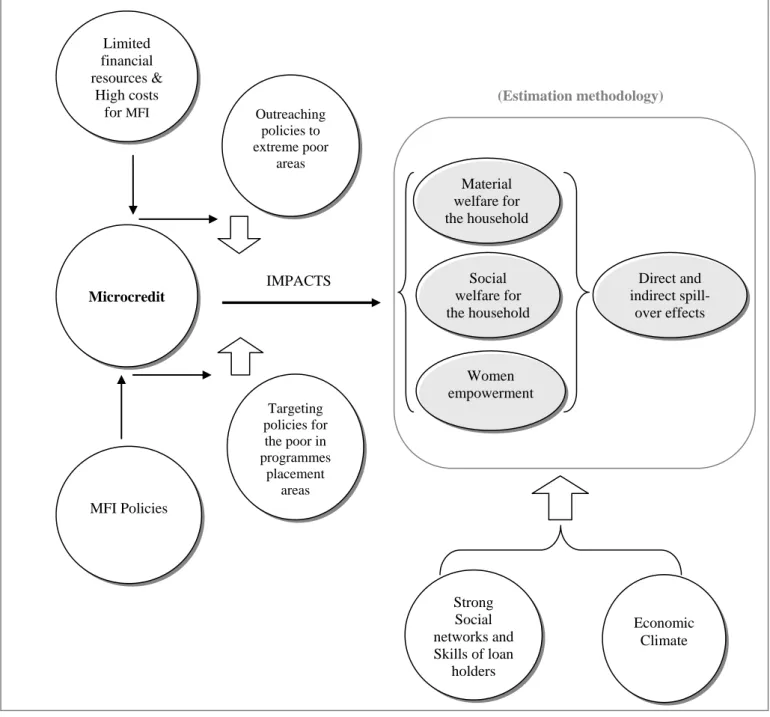
According to the theory of microcredit, the poor can be lifted up if they have access to micro loans that enable them establish small business to finance their living. As presented in the theoretical framework in figure 2.1, microcredit impacts on the loan holders can be captured on three different levels; the material welfare level of the loan holder household through better income, consumption and capital growth, the social welfare level through better education, health and nutrition for children and overall household and finally in case if a female is the loan holder microcredit enhances her self esteem, sense of independence and empowerment. Further microcredit positive impact can be expanded to the overall economy through direct spill over effects on the local community through enhancing investment and employment or indirect spill over effects through for example increasing productivity, awareness of the local citizens and curtailing shark money lenders in the community.
Figure 2.1: Theoretical Framework
Limited financial resources & High costs for MFI MFI Policies Microcredit Outreaching policies to extreme poor areas Targeting policies for the poor in programmes placement areas IMPACTS (Estimation methodology) Material welfare for the household Women empowerment Social welfare for the household Direct and indirect spill-over effects Strong Social networks and Skills of loan holders Economic Climate
21
However according to the literature these effects of microcredit varied according to the estimation methodology used in assessing microcredit programmes. Furthermore there are other contributing factors for the effectiveness of microcredit to take place. I can distinguish between two kinds of factors; internal factors and external factors. The internal factors are related to the MFI itself as represented in these institutions policies and different challenges they face. The high costs of the microfinance business and unsustainable financial resources hinder MFI outreaching policies to reach isolated and disadvantaged poor areas. In addition these institutions ongoing policies especially that for targeting the poor in programmes placement areas sometimes causes these loans to go to the more affluent instead of the real poor in these areas. Also as revealed from the literature review for examples targeting women not men don’t usually enhance the wellbeing of women otherwise it can deteriorate it. Hence these internal factors can cause these loans to end up in the wrong hands rather than the main target group required for these programmes to have a real impact on alleviating poverty. The other set of factors are external and they are related to the general surrounding and environment where these programmes work. I can distinguish between two kinds of external factors; the first is related to the economic climate in general, for example it is very risky to establish a business in a stagnating economy. The second is concerned with the loan holders themselves, they should maintain basics skills, knowledge and social networks first to know about the microcredit programme and then to run their business successfully.
22
Chapter Three: Research design and method
3.1 Research area
This research will focus on greater Cairo in Egypt. Greater Cairo includes three Governorates namely Cairo, Giza, and Qalyoubia. According to the 2006 census, the population in greater Cairo is approximately 14.2 million (CAPMAS, 2006). Poor people living in slums or poor informal settlements, also known locally as “ashwa’iyyat” are estimated to range between 6 to 10 million people (Sabry, 2009). Although the poverty rate in Cairo is relatively low when compared to other governorates, it is estimated to increase from 4.6% in 2005 to 7.6% in 2015 because of the existence of these slums (UNDP, 2008).
In 2008 Egypt was the largest microfinance market in the Arab region with 1.3 million active clients and a gross loan portfolio of US$324 million (SANABEL, 2010). There are currently more than 300 organizations working in microfinance (MF) in the country (Wesselink, 2011). Among these institutions are big donors like USAID, World Bank, UNDP, and the Ford foundation and others that only give consultancy, training, technical support or other non financial services. Financial services offered by MFIs vary between credit, saving/deposits and insurance services; credit service is the most prominent form in all institutions while other services are restricted to formal financial institutions (Moussa, 2007). Financial services given to micro, small and medium enterprises are given to them in accordance to their size and business capital. According to the Small Enterprise Development Law No. 141 of the year 2004, there are two kinds of small and medium enterprises (SMEs), small enterprises are those with capital starting from 50,000LE, while micro enterprises, are those enterprises with capital less than 50,000LE (The Egyptian Parliament, 2004).
Of the 300 organizations working in microfinance in Egypt only 28 institutions provide loans directly to the participants without any mediators, 18 of them are located in greater Cairo.
3.2 Research design
In this research the quasi-experimental model is used to assess the microcredit programmes in Cairo. Among the different approaches of quasi-experimental methods, the control group method is the most widely method applied to deduce causal relationships where one population group which benefitted from microcredit; the “treatment group” is compared to another population group which did not – the “control group” (Mosley, 1998). These studies may depend either on cross-sectional data (e.g. see Morduch, 1998; Pitt and Khandker, 1998; Morduch, 1999) or on panel data (e.g. Khandker, 2003). According to the literature review, programmes impact assessments based on quasi experimental designs like the one used in this research are subject to two main sources of bias; program placement endogentiy resulting from the unobserved characteristics of the area where the microcredit programme is located and the self selection bias, in addition to the sample bias resulted from not including considering the drop outs as raised by Karlan (2001) and Gwendolyn & Karlan (2009). Not controlling for the selection bias can lead either to overestimation or underestimation of the impact of microcredit programme on recipients’ welfare (Morduch, 1999). A way out to control for this kind of biasness is the choice of control group to be from new participants in the microcredit programme who presumably have similar characteristics to old participants (Hulme & Mosley, 1996). The same will apply when not controlling for program placement
23
biasness where choosing disadvantaged areas as the location for microcredit program causes downward biasness, consequently a program in better infrastructure areas for example might cause estimates to be biased upward (Morduch, 1999). This kind of bias is controlled for in this research by using region fixed effects estimation, which treats the unobserved effects, resulted from non random program placement (region-specific error) as a parameter to be estimated (Pitt & Khandker, 1998; Wooldridge, 2003).
The methodology used in this study is based on cross sectional data and a quasi- experiment control group approach where two groups of loan holders have been selected; a treatment group includes old loan holders who have been taking loans for more than one year and a control group that includes new loan holders who have just join the microcredit program with loan duration less than one year. Kinds of bias will be considered in the econometric model used in assessing the impact of the loans on different socioeconomic indicators reflecting microcredit recipients’ welfare status.
3.3 Sampling and data collection
Methods for data collection can be considered on a continuum with quantitative methods at one end of the spectrum and qualitative methods at the other while between these two methods are different combinations (Johnson and Onwuegbuzie, 2004). It is important that a researcher knows the characteristics of each method to better choose the optimal method to be employed. In this research a combination of both quantitative and qualitative methods will be employed when collecting primary data in order to enhance the validity of data and information collected and to better understand the impacts of microcredit programmes on individuals’ welfare status. However before pursuing with the data collection method, a sample frame for the loan holder population from which the sample will be drawn should be first identified.
3.3.1Sampling
There are 18 organisations that offer microcredit in greater Cairo, they are three kinds of these organisations; quasi government, NGOs (national and international), and banks (public and private). There are two kinds of credit offered: interest credit and free interest credit. The breakdown of the 18 microfinance organisations in Cairo is provided in terms of their characteristics in Table 3.1 below.
Table 3.1 Distribution of microcredit organizations in greater Cairo
Quasi-Government1 NGOs Banks
National International Public Private
Interest-based loans 1 7 3 4 1
Interest-free loans 0 1 0 0 1
A number of these microcredit organisations were contacted in order to take part in this research but only one micro-credit organisation in greater Cairo was willing and able to provide us with the data required to complete the analysis. This organisation was the First Foundation. Whilst this is a limitation of the research it should not detract from the value of
1
This refers to The Social fund for Development (SFD), it is established as a social safety net and it receive funds from both the government and donor agencies mostly from World Bank (MOUSSA, 2007).
24
doing such analysis since the results are important, and potentially applicable to all microcredit organisations in greater Cairo.
First Micro Finance Foundation (FMF)
The First Micro Finance Foundation (FMF) was established in Egypt in 2005, its total outstanding loans reached roughly US$5 million by 2010 and includes arround166 employees. It is affiliated to Aga Khan Agency for Microfinance (AKDN), one of the biggest microfinance institutes that offer microcredit in many countries all over the world including India, Pakistan, Syria and a number of west African countries. Initiatives of this institution vary between village lending, regulated MFIs and full-fledged microfinance banks. In addition to providing financial services AKDN provide business or technical advisory services and business development programmes. In Egypt the FMF provides non-financial services to microfinance clients through its Business Development Services (BDS) Centre that was established under the Canadian International Development Agency’s Cairo Economic Livelihood Project. It helps clients to establish a successful and rewarding business through providing them with necessary knowledge, guidance and business linkages that the enterprise needs to thrive in a competitive business environment. Since its establishment in 2009, BDS has provided financial education services to 2,878 clients especially to women who represent around 56% of the beneficiaries of such service.
Although FMF’s operation in Cairo was disturbed as a result of the revolution on the 25th of January 2011 it has gradually recovered to its previous levels of portfolio quality, however the loan portfolio growth was down significantly when compared with past years (The Aga Khan Development Network, 2007).
In this research a cluster sampling approach was employed to reach a proportional representation of loan holders at the FMF. The foundation had a total of approximately 19,000 clients all over Egypt; 5411 are located in three main districts of Cairo: Darb Ahmar with total of 1416 clients, Gamlyia with 2973 clients and Manshyiet Naser 1022. Out of a master sample of around 1075 clients from the three districts the sample has been selected to be proportionately reflect the geographical distribution of the clients.
The selected sample was 180 clients. It consisted of two groups of clients; new clients representing the control group (those who have been taking microcredit for less than a year), and old clients representing the treatment group (those who have been taking microcredit for more than one year). Given the total population of FMF clients in Cairo this sample provide a confidence level of 95% and confidence interval of 7. The samples have been selected randomly using the sampling tool in Excel data analysis tools.
3.3.2 Data collection
In this research three types of data collection methods were used: 1. Secondary sources
Reviewing previous studies on microcredit programmes in Egypt and other countries provided a good background for understanding these programmes; their impact assessment techniques; and the kinds and content of surveys and questionnaires used in research of this nature. However as mentioned by Crawford (1997) the information in these sources was not
25
taken as axioms, and they were considered carefully for any conceptual differences or measurements errors or even invalid or old references.
2. In-depth interviews
In-depth interviews with social and economic experts were conducted in order to obtain a better understanding of the microfinance industry in Egypt. Three in-depth interviews were conducted with experts in social science and field work. The first in-depth interview was with a professor in social science and a consultant at the Egyptian Cabinet Information and Decision Support Centre, Dr Saeed El-Masry. In this interview we discussed the issue of microcredit and the possible social impacts especially on women taken in consideration the eastern cultural view that the man is the bread winner. The other two in-depth interviews were with experts in field work surveys, Dr. Hanan Girgis Operation Manager in “Bassera” - a public opinions poll centre - and a former executive manager for population and development policies project, and Dr. Kamal Selim, Professor in the Computer department at the faculty of Economics and Political Science in Cairo University. During these interviews we also discussed the design and structure of the questionnaire and as a result I made some enhancements and edits on the final questionnaire structure and content.
3. Survey research
In this research two research surveys were conducted: a MFIs survey and a household survey. The purpose of each survey was different as the institution survey was a semi structured questionnaire while the household survey was a structured one. The following gives more details on each survey.
Institution survey
Semi-structured interviews were conducted with key informants in some MFIs in order to obtain some information about microfinance such as the criteria in defining those eligible for the loans, the value of the loans, the conditions for getting the loan and the follow up procedures whether it is just for repaying the loan only or also monitoring the usage of the loan.
The main purpose of the survey was to collect information about the main features of the loan programmes. Another important aspect was to investigate the financial sustainability of these institutions.
Among the list of the 18 organizations working in great Cairo in the field of microcredit, only three organizations agreed to do the interviews; Alshanek ya Balady(AYB), the Lead foundation (LF) and FMF.
Field visits were undertaken to these three organisations offices after setting appointments. The ‘LF’ office is located in the Mohandessen district of Cairo while the FMF and AYB are located in the Maadi district. The three organisations have mostly women clients and they give both micro- and small loans. The “LF” also however gives group lending. This research was primarily concerned with individual microcredit and not group lending so the focus of the interviews was to explore the difference between these institutions with regards to individual microcredit in order to get the institutional perspective of these loans.
The semi structured questionnaire included five main sections; the first inquiring about the main features of the microcredit programmes offered by each institution, the second inquiring about the eligibility criteria for the clients, a third section inquiring about loan usage