EVALUATION OF THE EFFECTIVENESS OF THE PARTNERSHIP
FOR REVIVING ROUTINE IMMUNIZATION IN NORTHERN NIGERIA
PROGRAMME IN JIGAWA STATE, NIGERIA
ADEGBENGA OMINIABOHS, ADEDAYO
A mini-thesis submitted in partial fulfilment of the requirements for the
degree of Masters in Public Health at the School of Public Health, University
of the Western Cape
Supervisor:
Dr. Ehimario Igumbor
Co-Supervisor:
Segun Oguntoyinbo
August 2012
ii | P a g e
EVALUATION OF THE EFFECTIVENESS OF THE PARTNERSHIP FOR REVIVING ROUTINE IMMUNIZATION IN NORTHERN NIGERIA PROGRAMME IN JIGAWA STATE, NIGERIA
Adegbenga Ominiabohs Adedayo 2816271
Keywords:
Routine Immunization
Routine Data
Immunization Coverage Survey
Partnership For Reviving Routine Immunization In Northern Nigeria (PRRINN)
Cluster Technique
Quasi-Experimental
Jigawa State, Nigeria
Before and After study
Vaccine Preventable Disease
iii | P a g e
Acronyms
BCG Bacille Calmette-Guerin
CDC Center for Disease Control and Prevention CMR Childhood Mortality Rate
COSAS Coverage Survey and Analysis Software DFID UK Department for International Development DPT Diphtheria, Pertusis, Tetanus
EPI Expanded Programme on Immunization FGN Federal Government of Nigeria
FIC Fully Immunized Children FMOH Federal ministry of Health
GAVI Global Alliance on Vaccine and Immunization GSHB Gunduma Health System Board
HB Hepatitis B
HBV Hepatitis B Vaccine HepB Hepatitis B
IPDs Immunization Plus Days ISS Immunization Service Support LGAs Local Government Area
MNCH Maternal, Newborn and Child Health
NHREC National Health Research ethics Committee of Nigeria NICS National Immunization Coverage Survey
NIDs National Immunization Days
NPHCDA National Primary Health Care Development Agency NPI National Programme Immunization
NPI National Programme on Immunization NWC National Working Committee
iv | P a g e OND Ordinary National Diploma
OPV Oral Polio Vaccine
PATH Partnership for Transforming Health PDO Project Development Objectives PHC Primary Health Care
PHCUOR PHC Under One Roof PHFs Primary Health Facilities
PPS Probability Proportionate to Size
PRRINN Partnership for Reviving Routine Immunization in Northern Nigeria RI Routine Immunization
RIA Rapid Immunization Assessment SHC Secondary Health Centers (Facilities) SIA Supplementary Immunization Activities SMOH State Ministry of Health
SPSS Statistical Package for Social Sciences
TT Tetanus Toxoid
UCI Universal Childhood Immunization UNICEF United Nations Children’s Fund UWC University of the Western Cape VPDs Vaccine Preventable Diseases WHO World Health Organization WPV Wild Polio Virus
v | P a g e
Abstract
The weak routine immunization activities in Nigeria have led to an upsurge of vaccine preventable diseases such as poliomyelitis in the northern parts of the country. This made the federal government to intensify efforts to improve routine immunization activities with various intervention programmes over the years. This commitment of the federal government towards improving routine immunization as a way to promote infant and child survival led to the partnership between the UK Department for International Development (DFID) to support the launching of Partnership for Reviving Routine Immunization in Northern Nigeria (PRRINN) programme in 2006. The programme, implemented in the northern states of Jigawa, Katsina, Yobe, and Zamfara was intended to augment other federal government immunization intervention efforts in improving routine immunizations services. After five years of programme implementation, assessment of the effectiveness of PRRINN had not be undertaken using a survey based immunization coverage to establish how well the primary objectives of the programme are being met in terms of improving routine immunization.
This study was designed to evaluate the performance of the PRRINN programme in improving routine immunization coverage in Jigawa State using coverage data from the National Immunization Coverage Survey (NICS) of 2010.
A quasi-experimental ‘before and after’ study design was used to evaluate the effectiveness of PPRINN in Jigawa State in respect to its primary objective of improving immunization coverage in the State. The study used secondary data sets from the National Immunization Coverage Survey (NICS) of 2006 and 2010, and routine immunization data collected at selected primary health facilities in the State. Key Informants’ Interviews (KII) were also conducted to complement the information gathered from the surveys and record reviews. The current status of immunization coverage for Jigawa State was determined and compared with the immunization coverage of the State in 2006. The immunization access and continuity was determined using the drop-out rates of DPT antigen. Status of the routine immunization in the health facilities was determined.
The data extracted from the NICS of 2006 and 2010 were analyzed using the customized coverage survey and analysis software (COSAS) and EpiInfo analysis software. COSAS was employed for analyzing the data on infant immunization and a statistical analysis programme was developed in FOXPRO to analyze the TT immunization in women. The standard report by COSAS provided an automatic standard analysis that generated the main indicators for infant immunization: coverage summary tables for crude and valid coverage by doses of each antigen (BCG, OPV, DPT and Measles) and also for full immunization. Results were disaggregated into ‘card only’ and ‘card plus history’. The FOXPRO generated the indicators for TT
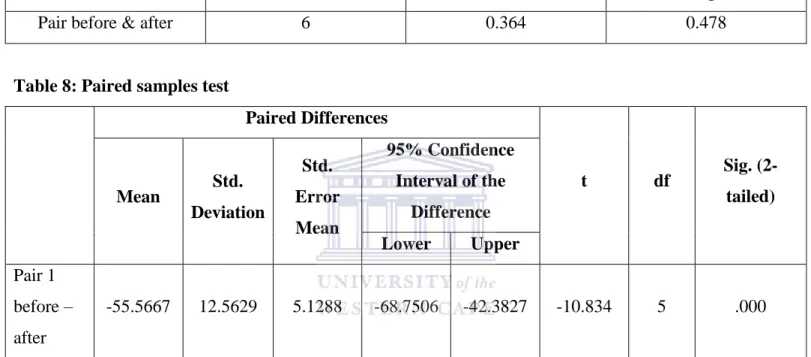
vi | P a g e immunization: mother protection, child protection, TT immunization service utilization, TT immunization follow-up (Drop-out rates), missed opportunities in TT immunization and card retention. Comparative analysis using the absolute differences in coverage rates and paired samples t-test analysis was done to compare immunization data from NICS and health facilities before and after the commencement of PRRINN activities in Jigawa State in order to determine the improvement or otherwise of routine immunization performance in the State.
Current immunization coverage status for Jigawa State was ascertained and compared with immunization coverage for 2006 which is taken as baseline before the commencement of PRRINN. The drop-out rates was also determined.
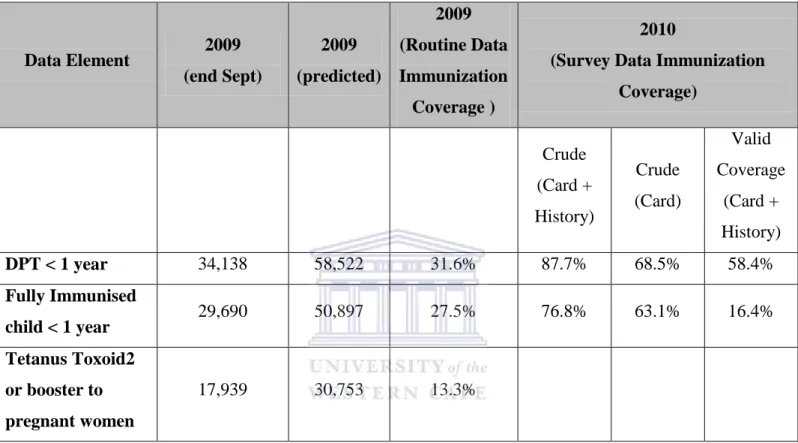
BCG immunization which is used to measure contact to immunization delivery system was 92.9% for 2010, it went up by about 61.6% over the four year period during the implementation of the PRRINN and immunization partners programme in the State. DPT 3 (88.7% for 2010) used to measure the strength of the immunization programme increased by 59.8% over the 2006 coverage. OPV3 coverage rate reported for 2010 in Jigawa State which is 88.1% for all children, gave almost 43.3% increment in the coverage over the four year period. It shows an improvement in the ability of the immunization service delivery system to give valid doses of vaccines to infants. Measles vaccine, used as an indicator to assess the ability of the delivery system to reach children before their first birthday and the last antigen to be given to a child showed that 85% of children were reached before their first birthday in the State. Hepatitis B3 Vaccine Coverage was encouraging at 87.5% which indicates that over 80% of the children were immunized with the vaccine. The mother and child protection against tetanus toxoid measured by administration of at least two doses of TT was also evidently increased from 9% coverage in 2006 to over 64% coverage in 2010, an over 55% increment over the four year period. This is an indication of an improved immunization systeme and increased demand for the immunization services.
This evaluation has revealed that there is an increase in immunization coverage in Jigawa State. The paired samples t-test analysis conducted showed a significance value of .000 which indicates that there is significance difference between the means of the coverage rates for 2006 and 2010. Hence, a conclusion that PRRINN and other partners immunization programmes was responsible for the increase in immunization coverage in the State. It shows that the concerted effort of the immunization partners in the State in strengthening the PHC system and improving routine immunization in the State has been successful in respect to access to immunization services and reduction of immunization drop-out rates.
vii | P a g e Although the study started with the intention of measuring the performance of routine immunization in Jigawa State on the backdrop of the involvement of PRRINN, it can only be said that the improvements noticed in routine immunization in the State reflects the collaborative efforts of all partners (State Ministry of Health, Gunduma Health Board, World Health Organization, United Nations Children Fund, Partnership for Transforming Health Systems and PRRINN). Hence, contribution rather than exclusive attribution was what the study deduced for the role PRRINN played in reviving routine immunization in Jigawa State.
The significance of this study is shown in using survey based data to measure performance and effectiveness of intervention programmes targeted at improving immunization activities
Some recommendations that arose from this study include:
The State should commission more health facility and community based surveys to ascertain the State of routine immunization in the State in order to monitor actual progress
The Department of policy, planning and resource mobilization under the State Ministry of Health should ensure prompt approval for research studies in the State
The Jigawa State Ministry of Health under the auspices of the State government and partnership it has enjoyed must ensure continuity of the routine immunization revitalization programme and sustained the gains of the programmes
The State government should be prepared to take over full responsibility for most of the partners funded activities under immunization should the tenure of the partners expires in the State.
The other neighboring States should emulate Jigawa State model by implementing similar programmes to improve routine immunization in their States
viii | P a g e
Declaration
I declare that Evaluation of the Effectiveness of the Partnership for Reviving Routine Immunization in Northern Nigeria Programme in Jigawa State, Nigeria is my own work, that it has not been submitted for any degree or examination in any other university, and that all the sources I have used or quoted have been indicated and acknowledged by complete references.
AdegbengaO.Adedayo 27th August, 2012
Signature:
ix | P a g e
Acknowledgement
I am grateful to my Supervisor Dr. Ehimario Igumbor for his guidance and supervisory role which positively imparted on the quality of the final draft of this mini thesis. My gratitude also goes to my co-supervisor, Segun Oguntoyinbo who also doubles as my boss at work for his contributions during the preparation of this mini thesis. I want to thank the management and staff of the School of Public Health for the opportunity given to me to be a student and for the quality of training imparted. My profound gratitude goes to Janine Kader and Corinne Carolissen for their support during this programme.
I want to acknowledge the management of the Partnership for Reviving Routine Immunization in Northern Nigeria (PRRINN) for the resource materials and audience granted to me by the Deputy National Programme Manager (Dr. Rodion Kraus) and the Health Systems Research Manager (Godwin Afenyandu) at the National office in Kano and Yusuf Yusufari during my visit to the Jigawa PRRINN office. I also want to thank the following for their support during the preliminary work on this minithesis; the Director of Policy, Planning and resource Mobilization, the State Monitoring and Evaluation officer and Dr Kabir of the Malaria Control Booster Project in the Jigawa State Ministry of Health.
A special thank you goes to Deborah Maidoki Musa, Issa Bala and Salisu Ahmed Koki for their effort during information gathering and data collection. My gratitude also goes to all my colleagues at Hanovia Medical Limited for keeping up with me when I have to shift workload to them while I get busy on my mini thesis; special thanks to Lanre Adesoye, Omotola Joseph, Nnamdi Ezike, Patrick Okonkwo, Kola Durojaiye and Reuben Danbaki.
I want to appreciate and thank my fellow students at the School of Public Health who all encouraged me with constant reminders to get to see the end of this programme, special thanks to Constance Mubekapi-Musadaidzwa, Adele Anthony-Heneke, Jill Cooke Wilkenson, Candice Lombardo Nicholls, Chukwuka Onaga, Funke Sopein Mann, Yohanna Avong, Dr. Chinyere Ilonze and Bimpe Oyewale.
Special thanks to Dr. Lloyd Baiyegunhi and Prof. Anthony I. Okoh for introducing me to the School of Public Health programme.
My profound and utmost gratitude goes to my mum and sister for their support and most especially to my wife Olufunmilayo Adedayo for her sacrificial support, patience, love and understanding throughout the period of this programme.
Thank you all.
x | P a g e Table of Contents Title Page i Keywords ii Acronyms iii Abstract v Declaration viii Acknowledgements ix Table of Contents x Definitions xv Chapter One 1 1. Introduction 1 1.1 Background 1 1.2 Research Setting 4 1.3 Problem Statement 7
1.4 Rationale for the Study 8
1.5 Aim of the Study 8
1.6 Objectives of the Study 8
Chapter Two 9
2. Literature Review 9
2.1 Immunization Services 9
2.2 Immunization Schedule in Nigeria 9
xi | P a g e
2.3 Evaluation Studies 12
2.4 Study Designs for Evaluating Immunization Intervention Programmes 14 2.5 Partnership for Reviving Routine Immunization in northern
Nigeria (PRRINN) Intervention Programme 14
2.6 Partnership for Reviving Routine Immunization in northern Nigeria (PRRINN) Reviews and Peer and Participatory Rapid Health Appraisal
for Action (PPRHAA) 20
Chapter Three 21 3. Methodology 21 3.1 Study Design 21 3.2 Study Population 21 3.3 Sample Size 22 3.4 Sampling Procedure 23
3.5 Selection of Survey Personnel 24
3.6 Data Collection Instrument 25
3.6.1 Data Collection Instrument 25
3.6.2 Pre-testing of data collection instruments 26
3.7 Validity and Reliability 26
3.8 Data Management and Analysis 27
3.8.1 Quality Assurance and Control 27
3.8.2 Data Analysis 27 3.9 Ethical Considerations 28
xii | P a g e
Chapter Four 29
4. Results 29
4.1 Current status of Immunization coverage for Jigawa State 29
4.2 Immunization drop-out rate in Jigawa State 31
4.3 Comparison of routine immunization over time in Jigawa State 31 4.4 Paired samples t-test for the immunization coverage between
2006 and 2010 31
4.5 Comparison of routine data with survey data 36
4.6 Health facilities routine data and other immunization information
in the State 36
4.7 Counterfactual analysis of Immunization Coverage in Jigawa and
two other northern States 37
Chapter Five 40 5. Discussion 40 Chapter Six 45 6. Conclusion 45 6.1 Conclusion 6.2 Recommendations 46 References 47 Appendices 52
Appendix 1: Random number table for cluster sampling 52
xiii | P a g e
Appendix 2: Infant immunization cluster form 53
Appendix 3: Tetanus Toxoid immunization cluster form 55
Appendix 4a: Information sheet 57
Appendix 4b: Informed consent 60
Appendix 4c: Draft Facility Questionnaire (before field pre-testing) 62
Appendix 4d: Draft Facility Questionnaire (after field pre-testing) 64
Appendix 5:Key Informants’ Interview Guide 67
Appendix 6a: UWC Senate Research and Ethics Committee approval 68 Appendix 6b: National Health Research Ethics committee of Nigeria (NHREC) approval 69
Tables
Table 1: Percentage of children 12-23 months who had received specific vaccines by the time of the NDHS in 1990
Table 2: Previous reviews of PRRINN
Table 3: Sample Size for primary data collection at primary health facilities Table 4: Selected Clusters and Communities for NICS 2010 in Jigawa State Table 5: Current Status of Immunization Coverage for Jigawa State
Table 6: Comparison of immunization coverage between 2006 and 2010 Table 7: Paired samples correlations
Table 8: Paired samples test
Table 9: Comparison of children immunized with Tetanus Toxoid Vaccine between 2006 and 2010 Table 10: Comparison of routine immunization data and the survey based immunization data Table 11: Immunization Supply Side Assessment
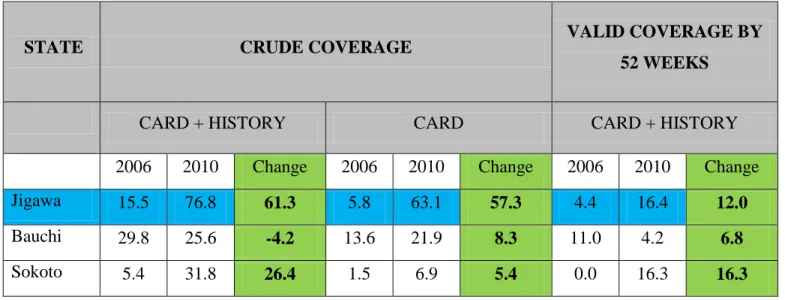
Table 12: Comparison of coverage of fully immunized children (12-23 months) between 2006 and 2010 for Jigawa, Sokoto and Bauchi States
Table 13: Comparison of children immunized against Tuberculosis (BCG) between 2006 and 2010
Table 14: Comparison of proportion of children (12-23 months) immunized with DPT 3 between 2006 and 2010 for Jigawa, Sokoto and Bauchi States
Figures
Figure 1: Comparison of Crude Coverage of fully immunized children (12-23 months) between 2006 and 2010
xiv | P a g e Figure 2: Comparison of crude coverage of children (12-23 months) immunized
against BCG between 2006 and 2010
Figure 3: Comparison of proportion of children (12-23 months) immunized against OPV 3, DPT 3 and HBV 3 between 2006 and 2010
Figure 4: Comparison of children immunized with Tetanus Toxoid Vaccine between 2006 and 2010
Figure 5: Counterfactual analysis of the differences noticed in immunization coverages between Jigawa State and two other States (Bauchi and Sokoto) where there were no PRRINN immunization revitalization programmes.
xv | P a g e
Definitions
Child/Childhood/Infant: Child is generally a human between the stages of birth and puberty. Childhood is the period covering the span between births and puberty. However, for immunization purposes a ‘child’ is defined as a human between the age of 11 to 59 months (1 to 5 years of age) while infants is a child aged 0 -11 months.
Crude Coverage: Crude coverage as immunization given, evidences by card where applicable or by history from mothers/guardians.
Drop-out rates: Drop-out rates (between the first and last doses of a vaccine) are used to measure program continuity: drop-out rates between DPT 1 and DPT 3 are the best indicator of program continuity and follow-up of children in immunization.
Fully Immunized Child (FIC): This is a child who has received doses of the ‘standard six’ antigens –
BCG, diphtheria- pertussis-tetanus (DPT) (3 doses), polio (3 doses), and measles vaccines. However in Nigeria, FIC also captures the additional indicators for Yellow Fever and hepatitis B vaccines.
Fully Immunized Children (FIC) is an indicator which measures the number of children who have received the complete dosage of the following four antigens: BCG, 3 doses of DPT, 3 doses of Polio and Measles.
OPV 3: is the third dose of the polio vaccine expected to be given to a child at 14 weeks according to the national immunization schedule
Valid Coverage: this is the immunization given as evidenced by card. The validity is based on the presence of a card with a date when the vaccine was given.
Vaccine Preventable Diseases (VPD): this is an infectious disease for which an effective preventive vaccine exists. Some of the VPD include anthrax, cervical cancer, diphtheria, hepatitis A & B, haemophilus influenza type B (Hib), human papillomavirus (HPV), influenza (flu), measles, meningococcal, mumps, pertusis, pneumococcal, polio e.t.c.
1 | P a g e
CHAPTER ONE
1. Introduction
1.1 Background
In Nigeria, it is estimated that one child out of five dies before its fifth birthday of vaccine-preventable diseases (VPDs); this accounted for about 872,000 (22% of) childhood deaths in 20021. The childhood mortality rate (CMR) was 97 per 1,000 live births in 2003 and 88 in 20082. This follows the global trend which recorded a fall from 12.4 million in 1990 to about 8.1 million in 20093. It is disturbing to note that just three countries accounted for 40% of the 8.1million global child deaths. These countries include Nigeria accounting for about 10% of global deaths second to India which accounted for 21.1% and Democratic Republic of Congo (6.4%).
Immunization has been accepted worldwide as the proving tool for the control and prevention of life threatening infectious diseases, especially VPD in children and this holds true in the developing countries. Immunization has been proven to be the most cost-effective and equitable intervention strategies in primary healthcare delivery and is estimated to avert between 2 and 3 million deaths each year4,5.
Immunization activities started in Nigeria in 1956 prior to the small pox eradication campaign. However, the Expanded Programme on Immunization (EPI) routine immunization (RI) against Diphtheria, Pertusis, Tetanus (DPT), measles, poliomyelitis and tuberculosis began in Nigeria in 1979 and the coverage increased steadily until 1990. The national BCG coverage during the period (1979 – 1990) rose steadily to reach 80% and 48% for measles. However in the 1990s the coverage started reducing alarmingly that BCG coverage went down to 34% and measles to 30% 6. Though there was significant variation in the immunization coverage between the States and Federal Capital Territory during this period as detailed in the regional coverage rates in Nigeria Demographic and Health Survey of 1990 (see Table 1)7. The decline in immunization coverage has been attributed to weak RI services due to inadequate financial planning and funding; stock-outs of immunization consumables; lack of government commitment in human resources development and poor immunization uptake among other challenges.
Prior to the 1990s, the coverage of RI services was reportedly as high as 81.5% of newborns8. This good performance was not sustained in the years that followed as the introduction of National Programme on Immunization (NPI) in 1996 which replaced the EPI and mainly focused on polio eradication weakened the routine services in the country1. For example the nurses carrying out Supplementary Immunization
2 | P a g e Activities (SIA), National Immunization Days (NIDs) and Immunization Plus Days (IPDs) were not available at the health centers and clinics to provide routine care as there were numerous campaigns targeted at eradicating polio every year1. In terms of funds, routine immunization services did not receive the same attention that polio eradication programmes alone received. Recently the Bill Gates and Melinda Foundation declared that it had spent about $750m on polio eradication in Nigeria alone 9, while the 2011 total budget for National Primary Health Care Development Agency (NPHCDA) which oversees immunization services is N7.6 billion (approximately $48m)10. The effect is that routine immunization services have consistently been weakened consistently since the 1990s8.
Table 1: Percentage of children 12-23 months who had received specific vaccines by the time of the NDHS in 1990
Percentage of children who received:
Background Characteristics BCG DPT Polio Measles Number of Children 1 2 3+ 1 2 3+ Sex Male Female 59.7 61.7 57.9 60.5 45.9 47.6 33.7 32.9 58.2 61.1 46.1 47.9 33.8 32.9 45.7 46.4 683 697 Region Northeast Northwest Southeast Southwest 41.2 52.6 73.0 81.6 40.8 51.7 70.2 79.8 32.1 35.1 58.8 66.5 17.3 18.7 50.4 51.0 42.6 51.7 70.2 79.8 32.7 35.1 59.0 66.5 17.3 18.7 50.4 51.3 31.6 39.7 53.9 64.0 359 373 408 240 All children 60.7 59.2 46.8 33.3 59.7 47.0 33.4 46.0 1,380
Extracted from Table 8.7 (vaccinations by background characteristics) of the Nigeria Demographic and Health Survey 1990.
The Federal Government of Nigeria (FGN) acknowledged the importance of immunization as a means of controlling diseases, reducing deaths of infants/children and also as the most cost-effective health intervention8, 11. Therefore the UK Department for International Development (DFID) pledged resources to assist the Federal Ministry of Health to strengthen routine immunization services8. This partnership between DFID and the FGN finally led to the launch of the Partnership for Reviving Routine Immunization in Northern Nigeria (PRRINN) in 2006. PRRINN was designed to be implemented by a consortium of three organizations (Health Partners International, Save the Children UK, and GRID Consulting) and involves
3 | P a g e working with stakeholders at all levels to ensure the improvement of immunization coverage in a sustainable manner, with routine immunization system strengthening as an entry point for strengthening the PHC system. Some of the project development objectives (PDO) are:
To improve the capacity of the States and LGAs to plan, implement and monitor routine immunization activities within the context of integrated primary healthcare.
Increased access to the uptake of immunization
Strengthened community ownership of immunization activities
The programme was originally designed to run from 2006 to 2011 and focused on the northern States with the lowest immunization coverage rates. These are Jigawa, Katsina, Yobe, and Zamfara States which all have immunization coverage rates of less than 22% respectively6. The PRRINN programme was valued at £27.2 million. Following a favourable programme review and demonstration of value for money in 2010, the programme was extended till 2013. The reviews that have been done on the programme before now are summarized in table 2 below:
Table 2: Previous reviews of PRRINN
Type of Review Year Approach Output
PRRINN Annual Review and MNCH Inception Review
2009
review of key documents and reports, interviews with
PRRINN staff, key stakeholders at national, regional, State and LGA levels
Report12
PRRINN-MNCH
Annual Review 2010
review of key documents and reports, interviews with
PRRINN staff, key stakeholders at national, regional, State and LGA levels
Report13
Rapid Immunization
Assessment 2010
the assessment of the cold chain, vaccine distribution systems and vaccine management at the State level and in 4 LGAs and 8 health facilities in each State
Report14
The infusion of additional financial resources from the Norwegian government in 2008 enabled the scope of the PRRINN programme to be expanded beyond improving immunization to improving the health of
4 | P a g e mothers and children in the same States. Hence the new PRRINN-MNCH programme is two projects combined in one (DFID-funded PRRINN which began in 2006 and the Norwegian-funded Maternal, Neonatal and Child Health (MNCH) project which began in 2008).
This study assessed the performance of routine immunization in Jigawa State to demonstrate the effectiveness of the DFID funded PRRINN component of PRRINN-MNCH activities in the State by comparing the immunization coverage and routine immunization data from the health facilities before the commencement of the programme to date.
1.2 Research Setting
Jigawa State is situated in the northwestern part of Nigeria. Kano State and Katsina State border Jigawa to the west, Bauchi State to the east and Yobe State to the northeast (Map 1). To the north, Jigawa shares an international border with Zinder Region in The Republic of Niger.
The State has a total land area of approximately 22,410 square kilometers. Its topography is characterized by undulating land, with sand dunes of various sizes spanning several kilometers in parts of the State. The socio-cultural composition in Jigawa State could be described as homogeneous: Hausa/Fulani, who can be found in all parts of the State, mostly populates it. Kanuri are largely found in Hadejia Emirate, with some traces of Badawa mainly in its Northeastern parts. Even though each of the three dominant tribes continue to maintain their ethnic identity, a shared religion (Islam) and a long history of inter-marriages have continued to bind them together.
Although population of the State is predominantly rural (90%), the distribution in terms of sex is almost equal between male (50.8%) and female (49.2%). This sex distribution pattern in the population is same across various constituencies in the State and between urban and rural areas.
Jigawa State comprises 27 Local Government Area (LGAs), which are divided into 30 State Constituencies, grouped into 11 Federal Constituencies and 3 Senatorial Districts. These 27 LGAs are further subdivided into 77 Development Areas per law No. 5 of 2004 of the State House of Assembly.
The State Ministry of Health (SMOH) comprises of five (5) departments and one parastatal – Gunduma Health System Board (GHSB). The primary and secondary healthcare systems are integrated and administered through 9 Gundumas (districts). As the supervising and coordinating authority on health matters within the State, the SMOH takes initiatives and ensures political support from the Government
5 | P a g e towards achieving its laudable objectives.
There are 13 Secondary Health Facilities (SHCs) managed by the SMOH and a tertiary health facility, Federal Medical Center (FMC) which is managed by Federal Ministry of Health (FMOH). There are 623 primary healthcare facilities in the State; these are categorized into Health Posts (337), Health Clinics (134), Primary Healthcare Centers (61) and Dispensaries etc (91).
Each of the Gundumas has three departments, headed by the Deputy Directors and the departments include the following:
Primary Health Care Department (reproductive health; nutritional promotion; immunization IMCI; disease, surveillance and control; health promotion and equity; monitoring, evaluation and operational research)
Hospital Department (clinical services and quality assurance)
Administration and Support Services Department (finance and accounts; drugs and logistics; human resources)
The primary health care department is in charge of the immunization services within each district and due to integration of the health system under the GHS, immunization was provided at all level of care. The analysis of the findings from the Jigawa State listing survey revealed that a total of 4,906,029 people access health care services from the 623 primary health facilities across the 27 LGAs of jigawa State. It gives an average of one primary health facility servicing an estimated 7,875 people in 2011 15.
6 | P a g e
Map 1: Administrative Map of Nigeria showing Jigawa State (red ringed)
Map 2: Administrative Map of Jigawa State showing the 27 LGAs
7 | P a g e
1.3 Problem Statement
A major health system challenge in Jigawa State is the weak immunization service delivery with almost non existing routine services. Even with the focus on polio eradication programmes, and the reporting of high coverage after each round of immunization activities, the complete eradication of polio in northern Nigeria is still a challenge. It is believed that the upsurge of WPV-3 predominantly in the northern parts of the country is associated with poor routine immunization. Though it could be addressed through good quality immunization rounds, a sound routine immunization system could have handled the WPV3 and various VPD that we have as a problem in the country now (especially in the North). A demographic and health survey in 2008 showed that States like Sokoto, Zamfara, Jigawa, Yobe and Borno have less than 10% of their infants fully immunized at the age of one2. Low routine immunization coverage has been linked to low proportion of infants of one year old fully immunized as demonstrated in the northern states of Sokoto, Zamfara, Jigawa, Yobe, Borno, Gombe, Bauchi, Kano, Kaduna and Kebbi. This is a pointer that routine immunization system is not operating well in this part of the country.
So the initiative of PRRINN and other immunization intervention programmes to revive routine immunization activities is believed to be logical. After five years of programme implementation, there has been no substantive evaluation of the programme, except for the annual reviews (done twice so far) but which did not include survey based data and made cursory attempt to track performance of PRRINN in respect of immunization coverage. Hence, a thorough and systematic assessment of the performance of routine immunization in Jigawa State before and after PRRINN had not been conducted.
1.4 Rationale for the study
The assessment of routine immunization performance in Jigawa State based on the status of immunization coverage and routine immunization activities in the State will help in understanding if the public health programme activities being implemented in the State are achieving the objectives of improving routine immunization in the State.
More so, the independent assessment of new public health intervention programmes like PRRINN is necessary to appraise the performance of the programme against key outcome indicators. Knowing the effectiveness of the PRRINN intervention programme will inform future actions; for example, if the assessment is positive, then the replication of the programme in other States will be evidenced-based. The assessment is also good for the monitoring and evaluation component of such programmes.
This research study will provide assessment for the performance of routine immunization in the State since
8 | P a g e the inception of the renewed efforts of the government to improve routine immunization and the creation of the PRRINN intervention programme in this setting. This is expected to contribute significantly to the general assessment of PRRINN efforts at improving routine immunization in Jigawa State. Comparing the current survey based immunization coverage of the State with the coverage figures from national survey based coverage in 2006 will reveal the status of routine immunization in the State. The analysis of the survey based data is expected to give an unbiased assessment of RI in Jigawa State.
1.5 Aim of the Research Study
The aim of this study was to evaluate the performance of the ‘Partnership for Reviving Routine Immunization in Northern Nigeria’ (PRRINN) in improving routine immunization coverage in Jigawa State.
1.6 Objectives of the Research Study
To determine the current status of immunization coverage for Jigawa State, after five years of PRRINN programme implementation.
To measure and compare the drop-out between first and third dose of DPT, the proportion of full immunized children over the five year period, and determine the factors affecting immunization.
To ascertain the status of routine immunization in the primary health facilities spread across the 27 LGAs of Jigawa State.
9 | P a g e
CHAPTER TWO
2. Literature Review
2.1 Immunization Services
Routine immunization is the corner stone of public health intervention to VPDs, as it is the most cost-effective clinical preventive service for children, saving both lives and money16. Immunization against VPDs has greatly improved globally. It was reported that the number of children immunized against VPDs has gone up from 20% in 1980 to about 80% in 199617. It is further estimated that as many as 2.8 million child deaths have been prevented annually as a result of immunization for VPDs18. Studies by the World Health Organization (WHO) have shown that the number of children saved from death from VPDs has increased steadily over the years with figures of 800,000 lives saved in 198819 and increasing to over 2 million in 200616.
However the performance of immunization programmes in developing countries remains dismal. In 2006, over 1.4 million children died from VPDs. This observation is in tandem with the reported low immunization coverage in 2006: of 157 member countries of the WHO only 47 had DPT coverage greater than 80% in all districts or states16. Only five countries accounted for about half of global child deaths in 2009, notably among these are India, Nigeria, and Democratic Republic of the Congo. This poor performance may be attributed to weak health systems characterized by inadequate funding, staffing and poor cold chain at health facilities and limited public awareness to mention but a few 19.
In his review, Joanne Embree stated that “there is a need to assess the long term effect of the introduction of any immunisation programmes”20 and the sophisticated modelling techniques available have greatly improved our ability to predict the effect of public health interventions. It is imperative that the early or long term effect of the introduction of intervention programmes is assessed20. It is also important to actively monitor or evaluate the programmes in order to prepare for the eventualities of their effect on the health problems20.
2.2 Immunization Schedule in Nigeria
The immunization schedule for Nigeria and by extension for Jigawa State indicates that a child should be immunized against Tuberculosis and Hepatitis at birth with the BCG vaccine and first dosage of Hepatitis B Vaccine respectively. Thereafter, the child is administered DPT 1, OPV 1 and the second dose of the HB (HBV2) vaccines at 6 weeks; then the second dosage of both DPT (DPT 2) and OPV (OPV2) at 10 weeks.
10 | P a g e The third dosage of DPT (DPT 3), OPV (OPV 3) and HB (HBV3) vaccines are given at 14 weeks while measles vaccine is given at 9 months.
The schedule for Tetanus Toxoid in Nigeria indicates the second dosage of TT(TT2) vaccine should be given 4 weeks after the first contact with TT1 while TT3 should be given 6 months after TT2; TT4 given at least a year after TT3 or during subsequent pregnancy while TT5 is given at least a year after TT4 or during subsequent pregnancy 21.
Data were therefore collected on the immunization indicators (antigens) as specified in the national immunization schedule above during immunization coverage survey and routinely at the health facilities. Infant immunization was reported in NICS 2006 under the following; as crude, valid and valid by 52 weeks of age. Each of these is reported under ‘card + history’ and ‘card only’. However, the NICS 2010 reported the immunization coverage as crude coverage (‘card + history’ and ‘card only’) and valid coverage (‘card + history’ and ‘card only’) 21
.
Crude Coverage: this is immunization given, evidences by card where applicable or by history from mothers/guardians. There is no emphasis on timing and or time-interval as required by the schedule. This actually measures the ability of a delivery system in administering doses at the right time in line with the national immunization schedule.
Valid Coverage: this is the immunization given as evidenced by card. The validity is based on the presence of a card with a date when the vaccine was given. This is immunization given at the specified minimum age and interval in line with the national schedule. Valid coverage can either be either valid immunization given under one year of age or valid immunization given beyond one year of age. This indicator is used to measure the ability of a delivery system to reach children in their first year of age and also beyond the age of 1 year and vaccinate them at appropriate dose interval.
The following vaccine immunization coverage given in Nigeria are used as indices to measure immunization delivery system performance among other things:
BCG
BCG is the first vaccine to be given to an infant at birth if he/she is born in a health facility. This is an indicator used in measuring the access to immunization services because the vaccine is given to the infant at his/her first contact with the immunization system.
11 | P a g e
OPV 3
OPV 3 is the third dose of the polio vaccine expected to be given to a child at 14 weeks according to the national immunization schedule. It is relevant to note that polio virus is still a huge challenge to the immunization service delivery system in Nigeria and it was pointed out in the NICS 2006 report4 that a sound routine immunization is key to eradicating polio scourge in the northern part of the country. It is an indicator also used to measure the ability of the immunization service delivery system to give valid doses of vaccines to infants.
DPT 3
DPT 3 is the third dose of the DPT vaccine expected to be given to a child at 14 weeks according to the national immunization schedule. It is a globally accepted indicator to assess immunization coverage trends. A child who was recorded as having been given DPT 3 is expected to have gone through the complete cycle of routine immunization and he/she is expected to have received the other vaccines (BCG, OPV 1 – 3 and DPT 1 – 3). In some instances, across the immunization offices in Nigeria, DPT 3 is usually used routinely to report FIC since the factual FIC coverage can only be gotten during surveys which are not done yearly.
Measles
In Nigeria, measles vaccine is given to a child at 9 months (39 weeks) according to the national immunization schedule. Measles vaccine which is administered as a single dose is the last antigen to be given to a child. It is used as an indicator to assess the ability of the delivery system to reach children before their first birthday. In some cases measles vaccine coverage sometimes is used to signify FIC in the absence of the survey generated FIC that considers all antigens.
Drop-out rates
Drop-out from DPT1 to DPT3: The proportion of the children who received DPT 1 but did not receive DPT3 vaccine. This proportion reflects the deliberate contact with the immunization services and the last dose in multi-dose vaccinations. The period between the first dose of DPT 1 and DPT 3 is when most of all immunization is given to the child, so this DPT1 to DPT3 drop-out rate is a good indicator to assess continuity and compliance of the population with the immunization programme.
Drop-out from BCG to DPT3 measures the difference between the first opportunity with immunization services and the last dose in multi-dose vaccinations.
12 | P a g e
2.3 Evaluation Studies
In an evaluation study used in assessing the efficacy of non modest financial incentives and non-incentives in improving immunization rates in children aged 1-3 years, a clustered randomized controlled study design was used22. The study was conducted in the rural setting of Rajasthan, India and the design was based on randomizing 134 villages into one of three groups. These groups include: a once-monthly reliable immunization camp (intervention A; 30 villages); a once-monthly reliable immunization camp with small incentives (intervention B; 30 villages), or control (no intervention, 74 villages). The study investigated the impact of a reliable supply of free immunization services and non-financial incentives on the demand for immunization services. The non-financial incentives given to group B included lentils and metal plates for completed immunization. The study showed that offering families small, non-financial incentives in addition to reliable services and education had large impacts on the uptake of immunization services in resource poor areas and are more cost effective than just improving supply. The study was conducted in areas where the initial immunization rates were extremely low as found in Jigawa State. The generalizability of the survey can be assured only in the rural areas of Jigawa State, as similar interventions in the urban areas may not give remarkable result. The cost of giving incentives in the present setting may not be feasible except there are funding partners for such intervention. The report also reported confounding factors of villagers who might have been motivated to attend the camp for other motives, such as to prevent the cancellation of the programme.
In another evaluation study done in 2008 to assess the progress towards universal childhood immunization (UCI) and the impact of global initiatives, the researchers hinged their findings on the survey-based DPT3 immunization coverage as against the countries official reports or WHO and UNICEF estimates23. The study sought to address the issue of over-reporting of childhood immunization coverage rates which may be encouraged by target-oriented and performance-oriented initiatives like Universal Childhood Immunization (UCI) campaign and Global Alliance on Vaccines and Immunization (GAVI). The researchers used all available data to systematically assess the survey-based trend in DPT3 crude coverage during 1986 to 2006; and checked if global health initiatives such as UCI and GAVI ISS, led to over-reporting of DPT3 coverage. DPT3 coverage was estimated by analyzing unit record data from surveys and reported coverage from administrative data based on health service provider registries. The researchers then used bidirectional distance-dependent regression to estimate trends in survey based coverage in 193 countries between 1986 to 2006. They further investigate any association in the difference between countries’ official reports and survey based coverage using standard time-series cross-sectional analysis.
The result of the systematic analysis in the study depicted that the crude coverage of DPT3 immunization based on surveys varied when compared to the level suggested by countries’ official reports or the WHO
13 | P a g e and UNICEF estimates23. The improvement in immunization coverage as revealed by data from surveys is more gradual than suggested by the official or administrative reports. The evaluation study done to assess the progress towards UCI and the impact of global initiatives shows the efficacy of using survey based data in evaluating the immunization based intervention programmes or initiatives. The researchers argued that “monitoring and evaluation systems need to be based on rigorous, empirical measurements that are robust to these effects”. The study design used appropriate statistical methods for the study and the researchers carefully controlled for the period they need to get backcasting or forecasting survey-based coverage using sensitivity analysis (multiple imputation).
Another independent assessment done by researchers in 2006 to evaluate the effect of the GAVI on immunization coverage used the DPT 3 coverage. The researchers “examined the relation between DPT3 coverage for GAVI recipient countries from 1995 to 2004 and immunization services support (ISS) and non-ISS expenditure per surviving child, controlling for income per head and local political governance variable”. Two different dependent variables were used to study the relationship between DTP3 coverage for GAVI recipient countries from 1995 to 2004. The dependent variables used were DPT3 coverage reported by government and DPT3 coverage estimates from WHO/UNICEF reports. The study concluded that the effect of GAVI on DPT3 coverage depicted that GAVI has contributed to increase of DPT3 coverage in countries with baseline coverage of 65% or less24. It can be concluded from the study that similar GAVI interventions can only be effective with countries that have DPT3 coverage of less than 65% at baseline. The study did not specify the type of DPT3 coverage used for the study; it was not clear if the crude coverage (card plus maternal-self report) or card only was used.
Within Nigeria, the EPI was evaluated in Port Harcourt, Rivers State25. For this evaluation, the immunization status of children 9 months to 3 years who attended the children’s outpatient clinic of the University Teaching Hospital, Port Harcourt was compared before the commencement of the EPI programmes and 18 months after the commencement. The study showed an increase in the percentage of fully immunized children from 5% to 43% over a two year period (1984 – 1986). The study also demonstrated that the proportion of children with no vaccination dropped from 56% to 19% over the same period and called for an intensification of the immunization campaign in order to achieve full immunization coverage of 80%25.
The trend in the evaluation of immunization programmes has been to measure performance in terms of the coverage rate of antigens or coverage rate of all antigens as a whole (full immunization) 16. We could begin to question if the only way to measure effectiveness of the different routine immunization programmes should be based on coverage rate for the antigens or the eradication of the diseases which the vaccines are
14 | P a g e targeted at. The argument here is that if these vaccines are truly potent and they possess the presumed potential ‘herd effect’, then the yardstick for measurement of RI intervention programme could ultimately be the disappearance of the VPDs. Though the scope of the present study is also to measure performance of PRRINN in Jigawa State in terms of coverage rate, subsequent assessment studies should be based on disease incidence.
2.4 Study Designs for Evaluating Immunization Intervention Programmes
In a review16 of studies that evaluated intervention programmes to improve RI programmes in developing countries, various strategies were identified as having been used in different settings. These include observational studies, quasi experimental before and after evaluation studies, and studies with comparison group9.
Twenty five evaluation studies that were selected in the review were on programmes that have reported success in improving routine immunization programmes through community and facility based interventions over a period of 38 years16. No strategy could be adjudged to be the best as some of the strategies were applied in the setting with high baseline coverage while others were in settings with low baseline coverage 16
.
The review showed that of the 25 studies reviewed, 8 used the before and after study design to carry out the evaluation of the intervention programmes. The before and after study design was able to report change in coverage compared to the other designs where immunization coverage were not reported. However, the review reported that the generalizability of the evaluation studies could not be determined as most of the studies failed to discuss the comparison of the findings with other similar studies16.
2.5 Partnership for Reviving Routine Immunization in Northern Nigeria (PRRINN) Intervention Programme
The programme Partnership for Reviving Routine Immunization in Northern Nigeria (PRRINN) was originally designed by FBA Health Systems Analyst in 2005 for the UK Department for International Development DFID26. The project is a partnership between the following agencies; Health Partners International, Save the Children - UK, GRID Consulting, Health Reform Foundation of Nigeria, John Hopkins University Center for Communications Programs and Institute of Development, Partnership for Transforming Health PATH and Transaid26.
In view of the lowest immunization coverage rates in the northern Nigeria, this DFID supported programme was started in November 2006 in four Northern States of the country; Jigawa, Katsina, Yobe and Zamfara States and the programme was billed to run for a five year period.
15 | P a g e The key goal of PRRINN is to improve immunization coverage in a sustainable manner, with routine immunization system strengthening as an entry point for strengthening the PHC system.
Some of the project development objectives (PDO) are:
to improve the capacity of the States and LGAs to plan, implement and monitor routine immunization activities within the context of integrated primary healthcare.
to increase access to the uptake of immunization
to strengthen community ownership of immunization activities
The factors responsible for the failure of routine immunization in the country are multifaceted and can be placed under broad headings as ‘supply side issues’ and ‘demand side issues’. The supply side issues include: the unavailability of vaccines, absence of vaccinators, and distance to the routine immunization facilities27, 28. The development partners also reported six other major factors which include; insufficient ownership by States, LGAs and communities, lack of commitment by all tiers of Government, lack of year-round availability of all vaccines at health facility level, lack of monthly financial support to operational costs, lack of proper supervision and feedback, lack of data driven monitoring and low staff motivation (especially the outreach staff) 29.
On the demand-side, the factors responsible for the poor uptake of immunizations as revealed by the theory based research conducted in six northern States include: psychological factors which showed the role myths and rumors played in obstructing immunization uptake, for example the belief that foreign country promote immunization with a hidden agenda, there is also misinformation about the number of vaccines to be taken and the side effects of these vaccines; community and systemic factors, for example the people are discouraged because of the lack of skill from immunization service providers and long waiting time at the service delivery points; and socio demographic and media factors, for example limited media exposure and access to public health facilities among the low income earners26. Comparing these aforementioned factors with what was reported by Centre for Disease Control and Prevention (CDC) on the factors that influence immunization rates, they also stated poverty / access to care issues, cultural approaches to health care, and missed opportunities30.
PRRINN immunization activities started in the various States at different time and the programme was designed to address the above factors responsible for the failure of routine immunization in the four States of Yobe, Jigawa, Katsina and Zamfara where the programme is being implemented.
16 | P a g e Before the PRRINN programme started in Jigawa state in October 2006, the following challenges were a common place in the State: PHC service budgets were inadequate to support staff supervision and training, drug supply, facility maintenance and health promotion1.
However, after the commencement of PRRINN, the health systems strengthening objectives under listed are being implemented through various activities to address the challenges aforementioned:
1. Advocacy and technical assistance to the state and local governments, political, traditional and religious leaders as well as support to communities to demand services.
2. PRRINN support has been laying the foundation for well-funded and managed PHC services by providing technical assistance for quality services and by working with Federal, state and local government authorities to plan, budget and monitor funds and activities effectively.
3. Technical support to state government to ensure the regular supply of vaccines at the health facilities. 4. Improving the cold chain and related transportation system.
5. Provision of technical assistance on training of health facilities staff on all aspects of routine immunization.
It has been reported31 that the advocacy and technical assistance to government, political, traditional and religious leaders, also the support to communities to demand the immunization service are already yielding positive results. PRRINN support was also reported to be laying the foundation for well-funded and managed PHC services by providing technical assistance for quality services and by working with the three tiers of government to plan, budget and monitor funds and activities effectively.
Other positive results reported include increase in regular vaccine supply to several health facilities and repairs to all solar panel installations which provide alternate electrical power source and ensured that the hot climate in the northern state does not destroy the vaccines. Transport policies have been developed, health facilities staff have been trained and empowered to carry out a peer review of their PHC service delivery and the State Ministry of Health has begun regular supportive supervisory visits. The report also revealed that communities are beginning to be empowered to learn about and discuss the benefits of utilizing modern health services and many mothers and children are beginning to go to health facilities for the first time in their lives. The state is now said to have costed health plan and the 27 LGAs in the state now use detailed health plans and budgets to advocate for adequate funds release to the PHC.
17 | P a g e In 2008, the PRRINN programme extended its scope to cover health care for mothers and children under the MNCH programme in order to add to the existing programme on improving routine immunization. The new PRRINN programme is now referred to as PRRINN-MNCH; this is made possible by the new fund from the Norwegian government. The purpose of the new PRRINN-MNCH programme is to improve the quality and availability of all maternal, neonatal and child health services32. The services cover the following: antenatal and postnatal care, safer deliveries, care for newborn and young children, better nutrition and routine immunization. Also in 2010, the PRRINN programme tenure was extended for an additional two years; the programme will now run for 7 years instead of the previous five years. The extension was based on the programme review.
The original DFID funded PRRINN was borne to revive routine immunization and its mandate was to strengthen the RI system. It focused on:
building the cold chain through repair of solar fridges
strengthening the capacity of health facilities to deliver RI services through training of mid-level managers
developing and implementing micro-plans
supporting the development of transport policies and so on
development of the State plans for RI
The detailed aim and output of the PRRINN programme and phases of implementation is detailed in the annual report for 2008 31.
Some of the contributions of PRRINN and the other immunization partners in Jigawa State are detailed below under the following headings 31, 32, 33.
Strengthening RI systems and services
The government was assisted by PRRINN in repairing faulty solar systems across the State, facilitated the development of a multiyear immunization strategy for the State. Three hundred and thirty three motorcycles were purchased and distributed to Ward Focal Persons (WFPs) by State Government through the ministry of health. Technical support was provided by PRRINN to strengthen the management of the motorcycles that were distributed to WFPs for the monitoring and measuring the key performance indicators (KPI) to increase availability of vaccines for health facilities and outreach services in all the 288 wards and
18 | P a g e communities in the State.
The State shifted focus from IPD driven immunization programme to actual RI services. This was done through advocacy and support. The government released funds and other resources for immunization and RI services, made vaccine available in the health facilities, advocacy was increased to increase demand for immunization services in the State, and they also increased number of outreach immunization services. Significant improvement was noticed in this regards as early as in 2009 when the percentage of LGAs with stockout of vaccines was greatly reduced when compared with was happening in 2007.
Increasing Budget Commitment
The State Governor in 2008 released N45 million for RI activities, this also was followed with increased budgetary allocation from across LGAs toward RI activities. Jigawa State with the support of PRRINN accounted for the money spent under GAVI which enabled GAVI to release more funds for immunization activities. Generally fund were released effectively for immunization activities over the years and the immunization partners have been supporting the State government financially.
Strengthening PHC System
Priority was given to proper planning in the State. This led to the development of yearly operational plans for both the SMOH and the 9 Gundumas. Other planning tools that were developed with support from partners include HHR operational plan (norms), transport policy, the implementation of Integrated Supportive Supervision (ISS) system and operational HMIS meeting at the Gunduma level.
The PHC system in Jigawa State was strengthened by the initiative of the National Primary Health Care Development Agency (NPHCDA) that was sold to the northern States, which was to bring PHC Under One Roof (PHCUOR). The PHCUOR concept has the following advantages:
It has a single management body with adequate capacity that has control over services and resources
Enabling legislation and concomitant regulations (inclusive of the key elements)
Decentralized authority, responsibility and accountability with appropriate span of control. Roles and responsibilities of the different levels will need to be clearly defined.
Principle of three ones (one management, one plan and one M&E system).
An integrated supportive supervisory system managed from a single source.
Integration of all PHC services under one authority – at a minimum consisting of health education and promotion, MCH/FP, immunization, disease control, essential drugs, nutrition and treatment of common ailments.
Effective referral system between/across the different levels of care.
19 | P a g e A concept note was developed for PHCUOR implementation in 2009. A policy document and implementation guide was also drafted. This PHCUOR strengthened the PHC system by reducing the fragmentation of PHC service delivery.
Strengthening Advocacy for Immunisation
PRRINN and other partners play a significant role through HERFON to develop state level advocacy plans. In Jigawa State, the Informal Eminent Persons’ Group (EPG) was formed. The group is made up of mostly retired key senior officials who can advocate behind the scenes on key issues premised on immunization activities in the State.
The partners working on immunization in Jigawa State also intensified advocacy by coming together to attend the Emirates Council to solicit support for RI and to reduce non-compliance in 2009. The partners include State Ministry of Health, GHB, WHO, UNICEF, PATHS2 and PRRINN.
Some other activities and intervention in the State include:
Free MNCH
Kangaroo mother care was initiated in the State
Community case management and IMCI
On the emergence of the PRRINN-MNCH programme which is a combination of the DFID funded PRRINN and the Norwegian government funded MNCH projects in 2008, the focus changed to achieving the following seven main outputs32:
strengthen State and LGA governance of PHC systems geared to MNCH
improved human resource policies and practices for PHC
improved delivery of MNCH services via the PHC system
operational research providing evidence for PHC stewardship, MNCH policy and planning, service delivery and effective demand
improved information generation with knowledge being used in policy and practice
increased demand for MNCH services
improved capacity of Federal Ministry level to enable States’ routine immunization activities.
20 | P a g e The focus of this study is only on the objective of the original DFID funded PRRINN programme at improving routine immunization in Jigawa State.
2.6 Partnership for Reviving Routine Immunization in Northern Nigeria (PRRINN) Reviews and Peer and Participatory Rapid Health Appraisal for Action (PPRHAA)
The review of PRRINN and MNCH was carried out in 2009 by representatives from several agencies and government departments (for multisectoral representation). The review consisted of a review of key documents and reports, interviews with PRRINN staff, key stakeholders at national, regional, State and LGA levels. After this review a scoring of the assessment was done, and the conclusion was that the output of the programme can achieve results in the shortest possible time12. A similar review was done in the following year and the programme successes were itemized in the review report 13.
In 2009, PPRHAA exercise was carried out in Jigawa State and it involved 114 primary health facilities, 9 general and cottage hospitals, and in the 9 GHB 34. The PPRHAA is a simple and rapid way of assessing performance at health facilities, identifying problems and achievements, from which managers and staffs prepare plans based on their needs, community priorities and within available resources. The appraisal usually involves building the capacity of managers and staff of the health facilities in appraising, analysing, understanding and implementing key aspects of health management. PPRHAA also involves strengthening the relationship between communities and health service providers’ 34.
The PPRHAA revealed that 99% of health facilities in Jigawa State now provide RI on a weekly basis. It also revealed the availability of registers and other data collection tools in these health facilities; these have led to the improvement in data collection process. Some of the other findings of the PPRHAA include the improvement of the Drug Revolving Fund (DRF), the improvement of infection control system and improvement in waste management and general sanitation in the health facilities 34. The PPRHAA was seen as a tool for strengthening the primary health system and was going to be institutionalized in the State.